
9 Best AI Research Paper Summarizers in 2026 (Free + Paid)


The volume of academic and scientific research is growing faster than ever in 2026. Thousands of new research papers are published every day across journals, conferences, and preprint platforms, making it increasingly difficult for students, researchers, and professionals to keep up. Reading full academic papers cover to cover is time-consuming, especially when PDFs are long, highly technical, and packed with dense methodology, data, and domain-specific language.
This is where an AI research paper summarizer becomes essential. These tools are designed to analyze academic PDFs and automatically extract the most important information, including key findings, methodology, results, and conclusions. Instead of manually skimming dozens of pages, researchers can use a research paper summarizer AI to quickly understand what a paper is about, assess its relevance, and move faster through literature reviews without losing critical context.
In this guide, we’ll explore the best AI research paper summarizers in 2026, covering both free and paid options built specifically for academic use. Each tool is evaluated based on accuracy, PDF handling, summary quality, and suitability for real research workflows, helping you choose the right solution for summarizing research papers efficiently and reliably.
TL;DR
The best AI research paper summarizers in 2026 help researchers quickly extract key findings, methodology, and conclusions from academic PDFs. Top tools include Paperguide AI Research Paper Summarizer, Scholarcy, SciSummary, NoteGPT, SciSpace, and other free and paid options.
Key Takeaways
- An AI research paper summarizer helps researchers quickly extract objectives, methodology, key findings, and conclusions from long academic PDFs.
- Tools vary significantly, some focus on structured academic summaries, while others prioritize explanations, note-taking, or general text summarization.
- Paperguide stands out as the best AI research paper summarizer in 2026, offering structured, research-grade summaries and full-PDF analysis.
- Unlike many competitors, Paperguide also works as a free AI research paper summarizer, making it accessible for students and early-stage researchers.
- Researchers working with scientific and technical papers may prefer specialized tools, while general summarizers are better suited for writing or study notes.
- Choosing the right research paper summarizer depends on your workflow, whether you need fast screening, structured academic summaries, or deeper research interpretation.
What are the best AI research paper summarizers in 2026?
The best AI research paper summarizers in 2026 include Paperguide AI Research Paper Summarizer, Scholarcy, SciSummary, NoteGPT, QuillBot, SciSpace, Sharly AI, Glasp, and HyperWrite.
These tools help users summarize research papers and long documents, extract key ideas, understand academic content more quickly, and reduce the time spent reading full PDFs. While some tools focus on structured academic summaries, others are better suited for general text summarization, note-taking, or writing support.
Best AI Tools To Summarize Research Papers in 2026
| Tool | Best For | PDF Upload | Structured Summary | Free Plan | Accuracy |
|---|---|---|---|---|---|
| Paperguide AI Research Paper Summarizer | Academic & scientific research papers | ✅ | ✅ | ✅ | High |
| Scholarcy | Academic paper summaries | ✅ | ✅ | ✅ (3 uploads) | High |
| SciSummary | Scientific & technical research papers | ✅ | ❌ | ❌ (7-day trial only) | High |
| NoteGPT AI PDF Summarizer | Fast PDF summarization & notes | ✅ | ❌ | ✅ (limited) | Medium |
| QuillBot AI Text Summarizer | Writing & general text summarization | ❌ (text-only) | ❌ | ✅ | Medium |
| SciSpace | Evidence-backed research explanations | ✅ | ❌ | ✅ (limited credits) | High |
| Sharly AI | Research PDFs with citations & page refs | ✅ | ❌ | ✅ (1 doc / 24 hrs) | Medium–High |
| Glasp | Highlights & contextual note-taking | Partial | ❌ | ✅ | Medium |
| HyperWrite | AI writing + high-level paper summaries | Partial | ❌ | ❌ | Medium |
Top Research Paper Summarizer Tools (Quick Summary)
- Paperguide AI Research Paper Summarizer – Summarizes academic and scientific research papers by extracting objectives, methodology, key findings, and conclusions from full PDFs.
- Scholarcy – Generates structured, section-based summaries of academic papers, including background, methods, and key contributions.
- SciSummary – Focuses on summarizing scientific and technical research papers with emphasis on core findings and clarity.
- NoteGPT AI PDF Summarizer – Allows users to upload PDFs and quickly generate concise summaries and notes for fast paper review.
- QuillBot QuillBot AI Text Summarizer – Provides general text and document summarization primarily for writing and study support rather than deep academic analysis.
- SciSpace – Helps researchers understand papers through evidence-backed explanations and research-focused interpretation, rather than short summaries.
- Sharly AI – Supports research PDFs with document-based Q&A and citation-aware summaries for long or complex documents.
- Glasp – Highlights and condenses key points based on user-selected highlights, supporting annotation and learning workflows.
- HyperWrite – Offers AI-assisted writing and high-level text summaries, better suited for general writing than structured academic research papers.
Best AI Research Paper Summarizers in 2026
1. Paperguide AI Research Paper Summarizer
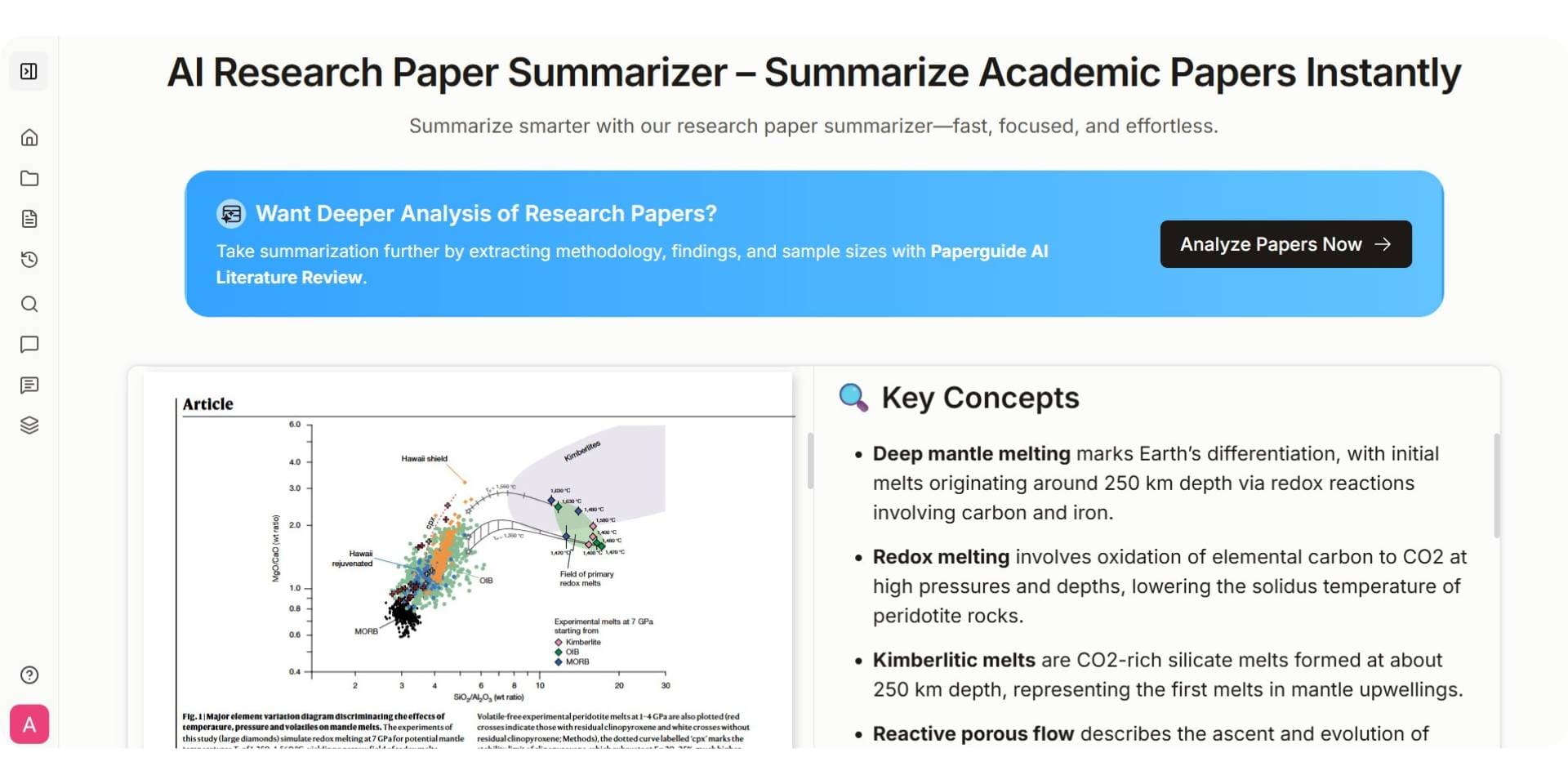
Paperguide AI Research Paper Summarizer is built specifically for summarizing academic and scientific research papers. It analyzes full research documents and generates a structured research paper summary that highlights the study’s objective, methodology, key findings, and conclusions. Unlike a generic AI paper summarizer, Paperguide is designed for research workflows where accuracy, structure, and academic context are essential.
Key Features
- Analyzes full research papers, not just abstracts
- Generates structured summaries covering objectives, methods, findings, and conclusions
- Supports academic PDFs across science, medicine, engineering, social sciences, and humanities
- Allows summary length adjustment based on research needs
- Available as a free AI research paper summarizer for basic academic use
Pros
- Purpose-built for academic and scientific research papers
- Produces clear, structured research paper summaries
- Works with full-length PDFs across multiple disciplines
- Free to start, making it accessible for students and early-stage researchers
Cons
- Summary quality may vary depending on PDF formatting and paper complexity
- Advanced usage may require a paid plan
Best For
Students, researchers, and academics who need accurate, structured summaries of research papers for literature review screening, faster evaluation, and academic decision-making.
Pricing
Paperguide offers a free AI research paper summarizer for basic academic use. For users who need more advanced capabilities, the Plus plan starts at $12 per month and supports more flexible research workflows.
Verdict
Paperguide AI Research Paper Summarizer is the best overall AI research paper summarizer in 2026 for academic and scientific workflows. Unlike generic summarization tools, it analyzes full research PDFs and generates structured summaries that clearly present objectives, methodology, key findings, and conclusions.
Its ability to work across disciplines, handle long and complex papers, and offer a genuinely free research paper summarizer for core use makes it especially valuable for students, researchers, and academics. While advanced features may require a paid plan, Paperguide delivers the most balanced combination of accuracy, structure, and accessibility for real-world literature review and research screening.
2. Scholarcy
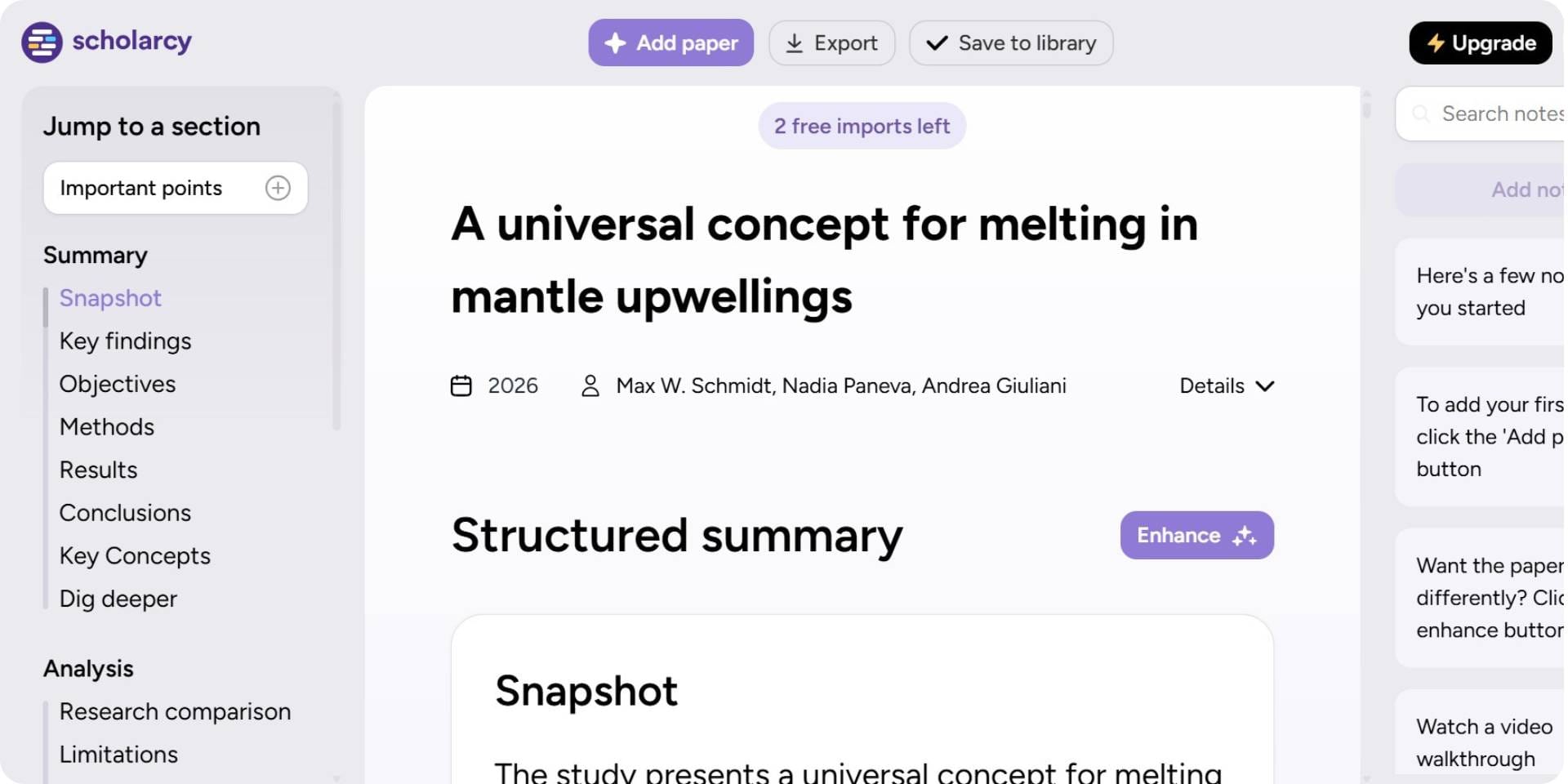
Scholarcy is an AI-powered research paper summarizer designed to help users quickly understand academic papers through structured, section-based summaries. It analyzes scholarly articles and breaks them down into key components such as background, methodology, results, and main contributions, allowing researchers to assess relevance without reading the full paper.
Key Features
- Generates structured summaries from academic research papers
- Breaks papers into sections like background, methods, findings, and contributions
- Supports PDF uploads and academic article links
- Highlights key concepts, terminology, and references
- Includes organization features such as saved summaries and literature matrices
Pros
- Strong focus on academic structure and clarity
- Section-wise summaries are easy to scan and compare
- Useful for quickly evaluating paper relevance
- Includes tools for organizing and exporting summaries
Cons
- Free tier is limited to a small number of uploads
- Less flexible for users who want highly customizable summary formats
- Advanced features require a paid plan
Best For
Students and researchers who want structured, section-based research paper summaries and basic organization features for literature review and academic evaluation.
Pricing
Scholarcy offers a limited free tier, allowing up to three free uploads for summarization. Paid access starts at $4.99 per month and includes unlimited summarization, enhanced summaries, saved and organized outputs, note-taking, bulk exports, literature matrix creation, and one-click bibliographies.
Verdict
Scholarcy is a strong option for structured, section-based research paper summaries, especially for users who want to quickly assess academic papers during literature review screening. Its ability to break papers into background, methods, results, and contributions makes it easy to scan and compare studies.
However, the free tier is limited, and customization options are narrower compared to research-first tools. Users who need unrestricted access, broader workflow flexibility, or a fully free AI research paper summarizer may find Paperguide to be the more practical choice for ongoing academic research.
3. SciSummary
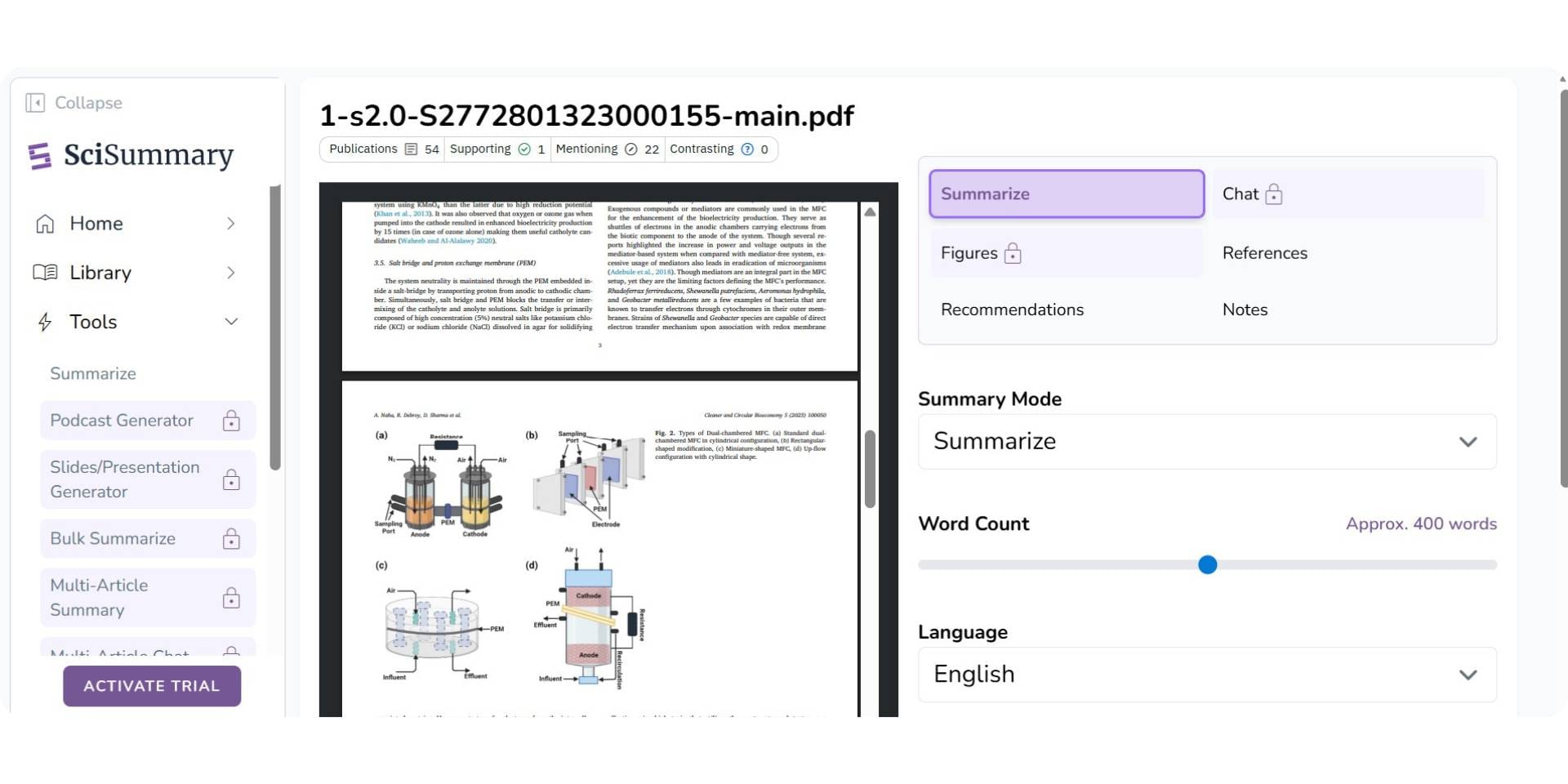
SciSummary is an AI research paper summarizer focused on summarizing scientific and technical research papers. It is designed to help researchers quickly extract core insights from complex academic PDFs by generating concise summaries that emphasize key findings and conclusions. The tool is commonly used for fast paper evaluation when dealing with highly technical or data-heavy research.
Key Features
- Summarizes scientific and technical research papers
- Supports PDF uploads for academic documents
- Focuses on extracting core findings and conclusions
- Produces concise summaries suitable for quick review
- Designed for research-heavy and technical content
Pros
- Works well for scientific and technical papers
- Generates clear, focused summaries of key findings
- Useful for quickly screening research relevance
- Simple workflow for fast summarization
Cons
- No free plan available
- Limited customization of summary structure
- Less suitable for broader academic workflows beyond summarization
Best For
Researchers and professionals who primarily need quick summaries of scientific or technical research papers to understand core findings without reading the full document.
Pricing
SciSummary offers a 7-day free trial for new users. After the trial period, access to SciSummary Premium is available for $7.00 per month. The paid plan provides ongoing access to scientific research paper summarization features.
Verdict
SciSummary is a practical option for summarizing scientific and technical research papers, especially when speed and clarity are the main priorities. However, users looking for a completely free option with broader academic and research workflow support may prefer Paperguide.
4. NoteGPT AI PDF Summarizer
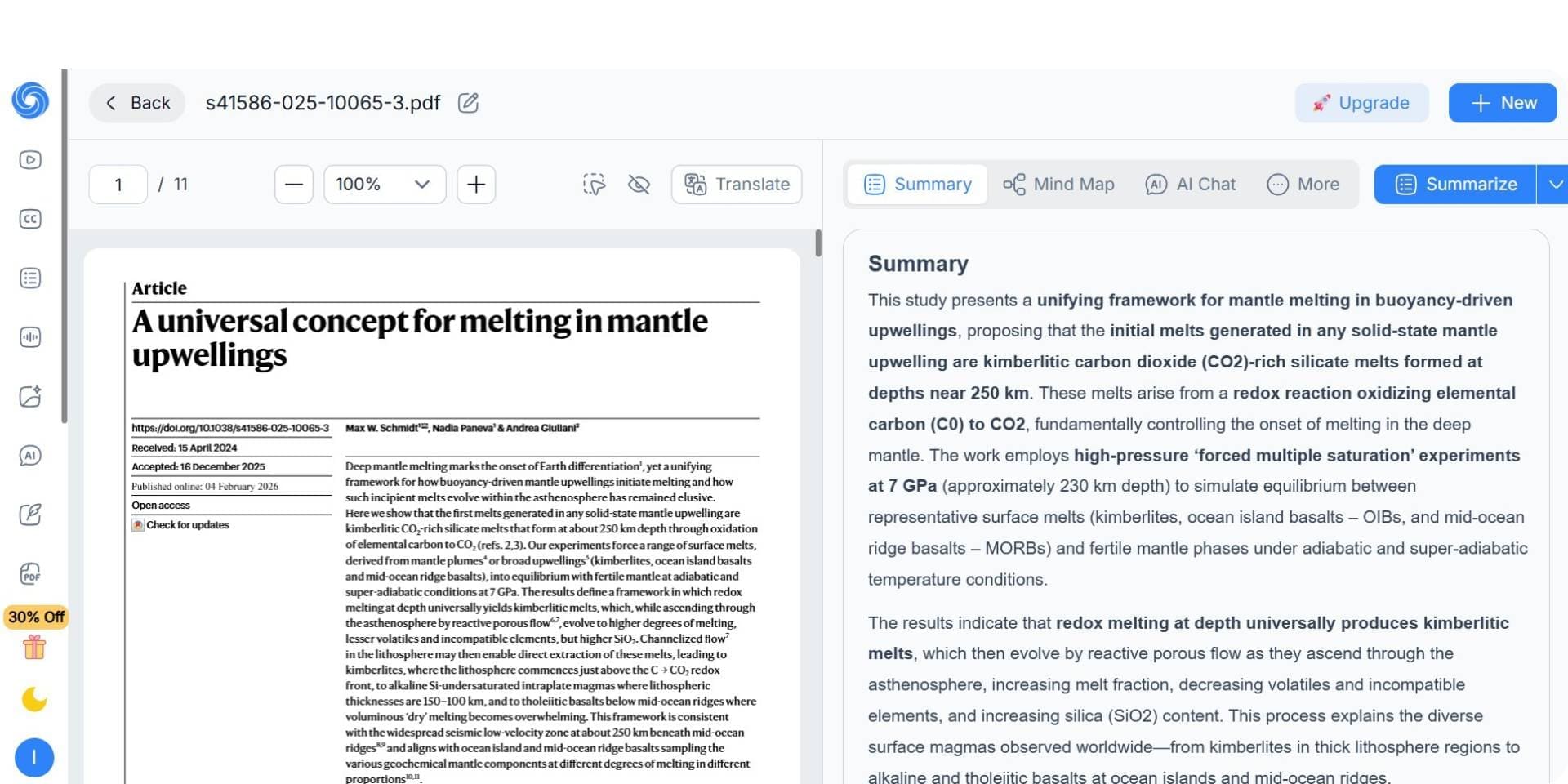
NoteGPT is a research paper summarization tool designed for fast PDF summarization and note generation. It allows users to upload academic PDFs and generate concise summaries that support initial paper review, studying, and quick reference. The tool is commonly used by students who want a lightweight way to understand research papers without deep analysis.
Key Features
- Summarizes academic PDFs and documents
- Generates short, concise research paper summaries
- Supports quick note creation from uploaded papers
- Simple interface for fast summarization
- Works well for short- to medium-length academic documents
Pros
- Easy to use with minimal setup
- Suitable for fast paper screening and study notes
- Useful for students and casual academic reading
- Free tier available for basic usage
Cons
- Summaries are less structured compared to research-focused tools
- Limited depth for complex or highly technical papers
- Not optimized for advanced research workflows
Best For
Students and casual researchers who need basic summaries or notes from academic PDFs for study and general understanding.
Pricing
NoteGPT offers a free tier with limited usage. For users who need unrestricted access, the Unlimited plan starts at $29 per month, with higher-tier plans available for more intensive usage. Paid plans include unlimited document and PDF summarization, chat with documents, and access to additional AI features beyond basic summarization.
Verdict
NoteGPT is a convenient option for summarizing papers and creating basic notes from academic PDFs. For users who want a fully free research paper summarizer with more structured academic output, Paperguide is generally the more practical choice.
5. QuillBot AI Text Summarizer
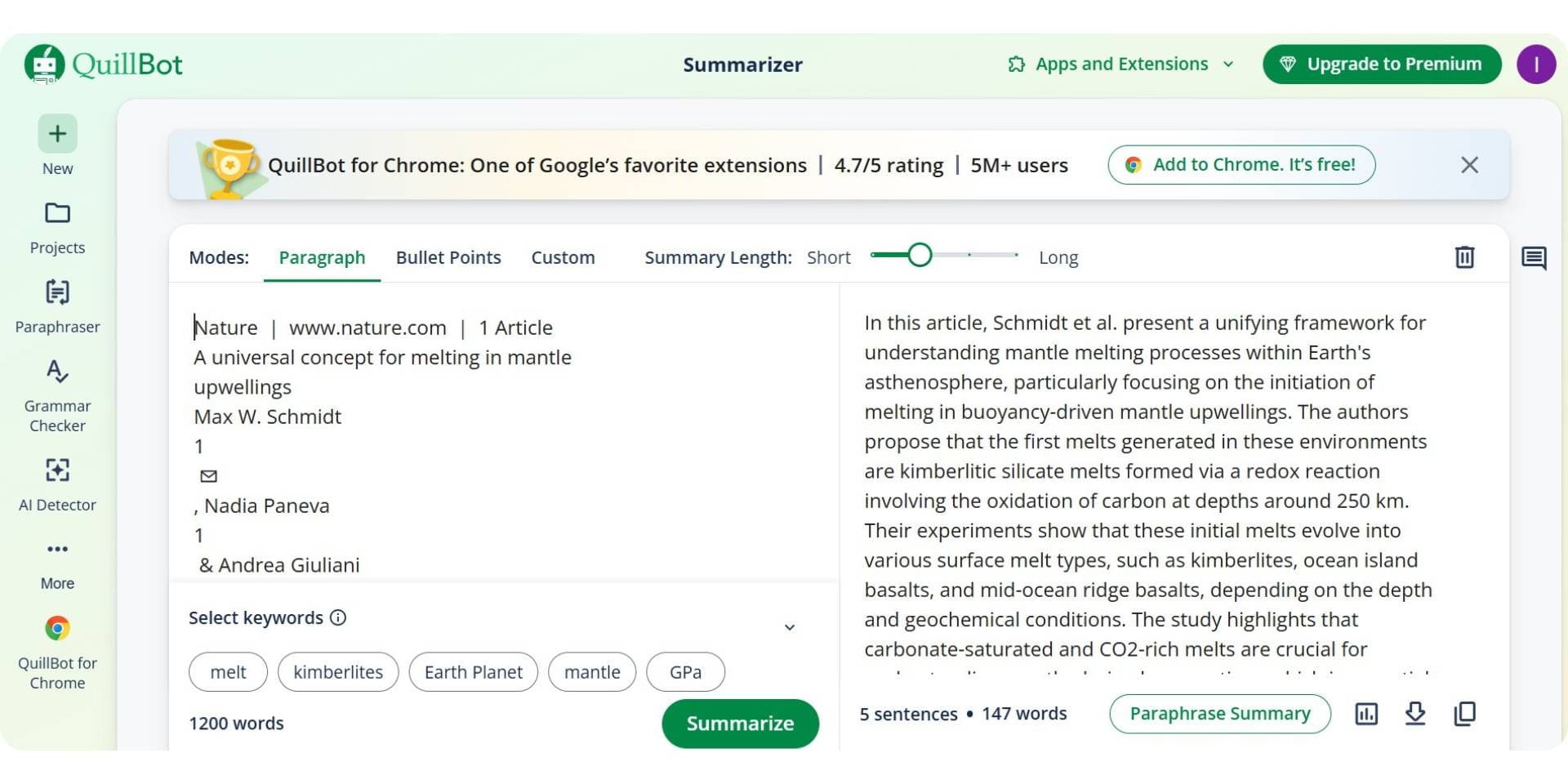
QuillBot AI Text Summarizer is a general-purpose summarization tool designed to condense articles, reports, and documents into shorter, readable summaries. It focuses on extracting key points from text using natural language processing while preserving the original context. Unlike tools built specifically for academic research workflows, QuillBot’s summarizer is optimized for flexibility and everyday writing use rather than deep research paper analysis.
Key Features
- AI-powered text summarization for articles, reports, and documents
- Adjustable summary length (short ↔ long)
- Supports paragraph-style and bullet-point summaries
- Free AI summarizer with word limits
- Works alongside writing tools such as paraphraser, grammar checker, and citation generators
- Available as a web tool and Chrome extension
Pros
- Easy to use with minimal learning curve
- Flexible summary formats (paragraphs or bullet points)
- Useful for summarizing general text, articles, and short research sections
- Free tier available for quick summaries
Cons
- Not designed specifically for full academic research papers
- Limited support for structured research summaries (methods, results, limitations)
- Free plan restricts the amount of text that can be summarized
- Better suited for text-level summarization than full PDF research workflows
Best For
Students, educators, professionals, and writers who need a flexible AI text summarizer for articles, reports, study notes, and short research content rather than in-depth academic paper summarization.
Pricing QuillBot offers a free AI summarizer with word limits. Paid plans start at $19.95 USD per month and unlock higher usage limits along with QuillBot’s full suite of writing and editing tools, including paraphrasing, grammar checking, and citation support.
Verdict
QuillBot AI Text Summarizer is a strong choice for flexible, everyday text summarization and writing support. However, users who need a fully free research paper summarizer focused on structured academic PDFs and research workflows will generally find Paperguide to be the more suitable option.
6. SciSpace
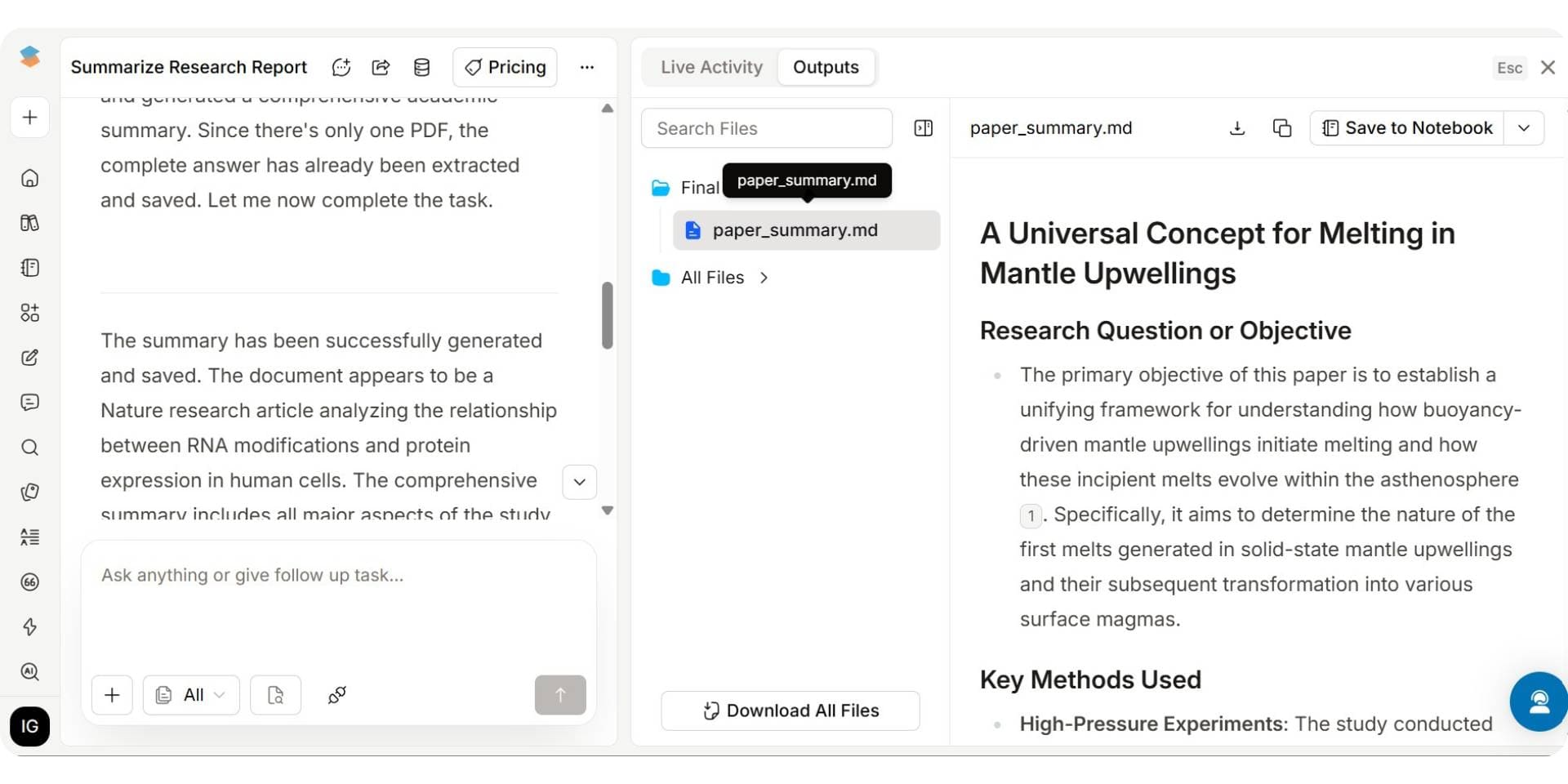
SciSpace is a research-focused platform designed to help users understand academic papers through explanations, context, and evidence-backed answers. Instead of only condensing text, SciSpace emphasizes helping readers interpret research papers by clarifying concepts, terminology, and claims directly from the source content.
Key Features
- PDF upload and paper-based explanations
- Evidence-backed answers grounded in the source paper
- Section-wise understanding of methods, results, and discussion
- Helpful for interpreting complex scientific concepts
- Designed primarily for academic and scientific literature
Pros
- Strong focus on explaining research content clearly
- Useful for understanding complex or unfamiliar topics
- Evidence-backed responses improve trust and clarity
- Works well across scientific and technical disciplines
Cons
- Not primarily designed for concise research paper summaries
- Limited flexibility for users who want short, structured summaries
- Free usage is restricted; advanced features require a paid plan
Best For
Researchers and students who want help understanding and interpreting academic papers rather than quickly generating short research paper summaries.
Pricing
SciSpace offers a Basic plan that is free to use and does not require a credit card. The free plan includes limited credits, restricted paper summaries, and capped access to literature review search, chat with PDFs, and AI actions.
For users who need broader research capabilities, SciSpace Premium starts at $20 per month. The paid plan provides higher usage limits, access to higher-quality models, unlimited chats with papers and PDFs, expanded literature review tools, citation exports, and advanced research workflows.
Verdict SciSpace is a strong option for users who want deeper explanations and contextual understanding of academic papers. For those looking for a more complete and flexible alternative, Paperguide is often the more practical choice, especially when the goal is structured summarization and broader research workflows.
7. Sharly AI
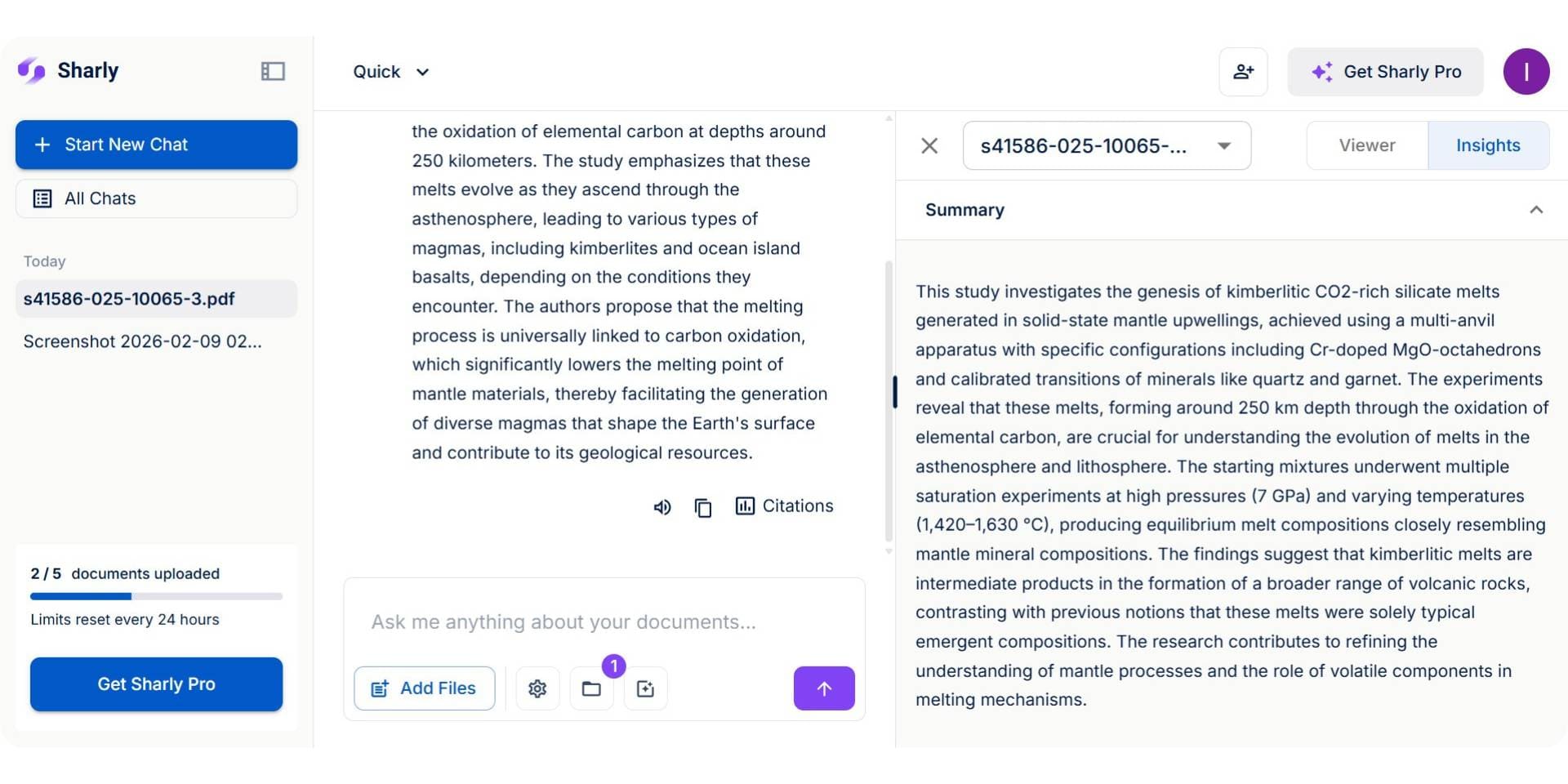
Sharly AI is a document-focused AI summarization tool built to help users quickly understand long PDFs and complex research documents. It reads full files and produces concise, source-backed summaries that reference original page numbers, making it especially useful for academic, clinical, and professional documents where traceability matters.
Key Features
- AI-powered summaries for PDFs and long research documents
- Supports multiple formats including PDF, DOCX, PPTX, and text files
- Automatically includes citations and page numbers
- Document-based Q&A for deeper exploration of content
- Customizable summary focus and depth
Pros
- Strong support for long and complex research documents
- Citations and page references improve reliability
- Useful for academic, clinical, and professional use cases
- Handles a wide range of document formats
Cons
- Free usage is very limited
- Not designed for frequent or iterative research workflows
- Less flexible for fast, iterative research workflows
Best For
Researchers, analysts, and professionals who need citation-aware summaries of long documents and want to reference original sources while reviewing academic or technical material.
Pricing
Sharly AI offers a free plan limited to one document every 24 hours. Paid plans start at $15 per month, removing upload limits and providing higher-quality answers, citation support, and enhanced security features.
Verdict
Sharly AI is particularly valuable when precise citations and page-level references are required, such as in clinical or technical document review. However, its strict free-tier limits can slow down ongoing research, and many users turn to Paperguide when they need structured summaries and a more practical workflow for continuous academic and scientific research.
8. Glasp
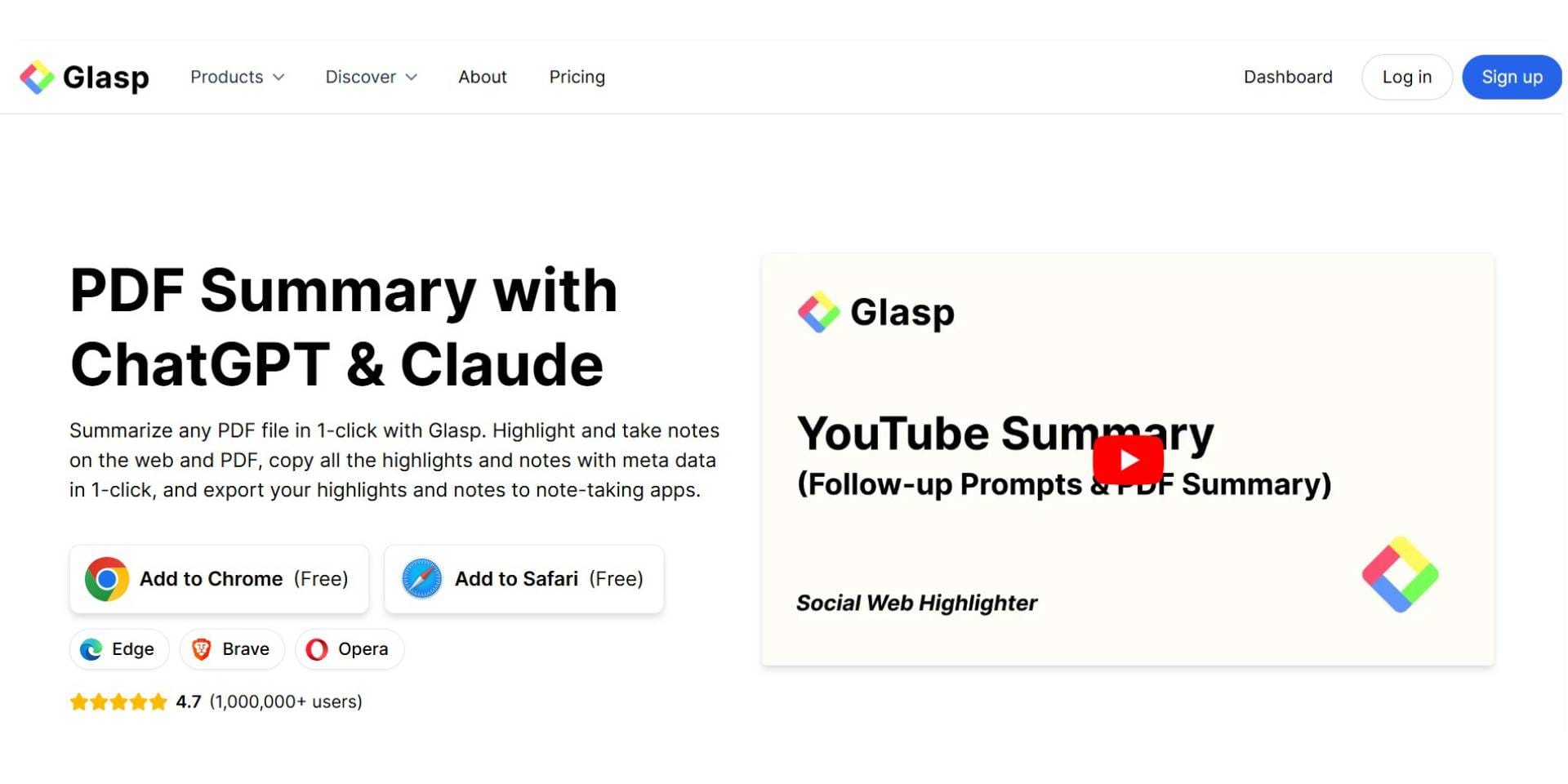
Glasp is a web and PDF highlighter designed for research, learning, and knowledge collection rather than standalone research paper summarization. It allows users to highlight content from webpages, PDFs, and even YouTube videos, add notes, and then generate AI-powered summaries based on those highlights. Instead of summarizing an entire paper automatically, Glasp focuses on summarizing what you choose to highlight, making it a learning-first tool.
Key Features
- Highlight PDFs, webpages, and YouTube videos
- AI-generated summaries based on user highlights and notes
- Supports PDF, web, Kindle highlights, and audio transcription
- Export highlights and summaries to tools like Notion, Obsidian, and Readwise
- Social and collaborative features for sharing highlights
Pros
- Excellent for active reading and learning workflows
- User-controlled summaries based on selected highlights
- Works across web pages, PDFs, and videos
- Strong integrations with popular note-taking tools
- Generous free plan for individual learners
Cons
- Does not automatically summarize full research papers end to end
- Summary quality depends on what the user highlights
- Less suitable for fast, high-volume research paper screening
Best For
Students, researchers, and lifelong learners who prefer highlight-driven learning, note-taking, and summarization while reading papers, articles, and educational content.
Pricing
Glasp offers a free plan with unlimited public highlights, limited PDF uploads, and basic summaries. The Pro plan starts at $12 per month and includes unlimited private highlights, higher PDF and YouTube summary limits, extended exports, and deeper integrations.
Verdict
Glasp is best viewed as a learning and annotation tool rather than a traditional research paper summarizer. It excels when users want to actively highlight, reflect, and summarize content they are reading, but those who need automatic, structured summaries of entire academic or scientific papers will generally find Paperguide more suitable for research-centric workflows.
9. HyperWrite
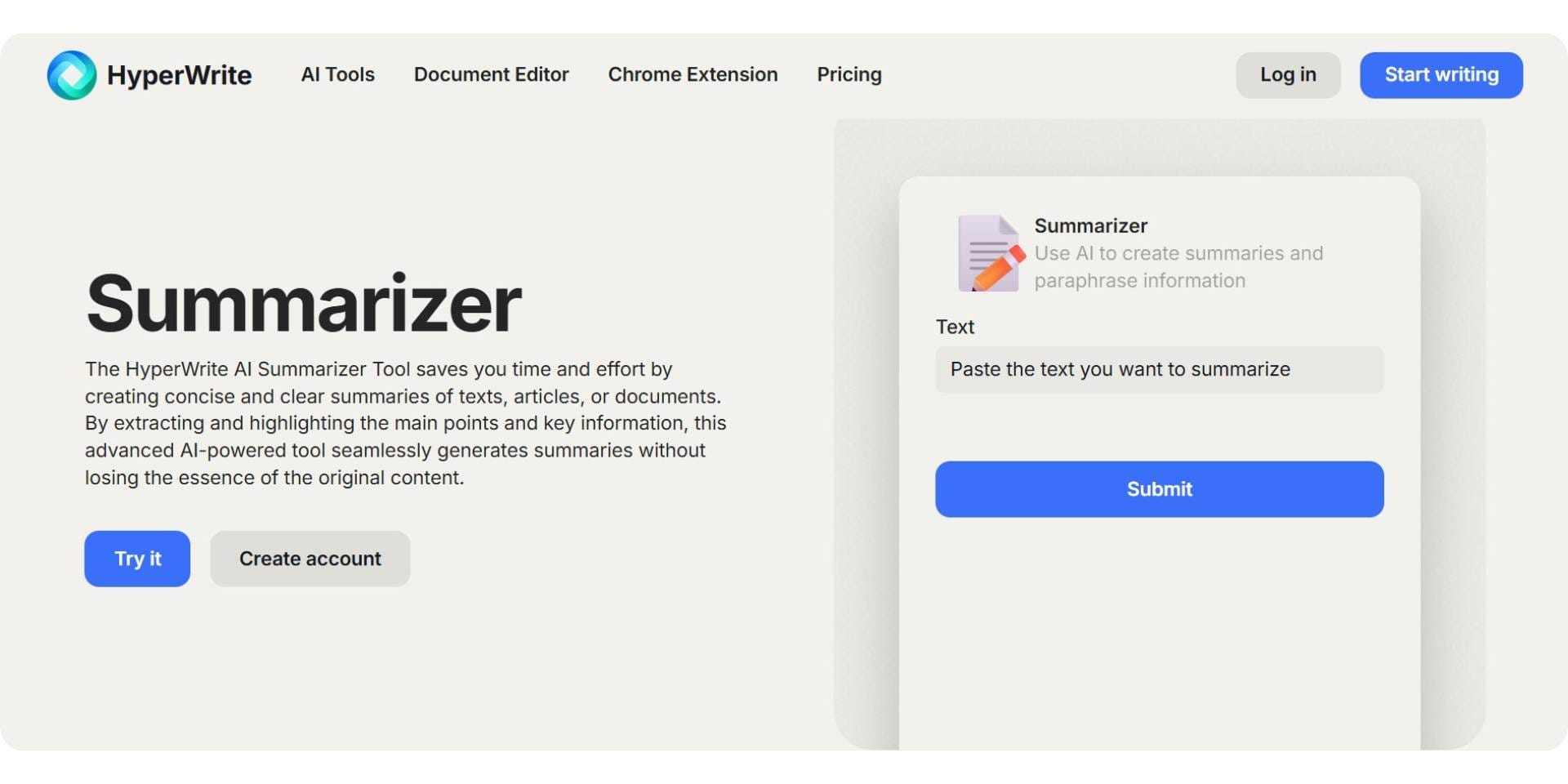
HyperWrite offers a Research Paper Summarizer as part of its broader AI writing platform. The tool is designed to read uploaded research papers and generate concise summaries that highlight main arguments, key points, and conclusions. It is positioned for users who want quick insights from research papers alongside general-purpose AI writing and productivity tools.
Key Features
- AI-powered summarization of research papers
- Upload-based workflow for quick paper summaries
- Identifies main arguments, findings, and conclusions
- Integrated within a larger AI writing and productivity platform
- Supports use cases like literature review preparation and presentations
Pros
- Simple way to get quick summaries of research papers
- Useful for high-level understanding of academic content
- Integrated with a wide range of AI writing tools
- Suitable for students, professionals, and general users
Cons
- Not focused on structured academic summaries (methods, limitations, evidence blocks)
- Research paper summarization is part of a larger writing suite, not a dedicated research tool
- Free usage is limited; full access requires a paid plan
Best For
Users who want quick, high-level summaries of research papers alongside AI writing, editing, and productivity features, rather than a research-first summarization workflow.
Pricing
HyperWrite does not offer a fully free research paper summarizer. Paid plans start at $19.99 per month, with higher-tier plans available for users who need unlimited usage and advanced AI writing capabilities.
Verdict
HyperWrite’s research paper summarizer is useful for gaining quick insights as part of a broader AI writing workflow. However, for users whose primary goal is academic and scientific research summarization with clearer structure and research focus, Paperguide is typically the more suitable choice.
Pricing Comparison: Research Paper Summarizers (2026)
| Tool | Free Plan | Paid Plans Start At | Best Value For |
|---|---|---|---|
| Paperguide AI Research Paper Summarizer | ✅ Yes | $12 / month | Students & researchers who want a completely free research paper summarizer with optional advanced research workflows |
| Scholarcy | ✅ Yes (3 uploads) | $4.99 / month | Users who want structured academic summaries with basic literature organization |
| SciSummary | ❌ No (7-day trial only) | $7 / month | Fast summaries of scientific and technical research papers |
| NoteGPT AI PDF Summarizer | ✅ Yes (limited usage) | $29 / month | Students who want summaries plus notes, transcripts, and multi-format content |
| QuillBot AI Text Summarizer | ✅ Yes (word-limited) | $19.95 / month | General text summarization and writing support |
| SciSpace | ✅ Yes (limited credits) | $20 / month | Researchers who want explanations, citations, and paper interpretation |
| Sharly AI | ✅ Yes (1 document / 24 hrs) | $15 / month | Citation-aware summaries of long or complex documents |
| Glasp | ✅ Yes | $12 / month | Highlight-based learning, annotation, and knowledge management |
| HyperWrite | ❌ No | $19.99 / month | AI writing tools with basic research paper summaries |
Pricing across research paper summarizers varies based on whether a tool is built specifically for academic research or positioned as a general writing assistant. Many tools offer free access with restrictions such as upload limits, trials, or capped usage, while paid plans unlock higher limits or additional features like citations, explanations, or writing support.
Paperguide AI Research Paper Summarizer stands out by offering a genuinely free option for summarizing academic research papers, making it accessible for students and researchers who need to review papers regularly. Other tools often require paid plans to remove limits, so users should consider whether they need advanced workflows or simply a reliable research paper summarizer before choosing.
Final Comparison: Best Research Paper Summarizers in 2026
| Use Case | Best Tool | Why This Tool |
|---|---|---|
| Best overall research paper summarizer | Paperguide | Built for both academic and scientific research, offers structured summaries, supports full PDFs, and is free to use |
| Best free research paper summarizer | Paperguide | No paywall for core summarization, unlike most competitors with trials or limits |
| Best for structured academic summaries | Scholarcy | Breaks papers into background, methods, and key contributions |
| Best for scientific & technical papers | SciSummary | Focused on extracting core findings from technical and data-heavy research |
| Best for explanations & citations | SciSpace | Provides evidence-backed explanations rather than short summaries |
| Best for quick notes & lightweight summaries | NoteGPT | Useful for fast paper review and basic note-taking |
| Best for general text summarization & writing | QuillBot | Designed for articles and writing tasks, not deep academic workflows |
| Best for citation-aware document review | Sharly AI | Includes page numbers and citations for long, complex documents |
| Best for highlight-based learning | Glasp | Summaries are built from user highlights, ideal for active reading |
| Best for AI writing with paper summaries | HyperWrite | Works well when summarization is part of a broader writing workflow |
Not all research paper summarizers serve the same purpose. Some tools are built specifically for academic and scientific research, focusing on structured summaries and full-PDF analysis, while others are designed for explanations, note-taking, or general writing assistance. This final comparison highlights which tool performs best for each common research use case.
For users who need a reliable, research-first solution, Paperguide AI Research Paper Summarizer consistently stands out as the best overall and best free research paper summarizer. Other tools excel in more specialized scenarios, such as section-based academic summaries, citation-backed explanations, or highlight-driven learning. The table below helps you quickly identify the best option based on how you actually work with research papers.
How to Summarize a Research Paper?
To see how a research paper can be summarized effectively, consider a simple example using Paperguide. Instead of relying only on an abstract, Paperguide AI Research Paper Summarizer works with the entire research paper, allowing the AI to understand the full academic context.
After uploading a research paper, the AI reviews each section of the document, identifying the research objective, methodology, key findings, conclusions, and limitations. This ensures that important details are not missed, especially in longer or more technical papers.
The result is a structured research paper summary that presents the most critical insights in a clear, scannable format. Researchers can quickly assess relevance, compare studies during literature reviews, and decide whether a paper requires deeper reading, all while maintaining academic accuracy.
How to Choose the Right AI Research Paper Summarizer
- Best for overall academic and scientific research papers: Tools like Scholarcy and SciSummary offer structured summaries, but Paperguide is the best AI research paper summarizer because it analyzes full PDFs and preserves academic structure across disciplines.
- Best free AI research paper summarizer: Some tools offer trials or limited credits, but Paperguide stands out by providing free research paper summarization without blocking core functionality.
- Best for structured research summaries (methods, results, conclusions): Scholarcy provides section-based breakdowns, but Paperguide delivers more consistent academic structure suited for real literature review workflows.
- Best for scientific and technical papers: SciSummary works well for technical content, but Paperguide supports broader academic coverage while maintaining clarity and structure.
- Best for explanations and contextual understanding: SciSpace focuses on explanations, while Paperguide is better for concise, structured research summaries needed for screening and comparison.
- Best for quick summaries and basic notes: NoteGPT is useful for lightweight summaries, but Paperguide is better for research-grade summarization beyond study notes.
- Best for general text and article summarization: QuillBot excels at writing support, but Paperguide is purpose-built for academic PDFs, not generic text.
- Best for citation-aware document review: Sharly AI includes page references, but Paperguide offers a more practical workflow for ongoing academic research.
- Best for highlight-based learning: Glasp works well for annotation, but Paperguide is better for automatic full-paper summaries without manual highlighting.
- Best for AI writing plus summaries: HyperWrite combines writing tools with summarization, but Paperguide remains the better choice for research-first workflows.
Many tools can summarize research papers, but Paperguide is the best AI research paper summarizer in 2026 because it combines structured academic summaries, full-PDF analysis, and free access designed specifically for real research workflows.
Final Verdict
Choosing the right AI research paper summarizer in 2026 depends on how deeply you work with academic literature. Some tools focus on quick explanations, others on note-taking or writing assistance, while a few are built specifically for structured academic summarization.
After comparing all major options, Paperguide AI Research Paper Summarizer stands out as the best AI research paper summarizer in 2026. It is purpose-built for academic and scientific research, analyzes full PDFs instead of just abstracts, and generates structured summaries covering objectives, methodology, key findings, and conclusions.
Unlike many competitors that rely on trials, strict limits, or paid access for core features, Paperguide also works as a free AI research paper summarizer, making it especially valuable for students, researchers, and academics who review papers regularly. While other tools excel in niche scenarios, such as explanations, citation tracking, or highlight-based learning, Paperguide delivers the most balanced, research-first workflow overall.
If your goal is to summarize research papers accurately, efficiently, and at scale, Paperguide is the most reliable choice in 2026.
Frequently Asked Questions (FAQs)
What is an AI research paper summarizer?
An AI research paper summarizer is a tool that analyzes academic or scientific papers and generates a concise research summary. It typically extracts the study’s objective, methodology, key findings, and conclusions, helping researchers understand a paper quickly without reading the full PDF.
Which is the best AI research paper summarizer in 2026?
The best AI research paper summarizer in 2026 is Paperguide, based on its ability to analyze full research papers, produce structured academic summaries, and offer free access for core summarization. Other tools may specialize in explanations, notes, or writing support, but Paperguide is most suitable for research workflows.
Is there a free AI research paper summarizer?
Yes. Several tools offer limited free access, but Paperguide provides a genuinely free AI research paper summarizer for basic academic use. Many alternatives restrict usage through trials, credit limits, or paywalls before allowing full research paper summaries.
How accurate are AI research paper summarizers?
AI research paper summarizers can be highly accurate when they analyze the full document and preserve academic structure. Accuracy depends on PDF quality, paper complexity, and tool design. Researchers should always review summaries for context, but structured tools generally perform well for literature screening.
Can AI tools summarize scientific and technical research papers?
Yes. Many AI research paper summarizers support scientific and technical papers, including those in medicine, engineering, and natural sciences. Tools designed for academic workflows perform better than general text summarizers, especially when handling methods, results, and data-heavy sections.
What is the difference between a research paper summarizer and a text summarizer?
A research paper summarizer understands academic structure such as objectives, methodology, results, and conclusions. A general text summarizer shortens content without preserving research context, making it less suitable for academic or scientific papers.
Can AI summarizers be used for literature reviews?
Yes. AI research paper summarizers are commonly used for literature review screening. They help researchers quickly evaluate relevance, compare studies, and prioritize papers for deeper reading, although final synthesis and interpretation should still be done manually.
How long should a research paper summary be?
A research paper summary is usually 10–15% of the original paper length. The focus should be on clarity and relevance, covering the research question, methodology, key findings, conclusions, and limitations without unnecessary detail.
Is it safe to use AI-generated research summaries in academic work?
AI-generated summaries are safe to use as a support tool, provided researchers verify accuracy and avoid copying text verbatim. AI summaries should assist understanding, not replace critical reading or proper citation practices.
How do I summarize a research paper using AI?
To summarize a research paper using AI, upload the full PDF to a research-focused summarizer. The AI analyzes the document structure, identifies key sections, and generates a structured research summary. This approach is faster and more reliable than summarizing only abstracts.