AI-native platform for scientific research workflows and evidence synthesis
Find, organize, and synthesize research for literature reviews, or run rigorous, auditable systematic reviews, with AI-native reference management, research agents, data extraction, and citation-grounded writing built in.
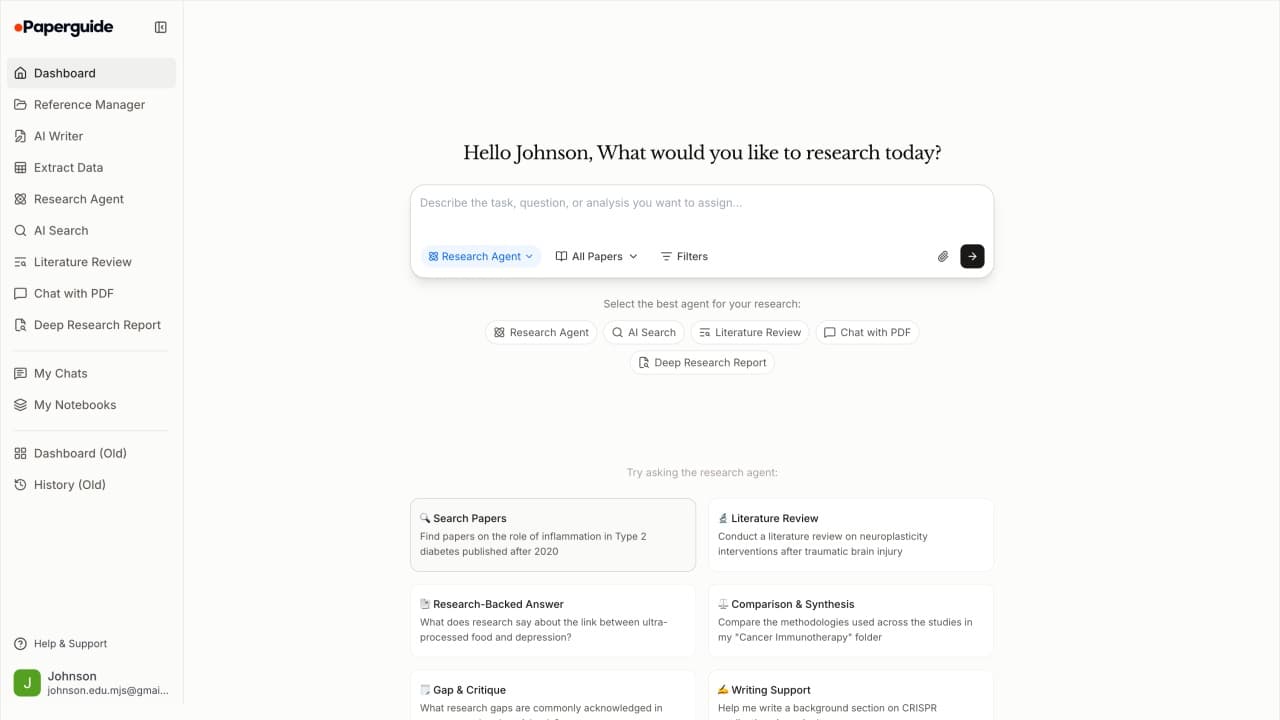




















Find, organize, and synthesize your research in one place
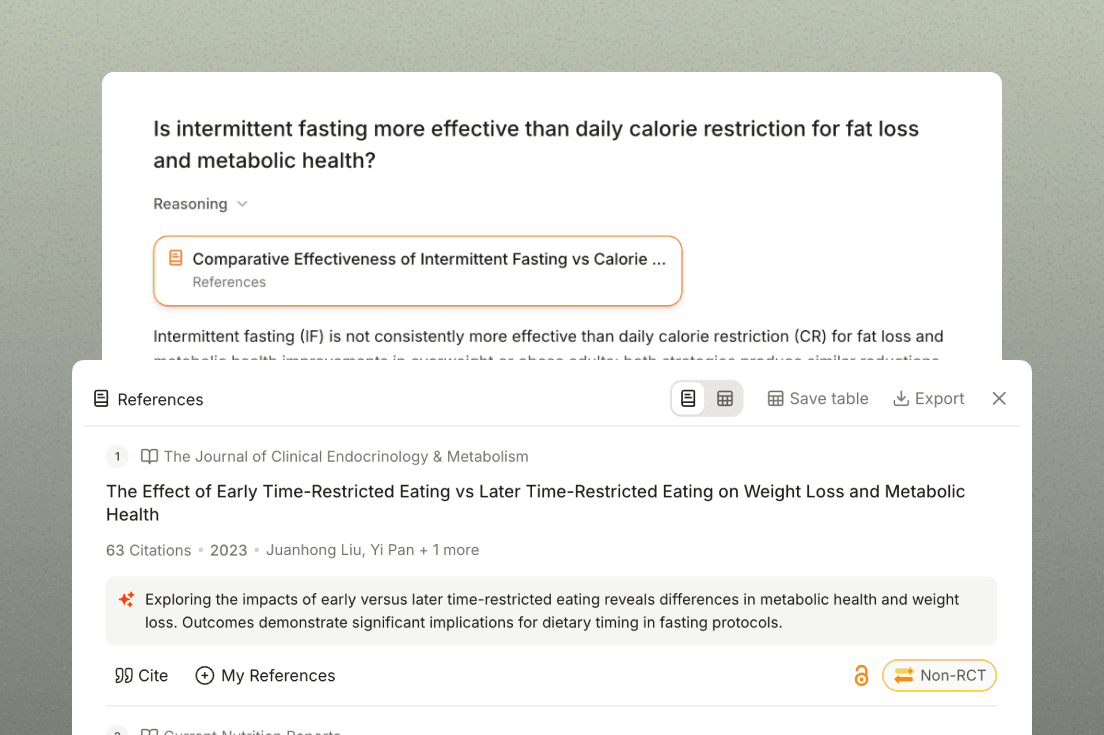
Discover
Ask a research question in plain language and AI Search returns a synthesized answer from across 200M+ papers, every claim linked to its source. Find the evidence without guessing the right keywords first.
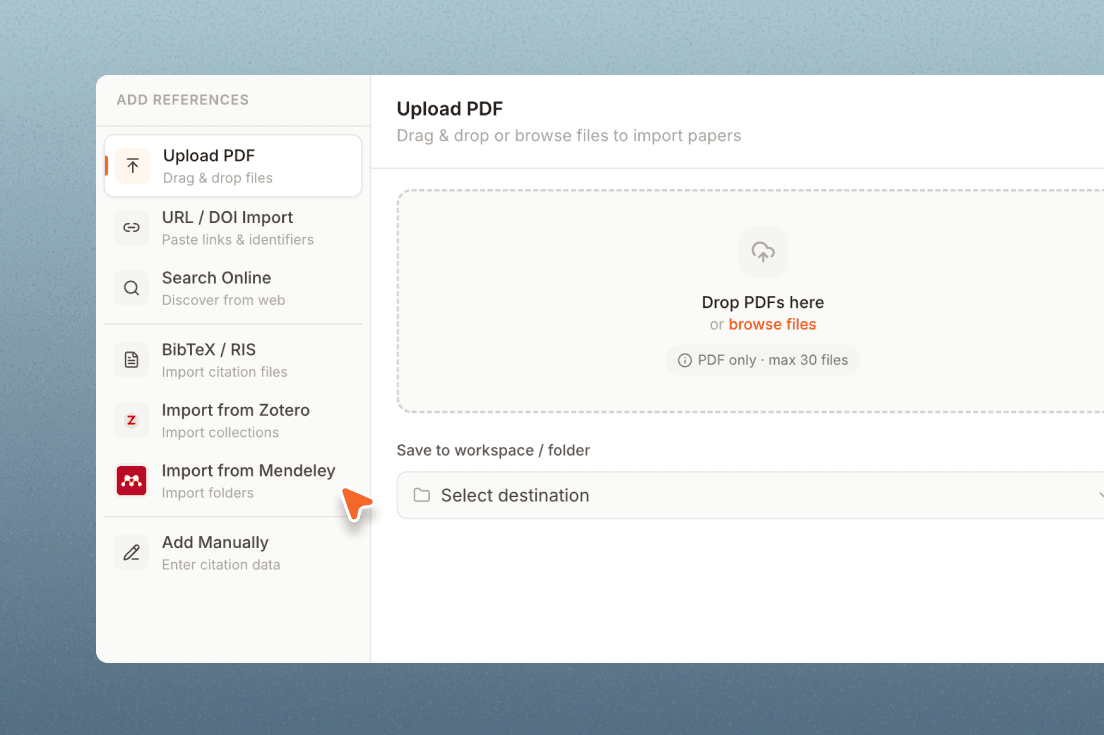
Organize
The Reference Manager is where your papers live. Import from Zotero or Mendeley, add papers by DOI, and every paper you save is ready to use across search, review, extraction, and writing.
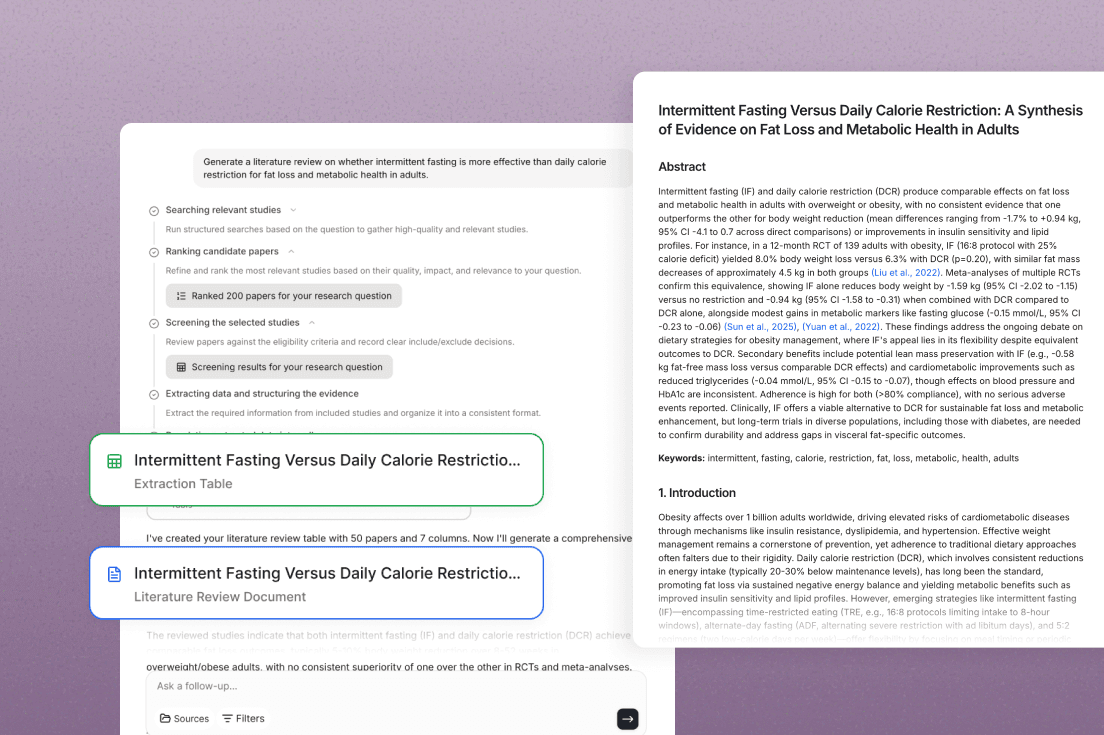
Synthesize
Put the literature to work. The Research Agent compares studies and maps a field, and Extract Data pulls the details you need from many papers into a structured, cited table. Turn a pile of papers into something you can reason from.
Run rigorous, auditable systematic reviews with PRISMA reporting
A systematic review lives or dies by its method: a predefined protocol, a documented search, recorded screening decisions, and a matching PRISMA flow. Paperguide runs that rigor in one workspace, with the evidence for each criterion prepared before your reviewers open a paper, so the review is auditable and survives peer review, regulatory audit, and client scrutiny.
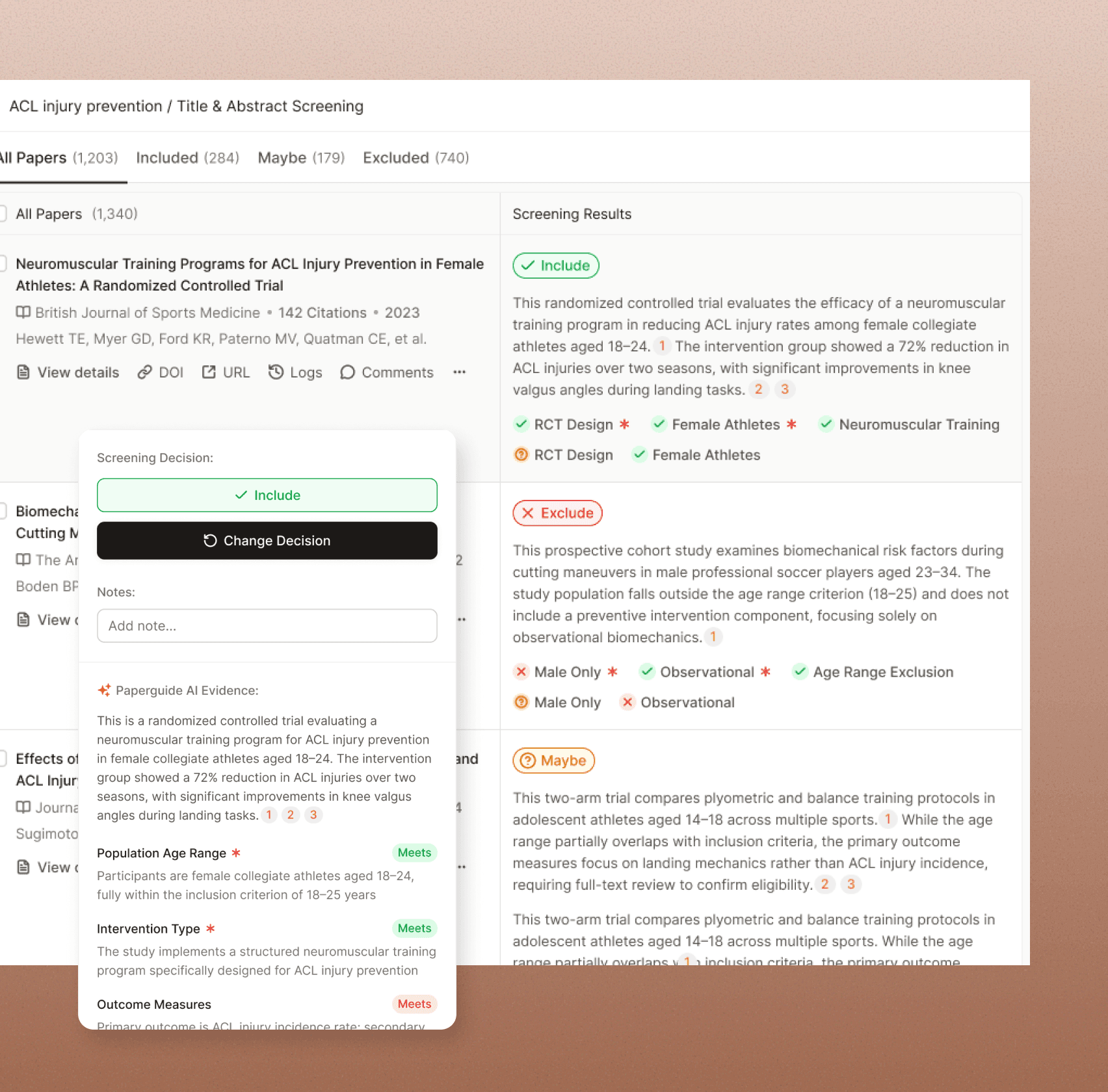
Dual Review Systematic Review
Two reviewers screen independently with a conflict resolver; AI never decides, it prepares the cited evidence. Built for journal submissions, HTA dossiers, and CERs.Evidence for every criterion
AI pulls the relevant statements from the abstract or full text and links them in place, so a screening decision is a few cited sentences, not a 30-page re-read.AI Systematic Review
For rapid, scoping, and internal reviews. AI screens with evidence attached to every call, and a named verifier confirms each stage.Extraction you can verify
Every value in the table cites the statement it came from, confirmed by a verifier before synthesis.PRISMA from the review itself
The final call is always human and on record, and each review ends with verified tables, a synthesized report, and a PRISMA diagram from your actual counts.
An AI-native reference manager your research runs on
Collect and organize your papers in one AI-native library that feeds every workflow above, built in, not a legacy tool bolted on.
- Import from Zotero or Mendeley, or add papers by DOI, and metadata and open-access PDFs are fetched for you.
- Read, annotate, and keep notes attached to each paper, across projects.
- Ask your library questions and get citation-grounded answers through the Research Agent.
- Every paper you save is available to search, review, extraction, and writing.
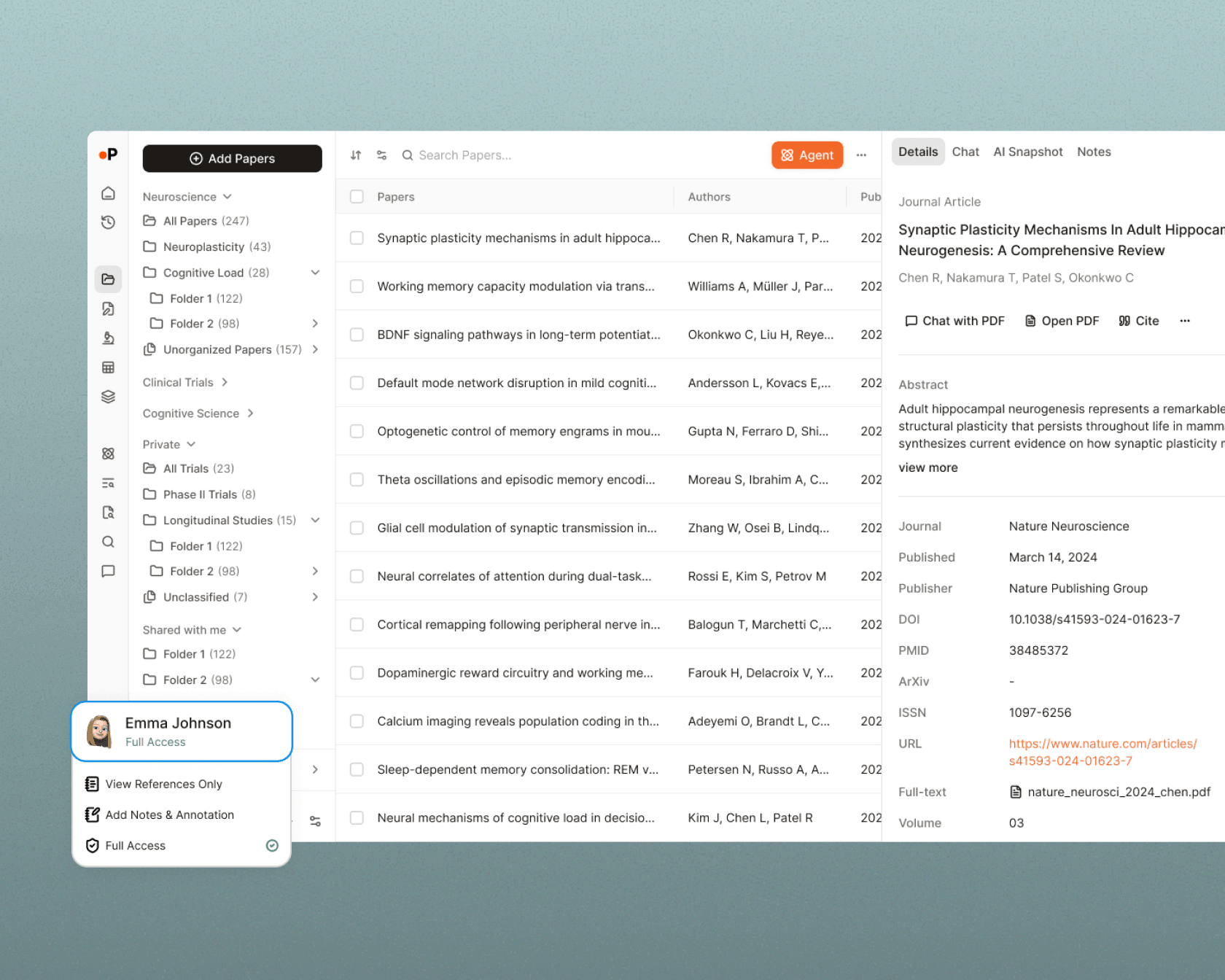
Turn a stack of papers into a structured evidence table
Pull the study details, variables, and outcomes you care about from many papers at once, each value traceable to its source.
- Define your own extraction columns, and AI fills them across every selected paper.
- Every extracted value links back to the statement it came from, so nothing is taken on trust.
- Compare findings across studies side by side in one table.
- Export to CSV or Excel when it is time for analysis.
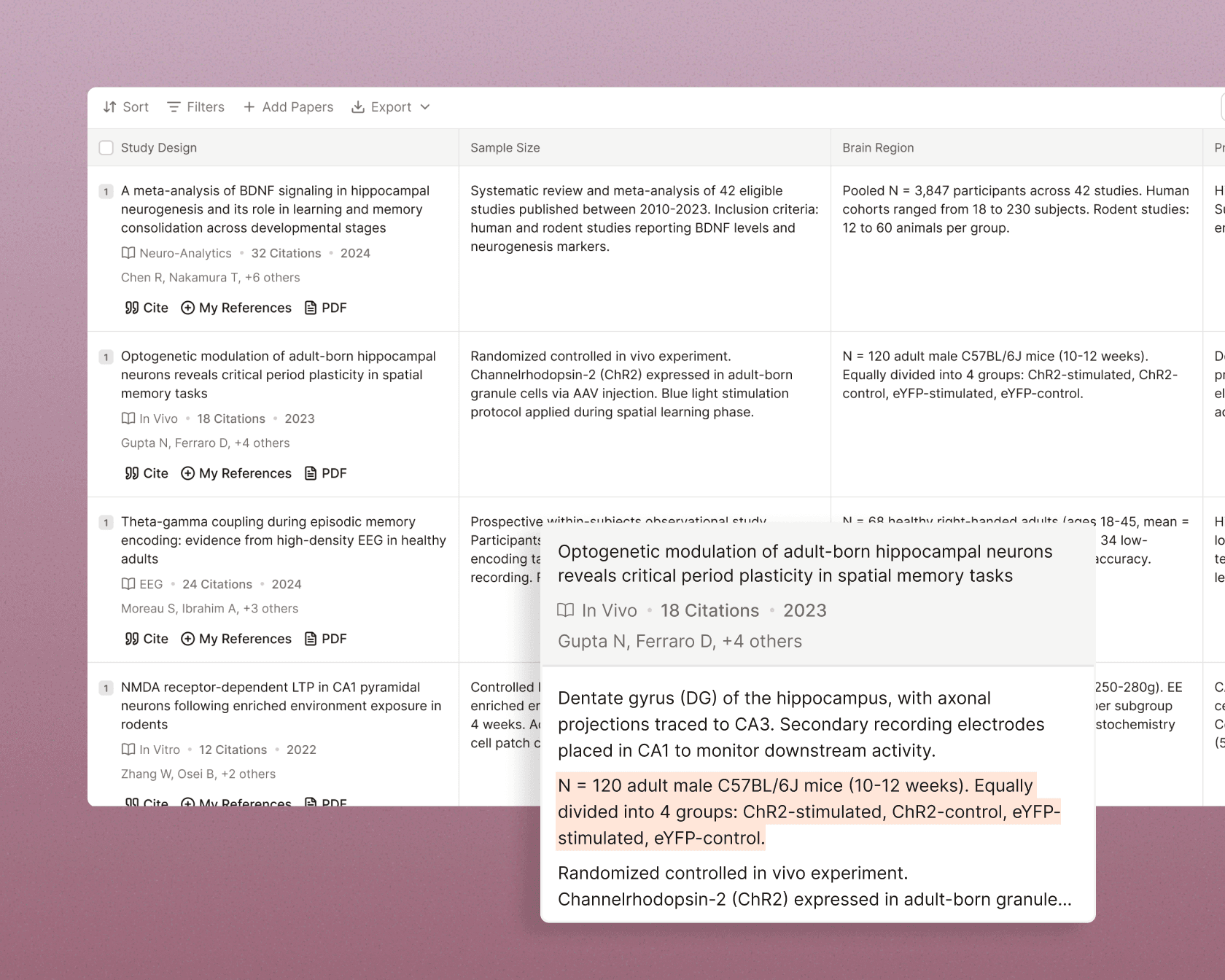
One agent for exploring, reading, and reviewing the literature
Research Agent, Chat with PDF, and Literature Review are the same agent, working across your question and your papers.
- Explore a topic: The Research Agent runs a multi-step investigation across 200M+ papers and your library, comparing methods and findings and mapping where the evidence agrees, clashes, or leaves gaps.
- Read and question papers: Chat with a single paper or across several at once, ask about methods, results, and conclusions, and get answers grounded in the full text.
- Generate a literature review: Set the protocol first, then get a synthesized review of up to 50 papers, organized by theme and cited throughout.
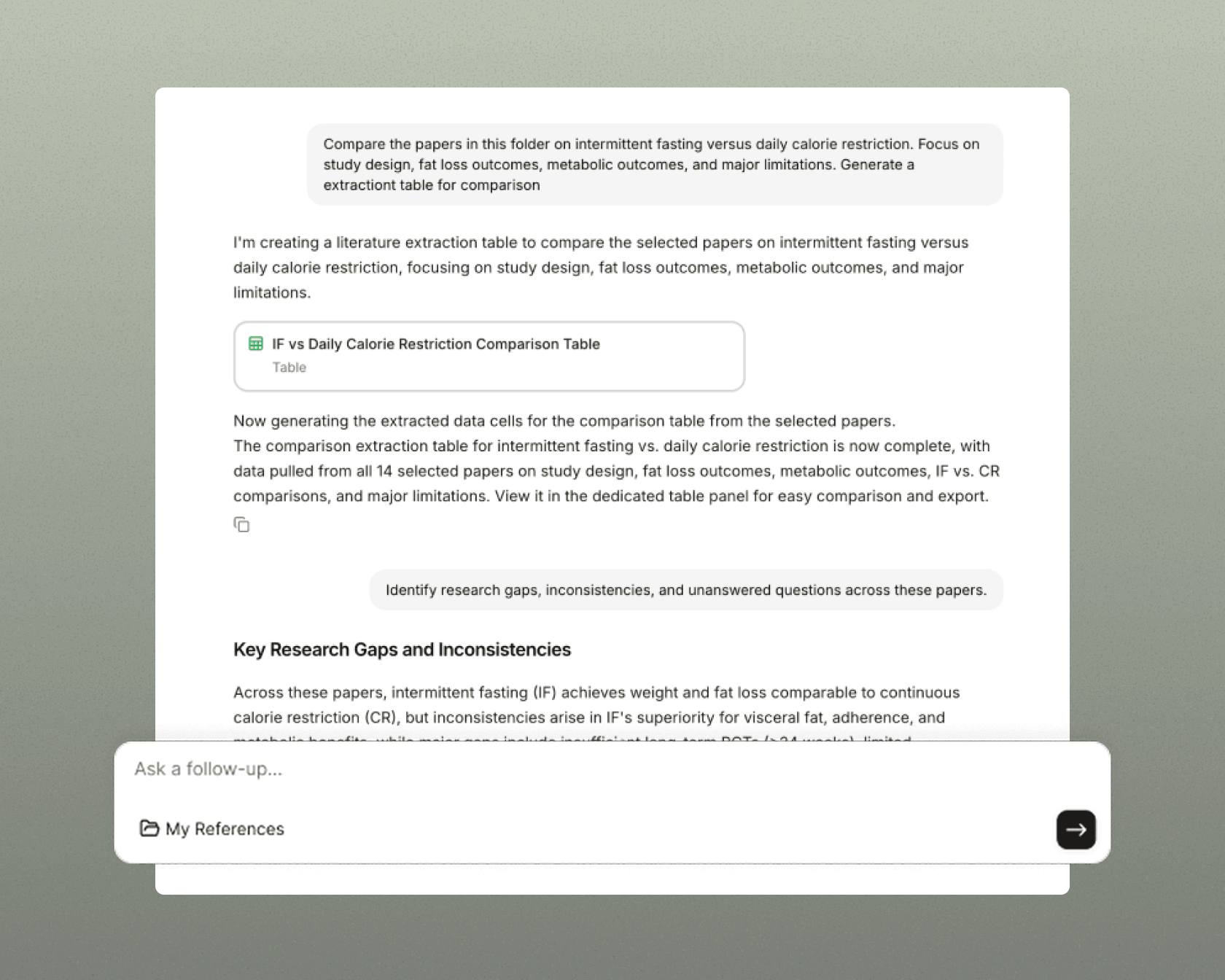
Research, write, and cite in one place
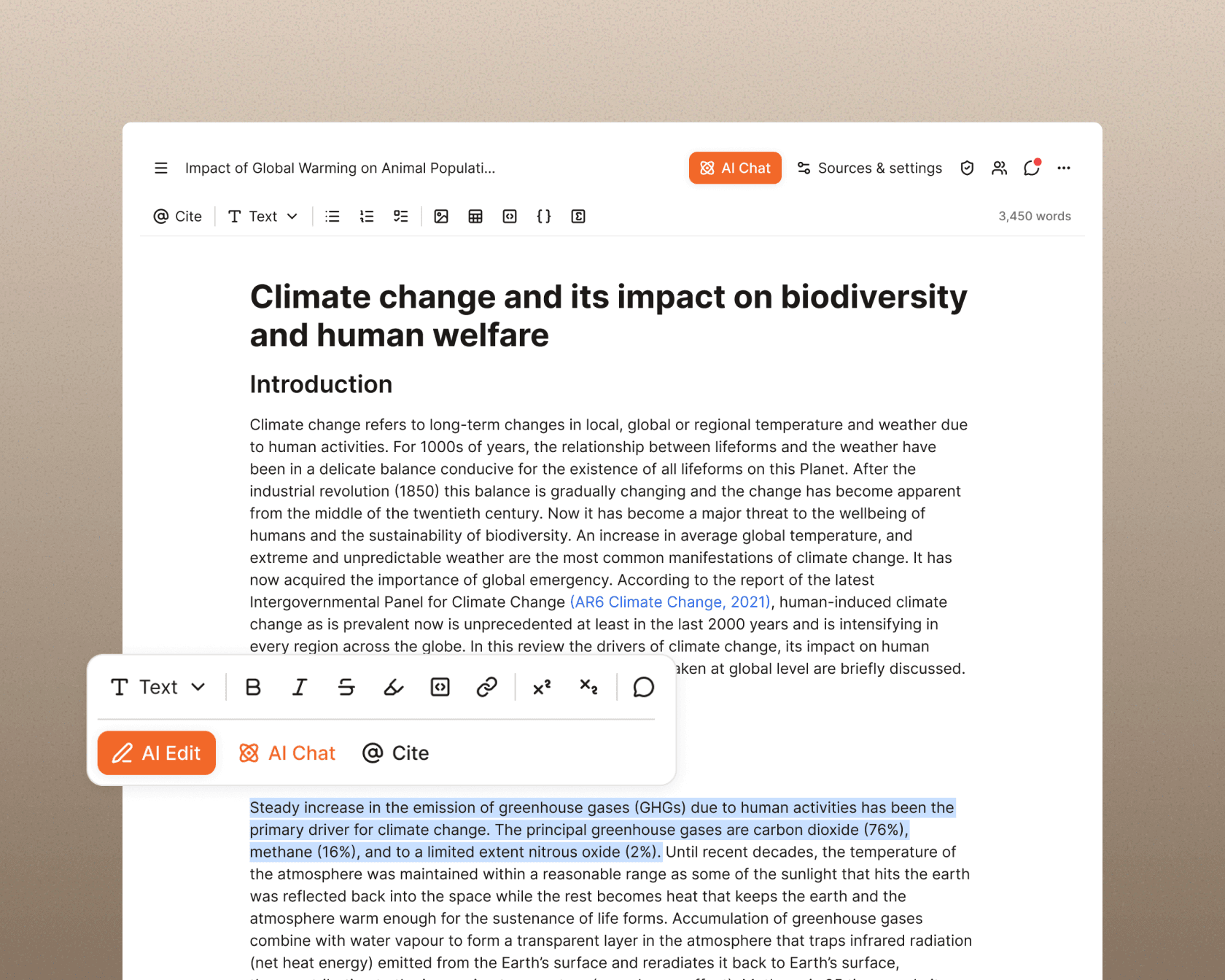
Draft from the papers you have collected, with an agent that researches, edits, and cites as you write.
- Generate a citation-grounded draft from a research question, or write it yourself with the agent alongside you.
- Every AI-written passage is grounded in real literature and cited to it, never invented references.
- Cite from your own library and 200M+ papers in the same document.
- Switch between 1,000+ citation styles without reformatting by hand.
From one researcher to a whole lab
Paperguide starts as your own workspace and grows by adding seats. Teams get shared workspaces where papers, annotations, reviews, and documents belong to the project rather than to one person's account, with roles that decide who can edit, review, or just read. Everyone keeps a private space for their own work.
Coming soon: GDPR, SOC 2, and ISO 27001.
Your work gets checked. Ours holds up.
Research does not end when you finish it. A peer reviewer questions your exclusions. A client asks where a number came from. An auditor wants the search documented. A committee reads the methods section closely. Paperguide is built for those moments.
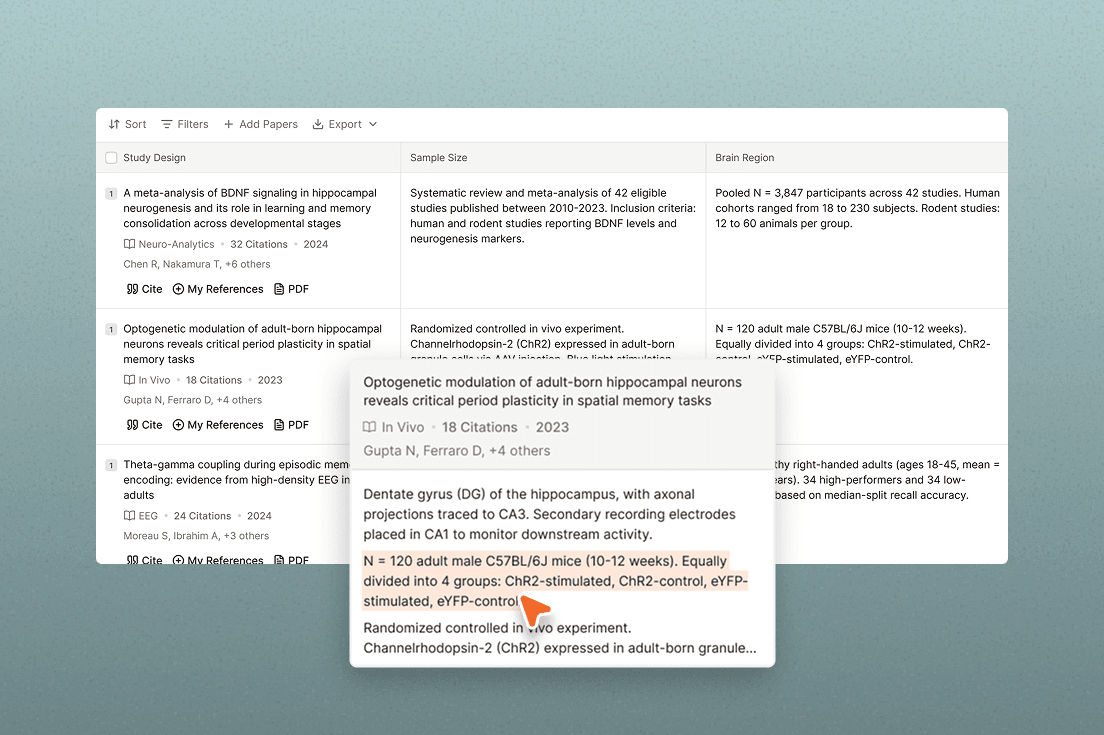
Every claim traces to a statement
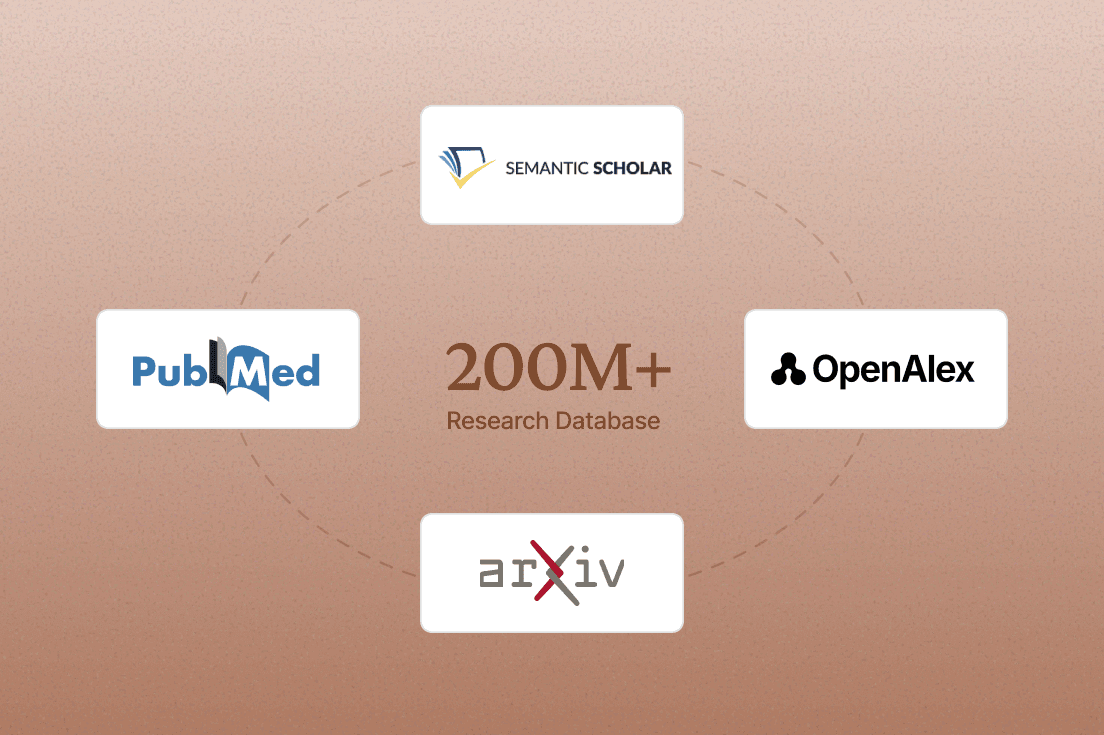
Built on 200M+ peer-reviewed papers
Citation-grounded, so you can defend it
Accuracy you can inspect
The strength of every source is visible
How teams use it.

A 2,000-paper PRISMA review screened and extracted in a fraction of the time, without loosening the criteria.Read case study

Three separate tools became one workspace, so reading, extracting, and comparing papers happens in a single pass.Read case study

Custom-column extraction across hundreds of nanomedicine papers, every value cited back to its source.Read case study
A meta-analysis that surfaced contradictions a manual review would have missed, in half the time.Read case study

Cited clinical evidence in minutes under assessment deadlines, with every claim traceable.Read case study
What researchers say
Paperguide not only enables the search for scientific articles but also provides a comprehensive systematic evaluation of the search results... it leads to significant time savings and better results, because one is "forced" to adopt a systematic approach from the start.
Paperguide search, literature review and writer tools have made my research so much easier. I can complete my whole research in Paperguide, without even switching to Google Scholar and ChatGPT.
The per-criterion evidence changed how our reviewers work. It cut our abstract screening from about three weeks to one, and the decisions came out more consistent, not less.
One standout feature is the Systematic Literature Review, which has been extremely helpful for writing academic papers. The writing features integrate with the user's library.
Start with a question
Ask something you have been meaning to look into. Paperguide will find the papers, and you can take it as far as the work needs.