Run rigorous, auditable systematic reviews with PRISMA reporting
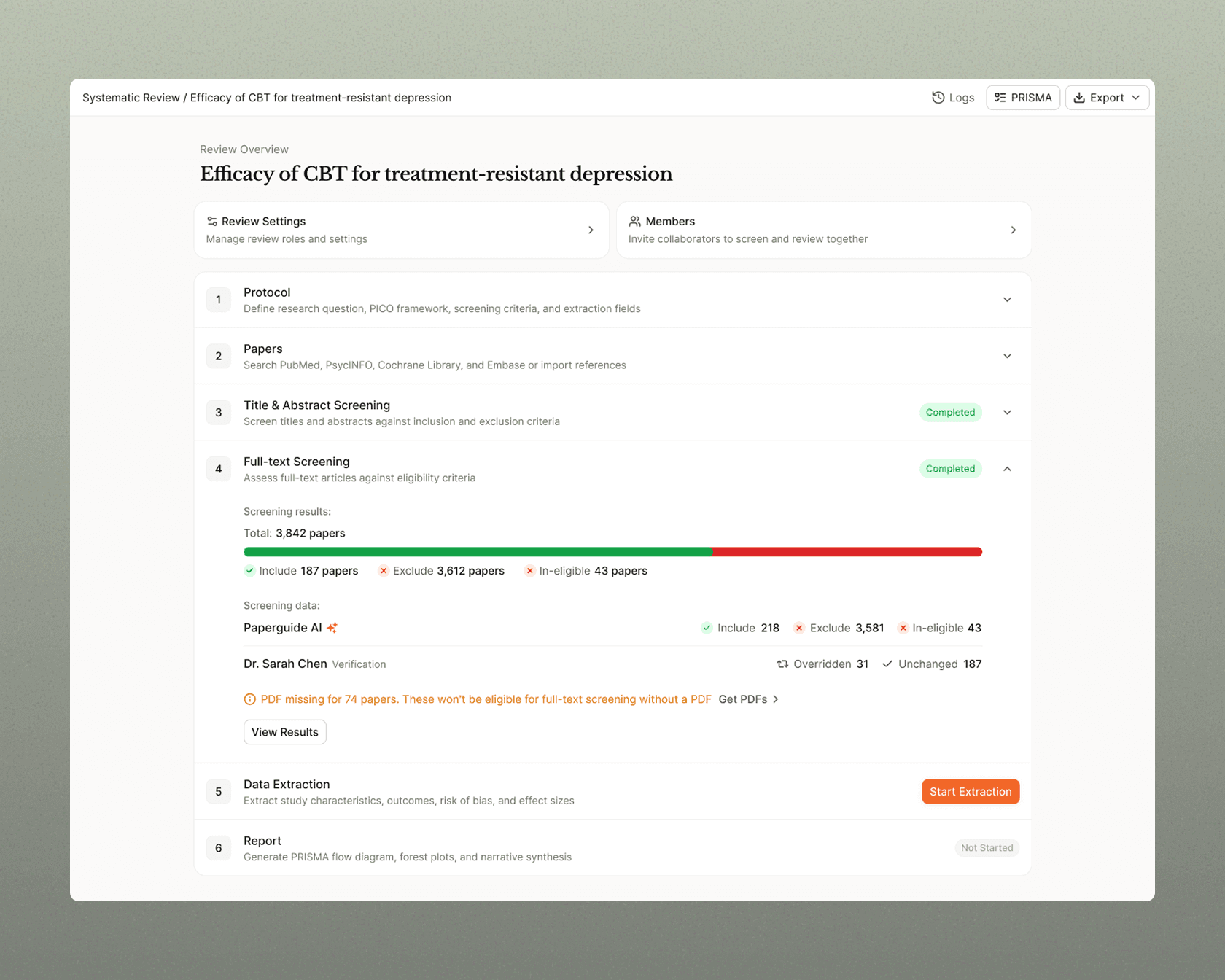
Protocol, dual screening, data extraction, and PRISMA reporting in one workspace. AI prepares the evidence for every criterion; your reviewers make the calls and every decision stays on record.
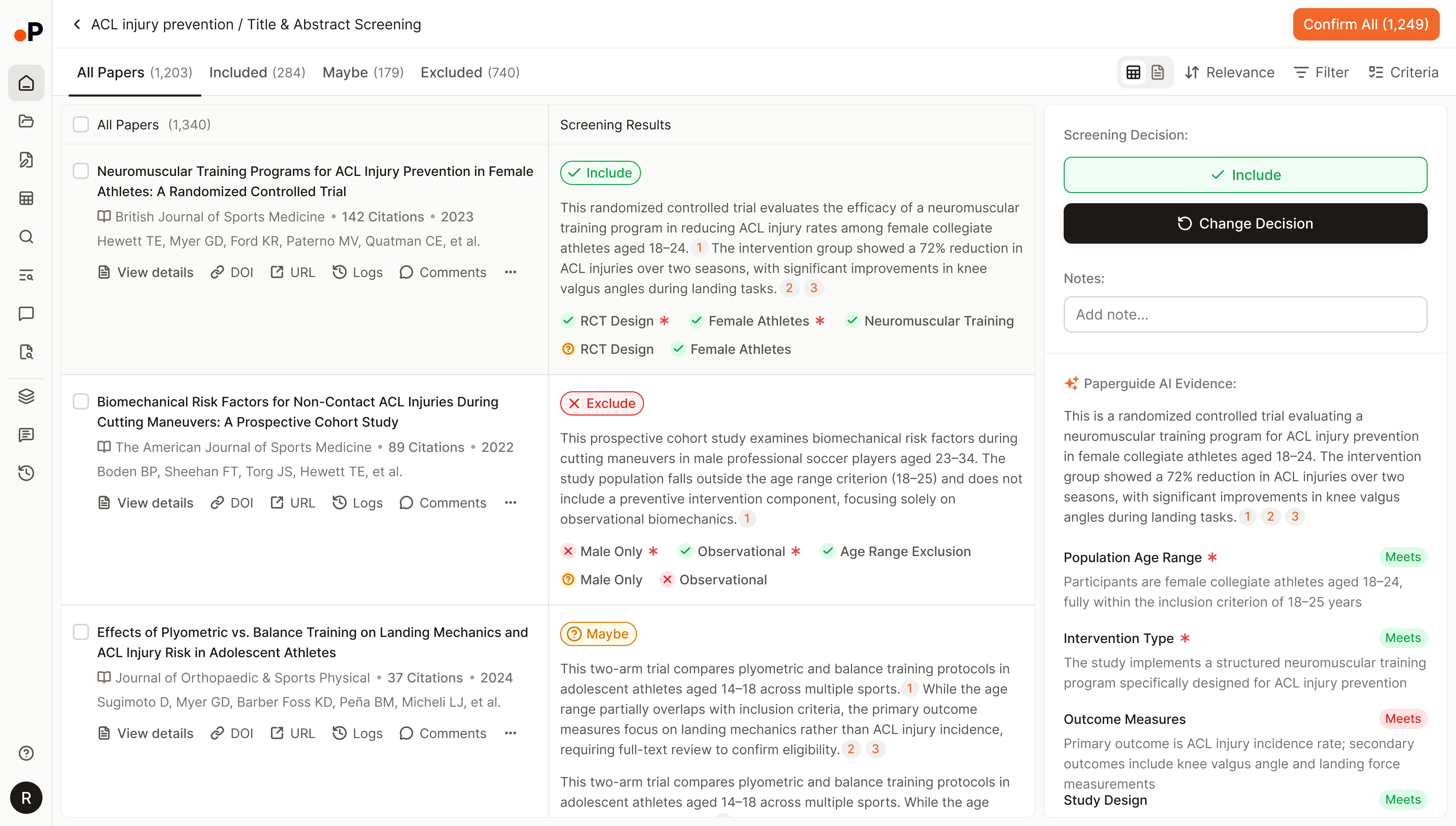
research papers database
independent reviewers, lead-resolved conflicts
decision logged with its criterion and evidence
generated from your actual counts
The method stays. The manual labor goes.
Documented, not reconstructed
The protocol, criteria, and every screening decision are recorded as you work, so the audit trail is a byproduct of the review, not a project you rebuild at the end.
Evidence before you screen
For every criterion, the relevant statements are already pulled from the paper and cited in place, so a decision is a few cited sentences, not a full re-read.
Reproducible every cycle
Save a protocol once and re-run it over new papers, so an update carries the same documented method as the last review.
Independent dual review, or AI-led with verification
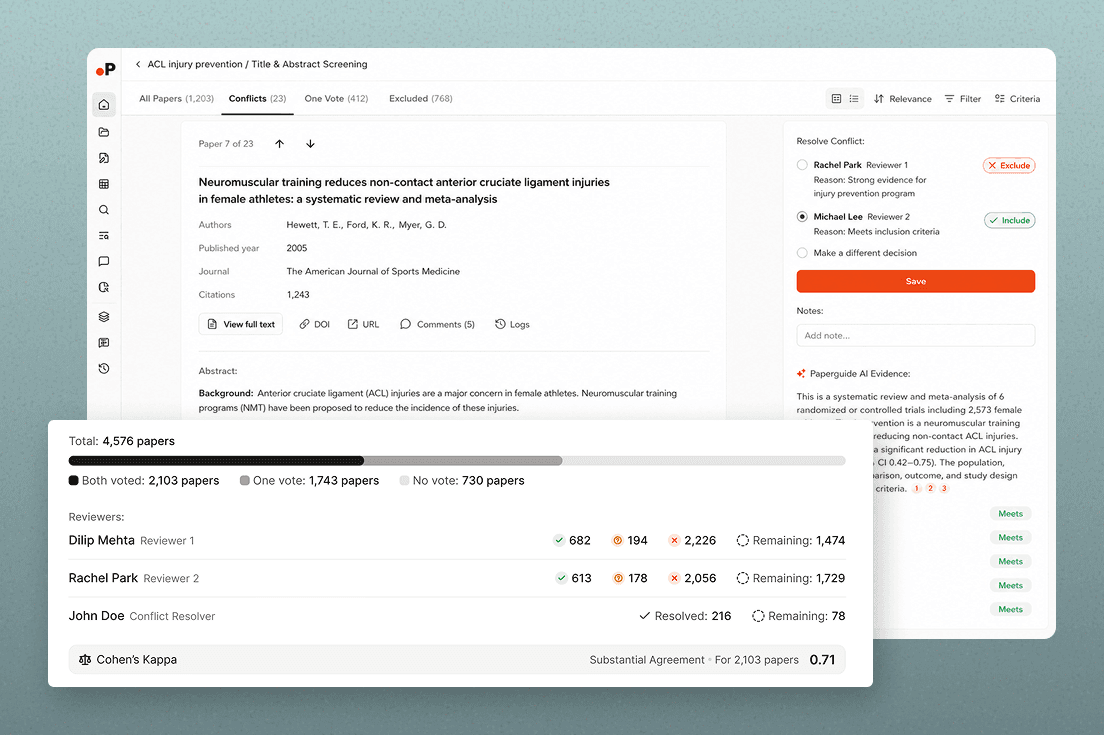
Dual Review Systematic Review
Two reviewers screen every paper independently, with a conflict resolver for disagreements. AI never decides here; it prepares the cited evidence for each criterion so reviewers decide faster and more consistently. Built for journal submissions, HTA dossiers, and CERs.
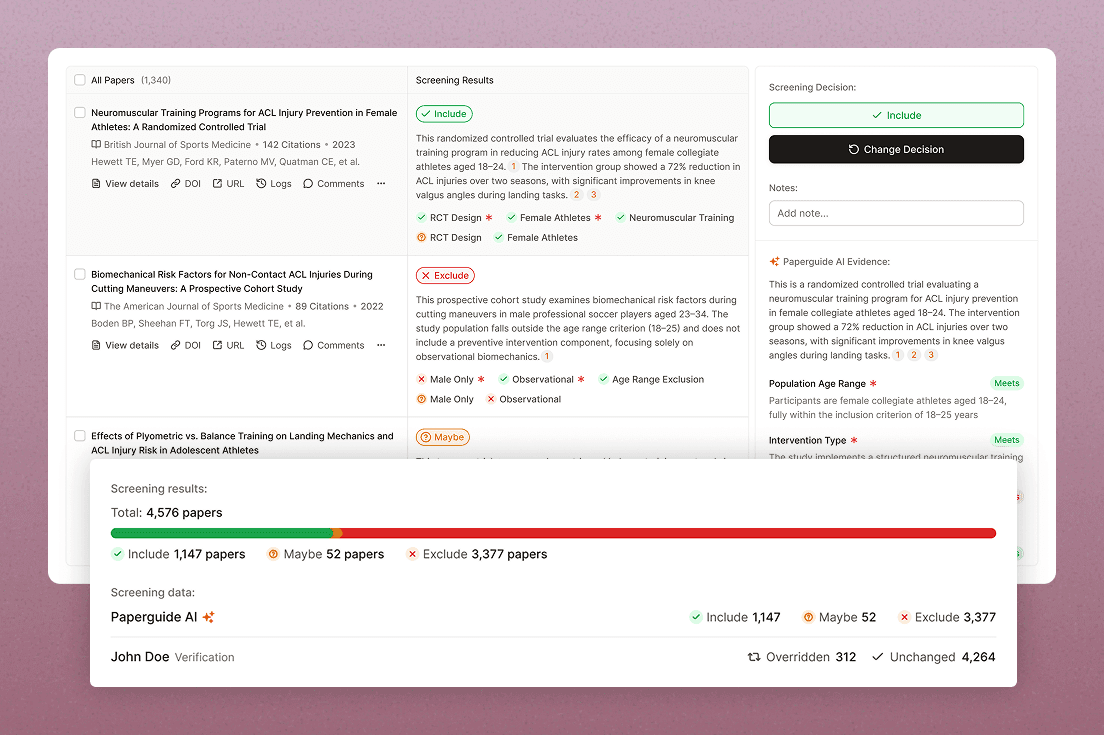
AI Systematic Review
For rapid, scoping, and internal reviews. AI makes the screening call with its evidence attached to every decision, and a named verifier reviews, overrides, and confirms each stage before the review advances.
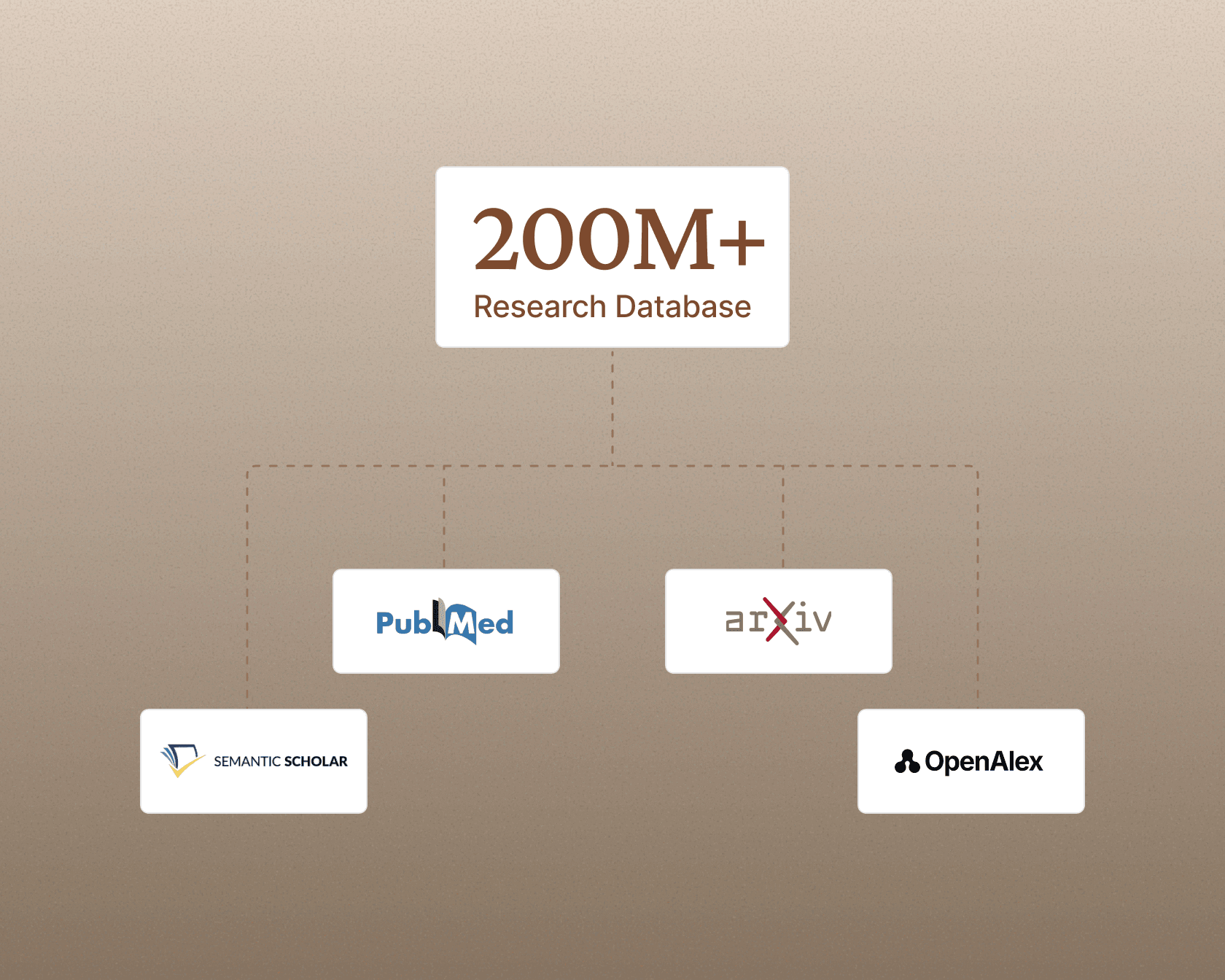
Built on 200M+ peer-reviewed papers
Your review draws on the published record and the papers you already have.
- Search PubMed, arXiv, OpenAlex, and Semantic Scholar in one place.
- Pool results with your own library from Zotero, Mendeley, or Paperguide.
- Open-access PDFs fetched automatically; paywalled papers via your institutional proxy (EZproxy and other major providers).
- SJR, SNIP, and citation signals on every result.
What runs your review end to end
From protocol to report, with the team roles a review actually needs.
- Protocol builder. AI drafts eligibility criteria and extraction fields; you edit, and criteria order sets the exclusion reasons.
- Pooled, deduplicated collection. Search queries and your library pool into one view, deduplicated before screening starts.
- Team roles per stage. Edit, Reviewer, and View-only roles, with reviewers, verifiers, and a conflict resolver assigned per stage.
- Add papers mid-review. Later-found papers run the same screening path, keeping the PRISMA counts honest.
Why the output holds up
Every screening and extraction decision carries a criterion, evidence, and a name. When a reviewer or auditor asks why, the answer already exists.
Human decisions, on record
In dual review AI never decides; in AI mode a person confirms every stage. Each decision carries a criterion, its evidence, and who confirmed it.
Evidence linked to source
For every criterion, the relevant statements link to where they sit in the full text, so verifying a call means checking its cited sentences.
Verified before synthesis
Every value in the table cites the statement it came from, and a named verifier confirms each paper before it reaches the report.
PRISMA from your counts
The diagram and methodology log are generated from your actual counts, not reconstructed from spreadsheets at the end.
Reviews that had to hold up
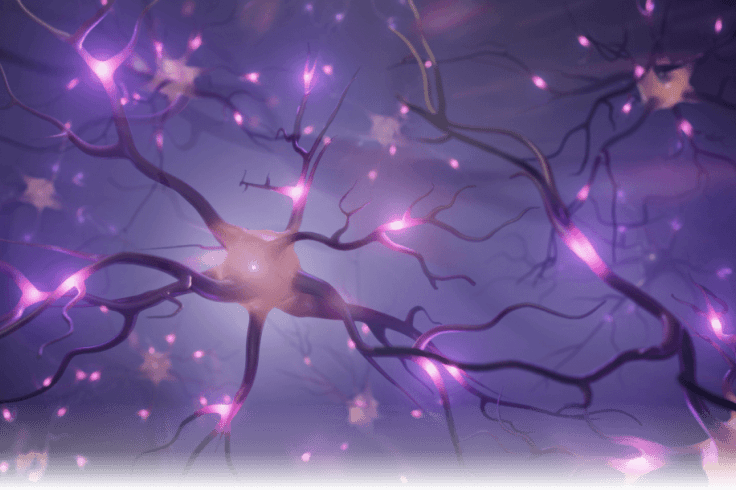
A 2,000-paper PRISMA review screened and extracted in a fraction of the time, without loosening the criteria.Read case study
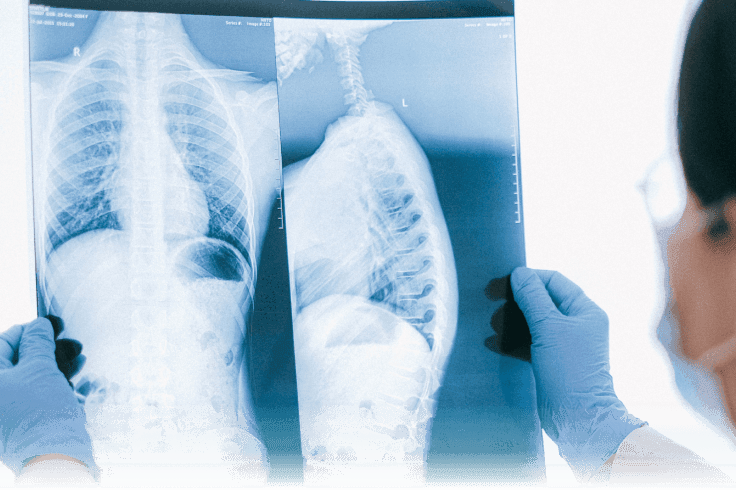
A meta-analysis that surfaced contradictions a manual review would have missed, in half the time.Read case study

Dual-screened SLR screening cut from about three weeks to one, with independent review and PRISMA intact.Read case study
CER literature reviews where every exclusion maps to a criterion an auditor can follow, with a complete decision log built in.Read case study

A dual-screened, PRISMA-documented review a small lab can run and a journal will accept.Read case study
Built for teams whose reviews have to hold up
Evidence-synthesis consultancies and CROs
Medical device and diagnostics teams
Academic and clinical researchers
Public health and policy teams
What researchers say
The per-criterion evidence changed how our reviewers work. It cut our abstract screening from about three weeks to one, and the decisions came out more consistent, not less.
When an auditor asks why a study was excluded, the answer is one click away: the criterion, the evidence, and the person who confirmed it. We stopped rebuilding the audit trail at the end of every review.
We deliver more reviews per analyst than we did a year ago. Screening and extraction used to eat the timeline; now they are the fastest parts, and that shows up directly in how many client projects we can take on.
Two students screened independently and a supervisor resolved the conflicts, exactly how a review team should work. The PRISMA numbers came straight from the workflow, so the methods section almost wrote itself.