The literature review your CER can be audited against
Clinical evaluation, performance evaluation, and post-market surveillance all run on the same systematic literature review, done again every cycle, and defended line by line. Paperguide runs that review in one AI-native workspace: protocol, documented screening, verified extraction, and a PRISMA trail your Notified Body can follow.








The review is the easy part. Defending it is the job.
MEDDEV 2.7/1 Rev 4 and EU MDR do not just ask for a literature review. They ask for a systematic one: a protocol written before the search, documented search terms, inclusion and exclusion criteria fixed in advance, a documented reason for every excluded paper, and both favorable and unfavorable evidence appraised against predefined criteria. Then they ask you to do it again, on a lifecycle cadence, for every device.
Done across a search database, a spreadsheet, a PDF folder, and a Word document, the review is slow and the audit trail is rebuilt by hand every time. When a Notified Body reviewer asks why a specific paper was excluded, the answer lives in someone's memory or a lost email.
- A systematic protocol and search, reproduced for every CER, PER, and PMS update.
- A documented, defensible reason behind every inclusion and exclusion decision.
- Favorable and unfavorable data both appraised, against predefined criteria, from full text.
- Manual screening and manual documentation competing with limited clinical and regulatory headcount.
One systematic review, reused across the device lifecycle
The literature review is not a one-time task. It recurs at every stage of a device's regulated life. Paperguide sits where published evidence has to be found, appraised, and defended.
State of the Art
Establish current clinical practice and alternatives for the device's scope.Clinical / Performance Evaluation
Build the systematic review behind the CER (devices) or PER (diagnostics).Equivalence & Comparators
Appraise published data on equivalent and benchmark devices.Post-Market Surveillance & PMCF
Re-run the review on cadence to catch new evidence and signals.Vigilance & Risk
Synthesize published adverse-event and complication literature into risk inputs.
What clinical and regulatory teams use it for
State of the Art & Clinical Background
Establish the state of the art
Benchmark alternative treatments
Frame the intended-use context
Clinical Evaluation (CER)
Build the CER literature review
Appraise methodological quality
Capture unfavorable data
Performance Evaluation (IVDR, Diagnostics)
Build the diagnostic performance review
Establish scientific validity
Compare against reference methods
Equivalence & Comparators
Screen for equivalence evidence
Benchmark comparator outcomes
Post-Market Surveillance & PMCF
Run the recurring PMS update
Detect emerging signals
Support PMCF evaluation
Vigilance, Risk & Safety
Synthesize complication literature
Feed risk management
Built for output a Notified Body can follow
In a regulated submission, an answer is only useful if it can be sourced, appraised, and defended. These are the mechanics that make Paperguide's output hold up under review.
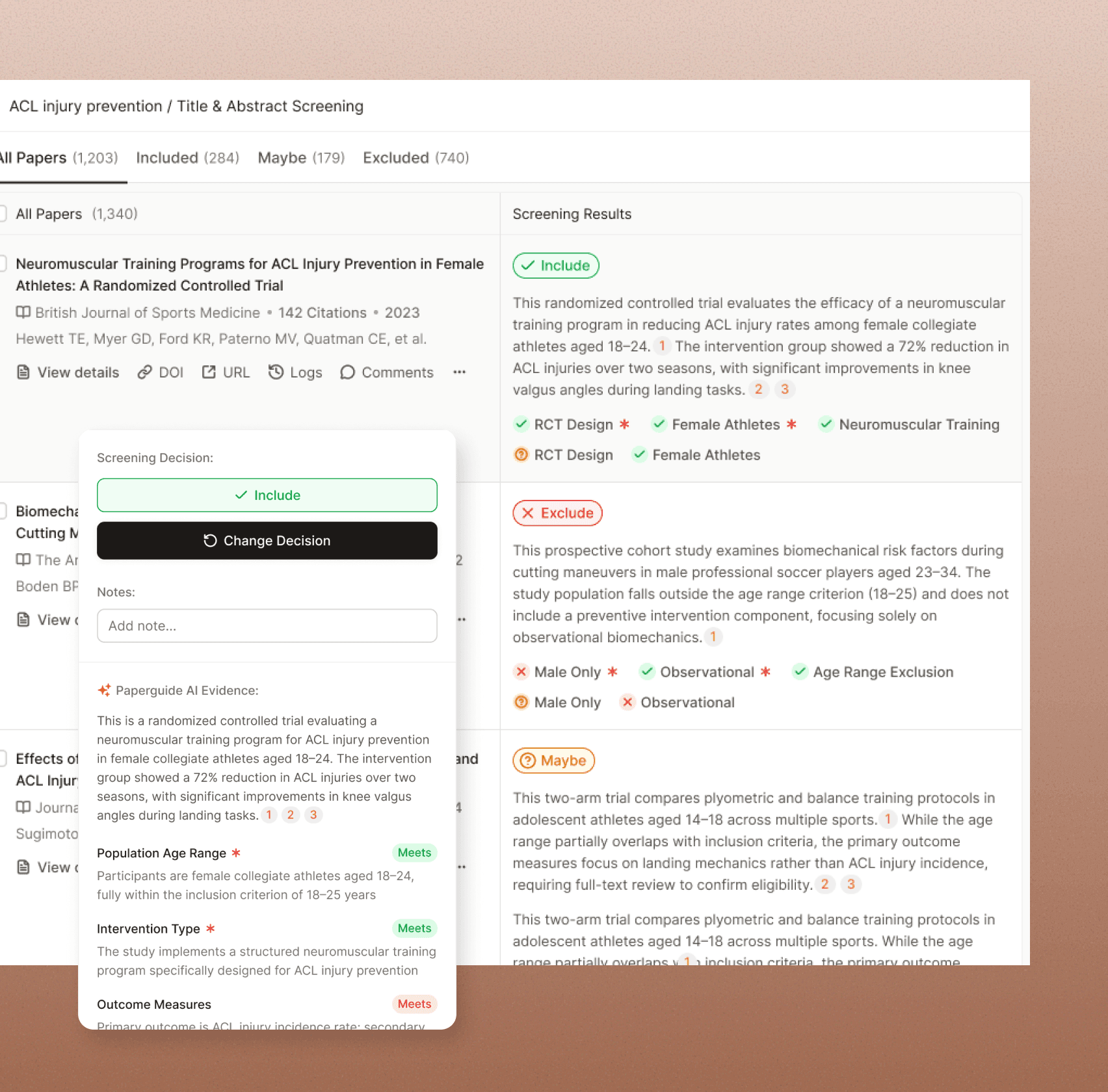
A documented reason behind every exclusion
MDR and MEDDEV require it. Every excluded paper carries the specific criterion it failed, in your protocol's order, so the exclusion log is a byproduct of screening, not a separate task.
Sentence-level citations on every value
Each data point in an evidence table links to the exact statement in the source PDF. When a reviewer questions a number, the source is one click away, in context.
Favorable and unfavorable data, both captured
Screening criteria and extraction fields surface adverse outcomes and failure modes, not just positive results, which is exactly what Annex XIV requires.
A protocol you reproduce, not rebuild
The saved protocol, criteria, and extraction fields make each lifecycle update a re-run of a documented method, so continuity across cycles is visible to your reviewer.
Full-text appraisal, including paywalled papers
Open-access PDFs are fetched automatically; set your institutional proxy (EZproxy and other major providers) to retrieve paywalled full text, and screening resumes once a PDF arrives.
Human control at every decision
AI prepares the evidence and drafts the extraction; a named reviewer or verifier confirms each stage, and every confirmation is attributable to a person.
Evidence quality made visible
Journal quality signals (quartile, SJR, SNIP, citation counts) sit on results, supporting the evidence-level appraisal MEDDEV expects.
200M+ peer-reviewed papers
Across PubMed, arXiv, OpenAlex, and Semantic Scholar, alongside your own references from Zotero, Mendeley, or direct import.
One workspace, the tools clinical and regulatory teams reach for
Systematic Review
Extract Data
AI Search
Reference Manager
AI Writer
Research Agent
Chat with PDF
Case Studies
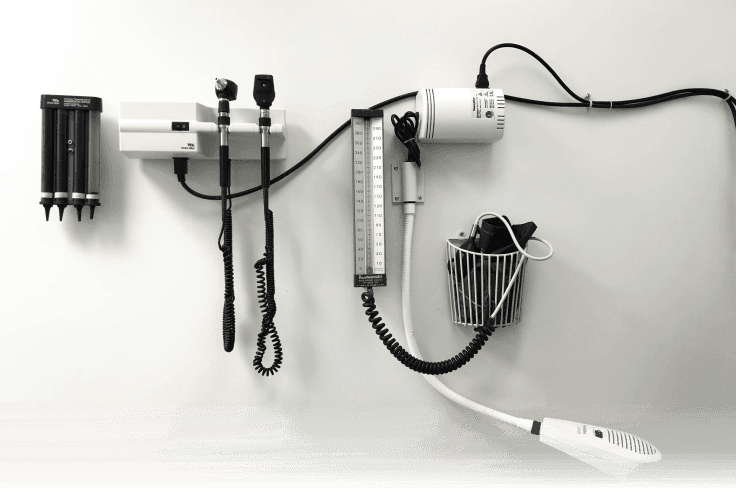
CER literature reviews where every exclusion maps to a criterion an auditor can follow, with a complete decision log built in.Read case study

IVDR performance reviews that assemble faster under deadline, and stay consistent and cited cycle after cycle.Read case study

Custom-column extraction across hundreds of nanomedicine papers, every value cited back to its source.Read case study
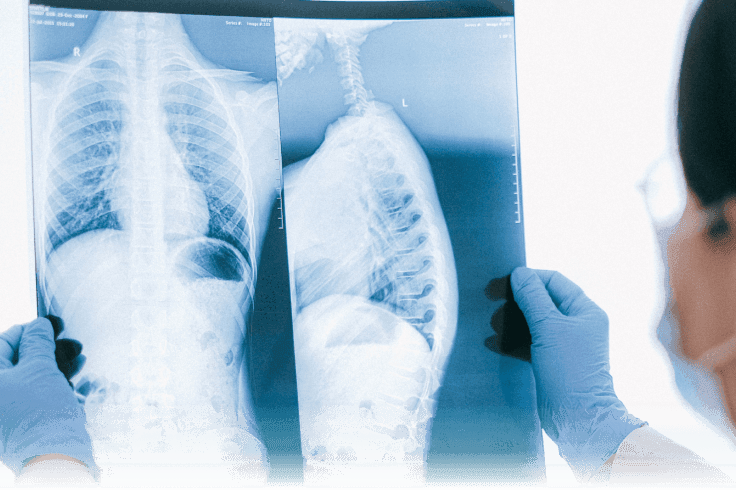
A meta-analysis that surfaced contradictions a manual review would have missed, in half the time.Read case study
Testimonials
When a Notified Body asks why a study was excluded, the answer is already in the review: the criterion, the evidence, and the person who confirmed it. Our CER updates stopped being a scramble.
The screening evidence links to the actual statements in the full text, so verification went from re-reading papers to checking citations. It cut the review time roughly in half.
I run reviews for several device clients from separate workspaces, each with the same documented method. Setup that used to take days is now the protocol step, so I take on more clients without cutting corners.
The recurring literature update used to be a full re-do every cycle. Now it re-runs the saved protocol over the new window and only screens what is new, which turned a multi-week task into a few days.
Ready for your quality and security review
Named roles and per-stage verifier assignments, attributable confirmations, documented protocols, and traceable outputs, with SSO and role-based access for IT.
Coming soon: GDPR, SOC 2, and ISO 27001.
Make your next CER update the straightforward one
Book a demo and we will run a clinical evaluation literature review the way your team would: protocol, documented screening with evidence, verified extraction, and the PRISMA trail your reviewer expects.