7 Best Claude Science Alternatives for Systematic Reviews in 2026


Claude Science is Anthropic's AI workbench for scientists, announced on June 30, 2026. It is built for scientific reasoning, code-driven analysis, HPC-scale compute, native rendering of proteins and molecular structures, and reproducible artifacts traced back to code and environment. Inside a computational lab, it is a powerful tool.
It was not built for the review side of scientific research. Evidence synthesis, systematic reviews, PRISMA 2020 reporting, blind screening across two independent reviewers, structured data extraction with quote-level citations, reference management, and citation-grounded writing all run on a different kind of platform. One built for the review workflow rather than the analysis pipeline.
That gap is why two very different groups are looking at Claude Science alternatives. Graduate students, postdocs, and faculty who need to find, organize, and synthesize literature for a review or a paper. And HEOR consultancies, CROs, medical writers, and medical affairs teams who need that same work to survive peer review, regulatory audit, and client scrutiny.
This guide compares the 7 best Claude Science alternatives for literature reviews and systematic reviews in 2026. Each platform is assessed on search and discovery, reference management, screening workflow, PRISMA reporting, structured extraction, citation-grounded writing, and where it fits for solo researchers versus evidence synthesis teams.
TL;DR
- Paperguide is the best Claude Science alternative for literature reviews and evidence synthesis in 2026. Claude Science is an AI workbench for scientific reasoning and computation. Paperguide is an AI-native platform for scientific research workflows and evidence synthesis, covering discovery through cited draft in one workspace.
- It scales with the work. A postdoc on the Free or Plus tier gets AI search across 200M+ papers, an AI-native reference manager, and citation-grounded writing. A CRO on Evidence Teams gets PRISMA-grade dual-review blind screening and audit trails.
- Systematic review capacity is the real dividing line. Plus covers reviews up to 1,000 papers, Pro and Evidence Teams up to 5,000, and Enterprise up to 20,000.
- Runners-up by job. Elicit for structured extraction at scale, SciSpace for reading and writing around papers, Consensus for fast cited answers, ResearchRabbit for citation-network discovery.
What are the Best Claude Science Alternatives in 2026?
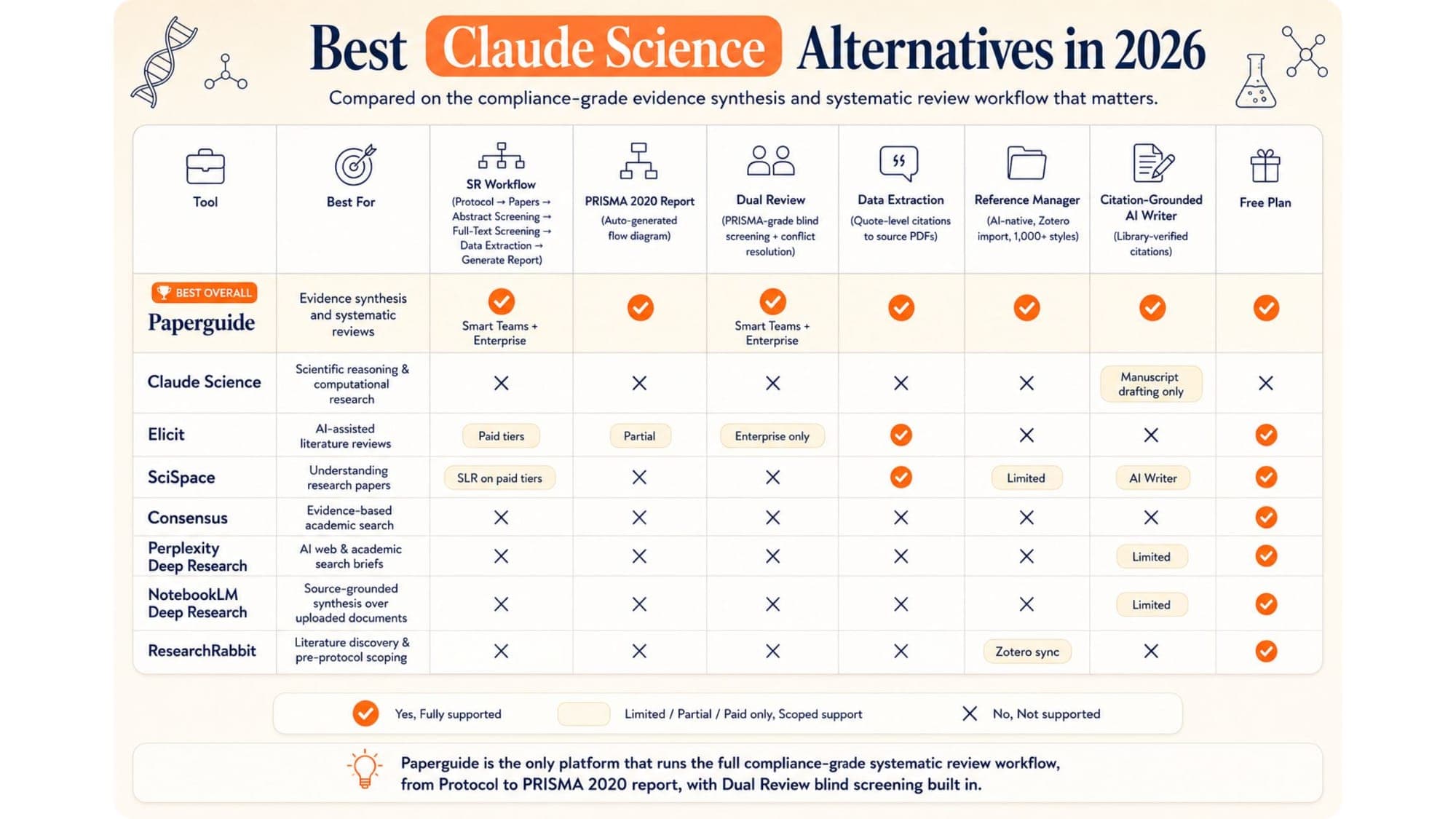
The best Claude Science alternative in 2026 is Paperguide. Claude Science is a scientific workbench built for compute-heavy analysis and reproducible code artifacts. Paperguide is an AI-native platform for scientific research workflows and evidence synthesis, with the AI Reference Manager, the Research Agent, Extract Data, Chat with PDF, and the AI Paper Writer connected around the work.
Elicit, SciSpace, Consensus, Perplexity Deep Research, NotebookLM Deep Research, and ResearchRabbit each do one slice of the research process well. For researchers who want one connected workspace from search to cited draft, and for teams who need that workspace to also run an auditable systematic review, Paperguide covers the widest span of the workflow.
What Is Claude Science?
Claude Science is Anthropic's AI workbench for scientists, announced June 30, 2026 and available in beta on macOS and Linux for Pro, Max, Team, and Enterprise plans. It helps researchers run scientific analyses, execute code-driven pipelines, generate publication-ready figures, and produce reproducible artifacts traced to code and environment across the life sciences stack.
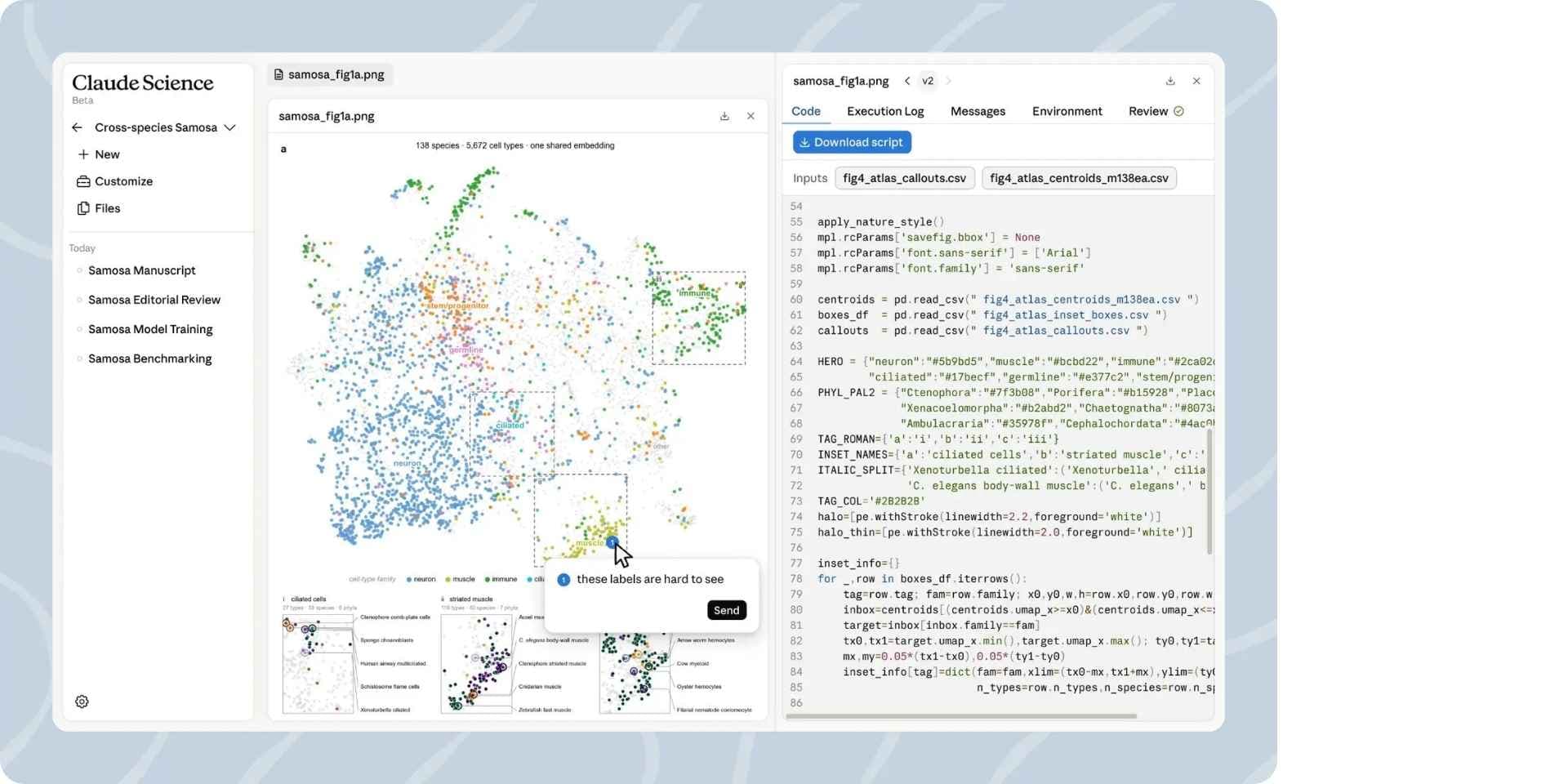
It pairs Claude's reasoning with over 60 curated skills and connectors pre-configured for genomics, single-cell, proteomics, structural biology, and cheminformatics. It runs on a laptop, a Linux box, or an HPC login node, and submits jobs to an existing HPC cluster over SSH or to a Modal account for on-demand compute.
Reproducibility is the standout. Every figure or analysis ships with the code that produced it, the execution environment, a plain-language description, and the full message history, so results can be validated months later. A reviewer agent checks citations and calculations during pipeline execution, flagging and correcting errors.
What it does not do is the review side. Systematic reviews, PRISMA 2020 reporting, blind dual-reviewer screening, structured extraction with audit-ready reporting, reference management, and citation-grounded writing all need a platform built for that workflow.
Best For
- Computational biologists
- Bioinformatics researchers
- Life science research labs
- Genomics and single-cell analysis teams
- Proteomics, structural biology, and cheminformatics researchers
- Research engineers working with HPC compute
- Scientists producing reproducible code-driven artifacts
Key Features
- AI-powered scientific reasoning
- Native rendering of proteins, molecules, structures, and genome tracks
- Over 60 curated scientific skills and connectors
- BioNeMo Agent Toolkit integration (Evo 2, Boltz-2, OpenFold3)
- Reproducible artifacts with code, environment, and conversation history preserved
- Reviewer agent that checks citations and calculations during execution
- Local, remote Linux, HPC via SSH, and Modal cloud compute
- Persistent Python and R kernels
- Figure iteration in plain language
- Manuscript drafting alongside code and analysis
Pros
- Built for compute-heavy scientific research and reproducible artifacts.
- Native scientific rendering of proteins, molecules, and genome tracks.
- Full provenance, with every artifact traced to its code and environment.
- BioNeMo integration and domain-specific skills for life sciences.
- Runs on local, HPC, or cloud compute with jobs submitted over SSH or Modal.
Cons
- Beta only, on macOS and Linux.
- Requires a paid Claude subscription (Pro, Max, Team, or Enterprise).
- No systematic review workflow, protocol builder, or PRISMA reporting.
- No blind dual-reviewer screening or audit-trail features.
- No reference manager with Zotero import or citation styles.
- No structured extraction template with quote-level citations.
- No citation-grounded writer with library-verified citations.
- Not built for HEOR, CRO, medical affairs, or regulated evidence work.
Pricing
Claude Science is in beta with no separate pricing. Access is included with eligible paid Claude subscriptions: Claude Pro at $20/month, Claude Max starting at $100/month, and Claude Team or Enterprise by contacting sales. Team and Enterprise admins need to enable it. The Free plan does not include access.
Why Choose Claude Science?
Claude Science suits computational biologists, bioinformatics researchers, and life science labs whose bottleneck is compute-heavy analysis, code-driven pipelines, or reproducible artifact generation across genomics, single-cell, proteomics, structural biology, and cheminformatics.
If the bottleneck is instead finding and synthesizing literature, running a systematic review, producing PRISMA reporting, or writing with verified citations, that calls for a platform built around the review workflow.
Why Look for a Claude Science Alternative?
Two distinct groups hit the same wall with a compute workbench.
Individual researchers spend their weeks finding papers, organizing references, reading and annotating PDFs, pulling data into tables, and drafting sections that cite real sources. Most of them run that across five disconnected tools, losing context at every handoff. A scientific compute workbench does not fix that.
Evidence synthesis teams have a harder version of the same problem. Their work involves defining a question and protocol, screening thousands of abstracts against inclusion criteria, running blind dual-reviewer screening with documented conflict resolution, extracting structured data with quote-level citations, and producing PRISMA 2020 reports for peer review and regulator submission (Page et al., BMJ 2021). Cochrane methodology expects two independent reviewers at the screening stage. None of that lives inside a compute workbench.
When evaluating a Claude Science alternative, look for:
- AI search across peer-reviewed literature, with reproducible saved searches
- An AI-native reference manager with Zotero import and citation styles
- Structured data extraction with citations back to the source PDF
- Citation-grounded writing verified against a real library
- A systematic review workflow with protocol setup and PRISMA reporting, when the work calls for it
- Blind dual-reviewer screening with structured conflict resolution, for regulated and client-facing output
- Paper-level and project-level audit logs
- Enterprise controls including SSO, SAML, and single-tenancy
The seven tools below cover that space from different angles.
Best Claude Science Alternatives in 2026
1. Paperguide
Paperguide is the best Claude Science alternative in 2026 for scientific research workflows and evidence synthesis. Where Claude Science handles compute-heavy analysis, Paperguide connects the research workflow from finding papers to a cited draft, and scales up to a rigorous, auditable systematic review when the work demands it.
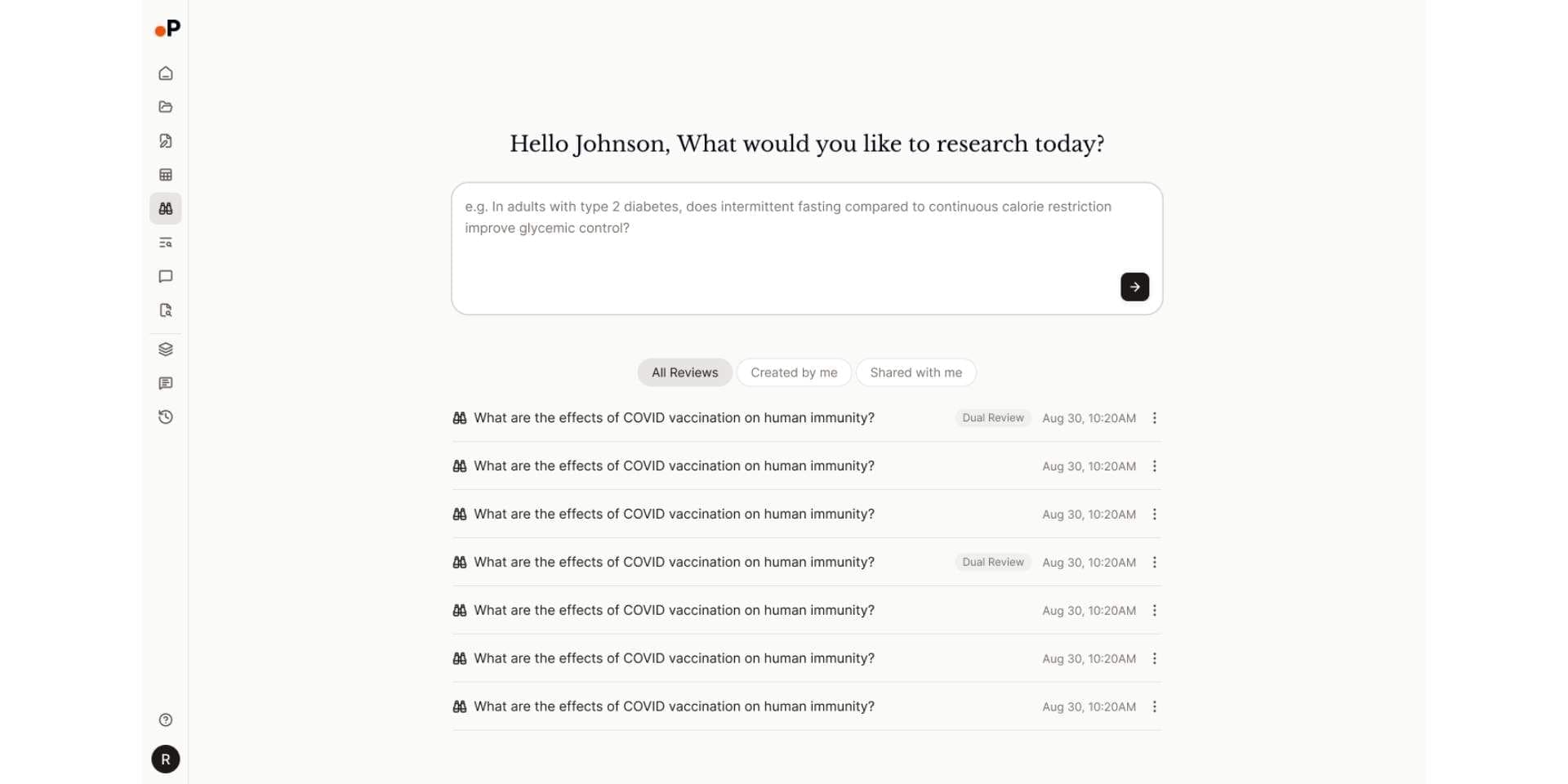
For an individual researcher, the daily surface is AI Search across 200M+ peer-reviewed papers (PubMed, arXiv, OpenAlex, Semantic Scholar), the AI Reference Manager with Zotero import and 1,000+ citation styles, Chat with PDF across multiple papers, Literature Review AI, a Research Agent for multi-step tasks, Deep Research Report, and the AI Paper Writer, whose citations are checked against the actual library. That covers a master's dissertation, a scoping review, or a narrative review without touching the systematic review module at all.
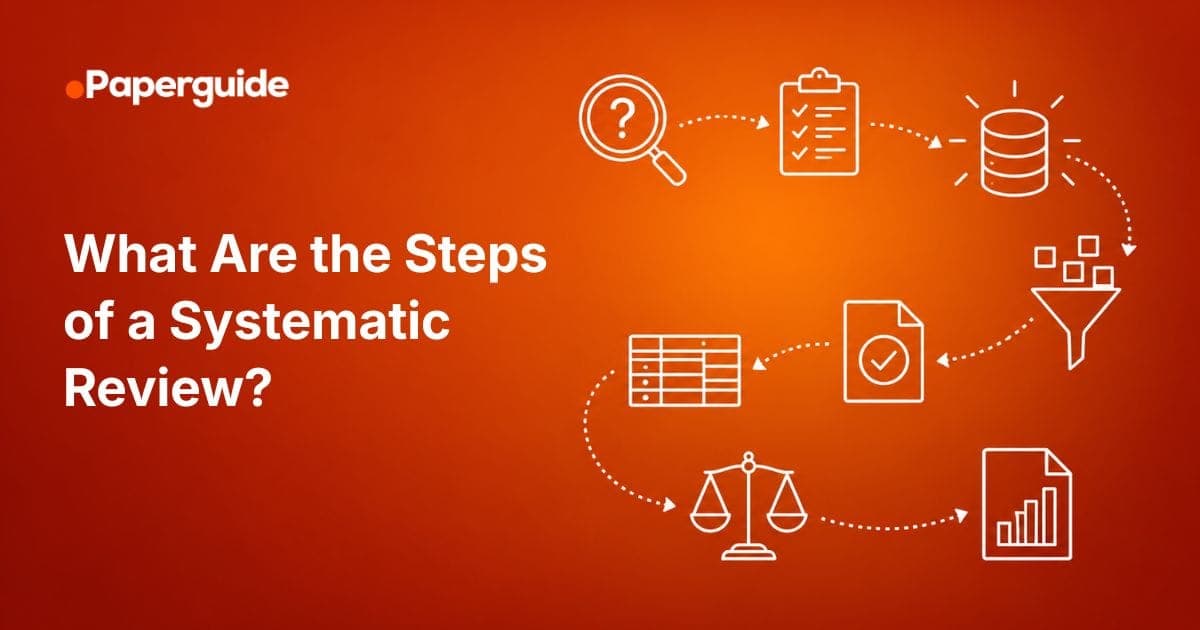
For evidence synthesis teams, Paperguide Systematic Review adds a 6-stage workflow: Protocol, Papers, Abstract Screening, Full-Text Screening, Data Extraction, and Generate Report. Screening runs AI-led for speed, or as dual-review blind screening with lead-resolved conflicts and Cohen's kappa tracking where defensibility matters. Extract Data pulls fields with quote-level citations, and Image and Table Extraction for figures and tabular data is coming soon on Pro and above.
Vertical guides exist for academic research, HEOR, drug discovery, and clinical trial design.
Best For
- PhD candidates and postdocs running literature reviews
- Faculty and principal investigators buying for a lab of 3 to 15
- Clinician-researchers and hospital evidence teams
- Research librarians and information specialists who own search strategy
- Systematic review leads and evidence synthesis managers
- HEOR consultancies, CROs, and medical writers
- Pharma and biotech medical affairs teams
- Clinical and regulatory affairs specialists producing CERs and PMS reviews
Key Features
- AI Search across 200M+ peer-reviewed papers with re-runnable saved searches
- AI Reference Manager with Zotero and Mendeley import, Chrome extension, and 1,000+ citation styles
- Research Agent, Literature Review AI, AI Search, and Chat with PDF as distinct agents
- Deep Research Report for multi-source synthesis
- Extract Data with quote-level citations
- Image and Table Extraction coming soon on Pro and above
- AI Paper Writer with citations verified against the reference library
- Search API with per-tier quotas
- Systematic review workflow: Protocol, Papers, Abstract Screening, Full-Text Screening, Data Extraction, Generate Report
- AI-led and dual-review screening modes with per-stage reviewer assignment
- PRISMA-grade dual-review blind screening on Evidence Teams and Enterprise
- Auto-generated PRISMA 2020 flow diagram with real-time updates
- AI Evidence shows reasoning per criterion, kept separate from decisions so blind review holds
- Inter-rater reliability tracking with Cohen's kappa and low-agreement alerts
- Paper Log and project-level audit trail
- Auto-generated AI methods statement drawn from the audit trail
- Team roles (Edit, Reviewer, View-only) with per-stage assignments
- EZproxy and LibKey for institutional journal access, SSO and RBAC on Enterprise
Pros
- One platform from literature search to cited draft, so context follows the researcher.
- Reference management, extraction, and writing are built in rather than bolted onto a review pipeline.
- Free and Plus tiers are usable for individual researchers, not stripped demos.
- Dual-review blind screening and audit trails available when output faces audit.
- PRISMA 2020 flow diagram generated automatically and exportable as SVG, PNG, or PDF.
- Zotero and Mendeley import means switching costs little.
- Web-based, with no HPC or infrastructure setup.
Cons
- Built for research workflows and evidence synthesis rather than compute-heavy analysis.
- No HPC or Slurm orchestration for large-scale computational biology jobs.
- No native rendering of proteins, molecules, or genome tracks.
- The systematic review module is in beta.
- PRISMA-grade dual-review blind screening is limited to Evidence Teams and Enterprise.
- Free tier has no systematic review capacity.
Pricing
Paperguide prices on AI credits and systematic review capacity (Paperguide pricing, October 2026):
| Plan | Price (annual) | AI credits/mo | Systematic review cap | Notable |
|---|---|---|---|---|
| Free | $0 | 2,000 | Not included | Limited Reference Manager, Chat with PDF, Deep Research Report |
| Plus | $12 per seat/mo, billed annually ($144/yr) | 12,500 | Up to 1,000 papers | Unlimited AI Searches and Reference Manager |
| Pro | $29 per seat/mo, billed annually ($348/yr) | 50,000 | Up to 5,000 papers | Image and Table Extraction coming soon |
| Evidence Teams | $89 per seat/mo, billed annually ($1,068/yr) | 150,000 | Up to 5,000 papers | Adds PRISMA-grade dual reviewer screening |
| Enterprise | Custom | Custom | Up to 20,000 papers | SSO, SAML, single-tenancy |
Plus covers most graduate and postdoc reviews. Pro fits active researchers and small evidence teams. Evidence Teams is the tier where dual reviewer screening arrives, which is what CROs, HEOR consultancies, and regulated teams need. A 30% academic discount applies with a valid university email, and yearly billing saves up to 41%.
Verdict
Paperguide is the best Claude Science alternative in 2026 for anyone whose work is literature rather than computation. A postdoc gets one workspace instead of five tools. A CRO gets dual-review screening, PRISMA reporting, and an audit trail on that same workspace. Claude Science is built for compute-heavy analysis and reproducible code artifacts, which is a different job.
2. Elicit
Elicit is one of the most established AI research assistants in 2026 and a strong Claude Science alternative for structured extraction across large sets of papers. Where Claude Science is built around scientific reasoning and computation, Elicit specializes in pulling data out of many papers at once with sentence-level citations.
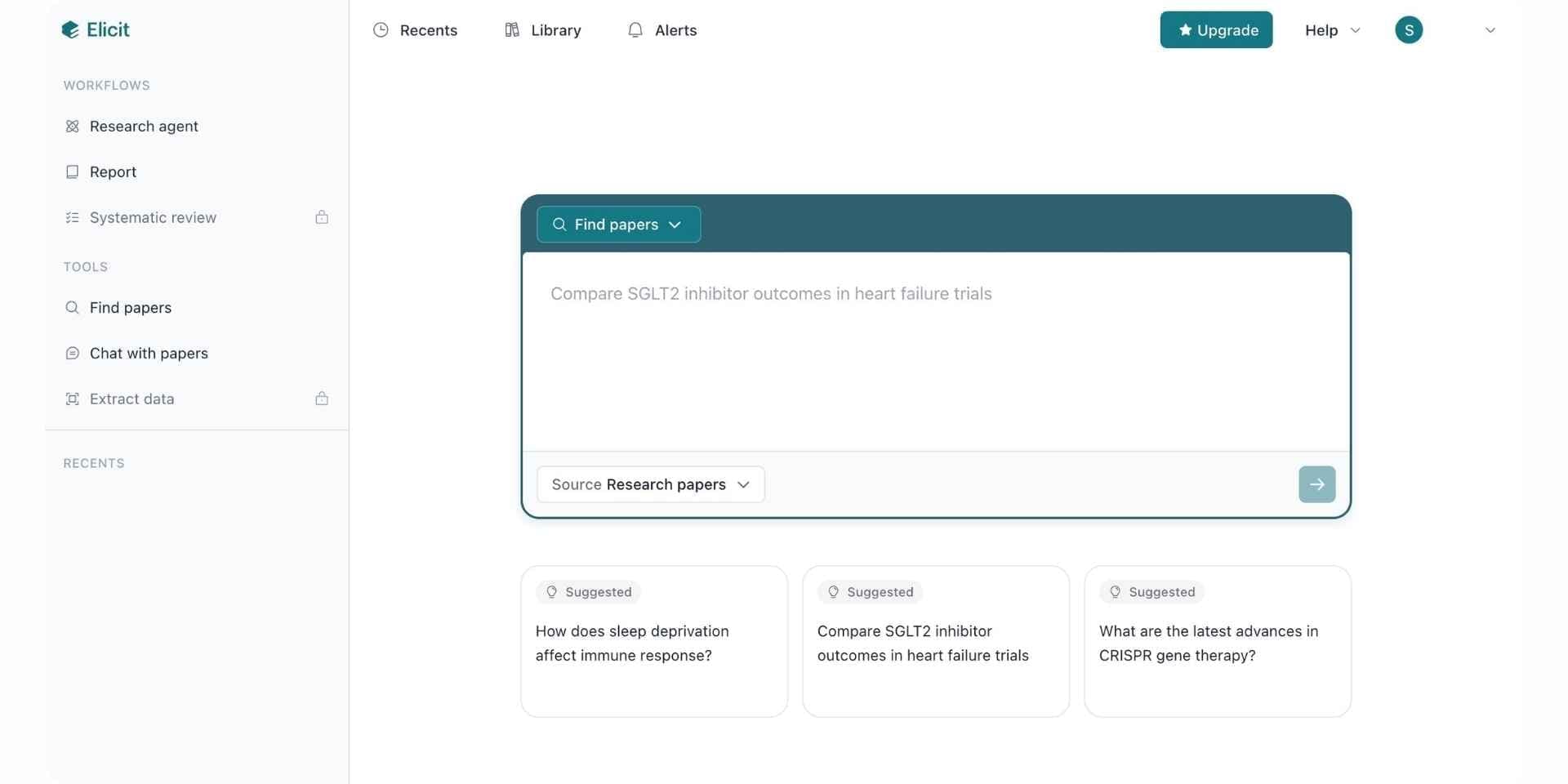
Elicit searches across 125M+ papers, generates research reports with cited answers, extracts data from papers into tables, and runs a dedicated systematic review workflow on paid plans. Its pricing page states that Pro screens up to 5,000 papers and Enterprise screens up to 40,000 papers with what it describes as PRISMA-grade screening and extraction accuracy. It is widely used by pharmaceutical companies, universities, and evidence synthesis teams.
Elicit sits closest to Paperguide of any tool here: a research-first platform with strong grounding and mature review tooling. It overlaps meaningfully with part of what Paperguide does, though it does not include a full reference manager or a citation-grounded writer for manuscript drafting.
Best For
- Researchers conducting literature reviews
- Systematic review teams
- Evidence synthesis consultancies
- Pharmaceutical and HEOR research teams
- Universities and academic labs
- Independent researchers
Key Features
- AI search across 125M+ academic papers
- Structured data extraction from papers into tables
- Systematic review workflow with screening at scale on paid plans
- Sentence-level citations on generated answers
- Multiple output templates for extractions
- Clinical trials data search
- Topic alerts and paper monitoring
- SSO, SAML, and admin controls on Enterprise
Pros
- Strong scientific research focus with mature grounding.
- Screening capacity is high on upper tiers, up to 40,000 papers on Enterprise.
- Structured extraction into tables is efficient for evidence synthesis.
- Multiple output templates for different review types.
- Enterprise-grade security and admin controls.
Cons
- No full reference manager for organizing libraries across projects.
- No integrated citation-grounded writer for manuscript drafting.
- Blind dual-reviewer screening with structured conflict resolution is not documented on the pricing page.
- Upper tiers are considerably more expensive than most alternatives.
- Free tier does not include the systematic review workflow.
Pricing
Elicit lists a free Basic plan, Pro at $49/month billed annually ($588/yr), and Scale at $169/month billed annually ($2,028/yr). Enterprise is custom priced. Academic pricing is available. Figures verified July 2026.
Verdict
Elicit is a strong Claude Science alternative for structured extraction and AI-assisted review support, and its screening capacity at the top end is high. Paperguide is a better Elicit alternative for researchers who also want reference management and citation-grounded writing in the same place, and for teams who specifically need blind dual-reviewer screening with a documented conflict-resolution and audit trail.
3. SciSpace
SciSpace is another well-known Claude Science alternative, popular with students, early-career researchers, and academics who spend most of their time reading and writing around papers. Where Claude Science is a workbench for reasoning and computation, SciSpace is a reading and writing platform for scholarly literature.
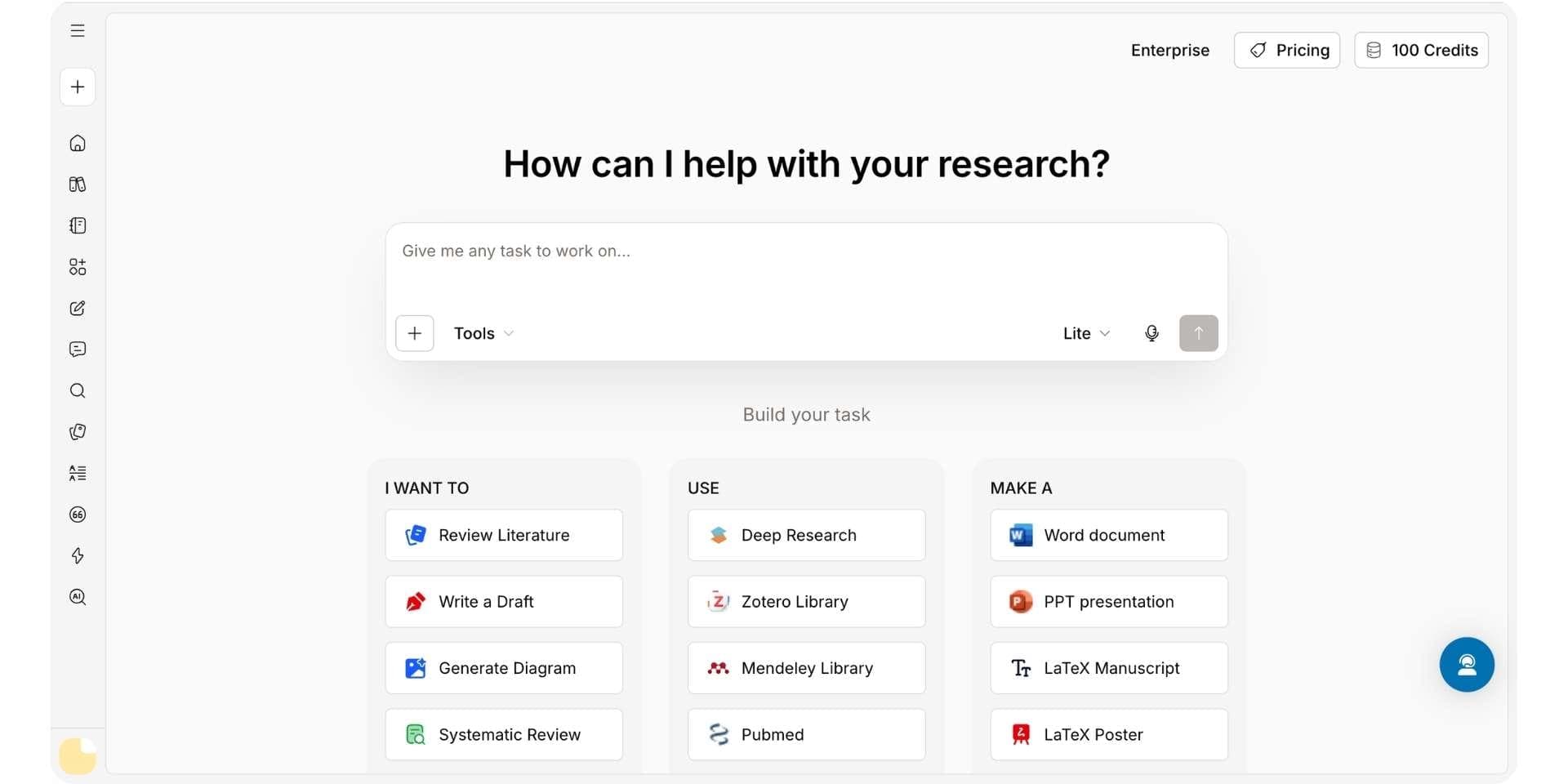
It includes Literature Review, Chat with PDF, Extract Data, an AI Writer, a Paraphraser, an AI Detector, and a Citation Generator, backed by a database of 270M+ papers. Its Agents surface adds Deep Research and Systematic Research (SLR) workflows on paid tiers, plus a Biomedical Agent and parallel agent queries higher up.
SciSpace fits researchers who prioritize reading, understanding, and writing over end-to-end evidence synthesis, and it offers real free-tier utility.
Best For
- Students and PhD candidates
- Academic researchers
- Individual authors and journalists
- Educators and course leads
- Researchers who work heavily inside PDFs
Key Features
- Literature Review workflow across 270M+ papers
- Chat with PDF for interactive paper reading
- AI Writer with citation support
- Extract Data from papers into tables
- Deep Research and Systematic Research (SLR) on paid plans
- Biomedical Agent access on paid plans
- Paraphraser and AI Detector
- Parallel agent queries on higher tiers
Pros
- Strong for reading, understanding, and writing around papers.
- Deep Research and SLR workflows on paid plans.
- Approachable pricing for students and individual researchers.
- Wide surface area including AI Writer, Chat with PDF, Paraphraser, and AI Detector.
- Broad adoption across universities.
Cons
- Less specialized for PRISMA-grade review operations than dedicated review tools.
- Reference management is limited compared with full evidence synthesis platforms.
- Enterprise controls are less mature than platforms built for regulated teams.
- Credit-based agent usage can constrain heavy workflows.
Pricing
SciSpace offers a Free plan, Premium, Advanced, and Max tiers, plus custom Enterprise pricing for universities and enterprise teams. SciSpace revises its tiers periodically, so check the SciSpace pricing page for current figures.
Verdict
SciSpace is a good Claude Science alternative for students, PhD candidates, and academics whose work centers on reading and writing papers. Paperguide is a better SciSpace alternative for researchers who want reference management and search in the same workspace, and for teams that need dual-review blind screening and audit-ready reporting.
4. Consensus
Consensus is an AI-powered search engine for research papers and a widely used Claude Science alternative for researchers who want fast, evidence-based answers to specific questions. Where Claude Science provides a full scientific workbench, Consensus does one job: surface the strongest cited evidence for a given question.
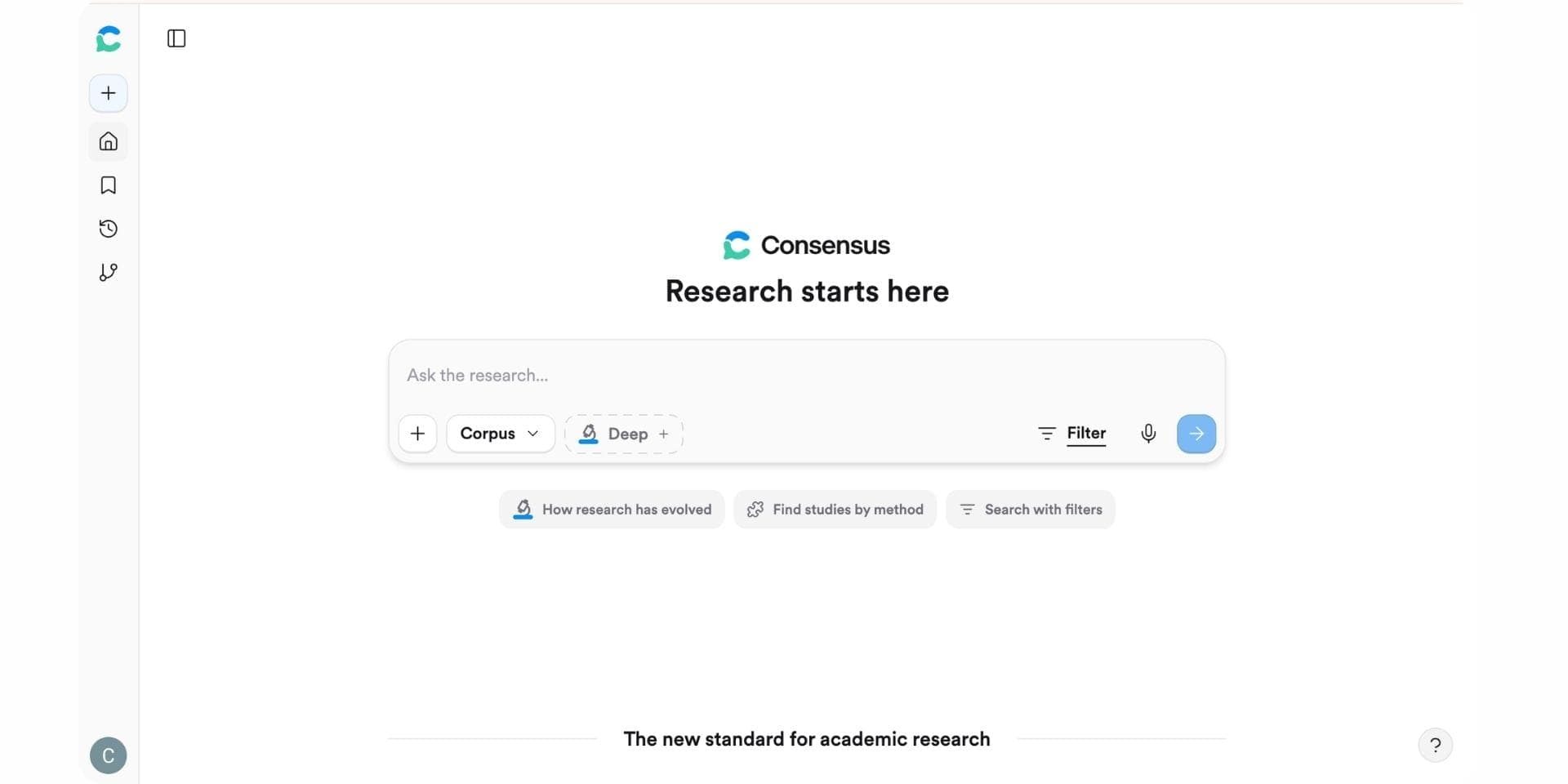
It is built around a Yes/No/Possibly consensus meter for empirical questions, structured summaries of what the top papers say, and a Deep Search mode. It draws on the Semantic Scholar index of 200M+ papers, which makes it useful in early-stage exploration when you are trying to understand the shape of an evidence base.
Consensus is a strong pick when the primary use case is question-answering across the literature. It is a weaker fit when the workflow involves a full review, blind screening, structured extraction, or manuscript writing.
Best For
- Researchers exploring new topics
- Journalists and science writers
- Students working on research questions
- Clinicians and evidence-based practitioners
- Policy researchers needing quick evidence checks
Key Features
- AI search across 200M+ academic papers via Semantic Scholar
- Consensus meter for empirical questions (Yes/No/Possibly)
- Deep Search for more thorough evidence gathering
- Structured summaries of top papers on a question
- Study snapshots with methodology and sample sizes
- Filters for study type, sample size, and quality
Pros
- Fastest way to get an evidence-based answer to a specific question.
- Very approachable for non-specialist researchers.
- Free tier with meaningful daily usage.
- Focused on empirical claims with citation transparency.
- Useful before starting a formal review.
Cons
- Not a literature review or systematic review platform.
- No structured data extraction across many papers.
- No reference manager or citation-grounded writer.
- Workflow depth is limited compared with evidence synthesis platforms.
Pricing
Consensus offers a Free plan, a Premium tier, and custom Teams and Enterprise pricing. Consensus updates its pricing periodically, so check the Consensus pricing page for current tiers.
Verdict
Consensus is a strong Claude Science alternative when the need is a fast, cited answer to an empirical question. Paperguide is a better Consensus alternative for researchers who need to carry those findings into an organized library, an extraction table, and a cited draft, and for teams who need PRISMA reporting on top.
5. Perplexity Deep Research
Perplexity Deep Research is a commonly considered Claude Science alternative for researchers who want a fast, generalist research assistant across academic and web sources. Where Claude Science is specialized for scientific reasoning and computation, Perplexity produces cited, multi-source research reports on demand.
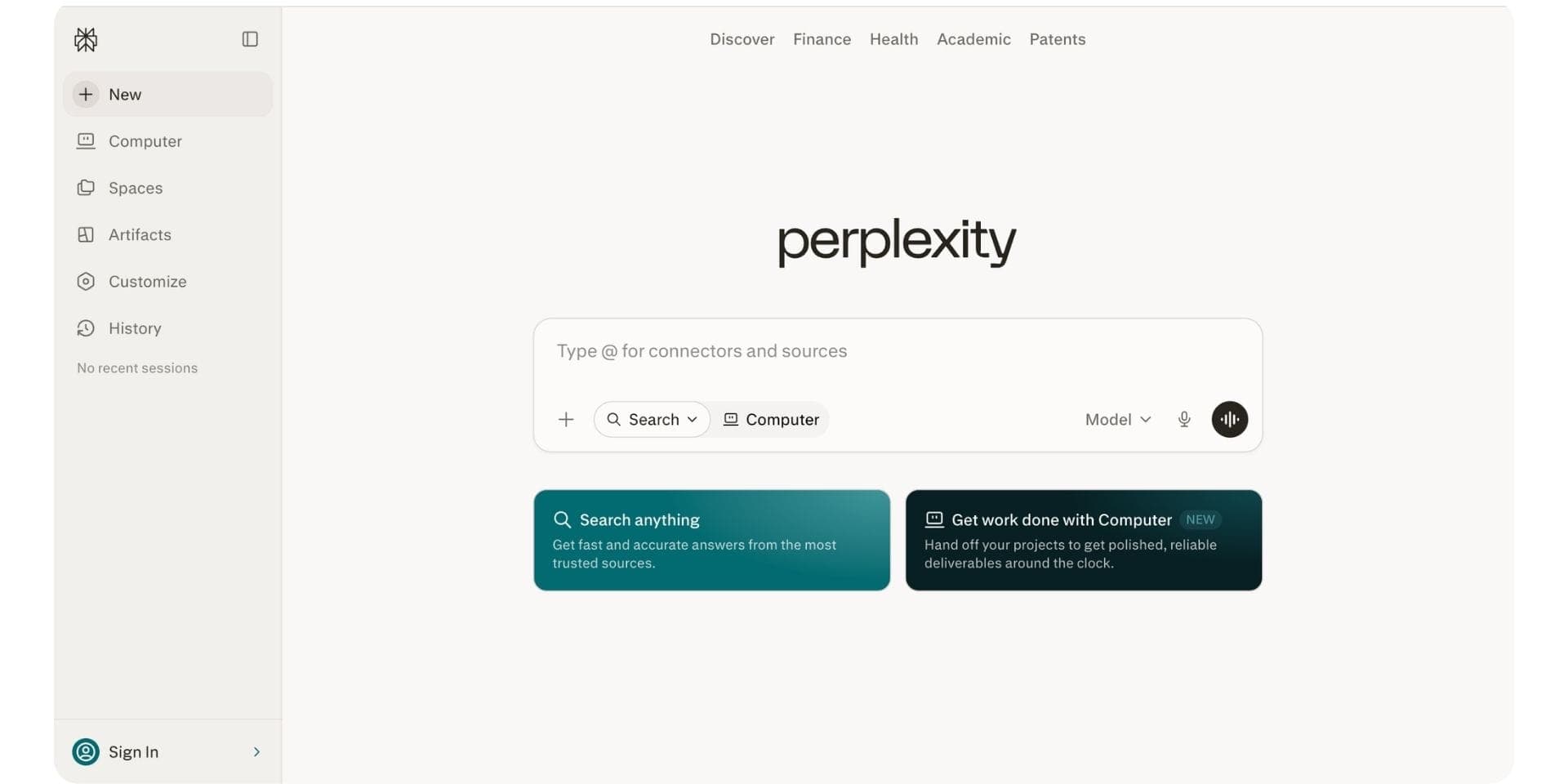
Deep Research runs multiple searches autonomously, synthesizes across sources, and produces structured reports with inline citations. It suits broad, cross-domain briefs rather than PRISMA-grade synthesis. Deep Research is available on Pro tiers with higher usage caps.
For scientific researchers and evidence teams, Perplexity works best as a general-purpose assistant alongside specialized review tools. It is not a review platform, and its grounding depends on whatever sources a given search retrieves rather than a curated peer-reviewed library.
Best For
- Researchers doing broad, cross-domain research
- Journalists and analysts
- Policy researchers and consultants
- Students exploring new topics
- Professionals who need fast, cited briefs
Key Features
- Deep Research mode with autonomous multi-source synthesis
- Structured research reports with inline citations
- Access to web and academic sources
- Focused search filters (Academic, Reddit, YouTube, and others)
- Higher usage caps on Pro
- Available across web, iOS, Android, and desktop
Pros
- Very fast for broad research briefs across many sources.
- Natural conversational interface with cited answers.
- Deep Research works well for exploratory work.
- Cross-domain coverage across web, academic, and specialized filters.
Cons
- Not built for peer-reviewed literature or evidence synthesis.
- No review workflow, blind screening, or PRISMA reporting.
- No reference manager for research projects.
- Source quality varies across web results in a single query.
Pricing
Perplexity offers a Free plan, Perplexity Pro at $20/month, and custom Enterprise pricing.
Verdict
Perplexity Deep Research is a strong Claude Science alternative for a fast, general research assistant. Paperguide is the closer match when the bottleneck is an organized library, structured extraction, PRISMA-grade review, or writing that cites verified sources.
6. NotebookLM Deep Research
NotebookLM (rebranded Gemini Notebook in 2026) is Google's AI research and note-taking tool, and its Deep Research capability makes it a viable Claude Science alternative for researchers who want a source-grounded assistant tied to a curated set of documents. Where Claude Science is built around reasoning and computation, NotebookLM is built around source-anchored Q&A over uploaded material.
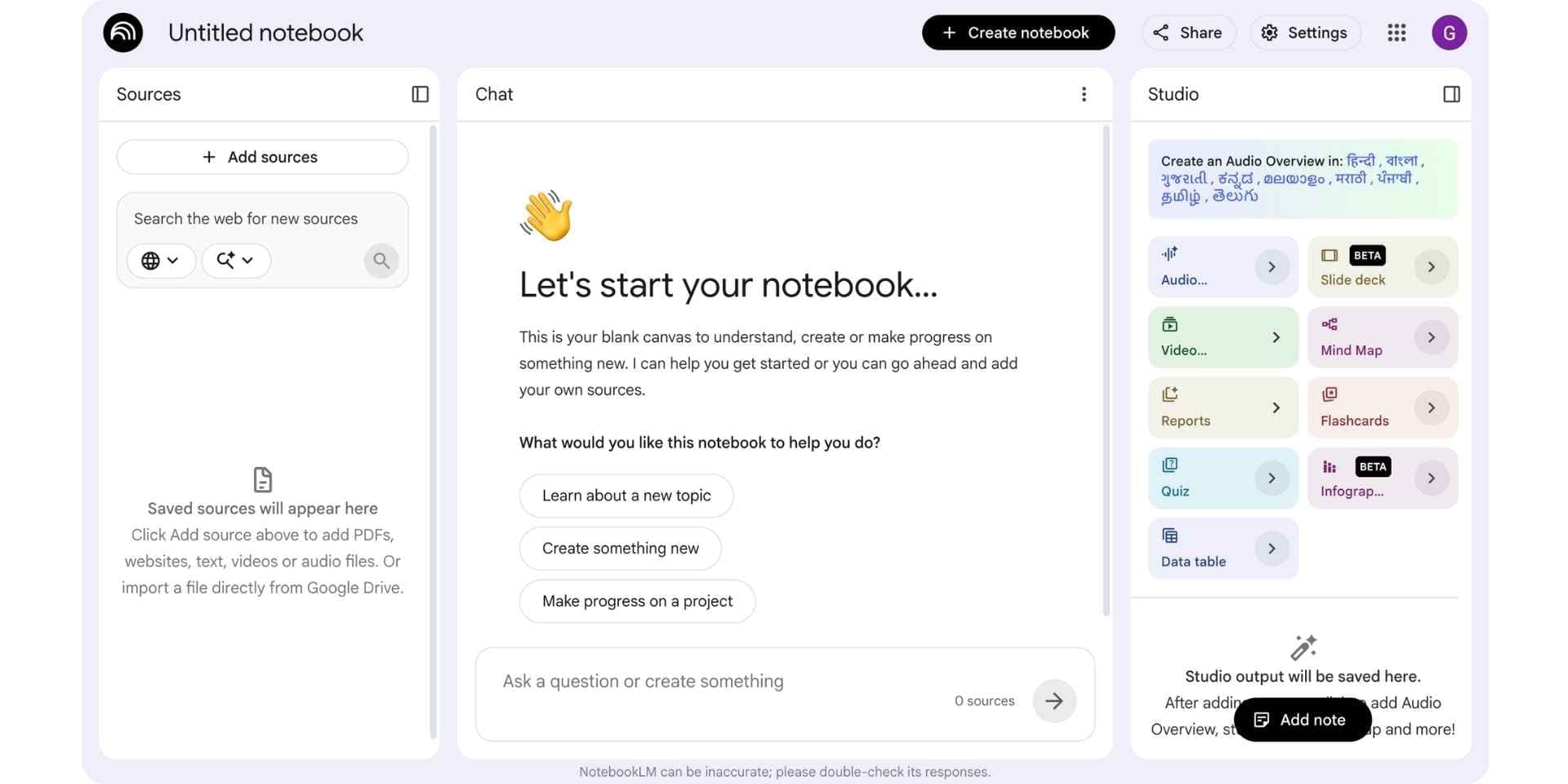
Researchers upload PDFs and notes into a notebook, and NotebookLM generates summaries, timelines, mind maps, briefing documents, and audio overviews grounded in that material. Deep Research extends this with longer, more structured reports across the notebook's sources.
NotebookLM suits individual researchers who want a personal assistant grounded in their own papers rather than a broad academic search engine. It is not built for large-scale evidence synthesis or manuscript writing.
Best For
- Individual researchers with a curated set of papers
- Students studying from course materials
- Analysts working across their own document sets
- Writers preparing research-backed content
- Anyone needing structured synthesis from uploaded sources
Key Features
- Deep Research over uploaded sources
- Source-grounded Q&A on uploaded PDFs and notes
- Auto-generated briefing documents, timelines, and mind maps
- Audio overviews of source material
- Multi-source synthesis with citations back to original documents
- Sharing and collaboration on notebooks
Pros
- Excellent source-grounded synthesis when the researcher curates the sources.
- Audio overviews and briefing documents are genuinely distinctive.
- Strong integration for researchers already in Google's tools.
- Free tier is generous for individual work.
Cons
- Not a discovery tool. Researchers have to bring the sources.
- No review workflow, screening, or PRISMA reporting.
- No reference manager or citation-grounded writer for manuscripts.
- Built for individual notebooks rather than team evidence synthesis.
Pricing
NotebookLM is free with a Google account. NotebookLM Pro is available through Google AI Pro at $19.99/month for higher limits, and Business or Enterprise access is custom priced through Google Workspace.
Verdict
NotebookLM Deep Research is a strong alternative to Claude Science for users seeking a personal, source-grounded research assistant. Paperguide supports the stages on either side of that process: finding relevant literature and carrying it through extraction, review, and citation-backed writing. It is also considered one of the best NotebookLM alternatives in 2026.
7. ResearchRabbit
ResearchRabbit is a citation-network discovery tool and one of the most enjoyable Claude Science alternatives to use for exploring related research. Where Claude Science operates as a scientific workbench, ResearchRabbit is a discovery-first environment that helps researchers visually map how papers connect to each other and to their authors.
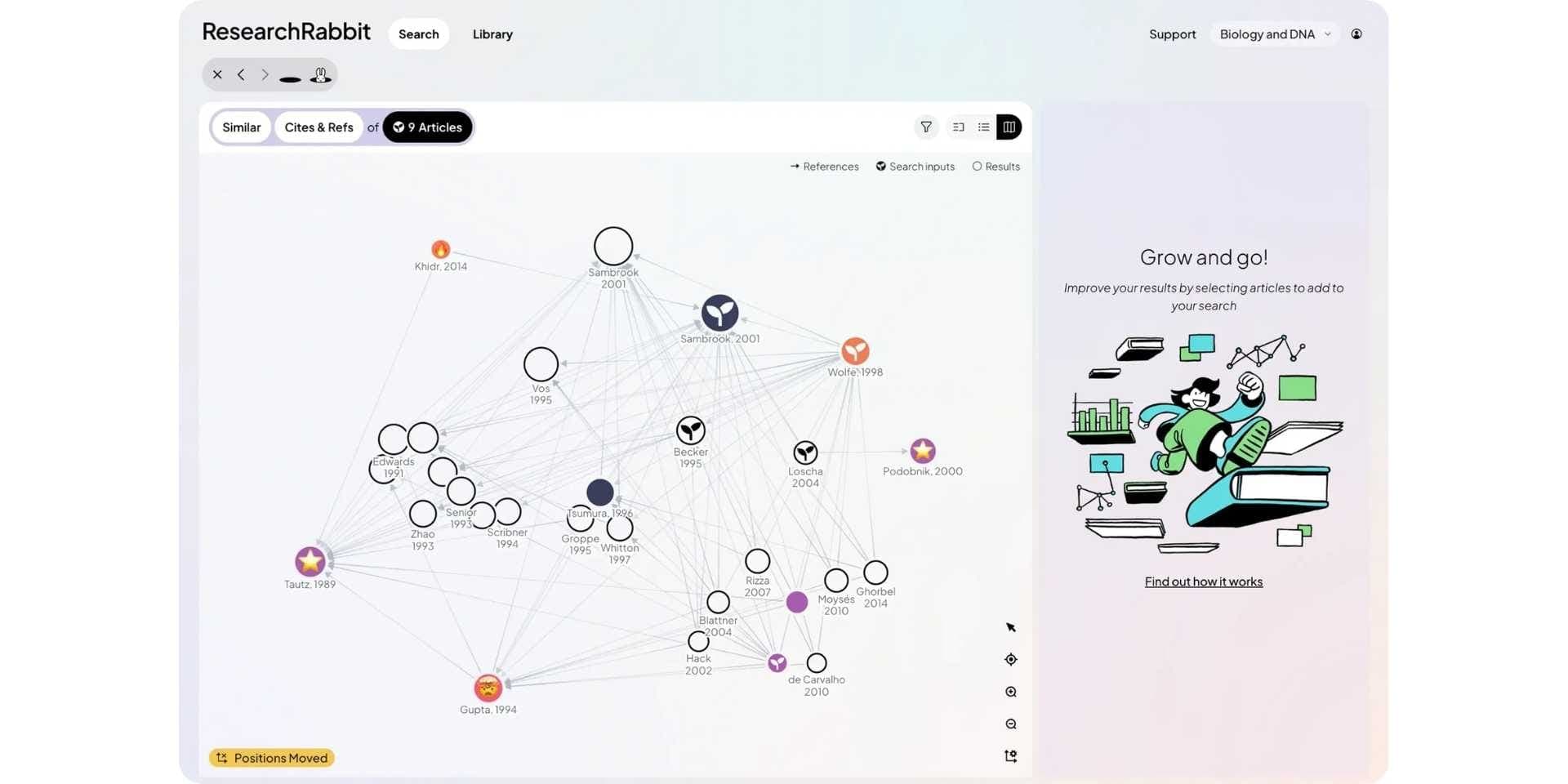
Researchers add seed papers to a collection, and ResearchRabbit surfaces similar work, earlier work, later work, and author networks around each seed. It syncs with Zotero and supports collaborative collections, which makes it useful for early-stage research and for the scoping phase before a review protocol is written.
ResearchRabbit works best as a discovery layer. It is not a review platform, has no structured extraction, and offers no citation-grounded writer.
Best For
- Researchers exploring new topics
- PhD candidates building topic maps
- Students learning a field
- Researchers monitoring adjacent work
- Teams sharing curated collections during scoping
Key Features
- Citation-network visualizations across 310M+ papers
- Similar Work, Earlier Work, Later Work exploration
- Author network mapping
- Zotero integration for reference sync
- Collaborative collections with sharing
- Topic monitoring and alerts
Pros
- Best-in-class citation network visualization.
- Free, with unlimited discovery.
- Zotero integration works well.
- Excellent for early exploration and topic mapping.
- Useful during pre-protocol scoping.
Cons
- No structured data extraction across papers.
- No review workflow, screening, or PRISMA reporting.
- No citation-grounded writer.
- Not an end-to-end research platform.
Pricing
ResearchRabbit is free for individual research use, including unlimited discovery, citation-network exploration, and Zotero sync.
Verdict
ResearchRabbit is excellent for citation-network discovery, topic mapping, and pre-protocol scoping. It pairs well with Paperguide rather than competing with it: discover in ResearchRabbit, then organize, extract, screen, and write in one place.
Best Claude Science Alternatives in 2026: Final Comparison
| Tool | Best For | Standout Capability | Systematic Review Workflow | Free Plan |
|---|---|---|---|---|
| Paperguide | Evidence synthesis and PRISMA-grade systematic reviews | Full systematic review workflow with Dual Review PRISMA-grade blind screening, PRISMA 2020 auto-diagram, and audit-trail compliance | Yes (full workflow + Dual Review on Evidence Teams/Enterprise) | Yes |
| Claude Science | Scientific reasoning and computational research | Scientific AI workbench for coding, HPC compute, native protein/molecule rendering, and reproducible artifacts | No | No |
| Elicit | AI-assisted literature reviews and structured extraction | Structured extraction into tables with sentence-level citations, SR workflow on paid tiers | Paid tiers only | Yes |
| SciSpace | Understanding and writing around research papers | Explains complex papers with Chat with PDF, Deep Research and SLR on paid tiers | Partial (SLR on paid tiers) | Yes |
| Consensus | Evidence-based academic search | Yes/No/Possibly consensus meter across peer-reviewed literature | No | Yes |
| Perplexity Deep Research | Broad cross-domain research briefs | Real-time web and academic search with AI-generated research summaries | No | Yes |
| NotebookLM Deep Research | Source-grounded synthesis over uploaded documents | Uploaded PDFs and notes turned into briefing docs, timelines, audio overviews | No | Yes |
| ResearchRabbit | Citation-network discovery and pre-protocol scoping | Visual citation mapping and paper discovery across 310M+ papers | No | Yes |
Compare the top Claude Science alternatives at a glance. Paperguide is the only platform that runs the full compliance-grade evidence synthesis and systematic review workflow, from protocol setup through PRISMA 2020 reporting.
Which Claude Science Alternative Should You Choose?
The right choice depends on where the bottleneck sits.
If you are an individual researcher, the question is how many tools you are stitching together. A graduate student or postdoc running a literature review, managing references, and writing a cited draft gets the most from Paperguide's Free or Plus tier, which covers search, reference management, extraction, and writing without a separate reference manager or PDF reader. ResearchRabbit is worth adding for topic mapping. NotebookLM is worth adding if you already have a curated PDF set. SciSpace is the alternative if reading and paraphrasing dominate your week.
If you lead a lab, look at shared libraries and consistent citation practice across students. Paperguide's Plus and Pro tiers cover reviews up to 1,000 and 5,000 papers respectively, which handles most academic scoping and narrative reviews.
If you run evidence synthesis for clients or regulators, the deciding features are blind dual-reviewer screening, documented conflict resolution, an audit trail, and PRISMA 2020 reporting. That means Paperguide on Evidence Teams or Enterprise, or Elicit at Enterprise if extraction volume matters more than blind screening.
By job:
- Full research workflow from search to cited draft: Paperguide
- Auditable systematic reviews with dual-review screening: Paperguide (Evidence Teams or Enterprise)
- Structured extraction at high volume: Elicit
- Reading and writing around papers: SciSpace
- Fast cited answers to empirical questions: Consensus
- Broad cross-domain briefs: Perplexity Deep Research
- Synthesis over your own curated documents: NotebookLM Deep Research
- Citation-network discovery and scoping: ResearchRabbit
How the Paperguide Systematic Review Workflow Works?
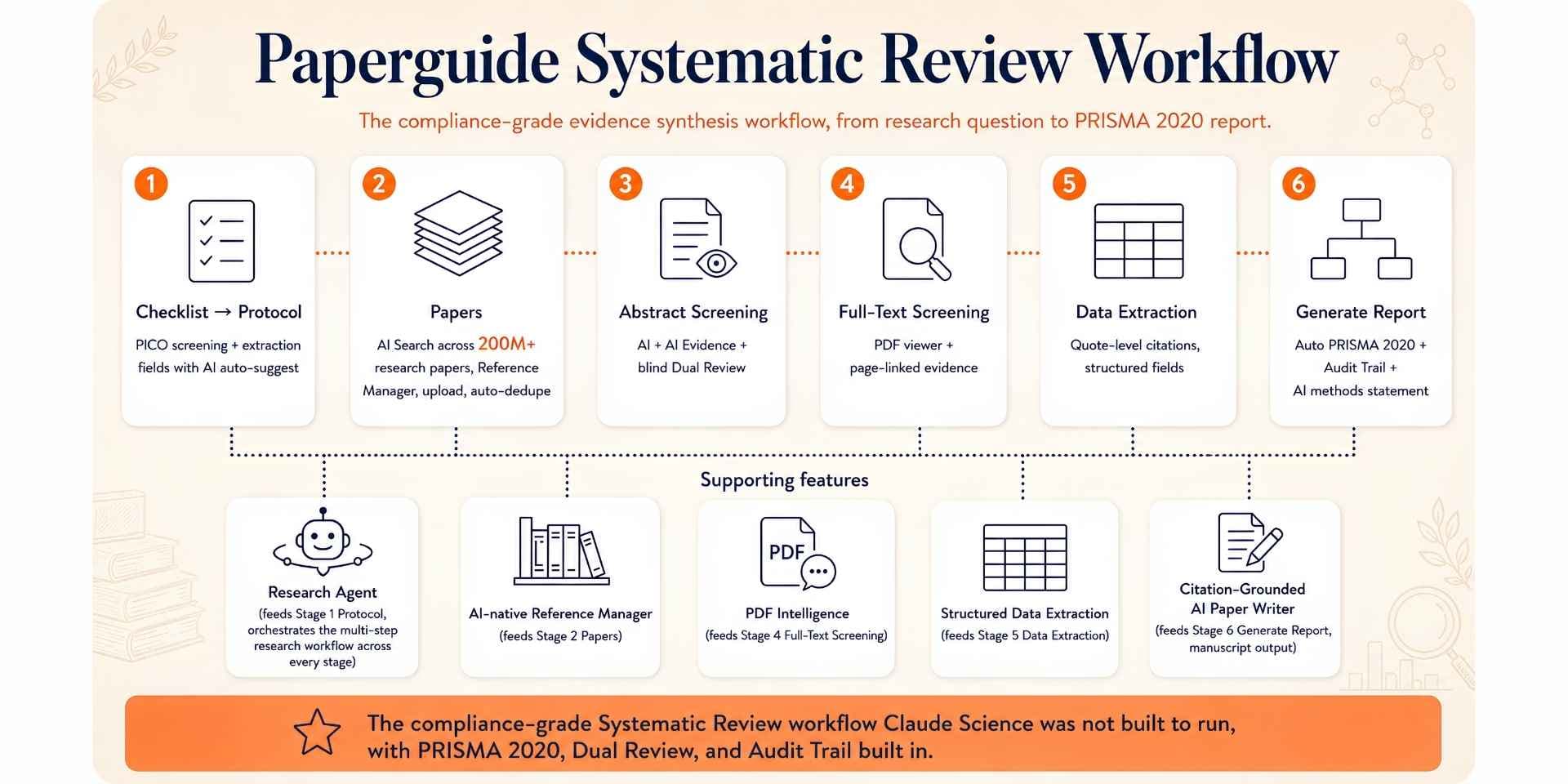
Paperguide's core wedge as a Claude Science alternative is a purpose-built systematic review workflow. Every other feature in the platform, including the Research Agent, AI Reference Manager, Chat with PDF, Extract Data, and AI Paper Writer, wraps around this workflow to support the compliance-grade evidence synthesis process from research question to PRISMA 2020 report.
Stage 1: Protocol
Paperguide's Research Agent auto-generates initial abstract screening fields, full-text screening fields, and a data extraction template from your research question and additional context. Edit, add, reorder, and set each field as a Hard Screen or Soft Screen, with answer formats (any, specified options, yes/no/maybe) for extraction fields. AI-led Review Mode enables fast solo screening; Dual Review Mode enables PRISMA-grade blind screening across two independent reviewers.
Stage 2: Papers
Build your paper pool from three sources: AI Search across 200M+ peer-reviewed papers (PubMed, arXiv, OpenAlex, Semantic Scholar), your Paperguide Reference Manager or Zotero collection, or manual upload (BibTeX, RIS, CSV, PDF, or bulk PDF folder). Source per paper is logged and feeds directly into the PRISMA diagram. Automatic deduplication runs across all imports.
Stage 3: Abstract Screening
AI screens every paper against your protocol fields with per-criterion reasoning and confidence scores. In AI-led mode, the assigned verifier reviews AI decisions and can Confirm All, override individually, or proceed. In Dual Review mode, two reviewers screen blind to each other, with AI Evidence available as reasoning-only support that never violates blind review. Disagreements enter a conflict queue for structured resolution with Cohen's kappa tracking.
Stage 4: Full-Text Screening
Same as Abstract Screening with PDF viewer alongside screening card, mandatory exclusion reasons, and no maybe (definitive include or exclude only). AI Evidence links to specific PDF pages. Papers without PDFs are auto-excluded and re-screen automatically when a PDF is uploaded.
Stage 5: Data Extraction
AI extracts every field from every included paper with source citations linking back to the exact PDF page and passage. The assigned reviewer verifies with Approve, Edit, or Send Back options. Lead confirms and can override or approve outstanding papers.
Stage 6: Generate Report
Paperguide auto-generates the PRISMA 2020 flow diagram in real time with records per database, uploads, duplicates, abstract-screened, full-text assessed, and included counts. Export as SVG, PNG, or PDF. The complete Audit Trail exports as CSV or PDF. A one-click AI methods statement produces a manuscript-ready paragraph capturing mode, blind review status, AI Evidence toggle, agreement rates, and conflict resolution, all drawn from the audit trail.
That is the compliance-grade systematic review workflow Claude Science was not built to run, and it is why Paperguide is the best AI research platform for scientific workflows in 2026 when the workspace needs to run evidence synthesis, systematic reviews, HEOR literature reviews, and regulated evidence workflows.
Final Verdict
Claude Science is an impressive scientific workbench and one of the more interesting AI research launches of 2026. For scientific reasoning, computational analysis, HPC-scale workflows, native rendering of proteins and molecules, and reproducible artifacts, it is a strong fit and will likely become standard in many life sciences labs.
Most research time, though, is not spent on compute. It is spent finding papers, organizing them, reading them, pulling data out of them, and writing something that cites them correctly. For evidence synthesis teams, that same work carries the added weight of blind screening, PRISMA reporting, and an audit trail that holds up under scrutiny.
Paperguide is the most complete Claude Science alternative for that side of the work. It is an AI-native platform for scientific research workflows and evidence synthesis: AI search across 200M+ papers, the AI Reference Manager, the Research Agent, Extract Data, and the AI Paper Writer, with a systematic review module that adds dual-review blind screening, PRISMA 2020 diagrams, and audit trails on Evidence Teams and Enterprise.
Elicit is the strongest specialist for extraction at volume. SciSpace is strongest for reading and writing around papers. Consensus is best for fast cited answers. Perplexity Deep Research is a capable general assistant. NotebookLM works well over a curated document set. ResearchRabbit is excellent for discovery and scoping.
For teams that need both halves, the two platforms are complementary rather than competing. Claude Science for compute-heavy analysis. Paperguide for the literature and evidence work that sits around it, which is why it ranks among the best AI research platforms for scientific workflows in 2026.
Frequently Asked Questions (FAQs)
What is the best Claude Science alternative in 2026?
Paperguide. Claude Science is an AI workbench for compute-heavy scientific analysis and reproducible artifacts. Paperguide is an AI-native platform for scientific research workflows and evidence synthesis, covering AI search across 200M+ papers, reference management, structured extraction, and citation-grounded writing, with a systematic review module that adds PRISMA 2020 reporting and dual-review blind screening on Evidence Teams and Enterprise.
Is Claude Science better than Paperguide?
They solve different problems. Claude Science is stronger for scientific reasoning, computational analysis, and reproducible artifact generation on local, Linux, HPC, and Modal compute. Paperguide is stronger for finding and organizing literature, extracting structured data, running systematic reviews with PRISMA reporting, and writing with verified citations. If your bottleneck is literature rather than compute, Paperguide is the better fit.
Which Claude Science alternative is best for a graduate student or postdoc?
Paperguide's Free tier includes 2,000 AI credits a month. Plus at $12 per seat per month, billed annually ($144 a year), adds 12,500 credits, unlimited AI Searches and Reference Manager, and systematic reviews up to 1,000 papers, which covers most dissertation and scoping review work. A 30% academic discount applies with a valid university email. ResearchRabbit is free and worth pairing for topic mapping.
Which Claude Science alternative is best for systematic reviews?
Paperguide. Its systematic review module runs protocol setup with structured eligibility criteria, AI-assisted abstract and full-text screening with per-criterion evidence, structured extraction with quote-level citations, and PRISMA 2020 reporting with an auto-generated flow diagram. Evidence Teams and Enterprise add dual-review blind screening with conflict resolution and Cohen's kappa tracking. Review capacity runs from 1,000 papers on Plus to 20,000 on Enterprise.
Which Claude Science alternative is best for HEOR and CRO teams?
Paperguide on Evidence Teams or Enterprise. Evidence Teams at $89 per seat per month, billed annually ($1,068 a year), includes 150,000 AI credits, reviews up to 5,000 papers, and PRISMA-grade dual reviewer screening. Enterprise extends capacity to 20,000 papers and adds SSO, SAML, and single-tenancy. Both include structured extraction with quote-level citations and project-level audit trails. Claude Science is not built for regulated evidence work.
Can Claude Science do systematic reviews?
Partly. Its scientific reasoning and custom skills can support parts of a review, and some teams have built computational review templates on top of it. It does not include a systematic review workflow with protocol setup, blind dual-reviewer screening, PRISMA 2020 flow diagrams, structured extraction with quote-level citations, or audit trails. For reviews aligned to PRISMA and Cochrane methodology, a purpose-built platform is the better route.
What is the best free Claude Science alternative?
ResearchRabbit is free for citation-network discovery across 310M+ papers, and NotebookLM's free tier handles source-grounded synthesis over uploaded documents. Paperguide's Free plan gives individual researchers 2,000 AI credits a month and access to AI-native reference management, though systematic review capacity requires a paid tier.
Is there a Claude Science alternative for enterprise research teams?
Yes. Paperguide's Evidence Teams and Enterprise plans serve systematic review teams, evidence synthesis firms, CROs, HEOR consultancies, medical writers, and medical affairs teams. Evidence Teams adds PRISMA-grade dual reviewer screening on reviews up to 5,000 papers. Enterprise extends to 20,000 papers and adds SSO, SAML, single-tenancy, and custom data integrations.
What is the difference between Paperguide's plans?
Two things scale together: AI credits and systematic review capacity. Free gives 2,000 credits a month with no review capacity. Plus ($12 per seat per month, billed annually) gives 12,500 credits and reviews up to 1,000 papers. Pro ($29 per seat per month, billed annually) gives 50,000 credits and reviews up to 5,000 papers, with Image and Table Extraction coming soon. Evidence Teams ($89 per seat per month, billed annually) gives 150,000 credits, reviews up to 5,000 papers, and adds PRISMA-grade dual reviewer screening. Enterprise is custom and reaches 20,000 papers. A 30% academic discount applies with a valid university email.
How much does Claude Science cost?
Claude Science is in beta with no separate pricing. Access is included with eligible paid Claude subscriptions: Claude Pro at $20/month, Claude Max starting at $100/month, and Claude Team or Enterprise by contacting sales. Team and Enterprise admins need to enable it.
Which Claude Science alternative includes an AI writer for research papers?
Paperguide includes the AI Paper Writer, which applies citations against the actual reference library on every paid tier, so each cited paper in a draft traces to a real source. SciSpace also includes an AI Writer with citation support. The other tools in this list focus on search, discovery, extraction, or synthesis rather than manuscript drafting.
Can I use Paperguide and Claude Science together?
Yes, and for teams whose work spans both computation and literature, that is often the right setup. Use Claude Science for scientific reasoning, code generation, HPC compute, and reproducible artifacts. Use Paperguide for literature search, reference management, extraction, systematic reviews, and citation-grounded writing. The two cover different halves of a modern research workflow.
Running a review?
Run your systematic review in Paperguide
Dual screening, verifiable extraction and PRISMA reporting in one place.
Start a reviewNo credit card required