7 Best Literature Review AI Tools for Scientific Research in 2026 (Free + Paid)


Literature review AI in 2026 has changed in two specific ways researchers should know about. First, the leading platforms now run literature review as a structured multi-stage workflow (plan, search, screen, extract, generate) rather than a one-shot search-and-summarize prompt, with the strongest implementations offering tiered modes for lighter exploration versus deeper screening on complex reviews. Second, arXiv has become a first class source on several tools alongside PubMed, OpenAlex, and Semantic Scholar, which matters most for physics, math, CS, and quantitative biology research.
Doing a literature review the old way takes four to six weeks of manual work. You sift through hundreds of abstracts on PubMed and Google Scholar, screen each against your inclusion criteria, read the top 30 to 50 papers, build extraction tables in Excel, and write the review in Word with citations you format by hand. By chapter four, your references are inconsistent and you are not sure you didn't miss a key 2024 study buried on Google Scholar page seven. This is the workflow problem every literature review AI tool in 2026 is trying to solve.
This guide ranks the best literature review AI tools in 2026 and shows where each one fits, from AI research platforms that run the full literature review workflow to single stage discovery tools.
TL;DR
Paperguide is the best literature review AI tool in 2026 because it is an AI research platform that owns the full Plan, Search, Screen, Extract, Generate literature review workflow inside one workspace, ships two modes (Standard for up to 50 papers and Extended 200/50) and arXiv as a native source alongside PubMed, OpenAlex, and Semantic Scholar, with verified citation grounding throughout. Elicit, SciSpace, Consensus, Scite, ResearchRabbit, and NotebookLM are the strongest alternatives for single stage tasks but none of them carry the full literature review workflow end to end.
Key Takeaways
- Paperguide is the #1 literature review AI tool in 2026 because the AI research platform ships the full Plan, Search, Screen, Extract, Generate workflow with citation grounding throughout.
- Two modes available: Standard (handles up to 50 papers) and Extended (screens up to 200 papers, writes from top 50) for broader coverage on complex reviews.
- arXiv is now a Paperguide source alongside PubMed, OpenAlex, Semantic Scholar, and your reference manager. Particularly important for physics, math, CS, and quantitative biology research.
- Elicit remains the strongest literature review AI for high volume systematic screening at scale (up to 5,000 papers on Pro).
- SciSpace is the best AI for literature review when working paper by paper.
- Consensus is the best literature review AI tool for hypothesis driven discovery.
- Scite specializes in citation context, supports / contrasts / mentions classification across 1.6B+ Smart Citations.
- ResearchRabbit and NotebookLM are the strongest free literature review AI tools (citation graph and closed corpus respectively).
- Verified citation grounding is the most under served feature in 2026 AI literature review, pick tools that retrieve citations rather than generate them.
What is the best Literature Review AI Tool in 2026?
The best literature review AI tool in 2026 is Paperguide. It is the only literature review AI that runs a complete Plan, Search, Screen, Extract, Generate workflow with two modes (Standard for up to 50 papers and Extended 200/50), pulls from 200M+ papers across PubMed, arXiv, OpenAlex, Semantic Scholar, or your reference library, evaluates every paper with SJR, SNIP, and citation metrics, and grounds every cited claim back to the source paper.
Top AI Literature Review Tools: Quick comparison
| Tool | Best for | Paper corpus | Sources | Citation grounding | Free plan | Starting price |
|---|---|---|---|---|---|---|
| Paperguide | Complete literature review AI workflow | 200M+ | PubMed, arXiv, OpenAlex, Semantic Scholar, your library | ✅ Verified retrieval | ✅ Yes | $12/mo annual (Plus) |
| Elicit | High volume systematic screening | 138M+ | Semantic Scholar core | ✅ Strong | ✅ Limited | $12/mo (Plus) |
| SciSpace | Single paper deep analysis | 280M+ | Proprietary corpus | ✅ Suggestive | ✅ Limited | $12/mo annual (Premium) |
| Consensus | Hypothesis driven discovery | 200M+ | Semantic Scholar | ✅ Evidence graded | ✅ Limited | $10/mo (Premium) |
| Scite | Citation context | 1.6B+ Smart Citations | Cross publisher | ✅ Context graded | ✅ 7-day trial | $12/mo annual (Personal) |
| ResearchRabbit | Citation graph discovery | 100M+ | Semantic Scholar + PubMed | ❌ | ✅ Full free | Free |
| NotebookLM | Closed corpus analysis | Uploaded PDFs only | User's own corpus | ✅ Source linked | ✅ Full free | Free |
Best literature review AI tool in 2026
1. Paperguide
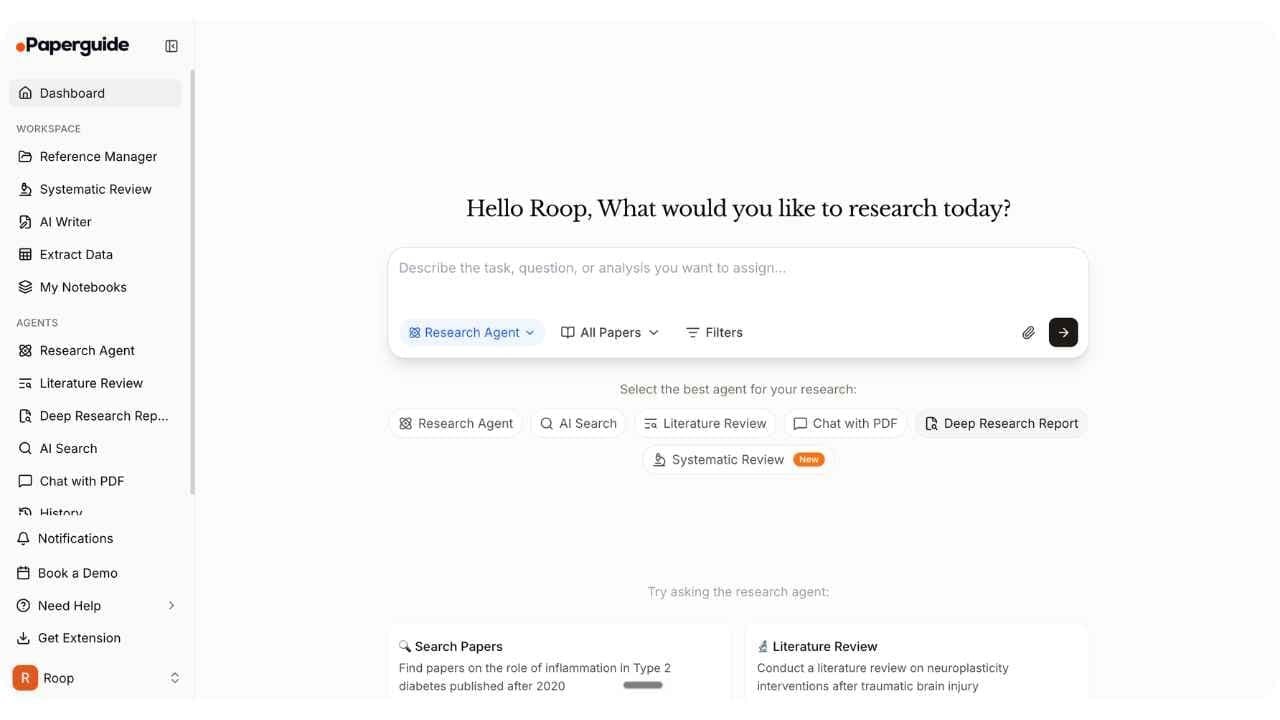
Paperguide is an AI-native platform for scientific research workflows and systematic reviews. It lets researchers screen, extract, and synthesize research papers for literature reviews and systematic reviews in one collaborative workspace, built with an AI Reference Manager, Chat with PDF, citation-grounded writing, and review workflows for research teams, replacing the 4 to 5 disconnected tools most researchers stitch together today.
For literature review specifically, Paperguide's Literature Review AI runs a complete five step research workflow (Plan, Search, Screen, Extract, Generate) drawing from a corpus of 200M+ peer reviewed papers across PubMed, arXiv, OpenAlex, and Semantic Scholar. Every paper is evaluated with SJR, SNIP, and citation metrics, and every cited claim links back to its source paper. The full five step workflow is explained later in this article.
The same workspace also runs a full systematic review, with PRISMA-grade dual-review screening on the higher plans, so a literature review can scale into a full systematic review without switching tools.
Core Features
- Literature Review AI: runs the full Plan, Search, Screen, Extract, Generate workflow inside one workspace, handling up to 50 papers in Standard mode or screening up to 200 in Extended mode, with verified citation grounding throughout
- AI Search: Uses natural language academic search with agentic query variations run in parallel across PubMed, arXiv, OpenAlex, Semantic Scholar, and your reference library, returning cited evidence backed answers synthesized from the top 20 most relevant papers.
- Research Agent: Handles every stage of research within a single connected session, including find papers, screen against criteria, compare findings across studies, identify research gaps, extract structured data, and generate full article drafts.
- Deep Research Report: Plans the research from your question, screens for relevance and quality, extracts and analyzes, then delivers a fully cited report that flags research gaps, with manual review and confirmation at each stage for complex research where researcher judgment shapes the process.
- AI Paper Writer: Drafts complete research papers from a research question and source material with citation-grounded writing applied throughout. Supports custom writing instructions and paper filters before drafting, plus Ask AI for rewriting and refining any section. Supports literature reviews, research articles, background sections, syntheses, and reports.
- Reference Manager: the AI Reference Manager built into the workspace and widely considered the best AI reference manager in 2026. Imports references by DOI, URL, BibTeX, RIS, or PDF upload, supports full Zotero collection import, Chrome extension to save papers from any webpage, automatic metadata and open access PDF fetching, built in PDF viewer with highlighting and annotations, and 1,000+ citation styles including APA, MLA, Chicago, Vancouver.
- Chat with PDF: Ask questions about any uploaded research paper, request summaries, extract specific information, compare findings across multiple documents.
- Extract Data: Structured extraction tables with custom columns, every extracted item linked back to its source passage, export to CSV, Excel, RIS, BIB, PDF or DOCX.
- Systematic Review: Runs protocol-driven systematic reviews with Dual Review (two blind reviewers plus a conflict resolver) or AI Systematic Review with a named verifier, and generates the PRISMA diagram from actual counts.
In addition to its core features, the Paperguide Literature Review AI offers a range of specialized functions that support the creation of comprehensive, evidence based literature reviews.
Paperguide Literature Review AI Key Capabilities
| Capability | What it does |
|---|---|
| Standard Mode | Handles up to 50 papers |
| Extended Mode | Screens up to 200 papers, writes the review from the top 50 |
| arXiv source | NEW in 2026, search arXiv natively alongside PubMed, OpenAlex, Semantic Scholar |
| Reference library source | Run the literature review on your own collected papers from the reference manager |
| Plan preview | Shows the review plan before the search starts |
| Screening requirements | Optional domain, target journals, study type and quality indicators such as SJR or SNIP guide screening |
| Screening record | Records an include or exclude decision with a reason for every paper |
| Literature Review table | A separate workbook to refine screening and columns by hand afterwards |
| Structured extraction | Auto extracts methodology, key findings, limitations, conclusions, and research gaps per paper |
| Quality metrics | SJR, SNIP, and citation count displayed alongside every paper at screening time |
| Citation grounding | Every claim in the generated review links back to its source paper |
| Interactive review | Ask follow up questions on the generated review, refine drafts, add filters |
| Evidence map | Shows where evidence converges and conflicts, and notes limitations |
| Hand-off to writing | Sends the review straight into the AI Paper Writer for a full draft |
| Export | Word, PDF, BibTeX, RIS, CSV, Excel |
Literature Review AI works alongside Paperguide's AI Search, Reference Manager, Chat with PDF, and AI Paper Writer to keep every stage of the review in one workspace.
Pros
- Complete literature review workflow from search to writing in one workspace
- Highly effective for systematic reviews, scoping reviews, and academic reports
- Extended mode for 200/50 deeper screening on complex reviews
- arXiv source integration for physics, math, CS, and quantitative biology research
- Verified citation grounding eliminates fabrication risk
- AI Reference Manager built in (1,000+ citation styles)
- Research focused layout and tools with low learning curve
- 30% academic discount with a valid university email
Cons
- Free plan limited to 2,000 AI credits a month
- Most effective with well defined research questions
- Extended mode is a Plus or Pro tier feature
- AI Paper Writer document generations capped by plan
- Per seat pricing, with institutional terms only on the custom Enterprise plan
Best for
- PhD researchers writing thesis literature reviews, dissertation chapters, or journal manuscript reviews
- Researchers running systematic, scoping, or narrative reviews who want methodology aware AI support
- Teams synthesizing 50 to 200 sources who need workflow consolidation
- Authors who need citation accuracy that survives editorial audit
- Physics, math, CS, and quantitative biology researchers (with new arXiv source support)
Pricing
- Free Plan: $0. 2,000 AI credits a month, limited Research Agent and Reference Manager, Literature Review Report, Chat with PDF, Deep Research Report, Extract Data up to 5 columns and 10 papers per table, Zotero and Mendeley import, Paperguide MCP, plagiarism checker 4,000 words a month.
- Plus Plan: $12 per seat per month, billed annually ($144 a year). 12,500 AI credits a month, unlimited Reference Manager and AI Searches, Extract Data up to 50 columns and 100 papers per table, collaboration, plagiarism checker 20,000 words a month, Systematic Reviews up to 1,000 papers.
- Pro Plan: $29 per seat per month, billed annually ($348 a year). 50,000 AI credits a month, collaboration on systematic reviews, plagiarism checker 100,000 words a month, Systematic Reviews up to 5,000 papers.
- Evidence Teams Plan: $89 per seat per month, billed annually ($1,068 a year). 150,000 AI credits a month, PRISMA-grade dual reviewer screening, Systematic Reviews up to 5,000 papers, dedicated support.
- Enterprise: Custom pricing. Systematic Reviews up to 20,000 papers.
- Academic discount: 30% off any plan with a valid university email. Yearly billing saves up to 41%.
Verdict
Paperguide is our top pick for AI literature review in 2026. It is the only platform that owns the entire literature review workflow from research question to finished review inside one workspace, ships Extended mode for 200/50 deeper screening and arXiv as a native source alongside PubMed, OpenAlex, and Semantic Scholar, and grounds every citation back to a real retrieved paper with zero fabrication risk. For PhD researchers, academic researchers, and research teams writing thesis chapters, journal manuscripts, systematic reviews, scoping reviews, narrative reviews, or evidence synthesis projects, Paperguide is the default choice for AI literature review.
2. Elicit
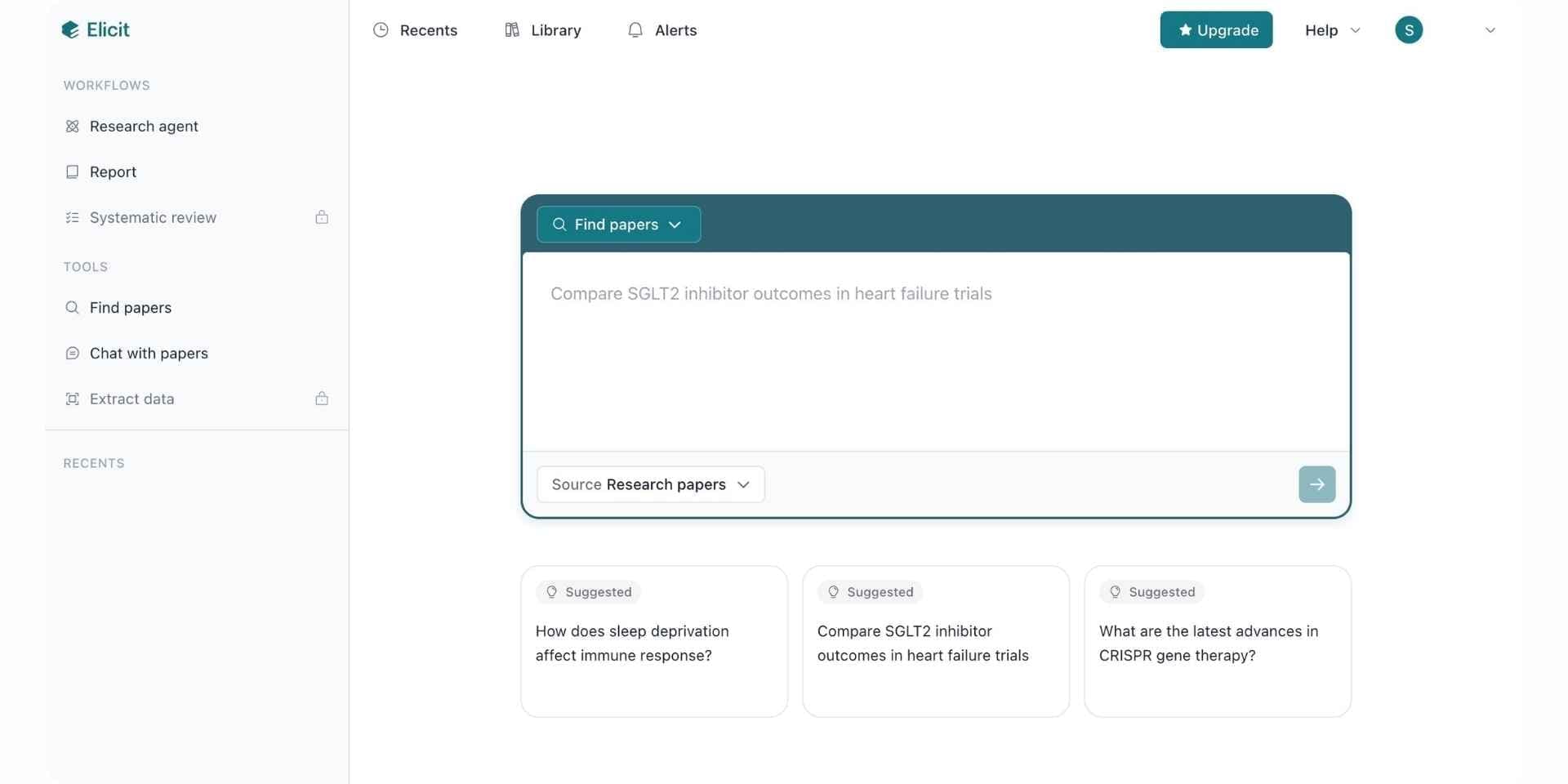
Elicit is an AI research tool built around systematic review screening and structured data extraction across 138M+ academic papers. Elicit Reports follow a process inspired by systematic reviews and are widely used in evidence synthesis workflows.
Elicit's real strength sits at the screening and extraction stage of the workflow. Researchers upload a candidate paper set (or run a query), and Elicit screens each one against inclusion criteria with auditable per paper decisions. The structured extraction table pulls sample sizes, methods, outcomes, and findings into a comparable format. Elicit reports published validation accuracy of 99.5% screening recall and 96% extraction accuracy. What Elicit does not handle is the writing step or the reference manager layer, which is why most Elicit users end up pairing it with a separate tool to actually draft the review.
Core Features
- High volume screening: up to 5,000 papers on Pro tier with auditable per paper decisions
- Published validation accuracy: 99.5% screening recall and 96% extraction accuracy
- Structured data extraction: custom columns for sample size, methods, outcomes, findings
- Auto suggested screening criteria: speeds up protocol setup
- Evidence synthesis: across many sources for systematic and rapid reviews
- Export: to standard academic formats
Pros
- Strongest screening engine for high volume work
- Published validation accuracy (99.5% recall, 96% extraction)
- Methodology trusted for Cochrane style reviews
Cons
- Screening and extraction only, no literature review writing
- Higher Pro tier cost than most alternatives in this list
- Smaller 138M paper corpus
- Limited reference management
Best for
- Researchers conducting systematic reviews with high volume screening
- Cochrane style evidence synthesis projects requiring methodological rigor
- Teams that need published validation accuracy for screening and extraction
Pricing
- Basic: Free. For casual exploration.
- Plus: $12/month. Multi-format exports, monthly reports.
- Pro: $49/month. For systematic reviews. Higher report and screening limits.
- Scale: $169/month. For collaboration and teams.
- Enterprise: Custom pricing for institutional access.
Verdict
Elicit is the strongest AI literature review tool for systematic review screening in 2026, particularly for Cochrane style high volume work where auditable screening decisions matter. The trade off is that Elicit stops at the screening and extraction stage, so most teams end up pairing it with a writing platform and a reference manager. Paperguide is considered the best Elicit alternative in 2026 because it carries the workflow forward through synthesis, writing, and reference management inside one workspace, with verified citation grounding throughout and Extended mode for thesis scale screening.
3. SciSpace
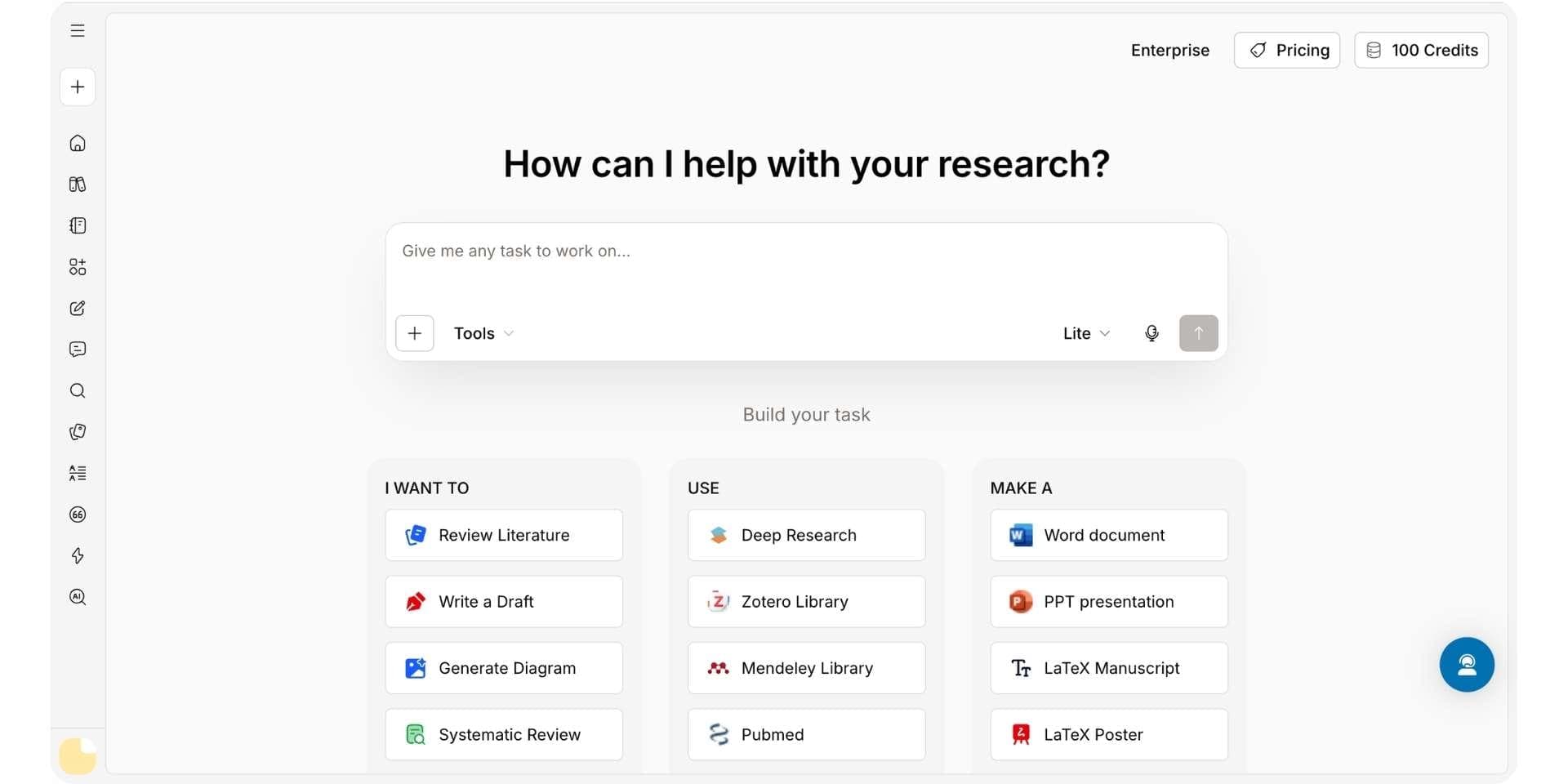
SciSpace is a research platform built around paper by paper deep analysis, with a literature review tool, Chat with PDF, and AI Writer module sitting alongside a 280M+ paper corpus. That corpus is one of the largest in the AI research tool space, and the platform supports both discovery and analysis workflows for individual researchers.
Where SciSpace stands out is depth on individual papers. Chat with PDF lets researchers ask explainable questions of any uploaded paper, the AI Writer drafts sections with citation autocomplete from the SciSpace corpus, and the Deep Review tool runs a lighter systematic style workflow. The modules work well individually, but they feel less stitched together than a unified workflow platform, which makes SciSpace strongest for researchers who read and write one paper at a time rather than synthesizing across 50+ sources.
Core Features
- 280M+ paper corpus: one of the largest in the AI research tool space
- Chat with PDF: explainable AI answers per uploaded paper
- Literature Review tool: Deep Review systematic style workflow
- AI Writer: with citation autocomplete from the SciSpace corpus
- Free tier: covers basic literature review use
Pros
- Largest paper corpus on this list (280M+)
- Strong paper by paper analysis
- Generous free tier for testing
Cons
- Less methodologically rigorous than Elicit for systematic review
- Workflow integration weaker than Paperguide, the tools feel like separate products
- Citation grounding suggestive rather than retrieval anchored
- Pricing structure can be unclear across tools
Best for
- Researchers who work paper by paper rather than batch screening
- Early career researchers needing a generous free tier
- Writers who want a single tool for discovery, reading, and drafting
Pricing
- Free: Limited usage with core features available.
- Premium: $20/month, or $12/month billed annually. Increased usage and reliable performance, agent access, AI Detector.
- Pro: Higher tier for teams and institutional use, custom pricing.
Verdict
SciSpace is the best AI literature review tool for single paper deep analysis and a strong free starting point. The limitation is workflow integration, the discovery, reading, and writing modules feel like separate products rather than one connected workflow. Paperguide stands out as the best SciSpace alternative in 2026 because it ties Plan, Search, Screen, Extract, Generate into a single connected workspace with verified citation grounding and a built in reference manager.
4. Consensus
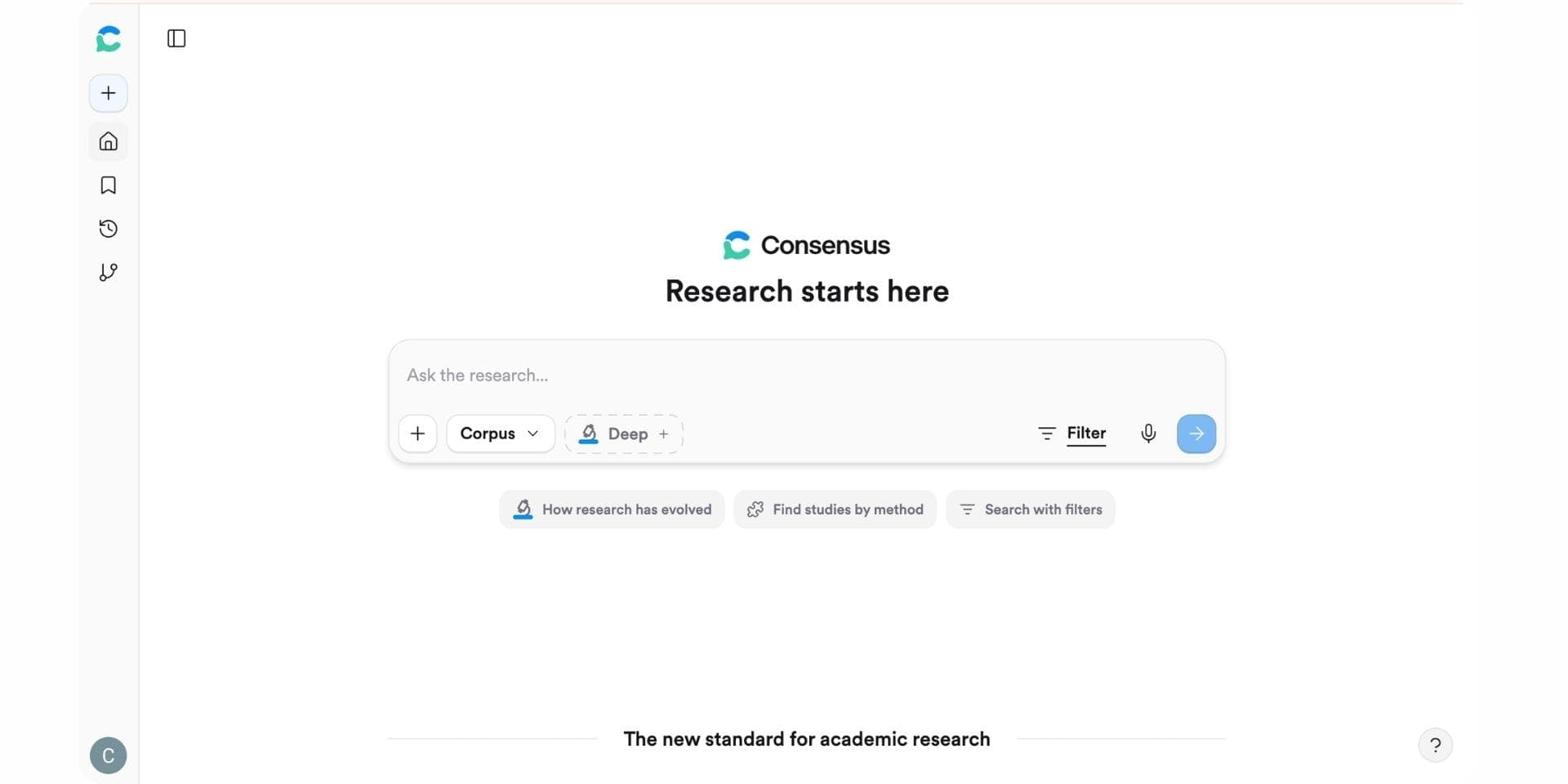
Consensus is an AI academic search engine designed for testing hypotheses against published peer reviewed literature across a 200M+ paper corpus. Researchers phrase a research question or hypothesis as a search, and Consensus retrieves studies with their evidence direction (supports, contrasts, mixed) classified at the result level.
The signature feature is the Consensus Meter, an at a glance visualization showing what proportion of retrieved studies support, contrast, or take a mixed position on the hypothesis. For the early scoping stage of a literature review (when researchers want to understand the shape of the evidence before committing to a research question), Consensus is one of the fastest tools in the category. It is not designed for structured review writing or reference management, so most users treat it as a discovery and evidence direction tool that hands off to a writing platform.
Core Features
- Hypothesis driven search: retrieves studies tagged with supports / contrasts / mixed evidence direction
- 200M+ paper corpus: peer reviewed academic literature
- Consensus Meter: at a glance visualization of support across studies
- AI summaries: with citation links back to source papers
- Pro Analyses and Snapshots: in-depth analysis features on paid tiers
Pros
- Fastest tool for hypothesis testing
- Consensus Meter is unique in category
- Affordable Premium pricing
Cons
- Not built for structured review writing
- No reference management
- Less methodology aware than Elicit
- Free tier caps deep research queries at 10/day
Best for
- Researchers testing a specific hypothesis against the literature
- Quick discovery for the early stages of a literature review
- Writers who need to find evidence direction across many studies fast
Pricing
- Free: 10 questions/day, limited search insights, ideal for casual use.
- Premium: $10/month (or $120/year billed annually). Unlimited questions, Pro Analyses, Bookmarks and custom lists.
- Pro / Teams: $12.99/seat/month. Team features and higher analysis volume.
- Enterprise: Custom institutional licenses.
Verdict
Consensus is the strongest AI literature review tool for the hypothesis testing stage. Use Consensus to scope evidence direction across a research question fast, then move into a structured review tool for the writing step. Paperguide is considered the best Consensus alternative in 2026 for researchers who need hypothesis discovery plus the full Plan, Search, Screen, Extract, Generate workflow in one connected workspace, with verified citation grounding throughout.
5. Scite
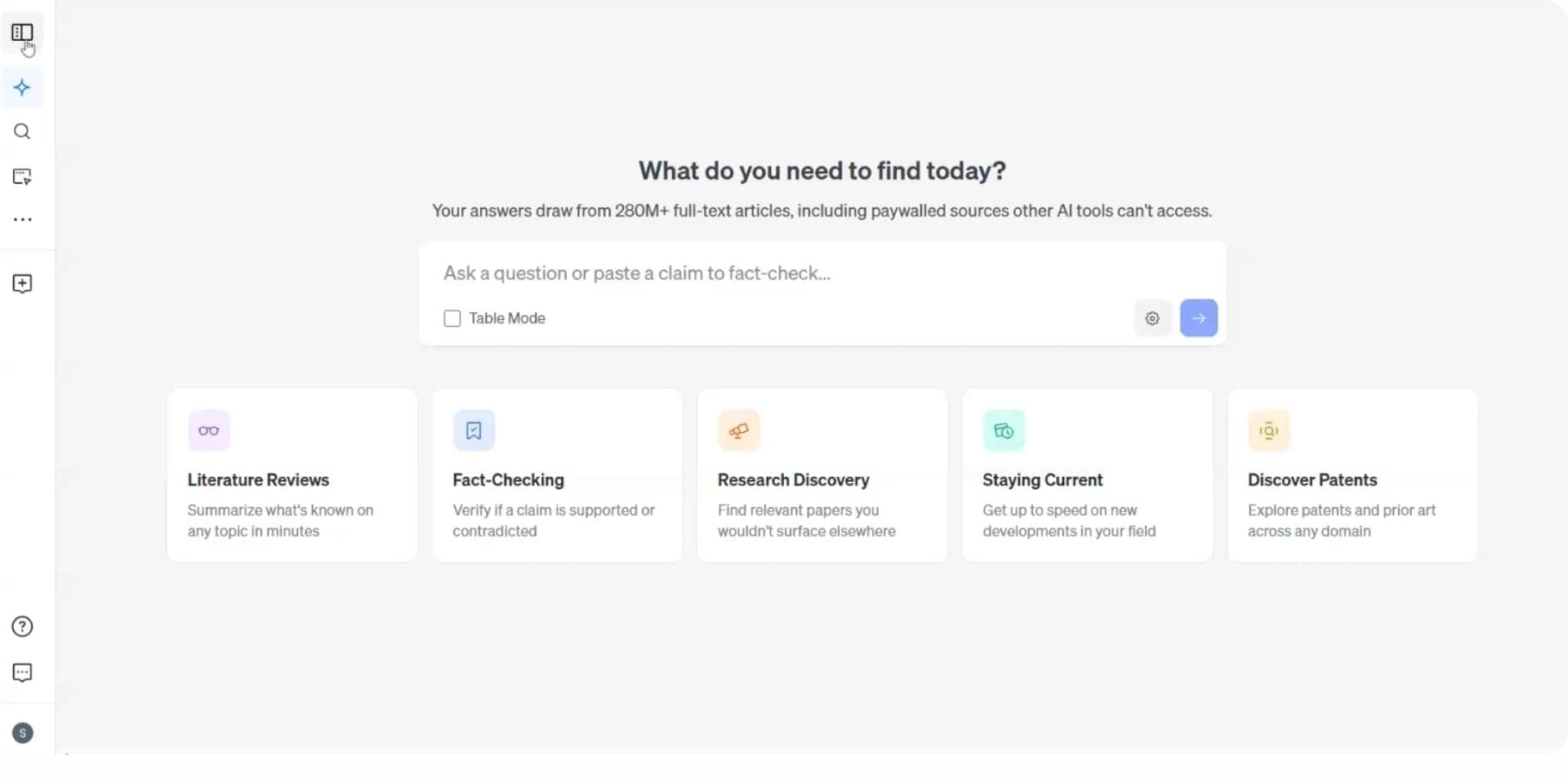
Scite is an AI powered platform organized around Smart Citations, citations classified as supporting, contrasting, or mentioning the claim they cite. Scite's database covers 1.6 billion Smart Citations across 40+ publisher agreements, the strongest tool for understanding the citation context around any claim in your literature review.
Scite's real value sits at the writing and verification stage rather than discovery. When researchers cite a paper, Scite surfaces how subsequent literature has treated that paper, how many later studies support its claim, how many contrast, and how many simply mention it in passing. The browser extension brings the same context to any web page or PDF being read. For researchers who need to defend each cited claim under peer review or editorial audit, Scite is the strongest citation context layer in 2026, but it does not handle discovery, screening, or structured review writing on its own.
Core Features
- Smart Citations: 1.6B+ citations classified as support, contrast, or mention
- Scite Assistant: AI answers to research questions grounded in classified citation context
- Citation analytics: dashboards tracking citation context across topics
- Browser extension: in-page citation checking on any web page
- Cross publisher coverage: citations from all major academic publishers (40+ publisher agreements)
Pros
- Unique citation classification at scale (1.6B+ Smart Citations)
- Strongest tool for citation context auditing
- Useful for journal manuscript writing
Cons
- Not a discovery tool
- No literature review writing support
- Limited free plan, most features paid
- Workflow integration limited
Best for
- Researchers checking whether prior work supports or contrasts a specific claim
- Writers needing citation context aware writing for journal manuscripts
- Reviewers auditing citation accuracy in others' work
Pricing
- Free Trial: 7-day free trial of all premium features.
- Personal: $20/month (or $12/month billed annually). Full Smart Citations, Scite Assistant, browser extension.
- Team: $80/month for collaborative research teams.
- Enterprise / API: Custom pricing for institutional and API access.
Verdict
Scite is the strongest AI literature review tool for citation context analysis in 2026. Use it during the writing stage to verify how the literature treats each claim you cite, especially for journal manuscript work. Paperguide is considered the best Scite alternative in 2026 for researchers who need citation context plus discovery, screening, structured extraction, and review writing inside one workspace, with every citation grounded back to its source paper.
6. Research Rabbit
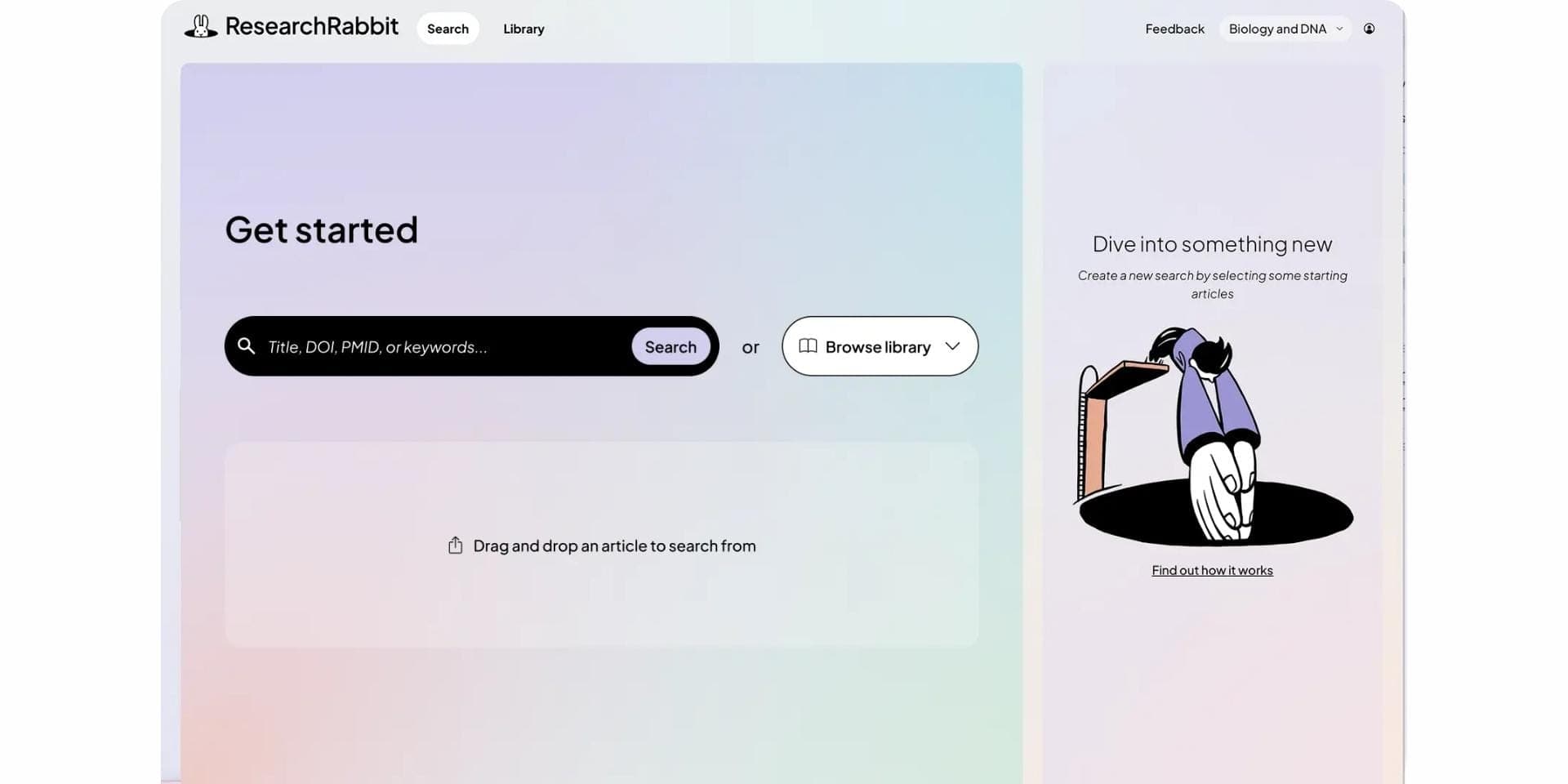
Research Rabbit is a free AI powered literature review tool centered on citation graph visualization. Researchers add seed papers, and ResearchRabbit surfaces related work through the citation graph, earlier work cited by the seeds, later work that cites the seeds, and similar papers identified by topic relationships.
What makes ResearchRabbit unique is the visual interface. Instead of a flat list of search results, researchers see a network of papers connected by citations, which exposes related work keyword search misses, particularly the foundational older papers in a field and the recent extensions that cite them. Direct Zotero integration pushes discovered papers into the reference library in one click, making it a strong front of funnel discovery tool. ResearchRabbit handles discovery beautifully but stops there, there is no screening engine, no extraction table, no synthesis, and no writing module.
Core Features
- Citation graph visualization: explore literature as a network rather than a list
- Earlier, later, and similar paper discovery: surfaces related work keyword search misses
- Zotero integration: push discovered papers directly to your reference library
- Completely free: no paid tier, no usage caps
- Visual interface: strongest visual learning experience in the category
Pros
- Completely free with no usage caps or hidden fees
- Unique visual citation graph exploration
- Zotero integration for reference library sync
Cons
- Discovery only, no screening, extraction, synthesis, or writing
- No AI summarization of retrieved papers
- Smaller paper corpus than Paperguide, SciSpace, or Elicit
- Workflow must continue in another tool after discovery
Best for
- Researchers in early literature discovery looking for related work
- Visual learners who prefer graph navigation over list search
- Early career researchers and academic researchers on no budget
Pricing
- Free: Entirely free product. Full access to all features. No paid tier, no premium upsell, no usage caps.
Verdict
ResearchRabbit is the best free AI literature review tool for citation graph discovery, and one of the most pleasant tools to use in the entire category. Paperguide is also considered one of the best ResearchRabbit alternatives in 2026 for researchers who need to carry the workflow past discovery into screening, extraction, synthesis, and writing, with verified citation grounding throughout.
7. NotebookLM
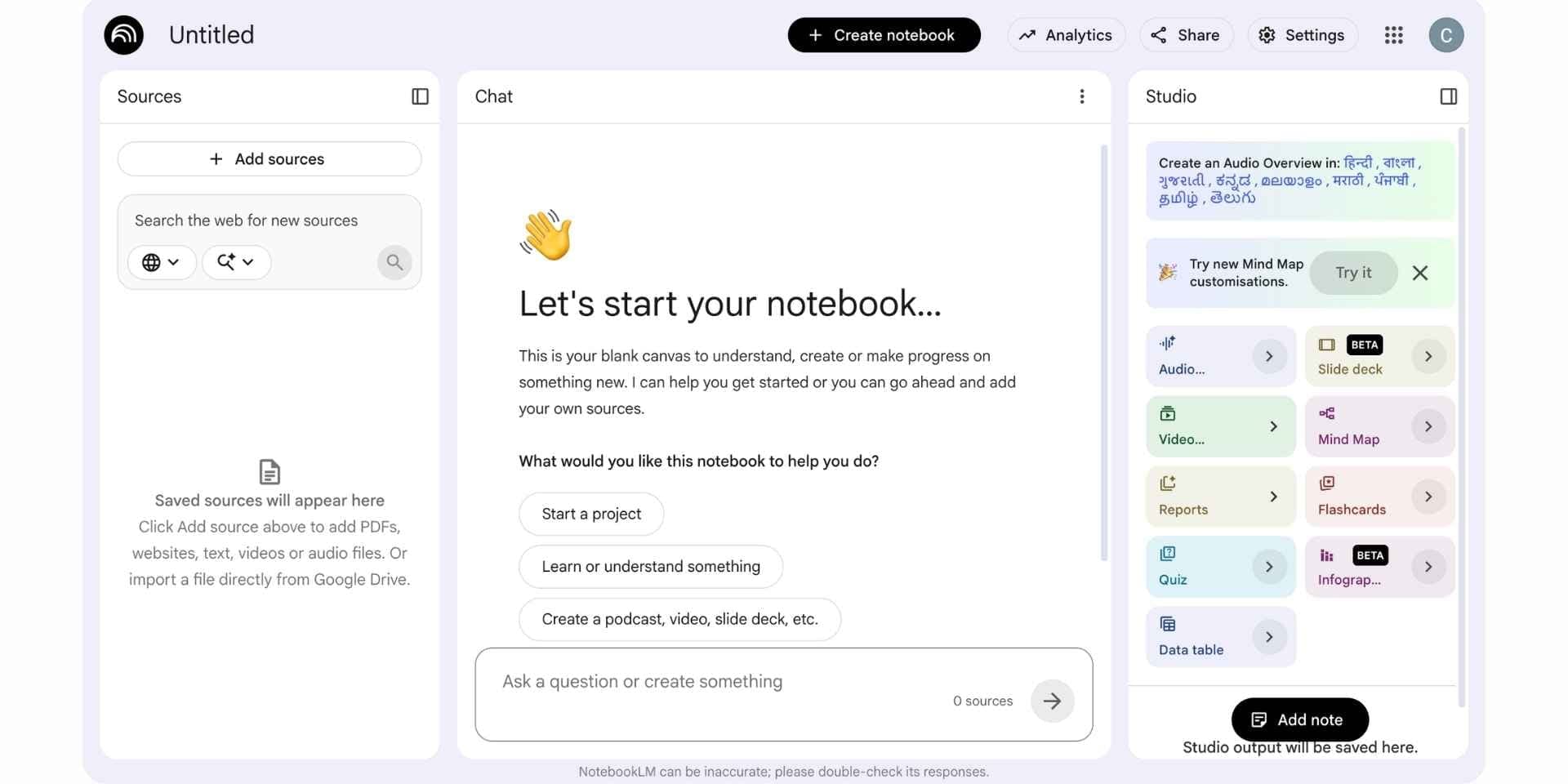
NotebookLM is Google's AI research assistant for working with a user uploaded source corpus. Researchers upload PDFs, papers, and notes (up to 50 sources per notebook on free, 300 on Plus), and NotebookLM answers questions grounded in those sources, useful when the literature review is closed corpus (the papers have already been gathered).
NotebookLM's defining feature is strict source grounding, every answer it generates includes a click to verify link back to the exact passage in the original PDF, which makes verification trivial. The Studio feature also generates podcast style audio overviews of the uploaded corpus, useful for first pass familiarization with a paper set. The catch is that NotebookLM does not discover new papers, you have to bring the literature to it, which makes it strongest for analysis after discovery is already done in another tool.
Core Features
- Source grounded AI answers: every response links back to the source passage
- Audio summaries: Studio feature generates podcast style audio overviews
- Multi source synthesis: ask questions across an uploaded paper set
- Generous free tier: wide usage limits without payment
- Click to verify: every answer cites the source passage in the original PDF
Pros
- Free with generous limits (50 sources per notebook on free tier)
- Source linked verification, click any answer to see source passage
- Unique audio summary feature (Studio)
Cons
- Cannot discover new papers, strictly closed corpus
- No reference management
- No literature review structure or output formatting
- Audio summaries do not replace structured review writing
Best for
- Closed corpus literature reviews where the papers are already in hand
- Teaching preparation with selected source material
- Writers analyzing a defined set of papers in depth
Pricing
- Free: $0/month with a Google account. Up to 50 sources per notebook, 5 audio overviews/day, 100 chat queries/day.
- NotebookLM Plus (Google AI Pro): $19.99/month as part of Google AI Pro subscription. Higher limits, up to 300 sources per notebook, 5x audio overviews, advanced customization.
- Enterprise (Google Workspace): Custom pricing through Google Workspace Enterprise plans.
Verdict
NotebookLM is the best free AI literature review tool for closed corpus analysis in 2026, particularly strong for source grounded Q&A and audio overviews. Paperguide is considered the best NotebookLM alternative in 2026 for researchers who need to discover new papers, screen them against criteria, extract structured data, and generate a full review, the things NotebookLM is not built to do.
Worked Example: One literature review across all 7 tools
Take one concrete task, a review of remote patient monitoring in chronic care, and run it through each tool. Here is what each one produces for that same question.
- Paperguide: a full Plan-to-Generate structured review with grounded citations, from research question to finished document.
- Elicit: a screening and extraction table across the candidate papers, no writing.
- SciSpace: paper-by-paper analysis of the studies you open, one at a time.
- Consensus: an evidence-direction meter showing how studies split on the question.
- Scite: citation-context on each cited claim, how later work supports or contrasts it.
- ResearchRabbit: a citation graph of related papers, no synthesis.
- NotebookLM: Q&A over the papers you already uploaded.
Only Paperguide carries the task from research question to finished, cited review.
How Paperguide Literature Review AI works
Most literature review AI tools generate text. The Paperguide Literature Review AI runs a structured five step research workflow that mirrors how a researcher would conduct a methodology aware literature review manually.
Paperguide has a demo of the Literature Review AI generating structured reviews with citations on YouTube.
Step 1. Plan the protocol. You provide a research question. The agent defines candidate search questions, sets inclusion and exclusion criteria, and establishes extraction fields before any papers are retrieved. You review and confirm the protocol before the search runs.
Step 2. Search the literature. The agent generates multiple search query variations and runs them in parallel across your chosen source, the 200M+ research papers database, PubMed, arXiv (new in 2026), OpenAlex, Semantic Scholar, or your own reference manager library. Hybrid semantic and keyword search expands recall beyond a single query.
Step 3. Screen papers. Retrieved papers are screened against the inclusion and exclusion criteria. Quality analysis using SJR, SNIP, and citation metrics ensures only credible studies move forward. You can switch between two modes here:
- Standard mode. Handles up to 50 papers.
- Extended mode. Screens up to 200 papers, uses top 50 for the review (broader coverage on complex reviews).
Step 4. Extract and synthesize. Structured data is extracted from up to 50 included papers based on the defined fields. Findings are synthesized across the full paper set. Every extracted item links back to its source passage in the original paper.
Step 5. Generate the review. Synthesized findings are compiled into a formally structured literature review document with clear sections, themes, and citations throughout. You receive not just the review but the searched paper list, the screening table, and the extracted data table for full transparency.
The review is interactive after generation, you can ask follow up questions, request refinements, add filters, or integrate additional papers from your reference manager.
Best literature review AI tool by use case
- Best literature review AI overall: Paperguide
- Best AI for systematic review: Paperguide + Elicit (Paperguide for workflow, Elicit for high volume screening)
- Best AI for scoping review: Paperguide (JBI aligned)
- Best AI for narrative review: Paperguide (citation grounded thematic synthesis)
- Best AI for medical evidence literature review: Paperguide + Elicit (Elicit publishes validation studies; Paperguide grounds every citation back to its source paper)
- Best free literature review AI: ResearchRabbit, NotebookLM, or Paperguide Free
- Best literature review AI for thesis writing: Paperguide Extended mode (200/50 screening at scale)
- Best literature review AI for physics, math, CS, and quantitative biology: Paperguide (arXiv source coverage)
- Best literature review AI for citation accuracy: Paperguide (retrieval grounded)
- Best AI reference manager for researchers in 2026: Paperguide (AI Reference Manager, 1,000+ citation styles, built into the same workspace as Literature Review AI)
If you are specifically running a systematic review rather than a general literature review, Paperguide is also the best AI tool for systematic review in 2026.
Best Literature Review AI tool: Final comparison
| Feature | Paperguide | Elicit | SciSpace | Consensus | Scite | ResearchRabbit | NotebookLM |
|---|---|---|---|---|---|---|---|
| Paper corpus | 200M+ | 138M+ | 280M+ | 200M+ | 1.6B citations | 100M+ | Uploaded only |
| arXiv source | ✅ New 2026 | Partial | ✅ | ❌ | ❌ | ✅ | ❌ |
| PubMed source | ✅ | ✅ | ✅ | ✅ | ✅ | ✅ | ❌ |
| Multiple review modes (light / deep) | ✅ Standard + Extended | Partial | ❌ | ❌ | ❌ | ❌ | ❌ |
| Plan, Search, Screen, Extract, Generate | ✅ Full | Partial | Partial | ❌ | ❌ | ❌ | ❌ |
| Citation grounding | ✅ Strongest | ✅ Strong | ✅ Suggestive | ✅ Evidence graded | ✅ Context graded | ❌ | ✅ Source linked |
| Quality metrics (SJR, SNIP) | ✅ | ❌ | ❌ | ❌ | ❌ | ❌ | ❌ |
| Use own reference library as source | ✅ | Partial | Partial | ❌ | ❌ | ❌ | ✅ |
| Reference manager built in (1,000+ styles) | ✅ | ❌ | ❌ | ❌ | ❌ | Partial | ❌ |
| Free plan | ✅ | ✅ Limited | ✅ Limited | ✅ Limited | ✅ Trial | ✅ Full free | ✅ Full free |
| Starting paid price | $12/mo annual | $12/mo (Plus) | $12/mo annual | $10/mo | $12/mo annual | Free | $19.99/mo (Plus) |
The table above puts every tool side by side on the criteria that actually decide a literature review workflow: paper corpus depth, citation grounding, source coverage, review modes, reference management, and pricing. Paperguide is the only platform with a green check across the full set of workflow dimensions, the others trade off depth for focus on a single stage.
Common mistakes when using a literature review AI Tool
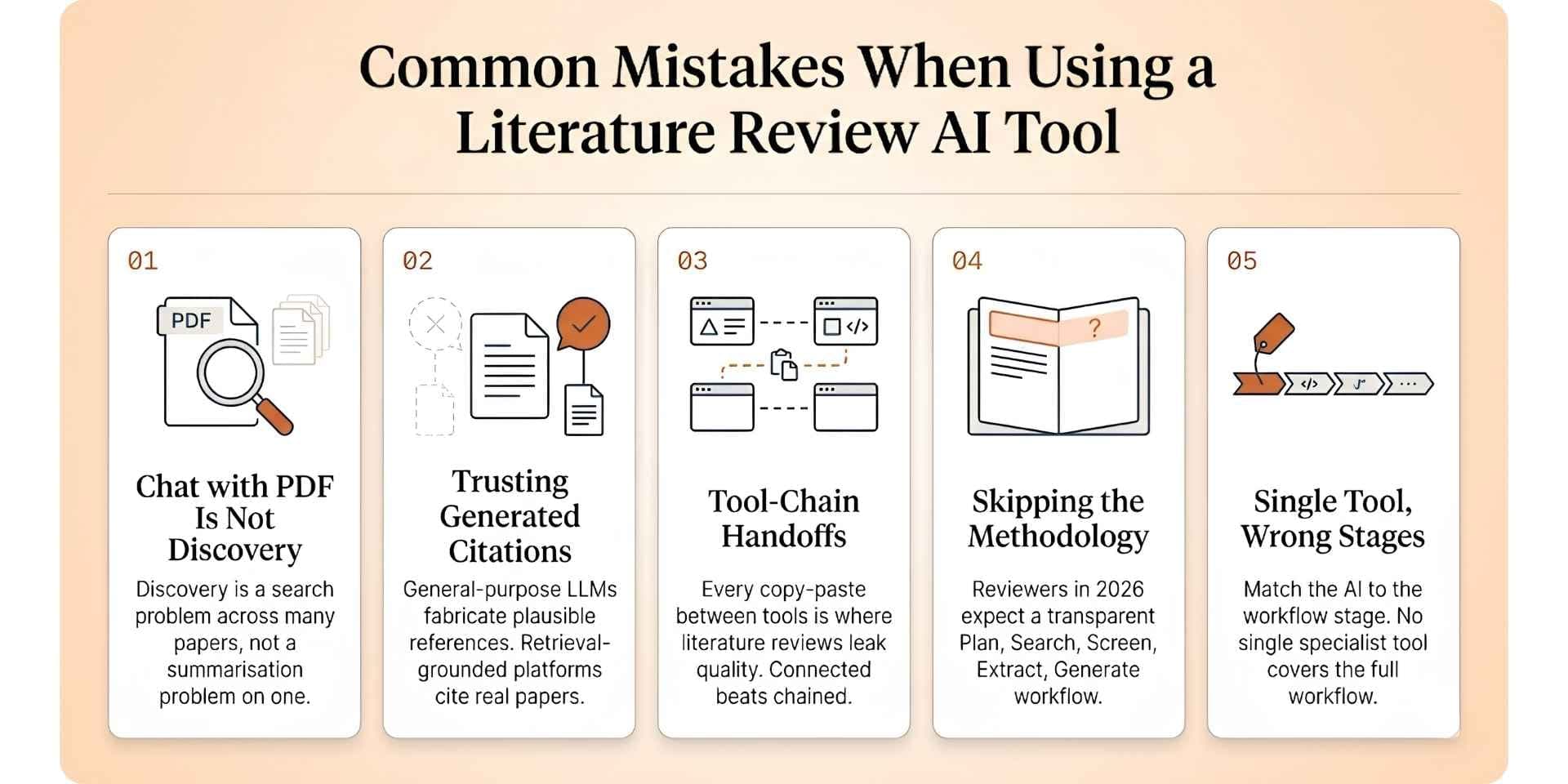
- Using a chat with PDF tool for discovery. Discovery is a search problem, not a summarization problem.
- Trusting AI generated citations without verification. General purpose LLMs (ChatGPT, Claude, Gemini) fabricate plausible sounding citations. A May 2026 Retraction Watch analysis found that one in 277 PubMed-indexed papers in 2026 cites a paper that does not exist. AI research platforms like Paperguide, alongside SciSpace and Scite, retrieve citations from real papers rather than generating them.
- Switching between four literature review AI tools and copy pasting. Every tool handoff is where literature reviews leak quality. Connected workflows beat tool chains.
- Skipping the methodology section in the literature review. Reviewers in 2026 expect to see how the literature was identified, screened, and synthesized. Paperguide's transparent Plan, Search, Screen, Extract, Generate workflow makes this section trivial to write.
- Using a single AI for jobs it does not do. ResearchRabbit is great for discovery but cannot synthesize. NotebookLM is great for closed corpora but cannot discover. Match the literature review AI to the workflow stage.
Final verdict
For researchers writing literature reviews of any kind, narrative, scoping, systematic, evidence synthesis, thesis chapter, journal manuscript, Paperguide is the best literature review AI tool in 2026, an AI research platform built around scientific research workflows. The platform's combination of the full Plan, Search, Screen, Extract, Generate workflow, two modes (Standard for up to 50 papers and Extended 200/50), arXiv plus PubMed plus OpenAlex plus Semantic Scholar plus your library as sources, SJR / SNIP / citation quality evaluation, and citation grounded review generation is unmatched in this category.
For specific stages of the literature review workflow, the strongest complements are Elicit for high volume systematic review screening, SciSpace for paper by paper analysis, Consensus for hypothesis testing, Scite for citation context, ResearchRabbit for free citation graph discovery, and NotebookLM for closed corpus analysis.
The biggest mistake in choosing a literature review AI tool in 2026 is picking a fluency optimized general purpose AI tool and trusting its citations. With one in 277 PubMed-indexed papers in 2026 citing a source that does not exist, per the Retraction Watch analysis, the citation grounded retrieval based platforms, Paperguide first, produce literature reviews defensible against viva examination, peer review, and editorial audit. Start your literature review workflow on Paperguide's free plan, run one literature review through the full Plan to Generate workflow, and the workflow consolidation argument either makes sense for your research or it does not. For most researchers, it does.
About This Evaluation
This guide was compiled by the Paperguide editorial team, who work with these tools daily across live research workflows. Each tool was assessed on corpus depth, citation grounding, source coverage, review modes, reference management, and pricing. Pricing reflects vendor-published plans at time of writing and can change, so confirm current rates on each vendor's site before you buy. As with any AI assisted research, verify every cited source against the original paper before you submit.
Frequently Asked Questions (FAQs)
What is the best AI literature review tool for researchers in 2026?
The best literature review AI tool in 2026 is Paperguide. It runs a structured Plan, Search, Screen, Extract, Generate workflow with two modes (Standard and Extended), pulls from 200M+ papers including arXiv, and grounds every cited claim back to the source paper. Elicit and SciSpace are the strongest alternatives for single stage work.
What is Extended mode in Paperguide Literature Review AI?
Extended mode is a Paperguide Literature Review AI setting that screens up to 200 candidate papers and writes the review from the top 50, versus Standard mode which handles up to 50 papers. Use Extended mode for thesis stage or systematic review work where broader coverage matters.
Does Paperguide search arXiv?
Yes. arXiv is now a native source in Paperguide across Research Agent, AI Search, and Literature Review AI, alongside PubMed, OpenAlex, Semantic Scholar, and the user's own reference library. arXiv source coverage is particularly useful for physics, mathematics, computer science, and quantitative biology research.
Can a literature review AI write my literature review for me?
A literature review AI can draft a literature review from a structured evidence base, but cannot do the methodology work for you, defining the research question, setting inclusion criteria, screening papers against those criteria, and validating extracted data. Paperguide's structured Plan step lets you confirm the protocol before the search runs. The strongest 2026 workflow is researcher led methodology plus AI assisted execution with verified citations throughout.
What is the best free literature review AI?
ResearchRabbit is the strongest free literature review AI for citation graph discovery. NotebookLM is the strongest free AI for closed corpus analysis. Paperguide's free plan includes 2,000 AI credits per month and access to the Literature Review AI, sufficient to test the full workflow.
Can literature review AI tools handle systematic reviews?
Yes. Paperguide is also the best AI tool for systematic review in 2026 because Literature Review AI runs a PRISMA aligned Plan, Search, Screen, Extract, Generate workflow with auditable screening, structured extraction, and verified citation grounding throughout. Elicit is the strongest second choice with published 99.5% screening recall and 96% extraction accuracy.
How do I verify literature review AI citations?
Click each citation and confirm it links to a real paper. Retrieval grounded tools (Paperguide, SciSpace, Scite) make this trivial because the citation links to the actual source paper. Generation based tools (ChatGPT, Claude, Gemini) frequently fabricate citations that look plausible but do not exist.
Which literature review AI is best for PhD researchers?
Paperguide is the strongest literature review AI tool for PhD researchers because it scales to thesis length reviews (Extended mode at 200/50), runs the full Plan to Generate workflow, and offers a 30% academic discount with a valid university email.
Can literature review AI tools handle scoping and narrative reviews?
Yes. Paperguide supports JBI aligned scoping reviews and thematic narrative reviews with citation grounded synthesis. Literature Review AI can be configured for either review type.
What is the difference between a literature review AI and a reference manager?
A reference manager stores and formats citations. A literature review AI conducts the discovery, screening, extraction, and synthesis that produce the literature review. Paperguide combines both, Literature Review AI plus the AI Reference Manager (widely considered the best AI reference manager in 2026, with 1,000+ citation styles) in one workspace.
Reviewing literature?
Generate your literature review
Categorized sources, citations and key insights from a single topic.
Try it freeNo credit card required