9 Best AI Tools for Research Papers in 2026 (Free + Paid)

Search for "AI tools for research papers" in 2026 and the results split into three clear buckets.
The first bucket is general-purpose chatbots (ChatGPT, Claude, Perplexity) that can reason fluently over uploaded papers but cannot reliably find them and frequently fabricate citations. The second is dedicated discovery tools (Semantic Scholar, Research Rabbit, Connected Papers, ResearchGate) that surface relevant research papers but stop at discovery, leaving extraction, synthesis, and writing as someone else's problem. The third, and the one that earns a permanent spot in the working researcher's day, is the connected research platform that handles find, read, summarise, extract, and write across the full research paper lifecycle in a single workspace where citations stay verifiable from search to submission.
That third bucket matters because researcher reading capacity has not kept up with publication volume. The widely-cited Tenopir and King reading-pattern research line, updated in a 2019 academic survey, found that researchers read on average around 20 papers per month, while global scholarly output continues to grow at roughly 9 to 10 percent each year. The gap between what gets published and what a researcher can read manually is widening every quarter, and the only way to close it is AI that compresses paper discovery, reading, and synthesis without breaking citation integrity.
This guide lists the best AI tools for research papers in 2026, ranks them by what matters for working researchers across all stages of how to write a research paper, and shows where each tool actually fits in the workflow.
TL;DR
Paperguide is the best AI tool for research papers in 2026. Paperguide, the AI-native platform for scientific research workflows and systematic reviews, handles paper discovery across 200M+ peer-reviewed papers, Chat with PDF, structured extraction, citation-grounded writing, and reference management in one workspace. Semantic Scholar, ChatGPT, Claude, Perplexity, Research Rabbit, Connected Papers, NotebookLM, and ResearchGate are the strongest specialised alternatives for free academic search, general reasoning, long-context reading, cross-disciplinary search, citation graph exploration, co-citation mapping, source-grounded synthesis, and researcher networking respectively.
Key Takeaways
- Paperguide is the #1 AI tool for research papers in 2026 for the full lifecycle of discovery, reading, analysis, and citation-grounded writing.
- Semantic Scholar is the largest free academic search index with 200M+ papers, Influence Scores, and TLDR auto-summaries.
- ChatGPT is the most-used general assistant for reasoning over uploaded research papers, with Plus at $20/month.
- Claude is the strongest long-context AI for reading multiple research papers in one conversation, with Pro at $17/month annual.
- Perplexity is the fastest cross-disciplinary AI search with linked citations, with Pro at $17/month annual.
- Research Rabbit is the cleanest free visual citation graph explorer for snowball discovery.
- Connected Papers is the best tool for co-citation mapping of unfamiliar research paper fields, with Academic at $6/month billed annually.
- NotebookLM is the strongest source-grounded notebook for synthesising uploaded research paper sets, free with Plus/Pro/Ultra via Google AI subscriptions.
- ResearchGate is the largest researcher network with 135M+ publications and direct author connections.
Why AI Tools for Research Papers Matter in 2026
A working researcher in 2026 sits inside an attention crisis the discipline has not solved. Reading capacity is roughly constant at around 20 papers per month for an active researcher according to the Tenopir and King scholarly-reading research line, while peer-reviewed output keeps compounding at a rate that doubles the corpus every 9 to 10 years. The implication is structural: the share of a researcher's field they can read manually is shrinking, and the gap between what is published and what is actually consumed expands every month.
That is why AI tools for research papers in 2026 are no longer optional. They are the only way to keep the literature surface area of a research project from collapsing into "what the researcher happened to have read in the last six months." The right AI compresses discovery (cutting hours of database search into minutes of structured retrieval), accelerates reading (Chat with PDF, audio overviews, structured extraction), and grounds writing in real cited sources rather than fabricated references. The wrong AI looks similar from the outside but breaks at the citation layer, where reviewers and journal editors expect every referenced paper to be real and every quoted finding to be traceable.
Features to Look For in an AI Tool for Research Papers in 2026
Before comparing the nine tools below, here are the criteria that separate research-grade AI tools for research papers from general AI writing tools.
- Real paper corpus with citation grounding: Does the tool search a real peer-reviewed corpus and ground every claim in retrieved papers, or does it generate citation-shaped text from a model's internal memory?
- Chat with PDF: Can the writer ask questions across uploaded research papers with answers highlighted back to source passages, or is reasoning untethered from the actual paper?
- Structured extraction: Does the tool support custom column extraction across paper sets (sample size, effect size, design, instruments), or end at single-paper Q&A?
- Citation-grounded writing: Does the AI Writer insert references from the actual connected reference library, or fabricate citation-looking strings?
- Reference manager: Is there a connected reference library with 1,000+ citation styles for submission-ready output?
- Workflow continuity: Does discovery, reading, extraction, and writing live in one workspace, or does the researcher tool-switch between four tabs with citation drift?
Quick Comparison: Top AI Tools for Research Papers in 2026
| Tool | Best For | Paper Corpus | Citation Grounding | Paid Entry |
|---|---|---|---|---|
| Paperguide | Scientific research paper workflow | 200M+ peer-reviewed | Verified | $12/mo Plus |
| Semantic Scholar | Free academic search index | 200M+ | Indexed citations | Free (no paid) |
| ChatGPT | General reasoning over uploaded papers | None native | Fabrication risk | $20/mo Plus |
| Claude | Long-context multi-paper reading | None native | Fabrication risk | $17/mo Pro (annual) |
| Perplexity | Cross-disciplinary AI search | Web + scholar | Web sources | $17/mo Pro (annual) |
| Research Rabbit | Visual citation graph exploration | 100M+ | Graph-only | Free |
| Connected Papers | Co-citation network mapping | Semantic Scholar corpus | Graph-only | $6/mo Academic (annual) |
| NotebookLM | Source-grounded paper synthesis | User uploads | Source-grounded | Free (Google AI Plus $7.99/mo) |
| ResearchGate | Researcher network + paper downloads | 135M+ | Author network | Free (institutional premium) |
Best AI Tools for Research Papers in 2026
1. Paperguide
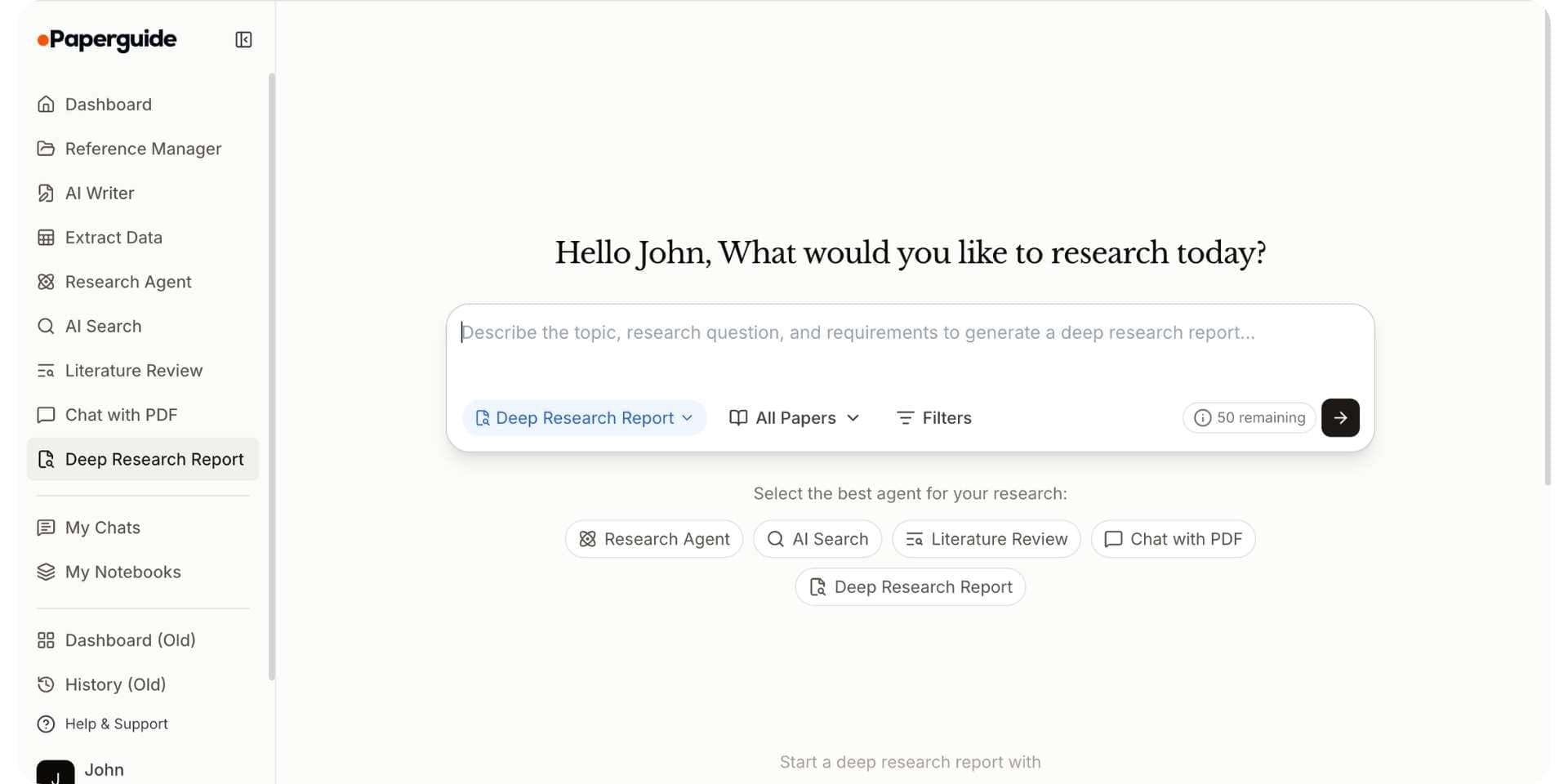
Paperguide is the AI-native platform for scientific research workflows and systematic reviews. For research papers specifically, the platform consolidates the full lifecycle in one workspace: AI Search across 200M+ peer-reviewed papers (PubMed, arXiv, OpenAlex, Semantic Scholar), Chat with PDF for paper Q&A with highlighted source passages, Extract Data for structured tables across multiple papers with custom columns, the AI Paper Writer for citation-grounded drafting where every reference comes from the connected library, Literature Review AI for formal review work, the Deep Research Report for synthesised cross-paper analysis, and the AI Reference Manager with 1,000+ citation styles for journal-ready output.
The result is the only platform tested in this guide that handles discovery, reading, extraction, and writing without tool-switching, which is the failure mode that creates citation drift in multi-tool workflows. The researcher who starts at search ends at submission inside the same workspace, with every cited paper verifiable from the AI Search result down to the reference manager entry. Read the step-by-step research paper writing workflow and the types of research papers guide for the full picture of how the platform fits into the working researcher's day.
Key Features
- AI Search across 200M+ peer-reviewed papers (PubMed, arXiv, OpenAlex, Semantic Scholar) with cited answers from the top 20 most relevant papers. Every result shows its SJR quartile, SNIP and citation metrics, and follow-up questions keep the same thread. The same search also works inside Claude or ChatGPT through Paperguide MCP.
- Chat with PDF with highlighted source passages and direct paper Q&A.
- Extract Data with custom columns for effect sizes, sample sizes, study designs, risk of bias across up to 100 papers per Extract Table.
- AI Paper Writer with citations applied automatically from the connected reference library, eliminating fabrication risk. Start from a complete draft, an outline or a blank page, filter sources by year, folder and journal quartile, and let Smart Continue extend the text from your cursor with your selected sources cited.
- Literature Review AI with Standard (up to 50 papers) and Extended (up to 200 papers) modes for formal review work.
- AI Reference Manager with 1,000+ citation styles including Vancouver, AMA, IEEE, and journal-specific formats.
- Plagiarism Checker runs originality detection inside the writer on every plan (4,000 words a month on Free, 20,000 on Plus, 100,000 on Pro and above).
- Research Agent runs the full research process in one connected session, from discovery and screening to extraction, drafting, and citation handling.
- Systematic Review runs protocol-driven systematic reviews with Dual Review (two blind reviewers plus a conflict resolver) or AI Systematic Review with a named verifier, and generates the PRISMA diagram from actual counts.
- Export to Word, PDF, BibTeX, RIS for journal submission and reference handoff.
Pros
- Only platform tested that consolidates the full research paper lifecycle in one workspace.
- Citation grounding eliminates the fabrication risk that plagues general AI tools.
- 200M+ papers across four peer-reviewed databases give cross-disciplinary breadth.
- Free plan covers small projects with 2,000 AI credits per month.
- Academics get 30% off with a valid university email.
Cons
- Free plan caps usage at 2,000 AI credits per month, which limits extensive paper surveys at zero cost.
- Per-seat pricing without an out-of-the-box institutional plan; institutions reach out for Enterprise terms.
Best For
Individual researchers, postdocs, faculty researchers, lab teams, and evidence synthesis teams who work with research papers across the full lifecycle (find, read, analyse, synthesise, write) and want one workspace instead of six tabs.
Pricing
| Plan | Price | What It Covers |
|---|---|---|
| Free | $0 | 2,000 AI credits per month, Literature Review Report, Deep Research Report, Chat with PDF, reference manager with 1,000+ citation styles, extraction tables with 5 columns across 10 papers. |
| Plus | $12 per seat per month, billed annually ($144 a year) | 12,500 AI credits, systematic reviews up to 1,000 papers, unlimited AI searches and PDF chats, extraction tables with 50 custom columns across 100 papers, 5 AI Paper Writer documents per month, plagiarism checker. |
| Pro | $29 per seat per month, billed annually ($348 a year) | 50,000 AI credits, systematic reviews up to 5,000 papers, 20 AI Paper Writer documents per month, 500 Search API requests per month, for high-volume research paper work. |
| Evidence Teams | $89 per seat per month, billed annually ($1,068 a year) | 150,000 AI credits, PRISMA-grade dual reviewer screening on reviews of up to 5,000 papers, dedicated support. |
| Enterprise | Custom | Institutional licensing for universities, research labs, and corporate research teams, with systematic reviews up to 20,000 papers. Academics get 30% off with a valid university email, and yearly billing saves up to 41%. |
Verdict
Paperguide is the best AI tool for research papers in 2026 because it owns the full paper lifecycle in one citation-grounded workspace, supported by the broader academic research AI and AI tools for scientific research ecosystems. For anyone running a literature review, a narrative review, a meta-analysis, or full paper drafting, the consolidated workspace is the difference between AI as a research accelerator and AI as a citation liability.
2. Semantic Scholar
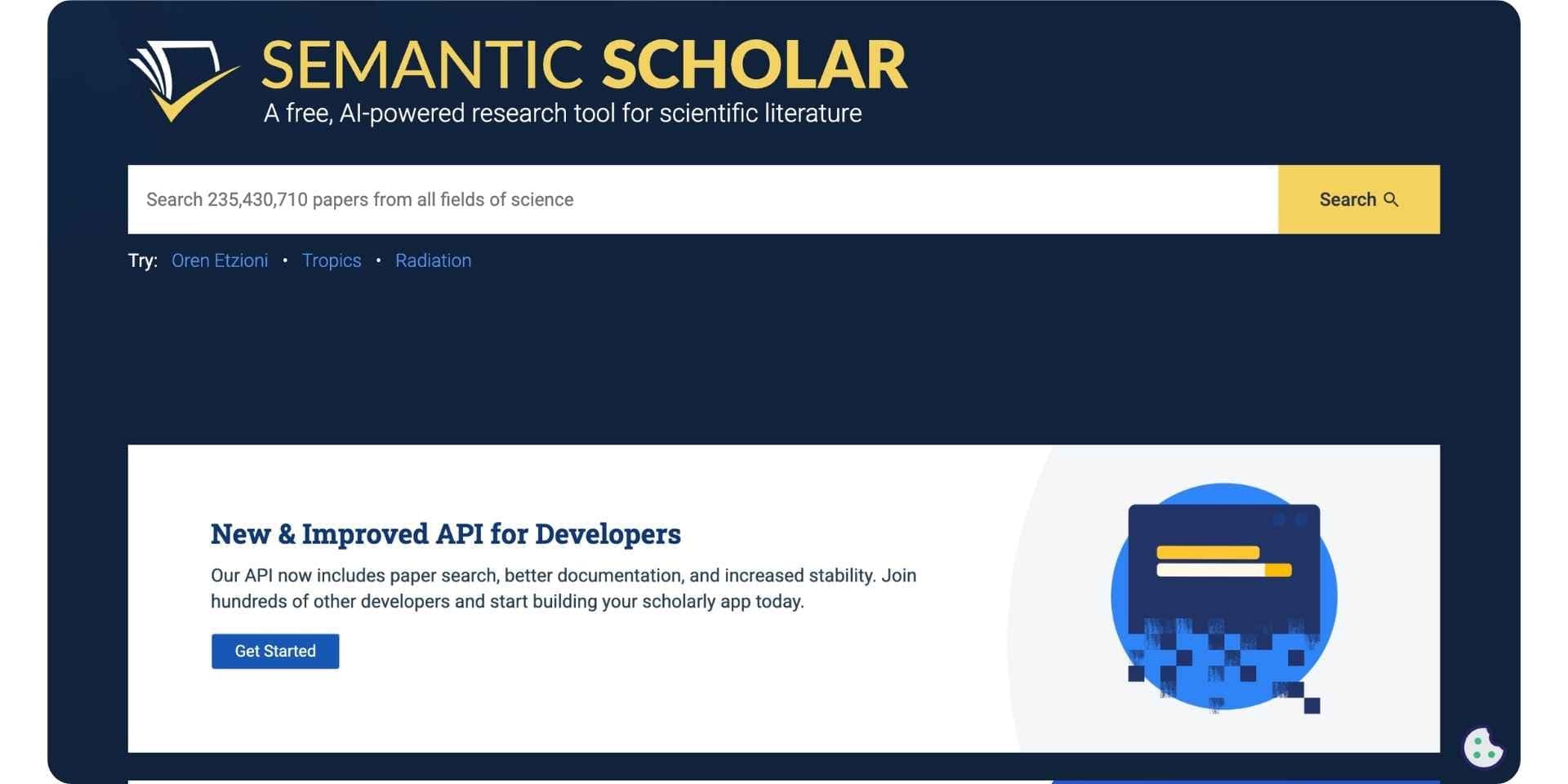
Semantic Scholar is the largest free academic search index in 2026, maintained by the Allen Institute for AI. The platform indexes 200M+ papers with citation links, provides Influence Scores that distinguish seminal works from incidental citations, and surfaces auto-generated TLDR summaries on most papers in the index. For researchers who need free unrestricted academic search across all disciplines, Semantic Scholar is the canonical starting point.
What Semantic Scholar does not do is reasoning, extraction, or writing. It is a search index, not a research workspace, which is the appropriate scope for a free public-good tool. The standard 2026 pattern pairs Semantic Scholar for discovery with a research platform downstream for reading, extraction, and writing.
Key Features
- 200M+ paper index across all disciplines.
- Influence Score for citation-weighted ranking that separates seminal works from incidental citations.
- Auto-generated TLDR summaries on indexed papers.
- Free API for downstream tools (used by many AI platforms).
- Author profiles with h-index and citation metrics.
Pros
- Free with no paywall, supported by the Allen Institute for AI.
- Strongest free academic search index in 2026.
- Influence Score is a real help for spotting seminal papers in unfamiliar fields.
Cons
- Discovery only; no Chat with PDF, extraction, or writing inside the platform.
- Utilitarian interface with no project organisation, library, or collaboration features.
Best For
Researchers who need free unrestricted access to a massive peer-reviewed paper index across all disciplines, with citation metrics built into the search experience.
Pricing
Free with no paid tiers
Verdict
Semantic Scholar is the strongest free academic search index for research papers in 2026 and pairs naturally with Paperguide for taking discovered papers through the reading, extraction, and citation-grounded writing stages that the index itself does not cover.
3. ChatGPT
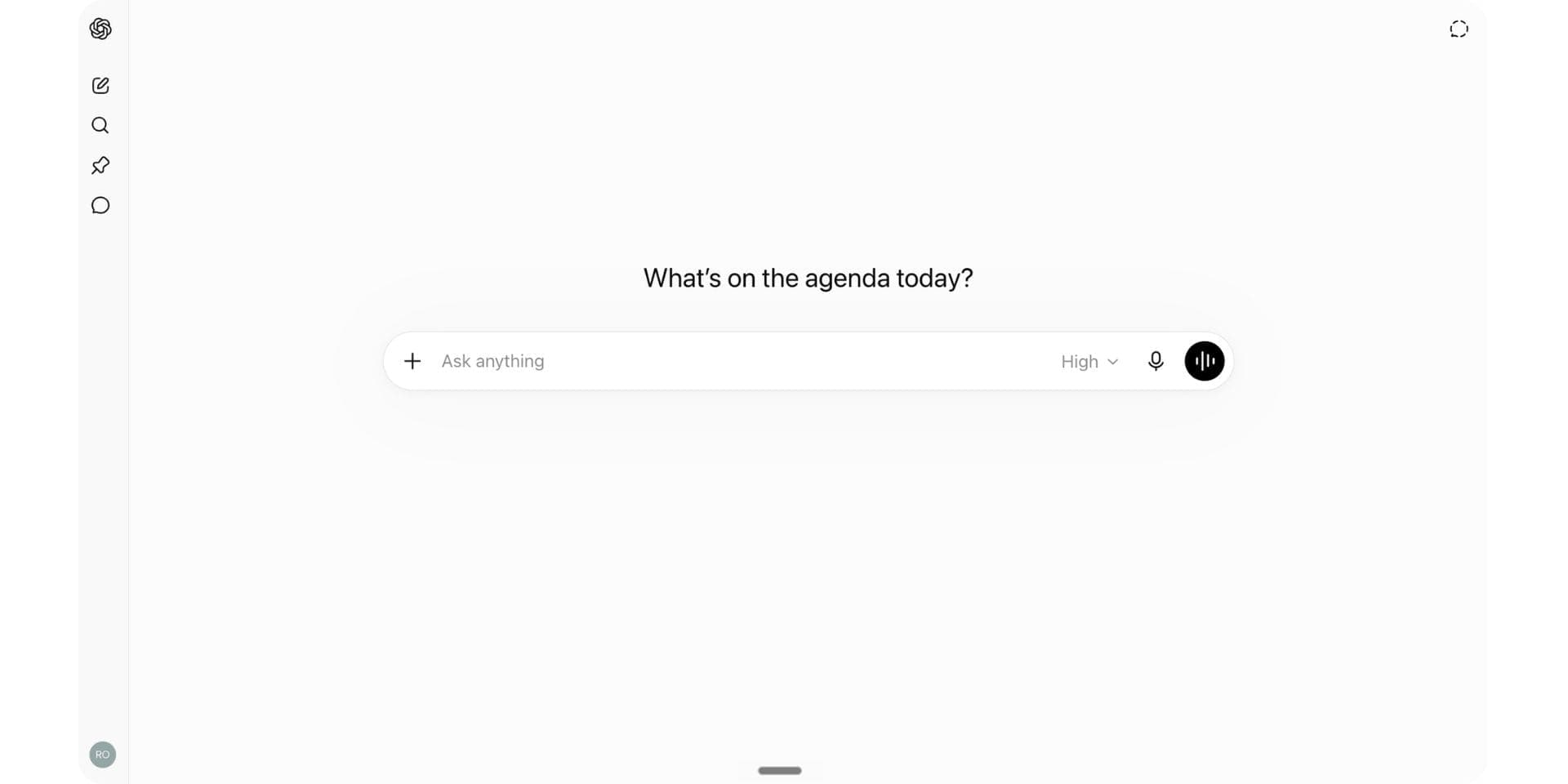
ChatGPT is the most-used general-purpose AI assistant for reasoning over uploaded research papers in 2026. The platform handles analytical reasoning, code, and exploratory writing competently over papers a researcher has already located and uploaded. Research mode adds web search, custom GPTs allow reusable research workflows, and the file upload pipeline now handles vision-rich PDFs.
What ChatGPT cannot do is search a scholarly database natively. The model generates from training data, which means citation suggestions are routinely fabricated DOIs that look real but do not exist. The well-documented hallucinated-citation problem makes ChatGPT unsuitable for any research paper work that requires verifiable references, although it remains a strong reasoning partner over papers the researcher uploads.
Key Features
- GPT-5.1 reasoning over paper uploads with vision support.
- Research mode with web search for current scholarly debates.
- Custom GPTs and Projects for repeatable research workflows.
- Code Interpreter for statistical reasoning over paper data.
- File uploads with multi-paper context.
Pros
- Strong general reasoning makes it a useful research-paper sparring partner.
- Plus tier at $20/month is widely accessible across academic and industry research budgets.
- Code Interpreter useful for statistical reasoning over extracted paper data.
Cons
- No scholarly database for native paper discovery.
- Citation fabrication risk on any references the model produces.
- No structured extraction, reference management, or systematic review workflow.
Best For
Researchers who need general reasoning, code analysis, or exploratory thinking over research papers they have already located and uploaded into the conversation.
Pricing
| Plan | Price | What It Covers |
|---|---|---|
| Free | $0 | Limited access to standard models. |
| Plus | $20/mo | Extended access, Research mode, file uploads, Custom GPTs. |
| Pro | $200/mo | Highest reasoning access, extended Code Interpreter, Pro model usage. |
| Team | $25-30/user/mo | Shared workspace, admin tools, higher rate limits. |
| Enterprise | Custom | SSO, audit logs, enterprise security. |
Verdict
ChatGPT is the most-used general assistant for research paper reasoning in 2026 but should not be the citation layer for any research paper writing because of fabrication risk. Paperguide is the best ChatGPT alternative for research paper work that requires verified citations from a real scholarly corpus, the same retrieval-versus-generation split profiled across AI tools for scientific writing.
4. Claude
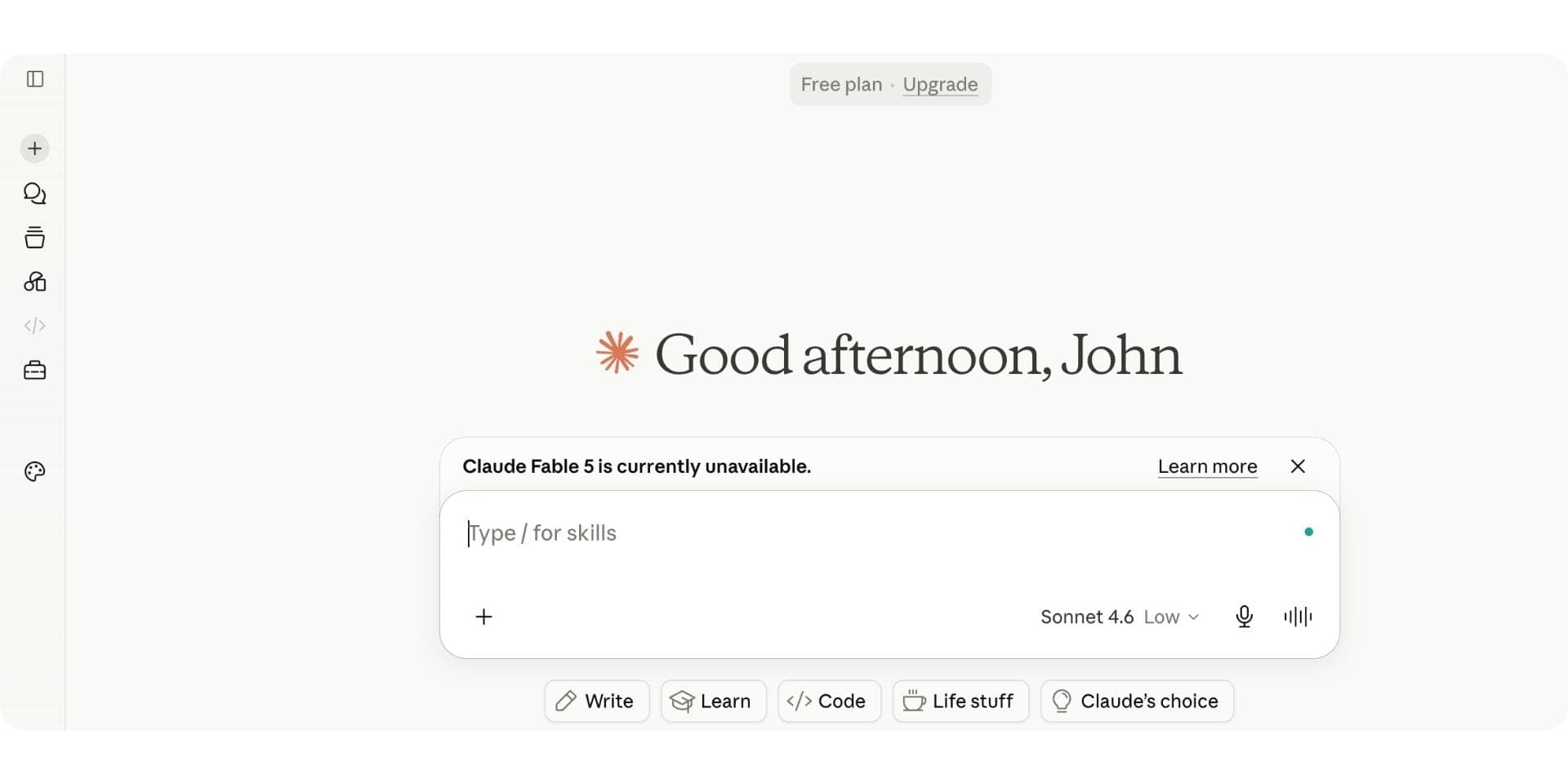
Claude is Anthropic's long-context AI assistant, widely used in 2026 for reading and reasoning across multiple research papers in a single conversation. Claude 4.6 extended the context window further, making it credible for cross-paper analysis where a researcher uploads 10 to 30 papers and asks for synthesis across them. Projects, Artifacts, and a steadily improving API round out the platform for repeatable research workflows.
Claude's weakness mirrors ChatGPT's: no native scholarly database, and citation fabrication risk when the model is asked to produce references it did not see in the upload. For long-context reading over a researcher-curated paper set, Claude earns its place. For discovery or citation-grounded writing, it is not the right tool.
Key Features
- Claude 4.6 with extended context window for multi-paper reading.
- Strong cross-document reasoning across uploaded papers.
- Projects for repeatable research workflows.
- Artifacts for structured output (tables, code, summaries).
- API access on Pro and higher tiers.
Pros
- Long-context reasoning is the strongest in this list for multi-paper conversations.
- Pro at $17/month annual is competitive against ChatGPT Plus.
- Artifacts useful for structured paper summaries.
Cons
- No native scholarly database; researcher uploads all papers manually.
- Citation fabrication risk on any references the model produces.
- Limited web search compared to ChatGPT and Perplexity.
Best For
Researchers reading and reasoning across multiple research papers in a single conversation, particularly cross-paper analysis tasks that exceed shorter context windows.
Pricing
| Plan | Price | What It Covers |
|---|---|---|
| Free | $0 | Limited access. |
| Pro | $20/mo monthly or $17/mo annual ($200/yr) | Extended access, Projects, Artifacts. |
| Max 5x | $100/mo | 5x Pro usage limits. |
| Max 20x | $200/mo | 20x Pro usage limits, highest individual tier. |
| Team | $20/seat/mo billed annually ($25 monthly) | Shared workspace and admin; premium seats at $100/seat/mo annual. |
| Enterprise | Custom | SSO, security, dedicated support. |
Verdict
Claude is the strongest long-context AI for cross-paper reading in 2026 and pairs well with Paperguide where Paperguide handles discovery and citation-grounded writing while Claude handles deep multi-paper reasoning during the analysis phase. Paperguide remains the best Claude alternative for any research paper work requiring verified citations or paper discovery beyond manual uploads.
5. Perplexity
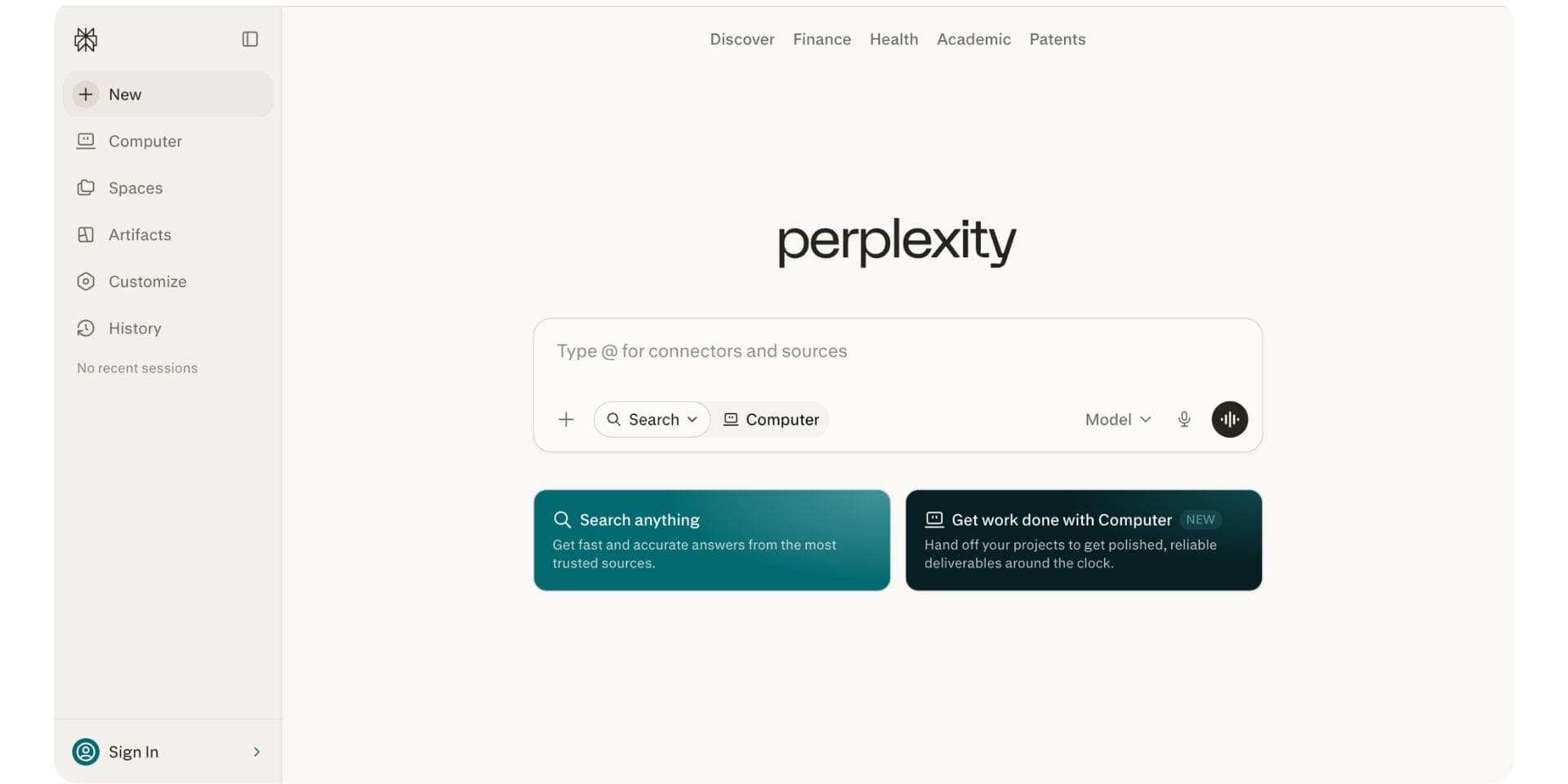
Perplexity is the AI search platform with linked citations on every answer, plus an academic mode that prioritises scholarly sources. For researchers needing fast cross-disciplinary search where context-setting across web and scholarly sources matters (regulatory research, market research adjacent to scientific research, cross-field literature scoping), Perplexity is the fastest tool in this list.
What Perplexity does not do is paper library management, structured extraction, or systematic review depth. The cited links on every answer are real, but the citation quality varies because the model often pulls from web sources alongside scholarly ones. The standard 2026 pattern uses Perplexity for fast cross-disciplinary scoping and then routes the discovered papers into a dedicated research workspace.
Key Features
- AI search with linked citations on every answer.
- Academic and Scholar modes prioritising scholarly sources.
- Multi-model access on Pro (Sonar, GPT-5.4, Gemini 3.1 Pro, Claude Sonnet 4.6).
- Spaces for organising research searches.
- Computer for building docs, reports, and apps from search results.
Pros
- Fastest cross-disciplinary search in this list.
- Citations on every answer with linked sources.
- Free plan is generous compared to other AI search platforms.
Cons
- No paper library or reference manager.
- Citation quality varies due to web source mix.
- Not built for systematic review or formal research paper writing depth.
Best For
Researchers needing fast cross-disciplinary search across web and scholarly sources with linked citations on every answer.
Pricing
| Plan | Price | What It Covers |
|---|---|---|
| Free | $0 | Limited Pro Search per day, basic features. |
| Pro | $17/mo annual ($20/mo monthly) | Access to top AI models, 4,000 bonus credits, Computer access, deeper sourcing. |
| Max | $167/mo annual | Everything in Pro, 35,000 bonus credits, 10,000 monthly credits, deep investigations at scale. |
Verdict
Perplexity is the fastest cross-disciplinary AI search for research papers in 2026 and pairs naturally with Paperguide where Paperguide handles the connected paper library, extraction, and writing while Perplexity handles fast cross-field scoping and current-events research adjacent to the scholarly corpus.
6. Research Rabbit
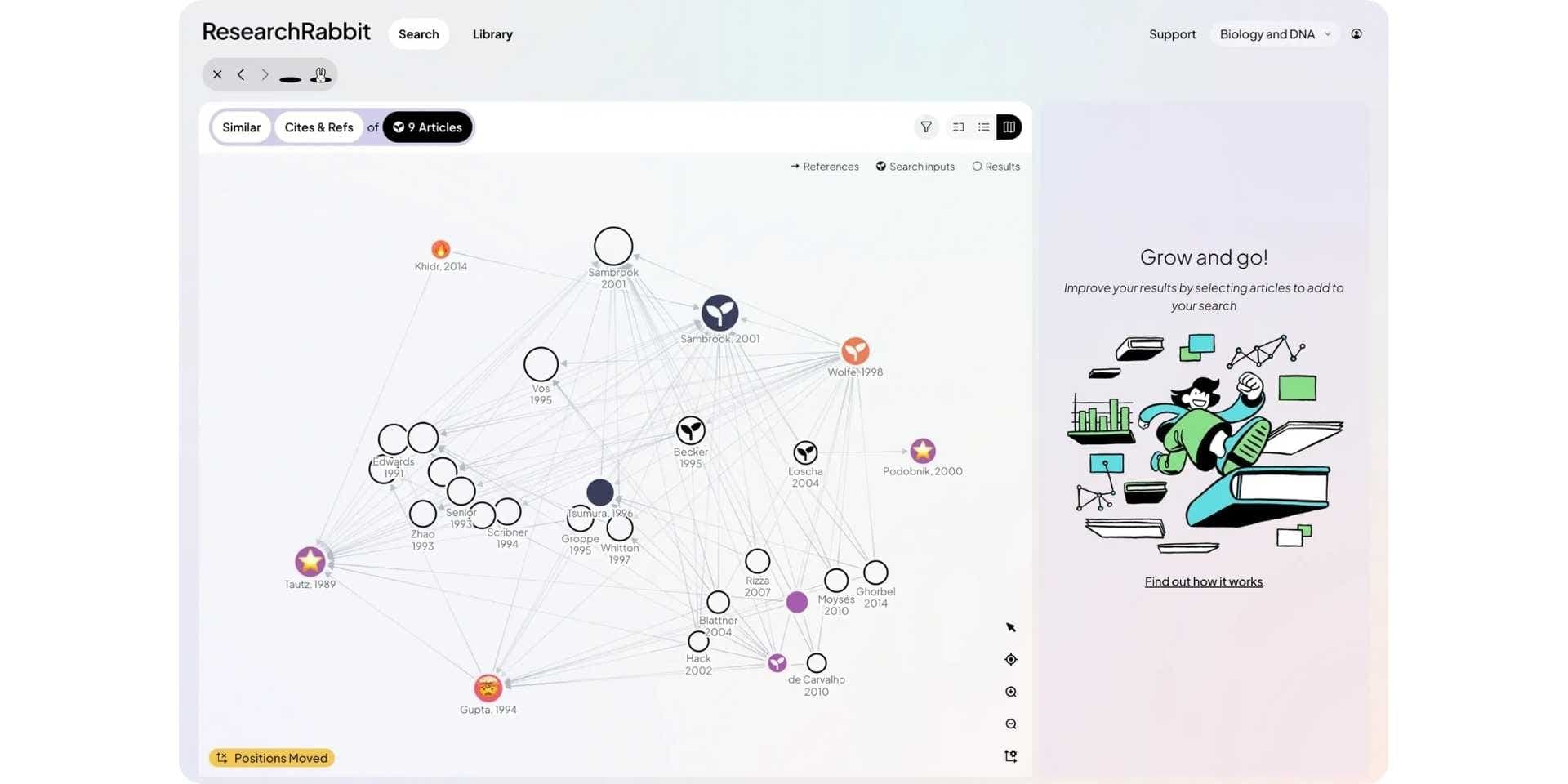
Research Rabbit is the cleanest free visual citation graph explorer for snowball discovery. Start with a seed paper, see the citation network visually, expand the graph to surface related work that pure text search misses. For researchers who think in citation networks rather than keywords, Research Rabbit reveals connections that database queries cannot.
The free tier covers full functionality with no meaningful limits, supported by integrations with Zotero for reference handoff. Research Rabbit is discovery-first; reading, extraction, and writing happen elsewhere.
Key Features:
- Visual citation graph from one or more seed papers.
- Similar Work, Earlier Work, and Later Work clusters.
- Collections and shared workspaces.
- Zotero import and export for reference handoff.
- Email digests of new related work.
Pros:
- Excellent for snowball discovery from seed papers.
- Free with no meaningful limits on graphs or collections.
- Zotero sync makes reference handoff clean.
Cons:
- Discovery only; no Chat with PDF, extraction, or writing inside the platform.
- Visual interface takes adjustment for keyword-first researchers.
Best For
Researchers who think in citation networks and want to expand from seed papers visually, surfacing related papers that keyword search alone misses.
Pricing
Free with no paid tiers.
Verdict
Research Rabbit is the cleanest free citation graph explorer for research papers in 2026 and pairs naturally with Paperguide for taking discovered papers through reading, extraction, and citation-grounded writing in a single connected workspace, the same handoff pattern detailed across the AI tools for research overview.
7. Connected Papers
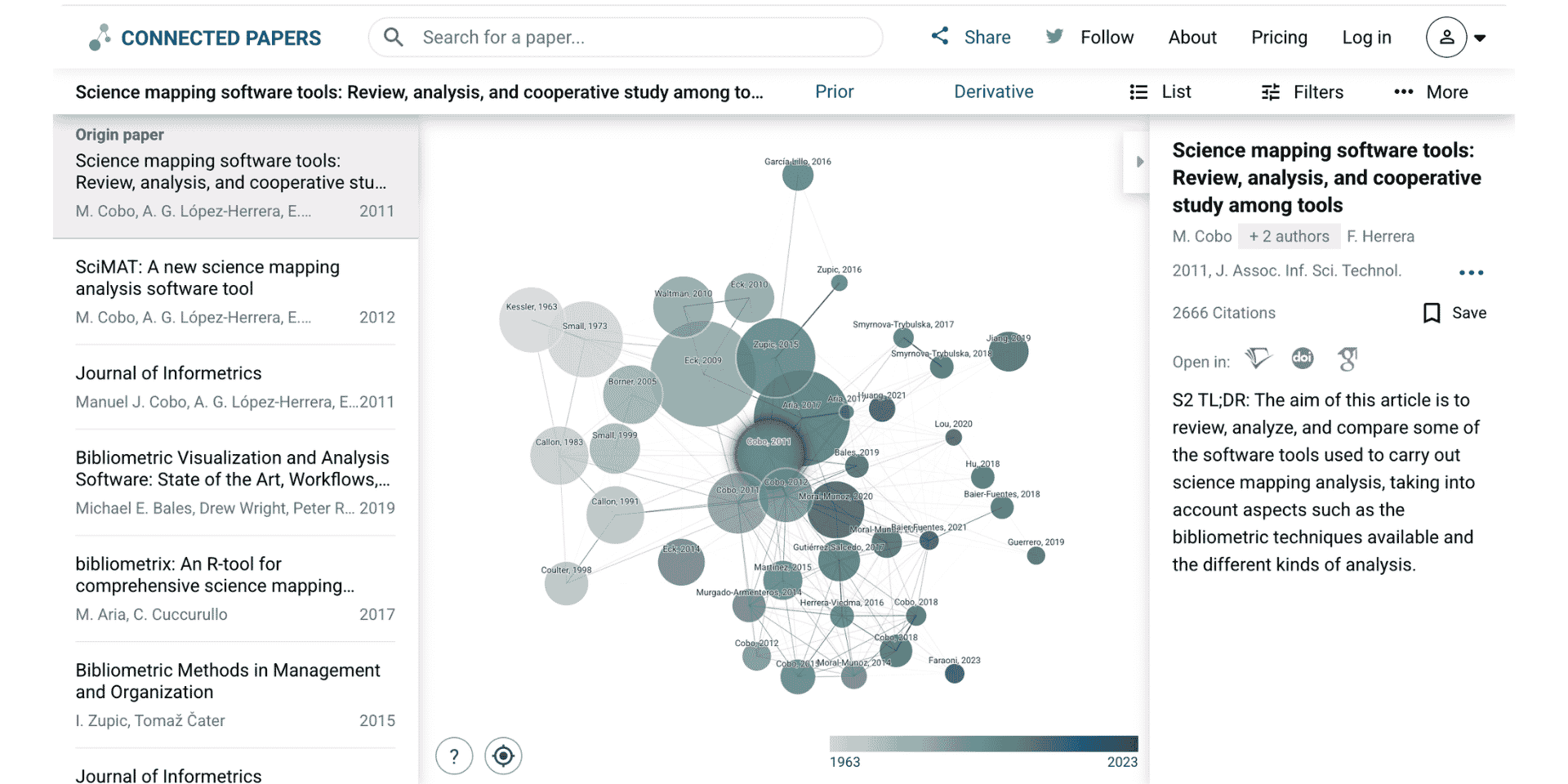
Connected Papers builds visual graphs from co-citation and bibliographic coupling, surfacing thematically related research papers that text search misses. The clean visualisation makes Connected Papers the strongest tool for mapping unfamiliar research paper fields in under 10 minutes, which is exactly what a researcher entering a new subfield needs before formal literature search begins.
The free tier covers 5 graphs per month, which is enough for occasional use. Academic and Business tiers remove the graph cap at $6/month for academics and $20/month for business use, both billed annually; there is no monthly billing option. The graphs are built over the Semantic Scholar corpus, which spans hundreds of millions of papers.
Key Features
- Co-citation and bibliographic coupling graphs from seed papers.
- Prior Work and Derivative Work clusters around each focal paper.
- Multi-origin graphs combining several seed papers.
- Saved papers and graph history on premium tiers.
Pros
- Best tool in this list for mapping unfamiliar research paper fields fast.
- Co-citation logic surfaces papers that text search misses.
- Clean exportable graphs useful for literature review planning.
Cons
- Free tier limited to 5 graphs per month.
- Discovery only; no Chat with PDF, extraction, or writing.
Best For
Researchers entering unfamiliar fields who need to map the research paper landscape and co-citation structure in under 10 minutes before formal literature search begins.
Pricing
| Plan | Price | What It Covers |
|---|---|---|
| Free | $0 | 5 graphs per month, all features included. |
| Academic | $6/mo billed annually ($72/yr) | Unlimited graphs, for academics, non-profits, and personal use. |
| Business | $20/mo billed annually ($240/yr) | Unlimited graphs, for business and industry. |
| Academic Library | Custom | Unlimited graphs, email/IP/SSO access, zero-effort integration. |
Verdict: Connected Papers is the best tool for mapping unfamiliar research paper fields in 2026 and pairs with Paperguide for handling the screening, reading, extraction, and citation-grounded writing after the field-mapping phase is complete.
8. NotebookLM
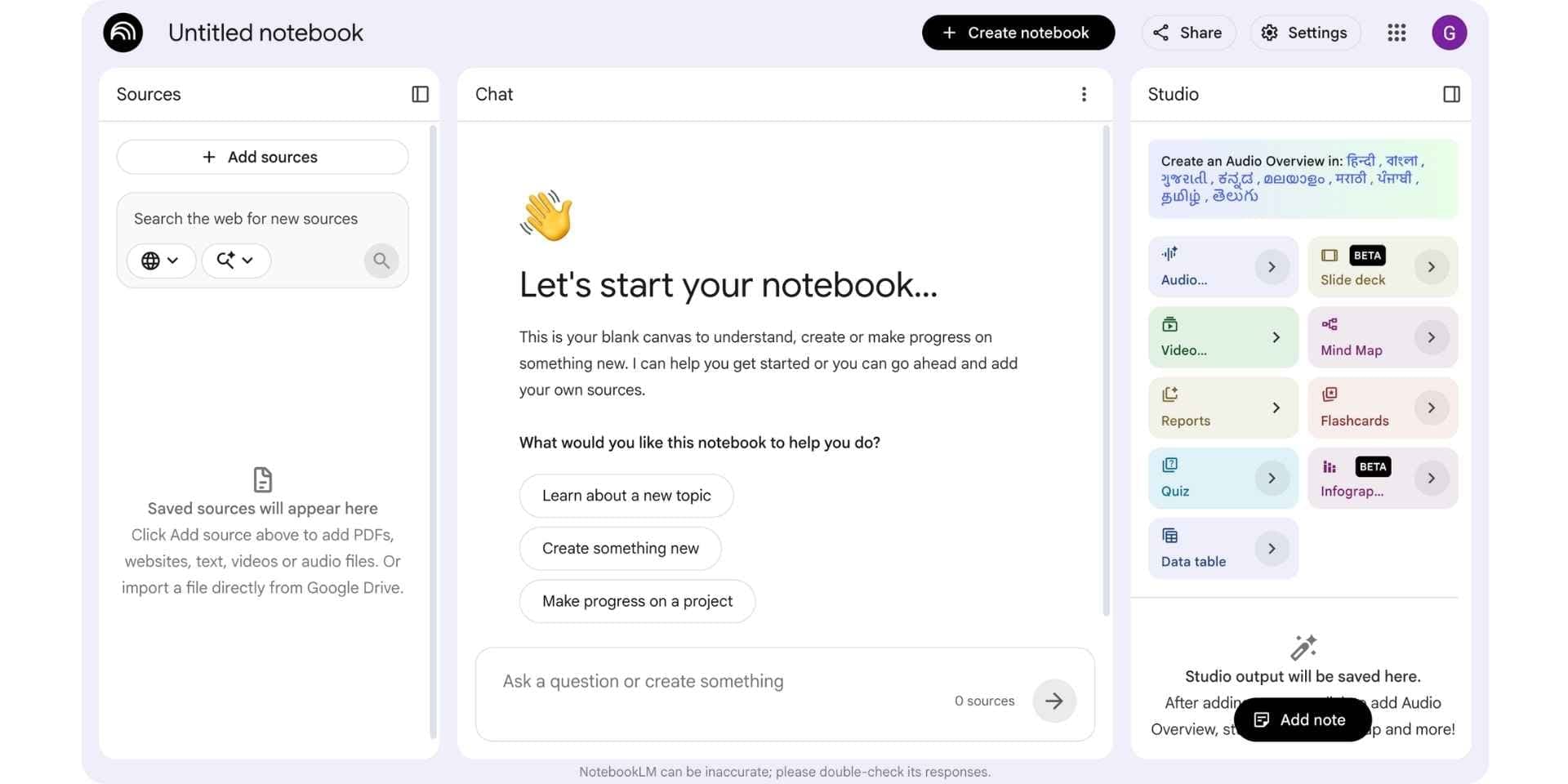
NotebookLM is Google's source-grounded AI notebook. Upload research papers, ask questions across all of them simultaneously, generate study guides, audio overviews, video overviews, mind maps, and reports. The constraint that makes NotebookLM useful for research is that the model does not invent facts outside the uploaded source set, which means every claim in an answer is traceable to a specific source document.
The trade-off is no discovery and no native scholarly database. NotebookLM does not search the literature; it works exclusively over what the researcher uploads. For a defined paper set where the researcher wants a conversational sandbox to interrogate them together, NotebookLM is the strongest source-grounded notebook in 2026.
Key Features
- Source-grounded chat across uploaded research papers.
- Audio Overview podcast-style synthesis of the paper set.
- Study Guide, Briefing Doc, FAQ, and Report generation.
- Video Overview and Mind Map views.
- Source citations on every claim.
- Up to 50 sources free, scaling to 600 sources on Ultra.
Pros
- Source-grounded answers reduce hallucination risk substantially.
- Audio Overview is a real aid for ingesting paper sets during commutes.
- Free tier with 50 sources per notebook is generous.
Cons
- No discovery, search, or paper recommendation; entirely upload-driven.
- No structured extraction or systematic review workflow.
- Premium tiers require Google AI Plus, Pro, or Ultra subscriptions rather than standalone NotebookLM pricing.
Best For
Researchers who have a defined research paper set and want a conversational sandbox to interrogate them together with audio overviews, study guides, and mind maps.
Pricing
| Plan | Price | What It Covers |
|---|---|---|
| NotebookLM | Free | Standard generations, 50 sources per notebook. |
| NotebookLM in Plus | Via Google AI Plus ($7.99/mo) | 2x more generations, 100 sources per notebook. |
| NotebookLM in Pro | Via Google AI Pro ($19.99/mo) | 5x more generations, 300 sources per notebook, priority access. |
| NotebookLM in Ultra | Via Google AI Ultra | Up to 50x more generations, 600 sources per notebook, no watermarks. |
| NotebookLM for orgs | Via Google Workspace / Workspace for Education / Google Cloud | Business, education, and enterprise tiers. |
Verdict
NotebookLM is the strongest source-grounded notebook for synthesising uploaded research paper sets in 2026 and pairs with Paperguide where Paperguide handles discovery, structured extraction, and citation-grounded writing while NotebookLM handles conversational synthesis over the curated paper set.
9. ResearchGate

ResearchGate is the largest scientific paper network with 135M+ publications and 25M+ researcher members. For research papers specifically, the platform combines paper access (often free via author uploads), direct author messaging, a researcher Q&A network, and author profiles with full publication histories. The discovery and search are weaker than dedicated AI platforms, but the researcher network is irreplaceable when implementation details from a published method need clarification from the actual author.
ResearchGate is not an AI tool in the same sense as the others in this list. It is a research-paper distribution and networking platform, and its strongest use in 2026 is finding comparable methodology authors and reaching out directly with clarifying questions.
Key Features
- 135M+ publications across all disciplines.
- 25M+ researcher members with full publication profiles.
- Direct author messaging.
- Q&A network for methodology and implementation questions.
- Free paper downloads (where authors have uploaded).
- Publication and citation metrics.
Pros
- Largest researcher network in this list for direct author connections.
- Free access to substantial volumes of research papers shared by authors.
- Direct author Q&A is unique among AI tools for research papers.
Cons
- Search and discovery weaker than dedicated AI platforms.
- No Chat with PDF, structured extraction, or AI Writer.
- Author response to messages is voluntary and not guaranteed.
Best For
Researchers who want free access to author-uploaded research papers, direct messaging with paper authors, and access to the largest scientific researcher network for methodology Q&A.
Pricing
| Tier | Price | What It Covers |
|---|---|---|
| Researcher (Free) | $0 | Core features, publication uploads, network access, Q&A, direct messaging. |
| Premium / Institutional | Custom | Institution-wide tiers and premium features available; no public consumer pricing. |
Verdict
ResearchGate is the strongest researcher network for accessing research papers and reaching authors in 2026 and pairs with Paperguide for AI-native research paper workflows that sit on top of ResearchGate's paper access and author network.
How the Paperguide Research Paper Workflow Works
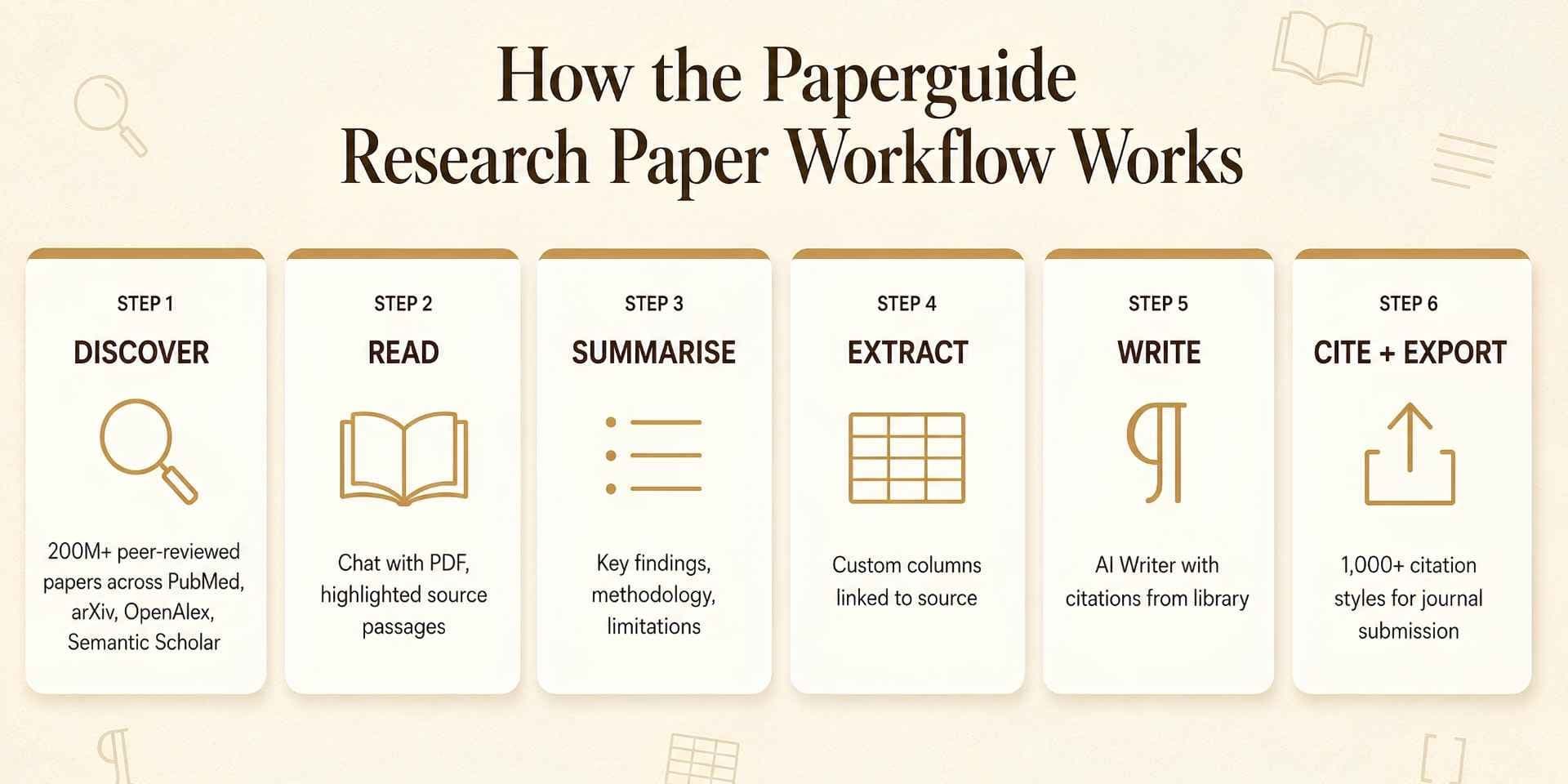
The best research paper results in 2026 come from layering tools across a connected scientific research workflow rather than expecting one to do everything.
Step 1. Discover- The Paperguide AI Search across 200M+ peer-reviewed papers returns cited answers from the top 20 most relevant papers, with the option to expand into a literature review for systematic coverage of the field.
Step 2. Read- Open PDFs inside the built-in viewer. Highlight, annotate, and ask questions via Chat with PDF with answers highlighted back to source passages.
Step 3. Summarise- AI-generated paper summaries surface key findings, methodology, and limitations in a consistent structure for fast cross-paper comparison.
Step 4. Extract- Structured data tables with custom columns (effect size, sample size, study design, instruments, validation) across multiple papers, with every extracted item linked to its source in the original PDF.
Step 5. Write- The AI Paper Writer drafts new sections with citations applied automatically against the connected library, supported by the research paper introduction CARS model and the background of a study framing patterns.
Step 6. Cite and export. The AI Reference Manager handles 1,000+ citation styles for submission, with Word, PDF, BibTeX, and RIS export ready for journal handoff or co-author review.
This research-first workflow is what separates AI as a research paper accelerator from AI as a citation liability, and it sits inside the same connected backbone profiled across AI tools for systematic review and the AI tools for meta-analysis clusters.
Best AI Tools for Research Papers by Use Case
| Use Case | Recommended Tool | Why |
|---|---|---|
| Best AI tool for research papers overall | Paperguide | End-to-end discovery + reading + extraction + citation-grounded writing in one workspace. |
| Best free AI for finding research papers | Semantic Scholar | 200M+ papers, free, Influence Scores for citation-weighted ranking. |
| Best AI for reasoning over uploaded research papers | ChatGPT | Strong general reasoning over uploaded paper sets. |
| Best AI for long-context multi-paper reading | Claude | Claude 4.6 extended context window. |
| Best AI for cross-disciplinary research paper search | Perplexity | Fast scoping across web and scholar with linked citations. |
| Best AI for citation graph exploration | Research Rabbit | Free visual snowball discovery from seed papers. |
| Best AI for mapping unfamiliar research paper fields | Connected Papers | Co-citation graphs reveal thematic clusters fast. |
| Best AI for source-grounded synthesis over uploaded papers | NotebookLM | Hallucination-resistant conversational synthesis with Audio Overview. |
| Best AI for accessing research papers (often free) | ResearchGate | 135M+ publications, 25M+ researcher network, author messaging. |
| Best AI for citation accuracy in research paper writing | Paperguide AI Paper Writer | Real-corpus citation insertion from the connected reference library. |
| Best AI reference manager for research papers | Paperguide | 1,000+ citation styles, Zotero import, full-fledged reference library. |
| Best free AI stack for research papers | Paperguide Free + Semantic Scholar + Research Rabbit | Free discovery, reading, basic extraction, and citation graph exploration. |
Best AI Tools for Research Papers: Final Comparison
| Feature | Paperguide | Semantic Scholar | ChatGPT | Claude | Perplexity | Research Rabbit | Connected Papers | NotebookLM | ResearchGate |
|---|---|---|---|---|---|---|---|---|---|
| Paper corpus | 200M+ peer-reviewed | 200M+ | None | None | Web + scholar | 100M+ | Semantic Scholar corpus | User uploads | 135M+ |
| Discovery | Yes | Yes (strongest free) | Web only | None | Yes | Citation graph | Co-citation graph | None | Network search |
| Chat with PDF | Yes | No | Manual uploads | Manual uploads | No | No | No | Yes (strongest) | No |
| Structured extraction | Yes | No | Ad-hoc | Ad-hoc | No | No | No | Limited | No |
| Citation-grounded writing | Yes (verified) | No | Fabrication risk | Fabrication risk | Web-grounded | No | No | Source-grounded | No |
| AI Reference Manager | Yes (full-fledged) | No | No | No | No | Collections | No | No | Profile-based |
| Free plan | Yes | Yes | Yes | Yes | Yes | Yes | 5 graphs/mo | Yes (50 sources) | Yes (core) |
| Starting paid | $12/mo annual | Free | $20/mo | $17/mo annual | $17/mo annual | Free | $6/mo annual | Via Google AI | Free core |
Common Mistakes When Using an AI Tool for Research Papers in 2026
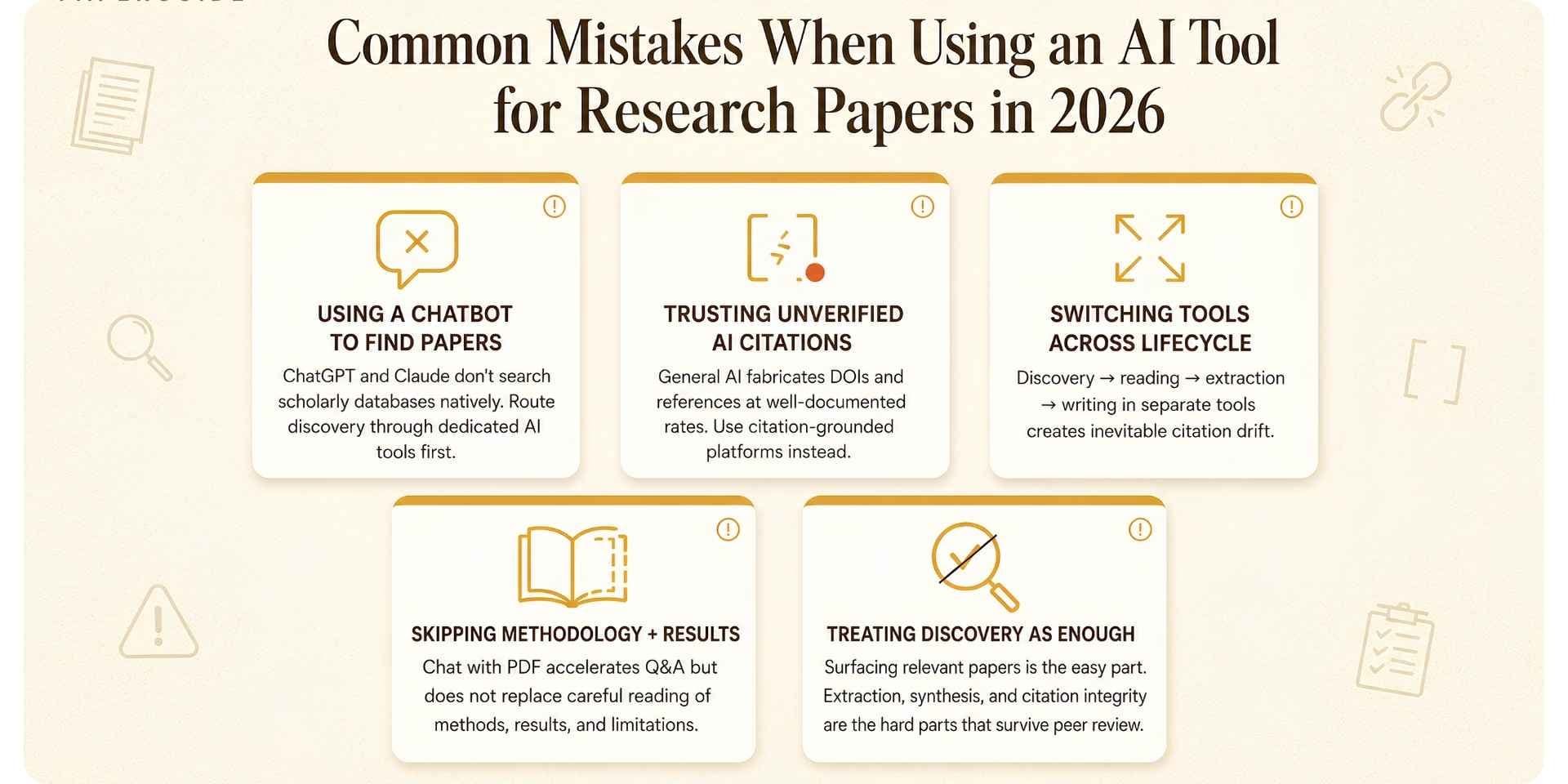
- Using a general-purpose chatbot to find research papers- ChatGPT and Claude do not search scholarly databases natively. Use dedicated AI tools for finding research papers, such as the Paperguide AI Search or Semantic Scholar, then route the discovered papers into the reasoning tool.
- Trusting AI-generated citations without verification- General AI tools fabricate citations and DOIs at well-documented rates. Use citation-grounded platforms where every reference is anchored in a real retrieved paper.
- Switching tools across the paper lifecycle- Discovery in one tool, reading in another, extraction in a third, writing in a fourth: citation drift is inevitable when the reference library is not connected to the writer.
- Skipping methodology and results sections when reading- Chat with PDF accelerates Q&A but does not replace careful reading of methodology, results, and limitations.
- Treating discovery as enough- Surfacing relevant research papers is the easy part. The hard part is extracting, synthesising, and writing about them with citation integrity that survives peer review.
Final Verdict
For researchers, postdocs, faculty researchers, and research teams working with research papers in 2026, Paperguide is the best AI tool for research papers. The platform consolidates discovery, reading, summarisation, extraction, and citation-grounded writing in a single workspace, eliminating the tool-switching that causes citation drift in multi-tool workflows. It is the closest 2026 tool to a single research-paper command centre, built for individual researchers and evidence synthesis teams alike.
For specific stages where dedicated tools dominate, Semantic Scholar provides free academic search across 200M+ papers, ChatGPT and Claude support general reasoning over uploaded papers, Perplexity offers cross-disciplinary search with linked citations, Research Rabbit and Connected Papers handle citation graph discovery, NotebookLM handles source-grounded synthesis over uploaded paper sets, and ResearchGate provides the researcher network and direct author connections.
The 2026 best-practice pattern is rarely a single tool. It is Paperguide for the paper-workflow backbone, with Connected Papers or Research Rabbit for visual citation graph exploration when entering an unfamiliar field, Semantic Scholar for free supplementary search, ChatGPT or Claude for general reasoning over the curated paper set, NotebookLM for source-grounded conversational synthesis, and ResearchGate for author connections when implementation details need clarification. That layered workflow is what produces research-paper outputs that survive 2026 peer review.
Frequently Asked Questions (FAQs)
What is the best AI tool for research papers in 2026?
The best AI tool for research papers in 2026 is Paperguide. It is the only AI tool that consolidates discovery, Chat with PDF, structured extraction, citation-grounded writing, and reference management in a single workspace, supporting the full paper lifecycle from search to journal submission without citation drift.
What is the best AI for writing research papers?
The Paperguide AI Paper Writer is the strongest AI for writing research papers in 2026 because it drafts sections with citations applied automatically against the actual reference library, eliminating the fabrication risk that comes with general AI writers.
What is the best AI for finding research papers?
The Paperguide AI Search across 200M+ peer-reviewed papers (PubMed, arXiv, OpenAlex, Semantic Scholar) is the strongest AI for finding research papers in 2026 when discovery feeds directly into reading, extraction, and writing. Semantic Scholar is the strongest free standalone academic search index. Research Rabbit and Connected Papers handle visual citation graph discovery for snowball and co-citation patterns respectively.
What are some good AI tools for research papers?
Paperguide (full lifecycle), Semantic Scholar (free search), ChatGPT (reasoning), Claude (long-context), Perplexity (cross-disciplinary search), Research Rabbit (citation graphs), Connected Papers (co-citation maps), NotebookLM (source-grounded synthesis), and ResearchGate (researcher network) are the 9 most useful AI tools for research papers in 2026.
Which AI is best for finding research papers?
The Paperguide AI Search and Semantic Scholar are the two strongest tools for finding research papers in 2026. Paperguide adds workflow continuity (read, extract, write) on top of search; Semantic Scholar is free with Influence Scores.
What is the best free AI for research papers?
The Paperguide Free plan plus Semantic Scholar plus Research Rabbit combination is the strongest free stack for research papers in 2026. Paperguide handles search, reading, and basic extraction; Semantic Scholar adds Influence Score-ranked free search; Research Rabbit handles visual citation graph discovery.
Can AI write a complete research paper?
Citation-grounded AI (Paperguide AI Paper Writer) can draft research paper sections with verified citations from a connected reference library. Full paper completion still requires researcher judgment on methodology, results interpretation, and discussion framing. Start with the types of research papers guide to choose the right structure before drafting.
How does AI help with research papers?
AI tools for research papers accelerate six stages: discovery (search across millions of papers), reading (Chat with PDF), summarisation (key findings), structured extraction (tables of methodological details), citation analysis, and citation-grounded writing. The strongest AI tools for research papers consolidate these stages into one workspace where the reference library connects directly to the writer.
How many research papers do researchers read per month on average?
The Tenopir and King scholarly-reading research line, updated in a 2019 academic survey, found that researchers read on average around 20 papers per month. With global scholarly output growing at roughly 9 to 10% per year, the gap between published volume and reading capacity continues to widen, which is the structural reason AI tools for research papers have become essential rather than optional in 2026.
Can AI replace researchers in writing research papers?
No. AI tools for research papers accelerate discovery, reading, extraction, and citation-grounded drafting but cannot replace researcher judgment on methodology design, results interpretation, theoretical framing, or the discussion section's contribution-to-the-field analysis. Use AI to compress the upstream work and let the researcher lead the substantive parts of the paper.
Researching a topic?
Find papers and get cited answers
Search the literature, find gaps and write with citations.
Start for freeNo credit card required