How to Write the Background of a Study: Step-by-Step Guide with Examples


The background of a study is the opening section of a research paper or thesis that establishes what is already known about the topic, identifies what remains unknown, and explains why the current study is needed. It provides readers with enough context to understand the research problem without requiring them to read every source the author consulted. A well-written background moves from broad context to a specific gap, setting up the research question or hypothesis that follows. [1]
Writing the background is one of the most important steps in preparing a manuscript because it determines whether readers and reviewers perceive your study as necessary and well-positioned within the field. Research shows that manuscripts face high rejection rates across journals, with a content analysis of 1,215 submissions finding that poor study rationale and weak methodological descriptions were among the most frequently cited reasons for rejection. A background section that fails to synthesize existing literature, misrepresents the current state of knowledge, or does not clearly establish a gap will weaken the entire paper regardless of how strong the methods and results are. This guide explains what a study background is, how it differs from a literature review and introduction, walks through the writing process step by step with examples, and provides a template and checklist you can apply to your own work. [3]
Key Takeaways
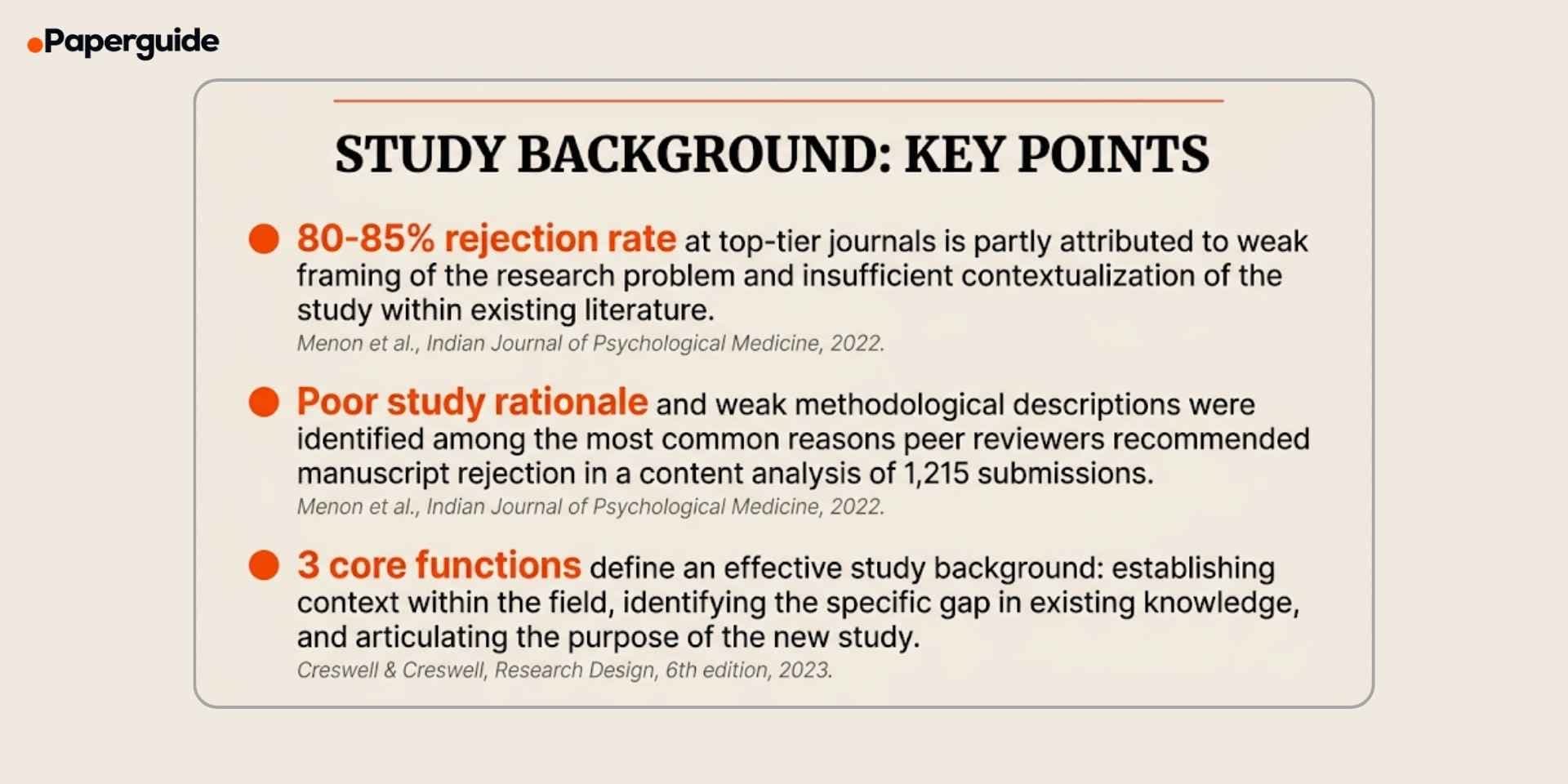
- The background of a study establishes context, synthesizes relevant literature, identifies the research gap, and justifies the need for the current study
- It differs from a literature review (which is comprehensive and standalone) and from an introduction (which is broader and includes the research question and objectives)
- An effective background follows a funnel structure: broad field context narrows to specific gap and then to the study purpose
- Synthesizing sources rather than summarizing them individually is the single most important writing technique for this section
- Common mistakes include listing studies without connecting them, making the background too broad, and failing to state the gap explicitly
What Is the Background of a Study?
The background of a study is the section of a research paper, thesis, or proposal that presents existing knowledge about the topic and explains why the current study is necessary. It typically appears at the beginning of the paper, either as a distinct section (common in theses and dissertations) or as the opening portion of the introduction (common in journal articles). The background provides the scholarly foundation upon which the research question is built. [1]
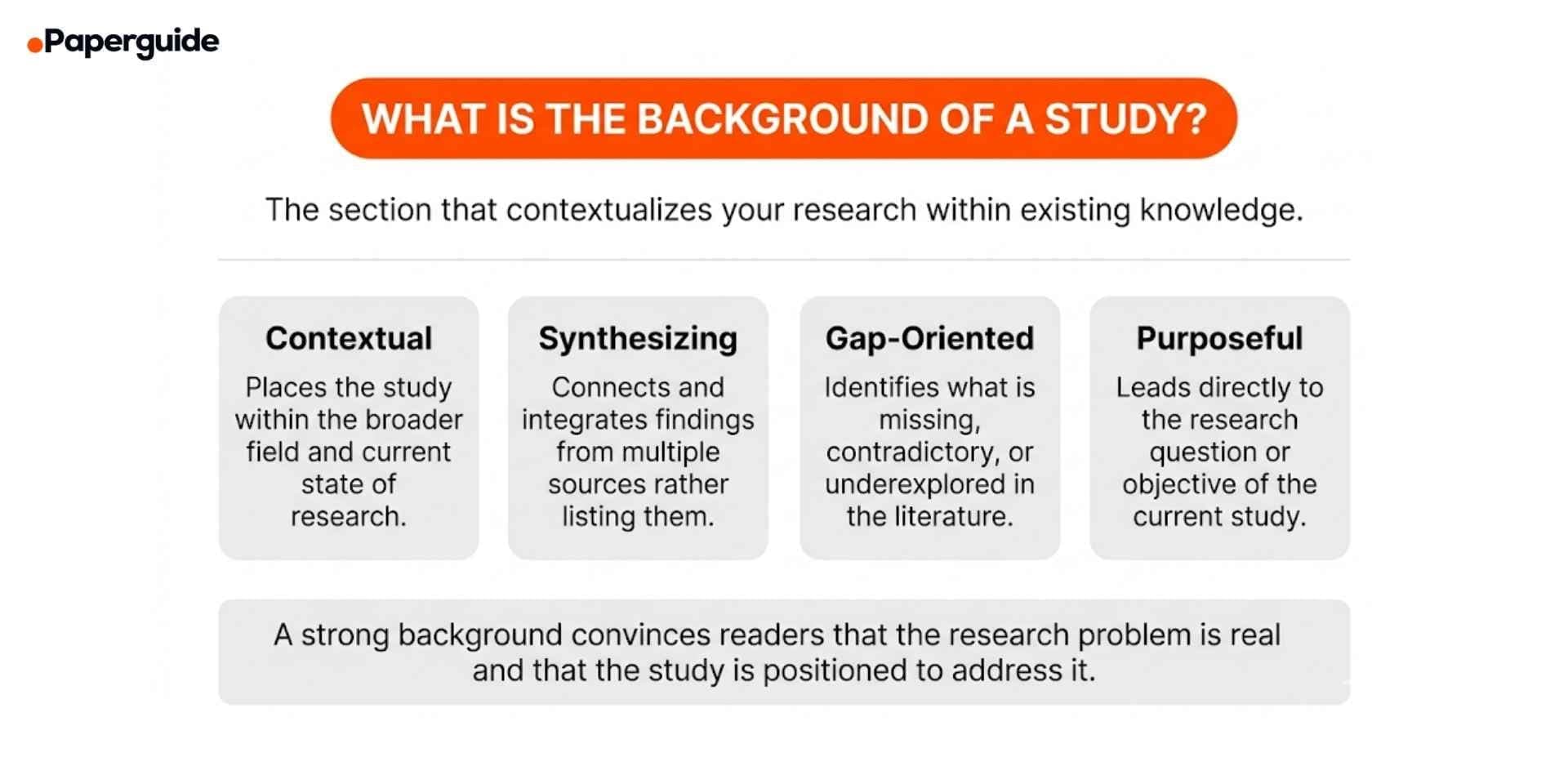
A strong background does three things. First, it establishes the general topic and its importance by citing foundational studies and current evidence. Second, it narrows the focus by showing how existing research has addressed the topic but left specific questions unanswered. Third, it transitions smoothly into the research purpose by making the gap explicit and connecting it to the objectives of the current study. This funnel structure, moving from broad to specific, is the most widely recommended approach across disciplines. [2]
The background is not the place to present your own data, discuss your methodology, or state your findings. Its role is entirely about what came before your study and why that body of work points to the need for what you are about to do.
Background vs Literature Review vs Introduction
Many researchers confuse the background with the literature review or the introduction. While these sections overlap, they serve different purposes and are structured differently.
| Feature | Background of the Study | Literature Review | Introduction |
|---|---|---|---|
| Purpose | Establishes context and identifies the gap | Comprehensive analysis of existing evidence | Orients the reader and presents the research question |
| Scope | Focused on the immediate context of the study | Broad and exhaustive coverage of the topic | Covers context, gap, question, and study overview |
| Depth | Selective synthesis of key sources | In-depth critical analysis of all relevant sources | Moderate depth across multiple elements |
| Placement | Beginning of the paper or first part of the introduction | Standalone chapter (thesis) or section (article) | First section of the paper |
| Typical length | 2 to 5 paragraphs in journal articles, 3 to 10 pages in theses | 15 to 40 pages in theses, 3 to 8 pages in articles | 1 to 3 pages in journal articles |
In a journal article, the background is usually embedded within the introduction. In a thesis or dissertation, the background often appears as a distinct section or chapter before the literature review. Understanding this distinction helps you avoid writing a literature review when you need a focused background, or writing a background when you need a comprehensive review. [1]
How to Write the Background of a Study
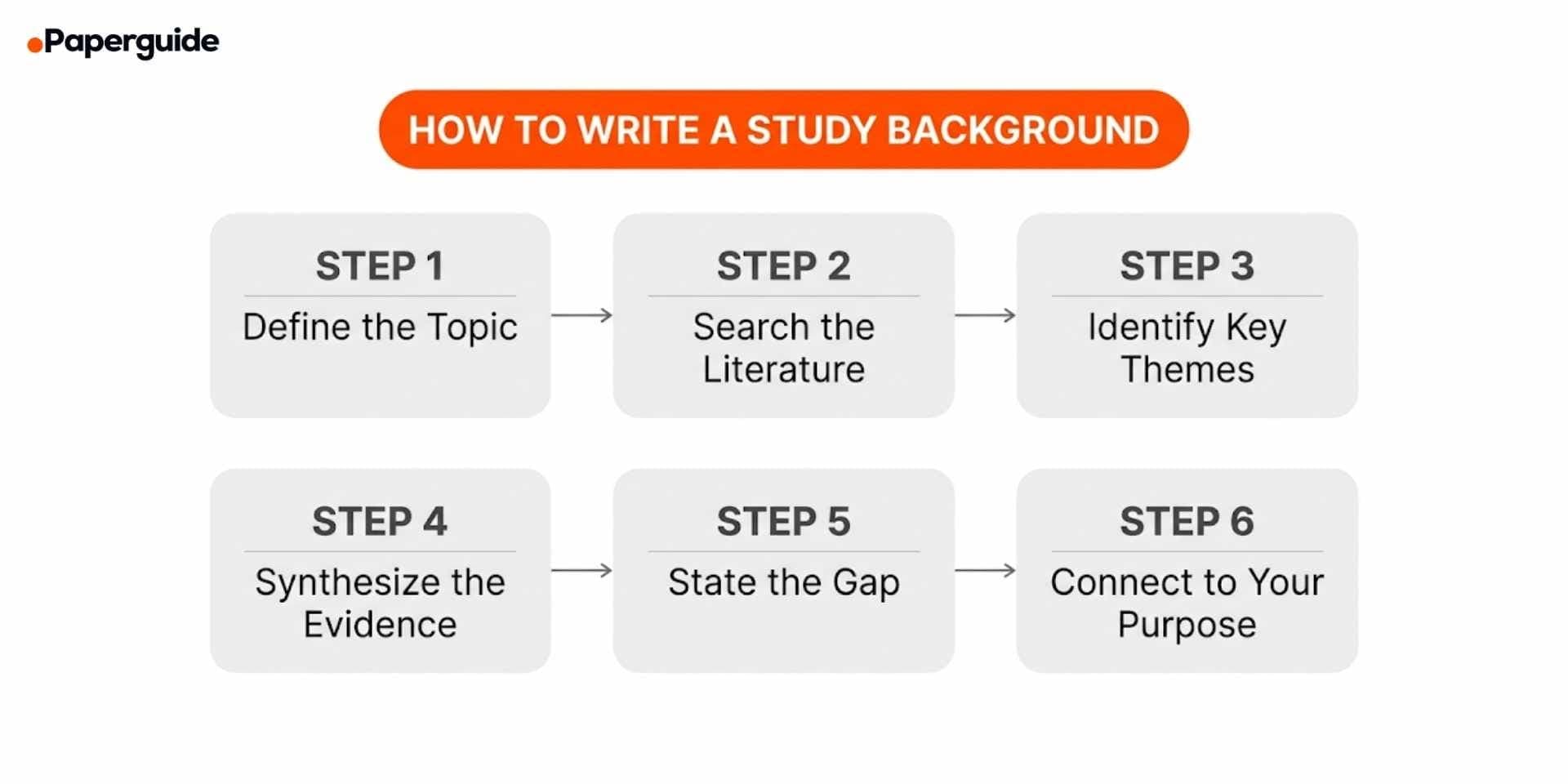
Step 1: Define the Specific Topic and Scope
Before writing a single sentence, clarify exactly what your study is about and what boundaries your background will cover. A background section on "climate change" is too broad. A background on "the relationship between urban heat islands and respiratory hospital admissions in South Asian cities" is appropriately scoped. The more specific your focus, the easier it becomes to identify relevant literature and articulate the gap.
Write one sentence stating the core topic and one sentence stating the boundaries (time period, population, geographic focus, or methodological scope). This acts as your compass for the rest of the section.
Step 2: Search and Collect Relevant Literature
Conduct a targeted literature search using academic databases such as PubMed, Scopus, Web of Science, or Google Scholar. Focus on finding foundational studies that established key concepts, recent studies that represent the current state of knowledge, and studies that are most closely related to your specific research question. [2]
Organize your sources thematically rather than chronologically. Group them by subtopic, methodology, population, or finding. This thematic organization will become the structural backbone of your background paragraphs. Researchers working on narrative reviews alongside their primary research often develop stronger literature search skills that transfer directly to writing more comprehensive study backgrounds. For comprehensive literature searches, AI for systematic review can help you screen and organize hundreds of papers by theme, methodology, or population.
Step 3: Identify Key Themes and Patterns
Read through your collected sources and identify what the evidence consistently shows, where findings disagree, what methodological approaches dominate, and where coverage is thin or absent. These themes become your paragraph topics.
For example, if you are studying the effect of mindfulness interventions on academic anxiety, your themes might include: (1) prevalence of academic anxiety among university students, (2) existing intervention approaches and their effectiveness, (3) theoretical basis for mindfulness as an anxiety reduction strategy, and (4) gaps in the evidence regarding specific populations or delivery formats.
When working with large evidence bases, systematic review software automates screening and data extraction so you can focus on synthesis rather than manual sorting.
Step 4: Synthesize Rather Than Summarize
This is where most background sections fail. A weak background summarizes one study per paragraph: "Smith (2019) found X. Jones (2020) found Y. Lee (2021) found Z." A strong background synthesizes across studies: "Several studies have demonstrated that X is associated with Y (Smith, 2019; Jones, 2020; Lee, 2021), although the strength of this association varies by population and methodology."
Synthesis means combining evidence from multiple sources to make a single point. Each paragraph should advance one theme or argument, drawing on multiple citations to support it. This demonstrates that you understand the literature as a body of evidence, not just as a collection of individual papers.
Step 5: State the Gap Explicitly
After presenting what is known, you must clearly state what is not known. The gap is the specific piece of missing knowledge that your study will address. Effective gap statements use phrases such as "however, no study has examined," "despite this evidence, the relationship between X and Y remains unclear," or "existing research has focused predominantly on Z, leaving the question of W unanswered."
The gap must be specific and verifiable. A vague statement like "more research is needed" does not qualify. The reader should be able to understand exactly what is missing and why that missing piece matters. Menon et al. (2022) found that weak study rationale was among the most frequent reasons peer reviewers recommended manuscript rejection, which underscores the importance of making the gap concrete and well-supported. [3]
Step 6: Connect the Gap to Your Study Purpose
The final paragraph of your background should transition from the gap to the purpose of your study. This connection must be explicit: "Therefore, this study aims to..." or "To address this gap, the present research examines..." The reader should feel that your study is a logical and necessary response to the gap you have just identified. Once your background section establishes the gap, an AI Paper Writer can help you draft the remaining sections of your manuscript with auto-citations from 200M+ sources.
This transition also prepares the reader for the research questions, hypotheses, or objectives that typically follow the background in the introduction section.

Background of the Study Examples
Example 1: Public Health (Journal Article Background)
Cardiovascular disease remains the leading cause of death globally, accounting for approximately 17.9 million deaths annually (World Health Organization, 2021). In low- and middle-income countries, the burden is disproportionately high due to limited access to preventive care and delayed diagnosis (Yusuf et al., 2020). Community-based screening programs have emerged as one strategy to improve early detection, and several trials have demonstrated their feasibility in sub-Saharan Africa and South Asia (Gaziano et al., 2017; Joshi et al., 2019).
However, the long-term impact of community screening on cardiovascular mortality remains unclear. Existing trials have primarily reported short-term outcomes such as diagnosis rates and treatment initiation, with follow-up periods rarely exceeding 12 months (Joshi et al., 2019). No randomized trial has evaluated whether community-based screening reduces cardiovascular deaths over a five-year period in rural populations with limited healthcare infrastructure. This study addresses that gap by conducting a cluster-randomized trial across 48 rural communities in Bangladesh, with cardiovascular mortality as the primary endpoint measured at five years.
Why this works: The example moves from broad context (global burden) to specific context (community screening evidence) to a clearly stated gap (no long-term mortality data) to the study purpose (cluster-randomized trial measuring five-year mortality).
Example 2: Education (Thesis Background Excerpt)
Academic procrastination affects an estimated 50 to 70 percent of university students, with negative consequences for academic performance, mental health, and graduation rates (Steel, 2007; Kim & Seo, 2015). Researchers have identified self-regulation failure as the primary mechanism underlying procrastination, and several cognitive-behavioral interventions have been developed to address it (Rozental & Carlbring, 2014). Digital self-regulation tools, including mobile applications and automated reminders, have shown promise in preliminary studies (Grunschel et al., 2018).
Despite this evidence, most intervention studies have been conducted with Western European and North American student populations, and the transferability of these findings to students in collectivist cultural contexts is unknown. Furthermore, existing digital intervention studies have relied almost exclusively on self-report measures, raising concerns about measurement validity. No study has combined objective behavioral measures (such as learning management system log data) with self-report measures to evaluate a digital self-regulation intervention in a non-Western university setting. The present study addresses these gaps by implementing and evaluating a mobile self-regulation application among 320 undergraduate students at a public university in Malaysia, using both LMS engagement data and validated self-report instruments.
Why this works: The background synthesizes across multiple sources, narrows from the general phenomenon to specific methodological and contextual gaps, and transitions clearly to the study purpose with concrete details.
Background of the Study Template
Use the following template to structure your background section. Replace the bracketed placeholders with content specific to your study.
Paragraph 1 (Broad Context): [General topic] is recognized as [its significance or prevalence] across [relevant field or population] ([citation 1]; [citation 2]). Research over the past [time period] has established that [key finding or consensus] ([citation 3]; [citation 4]).
Paragraph 2 (Specific Context): Within this body of evidence, [specific aspect of the topic] has received particular attention. Studies have demonstrated that [specific finding 1] ([citation 5]), and [specific finding 2] ([citation 6]). However, [limitation or inconsistency in existing evidence] ([citation 7]).
Paragraph 3 (Gap Statement): Despite these advances, [specific gap] remains unaddressed. No study has [specific missing element], and [consequence of this gap for the field or practice]. Existing research has focused predominantly on [what has been studied], leaving [what has not been studied] unexplored.
Paragraph 4 (Study Purpose): To address this gap, the present study [specific aim]. By [methodology or approach], this research contributes to the existing evidence base by [specific contribution].
Filled Example (Psychology):
Paragraph 1 (Broad Context): Workplace burnout is recognized as a significant occupational health concern affecting approximately 67 percent of all workers at some point in their careers (Gallup, 2023; Maslach & Leiter, 2016). Research over the past three decades has established that burnout is associated with reduced productivity, increased absenteeism, and elevated risk of depression and cardiovascular disease (Salvagioni et al., 2017; Ahola et al., 2017).
Paragraph 2 (Specific Context): Within this body of evidence, organizational-level interventions such as workload redistribution and supervisor training have received particular attention. Studies have demonstrated that supervisor support reduces emotional exhaustion by 15 to 25 percent (Halbesleben, 2006), and flexible work arrangements lower burnout risk in knowledge workers (Kossek et al., 2020). However, the effectiveness of these interventions in healthcare settings, where workload flexibility is structurally limited, remains inconsistent (West et al., 2016).
Paragraph 3 (Gap Statement): Despite these advances, no randomized controlled trial has evaluated a combined individual and organizational burnout intervention specifically designed for emergency department nurses, a population with burnout rates exceeding 40 percent (Adriaenssens et al., 2015). Existing studies have tested either individual-level or organizational-level interventions in isolation, and the potential additive effect of combining both approaches has not been examined in this clinical context.
Paragraph 4 (Study Purpose): To address this gap, the present study evaluates a 12-week combined intervention comprising cognitive-behavioral stress management training for individual nurses and a structured workload review process for department leadership, measured against usual care in a cluster-randomized trial across six emergency departments.
Common Mistakes When Writing the Background of a Study
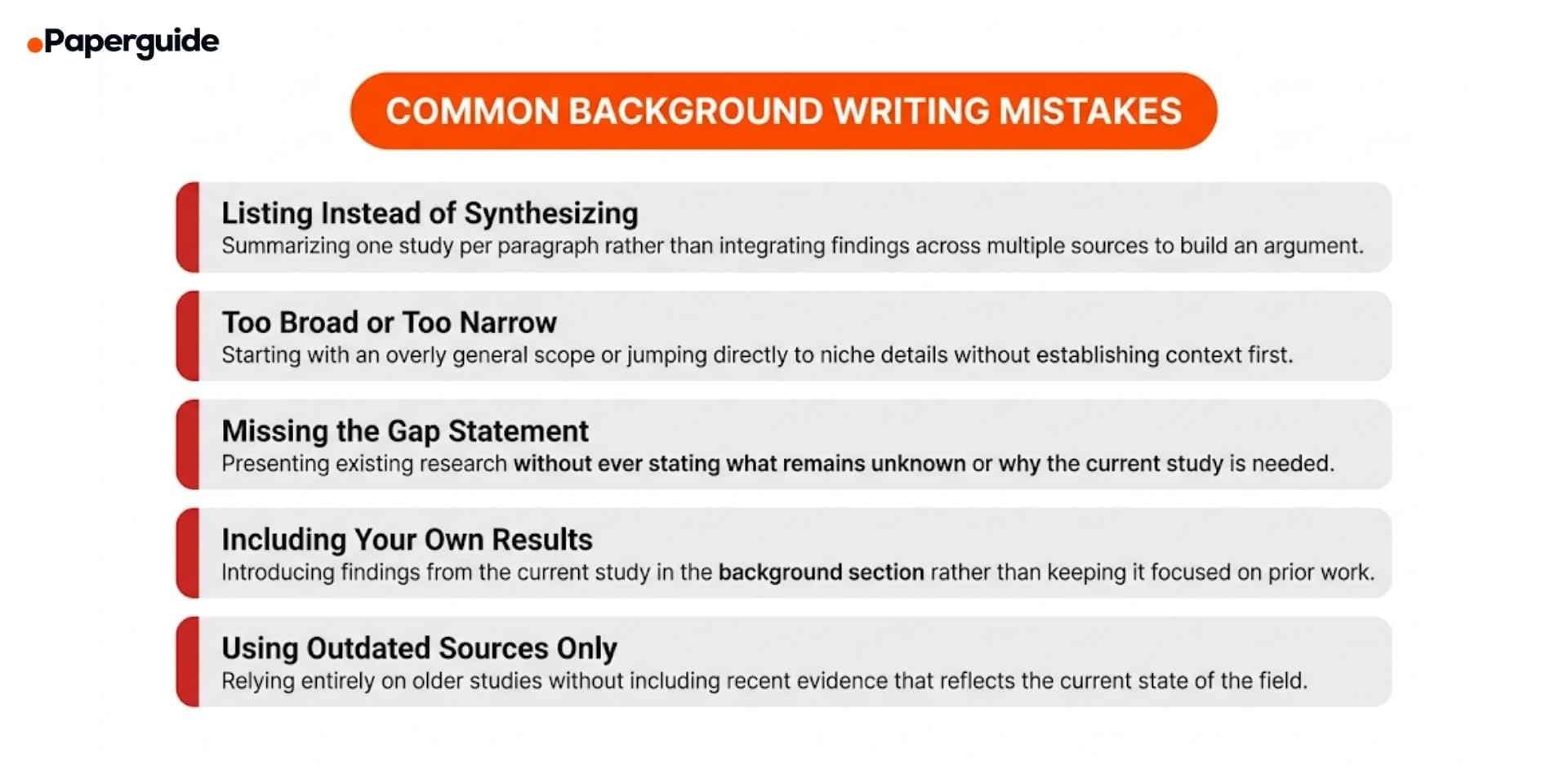
Listing instead of synthesizing. The most common mistake is writing the background as a series of individual study summaries ("Smith found X. Jones found Y.") rather than synthesizing evidence around themes. Reviewers immediately recognize this pattern and view it as a sign that the author has not fully engaged with the literature. Instead, organize each paragraph around a single point and draw on multiple sources to support it. [3]
Making the background too broad. Starting with statements like "Since the dawn of civilization" or "Technology has changed every aspect of human life" wastes space and frustrates readers. Begin with the specific field or phenomenon your study addresses and provide only enough context for readers to understand why this topic matters. [2]
Failing to state the gap explicitly. Some backgrounds present a thorough overview of existing research but never articulate what is missing. Without an explicit gap statement, the reader has no reason to believe the study is necessary. Every background must include at least one clear sentence identifying what has not been studied, resolved, or adequately addressed.
Including your own results. The background section is about prior work, not your work. Mentioning your findings, even briefly, in the background confuses the structure and undermines the logic of the paper. Save all results for the results section and all interpretation for the discussion.
Relying only on outdated sources. A background built entirely on sources from ten or more years ago suggests the author has not conducted a current literature search. While foundational studies are appropriate and important, the background should also include recent work that reflects the current state of the field. Combining seminal references with recent citations from the past three to five years demonstrates both historical awareness and current engagement.
Background of the Study Checklist
Use this checklist to evaluate your background section before submission.
- [ ] Topic clearly defined. The background opens by identifying the specific topic and its significance within the field.
- [ ] Scope appropriately bounded. The section covers relevant literature without being overly broad or excessively narrow.
- [ ] Sources are synthesized. Evidence from multiple studies is integrated thematically rather than listed one study at a time.
- [ ] Funnel structure followed. The section moves from broad context to specific context to the research gap.
- [ ] Gap explicitly stated. At least one clear sentence identifies what remains unknown, unresolved, or underexplored.
- [ ] Gap is specific and verifiable. The gap can be confirmed by examining the cited literature and is not a vague "more research is needed" statement.
- [ ] Study purpose connected to the gap. The final paragraph transitions from the gap to the aim of the current study.
- [ ] No results or methods included. The background focuses exclusively on prior work and does not preview the current study's findings or design.
- [ ] Recent and foundational sources included. The section cites both seminal studies and recent publications from the past three to five years.
- [ ] Appropriate length maintained. The background is long enough to establish context (at least three paragraphs for journal articles) but concise enough to maintain reader engagement.
How to Choose What to Include in Your Background
Not every source you read during your literature search belongs in the background. The background is selective, not comprehensive. Include sources that meet at least one of these criteria: they established foundational knowledge that the reader needs, they represent the current consensus on a key point, they directly address the topic of your study, or they highlight the gap your study will fill.
Exclude sources that are tangentially related, that report findings irrelevant to your specific research question, or that merely repeat what other included sources already demonstrate. A well-curated background with 15 to 25 references is more effective than an exhaustive one with 60 references that buries the reader in detail. When working with a large volume of literature, writing a research rationale alongside your background can help you clarify which sources are truly essential and which are supplementary.
Validate This With Papers (2 Minutes)
Before submitting your manuscript, verify that your background section meets the structural and scholarly standards expected by reviewers and journals.
Step 1: Reread your background and confirm it follows the funnel structure: broad context to specific context to gap to study purpose. Check that the gap statement is explicit and that the transition to your research question is seamless.
Step 2: Use Paperguide's Thesis Statement Generator to test whether your gap statement and study purpose form a coherent, defensible thesis. If the generator produces a clearer version than what you have written, revise your closing paragraph accordingly.
Step 3: Verify your citations by cross-checking that each referenced claim accurately reflects the original source. Confirm that you have included both foundational and recent references, and that no key study in your immediate area has been omitted.
This takes about two minutes and helps ensure your background section is well-structured, well-sourced, and ready for peer review.
Conclusion
The background of a study is where you earn the reader's trust by demonstrating that you understand your field, that you have identified a real gap in the evidence, and that your study is a logical response to that gap. The most effective backgrounds follow a funnel structure that moves from broad context to specific evidence to an explicit gap statement and then to the study purpose, using synthesis rather than summary to present the literature. This structure is consistent across disciplines and is the standard expectation for both journal articles and theses.
Writing a strong background requires more than finding and citing sources. It requires understanding how those sources relate to each other and to your research question, selecting only the most relevant evidence, and articulating clearly what the literature does and does not tell us. Researchers who are also preparing a research paper introduction will find that a well-crafted background simplifies the introduction writing process, since the introduction builds directly on the context, gap, and purpose established in the background. By using the template and checklist provided in this guide, you can structure your background section efficiently and ensure it meets the standards reviewers expect.
Frequently Asked Questions
How long should the background of a study be?
The length depends on the document type. In a journal article, the background is typically embedded in the introduction and spans two to five paragraphs (approximately 400 to 800 words). In a thesis or dissertation, the background may be a standalone section or chapter ranging from 3 to 10 pages. The guiding principle is to include enough context for the reader to understand the gap and the study purpose without providing an exhaustive literature review.
What is the difference between the background and the introduction?
The background establishes what is known and what is not known about the topic. The introduction is a broader section that includes the background, the research question or hypothesis, the study objectives, and sometimes a brief overview of the methodology and paper structure. In many journal articles, the background is the first part of the introduction, but in theses, it is often a separate section.
Should I include my hypothesis in the background section?
No. The background focuses on existing literature and the gap. The hypothesis or research question should follow the background, either at the end of the introduction or in a dedicated section. Placing the hypothesis in the background disrupts the logical flow from "what is known" to "what is unknown" to "what this study will investigate".
How many sources should I cite in the background?
There is no fixed number, but most journal article backgrounds cite between 15 and 30 sources. The key is relevance, not volume. Every citation should serve a specific purpose: establishing context, supporting a claim, or highlighting the gap. Citing 50 sources without synthesis is less effective than citing 20 with clear thematic integration.
Can the background section include definitions?
Yes. If your study uses technical terms, discipline-specific concepts, or theoretical constructs that your target audience may not be familiar with, define them in the background. Definitions should be concise and supported by citations to authoritative sources such as methodology textbooks or seminal papers.
What is the funnel structure in background writing?
The funnel structure is a writing approach where the background starts with a broad overview of the topic and progressively narrows to the specific research gap and study purpose. This structure mirrors how readers naturally process information: they need general context before they can appreciate the significance of a specific gap. Most academic writing guides recommend this structure for both backgrounds and introductions.
How do I avoid plagiarism when writing the background?
Paraphrase findings in your own words rather than copying sentences from sources. Use citations for every claim derived from another study. Synthesis naturally reduces plagiarism risk because you are combining ideas from multiple sources into original statements rather than restating individual findings. When you use a direct quote, enclose it in quotation marks and provide a page number.
References
- Creswell, J. W. & Creswell, J. D. "Research Design: Qualitative, Quantitative, and Mixed Methods Approaches." 6th edition, Sage Publications, 2023.
- Tavakol, M. & O'Brien, D. "The Importance of Crafting a Good Introduction to Scholarly Research: Strategies for Creating an Effective and Impactful Opening Statement." International Journal of Medical Education, 14, 84-87, 2023.
- Menon, V. et al. "Why Do Manuscripts Get Rejected? A Content Analysis of Rejection Reports from the Indian Journal of Psychological Medicine." Indian Journal of Psychological Medicine, 44(1), 59-65, 2022.
- American Psychological Association. "Publication Manual of the American Psychological Association." 7th edition, 2020.
- Cargill, M. & O'Connor, P. "Writing Scientific Research Articles: Strategy and Steps." 3rd edition, Wiley-Blackwell, 2021.
Writing a paper?
Write your paper with real citations
Drafts grounded in real papers, with citations in APA, MLA and Chicago.
Start writingNo credit card required