7 Best SciSpace Alternatives for Scientific Research and Writing in 2026


SciSpace is one of the most widely used platforms for reading, understanding, and writing around papers. Graduate students, postdocs, faculty, and lab teams reach for it to explain dense passages, summarize methods, extract structured data, and run first-pass literature reviews across a database of 270M+ papers. It does that reading work well, and for many individual researchers it is the entry point into AI-assisted research.
The picture changes when the work scales. For individual researchers, SciSpace starts to feel thin once a project grows into a dissertation chapter, a publication-targeted manuscript, or a review that needs quality-ranked sources and citations you can trust. For evidence synthesis teams, systematic review leads, HEOR analysts, CRO evidence practices, medical device clinical and regulatory groups (CER and PMS), clinician-researchers, and research librarians, SciSpace runs into a harder wall: it does not run a PRISMA-grade systematic review with dual screening, conflict resolution, and an audit trail. Both groups end up looking for something that carries the work further.
Citation trust is the standard every alternative here is measured against. A Retraction Watch analysis from May 2026 found that one in 277 PubMed-indexed papers in 2026 cites a paper that does not exist. That is exactly the failure mode publication-targeted research and regulated evidence work have to guard against.
This guide covers the 7 best SciSpace alternatives in 2026, free and paid, ranked by how far each one carries the research workflow past the point where SciSpace stops. Some specialize in citation validation, some in screening at scale, and one covers the workflow from first search to a cited draft and up to a fully auditable systematic review.
TL;DR
Paperguide is the strongest SciSpace alternative in 2026 for both individual researchers and evidence synthesis teams. For individuals, it pairs academic search across 200M+ peer-reviewed papers (with SJR, SNIP, and citation quality signals surfaced inline) with the structured Literature Review AI, custom-column data extraction, verified citations, and the AI Paper Writer, all in one workspace with a free plan and a 30% academic discount. For teams, it scales up to a full PRISMA 2020 systematic review with protocol design, dual blind screening, conflict resolution, quote-level extraction, an auto-generated flow diagram, and an audit trail, with dual reviewer screening on the Evidence Teams tier. The other six tools each close one gap. Paperguide is the only one that covers the whole path.
Runners-up by job: Elicit for high-volume screening, Scite for citation validation, Consensus for fast directional evidence checks, NotebookLM for study material from a fixed source set, AnswerThis for proposal-stage scaffolds, and Anara for reading a personal PDF corpus.
Key Takeaways
- SciSpace is a strong reading and understanding platform, weaker at cross-module workflow continuity and not built for PRISMA-grade review operations.
- Individual researchers need verified citations, quality signals, and a writing surface that carries their sources. Teams need PRISMA 2020 reporting, dual blind screening, conflict resolution, and an audit trail.
- Paperguide is the only tool here that covers both jobs. It runs the individual workflow end to end and scales up to an auditable systematic review.
- Paperguide capacity and price scale together: Free, Plus ($12 per seat per month), Pro ($29 per seat per month), Evidence Teams ($89 per seat per month, PRISMA dual-review), all billed annually, and Enterprise (custom). Systematic review caps run 1,000, 5,000, 5,000, and 20,000 papers.
- SciSpace does not surface SJR, SNIP, or journal quartile signals, and user reviews report occasional fabricated references, so publication-targeted work needs manual validation.
What is SciSpace?
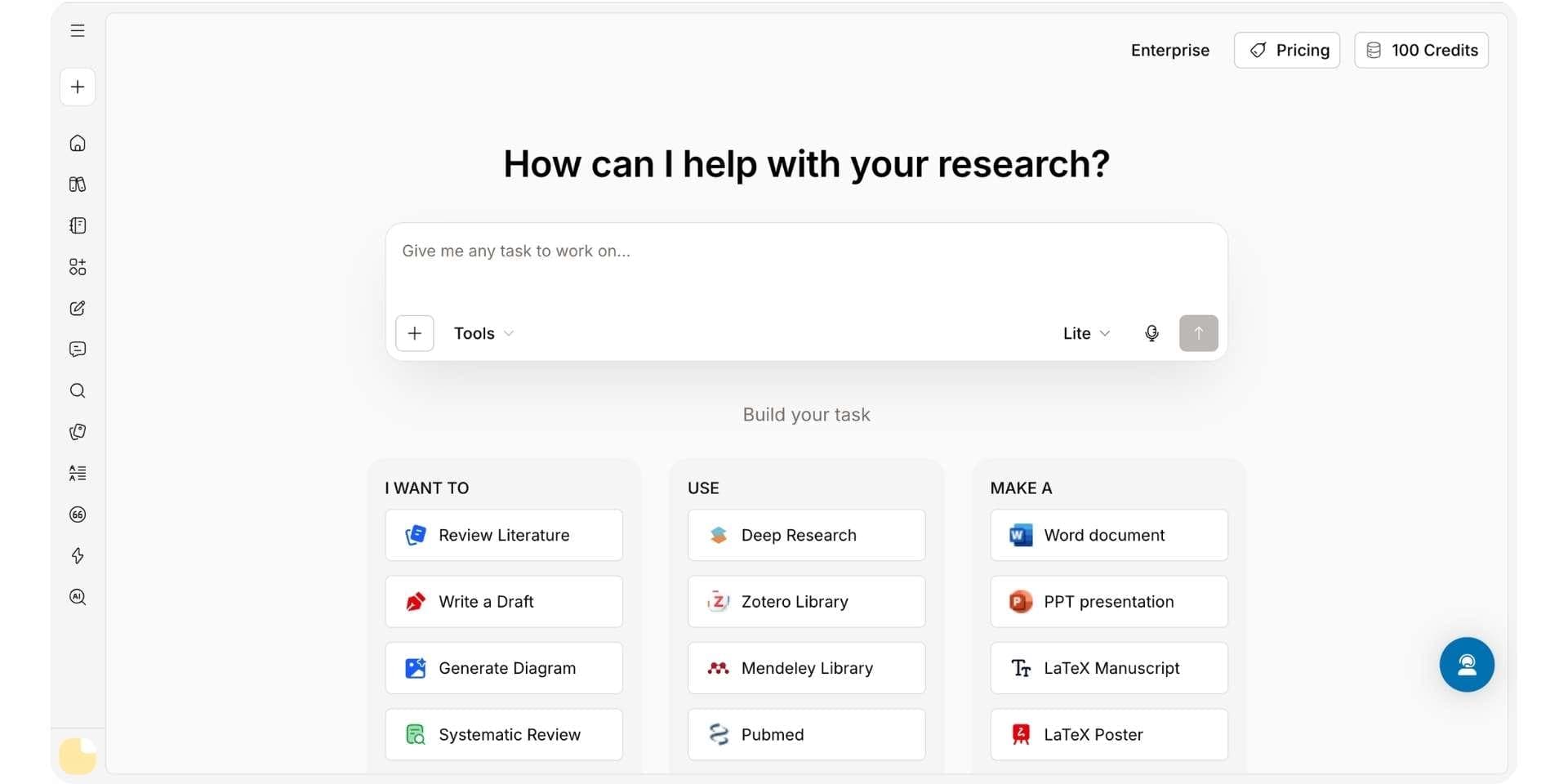
SciSpace (formerly Typeset) is a platform for reading, understanding, and writing around research papers. Researchers upload papers and use SciSpace to explain equations and figures in plain language, summarize methods, extract structured data, and run literature reviews across a database of 270M+ papers. It is popular with graduate students, postdocs, faculty, and lab teams for first-pass paper review and quick understanding of an unfamiliar field.
Beyond Chat with PDF, SciSpace has grown into a wider set of modules: Literature Review and Deep Review for broader synthesis, Extract Data for custom-column comparison tables, an AI Writer for drafting and citation insertion, and supporting tools including a Paraphraser, an AI Detector, and a Citation Generator. It also ships customized agents such as BioMed, Meta Analysis, and Manuscript Writer, and offers Systematic Research (SLR) and Deep Research on its paid tiers.
Where SciSpace helps:
- Chat with PDF for plain-language explanations of equations, figures, and dense text inside a single paper.
- Literature Review and Deep Review for synthesis across multiple papers.
- Extract Data tables for cross-study comparison.
- AI Writer with outline, drafting, and citation insertion, plus Paraphraser, AI Detector, and Citation Generator.
- Customized agents (BioMed, Meta Analysis, Manuscript Writer) and a 270M+ paper database.
Where SciSpace falls short:
- No SJR, SNIP, or journal quartile quality signals surfaced in the workflow.
- Paper selection and ranking are not transparent, so it is hard to see why a source was chosen.
- Reference management is limited compared with a full reference manager.
- Workflow continuity across modules is weaker, so context has to be recreated between reading, extraction, and writing.
- Chat with PDF is mainly single-paper, with weaker multi-paper synthesis.
- Occasional fabricated references are reported in user reviews.
- It does not run PRISMA-grade review operations with dual screening, conflict resolution, or an audit trail.
- The free plan is limited (about 5 AI actions per document), and credit-based usage constrains heavy workflows.
SciSpace pricing runs a Free plan, then Premium (from about $12/mo on annual billing), Advanced (about $70/mo), and Max (about $160/mo), with custom Enterprise. SciSpace revises its tiers, so check its pricing page for current numbers.
Why look for a SciSpace alternative?
Two different walls show up, one for each kind of researcher.
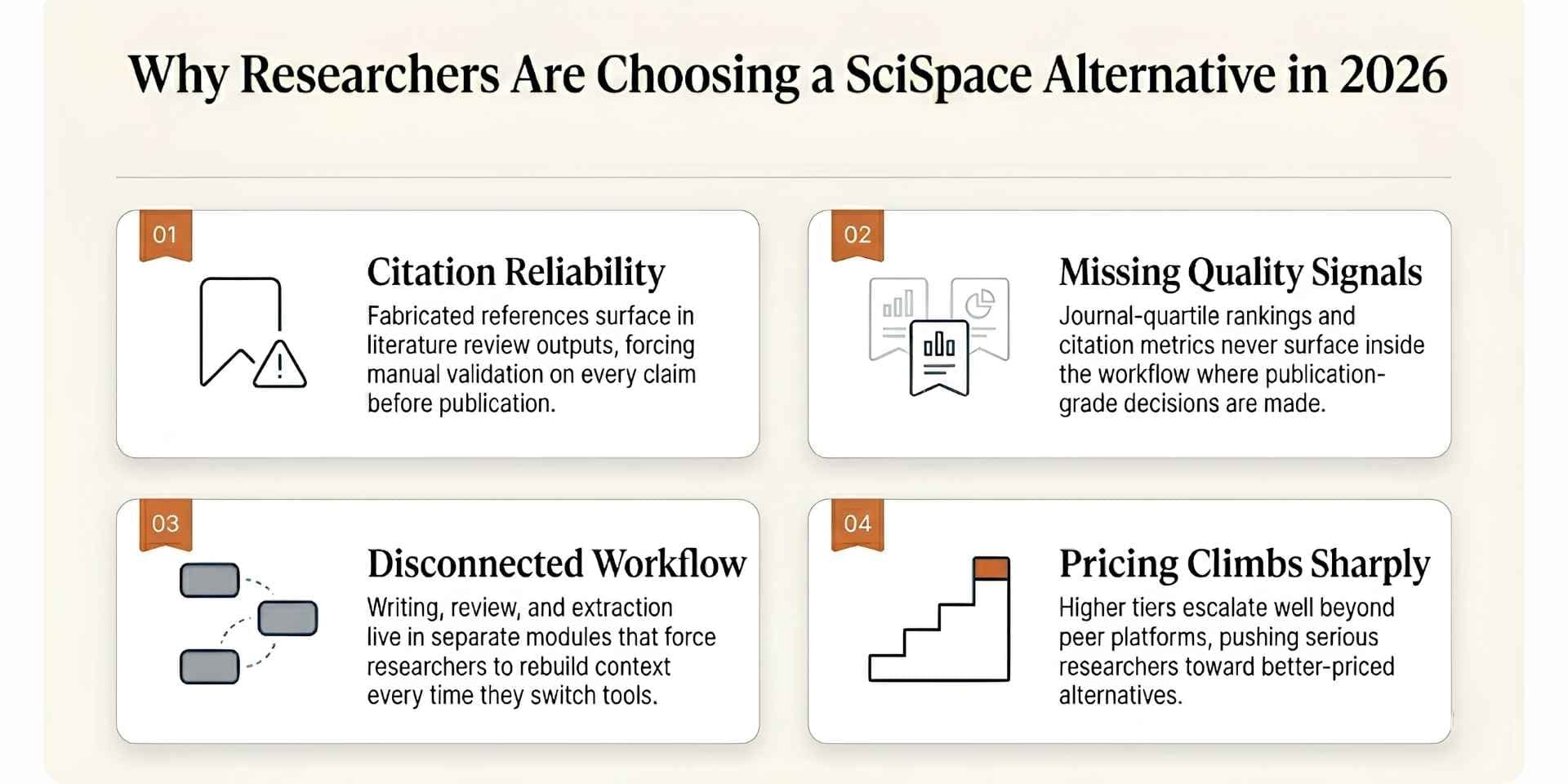
The individual researcher wall. For grad students, postdocs, faculty, and lab teams, SciSpace handles first-pass reading but flattens at synthesis. There are no SJR, SNIP, or journal quartile signals to separate strong sources from weak ones, paper ranking is not transparent, and the AI Writer runs as a separate module rather than carrying extraction and review context into the draft. Citation reliability is the sharpest edge: user reviews report occasional fabricated references, which forces manual validation on every claim in publication-targeted work.
The evidence synthesis and regulated-team wall. For systematic review leads, HEOR analysts, CRO evidence practices, medical device clinical and regulatory teams (CER and PMS), clinician-researchers, and research librarians, the gap is structural. SciSpace does not run PRISMA-grade review operations. There is no protocol-driven eligibility, no blind dual-reviewer screening with conflict resolution, no reproducible and re-runnable searches, and no audit-ready output. That is a blocker for journal submissions, HTA dossiers, CERs, and post-market surveillance reports.
What to look for in a SciSpace alternative:
- Verified citations grounded in real passages, not generated references.
- Research quality signals (SJR, SNIP, citation metrics) surfaced where you choose sources.
- Workflow continuity so search, reading, extraction, and writing share one context.
- A citation-grounded writing surface with real citation-style export.
- PRISMA 2020 reporting with an auto-generated flow diagram (for teams).
- Blind dual-reviewer screening with conflict resolution and Cohen's kappa tracking (for teams).
- An audit trail and reproducible, re-runnable searches (for teams).
- Institutional access through EZproxy or a browser extension.
Best SciSpace Alternatives in 2026
1. Paperguide
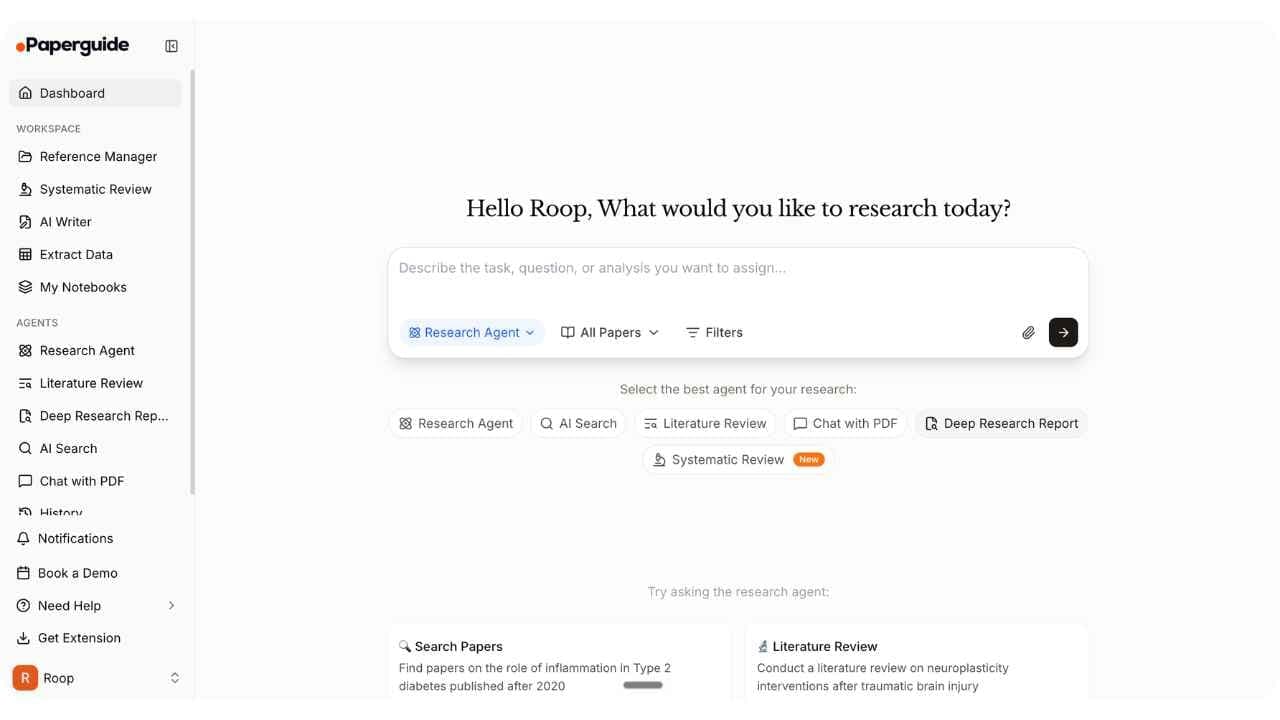
Paperguide is an AI-native platform for scientific research workflows and evidence synthesis. It covers the research workflow from first search to a cited draft, and scales up to a rigorous, auditable systematic review when the work demands it. Academic search across 200M+ peer-reviewed papers and 30,000+ journals, a reference manager, Chat with PDF, Literature Review AI, Extract Data, and the AI Paper Writer share one workspace, so research context carries from step to step instead of resetting between disconnected tools.
Two things set Paperguide apart from SciSpace. First, workflow continuity with real quality signals: SJR, SNIP, and citation metrics are surfaced inline as you search and screen, and every claim, extraction, and draft traces back to a verified source passage. Second, and this is the part SciSpace does not run at all, Paperguide performs a full PRISMA 2020 systematic review with a protocol, AI-led or dual blind screening (Cohen's kappa tracking and lead-resolved conflicts), quote-level extraction, an automatically generated PRISMA flow diagram, and a full audit trail. That makes it work for both individual researchers and evidence synthesis teams from one platform.
Key Features:
- AI Search with hybrid semantic and keyword retrieval and agentic query variations across 200M+ peer-reviewed papers and 30,000+ journals (PubMed, arXiv, OpenAlex, Semantic Scholar), with SJR, SNIP, and citation signals surfaced on results.
- Literature Review AI that runs a structured Plan, Search, Screen, Extract, Synthesize workflow in Standard mode (50 papers) or Extended mode (200 papers) and produces a citation-grounded review.
- Reference Manager with DOI, URL, BibTeX, RIS, and PDF import, one-click Zotero and Mendeley import, a Chrome extension, automatic metadata, a PDF reader with annotations, AI summaries, shared libraries with roles, and 1,000+ citation styles.
- Chat with PDF that summarizes, answers questions, compares multiple papers, and extracts methods and results, with answers linked to source passages.
- Extract Data with custom-column tables, every cell source-linked with quote-level citations to the exact page, reusable templates, and CSV or Excel export (image and table extraction is coming soon on Pro and above).
- AI Paper Writer that drafts papers, essays, and reviews from a research question and source material, applies in-text citations against your actual library (never invented), and offers Smart Continue, Ask AI rewrites, a plagiarism checker, and export to Word, PDF, BibTeX, and RIS.
- Systematic Review: protocol design, AI-led or dual blind screening with Cohen's kappa and lead-resolved conflicts, quote-level extraction, an auto-generated PRISMA 2020 flow diagram, and an audit trail export.
Pros:
- Covers the individual workflow end to end in one workspace (search, review, extract, write, references).
- Verified citations on every claim, traceable to the source passage.
- SJR, SNIP, and citation quality signals surfaced across search and screening.
- Runs a full PRISMA 2020 systematic review with dual blind screening and an audit trail, which SciSpace does not.
- Reference manager with one-click Zotero and Mendeley import, a Chrome extension, and 1,000+ citation styles.
- Institutional journal access through the browser extension and EZproxy.
- Free plan that includes the reference manager, Literature Review AI, Deep Research, and Chat with PDF.
Cons:
- Newer brand than SciSpace, Scite, or NotebookLM, with less name recognition in some labs.
- A single Literature Review tops out at 200 papers in Extended mode (larger evidence sets belong in the systematic review workflow).
- No NotebookLM-style Studio outputs such as audio overviews or flashcards.
Best For: Individual researchers (grad students, postdocs, faculty, and lab teams) who want one connected workspace with verified citations, and evidence synthesis teams (systematic review leads, HEOR analysts, CROs, and medical device CER and PMS groups) who need PRISMA reporting, dual screening, and an audit trail.
Pricing:
| Plan | Price | What It Covers |
|---|---|---|
| Free | $0 | 2,000 AI credits/mo, limited reference manager, Literature Review AI, Deep Research, Chat with PDF, 1,000+ styles, 5 extract columns/10 papers |
| Plus | $12 per seat/mo, billed annually ($144/yr) | 12,500 AI credits/mo, unlimited AI searches and storage, 50 extract columns/100 papers, shared workspaces, plagiarism checker, systematic review up to 1,000 papers |
| Pro | $29 per seat/mo, billed annually ($348/yr) | 50,000 AI credits/mo, everything in Plus, plus image and table extraction (coming soon), systematic review up to 5,000 papers |
| Evidence Teams | $89 per seat/mo, billed annually ($1,068/yr) | 150,000 AI credits/mo, everything in Pro, plus PRISMA-grade dual-reviewer screening and dedicated support, systematic review up to 5,000 papers |
| Enterprise | Custom | Everything in Evidence Teams, plus SSO, SAML, and single-tenancy, systematic review up to 20,000 papers |
A 30% academic discount applies with a valid university email, and yearly billing saves up to 41%.
Verdict: Paperguide is the strongest overall SciSpace alternative in 2026 because it covers the individual workflow with verified citations and quality signals, then scales up to the auditable systematic review SciSpace never attempts. For a side-by-side, see Paperguide vs SciSpace. For thesis chapters, manuscripts, and PRISMA reviews alike, it is the only tool here that treats every stage as one research process.
2. Elicit
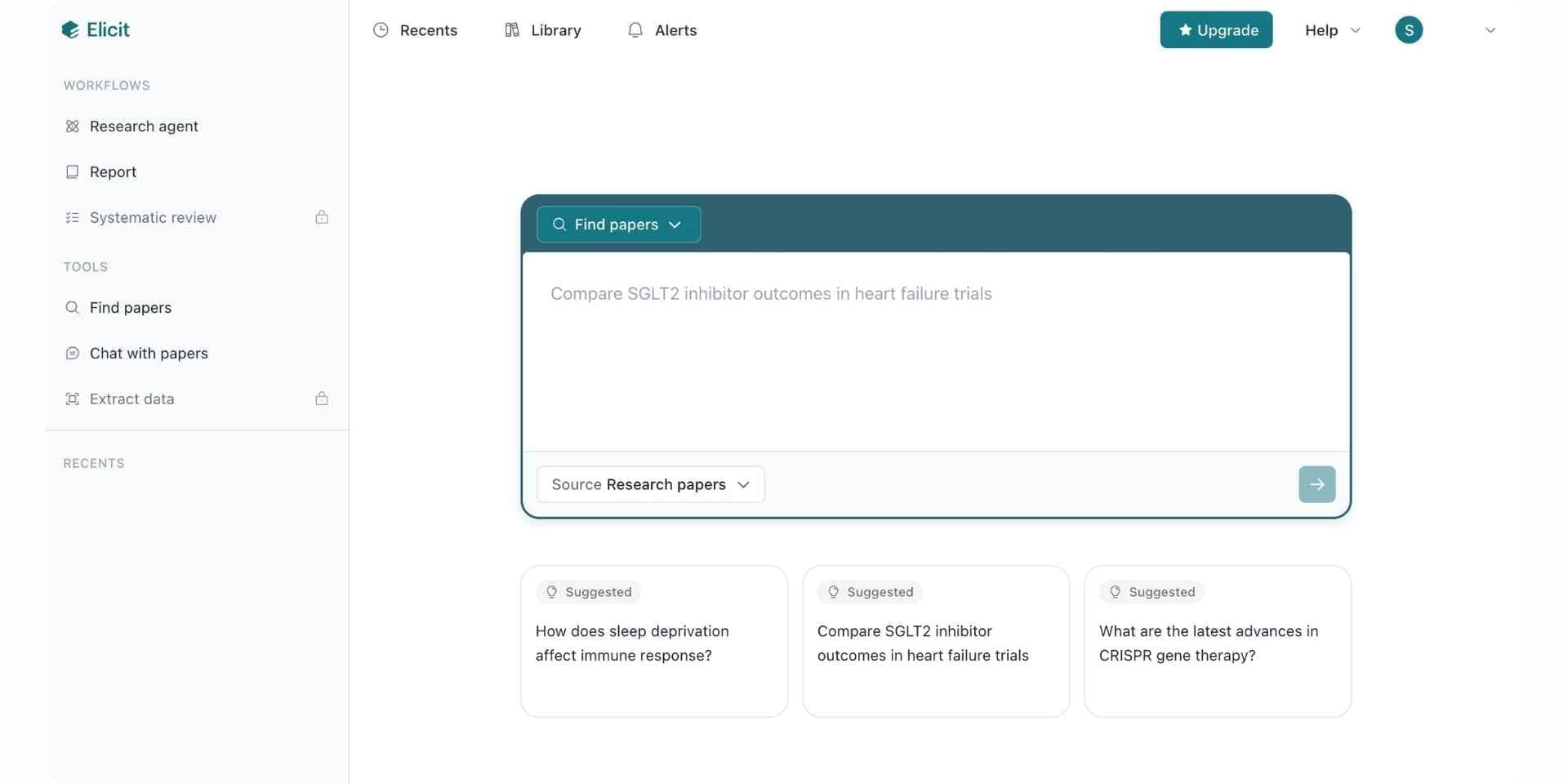
Elicit is an AI research tool built around large-scale systematic review screening and structured data extraction across an index of 125M+ academic papers. It is widely used by systematic reviewers, evidence-based medicine teams, and research operations groups inside universities and pharmaceutical companies. Its differentiator is screening volume with PRISMA-grade extraction accuracy per Elicit's own reporting.
Where Elicit stops is the workflow around extraction. It has no citation-grounded manuscript writer and no full reference manager, and blind dual-reviewer conflict resolution is not documented, so evidence synthesis teams that need auditable dual screening or a writing layer pair it with another platform.
Key Features: Semantic search across 125M+ papers; custom-column data extraction; systematic review screening (Pro screens up to about 5,000 papers, Enterprise up to about 40,000); PRISMA-grade extraction accuracy per Elicit; Zotero export.
Pros: Strongest pure screening volume in this guide; structured custom-column extraction; API access on higher tiers; a free Basic plan.
Cons: No citation-grounded writing tool; no full reference manager; blind dual-reviewer conflict resolution not documented; search results can vary between runs; Pro pricing is among the higher tiers here.
Best For: Evidence synthesis and HEOR teams whose primary job is high-volume screening and extraction, and who handle writing and reference management elsewhere.
Pricing:
| Plan | Price | What It Covers |
|---|---|---|
| Basic | Free | Limited search and extraction |
| Pro | $49/mo ($588/yr) | Screening up to about 5,000 papers, custom extraction, API access |
| Scale | $169/mo ($2,028/yr) | Higher volume and team features |
| Enterprise | Custom | Screening up to about 40,000 papers |
Verdict
Elicit is the right choice when screening at scale is the whole job. Researchers who also need a writing layer, a unified citation library, or auditable dual screening usually pick Paperguide, which handles extraction inside the same workspace that produces the manuscript. See Paperguide vs Elicit for the full comparison.
3. Consensus
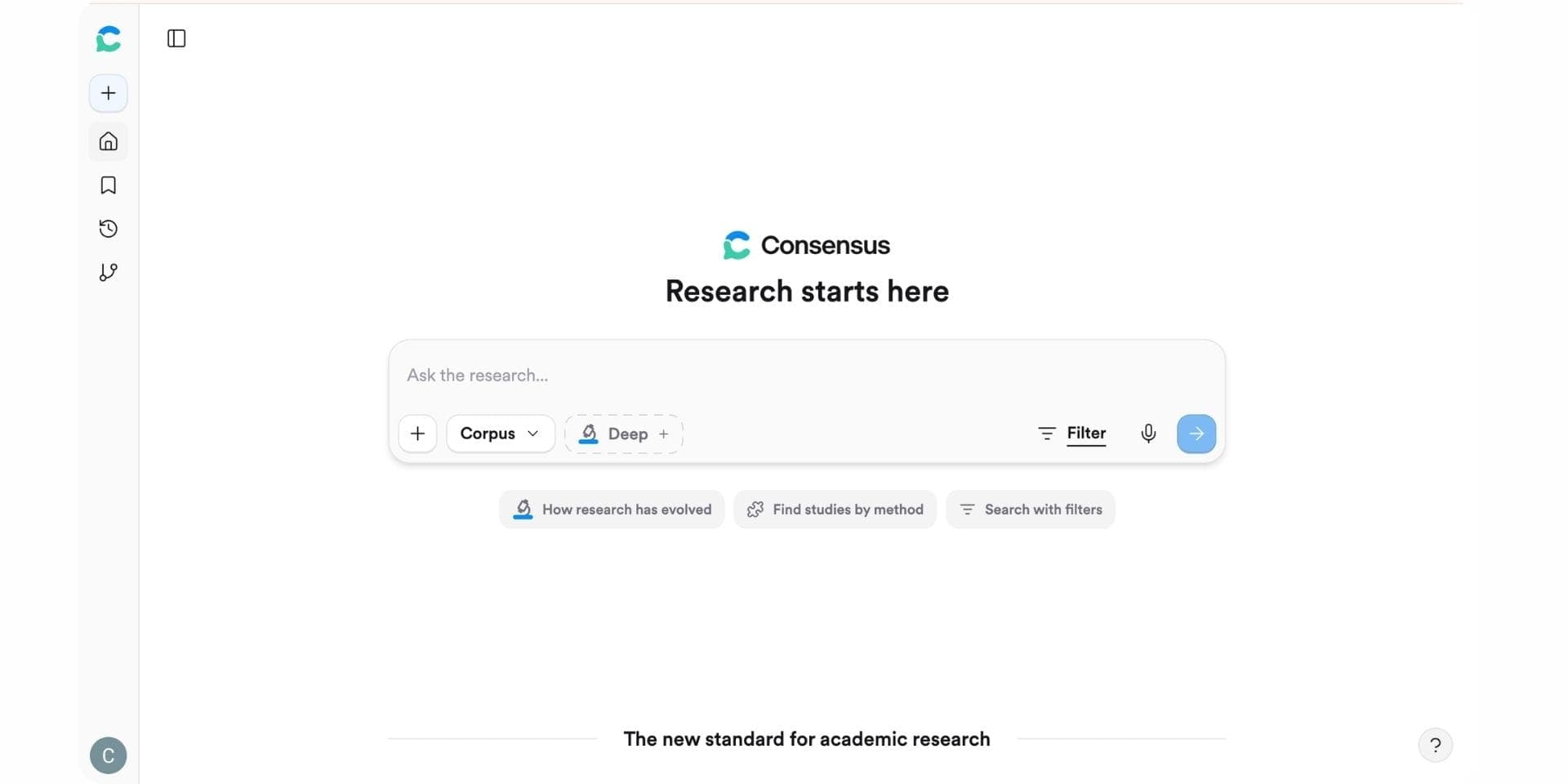
Consensus is an evidence-search engine that answers natural-language questions using peer-reviewed papers and shows a Yes/No/Possibly consensus meter indicating whether the literature supports, contradicts, or is split on a claim. It indexes 200M+ papers through Semantic Scholar and adds Deep Search for multi-source narrative synthesis. Its appeal is a fast directional evidence verdict.
Consensus is built for first-pass evidence checks, not for building an output. It is not a review, extraction, writing, or reference platform, so it works best alongside a tool that carries the work forward.
Key Features: 200M+ paper index through Semantic Scholar; Yes/No/Possibly consensus meter on research questions; Deep Search for multi-source synthesis; citation-backed answer cards.
Pros: Large index; directional verdicts in seconds; helpful for scoping an unfamiliar field; affordable entry pricing.
Cons: No AI Writer; no structured literature review workflow; no custom-column extraction; no reference manager; the consensus meter does not weight study design, sample size, or risk of bias.
Best For: Researchers who want a quick, directional read on what the literature says before committing to a full review.
Pricing:
| Plan | Price | What It Covers |
|---|---|---|
| Free | $0 | Limited Pro searches and Deep reviews per month |
| Premium | ~$8.99 to $11.99/mo | Unlimited searches, consensus meter, Deep Search |
| Teams / Enterprise | Custom | Team features and admin controls |
Consensus revises its tiers, so check its pricing page.
Verdict: Consensus is excellent for fast, directional answers backed by real papers. Researchers who need extraction, writing, a reference manager, or a systematic review alongside evidence answers pick Paperguide, where every claim lives in one workspace with verified citations. See SciSpace vs Consensus for context.
4. NotebookLM
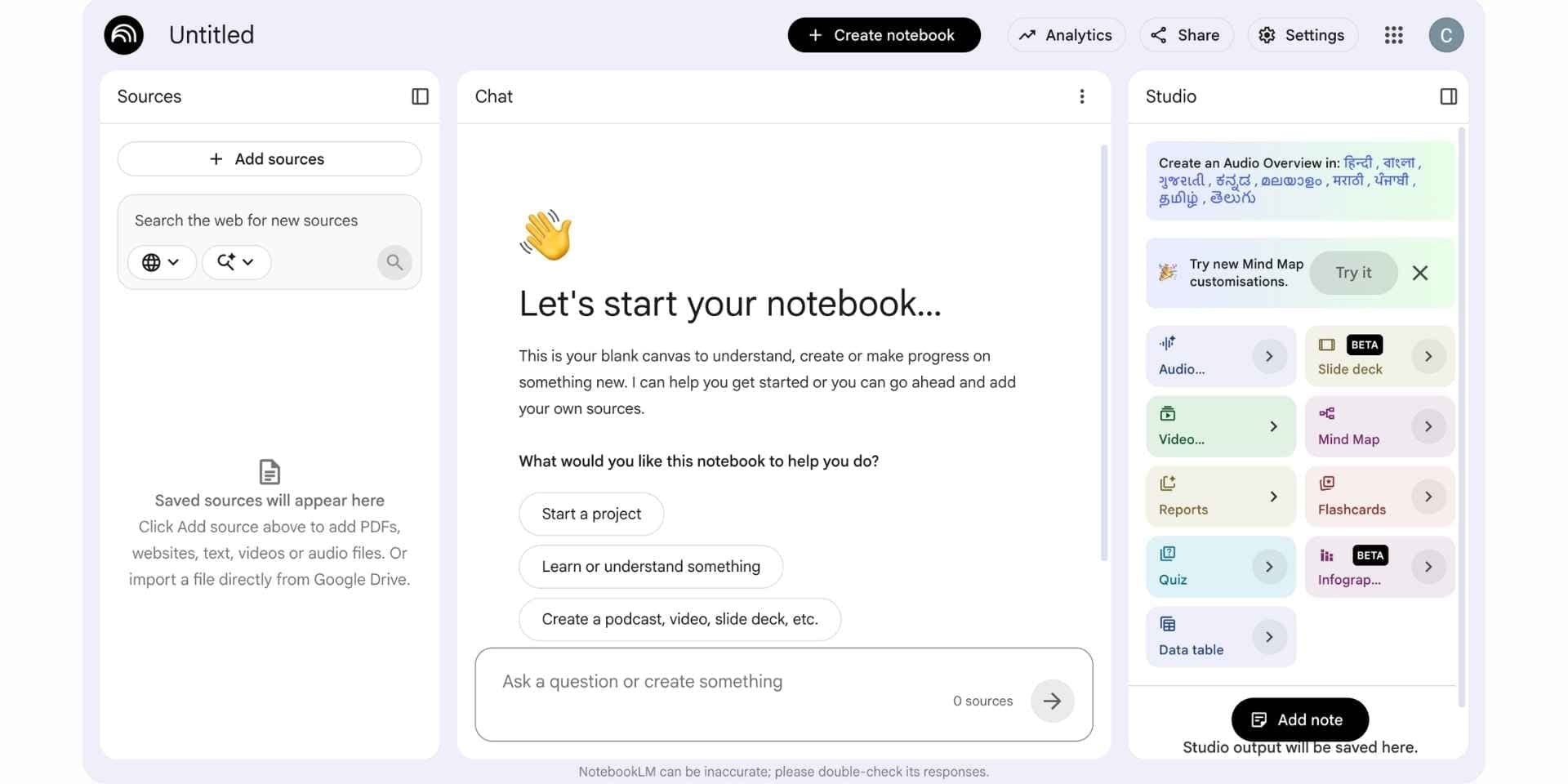
NotebookLM is Google's source-grounded AI notebook. It turns uploaded documents into chat-based answers and Studio outputs including audio overviews, video summaries, mind maps, flashcards, quizzes, and slide decks, all grounded strictly in the sources you provide. It does not search the academic literature; it synthesizes the sources you already have.
That design makes NotebookLM a strong study and synthesis layer for a curated source set, but it cannot discover papers, extract structured data, write a citation-styled manuscript, or manage a reference library.
Key Features: Source-grounded Q&A across uploaded documents (50 sources free, up to 300 on Pro); Studio outputs (audio overview, video, mind map, flashcards, quiz, slide deck); multi-source chat with inline citations.
Pros: Best-in-class Studio outputs; source-grounded answers with inline citations; a generous free tier through a Google account; configurable chat style.
Cons: No academic search across peer-reviewed literature; no structured literature review agent or custom-column extraction; no citation-grounded writing tool; no reference manager; source caps bite quickly on a serious review.
Best For: Students and researchers who want study material and Q&A from a fixed set of documents they have already gathered.
Pricing:
| Plan | Price | What It Covers |
|---|---|---|
| Free | $0 (Google account) | Up to 50 sources per notebook, Studio outputs |
| Pro (Google AI Pro) | ~$19.99/mo | Up to 300 sources per notebook, higher limits |
Verdict: NotebookLM is the best free synthesis tool for a curated source set, and its Studio outputs are unmatched for learning formats. For discovery, extraction, writing, reference management, or systematic reviews, pair it with Paperguide, or move to Paperguide for the unified workspace with verified citations. See SciSpace vs NotebookLM.
5. Scite
Scite is a citation intelligence and evidence-validation platform, not a full research workflow. Its Smart Citations classify how a paper is cited downstream as Supporting, Mentioning, or Contrasting, indexed across 1.2B+ citation statements. A browser extension brings citation badges into Google Scholar alternatives and PubMed, which makes Scite useful for evidence-quality checks during reading.
Scite is deliberately narrow. It does not generate structured literature reviews, extract custom-column data, write or export manuscripts, run a systematic review, or filter by research quality (no SJR, SNIP, or quartile filters), and it has no full reference manager. Its value is validating whether a specific finding is actually supported.
Key Features: Smart Citations (Supporting, Mentioning, Contrasting); 1.2B+ citation statements indexed; AI Assistant in Chat and Table modes for citation-aware answers that surface contradicting evidence; Reference Check for bibliography auditing; browser extension for Google Scholar and PubMed.
Pros: Best-in-class citation classification; Reference Check flags retracted or disputed sources; the AI Assistant balances supporting and contrasting evidence; badges surface directly in your search results.
Cons: No structured literature review workflow or custom-column extraction; no AI Writer; no full reference manager; no research-quality filtering; no permanent free tier on core features (7-day trial, then $20/mo Personal).
Best For: Researchers and evidence teams doing claim checking and citation-context auditing before submission.
Pricing:
| Plan | Price | What It Covers |
|---|---|---|
| Free trial | 7 days | Time-limited access to core features |
| Personal | $20/mo | Smart Citations, AI Assistant, Reference Check |
| Pro | $50/mo | Higher limits and added features |
| Organization / Enterprise | Custom | API, MCP, SSO, SAML |
Verdict: Scite is best in class for citation validation, and SciSpace cannot match its three-way classification across 1.2B+ citation statements. Researchers who need one workspace covering discovery, synthesis, extraction, and writing alongside citation context pick Paperguide and use Scite as a validation layer when a specific claim needs auditing. See SciSpace vs Scite.
6. AnswerThis
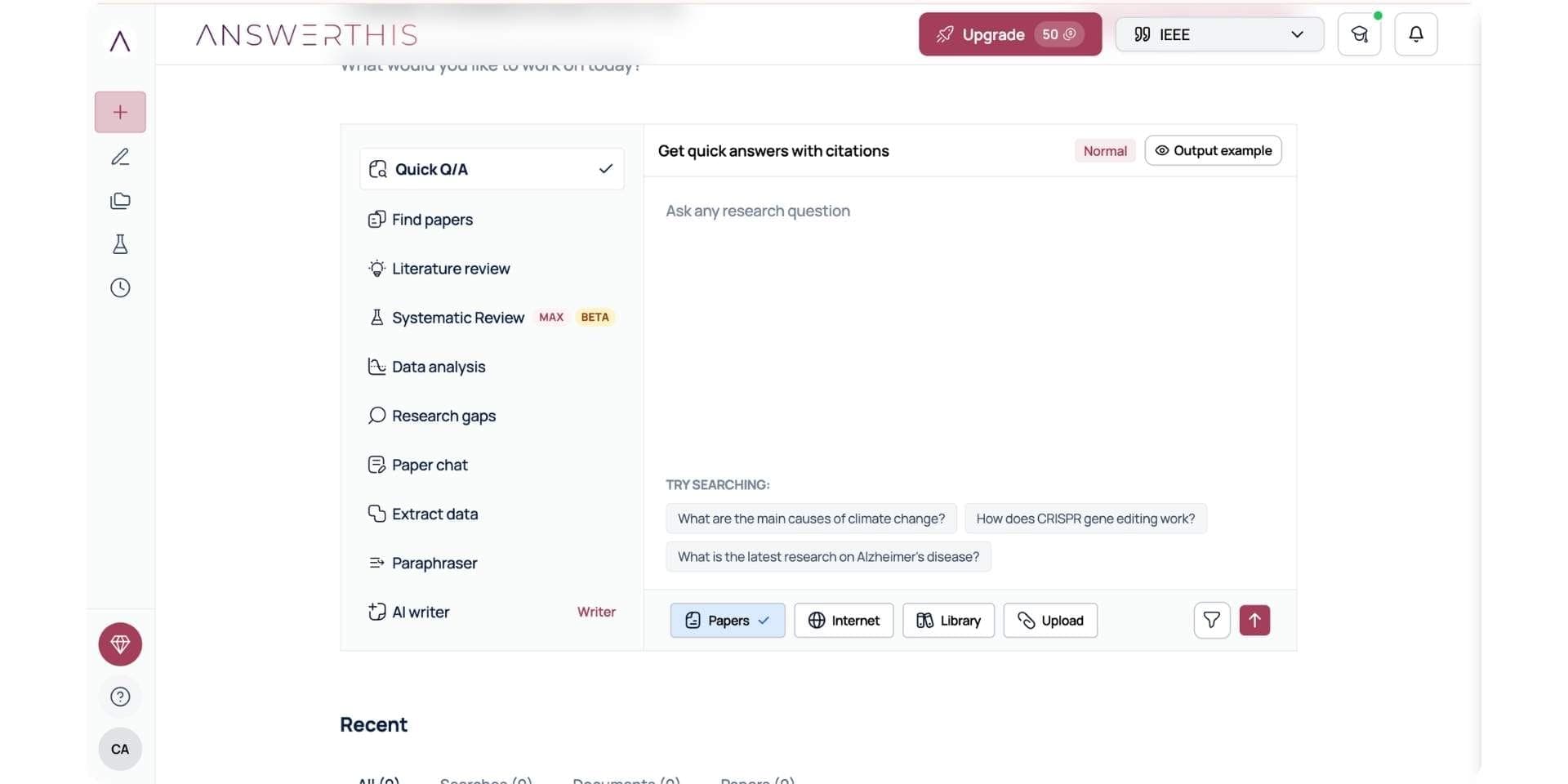
AnswerThis is a lightweight tool built for fast, time-boxed literature reviews and research-gap analysis across an index of 200M+ papers. It is designed around the proposal stage, when a researcher needs a quick scaffold of the literature before committing to a full review. Outputs are structured short-form reviews with inline citations and gap-analysis prompts, plus a basic AI writer for short drafts.
Its speed comes from a fixed output structure. AnswerThis has no custom-column extraction and no reference manager, and its writing layer is limited to short drafts, so deeper work moves elsewhere.
Key Features: Search across 200M+ papers; lit-review-style outputs with inline citations; research-gap analysis prompts; a basic AI writer for short drafts.
Pros: Fast, time-boxed reviews; gap-analysis prompts surface unexplored areas; affordable entry tier; useful for shaping research questions early.
Cons: Output structure is fixed rather than configurable; no custom-column extraction; no reference manager; AI writer limited to short drafts.
Best For: Researchers at the proposal stage who want a quick literature scaffold before a full review.
Pricing:
| Plan | Price | What It Covers |
|---|---|---|
| Free | $0 | Limited generations |
| Paid | from ~$9/mo | Higher limits, gap analysis, basic writer |
Verdict: AnswerThis is a solid entry point at the proposal stage when speed matters more than depth. Researchers who later need custom extraction, full reviews, a reference manager, or a systematic review graduate to Paperguide for the deeper workspace with verified citations. See SciSpace vs AnswerThis.
7. Anara
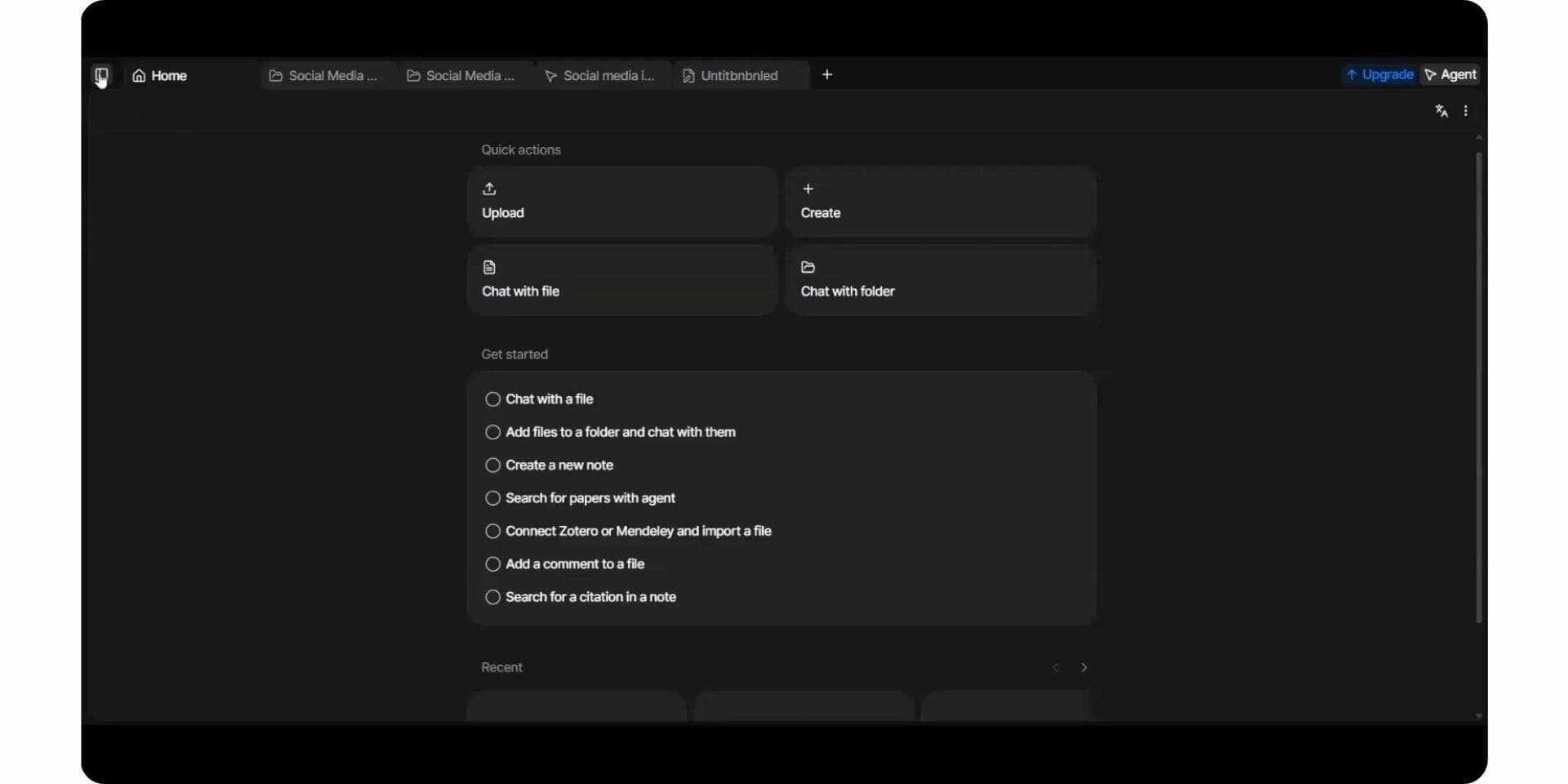
Anara, formerly Unriddle, is a multi-paper Chat with Folder platform built around a researcher's personal library of uploaded PDFs. It lets users query an uploaded set of papers together and receive passage-linked answers, with annotation, AI summaries, and a light writing layer built into the document surface. It works best as a deep-reading layer for a fixed corpus.
Anara does not search the academic literature, does not run a systematic review, and has a lighter reference manager than a full tool. The job it fits is interrogating papers you already have, not discovering new ones.
Key Features: Multi-paper Chat with Folder across an uploaded library; annotation, highlights, and AI summaries; a research agent for follow-up questions; light AI writing inside the document surface.
Pros: Strong multi-paper chat for a personal corpus; annotation and AI summaries in the reading surface; a writing layer built into the workspace; affordable Plus plan.
Cons: No academic search across peer-reviewed literature; no structured literature review agent or systematic extraction tables; no systematic review workflow; a lighter reference manager than Paperguide or Zotero.
Best For: Researchers who mainly need to read, annotate, and question a fixed set of PDFs they already own.
Pricing:
| Plan | Price | What It Covers |
|---|---|---|
| Free | $0 | Limited uploads and chat |
| Plus | ~$10/mo | Larger library, annotation, AI summaries |
| Pro | ~$20/mo | Higher limits and added features |
Verdict: Anara is the strongest reading and annotation layer for a personal corpus. Researchers who need discovery across 200M+ papers, structured extraction, a citation-styled draft, or a systematic review pick Paperguide, which pairs multi-paper PDF chat with the full workflow. See SciSpace vs Anara.
How the Paperguide systematic review workflow works
This is the wedge that serves evidence synthesis teams, and the part SciSpace does not run. Paperguide's systematic review moves through six stages, grounded in PRISMA 2020 and the two-independent-reviewer standard described in the Cochrane Handbook.
- Protocol. The Research Agent auto-drafts eligibility criteria and extraction fields from your research question. You edit and reorder them, set Hard or Soft screening rules and answer formats, and choose AI-led Review (fast solo screening, with the AI deciding and a named verifier confirming each stage) or Dual Review (two reviewers screen blind and independently, with lead-resolved conflicts).
- Papers. Pool candidates from AI Search (200M+ papers), your reference manager, Zotero, or Mendeley, or upload manually (BibTeX, RIS, CSV, PDF, or bulk PDF). The source of each paper is logged, and duplicates are removed automatically before screening.
- Abstract Screening. The AI screens each paper against your protocol fields with per-criterion reasoning and a confidence score. In Dual Review, AI Evidence is reasoning-only support that never breaks the blind. A conflict queue, Cohen's kappa inter-rater tracking, and low-agreement alerts keep the review honest.
- Full-Text Screening. A PDF viewer supports full-text review with mandatory exclusion reasons. Papers without a PDF are auto-excluded and re-screened when a PDF is added.
- Data Extraction. Fields are extracted from every included paper with citations to the exact page and passage. A reviewer verifies each one (Approve, Edit, or Send Back), and the lead confirms.
- Generate Report. A PRISMA 2020 flow diagram is generated in real time from your actual counts (records per database, uploads, duplicates, screened, included), exportable as SVG, PNG, or PDF. A full audit trail exports to CSV or PDF, and a one-click AI methods statement is drawn from that trail.
Every decision carries a criterion, its evidence, and the person who confirmed it. That is what makes the output work for journal submissions, HTA dossiers, CERs, and post-market surveillance, across HEOR consultancies, CROs, medical device and diagnostics teams, and public health and policy groups. Institutional access runs through EZproxy, with SSO, SAML, and single-tenancy on Enterprise.
Best SciSpace alternative by use case
| Job to be done | Best pick | Why |
|---|---|---|
| Full thesis or dissertation workflow | Paperguide | Discovery, review, extraction, writing, and references in one workspace with verified citations |
| PhD or postdoc writing a manuscript | Paperguide | AI Paper Writer applies citations against your real library and exports to Word |
| PRISMA systematic review | Paperguide (Evidence Teams tier) | Protocol, dual blind screening, conflict resolution, auto PRISMA diagram, audit trail |
| HEOR, CRO, or medical device (CER, PMS) evidence work | Paperguide (Evidence Teams or Enterprise) | Auditable dual review up to 5,000 or 20,000 papers, methods statement, EZproxy access |
| High-volume screening only | Elicit | Screens up to about 40,000 papers on Enterprise |
| Citation validation before submission | Scite | Smart Citations classify support across 1.2B+ statements |
| Fast directional evidence check | Consensus | Yes/No/Possibly consensus meter in seconds |
| Study material from a fixed source set | NotebookLM | Studio outputs from uploaded sources |
| Proposal-stage literature scaffold | AnswerThis | Fast time-boxed review with gap analysis |
| Reading and annotating a personal PDF corpus | Anara | Multi-paper Chat with Folder over your uploads |
Final comparison
| Capability | Paperguide | Elicit | Consensus | NotebookLM | Scite | AnswerThis | Anara |
|---|---|---|---|---|---|---|---|
| Academic search | ✓ | ✓ | ✓ | ✗ | ⚠ | ✓ | ✗ |
| Chat with PDF | ✓ | ⚠ | ⚠ | ✓ | ⚠ | ✓ | ✓ |
| Literature review | ✓ | ✓ | ⚠ | ⚠ | ✗ | ⚠ | ✗ |
| Data extraction | ✓ | ✓ | ✗ | ✗ | ✗ | ✗ | ✗ |
| Citation-grounded writing | ✓ | ✗ | ✗ | ✗ | ✗ | ⚠ | ⚠ |
| Reference manager | ✓ | ✗ | ✗ | ✗ | ✗ | ✗ | ⚠ |
| SJR / SNIP quality signals | ✓ | ⚠ | ⚠ | ✗ | ✗ | ✗ | ✗ |
| Verified citations | ✓ | ⚠ | ⚠ | ⚠ | ✓ | ⚠ | ⚠ |
| Systematic review workflow | ✓ | ⚠ | ✗ | ✗ | ✗ | ✗ | ✗ |
| PRISMA / dual-review | ✓ | ⚠ | ✗ | ✗ | ✗ | ✗ | ✗ |
| Free plan | ✓ | ✓ | ✓ | ✓ | ✗ | ✓ | ✓ |
| Starting paid price | $12/mo | $49/mo | ~$8.99/mo | ~$19.99/mo | $20/mo | ~$9/mo | ~$10/mo |
About This Evaluation
This guide was compiled by the Paperguide editorial team from hands-on use of each tool across real research tasks. Each alternative was assessed on how far it carries the workflow for two audiences: individual researchers (discovery, synthesis, extraction, writing, references) and evidence synthesis teams (PRISMA reporting, dual screening, conflict resolution, audit trail). Pricing reflects vendor-published plans at the time of writing and can change, so confirm current tiers on each vendor's site. As with any AI research tool, verify every cited source against the original paper before you submit.
Final verdict
SciSpace works well as a reading and understanding platform. For first-pass paper review, single-paper Chat with PDF, and quick understanding of an unfamiliar field, it handles the job cleanly across a 270M+ paper database, which is why it is popular with graduate students, postdocs, faculty, and lab teams.
The limits show up in two places. Individual researchers hit shallow synthesis with no SJR or SNIP signals, broken handoffs between reading, extraction, and writing, and citation reliability that needs manual validation. Evidence synthesis teams (systematic review leads, HEOR analysts, CROs, and medical device CER and PMS groups) hit a harder wall, because SciSpace does not run PRISMA-grade review operations with dual screening, conflict resolution, and an audit trail.
Paperguide is the only alternative here that answers both. For individual researchers, it covers search, review, extraction, writing, and references in one workspace with verified citations and quality signals throughout. For evidence synthesis and regulated teams, it scales up to a full PRISMA 2020 systematic review with protocol design, dual blind screening, Cohen's kappa tracking, quote-level extraction, an auto-generated flow diagram, and a full audit trail, with dual reviewer screening on the Evidence Teams tier. Capacity and price scale together, from a free plan through Plus and Pro to Evidence Teams and Enterprise, so the same platform grows from a single thesis to a 20,000-paper review.
Frequently Asked Questions
What is the best SciSpace alternative for PhD students and postdocs?
Paperguide. Thesis, dissertation, and manuscript work covers discovery, synthesis, extraction, and writing in the same week, and Paperguide is the only tool here that covers all four with verified citations, quality signals, and a 30% academic discount.
What is the best SciSpace alternative for systematic reviews?
Paperguide. Its systematic review workflow runs a full PRISMA 2020 process with protocol design, AI-led or dual blind screening, Cohen's kappa conflict tracking, quote-level extraction, an auto-generated flow diagram, and an audit trail. Screening caps run up to 1,000 papers on Plus, 5,000 on Pro and Evidence Teams (with PRISMA dual-review on Evidence Teams), and 20,000 on Enterprise. For screening beyond that in raw volume, Elicit handles up to about 40,000 papers, though without documented blind dual-review conflict resolution.
What is the best SciSpace alternative for HEOR, CRO, and medical device teams?
Paperguide on the Evidence Teams or Enterprise tier. It produces auditable systematic reviews built for HTA dossiers, CERs, and post-market surveillance, with dual blind screening, lead-resolved conflicts, a one-click methods statement drawn from the audit trail, EZproxy institutional access, and SSO, SAML, and single-tenancy on Enterprise.
Is there a free SciSpace alternative?
Yes. Paperguide, Elicit, Consensus, NotebookLM, AnswerThis, and Anara all have free plans. Paperguide's is the most complete for a connected workflow, including the reference manager, Literature Review AI, Deep Research, and Chat with PDF, with 5 extract columns across 10 papers. Scite has only a 7-day trial on core features.
How is Paperguide different from SciSpace?
SciSpace reads and writes around papers module by module, with no SJR or SNIP signals and occasional fabricated references reported in user reviews. Paperguide keeps one connected workflow with verified citations, surfaces SJR, SNIP, and citation quality signals as you search and screen, and runs a full PRISMA 2020 systematic review with dual screening and an audit trail, which SciSpace does not offer.
Can I import my SciSpace library into Paperguide?
Yes. Paperguide imports by DOI, URL, BibTeX, RIS, and PDF upload, with one-click Zotero and Mendeley import, so an existing library moves over without retyping references.
Writing a paper?
Write your paper with real citations
Drafts grounded in real papers, with citations in APA, MLA and Chicago.
Start writingNo credit card required