Turn a stack of papers into a structured, cited table
Define the columns you need and Paperguide extracts them from every paper, so you never read a full paper just to pull a few data points. Every value is cited to the sentence it came from.
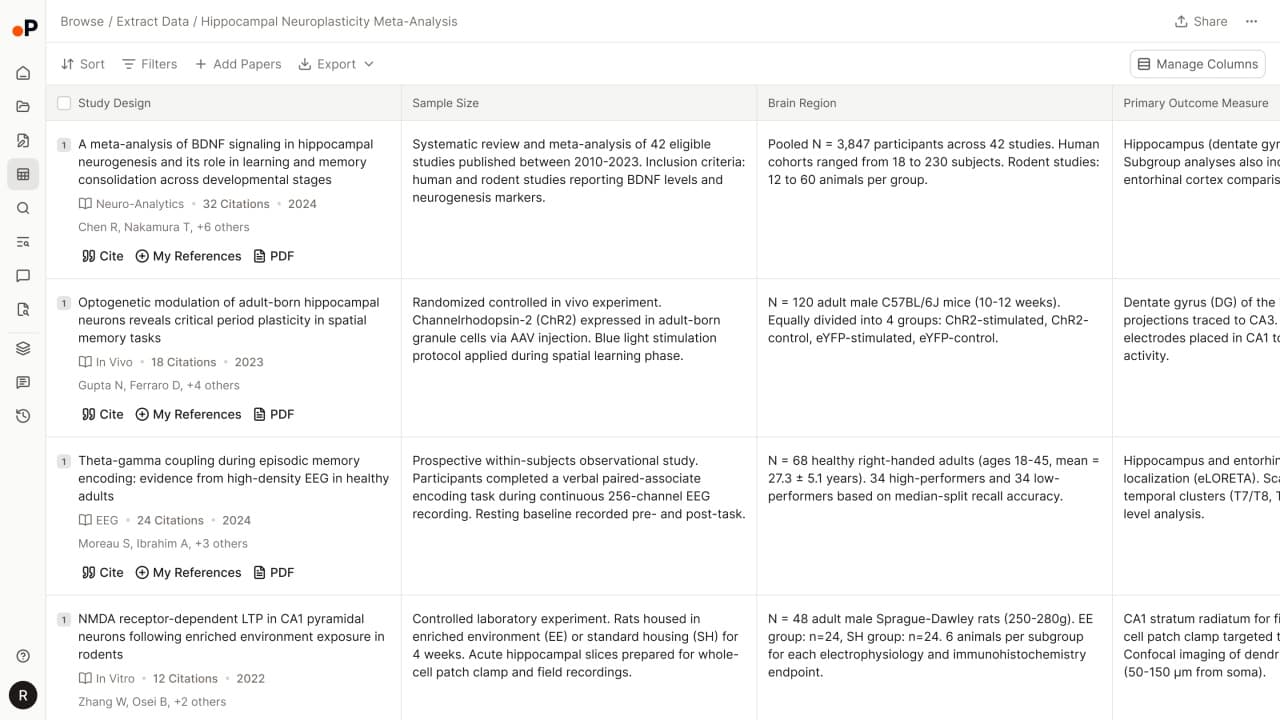
Extraction shaped to your question, not the paper’s structure
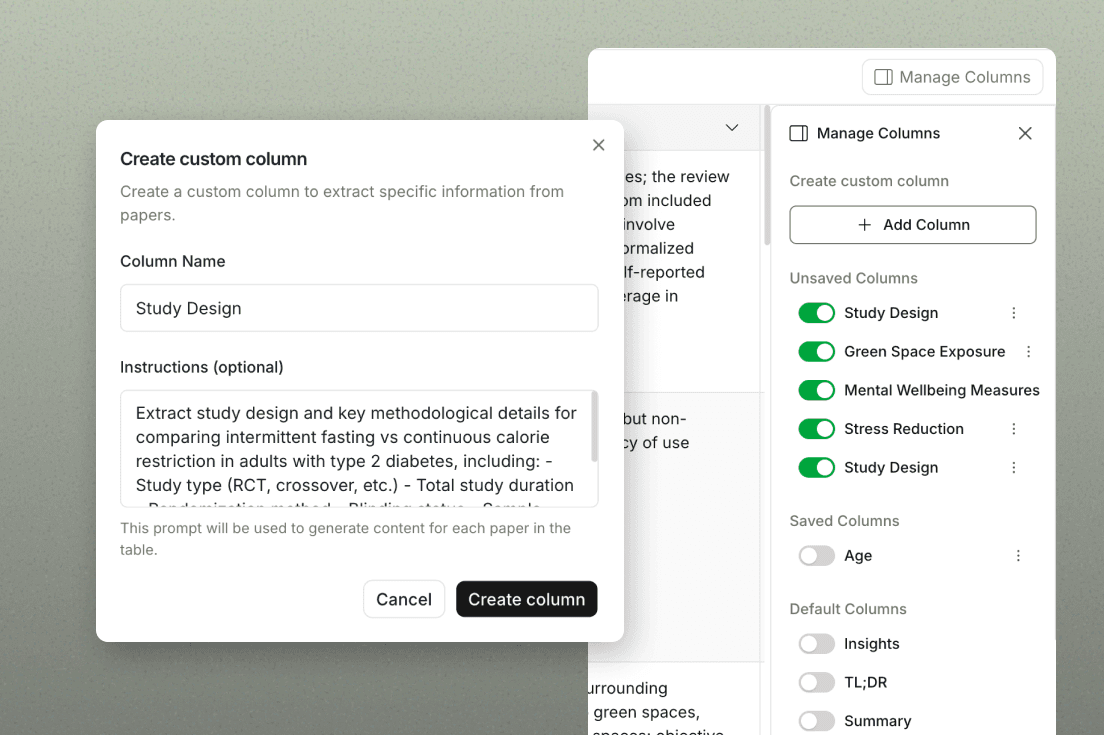
Define your columns
Each column has a title and an instruction: what to extract, and how to return it. You decide the fields, so the paper never has to be read end to end.
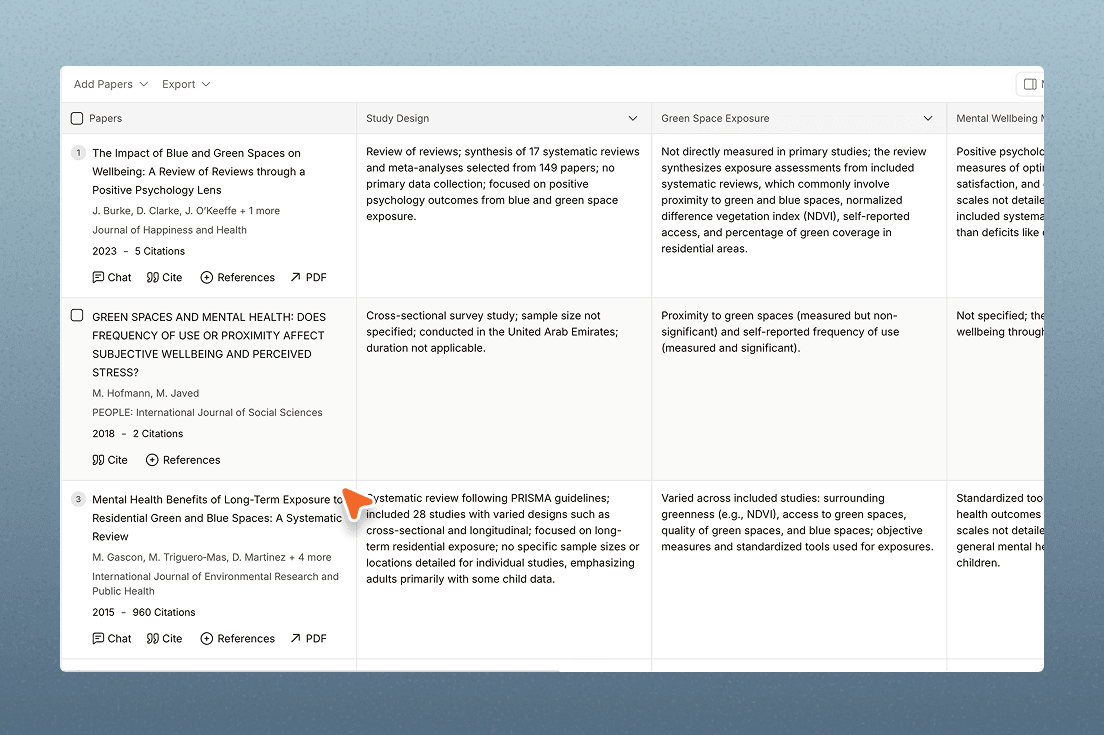
Extract across papers at once
AI reads the full text of every paper you select and fills each cell to your instructions, so extracting, analyzing, and comparing happen in one pass.
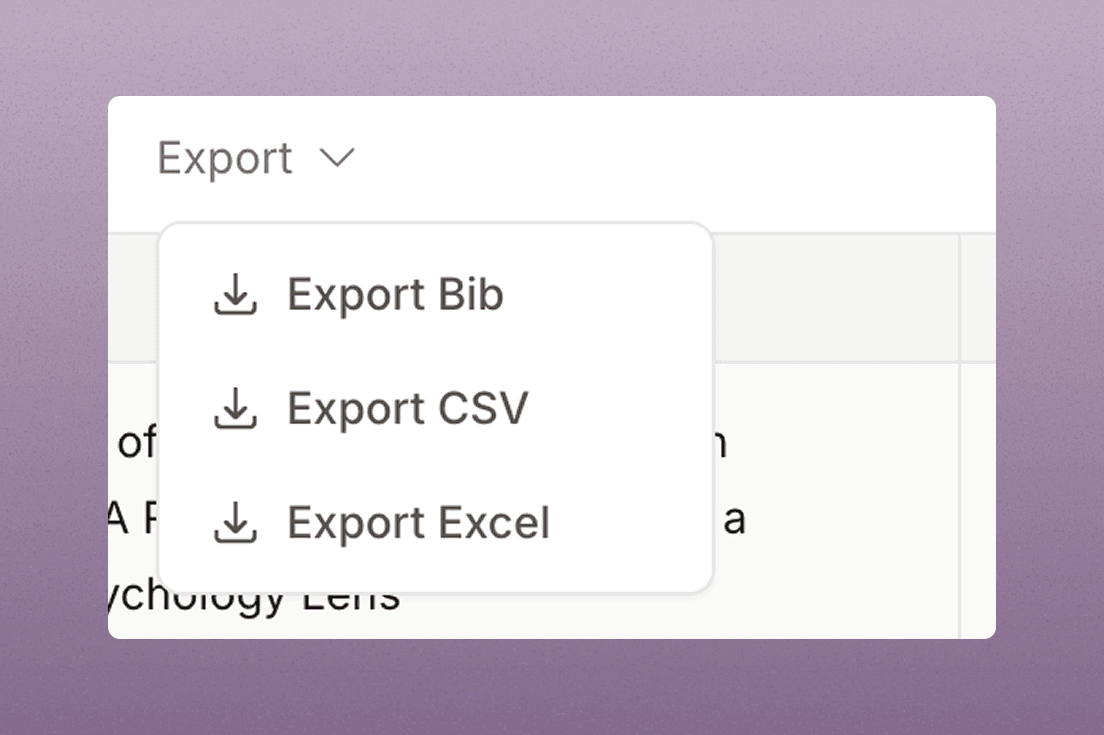
Get one comparable table
The result is a single table, papers as rows and your columns filled, ready to compare across studies and export to CSV or Excel.
Three output types, so every field answers the right way
Answer
Free-form output, exactly as your instruction specifies. Example, “Primary endpoint”: extract the study’s primary endpoint; if multiple, list all; if none stated, write “Not reported.”
Yes / No
A binary answer, where your instruction defines each case. Example, “Randomized?”: Yes if participants were randomized to groups, No otherwise.
Specified options
Your own set of options; AI classifies each paper into one. Example, “Study design”: options RCT, Cohort, Case-control, Review, chosen from the methods.
Every value is evidenced, down to the sentence
Extraction is only useful if you can verify it and defend it. Paperguide is built so you can do both.
Sentence-level citations
Every extracted value links to the exact statement it came from in the full text.
Built for accuracy
Extraction is evaluated on research documents, and the evidence sits beside each value, so you verify rather than trust.
Many papers at once
Extract, analyze, and compare across a large set in a single table.
The evidence tables researchers build most
Build an evidence table for a review
Prepare data for a meta-analysis
Screen by the data, not the abstract
Compare studies at a glance
Structured evidence for every kind of research team
Evidence-synthesis consultancies and CROs
Medical device and diagnostics teams
Academic and clinical researchers
Public health and policy teams
In practice

Custom-column extraction across hundreds of nanomedicine papers, every value cited back to its source.Read case study

A meta-analysis that surfaced contradictions a manual review would have missed, in half the time.Read case study

HTA evidence tables where every value is cited, so an assessor’s query is answered in seconds, not an afternoon in PDFs.Read case study

IVDR performance reviews that assemble faster under deadline, and stay consistent and cited cycle after cycle.Read case study
What researchers say
Paperguide is really helpful in filtering the relevant papers from hundreds of papers, especially by creating custom questions into columns and comparing multiple papers and selecting the relevant ones.
Every extracted value cites the statement it came from. When an assessor questions a number, we answer in seconds instead of spending an afternoon back in the PDFs.
I set the columns once, population, outcome, effect, and it filled them across a hundred papers, each cell cited. A week in a spreadsheet became an afternoon.
The output types do more than I expected: a yes/no column screens papers, an options column classifies study design, and every answer traces back to the sentence it came from.