Ask a research question, get a citation-grounded answer
Search 200M+ papers in plain language. Paperguide finds the most relevant, highest-quality studies and answers your question, with every claim cited to its source.
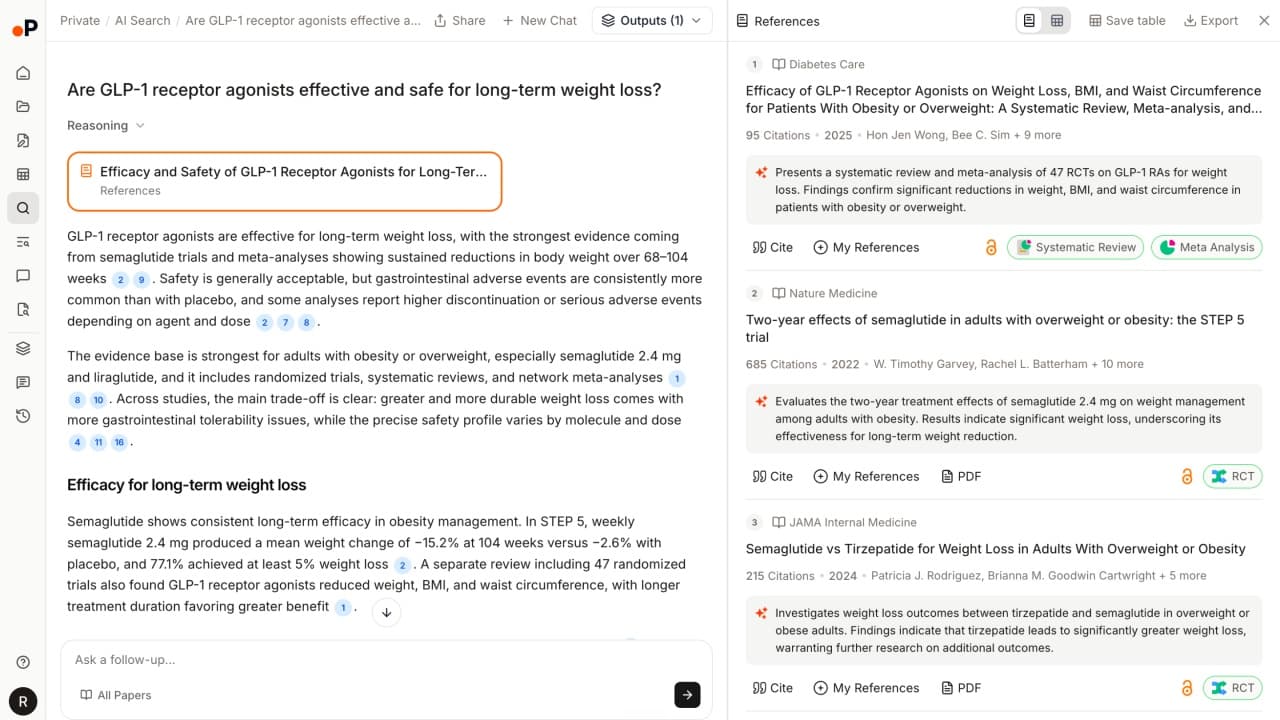
How AI Search works
Ask in plain language
Semantic search understands what you mean, not just the words you use, so you ask the way you would ask a colleague, with no keyword guesswork. Example: “What interventions reduce 30-day readmission in heart failure?”
Retrieve and re-rank
Paperguide searches across the literature, then re-ranks results on relevance and quality, SJR quartile, SNIP, SJR score, and citation metrics, to surface the strongest papers.
Answer, citation-grounded
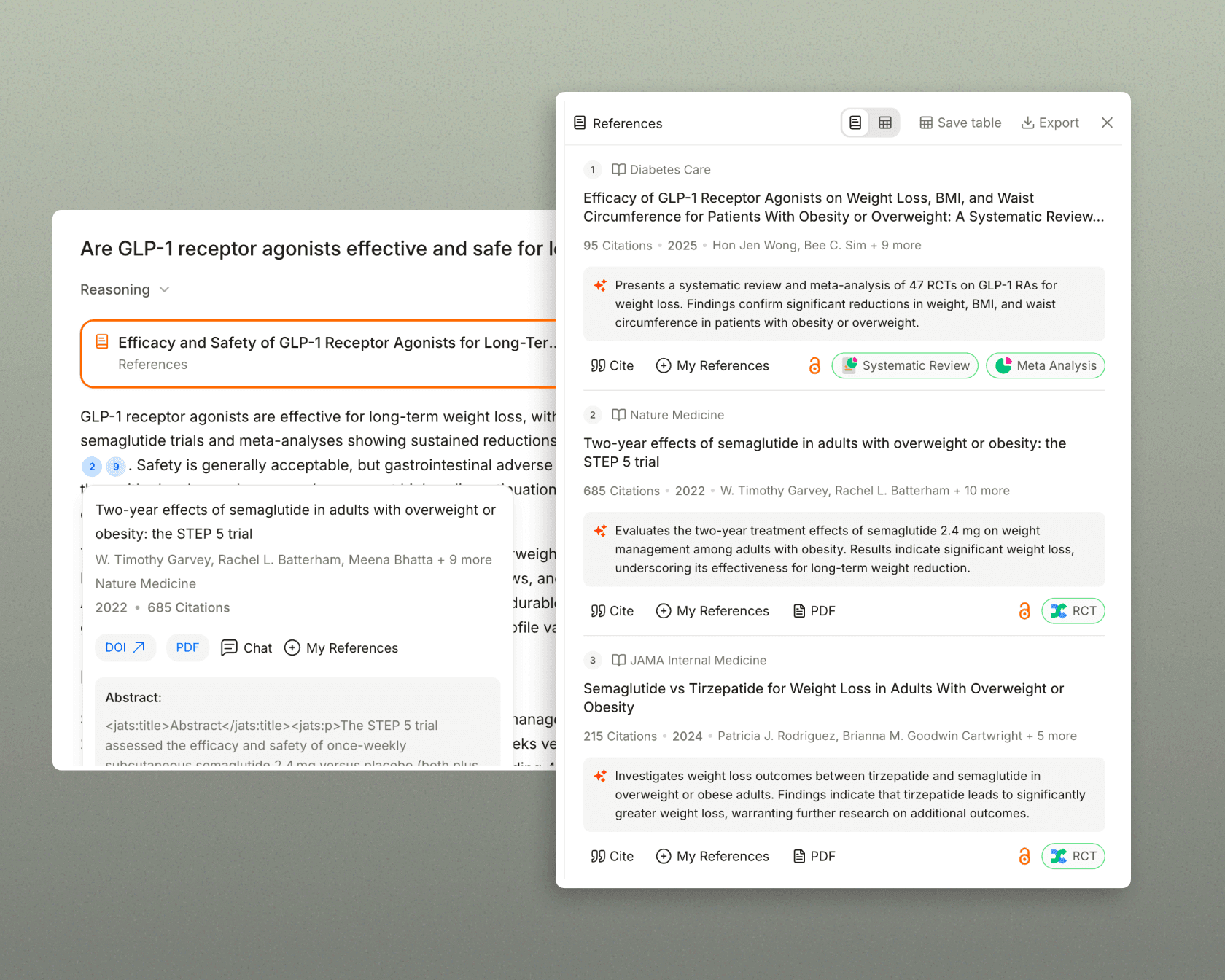
It synthesizes an answer from the top 20 papers, with every claim linked to the source it came from, so you get the finding and its evidence together.
Built to keep the evidence in reach
Everything you need to go from a question to your next step.
- A ranked references list behind every answer, so you can go straight to the papers.
- Follow-up questions that keep the thread, refine without starting over.
- Save results straight to your Paperguide reference manager.
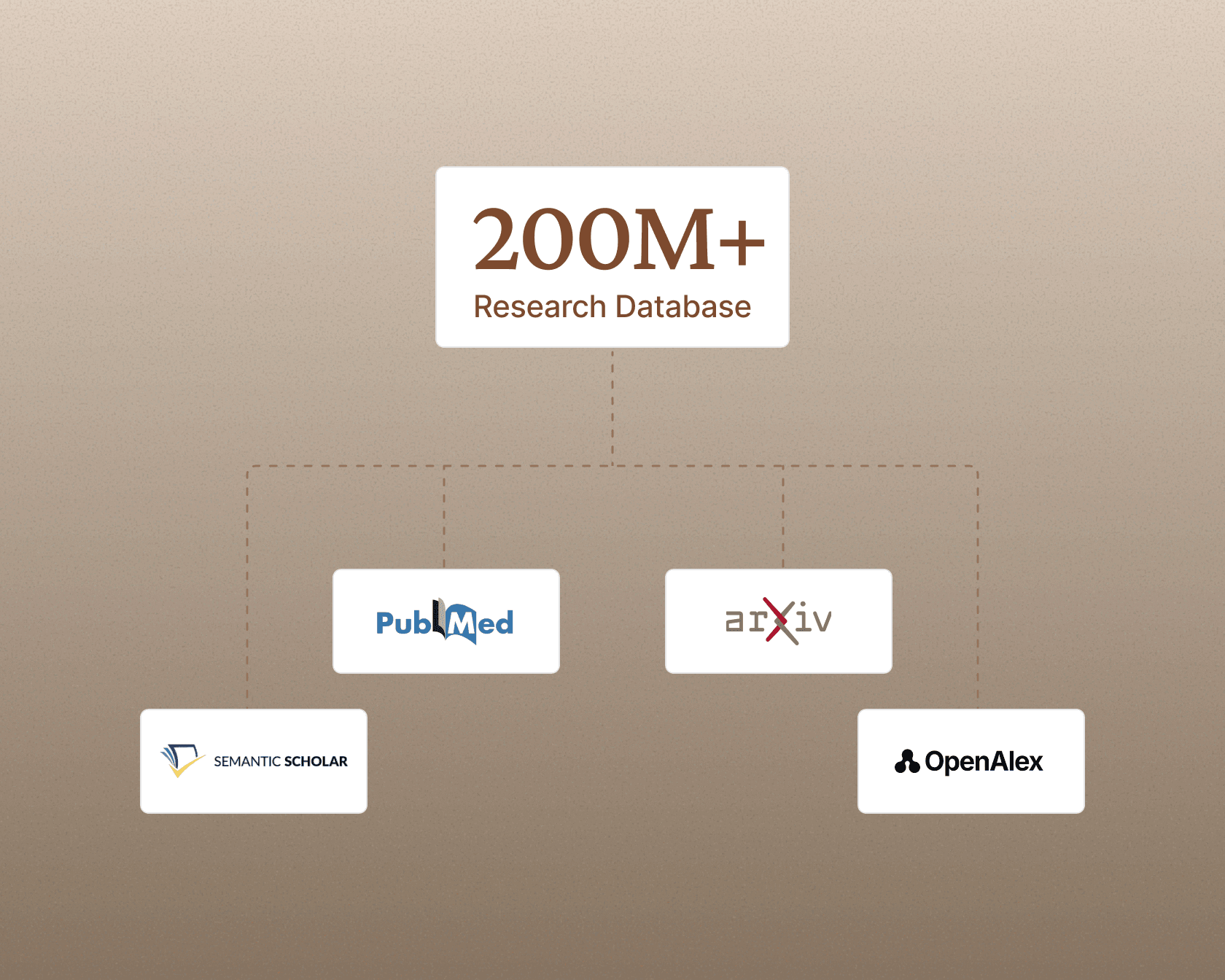
Grounded in 200M+ peer-reviewed papers
Your answer reflects the breadth of the literature, not a slice of it, drawn from the major open scientific sources.
- PubMed Biomedical and life sciences literature.
- arXiv Preprints across physics, mathematics, and computer science.
- OpenAlex An open catalog of scholarly works across every discipline.
- Semantic Scholar A cross-disciplinary corpus with AI-extracted metadata.
Plus your own papers, imported from Zotero, Mendeley, or your Paperguide reference manager.
Where a cited answer saves you an afternoon
Cited answer, fast
Ask what current research says and get a cited answer in minutes, ready to reference when someone asks where it came from.
Scope before reviewing
See what evidence exists on a question, and how strong it is, before committing to a full literature review.
Answer reviewer comments
When a reviewer asks you to address recent work, search it, see what is there, and respond with citations.
The strongest papers
Surface the most relevant, highest-quality studies, ranked by journal and citation signals, without wading through the rest.
A cited answer for every kind of research team
Evidence-synthesis consultancies and CROs
Medical device and diagnostics teams
Academic and clinical researchers
Public health and policy teams
In practice

Cited clinical evidence in minutes under assessment deadlines, with every claim traceable.Read case study

Clinical literature across languages synthesized into one cited answer, in a hospital setting.Read case study

Supervising more theses across more fields, with reviews that stay structured and cited.Read case study

Rapid evidence assessments where the trail is a byproduct of the work, one click from any claim.Read case study
What researchers say
Paperguide search, literature review and writer tools have made my research so much easier. I can complete my whole research in Paperguide, without even switching to Google Scholar and ChatGPT.
I ask a question and get an answer with the papers attached. The citations are what make it usable for real work, not just a starting point.
I ask a question the way I would ask a colleague and get a cited answer from the actual literature. The quality signals on each result mean I trust the top papers instead of second-guessing them.
It scoped a topic for me in minutes and showed how strong the evidence was before I committed to a full review. That saved me from a dead-end search.