9+ Best AI Tools for Scientific Research in 2026 (Free + Paid)


Over the past three years, the process of scientific research has been significantly transformed by the rise of artificial intelligence (AI) and large language models (LLMs). Researchers across STEM fields including biology, chemistry, physics, engineering, and mathematics now rely on AI for scientific research to streamline repetitive tasks, boost accuracy, and accelerate discovery.
The numbers confirm the shift. According to the Wiley ExplanAItions report (February 2025), a survey of nearly 5,000 researchers found that AI use among researchers for research or publication tasks jumped from 45% in 2024 to 62% in 2025, with overall AI tool usage reaching 84%. At the same time, scientific publishing has reached unprecedented volume: the NSF Science and Engineering Indicators report (July 2025) documented worldwide scientific and engineering output of 3.3 million articles in 2022 based on Scopus data, with continued growth across every major discipline since.
These AI for scientific research tools now support everything from scientific literature reviews and systematic reviews to research paper writing, citation management, and data analysis. Many platforms also offer free AI for scientific research, making them accessible to academic and industry researchers, faculty, and professional scientists alike.
The challenge is that most AI tools marketed for research fall short the moment they are used on real work. Some fabricate citations. Some only cover one part of the workflow. Some are general-purpose chatbots dressed up for academia and break down on serious research questions. Choosing the right tool matters.
This guide compares the 9+ best AI for scientific research tools in 2026, focusing on which platforms deliver the strongest features at the most reasonable cost, with options that cover literature discovery, systematic reviews, evidence synthesis, scientific paper writing, citation management, and free AI for scientific research workflows.
What are the best AI tools for scientific research in 2026?
The best AI for scientific research tools in 2026 are Paperguide, Paperpal, SciSpace, Elicit, NotebookLM, Semantic Scholar, ResearchRabbit, Scite, Consensus, Scholarcy, and Julius AI. These platforms help researchers search literature across hundreds of millions of papers, analyze studies, generate citations, summarize papers, synthesize evidence, map citation networks, run data analysis, and improve academic writing using AI. Several of them also function as AI-powered literature review tools, helping researchers evaluate, compare, and synthesize evidence more efficiently in 2026.
Paperguide is the most comprehensive option in this list, combining literature discovery, screening, data extraction, paper writing, and reference management inside a single AI Research Platform built for scientific research workflows. The other ten tools each specialize in one or two parts of the workflow, and four of them (Semantic Scholar, ResearchRabbit, NotebookLM, plus the free tiers of Paperguide, Consensus, Elicit, SciSpace, Paperpal, Scholarcy, and Julius AI) offer genuine free AI for scientific research.
What Is Scientific Research and Why Is It Important?
Scientific research is a structured process that generates knowledge through experimentation, observation, data analysis, and evidence-based reasoning. It helps researchers discover new information, test hypotheses, and build on existing scientific literature. Core tasks in this process include literature reviews, systematic reviews, research paper writing, citation management, and data interpretation.
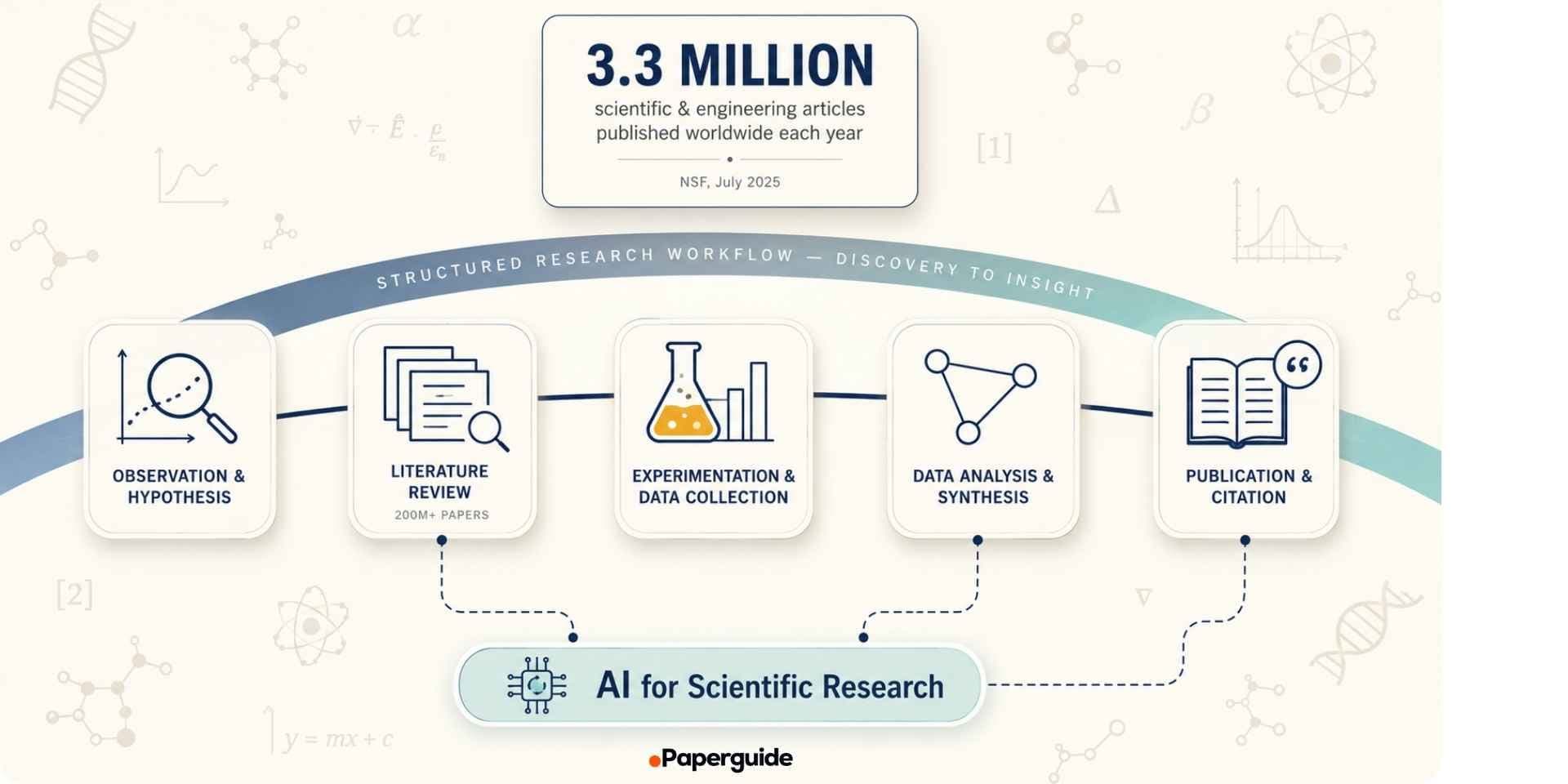
Scientific research is critical because it drives progress in science, medicine, technology, and public policy. In STEM fields such as biology, chemistry, physics, engineering, and mathematics, research leads to innovation, solves real-world problems, and informs evidence-based decisions. It also forms the foundation for understanding the world and applying knowledge to improve quality of life across society.
The volume of scientific output has reached a point where no individual can keep up manually. With over 3.3 million scientific and engineering articles published annually worldwide (NSF, July 2025), researchers increasingly rely on AI for scientific research to manage literature, synthesize evidence, and accelerate the discovery process. For literature review workflows in particular, Paperguide Literature Review AI helps researchers efficiently analyze academic papers, identify key findings, and summarize them into structured insights, replacing weeks of manual screening with a structured workflow that produces auditable outputs.
What Makes an AI Tool Ideal for Scientific Research?
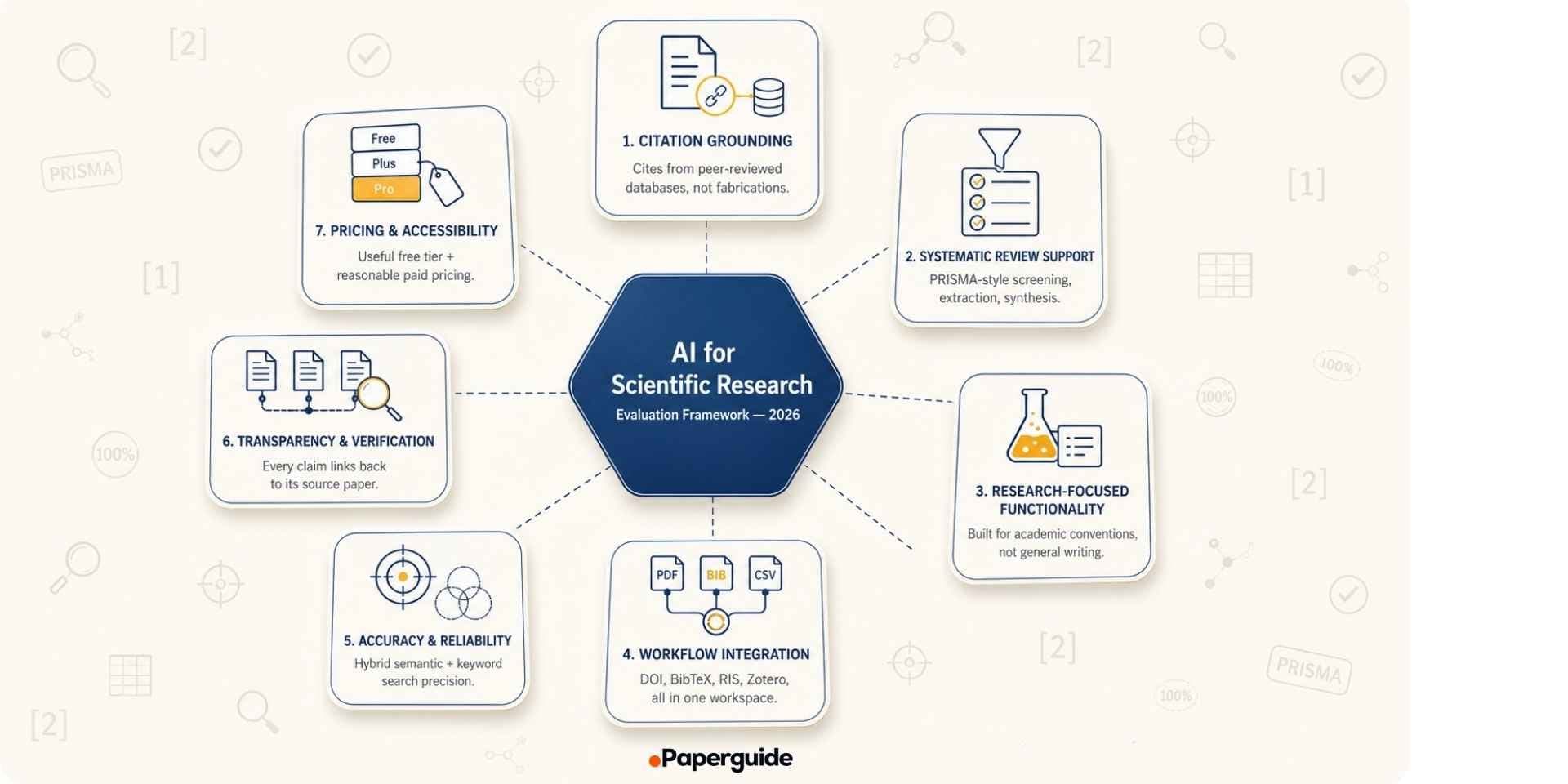
AI for scientific research tools are designed to simplify complex academic workflows such as literature discovery, systematic reviews, scientific paper writing, citation management, and data analysis. Below are the key features to evaluate when choosing an AI for scientific research tool in 2026.
| Feature | Why It Matters |
|---|---|
| Citation grounding | The best AI for scientific research tools cite from peer-reviewed databases (PubMed, arXiv, OpenAlex, Semantic Scholar) rather than generating fabricated references. This is the single most important criterion in 2026 given documented citation hallucination rates in general LLMs. |
| Systematic review support | Strong tools include structured screening, data extraction, and synthesis workflows. PRISMA-style auditable outputs (screening table, extracted data table, structured review document) matter for publication-quality systematic reviews. |
| Research-focused functionality | AI for scientific literature review and scientific paper writing should include summarization, citation formatting, data extraction, and evidence comparison built specifically for academic conventions. |
| Workflow integration | The tool should accept PDFs and CSVs, support DOI, BibTeX, RIS, and Zotero imports, and ideally combine multiple stages (discovery, screening, drafting, citation) inside one workspace. |
| Accuracy and reliability | The AI must understand scientific methods, terminology, and evidence-based reasoning with precision. Hybrid semantic + keyword search is stronger than either approach alone. |
| Transparency and verification | Researchers should be able to verify every source. The best tools link every claim back to the underlying paper, so AI outputs are auditable rather than opaque. |
| Pricing and accessibility | Strong AI for scientific research includes a useful free tier for early-stage exploration and reasonable paid pricing for serious workflows. Free AI for scientific research like Semantic Scholar and ResearchRabbit complement paid platforms well. |
The Paperguide AI Research Platform satisfies all seven criteria above in one workspace, which is why it consistently ranks at the top of independent comparisons of AI for scientific research in 2026.
Top AI for Scientific Research Tools in 2026 (Quick Comparison)
| Tool | Best For | Free Tier | Starts At |
|---|---|---|---|
| Paperguide | Complete scientific research workflows (discovery, screening, synthesis, writing, citation) | ✅ Yes | $12/mo (annual) |
| Paperpal | Real-time academic writing and editing | ✅ Yes | $11.58/mo (annual) |
| SciSpace | Reading and understanding complex PDFs | ✅ Yes | $12/mo (annual) |
| Elicit | Structured evidence extraction for systematic reviews | ✅ Yes | $49/mo (annual) |
| NotebookLM | Free multi-source synthesis from uploaded papers | ✅ Yes (full) | Free |
| Semantic Scholar | Free AI-powered academic search across 200M+ papers | ✅ Yes (full) | Free |
| ResearchRabbit | Free visual citation mapping and literature discovery | ✅ Yes (full) | Free |
| Scite | Citation context and Smart Citations analysis | ❌ (7-day trial) | $20/mo |
| Consensus | Fast evidence-backed answers to research questions | ✅ Yes | $10/mo (annual) |
| Scholarcy | Fast paper summaries, flashcards, and literature matrix | ✅ Yes (limited) | $9.99/mo |
| Julius AI | AI data analysis from spreadsheets and research datasets | ✅ Yes | $16/mo (annual, $20 monthly) |
These AI Research platforms cover the entire research workflow when used together, but Paperguide is the only platform in the list that handles complete scientific research workflows end-to-end in a single workspace. For researchers who want free AI for scientific research, Semantic Scholar, ResearchRabbit, and NotebookLM are completely free, and Paperguide, Consensus, Elicit, SciSpace, Paperpal, Scholarcy, and Julius AI offer useful free tiers.
Best AI Research Platform for Scientific Research in 2026
1. Paperguide
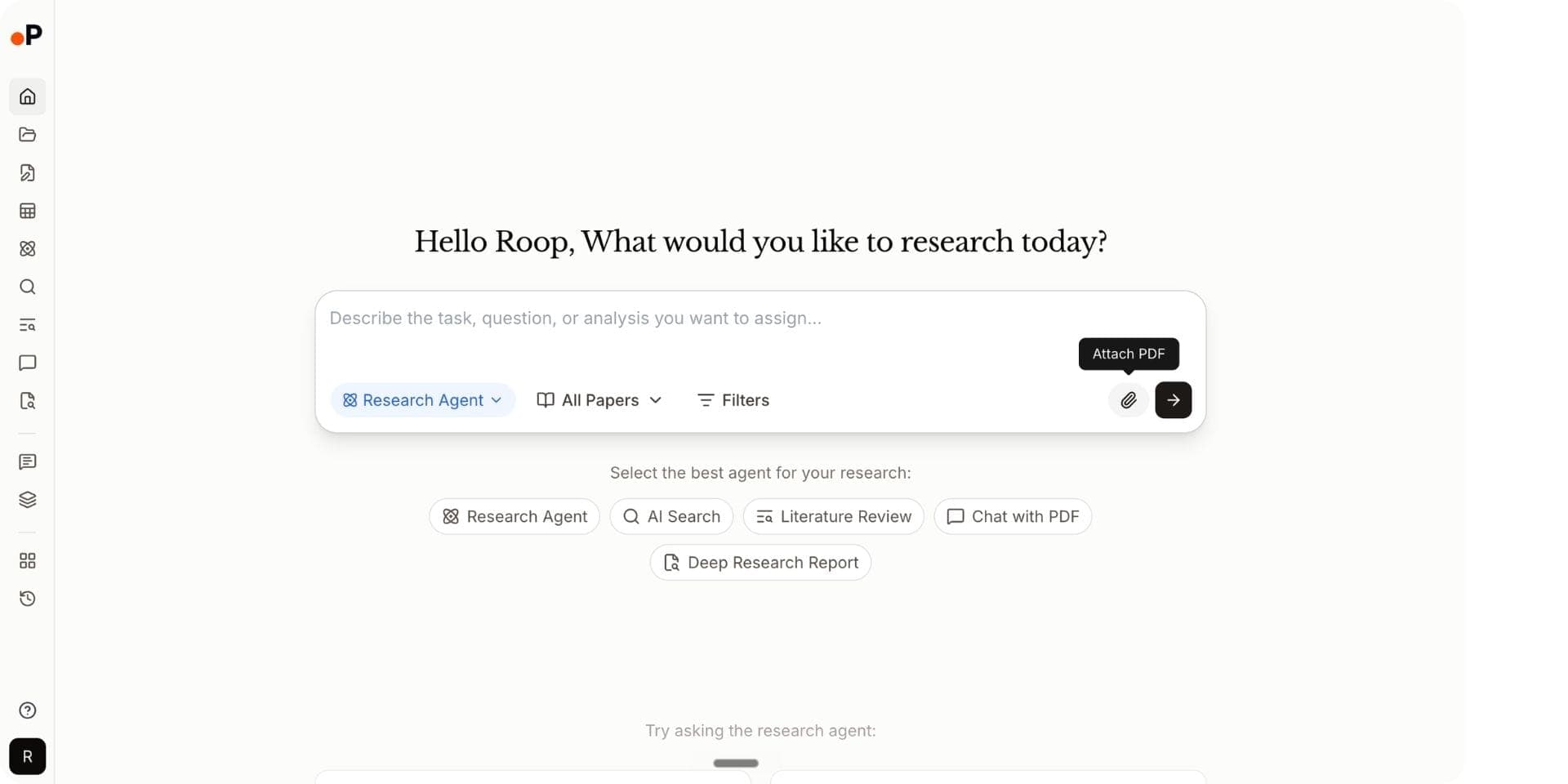
Paperguide is an AI-native platform for scientific research workflows and systematic reviews. Built for research labs, principal investigators, systematic review teams, and research organizations, it brings the entire research lifecycle into one collaborative AI-native workspace. Research teams use Paperguide to find, organize, screen, extract, and synthesize scientific literature for literature reviews, systematic reviews, and other evidence-based research projects. Combining AI-powered literature discovery, a full-featured AI reference manager, Chat with PDF, citation-grounded writing, and collaborative review workflows, Paperguide replaces the fragmented four-to-six-tool research stack with a single connected platform.
The platform is built on a few non-negotiable principles: every answer, extraction, and draft is grounded in a verified source paper, eliminating the hallucinated citation problem at the architecture level; results are drawn from a 200M+ peer-reviewed paper database (PubMed, arXiv, OpenAlex, Semantic Scholar) with paper quality evaluation using SJR, SNIP, and citation metrics; findings are synthesized across the literature, not just summarized one paper at a time; and human oversight and team collaboration sit inside every multi-step workflow.
Key Features
- Research Agent: The most comprehensive workflow on the platform. Runs a single connected session end to end (discovery, screening, comparison, gap analysis, extraction, drafting, and citation handling) across the 200M+ paper database and the user's reference library. A paper surfaced in search is already in the library; a claim added to a draft is already cited.
- AI Search: Hybrid semantic and keyword search built for research questions rather than keyword lookup. An agentic search layer generates multiple query variations in parallel and synthesizes cited answers from the top 20 most relevant papers across 200M+ papers in PubMed, arXiv, OpenAlex, and Semantic Scholar. The same search also works inside Claude or ChatGPT through Paperguide MCP.
- Literature Review AI: Dedicated, structured agent for formal literature reviews. Follows a five-step process (Plan, Search, Screen, Extract, Synthesize) and produces a complete, citation-grounded review document organized into clear themes. Standard mode handles up to 50 papers; Extended mode screens up to 200 papers.
- Deep Research Report: Same structured pipeline as Literature Review AI with full human control at every stage. Researchers set the research questions, review retrieved papers, adjust inclusion and exclusion, and confirm extraction fields before each stage runs. Designed for complex, nuanced research tasks where researcher judgment shapes the synthesis.
- AI Reference Manager: Every paper saved becomes immediately available across AI Search, Literature Review AI, Research Agent, Chat with PDF, Extract Data, and the AI Paper Writer. Import via DOI, URL, BibTeX, RIS, PDF, or one-click Zotero migration. Automatic metadata and open-access PDF fetching. Built-in PDF viewer, annotations, AI summaries, and shared libraries with view, annotate, or edit permissions.
- AI Paper Writer: Generates full research drafts from a research question and source material, with citations applied automatically throughout. Every reference is verified against the actual library, eliminating fabricated citations at the architecture level. Also works as a writing assistant for editing, refining, and improving content. Supports 1,000+ citation styles.
- Extract Data: Pull structured information from multiple papers into evidence tables. Define custom extraction columns (sample size, intervention, comparator, outcome, methodology, effect size, study design). Every extracted value is cited to the exact sentence it came from. Export to CSV, Excel, RIS, BIB, PDF, or DOCX for downstream meta-analytic work.
- Chat with PDF: Interact directly with any uploaded paper. Ask questions about any section, summarize methods or findings, extract specific information, and compare findings across multiple documents without reading every line first, with every answer pointing to the exact page and paragraph.
- Systematic Review: Protocol-driven systematic reviews with dual-review blind screening (two independent reviewers and a conflict resolver) or AI screening confirmed by a named verifier, a PRISMA diagram generated from actual review counts, and every decision logged with its criterion and evidence.
Pros
- Only platform on this list covering the full research lifecycle (discovery, screening, extraction, synthesis, writing, citation) in one workspace
- Replaces the typical four-to-six-tool research stack with a single connected platform
- Citation grounding architecture prevents fabricated references (a documented problem with general LLMs)
- AI-native reference manager that powers every downstream feature, not a passive citation store
- Hybrid semantic and keyword search across 200M+ papers
- Paper quality evaluation (SJR, SNIP, citation metrics) on every result
- Collaboration, permissions, and human review built into every multi-step workflow
Cons
- Most powerful features sit behind the paid plans (Plus and Pro)
- Research teams new to the workspace need a short orientation to use all the modules together
- Currently a web app with a Chrome extension (no native desktop or mobile app)
Best For
Research labs, principal investigators, PhD researchers, postdoctoral researchers, systematic review teams, evidence synthesis groups, and scientific research professionals who treat research as an end-to-end, multi-week or multi-month process.
Paperguide Pricing (2026)
Yearly billing saves up to 41%. Academics get 30% off with a valid university email.
| Plan | Price | What's Included |
|---|---|---|
| Free | $0 | 2,000 AI Credits/month, limited Reference Manager, Chat with PDF, Literature Review Report, Deep Research Report, Extract Data (5 columns / 10 papers per table), AI Paper Writer, limited Research Agent and AI Reference Manager, 1,000+ citation styles, Paperguide MCP, plagiarism checker (4,000 words/month), 10 Search API requests/month |
| Plus | $12 per seat per month, billed annually ($144 a year) | 12,500 AI Credits/month, systematic reviews up to 1,000 papers, unlimited AI Searches, unlimited Reference Manager, unlimited Chats with PDF, Literature Review AI, Deep Research Report, Extract Data (50 columns / 100 papers per table), AI Paper Writer, collaboration, Plagiarism Checker (20,000 words/month), 100 Search API requests/month |
| Pro | $29 per seat per month, billed annually ($348 a year) | 50,000 AI Credits/month, all Plus features, systematic reviews up to 5,000 papers with collaboration, Plagiarism Checker (100,000 words/month), 20 AI Paper Writer Documents/month, 500 Search API requests/month |
| Evidence Teams | $89 per seat per month, billed annually ($1,068 a year) | 150,000 AI Credits/month, PRISMA-grade dual reviewer screening on reviews of up to 5,000 papers, dedicated support |
| Enterprise | Custom | Systematic reviews up to 20,000 papers, custom credit limits, centralized billing, shared reference manager, unlimited everything, dedicated support |
Verdict
Paperguide offers one of the most generous free plans among scientific research AI tools: Literature Review Report, the Deep Research Report, Extract Data, the AI Paper Writer, and the AI Reference Manager are all included at no cost. The paid tiers are priced significantly below competitors offering comparable depth. For research teams running real evidence synthesis pipelines, the combination of the Research Agent, Literature Review AI, AI Paper Writer, and AI Reference Manager inside one workspace makes Paperguide the most comprehensive AI research platform for scientific research in 2026.
2. Paperpal
paperpal
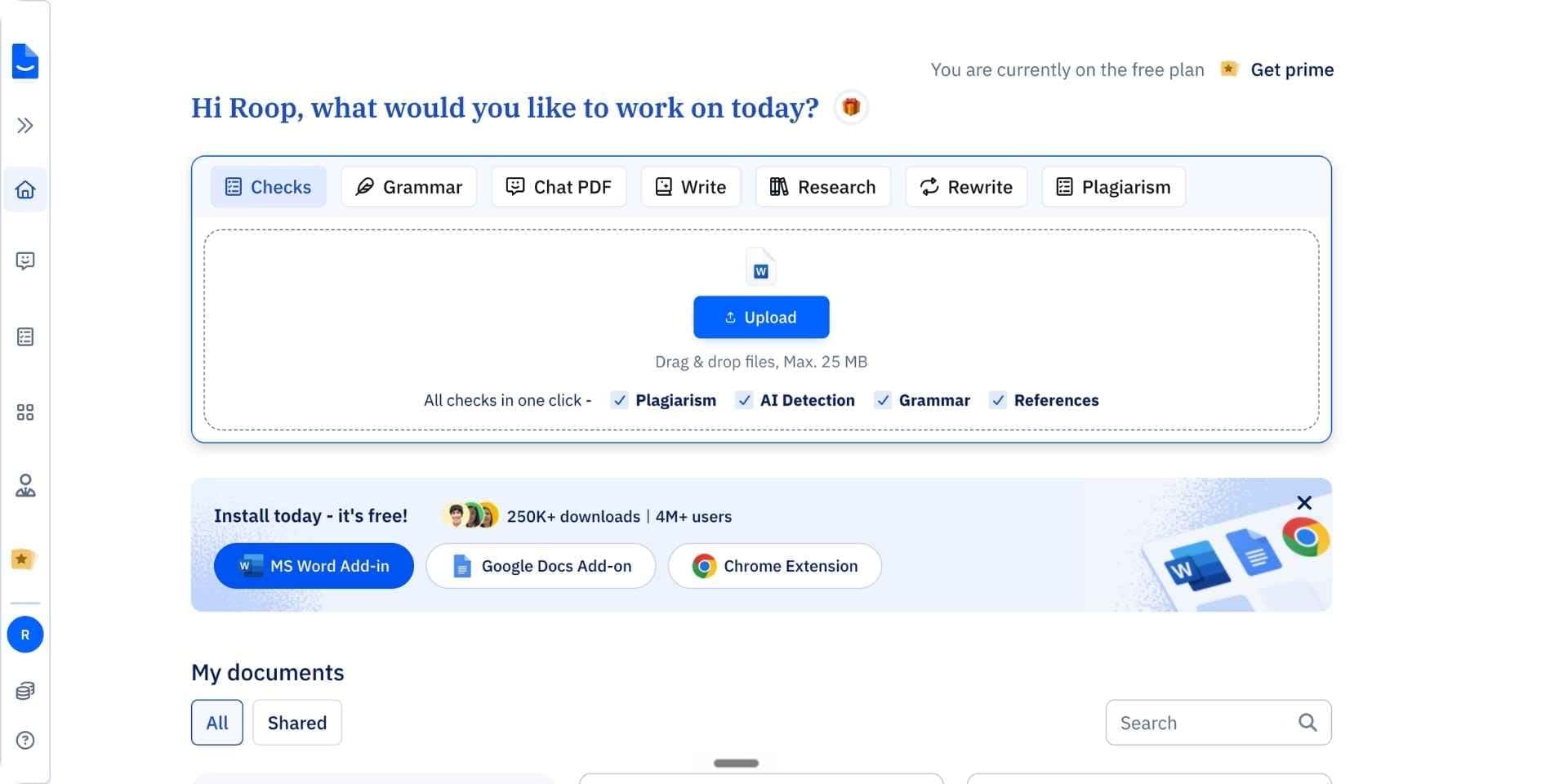
Paperpal is an AI-powered academic writing assistant that focuses on helping researchers write and revise manuscripts. It's not a literature discovery tool; instead, it specializes in improving the clarity, grammar, and submission-readiness of scientific writing. Paperpal integrates with Microsoft Word, Google Docs, Overleaf, and Chrome, so its suggestions follow you wherever you draft.
Key Features
- Real-time language editing: Subject-specific grammar, tone, and clarity feedback as you write, designed around academic conventions rather than general business writing.
- Citation search inside the editor: Search across 250M+ papers and insert citations directly into your document in thousands of styles.
- Academic writing tools: Paraphrasing, formal tone adjustments, predictive writing, and pre-submission technical and language checks for journal compliance.
- Plagiarism and translation: Detects duplicated text and supports academic translation across 30+ languages, useful for non-native English researchers.
- Multi-platform support: Works inside MS Word, Google Docs, Overleaf, Chrome, and a web editor with discipline-aware suggestions.
Pros
- Real-time, context-aware language and grammar corrections
- In-editor citation search and insertion across thousands of styles
- Strong plagiarism detection and multilingual academic translation
- Works inside the writing platforms researchers already use
- Generous free plan for light use
Cons
- No literature discovery, systematic review, or structured synthesis features
- Most powerful features (unlimited suggestions, plagiarism checks, journal readiness) require the paid plan
- Can flag legitimate discipline-specific phrasing as errors until customized
Best For
Researchers and research teams who already have their sources but need an AI assistant to polish language, insert citations, and ensure journal-ready formatting.
Paperpal Pricing (2026)
| Plan | Price | What's Included |
|---|---|---|
| Free | $0/month | 200 language suggestions/month, 5 uses/day of writing features, unlimited citation generation, 7,000 words/month plagiarism check, 5 PDF uploads/month |
| Prime | $11.58/month (billed annually as $139) | Unlimited language editing, unlimited writing features, unlimited Research Q&A, unlimited AI detection scans, 250 PDF uploads/month, 10,000 words/month plagiarism check, unlimited journal submission checks |
| Prime 2-year | $9.54/month (Pay $229 once, save 18%) | Same Prime benefits at lower long-term cost |
| Prime 3-year | $8.02/month (Pay $289 once, save 31%) | Same Prime benefits, biggest savings |
Verdict
Paperpal Prime is one of the strongest AI paper writing tools in 2026 for academic writers who want real-time editing, advanced rewriting, citation tools, and journal-readiness checks inside a single AI writing assistant. It is particularly valuable for non-native English researchers preparing manuscripts for high-impact journals, where language quality and submission compliance often determine whether a paper clears desk rejection. What Paperpal will not do is discover new literature, screen papers, or build a structured review for you. It is a writing and editing tool, not a research workflow platform. For researchers who need literature discovery, structured synthesis, and citation-grounded drafting alongside the same editing polish Paperpal provides, Paperguide is the strongest Paperpal alternative because it brings discovery, screening, reference management, and AI writing into one connected workspace rather than a standalone editor.
3. SciSpace
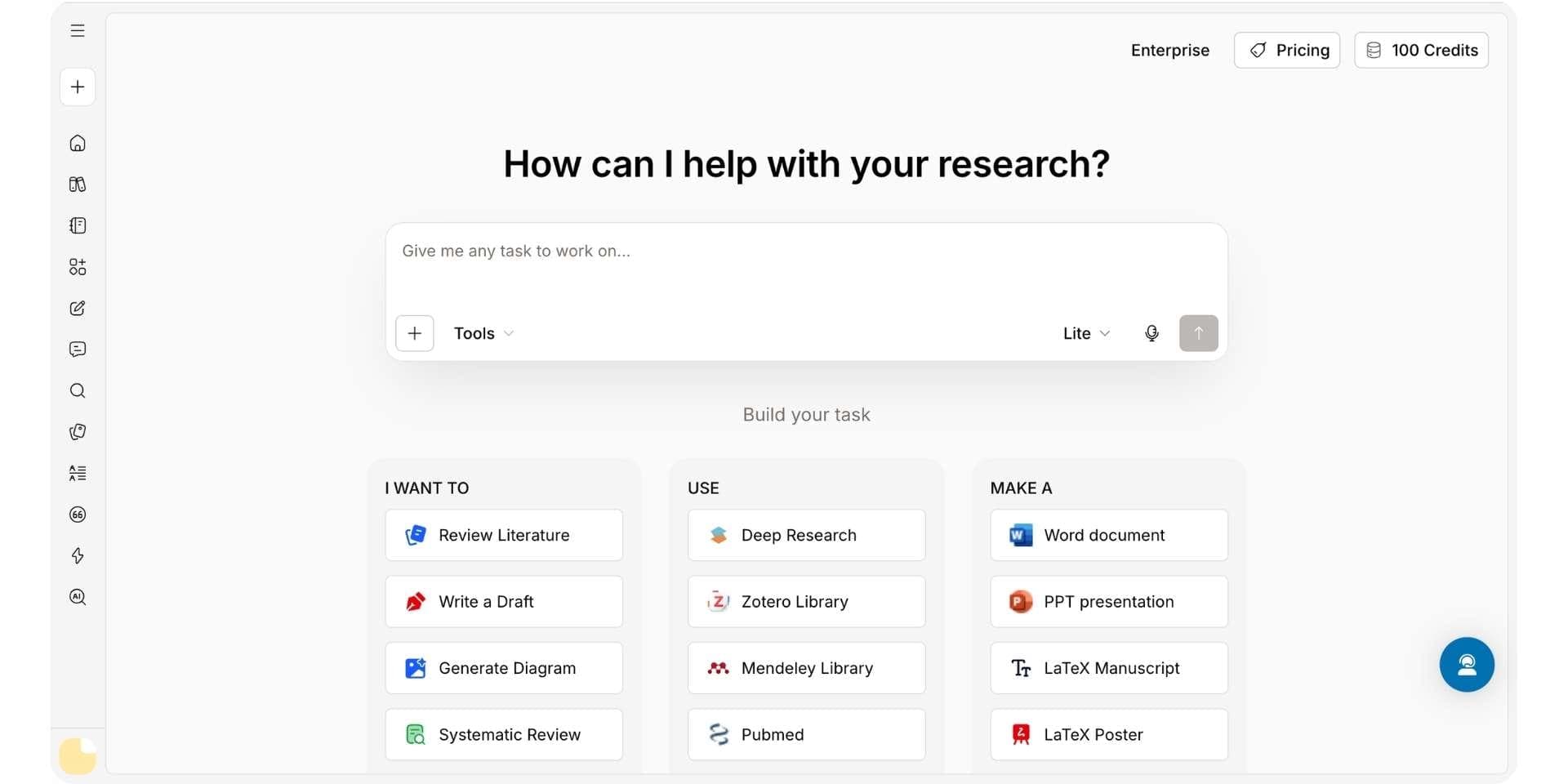
SciSpace offers an AI assistant designed to help researchers read and understand scientific papers. The Copilot feature functions like a reading tutor: as you read a paper from SciSpace's 270M+ paper database (or one you upload), the AI explains sections, defines terms, simplifies methodology, and clarifies equations in real time. This makes SciSpace particularly useful for interdisciplinary research and for researchers reviewing dense literature in unfamiliar fields.
Key Features
- In-document explanations: SciSpace Copilot simplifies complex text, tables, and equations as you read, surfacing technical concepts in plain language.
- Ask questions while reading: Direct Q&A on uploaded or open papers, with answers grounded in the source paper.
- Extensive paper database: Access to over 270 million papers, plus the ability to upload your own PDFs for in-document chat.
- Literature Review module: Deep Review mode surfaces related papers, authors, and topics for connected exploration.
- Browser extension: Interact with PDFs found on journal sites or repositories without downloading them first.
- SciSpace Agent: Integrates 150+ academic tools for formatting, citations, reading, and other repetitive research tasks.
Pros
- Strongest in-document reading assistance among AI research tools
- Explains equations, technical terminology, and methodology in plain language
- Works with both uploaded PDFs and web-based research articles
- Visual network of related studies aids discovery
- Free tier covers Copilot reading features for individual researchers
Cons
- Not designed for full literature review drafting, writing, or reference management
- No citation manager or in-document writing assistant
- Comparison and synthesis features are weaker than dedicated tools
Best For
Researchers and research teams who want to understand academic papers faster, especially in technical or unfamiliar fields. Strongest during the reading and comprehension phase, less suited for writing or systematic synthesis.
SciSpace Pricing (2026)
| Plan | Price | What's Included |
|---|---|---|
| Basic (Free) | $0/month | Limited Copilot, limited literature review, limited paper chats, limited AI Writer, 5 columns in lit review |
| Premium | $12/month (billed annually, list $20) | 1,200 monthly credits, unlimited literature review, unlimited Chat with PDFs, AI Writer, paraphraser, citation generator, exports, 4 parallel agent queries |
| Advanced | $70/month (billed annually, list $90) | 10,000 monthly credits, Expert model access, 8 parallel agent queries, all Premium features |
| Max | $160/month (billed annually, list $200) | 40,000 monthly credits, priority support, 16 parallel queries, priority new-feature access |
| Teams | Enterprise pricing | Admin-managed access, shared credit pools, SSO/SCIM, consolidated billing, custom integrations |
Verdict
SciSpace is particularly strong for researchers who spend significant time reading PDFs and want to boost comprehension speed. It does not directly generate full literature reviews or handle heavy data extraction, but it shines at making sense of complex material. For full review workflows that also need drafting and reference management, Paperguide is the strongest SciSpace alternative in 2026 because it handles the end-to-end pipeline (discovery, screening, synthesis, drafting, citation) in one workspace.
4. Elicit
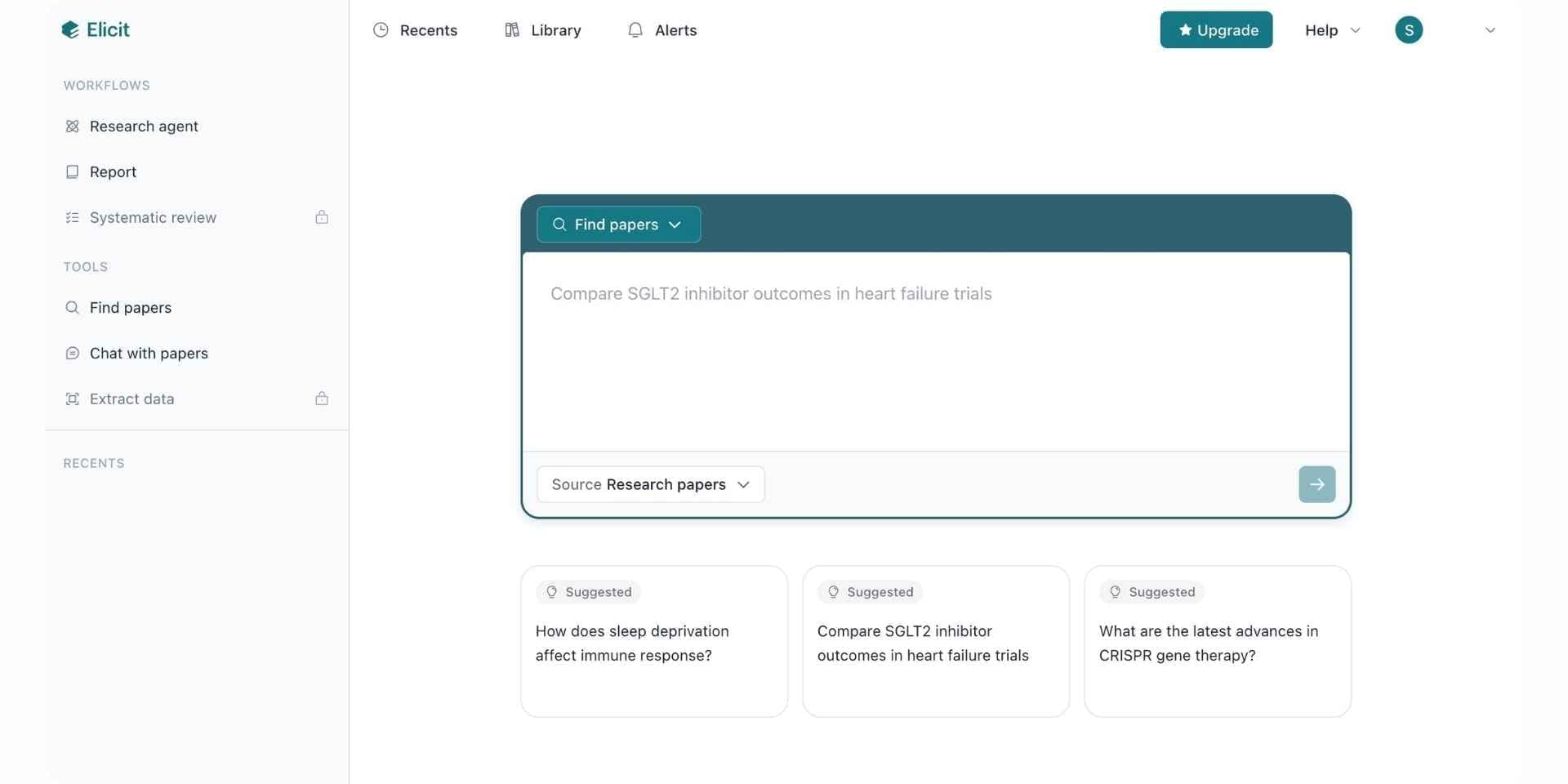
Elicit is an AI research assistant specialized in literature discovery and evidence synthesis. It is one of the strongest tools available for systematic reviews, particularly in evidence-driven fields like biomedicine, psychology, and public health. Researchers enter a natural-language question, and Elicit retrieves relevant papers, summarizes findings, and extracts structured data points from each included study.
Key Features
- Literature search across 138M+ papers: Semantic search ranks papers by relevance to your research question and surfaces the most relevant studies.
- Structured evidence summaries: Tables show outcomes, sample sizes, methodology, and key results across multiple studies, giving researchers a fast comparative view of the literature.
- Data extraction and PDF Q&A: Extract specific data points across uploaded papers. Ask questions and get answers backed by exact quotes from the source text.
- Automated review workflow: Pro tier includes a Systematic Review Workflow capable of screening up to 5,000 papers with PRISMA-style screening and extraction.
- Reliable academic focus: Built for researchers, with transparency, source-linked answers, and a strong reputation for minimizing AI hallucinations.
Pros
- Strong support for systematic and scoping review workflows
- Customizable extraction templates and structured comparison tables
- Easy-to-use screening interface for high-volume work
- Free tier usable for basic search and 2 reports/month
- Transparent citations and source-linked answers
Cons
- No AI writing or document drafting features
- Free tier is limited to 2 columns per table and 2 reports/month
- Pro pricing jumped to $49/month — significantly higher entry point than 2023-2024
- No reference manager or built-in writing workflow
Best For
Researchers conducting systematic reviews, scoping reviews, and meta-analyses who need structured data extraction across many papers. Especially valuable in healthcare, psychology, and social sciences where structured comparison matters.
Elicit Pricing (2026 — major change from previous years)
| Plan | Price | What's Included |
|---|---|---|
| Basic | Free | 2 Automated Reports/month, unlimited search across 138M+ papers, unlimited summaries, unlimited chat with papers (full-text), 2 columns per table at a time, Zotero import |
| Pro | $49/month (billed annually as $588) | Extended Research Agent access, dedicated Systematic Review Workflow that screens 5,000 papers, 144 Reports/year, 20 columns per table, extracts from 135 data sources, 10 personalized alerts, API access |
| Scale | $169/month (billed annually as $2,028) | Full Research Agent access, figure extraction, real-time collaboration, 240 Reports/year, 30 columns per table, 200 data sources, admin panel |
| Enterprise | Custom | PRISMA-grade screening, screen 40,000 papers, 40-column tables, SSO/SAML, dedicated success team, unlimited API |
Note: Elicit removed the $12/month Plus tier that previously existed in 2023-2024. The current entry point for advanced features is now Pro at $49/month.
Verdict
Elicit's free tier is useful for early-stage literature exploration, but its real strength sits in the Pro tier, which is now significantly more expensive than the previous $12 Plus plan. For researchers running structured systematic reviews who can justify the Pro pricing, it remains one of the strongest evidence-synthesis tools available. For broader research workflows that also need drafting, citation management, and end-to-end coverage at a lower cost, Paperguide is the best Elicit alternative in 2026 because it pairs structured data extraction with academic search across 200M+ peer-reviewed papers, a writing module, and a reference manager.
5. NotebookLM
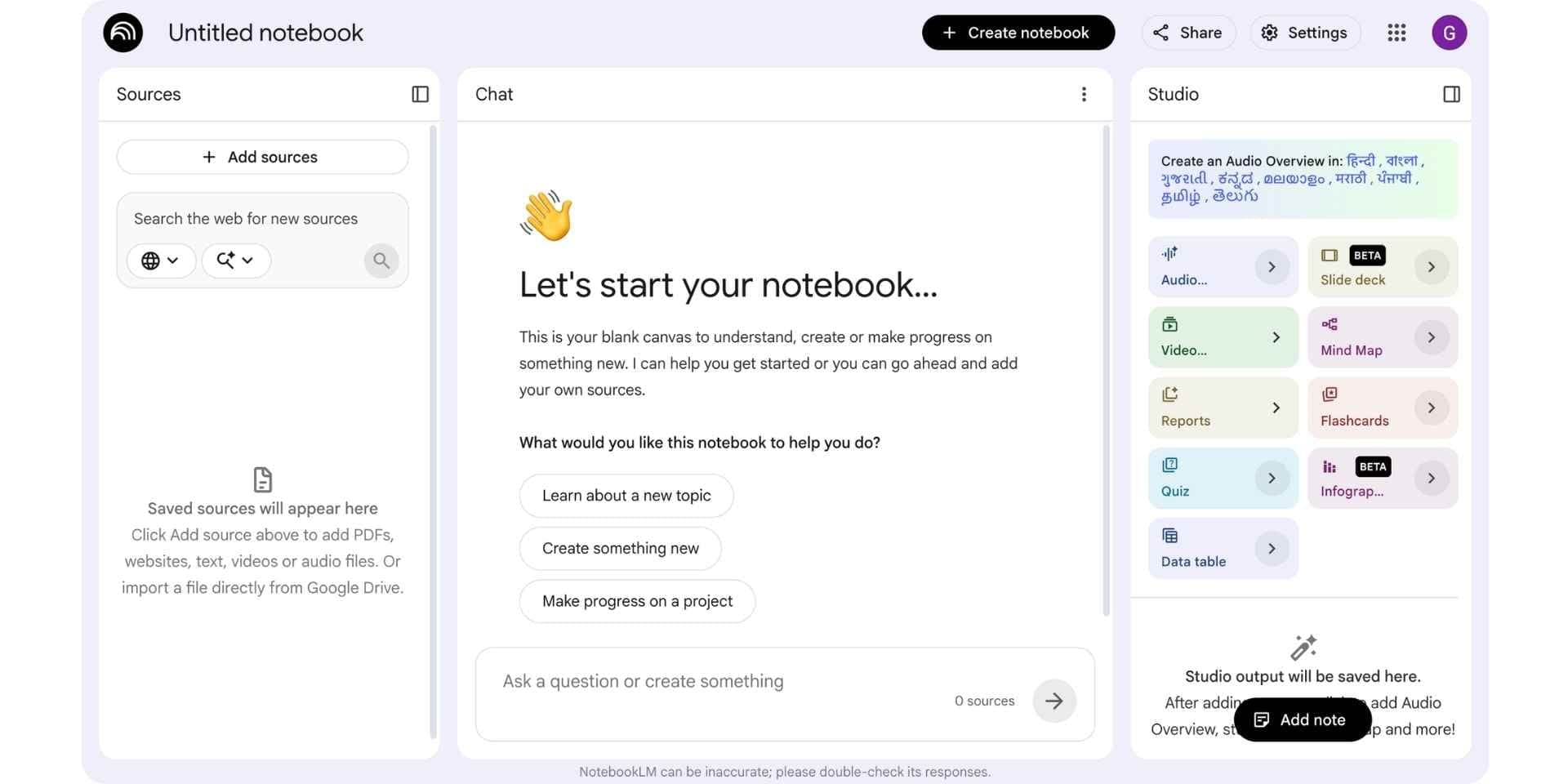
NotebookLM is Google's free AI research assistant for multi-source synthesis. Upload PDFs, links, Google Docs, or text, and NotebookLM treats them as a single knowledge base you can chat with, summarize, and analyze. It does not discover papers for you, but if you already have a curated reading list, it's one of the strongest free synthesis tools available in 2026.
Key Features
- Multi-source synthesis: Upload up to 50 sources per notebook (PDFs, links, Google Docs, text) and chat with them as a single corpus.
- AI-generated artifacts: Briefing documents, study guides, FAQs, timelines, and mind maps generated from your uploaded sources.
- Audio Overview: Auto-generates a podcast-style conversation summarizing the sources, useful when you want to "listen" to a reading list.
- Source-grounded Q&A: Every answer links to the specific passage in the source PDF, so you can verify any claim.
- Completely free: No credit card, no paid tier. Google's infrastructure handles large PDFs reliably.
Pros
- Completely free, no usage limits at consumer level
- Audio Overview is genuinely useful for commuting or hands-free review
- Multi-source synthesis is strong — works across many papers at once
- Source-grounded responses prevent hallucinations on uploaded content
- Google-grade reliability and infrastructure
Cons
- Does not discover papers — you must upload sources yourself
- No reference manager, no citation export in academic format
- Cannot draft a literature review in publishable academic structure
- Privacy considerations for sensitive research require review
Best For
Research teams and lab scientists who already have a curated paper library and want a free synthesis layer on top of their existing reading.
NotebookLM Pricing (2026)
Completely free. No paid tier.
Verdict
NotebookLM is the strongest free option for multi-paper synthesis in 2026. It does the synthesis side well, but it cannot discover papers, manage citations in academic format, or draft a publishable literature review. Paperguide is the best NotebookLM alternative in 2026 because it covers the parts NotebookLM misses (paper discovery across 200M+ papers, structured screening, citation-grounded drafting, and a reference manager) inside one workspace.
6. Scite
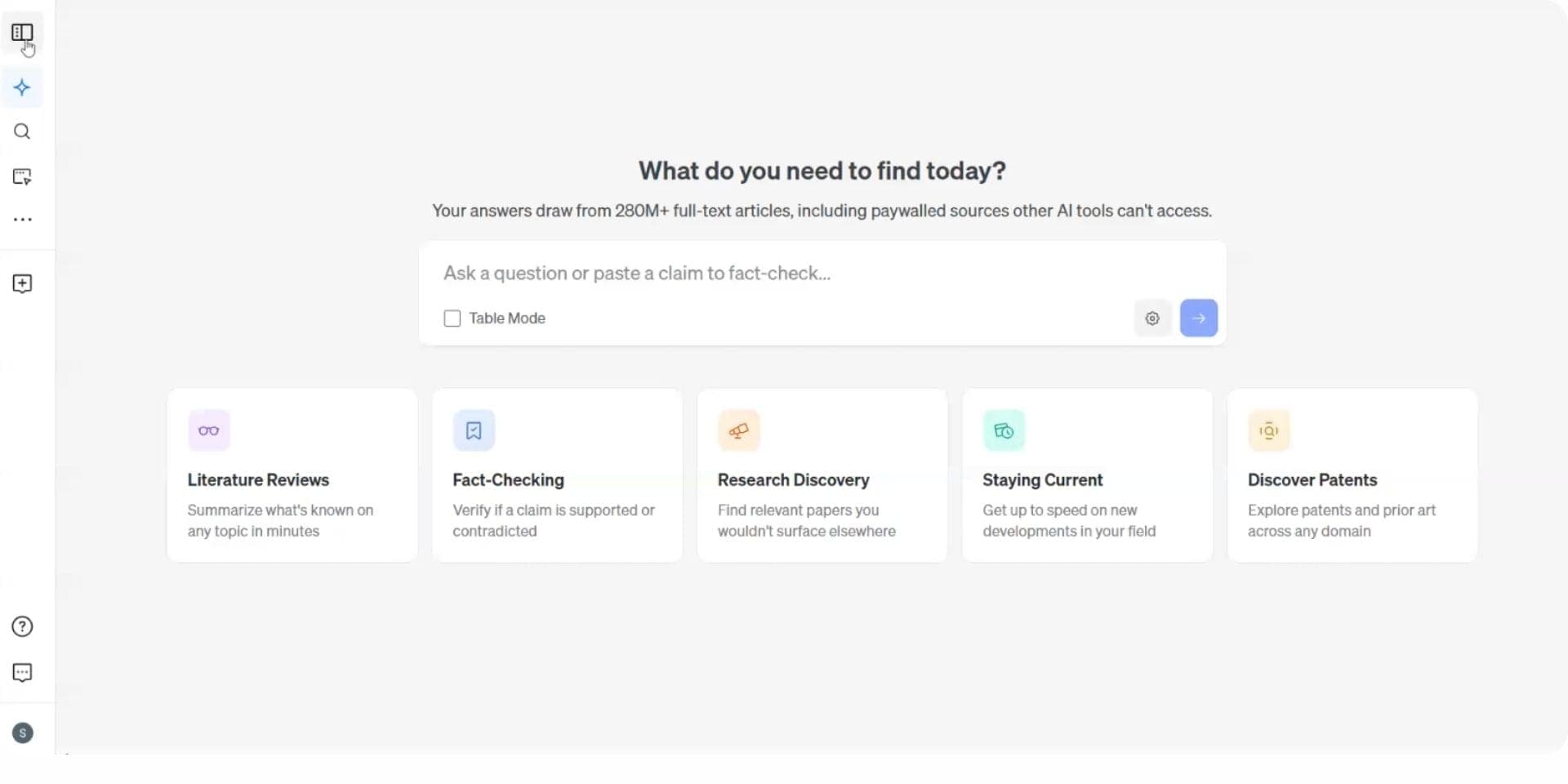
Scite is an AI-powered research tool focused on evaluating scientific literature through the lens of how papers cite each other. Its signature feature, Smart Citations, goes beyond counting citations to revealing how a paper is cited (supportively, contrastingly, or just mentioned). For researchers writing related-work sections, systematic reviews, or grant proposals, Scite is one of the strongest AI tools for citation context and credibility analysis.
Key Features
- Smart Citations Dashboard: Shows which papers cite a study and whether those citations support, contradict, or mention the claims. Helps assess credibility quickly.
- Scite Assistant (Q&A): Ask research questions and receive evidence-backed answers with direct quotes and source links, often structured as bullet points or comparison tables.
- MCP credits: Pro tier includes 2,500 MCP credits per month for AI-driven data extraction and analysis across additional datasets.
- Citation context discovery: Explore the scholarly conversation around any claim, surfacing relevant papers traditional keyword search misses.
- Reference Check (medical): Verify citations in medical manuscripts against indexed publications, catching fabricated or inaccurate references.
Pros
- Smart Citations show support versus contrast in citation context
- Strong Q&A assistant with research-backed answers
- MCP credits enable extended data analysis workflows
- Excellent for systematic review and grant background sections
- Integrates with reference managers and writing tools
Cons
- No free tier — only a 7-day trial (entry price $20/month)
- No AI writing or document drafting features
- Primarily evaluative rather than generative
Best For
Researchers writing systematic reviews, related-work sections, or grant proposals where citation context and evidence credibility matter. Especially valuable for academic researchers, clinicians, and analysts tracing the evidence trail behind specific claims.
Scite Pricing (2026)
| Plan | Price | What's Included |
|---|---|---|
| Basic | $20/month | Scite Assistant, full-text search, custom dashboards, 1,000-paper collections, paper citation reports, citation alerts, 250 MCP credits/month |
| Pro | $50/month | All Basic features + 2,500 MCP credits/month, 10,000-paper collections, patents in search and Assistant, MCP access to additional datasets |
| Team | $50/user/month (billed monthly) | All Pro features + centralized billing up to 20 users, user analytics, shared collections and alerts |
| Enterprise | Custom | Unlimited users, tiered volume pricing, API access, additional datasets, SAML/SSO, dedicated success manager |
7-day free trial available for new users. Student and academic discounts via institutional referral.
Verdict
Scite is especially useful for researchers performing rigorous literature evaluations. By revealing how each study is perceived in the broader scholarly conversation, it helps you identify well-supported versus contested results. But Scite is purely evaluative, it does not draft, synthesize, or manage references. For researchers who also need integrated drafting, structured synthesis, and reference management alongside citation analysis, Paperguide is the best Scite alternative in 2026 because it pairs citation-grounded synthesis with the full end-to-end research workflow.
7. Consensus
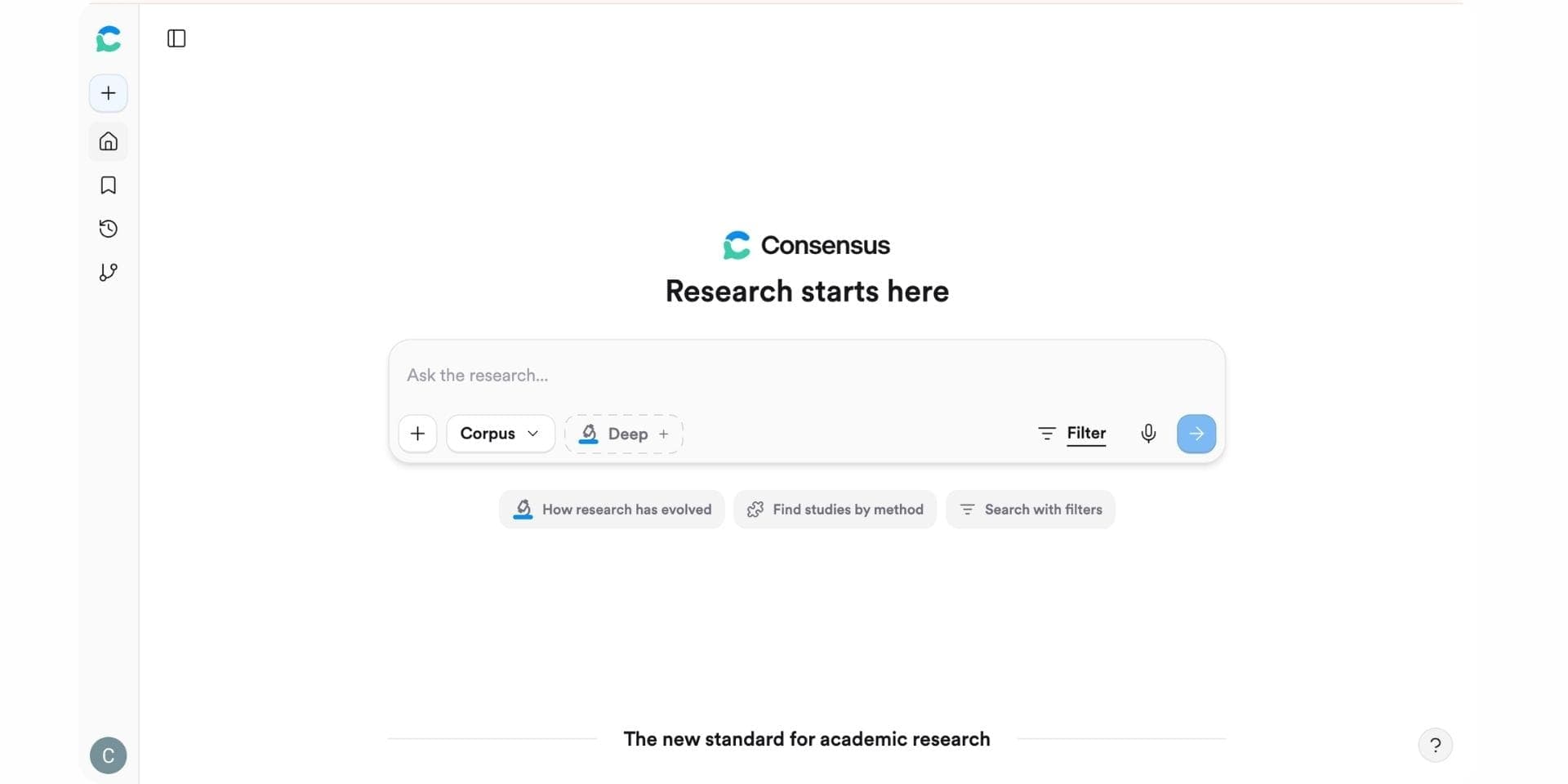
Consensus is an AI-powered research engine that answers questions using evidence drawn directly from scientific papers. Designed to surface verified, peer-reviewed knowledge in seconds, it is one of the fastest tools for getting a research-backed answer to a specific question without manually reading a dozen papers. Drawing from over 200 million papers, Consensus synthesizes findings across the literature and shows the level of scientific agreement on a topic.
Key Features
- Pro Analyses: Ask a research question and get a synthesized, evidence-backed answer from published studies, with citations attached.
- Deep Reviews: More comprehensive literature reviews across many studies for researchers needing deeper synthesis than a single Q&A.
- Ask Paper (Chat with PDF): Upload a paper and chat with it directly, useful for clarifying methodology or extracting key findings.
- Snapshots: Visual summaries and sentence-level extractions from papers for quick literature review work.
- Quality Indicators: Each paper rated for research quality based on source credibility, citations, and methodology.
Pros
- Accurate, citation-backed answers across 200M+ research papers
- Fast Q&A interface for exploratory research and hypothesis framing
- Excellent for surfacing scientific consensus or contradictions
- Includes paper quality indicators for source evaluation
- Affordable Pro pricing at $10/month annually
Cons
- No AI writing or paraphrasing support
- No in-document editing or citation formatting tools
- Free tier has caps on Pro Analyses, Snapshots, and Deep Reviews
- Not designed for full literature review drafting
Best For
Research teams, educators, and PhD researchers who need trusted academic information fast. Particularly useful for hypothesis framing, scientific consensus checks, and grounding arguments in peer-reviewed research without manually screening many papers.
Consensus Pricing (2026)
| Plan | Price | What's Included |
|---|---|---|
| Free | $0/month | Basic paper search, 15 Pro messages/month, 3 Deep reviews/month |
| Pro | $10/month (billed annually as $120) | Unlimited Pro messages, 15 Deep reviews/month, unlimited access to every research tool, search, analysis, citation graph |
| Deep | $45/month (billed annually as $540) | Everything in Pro, unlimited Pro messages, 200 Deep reviews/month, unlimited research tools |
Verdict
Consensus excels at delivering fast, reliable answers about what the scientific literature says on a specific topic. The Pro tier at $10/month annually is one of the most affordable entry points among AI research tools, and the new Deep tier at $45/month adds substantial Deep Review capacity for researchers running frequent literature reviews. But Consensus is purely a research Q&A tool — it does not write, manage references, or run structured literature reviews. For broader workflows that combine evidence Q&A with drafting, structured screening, and reference management, Paperguide is the best Consensus alternative in 2026.
8. Semantic Scholar
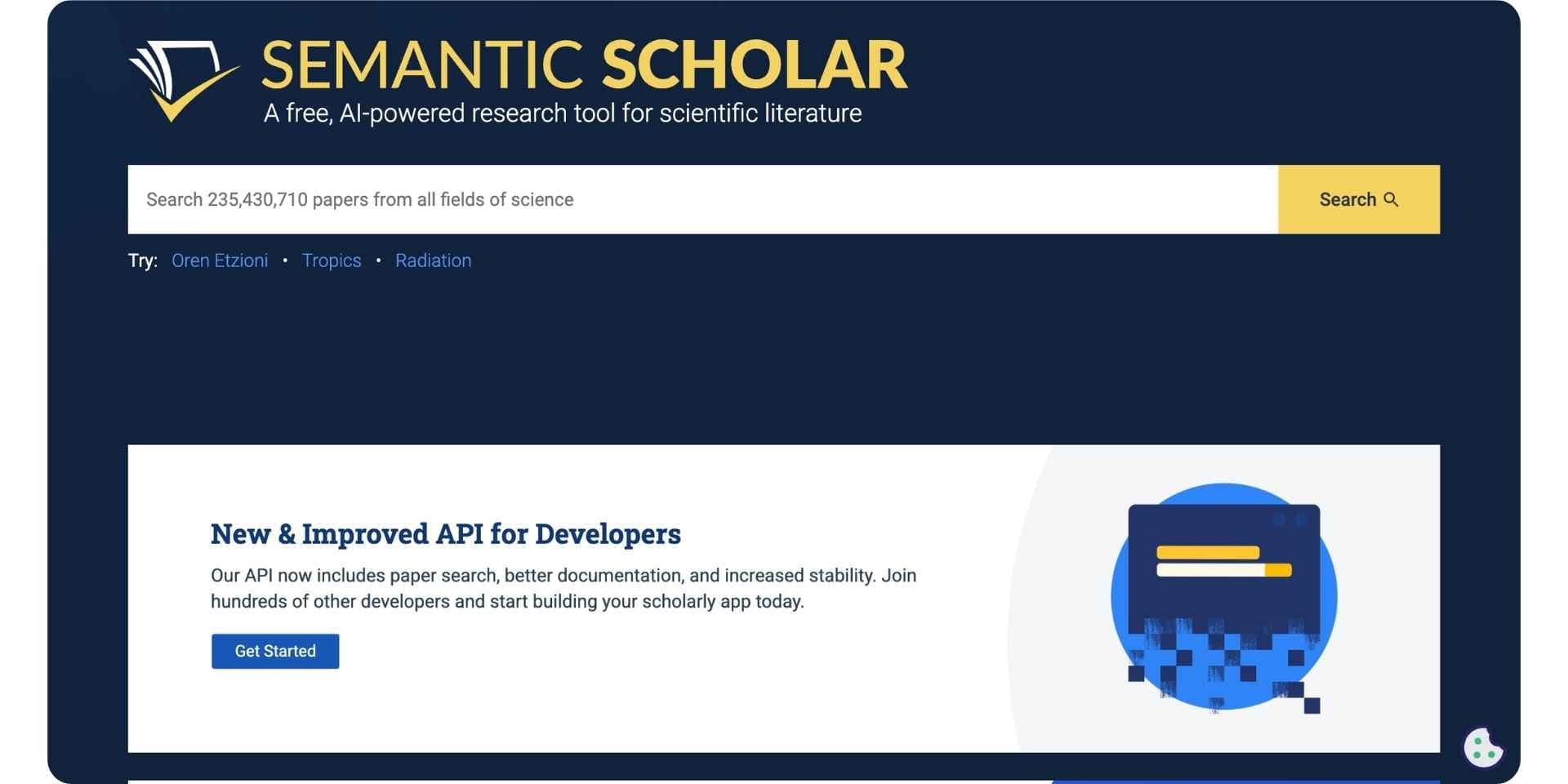
Semantic Scholar is a free AI-powered academic search engine developed by the Allen Institute for AI (AI2). It is built to help researchers discover relevant scientific papers by understanding the meaning behind queries, not just keyword matches. With over 200 million papers indexed across PubMed, arXiv, and major publishers, Semantic Scholar is the gold-standard free option for AI-driven literature discovery in 2026 and one of the most widely used free AI for scientific research platforms in academia.
Key Features
- AI-Powered Search: Semantic search across 200M+ peer-reviewed papers using natural language queries, optimized for research questions rather than keyword lookup.
- TL;DR Summaries: One-sentence summaries highlighting each paper's key findings, automatically generated for fast scanning.
- Citation Graphs: Visual citation networks showing how papers influence each other and how research themes evolve.
- Research Feeds: Personalized paper recommendations based on saved papers and research interests.
- Semantic Reader: In-document AI assistance that defines technical terms and highlights key passages while reading.
- Author Profiles: Networks, affiliations, and publication history for every author, useful for collaboration mapping.
Pros
- Completely free, no paid tier, no usage limits
- Most comprehensive free index of peer-reviewed papers in 2026
- AI TL;DR summaries dramatically speed up paper screening
- Developed by Allen Institute for AI, a nonprofit research lab (no commercial pressure on indexing decisions)
- Clean interface and fast performance
Cons
- No structured literature review automation or evidence synthesis
- No built-in reference manager or citation export beyond standard formats
- No AI writing or drafting features
- Personalization can be slow to develop without active feed engagement
Best For
Lab scientists, PhD researchers, and research teams looking for free AI for scientific research at the discovery phase. Especially strong for early-stage literature exploration, finding seminal papers in unfamiliar fields, and tracking emerging research themes.
Semantic Scholar Pricing (2026)
Completely free with no paid tier or usage limits.
Verdict
Semantic Scholar is the strongest free AI-powered academic search engine in 2026. Its TL;DR summaries, citation graphs, and 200M+ paper coverage make it the default discovery layer for many research workflows. But Semantic Scholar is purely a search and discovery tool — it does not run literature reviews, extract structured data, or draft research papers. For research teams who want to take discoveries through to a complete review, reference management, and manuscript drafting in one workspace, Paperguide is the strongest complement to Semantic Scholar in 2026.
9. ResearchRabbit
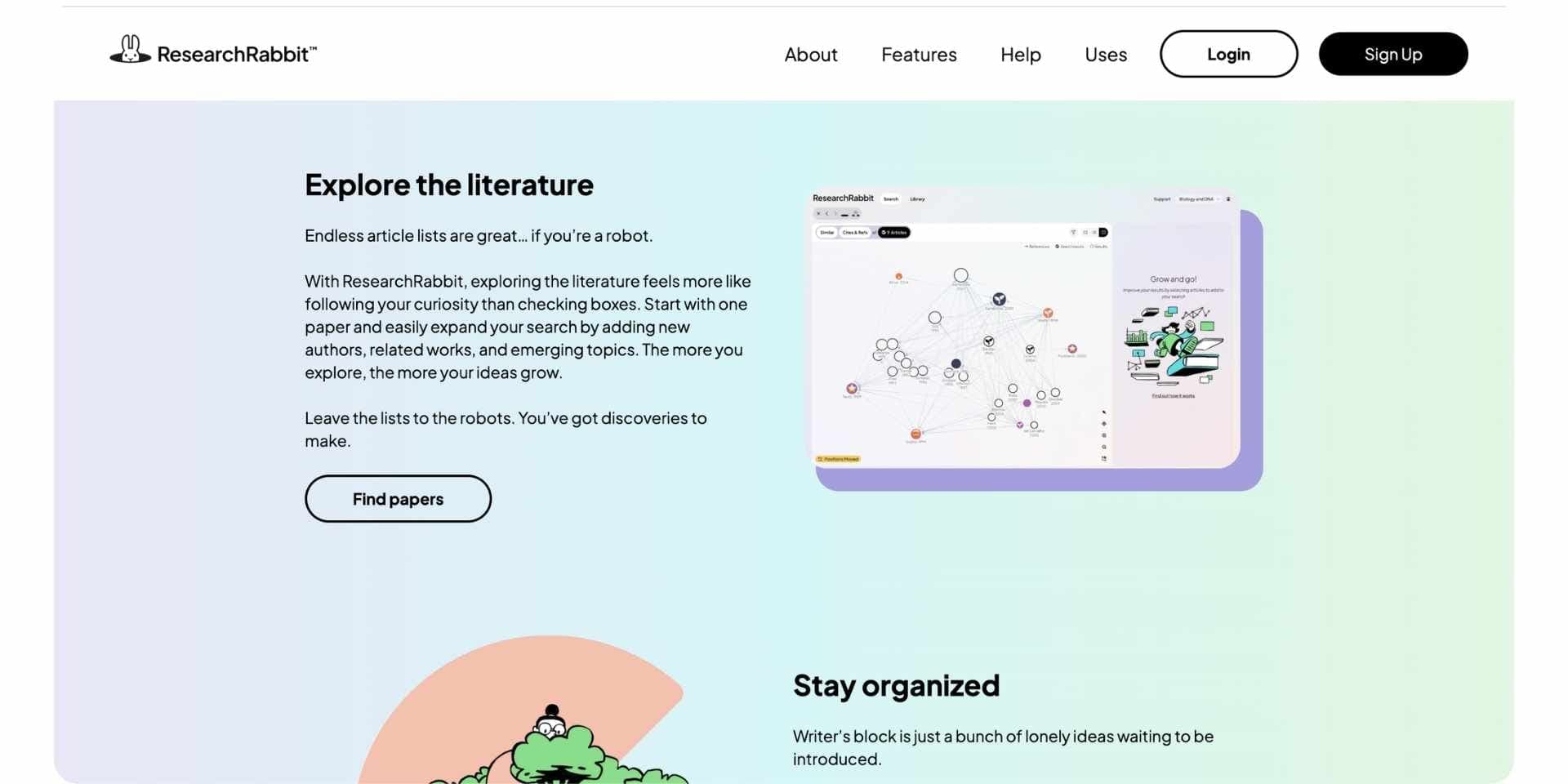
ResearchRabbit is a free AI tool for visual literature discovery and citation mapping. Trusted by over 1 million researchers across institutions including Harvard, Stanford, Oxford, Cambridge, MIT, and NIH, ResearchRabbit indexes 270M+ academic papers and lets researchers explore the literature through interactive citation graphs rather than flat lists. Add a seed paper, and ResearchRabbit maps the related works, citation chains, author networks, and research trends connected to it.
Key Features
- Visual Network Mapping: Interactive citation graphs that show how papers cluster, cite each other, and evolve as research themes.
- Citation Chaining: Navigate forward and backward citations to trace how ideas develop over time.
- Author Networks: Identify collaborators and influential researchers in a field through co-authorship maps.
- Personalized Recommendations: AI suggests new papers based on your saved collections and reading patterns.
- Timeline View: Visualize how a research topic has evolved chronologically.
- Zotero Integration: One-click sync with Zotero for seamless reference management.
- Collaboration: Share research collections with team members for joint literature reviews.
Pros
- Completely free, no usage limits or paid tier
- 270M+ paper coverage across major scientific databases
- Visual interface is uniquely strong for spotting non-obvious research connections
- Excellent for entering unfamiliar fields and mapping research landscapes
- Used by over 1 million researchers globally, including top institutions
- Smooth Zotero integration for downstream citation management
Cons
- Does not summarize papers, extract data, or draft content
- Visualizations can get crowded on broad topics with many papers
- Best paired with another tool for synthesis and writing
Best For
Lab scientists, PhD researchers, and research teams entering new academic fields, conducting early-stage literature reviews, or running visual citation mapping for systematic reviews. One of the strongest free AI for scientific research tools when the goal is discovery and exploration.
ResearchRabbit Pricing (2026)
Completely free with no paid tier or usage limits.
Verdict
ResearchRabbit is the strongest free AI tool for visual literature discovery and citation network mapping in 2026. Its graph-based interface helps researchers uncover hidden connections between studies, making it ideal for building new research projects and entering unfamiliar fields. ResearchRabbit complements rather than competes with synthesis platforms: pair it with Paperguide Literature Review AI to take the papers it surfaces through to a structured, citation-grounded review document.
10. Scholarcy
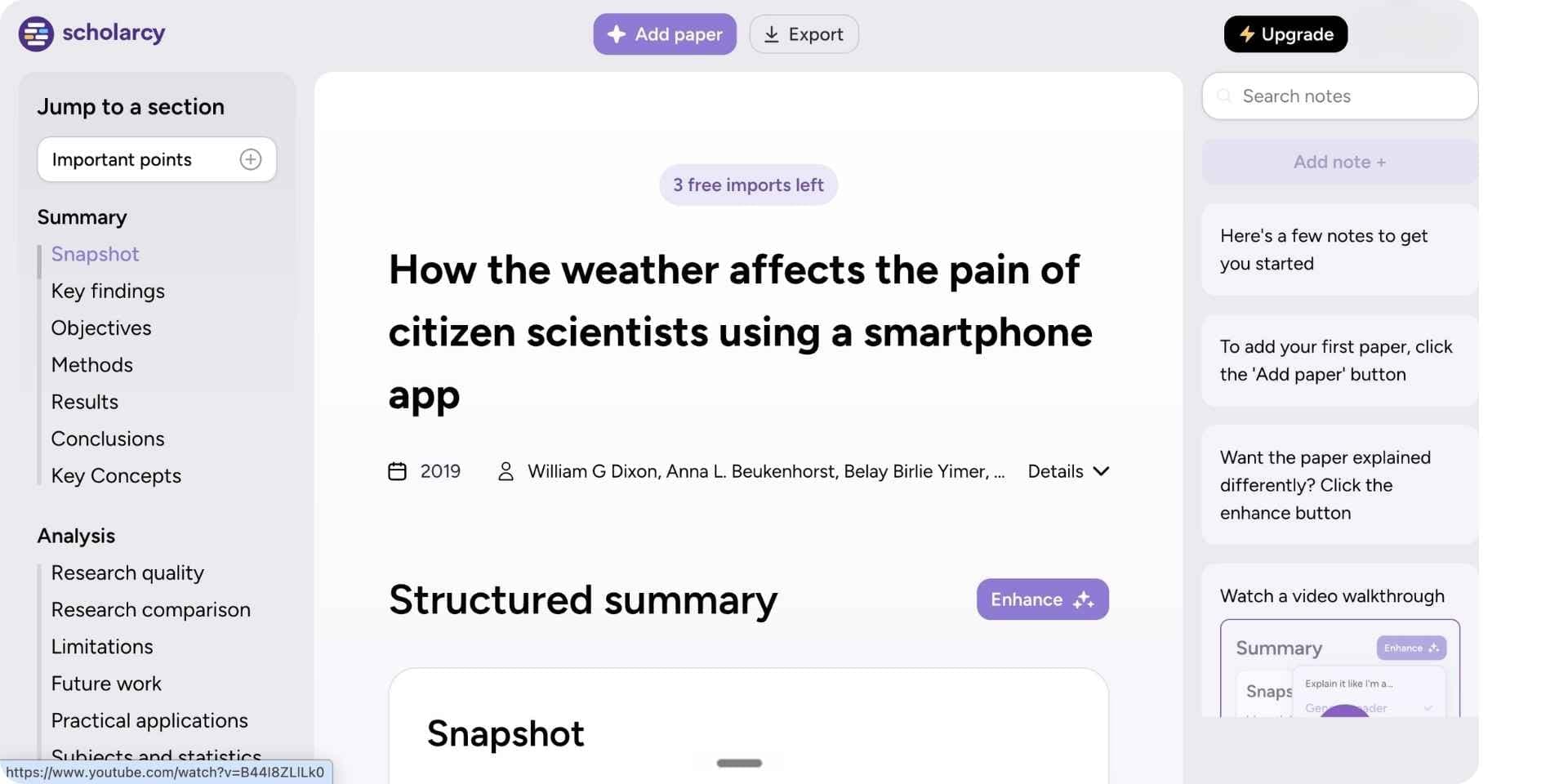
Scholarcy is an AI-powered paper summarizer that converts long academic texts into structured summary flashcards. Upload a PDF, article, or textbook chapter, and Scholarcy returns a flashcard-style summary surfacing key claims, methodology, findings, references, and tables in minutes. Used widely by researchers handling large reading lists, Scholarcy is one of the most practical AI for scientific research tools for the early-stage screening phase of a literature review.
Key Features
- Automated summaries: Converts full research papers into structured flashcards covering key findings, methodology, claims, and references.
- Robo-highlighter: AI automatically identifies and flags each paper's main contributions and significant statements.
- Literature Matrix: Build a comparative matrix across multiple papers for early-stage systematic review screening.
- Table and figure extraction: Pulls visual data, tables, and reference lists from PDFs for downstream analysis.
- Browser extension: Summarize papers on the fly while browsing publisher sites and academic databases.
- Note-taking and organization: Highlight, take notes, and organize flashcards into project collections.
- One-click bibliographies: Export reference lists in academic citation formats.
Pros
- Dramatically reduces time spent screening dense or technical papers
- Browser extension makes summarization a one-click action across publisher sites
- Affordable pricing for individual researchers
- Useful Literature Matrix feature for early-stage systematic review screening
Cons
- Free tier limited to 1 article summary per day
- Summarization is fast but less nuanced than full-platform AI tools
- No literature discovery, structured systematic review automation, or citation-grounded writing
Best For
Researchers handling large reading lists, rapid literature reviews, scoping studies, or early-stage screening where fast comprehension across many papers matters more than deep synthesis.
Scholarcy Pricing (2026)
| Plan | Price | What's Included |
|---|---|---|
| Free Article Summarizer | $0 | 1 summary per day, file format imports, flashcard export (one at a time) |
| Monthly | $9.99/month | Unlimited summarization, enhanced summaries, flashcard collections, notes, Literature Matrix, one-click bibliographies, export up to 100 flashcards at once |
| Yearly | $90/year (saves 25%) | All Plus features at annual discount |
7-day free trial available on the Monthly plan.
Verdict
Scholarcy is one of the best AI for scientific research tools for fast paper summarization in 2026. The flashcard format is a strong fit for the screening phase of a literature review, especially when you need to triage many papers quickly. However, it is purely a summarization tool: it does not discover papers, run structured systematic reviews, or generate citation-grounded research drafts. For researchers who also need discovery, synthesis, and drafting alongside summarization, Paperguide is the strongest Scholarcy alternative in 2026 because its AI Research Paper Summarizer, Literature Review AI, and AI Paper Writer cover the entire research workflow in a single workspace. It also stands out as the best AI research paper summarizer in 2026.
11. Julius AI
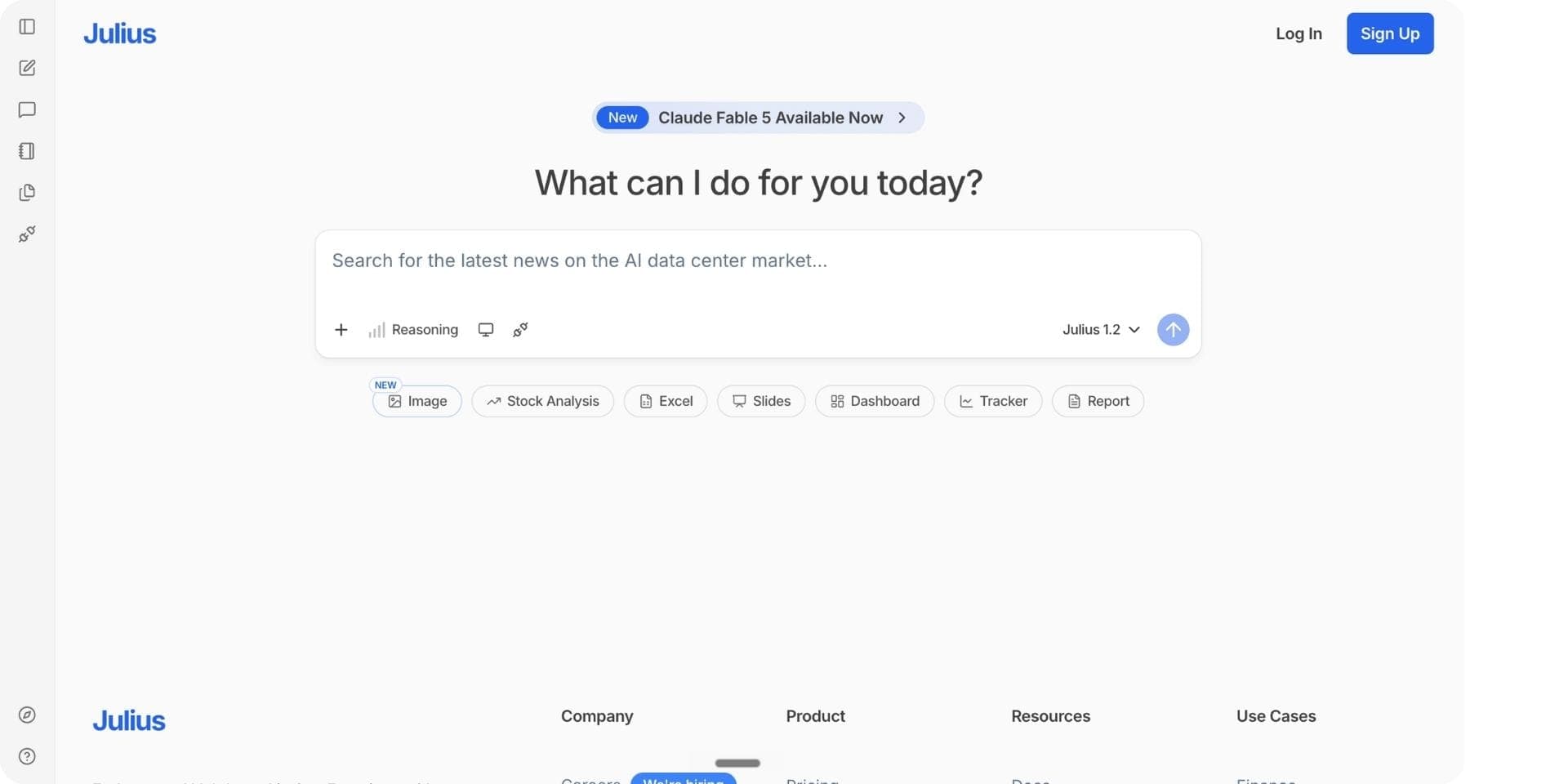
Julius AI is an AI-powered data analysis platform that lets researchers explore datasets, run statistical analyses, and generate visualizations using natural language. Trusted by leading professionals at organizations including Nvidia, Zapier, and PandaDoc, Julius AI brings frontier AI models (GPT 5.5, Claude Sonnet 4.6, Claude Opus 4.7) to scientific data workflows, removing the need for complex coding while keeping rigorous statistical reasoning available. It is especially useful for researchers in behavioral science, public health, economics, biostatistics, and other quantitative scientific research fields.
Key Features
- AI data agents: Natural-language interface for exploring datasets, running statistical tests, and generating visualizations.
- Frontier AI model access: Built on the latest GPT 5.5, Claude Sonnet 4.6, and Claude Opus 4.7 models for advanced reasoning.
- File format support: Analyze CSV, XLSX, SAV (SPSS), and other research data file formats.
- Chart builder: Creates publication-ready visualizations with editable layouts and color schemes.
- Data connectors: Connects to Google Drive, OneDrive, SharePoint, Snowflake, BigQuery, and PostgreSQL.
- Notebooks: Document findings, code, and research notes inside a single notebook environment.
- Export formats: Slides, HTML artifacts, charts, and images for downstream presentation work.
- Compliance: SOC 2 Type II, GDPR, and CCPA compliant.
Pros
- No-code natural-language data analysis for researchers without programming backgrounds
- Access to frontier AI models (GPT 5.5, Claude Opus 4.7) for advanced statistical reasoning
- Supports the file formats researchers actually use (SPSS, Excel, CSV, plus database connectors)
- Strong free tier for individual exploratory work
- SOC 2 Type II compliance suitable for sensitive research data
Cons
- Not designed for literature discovery, summarization, or citation work
- Focused on quantitative data analysis rather than qualitative or text-heavy research
- Most powerful features (frontier models, expanded context, team collaboration) sit behind paid plans
Best For
Researchers handling quantitative datasets in fields like biostatistics, behavioral science, public health, economics, and engineering. Ideal for fast exploratory analysis, publication-ready visualizations, and statistical workflows that previously required Python or R.
Julius AI Pricing (2026)
| Plan | Price | What's Included |
|---|---|---|
| Free | $0/month | Basic access, Google Drive connector, 2 GB RAM, file storage |
| Plus | $16/month (annual, $20 monthly) | 2,000 credits/month, frontier models (GPT 5.5, Claude Opus 4.7), exports, unlimited charts, 1 seat |
| Pro | $37/month (annual, $45 monthly) | 5,000 credits/month, expanded context window, 32 GB RAM, priority support |
| Max | $166/month (annual, $200 monthly) | 25,000 credits/month, larger context, early-access features |
| Ultra | $416/month (annual, $500 monthly) | 70,000 credits/month, most powerful models, permanent file storage |
| Business | $375/month (annual, $450 monthly) | 60,000 credits/month, 10 seats, database connectors, Custom Agents |
Verdict
Julius AI is one of the strongest AI for data analysis tools available to scientific researchers in 2026, especially for those working with quantitative datasets who want no-code access to frontier AI models. It does not directly compete with the literature-review-focused tools in this list because it lives in a different part of the research workflow (data analysis after data collection). For researchers running data-heavy systematic reviews or meta-analyses, pair Julius AI with Paperguide's Extract Data and Literature Review AI for end-to-end evidence synthesis from literature search through to statistical analysis.
Top Pick for 2026: Best AI for Scientific Research
After comparing all 11 tools, Paperguide stands out as the best AI for scientific research in 2026. It is the only platform in this list that combines AI search, Chat with PDF, citation-backed answers, structured literature review automation, paper writing, and reference management inside a single workspace.
Unlike most tools that specialize in one part of the workflow, Paperguide supports every stage of scientific research, from literature discovery to manuscript drafting and citation export. Its Free plan alone includes Literature Review Report, the Deep Research Report, the AI Paper Writer, and the AI Reference Manager, features that sit behind paid tiers on competing platforms. For research teams who want a single platform that delivers everything Consensus, SciSpace, Elicit, Semantic Scholar, ResearchRabbit, Scholarcy, Julius AI, and a reference manager offer separately, Paperguide is the most complete pick.
How to Choose the Right AI for Scientific Research Tool
The right AI for scientific research tool depends on your current task and workflow stage.
Need to find and discover papers?
Semantic Scholar (free, 200M+ papers) and ResearchRabbit (free, visual citation maps) are the strongest discovery tools. Paperguide handles discovery alongside the rest of the workflow.
Need to find and summarize evidence?
Paperguide handles the full workflow; Elicit and Consensus are strong for fast evidence Q&A.
Want to improve your academic writing?
See the 7 best AI tools for academic writing for a focused comparison. Paperpal is strongest for real-time grammar and tone editing.
Need help reading complex PDFs?
SciSpace Copilot is built for in-document explanations; Paperguide's Chat with PDF works in the same workspace as your literature review.
Need fast summaries of long papers?
Scholarcy generates flashcard-style summaries and a Literature Matrix for early-stage screening. Paperguide AI Research Paper Summarizer covers the same need and connects directly to the rest of your literature review workspace.
Running data analysis on a scientific dataset?
Julius AI is the strongest no-code AI for scientific research and data analysis in 2026, supporting CSV, SPSS, and Excel files with frontier model access.
Running a systematic review or meta-analysis?
Paperguide's Literature Review AI (Standard mode handles up to 50 papers, Extended mode screens up to 200), Paperguide Systematic Review for protocol-driven screening, or Elicit Pro for structured evidence extraction are the strongest options.
Drafting a scientific research paper?
The best AI paper writing tools comparison breaks down which AI Writer fits which use case best.
Evaluating citation context and credibility?
Scite Smart Citations is purpose-built for citation context analysis.
Looking for free AI for scientific research?
Semantic Scholar + ResearchRabbit + NotebookLM cover discovery, mapping, and synthesis at zero cost. Paperguide Free + Consensus Free + Scholarcy Free + Julius AI Free add structured literature review, Q&A, summarization, and data analysis on top.
But if you want a single AI for scientific research tool that handles every part of the workflow, Paperguide is the most comprehensive choice in 2026.
Best AI for Scientific Research by Use Case (2026)
| Use Case | Best Tool | Why |
|---|---|---|
| Best overall AI for scientific research | Paperguide | End-to-end workflow in one workspace |
| Best for systematic reviews | Paperguide + Elicit Pro | Two-mode review (Standard handles 50; Extended screens 200, uses top 50), structured extraction |
| Best for citation context analysis | Scite | Smart Citations shows support vs. contrast |
| Best for research Q&A | Consensus | Fast evidence-backed answers across 200M papers |
| Best for academic writing polish | Paperpal | Real-time grammar, tone, citation insertion |
| Best for reading complex PDFs | SciSpace Copilot | In-document explanations of equations and methodology |
| Best free multi-source synthesis | NotebookLM | Free, multi-PDF synthesis with audio overviews |
| Best free academic search engine | Semantic Scholar | 200M+ papers, AI TL;DRs, citation graphs, completely free |
| Best free visual literature discovery | ResearchRabbit | 270M+ papers, citation maps, author networks, completely free |
| Best AI paper summarizer (flashcards) | Scholarcy | Flashcard-style summaries with Literature Matrix for screening |
| Best AI for data analysis in research | Julius AI | No-code data analysis with frontier models, SPSS/CSV/Excel support |
| Best AI literature review tool | Paperguide Literature Review AI | Standard + Extended modes with auditable outputs (screening table, extracted data table, structured review) |
| Best AI paper writer | Paperguide AI Paper Writer | Citation-grounded drafting with imported references, no fabricated citations |
| Best AI Research Paper Summarizer | Paperguide AI Research Paper Summarizer | Structured summaries with 6 quick prompts (compare claims, find evidence, extract populations, pull metrics) |
Best AI for Scientific Research in 2026 — Final Verdict
| Tool | Best For |
|---|---|
| Paperguide | Best overall AI for scientific research: search, review, write, cite, all in one platform |
| Elicit | Best for structured systematic reviews and evidence extraction |
| Scite | Best for citation context analysis and Smart Citations |
| Consensus | Best for research Q&A and fast evidence-backed answers |
| Paperpal | Excellent for grammar, tone, and academic writing polish |
| SciSpace | Best for reading and understanding complex research PDFs |
| NotebookLM | Best free multi-source synthesis from uploaded papers |
| Semantic Scholar | Best free academic search engine across 200M+ papers |
| ResearchRabbit | Best free visual citation mapping and literature discovery |
| Scholarcy | Best AI paper summarizer with flashcards and Literature Matrix for fast screening |
| Julius AI | Best AI for data analysis in scientific research, no-code with frontier models |
Whether you're focused on data analysis, literature review, or end-to-end research productivity, there's AI for scientific research built for the use case. But Paperguide remains the most comprehensive of the AI for scientific research tools in 2026, the one most likely to replace multiple separate subscriptions with a single workspace.
Final Verdict
AI for scientific research now supports every stage of the scholarly workflow, from searching across hundreds of millions of peer-reviewed papers to polishing the final manuscript draft. After comparing features, pricing, accuracy, and end-to-end coverage in 2026, Paperguide emerges as the best AI research platform for scientific research workflows, with citation-backed synthesis, structured screening, and auditable outputs in a single workspace at a lower cost than most competitors charge for a single module.
The other ten tools each occupy a specific slot in the workflow. Paperpal is the strongest pick for real-time academic writing polish and journal-readiness checks, particularly for non-native English researchers. SciSpace is built for reading complex research PDFs with in-document explanations, while Elicit handles structured evidence extraction across many papers for systematic reviews. NotebookLM offers free multi-source synthesis with audio overviews, Semantic Scholar provides the strongest free academic search across 200M+ peer-reviewed papers, and ResearchRabbit maps citation networks visually across 270M+ papers. Scite specializes in citation context analysis through Smart Citations, Consensus delivers fast evidence-backed answers to research questions, Scholarcy generates flashcard summaries with a Literature Matrix for screening, and Julius AI provides no-code AI for scientific research and data analysis with frontier models.
For research labs, principal investigators, and systematic review teams who want one platform that handles the full workflow without forcing tool-switching, the answer in 2026 is Paperguide.
Frequently Asked Questions (FAQs)
What is the best AI for scientific research in 2026?
Paperguide is the best AI for scientific research in 2026 because it offers literature discovery, structured screening, data extraction, citation management, and AI writing inside a single reasonably priced platform. It is the only major tool that handles every stage of a scientific research workflow end-to-end. The full ranking of 9+ best AI for scientific research tools in 2026 includes Paperguide, Paperpal, SciSpace, Elicit, NotebookLM, Semantic Scholar, ResearchRabbit, Scite, Consensus, Scholarcy, and Julius AI.
What is the best free AI for scientific research in 2026?
Semantic Scholar (200M+ papers, AI TL;DRs, citation graphs), ResearchRabbit (270M+ papers, visual citation mapping), and NotebookLM (multi-source synthesis, audio overviews) are completely free AI for scientific research with no paid tier. Paperguide Free is the most generous free tier with paid features because it includes the Deep Research Report, Literature Review AI, the AI Paper Writer, and the AI Reference Manager at no cost. Scholarcy and Julius AI also provide useful free tiers for fast paper summarization and basic data analysis respectively.
Which is the best AI tool for literature review in 2026?
Paperguide Literature Review AI is widely considered the best AI literature review tool for scientific research. Standard mode handles up to 50 papers, and Extended mode screens up to 200 papers, producing a screening table, extracted data table, and a structured review document with inline citations.
What is the best AI paper writer for scientific research?
The Paperguide AI Paper Writer is the strongest pick because it drafts academic text using your imported references as context, with citations applied automatically and every reference verified against the actual library, eliminating fabricated references.
What is the best AI Research Paper Summarizer?
The Paperguide AI Research Paper Summarizer is the most complete option because summaries integrate directly with the broader research workspace (Literature Review AI, Reference Manager, AI Paper Writer). It supports PDF, DOCX, and TXT uploads and includes 6 built-in quick prompts for comparing claims, finding evidence, extracting study populations, and pulling out numbers and metrics.
How should I use AI research tools effectively?
Start with a clear, specific research question. Choose a tool that matches the task (searching, analyzing, writing, or citation work). Always verify AI outputs by checking the cited studies. For research intended for academic publication, use citation-grounded tools that retrieve from real databases rather than general LLMs that fabricate references.
What are the best AI tools for data analysis in scientific research?
Julius AI is the strongest no-code AI for scientific research and data analysis in 2026, supporting CSV, Excel, and SPSS files with frontier AI models (GPT 5.5, Claude Opus 4.7) and database connectors for Postgres, BigQuery, and Snowflake. Scite is strong for automated citation context analysis and citation table generation. Paperguide stands out for cross-paper data extraction during literature reviews, especially through the Deep Research Report workflow. Elicit Pro is strong for structured evidence extraction across many papers.
What is the best AI tool for summarizing scientific research papers? The Paperguide AI Research Paper Summarizer and Scholarcy are the two strongest AI for scientific research summarization tools in 2026. Paperguide's summarizer connects directly to Literature Review AI, the Reference Manager, and the AI Paper Writer, so summaries integrate into the full research workflow. Scholarcy specializes in fast flashcard-style summaries with a Literature Matrix for early-stage screening across large reading lists.
What are the best AI tools for productivity during tight research deadlines?
Use Paperguide for end-to-end coverage (review + drafting + citations), Elicit for fast evidence synthesis, Paperpal for instant language editing, and SciSpace for quick comprehension of dense methodology sections.
Which AI research papers shaped today's AI research assistants? Foundational work includes BERT (Devlin et al., 2019) for language understanding, GPT-3 (Brown et al., 2020) for generative text, and more recent retrieval-augmented generation research that powers today's citation-backed answers.
Are there free AI for scientific research tools worth trying?
Yes. Three tools are completely free with no paid tier: Semantic Scholar (200M+ paper academic search engine), ResearchRabbit (visual citation mapping, 270M+ papers), and NotebookLM (Google's multi-source synthesis tool). Paperguide Free, Consensus Free, Elicit Basic, SciSpace Basic, Paperpal Free, Scholarcy Free Article Summarizer, and Julius AI Free all offer useful free tiers. Paperguide Free is the most generous tiered offering because it includes the Deep Research Report, Literature Review AI, the AI Paper Writer, and the AI Reference Manager at no cost.
Do journals allow AI research assistants for literature review and writing?
Most major publishers (Nature, Science, Cell Press, JAMA, Springer Nature, Taylor & Francis) now permit AI-assisted literature review and writing, provided you use a citation-grounded tool that retrieves from a verifiable database, disclose AI use in the Methods or Acknowledgments section, and take full responsibility for the accuracy of every reference. Citation-grounded tools like Paperguide and Elicit are preferred over general LLMs that frequently fabricate references.
Researching a topic?
Find papers and get cited answers
Search the literature, find gaps and write with citations.
Start for freeNo credit card required