
How to Find Research Gaps: Step-by-Step Guide
Learn how to find research gaps step by step, test that a gap is real before you claim it, and use AI tools well. Includes gap types, examples and a checklist.

Dr. Shrishti is a public health researcher specializing in healthcare research and evidence evaluation.
Learn how to find research gaps step by step, test that a gap is real before you claim it, and use AI tools well. Includes gap types, examples and a checklist.

PRISMA 2020 checklist with 27 items across seven sections The PRISMA checklist lists the reporting items for a systematic review. The current version, PRISMA 2020, contains 27 items organised into seven sections, and it expands to 42 rows once sub-items are counted [1]. That gap between 27 and 42 is the source of most of the confusion around it. Six of the 27 items split into lettered sub-items, and each sub-item is a separate reporting requirement that a journal can query. This guide gives th

The PRISMA 2020 flow diagram has three phases, not four There is no official "4 steps of PRISMA". The question almost always refers to the phases of the PRISMA flow diagram, and the current version, PRISMA 2020, has three labelled phases: Identification, Screening and Included [1]. The four-phase version you may have seen, which added Eligibility as a separate band, is the PRISMA 2009 diagram. The PRISMA 2020 statement says the 2009 version "should no longer be used." This article explains whe

The PRISMA statement is a reporting guideline that tells authors what to disclose when they publish a systematic review. The current version, PRISMA 2020, is a published paper containing a 27-item checklist, a 12-item abstract checklist and a set of flow diagram templates. It governs how a review is written up, not how it is carried out [1]. That distinction is the single most misunderstood thing about PRISMA, and it is the reason a published editorial exists purely to correct authors who descr

PRISMA is a reporting standard in research: it defines what a finished systematic review should disclose, so readers can judge and reproduce the work. PRISMA stands for Preferred Reporting Items for Systematic Reviews and Meta-Analyses. The current version, PRISMA 2020, is a 27-item checklist across seven sections plus a three-phase flow diagram covering Identification, Screening and Included. It governs how you report a review, not how you conduct one. That second job belongs to the Cochrane H
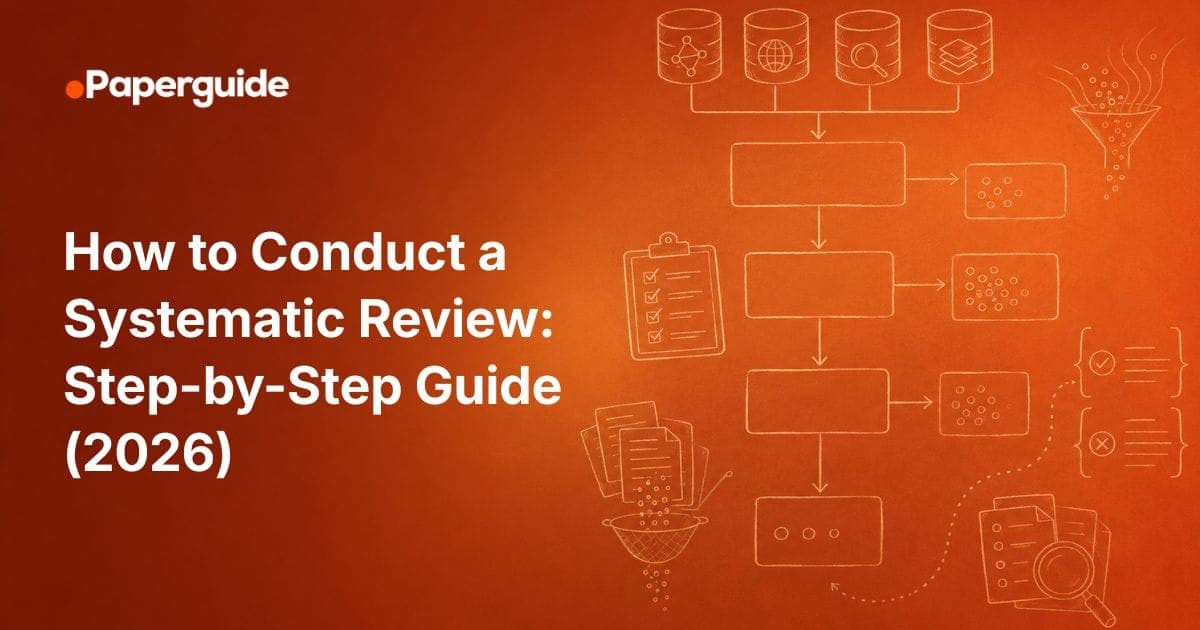
A systematic review follows a pre-registered protocol to identify, screen, and synthesize all available evidence on a specific research question. Unlike a narrative review, which gives the author flexibility to select and interpret sources, a systematic review documents every decision so that another researcher could repeat the same search, apply the same criteria, and arrive at the same set of included studies [1]. That reproducibility is what gives systematic reviews their authority. They are
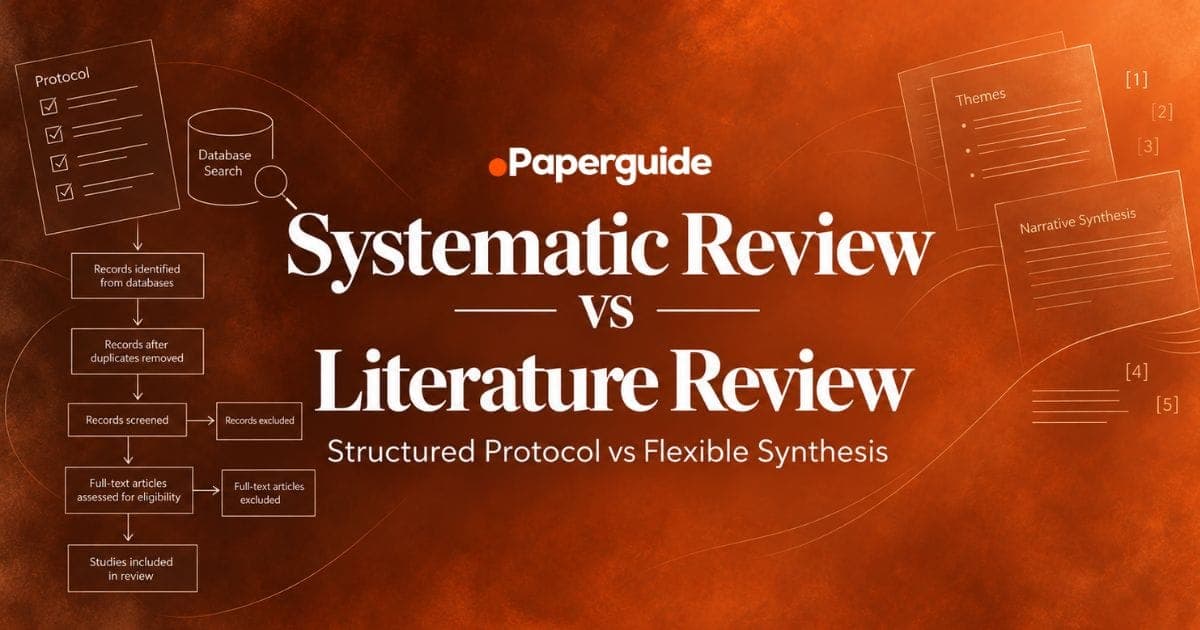
The terms "systematic review" and "literature review" are often used interchangeably in academic conversation, but they describe two different research methodologies with different purposes, different levels of rigor, and different outputs. Confusing the two can lead to a manuscript that promises systematic rigor but delivers a narrative overview, or a literature review that spends months following a protocol when a focused synthesis would have sufficed. A systematic review follows a pre-regist
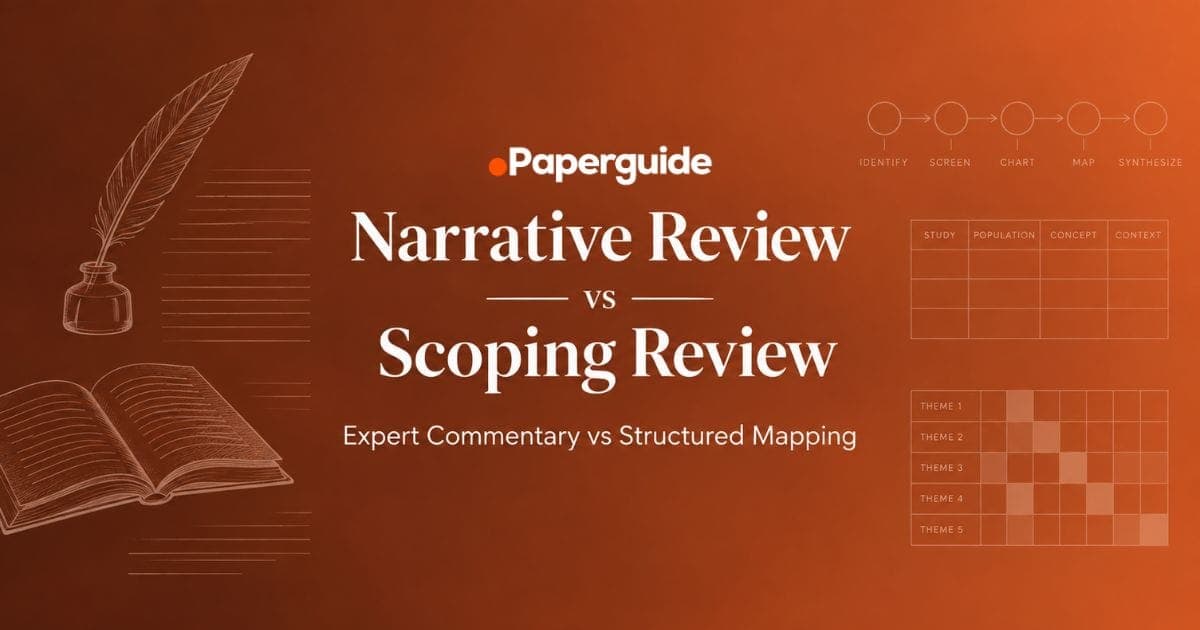
A narrative review provides an expert-driven interpretation of existing research, selecting and synthesizing sources based on the author's knowledge to tell a coherent story about a topic. A scoping review maps the breadth of available evidence using a structured, documented methodology, charting what research exists without providing interpretive synthesis or quality assessment. Both synthesize existing research, but they serve different purposes, follow different methods, and produce different
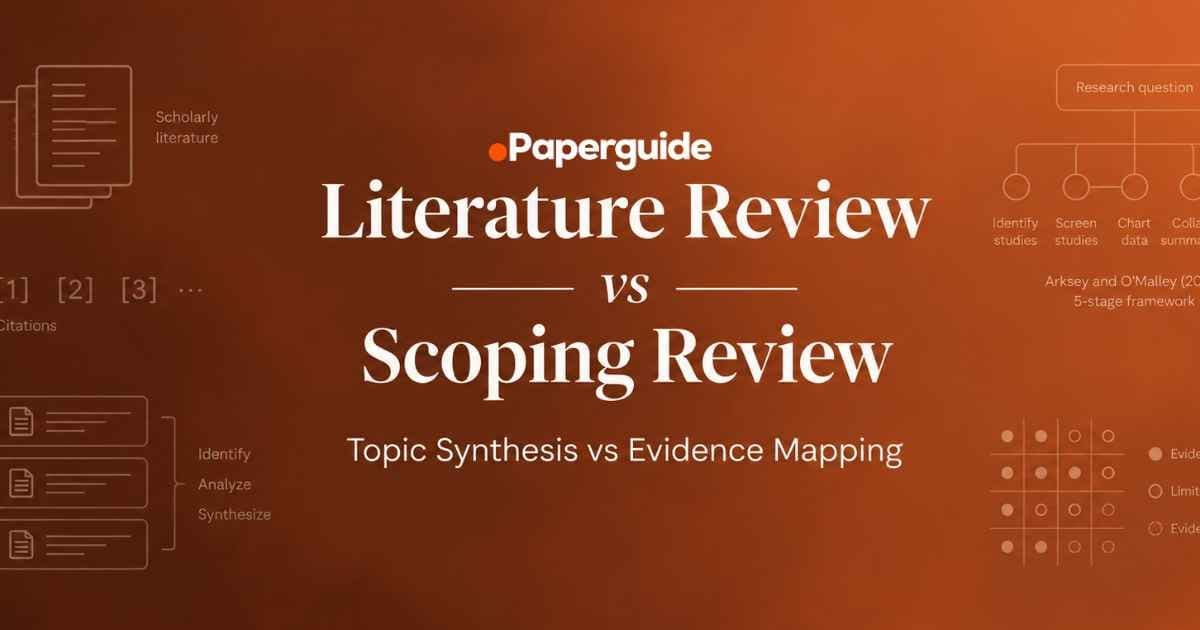
A literature review surveys and synthesizes existing research to answer a question or establish the state of knowledge on a topic. A scoping review maps the breadth and nature of the available evidence on a topic, identifying key concepts, evidence types, and gaps without narrowing to a specific clinical or research question. Both are forms of evidence synthesis, but they serve different research purposes, follow different conventions, and produce different types of outputs. This guide explains
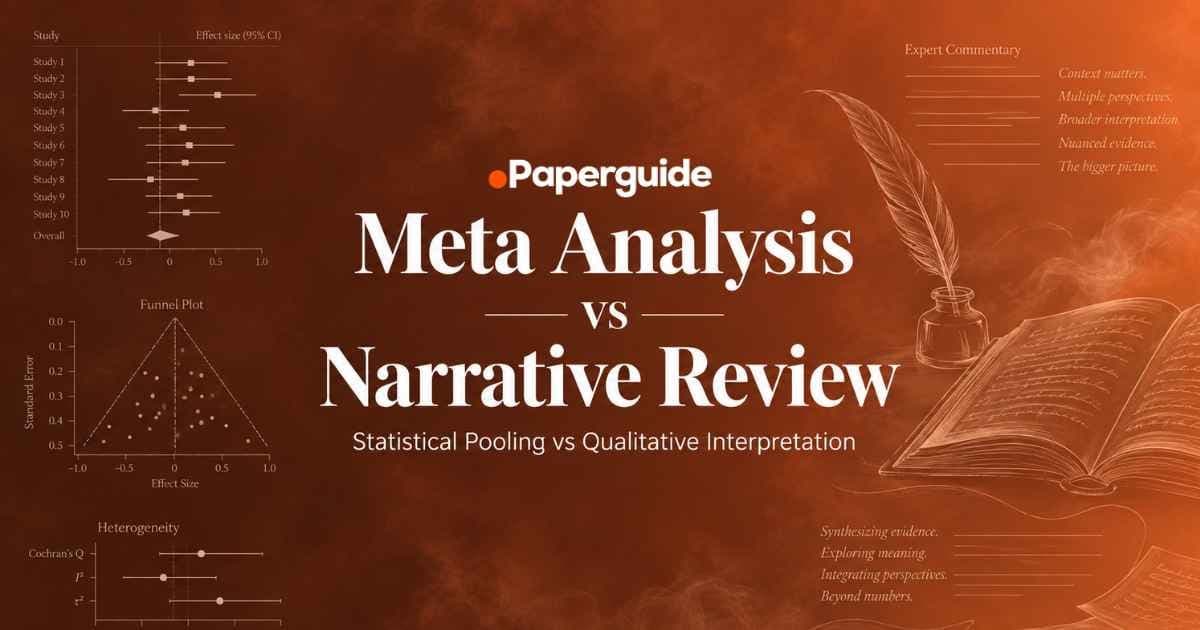
A meta analysis applies statistical methods to pool quantitative results from multiple studies into a single summary effect estimate. A narrative review provides an expert-driven qualitative overview of a topic, selecting and interpreting studies without statistical pooling. These two approaches sit at nearly opposite ends of the evidence-synthesis spectrum: one produces a number, the other tells a story. This guide explains the differences across methodology, data requirements, synthesis appro