Independent vs Dependent Variables: Definitions, Differences & Examples

Variables are the building blocks of any research study. They are the measurable elements that researchers observe, manipulate, or control to test relationships and answer research questions. Among all variable types, the distinction between independent and dependent variables is the most fundamental. Getting this wrong does not just weaken a study. It can invalidate the entire design. When the Open Science Collaboration attempted to replicate 100 published psychology studies in 2015, only 36% produced results consistent with the originals, with poor variable operationalization cited as a contributing factor across multiple failed replications. [1]
In 2026, as research methods grow more complex and interdisciplinary studies become the norm, clearly identifying and defining variables has never been more critical. A study where the independent variable is confused with the dependent variable, or where confounding variables are left uncontrolled, cannot produce trustworthy results. Yet these mistakes remain surprisingly common, particularly among early-career researchers writing their first thesis or dissertation.
This guide explains what independent and dependent variables are, how they differ, how to identify them in your own study, and how other variable types (confounding, control, mediating, moderating) fit into the picture. It includes examples across disciplines, a step-by-step identification process, common mistakes, a quality checklist, and answers to the most frequently asked questions.
Key Takeaways
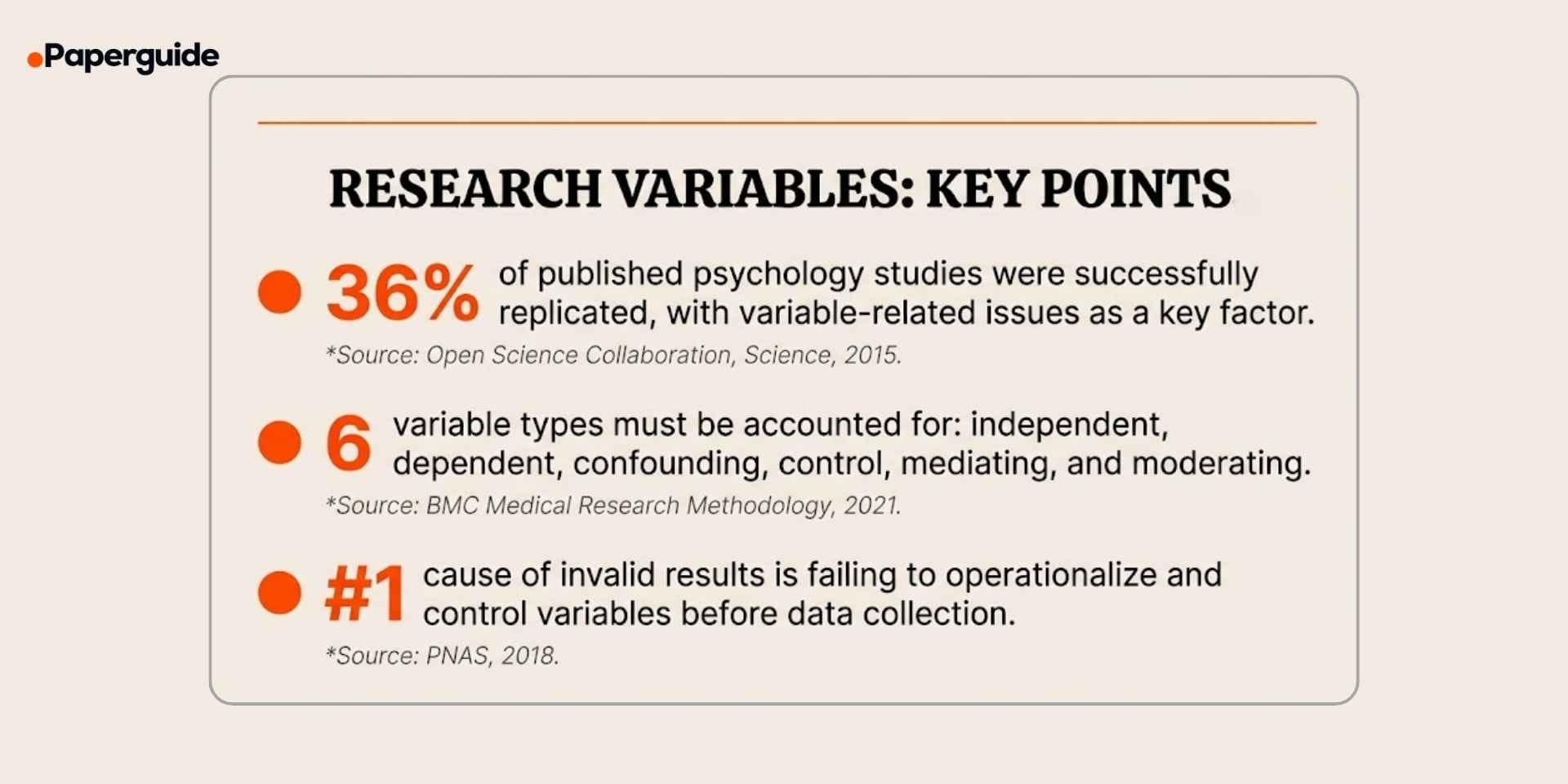
- Independent variables are what the researcher changes or manipulates. Dependent variables are what the researcher measures as an outcome.
- The independent variable is the presumed cause. The dependent variable is the presumed effect.
- Only 36% of 100 published psychology studies were successfully replicated, with variable-related issues contributing to the replication crisis. [1]
- Confounding, control, mediating, and moderating variables must also be accounted for in robust research designs.
- Every research study should clearly define, operationalize, and justify each variable before data collection begins.
- Use the checklist and template in this guide to verify your variable identification before finalizing your research design.
What Are Variables in Research?
A variable is any characteristic, property, or condition that can take on different values. In research, variables are the elements that are measured, controlled, or manipulated to test a hypothesis or answer a research question.
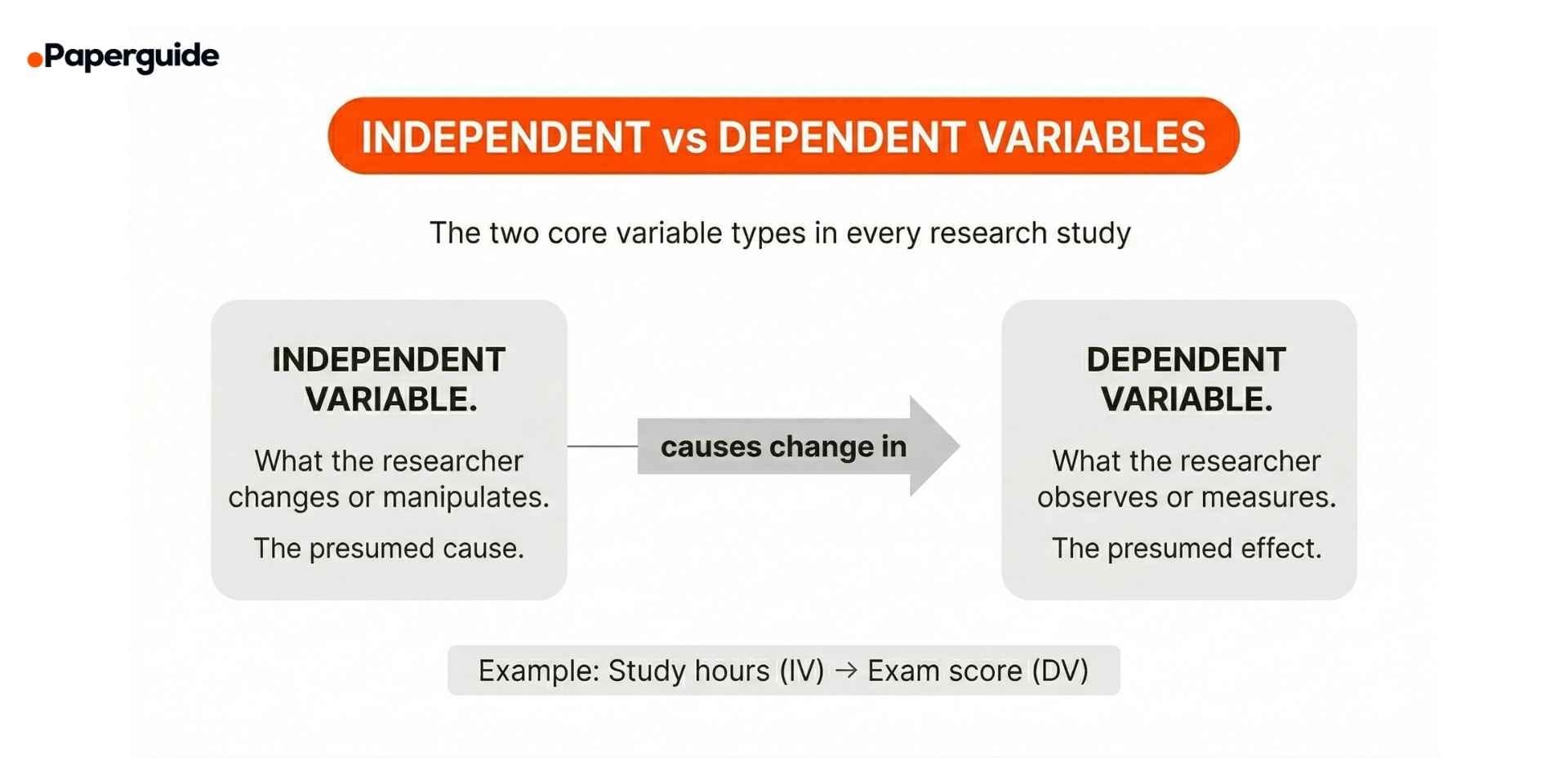
Think of a variable as the answer to: What am I changing, what am I measuring, and what else could affect my results?
Variables are central to every research design because they define the structure of the investigation. Without clearly identified variables, a study has no framework for data collection, no basis for analysis, and no criteria for evaluating results.
The two most important variable types are:
- Independent variable (IV): The factor the researcher changes, manipulates, or selects to observe its effect.
- Dependent variable (DV): The outcome the researcher measures to determine whether the independent variable had an effect.
Beyond these, researchers must also account for confounding variables, control variables, mediating variables, and moderating variables, all of which influence the relationship between the IV and DV. Understanding these distinctions is essential for designing studies that produce valid, reliable results.
Independent Variable: Definition and Role
The independent variable is the variable that the researcher deliberately changes, manipulates, or selects to determine its effect on another variable. It is the presumed cause in the cause-and-effect relationship being studied.
In an experiment, the independent variable is what differs between the experimental group and the control group. In non-experimental research, it is the variable whose influence on the outcome is being examined.
Key characteristics of independent variables:
- The researcher controls or selects it
- It is the presumed cause or predictor
- It precedes the dependent variable in the study design
- It can have multiple levels or conditions (e.g., low dose, medium dose, high dose)
Examples:
- In a study on exercise and weight loss, the independent variable is the type or amount of exercise.
- In a study on teaching methods and test scores, the independent variable is the teaching method used.
- In a study on fertilizer and plant growth, the independent variable is the type of fertilizer applied.
The independent variable must be clearly defined and operationalized before data collection begins. If it is vague or inconsistently applied, the results cannot be attributed to it with confidence.
Dependent Variable: Definition and Role
The dependent variable is the variable that the researcher measures to determine whether it was affected by the independent variable. It is the presumed effect or outcome in the study.
The dependent variable "depends" on the independent variable. It changes (or does not change) in response to the manipulation or condition introduced by the researcher.
Key characteristics of dependent variables:
- The researcher measures or observes it
- It is the presumed effect or outcome
- It responds to changes in the independent variable
- It must be operationalized with a specific measurement method
Examples:
- In a study on exercise and weight loss, the dependent variable is the amount of weight lost (measured in kilograms).
- In a study on teaching methods and test scores, the dependent variable is the students' test scores.
- In a study on fertilizer and plant growth, the dependent variable is the plant height (measured in centimeters).
A study may have one or more dependent variables, but each must have a clear, consistent measurement method. Without a well-defined dependent variable, the study cannot produce meaningful findings.
Independent vs Dependent Variables: Key Differences
Understanding the distinction between independent and dependent variables is essential for research design. The table below summarizes the key differences.
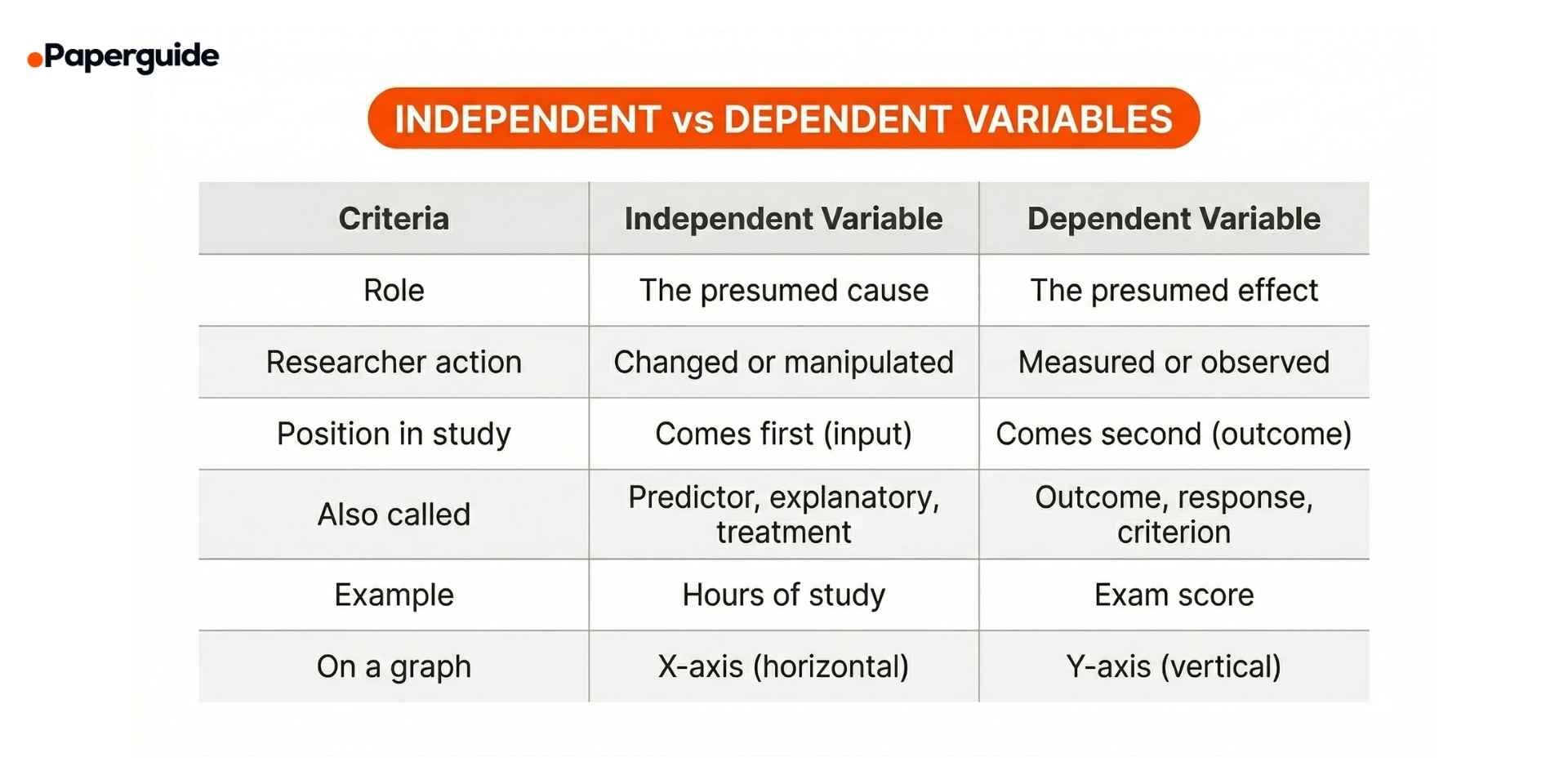
The simplest way to remember: the independent variable is what you change; the dependent variable is what changes as a result.

Other Types of Variables in Research
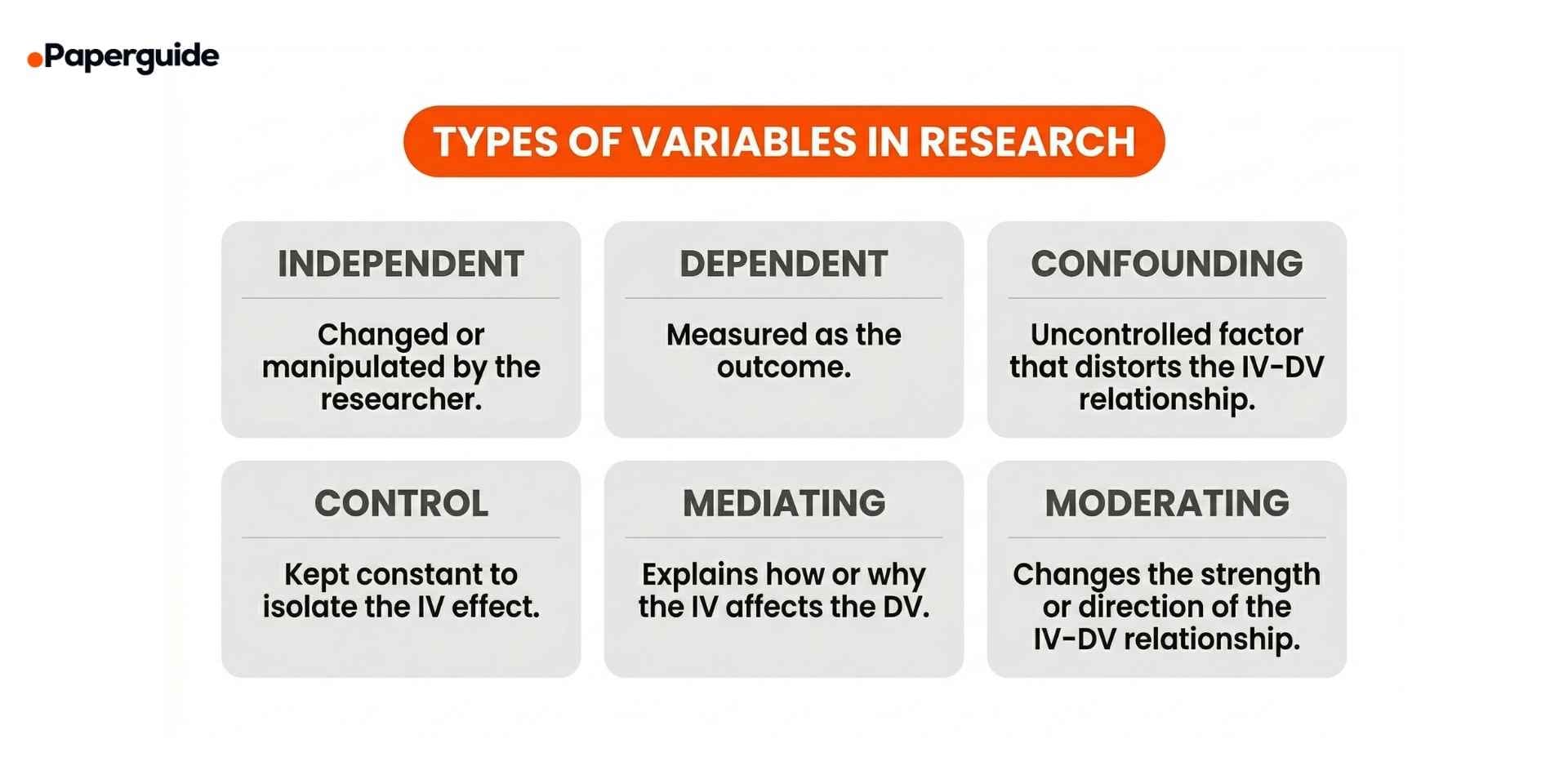
Independent and dependent variables are the primary pair, but robust research designs account for several additional variable types. Ignoring these can introduce bias, weaken validity, and produce misleading results.
Confounding Variables
A confounding variable is an uncontrolled factor that is related to both the independent and dependent variables, potentially distorting the observed relationship. If a confounding variable is not identified and controlled, the study's results may reflect the confounder's influence rather than the true effect of the independent variable.
Example: A study finds that ice cream sales and drowning rates are correlated. The confounding variable is temperature. Hot weather increases both ice cream sales and swimming activity.
Uncontrolled confounders are one of the primary reasons studies fail to replicate. A 2018 PNAS analysis found that statistical errors, including failure to account for confounding variables, were present in a significant proportion of published research across multiple disciplines. [2]
Control Variables
Control variables are factors that the researcher deliberately keeps constant to prevent them from influencing the results. They help isolate the effect of the independent variable on the dependent variable.
Example: In a study comparing two teaching methods on student performance, control variables might include class size, time of day, and instructor experience.
Mediating Variables
A mediating variable explains the mechanism through which the independent variable affects the dependent variable. It answers the question: How does X lead to Y?
Example: Exercise (IV) reduces anxiety (DV). The mediating variable might be endorphin release, which explains the mechanism.
Moderating Variables
A moderating variable changes the strength or direction of the relationship between the independent and dependent variables. It answers the question: When or for whom does X affect Y differently?
Example: A tutoring program (IV) improves math scores (DV), but the effect is stronger for students with lower baseline scores. Baseline score is the moderating variable.
Understanding all four additional variable types is critical for designing studies that produce valid, interpretable results, especially in meta-analysis research where variables are compared and synthesized across multiple studies.
How to Identify Variables in Your Study (Step-by-Step)
Identifying variables correctly is one of the most important steps in research design. Follow this structured process to ensure each variable in your study is clearly defined and properly classified.
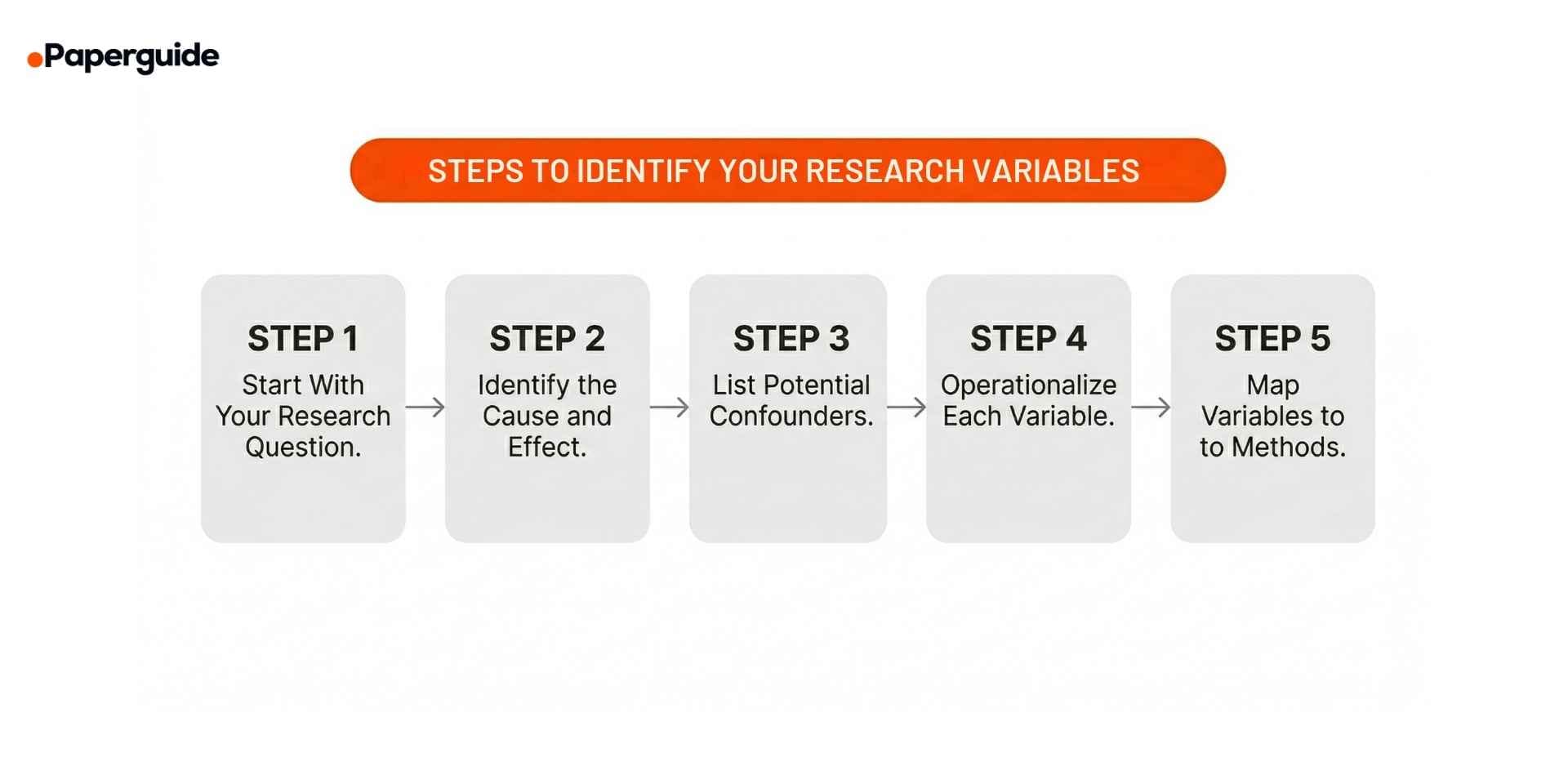
Step 1: Start With Your Research Question
Your research question already contains your variables, even if they are not explicitly labeled. Read the question and identify what is being changed or compared and what outcome is being measured.
Example question: "Does daily meditation reduce stress levels among college students?"
- What is being changed/introduced? → Daily meditation (independent variable)
- What is being measured? → Stress levels (dependent variable)
Step 2: Identify the Cause and Effect
Determine the direction of the relationship. Ask: Which variable am I expecting to influence the other?
The variable you expect to cause or predict a change is the independent variable. The variable you expect to be affected is the dependent variable.
Step 3: List Potential Confounders
Identify any external factors that could influence the dependent variable besides the independent variable.
For the meditation example: Potential confounders might include sleep quality, caffeine intake, exam schedules, or pre-existing mental health conditions.
Decide which confounders you will control (by holding them constant or measuring them) and which you will acknowledge as limitations.
Step 4: Operationalize Each Variable
Operationalization means defining exactly how each variable will be measured. This is where many studies go wrong. A 2021 analysis in BMC Medical Research Methodology found that researchers frequently disagreed on how to operationalize the same variables from published studies, with significant variation in measurement choices even for well-studied constructs. [3]
For the meditation example:
- Independent variable: 15 minutes of guided meditation per day for 8 weeks (measured by app-tracked completion)
- Dependent variable: Stress level measured using the Perceived Stress Scale (PSS-10) administered pre- and post-intervention
Step 5: Map Variables to Your Methodology
Ensure each variable has a corresponding data collection and analysis method. If you cannot explain how a variable will be measured and analyzed, it is not properly operationalized.
This step also helps identify whether your research design (experimental, quasi-experimental, correlational, or observational) is appropriate for the variables you have defined. Understanding different approaches to systematic review and meta-analysis can also help you see how other researchers have operationalized similar variables.
Examples Across Disciplines
Clear examples help illustrate how independent and dependent variables work in different fields of research.
Example 1: Education
Research question: "Does flipped classroom instruction improve exam performance among undergraduate biology students?"
- Independent variable: Instruction type (flipped classroom vs traditional lecture)
- Dependent variable: Exam performance (measured by final exam scores)
- Control variables: Instructor, textbook, class size, exam difficulty
- Potential confounder: Student motivation level
Example 2: Public Health
Research question: "What is the effect of a 12-week walking program on blood pressure in adults aged 50 to 65?"
- Independent variable: Walking program participation (12 weeks, 30 minutes/day vs no program)
- Dependent variable: Blood pressure (systolic and diastolic, measured in mmHg)
- Control variables: Medication use, baseline health status, diet
- Potential confounder: Concurrent lifestyle changes
Example 3: Psychology
Research question: "Does sleep deprivation affect decision-making accuracy under time pressure?"
- Independent variable: Sleep condition (8 hours sleep vs 4 hours sleep)
- Dependent variable: Decision-making accuracy (percentage of correct responses on a timed task)
- Mediating variable: Cognitive load (measured by reaction time)
- Moderating variable: Caffeine consumption
Example 4: Business
Research question: "How does customer loyalty program tier affect repeat purchase frequency?"
- Independent variable: Loyalty tier (Silver, Gold, Platinum)
- Dependent variable: Repeat purchase frequency (number of purchases per quarter)
- Control variables: Account age, geographic region, product category
- Potential confounder: Income level
Each example demonstrates the same principle: the independent variable is what differs between groups or conditions, and the dependent variable is the measurable outcome.
Common Mistakes and How to Fix Them
Variable identification errors are among the most frequent methodological problems in academic research.
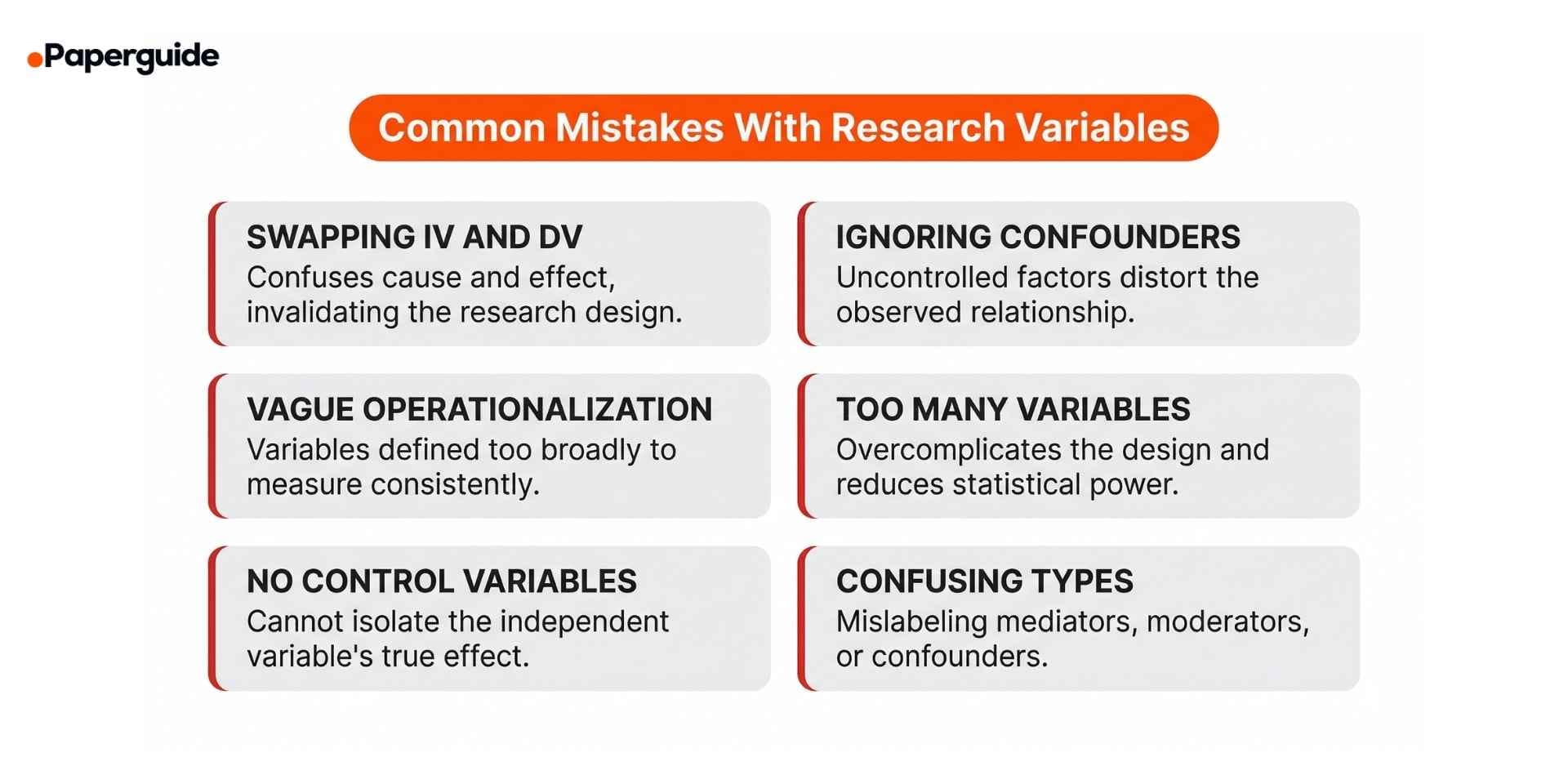
Mistake 1: Swapping Independent and Dependent Variables
Error: Treating the outcome as the cause and vice versa.
Fix: Always ask: "Which variable do I expect to influence the other?" The influencing variable is the IV. The influenced variable is the DV.
Mistake 2: Failing to Operationalize Variables
Error: Defining variables in vague terms like "student engagement" or "health outcomes" without specifying how they will be measured.
Fix: Define the exact measurement instrument, scale, or data source for each variable. "Student engagement" becomes "number of questions asked per class session, recorded by the instructor."
Mistake 3: Ignoring Confounding Variables
Error: Not identifying or controlling for factors that could explain the observed relationship between IV and DV.
Fix: List all potential confounders during the design phase. Decide which you will control (hold constant), which you will measure (include as covariates), and which you will acknowledge as limitations.
Mistake 4: Including Too Many Variables
Error: Adding numerous variables without sufficient sample size or statistical power to analyze them.
Fix: In between-subjects experimental designs with small samples, statistical power can drop to as low as .34, meaning there is only about a one-in-three chance of detecting a real effect. Limit variables to what your design and sample can support. [4]
Mistake 5: Confusing Mediators With Moderators
Error: Treating a variable that explains the mechanism (mediator) as one that changes the strength of the relationship (moderator), or vice versa.
Fix: Ask: "Does this variable explain how the IV affects the DV?" (mediator) or "Does it change when or for whom the effect occurs?" (moderator). The distinction determines the analytical approach.
Mistake 6: Not Controlling Any Variables
Error: Allowing multiple factors to vary simultaneously, making it impossible to attribute the outcome to the independent variable.
Fix: Identify at least two to three control variables and hold them constant. This isolates the IV-DV relationship and strengthens internal validity.
Variable Identification Checklist
Use this checklist to verify your variable identification before finalizing your research design.
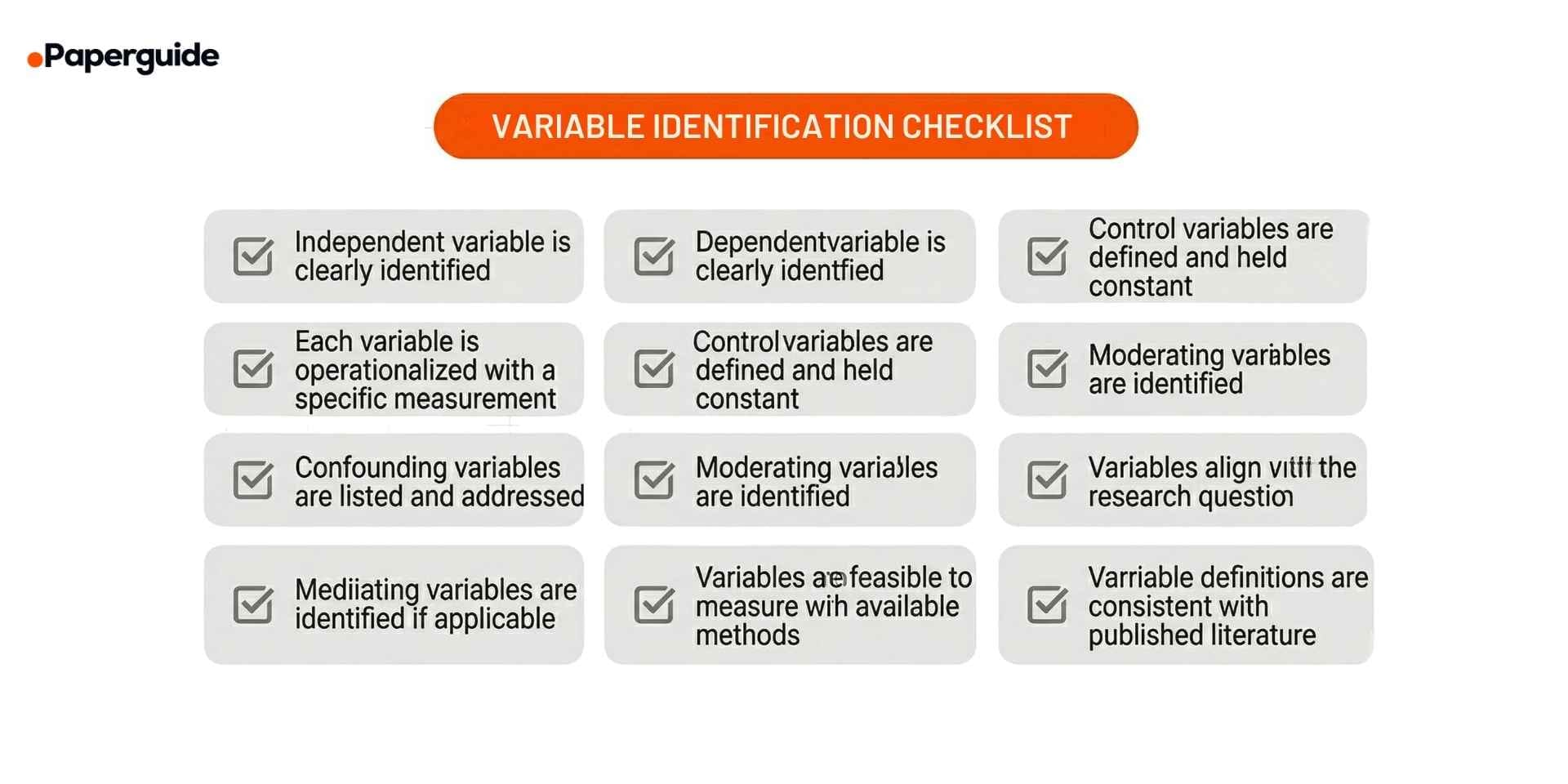
- [ ] Independent variable is clearly identified. You can state exactly what is being changed or manipulated.
- [ ] Dependent variable is clearly identified. You can state exactly what is being measured as the outcome.
- [ ] Each variable is operationalized with a specific measurement. Every variable has a defined instrument, scale, or data source.
- [ ] Confounding variables are listed and addressed. Potential confounders are identified and either controlled or acknowledged.
- [ ] Control variables are defined and held constant. At least two to three variables are kept constant to isolate the IV effect.
- [ ] Mediating variables are identified if applicable. If the mechanism matters, the mediator is defined and measured.
- [ ] Moderating variables are identified if applicable. If the effect varies by group or condition, the moderator is specified.
- [ ] Variables align with the research question. Each variable connects directly to what the study aims to investigate.
- [ ] Variables are feasible to measure with available methods. Data collection instruments exist and are accessible.
- [ ] Variable definitions are consistent with published literature. Operationalizations match how similar studies have defined the same constructs.
Variable Identification Template
Use this template to define the variables in your study. Replace the bracketed sections with your own content.
Research Question: [Your research question]
Independent Variable: [What you are changing/manipulating] Operationalization: [How it will be measured or applied]
Dependent Variable: [What you are measuring as the outcome] Operationalization: [Measurement instrument, scale, or data source]
Control Variables: [Factors held constant]
Potential Confounders: [External factors that could influence results]
Mediating Variable (if applicable): [Variable explaining the mechanism]
Moderating Variable (if applicable): [Variable changing the effect strength]
Filled Example:
Research Question: "Does a 10-week mindfulness program reduce test anxiety among high school students?"
Independent Variable: Mindfulness program participation (10-week guided program vs no program) Operationalization: Attendance records from the program facilitator; minimum 8 of 10 sessions attended
Dependent Variable: Test anxiety level Operationalization: Westside Test Anxiety Scale administered one week before and one week after the intervention
Control Variables: School, grade level, teacher, exam format
Potential Confounders: Pre-existing anxiety disorders, concurrent therapy, caffeine consumption
Mediating Variable: Self-regulation skills (measured by Brief Self-Control Scale)
Moderating Variable: Gender (to test if effects differ between male and female students)
Validate This With Papers (2 Minutes)
Before finalizing your variable definitions, check how published studies in your field have operationalized similar variables. This prevents inconsistencies and strengthens your methodology.
Step 1: Search for studies that investigate a similar relationship to yours. Focus on recent publications in your discipline.
Step 2: Open two or three relevant papers. Look at how the authors identified their independent and dependent variables. Note the exact measurement instruments and operationalizations they used. Balancing AI tools with human input can help you use research tools effectively while maintaining critical judgment during this step.
Step 3: Use a Chat with PDF tool to extract the methodology section and variable definitions from each paper. Compare their operationalizations with yours.
This takes about two minutes and ensures your variable definitions are consistent with disciplinary conventions and prior research.
Conclusion
Variables are the structural foundation of every research study. The independent variable defines what is being tested, the dependent variable defines what is being measured, and the surrounding variable types (confounding, control, mediating, moderating) determine whether the relationship between them can be interpreted with confidence. A study with poorly identified variables cannot produce valid results, regardless of how sophisticated the analysis. The step-by-step process in this guide, start with your research question, identify the cause and effect, list confounders, operationalize each variable, and map them to your methodology, provides a systematic approach to getting this right the first time.
The difference between a study that contributes meaningful knowledge and one that produces unreliable findings often comes down to how carefully the variables were defined. Whether you are designing an experiment, planning a survey, or conducting observational research, verify each variable against the checklist above and compare your operationalizations with published studies in your field. Precise variable identification is not an optional formality. It is the foundation that determines whether your research design, data collection, and conclusions can withstand scrutiny.
Frequently Asked Questions
What is an independent variable in research?
An independent variable is the factor that the researcher changes, manipulates, or selects to observe its effect on another variable. It is the presumed cause in the study. In an experiment, it is what differs between the experimental group and the control group. It is also called the predictor variable, explanatory variable, or treatment variable.
What is a dependent variable in research?
A dependent variable is the outcome that the researcher measures to determine whether it was affected by the independent variable. It "depends" on the independent variable. It is also called the outcome variable, response variable, or criterion variable. A well-defined dependent variable includes a specific measurement method and scale.
How do I tell the difference between independent and dependent variables?
Ask: "Which variable am I changing, and which variable am I measuring as a result?" The one you change is the independent variable. The one you measure is the dependent variable. Another test: the independent variable usually comes first in time or logic. The dependent variable comes second as the outcome.
Can a variable be both independent and dependent?
Yes, in complex research designs. In mediation analysis, a variable can be the dependent variable in one relationship and the independent variable in another. For example, in the chain "exercise → endorphin release → reduced anxiety," endorphin release is the dependent variable of exercise but the independent variable influencing anxiety.
What is a confounding variable?
A confounding variable is an uncontrolled factor that is related to both the independent and dependent variables and can distort the observed relationship between them. If not accounted for, confounders can make it appear that the IV caused a change in the DV when the effect was actually due to the confounder.
How many variables should a study have?
Most studies have one independent variable, one to three dependent variables, and two to five control variables. The exact number depends on the research design, sample size, and statistical power available. Adding too many variables without sufficient sample size reduces the ability to detect real effects.
What is operationalization?
Operationalization is the process of defining exactly how each variable will be measured in a study. It converts an abstract concept (like "stress" or "productivity") into a specific, measurable indicator (like "Perceived Stress Scale score" or "weekly output in units produced"). Clear operationalization is essential for replicability and validity.
Why is variable identification important for replication?
If variables are not clearly defined and operationalized, other researchers cannot replicate the study. Poor operationalization is a known contributor to the replication crisis, where published studies fail to produce the same results when repeated. Clear variable definitions allow other researchers to conduct the exact same procedures.
References
- Open Science Collaboration. (2015). Estimating the reproducibility of psychological science. Science, 349(6251), aac4716.
- Brown, A. W., Kaiser, K. A., & Allison, D. B. (2018). Issues with data and analyses: Errors, underlying themes, and potential solutions. Proceedings of the National Academy of Sciences, 115(11).
- Haucke, M., Hoekstra, R., & van Ravenzwaaij, D. (2021). When numbers fail: Do researchers agree on operationalization of published research? Royal Society Open Science, 8(9), 191354.
- Navarro, D. J. (2024). Learning Statistics with R: A tutorial for psychology students and other beginners. LibreTexts.