How to Write an Abstract for a Research Paper in 2026: Step-by-Step Guide

Writing a clear and accurate abstract is a fundamental part of academic and scientific communication. In 2026, this skill has become increasingly important as the volume of published research continues to grow and academic discovery relies heavily on search engines, indexing databases, and digital evaluation workflows. A well-written abstract directly influences whether a research paper is read, cited, correctly indexed, and considered relevant by editors, reviewers, and readers.
An abstract is a brief, self-contained summary of a research paper that communicates the study's purpose, methodology, key findings, and conclusions. Whether you are preparing a journal article, thesis, dissertation, conference paper, or research proposal, knowing how to write an abstract helps ensure your work is represented accurately and is accessible to a broad academic audience. Poorly written abstracts that are vague, overly technical, or disconnected from the actual research content can reduce credibility and make valuable work harder to discover.
Today, many students and academics use structured frameworks and AI-assisted tools, such as AI abstract generators, to support drafting and refinement. These tools can help generate initial drafts and improve clarity, but they do not replace the careful academic judgment needed to produce an abstract that faithfully represents a completed study. In this guide, you will learn a step-by-step approach to writing an abstract, understand the different types of abstracts, explore examples across disciplines, and avoid common mistakes that weaken research papers before they reach reviewers.
TL;DR
Writing an effective abstract involves summarizing the purpose, methodology, key findings, and conclusions of a research paper in a concise, self-contained paragraph, typically between 150 and 300 words. A strong abstract accurately reflects the completed study, avoids unnecessary jargon, and follows the formatting requirements of the target journal or institution. Once a paper is complete, tools such as an AI Abstract Generator can support drafting and refinement. However, producing an effective abstract ultimately depends on careful human review to ensure accuracy, clarity, and faithful representation of the research.
Key Takeaways
- An abstract is a concise summary of a research paper that communicates the study's purpose, methods, results, and conclusions.
- Strong abstracts are written after the paper is complete and accurately reflect the final content of the study.
- Abstracts serve as the primary basis for indexing, search discovery, and initial reader evaluation of a research paper.
- The ideal length for most abstracts is between 150 and 300 words, though specific requirements vary by journal, conference, or institution.
- Different contexts require different abstract types: informative, descriptive, structured, and critical abstracts each serve distinct purposes.
- Common abstract writing mistakes include being too vague, including unnecessary background information, and misrepresenting the study's actual findings.
- AI-based tools can support abstract drafting and refinement after a study is complete, but human review remains essential for accuracy and academic integrity.
What Is an Abstract?
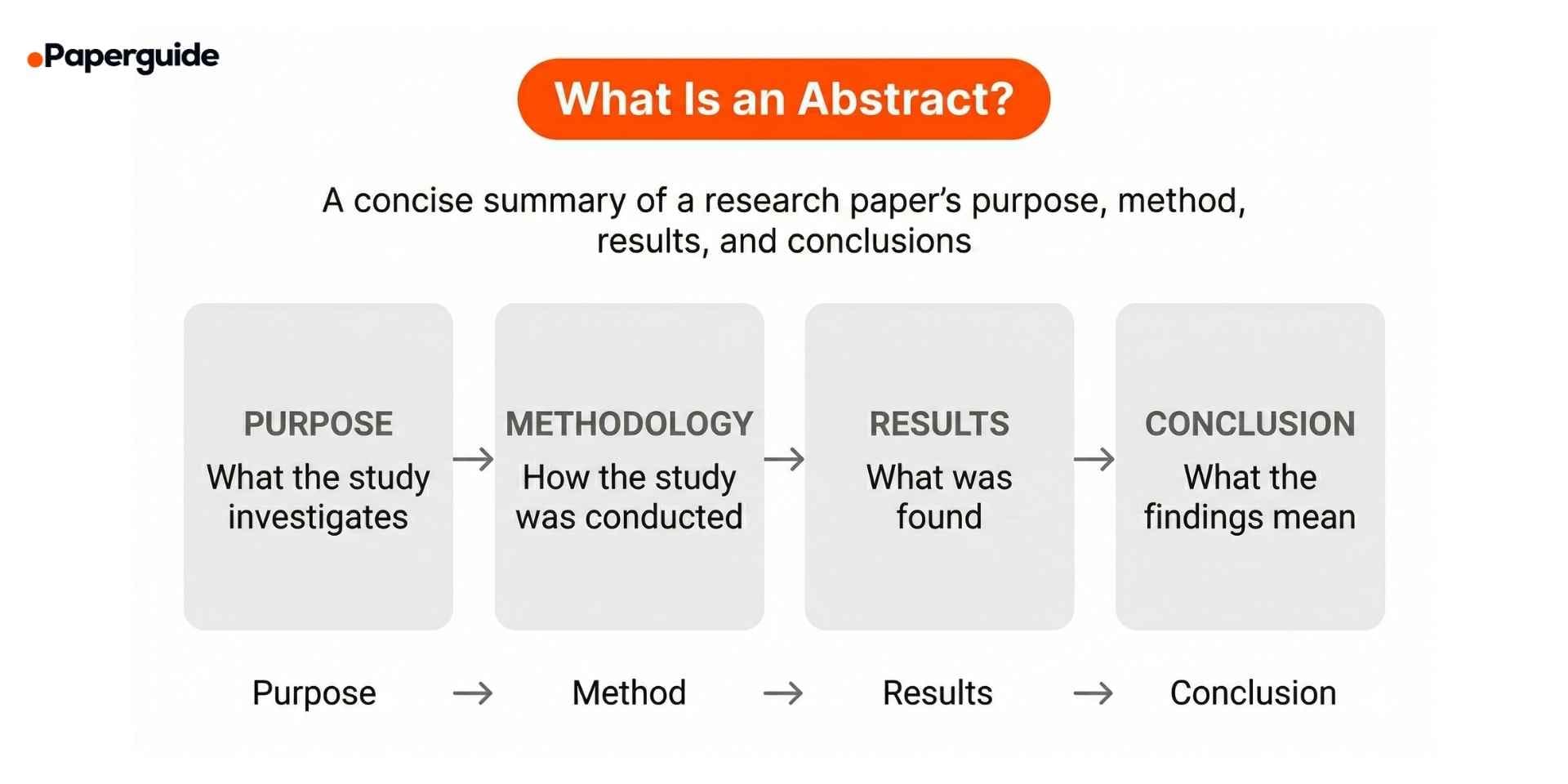
An abstract is a brief, self-contained summary of an academic paper that communicates what the research is about, how it was conducted, what was found, and why the findings matter. It appears at the beginning of a research paper, immediately after the title page, and is designed to give readers enough information to determine whether the full paper is relevant to their work.
In academic publishing, the abstract serves several critical functions. It helps journal editors and peer reviewers assess the relevance of a submission during initial screening. It allows indexing databases such as PubMed, Scopus, and Web of Science to categorize the paper correctly. It also enables researchers browsing databases to quickly evaluate whether a paper aligns with their interests before reading the full text.
A well-written abstract is specific enough to convey the study's contribution while remaining accessible to readers who may not be specialists in the exact subfield. Whether applied to a journal article, thesis, dissertation, or conference paper, a clear abstract improves discoverability and increases the likelihood that the research will be read and cited.
Abstract vs Introduction vs Summary
Although these terms are sometimes used interchangeably, they serve different purposes in academic writing.
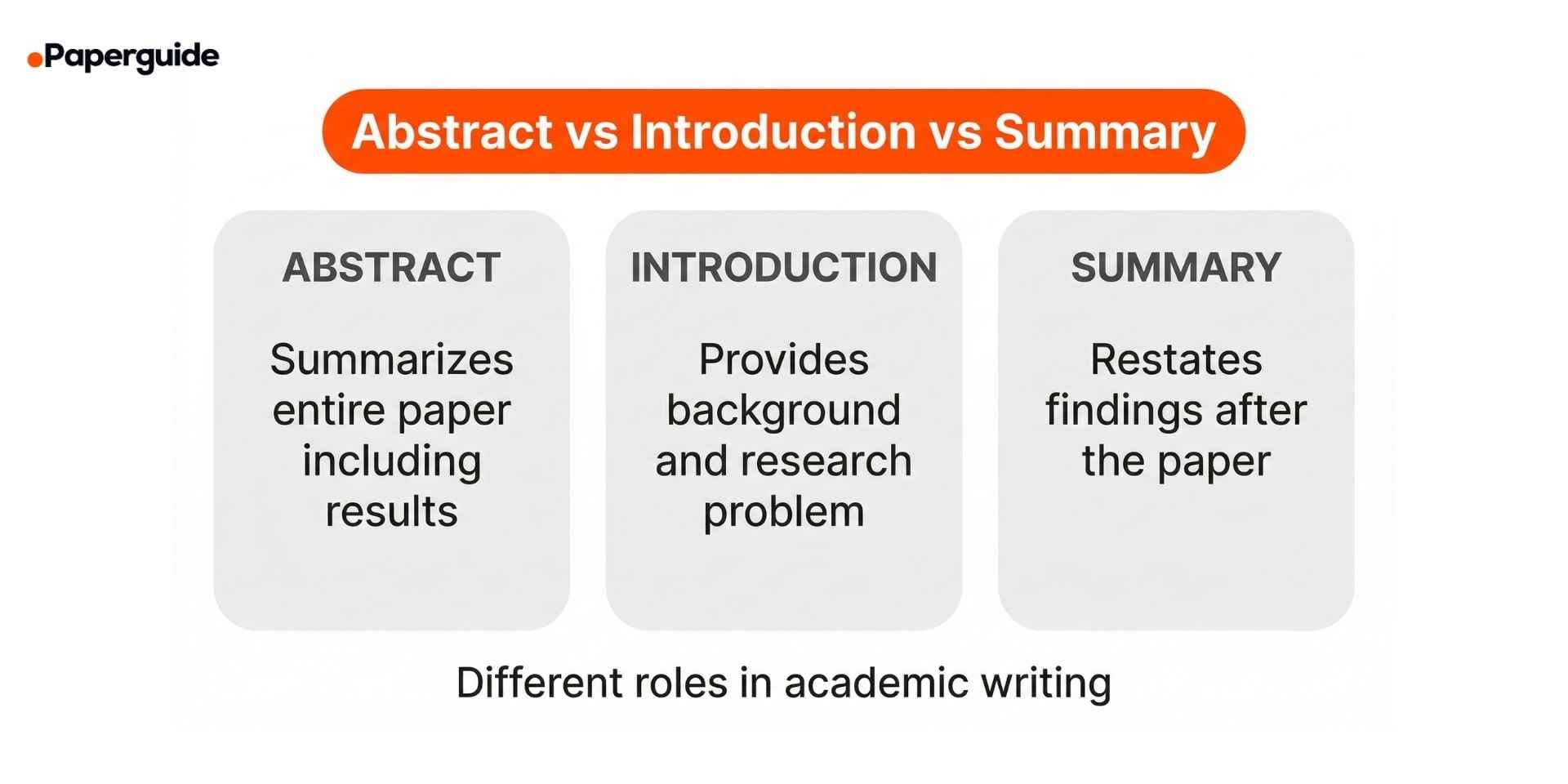
An abstract is a self-contained overview of the entire paper, covering purpose, methodology, findings, and conclusions in 150 to 300 words. It appears before the main text and is designed to stand alone without requiring additional context.
An introduction is the opening section of the paper that provides background context, establishes the research problem, and presents the research question. Unlike an abstract, it does not reveal results or conclusions.
A summary (or conclusion) appears at the end of the paper, restating key findings, discussing implications, and suggesting future research directions. Unlike an abstract, it assumes the reader has already read the full paper.
The key distinction: an abstract summarizes the entire paper including results. An introduction sets up the study without revealing outcomes. A summary reflects on findings after the reader has engaged with the full content.
Types of Abstracts
Not every research paper requires the same type of abstract. The format and depth depend on the discipline, publication venue, and purpose of the paper.
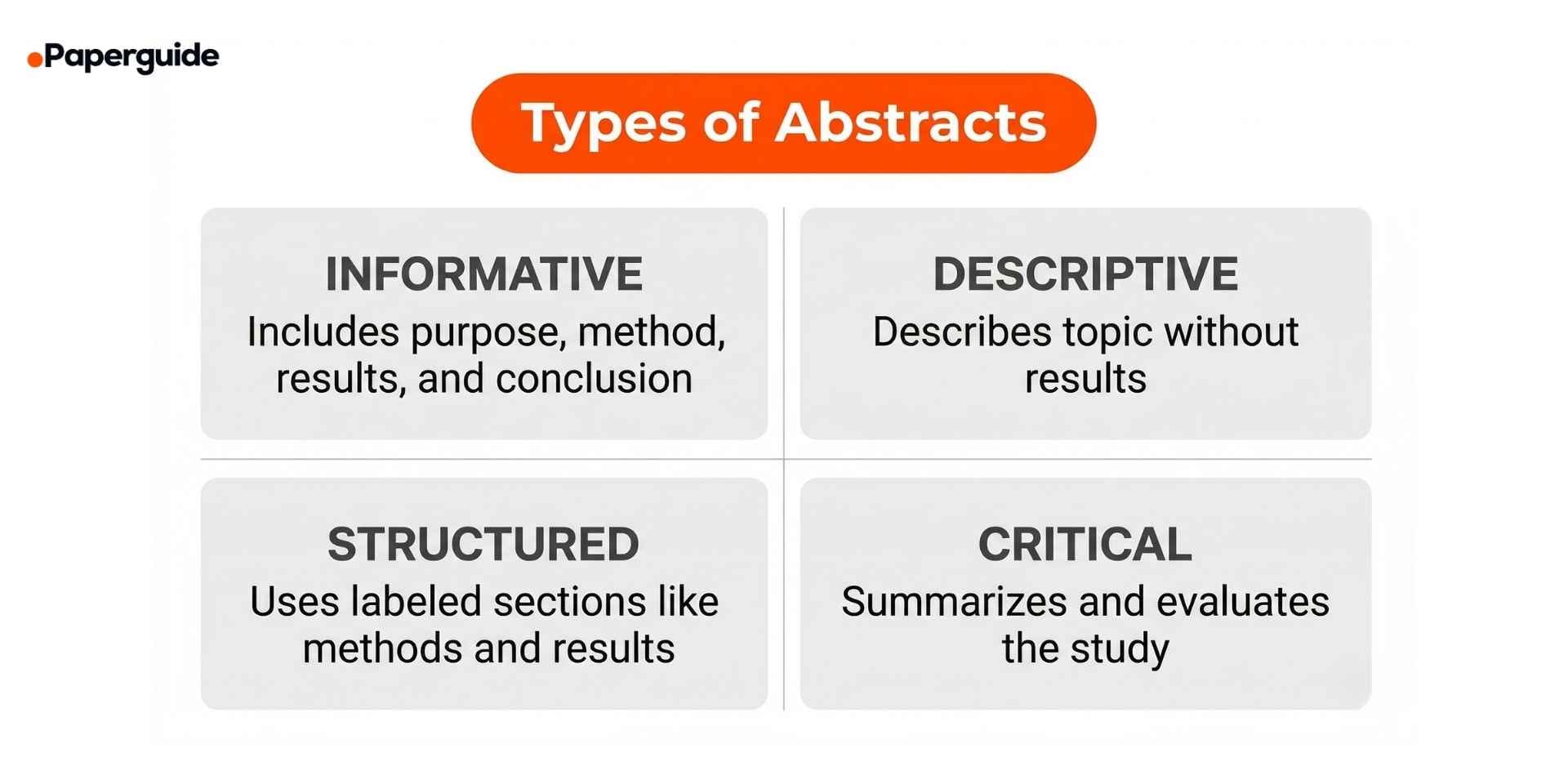
1. Informative Abstracts
An informative abstract provides a complete summary of the research paper, including the purpose, methodology, results, and conclusions. This is the most common type in scientific and academic publishing, typically ranging from 150 to 300 words. It is standard in STEM fields, social sciences, and medical research.
2. Descriptive Abstracts
A descriptive abstract describes the topic and scope of the paper but does not include specific results or conclusions. It tells readers what the paper covers rather than what it found. These are shorter (50 to 150 words) and more common in humanities, theoretical papers, and review articles.
3. Structured Abstracts
A structured abstract follows a predefined format with labeled sections, typically Background, Objective, Methods, Results, and Conclusion. This format is widely required by medical and health science journals, including those indexed in PubMed and following CONSORT or PRISMA guidelines.
4. Critical Abstracts
A critical abstract goes beyond summarizing by including a brief assessment of the study's quality, reliability, or significance. This type is less common and is primarily used in review contexts where the writer is evaluating another researcher's work.
How to Write an Abstract (Step-by-Step)
Writing an abstract is a structured process that ensures accuracy, completeness, and usefulness. The steps below apply whether you are writing for a journal article, thesis, dissertation, conference submission, or research proposal.
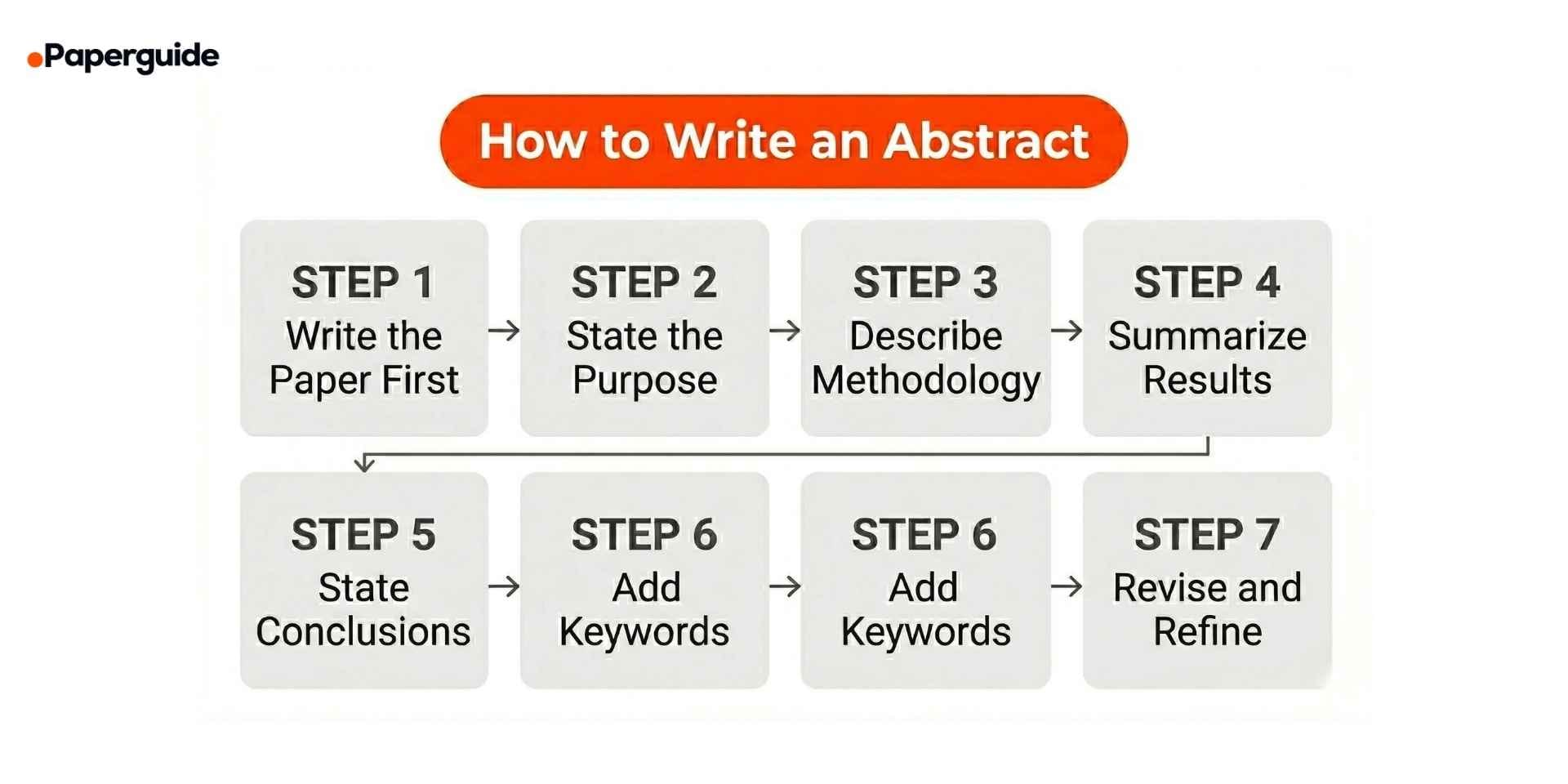
Step 1: Write the Full Paper First
An abstract should always be written after the research paper is complete. Writing it earlier often results in inaccurate summaries that do not reflect the final methodology, data, or conclusions. The only exception is a conference abstract (promissory abstract), submitted before research is complete, where planned methodology and expected outcomes should be stated without overstating preliminary findings.
Step 2: State the Purpose and Research Problem
Begin by clearly identifying what the study investigated and why. The opening sentence should communicate the research problem, objective, or question. Avoid lengthy background context one to two sentences establishing relevance is sufficient.
Step 3: Describe the Methodology
Briefly explain how the study was conducted, including the research design, data sources, sample or population, and analytical methods used. Readers should understand the approach without consulting the full paper. Two to three sentences are typically sufficient.
Step 4: Summarize the Key Results
Present the most important findings that directly answer the research question. Include specific data points, effect sizes, or key outcomes where relevant. Avoid reporting every result — select the findings most relevant to the study's purpose.
Step 5: State the Conclusions and Implications
Explain what the results mean and why they matter. Briefly discuss implications for the field, for practice, or for future research. Do not overstate conclusions or claim more than the data supports.
Step 6: Add Keywords
Select 4 to 6 keywords that accurately describe the study's topic, methodology, and focus area. Choose terms that reflect the main concepts, are likely to be searched for, and are not already in the title to maximize discoverability.
Step 7: Revise, Tighten, and Polish
Ensure the abstract meets word count requirements, reads clearly, and accurately represents the paper. Remove unnecessary words and vague phrases. Confirm it contains no citations, undefined abbreviations, or references to figures or tables. A strong abstract often goes through multiple revisions.

Abstract Examples Across Disciplines
1. STEM Research Paper Abstract
Topic: Machine learning for air quality prediction
This study investigates the application of random forest and gradient boosting models for predicting urban air quality index values using meteorological and traffic data. Historical data from 12 monitoring stations across three metropolitan areas were collected over a 24-month period. Results indicate that the gradient boosting model achieved a mean absolute error of 8.3 AQI points, outperforming the random forest model by 14%. These findings suggest that machine learning approaches using publicly available data can support real-time air quality forecasting in urban areas.
2. Social Sciences Abstract
Topic: Remote work and employee well-being
This study examines the relationship between remote work frequency and self-reported employee well-being among 842 full-time professionals in the technology sector across the United States. Results show that employees working remotely three to four days per week reported significantly higher well-being scores than those working fully on-site or fully remote, after controlling for job role, income, and household composition. The findings suggest that moderate remote work frequency is associated with improved well-being, with implications for organizational policy design.
3. Humanities Abstract
Topic: Narrative perspective in postcolonial fiction
This paper analyzes the use of shifting narrative perspectives in three postcolonial novels published between 1980 and 2005. Through close reading and narratological analysis, the study examines how multiple first-person narrators represent fragmented colonial identities and challenge singular historical accounts. The analysis reveals that shifting perspective functions as a structural argument against monolithic narratives of postcolonial experience, contributing to scholarly discussions about narrative form and political representation.
4. Medical Research Abstract (Structured Format)
Topic: Vitamin D supplementation and bone density
Background: Vitamin D deficiency is associated with reduced bone mineral density in older adults, but the effects of supplementation duration remain unclear. Objective: To evaluate the effect of 12-month daily vitamin D supplementation on bone mineral density in adults aged 65 and older. Methods: A randomized, double-blind, placebo-controlled trial with 320 participants across four clinical sites. Participants received either 2,000 IU daily vitamin D3 or a matched placebo. Results: The supplementation group showed a 2.1% increase in lumbar spine bone mineral density compared to a 0.3% decrease in the placebo group (p < 0.01). Conclusion: Daily vitamin D3 supplementation at 2,000 IU for 12 months was associated with improved lumbar spine bone mineral density in older adults.
5. Conference Paper Abstract
Topic: Natural language processing for legal document analysis
This paper presents a transformer-based classification model for identifying liability clauses in commercial contracts, fine-tuned on 5,200 annotated contract sections. Preliminary results show a classification accuracy of 91.4% and an F1 score of 0.89, outperforming keyword-based approaches by 23 percentage points. The work demonstrates the feasibility of applying NLP techniques to legal document review at scale.
Good vs Bad Abstracts: Common Mistakes with Corrections
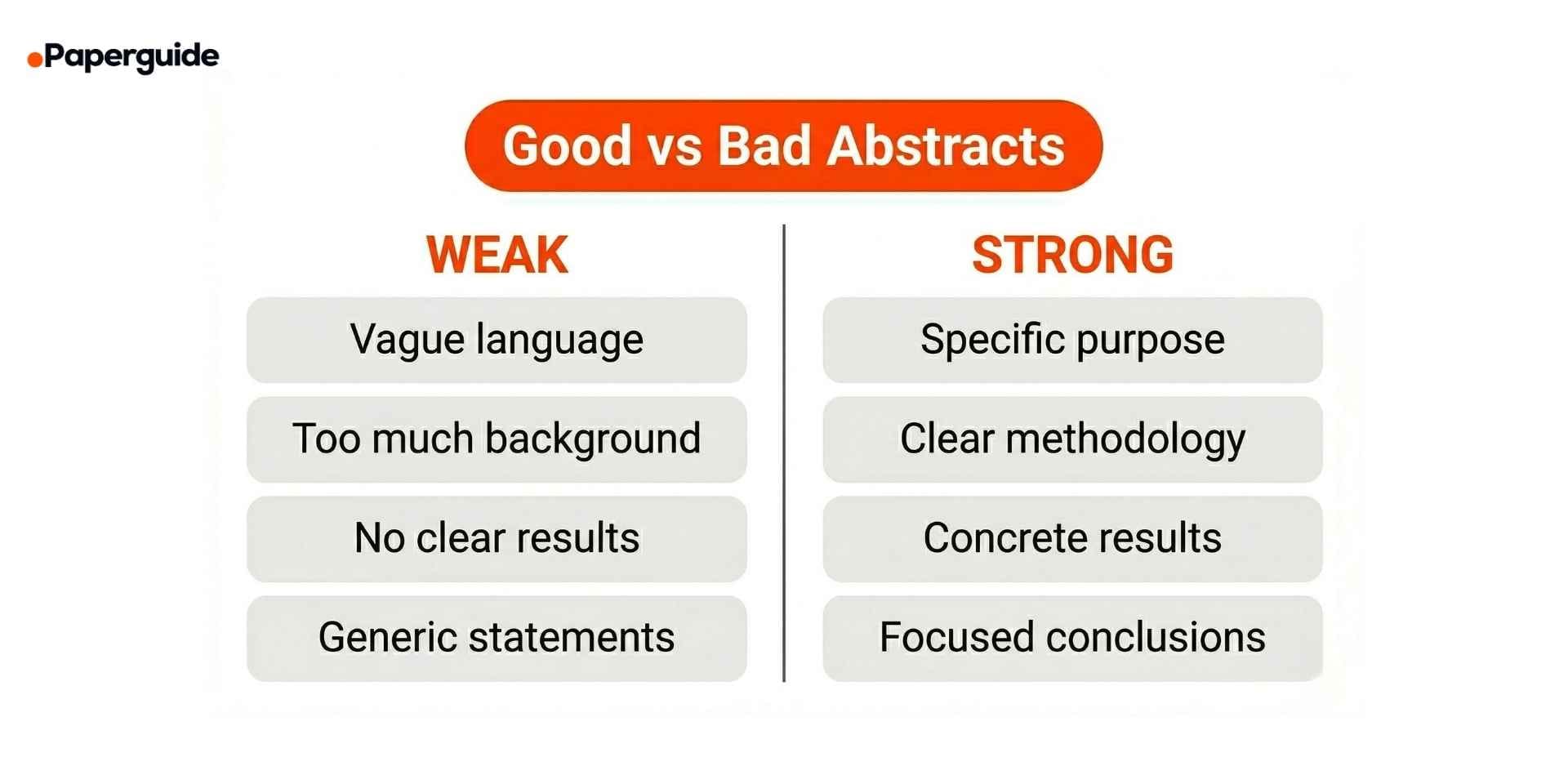
Example 1: Too Vague and Missing Results
Weak: This study looks at the effects of social media on young people. Social media is widely used and has many effects on its users. The study found some interesting results that are discussed in the paper.
Why it fails: No specific research question, no methodology, no actual results, imprecise language.
Stronger: This study examines the relationship between daily social media usage and self-reported anxiety levels among 1,200 high school students aged 14 to 18. Students reporting more than three hours of daily use scored 34% higher on the GAD-7 anxiety scale than those with less than one hour. These findings suggest a dose-dependent association between social media exposure and adolescent anxiety.
Example 2: Too Much Background, Not Enough Content
Weak: Climate change is one of the most pressing challenges of the 21st century. Rising global temperatures have been documented extensively. Many studies have examined effects on ecosystems. Agriculture is particularly vulnerable. This paper contributes to this important area.
Why it fails: Five sentences of background, zero information about the specific study.
Stronger: This study assesses the impact of rising temperatures on wheat yields across three agricultural regions in South Asia over a 20-year period. A 1°C increase in average growing-season temperature is associated with a 6.2% reduction in wheat yield, most pronounced in rain-fed regions. These results support the case for climate-adaptive farming strategies in the region.
How Long Should an Abstract Be?
Abstract length varies by document type and target venue.
| Context | Typical Word Count | Notes |
|---|---|---|
| Journal article | 150–300 words | Check specific journal guidelines |
| Thesis (Master's) | 150–300 words | Often specified by the institution |
| Dissertation (PhD) | 250–350 words | Some institutions allow up to 500 words |
| Conference paper | 200–500 words | Varies widely by conference |
| Research proposal | 150–250 words | Should reflect planned methodology |
| Lab report | 100–200 words | Usually shorter and more concise |
The most reliable approach is to check the specific submission guidelines before writing. Exceeding the word limit can result in desk rejection at some journals.
Abstract Formatting by Citation Style
APA 7th Edition: Abstract on a separate page (page 2), centered bold heading "Abstract," single non-indented paragraph, 250-word limit, keywords listed below in italicized "Keywords:" label.
MLA: Does not traditionally require an abstract. When required, it follows the same formatting as the rest of the paper with no specific keyword guidelines.
Chicago/Turabian: No standardized abstract format. When required, it follows the main document formatting. Dissertations typically follow institutional guidelines.
Abstract Writing for Different Contexts
- Thesis and Dissertation Abstracts: Typically longer (250–500 words), covering research problem, theoretical framework, methodology, findings, and implications. Follow institutional templates precisely.
- Conference Paper Abstracts: Often submitted before research is complete (promissory abstracts). State the research question, intended methodology, and expected contribution without overstating preliminary results. Usually 200–500 words.
- Journal Submission Abstracts: Must strictly follow the target journal's author guidelines. Many journals use the abstract as the primary basis for initial editorial screening.
- Lab Report Abstracts: Shorter (100–200 words), concisely stating the experiment's purpose, procedure, key results, and conclusions. Written in past tense.
How AI Tools Can Help You Write Better Abstracts
Once a research paper is complete, AI-powered tools can assist with abstract drafting and refinement. Paperguide AI Abstract Generator allows researchers to upload a completed paper and receive a structured abstract draft that reflects the study's purpose, methodology, results, and conclusions.
However, AI-generated abstracts should always be reviewed critically. An abstract must faithfully represent the actual research, not a generalized version of it. Researchers should verify that all claims match the paper's findings and that the language meets the standards of the target journal. AI tools are most effective when used during the revision stage to refine drafts that the researcher then evaluates, adjusts, and finalizes.
Common Mistakes When Writing an Abstract
- Being too vague or generic: Phrases like "this paper discusses" or "interesting results were found" fail to communicate the study's actual contribution. Every sentence should add concrete information.
- Including too much background: One to two sentences of context is sufficient. Spending half the abstract on background leaves insufficient space for methods, results, and conclusions.
- Omitting results: An informative abstract must include findings. Without them, readers cannot evaluate the study's contribution.
- Overstating findings: Words like "proves," "guarantees," or "definitively shows" rarely belong in an abstract. Academic writing requires measured language.
- Writing the abstract before finishing the paper: Early abstracts often do not match the final methodology or conclusions, leading to misalignment that can confuse reviewers.
- Exceeding the word count: Many journals enforce strict limits. Exceeding them may result in automatic rejection.
- Including citations or undefined abbreviations: Abstracts are self-contained summaries and typically do not include citations. Overly technical language reduces accessibility.
Conclusion
Writing a strong abstract in 2026 remains one of the most important skills in academic and scientific communication. A well-crafted abstract determines whether research is discovered, read, correctly indexed, and ultimately cited. Whether applied to a journal article, thesis, dissertation, or conference paper, the quality of the abstract directly influences how the research is perceived and evaluated.
Strong abstracts are developed through a structured process: writing after the paper is complete, clearly stating purpose and methods, reporting specific results, and drawing conclusions the data supports. Once complete, researchers may use tools such as the Paperguide AI Abstract Generator to generate initial drafts and improve clarity. It is widely considered one of the best abstract generators in 2026, particularly for academic and research workflows that require accuracy and structured outputs. However, these tools are most effective when used to support, not replace, careful academic judgment. Ultimately, an abstract must faithfully represent the research and communicate value to readers who may never read the full paper.
Frequently Asked Questions (FAQs)
What are the 5 parts of an abstract?
The five core parts are purpose (what the study investigates), background (brief context), methodology (how it was conducted), results (what was found), and conclusions (what the findings mean). Informative abstracts in scientific and social science research typically address all five.
How do you start an abstract?
Start by clearly stating the purpose or objective of the study. A direct opening such as "This study examines..." or "This paper investigates..." is effective and widely used across disciplines. Avoid lengthy background context.
How long should an abstract be?
Most academic abstracts are between 150 and 300 words. Theses and dissertations may allow up to 350 or 500 words. Always check the specific submission requirements for the target journal, conference, or institution.
Should you write the abstract first or last?
Write it after the paper is complete. This ensures the abstract accurately reflects the final methodology, results, and conclusions rather than an earlier draft.
Do you put citations in an abstract?
In most cases, no. Abstracts are self-contained summaries and typically do not include citations. Some journals allow rare exceptions — check the target journal's guidelines.
What tense should an abstract be written in?
Most abstracts use past tense for methodology and results ("The study examined...") and present tense for conclusions and implications ("These findings suggest...").
What is the difference between an abstract and an introduction?
An abstract summarizes the entire paper including results in a standalone format. An introduction provides background context and presents the research question without revealing findings.
Can I use an AI tool to write my abstract?
AI tools can assist with drafting and refining abstracts, but AI-generated content should always be reviewed to ensure it accurately reflects the study. Tools such as Paperguide AI Abstract Generator support this process for academic papers.
Which is the best AI abstract generator in 2026?
For academic and scientific workflows, Paperguide AI Abstract Generator is designed specifically for research papers, theses, and journal submissions. It generates structured abstracts based on uploaded papers. However, AI-generated abstracts should always be reviewed, rephrased, and improved with the input and expertise of the researcher.