
How to Write Research Objectives in 2026 (Examples and Common Mistakes)


Research objectives define what a study aims to achieve. They translate a broad research problem into specific, actionable goals that guide the design, data collection, and analysis of the entire project. In academic research, poorly written or missing objectives are one of the most common reasons manuscripts are rejected before peer review even begins. Springer Nature lists "lack of a clear research question or objective" as one of the top structural reasons editors reject submissions at the desk stage. [1]
Despite their importance, research objectives are frequently confused with research questions, hypotheses, or general aims. This confusion leads to vague proposals, misaligned methodologies, and studies that struggle to demonstrate a clear contribution. Whether you are writing a thesis, dissertation, grant proposal, or journal article, learning how to write precise research objectives is a foundational academic skill that directly affects the quality and acceptance of your work.
This guide explains what research objectives are, why they matter, and how to write them step by step. It includes examples of strong and weak objectives, a quality checklist, a fill-in template, and answers to the most frequently asked questions about research objectives in 2026.
Key Takeaways
- Research objectives are specific, actionable statements that define what a study intends to achieve.
- They differ from research questions (which ask) and hypotheses (which predict) by stating the intended outcome of the study.
- Strong objectives follow the SMART framework: Specific, Measurable, Achievable, Relevant, and Time-bound.
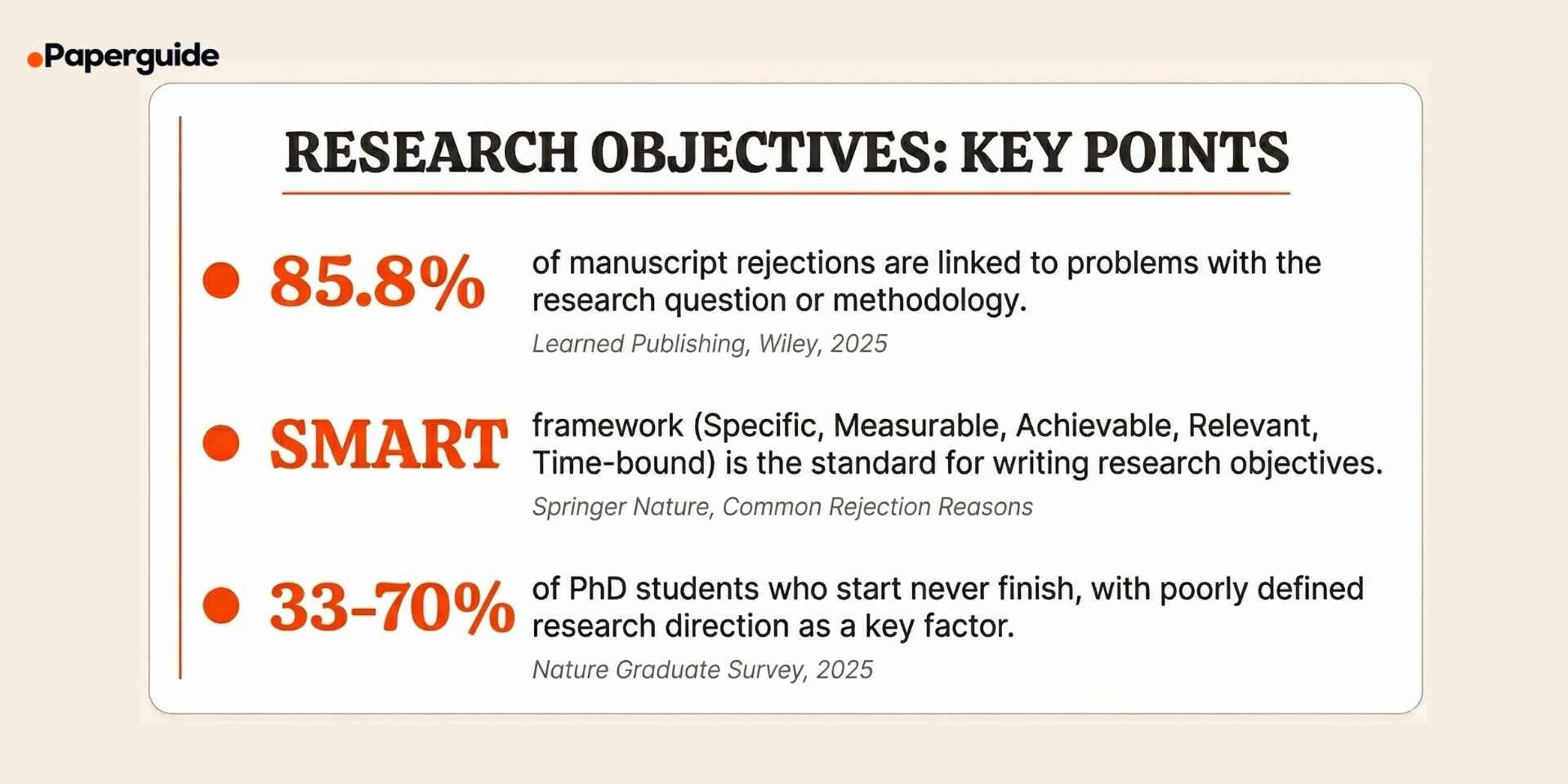
- Up to 85.8% of manuscript rejections are linked to problems with the research question or methodology, which includes poorly defined objectives. [2]
- Every research objective should begin with an action verb such as "examine," "determine," "assess," or "evaluate."
- Use the checklist and template in this guide to evaluate and refine your objectives before submitting your proposal.
What Are Research Objectives?
Research objectives are clear, concise statements that describe what a study intends to accomplish. They define the specific outcomes the researcher expects to achieve and provide a measurable framework for evaluating whether the study succeeded in its purpose.
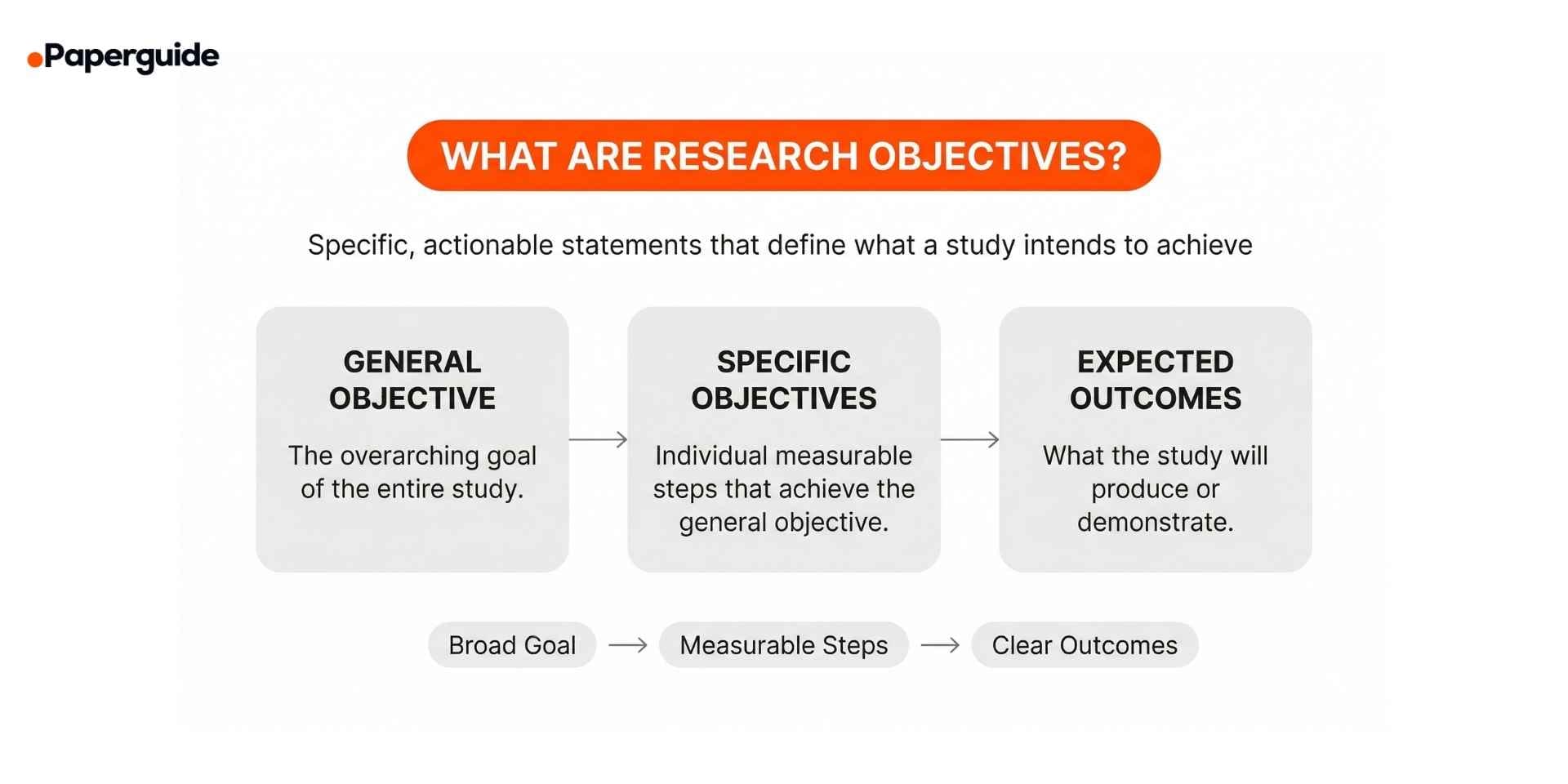
Think of research objectives as the answer to the question: What exactly will this study do, and how will I know when it is done?
Research objectives are not the same as a research problem or research question. A research problem identifies the gap. A research question asks what needs to be investigated. Research objectives state what the study will do to address that question. They are action-oriented and typically begin with verbs such as "examine," "determine," "compare," "assess," "evaluate," or "identify."
For example, "student engagement in online learning" is a topic. "How does gamification affect student engagement in online courses?" is a research question. A research objective would be: "To measure the effect of gamification on student engagement scores in undergraduate online courses over one academic semester."
Research objectives typically appear in the introduction or methodology section of a thesis, dissertation, or research proposal. They connect directly to the research methodology and determine how data will be collected and analyzed.
Most studies include one general objective (the overarching aim) and two to five specific objectives (individual measurable steps). The general objective states the broad goal, while specific objectives break it down into smaller, achievable components.
Research Objectives vs Research Questions vs Hypotheses
Although research objectives, research questions, and hypotheses are closely related, they serve different functions in the research process. Confusing them is one of the most common mistakes in academic proposals.
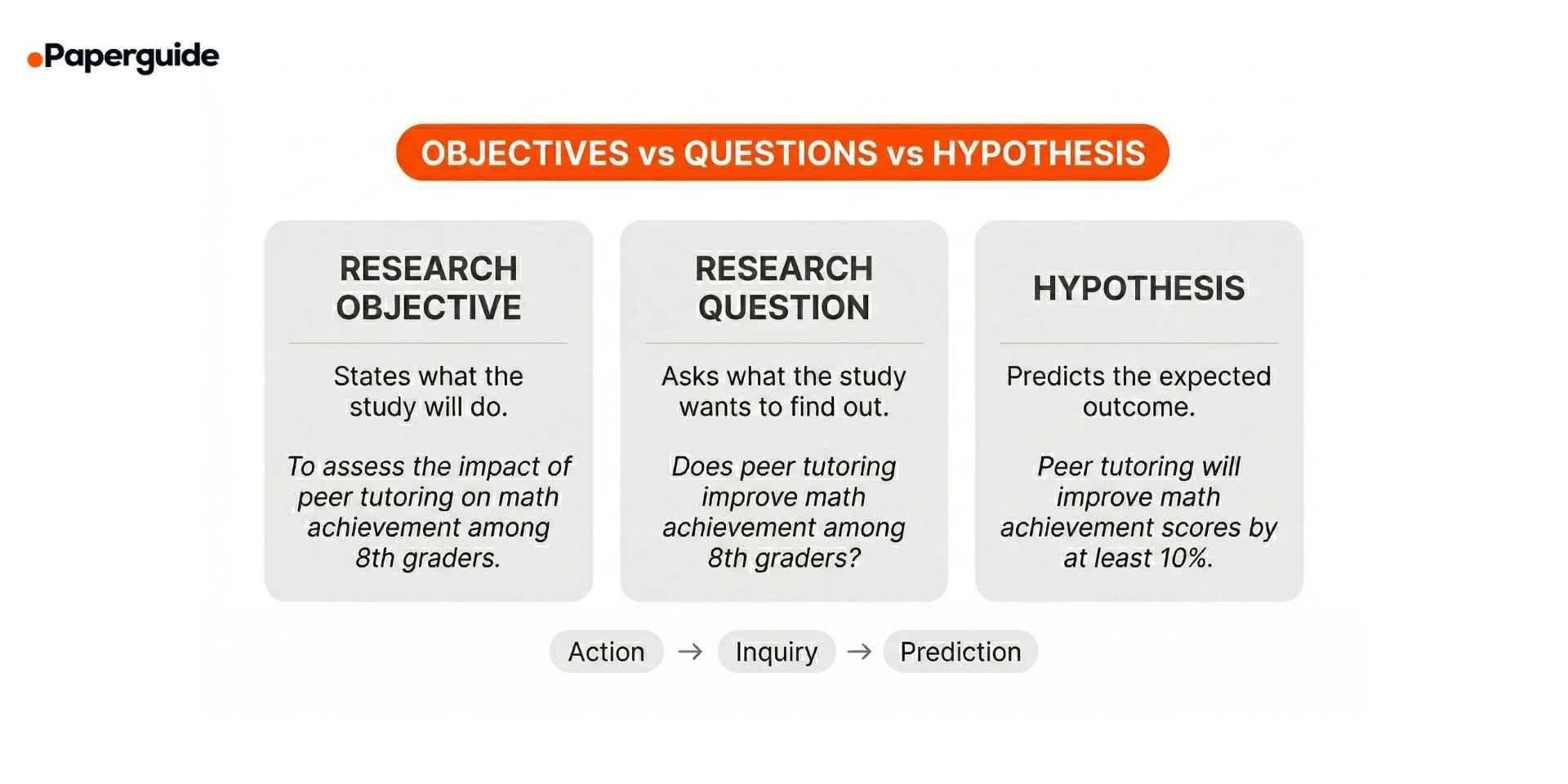
- A research objective states what the study will do. It is action-oriented and describes the intended outcome. Example: To assess the impact of peer tutoring on math achievement among 8th-grade students.
- A research question asks what the study wants to find out. It frames the inquiry but does not state an expected result. Example: Does peer tutoring improve math achievement among 8th-grade students?
- A hypothesis predicts the expected outcome of the study. It is testable and typically used in quantitative research. Example: Students who receive peer tutoring will score at least 10% higher on math assessments than those who do not.
Understanding the distinction helps ensure each element serves its intended role. Research objectives guide the study design, research questions frame the inquiry, and hypotheses provide testable predictions.
Why Research Objectives Matter
Well-defined research objectives are not optional. They directly affect whether a study is accepted, funded, or completed successfully. With 85.8% of manuscript rejections linked to problems with the research question or methodology, poorly written objectives can undermine an otherwise strong study. [2]
They structure your entire study. Research objectives determine what data you collect, which research methods you use, and how you analyze results. Without clear objectives, every subsequent research decision lacks a foundation.
They justify your methodology. Reviewers and supervisors evaluate whether the chosen methods are appropriate for the stated objectives. If your objectives are vague, your methodology will appear arbitrary.
They enable evaluation. At the end of a study, research objectives provide the criteria for determining whether the research succeeded. If you cannot point to each objective and show it was addressed, the study is incomplete.
They prevent scope creep. Research that lacks defined objectives tends to expand beyond manageable boundaries. Clear objectives keep the study focused and achievable within time and resource constraints.
They improve funding success. Grant applications require clearly articulated objectives. Vague or overly ambitious objectives signal to reviewers that the researcher has not thought through the study's scope, reducing the chances of funding approval. [3]
They reduce your risk of non-completion. Research shows that 33% to 70% of PhD students who start never finish their degree, with poorly defined research direction cited as a key early-stage failure point. [4]

How to Write Research Objectives (Step-by-Step)
Writing research objectives follows a structured process. Each step builds on the previous one. Follow these five steps to move from a broad research problem to focused, measurable objectives.
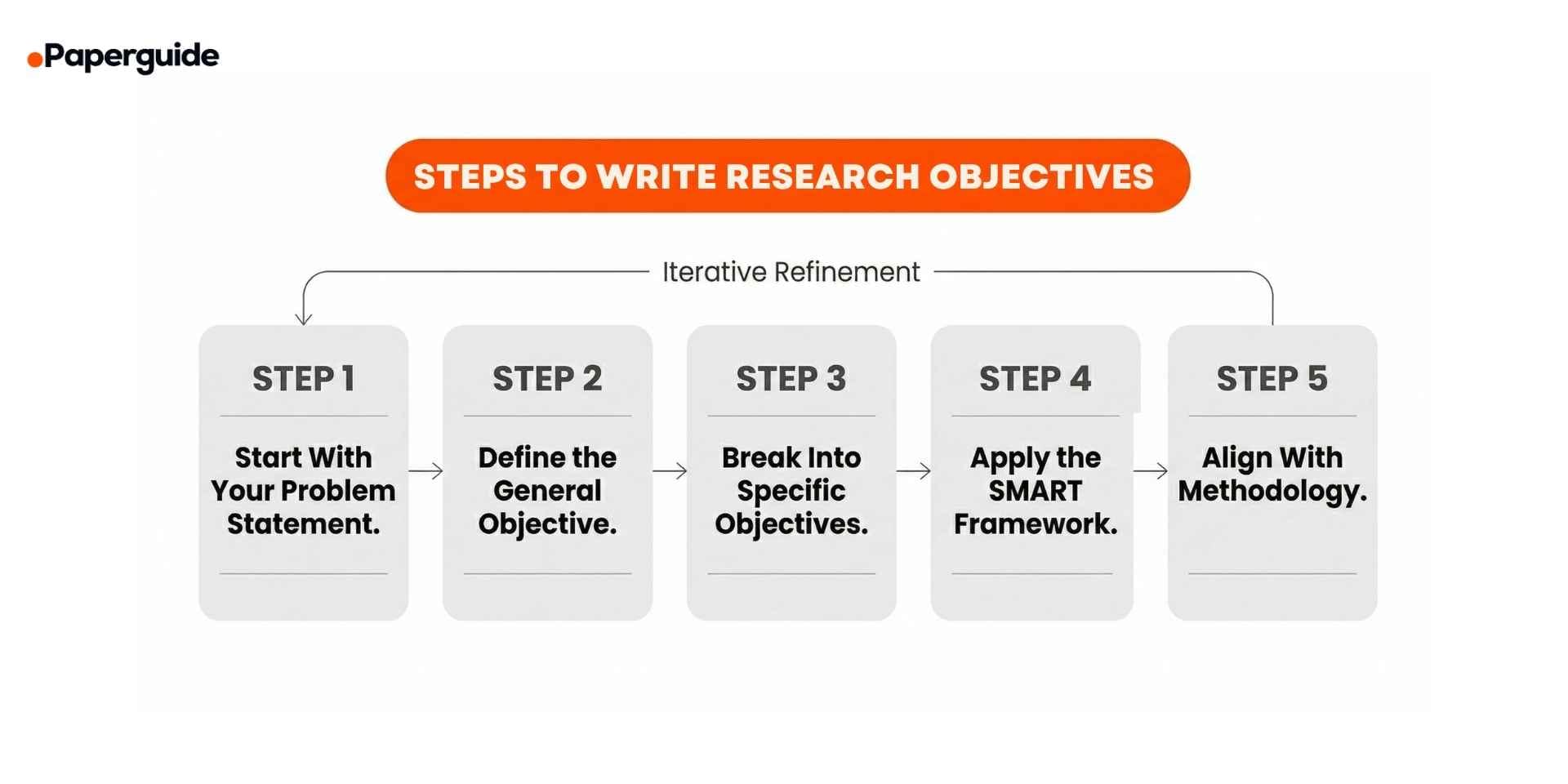
Step 1: Start With Your Research Problem Statement
Research objectives are derived from the research problem. Before writing objectives, ensure you have a clearly defined problem statement that identifies the knowledge gap, context, and purpose of your study.
Ask yourself: What specific gap did I identify? What does my study aim to do about it?
If your problem statement is vague, your objectives will be vague. Review the problem statement and ensure it points to a specific, researchable issue before proceeding.
Step 2: Define the General Objective
The general objective (also called the primary objective or overall aim) describes the overarching purpose of the study in a single statement. It answers the question: What is the main goal of this research?
Use a clear action verb and keep it broad enough to capture the full scope of the study.
Example: "To examine the relationship between remote work frequency and employee productivity in mid-sized technology firms."
The general objective sets the direction. Specific objectives break it into measurable components.
Step 3: Break It Into Specific Objectives
Specific objectives are the individual, measurable steps required to achieve the general objective. Most studies include two to five specific objectives.
Each specific objective should:
- Address one aspect of the general objective
- Begin with an action verb (examine, determine, compare, assess, evaluate, identify, measure)
- Be independently achievable and measurable
- Contribute directly to answering the research question
Example specific objectives for the general objective above:
- To measure the average weekly productivity output of remote employees compared to in-office employees across 10 mid-sized technology firms.
- To identify the key factors that influence productivity differences between remote and in-office work arrangements.
- To evaluate employee perceptions of remote work policies and their impact on work quality.
Each specific objective is a distinct, measurable task that together fulfills the general objective.
Step 4: Apply the SMART Framework
The SMART framework is the most widely used standard for evaluating research objectives. Each objective should be:
- Specific: Clearly states what will be done, for whom, and in what context.
- Measurable: Includes criteria that allow you to determine whether the objective was achieved.
- Achievable: Can be realistically accomplished within available time, resources, and data access.
- Relevant: Directly relates to the research problem, question, and knowledge gap.
- Time-bound: Specifies a timeframe or boundary for completion.
Before finalizing your objectives, test each one against these five criteria. If an objective fails any criterion, revise it.
Step 5: Align Objectives With Your Methodology
Each research objective should map directly to a methodological approach. If you cannot explain how an objective will be achieved through your chosen methods, either the objective or the methodology needs revision.
Ask yourself:
- What data do I need to achieve this objective?
- Which method will I use to collect and analyze that data?
- Is this feasible within my timeline and resources?
This alignment ensures that your objectives are not just aspirational statements but actionable research tasks.
Research Objectives Examples
Concrete examples help clarify what strong research objectives look like compared to weak ones across different disciplines.
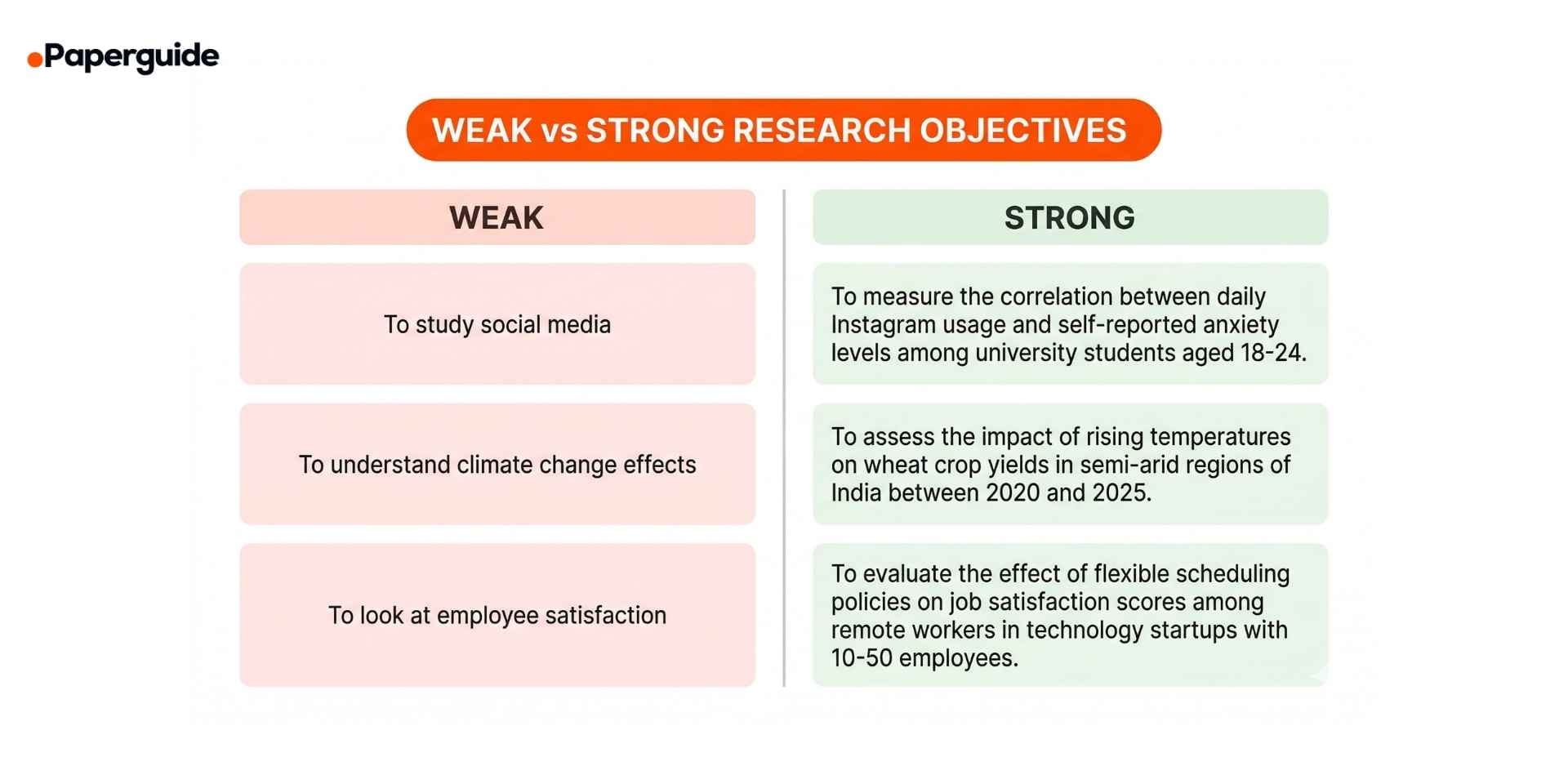
Example 1: Social Sciences
Weak: "To study the effects of social media on students."
Strong:
- General objective: "To examine the relationship between social media usage and academic performance among undergraduate students at public universities."
- Specific objective 1: "To measure the correlation between daily social media screen time and semester GPA among 500 undergraduate students."
- Specific objective 2: "To identify the three most frequently used social media platforms among the study population and their association with study hours."
- Specific objective 3: "To evaluate whether social media usage patterns differ significantly between high-performing and low-performing students."
Why it works: Each objective is specific, measurable, and directly tied to the general aim. The weak version is a topic statement, not an objective.
Example 2: Health Research
Weak: "To understand diabetes management."
Strong:
- General objective: "To assess the effectiveness of a mobile health application on glycemic control among Type 2 diabetes patients in urban primary care settings."
- Specific objective 1: "To compare HbA1c levels between patients using the mobile health app and those receiving standard care over a 12-month period."
- Specific objective 2: "To measure patient adherence rates to the mobile health intervention during the study period."
- Specific objective 3: "To identify demographic and clinical factors associated with improved glycemic outcomes in the intervention group."
Example 3: Business Research
Weak: "To look at remote work and productivity."
Strong:
- General objective: "To evaluate the impact of remote work policies on project delivery outcomes in mid-sized software development teams."
- Specific objective 1: "To compare on-time project delivery rates between fully remote and hybrid teams across 15 mid-sized technology firms."
- Specific objective 2: "To assess the relationship between remote work frequency and code review turnaround times."
- Specific objective 3: "To identify managerial practices associated with high productivity in distributed software teams."
Each strong example follows the same pattern: action verb + specific variable + population + context + measurable outcome.
Common Mistakes and How to Fix Them
Even experienced researchers make errors when writing objectives. Avoiding these common mistakes can prevent proposal rejection and improve the overall quality of your research design.
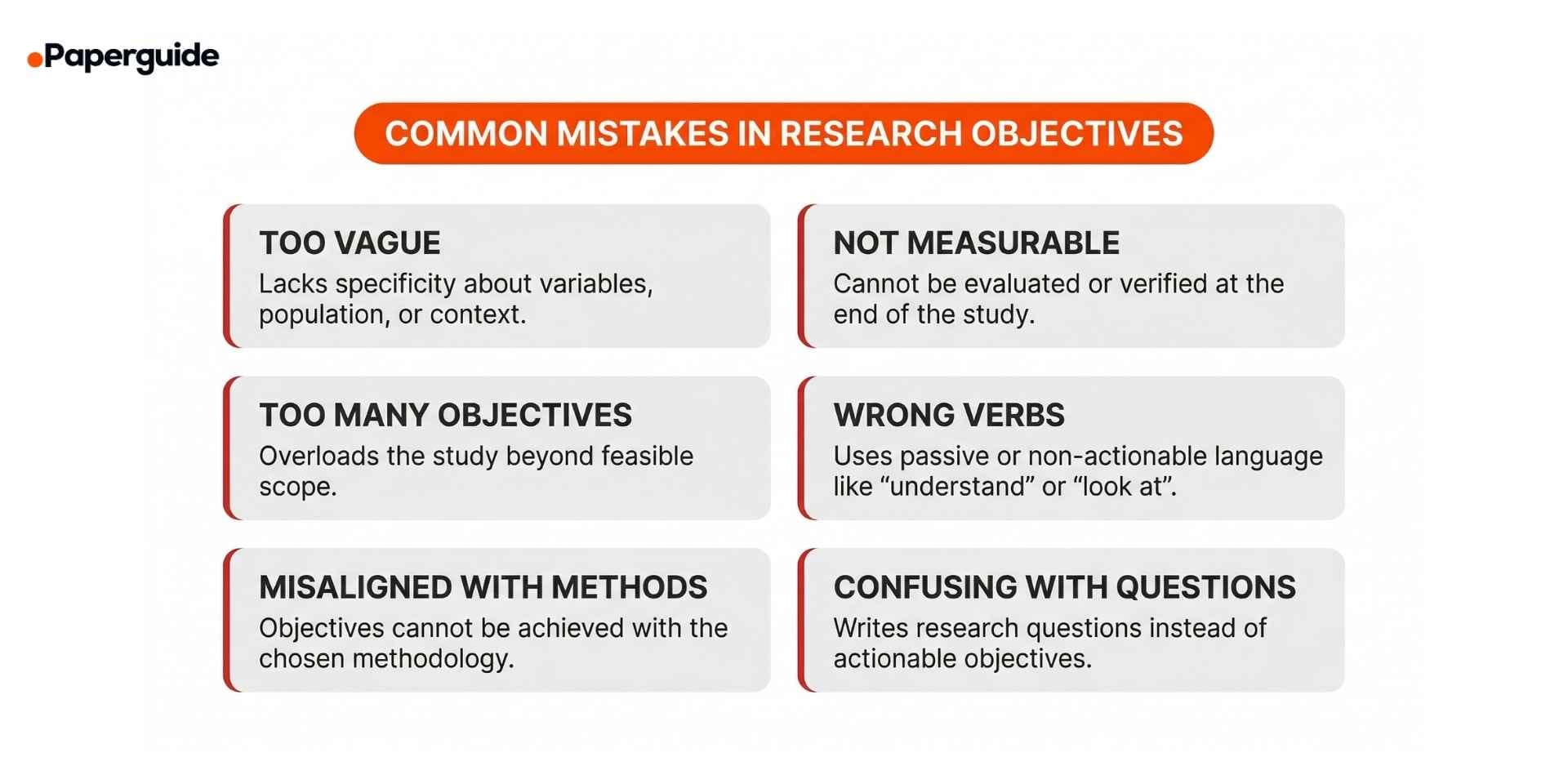
Mistake 1: Writing Objectives That Are Too Vague
Error: "To study the impact of technology on education."
Fix: Specify the technology, the population, and the educational outcome being measured.
Corrected: "To measure the effect of tablet-based learning applications on reading comprehension scores among 4th-grade students in urban public schools over one academic year."
Mistake 2: Using Non-Actionable Verbs
Error: "To understand how employees feel about remote work."
Fix: Replace "understand" with a measurable action verb. "Understand" cannot be measured or verified.
Corrected: "To assess employee satisfaction levels with remote work policies using a validated Likert-scale survey administered to 300 employees across five organizations."
Mistake 3: Confusing Objectives With Research Questions
Error: "What factors influence student dropout rates?"
Fix: Convert the question into an action-oriented statement.
Corrected: "To identify the primary academic, financial, and social factors that influence first-year dropout rates at community colleges in the southeastern United States."
Mistake 4: Including Too Many Objectives
Error: Listing seven or more specific objectives in a single study.
Fix: Limit specific objectives to two to five per study. Each additional objective increases the scope, data requirements, and risk of non-completion. If you have more than five, consider narrowing the study or splitting it into multiple projects.
Mistake 5: Objectives That Cannot Be Measured
Error: "To explore the nature of creativity in the workplace."
Fix: Define what aspect of creativity you will measure and how.
Corrected: "To evaluate the relationship between workspace design features and the number of novel ideas generated during brainstorming sessions among product design teams."
Mistake 6: Misalignment Between Objectives and Methodology
Error: Writing objectives that require experimental data when the study design is observational.
Fix: Ensure each objective can be achieved using the chosen methodology. If an objective requires comparison between groups but your design is cross-sectional, either adjust the objective or change the design. [5]
Research Objectives Quality Checklist
Use this checklist to evaluate your research objectives before including them in your proposal, thesis, or journal submission.
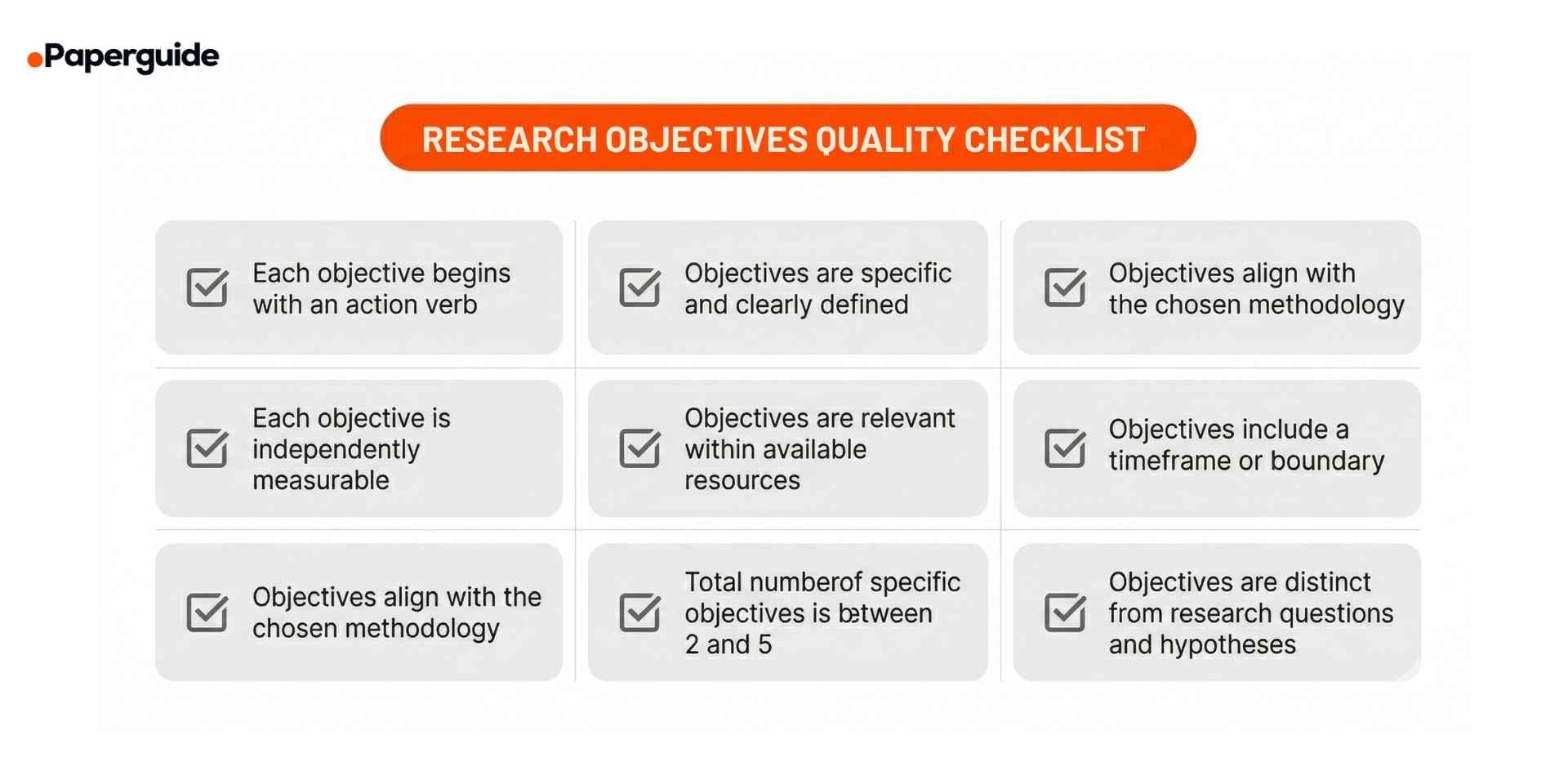
- [ ] Each objective begins with an action verb. Uses verbs like "examine," "determine," "compare," "assess," "evaluate," or "identify."
- [ ] Objectives are specific and clearly defined. The reader can identify exactly what will be studied, for whom, and in what context.
- [ ] Each objective is independently measurable. There are clear criteria for determining whether each objective was achieved.
- [ ] Objectives are achievable within available resources. Time, data access, budget, and methodology support completion.
- [ ] Objectives are relevant to the research problem. Each objective connects directly to the stated knowledge gap.
- [ ] Objectives include a timeframe or boundary. The scope is defined by time period, geography, population, or context.
- [ ] Objectives align with the chosen methodology. Each objective can be achieved using the proposed research methods.
- [ ] Total number of specific objectives is between two and five. The study is focused and manageable.
- [ ] Objectives are distinct from research questions and hypotheses. Each element serves its intended function without overlap.
Research Objectives Template
Use this fill-in template to draft your research objectives. Replace the bracketed sections with your own content.
General Objective: To [action verb] the [variable/phenomenon] in [population/context] [timeframe if applicable].
Specific Objective 1: To [action verb] the [specific variable or relationship] among [specific population] using [method or data source].
Specific Objective 2: To [action verb] the [specific factor or outcome] in [specific context or setting] over [time period].
Specific Objective 3: To [action verb] whether [specific condition or variable] is associated with [outcome] in [population].
Filled Example:
General Objective: To examine the impact of mindfulness-based interventions on academic stress and exam performance among undergraduate students.
Specific Objective 1: To measure changes in self-reported academic stress levels among 200 undergraduate students before and after an 8-week mindfulness program using the Perceived Stress Scale (PSS-10).
Specific Objective 2: To compare semester exam scores between students participating in the mindfulness intervention and a matched control group.
Specific Objective 3: To identify whether baseline anxiety levels moderate the effectiveness of the mindfulness intervention on exam performance.
Where Do Research Objectives Fit in the Research Process?
Research objectives appear early in the research workflow, directly after the problem statement and research questions. Understanding their position helps you write them with the right level of detail.
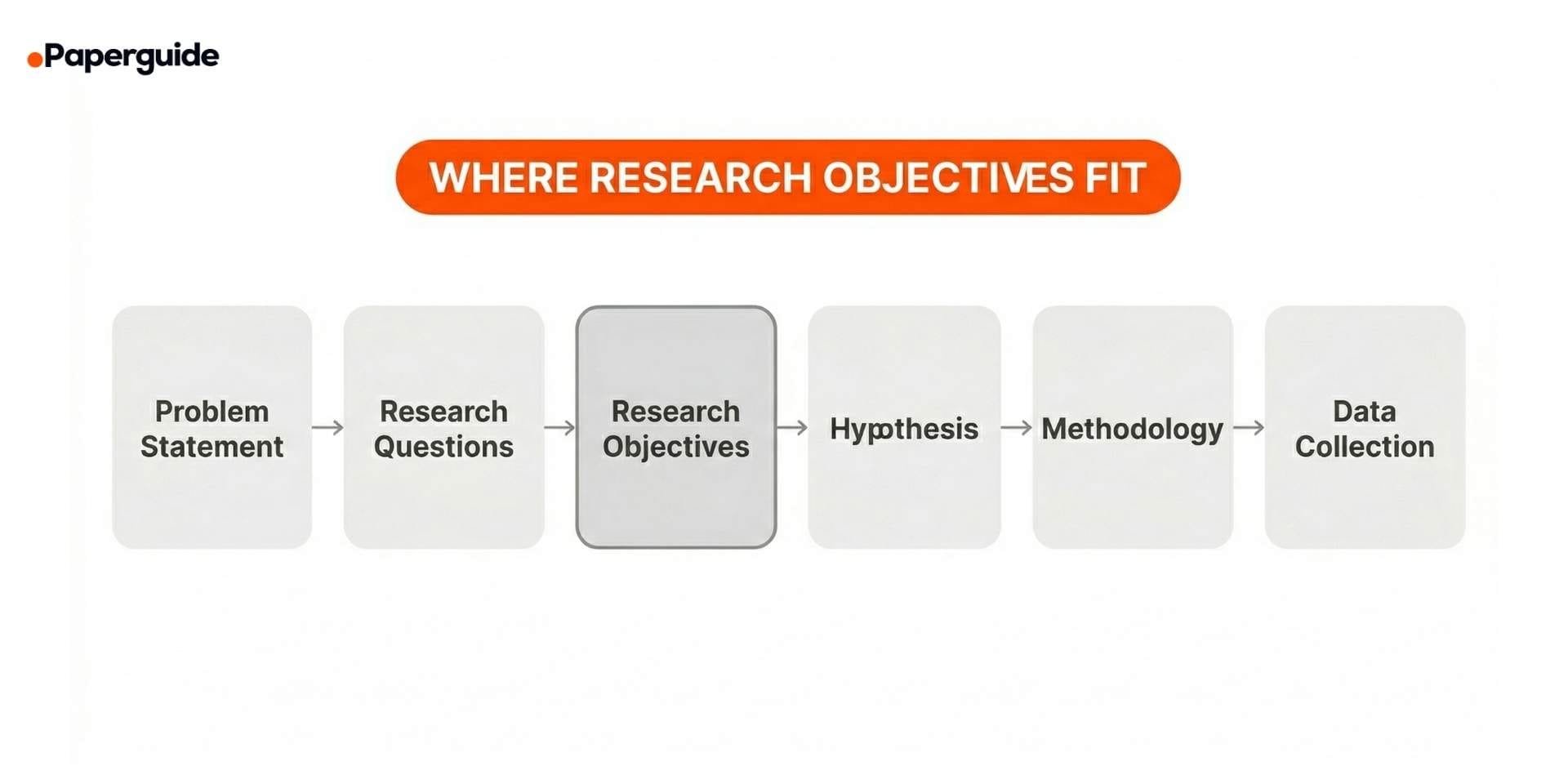
The typical sequence is:
- Write the problem statement, the specific issue your study addresses
- Formulate research questions, the specific questions your study will answer
- Define research objectives, what the study will do to answer those questions
- Develop a hypothesis, a testable prediction (if applicable)
- Design the methodology, how the study will be conducted
- Collect and analyze data, guided by the objectives
Each step builds on the previous one. Vague objectives create misalignment between your research questions and methodology.
You can also explore different types of research papers to understand how objectives vary across article types and disciplines.
Validate This With Papers (2 Minutes)
Before finalizing your research objectives, verify them against published research in your field. A quick validation step ensures your objectives are realistic, appropriately scoped, and aligned with how similar studies have been designed.
Step 1: Search for studies similar to yours using an academic search engine or database. Enter your research topic as a question and review the top results.
Step 2: Open two or three relevant papers. Look specifically at how the authors phrased their objectives. Note the action verbs, level of specificity, and number of objectives they used.
Step 3: Use a Chat with PDF tool to extract the objectives section from each paper. Compare them with yours. Are your objectives similarly scoped? Do they use the same level of precision?
This takes about two minutes and prevents the common mistake of writing objectives that are either too ambitious or too narrow for the type of study you are conducting.
Conclusion
Research objectives are the operational backbone of any academic study. They translate a broad research problem into specific, actionable tasks that guide your methodology, data collection, and analysis. Without clearly defined objectives, your study lacks direction, your methodology lacks justification, and your results lack a framework for evaluation. The five-step process outlined in this guide, start with your problem statement, define the general objective, break it into specific objectives, apply the SMART framework, and align with methodology, gives you a repeatable system for writing objectives that are precise, measurable, and achievable. Use the checklist and template above to evaluate your draft before submitting it to a supervisor, committee, or journal.
The strongest research is built on the clearest objectives. Whether you are writing your first thesis proposal, applying for a research grant, or revising a manuscript for resubmission, investing time in your objectives saves hours of revision downstream. Review two or three published papers in your field, compare how their authors structured their objectives, and refine yours until each one passes every item on the checklist. Your next step is to design a methodology that maps directly to each objective and move your study from planning to execution.
Frequently Asked Questions
What are research objectives?
Research objectives are specific, actionable statements that define what a study intends to achieve. They describe the outcomes the researcher expects to produce and provide measurable criteria for evaluating whether the study accomplished its purpose. Research objectives are derived from the research problem and research questions and guide every subsequent decision in the research process.
What is the difference between research objectives and research questions?
Research questions ask what the study wants to find out. Research objectives state what the study will do. A question frames the inquiry ("Does X affect Y?"), while an objective describes the action ("To determine whether X affects Y among Z population"). Both are necessary, but they serve different roles in the research design.
How many research objectives should a study have?
Most studies include one general objective and two to five specific objectives. The general objective captures the overall aim, while specific objectives break it into measurable components. Having fewer than two specific objectives may indicate the study lacks depth, while having more than five often signals the scope is too broad for a single project.
What is the SMART framework for research objectives?
SMART stands for Specific, Measurable, Achievable, Relevant, and Time-bound. It is a widely used framework for evaluating whether research objectives are well-written. Each objective should clearly state what will be done (Specific), include criteria for success (Measurable), be realistic (Achievable), connect to the research problem (Relevant), and have defined boundaries (Time-bound).
Should research objectives use specific verbs?
Yes. Research objectives should begin with action verbs that indicate measurable activities. Preferred verbs include "examine," "determine," "compare," "assess," "evaluate," "identify," "measure," and "analyze." Avoid vague verbs such as "understand," "explore," "look at," or "study," as these cannot be measured or verified.
Can research objectives change during the study?
Yes, it is common to refine research objectives during the early stages of a study, particularly after the literature review or during pilot testing. However, significant changes after data collection has begun can compromise the study's integrity. Any revisions should be documented and justified in the final report or thesis.
Where do research objectives appear in a thesis or proposal?
Research objectives typically appear in the introduction section of a thesis, dissertation, or research proposal, immediately after the problem statement and research questions. They may also be referenced in the methodology section to show how each objective will be achieved through the chosen methods.
What is the difference between general and specific objectives?
The general objective describes the overall aim of the study in a single broad statement. Specific objectives break the general objective into individual, measurable tasks. For example, a general objective might be "To evaluate the effectiveness of a training program," while specific objectives would address individual aspects such as knowledge gain, skill application, and participant satisfaction.
References
- Springer Nature. (n.d.). Common reasons for journal article rejection.
- Nicholas, D., Watkinson, A., & Volentine, R., et al. (2024). Early career researchers and their publishing challenges. Learned Publishing.
- Wadman, M. (2025). NIH research grant success rates plummeted in 2025. Science.
- Nature. (2025). Nature’s graduate survey 2025 dataset.
- Young, N. S., Ioannidis, J. P. A., & Al-Ubaydli, O. (2008). Why current publication practices may distort science. PLoS Medicine, 5(10).