
How to Write a Research Question in 2026: (With Examples)


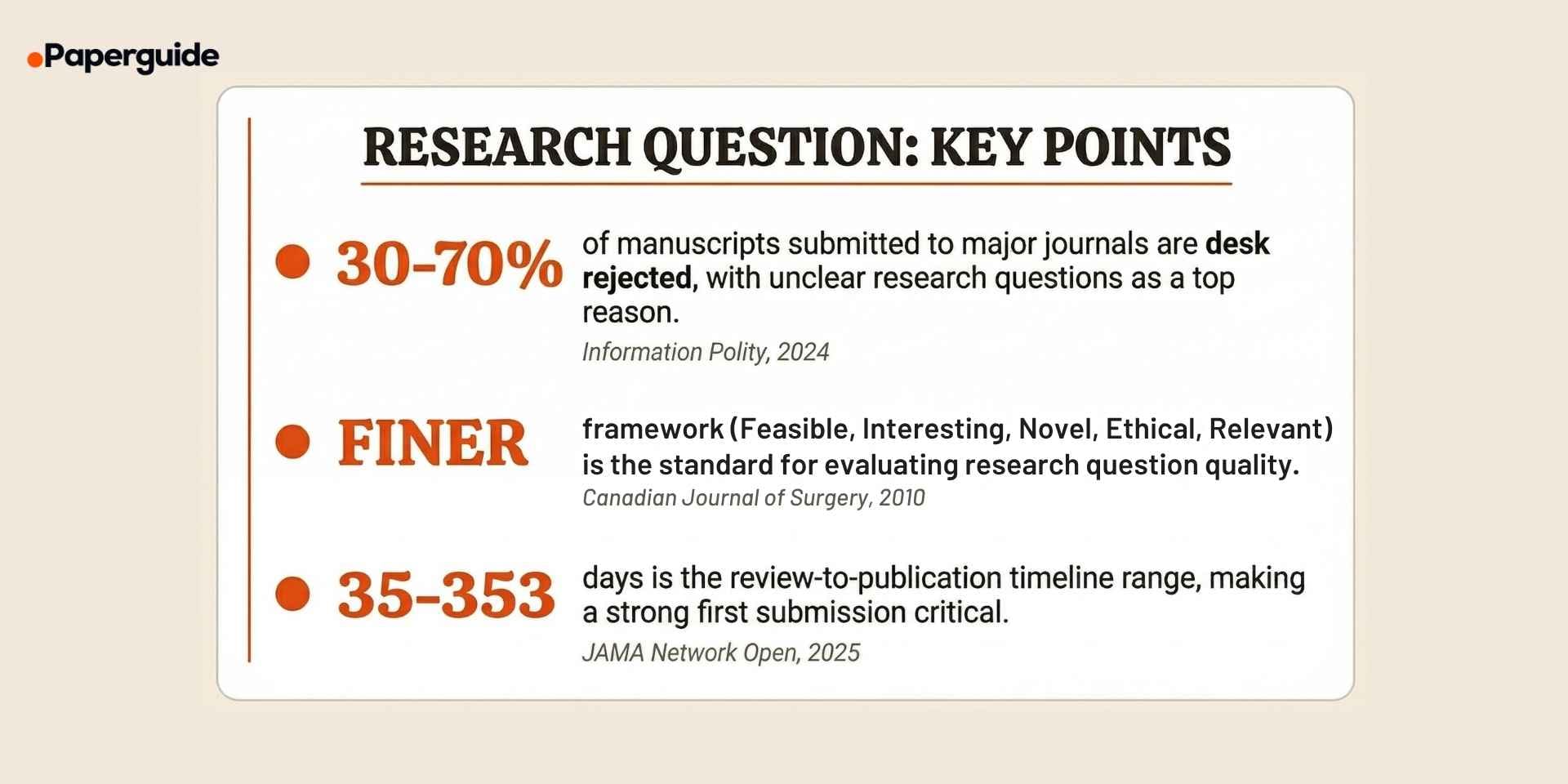
A research question is the single most important sentence in any academic study. It defines what the research will investigate, shapes the methodology, and determines whether the study produces meaningful results. Yet poorly framed research questions remain one of the leading causes of manuscript rejection. A 2024 editorial analysis in Information Polity found that unclear or overly broad research questions were among the top reasons editors desk-reject submissions, with some journals rejecting 60% to 70% of manuscripts before they even reach peer review. [1]
The challenge is that writing a good research question requires more than curiosity about a topic. It requires precision, scope awareness, and alignment with existing literature. A question that is too broad produces unfocused research. A question that is too narrow limits data availability and academic contribution. A question that has already been answered wastes time and resources. In 2026, with academic submissions rising sharply and peer review timelines stretching from 35 to 353 days depending on the journal, getting the research question right from the start is more important than ever.[2]
This guide covers what a research question is, how it differs from related concepts, types of research questions, a step-by-step process for writing one, and examples of good and bad research questions across disciplines. It also includes the FINER evaluation framework, a quality checklist, a ready-to-use template, and answers to the most common questions researchers ask.
TL;DR
Finding a strong research topic involves selecting a subject that is relevant, researchable, and properly scoped for your study. A good research topic is grounded in existing literature, addresses a clear academic gap, and remains feasible within available time and resources. While tools can assist in refining ideas, choosing an effective topic ultimately depends on careful evaluation of originality, clarity, and academic value.
Key Takeaways
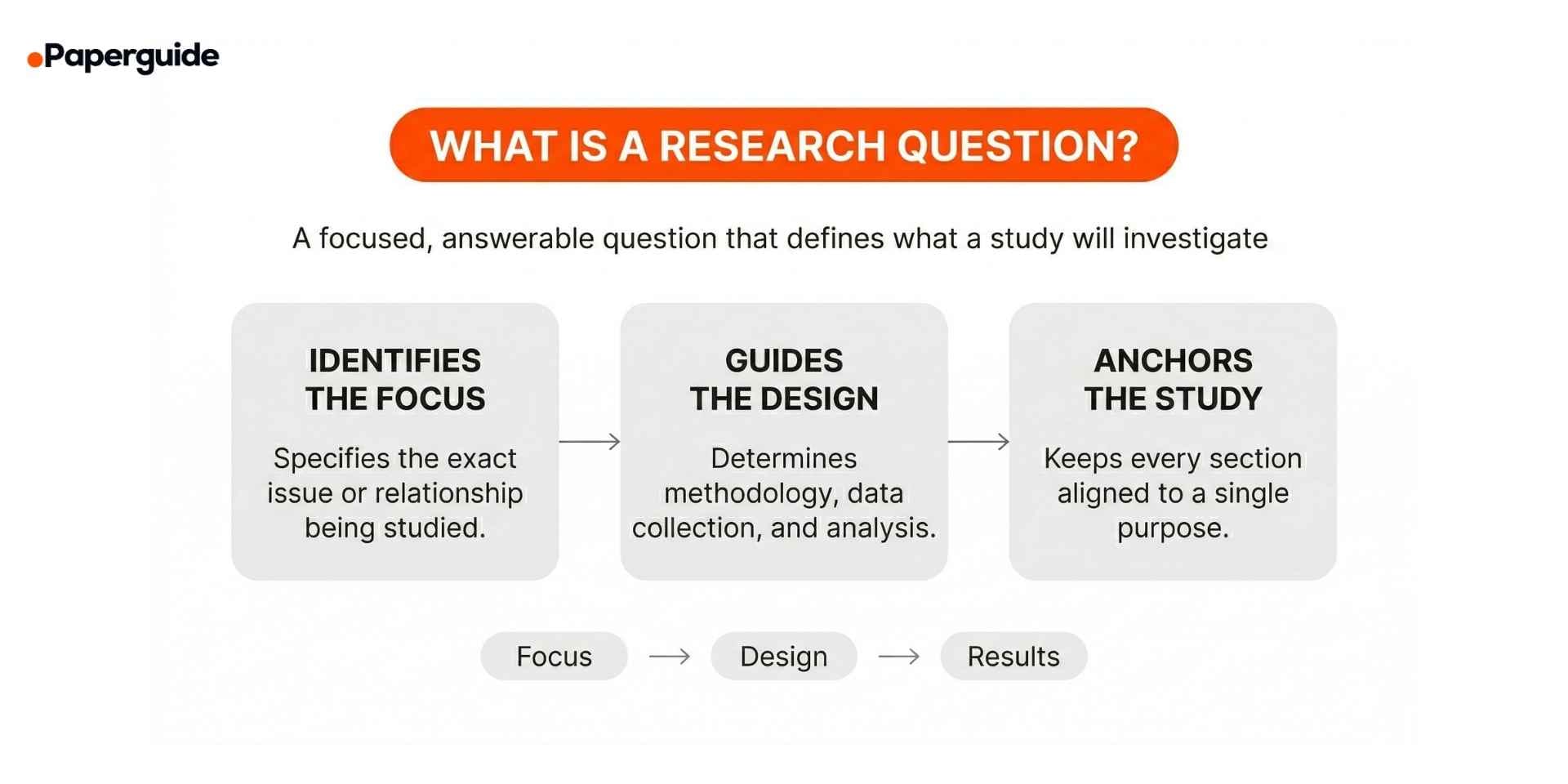
- A research question is a focused, answerable question that defines what a study will investigate.
- Strong research questions are specific, researchable, and grounded in a gap identified through literature review.
- The FINER framework (Feasible, Interesting, Novel, Ethical, Relevant) is the standard for evaluating research question quality.
- Desk rejection rates at major journals range from 30% to 70%, with unclear research questions consistently cited as a top reason. [1]
- Research questions differ from research topics (broader), hypotheses (predictive), and thesis statements (argumentative).
- Use the checklist and template in this guide to evaluate your research question before including it in a proposal or manuscript.
What Is a Research Question?
A research question is a clearly formulated question that a study aims to answer. It identifies the specific issue, relationship, or phenomenon the researcher intends to investigate and provides a framework for the entire research process.
Think of a research question as the answer to: What exactly am I trying to find out, and can I realistically investigate it?
A research question is not a topic, a title, or a hypothesis. "Social media and mental health" is a topic. "The Impact of Social Media on Adolescent Mental Health" is a title. A research question would be: "How does daily Instagram usage affect self-reported anxiety levels among university students aged 18 to 24?"
The research question typically appears in the introduction of a thesis, dissertation, or research proposal, immediately after the problem statement. It serves as the bridge between the identified knowledge gap and the study's objectives. Every methodological choice, from data collection to analysis technique, should trace back to the research question.
A well-written research question has three properties: it is focused (addresses one specific issue), answerable (can be investigated with available methods and data), and relevant (contributes something meaningful to existing knowledge).
Understanding the distinction between a research question and a thesis statement is important. A thesis statement makes an argument or claim. A research question asks what needs to be investigated. They serve different functions, though both emerge from the same research problem.
Types of Research Questions
Not all research questions serve the same purpose. The type of question you write depends on the nature of your study, the kind of data you plan to collect, and the research design you intend to use.
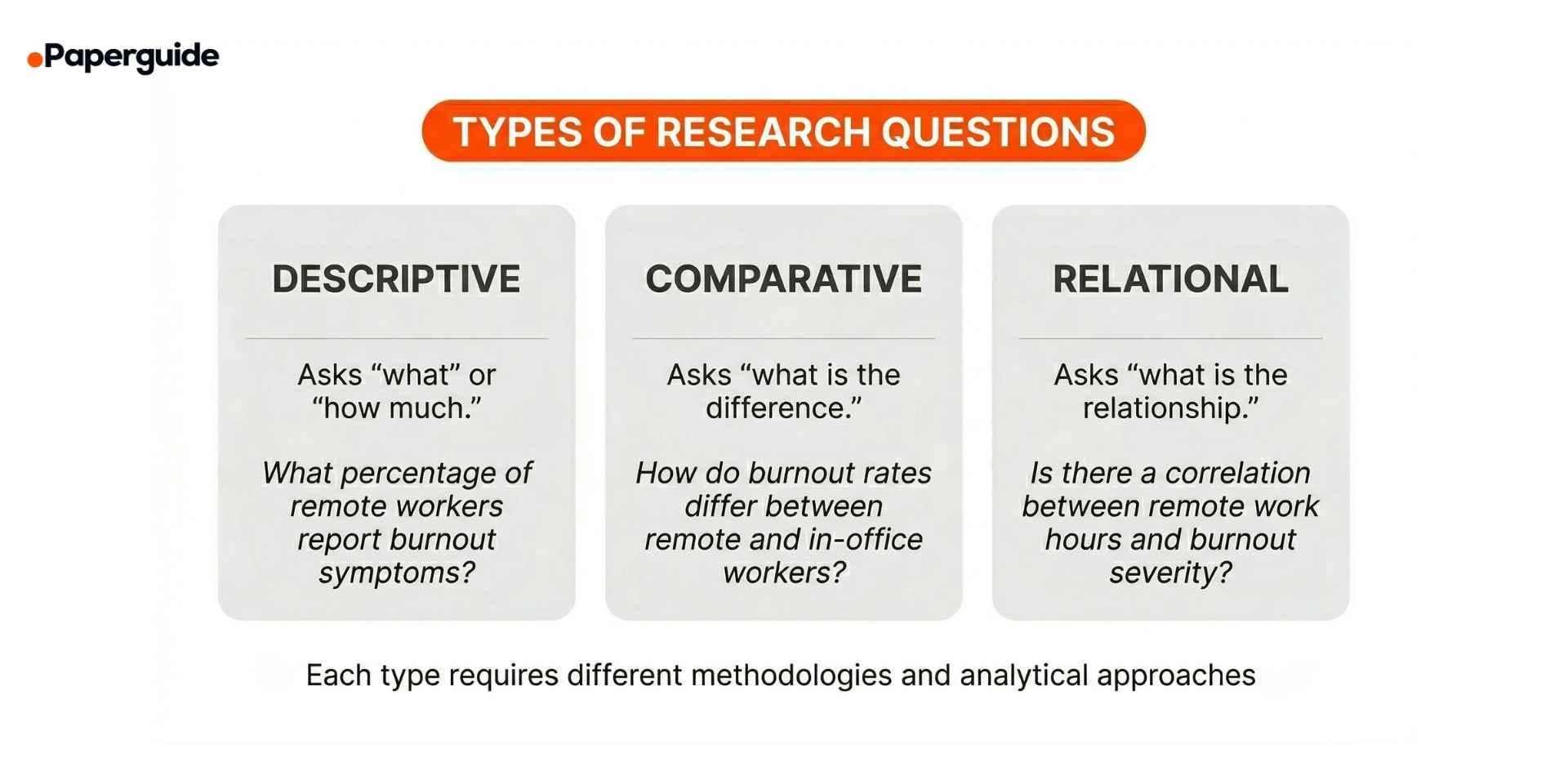
Descriptive Questions
Descriptive research questions ask "what," "how many," or "to what extent." They aim to describe a phenomenon, population, or situation without testing a causal relationship.
Example: "What are the most common barriers to healthcare access reported by rural residents in the southeastern United States?"
These questions are common in surveys, observational studies, and exploratory research.
Comparative Questions
Comparative research questions ask about differences between two or more groups, conditions, or time periods. They involve comparison but do not necessarily imply causation.
Example: "How do graduation rates differ between students who participated in mentorship programs and those who did not?"
Comparative questions are used in quasi-experimental and cross-sectional studies.
Relational (Correlational) Questions
Relational questions ask about the association or correlation between two or more variables. They investigate whether variables change together but do not establish cause and effect.
Example: "Is there a relationship between weekly exercise frequency and self-reported stress levels among graduate students?"
These questions are common in correlational and longitudinal studies, including meta-analysis research where relationships across multiple studies are synthesized.
Causal Questions
Causal research questions ask whether one variable directly causes a change in another. These require experimental or quasi-experimental designs with control groups.
Example: "Does a 12-week cognitive behavioral therapy program reduce anxiety symptoms in adolescents diagnosed with generalized anxiety disorder?"
Causal questions demand the highest level of methodological rigor and are typically addressed through randomized controlled trials or experimental designs.
Why a Strong Research Question Matters
A strong research question is not a formality. It is the structural foundation of the entire study. Without one, every subsequent decision, from methodology to analysis, lacks justification.
It determines whether your study gets past the editor. Desk rejection rates at major academic journals range from 30% to 70%. Among the most frequently cited reasons: the research question is unclear, too broad, or does not address a meaningful gap. A sharp research question immediately signals to editors that the study has focus and direction.[1]
It shapes your methodology. The type of research question you ask directly determines whether you need qualitative interviews, quantitative surveys, experimental designs, or mixed methods. A vague question produces a vague methodology.
It keeps your study focused. Without a precise question, research expands into tangential areas. A focused question acts as a boundary, keeping the literature review, data collection, and discussion aligned to a single purpose.
It defines what "success" looks like. At the end of your study, the research question is what you evaluate your findings against. Did you answer it? If you cannot clearly demonstrate that, the study is incomplete.
It accelerates the publication timeline. With peer review timelines averaging 35 to 353 days across health policy journals and extending even longer in social sciences, getting it right the first time avoids costly rejection-revision cycles that can delay publication by a year or more. [2]
It strengthens funding applications. Grant reviewers assess whether the research question is clear, novel, and achievable. Vague questions suggest the researcher has not fully thought through the study's scope. [3]

How to Write a Research Question (Step-by-Step)
Writing a research question is an iterative process. Each step builds on the previous one, refining broad curiosity into a precise, answerable question.
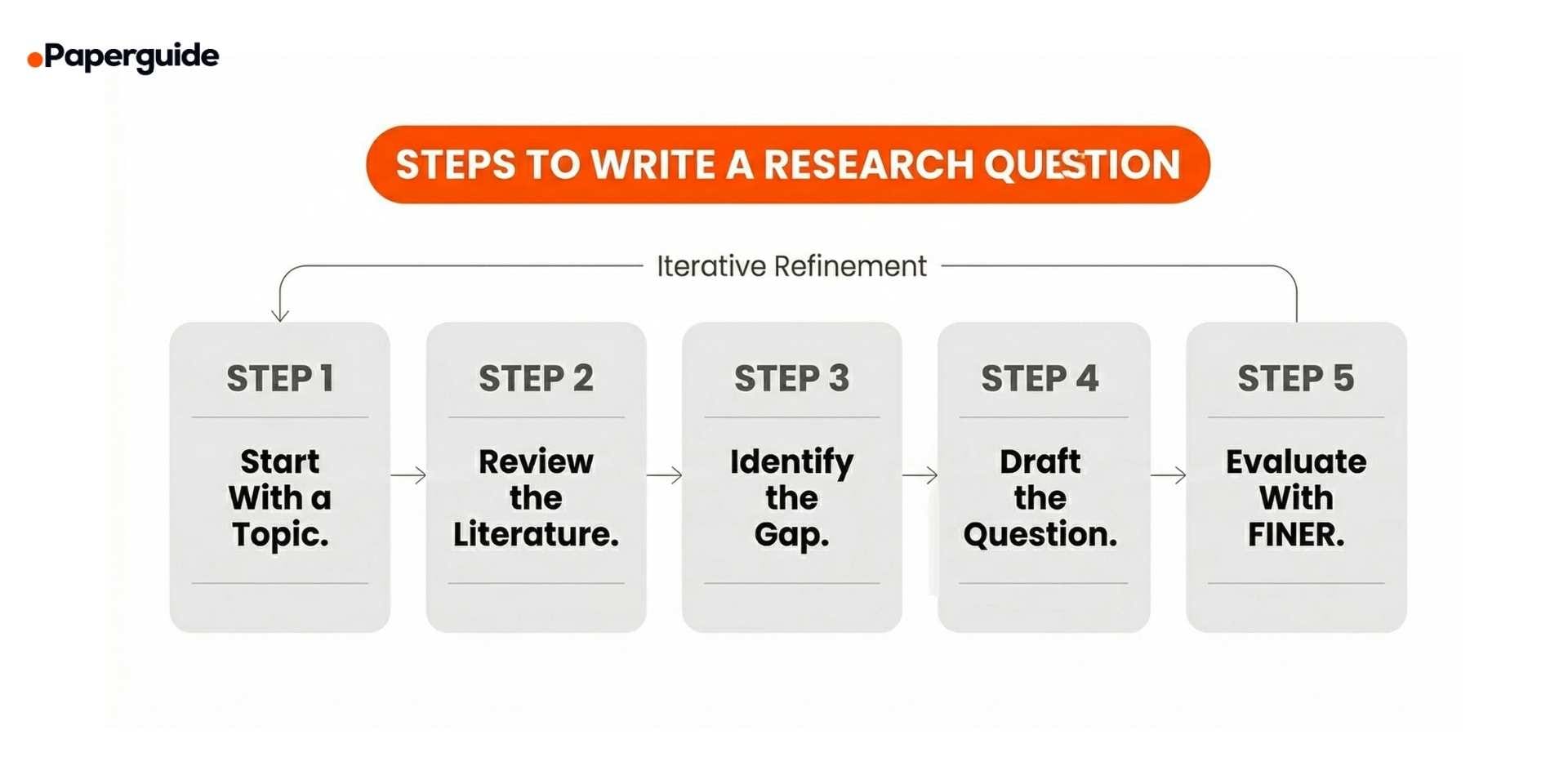
Step 1: Start With a Broad Topic
Begin with a general area of interest within your field. This could emerge from coursework, professional experience, current debates, or gaps you noticed while reading published research.
At this stage, avoid narrowing too quickly. Your goal is to identify a subject area worth investigating, not to finalize a question.
Example starting point: "I am interested in how artificial intelligence affects hiring practices."
Step 2: Review Existing Literature
Before you can write a good research question, you need to know what has already been studied. Conduct a targeted literature review to understand the current state of knowledge on your topic.
Look for:
- What aspects of the topic have been studied extensively?
- What populations, settings, or variables remain under-studied?
- Where do authors explicitly suggest further research is needed?
- Are there conflicting findings that need resolution?
This step ensures your question addresses a genuine gap rather than repeating existing work. Literature review tools and academic databases can help you survey the landscape efficiently. Understanding the difference between a systematic review and a meta-analysis can also help you determine how comprehensively a topic has been investigated.
Step 3: Identify the Specific Gap
The gap is what makes your research question original. It identifies the piece of knowledge that is missing, understudied, or unresolved.
Common types of gaps:
- Population gap: A phenomenon has been studied in adults but not in adolescents.
- Context gap: Research exists in urban settings but not in rural ones.
- Methodological gap: Previous studies relied on surveys; experimental evidence is missing.
- Temporal gap: Data is outdated and needs updating in the current context.
Be specific about what is missing. "More research is needed" is not a gap. "No published studies have examined X in Y population using Z method" is a gap.
Step 4: Draft the Research Question
Now write the question. A good research question typically includes:
- The variable(s) being studied
- The population or context
- The relationship or outcome of interest
Use one of these structures:
- Descriptive: "What is/are [variable] among [population] in [context]?"
- Comparative: "What is the difference in [outcome] between [group A] and [group B]?"
- Relational: "What is the relationship between [variable 1] and [variable 2] among [population]?"
- Causal: "Does [intervention] affect [outcome] in [population]?"
Example: "How does the use of AI-powered screening tools affect interview callback rates for entry-level job applicants in the UK technology sector?"
Step 5: Evaluate Using the FINER Framework
The FINER framework is the standard evaluation tool for research questions. [4] Test your question against all five criteria:
- Feasible: Can you realistically investigate this with available data, methods, time, and resources?
- Interesting: Does the question address something meaningful to the field or to practitioners?
- Novel: Does it contribute new knowledge, or does it only confirm what is already known?
- Ethical: Can the research be conducted without ethical violations? Does it require and can it obtain IRB approval?
- Relevant: Does the answer have implications for theory, practice, or policy?
If your question fails any criterion, revise it. The FINER framework often sends researchers back to Step 3 or Step 4 to refine their question further.
Research Question Examples: Good and Bad
Concrete examples across disciplines help illustrate what separates a strong research question from a weak one.
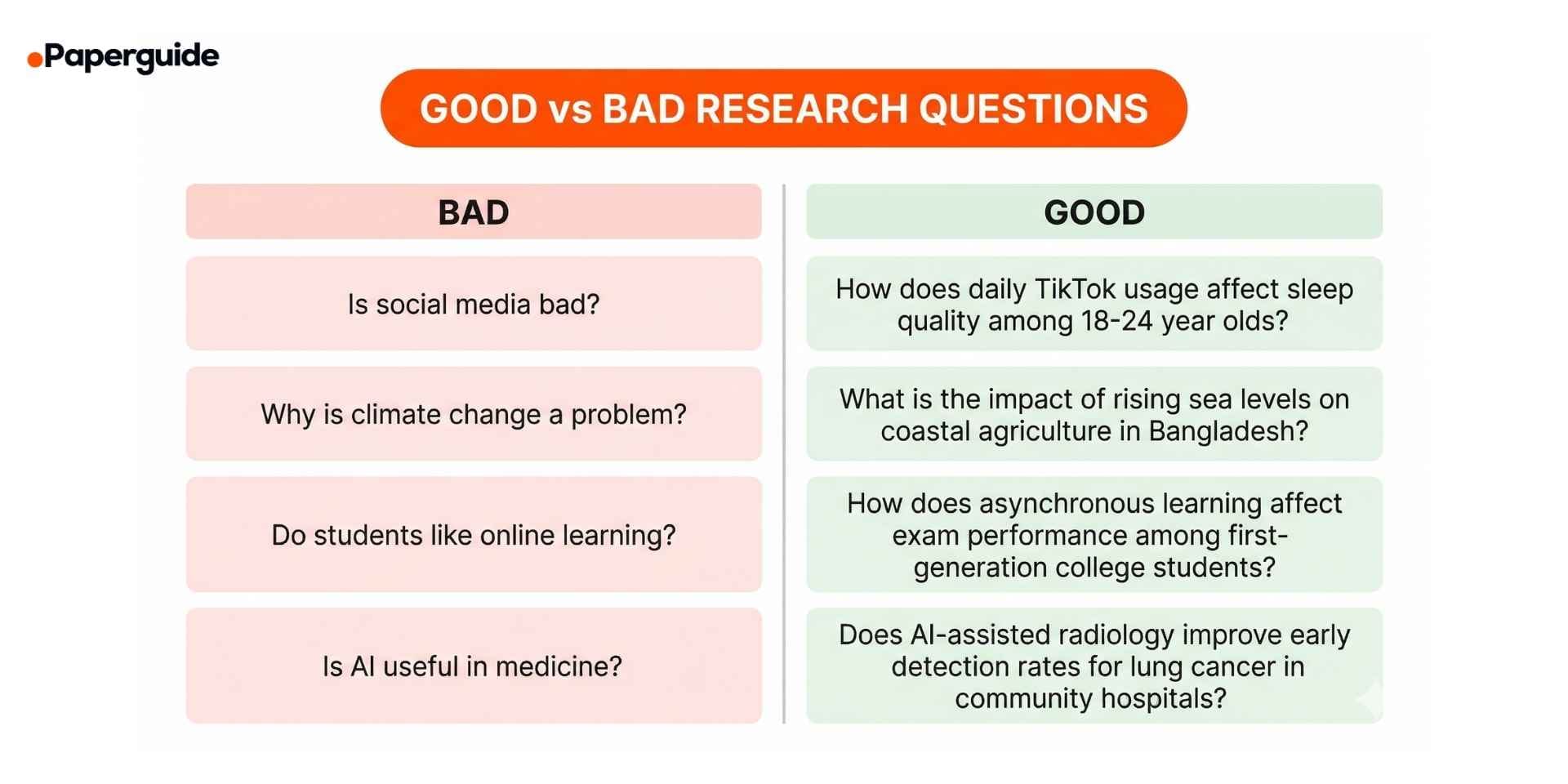
Example 1: Education
Bad: "Is online learning effective?"
Problem: Too broad. Effective for whom? In what context? Measured how?
Good: "How does asynchronous online learning affect exam performance among first-generation college students at public universities in the United States?"
Why it works: Specifies the learning format (asynchronous), the outcome (exam performance), the population (first-generation students), and the context (public universities, US).
Example 2: Public Health
Bad: "What causes burnout in healthcare workers?"
Problem: "What causes" implies a causal design, but the question is too broad to investigate. Which healthcare workers? Which type of burnout? What setting?
Good: "What is the relationship between shift length and emotional exhaustion scores among emergency department nurses in urban hospitals with over 500 beds?"
Why it works: Identifies the variables (shift length and emotional exhaustion), population (ED nurses), context (urban hospitals over 500 beds), and type of question (relational).
Example 3: Business and Management
Bad: "Does remote work affect productivity?"
Problem: Lacks specificity. Remote work for whom? Productivity measured how? Over what time period?
Good: "How does the frequency of mandatory in-office days affect quarterly code output among software developers at mid-sized technology firms with distributed teams?"
Why it works: Specifies the independent variable (mandatory in-office days), the dependent variable (quarterly code output), the population (software developers), and the organizational context (mid-sized firms, distributed teams).
Example 4: Environmental Science
Bad: "Why is climate change a problem?"
Problem: This is a philosophical question, not a research question. It cannot be investigated with a defined methodology.
Good: "What is the projected impact of a 2°C temperature increase on rice yield in the Mekong Delta region between 2025 and 2050?"
Why it works: Specifies the variable (2°C increase), the outcome (rice yield), the geographic context (Mekong Delta), and the timeframe (2025-2050).
Each good example follows the same pattern: specific variable + defined population + clear context + measurable outcome.
Common Mistakes and How to Fix Them
Research questions fail for predictable reasons. Recognizing these patterns helps you avoid them during drafting.
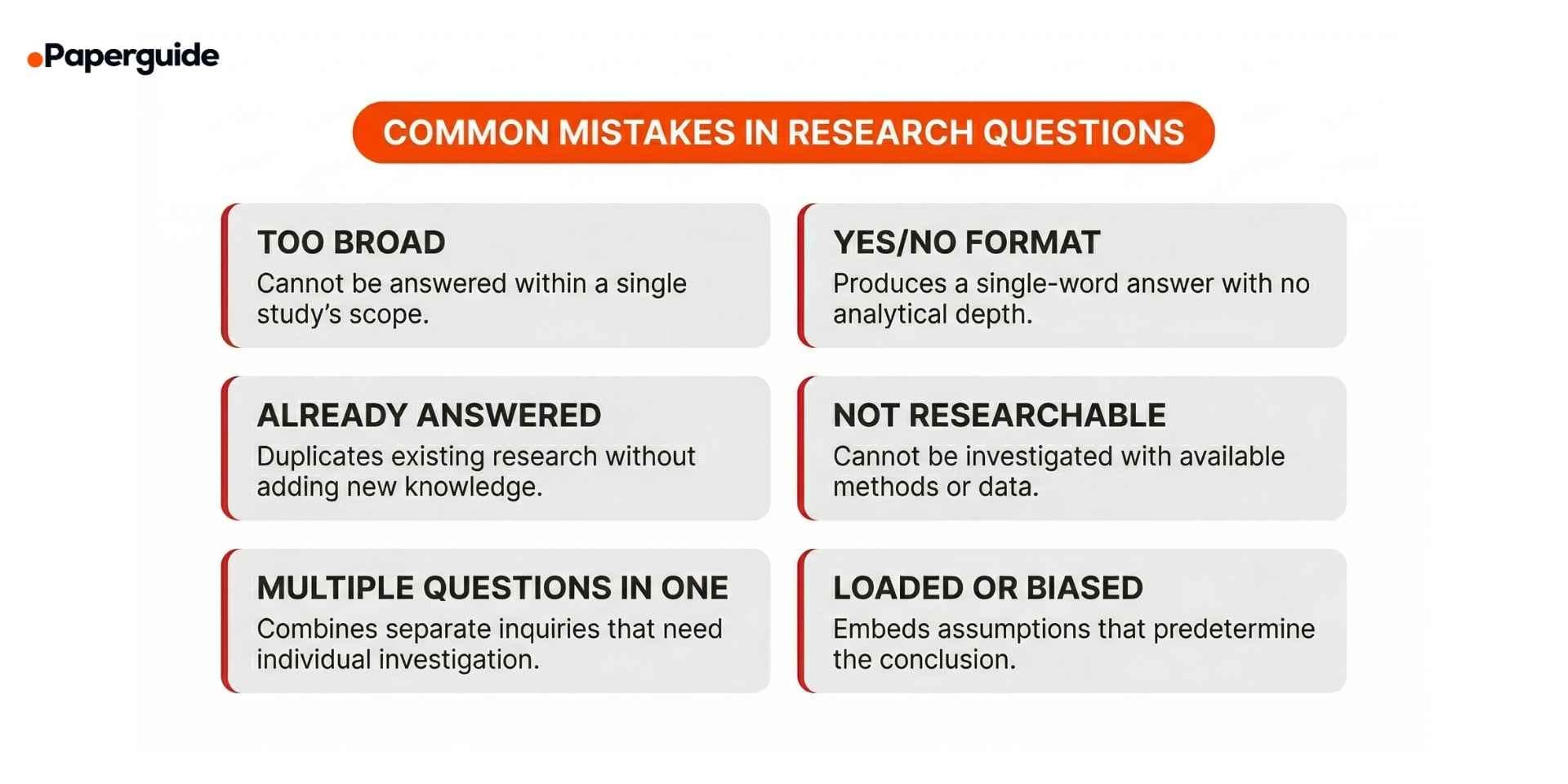
Mistake 1: Writing a Question That Is Too Broad
Error: "What are the effects of technology on society?"
Fix: Narrow the technology, the population, the effect, and the context.
Corrected: "How does smartphone screen time affect academic performance among high school students in suburban school districts?"
Mistake 2: Writing a Yes/No Question
Error: "Does exercise reduce stress?"
Fix: Yes/no questions produce single-word answers. Reframe to investigate how, to what extent, or under what conditions.
Corrected: "What is the relationship between weekly aerobic exercise duration and self-reported stress levels among full-time working professionals aged 30 to 50?"
Mistake 3: Asking a Question That Has Already Been Answered
Error: Posing a question where extensive published evidence already exists and the answer is well established.
Fix: Review the literature before finalizing your question. If the answer is already known, refine the question to address a remaining sub-question, a different population, or a new context.
Mistake 4: Combining Multiple Questions Into One
Error: "What are the causes, effects, and solutions for air pollution in developing countries?"
Fix: Each element (causes, effects, solutions) requires separate investigation. Split into individual research questions.
Corrected: "What are the primary sources of particulate matter pollution in Delhi, India, between 2020 and 2025?"
Mistake 5: Writing a Question That Cannot Be Researched
Error: "Is democracy the best form of government?"
Fix: Value judgments and subjective questions cannot be empirically investigated. Reframe to focus on measurable variables.
Corrected: "How does voter turnout in democratic elections correlate with government expenditure on public education across OECD countries?"
Mistake 6: Embedding Bias in the Question
Error: "Why is social media harmful to teenagers?"
Fix: This assumes social media is harmful. A research question should be neutral and open to findings in either direction.
Corrected: "What is the association between daily social media usage and self-reported wellbeing among adolescents aged 13 to 17?"
Research Question Quality Checklist (FINER + Structure)
Use this checklist to evaluate your research question before including it in your proposal, thesis, or manuscript.
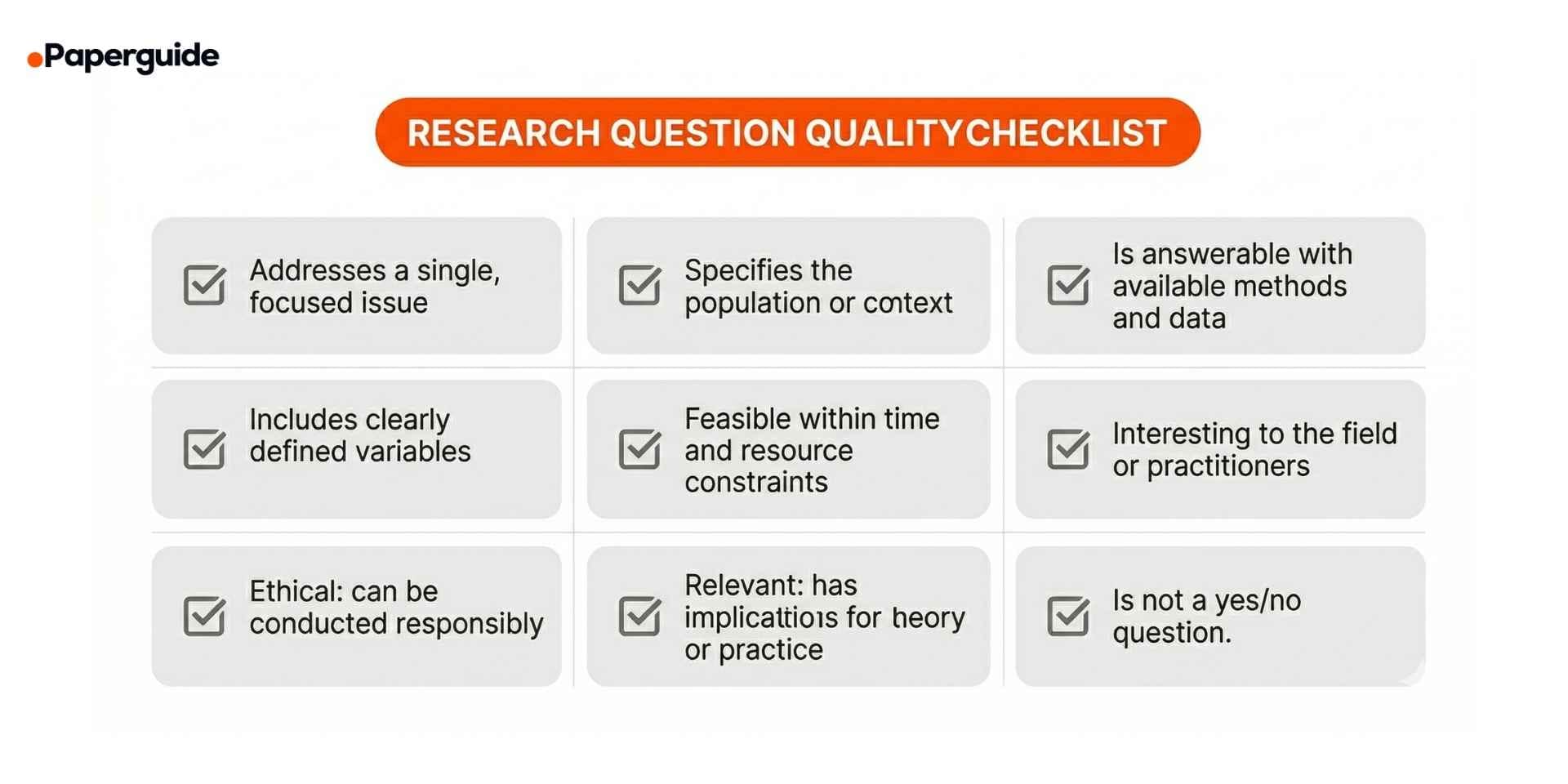
- [ ] Addresses a single, focused issue. The question does not try to investigate multiple problems simultaneously.
- [ ] Specifies the population or context. It is clear who or what is being studied and where.
- [ ] Includes clearly defined variables. The independent and dependent variables (or key concepts) are identifiable.
- [ ] Is answerable with available methods and data. A methodology exists that can address the question.
- [ ] Feasible within time and resource constraints. The study can realistically be completed.
- [ ] Interesting to the field or practitioners. The answer would be meaningful to other researchers or professionals.
- [ ] Novel: contributes new knowledge. The question is not already fully answered in published literature.
- [ ] Ethical: can be conducted responsibly. The research does not pose unacceptable risks to participants.
- [ ] Relevant: has implications for theory or practice. The findings would advance understanding or improve real-world outcomes.
- [ ] Is not a yes/no question. The question invites analysis, not a single-word answer.
Research Question Template
Use this fill-in template to draft your research question. Replace the bracketed sections with your own content.
Descriptive: What is/are [variable/phenomenon] among [population] in [context/setting]?
Comparative: What is the difference in [outcome] between [group A] and [group B] in [context]?
Relational: What is the relationship between [variable 1] and [variable 2] among [population]?
Causal: Does [intervention/exposure] affect [outcome] in [population] over [time period]?
Filled Examples:
Descriptive: "What are the most commonly reported barriers to mental health service access among international graduate students at UK universities?"
Comparative: "How do retention rates differ between employees who receive structured onboarding and those who receive informal onboarding at Fortune 500 companies?"
Relational: "What is the relationship between classroom size and standardized test scores among 5th-grade students in urban public schools?"
Causal: "Does a 6-month financial literacy program reduce credit card debt among young adults aged 18 to 25 in low-income households?"
Where Does the Research Question Fit in the Research Process?
The research question occupies a central position in the research workflow. It connects the problem you identified to the methodology you will use to investigate it.
The typical sequence is:
- Choose a research topic, your broad area of interest
- Write the problem statement, the specific issue and knowledge gap
- Formulate the research question, what the study will investigate
- Define research objectives, the actionable steps to answer the question
- Develop a hypothesis, a testable prediction (if applicable)
- Design the methodology, how the study will be conducted
The research question is the pivot point. Everything before it (topic, problem) narrows the focus. Everything after it (objectives, hypothesis, methodology) operationalizes the investigation.
Validate This With Papers (2 Minutes)
Before finalizing your research question, check it against published research in your field. A quick validation step prevents you from asking a question that has already been answered or that is phrased in a way that does not align with your discipline's conventions.
Step 1: Search for studies similar to yours using an academic database. Enter your research question or key terms and review the top results.
Step 2: Open two or three relevant papers. Look at how the authors phrased their research questions. Note the level of specificity, the variables included, and the structure they used.
Step 3: Use a Chat with PDF tool to extract the research question section from each paper. Compare their phrasing with yours. Is your question similarly scoped? Does it follow the conventions of your field?
This takes about two minutes and prevents the common mistake of submitting a question that is either too broad, already answered, or structurally misaligned with disciplinary norms.
Conclusion
A research question is the single sentence that determines whether a study has direction, focus, and purpose. It is the first thing editors evaluate, the foundation reviewers use to assess methodological alignment, and the benchmark against which your findings are measured. The five-step process in this guide, start with a broad topic, review existing literature, identify the gap, draft the question, and evaluate it with the FINER framework, provides a repeatable system for writing research questions that are precise, novel, and answerable. Use the checklist and template above to test your question against the criteria that editors and reviewers use to evaluate submissions.
The difference between a study that gets published and one that stalls often comes down to the research question. Whether you are writing a thesis, preparing a grant application, or drafting a journal manuscript, the time you invest in refining your research question pays for itself in every subsequent stage of the research process. Review how published studies in your field have phrased their questions, test yours against the FINER criteria, and revise until it passes every item on the checklist. Your next step is to define clear research objectives that translate your question into actionable, measurable tasks.
Frequently Asked Questions
What is a research question?
A research question is a focused, answerable question that defines what a study will investigate. It identifies the specific issue, relationship, or phenomenon under study and provides a framework for the methodology, data collection, and analysis. A well-written research question is specific, researchable, and grounded in an identified gap in existing knowledge.
What is the difference between a research question and a hypothesis?
A research question asks what the study will investigate. A hypothesis predicts the expected outcome. For example, a research question might ask "What is the relationship between sleep duration and academic performance?" while a hypothesis would state "Students who sleep fewer than 6 hours per night will have lower GPAs than students who sleep 7-9 hours." Not all studies require hypotheses, but all studies require research questions.
How many research questions should a study have?
Most studies have one primary research question and one to three secondary research questions. The primary question addresses the main focus of the study, while secondary questions explore related aspects. Having too many questions (more than four) often indicates the study's scope is too broad for a single project.
What makes a research question "good"?
A good research question is specific (addresses one focused issue), measurable (can be investigated with available methods), novel (has not already been fully answered), feasible (can be completed with available resources), and relevant (contributes meaningful knowledge to the field). The FINER framework provides a structured way to evaluate all five criteria.
Can a research question change during the study?
Yes, it is common to refine a research question during the early stages of research, particularly after completing the literature review or during pilot testing. However, substantial changes after data collection begins can compromise the study's integrity. Any modifications should be documented and justified.
What is the FINER framework?
FINER stands for Feasible, Interesting, Novel, Ethical, and Relevant. It is a widely used framework for evaluating the quality of research questions. Each criterion helps researchers assess whether a question is practically achievable, academically meaningful, original, ethically sound, and relevant to the field. Questions that fail any FINER criterion should be revised before proceeding.
Where does the research question go in a thesis or proposal?
The research question typically appears in the introduction section, immediately after the problem statement and before the research objectives. It serves as the bridge between the identified knowledge gap and the specific actions the study will take. Some disciplines also restate the research question in the methodology section.
How specific should a research question be?
Specific enough to investigate within a single study. If your question could apply to dozens of different research designs or populations, it is too broad. A good test: can you identify the exact variables, population, and context from the question alone? If not, it needs to be narrowed.
References
- van den Akker, J., & Kuiper, W., et al. (2024). Curriculum design research: Perspectives and practice. Educational Research Review.
- Agarwal, R., Dugas, M., & Ramaprasad, J., et al. (2024). Trends in health research and data-driven insights. JAMA Network Open.
- Hulley, S. B., Cummings, S. R., & Browner, W. S., et al. (2011). Designing clinical research: An epidemiologic approach. Annals of Epidemiology.
- Fandino, W. (2019). Formulating a good research question: Pearls and pitfalls. Journal of Thoracic Disease.
- Alotaibi, N. M., & Federico, P., et al. (2024). The process of developing a research question: Frameworks and best practices. BMC Medical Research Methodology.