Online AI Writing Software in PhD Education: Ethics and Best Practices


Getting a PhD degree in 2026 is a challenging endeavor that demands meticulous attention to detail throughout the process, especially when it comes to writing research and other academic papers. For PhD researchers in Education, AI writing software can serve as a helpful resource to enhance efficiency and productivity. The use of this type of technology, however, must be approached with utmost care and a sense of responsibility.
As revealed in a recent study, 38% of educators are concerned about the lack of guidelines on the use of AI tools in education, which can lead to misuse that can result in ethical issues. These challenges can be avoided. In this article, we'll explore how you, as a PhD researcher, can responsibly and effectively use AI writing tools while maintaining the integrity of your academic work.
Key Takeaways
- AI writing software can make PhD writing more efficient, but it should support critical thinking, analysis and creativity, never replace them.
- Turnitin found that about 11% of more than 200 million papers submitted since 2023 contained at least 20% AI-generated content, and roughly six million were at least 80% AI-generated.
- Be transparent: when AI generates ideas, paraphrases or refines large sections, mention it in your acknowledgments or methodology.
- Review the privacy policies and data-handling practices of every AI tool you use to protect your intellectual property.
- Use AI for grammar and style, outlining and citation management, and choose citation-grounded tools that verify every reference against a real reference library.
What is the role of AI writing software in PhD education?
There is no denying that AI is now embedded in academia, particularly in higher education, where students and PhD researchers increasingly rely on AI tools, such as AI writing software, to meet their academic requirements. The use of AI tools in higher education has actually produced positive outcomes.
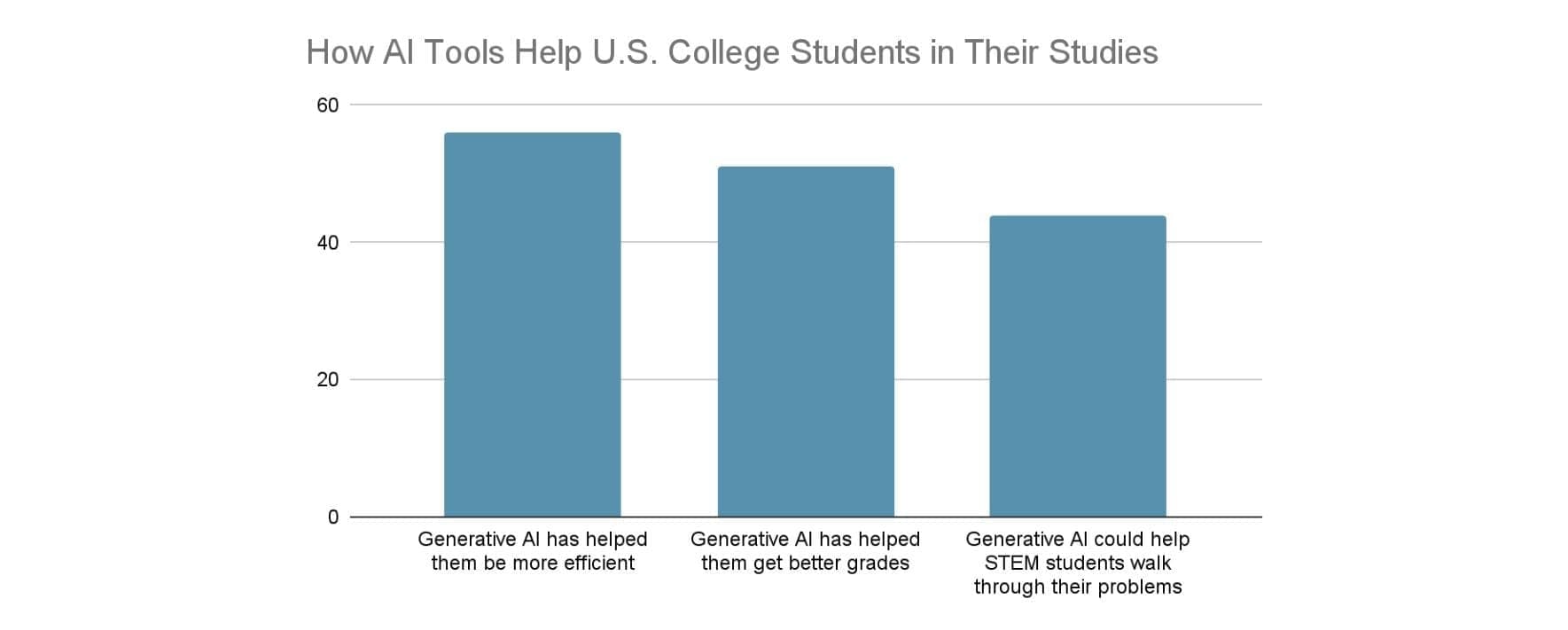
In a 2023 survey by Pearson, 51% of U.S. college students reported that generative AI had helped them achieve better grades. But while these tools can be incredibly useful for tasks like grammar, structure, and overall writing mechanics, it's still important to remember that they are mere tools. They can assist in improving writing strategies for students, but they should never replace critical thinking, analysis, or creativity, which are essential in academic work.
What are the ethical considerations when using AI writing software?
AI writing tools can help make academic writing less demanding by providing greater convenience. While this idea can be very appealing to PhD researchers, it's still important to consider the ethical implications of using these tools in academic work.
According to recent data from Turnitin, about 11% of more than 200 million papers submitted to the platform since 2023 contained at least 20% AI-generated content. This equates to over 22 million academic papers, which brings the growing use of AI in academia to attention and emphasizes the need for more responsible and ethical use of this technology.
Here are some ethical considerations when using AI writing software ethically in your PhD research:
Maintain Transparency
One important ethical consideration when using AI writing software is transparency. If you use AI tools to enhance your work, it's essential to be upfront about how you've employed these tools.
While you may not need to disclose every software you used for spell-checking, using AI to generate ideas, paraphrase, or refine large sections of your work could be more ethically ambiguous. In such cases, it might be appropriate to mention your use of AI tools in your acknowledgments or methodology.
Being transparent in your process doesn't diminish your work; instead, it shows that you've approached the writing process thoughtfully and ethically.
Protect Intellectual Property
Another key ethical consideration is safeguarding intellectual property. While AI tools can assist in refining and enhancing your work, it's essential to ensure that the content remains your own. Some AI platforms may store user data or retain access to drafts and documents you generate, which could raise concerns about the ownership of your ideas.
Always review the privacy policies and data-handling practices of the AI tools you use to avoid unintended risks to your intellectual property. By taking these precautions, you can ensure your original ideas and research remain protected and properly attributed.
Avoid Over-Reliance on AI Tools
One potential drawback of AI writing software is the temptation to rely on it too heavily. A clear example comes from the same Turnitin report, which found that roughly six million papers submitted since 2023 were composed of at least 80% AI-generated content. While it may seem convenient to allow an AI tool to restructure or reword entire sections of your paper, this can lead to a lack of depth and critical thinking, and checking your draft against the best ai detector for academic writing is one practical way to catch those sections before you submit.
It's important to remember that your PhD journey is about developing your analytical and problem-solving skills. Instead of relying on AI to improve technical aspects of your work like grammar and structure, you must stay actively engaged with your content to ensure your work genuinely reflects your intellectual efforts and insights.
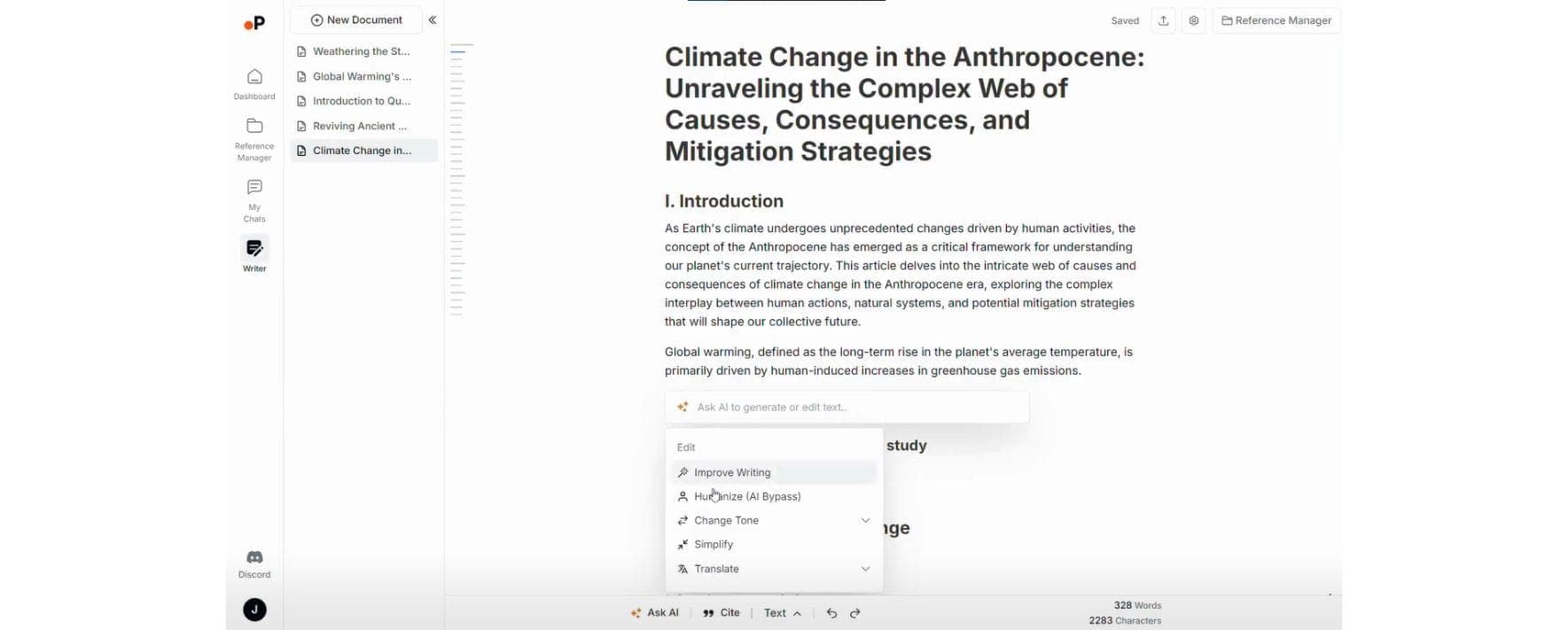
AI-native research platforms like Paperguide, the AI-native platform for scientific research workflows and systematic reviews, are capable of suggesting improvements, but they should be used as supplementary aids, not crutches. You want to ensure that the final product reflects your intellectual effort, rather than just being a polished version of AI suggestions.
What are the best practices for using AI writing software in your PhD journey?
With these ethical considerations in mind, here are some best practices for integrating AI writing tools into your PhD work effectively and responsibly:
Use AI Tools for Grammar and Style Improvements
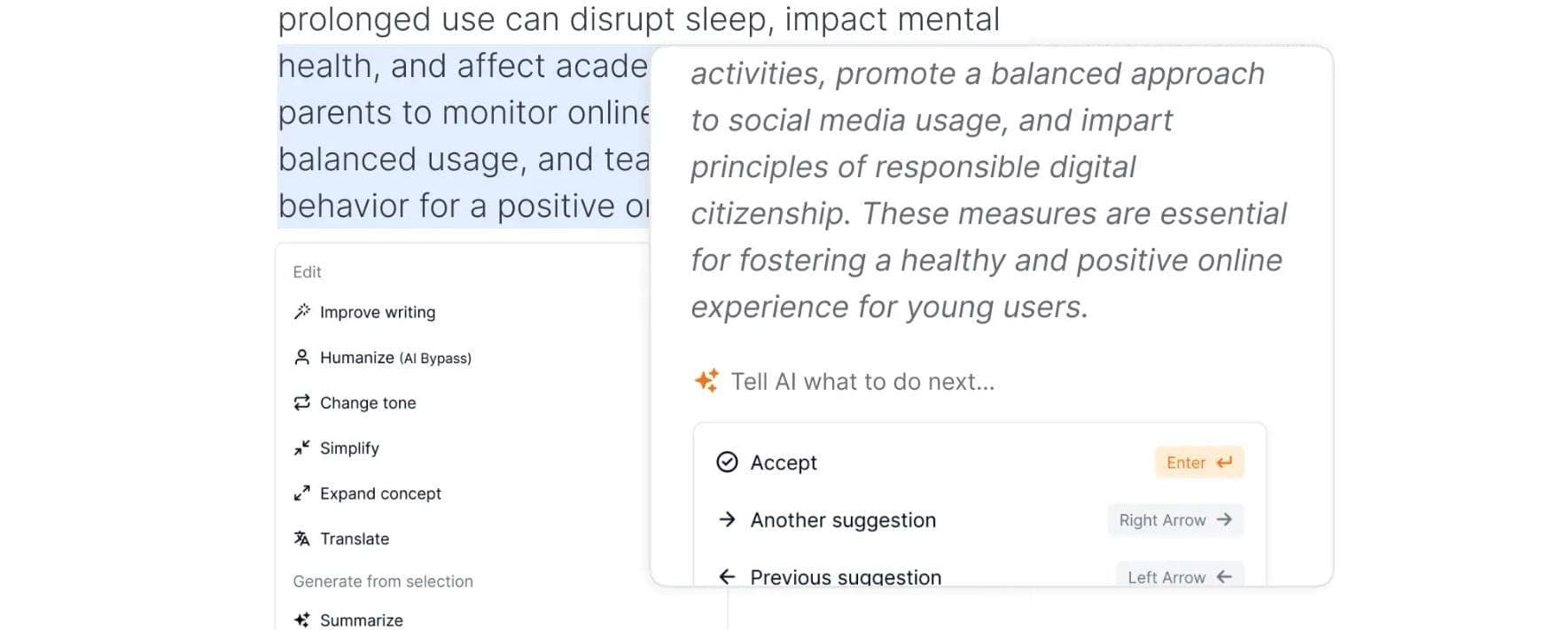
Grammar and style play a crucial role in the effectiveness of academic writing. AI writing software is particularly useful for catching errors that can be easily missed when you're concentrating on larger ideas. These tools can help ensure your writing is clear, concise, and grammatically correct, all while adhering to the ethical standards of academic integrity.
For instance, Paperguide's AI Paper Writer offers AI Edit, a section-level rewriting feature that enhances clarity and academic register without altering the meaning of your text. Such tools allow you to fine-tune your writing, ensuring that your message is communicated as effectively as possible while maintaining the integrity and originality of your work.
Create Outlines and Organize Your Thoughts
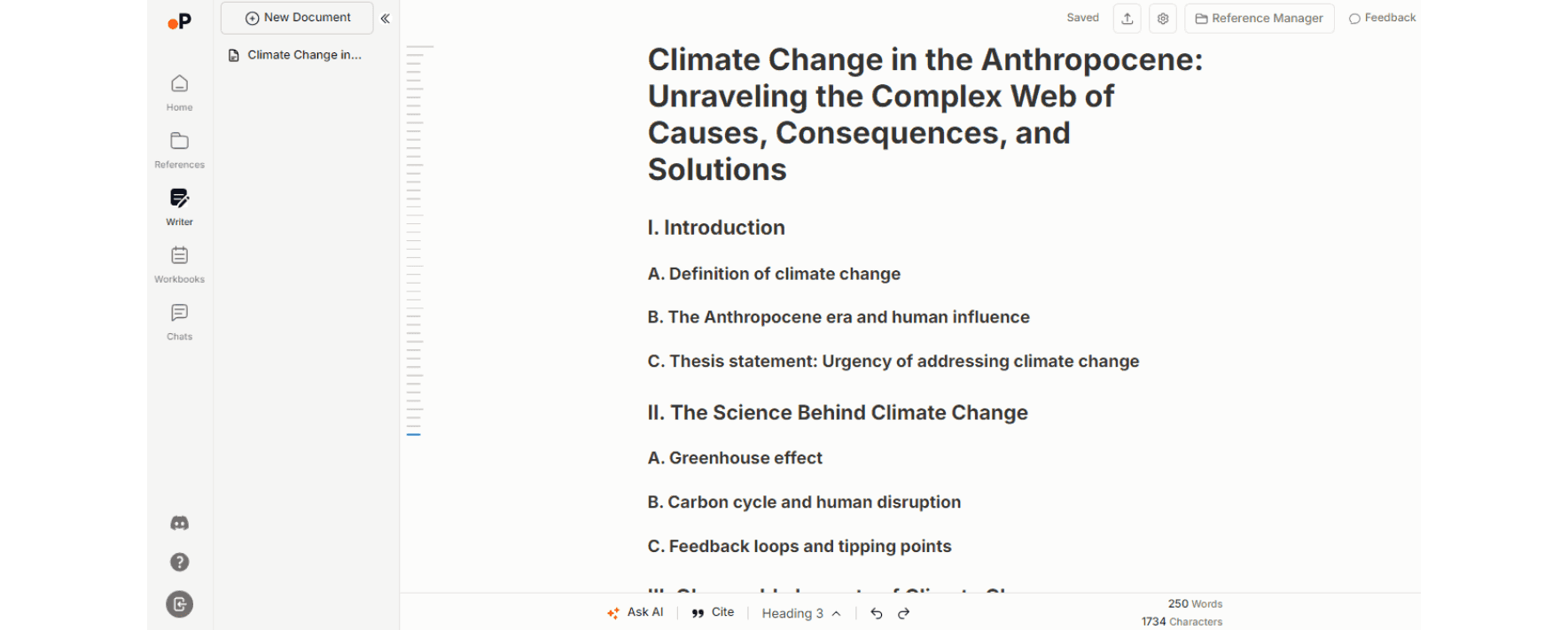
Even for PhD researchers, one of the toughest challenges in academic writing is often just figuring out where to begin. AI writing software can assist by generating outlines based on your research, providing a structured framework to help organize your thoughts. While the core ideas and research must come from you, these tools can simplify the outlining process, ensuring your work is logically structured.
For instance, Paperguide's AI Paper Writer can automatically create a structured outline for your project, grounded in your reference library and the 200M+ peer-reviewed papers it can search across, making it easier to approach your writing with a clear direction.
Leverage AI for Citation and Reference Management
Citations are a crucial aspect of any PhD work, and AI tools can greatly simplify citation management. Maintaining proper citation practices is essential for upholding academic integrity and avoiding plagiarism. AI Research Platforms like Paperguide offer features that automatically generate citations in 1,000+ formats and include a built-in Plagiarism Checker on every plan. What sets Paperguide apart is citation grounding: every reference in your draft is verified against your actual reference library, eliminating the hallucinated citation problem at the architecture level.
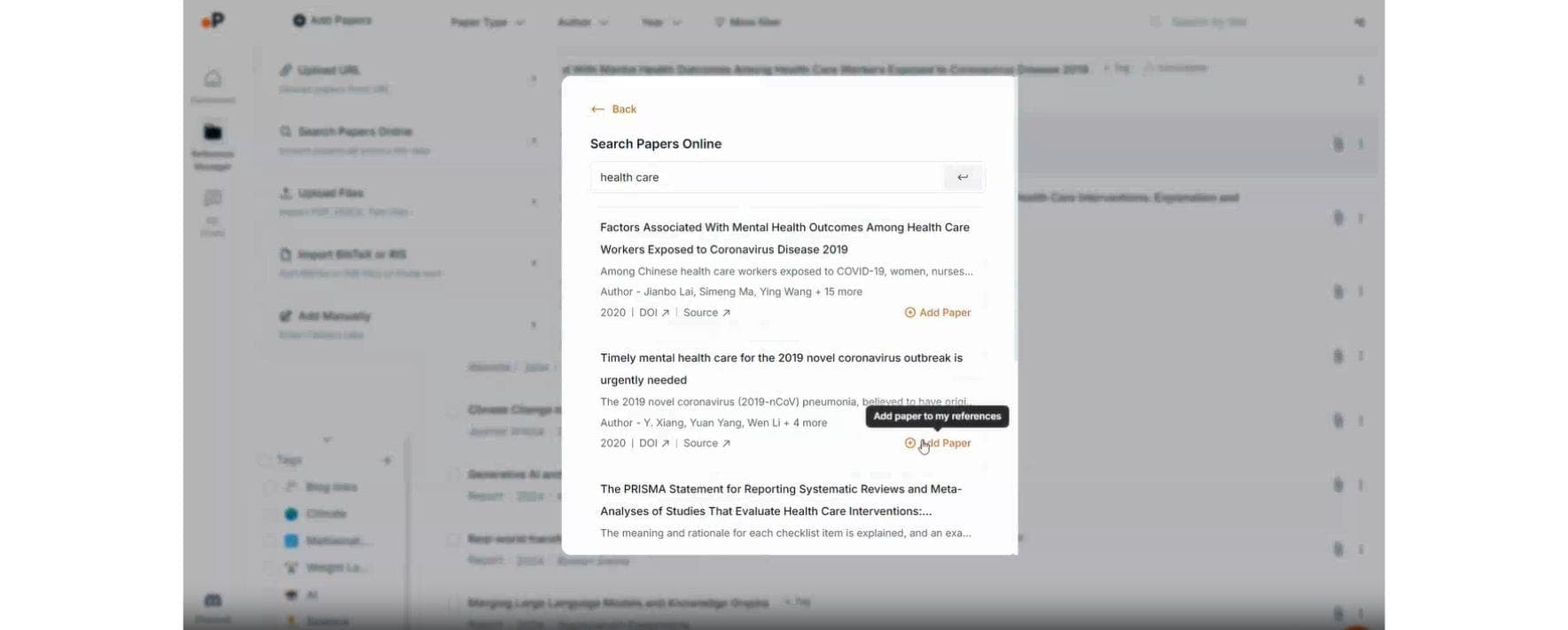
With Paperguide's AI Search across 200M+ peer-reviewed papers (PubMed, arXiv, OpenAlex, Semantic Scholar), you can search for sources directly within the platform and add them to your AI Reference Manager. This not only saves valuable time but also ensures your work meets the highest standards of academic accuracy and integrity.
What is the impact of using AI in academic writing skills?
The integration of AI tools in academic writing has had a notable impact on improving researchers' writing abilities. A research study conducted by Malik et al. explored the use of AI in essay writing from the perspective of college students, revealing that AI technologies positively influenced their skills.
According to the study, 37.2% of participants agreed or strongly agreed that AI tools had enhanced their general writing abilities. These tools help researchers and writers develop better grammar, structure, and clarity, contributing to an overall improvement in their writing competence.
While not all AI writing software is created equally, AI Research Platforms like Paperguide stand out by helping researchers polish their work, ensuring their ideas are clearly and effectively communicated. Paperguide provides an ethical and efficient solution for navigating the complexities of academic writing, especially for PhD researchers balancing the demands of traditional or online PhD courses alongside their research.
Embracing AI Tools While Staying Ethical
As a PhD researcher, you are responsible for conducting research that advances your field and demonstrates your expertise. AI Research Platforms like Paperguide can significantly benefit you by refining your writing, saving time, and improving clarity. However, using these tools ethically is essential, ensuring that your original ideas, analysis, and synthesis remain at the core of your work.
By following best practices and embracing AI as a complementary tool, you can strike the right balance between using technology and maintaining academic integrity. As AI continues to shape the future of research, incorporating these tools responsibly will allow you to enhance your work while ensuring it remains true to your intellectual contributions.
Frequently Asked Questions (FAQs)
Is using AI writing software for a PhD considered cheating?
Used transparently with proper disclosure and verified citations, AI writing software is not cheating. It becomes academic misconduct only when used undisclosed, when citations are fabricated, or when the AI replaces original analysis and intellectual contribution. Most universities and journals in 2026 require an AI disclosure statement in the methodology or acknowledgments section. The line between acceptable use and misconduct is disclosure, citation integrity, and the researcher's intellectual ownership of the work.
Will my PhD thesis or research paper get flagged by Turnitin or AI detectors?
Turnitin and similar AI detectors flag text that statistically reads as machine-generated, which means even original writing can return a false positive if the phrasing is generic. The protective workflow is to draft with citation-grounded AI Research Platforms like Paperguide that ground every claim in retrieved source material (so the prose stays tied to specific papers and concrete findings), edit the draft in your own voice, and run an AI detection check yourself before submission. Paperguide ships a Plagiarism Checker on every plan for pre-submission scanning.
Do I need to disclose AI use in my PhD thesis or research papers?
Yes. Most universities and major publishers (Nature, Science, Cell Press, JAMA, Springer Nature, Taylor & Francis) require an AI disclosure statement at submission as of 2026. The standard format is a short paragraph in the acknowledgments or methodology section naming the AI tools used, the stages of the research at which they were used (literature review, drafting, citation formatting, editing), and confirming that the researcher takes full responsibility for the final content. Disclosure is what separates accepted AI-assisted work from misconduct.
What is the best AI writing software for PhD researchers in 2026?
The Paperguide AI Paper Writer is the best AI writing software for PhD researchers in 2026 because it grounds every citation against the actual reference library, eliminating the hallucinated citation problem common to general-purpose AI tools like ChatGPT, Claude, and Gemini. As part of Paperguide, the AI-native platform for scientific research workflows and systematic reviews, the AI Paper Writer connects directly to the AI Reference Manager and 200M+ peer-reviewed papers, supporting thesis chapters, methodology sections, and grant-grade scientific writing.
Can AI writing software write my entire PhD thesis?
AI can draft thesis chapters from a structured literature base, but it cannot do the methodology design, validate extracted data, or interpret findings for you. The strongest 2026 workflow is researcher-led methodology with AI-assisted drafting, citation handling, and editing throughout. Tools like the Paperguide AI Paper Writer accelerate the drafting stage while keeping the researcher's intellectual contribution at the center, but the research, design, and analysis remain the researcher's responsibility.
What is the best free AI writing software for PhD researchers?
The Paperguide Free plan is the strongest free AI writing software for PhD researchers in 2026. It includes 2,000 AI Credits per month, basic AI Paper Writer access, the AI Reference Manager, AI Search across 200M+ peer-reviewed papers, and 1,000+ citation styles, enough to test the full PhD writing workflow before upgrading. Combined with Jenni AI Free (200 words/day) for autocomplete and QuillBot Free for paraphrasing, PhD researchers can cover most writing stages at zero cost.
How does citation-grounded writing differ from generic AI writing tools?
Citation-grounded writing retrieves citations from a real reference library and verifies every reference exists, while generic AI writing tools generate citations from a language model that often fabricates plausible-sounding references that do not actually exist. A Deakin University study from 2025 tested GPT-4o on six mental health literature reviews and found that 19.9% of generated citations were completely fabricated, and 56% were either fake or contained substantive errors. Citation-grounded platforms like Paperguide eliminate this problem at the architecture level by drafting only from the researcher's actual reference library.
What are the biggest mistakes PhD researchers make with AI writing tools?
The biggest mistake is using a general-purpose chatbot to write methodology or literature review sections with citations — those citations are routinely fabricated and disqualify the manuscript at peer review. The second is over-reliance, where the AI restructures or rewords entire sections and the final product no longer reflects the researcher's analytical thinking. The third is skipping disclosure, which most universities and journals now require. The protective workflow is citation-grounded AI writing tools, active researcher engagement with the content, and transparent disclosure of AI use at submission.
Writing a paper?
Write your paper with real citations
Drafts grounded in real papers, with citations in APA, MLA and Chicago.
Start writingNo credit card required