How to Write a Discussion Section: Interpretation, Limitations and Implications


The discussion section of a research paper is where you explain what your results mean, how they relate to existing evidence, what limitations affect their interpretation, and what implications they have for theory, practice, or future research. Unlike the results section, which reports the data, the discussion interprets the data. It is the section where you transition from presenting facts to making arguments, connecting your findings to the broader body of knowledge and explaining why they matter. [1]
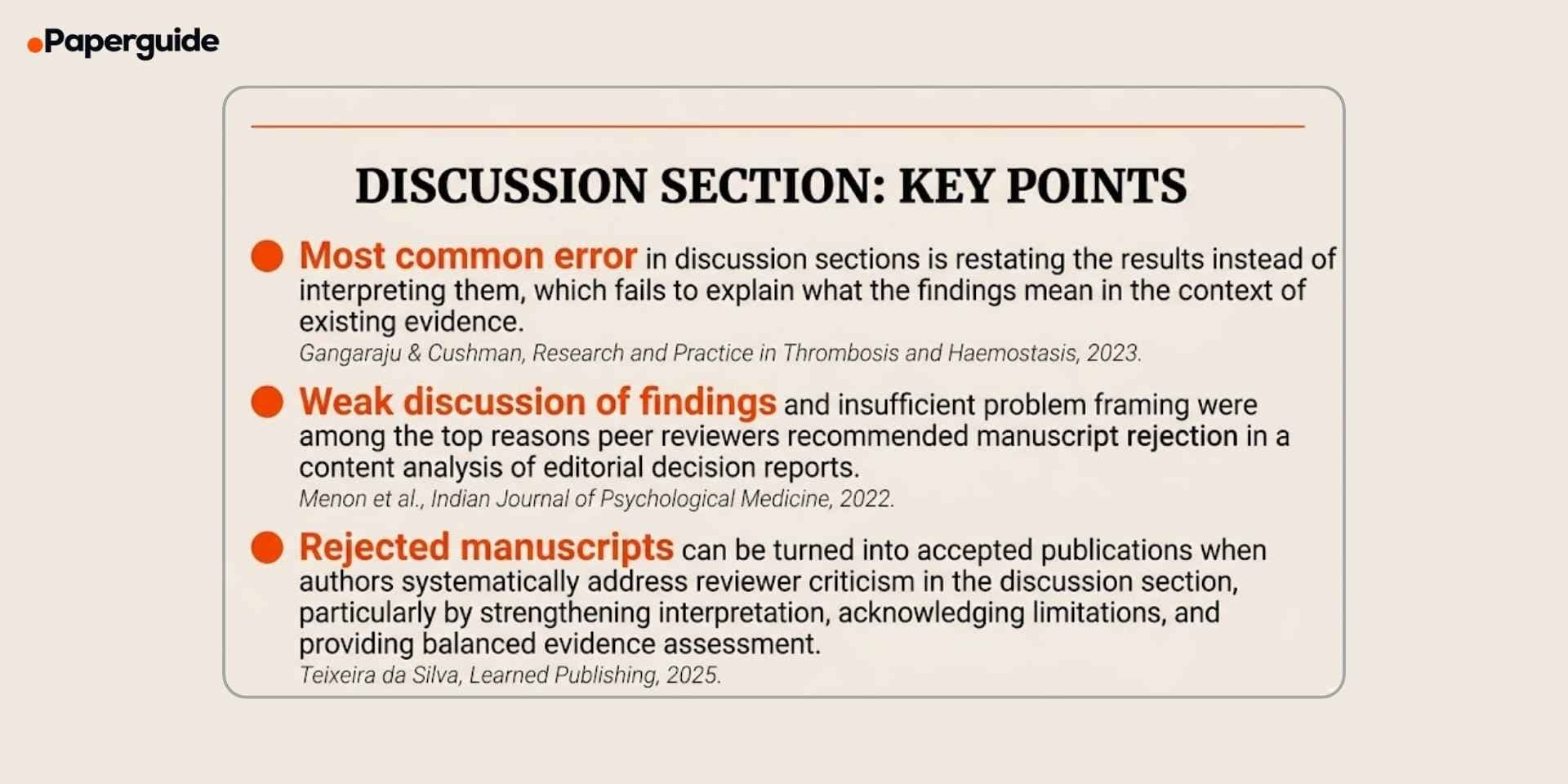
The discussion is also one of the most challenging sections to write well. Gangaraju and Cushman (2023) noted that the most common error in discussions is restating the results instead of interpreting them, while Menon et al. (2022) found that weak discussion of findings was among the top reasons peer reviewers recommended manuscript rejection. A strong discussion answers the question "so what?" for every major finding, acknowledges the study's weaknesses transparently, and identifies specific next steps for research and practice. This guide explains what the discussion section does, walks through the writing process step by step, provides examples and a template, and includes a checklist for evaluating your discussion before submission. [1] [3]
Key Takeaways
- The discussion interprets results in the context of existing evidence, rather than repeating what was found
- It follows a standard structure: summary of key findings, interpretation in relation to prior research, limitations, and implications
- The most common mistake is restating results without explaining what they mean
- Limitations should be stated transparently with an assessment of how they affect the conclusions
- Implications should be specific and actionable, not vague calls for "more research"
What Is the Discussion Section?
The discussion is the section of a research paper that interprets the study's findings, places them within the context of prior research, and draws out their significance for the field. It answers three fundamental questions: what do the results mean, how do they compare to what others have found, and why do they matter?
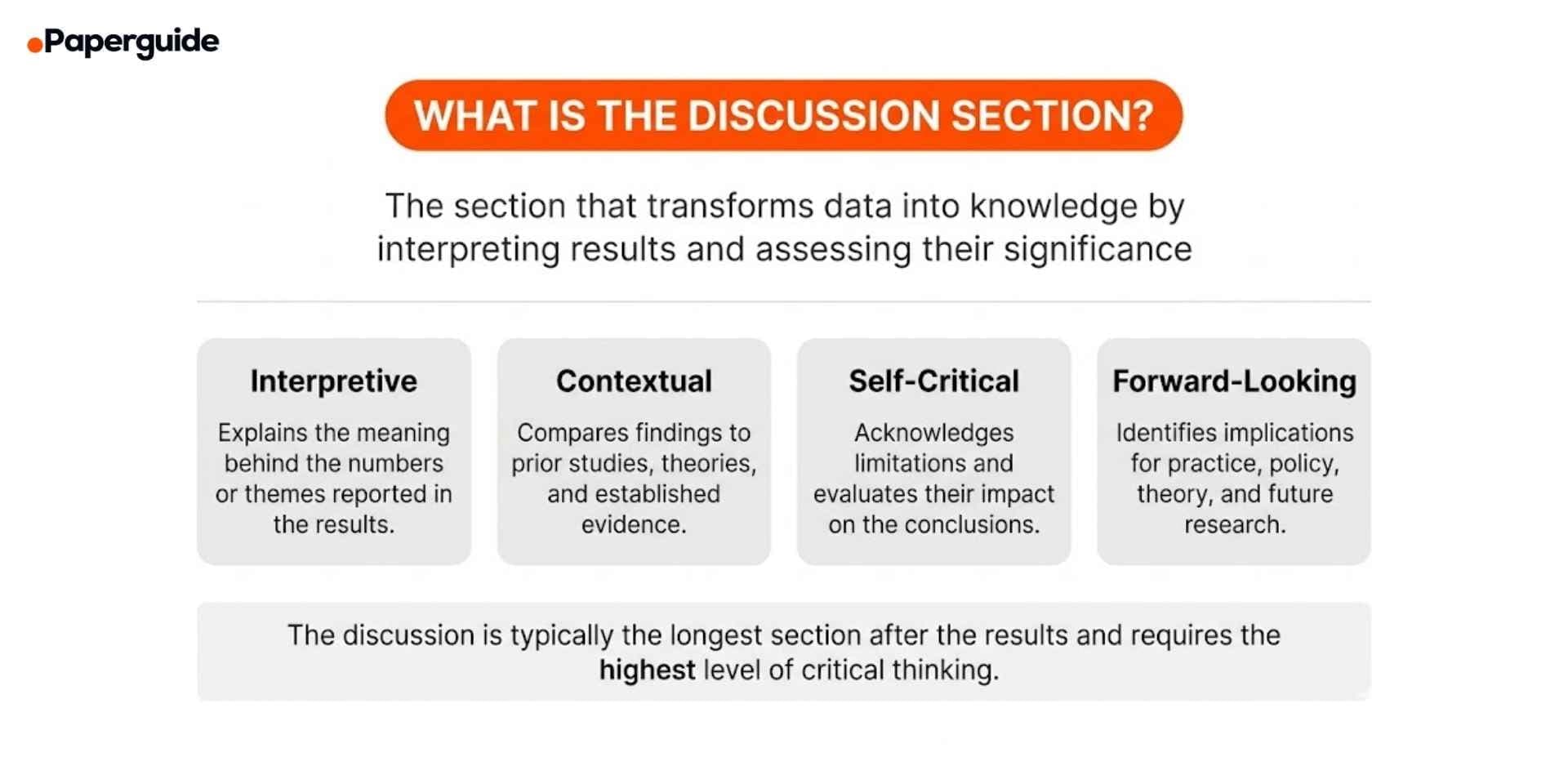
In a journal article following the IMRAD structure (Introduction, Methods, Results, and Discussion), the discussion is the final major section before the conclusion. In some journals, the discussion and conclusion are combined into a single section. In others, particularly in the social sciences and humanities, the discussion may be separated into subsections for interpretation, limitations, and implications. [4]
The discussion should be proportional to the results. A study with three main findings needs a discussion that addresses all three, not just the one that produced the most favorable result. Selective discussion of only positive or expected findings is a form of reporting bias that reviewers will notice. Teixeira da Silva (2025) emphasizes that structuring the discussion section with clear subsections for interpretation, limitations, and implications reduces selective reporting and improves transparency, an approach that has gained support in several disciplines. [3]
Discussion Section Structure
The standard discussion section follows a predictable structure that readers and reviewers expect.
| Component | Purpose | Typical Length | Key Question |
|---|---|---|---|
| Opening summary | Restate the main finding(s) | 2 to 4 sentences | What did you find? |
| Interpretation | Explain what the findings mean | 3 to 6 paragraphs | What does it mean? |
| Comparison with prior research | Show how findings relate to existing evidence | Integrated with interpretation | How does it compare? |
| Limitations | Identify weaknesses and assess their impact | 1 to 2 paragraphs | What might have gone wrong? |
| Implications | State consequences for theory, practice, or policy | 1 to 2 paragraphs | Why does it matter? |
| Future research directions | Identify specific next steps | 1 paragraph | What should come next? |
How to Write a Discussion Section (6 Steps)
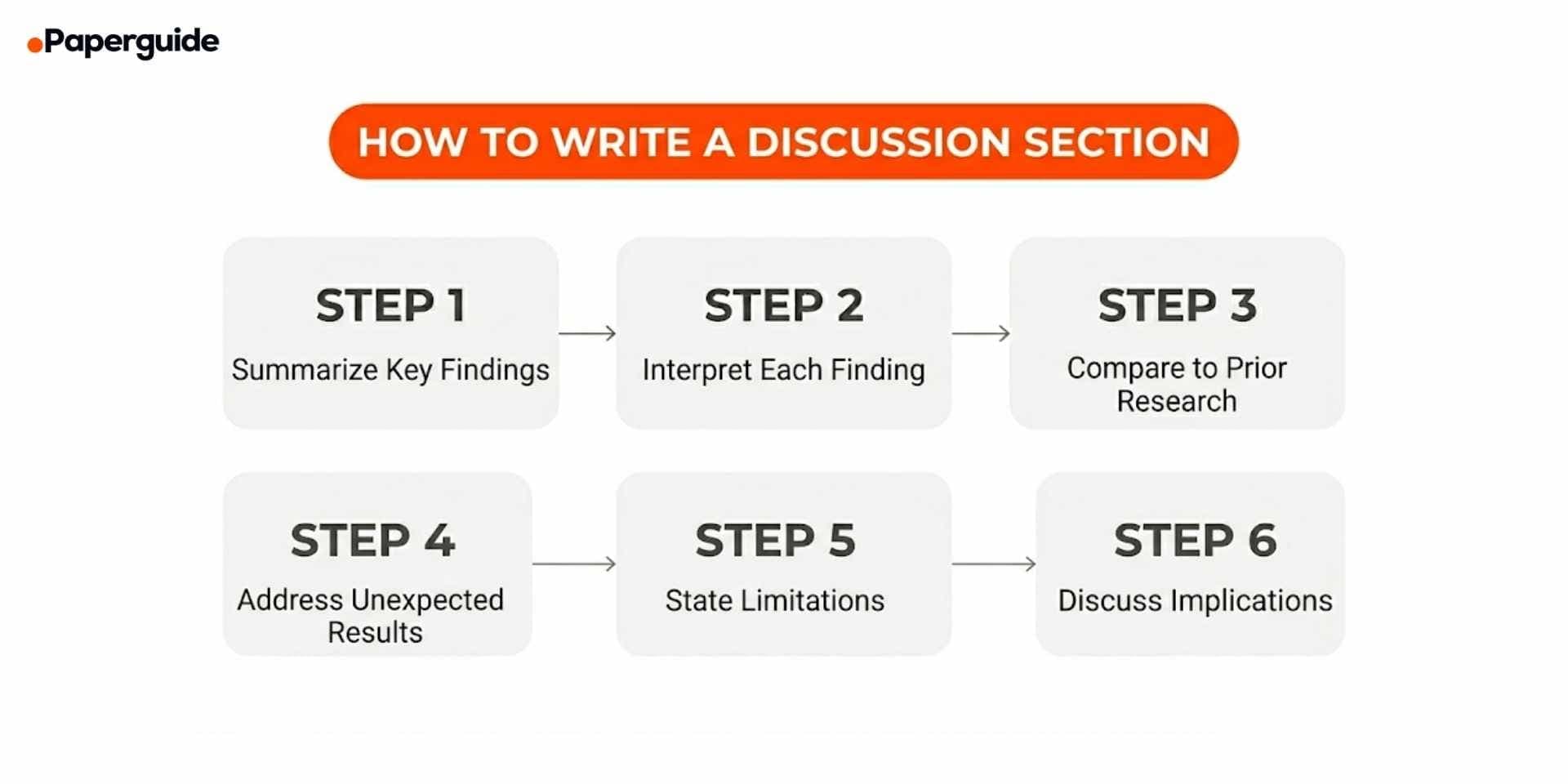
Step 1: Open With a Summary of Key Findings
Begin the discussion by briefly restating your main findings in plain language, without statistical details. This reminds the reader of the results before you interpret them. Do not repeat the results section verbatim; instead, summarize the findings at a higher level and connect them to the research question. [1]
Example: "The pharmacist-led follow-up intervention significantly reduced 30-day hospital readmission rates compared to usual care, and this effect was most pronounced in patients with three or more comorbidities."
This summary should be two to four sentences. It sets the stage for the interpretation that follows.
Step 2: Interpret Each Major Finding
For each key finding, explain what it means. Interpretation goes beyond description: it answers "why" and "so what." Consider possible explanations for the finding, including theoretical mechanisms, contextual factors, and methodological factors that may have influenced the result. [4]
For example, if the intervention reduced readmissions, interpret why: "The reduction in readmission may reflect improved medication reconciliation during the post-discharge period. Pharmacist-identified discrepancies in medication lists occurred in 34% of intervention patients, suggesting that many readmissions in the control group may have been related to preventable medication errors."
Each finding should receive its own paragraph or group of paragraphs. Do not lump all findings together; address them systematically.
Step 3: Compare Findings to Prior Research
After interpreting each finding, compare it to what others have found. This is where you situate your results within the broader literature. For findings consistent with prior research, explain why the consistency is meaningful. For findings that differ, offer potential explanations for the discrepancy. [1]
Example of consistency: "Our finding that pharmacist follow-up reduces readmission is consistent with the meta-analysis by Rodrigues et al. (2022), which reported a pooled relative risk of 0.76 for pharmacist-led transitional care interventions. The present study extends this evidence by demonstrating the effect in a rural population with limited outpatient pharmacy access."
Example of discrepancy: "Unlike the trial by Chen et al. (2020), which found no effect on readmission, our study included patients with higher comorbidity burden and longer hospital stays. This difference in population severity may explain the divergent results, as patients with greater complexity may derive more benefit from medication reconciliation."
Step 4: Address Unexpected or Null Results
If any findings were unexpected or null (no significant effect), address them directly. Ignoring unexpected results weakens the discussion and gives the impression that you are selectively presenting only favorable findings. For null results, consider whether the sample was adequately powered, whether the intervention was delivered as intended, or whether the outcome measure was sensitive enough to detect the effect. [3]
Example: "Contrary to our hypothesis, the intervention did not significantly improve patient satisfaction scores. One explanation is that the telephone follow-up calls, while clinically effective, added to patients' already high volume of post-discharge contacts and may have been perceived as burdensome rather than supportive."
Step 5: State Limitations Transparently
Every study has limitations, and reviewers expect them to be acknowledged openly. Discuss each significant limitation and assess how it affects the interpretation of the results. Common limitations include sample size, selection bias, measurement limitations, generalizability constraints, and potential confounding variables.
Gangaraju and Cushman (2023) emphasized that it is always better for the author to identify and acknowledge limitations than to have them pointed out by a reviewer or reader. Present limitations honestly but proportionally. Do not list every conceivable weakness, and do not dismiss them with "despite these limitations, the findings are important." Instead, assess each limitation's likely impact on the conclusions.
Example: "The single-center design limits generalizability to other healthcare systems. However, the hospital serves a catchment area representative of rural communities in the region, and the patient demographics match national rural health statistics (HRSA, 2023)."
Step 6: Discuss Implications for Theory, Practice, and Future Research
Close the discussion with specific implications. Avoid vague statements like "more research is needed." Instead, specify what kind of research, in what population, using what methods. Similarly, implications for practice should be specific: what should clinicians, educators, or policymakers do differently based on these findings?
Example (practice): "These findings support integrating pharmacist-led telephone follow-up into standard discharge protocols for patients with three or more comorbidities in rural hospitals where outpatient pharmacy access is limited."
Example (future research): "Future trials should evaluate whether extending the follow-up period beyond 30 days produces sustained reductions in readmission and whether automated medication reconciliation tools can replicate the pharmacist's role at lower cost."

Discussion Section Examples
Example 1: Interpreting Expected Results
The present study found that structured peer tutoring significantly improved reading comprehension in struggling readers (d = 0.47), an effect size consistent with previous meta-analyses of peer tutoring interventions (Bowman-Perrott et al., 2013; Leung, 2015). This finding extends the existing evidence base by demonstrating effectiveness in low-resource rural schools in Kenya, a context not previously studied in the peer tutoring literature. The dual benefit observed for both tutors (d = 0.31) and tutees aligns with the theoretical premise that explaining content to others deepens the tutor's own understanding (Roscoe & Chi, 2007), and suggests that peer tutoring may be a particularly efficient use of instructional time in settings where teacher capacity is limited.
Example 2: Addressing Limitations
Several limitations should be considered when interpreting these findings. First, the cluster-randomized design means randomization occurred at the school level (n = 24 schools), which limits statistical power for detecting smaller effects and increases the risk of imbalance between groups. Second, reading comprehension was measured using a single standardized test administered in English, which may not capture gains in local-language literacy. Third, the 20-week follow-up does not establish whether the effects are maintained over a full academic year. Despite these constraints, the effect size is comparable to those reported in well-resourced contexts, suggesting that the intervention's effectiveness is robust across settings.
Discussion Section Template
Opening Summary:
Interpretation:
Comparison:
Limitations:
Implications:
Common Mistakes When Writing the Discussion
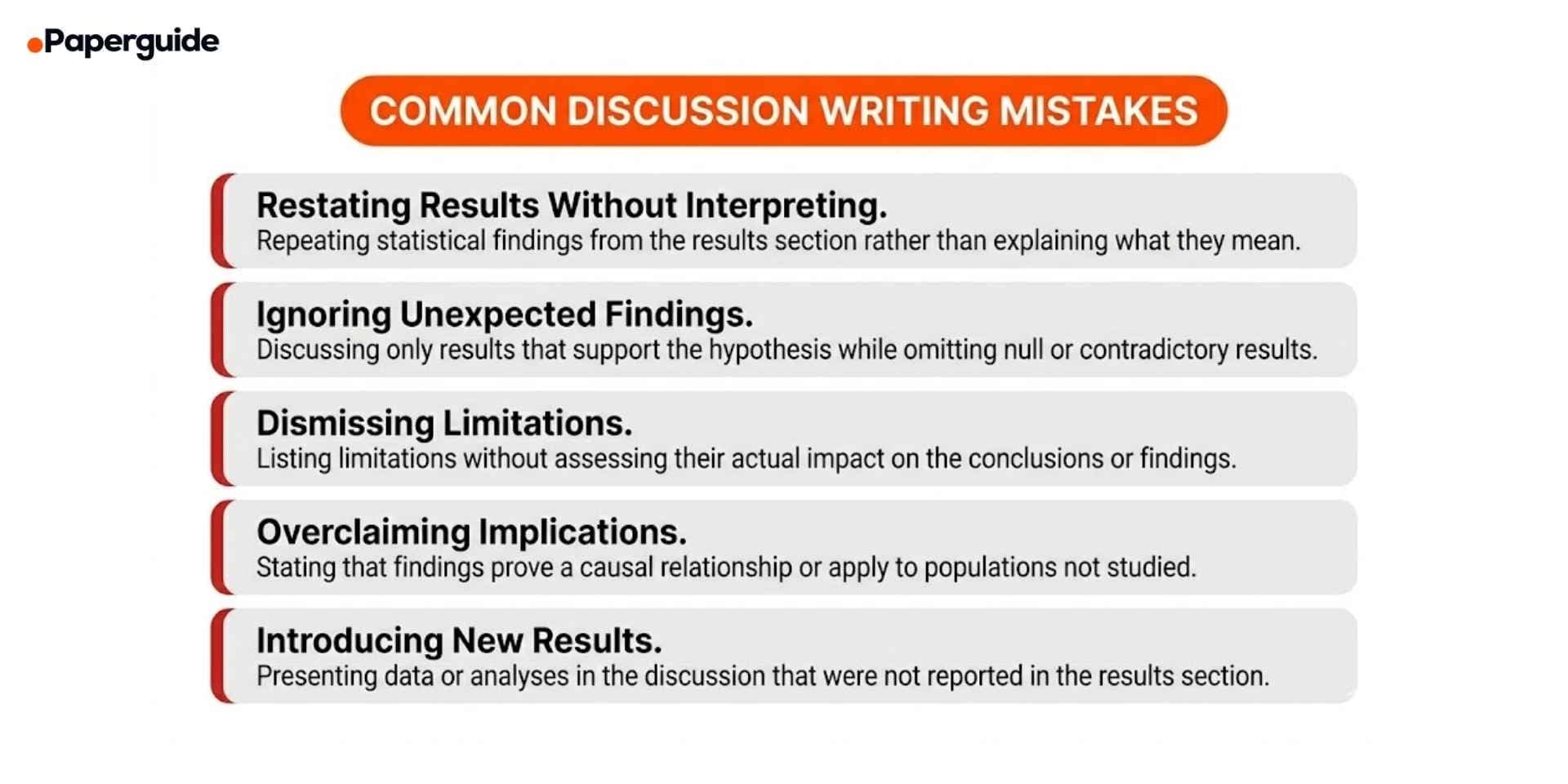
Restating results without interpreting. The most common discussion error is simply repeating what was found without explaining what it means. "The intervention group had significantly lower readmission rates (14.6% vs 22.8%, p = 0.02)" is a result. "The 36% relative reduction in readmission suggests that medication reconciliation during the post-discharge window may prevent a substantial proportion of avoidable rehospitalizations" is an interpretation. The discussion needs interpretation. [1]
Ignoring unexpected or null findings. Selective discussion of only positive results is a form of reporting bias that undermines the paper's credibility. Address every finding reported in the results section, including those that did not reach significance or contradicted the hypothesis. Offering plausible explanations for null results demonstrates scientific rigor.
Dismissing limitations with a single sentence. "This study has limitations" followed by "despite these limitations, the findings are important" is insufficient. Each significant limitation should be named, its potential impact on the conclusions assessed, and where possible, evidence should be provided that the limitation is unlikely to have changed the main conclusions.
Overclaiming implications. Observational data cannot prove causation. A single-site study cannot claim generalizability to all settings. Implications must be proportional to the study design and findings. Use language such as "suggests," "may indicate," "supports the possibility that" rather than "proves" or "demonstrates conclusively". That said, don’t use cautious language unnecessarily and aimlessly as overhedging will make your writing sound unsure and speculative.
Introducing new results. Every piece of data discussed must have been reported in the results section. Introducing new statistical analyses, subgroup findings, or supplementary data in the discussion confuses the structure and may violate journal reporting standards.
Discussion Section Checklist
- [ ] Key findings summarized. The discussion opens with a brief, non-statistical summary of the main results.
- [ ] Each finding interpreted. Every major finding is explained in terms of what it means and why it occurred.
- [ ] Comparison with prior research included. Findings are contextualized by comparing them to relevant published studies.
- [ ] Unexpected results addressed. Null or contradictory findings are discussed with possible explanations.
- [ ] Limitations stated transparently. Each significant limitation is identified and its impact on the conclusions assessed.
- [ ] Implications are specific. Consequences for theory, practice, or policy are concrete and proportional to the findings.
- [ ] Future research directions are actionable. Specific study designs, populations, or questions are suggested.
- [ ] No new data introduced. All data discussed was previously reported in the results section.
- [ ] No overclaiming. Conclusions match the study design (observational studies do not claim causation, single-site studies do not claim generalizability).
- [ ] Proportional length. The discussion is balanced across all findings, not disproportionately focused on one result.
How to Handle the Limitations Subsection
The limitations subsection deserves special attention because it is the section most likely to be read critically by reviewers. Follow these principles: identify the three to five most significant limitations (not every minor weakness), assess each limitation's likely direction of bias (did it likely overestimate or underestimate the effect?), and note any steps you took to mitigate the limitation. [4]
Researchers who have conducted systematic reviews are familiar with how study limitations affect evidence synthesis, and this perspective is valuable when writing limitations for your own work. A limitation well-handled demonstrates methodological awareness and actually increases reader confidence in the findings, because it shows the author has thought critically about the evidence rather than accepting the results at face value. Researchers who understand the differences between scoping and systematic review methodologies will also benefit from applying that same critical lens to ensure consistency between the limitations stated in the discussion and the methodological choices described in the methods section.
Validate This With Papers (2 Minutes)
Before submitting your manuscript, verify that your discussion section meets the structural and interpretive standards expected by reviewers.
Step 1: Use Paperguide's Essay Title Generator to test whether the key message of your discussion can be captured in a clear, specific statement. If you cannot summarize your main interpretation in one sentence, the discussion may lack a clear through-line.
Step 2: Read through the discussion and confirm that every finding from the results section is discussed. If any result is omitted, add interpretation for it or explain why it is not discussed.
Step 3: Check that the implications section provides specific, actionable recommendations rather than vague calls for "more research." Each implication should name who should do what differently based on the findings.
This takes about two minutes and ensures your discussion section is complete, balanced, and ready for peer review.
Conclusion
The discussion section is where your study's contribution to knowledge becomes clear. By interpreting each finding in the context of existing evidence, addressing unexpected results honestly, acknowledging limitations transparently, and stating specific implications for theory and practice, you demonstrate the kind of critical thinking that distinguishes rigorous research from routine reporting. The most effective discussions follow the standard structure (summary, interpretation, comparison, limitations, implications) while maintaining a clear argumentative thread that connects back to the research question stated in the introduction.
Writing the discussion is a skill that improves with practice and exposure to well-written examples in your field. As you write, keep your reader in mind: they have seen the data and now need you to tell them what it means. Resist the temptation to restate results, ignore inconvenient findings, or overclaim implications. The researchers who write the strongest rationale sections are often the same ones who write the strongest discussions, because both require the ability to build a focused, evidence-based argument about why something matters.
Frequently Asked Questions
How long should a discussion section be?
The discussion is typically the longest section after the results, ranging from 1000 to 2000 words in a standard journal article. It should be proportional to the number and complexity of the findings. A study with one primary outcome needs a shorter discussion than a study with multiple outcomes and subgroup analyses. Check the journal's word limit and allocate space accordingly.
Should the discussion section include citations?
Yes. The discussion compares your findings to prior research, which requires citations. Each comparison or reference to existing evidence should be cited. However, do not introduce citations for entirely new topics not related to your findings; keep citations focused on studies that contextualize your results.
What is the difference between the discussion and the conclusion?
The discussion interprets the findings in detail and includes limitations and implications. The conclusion provides a brief summary of the main interpretation and its significance, typically in one to two paragraphs. Some journals combine discussion and conclusion into one section; others require them separately. When separate, the conclusion should not introduce new information or repeat the limitations.
Can I speculate in the discussion section?
Limited speculation is acceptable if clearly labeled. Use language such as "one possible explanation is," "it is plausible that," or "we speculate that." Speculation should be grounded in evidence or established theory, not unfounded conjecture. Most journals expect speculation to be brief and clearly distinguished from findings-based interpretation.
Should I discuss all results or only significant ones?
Discuss all results reported in the results section, including non-significant findings. Ignoring null results creates a biased discussion and is often flagged by reviewers. For non-significant results, offer explanations such as insufficient power, measurement limitations, or genuine absence of effect.
How do I write limitations without undermining my study?
Present limitations as evidence of methodological awareness rather than admissions of failure. For each limitation, assess its likely impact and note any mitigating factors. For example: "The single-center design limits generalizability; however, the hospital's patient demographics closely match national averages, suggesting the findings are relevant beyond this specific site".
What should I not include in the discussion?
Do not include new data, detailed methodology, extensive literature review, or results not reported in the results section. Do not make claims unsupported by the data (such as claiming causation from observational data). Do not use the discussion to promote your work; instead, let the interpretation speak for itself.
References
- Gangaraju, R. & Cushman, M. "How We Write a Manuscript Discussion." Research and Practice in Thrombosis and Haemostasis, 7(8), 102267, 2023.
- Teixeira da Silva, J. A. & Nazarovets, M. "Rejected Papers in Academic Publishing: Turning Negatives into Positives to Maximize Paper Acceptance." Learned Publishing, 2025.
- Menon, V., Varadharajan, N., Praharaj, S. K. & Ameen, S. "Why Do Manuscripts Get Rejected? A Content Analysis of Rejection Reports from the Indian Journal of Psychological Medicine." Indian Journal of Psychological Medicine, 44(1), 59-65, 2022.
- American Psychological Association. "Publication Manual of the American Psychological Association." 7th edition, 2020.
- Creswell, J. W. & Creswell, J. D. "Research Design: Qualitative, Quantitative, and Mixed Methods Approaches." 6th edition, Sage, 2023.
Writing a paper?
Write your paper with real citations
Drafts grounded in real papers, with citations in APA, MLA and Chicago.
Start writingNo credit card required