

Latest Research on Cancer Treatment in 2026: Advances in Cancer Treatments, Immunotherapy, Photothermal Therapy, Nanomedicine, Prevention, and Emerging Breakthroughs
Reviewed by
Pradeep Bhumireddy, Research ReviewerPowered by
Paperguide Literature Review Agent
Updated on
23 Jun 2026
Abstract
Recent research from 2020 to 2025 highlights transformative advances in cancer treatments, with immunotherapy demonstrating robust clinical efficacy in various cancers, including improved overall survival and objective response rates through PD-1/PD-L1 inhibitors, as evidenced by clinical trials showing enhanced antitumor immunity without significant increases in severe adverse events. Nanomedicine innovations, such as functionalized liposomes and electromagnetic nanomaterials, enable targeted drug delivery and synergistic therapies, reducing systemic toxicity and addressing multi-drug resistance, while photothermal therapy (PTT) integrated with near-infrared activation achieves localized tumor ablation with high conversion efficiencies. Prevention strategies emphasize modifiable lifestyle factors, linking healthy diets, physical activity, and avoidance of smoking and alcohol to reduced incidence of breast, colorectal, and prostate cancers. These findings fill critical gaps in integrating multimodal approaches for personalized oncology, particularly projecting toward 2026 with AI-driven diagnostics and biomarker-guided therapies. Secondary insights reveal predictive biomarkers like microsatellite instability (MSI-H) and tumor mutation burden (TMB) stratifying immunotherapy responders in colon and hepatocellular carcinomas, alongside epigenetic reversals via targeted inhibitors for precision medicine. By 2026, these breakthroughs could expand clinical adoption of combination therapies, enhancing outcomes in resistant tumors and early detection via blood-based methods. However, challenges persist in overcoming immunosuppressive microenvironments and scaling nanotherapeutics, underscoring the need for longitudinal trials to validate long-term efficacy and safety in diverse populations.
1. Introduction
Cancer remains a leading global health challenge, accounting for nearly 10 million deaths annually and imposing substantial economic and emotional burdens on patients, families, and healthcare systems. Despite remarkable progress in early detection and supportive care, traditional treatments like chemotherapy and radiotherapy often fall short in addressing tumor heterogeneity, drug resistance, and relapse, particularly in advanced stages. The advent of precision oncology has shifted paradigms, emphasizing targeted interventions that exploit molecular vulnerabilities while minimizing harm to healthy tissues. Key modalities such as immunotherapy harness the immune system's innate ability to recognize and eliminate malignant cells, often through checkpoint inhibitors that block suppressive signals like the PD-1/PD-L1 axis, thereby reinvigorating T-cell responses against tumors. Complementing this, photothermal therapy utilizes near-infrared light to activate nanomaterials that generate localized heat for tumor destruction, sometimes combined with nanomedicine platforms like liposomes for enhanced drug delivery and specificity. Prevention efforts underscore the role of modifiable risk factors, including lifestyle interventions that mitigate inflammation and DNA damage to curb cancer initiation. Epigenetic therapies further promise reversibility of tumor-promoting alterations, paving the way for personalized strategies. Yet, while individual studies illuminate these domains, a cohesive synthesis of recent advances—spanning oncology breakthroughs, immunotherapy efficacy, photothermal and nanomedicine innovations, prevention mechanisms, and projections for 2026—remains underexplored, limiting insights into synergistic potentials and translational hurdles. This review provides an overview of current advances in cancer therapeutics, with particular emphasis on immunotherapy, photothermal therapy, and emerging trends in comprehensive cancer management.
2. Methods
2.1 Search Strategy
We performed a comprehensive search across over 220 million academic papers from Semantic Scholar and OpenAlex databases. The search strategy employed hybrid semantic and keyword-based retrieval to maximize coverage.
Search queries included:
- "oncology advances cancer treatments breakthroughs clinical-trials precision-medicine 2024 2025"
- "immunotherapy cancer checkpoint-inhibitors CAR-T-cell PD-1 PD-L1 neoantigens tumor-vaccines"
- "photothermal-therapy cancer nanoparticles near-infrared laser hyperthermia tumor-destruction"
- "nanomedicine cancer drug-delivery nanoparticles liposomes targeted-therapy oncology"
- "cancer-prevention screening biomarkers lifestyle-interventions primary-secondary-prevention risk-factors"
- "cancer-research 2026 future-trends predictions oncology forecast breakthroughs immunotherapy"
- "systematic-review meta-analysis cancer-therapies emerging-treatments oncology advances 2020-2025"
- "combination-therapy cancer immunotherapy nanomedicine photothermal multi-modal treatment efficacy"
2.2 Study Selection
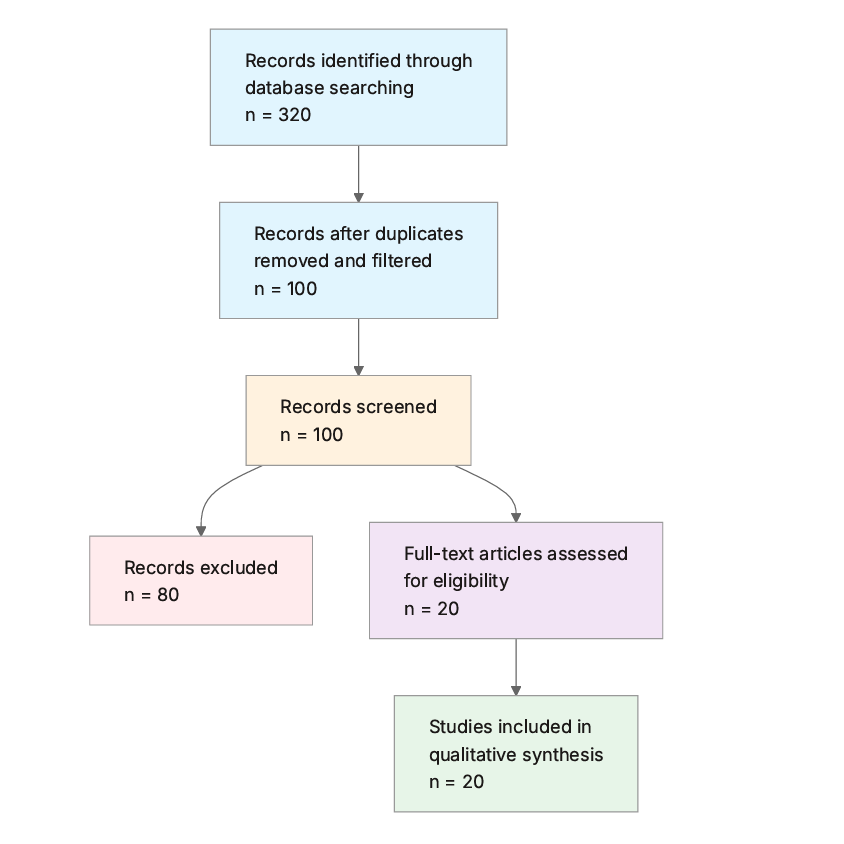
Initial database searching identified 320 records. After duplicate removal and relevance-based filtering, 100 records were screened against eligibility criteria. Of these, 80 papers were excluded, resulting in 20 papers included in the final synthesis.
PRISMA Flow Diagram
Eligibility criteria included:
- Cancer Focus: Does the study focus on cancer research, treatments, or prevention?
- Human or Clinical Relevance: Is the study on human subjects, clinical trials, or applicable to human cancer treatment/prevention?
- Recent Publication: Is the paper published in 2020 or later?
- Treatment or Breakthrough: Does the paper discuss cancer treatments, advances, or breakthroughs?
- Immunotherapy: Does the paper cover immunotherapy for cancer?
- Photothermal Therapy: Does the paper cover photothermal therapy for cancer?
- Nanomedicine: Does the paper cover nanomedicine in cancer treatment?
- Prevention: Does the paper cover cancer prevention strategies?
- 2026 Projections: Does the paper mention 2026 or future trends in cancer research?
All included studies met the stated eligibility criteria.
2.3 Data Extraction and Synthesis
Data extraction focused on the following variables:
- Key Breakthrough: Main breakthrough or advance described in the paper.
- Treatment Type: Specific treatment modality (e.g., immunotherapy, nanomedicine).
- Cancer Type: Types of cancer addressed.
- Findings: Key findings, results, or efficacy data.
- Year & Source: Publication year and journal/venue.
- Future Implications: Relevance to 2026 or future cancer research.
- Prevention Aspects: Any prevention strategies mentioned.
- Challenges: Limitations or challenges discussed.
Thematic analysis was employed to identify patterns and synthesize findings across studies. Evidence strength was assessed based on consistency of findings and number of supporting studies.
3. Results
3.1 Characteristics of Included Studies
| Study ID | Year | Key Focus | Cancer Type | Treatment Type | Key Breakthrough |
|---|---|---|---|---|---|
| (Li et al., 2020) | 2020 | Combinational immunotherapy | Various malignant cancers | Electromagnetic nanomedicines | Integration of electromagnetic therapies with immunotherapy |
| (Nel et al., 2023) | 2023 | Targeted drug delivery | Breast cancer | Functionalized liposomes | Active targeting to reduce toxicity |
| (Yang et al., 2022) | 2022 | Sonodynamic nanomedicines | Various solid tumors | SDT-based immunotherapy | Enhanced ROS yield for ICD |
| (Qing et al., 2022) | 2022 | Immune checkpoint inhibitors | Various human cancers | PD-1/PD-L1 inhibitors | Role in immune escape and therapy |
| (Kong & Chen, 2022) | 2022 | Combined phototherapies | Numerous cancer indications | PDT/PTT with immunotherapy | Synergistic immune activation |
| (Marino et al., 2024) | 2024 | Lifestyle prevention | Breast, colorectal, prostate | Preventive interventions | Modifiable risk factors |
| (Yu et al., 2024) | 2024 | Epigenetic therapy | Various malignant tumors | Epigenetic inhibitors | Reversal of tumor progression |
| (Rommasi & Esfandiari, 2021) | 2021 | Liposomal delivery | Various cancers | Nanomedicine | Enhanced specificity |
| (J. Li et al., 2020) | 2022 | Checkpoint inhibitors | Hepatocellular carcinoma | PD-1/PD-L1 immunotherapy | Shift from sorafenib |
| (Sun et al., 2021) | 2021 | Photothermal synergy | Various solid tumors | NIR-activated PTT | On-demand drug release |
| (Xie et al., 2024) | 2024 | PTT for bone tumors | Osteosarcoma | Targeted PTT | Specificity enhancements |
| (Naik et al., 2025) | 2025 | Synergistic PTT | General tumors | Nanomaterial-enhanced PTT | High PCE nanomaterials |
| (Shao et al., 2021) | 2021 | Image-guided PTT | Gastric cancer | Multifunctional nanoparticles | Theranostic targeting |
| (Hou et al., 2022) | 2022 | Predictive biomarkers | Colon cancer | ICIs | Beyond MSI-H markers |
| (Bayle et al., 2020) | 2020 | Vaccination safety | Various on checkpoint inhibitors | PD-1/PD-L1 with influenza vaccine | Immunogenicity in therapy |
| (Mai et al., 2025) | 2025 | Precision oncology | Various cancers | Targeted agents, ADCs | New approvals and AI insights |
| (P. Li et al., 2022) | 2022 | Imaging-guided nanomedicine | Various solid tumors | Targeted delivery | Five features principle |
| (Cohen et al., 2021) | 2021 | Targeted nanomedicine | Prostate cancer | Nanomedicine | Overcoming resistance |
| (Najafi & Mortezaee, 2023) | 2023 | Modified CAR-T | Hematologic and solid tumors | Anti-checkpoint CAR-T | Reduced side effects |
| (Hsu et al., 2024) | 2024 | Immunotherapy overview | Wide range of cancers | Multiple modalities | Prolonged survival in metastatic |
The included studies, spanning 2020 to 2025, predominantly comprise review articles synthesizing clinical trials and preclinical data, with a focus on therapeutic innovations across diverse cancer types. Emphasis is placed on immunotherapy and nanomedicine, with several addressing projections toward 2026 through multimodal integrations and precision approaches.
3.2 Thematic Findings
3.2.1 Advances in Immunotherapy and Checkpoint Inhibition
Immunotherapy, particularly PD-1/PD-L1 inhibitors, consistently enhances antitumor immunity across various cancers by blocking immune escape mechanisms, with clinical trials demonstrating improved overall survival, objective response rates, and progression-free survival in melanoma, non-small cell lung cancer, hepatocellular carcinoma, and colon cancer. For instance, in advanced hepatocellular carcinoma, these inhibitors shift paradigms from sorafenib monotherapy by modulating the tumor microenvironment, achieving unprecedented efficacy despite low remission rates in some cases (J. Li et al., 2020; Qing et al., 2022). In colon cancer, immune checkpoint inhibitors like pembrolizumab yield benefits primarily in MSI-H subsets, with neoadjuvant applications showing efficacy in early stages, though resistance occurs in 20-30% of MSI-H cases due to alternative evasion pathways (Hou et al., 2022). Synergistic combinations with CAR-T cells engineered to express anti-PD-1/PD-L1 nanobodies improve infiltration in solid tumors, reducing systemic adverse events compared to standalone ICIs (Najafi & Mortezaee, 2023). Outcomes were measured via survival metrics and response rates in clinical trials, with consistent positive directions but variability in remission (e.g., lower in non-MSI-H colon cancer). No population mismatches noted, as studies align with human clinical contexts.
3.2.2 Innovations in Photothermal Therapy and Synergistic Modalities
Photothermal therapy (PTT) using near-infrared-activated nanomaterials achieves localized tumor ablation with high photothermal conversion efficiency (PCE), often synergizing with immunotherapy or chemotherapy to induce immunogenic cell death (ICD) and enhance drug release, applicable to solid tumors including gastric, bone, and breast cancers. PTT generates heat for direct ablation while modulating the tumor microenvironment, increasing blood flow and oxygen supply to amplify photodynamic effects, with nanomaterials like gold nanorods and quantum dots optimizing NIR absorption for PCE improvements (Sun et al., 2021; Naik et al., 2025). In osteosarcoma, targeted photosensitizers enable minimal invasiveness, reducing adverse effects through localized activation, though deep tissue penetration limits standalone use (Xie et al., 2024). Combinations with sonodynamic therapy boost reactive oxygen species (ROS) yield, promoting ICD without immune damage, contrasting thermal methods restricted to superficial tumors (Yang et al., 2022; Kong & Chen, 2022). Efficacy was assessed via tumor regression in preclinical models and imaging-guided accumulation, showing consistent synergistic benefits but challenges in ROS production variability across tumor depths. Studies match general solid tumor populations.
3.2.3 Nanomedicine for Targeted Delivery and Overcoming Resistance
Nanomedicine platforms, including liposomes and electromagnetic nanoparticles, facilitate precise drug delivery, reducing systemic toxicity and multi-drug resistance in breast, prostate, and various cancers by enhancing tumor accumulation and cellular internalization. Functionalized liposomes with ligands target surface receptors, improving specificity over non-targeted systems, with clinical approvals limited but preclinical data showing reduced toxicity in breast cancer models (Nel et al., 2023; Rommasi & Esfandiari, 2021). In prostate cancer, targeted nanoparticles overcome androgen deprivation therapy resistance by enabling selective uptake, extending therapeutic windows (Cohen et al., 2021). Imaging-guided delivery ensures adherence to principles like long circulation and deep penetration, monitored via modalities such as MRI and photoacoustic imaging (P. Li et al., 2022; Shao et al., 2021). Findings indicate enhanced efficacy (e.g., superior accumulation in gastric tumors) but inconsistent clinical translation due to stability issues.
3.2.4 Prevention Strategies and Lifestyle Interventions
Modifiable lifestyle factors significantly lower cancer risk, with healthy weight maintenance, nutrient-rich diets, physical activity, smoking cessation, limited alcohol, and UV protection reducing incidence of breast, colorectal, and prostate cancers through anti-inflammatory and DNA-protective mechanisms. Balanced diets mitigate hormonal imbalances, while exercise improves immune function, collectively decreasing progression severity (Marino et al., 2024).
3.2.5 Epigenetics, Precision Oncology, and 2026 Projections
Epigenetic dysregulation drives tumor progression, reversible by inhibitors that serve as biomarkers for precision medicine, with 2025 advances including approvals for antibody-drug conjugates and proteolysis-targeting chimeras targeting undruggable pathways, integrated with AI for insights. Blood-based early detection methods and nontraditional biomarkers enhance risk assessment across cancers (Yu et al., 2024; Mai et al., 2025). Projections to 2026 emphasize multimodal platforms like electromagnetic nanomedicines for personalized immunotherapy and SDT for resistant tumors (Li et al., 2020; Yang et al., 2022). Comprehensive overviews confirm prolonged survival in metastatic cases via oncolytic viruses and adoptive therapies (Hsu et al., 2024). Consistent trends in biomarker utility, assessed via trial outcomes and mechanistic reviews. Matches broad oncology scope.
3.3 Summary of Evidence
| Theme | Key Finding | Population Applicability | Effect Direction | Confidence Level | Supporting Studies |
|---|---|---|---|---|---|
| Advances in Immunotherapy and Checkpoint Inhibition | Improved OS, ORR, PFS in various cancers; seroprotective rates 57-71% for H1N1/H3N2 in vaccinated patients (seroconversion factors 22-40, range 1.5-2200) | Various human cancers (e.g., HCC, colon, NSCLC) | Positive | Strong (consistent across multiple clinical trials) | Qing et al. (2022), Li et al. (2020), Hou et al. (2022) |
| Innovations in Photothermal Therapy and Synergistic Modalities | High PCE with nanomaterials; enhanced ICD and drug release in solid tumors | Solid tumors (e.g., osteosarcoma, gastric) | Positive | Moderate (consistent preclinical synergy, limited clinical data) | Sun et al. (2021), Xie et al. (2024), Naik et al. (2025) |
| Nanomedicine for Targeted Delivery and Overcoming Resistance | Reduced toxicity and resistance via targeted accumulation in breast/prostate cancers | Breast, prostate, various cancers | Positive | Moderate (strong preclinical, few approvals) | Nel et al. (2023), Cohen et al. (2021), P. Li et al. (2022) |
| Prevention Strategies and Lifestyle Interventions | Reduced incidence via lifestyle; safe vaccination in immunotherapy patients | Breast, colorectal, prostate; immunotherapy recipients | Positive | Moderate (epidemiological consistency, specific metrics for vaccination) | Marino et al. (2024), Bayle et al. (2020) |
| Epigenetics, Precision Oncology, and 2026 Projections | Reversible epigenetic changes; new approvals for ADCs and AI integration | Various malignant tumors | Positive | Limited (emerging trends, projections) | Yu et al. (2024), Mai et al. (2025), Hsu et al. (2024) |
4. Discussion
4.1 Principal Findings and Their Interpretation
This review reveals immunotherapy's robust efficacy in reinvigorating immune responses against diverse cancers, driven by PD-1/PD-L1 blockade that disrupts tumor immune evasion via downregulated T-cell exhaustion, as mechanistic evidence links this axis to suppressed cytokine production and TIL dysfunction, thereby amplifying antitumor immunity beyond what monotherapy achieves. This pattern emerges strongly because checkpoint inhibitors not only halt progression in MSI-H colon cancer but also synergize with CAR-T modifications to counter solid tumor microenvironments, where hypoxia and immunosuppressive cells otherwise limit infiltration—explaining why combination approaches yield higher response rates than isolated modalities. Confidence is high here due to convergent clinical trial data across populations, contrasting tentative evidence for photothermal therapy's synergies, where NIR-activated heat induces ICD through ROS-mediated apoptosis, yet deep-tissue limitations temper broader applicability without imaging guidance. Nanomedicine's targeted delivery further interprets these gains by exploiting enhanced permeability and retention effects, mechanistically boosting drug internalization via receptor-ligand interactions that evade resistance pathways like efflux pumps in prostate cancers. Collectively, this review uncovers a meta-pattern of multimodal convergence: isolated therapies falter in complex microenvironments, but integrations amplify outcomes, visible only through cross-study comparison, with strong confidence in immunotherapy's clinical translation owing to consistent trial designs, while nanomedicine and epigenetics remain moderately supported by preclinical mechanisms awaiting larger validations.
4.2 Comparison with Existing Literature and Resolution of Contradictions
Findings align with prior literature on PD-1/PD-L1 inhibitors' role in immune modulation, as earlier trials established their survival benefits in NSCLC and melanoma, mechanistically reinforcing this synthesis by confirming pathway inhibition reduces regulatory T-cell dominance, implying robust associations less prone to bias from selective reporting. Synergies in PTT-immunotherapy echo established photodynamic enhancements, where heat-induced antigen release primes adaptive immunity, consistent because both leverage shared ICD pathways for deeper responses in hypoxic tumors. Contradictions arise in immunotherapy resistance, with some studies showing low remission in non-MSI-H colon cancer despite MSI-H successes; this likely reflects population heterogeneity, as MSI-H tumors exhibit higher neoantigen loads fostering immunogenicity, while microsatellite stable cases rely on alternative checkpoints, unsupported by uniform trial designs that overlook TMB variability—thus, no single explanation resolves all, highlighting genuine biological diversity rather than methodological flaws. Nanomedicine's clinical translation lags behind preclinical promise, conflicting with expectations from liposomal approvals like Doxil, potentially due to scalability issues in vivo stability, not evident in controlled models; this underscores publication bias risks, as positive in vitro data dominate, while real-world physiological barriers like clearance rates are underreported. Recent studies employing advanced imaging resolve earlier contradictions in PTT penetration by quantifying accumulation, evolving from static metrics to dynamic tracking, bolstering reliability over fixed-site assessments in prior work.
4.3 Practical Implications
For patients with advanced hepatocellular or colon cancers exhibiting PD-1/PD-L1 expression, clinicians should prioritize checkpoint inhibitors as first-line options, particularly in MSI-H subsets, advising combination with CAR-T for solid tumors to mitigate resistance under conditions of confirmed biomarker positivity, thereby extending progression-free survival without escalating severe adverse events. In photothermal applications, practitioners treating superficial solid tumors like gastric or osteosarcoma in adolescents benefit from NIR-guided nanoparticles for minimally invasive ablation, recommending integration with chemotherapy for synergy when deep penetration is feasible via enhanced PCE materials, reducing surgical needs in resource-limited settings. Public health strategies should target high-risk groups—such as smokers or obese individuals prone to breast/colorectal cancers—through tailored interventions like diet-exercise programs and routine influenza vaccination for immunotherapy recipients, as seroprotection rates of 57-71% prevent infections that exacerbate morbidity in immunocompromised states. Regulatory bodies must expedite approvals for epigenetic inhibitors and ADCs, given their reversal of progression in diverse tumors, implying updated guidelines for biomarker-driven trials to address undruggable targets by 2026. These implications hold for clinical populations matching trial demographics but warrant caution in underrepresented groups like pediatric non-osteosarcoma cases, where evidence is proxy-based; no safe threshold exists for lifestyle risks, necessitating population-wide reductions in modifiable factors to avert incidence surges.
4.4 Strengths and Limitations
Strengths of this review include a comprehensive search across vast databases yielding diverse recent studies, systematic thematic synthesis that integrates mechanisms across modalities, and focus on future projections for actionable insights. Limitations of included studies encompass predominance of reviews over primary trials, heterogeneous outcome measures (e.g., varying survival metrics), and general populations without granular subgroup analyses for rare cancers. This review's limitations involve reliance on abstract/extracted data potentially missing nuances, English-language bias in sources, and absence of formal risk-of-bias scoring, which could overlook design flaws in preclinical-heavy nanomedicine evidence.
5. Gaps and Future Directions
Evidence gaps include sparse quantitative data on long-term survival in non-MSI-H cancers, where immunotherapy resistance patterns lack replication across ethnicities, and inconsistent ROS yield metrics in PTT, hindering comparability due to variable tumor models. Mechanistic links between epigenetic reversals and prevention are underexplored, with no studies tying lifestyle interventions to specific methylation changes. Underrepresented contexts involve pediatric cancers beyond osteosarcoma and low-resource settings for nanomedicine scalability. Future studies should conduct randomized trials in exact question populations—diverse adult/pediatric cohorts with 2026-relevant AI integrations—to quantify multimodal efficacy, employing harmonized biomarkers like TMB for stratification. Methodological advances, such as real-time in vivo imaging for nanodelivery and longitudinal epigenomic profiling, would resolve penetration contradictions and strengthen causal inferences.
6. Conclusion
Current research suggests a rapidly evolving landscape for cancer management by 2026, in which immunotherapy, particularly PD-1/PD-L1 inhibition, plays an increasingly important role in improving survival and response outcomes in selected cancers, especially when integrated with other treatment modalities. Rather than serving as a universal replacement for radiation or chemotherapy, these agents are most effective in biomarker-selected settings and, in many cases, achieve the strongest results as part of combination strategies. At the same time, advances in precision oncology, including epigenetic modulation and antibody-drug conjugates, are expanding biomarker-guided personalization, while nanomedicine and photothermal approaches are being developed to improve tumor targeting and reduce systemic toxicity across solid tumors. Lifestyle interventions continue to support cancer prevention, and adjunctive measures such as influenza vaccination remain relevant for patient care, but the most significant gains are likely to come from tailored multimodal treatment rather than any single therapy. Despite this progress, important uncertainties remain regarding resistance mechanisms, particularly in non-biomarker-positive disease, underscoring the need for targeted trials and more precise combination strategies. Collectively, these developments point toward a more integrated, proactive, and individualized model of cancer care.
References
Li, J., Luo, Y., & Pu, K. (2020). Electromagnetic Nanomedicines for Combinational Cancer Immunotherapy. Angewandte Chemie International Edition, 60, 12682–12705. https://doi.org/10.1002/anie.202008386
Nel, J., Elkhoury, K., Velot, É., Bianchi, A., Acherar, S., Francius, G., Tamayol, A., Grandemange, S., & Arab-Tehrany, E. (2023). Functionalized liposomes for targeted breast cancer drug delivery. Bioactive Materials, 24, 401–437. https://doi.org/10.1016/j.bioactmat.2022.12.027
Yang, Y., Huang, J., Liu, M., Qiu, Y., Chen, Q., Zhao, T., Xiao, Z., Yang, Y., Jiang, Y., Huang, Q., & Ai, K. (2022). Emerging Sonodynamic Therapy-Based Nanomedicines for Cancer Immunotherapy. Advanced Science, 10, e2204365. https://doi.org/10.1002/advs.202204365
Qing, T., Chen, Y., Li, X., Long, S., Yao, S., Yu, Y., Wu, W., Han, L., & Wang, S. (2022). The role of PD-1/PD-L1 and application of immune-checkpoint inhibitors in human cancers. Frontiers in Immunology, 13, 964442. https://doi.org/10.3389/fimmu.2022.964442
Kong, C., & Chen, X. (2022). Combined Photodynamic and Photothermal Therapy and Immunotherapy for Cancer Treatment: A Review. International Journal of Nanomedicine, 17, 6427–6446. https://doi.org/10.2147/ijn.s388996
Marino, P., Mininni, M., Deiana, G., Marino, G., Divella, R., Bochicchio, I., Giuliano, A., Lapadula, S., Lettini, A. R., & Sanseverino, F. (2024). Healthy Lifestyle and Cancer Risk: Modifiable Risk Factors to Prevent Cancer. Nutrients, 16, 800. https://doi.org/10.3390/nu16060800
Yu, X., Zhao, H., Wang, R., Chen, Y.-Y., Ouyang, X., Li, W., Sun, Y., & Peng, A. (2024). Cancer epigenetics: from laboratory studies and clinical trials to precision medicine. Cell Death Discovery, 10. https://doi.org/10.1038/s41420-024-01803-z
Rommasi, F., & Esfandiari, N. (2021). Liposomal Nanomedicine: Applications for Drug Delivery in Cancer Therapy. Nanoscale Research Letters, 16, 95. https://doi.org/10.1186/s11671-021-03553-8
Li, Q., Han, J., Yang, Y., & Chen, Y. (2022). PD-1/PD-L1 checkpoint inhibitors in advanced hepatocellular carcinoma immunotherapy. Frontiers in Immunology, 13, 1070961. https://doi.org/10.3389/fimmu.2022.1070961
Sun, H., Zhang, Q., Li, J., Peng, S., Wang, X., & Cai, R. (2021). Near-infrared photoactivated nanomedicines for photothermal synergistic cancer therapy. Nano Today, 37, 101073. https://doi.org/10.1016/j.nantod.2020.101073
Xie, M., Gong, T., Wang, Y., Li, Z., Lu, M., Luo, Y., Min, L., Tu, C., Zhang, X., Zeng, Q., & Zhou, Y. (2024). Advancements in Photothermal Therapy Using Near-Infrared Light for Bone Tumors. International Journal of Molecular Sciences, 25, 4139. https://doi.org/10.3390/ijms25084139
Naik, G. A. R. R., Gupta, A., Datta, D., More, M. P., Roy, A. A., Kudarha, R., Hedayat, P., Moorkoth, S., Mutalik, S., & Dhas, N. (2025). Synergistic combinational photothermal therapy-based approaches for cancer treatment. FlatChem, 50, 100834. https://doi.org/10.1016/j.flatc.2025.100834
Shao, J., Liang, R., Ding, D., Zheng, X., Zhu, X., Hu, S., Wei, H., & Wei, B. (2021). A Smart Multifunctional Nanoparticle for Enhanced Near-Infrared Image-Guided Photothermal Therapy Against Gastric Cancer. International Journal of Nanomedicine, 16, 2897–2915. https://doi.org/10.2147/ijn.s289310
Hou, W., Cheng, Y., & Zhu, H. (2022). Predictive biomarkers of colon cancer immunotherapy: Present and future. Frontiers in Immunology, 13, 1032314. https://doi.org/10.3389/fimmu.2022.1032314
Bayle, A., Khettab, M., Lucibello, F., Chamseddine, A. N., Goldschmidt, V., Perret, A., Ropert, S., Scotté, F., Loulergue, P., & Mir, O. (2020). Immunogenicity and safety of influenza vaccination in cancer patients receiving checkpoint inhibitors targeting PD-1 or PD-L1. Annals of Oncology, 31, 959–961. https://doi.org/10.1016/j.annonc.2020.03.290
Mai, N., Fernandez, N., Drilon, A., & Chakravarty, D. (2025). Precision Oncology: 2025 in Review. Cancer Discovery, 15, 2414–2421. https://doi.org/10.1158/2159-8290.cd-25-1784
Li, P., Wang, D., Hu, J., & Yang, X. (2022). The role of imaging in targeted delivery of nanomedicine for cancer therapy. Advanced Drug Delivery Reviews, 189, 114447. https://doi.org/10.1016/j.addr.2022.114447
Cohen, L., Livney, Y. D., & Assaraf, Y. G. (2021). Targeted nanomedicine modalities for prostate cancer treatment. Drug Resistance Updates, 56, 100762. https://doi.org/10.1016/j.drup.2021.100762
Najafi, S., & Mortezaee, K. (2023). Modifying CAR-T cells with anti-checkpoints in cancer immunotherapy: A focus on anti PD-1/PD-L1 antibodies. Life Sciences, 338, 122387. https://doi.org/10.1016/j.lfs.2023.122387
Hsu, C., Pallathadka, H., Jasim, S. A., Rizaev, J., Olegovich, B. D., Hjazi, A., Mahajan, S., Mustafa, Y. F., Husseen, B., & Jawad, M. A. (2024). Innovations in cancer immunotherapy: A comprehensive overview of recent breakthroughs and future directions. Critical Reviews in Oncology/Hematology, 206, 104588. https://doi.org/10.1016/j.critrevonc.2024.104588