

Alcohol and Cancer Risk in Recent Human Evidence (2020–2025): A Thematic Literature Review
Reviewed by
Shrishti, Research ReviewerPowered by
Paperguide Literature Review Agent
Updated on
17 Aug 2026
Alcohol and Cancer Risk in Recent Human Evidence (2020–2025): A Thematic Literature Review
Abstract
Recent human evidence indicates that alcohol consumption is associated with increased risk for several site-specific cancers, with the most consistent signals observed for upper aerodigestive tract cancers, colorectal cancer, stomach cancer, and pancreatic cancer, while evidence for breast cancer, overall cancer, and some other sites remains mixed or null. In pooled and prospective analyses, risk increased with higher intake, such as pancreatic cancer hazard ratios of 1.12 (95% CI 1.03–1.21) for 30-to-<60 g/day and 1.32 (95% CI 1.18–1.47) for ≥60 g/day, early-onset colorectal cancer adjusted hazard ratios of 1.09 (95% CI 1.02–1.16) for moderate drinking and 1.20 (95% CI 1.11–1.29) for heavy drinking, and oesophageal squamous cell carcinoma risk that rose with increasing grams per day (Naudin et al., 2025; Jin et al., 2023; Middleton et al., 2022). This literature matters because recent studies combine very large cohorts, meta-analyses, and Mendelian randomization, allowing a more refined assessment of whether alcohol is simply associated with cancer or plausibly causal. Across studies, dose-response patterns were common, but not universal: strong gradients were reported for head and neck cancer and stomach cancer, whereas Mendelian randomization often showed weaker or inconsistent evidence for overall cancer and breast cancer. Mechanistic evidence converges on acetaldehyde toxicity, oxidative stress, DNA damage, disrupted DNA methylation, inflammation, folate-related one-carbon metabolism impairment, and, in head and neck cancer, oral microbiota-related pathways. Overall, the evidence supports alcohol as a carcinogenic exposure with strongest and most actionable evidence for specific sites, but also shows that population, drinking pattern, and analytic method substantially shape observed associations.
1. Introduction
Alcohol consumption remains a major public health concern because its harms extend beyond dependence and liver disease to cancer incidence and mortality. Recent literature continues to frame alcohol as a carcinogenic exposure with broad biological plausibility, but the magnitude and consistency of risk vary across cancer sites, drinking patterns, and study designs. Epidemiologic summaries suggest that alcohol contributes meaningfully to the global cancer burden, while mechanistic studies indicate several pathways through which ethanol and its metabolite acetaldehyde may promote carcinogenesis, including DNA damage, oxidative stress, inflammatory signaling, and epigenetic disruption (Rehm et al., 2020; Ferraguti et al., 2022).
At the same time, the current evidence base is not uniform. Some analyses find clear positive dose-response associations for specific cancers such as oesophageal, head and neck, colorectal, stomach, liver, and pancreatic cancers, whereas other approaches, especially Mendelian randomization, often report null or weak evidence for overall cancer and for sites such as breast cancer (Di Credico et al., 2020; Larsson et al., 2020; Larsson et al., 2025). This divergence raises important questions about whether observed associations reflect causal effects, residual confounding, differential exposure measurement, or genuine heterogeneity by cancer biology and drinking context. The issue is particularly relevant because recent studies increasingly distinguish between drinking intensity, duration, frequency, cessation, and changes in consumption over time, suggesting that cancer risk may depend not only on the amount consumed but also on the pattern of exposure (Yoo et al., 2022; Yoo et al., 2021; Jin et al., 2023).
A contemporary synthesis is therefore needed to integrate site-specific epidemiologic findings, emerging causal inference studies, and mechanistic evidence into a coherent picture of what the latest research indicates about alcohol and cancer. The present review addresses that need by examining how recent human studies characterize alcohol-related cancer risk, where the strongest evidence lies, how results differ across populations and methods, and which mechanisms most plausibly explain the observed associations.
2. Methods
2.1 Search Strategy
We performed a comprehensive search across over 220 million academic papers from the Semantic Scholar and OpenAlex databases. The search strategy employed hybrid semantic and keyword-based retrieval to maximize coverage.
Search queries included:
- "Alcohol consumption and cancer risk recent cohort and meta-analysis"
- "Ethanol exposure carcinogenesis and cancer incidence in adults"
- "Alcohol drinking associations with site-specific cancers recent evidence"
- "Alcohol dose response cancer risk systematic review 2020 2026"
2.2 Study Selection
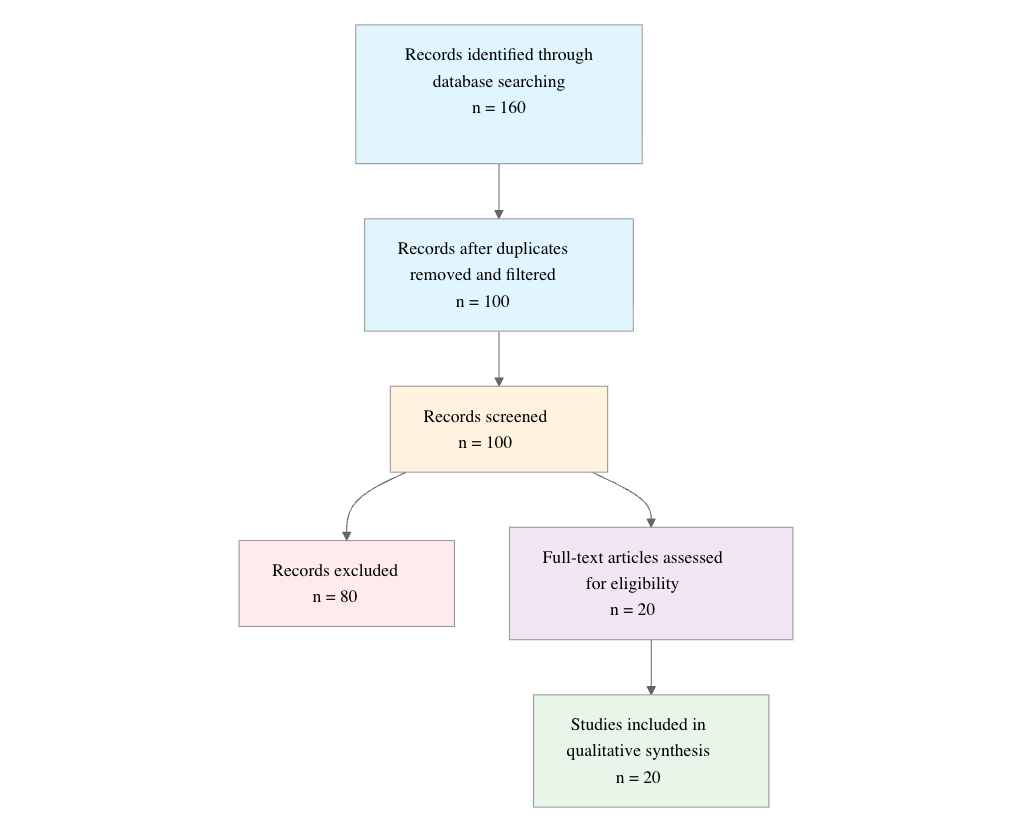
Initial database searching identified 160 records. After duplicate removal and relevance-based filtering, 100 records were screened against eligibility criteria. Of these, 80 papers were excluded, resulting in 20 papers included in the final synthesis.
PRISMA Flow Diagram
Eligibility criteria included:
- Human Studies: Does the study involve human participants, human data, or human-derived epidemiologic evidence rather than animal or cell experiments only?
- Cancer Outcome: Does the study examine cancer incidence, risk, progression, mortality, or precancerous lesions as an outcome?
- Alcohol Exposure: Does the study assess alcohol consumption, ethanol exposure, drinking patterns, or alcohol-related biomarkers as the exposure?
- Recent Evidence: Does the study have a publication year from 2020 onward?
- Effect Estimate: Does the study report an association, risk estimate, comparison, or inferential finding about alcohol and cancer?
- Site-Specific Detail: Does the study focus on a specific cancer site or clearly separate cancer types rather than only mentioning cancer broadly?
- Dose Response: Does the study report a dose-response pattern, threshold, or graded association with alcohol exposure?
- Review Evidence: Is the study a systematic review, meta-analysis, umbrella review, or pooled analysis?
All included studies met the stated eligibility criteria.
2.3 Data Extraction and Synthesis
Data extraction focused on the following variables:
- Cancer Types: The cancer sites or types studied and whether the paper is pan-cancer or site-specific.
- Alcohol Exposure: How alcohol was defined or measured.
- Study Design: The study design.
- Main Finding: The principal result regarding the association between alcohol and cancer risk, incidence, progression, or mortality.
- Dose Response: Any reported dose-response relationship, thresholds, or non-linear patterns.
- Mechanism: Any proposed biological mechanism linking alcohol to cancer.
- Population: The population studied, including age group, sex, clinical status, and geography if reported.
- Quality/Size: Sample size and any quality indicators such as number of studies in a review, follow-up length, or key limitations that affect confidence.
Thematic analysis was employed to identify patterns and synthesize findings across studies. Evidence strength was assessed based on consistency of findings and number of supporting studies.
3. Results
3.1 Characteristics of Included Studies
| Study and Year | Study Type | Cancer Focus | Alcohol Exposure | Population / Setting | Key Outcome |
|---|---|---|---|---|---|
| Larsson et al. (2020) | Mendelian randomization | Pan-cancer and site-specific | Genetically predicted drinks/week | UK Biobank and international genetic consortia; mainly European ancestry | Null for overall cancer; lung signal in one consortium |
| Yoo et al. (2022) | Cohort | Pan-cancer / alcohol-related cancers | Change in alcohol intake | Korean national cohort, 4.5 million adults | Increased intake raised risk; quitting/reduction lowered risk |
| Anderson et al. (2023) | Comment / position piece | Multiple sites | Low-level consumption | Global evidence synthesis (WHO) | Low levels linked to increased cancer risk burden |
| Im et al. (2023) | Prospective cohort + genetic analyses | 200+ diseases including site-specific cancers | Grams/week; drinking patterns | China Kadoorie Biobank | Positive dose-response for several cancers in men |
| Rumgay et al. (2021) | Population-based modelling study | Multiple sites | Alcohol-attributable fraction | Global population | Alcohol increases risk for upper aerodigestive tract, liver, colorectum, breast |
| Jin et al. (2023) | Cohort | Early-onset colorectal cancer | g/day; frequency | Korean adults aged 20–49 years | Moderate/heavy drinking increased risk |
| Middleton et al. (2022) | Case-control | Oesophageal squamous cell carcinoma | Current drinking; g/day | East Africa multicenter case-control (Kenya, Tanzania, Malawi) | Higher alcohol intake increased OSCC risk |
| Naudin et al. (2025) | Pooled prospective analysis | Pancreatic cancer | g/day | 30 prospective cohorts, multicontinental | Modest positive association |
| Di Credico et al. (2020) | Case-control consortium analysis | Head and neck cancers | Drinks/day and duration | INHANCE Consortium | Strong dose-response with intensity |
| Rehm et al. (2020) | Global burden synthesis / review | Pan-cancer | Alcohol-attributable burden | Global population | Substantial alcohol-attributable cancer deaths |
| Im et al. (2021) | Prospective cohort | Site-specific cancers | Grams/week; drinking patterns | China Kadoorie Biobank | Increased risk for several cancers in men |
| Yoo et al. (2021) | Cohort | Gastrointestinal cancers | Drinking frequency and quantity | Korean national cohort, 11.7 million adults | Frequency more important than amount per occasion |
| Deng et al. (2021) | Meta-analysis | Stomach cancer | Alcohol consumption | 81 international epidemiology studies | Positive association with clear dose-response |
| Jun et al. (2023) | Systematic review and meta-analysis | Multiple sites | g/day categories | 139 cohort studies | No safe level; risk rises with higher intake |
| Gapstur et al. (2023) | IARC perspective / special report | Multiple sites | Reduction/cessation | Evidence synthesis | Lower incidence/mortality with stopping or reducing |
| Larsson et al. (2025) | Mendelian randomization | 20 cancers | Genetically predicted alcohol consumption | Four biobanks and consortia | Weak causal evidence for some sites; null for overall cancer |
| Millwood et al. (2023) | Prospective cohort | Cause-specific mortality including cancer | g/day; drinking patterns | China Kadoorie Biobank | Cancer mortality higher with alcohol; pattern matters |
| Tian et al. (2023) | Prospective cohort | Cancer mortality | Alcohol categories; binge drinking | US adults | Heavy/binge drinking increased cancer mortality |
| Zhou et al. (2022) | Cohort meta-analysis + Mendelian randomization | Colorectal cancer | Alcohol consumption | 32 cohort studies + genetic analyses | Causal support for CRC; DNA methylation implicated |
| Ferraguti et al. (2022) | Mechanistic review | Head and neck cancer | Alcohol exposure markers | HNC biology | Oxidative stress, DNA damage, oral microbiota |
The evidence base spans cohort studies, case-control studies, meta-analyses, pooled analyses, Mendelian randomization, and mechanistic reviews. Populations vary markedly, including large East Asian cohorts, US adults, European ancestry biobanks, and African multicenter case-control data, which is important because drinking patterns, beverage types, and alcohol metabolism differ across contexts.
3.2 Thematic Findings
3.2.1 The Strongest and Most Consistent Signal Is for Upper Aerodigestive Tract Cancers, Especially Head and Neck and Oesophageal Cancers
Across the recent literature, the clearest association appears for cancers of the upper aerodigestive tract. In head and neck cancer, risk rose steeply with drinking intensity, with odds ratios peaking at 7.95 for oral cavity cancer, 12.86 for oropharyngeal cancer, 24.96 for hypopharyngeal cancer, and 6.60 for laryngeal cancer at the highest combined intensity-duration levels (Di Credico et al., 2020). The pattern was driven more by drinks per day than by duration for oral cavity, hypopharyngeal, and laryngeal cancers, while oropharyngeal cancer showed accumulation up to 28 years before flattening (Di Credico et al., 2020). This pattern was reinforced by mechanistic work suggesting that alcohol may act through acetaldehyde exposure, oxidative stress, epigenetic modification, DNA damage, inaccurate DNA repair, and oral microbiota-mediated enhancement of carcinogen exposure (Ferraguti et al., 2022).
Oesophageal cancer showed similarly strong and consistent associations in regional cohorts and meta-analytic evidence. In Chinese men, alcohol intake was associated with oesophageal cancer risk at HR = 1.98 (95% CI 1.79–2.18) per 280 g/week (Im et al., 2021), and in East Africa, higher current alcohol intake was associated with oesophageal squamous cell carcinoma in a dose-response fashion (Middleton et al., 2022). Meta-analytic evidence also found that light and light-to-moderate drinking were associated with higher oesophageal cancer risk (Jun et al., 2023). Genetic evidence is less definitive but still points in the same direction: genetically predicted alcohol consumption showed nominally significant positive estimates for oesophageal cancer and combined head/neck cancer (Larsson et al., 2025), while another Mendelian randomization analysis found no overall cancer association but did not negate site-specific signals (Larsson et al., 2020). Confidence: Strong for head and neck and oesophageal cancers, because the direction is consistent across epidemiologic designs and supported by plausible biology.
3.2.2 Colorectal Cancer Risk Rises With Increasing Alcohol Exposure, Including in Younger Adults, and Genetic Analyses Support Causality
Colorectal cancer emerges as another site with relatively coherent evidence. In early-onset colorectal cancer, moderate drinking was associated with aHR = 1.09 (95% CI 1.02–1.16) and heavy drinking with aHR = 1.20 (95% CI 1.11–1.29) compared with light drinking (Jin et al., 2023). Risk also increased by drinking frequency, with 1–2, 3–4, and ≥5 days/week associated with 7%, 14%, and 27% higher risk than nondrinkers (Jin et al., 2023). Site heterogeneity mattered: distal colon and rectal cancers showed positive dose-response patterns, whereas proximal colon cancer did not (Jin et al., 2023).
This site-specific pattern is reinforced by causal and molecular analyses. Genetic predisposition to alcohol drinking was causally associated with colorectal cancer risk in a two-sample Mendelian randomization framework, OR = 1.79 (95% CI 1.23–2.61) (Zhou et al., 2022). The same study identified alcohol-related CpG sites, cg05593667 and cg10045354 in the COLCA1/COLCA2 region, as causally associated with increased colorectal cancer risk (Zhou et al., 2022). A separate Mendelian randomization analysis also found a nominally significant positive estimate for colorectal cancer (Larsson et al., 2025). Meta-analytic evidence further indicated that light alcohol consumption, as well as light-to-moderate drinking, is associated with increased colorectal cancer risk (Jun et al., 2023). Confidence: Strong, because epidemiologic gradients, frequency effects, and causal-genetic evidence converge, though subtype heterogeneity suggests biologic or exposure differences across colon segments.
3.2.3 Stomach and Pancreatic Cancers Show Positive Dose-Response Associations, but Evidence Is More Heterogeneous by Region and Exposure Pattern
For stomach cancer, the evidence is consistently positive but more heterogeneous. A meta-analysis of epidemiologic studies found an odds ratio of 1.20 (95% CI 1.12–1.27) for alcohol consumption and stomach cancer, with a clear trend toward higher risk at higher daily intake (Deng et al., 2021). A later comprehensive review similarly concluded that heavy drinking contributes to stomach cancer risk (Jun et al., 2023). Yet the meta-analysis reported substantial heterogeneity (I² = 86%), with region and cancer subsite identified as major sources (Deng et al., 2021). That means the direction of association is fairly stable, but the magnitude is context dependent. Confidence: Moderate.
Pancreatic cancer evidence is newer but increasingly persuasive. In a pooled analysis of prospective cohorts, alcohol intake was positively associated with pancreatic cancer risk, with HR = 1.12 (95% CI 1.03–1.21) for 30-to-<60 g/day and HR = 1.32 (95% CI 1.18–1.47) for ≥60 g/day, compared with 0.1 to <5 g/day (Naudin et al., 2025). Each 10 g/day increment was associated with HR = 1.03 (95% CI 1.02–1.04), and the association appeared in Europe-Australia and North America but not Asia (Naudin et al., 2025). A broader review also placed pancreatic cancer among the sites associated with heavy drinking (Jun et al., 2023). Confidence: Moderate, because the dose-response is internally consistent but geographic heterogeneity limits universal generalization.
3.2.4 Liver and Breast Cancer Evidence Remains Less Settled Than for Upper Aerodigestive Tract or Colorectal Cancers
Liver cancer repeatedly appears in observational and review evidence as alcohol-associated, especially in Chinese men and burden estimates, but causal inference is less uniform. In China Kadoorie Biobank, liver cancer risk increased with alcohol intake in men, with HR = 1.52 (95% CI 1.31–1.76) per 280 g/week (Im et al., 2021). Meta-analytic and review evidence also classify liver cancer as alcohol-related, and the mechanistic literature supports acetaldehyde- and oxidative stress-mediated hepatocarcinogenesis (Jun et al., 2023; Ferraguti et al., 2022). However, Mendelian randomization yielded an overall null estimate for liver cancer, OR = 1.40 (p = 0.10), though a nominally significant signal appeared in some datasets and with the ADH1B-rs1229984 variant (Larsson et al., 2025). This inconsistency suggests either limited power, instrument sensitivity, or genuine context dependence. Confidence: Moderate to conflicting.
Breast cancer evidence is especially mixed. Reviews and meta-analyses continue to include breast cancer among alcohol-associated sites, and one systematic review found light alcohol consumption significantly associated with breast cancer risk (Rumgay et al., 2021; Jun et al., 2023). In contrast, Mendelian randomization found no supportive evidence for breast cancer, with a null estimate in both biobank and consortium data (Larsson et al., 2025). The discrepancy likely reflects differences between observational exposure patterns, hormonal pathways, and genetic instruments that may not capture the relevant causal contrasts with adequate precision. Confidence: Conflicting.
3.2.5 Alcohol Intensity, Frequency, and Change Over Time May Matter as Much as Cumulative Amount, Implying No Obvious Safe Threshold
Several studies suggest that how alcohol is consumed matters, not only how much. In head and neck cancer, intensity was the dominant predictor, with no appreciable threshold effect at lower intensities (Di Credico et al., 2020). For gastrointestinal cancers, frequent drinking was a more important risk factor than amount consumed per occasion (Yoo et al., 2021). In Chinese men, daily drinking and drinking without meals were associated with greater oesophageal and liver cancer risks, and flushing after drinking marked higher oesophageal and lung cancer risks (Im et al., 2021). Most importantly for prevention, changes in exposure mattered: increased alcohol consumption raised risk, whereas sustained quitting and reduced drinking were associated with lower risks of alcohol-related and all cancers (Yoo et al., 2022). The review evidence also found that even light alcohol consumption was linked to several specific cancers and concluded that there is no safe level of alcohol consumption associated with cancer risk (Jun et al., 2023). Confidence: Moderate to strong for graded risk, though precise thresholds differ by site and population.
3.2.6 Cancer Mortality and Global Burden Evidence Reinforce the Public Health Importance of Alcohol-Related Carcinogenesis
Beyond incidence, alcohol also appears to shape cancer mortality and population burden. Globally, alcohol was estimated to account for 376,200 cancer deaths in 2016, representing 4.2% of all cancer deaths (Rehm et al., 2020). This burden varied by age, ranging from 13.9% of cancer deaths among people aged 30–34 years to 2.7% among those aged 80–84 years (Rehm et al., 2020). In US adults, heavy drinking and binge drinking were associated with higher cancer mortality, with binge drinking ≥1 day/week associated with a hazard ratio of 1.22 (95% CI 1.10–1.35) (Tian et al., 2023). In China, alcohol intake was also linked to cause-specific mortality for cancers such as liver and oesophageal cancer (Millwood et al., 2023). These mortality findings are less informative about site specificity than incidence studies, but they strengthen the case that alcohol's cancer burden is clinically meaningful rather than merely statistical. Confidence: Moderate.
3.3 Summary of Evidence
| Theme | Key Finding | Population Applicability | Effect Direction | Confidence Level | Supporting Studies |
|---|---|---|---|---|---|
| Upper aerodigestive tract cancers | Oral cavity OR = 7.95, oropharynx OR = 12.86, hypopharynx OR = 24.96, larynx OR = 6.60 at highest intensity-duration levels | Broadly applicable to adult drinkers; some findings drawn from Europe, Asia, and East Africa, so context differs | Positive | Strong | Di Credico et al. (2020); Middleton et al. (2022); Ferraguti et al. (2022) |
| Colorectal cancer | aHR = 1.20 (95% CI 1.11–1.29) for heavy drinking in early-onset CRC; MR OR = 1.79 (95% CI 1.23–2.61) | Adults, including younger adults; mostly Korean and genetically informed populations | Positive | Strong | Jin et al. (2023); Zhou et al. (2022); Larsson et al. (2025) |
| Stomach cancer | OR = 1.20 (95% CI 1.12–1.27) with clear dose-response | Adults across multiple regions; heterogeneity limits direct transfer across settings | Positive | Moderate | Deng et al. (2021); Jun et al. (2023) |
| Pancreatic cancer | HR = 1.32 (95% CI 1.18–1.47) for ≥60 g/day; HR = 1.03 (95% CI 1.02–1.04) per 10 g/day | Multicontinental prospective cohorts, mostly European ancestry | Positive | Moderate | Naudin et al. (2025) |
| Liver cancer | HR = 1.52 (95% CI 1.31–1.76) per 280 g/week in Chinese men; MR evidence inconsistent | Strongest for Chinese men and heavy drinkers; broader applicability uncertain | Mixed | Moderate | Im et al. (2021); Larsson et al. (2025); Jun et al. (2023) |
| Breast cancer | Observational reviews link light drinking to increased risk, but MR shows null estimates | Adult women, but evidence differs by method and remains uncertain | Mixed | Conflicting | Rumgay et al. (2021); Jun et al. (2023); Larsson et al. (2025) |
| Exposure pattern and cessation | Increased alcohol raised risk; sustained quitting and reduced drinking lowered risk | Adult populations; strongest support from cohort data | Positive for harm, negative for reduction | Moderate | Yoo et al. (2022); Yoo et al. (2021); Gapstur et al. (2023) |
| Cancer mortality and burden | Alcohol attributable to 376,200 cancer deaths and 4.2% of cancer deaths globally | Global adults; burden varies by age and drinking context | Positive | Moderate | Rehm et al. (2020); Tian et al. (2023); Millwood et al. (2023) |
4. Discussion
4.1 Principal Findings and Their Interpretation
The clearest synthesis from recent evidence is that alcohol acts as a site-selective carcinogenic exposure rather than a uniform pan-cancer risk factor. The strongest and most reproducible associations cluster in the upper aerodigestive tract and colorectal cancer, where risk rises with drinking intensity, frequency, and, in some settings, duration. This pattern is biologically coherent because these tissues receive direct exposure to ethanol and acetaldehyde, and because mechanistic studies consistently implicate DNA damage, oxidative stress, epigenetic alteration, and impaired repair processes (Ferraguti et al., 2022; Rumgay et al., 2021; Rehm et al., 2020). In head and neck cancer, the magnitude of the observed dose-response suggests that intensity may be more carcinogenically relevant than cumulative time alone, which supports a direct mucosal toxicity model rather than a purely chronic-exposure model (Di Credico et al., 2020). In colorectal cancer, the convergence of epidemiology and Mendelian randomization strengthens the argument for causality and implies that alcohol may influence both initiation and progression through methylation-related pathways involving COLCA1/COLCA2 (Zhou et al., 2022).
The evidence also suggests that drinking pattern matters. Findings that frequent drinking is more informative than amount per occasion for gastrointestinal cancer, that daily drinking and drinking without meals increase site-specific risk in Chinese men, and that cessation or reduction lowers cancer risk indicate that alcohol carcinogenesis is shaped by exposure regularity and behavioral context rather than total intake alone (Yoo et al., 2021; Im et al., 2021; Yoo et al., 2022). This has an important interpretive consequence: risk may not require extreme intake to accumulate, particularly for sensitive tissues such as the oesophagus and oral cavity. At the same time, the presence of null or weak Mendelian randomization findings for overall cancer, breast cancer, and some liver analyses indicates that alcohol is unlikely to operate as a universal cause of all cancers in the same way across tissues (Larsson et al., 2020; Larsson et al., 2025). The most defensible conclusion is therefore one of heterogeneous carcinogenicity, with strongest confidence in specific tissues and more tentative inference for others.
4.2 Comparison with Existing Literature and Resolution of Contradictions
The broad alignment between recent epidemiologic syntheses and mechanistic reviews is important because it shows that the alcohol-cancer relationship is not merely a byproduct of one analytic tradition. Reviews consistently identify acetaldehyde, oxidative stress, inflammation, and methylation disruption as plausible pathways, and these same pathways are the ones most compatible with the site-specific epidemiologic signals for the upper aerodigestive tract, colorectum, and liver (Rumgay et al., 2021; Ferraguti et al., 2022). That coherence strengthens the case that the observed associations are biologically meaningful rather than entirely confounded.
The main contradictions arise in breast cancer, overall cancer, and some liver analyses. The most plausible explanation is methodological rather than purely biological. Mendelian randomization estimates are sensitive to instrument validity, power, multiple testing, and the extent to which genetic proxies capture the relevant drinking behavior (Larsson et al., 2025). Self-reported cohort studies, by contrast, can be influenced by residual confounding and exposure misclassification, but they directly reflect drinking patterns that may matter more for carcinogenesis than genetically predicted consumption. These differences are especially relevant for breast cancer, where hormonal pathways may interact with alcohol in ways that are difficult to isolate genetically but are consistently discussed in observational syntheses (Rumgay et al., 2021; Jun et al., 2023). For liver cancer, heterogeneity across Chinese male cohorts and genetic analyses may reflect true effect modification by drinking pattern, beverage type, flushing responses, and underlying metabolic susceptibility, as suggested by the China-based studies (Im et al., 2021; Millwood et al., 2023; Larsson et al., 2025).
There is also a strong possibility of regional heterogeneity. Associations appeared weaker or absent in some Asian pancreatic analyses but stronger in Europe and North America, whereas Chinese cohorts showed particularly clear signals for oesophageal and liver cancer (Naudin et al., 2025; Im et al., 2021). This may reflect differences in beverage type, co-exposures, meal patterns, and genetic variants involved in alcohol metabolism. The pattern does not undermine the carcinogenic hypothesis; rather, it shows that alcohol's effect size is context dependent and likely modified by host and environmental factors. Overall, the literature does not present a contradiction so much as a hierarchy of certainty: strong for some sites, mixed for others, and method-sensitive when causal inference relies on genetic instruments.
4.3 Practical Implications
The practical implications are clearest for prevention in adults who drink regularly, especially those at elevated baseline risk for upper aerodigestive tract, colorectal, stomach, pancreatic, and liver cancers. Clinicians should treat frequent or heavy drinking, daily drinking, and drinking without meals as meaningful cancer-risk markers rather than benign habits, because the recent evidence shows that these patterns are associated with higher incidence and mortality (Yoo et al., 2021; Im et al., 2021; Millwood et al., 2023). In younger adults, the association with early-onset colorectal cancer is particularly relevant because it suggests that alcohol prevention cannot be deferred until later life (Jin et al., 2023).
From a public health perspective, the no-safe-threshold message deserves emphasis. Evidence that light drinking is associated with specific cancers, together with dose-response gradients and risk reductions after cessation or reduction, implies that population-wide exposure reduction is more defensible than advice restricted only to heavy drinkers (Jun et al., 2023; Yoo et al., 2022). This is especially important in settings where alcohol is normalized in daily routines or where beverage patterns amplify mucosal exposure. Regulatory and policy responses should therefore prioritize lowering overall consumption, reducing drinking frequency, and targeting high-risk contexts rather than relying solely on downstream screening. In clinical practice, counseling should be specific: patients with a family history of colorectal cancer, individuals with smoking co-exposure, and those with existing upper aerodigestive risk factors may derive particular benefit from abstinence or reduction, although the exact risk-benefit balance remains uncertain for breast cancer and some liver contexts. The evidence base supports action now, but it also cautions against overgeneralizing one-size-fits-all thresholds across cancer sites.
4.4 Strengths and Limitations
This review has several strengths, including a recent evidence window, inclusion of multiple designs, and deliberate synthesis across epidemiologic, causal-inference, and mechanistic studies. The included literature also spans diverse populations and cancer sites, which makes it possible to identify both robust patterns and context-dependent variation.
The included studies nevertheless have important limitations. Many rely on self-reported alcohol exposure, which is vulnerable to under-reporting and misclassification. Several analyses are concentrated in specific regions, notably China, Korea, Europe, and selected biobanks, which limits generalizability. Mendelian randomization studies are powerful but depend on valid genetic instruments and can be limited by weak or context-specific proxies for drinking behavior. Some review papers summarize broad burden estimates without site-level specificity, and mortality studies often cannot separate cancer types. A number of studies also do not report detailed dose-response thresholds or consistently separate former drinkers from lifelong abstainers.
This review also has limitations. It relies on the provided abstracts and extracted fields, so some study nuances may be unavailable. No formal risk-of-bias appraisal was conducted, and the synthesis is therefore qualitative rather than meta-analytic. Finally, because the literature spans heterogeneous cancers, populations, and exposure definitions, the review emphasizes thematic integration over uniform effect aggregation.
5. Gaps and Future Directions
The most important gap is the need for more directly comparable evidence across populations with different drinking cultures and genetic backgrounds. The strongest signals come from East Asian men for oesophageal and liver cancer, from broad cohorts for colorectal cancer, and from pooled multi-region data for pancreatic cancer, but these findings are not equally replicated in all settings. Future work should therefore test whether the same exposure patterns produce the same cancer risks in women, in non-European ancestry populations, and in regions where beverage type, meal context, and alcohol metabolism differ.
Methodologically, studies would be strengthened by harmonized exposure measurement that distinguishes frequency, intensity, binge pattern, lifetime change, and drinking-with-meals behavior. Better separation of former drinkers from lifelong abstainers would also reduce bias. For mechanistic clarification, future studies should pair prospective exposure data with methylation, acetaldehyde-related biomarkers, and tissue-specific endpoints, especially for colorectal and upper aerodigestive cancers. The inconsistent liver and breast evidence indicates a need for targeted causal studies that can distinguish genuine null effects from instrument limitations or residual confounding. Finally, work on alcohol cessation should move beyond association to estimate how quickly cancer risk declines after reduction or stopping, because current evidence suggests benefit but does not define the time course.
6. Conclusion
The latest human evidence supports alcohol as a carcinogenic exposure with the strongest and most actionable links to head and neck, oesophageal, colorectal, stomach, pancreatic, and liver cancers, while evidence for breast cancer and overall cancer remains less consistent. The most convincing data show graded risk increases with higher intake and more frequent drinking, such as oral cavity, oropharyngeal, hypopharyngeal, and laryngeal cancer risks that rose steeply with intensity (Di Credico et al., 2020), colorectal cancer hazards of 1.09 (95% CI 1.02–1.16) for moderate drinking and 1.20 (95% CI 1.11–1.29) for heavy drinking (Jin et al., 2023), and pancreatic cancer hazards of 1.12 (95% CI 1.03–1.21) and 1.32 (95% CI 1.18–1.47) at higher intake levels (Naudin et al., 2025). At the same time, Mendelian randomization does not support alcohol as a cause of all cancers uniformly, which argues for site-specific rather than blanket interpretations (Larsson et al., 2025).
Taken together, the evidence is most compelling where epidemiologic gradients align with mechanistic plausibility, especially acetaldehyde toxicity, oxidative stress, DNA damage, methylation disruption, and oral microbiota-related effects (Ferraguti et al., 2022; Rehm et al., 2020). The key unresolved question is not whether alcohol can increase cancer risk, but how its effect is modified by site, pattern of drinking, sex, ancestry, and genetic susceptibility. That question matters because the practical message from the current literature is clear: reducing alcohol intake, frequency, and sustained exposure is likely to lower cancer burden, and the benefit is likely to be greatest in populations already at elevated baseline risk.
References
- Anderson, B. O., Berdzuli, N., Ilbawi, A., Kestel, D., Kluge, H. P., Krech, R., Mikkelsen, B., Neufeld, M., Poznyak, V., Rekve, D., Slama, S., Tello, J., & Ferreira-Borges, C. (2023). Health and cancer risks associated with low levels of alcohol consumption. The Lancet Public Health, 8(1), e6–e7. https://doi.org/10.1016/S2468-2667(22)00317-6
- Deng, W., Jin, L., Zhuo, H., Vasiliou, V., & Zhang, Y. (2021). Alcohol consumption and risk of stomach cancer: A meta-analysis. Chemico-Biological Interactions, 336, 109365. https://doi.org/10.1016/j.cbi.2021.109365
- Di Credico, G., Polesel, J., Dal Maso, L., Pauli, F., Torelli, N., Luce, D., Radoï, L., Matsuo, K., Serraino, D., Brennan, P., … Edefonti, V. (2020). Alcohol drinking and head and neck cancer risk: The joint effect of intensity and duration. British Journal of Cancer, 123(9), 1456–1463. https://doi.org/10.1038/s41416-020-01031-z
- Ferraguti, G., Terracina, S., Petrella, C., Greco, A., Minni, A., Lucarelli, M., Agostinelli, E., Ralli, M., de Vincentiis, M., Raponi, G., Polimeni, A., Ceccanti, M., Caronti, B., Di Certo, M. G., Barbato, C., Mattia, A., Tarani, L., & Fiore, M. (2022). Alcohol and head and neck cancer: Updates on the role of oxidative stress, genetic, epigenetics, oral microbiota, antioxidants, and alkylating agents. Antioxidants, 11(1), 145. https://doi.org/10.3390/antiox11010145
- Gapstur, S. M., Bouvard, V., Nethan, S. T., Freudenheim, J. L., Abnet, C. C., English, D. R., Rehm, J., Balbo, S., Buykx, P., Crabb, D., Conway, D. I., Islami, F., Lachenmeier, D. W., McGlynn, K. A., Salaspuro, M., Sawada, N., Terry, M. B., Toporcov, T., & Lauby-Secretan, B. (2023). The IARC perspective on alcohol reduction or cessation and cancer risk. New England Journal of Medicine, 389(26), 2486–2494. https://doi.org/10.1056/NEJMsr2306723
- Im, P. K., Millwood, I. Y., Kartsonaki, C., Chen, Y., Guo, Y., Du, H., Bian, Z., Lan, J., Feng, S., Yu, C., Lv, J., Walters, R. G., Li, L., Yang, L., & Chen, Z. (2021). Alcohol drinking and risks of total and site-specific cancers in China: A 10-year prospective study of 0.5 million adults. International Journal of Cancer, 149(3), 522–534. https://doi.org/10.1002/ijc.33538
- Im, P. K., Wright, N., Yang, L., Chan, K. H., Chen, Y., Guo, Y., Du, H., Yang, X., Avery, D., Wang, S., Yu, C., Lv, J., Clarke, R., Chen, J., Collins, R., Walters, R. G., Peto, R., Li, L., Chen, Z., & Millwood, I. Y. (2023). Alcohol consumption and risks of more than 200 diseases in Chinese men. Nature Medicine, 29(6), 1476–1486. https://doi.org/10.1038/s41591-023-02383-8
- Jin, E. H., Han, K., Shin, C. M., Lee, D. H., Kang, S. J., Lim, J. H., & Choi, Y. J. (2023). Sex and tumor-site differences in the association of alcohol intake with the risk of early-onset colorectal cancer. Journal of Clinical Oncology, 41(22), 3816–3825. https://doi.org/10.1200/JCO.22.01895
- Jun, S., Park, H., Kim, U.-J., Choi, E. J., Lee, H. A., Park, B., Lee, S. Y., Jee, S. H., & Park, H. (2023). Cancer risk based on alcohol consumption levels: A comprehensive systematic review and meta-analysis. Epidemiology and Health, 45, e2023092. https://doi.org/10.4178/epih.e2023092
- Larsson, S. C., Carter, P., Kar, S., Vithayathil, M., Mason, A. M., Michaëlsson, K., & Burgess, S. (2020). Smoking, alcohol consumption, and cancer: A Mendelian randomisation study in UK Biobank and international genetic consortia participants. PLOS Medicine, 17(7), e1003178. https://doi.org/10.1371/journal.pmed.1003178
- Larsson, S. C., Mason, A. M., Cronjé, H. T., Bassett, E., Horta, G., Kar, S., & Burgess, S. (2025). Alcohol consumption and risk of cancer: A Mendelian randomization analysis of four biobanks and consortium data. BMC Medicine, 23(1), 676. https://doi.org/10.1186/s12916-025-04543-8
- Middleton, D. R. S., Mmbaga, B. T., Menya, D., Dzamalala, C., Nyakunga-Maro, G., Finch, P., Mlombe, Y., Schüz, J., & McCormack, V. (2022). Alcohol consumption and oesophageal squamous cell cancer risk in east Africa: Findings from the large multicentre ESCCAPE case-control study in Kenya, Tanzania, and Malawi. The Lancet Global Health, 10(2), e236–e245. https://doi.org/10.1016/S2214-109X(21)00506-4
- Millwood, I. Y., Im, P. K., Bennett, D., Hariri, P., Yang, L., Du, H., Kartsonaki, C., Lin, K., Yu, C., Chen, Y., Sun, D., Zhang, N., Avery, D., Schmidt, D., Pei, P., Chen, J., Clarke, R., Lv, J., Peto, R., … Chen, Z. (2023). Alcohol intake and cause-specific mortality: Conventional and genetic evidence in a prospective cohort study of 512 000 adults in China. The Lancet Public Health, 8(12), e956–e967. https://doi.org/10.1016/S2468-2667(23)00217-7
- Naudin, S., Wang, M., Dimou, N., Ebrahimi, E., Genkinger, J., Adami, H.-O., … Ferrari, P. (2025). Alcohol intake and pancreatic cancer risk: An analysis from 30 prospective studies across Asia, Australia, Europe, and North America. PLOS Medicine, 22(5), e1004590. https://doi.org/10.1371/journal.pmed.1004590
- Rehm, J., Shield, K. D., & Weiderpass, E. (2020). Alcohol consumption: A leading risk factor for cancer. Chemico-Biological Interactions, 331, 109280. https://doi.org/10.1016/j.cbi.2020.109280
- Rumgay, H., Shield, K., Charvat, H., Ferrari, P., Sornpaisarn, B., Obot, I., Islami, F., Lemmens, V. E. P. P., Rehm, J., & Soerjomataram, I. (2021). Global burden of cancer in 2020 attributable to alcohol consumption: A population-based study. The Lancet Oncology, 22(8), 1071–1080. https://doi.org/10.1016/S1470-2045(21)00279-5
- Tian, Y., Liu, J., Zhao, Y., Jiang, N., Liu, X., Zhao, G., & Wang, X. (2023). Alcohol consumption and all-cause and cause-specific mortality among US adults: Prospective cohort study. BMC Medicine, 21(1), 208. https://doi.org/10.1186/s12916-023-02907-6
- Yoo, J. E., Shin, D. W., Han, K., Kim, D., Jeong, S.-M., Koo, H. Y., Yu, S. J., Park, J., & Choi, K. S. (2021). Association of the frequency and quantity of alcohol consumption with gastrointestinal cancer. JAMA Network Open, 4(8), e2120382. https://doi.org/10.1001/jamanetworkopen.2021.20382
- Yoo, J. E., Han, K., Shin, D. W., Kim, D., Kim, B.-S., Chun, S., Jeon, K. H., Jung, W., Park, J., Park, J. H., Choi, K. S., & Kim, J. S. (2022). Association between changes in alcohol consumption and cancer risk. JAMA Network Open, 5(8), e2228544. https://doi.org/10.1001/jamanetworkopen.2022.28544
- Zhou, X., Wang, L., Xiao, J., Sun, J., Yu, L., Zhang, H., Meng, X., Yuan, S., Timofeeva, M., Law, P. J., Houlston, R. S., Ding, K., Dunlop, M. G., Theodoratou, E., & Li, X. (2022). Alcohol consumption, DNA methylation and colorectal cancer risk: Results from pooled cohort studies and Mendelian randomization analysis. International Journal of Cancer, 151(1), 83–94. https://doi.org/10.1002/ijc.33945