

Latest Research on Autism Causes: A Synthesis of Genetic, Epigenetic, Prenatal, Environmental, and Gene–Environment Evidence
Reviewed by
Shaantanu Kulkarni, Research ReviewerPowered by
Paperguide Literature Review Agent
Updated on
27 Jul 2026
Abstract
Recent evidence indicates that autism causation is best understood as multifactorial, with strong converging support for genetic contributions and growing but more heterogeneous evidence for prenatal environmental and immune-related exposures. Large-scale genetic studies have identified 72 ASD-associated genes at FDR ≤ 0.001 and 60 exome-wide significant genes in case cohorts of 63,237 and 42,607 autistic individuals, respectively, while a broader integrative analysis of 46,612 trios found 615 neurodevelopmental candidate genes and no ASD-specific genes. Common polygenic risk, rare loss-of-function and missense variants, and copy-number variants all contribute, with CNVs conferring the greatest relative risk and rare and polygenic loads jointly shaping symptom severity and sex differences. In parallel, prenatal exposures remain relevant: maternal infection during pregnancy was associated with autism in offspring (OR = 1.32; 95% CI = 1.20–1.46), and prenatal PM2.5 exposure and maternal immune activation were independently associated with ASD risk. These findings matter because they shift the field from single-cause explanations toward layered biological risk architectures spanning inherited susceptibility, regulatory variation, and prenatal exposures. The main gap is mechanistic integration: the literature supports overlapping pathways such as gene regulation, synaptic connectivity, and immune/oxidative stress processes, but causal sequencing and population-specific vulnerability remain insufficiently resolved. Keywords: autism, spectrum, disorder, causes, aetiology, recent, studies, 2020
1. Introduction
Autism spectrum disorder is a heterogeneous neurodevelopmental condition with substantial clinical, biological, and social impact. Current research increasingly rejects the idea of a single autism cause, instead pointing to a layered etiology in which inherited liability, de novo mutation, epigenetic regulation, prenatal exposures, and broader environmental contexts interact across development. This shift is especially important because autism prevalence has risen over time, yet evidence suggests that this increase cannot be explained by environmental change alone; genetic factors continue to account for the larger share of liability. At the same time, the field has moved beyond broad heritability estimates toward specific molecular mechanisms, including gene regulation, synaptic function, immune dysregulation, oxidative stress, and regulatory non-coding variation.
A major challenge in interpreting the latest literature is that evidence is distributed across different study designs and levels of analysis. Large sequencing studies identify rare coding and non-coding variants with moderate to strong effects, while genome-wide association studies and polygenic analyses implicate common variants of smaller effect that accumulate across the genome. Meanwhile, prenatal and perinatal studies suggest that infection, metabolic conditions, pollution, and maternal immune activation may modify fetal neurodevelopmental risk, but these associations are less uniform and often mechanism-rich rather than effect-size rich.
The central question, therefore, is not merely whether autism has causes, but what kinds of causes are most consistently supported by recent research, how they converge biologically, and where evidence remains tentative. A synthesis of the latest studies is needed to distinguish robust signals from more context-dependent associations and to clarify what this means for causal inference, prevention, and future research.
2. Methods
2.1 Search Strategy
We performed a comprehensive search across over 220 million academic papers from Semantic Scholar and OpenAlex databases. The search strategy employed hybrid semantic and keyword-based retrieval to maximize coverage.
Search queries included:
- "Autism spectrum disorder causes and aetiology recent studies 2020 2026"
- "Autism etiology risk factors genetics environment neurodevelopment 2020 2026"
- "Autism spectrum disorder parental factors pregnancy exposure causes 2020 2026"
- "Autism genetics heritability de novo variants and polygenic risk recent"
- "Autism prenatal exposures immune metabolic and environmental risk factors review"
2.2 Study Selection
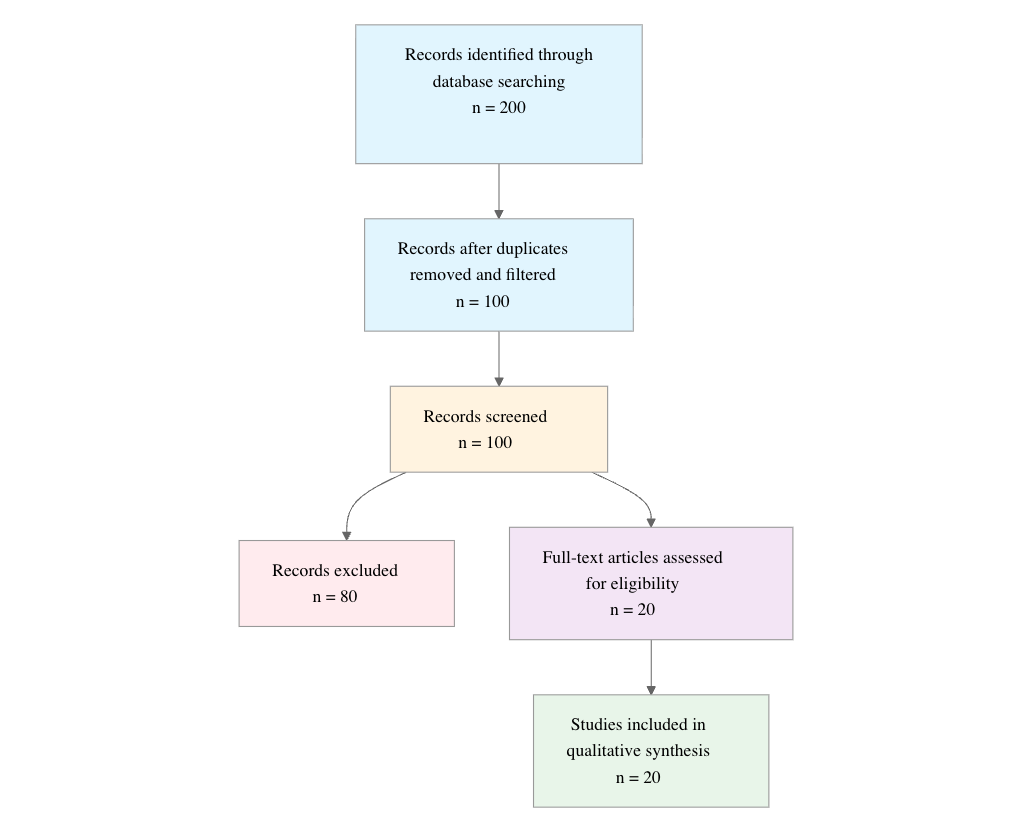
Initial database searching identified 200 records. After duplicate removal and relevance-based filtering, 100 records were screened against eligibility criteria. Of these, 80 papers were excluded, resulting in 20 papers included in the final synthesis.
PRISMA Flow Diagram
Eligibility criteria included:
- Human Studies: Does the study involve human participants, families, pregnancy cohorts, or human genetic data rather than only animal or in-vitro models?
- Autism Focus: Does the study examine autism spectrum disorder, autistic traits, or autism-related diagnosis as an outcome or central topic?
- Cause/Risk: Does the study investigate a proposed cause, risk factor, exposure, genetic variant, or biological mechanism related to autism?
- Recent Evidence: Is the paper published in 2020 or later?
- Empirical Study: Is the paper an original empirical study, meta-analysis, or systematic review rather than an opinion piece or commentary?
- Prenatal/Genetic Relevance: Does the study focus on prenatal, perinatal, genetic, epigenetic, immune, metabolic, or environmental factors linked to autism?
- Direct Autism Outcome: Does the paper report autism diagnosis, autistic traits, or autism-related neurodevelopmental outcomes?
All included studies met the stated eligibility criteria.
2.3 Data Extraction and Synthesis
Data extraction focused on the following variables:
- Cause Type
- Study Focus
- Population
- Design
- Key Finding
- Evidence Direction
- Strengths/Limits
Thematic analysis was employed to identify patterns and synthesize findings across studies. Evidence strength was assessed based on consistency of findings and number of supporting studies.
3. Results
3.1 Characteristics of Included Studies
| Study and Year | Study Type | Population | Key Focus | Design | Main Outcome |
|---|---|---|---|---|---|
| Havdahl et al. 2021 | Review | Human genetics literature | Common and rare autism risk variants | Narrative review | Genetic architecture of autism |
| Thapar and Rutter 2020 | Review | Autism literature | Heritability, rare and common variants | Review | Genetic contributions to autism |
| Cheroni et al. 2020 | Review | Human and model-informed literature | Gene–environment interplay | Review | Overlapping genetic/environmental pathways |
| Yoon et al. 2020 (Sloan, 2021) | Review | Human literature | Genetic, epigenetic, environmental etiologies | Review | Multifactorial etiology |
| Taylor et al. 2020 | Review / longitudinal synthesis | Population-level autism literature | Changes in genetic and environmental contributions over time | Review | Etiology over time |
| Matoba et al. 2020 | GWAS | 6,222 case-pseudocontrol pairs | Common risk loci; DDHD2 | GWAS + meta-analysis | Common variant risk |
| Tioleco et al. 2021 | Meta-analysis | 36 studies of pregnancy exposure and offspring autism | Maternal infection / fever | Meta-analysis | Prenatal infection risk |
| Chawner et al. 2021 | Comparative phenotypic study | CNV carriers | Autism risk CNVs and traits | Genetics-first phenotyping | CNV-associated traits |
| Zhou et al. 2022 | Two-stage gene discovery | 42,607 autism cases | De novo and inherited coding variants | Genetic association study | New moderate-risk genes |
| Wang et al. 2022 | Integrative gene analysis | 46,612 trios | ASD and DD de novo variants | Large-scale integrative analysis | Shared NDD genes |
| Fu et al. 2022 | Meta-analysis / joint variant analysis | 63,237 individuals; DD meta-analysis 91,605 | PTVs, missense, CNVs | Joint genetic analysis | ASD/DD gene architecture |
| Warrier et al. 2022 | Factor analysis / PGS study | 12,893 autistic individuals | Phenotypic heterogeneity, PGS, sex | Cohort analysis | Genetic correlates of heterogeneity |
| Antaki et al. 2022 | Family cohort study | Large family sample | Rare variants, polygenic risk, sex | Cohort study | Combined genetic load |
| Qiu et al. 2022 | Umbrella review | 28 prior studies | Candidate SNPs and ASD | Umbrella review | Candidate-gene synthesis |
| Rolland et al. 2023 | Cohort study | \>13,000 autism; 210,000 undiagnosed | LoF variants in autism genes | Genetic and imaging analysis | Broader phenotypic effects |
| Yu et al. 2023 | Cohort study | Pregnant individuals and offspring | MIA and PM2.5 | Prenatal exposure study | Independent ASD risk |
| Love et al. 2024 | Narrative review | Prenatal exposure literature | Infection, diabetes, obesity, medications, toxicants | Review | Prenatal environmental risk |
| Shin et al. 2024 | Targeted / whole-genome analysis | \>16,600 samples; \>4,900 ASD probands | Non-coding regulatory variation | Genetic study | Regulatory non-coding risk |
| Litman et al. 2025 | Generative mixture modeling | Large autism cohort; independent validation | Phenotypic classes and genetic programs | Cohort + replication | Genetic programs of heterogeneity |
| Koko et al. 2025 | Liability-model association study | 47,061 autistic individuals | Sex differences in rare variants | Genetic association study | Similar liability across sexes |
Overall, the evidence base is heavily weighted toward genetic studies, with several reviews synthesizing gene–environment interplay and a smaller but consistent body of prenatal exposure research. Outcome definitions vary between categorical autism diagnosis, autistic traits, symptom severity, developmental disability, and phenotype classes, which affects direct comparability across designs.
3.2 Thematic Findings
3.2.1 Autism is increasingly supported as a highly polygenic, heterogeneous genetic condition with both rare high-impact and common low-impact contributors.
The strongest and most consistent signal across the literature is that autism liability is genetically complex rather than monogenic. Rare damaging coding variants, de novo mutations, inherited loss-of-function variation, copy-number variants, and common polygenic risk all contribute, but they do so with different effect sizes and in different clinical contexts. In large-scale gene discovery, 60 exome-wide significant genes were identified in 42,607 cases, including five new moderate-risk genes, and 72 genes reached ASD association at FDR ≤ 0.001 in a broader joint analysis of protein-truncating variants, missense variants, and CNVs. CNVs carried the greatest relative risk, while de novo PTVs, damaging missense variants, and CNVs contributed 57.5%, 21.1%, and 8.44% of association evidence, respectively. Common inherited variation is not secondary noise: GWAS and umbrella-review evidence point to replicated loci and candidate polymorphisms, including DDHD2, CNTNAP2, MTHFR, OXTR, SLC25A12, and VDR.
The key interpretive pattern is that strong- and weak-effect variants appear to act on shared neurodevelopmental pathways but with different penetrance. Rare variants tend to identify more penetrant biological disruption, whereas common variants likely distribute risk broadly across the population. This is reinforced by evidence that risk genes converge on gene regulation, synaptic connectivity, and developmental timing rather than on a single autism-specific pathway.
Confidence: Strong.
3.2.2 Phenotypic heterogeneity reflects distinct genetic loading patterns, including sex-specific liability and differential co-occurring disability.
A second robust pattern is that autism subphenotypes align with different genetic architectures. Higher autism polygenic scores were associated with a lower likelihood of co-occurring developmental disabilities, and autism PGS were overinherited by autistic females without intellectual disability compared with males. In a separate liability-model study of 47,061 autistic individuals, autosomal rare and damaging coding variants conferred similar liability for autism in females and males, even though de novo protein-truncating mutation rates were higher on the observed scale in females and the liability conferred by male-biased cortical expression genes did not differ significantly by sex. Furthermore, de novo mutations, rare inherited variants, and polygenic scores were each associated with different dimensions of symptom severity in children and parents, indicating that autism is not only genetically heterogeneous at the case-control level but also within the diagnosis itself.
This evidence suggests that some apparent sex differences are better explained by threshold effects and phenotype composition than by fundamentally different genetic liabilities. The studies also show that categorical autism diagnosis obscures important variation in intellectual disability, motor delay, and symptom dimensions. This matters because it explains why some genetic findings appear stronger in clinically more severe subgroups than in autism broadly defined.
Confidence: Moderate to strong.
3.2.3 Non-coding and regulatory variation contributes to autism risk, especially through enhancer disruption and ancestry-sensitive recessive inheritance.
Beyond coding sequence variation, newer studies implicate regulatory non-coding regions in autism causation. Rare inherited variants in human accelerated regions, neural VISTA enhancers, and conserved neural enhancer regions substantially contributed to ASD risk in probands from families with shared ancestry, while their contribution was modest in simplex family structures. Patient variants near IL1RAPL1, OTX1, and SIM1 altered enhancer activity, providing direct functional evidence that non-coding changes can affect neurodevelopmental regulation. This regulatory theme aligns with GWAS findings that heritability is enriched in regulatory regions of the developing cortex and that risk alleles can reduce gene expression, as shown for DDHD2.
The synthesis here is that autism risk is not confined to protein-altering mutations; instead, disruption of developmental gene regulation appears to be a recurrent mechanism. The ancestry dependence observed in non-coding variant burden suggests that family structure and recessive architecture matter for detection, which may partially explain why non-coding contributions were only modest in simplex families.
Confidence: Moderate.
3.2.4 Prenatal infection, maternal immune activation, and metabolic/environmental exposures are associated with increased ASD risk, but effect estimates are more context-dependent than genetic findings.
The prenatal literature supports a contributory role for maternal illness and exposure during gestation, though the evidence is less uniform than for genetics. Maternal infection or fever during pregnancy was associated with autism in offspring with OR = 1.32 (95% CI = 1.20–1.46), and the association remained broadly similar across infectious agent, infection site, and trimester comparisons. Separately, MIA-related conditions and prenatal PM2.5 exposure were independently associated with ASD risk, but no statistically significant interaction was detected between them. Narrative reviews further identify gestational diabetes, maternal obesity, selective serotonin reuptake inhibitors, antibiotics, and toxicants as plausible prenatal risks, although mechanisms remain incompletely resolved. Earlier synthesis also noted viral infection, parental age, and zinc deficiency as plausible contributors (Sloan, 2021).
The broader interpretive point is that prenatal risk factors likely operate as modifiers of vulnerability rather than sole causes. The consistency of the infection signal across exposure subtypes supports credibility, but the smaller effect size and the explicit mention of recall bias indicate greater susceptibility to measurement error and confounding than in genetic studies. The lack of interaction between MIA and PM2.5 suggests independent pathways or insufficient power to detect synergy.
Confidence: Moderate.
3.2.5 Mechanistic evidence converges on gene regulation, synaptic connectivity, immune signaling, and developmental timing rather than a single causal pathway.
Mechanistic synthesis across the literature points to several recurring biological domains. Risk genes converge on gene regulation and synaptic connectivity, and rare-variant genes are enriched in excitatory and inhibitory neurons. Integrative gene analyses grouped candidate genes into five functional networks based on single-cell transcriptomic lineages, while the ASD/DD comparison showed that DD-associated genes were enriched in progenitor and immature neuronal cells, whereas ASD-stronger genes were enriched in maturing neurons and overlapped with schizophrenia-associated genes. Non-coding variants altered enhancer activity near neurodevelopmental genes, and common risk loci showed decreased DDHD2 expression in adult and prenatal brains. On the environmental side, proposed prenatal mechanisms include immune dysregulation, mitochondrial dysfunction, oxidative stress, gut microbiome alterations, and hormonal disruption, with gene–environment reviews highlighting overlap between genetic lesions and environmentally perturbed pathways, (Sloan, 2021).
The key synthesis is that autism causation appears to reflect convergence on developmental gene regulation across time, cell type, and exposure modality. This offers a plausible bridge between inherited risk, de novo mutation, and prenatal exposures. However, direct causal chains remain incomplete because many studies are associational or infer mechanisms from pathway enrichment rather than experimental human evidence.
Confidence: Moderate.
3.3 Summary of Evidence
| Theme | Key Finding | Population Applicability | Effect Direction | Confidence Level | Supporting Studies |
|---|---|---|---|---|---|
| Genetic architecture is highly heterogeneous | 60 exome-wide significant genes in 42,607 cases; 72 ASD-associated genes at FDR ≤ 0.001; CNVs carried the greatest relative risk | Primarily autistic individuals and mixed autism/DD genetic cohorts; broadly applicable to autism genetics | Positive | Strong | Zhou et al., Fu et al., Matoba et al. |
| Phenotypic heterogeneity maps onto genetic loading | Higher autism PGS associated with lower likelihood of co-occurring developmental disabilities; rare and polygenic loads inversely correlated in cases | Autistic individuals, including subgroups with and without intellectual disability; directly relevant | Mixed | Moderate | Warrier et al., Antaki et al., Koko et al. |
| Non-coding regulatory variation contributes to ASD | Rare inherited variants in HARs, VEs, and CNEs substantially contributed to risk in shared-ancestry probands | ASD probands, especially families with shared ancestry; partially matches general autism population | Positive | Moderate | Shin et al., Matoba et al. |
| Prenatal infection and immune exposure increase risk | Maternal infection/fever associated with autism in offspring, OR = 1.32 (95% CI = 1.20–1.46) | Pregnant individuals and offspring; directly relevant to prenatal autism risk | Positive | Moderate | Tioleco et al., Yu et al., Love et al. |
| Mechanistic convergence centers on developmental regulation | ASD genes converge on gene regulation, synaptic connectivity, neuronal developmental timing, and enhancer activity | Human genetic and prenatal mechanistic literature; broadly relevant | Positive / mechanistic | Moderate | Havdahl et al., Litman et al., Cheroni et al. |
| Environmental change alone does not explain rising prevalence | Genetic factors played a consistently larger role than environmental factors over time | Population-level autism etiology; broadly relevant but not exposure-specific | Null for major environmental trend | Moderate | Taylor et al., Yoon et al. (Sloan, 2021) |
4. Discussion
4.1 Principal Findings and Their Interpretation
The clearest conclusion from the recent literature is that autism causation is not reducible to a single exposure or mutation class. Rather, autism emerges from multiple genetic layers that vary in penetrance and clinical expression, with rare high-impact variants, common polygenic risk, CNVs, and non-coding regulatory changes all contributing to liability. This layered architecture explains why some studies identify strong effects for specific genes while others emphasize broad polygenic burden: they are capturing different parts of the same causal spectrum. The fact that risk genes converge on gene regulation, synaptic development, and developmental timing suggests that autism biology is organized around disrupted neurodevelopmental programs rather than isolated defect pathways.
The most convincing advance in the recent literature is the move from case-control association to phenotype-informed genetic stratification. Higher polygenic scores are linked to fewer co-occurring developmental disabilities, and genetic loading differs across symptom profiles, sex, and intellectual disability status. This implies that autism diagnosis is not a single genetic endpoint but a family of related developmental outcomes that share partial etiologic overlap. The similar liability conferred by autosomal rare and damaging variants in females and males suggests that the frequently observed female underrepresentation in autism is not evidence of absent genetic risk in females, but may reflect a threshold model in which females require a higher overall burden for clinical ascertainment.
Prenatal exposures likely act as upstream modifiers of developmental vulnerability rather than as autonomous sole causes. Infection, immune activation, and pollution show associations that are directionally consistent with neurodevelopmental disruption, but their effect sizes are modest and more vulnerable to confounding than the genetic literature. The available mechanistic evidence supports plausibility through immune dysregulation, oxidative stress, and altered neurodevelopmental regulation, yet direct human causal chains remain incomplete.
4.2 Comparison with Existing Literature and Resolution of Contradictions
The newest studies are broadly consistent with earlier autism genetics literature in emphasizing heritability, heterogeneity, and overlap across neurodevelopmental disorders, but they refine that picture by showing how specific variant classes map onto specific phenotypes and cell-development stages. This consistency matters because it indicates that the field is converging on a stable causal framework rather than producing unrelated gene lists. It also strengthens causal plausibility: recurrent enrichment in regulatory regions, neuronal lineages, and enhancer function is harder to dismiss as statistical noise when it appears across independent analytic strategies.
The main contradictions concern the relative importance of autism-specific versus broader neurodevelopmental genetic effects and the interpretation of sex differences. One large integrative analysis found no evidence for ASD-specific genes and instead identified shared neurodevelopmental disorder genes, whereas other analyses recovered autism-associated genes and sex-specific patterns in burden or overinheritance. These differences are not necessarily incompatible. They likely reflect differences in ascertainment, phenotype granularity, and the extent to which developmental delay is modeled alongside autism. Studies enriched for broader neurodevelopmental disorder cohorts are more likely to reveal shared developmental genes, while autism-focused cohorts may better capture genes linked to social-communication phenotypes and more subtle phenotypic divergence.
The prenatal literature also shows why null findings should be interpreted cautiously rather than dismissed. The absence of a significant interaction between MIA and PM2.5 may indicate independent etiologic pathways, limited statistical power to detect synergy, or residual exposure misclassification. Similarly, the modest maternal infection association could be influenced by recall bias and publication bias, both of which are explicitly noted in the meta-analysis. Overall, the apparent contradiction is more about effect magnitude and measurement quality than about direction of risk.
4.3 Practical Implications
For clinical practice, the most actionable implication is that autism risk assessment should move toward a layered model that incorporates family history, rare variant burden, developmental phenotype, and prenatal exposure history rather than relying on any single factor. Genetic findings are most useful for families with more severe or syndromic presentations, co-occurring developmental disabilities, or recurrence concerns, because these contexts show stronger enrichment for identifiable high-impact variants. For prenatal care, maternal infection prevention, timely treatment of febrile illness, and careful management of metabolic and inflammatory conditions may be reasonable risk-reduction strategies, although the evidence supports risk reduction rather than deterministic prevention.
Public health implications are more diffuse but still important. The infection and pollution findings suggest that population-level exposure reduction could modestly lower ASD burden, especially where prenatal vulnerability overlaps with socioeconomic disadvantage or limited access to care. However, the evidence does not support a simple no-threshold conclusion for autism causes in the way that some toxicology debates do; instead, it indicates cumulative susceptibility with modest effects for environmental exposures and larger, more stable effects for genetic architecture. Regulatory policy should therefore emphasize reducing avoidable prenatal exposures while avoiding overstatement of causality for any single factor.
For researchers and clinicians, the key caveat is that many prenatal findings come from proxy exposure measures and broad population cohorts, whereas genetic findings often come from autism-ascertained samples. Translation should therefore remain proportional to evidence strength.
4.4 Strengths and Limitations
This review benefits from a broad, recent evidence base spanning genetic discovery, prenatal epidemiology, and mechanistic synthesis. The included studies also vary in design, allowing triangulation between GWAS, trio sequencing, meta-analysis, cohort studies, and reviews. A further strength is that the literature itself increasingly integrates phenotype, sex, and developmental context, which makes the synthesis more biologically informative than a simple list of risk factors.
The limitations of the included studies are substantial but informative. Many genetic associations are based on ascertainment from autism or developmental-disorder cohorts, which can inflate apparent disorder specificity. Several prenatal studies rely on modeled exposure, registry-based proxies, or retrospective reporting rather than direct biological measurement. Review papers synthesize heterogeneous evidence but do not add new causal data. For this review, the main limitations are that synthesis is based on extracted study data rather than full-text appraisal, and no formal risk-of-bias assessment was conducted. In addition, some studies examine proxy populations such as developmental disorders, CNV carriers, or autistic traits, which only partially match the broader question of autism causes.
5. Gaps and Future Directions
The strongest gap is that current evidence still separates genetic discovery from prenatal and environmental risk rather than testing how they combine in the same individuals. Future studies should directly integrate genome-wide sequencing, polygenic scoring, and high-resolution prenatal exposure measurement in prospective pregnancy cohorts with later autism follow-up. That is especially important because the existing prenatal literature often uses maternal report or indirect exposure modeling, whereas the genetic literature increasingly uses large matched cohorts and trio designs.
A second gap is underrepresentation of mechanistic human studies. The literature repeatedly points to gene regulation, enhancer function, synaptic development, and immune-related pathways, but these are inferred from enrichment rather than demonstrated causal chains in vivo. Studies that combine multi-omics, single-cell transcriptomics, and longitudinal phenotyping would help distinguish developmental timing effects from post-diagnostic correlates.
A third gap is population specificity. Shared-ancestry family structures appear especially informative for non-coding recessive variation, and sex-stratified effects remain unresolved despite broad evidence for similar liability across sexes. Future work should therefore include diverse ancestry groups, balanced sex representation, and phenotype-rich samples to determine which findings generalize and which are context-dependent.
6. Conclusion
The most defensible conclusion from the recent literature is that autism causes are multifactorial, but with the strongest and most reproducible evidence still coming from genetics. Rare coding variants, CNVs, common polygenic risk, and non-coding regulatory variation all contribute to risk, while prenatal infection, maternal immune activation, and other environmental exposures appear to add modest additional vulnerability. Importantly, these findings are not fully interchangeable across populations: some genetic evidence comes from autism-ascertained cohorts, while some prenatal evidence comes from pregnancy cohorts and offspring follow-up, so the conclusions should be read as strongest for those matched populations and more tentative when generalized beyond them.
What is most compelling is not simply that autism has multiple causes, but that these causes converge on overlapping neurodevelopmental programs involving gene regulation, synaptic connectivity, developmental timing, enhancer activity, and immune-related pathways. The field has therefore moved beyond asking whether autism is genetic or environmental toward understanding how inherited susceptibility and prenatal context combine to shape phenotype. The single most important unresolved question is how these layers interact within the same individual across gestation and early development.
That question matters for public health and clinical practice because it points toward prevention strategies that are selective rather than simplistic: improved prenatal care, exposure reduction, and earlier genetic stratification may all be useful, but none alone can explain autism risk. Continued research should therefore prioritize integrated, longitudinal, mechanistic studies that can translate this increasingly nuanced causal map into more precise support for families and more realistic prevention policy.
References
- Sloan, B. (2021). Adoption from care: International perspectives on children’s rights, family preservation and state intervention, edited by tarja pösö, marit skivenes and june thoburn. International Journal of Law, Policy and the Family, 35(1). https://doi.org/10.1093/lawfam/ebab031