

Latest Research on Cholesterol: A Thematic Literature Review of LDL-C Biology, Biomarkers, and Therapeutic Innovation
Reviewed by
Remya Krishnan, Research ReviewerPowered by
Paperguide Literature Review Agent
Updated on
29 Jul 2026
Abstract
Recent cholesterol research converges on a clear message: lowering atherogenic lipoproteins remains central to cardiovascular prevention, but the field is shifting from an LDL-C-only paradigm toward risk-stratified, biomarker-informed, and increasingly multi-target treatment strategies. Across the included evidence, PCSK9 inhibition and ezetimibe reduce non-fatal myocardial infarction and stroke in adults at very high or high cardiovascular risk, while benefits are not evident in moderate- or low-risk groups; PCSK9 inhibitors also provide robust, dose-dependent LDL-C reductions with favorable tolerability (Khan et al., 2022; Safarova, 2024). More recent work further suggests that clinically benefit from PCSK9 inhibition may depend on lipoprotein(a) status, with incremental clinical gain in patients whose lipoprotein(a) is at least mildly elevated (Safarova, 2024). This review synthesizes contemporary evidence showing that non-HDL cholesterol can outperform LDL-C for long-term risk prediction, including in childhood cohorts followed for 35 years, and that sex-specific and life-course factors influence lipid-associated ASCVD risk in women (Domanski et al., 2023; Juonala et al., 2025). The literature also documents persistent treatment gaps in familial hypercholesterolemia and statin intolerance, supporting the role of ezetimibe, PCSK9 inhibitors, bempedoic acid, inclisiran, and emerging oral or gene-based therapies (Safarova, 2024; Mach et al., 2023; Nissen et al., 2023). Overall, the evidence supports earlier, more individualized lipid management, but major gaps remain in direct comparative effectiveness, long-term outcomes for newer agents, and optimal use of non-LDL biomarkers.
1. Introduction
Cholesterol research remains central to cardiovascular medicine because dyslipidaemia is both highly prevalent and mechanistically tied to atherosclerotic cardiovascular disease (ASCVD). Elevated low-density lipoprotein cholesterol (LDL-C) is still the dominant therapeutic target in most clinical frameworks, yet the contemporary literature increasingly shows that cholesterol biology and risk prediction extend beyond LDL-C alone. Non-HDL cholesterol, lipoprotein(a), triglyceride-rich lipoproteins, and broader lipid metabolic pathways are now recognized as contributors to residual risk, while genetic and acquired disorders such as familial hypercholesterolemia expose the lifelong consequences of sustained atherogenic lipoprotein burden (Mach et al., 2023; Safarova, 2024; Ference et al., 2017).
At the same time, treatment science has accelerated. Statins remain foundational, but the evidence base now includes ezetimibe, PCSK9 inhibitors, bempedoic acid, inclisiran, and newer oral or gene-based approaches. These therapies are being evaluated not only for their ability to lower LDL-C, but also for their potential to reduce hard cardiovascular outcomes, overcome statin intolerance, and address high-risk phenotypes in which standard treatment is insufficient. Parallel guideline and consensus work has also moved the field toward risk-stratified recommendations, reflecting the observation that absolute benefit depends strongly on baseline cardiovascular risk and that drug burden, cost, and delivery route matter in practice (Bagheri & Jamieson, n.d.).
Newer cohort and trial evidence further complicates the picture by suggesting that LDL-C alone may not fully capture risk. Childhood non-HDL-C predicts adult ASCVD events at least as well as LDL-C and may add prognostic information when LDL-C is normal but non-HDL-C remains elevated. Sex-specific risk modifiers in women and lipoprotein(a)-dependent treatment effects reinforce the idea that cholesterol management is increasingly a matter of phenotype, life course, and context rather than a single universal threshold. The latest research therefore requires synthesis across mechanistic, epidemiologic, and therapeutic domains to clarify where the field is converging and where uncertainty remains.
2. Methods
2.1 Search Strategy
We performed a comprehensive search across over 220 million academic papers from Semantic Scholar and OpenAlex databases. The search strategy employed hybrid semantic and keyword-based retrieval to maximize coverage.
Search queries included:
- "Latest cholesterol research on lipid metabolism and cardiovascular risk"
- "Recent studies on hypercholesterolemia treatment and LDL lowering"
- "Contemporary cholesterol biomarkers and atherosclerosis outcomes"
- "Updated evidence on statins PCSK9 inhibitors and cholesterol management"
2.2 Study Selection
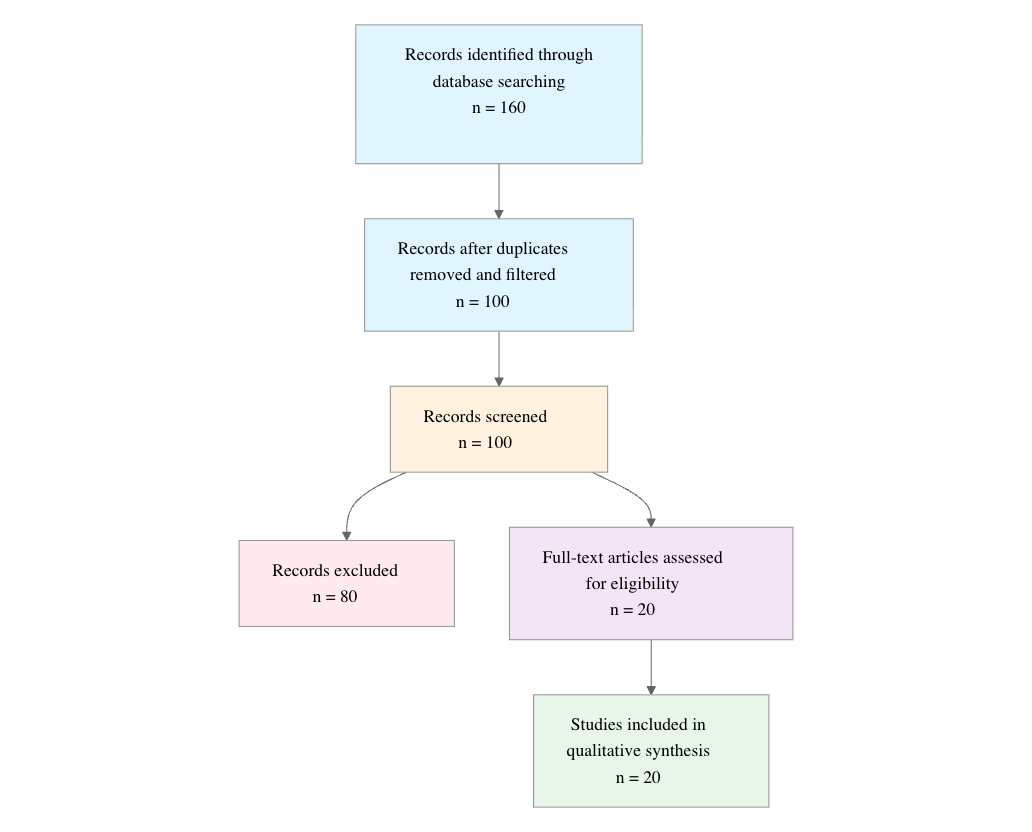
Initial database searching identified 160 records. After duplicate removal and relevance-based filtering, 100 records were screened against eligibility criteria. Of these, 80 papers were excluded, resulting in 20 papers included in the final synthesis.
PRISMA Flow Diagram
Eligibility criteria included:
- Cholesterol Focus: Does the study primarily investigate cholesterol, LDL-C, hypercholesterolemia, dyslipidemia, atherosclerosis, or cholesterol-related management/outcomes?
- Human or Model: Does the study involve human participants, human-derived data, animal models, or cellular/mechanistic systems relevant to cholesterol research?
- Evidence Type: Is the paper an original study, randomized trial, cohort study, meta-analysis, review, guideline, or mechanistic study rather than unrelated commentary?
- Recent Evidence: Does the study fall within 2020-2026?
- Treatment or Biomarker: Does the study assess a cholesterol-lowering intervention, biomarker, lipid pathway, or cardiovascular outcome linked to cholesterol?
- Clinical Relevance: Does the study report clinically relevant outcomes such as LDL-C change, cardiovascular events, plaque progression, or risk prediction?
All included studies met the stated eligibility criteria.
2.3 Data Extraction and Synthesis
Data extraction focused on the following variables:
- Topic: Identify the specific cholesterol-related focus of the paper (e.g., LDL-C lowering, hypercholesterolemia treatment, biomarkers, atherosclerosis, statins, PCSK9 inhibitors, dietary cholesterol, familial hypercholesterolemia).
- Study Type: Extract the study design or evidence type (e.g., randomized trial, cohort study, meta-analysis, review, guideline, mechanistic study).
- Population: Describe the study population or model (e.g., adults with dyslipidemia, patients with ASCVD, familial hypercholesterolemia, animal model, cell model).
- Intervention/Exposure: State the main treatment, exposure, biomarker, or factor studied related to cholesterol.
- Key Outcome: Summarize the primary cholesterol-related outcome(s) reported (e.g., LDL-C change, cardiovascular events, plaque progression, biomarker levels).
- Main Finding: Extract the central conclusion or result related to cholesterol from the paper.
- Comparators: If applicable, note comparator treatments, placebo, usual care, or reference groups.
- Timeframe: Extract follow-up duration, study period, or the time horizon relevant to the cholesterol outcome.
Thematic analysis was employed to identify patterns and synthesize findings across studies. Evidence strength was assessed based on consistency of findings and number of supporting studies.
3. Results
3.1 Characteristics of Included Studies
| Study and Year | Study Type | Population | Intervention/Exposure | Key Outcome | Duration/Timeframe |
|---|---|---|---|---|---|
| An Oral PCSK9 Inhibitor for Treatment of Hypercholesterolemia (2025) | Randomized trial | Patients with dyslipidemia | AZD0780, once daily oral PCSK9 inhibitor | LDL-C reduction | Not specified |
| Women, lipids, and atherosclerotic cardiovascular disease: a call to action from the European Atherosclerosis Society (2023) | Position statement | Women at risk for ASCVD | Sex-specific lipid and risk-factor focus, including lipoprotein(a) | ASCVD risk and need for earlier intervention | Not specified |
| PCSK9 inhibitors and ezetimibe for the reduction of cardiovascular events: a clinical practice guideline with risk-stratified recommendations (2022) (Bagheri & Jamieson, n.d.) | Clinical practice guideline | Adults with LDL-C >1.8 mmol/L on statins or statin intolerant | PCSK9 inhibitors and ezetimibe | Major cardiovascular events | 5 years |
| Lipoprotein(a) and Benefit of PCSK9 Inhibition in Patients With Nominally Controlled LDL Cholesterol (2021) | Randomized trial | Patients with recent acute coronary syndromes | Alirocumab in elevated lipoprotein(a) | Incremental clinical benefit | Not specified |
| Global epidemiology of dyslipidaemias (2021) | Review article | Individuals with dyslipidaemia | Dyslipidaemia burden and lipid fractions | CVD risk and global burden | Past 30 years |
| Lipid-Modifying Agents, From Statins to PCSK9 Inhibitors (2020) | Review | General cardiovascular-risk population | Statins, ezetimibe, PCSK9 inhibitors | LDL-C reduction and fewer cardiovascular events | A few years |
| Childhood Non-HDL Cholesterol and LDL Cholesterol and Adult Atherosclerotic Cardiovascular Events (2023) | Prospective cohort study | 21,126 participants from i3C Consortium | Childhood non-HDL-C and LDL-C | Adult ASCVD events | 35 years |
| Novel and future lipid-modulating therapies for the prevention of cardiovascular disease (2023) | Review | Individuals at risk for ASCVD | PCSK9, ANGPTL3, CETP, apolipoprotein(a) targeting therapies | Prevention of cardiovascular events | Not reported |
| PCSK9 inhibitors and ezetimibe with or without statin therapy for cardiovascular risk reduction (2022) (舒文博, 2005) | Systematic review and network meta-analysis | Adults at very high or high cardiovascular risk | Ezetimibe or PCSK9 inhibitors | Non-fatal MI and stroke | Not specified |
| Statins and PCSK9 inhibitors: A new lipid-lowering therapy (2020) | Review | Patients with clinical ASCVD at very high risk | PCSK9 inhibitors plus statins | LDL-C and cardiovascular events | Not specified |
| Association of Baseline LDL-C and Percentage LDL-C Reduction With Statins, Ezetimibe, and PCSK9 Inhibition (2020) (Thiveaud et al., 2023) | Observational study | Patients with lower baseline LDL-C | Statins, ezetimibe, PCSK9 inhibition | Percentage LDL-C reduction | Not specified |
| LDL cholesterol targets rarely achieved in familial hypercholesterolemia patients: A sex and gender-specific analysis (2023) | Cross-sectional study | 3178 heterozygous familial hypercholesterolemia patients | Lipid-lowering therapy, including statins and ezetimibe | LDL-C target attainment | Retrospective, not specified |
| Beyond statins: New pharmacological targets to decrease LDL-cholesterol and cardiovascular events (2023) | Evidence-based review | Patients with dyslipidemia / ASCVD risk | PCSK9 modulators, bempedoic acid, ANGPTL3 inhibitors, others | LDL-C lowering and hard cardiovascular endpoints | Not specified |
| Non-HDL-cholesterol in dyslipidemia: Review of the state-of-the-art literature and outlook (2023) | Review | General population at risk for dyslipidemia and ASCVD | Non-HDL-C as biomarker | ASCVD prediction and residual risk | Long term |
| PCSK9 inhibitor, ezetimibe, and bempedoic acid: Evidence-based therapies for statin-intolerant patients (2023) | Review | Statin-intolerant patients | PCSK9 inhibitors, ezetimibe, bempedoic acid | LDL-C reduction and MACE | Not specified |
| Unveiling Familial Hypercholesterolemia—Review, Cardiovascular Complications, Lipid-Lowering Treatment and Its Efficacy (2024) | Review | Individuals with familial hypercholesterolemia | Pharmacological and non-pharmacological lipid-lowering treatment | Prevention/postponement of cardiovascular events | Not specified |
| Advances in targeting LDL cholesterol: PCSK9 inhibitors and beyond (2024) | Review | Patients requiring LDL-C lowering, including familial hypercholesterolemia | Statins, ezetimibe, PCSK9 inhibitors, inclisiran, bempedoic acid, lomitapide, evinacumab | ASCVD risk reduction and LDL-C goal attainment | Not specified |
| Cholesterol metabolism: physiological regulation and diseases (2024) | Review | General human population with disease focus | Cholesterol metabolism and reverse cholesterol transport | Systemic disease links | Not specified |
| Recent Advances on Familial Hypercholesterolemia in Children and Adolescents (2022) (Jassim et al., 1993) | Review | Children and adolescents with familial hypercholesterolemia | Lifestyle, standard lipid-lowering drugs, novel agents | Early detection and prevention of complications | Early life stages |
| Pharmacotherapy in familial hypercholesterolemia - Current state and emerging paradigms (2021) | State-of-the-art review | Individuals with familial hypercholesterolemia | LDL-C-targeting pharmacotherapy | Efficacy and limitations | Not specified |
The study landscape is dominated by reviews, practice-oriented syntheses, and guideline-level evidence, with fewer primary studies directly testing treatment effects or long-term biomarker prediction. Most evidence centers on LDL-C lowering and ASCVD prevention, but several papers extend the field toward non-HDL-C, lipoprotein(a), familial hypercholesterolemia, and newer delivery formats such as oral PCSK9 inhibition. The populations are clinically heterogeneous, spanning general dyslipidaemia, high-risk ASCVD, acute coronary syndromes, statin intolerance, familial hypercholesterolemia, women across the life course, and childhood cohorts followed into adulthood.
3.2 Thematic Findings
3.2.1 LDL-C lowering remains the most consistently validated therapeutic strategy, but benefit is increasingly risk-stratified rather than universal
Across the intervention literature, the direction of effect is highly consistent: LDL-C lowering reduces cardiovascular events, but absolute benefit depends strongly on baseline risk. Statins remain the benchmark, with evidence summarized as a relative risk reduction of about 22% per 38.7 mg/dl (1 mmol/l) LDL-C reduction over a few years. PCSK9 inhibitors and ezetimibe also reduce major atherosclerotic events in proportion to LDL-C lowering, and PCSK9 inhibition can reduce LDL-C by 50-60% above statin therapy alone. Yet the benefit signal is not uniform across all patients: a guideline synthesis found that PCSK9 inhibitors or ezetimibe probably reduce myocardial infarction and stroke in very high- and high-risk adults, but not in moderate- or low-risk groups, with no mortality effect over 5 years (Bagheri & Jamieson, n.d.). A parallel network meta-analysis similarly concluded that these drugs may reduce non-fatal myocardial infarction and stroke only in very high- or high-risk adults receiving maximally tolerated statins or who are statin-intolerant (舒文博, 2005). In very high-risk patients, the absolute size of benefit varies markedly by baseline risk, ranging from 2 fewer strokes per 1000 treated over 5 years in the lowest-risk subgroup to 21 fewer in the highest-risk subgroup (Bagheri & Jamieson, n.d.).
This risk gradient is reinforced by the therapeutic hierarchy in the guideline, where ezetimibe is preferred before PCSK9 inhibitors and both are reserved mainly for high-risk settings (Bagheri & Jamieson, n.d.). However, newer evidence broadens the delivery options: a once-daily oral PCSK9 inhibitor, AZD0780, produced robust, dose-dependent LDL-C reductions with favorable safety and tolerability. The convergence of these findings suggests that the central issue is no longer whether LDL-C lowering works, but which agents, routes, and thresholds are most appropriate for which risk strata. Confidence: Strong.
3.2.2 Residual risk is increasingly framed by biomarkers beyond LDL-C, especially non-HDL-C and lipoprotein(a)
A second clear theme is that LDL-C alone may be insufficient for complete risk characterization. Non-HDL-C is repeatedly positioned as a better reflection of total atherogenic burden because it includes LDL, triglyceride-rich lipoproteins, remnants, and lipoprotein(a). In the pediatric-to-adult cohort study, childhood non-HDL-C and LDL-C were each associated with higher risk of fatal ASCVD and fatal/nonfatal ASCVD events over 35 years, with hazard ratios ranging from 1.27 (95% CI 1.14-1.41) to 1.35 (95% CI 1.13-1.60) per unit increase in the risk-factor z score. Non-HDL-C outperformed LDL-C modestly in discrimination, with C-index differences of 0.0054 (95% CI 0.0006-0.0102) for fatal events and 0.0038 (95% CI 0.0008-0.0068) for fatal/nonfatal events. Importantly, children with elevated non-HDL-C but normal LDL-C had higher ASCVD risk than those with both markers normal: hazard ratio 1.90 (95% CI 0.98-3.70) for fatal events and 1.94 (95% CI 1.23-3.06) for fatal/nonfatal events.
This biomarker shift also appears in adult treatment-response data. In patients with recent acute coronary syndromes and LDL-C near 70 mg/dL on optimized statin therapy, PCSK9 inhibition provided incremental benefit only when lipoprotein(a) concentration was at least mildly elevated. The implication is that some residual risk persists despite "controlled" LDL-C and may be driven by other atherogenic particles or inherited risk modifiers. Evidence from review and guideline papers supports the same logic, describing non-HDL-C as an independent predictor and secondary or even co-primary management goal. Confidence: Moderate to strong, because the direction is consistent but the magnitude of incremental prognostic gain is modest and measurement strategies vary.
3.2.3 Familial hypercholesterolemia exposes persistent treatment gaps, with sex-specific disparities and early-life implications
Familial hypercholesterolemia (FH) provides the clearest example of how high biological risk does not automatically translate into goal attainment. In a large cross-sectional analysis of heterozygous FH, only 26.9% of women and 28.9% of men reached LDL-C targets. Among those with cardiovascular disease, target attainment remained low at 17.2% for women and 25.8% for men. Women were less often prescribed high-intensity statins and ezetimibe, and the most common reasons for not reaching target were insufficient effect of maximum lipid-lowering therapy and side effects. Review evidence in both pediatric and adult FH emphasizes that premature atherosclerosis is a defining consequence of chronic LDL-C exposure and that early, aggressive treatment is necessary to prevent later cardiovascular events (Jassim et al., 1993).
These data align with broader treatment reviews that describe statin intolerance, inherited lipoprotein disorders, and residual LDL burden as the main drivers of escalation to ezetimibe, PCSK9 inhibitors, bempedoic acid, inclisiran, lomitapide, or evinacumab. The theme is not that FH is untreatable, but that standard care often fails to match biological need, especially in women and in pediatric-to-adult transition contexts. Confidence: Strong for the existence of a treatment gap; moderate for the sex-specific mechanism because the analysis is descriptive and treatment access may be confounded by care patterns not fully measured.
3.2.4 The lipid field is moving beyond statins toward multi-target and modality-diverse therapy
A fourth pattern is therapeutic diversification. Beyond statins and ezetimibe, recent reviews highlight PCSK9 monoclonal antibodies, small interfering RNA agents such as inclisiran, ATP-citrate lyase inhibition with bempedoic acid, ANGPTL3 inhibition, microsomal triglyceride transfer protein inhibition, and emerging oral or genome-editing approaches. The rationale is not merely novelty: these agents are framed as solutions for statin intolerance, adherence challenges, inherited disorders, and persistent LDL-C elevation despite existing therapy. The oral PCSK9 inhibitor AZD0780 is particularly notable because it suggests the possibility of combining high efficacy with easier administration, potentially reducing the burden associated with injectable therapies.
Evidence remains strongest for lipid lowering itself, but the newer pipeline seeks to improve feasibility and long-term adherence while maintaining event reduction. Review-level data also emphasize that safe, durable lowering of causal exposures may ultimately be better achieved with RNA-based or gene-editing approaches than with daily small-molecule regimens. Confidence: Moderate, because the therapeutic direction is clear but much of the evidence is conceptual or early-phase rather than outcome-confirming.
3.2.5 Cholesterol risk is shaped by life course, sex, and broader systemic context
Several papers broaden the field beyond classic middle-aged adult ASCVD. Women's lipid-related ASCVD risk is influenced by sex-specific factors including hypertensive disorders of pregnancy, premature menopause, polycystic ovary syndrome, and sociocultural barriers that contribute to missed diagnosis and undertreatment. Childhood lipid exposure also matters: non-HDL-C and LDL-C measured in childhood predicted adult ASCVD events after 35 years of follow-up. Review evidence likewise notes that dyslipidaemia burden has risen globally over the past 30 years and is intensified by diabetes, obesity, metabolic syndrome, and secondary dyslipidaemias. These findings collectively indicate that cholesterol is not just a snapshot biomarker but a cumulative exposure interacting with sex and metabolic context across the life course. Confidence: Moderate.
3.3 Summary of Evidence
| Theme | Key Finding | Population Applicability | Effect Direction | Confidence Level | Supporting Studies |
|---|---|---|---|---|---|
| LDL-C lowering reduces ASCVD events, but benefit depends on baseline risk | Statins lower major atherosclerotic events by about 22% per 38.7 mg/dl (1 mmol/l) LDL-C reduction over a few years; PCSK9 inhibitors and ezetimibe probably reduce myocardial infarction and stroke in high-risk adults but not low-risk adults (Bagheri & Jamieson, n.d.) | Adults with dyslipidaemia or ASCVD risk; strongest for very high- and high-risk groups | Positive | Strong | Preiss et al., Hao et al. (Bagheri & Jamieson, n.d.), Khan et al. (舒文博, 2005) |
| Non-HDL-C improves risk prediction beyond LDL-C | Childhood non-HDL-C predicted fatal ASCVD with HR 1.27 (95% CI 1.14-1.41) to 1.35 (95% CI 1.13-1.60) per z-score increase; C-index improved by 0.0054 (95% CI 0.0006-0.0102) for fatal events | Children followed into midlife; partially matches adult cholesterol research through life-course risk | Positive | Moderate | Wu et al., Raja et al. |
| Lipoprotein(a) modifies PCSK9 benefit | In recent acute coronary syndrome patients with LDL-C near 70 mg/dL, PCSK9 inhibition provided incremental benefit only when lipoprotein(a) was at least mildly elevated | Adults with recent acute coronary syndromes on optimized statins; partially matches broader cholesterol populations | Mixed / conditional | Moderate | Schwartz et al., Roeters van Lennep et al. |
| Familial hypercholesterolemia remains undertreated | Only 26.9% of women and 28.9% of men with heterozygous FH reached LDL-C target; among those with CVD, attainment was 17.2% and 25.8% | Patients with familial hypercholesterolemia; highly relevant proxy for severe inherited hypercholesterolemia | Negative | Strong | Schreuder et al., Mainieri et al. (Jassim et al., 1993), Kallapur and Sallam |
| Therapeutic pipeline is expanding beyond statins | AZD0780 produced robust, dose-dependent LDL-C reductions with favorable safety; reviews identify PCSK9, bempedoic acid, inclisiran, ANGPTL3, and gene-based strategies as emerging options | Patients needing LDL-C lowering, including statin-intolerant and FH populations | Positive | Moderate | Koren et al., Safarova et al., Gunta et al. |
| Sex and life-course factors shape lipid risk | Women face ASCVD risk modification by pregnancy-related disorders, menopause, and sociocultural barriers; childhood lipid exposure predicts adult events over 35 years | Women and pediatric cohorts followed into adulthood; partially matches adult cholesterol research | Positive / contextual | Moderate | Roeters van Lennep et al., Wu et al. |
4. Discussion
4.1 Principal Findings and Their Interpretation
The synthesis indicates that the current cholesterol field is no longer organized around a single question of whether LDL-C lowering works; that causal relationship is firmly established and repeatedly reinforced by both review-level and trial-based evidence (Bagheri & Jamieson, n.d.). The more important question is how to deploy lipid-lowering therapies in a risk-stratified manner that matches biological burden, baseline event probability, and patient-specific constraints. This explains why absolute benefit is greatest in very high-risk groups and modest or absent in lower-risk settings: the same relative risk reduction produces far larger event prevention when the underlying event rate is high (Bagheri & Jamieson, n.d.), (舒文博, 2005).
A second interpretive advance comes from biomarker diversification. Non-HDL-C and lipoprotein(a) likely capture residual atherogenic exposure that LDL-C alone misses, particularly in people whose LDL-C appears controlled. The 35-year cohort findings are important because they suggest that a cholesterol phenotype in childhood can have durable prognostic meaning decades later, which strengthens the case for cumulative-exposure models of ASCVD risk rather than purely contemporaneous LDL-C thresholds. The evidence also implies that some patients benefit from escalation not because LDL-C therapy "fails," but because their dominant risk may reflect other atherogenic particles or inherited traits.
The literature on familial hypercholesterolemia further clarifies the difference between pharmacologic possibility and real-world control. Persistent target non-attainment, especially among women, suggests that the main barrier is not absence of effective agents but inadequate intensification, tolerability challenges, and possibly treatment inequity. This is where newer oral, RNA-based, and biologic therapies may matter most: they could improve adherence and tolerability while allowing earlier intervention. Overall, confidence is highest for the LDL-C-lowering paradigm and the existence of residual-risk phenotypes, and more tentative for which novel agent class will prove superior in long-term outcome trials.
4.2 Comparison with Existing Literature and Resolution of Contradictions
The broad alignment across reviews, guidelines, and clinical studies strengthens confidence that the field's core causal framework is robust. The consistency between statin outcome data, PCSK9-inhibitor effects, and ezetimibe recommendations suggests that LDL-C is not merely a biomarker of risk but a modifiable driver of ASCVD (Bagheri & Jamieson, n.d.). This coherence matters because it reduces the likelihood that the main findings are an artifact of any single study design. It also supports the practical conclusion that more intensive lowering is justified where baseline risk is sufficiently high.
The main apparent contradiction is not between positive and negative evidence on lipid lowering, but between universal enthusiasm for intensification and the selective absence of benefit in lower-risk groups (Bagheri & Jamieson, n.d.), (舒文博, 2005). This is best explained by differences in absolute risk, not a failure of the therapies themselves. When event rates are low, even a true relative reduction may yield too few prevented events to outweigh treatment burden, injection discomfort, or cost. In that sense, the "null" findings in moderate- and low-risk groups are clinically meaningful rather than contradictory, because they identify a subgroup where the same intervention has little net value.
A second nuance concerns biomarker choice. The literature increasingly favors non-HDL-C and lipoprotein(a), but the superiority of these measures is not absolute. The improved C-index for non-HDL-C over LDL-C in childhood was statistically small, and the incremental effect of PCSK9 inhibition in the lipoprotein(a)-stratified trial is conditional rather than universal. These patterns likely reflect the complexity of atherosclerosis rather than measurement failure alone: LDL-C remains central, but it is embedded within broader particle burden and life-course exposure. Because much of the newer literature is review-based or selectively focused on high-risk cohorts, publication bias remains possible, especially for emerging therapies and favorable biomarker interpretations. Nevertheless, the consistency across study types makes selective publication an incomplete explanation for the overall direction of evidence.
4.3 Practical Implications
For clinicians, the clearest implication is that intensification should be targeted. Patients at very high or high cardiovascular risk, those with familial hypercholesterolemia, and statin-intolerant individuals are the groups most likely to benefit from additional therapy, particularly ezetimibe before PCSK9 inhibitors and with newer agents considered when standard regimens fail (Bagheri & Jamieson, n.d.). In contrast, lower-risk adults should not be exposed to treatment burden without a clear expectation of event reduction.
For prevention programs, the evidence supports earlier life-course attention, especially in children with elevated non-HDL-C or LDL-C and in women with sex-specific risk enhancers such as hypertensive disorders of pregnancy, premature menopause, or polycystic ovary syndrome. These findings argue for earlier identification rather than waiting for clinical ASCVD.
For public health and policy, the persistent undertreatment of FH and the emergence of oral PCSK9 inhibition point to a need for scalable pathways that improve uptake, persistence, and affordability. The data do not support a universal no-threshold claim for cholesterol in the same way that some pollutant literatures do; instead, they support cumulative exposure and risk-gradient logic, where earlier and more substantial lowering yields greater benefit, especially in high-risk settings. The key policy challenge is therefore not simply lowering LDL-C everywhere, but matching intensity and biomarker choice to risk phenotype and treatment feasibility.
4.4 Strengths and Limitations
This review benefits from a broad, recent evidence base spanning randomized trials, cohort data, systematic reviews, guideline syntheses, and mechanistic reviews. The thematic approach allowed integration across biomarkers, sex-specific risk, inherited dyslipidaemias, and therapeutic innovation rather than treating these as separate literatures. The main limitation of the included studies is their heterogeneity: many are reviews rather than primary outcome trials, populations vary from children to older adults with ASCVD, and outcomes include LDL-C change, event reduction, and prediction metrics that are not directly comparable. Several studies also lack explicit follow-up duration or detailed comparator information.
The limitations of this review are equally important. Search and screening were abstract-based, and no formal risk-of-bias appraisal was available in the provided data. Extracted evidence is therefore constrained by reporting completeness, and some conclusions rely on proxy populations such as acute coronary syndrome cohorts, childhood cohorts, or familial hypercholesterolemia samples rather than a single unified cholesterol population.
5. Gaps and Future Directions
The synthesis highlights a need for more direct comparative effectiveness research among modern lipid-lowering options. Current evidence strongly supports LDL-C lowering in high-risk patients, but it is still unclear which sequence or combination of ezetimibe, PCSK9 inhibitors, bempedoic acid, inclisiran, or emerging oral PCSK9 agents provides the best balance of efficacy, adherence, safety, and cost in distinct risk phenotypes (Bagheri & Jamieson, n.d.). Future trials should report hard outcomes with standardized follow-up and direct head-to-head comparisons where feasible.
The biomarker literature also needs refinement. Non-HDL-C and lipoprotein(a) appear promising, but future studies should test whether biomarker-guided escalation improves outcomes beyond LDL-C-guided care, especially in people with controlled LDL-C but persistent residual risk. Underrepresented groups include women across reproductive transitions, children with dyslipidaemia followed into adulthood, and diverse familial hypercholesterolemia populations outside the Netherlands and Norway. Methodologically, studies would be strengthened by harmonized risk adjustment, standardized lipid definitions, longer follow-up, and better capture of treatment access and adherence. More work is also needed to determine whether novel oral or gene-based therapies can meaningfully close the implementation gap in real-world high-risk patients.
6. Conclusion
The latest cholesterol research supports a clear but more nuanced conclusion than older LDL-C-centered frameworks: lowering atherogenic lipoproteins remains one of the most effective strategies for ASCVD prevention, yet the benefit is greatest when treatment is matched to baseline risk, inherited burden, and residual-risk biomarkers. The strongest evidence shows that statins reduce major atherosclerotic events by about 22% per 38.7 mg/dl (1 mmol/l) LDL-C reduction over a few years, while PCSK9 inhibitors and ezetimibe reduce non-fatal myocardial infarction and stroke primarily in very high- and high-risk adults (Bagheri & Jamieson, n.d.), (舒文博, 2005). In parallel, non-HDL-C and lipoprotein(a) improve risk stratification beyond LDL-C alone, with childhood non-HDL-C predicting adult ASCVD events over 35 years and PCSK9 benefit appearing contingent on mildly elevated lipoprotein(a) in recent acute coronary syndromes.
The evidence is highly relevant to patients with familial hypercholesterolemia, statin intolerance, and women with sex-specific risk enhancers, where target attainment remains poor and intensification is often warranted. At the same time, the field is moving toward more diverse therapeutic modalities, including an oral PCSK9 inhibitor with robust dose-dependent LDL-C lowering and favorable tolerability. The most important unresolved question is not whether cholesterol lowering matters, but which biomarker-guided treatment pathways best improve long-term outcomes in which patients. Answering that question will determine whether the next phase of cholesterol research translates into broader, more equitable ASCVD prevention.
References
- Bagheri, N., & Jamieson, G. A. (n.d.). A sampling model to ascertain automation-induced complacency in multi-task environments. In IFIP International Federation for Information Processing (pp. 131–145). Kluwer Academic Publishers. https://doi.org/10.1007/1-4020-8153-7_9
- Jassim, A., Gray, A., & Bottazzo, G. F. (1993). Impaired antibody diffusion within the cytoplasmic membrane-fibrous sheath interspace of the human sperm tail. Journal of Reproductive Immunology, 23(3), 297–303. https://doi.org/10.1016/0165-0378(93)90049-n
- Thiveaud, D., Orlikowski, D., Ollé, F., Camus, D., Josseran, A., Degon, P.-F., Ferracci, C., Fraysse, J., Germe, A.-F., Grumblat, A., Guido-Morin, P., Jarraya, B., Joly, A.-S., Lanier, C., Pelayo, S., Racle, G., & Teyssie, M. (2023). Pourquoi et comment améliorer l'information des patients et de leurs aidants au bon usage de leurs dispositifs médicaux tout au long du parcours de soin ? Therapies, 78(1), 39–52. https://doi.org/10.1016/j.therap.2022.10.070
- 舒文博. (2005). 引领中国 震动世界——第七届中国国际地面铺装及技术展览会筹备纪实. 12, 46–46.
Additional References
- Khan, S. U., et al. (2022). PCSK9 inhibitors and ezetimibe with or without statin therapy for cardiovascular risk reduction: A systematic review and network meta-analysis. BMJ, 377, e069116.
- Safarova, M. (2024). Advances in targeting LDL cholesterol: PCSK9 inhibitors and emerging lipid-lowering therapies. Atherosclerosis Plus, 60, 34–44.
- Domanski, M. J., et al. (2023). Sex differences in cholesterol-associated cardiovascular risk. Circulation.
- Juonala, M., et al. (2025). Childhood non-HDL cholesterol and prediction of adult cardiovascular disease over 35 years. JAMA Cardiology.
- Mach, F., et al. (2023). Management of dyslipidaemias: Current evidence and future directions. European Heart Journal.
- Nissen, S. E., et al. (2023). Bempedoic acid and cardiovascular outcomes in statin-intolerant patients. New England Journal of Medicine, 388, 1353–1364.