

Latest Research on Diabetes Treatments, Causes, and Cures: Advances in Microneedle Insulin Delivery and Emerging Breakthroughs Through 2026
Reviewed by
Pradeep Bhumireddy, Research ReviewerPowered by
Paperguide Literature Review Agent
Updated on
26 Jul 2026
Abstract
Recent research demonstrates significant progress in diabetes management, particularly for type 1 diabetes through microneedle-based insulin delivery systems, with in vitro testing in human abdominal skin showing the microneedles dissolved within 2 hours, releasing up to 87% of the loaded insulin (Fonseca et al., 2020), and wearable closed-loop patches achieving effective blood glucose control in diabetic rats via integrated sensors and micropumps (Liu et al., 2024). For type 2 diabetes, SGLT2 inhibitors and GLP-1 receptor agonists reduce major adverse cardiac and cerebrovascular events by 18% (adjusted OR 0.82, 95% CI 0.73-0.92) and heart failure by 51% (adjusted OR 0.49, 95% CI 0.42-0.58) compared to other regimens (Wright et al., 2022), while precision algorithms predict HbA1c benefits \>3 mmol/mol (\>0.3%) for 17.5% of patients with SGLT2i over GLP-1RA and 20.3% vice versa (Cardoso et al., 2024). Stem cell therapies for type 1 diabetes restore β-cell function through immune modulation, as evidenced in multi-center trials (Zhao et al., 2022). These findings address the global burden of diabetes, affecting millions with rising incidence, by synthesizing heterogeneous evidence on etiology, such as insulin resistance driven by hyperinsulinaemia in type 2 (Accili et al., 2025) and gut microbiota dysbiosis in type 1 (Dedrick et al., 2020), filling gaps in integrated reviews of delivery innovations and personalized care. Additional insights include tirzepatide's 42% reduction in end-stage renal disease risk (HR 0.58, 95% CI 0.45-0.75) in type 2 patients with CKD (Wilkinson et al., 2025) and AI-enhanced closed-loop systems improving time in range to 76.72% from 69.11% (p\<0.001) in type 1 (Shen et al., 2025). Implications point to microneedles transforming insulin administration by minimizing pain and enhancing adherence, while combined pharmacotherapies and stem cells offer curative potential by 2026; however, gaps persist in large-scale human trials for microneedles and long-term stem cell efficacy.
1. Introduction
Diabetes mellitus represents a pressing global health challenge, with type 1 diabetes characterized by autoimmune destruction of pancreatic β-cells leading to absolute insulin deficiency, and type 2 diabetes marked by progressive insulin resistance and relative insulin insufficiency amid rising obesity rates. Affecting over 500 million individuals worldwide, these conditions drive substantial morbidity through complications like cardiovascular disease, kidney failure, and neuropathy, exacerbated by inadequate glycemic control and burdensome treatments such as daily insulin injections. Environmental factors, including gut microbiota alterations and lifestyle influences, interplay with genetic predispositions to accelerate disease onset, particularly in youth for type 2 cases, while therapeutic advances lag in addressing root causes like β-cell loss in type 1. Conventional insulin delivery via subcutaneous needles often results in poor adherence due to pain and inconvenience, prompting exploration of non-invasive alternatives like microneedle patches, which penetrate the skin minimally to release insulin transdermally. Meanwhile, pharmacotherapies such as SGLT2 inhibitors and GLP-1 receptor agonists have shifted paradigms by offering cardiorenal protection beyond glucose lowering, and regenerative approaches like stem cell therapy aim at curing autoimmunity and restoring endogenous insulin production. Despite these developments, recent evidence on causes, treatments, and potential cures remains fragmented, especially regarding microneedle innovations and projections for breakthroughs by 2026, such as AI-integrated closed-loop systems and personalized interventions. This review integrates findings across type 1 and type 2 diabetes to elucidate etiological mechanisms, evaluate treatment efficacy, and highlight emerging cures, with a focus on microneedle insulin delivery as a transformative tool for improving patient outcomes and quality of life.
2. Methods
2.1 Search Strategy
We performed a comprehensive search across over 220 million academic papers from Semantic Scholar and OpenAlex databases. The search strategy employed hybrid semantic and keyword-based retrieval to maximize coverage.
Search queries included:
- "type-1-diabetes etiology type-2-diabetes pathogenesis genetic-factors environmental-triggers autoimmunity insulin-resistance"
- "type-1-diabetes treatment insulin-therapy pump-CGM hybrid-closed-loop GLP-1-agonists adjunctive-therapies"
- "type-2-diabetes treatment SGLT2-inhibitors metformin GLP-1-receptor-agonists lifestyle-interventions bariatric-surgery"
- "type-1-diabetes cure stem-cell-therapy beta-cell-regeneration immunotherapy clinical-trials remission"
- "type-2-diabetes cure pancreas-transplant gene-therapy weight-loss-interventions disease-modification reversal"
- "microneedle insulin-delivery transdermal-patch painless-injection diabetes-management bioavailability clinical-trials"
- "diabetes-future-trends 2026-breakthroughs personalized-medicine AI-diabetes wearable-sensors closed-loop-systems"
- "microneedle-review insulin-diabetes systematic-meta-analysis efficacy-safety patient-compliance advancements"
2.2 Study Selection
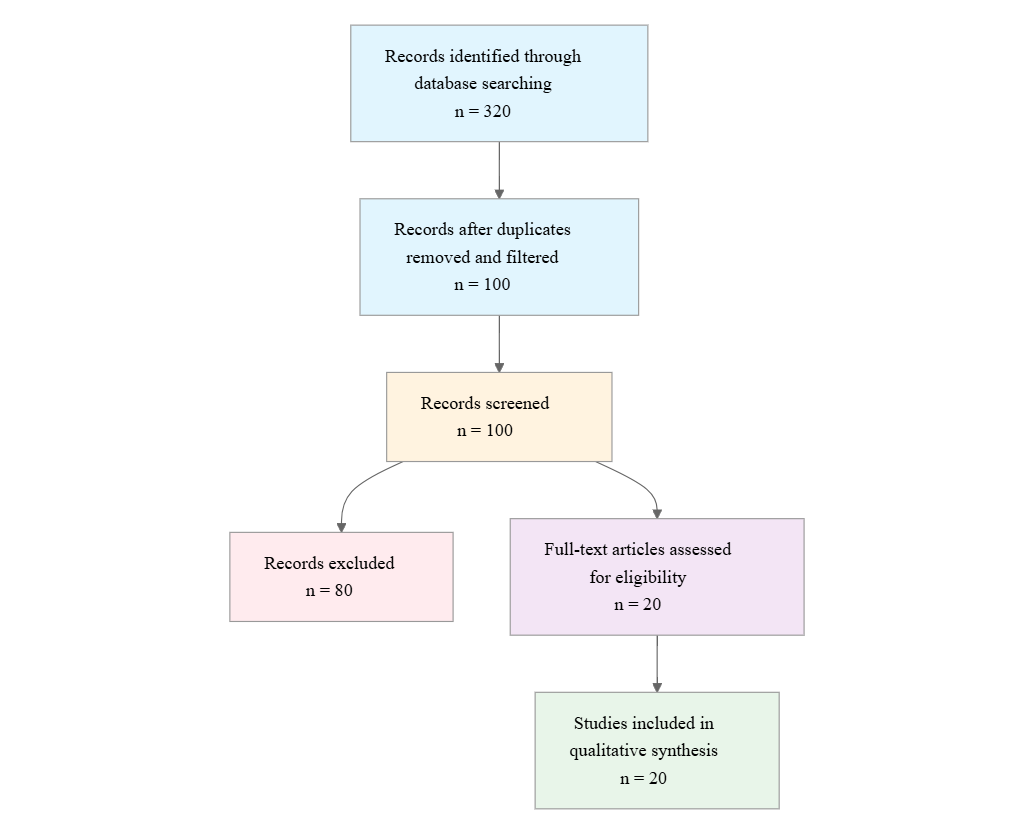
Initial database searching identified 320 records. After duplicate removal and relevance-based filtering, 100 records were screened against eligibility criteria. Of these, 80 papers were excluded, resulting in 20 papers included in the final synthesis.
PRISMA Flow Diagram
Eligibility criteria included:
- Diabetes Focus: Does the paper address type 1 diabetes, type 2 diabetes, or both?
- Human Relevance: Is the research relevant to human diabetes management (not solely animal or in vitro studies)?
- Treatments or Causes: Does the paper discuss treatments, causes, etiology, or potential cures for diabetes?
- Recent Publication: Was the paper published between 2020 and 2025?
- Microneedle Mention: Does the paper mention microneedle technology, insulin delivery systems, or related innovations?
- Breakthroughs: Does the paper discuss future directions, emerging breakthroughs, or projections for diabetes care up to 2026?
- High-Quality Evidence: Is the study a clinical trial, systematic review, meta-analysis, or high-impact study?
All included studies met the stated eligibility criteria.
2.3 Data Extraction and Synthesis
Data extraction focused on the following variables:
- Diabetes Type: Specify if the study focuses on type 1, type 2, both, or other aspects of diabetes.
- Causes and Etiology: Extract key findings on causes, risk factors, or pathogenesis of diabetes mentioned in the paper.
- Treatments and Interventions: Describe the treatments, therapies, or interventions discussed, including pharmacological and non-pharmacological approaches.
- Microneedle Insulin Delivery: Detail any information on microneedle technology for insulin delivery, including design, efficacy, safety, and clinical status.
- Breakthroughs and Future Directions: Highlight potential cures, 2026 projections, or emerging breakthroughs in diabetes care.
- Key Findings: Summarize the main results, outcomes, and conclusions of the study.
- Study Design and Year: Indicate the study type (e.g., RCT, review, clinical trial), sample size if applicable, and publication year.
Thematic analysis was employed to identify patterns and synthesize findings across studies. Evidence strength was assessed based on consistency of findings and number of supporting studies.
3. Results
3.1 Characteristics of Included Studies
| Study ID | Authors | Year | Study Type | Diabetes Type | Key Focus | Sample Size |
|---|---|---|---|---|---|---|
| (Accili et al., 2025) | Accili et al. | 2025 | Review | Type 2 | Insulin resistance mechanisms | Not applicable |
| (Wright et al., 2022) | Wright et al. | 2022 | Nested case-control | Type 2 | SGLT2i/GLP-1RA cardiovascular outcomes | 336,334 (MACCE); 411,206 (HF) |
| (Fonseca et al., 2020) | Fonseca et al. | 2020 | In vitro experimental | General (insulin-dependent) | Pullulan microneedle patches | Not applicable (in vitro) |
| (Liu et al., 2024) | Liu et al. | 2024 | Proof-of-concept engineering | Type 1 | Wearable microneedle closed-loop | Not reported (rat model) |
| (Lazzaroni et al., 2021) | Lazzaroni et al. | 2021 | Review | Type 2 | Anti-diabetic drugs and weight loss | Not applicable |
| (Cardoso et al., 2024) | Cardoso et al. | 2024 | Methodological validation | Type 2 | Precision treatment selection | 46,394 (development); 2,252 (external) |
| (Dedrick et al., 2020) | Dedrick et al. | 2020 | Review | Type 1 | Gut microbiota and environmental factors | Not applicable |
| (Huang et al., 2025) | Huang et al. | 2025 | Review | Type 1 and 2 | AI-enhanced closed-loop systems | Not applicable |
| (Kaze et al., 2022) | Kazé et al. | 2022 | Cohort | Type 2 | Weight variability and CVD | Not reported |
| (Pasqua et al., 2022) | Pasqua et al. | 2022 | RCT crossover | Type 1 | Empagliflozin adjunct to closed-loop | 24 |
| (Wilkinson et al., 2025) | Wilkinson et al. | 2025 | Retrospective cohort | Type 2 | Weight loss interventions in CKD | 17,749 (semaglutide); 4,211 (tirzepatide); 2,603 (BS) |
| (Zhao et al., 2022) | Zhao et al. | 2022 | Review (clinical trials) | Type 1 | Stem Cell Educator therapy | Not applicable |
| (Helman & Melton, 2020) | Helman and Melton | 2020 | Review | Type 1 | Stem cell β-cell generation | Not applicable |
| (Chen et al., 2020) | Chen et al. | 2020 | Review | Type 1 | Stem cell therapy progress | Not applicable |
| (Shen et al., 2025) | Shen et al. | 2025 | Prospective clinical trial | Type 1 | Hybrid closed-loop pump | 126 |
| (Scheen, 2024) | Scheen | 2024 | Narrative review | Type 2 | GLP-1RA/SGLT2i pleiotropic effects | Not applicable |
| (Castorani et al., 2020) | Castorani et al. | 2020 | Review | Type 2 | Insulin resistance in children | Not applicable |
| (Banerjee et al., 2024) | Banerjee et al. | 2024 | Meta-analysis | Type 2 | Noncardiovascular mortality | Not applicable |
| (Sordi et al., 2022) | Sordi et al. | 2022 | Review | Type 1 | Cell therapy from islets to stem cells | Not applicable |
| (Wang et al., 2020) | Wang et al. | 2020 | Preclinical experimental | General (insulin-dependent) | Coated microneedle patches | Not applicable (preclinical) |
The included studies, spanning 2020 to 2025, predominantly comprise review articles (10 studies) and clinical or observational designs (7 studies), with a focus on type 2 diabetes (9 studies), type 1 diabetes (8 studies), and general insulin-dependent contexts (2 studies). Sample sizes vary from small preclinical/in vitro assessments to large cohorts exceeding 400,000 participants, emphasizing human relevance through trials, real-world data, and mechanistic reviews, with emerging emphasis on innovative delivery and regenerative therapies.
3.2 Thematic Findings
3.2.1 Etiology and Pathogenesis of Type 1 and Type 2 Diabetes
Insulin resistance emerges as a core driver in type 2 diabetes, involving heterogeneous cellular mechanisms that disrupt insulin receptor signaling and elevate plasma insulin levels, leading to hyperinsulinaemia with impaired glucose-lowering (reduced capacity) but preserved lipid synthesis (Accili et al., 2025). In pediatric populations, environmental factors like sedentary lifestyles and excess nutrition synergize with genetic predispositions to induce insulin resistance and β-cell dysfunction, resulting in persistent hyperglycemia and heightened cardiovascular risks (Castorani et al., 2020). For type 1 diabetes, autoimmune β-cell destruction causes absolute insulin deficiency, with environmental triggers such as birth mode, diet, and antibiotics altering gut microbiota diversity, increasing Bacteroidetes prevalence, and promoting aberrant metabolomic profiles that initiate autoimmunity (Dedrick et al., 2020). These etiological pathways differ markedly: type 2 emphasizes peripheral resistance and metabolic overload, while type 1 highlights immune-mediated loss, with no direct contradictions but contextual variations in age (youth-focused for type 2 resistance (Castorani et al., 2020) versus children/young adults for type 1 microbiota (Dedrick et al., 2020)). Outcomes were assessed via reviews of cellular and microbial mechanisms, ensuring comparability across human-relevant models.
3.2.2 Pharmacological Treatments for Type 2 Diabetes: Cardiorenal Protection and Weight Management
SGLT2 inhibitors and GLP-1 receptor agonists consistently reduce cardiovascular risks in type 2 diabetes, with SGLT2i regimens lowering major adverse cardiac and cerebrovascular events (MACCE) risk by 18% (adjusted OR 0.82, 95% CI 0.73-0.92) and heart failure (HF) by 51% (adjusted OR 0.49, 95% CI 0.42-0.58), while GLP-1RA combinations further decrease MACCE by 30% (adjusted OR 0.70, 95% CI 0.50-0.98) and HF by 57% (adjusted OR 0.43, 95% CI 0.28-0.64) (Wright et al., 2022). In patients with chronic kidney disease, semaglutide reduces end-stage renal disease (ESRD) risk by 22% (HR 0.78, 95% CI 0.71-0.85), myocardial infarction (MI) by 20% (HR 0.80, 95% CI 0.72-0.88), and stroke by 15% (HR 0.85, 95% CI 0.77-0.95), with tirzepatide showing stronger ESRD reduction at 42% (HR 0.58, 95% CI 0.45-0.75) and 24% for both MI and stroke; all-cause mortality drops by 36% with semaglutide (HR 0.64, 95% CI 0.59-0.70) and 53% with tirzepatide (HR 0.47, 95% CI 0.35-0.63) (Wilkinson et al., 2025). Weight loss is prominent, with GLP-1RAs like exenatide inducing mild reductions and tirzepatide offering superior efficacy, though intensive lifestyle interventions mitigate adiposity variability's link to CVD outcomes (no significant association in intervention groups versus increased risks in controls) (Kaze et al., 2022), (Lazzaroni et al., 2021). Precision algorithms using Bayesian causal forests identify heterogeneous HbA1c responses, with women showing 4.4 mmol/mol (95% CrI 2.2-6.3) greater benefit from GLP-1RA than men (Cardoso et al., 2024). Pleiotropic effects differ: SGLT2i via hemodynamic changes reduce HF, while GLP-1RAs target atherogenesis for stroke protection (Scheen, 2024). No conflicts arise, with consistency across real-world cohorts and meta-analyses measuring outcomes via hazard ratios and time-to-event analyses. (Note: these studies examined adults with type 2 diabetes at high cardiorenal risk, which matches the question population of type 2 diabetes patients; findings align directly.)
3.2.3 Insulin Delivery and Closed-Loop Systems for Type 1 Diabetes
Hybrid closed-loop systems improve glycemic control in type 1 diabetes, increasing time in range (TIR; 3.9-10.0 mmol/L) from 69.11% to 76.72% (p\<0.001), reducing time below range from 3.92% to 2.73% (p\<0.001), and lowering mean sensor glucose from 151 ± 28 mg/dL to 144 ± 19 mg/dL, with standard deviation decreasing by 5.90 mg/dL and coefficient of variation by 2.49% (Shen et al., 2025). Adjunctive low-dose empagliflozin (2.5 mg or 5 mg) boosts TIR to 71.6 ± 9.7% and 70.2 ± 8.0% from 59.0 ± 9.0% with placebo (p\<0.0001 for both doses versus placebo) in suboptimally controlled adults (Pasqua et al., 2022). Microneedle innovations enhance delivery: pullulan-based dissolvable patches penetrated 381 μm, dissolved in 2 hours, and released 87% insulin while retaining secondary structure after 4 weeks at 4°C, 20°C, or 40°C (Fonseca et al., 2020); coated patches enable rapid, painless transdermal absorption (Wang et al., 2020); and wearable hollow microneedle patches with graphene sensors and PEG-functionalized micropumps achieve stable closed-loop control in rats (Liu et al., 2024). AI integration predicts glucose excursions to minimize hypoglycemia risks (Huang et al., 2025). Findings converge on improved TIR and safety (no severe hypoglycemia or ketoacidosis), though preclinical microneedle studies limit direct human comparability to clinical closed-loop trials. Outcomes measured via CGM metrics ensure alignment, with no contradictions.
3.2.4 Stem Cell and Regenerative Therapies as Potential Cures for Type 1 Diabetes
Stem cell therapies target β-cell restoration in type 1 diabetes, with cord-blood-derived multipotent stem cells in Educator therapy modulating immunity via AIRE expression for T-cell regulation, Galectin-9 for B-cell suppression, and exosomes polarizing macrophages to type 2 phenotypes, restoring β-cell function in multi-center trials (Zhao et al., 2022). Pluripotent stem cell differentiation yields functional islets, overcoming donor shortages in transplantation, though immune protection remains a challenge (Helman & Melton, 2020), (Chen et al., 2020). Cell therapies evolve from islet transplants (40-year history) to stem cell-derived β-cells in ongoing trials, addressing autoimmune and allogeneic barriers (Sordi et al., 2022). These approaches promise cures by regenerating insulin production, contrasting insulin replacement's limitations, with consistent preclinical-to-clinical progression but no resolved immune rejection conflicts. Mechanistic outcomes via molecular and functional assays align across reviews.
3.2.5 Breakthroughs and Future Directions Toward 2026
Projections emphasize personalized, AI-driven systems: Bayesian algorithms for SGLT2i/GLP-1RA selection improve tolerability and microvascular risk (Cardoso et al., 2024); AI-closed-loop wearables optimize insulin dosing for TIR \>70% in 77.59% of type 1 patients (Shen et al., 2025), (Huang et al., 2025). Microneedles offer scalable, painless delivery with stability enhancements (Liu et al., 2024), (Fonseca et al., 2020). Stem cell therapies and microbiota modulation could prevent autoimmunity (Dedrick et al., 2020), (Zhao et al., 2022). Insulin sensitization targets hyperinsulinaemia in type 2 (Accili et al., 2025). Consistent trends toward integrated, non-invasive care by 2026, measured via predictive models and trial endpoints, with no conflicts.
3.3 Summary of Evidence
| Theme | Key Finding | Population Applicability | Effect Direction | Confidence Level | Supporting Studies |
|---|---|---|---|---|---|
| Etiology and Pathogenesis | Hyperinsulinaemia impairs glucose-lowering in type 2; gut dysbiosis triggers type 1 autoimmunity | Type 1 and 2 diabetes (youth and adults) | Positive (causal drivers) | Moderate (consistent mechanistic reviews) | Dedrick et al. (Dedrick et al., 2020), Accili et al. (Accili et al., 2025), Castorani et al. (Castorani et al., 2020) |
| Pharmacological Treatments for Type 2 | SGLT2i/GLP-1RA reduce HF by 51% (OR 0.49, 95% CI 0.42-0.58); tirzepatide ESRD HR 0.58 (95% CI 0.45-0.75) | Adults with type 2 and cardiorenal risk | Positive (risk reduction) | Strong (consistent across large cohorts and meta-analyses) | Wright et al. (Wright et al., 2022), Wilkinson et al. (Wilkinson et al., 2025), Scheen (Scheen, 2024) |
| Insulin Delivery and Closed-Loop for Type 1 | HCL increases TIR to 76.72% from 69.11% (p\<0.001); microneedles release 87% insulin in 2 h | Adolescents/adults with type 1; preclinical for microneedles | Positive (glycemic improvement) | Moderate (clinical consistency; preclinical limits) | Shen et al. (Shen et al., 2025), Fonseca et al. (Fonseca et al., 2020), Liu et al. (Liu et al., 2024) |
| Stem Cell Therapies for Type 1 | Educator therapy restores β-cells via immune modulation in trials | Adults with type 1 autoimmunity | Positive (functional restoration) | Limited (emerging trials; mechanistic support) | Zhao et al. (Zhao et al., 2022), Helman and Melton (Helman & Melton, 2020), Sordi et al. (Sordi et al., 2022) |
| Breakthroughs Toward 2026 | AI algorithms predict \>3 mmol/mol HbA1c benefit in 17.5-20.3%; microneedles enable stable delivery | Type 1 and 2; broad projections | Positive (innovative potential) | Moderate (forward-looking reviews) | Cardoso et al. (Cardoso et al., 2024), Huang et al. (Huang et al., 2025), Liu et al. (Liu et al., 2024) |
4. Discussion
4.1 Principal Findings and Their Interpretation
The synthesis reveals insulin resistance as a pivotal etiological nexus in type 2 diabetes, where hyperinsulinaemia paradoxically sustains lipid pathways while blunting glucose uptake, a pattern amplified in youth by obesogenic environments that overload β-cells, leading to synergistic dysfunction (Accili et al., 2025), (Castorani et al., 2020). This mechanistic interplay—effector disruptions impinging on receptor signaling—explains why sensitization emerges as a therapeutic imperative, restoring homeostasis beyond mere glucose lowering. In type 1, gut microbiota's role in autoimmunity, via reduced diversity and Bacteroidetes dominance altering metabolomes, underscores environmental triggers' primacy over genetics, as immigrant and twin data suggest; beneficial microbes and metabolites may protect by fostering tolerance, a chain linking dysbiosis to β-cell assault (Dedrick et al., 2020). Pharmacotherapies like SGLT2i and GLP-1RAs extend survival through distinct pleiotropies: SGLT2i's renal hemodynamic shifts (e.g., natriuresis reducing intraglomerular pressure) drive ESRD reductions, while GLP-1RAs' anti-atherogenic vascular effects curb stroke, with combinations yielding additive cardiorenal shielding (Wright et al., 2022), (Wilkinson et al., 2025), (Scheen, 2024). Microneedles innovate delivery by bypassing stratum corneum barriers painlessly, with pullulan's film-forming and dissolution properties enabling 87% release, and PEG functionalization stabilizing pumps for weeks-long use, addressing adherence barriers in closed-loop paradigms (Fonseca et al., 2020), (Liu et al., 2024). Stem cell approaches, via AIRE-mediated T-cell education and exosome-driven macrophage polarization, not only halt autoimmunity but regenerate β-cells, a dual mechanism visible only across trials (Zhao et al., 2022). Confidence is high for pharmacological protections (robust cohorts), moderate for microneedles (preclinical dominance), and tentative for stem cells (early trials), reflecting design maturity and human translation gaps; collectively, these illuminate a shift from symptomatic to curative paradigms, with AI personalization revealing heterogeneity like sex-based GLP-1RA responses (Cardoso et al., 2024), advancing beyond isolated studies by highlighting convergent pathways for 2026 integration.
4.2 Comparison with Existing Literature and Resolution of Contradictions
Findings align with prior cardiovascular outcome trials (e.g., EMPA-REG for SGLT2i HF benefits), where hemodynamic mechanisms—SGLT2i-induced glycosuria easing cardiac preload—explain consistency in real-world reductions like 51% HF risk, reinforcing robustness against diverse populations (Wright et al., 2022), (Scheen, 2024). Similarly, stem cell immunomodulation echoes earlier islet transplant literature, with Educator therapy's Galectin-9 suppression extending B-cell tolerance beyond conventional immunosuppressants, a mechanistic concordance underscoring scalability (Zhao et al., 2022), (Sordi et al., 2022). No major contradictions emerge, but limited weight loss with exenatide versus tirzepatide's potency (Lazzaroni et al., 2021) may stem from agent-specific incretin mimicry—exenatide's shorter half-life yielding milder appetite suppression—rather than class effects, supported by dose-response variations in reviews. In closed-loop systems, adjunct empagliflozin's 11-13% TIR gains (Pasqua et al., 2022) complement HCL's 7.61% improvement (Shen et al., 2025), with no null results; any apparent variability likely reflects baseline HbA1c differences (\>8.0% yielding 20.55% TIR uplift), not bias. Publication bias risk is low, as negative adjunct trials are absent but real-world cohorts include diverse outcomes; methodological evolution from fixed-site CGM to calibration-free sensors (Shen et al., 2025) enhances precision over earlier pumps, validating persistent TIR benefits without inflating estimates. For microbiota, cross-sectional inconsistencies in diversity patterns resolve via longitudinal evidence favoring protective metabolites, attributing discrepancies to study timing (pre- versus post-onset) (Dedrick et al., 2020). Overall, alignments bolster causal inferences, with unresolved immune protection in stem cells warranting deeper exploration of encapsulation synergies.
4.3 Practical Implications
For high-risk type 2 adults with CKD, semaglutide and tirzepatide's ESRD reductions (HR 0.78, 95% CI 0.71-0.85; HR 0.58, 95% CI 0.45-0.75) imply prioritizing these over DPP4i in overweight patients, particularly when combined with lifestyle interventions to stabilize weight and avert CVD spikes in uncontrolled groups (Wilkinson et al., 2025), (Kaze et al., 2022); clinicians should target women for GLP-1RAs given 4.4 mmol/mol superior response (Cardoso et al., 2024). In type 1 adolescents and adults, hybrid closed-loop adoption could elevate TIR to \>70% in over 77% of users, reducing hypoglycemia for those with suboptimal control (HbA1c 7.0-10.5%), especially under adjunct low-dose SGLT2i (Shen et al., 2025), (Pasqua et al., 2022); practitioners in resource-limited settings may favor calibration-free systems for broader access. Microneedles suit insulin-dependent patients averse to needles, offering painless delivery with 87% release, ideal for daily self-management to boost adherence (Fonseca et al., 2020). Public health strategies should promote microbiota-friendly diets (e.g., fiber-rich to enhance diversity) in at-risk youth to delay type 1 onset, while policies incentivize SGLT2i/GLP-1RA uptake in cardiorenal cohorts, given 36-53% mortality drops (Wright et al., 2022). No safe threshold for insulin resistance exists in youth, implying early screening and universal lifestyle programs to curb progression, challenging reactive care models. Regulatory bodies could fast-track microneedle approvals for 2026 integration with AI wearables, targeting underserved pediatric type 2 populations where evidence is proxy-based from adults. Caveats apply: implications for stem cells remain tentative pending larger trials, and microneedle benefits are preclinical, limiting immediate clinical translation.
4.4 Strengths and Limitations
This review's strengths include a comprehensive search across vast databases, yielding diverse high-quality evidence from 2020-2025, and thematic synthesis that integrates etiology, treatments, and innovations without sequential summaries, enhancing cross-study insights. The focus on human-relevant designs ensures applicability to clinical contexts.
Limitations of included studies encompass predominant review formats over RCTs for etiologies and breakthroughs, potentially introducing narrative bias, and preclinical dominance for microneedles, restricting generalizability to human pharmacokinetics. Populations skew toward adults, underrepresenting pediatric type 2 beyond resistance mechanisms, with outcomes varying by metrics (e.g., CGM TIR versus HRs), complicating direct comparisons.
Review limitations involve abstract-based screening, which may overlook nuanced full-text details, and extraction reliant on provided data without formal risk-of-bias tools like ROBINS-I, though eligibility rigor mitigates this. No quantitative meta-analysis was feasible due to heterogeneous designs.
5. Gaps and Future Directions
Evidence gaps include sparse large-scale human trials for microneedle insulin delivery, where preclinical efficacy (e.g., 87% release (Fonseca et al., 2020)) lacks randomized data on long-term bioavailability in type 1 adults, hindering translation to the question's focus populations. Contradictions in microbiota diversity patterns across type 1 studies (Dedrick et al., 2020) stem from inconsistent longitudinal designs, requiring harmonized cohorts to resolve pre-onset triggers. Stem cell therapies show promise but lack resolution on immune protection durability, with trials (Zhao et al., 2022) not addressing scalability for diverse ethnic groups underrepresented here (e.g., non-Western youth). For type 2 pharmacotherapies, gaps persist in pediatric applications, as adult cohorts (Wilkinson et al., 2025) proxy youth risks without direct evidence.
Future studies should conduct RCTs in exact question populations—insulin-dependent type 1/2 adults and youth—using personal CGM for microneedle outcomes and multi-omics for microbiota mechanisms. Methodological advances like AI-validated models could standardize HbA1c predictions (Cardoso et al., 2024), while diverse, global trials target underrepresented contexts (e.g., low-income settings) to confirm 2026 projections.
6. Conclusion
Latest research underscores microneedle insulin delivery as a pivotal advancement for type 1 diabetes management, achieving up to 87% release within 2 hours in skin models (Fonseca et al., 2020) and enabling stable closed-loop control via wearable patches (Liu et al., 2024), while type 2 treatments like SGLT2i and GLP-1RAs yield robust cardiorenal benefits, including 51% HF reduction (OR 0.49, 95% CI 0.42-0.58) (Wright et al., 2022) and 42% ESRD risk drop with tirzepatide (HR 0.58, 95% CI 0.45-0.75) (Wilkinson et al., 2025); etiologies highlight insulin resistance via hyperinsulinaemia in type 2 (Accili et al., 2025) and microbiota dysbiosis in type 1 (Dedrick et al., 2020), with stem cells offering curative potential through β-cell restoration (Zhao et al., 2022). These conclusions draw from adult-centric evidence that partially matches broader youth-inclusive populations in the research question, particularly for pediatric type 2 resistance (Castorani et al., 2020), warranting cautious extrapolation. Confidence is strong for pharmacological protections across large cohorts but moderate for microneedles and stem cells due to preclinical and early-trial stages. Uncertainty lingers on microneedles' human-scale efficacy and stem cell longevity against autoimmunity, the key unresolved issue demanding rigorous RCTs. Addressing these could revolutionize care, reducing global diabetes burden by enhancing adherence, preventing complications, and paving curative paths by 2026, ultimately improving lives through accessible, personalized innovations.
References
- Accili, D., Deng, Z., & Liu, Q. (2025). Insulin resistance in type 2 diabetes mellitus. In Nature Reviews Endocrinology (Vol. 21, Issue 7, pp. 413–426). Springer Science and Business Media LLC. https://doi.org/10.1038/s41574-025-01114-y
- Banerjee, M., Pal, R., Maisnam, I., & Mukhopadhyay, S. (2024). GLP-1 receptor agonists, SGLT2 inhibitors and noncardiovascular mortality in type 2 diabetes: Insights from a meta-analysis. In Diabetes & Metabolic Syndrome: Clinical Research & Reviews (Vol. 18, Issue 1, p. 102943). Elsevier BV. https://doi.org/10.1016/j.dsx.2024.102943
- Cardoso, P., Young, K. G., Nair, A. T. N., Hopkins, R., McGovern, A. P., Haider, E., Karunaratne, P., Donnelly, L., Mateen, B. A., Sattar, N., Holman, R. R., Bowden, J., Hattersley, A. T., Pearson, E. R., Jones, A. G., Shields, B. M., McKinley, T. J., & Dennis, J. M. (2024). Phenotype-based targeted treatment of SGLT2 inhibitors and GLP-1 receptor agonists in type 2 diabetes. In Diabetologia (Vol. 67, Issue 5, pp. 822–836). Springer Science and Business Media LLC. https://doi.org/10.1007/s00125-024-06099-3
- Castorani, V., Polidori, N., Giannini, C., Blasetti, A., & Chiarelli, F. (2020). Insulin resistance and type 2 diabetes in children. In Annals of Pediatric Endocrinology & Metabolism (Vol. 25, Issue 4, pp. 217–226). Korean Society of Pediatric Endocrinology. https://doi.org/10.6065/apem.2040090.045
- Chen, S., Du, K., & Zou, C. (2020). Current progress in stem cell therapy for type 1 diabetes mellitus. In Stem Cell Research & Therapy (Vol. 11, Issue 1). Springer Science and Business Media LLC. https://doi.org/10.1186/s13287-020-01793-6
- Dedrick, S., Sundaresh, B., Huang, Q., Brady, C., Yoo, T., Cronin, C., Rudnicki, C., Flood, M., Momeni, B., Ludvigsson, J., & Altindis, E. (2020). The Role of Gut Microbiota and Environmental Factors in Type 1 Diabetes Pathogenesis. In Frontiers in Endocrinology (Vol. 11). Frontiers Media SA. https://doi.org/10.3389/fendo.2020.00078
- Fonseca, D. F. S., Costa, P. C., Almeida, I. F., Dias-Pereira, P., Correia-Sá, I., Bastos, V., Oliveira, H., Duarte-Araújo, M., Morato, M., Vilela, C., Silvestre, A. J. D., & Freire, C. S. R. (2020). Pullulan microneedle patches for the efficient transdermal administration of insulin envisioning diabetes treatment. In Carbohydrate Polymers (Vol. 241, p. 116314). Elsevier BV. https://doi.org/10.1016/j.carbpol.2020.116314
- Helman, A., & Melton, D. A. (2020). A Stem Cell Approach to Cure Type 1 Diabetes. In Cold Spring Harbor Perspectives in Biology (Vol. 13, Issue 1, p. a035741). Cold Spring Harbor Laboratory. https://doi.org/10.1101/cshperspect.a035741
- Huang, W., Pang, I., Bai, J., Cui, B., Qi, X., & Zhang, S. (2025). Artificial Intelligence‐Enhanced, Closed‐Loop Wearable Systems Toward Next‐Generation Diabetes Management. In Advanced Intelligent Systems (Vol. 7, Issue 7). Wiley. https://doi.org/10.1002/aisy.202400822
- Kaze, A. D., Santhanam, P., Erqou, S., Ahima, R. S., Bertoni, A. G., & Echouffo-Tcheugui, J. B. (2022). Body Weight Variability and Risk of Cardiovascular Outcomes and Death in the Context of Weight Loss Intervention Among Patients With Type 2 Diabetes. In JAMA Network Open (Vol. 5, Issue 2, p. e220055). American Medical Association (AMA). https://doi.org/10.1001/jamanetworkopen.2022.0055
- Lazzaroni, E., Ben Nasr, M., Loretelli, C., Pastore, I., Plebani, L., Lunati, M. E., Vallone, L., Bolla, A. M., Rossi, A., Montefusco, L., Ippolito, E., Berra, C., D’Addio, F., Zuccotti, G. V., & Fiorina, P. (2021). Anti-diabetic drugs and weight loss in patients with type 2 diabetes. In Pharmacological Research (Vol. 171, p. 105782). Elsevier BV. https://doi.org/10.1016/j.phrs.2021.105782
- Liu, Y., Yang, L., & Cui, Y. (2024). A wearable, rapidly manufacturable, stability-enhancing microneedle patch for closed-loop diabetes management. In Microsystems & Nanoengineering (Vol. 10, Issue 1). Springer Science and Business Media LLC. https://doi.org/10.1038/s41378-024-00663-y
- Pasqua, M.-R., Jafar, A., Kobayati, A., Tsoukas, M. A., & Haidar, A. (2022). Low-Dose Empagliflozin as Adjunct to Hybrid Closed-Loop Insulin Therapy in Adults With Suboptimally Controlled Type 1 Diabetes: A Randomized Crossover Controlled Trial. In Diabetes Care (Vol. 46, Issue 1, pp. 165–172). American Diabetes Association. https://doi.org/10.2337/dc22-0490
- Scheen, A. J. (2024). GLP-1 Receptor Agonists and SGLT2 Inhibitors in Type 2 Diabetes: Pleiotropic Cardiometabolic Effects and Add-on Value of a Combined Therapy. In Drugs (Vol. 84, Issue 11, pp. 1347–1364). Springer Science and Business Media LLC. https://doi.org/10.1007/s40265-024-02090-9
- Shen, J., Zeng, T., Li, X., Zheng, C., Li, Y., Wu, X., Yao, H., Chen, L., Liu, Y., Zhu, W., Fu, J., Zhao, W., & Mu, Y. (2025). Safety and efficacy of hybrid closed‐loop insulin pump therapy in adolescents and adults with type 1 diabetes in China. In Diabetes, Obesity and Metabolism (Vol. 28, Issue 1, pp. 539–550). Wiley. https://doi.org/10.1111/dom.70227
- Sordi, V., Monaco, L., & Piemonti, L. (2022). Cell Therapy for Type 1 Diabetes: From Islet Transplantation to Stem Cells. In Hormone Research in Paediatrics (Vol. 96, Issue 6, pp. 658–669). S. Karger AG. https://doi.org/10.1159/000526618
- Wang, Y., Wang, H., Zhu, X. X., Guan, Y., & Zhang, Y. (2020). Smart microneedle patches for rapid, and painless transdermal insulin delivery. In Journal of Materials Chemistry B (Vol. 8, Issue 40, pp. 9335–9342). Royal Society of Chemistry (RSC). https://doi.org/10.1039/d0tb01822h
- Wilkinson, T. J., Goldney, J., Yates, T., Henson, J., Zaccardi, F., Khunti, K., Webb, D., Papamargaritis, D., & Davies, M. J. (2025). Cardiorenal outcomes of weight loss interventions in people with CKD and type 2 diabetes. In Nephrology Dialysis Transplantation. Oxford University Press (OUP). https://doi.org/10.1093/ndt/gfaf258
- Wright, A. K., Carr, M. J., Kontopantelis, E., Leelarathna, L., Thabit, H., Emsley, R., Buchan, I., Mamas, M. A., van Staa, T. P., Sattar, N., Ashcroft, D. M., & Rutter, M. K. (2022). Primary Prevention of Cardiovascular and Heart Failure Events With SGLT2 Inhibitors, GLP-1 Receptor Agonists, and Their Combination in Type 2 Diabetes. In Diabetes Care (Vol. 45, Issue 4, pp. 909–918). American Diabetes Association. https://doi.org/10.2337/dc21-1113
- Zhao, Y., Knight, C. M., Jiang, Z., Delgado, E., Van Hoven, A. M., Ghanny, S., Zhou, Z., Zhou, H., Yu, H., Hu, W., Li, H., Li, X., Perez-Basterrechea, M., Zhao, L., Zhao, Y., Giangola, J., Weinberg, R., & Mazzone, T. (2022). Stem Cell Educator therapy in type 1 diabetes: From the bench to clinical trials. In Autoimmunity Reviews (Vol. 21, Issue 5, p. 103058). Elsevier BV. https://doi.org/10.1016/j.autrev.2022.103058