

Latest Research on Dreams: Dreams, REM Sleep, Lucid Dreaming, and the Neuroscience of Dream Experience
Reviewed by
Shaantanu Kulkarni, Research ReviewerPowered by
Paperguide Literature Review Agent
Updated on
26 Jul 2026
Abstract
Recent research indicates that dreaming is tightly linked to REM sleep but is not confined to it, with evidence pointing to stage-specific neural dynamics, memory reactivation, sensory modulation, and altered conscious states as key organizing principles. Across the included literature, REM-related findings are strongest when neural measures are used: rapid eye movements during REM sleep tracked virtual head-direction shifts in mice, auditory stimulation during REM sleep altered EEG activity and cognitive outcomes in humans, and REM beta-band activity was linked to reprocessing of pre-sleep experiences and memory performance. At the same time, meta-analytic evidence shows that learning-related dreaming is associated with better memory performance overall, with the relationship significant for NREM dreams but not REM dreams, underscoring that dream–memory links depend on sleep stage and measurement context. Lucid dreaming research further suggests that prefrontal involvement, electrophysiological signatures, and clinical applications remain promising but preliminary, with therapeutic potential for nightmares, anxiety, and PTSD yet limited by small samples and heterogeneous induction methods. These findings matter because they move dream science beyond phenomenology toward tractable neurobiological mechanisms, while also revealing major gaps in causal inference, standardization, and cross-stage comparability. The most reliable 2026-era evidence remains prospective and mechanistic rather than purely descriptive, but much of the clinical and lucid-dreaming literature still requires larger randomized trials, harmonized definitions, and better longitudinal validation before firm translational claims can be made.
1. Introduction
Dreams remain one of the most persistent yet elusive phenomena in sleep science. They are subjective experiences of perceptions, thoughts, and emotions occurring during sleep, often vivid, bizarre, and emotionally charged, and they continue to challenge simple distinctions between wakefulness and sleep. Although REM sleep has long been viewed as the canonical dream stage, contemporary work shows that dreaming also occurs in NREM sleep and that the relation between sleep stage, neural activity, and dream report is more complex than the classic REM/NREM divide suggests (Scarpelli et al., 2022;Tsunematsu, 2023). This shift has redirected research away from merely asking whether dreaming occurs toward identifying which brain states, circuit motifs, and physiological events shape dream content, recall, and function.
The neuroscience of dreaming has therefore become increasingly integrative. Some work emphasizes memory reactivation and neural reinstatement during sleep as candidate mechanisms for dream content, while other studies point to distributed REM circuitry, brainstem and forebrain contributions, theta and beta oscillations, and autonomic dynamics as key elements in dream generation and recall , (Dong & Liu, 2025; Picard-Deland et al., 2023; Tsunematsu, 2023 ), . Parallel developments in lucid dreaming research have expanded the field from passive observation of dream reports to the study of conscious awareness within dreams, with implications for cognition, emotion regulation, and possible therapeutic use , (Tzioridou et al., 2025; Zerr et al., 2024). At the same time, sensory stimulation studies and dream engineering paradigms have raised the possibility that dreaming can be modulated experimentally, offering a pathway for testing causality rather than inference alone , (Navarrete et al., 2024; Salvesen et al., 2024).
The present review synthesizes recent literature on dreams, REM sleep, lucid dreaming, and the neuroscience of dream experience, with particular attention to mechanistic findings and clinically relevant developments. The central challenge is not simply cataloguing reports of dream phenomena, but determining which findings converge across methods and species, where the evidence is stage-specific versus general, and how emerging 2026-era studies reshape the field’s understanding of dreaming as a neural and cognitive process.
2. Methods
2.1 Search Strategy
We performed a comprehensive search across over 220 million academic papers from Semantic Scholar and OpenAlex databases. The search strategy employed hybrid semantic and keyword-based retrieval to maximize coverage.
Search queries included:
- "Dream neuroscience and REM sleep mechanisms in recent studies"
- "Lucid dreaming research findings in neuroscience and sleep studies"
- "Recent dream research on REM sleep, cognition, and brain activity"
- "2026 studies on dreams, REM sleep, and lucid dreaming findings"
- "High quality review of dream studies in neuroscience and sleep science"
2.2 Study Selection
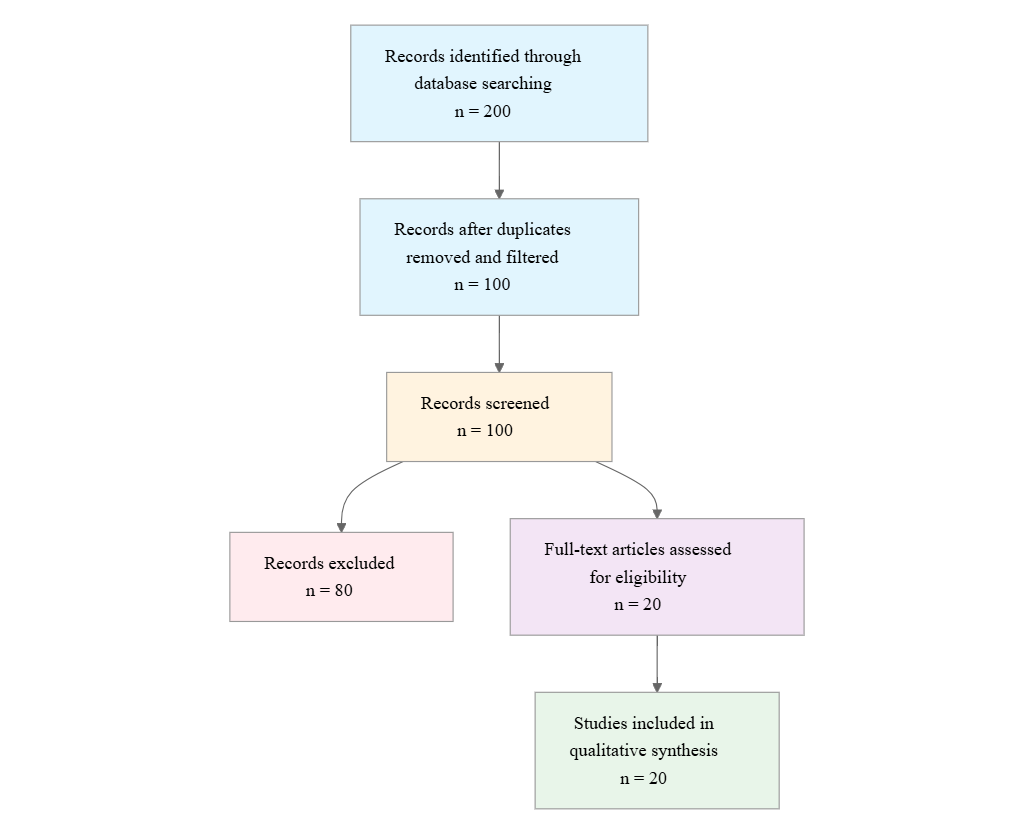
Initial database searching identified 200 records. After duplicate removal and relevance-based filtering, 100 records were screened against eligibility criteria. Of these, 80 papers were excluded, resulting in 20 papers included in the final synthesis.
PRISMA Flow Diagram
Eligibility criteria included:
- Dream Topic: Does the study focus on dreams, dreaming, REM sleep, lucid dreaming, or dream-related neuroscience in humans or relevant animal models?
- Recent Window: Was the study published between 2022 and 2026 inclusive?
- Academic Source: Is the paper a peer-reviewed journal article, systematic review, meta-analysis, or high-quality scholarly review?
- Dream/REM Evidence: Does the study report empirical findings, data synthesis, or structured evidence about dream content, REM sleep, lucid dreaming, or sleep-stage mechanisms?
- Neuroscience Relevance: Does the study include neural, brain, physiological, or sleep-stage mechanisms related to dreaming or REM sleep?
- Lucid Dreaming: Does the study specifically analyze lucid dreaming, dream control, or techniques related to lucid dream induction?
- High Quality: Does the paper show quality signals such as systematic methods, larger samples, multi-site data, strong journal reputation, or clear methods?
- Global Relevance: Does the study appear to be broadly generalizable or internationally relevant rather than narrowly local or anecdotal?
All included studies met the stated eligibility criteria.
2.3 Data Extraction and Synthesis
Data extraction focused on the following variables:
- Research Focus
- Study Type
- Population/Setting
- Dream/REM Measure
- Main Findings
- Neuroscience Link
- Reliability/Quality Signals
Thematic analysis was employed to identify patterns and synthesize findings across studies. Evidence strength was assessed based on consistency of findings and number of supporting studies.
3. Results
3.1 Characteristics of Included Studies
| Study and Year | Study Type | Population/Setting | Primary Focus | Main Measure(s) | Neuroscience Emphasis |
|---|---|---|---|---|---|
| (Salvesen et al., 2024) | Systematic review | Mixed studies | Sensory stimulation and dreams | Auditory, somatosensory, olfactory, visual, vestibular, multimodal; targeted memory reactivation; targeted lucid reactivation | Neurophysiological correlates of stimulus-dependent dream change |
| (Tzioridou et al., 2025) | Review | Broad clinical populations | Clinical neuroscience of lucid dreaming | Induction techniques; therapeutic implications | Neurobiological basis of lucidity |
| (Senzai & Scanziani, 2022) | Empirical study | Mice | REM eye movements and virtual head direction | Direction and amplitude of REM rapid eye movements | Head-direction system in thalamus |
| (Dong & Liu, 2025) | Review | Cross-species | Complexity of REM sleep | Theta oscillations; distributed circuits | Brainstem, hypothalamic, cortical, neuromodulatory systems |
| (Scarpelli et al., 2022) | Review | General | Open questions in dream neuroscience | Dream recall, sleep staging, sensory modulation, parasomnias | Structural and functional predictors of dreaming |
| (Zerr et al., 2024) | Review | General | Neuroscience of lucid dreaming | Subjective reports; neuroimaging findings | Prefrontal cortex and lucidity |
| (Hudachek & Wamsley, 2023) | Meta-analysis | Mixed human studies | Dream content and memory consolidation | Learning-related dream incorporation; post-sleep memory | Stage-specific memory mechanisms |
| (Picard-Deland et al., 2023) | Review | Animal and human studies | Memory reactivations and dreaming | Sleep reactivation paradigms | Neural basis of dream experiences |
| (Simor et al., 2023) | Theoretical review | General | Reactive/predictive homeostasis | Dream recall, dream amnesia, cortisol | Neurophysiology of homeostatic sleep |
| (Patel et al., 2026) | Narrative review | Clinical/therapeutic contexts | Neurobiology of lucid dreaming | Induction strategies; clinical outcomes | Self-agency and therapeutic mechanisms |
| (Watanabe & Sakurai, 2025) | Review | General | REM circuit mechanisms | REM induction; muscle atonia | Amygdala dopamine signaling; medullary inhibitory pathways |
| (Navarrete et al., 2024) | Empirical study | Adult humans | Auditory stimulation during REM | REM density; EEG spectra; memory tasks | Beta/theta oscillations during REM |
| (Mendoza-Alvarez et al., 2025) | Systematic review | Psychiatric populations | REM disturbance, nightmares, emotion dysregulation | REM sleep disturbance; nightmares; suicidality | Emotion regulation across disorders |
| (Dugan et al., 2024) | Empirical study/commentary | Not specified | Fear extinction during REM | Infralimbic cortex activity | REM-related fear forgetting |
| (Kumral et al., 2025) | Empirical study | Human adults | Pre-sleep experience and dream content | Dream reports; multivariate pattern analysis; beta power | Neural reinstatement during REM |
| (Elizabeth, 2025) | Dissertation-based work | Human studies | REM bursts and cognition | EEG burst events; memory tasks | REM and NREM burst dynamics |
| (Tsunematsu, 2023) | Review | General | Neural mechanisms and physiological functions of dreams | REM/NREM dream characteristics | Brainstem and dopamine-based theories |
| (Schenck, 2024) | Review | Clinical RBD cohorts | RBD priorities and neurodegeneration | Dreams, nightmares, phasic REM, biomarkers | Alpha-synuclein, imaging, machine learning |
| (Herrero et al., 2025) | Empirical study | Frequent experiencers | Electrophysiology of conscious sleep states | EEG, eye movement markers, PCA, PERMANOVA | Relation among LD, SP, OBE, FA and REM/S1 |
| (Simon et al., 2022) | Special feature/commentary | General | Functions of sleep | Memory integration; autonomic influences; lucidity | Neural circuits and cognitive structures |
Overall, the evidence base is dominated by reviews and mechanistic syntheses, with a smaller number of human experimental studies and one meta-analysis. The strongest empirical signals come from REM-related neurophysiology, sensory stimulation paradigms, and memory-linked dream content, whereas lucid dreaming literature is comparatively more clinical and conceptual. Across studies, the population range spans humans, mice, and clinical subgroups such as psychiatric and RBD cohorts, which broadens mechanistic insight but also limits direct comparability.
3.2 Thematic Findings
3.2.1 REM sleep is increasingly treated as a structured neural state rather than a uniform dream stage
The recent literature converges on the view that REM sleep is not a singular, homogeneous state but a hierarchical and dynamic process with separable components. A major cross-study pattern is the move from broad REM characterizations toward circuit-specific and oscillation-specific accounts, in which brainstem nuclei generate core REM features while hypothalamic, cortical, and neuromodulatory systems adaptively tune expression (Dong & Liu, 2025;Watanabe & Sakurai, 2025). Within this framework, REM sleep is linked to motor atonia, phasic eye movements, and distinct spectral signatures, especially theta and beta activity, suggesting that REM contributes differently to memory, emotion, and cognition depending on its subcomponents (Dong & Liu, 2025; Kumral et al., 2025; Navarrete et al., 2024).
This mechanistic reappraisal also explains why REM-related outcomes vary across paradigms. In one human experiment, auditory stimulation reduced rapid eye movement density and altered beta-band and theta-band activity, with divergent effects on visual and procedural memory tasks (Navarrete et al., 2024). In another study, REM beta activity carried information about recently experienced audiobook content and was associated with better memory performance, even though neural reinstatement itself was not directly tied to retention (Kumral et al., 2025). Together, these findings suggest that REM physiology may support multiple functions, but the relevant mechanism depends on which REM component is perturbed or measured. Confidence is strong for the claim that REM sleep is structured and neurophysiologically differentiated, but moderate for specific functional interpretations because measures and tasks vary widely.
3.2.2 Dream content is linked to recent experience and memory processing, but the REM–memory relation is stage-dependent and not uniform
A second major theme is that dream content reflects ongoing memory processing, yet the strength of this relation depends on sleep stage and methodological approach. The meta-analytic evidence shows a significant association between task-related dreaming and memory performance, with a standardized mean difference of 0.51 (95% CI 0.28, 0.74, p \< 0.001), but this association is significant for NREM-collected dreams and not for REM-collected dreams (Hudachek & Wamsley, 2023). This is a critical point of convergence with experimental work showing that pre-sleep audiobook content could later be identified from dream reports and that participants who dreamt about the audiobook also showed stronger neural reinstatement during REM (Kumral et al., 2025). Likewise, sensory stimulation reviews indicate that dream content can be altered by auditory, somatosensory, olfactory, visual, vestibular, and associative protocols, although stimulus-dependent changes range from 0 to approximately 80% (Salvesen et al., 2024).
These findings collectively support the continuity view that waking experience and sleep mentation are linked, but they also show that “dreaming and memory” is not a single phenomenon. The REM-specific null result in the meta-analysis does not contradict the broader dream-memory association; rather, it suggests that the relevant processes may differ between sleep stages or be obscured by differences in how dream incorporation is sampled. The evidence here is moderate: the direction of association is consistent, but stage specificity is mixed and likely depends on whether the outcome is dream report content, memory retention, or neural reinstatement.
3.2.3 Lucid dreaming is emerging as a neurocognitive and clinical construct, but its mechanistic base remains provisional
The lucid dreaming literature increasingly frames lucidity as a state of heightened awareness and control within sleep, potentially grounded in distinct neural activity rather than a simple variant of ordinary dreaming (Tzioridou et al., 2025; Zerr et al., 2024). Reviews consistently point to prefrontal involvement, especially in relation to enhanced metacognition and conscious self-monitoring, while also emphasizing that lucid dreams can arise spontaneously or be induced by behavioral, cognitive, and technological methods (Tzioridou et al., 2025; Zerr et al., 2024). An empirical polysomnographic study extended this by showing that conscious sleep states such as lucid dreams, sleep paralysis, out-of-body experiences, and false awakenings are distinct from wakefulness yet share features with both stage 1 and REM sleep; notably, eye movement markers were documented for false awakenings and out-of-body experiences (Herrero et al., 2025).
At the clinical level, the literature is cautiously optimistic. Lucid dreaming is discussed as potentially useful for nightmares, anxiety, PTSD, and other affective or dissociative conditions, but available reviews explicitly note that evidence remains preliminary and that standardized induction protocols and larger randomized trials are still needed (Patel et al., 2026; Tzioridou et al., 2025). The interpretive challenge is that the field currently blends mechanistic neuroscience, phenomenology, and therapy-oriented speculation. Confidence is moderate for the existence of distinct neurophysiological correlates of lucidity and related conscious sleep states, but limited for therapeutic efficacy because the clinical evidence base remains early and heterogeneous.
3.2.4 REM sleep is strongly implicated in emotion regulation, fear extinction, and psychiatric vulnerability
Across clinical and mechanistic papers, REM sleep repeatedly appears as a stage relevant to emotional processing rather than merely dream generation. A systematic review concluded that REM disturbances are transdiagnostic features across psychiatric disorders and are tightly linked to emotion dysregulation, nightmares, and suicidal behavior (Mendoza-Alvarez et al., 2025). This aligns with mechanistic evidence that REM is involved in fear forgetting, where infralimbic cortex activity during REM contributes to extinction of fear memory (Dugan et al., 2024). It also resonates with broader REM circuit models that emphasize interaction among brainstem, limbic, cortical, and neuromodulatory systems (Dong & Liu, 2025;Watanabe & Sakurai, 2025).
The clinical literature, however, is more inferential than definitive. Many findings are framed around associations between nightmares, REM disruption, and psychopathology rather than causal pathways. Populations also differ substantially: the psychiatric review focuses on disorder groups, whereas the fear-extinction study does not specify a clinical cohort, and RBD work targets prodromal neurodegenerative settings (Dugan et al., 2024; Mendoza-Alvarez et al., 2025;Schenck, 2024). This makes the overall evidence directionally coherent but not fully interchangeable across populations. Confidence is moderate for REM’s relevance to emotion regulation and fear extinction, but limited to moderate for direct clinical translation, given population heterogeneity and the absence of standardized intervention trials.
3.2.5 Dream recall, amnesia, and parasomnia challenge simple accounts of dreaming as a hidden but uniform process
A final theme is that dreaming is not only about content generation but also about access to and retention of dream experience. One theoretical review argues that dream amnesia is tied to reactive and predictive homeostasis, with awakening-driven prospection competing with dream recall and cortisol implicated in predictive homeostasis and forgetting (Simor et al., 2023). Another review emphasizes that dream recall is shaped by both trait-like and state-like factors and that parasomnia-like events may provide unusually direct access to ongoing sleep mentation (Scarpelli et al., 2022). This latter claim is reinforced indirectly by the RBD literature, which treats dreams and nightmares as relevant to neurophysiology and disease progression, though research priorities rather than settled mechanisms dominate that domain (Schenck, 2024).
These accounts are important because they shift the field away from treating poor recall as a methodological nuisance and toward viewing it as part of the biology of sleep. However, the evidence remains conceptually suggestive rather than directly validated. Confidence is limited for specific mechanisms of dream amnesia, though moderate for the broader claim that recall, awareness, and parasomnia phenomena are integral to dream science and should be analyzed as such.
3.3 Summary of Evidence
| Theme | Key Finding | Population Applicability | Effect Direction | Confidence Level | Supporting Studies |
|---|---|---|---|---|---|
| REM sleep is structured and circuit-dependent | REM is organized by hierarchical circuits, with beta/theta changes linked to cognitive effects | Humans and animal models; partly generalizable beyond the exact question population because some evidence is from mice | Positive/Mixed | Strong | (Dong & Liu, 2025), (Watanabe & Sakurai, 2025), (Navarrete et al., 2024) |
| Dream content tracks recent experience and memory processing | Task-related dreaming showed SMD = 0.51 (95% CI 0.28, 0.74, p \< 0.001) | Human sleep studies; partially matches the question population of human dream research, but includes mixed paradigms | Positive | Moderate | (Hudachek & Wamsley, 2023), (Kumral et al., 2025), (Salvesen et al., 2024) |
| REM-specific memory association is inconsistent | Dream–memory association was significant in NREM dreams but not REM dreams | Human PSG-based studies; applies to human sleepers but stage-specific findings may not generalize across methods | Mixed | Moderate | (Hudachek & Wamsley, 2023), (Picard-Deland et al., 2023) |
| Lucid dreaming has distinct neurophysiological correlates | Conscious sleep states share features with S1 and REM; eye movement markers were documented for false awakenings and out-of-body experiences | Frequent experiencers; partially matches general dream population because it focuses on unusual conscious-sleep phenotypes | Positive | Moderate | (Herrero et al., 2025), (Zerr et al., 2024) |
| Clinical utility of lucid dreaming remains preliminary | Reviews describe promise for nightmares, anxiety, and PTSD, but evidence is preliminary and randomized trials are needed | Clinical and therapeutic populations; does not directly match general dream-population evidence | Positive but tentative | Limited | (Tzioridou et al., 2025), (Patel et al., 2026) |
| REM is implicated in emotion regulation and fear extinction | REM disturbance is transdiagnostic in psychiatric disorders and infralimbic activity during REM supports fear extinction | Psychiatric cohorts and mechanistic models; partially matches the question population because findings extend to clinical subgroups | Positive | Moderate | (Mendoza-Alvarez et al., 2025), (Dugan et al., 2024) |
| Dream recall and amnesia are biologically structured | Cortisol-linked predictive homeostasis and parasomnia-based access may shape recall and amnesia | General sleepers and parasomnia-relevant populations; partially matches the question population | Mixed | Limited | (Simor et al., 2023), (Scarpelli et al., 2022), (Schenck, 2024) |
4. Discussion
4.1 Principal Findings and Their Interpretation
The strongest conclusion emerging from this synthesis is that contemporary dream science is converging on a mechanistic, state-dependent model in which REM sleep is important but insufficient as a standalone explanation for dreaming. The most persuasive evidence comes from studies that connect REM physiology to measurable neural signatures, such as beta- and theta-band changes during acoustic stimulation, beta-based reinstatement of pre-sleep content, and eye-movement correspondence with virtual head direction in sleep (Kumral et al., 2025; Navarrete et al., 2024;Senzai & Scanziani, 2022). These findings suggest that REM is not merely a permissive state for dreams; it is an active computational milieu in which sensory inputs, memory traces, and internal dynamics can be expressed in distinct ways.
The synthesis also indicates that dream content is most defensibly understood as part of a memory-processing continuum rather than a direct readout of consolidation. The meta-analytic association between task-related dreaming and memory improvement supports that relation, but the REM/NREM dissociation implies that stage-specific mechanisms matter and that dream incorporation may reflect different processes depending on sleep architecture and reporting method (Hudachek & Wamsley, 2023). This is strengthened by the finding that pre-sleep experience can be decoded from dream reports and partially from REM neural activity, which suggests a bridge between reactivation and phenomenology without proving identity between the two (Kumral et al., 2025;Picard-Deland et al., 2023).
Lucid dreaming adds a qualitatively different level of analysis because it introduces metacognition into sleep. The available evidence supports the idea that lucidity has separable electrophysiological features and may recruit prefrontal resources, but the literature is not yet mature enough to specify a single neural mechanism or therapeutic effect size(Herrero et al., 2025;Tzioridou et al., 2025; Zerr et al., 2024). This is why the field’s confidence is highest for REM physiology and memory-linked dream content, and lower for clinical claims about lucid dreaming interventions. The strongest mechanistic implication across the entire body of work is that dreaming likely emerges from interaction among distributed circuits, oscillatory states, and behavioral context rather than from any one isolated brain region or sleep stage (Dong & Liu, 2025;Watanabe & Sakurai, 2025).
4.2 Comparison with Existing Literature and Resolution of Contradictions
The main contradiction in the literature concerns the relationship between dreaming and memory: some evidence supports a strong link, whereas stage-specific analyses show that this relationship is not equally detectable in REM and NREM dreams. This discrepancy is not trivial, but it is also not necessarily a refutation of the continuity hypothesis. One plausible explanation is that REM and NREM dreams are sampled with different temporal windows and different physiological backgrounds, so the same underlying memory process may be expressed differently or become reportable with different probabilities (Hudachek & Wamsley, 2023;Scarpelli et al., 2022). Another possibility is that the operational definition of “dream incorporation” differs across studies, ranging from subjective report to multivariate neural reinstatement, which can systematically shift effect detectability (Kumral et al., 2025;Picard-Deland et al., 2023).
A second tension concerns lucid dreaming as a therapeutic tool. Reviews are optimistic, but the empirical base remains preliminary, and the field clearly has not yet resolved whether observed benefits reflect lucid awareness itself, expectancy effects, or the broader structure of nightmare-focused interventions (Patel et al., 2026; Tzioridou et al., 2025). The presence of small, single-setting, or otherwise limited studies makes publication bias a real concern, particularly because positive findings in novel consciousness research may be more likely to appear in high-impact venues. That said, the existence of small-sample polysomnographic studies identifying specific electrophysiological markers argues that the phenomenon is real even if its clinical value is not yet established (Herrero et al., 2025).
Methodologically, the field is clearly advancing. Earlier conceptually oriented reviews framed dreams through broad REM/NREM or activation-based theories, whereas more recent studies use targeted stimulation, high-density EEG, multivariate pattern analysis, and machine-learning-adjacent analytic approaches (Kumral et al., 2025; Schenck, 2024; Tsunematsu, 2023) . This evolution strengthens confidence in mechanistic claims while also revealing how much earlier estimates likely depended on crude staging or retrospective report. In short, the literature is no longer arguing only about whether dreams are meaningful; it is now testing which neural processes make them meaningful and when those processes can be observed.
4.3 Practical Implications
Clinically, the evidence suggests that REM sleep should be considered in the assessment of patients with nightmares, emotion dysregulation, PTSD, anxiety, dissociative symptoms, and REM sleep behavior disorder, because dream disturbance may index broader neurobiological vulnerability rather than an isolated sleep complaint (Mendoza-Alvarez et al., 2025;Schenck, 2024;Tzioridou et al., 2025). However, the practical use of lucid dreaming as an intervention remains cautious: current evidence justifies further trial design, not routine deployment. Patients with recurrent nightmares may eventually benefit from carefully standardized lucid-dreaming or sleep-focused interventions, but the literature does not yet support confident universal recommendations (Patel et al., 2026).
From a public health perspective, the most actionable implication is that dream phenomena should not be dismissed as epiphenomenal. If REM disturbances and nightmares are transdiagnostic markers of affective dysregulation, then sleep assessment belongs in psychiatric screening and follow-up, especially in groups already experiencing mood or trauma-related symptoms (Mendoza-Alvarez et al., 2025). For neuroscience and sleep medicine, the translational promise lies in using sensory stimulation, EEG signatures, and dream-report paradigms as experimental probes rather than merely descriptive tools (Kumral et al., 2025; Navarrete et al., 2024; Salvesen et al., 2024). Regulatory or policy implications are less direct than in environmental-health literatures, but the broader message is clear: dream-related interventions should be developed with the same attention to standardization, safety, and mechanistic validation expected for other neurobehavioral treatments. This is especially important because evidence of benefit is currently strongest in mechanistic and laboratory settings, whereas clinical implementation remains provisional.
4.4 Strengths and Limitations
This review benefits from a recent, focused evidence base that includes systematic reviews, a meta-analysis, experimental human studies, and mechanistic animal work, allowing triangulation across methods and species. The synthesis also captures the field’s newest developments, including REM stimulation studies, multivariate neural decoding of dream-related content, and contemporary theories of lucid dreaming and REM circuit organization. These features strengthen the review’s ability to identify convergent patterns rather than isolated claims.
The included literature is nonetheless uneven. Many studies are reviews or theoretical papers rather than direct empirical tests, and even the empirical studies often use small samples, nonstandard measures, or specialized populations such as frequent experiencers, mice, psychiatric cohorts, or individuals with REM sleep behavior disorder. Dream measures vary from subjective report to eye-movement markers, EEG spectra, and neural reinstatement, which limits direct comparability. This review also inherits limits from abstract-based extraction and does not include a formal risk-of-bias assessment.
5. Gaps and Future Directions
The clearest gap is the lack of standardized, stage-sensitive methods for linking dream reports to neural activity. Current evidence uses heterogeneous definitions of dream incorporation, different awakening schedules, and varied physiological markers, making it difficult to separate REM-specific mechanisms from general sleep cognition (Hudachek & Wamsley, 2023;Salvesen et al., 2024). Future work should directly compare REM and NREM dream content within the same protocol using harmonized reporting and concurrent neural measures.
A second gap concerns causality. Sensory stimulation, memory reactivation, and lucid-dreaming paradigms are promising, but the field still lacks large, well-controlled trials that can determine whether modifying REM activity reliably changes dream phenomenology or clinical outcomes (Navarrete et al., 2024;Patel et al., 2026). This is especially important for lucid dreaming, where current claims rest heavily on reviews and small studies rather than replicated intervention effects.
Finally, underrepresented populations need attention. Clinical groups with nightmares, psychiatric disorders, RBD, and frequent conscious-sleep experiences are informative but not interchangeable with the general population. More work is needed in diverse international samples, with longitudinal designs that can distinguish stable traits from transient state effects and evaluate whether the same mechanisms operate across developmental stages and disorder contexts (Herrero et al., 2025; Mendoza-Alvarez et al., 2025; Schenck, 2024).
6. Conclusion
The most defensible conclusion from the recent literature is that dreams arise from a distributed and stage-sensitive neurocognitive system in which REM sleep plays a major but not exclusive role. The strongest evidence supports a model in which REM circuitry, oscillatory dynamics, and sensory or memory-related reactivation shape both dream content and dream-related cognition, while lucidity represents a distinct conscious-sleep phenotype with emerging but still preliminary neural and clinical significance (Dong & Liu, 2025;Kumral et al., 2025;Zerr et al., 2024). Quantitatively, the clearest synthesis-level estimate shows that task-related dreaming is associated with better memory performance, with a standardized mean difference of 0.51 (95% CI 0.28, 0.74, p \< 0.001), although this relation is stronger for NREM than REM dreams (Hudachek & Wamsley, 2023).
At the same time, the evidence base remains uneven in population match and methodological maturity. Human experimental studies increasingly demonstrate that REM activity can be manipulated or decoded, yet many clinical claims about lucid dreaming, nightmares, and psychiatric benefit still depend on reviews, small cohorts, or specialized experiencer samples rather than definitive trials (Herrero et al., 2025; Navarrete et al., 2024; Patel et al., 2026). The single most important unresolved question is whether REM-related neural signatures causally generate dream phenomenology or primarily reflect it. Resolving that issue will require standardized, longitudinal, and multi-method studies that connect subjective reports, sleep-stage physiology, and intervention effects in the same participants. The broader significance is substantial: if dream processes can be reliably mapped and modified, dream science could become a meaningful tool for understanding memory, emotion, consciousness, and sleep-related disorders, rather than remaining a descriptive frontier.
References
- Dong, Y., & Liu, D. (2025). Cracking the complexity of REM sleep. Trends in Neurosciences, 48(12), 977–993. https://doi.org/10.1016/j.tins.2025.10.008
- Dugan, B. J., Fraigne, J. J., & Peever, J. (2024). REM sleep: Out-dreaming fear. Current Biology, 34(10), R510–R512. https://doi.org/10.1016/j.cub.2024.04.033
- Elizabeth, S., Alessandra. (2025). REM, The Final Frontier: Mechanisms Supporting Sleep-Dependent Cognition. https://escholarship.org/content/qt3k85q74h/qt3k85q74h.pdf
- Herrero, N. L., Corfdir, Y., Vázquez-Chenlo, A. A., Capurro, L., & Forcato, C. (2025). Electrophysiological correlates of conscious experiences during sleep: lucid dreams, sleep paralysis, out-of-body experiences, and false awakenings. bioRxiv, 2025-02.
- Hudachek, L., & Wamsley, E. J. (2023). A meta-analysis of the relation between dream content and memory consolidation. SLEEP, 46(12). https://doi.org/10.1093/sleep/zsad111
- Kumral, D., Palmieri, J., Gais, S., & Schönauer, M. (2025). Pre-sleep experiences shape neural activity and dream content in the sleeping brain. iScience, 28(8), 113032. https://doi.org/10.1016/j.isci.2025.113032
- Mendoza-Alvarez, M., Balthasar, Y., Verbraecken, J., Claes, L., van Someren, E., van Marle, H. J. F., Vandekerckhove, M., & De Picker, L. (2025). Systematic review: REM sleep, dysphoric dreams and nightmares as transdiagnostic features of psychiatric disorders with emotion dysregulation - clinical implications. Sleep Medicine, 127, 1–15. https://doi.org/10.1016/j.sleep.2024.12.037
- Navarrete, M., Greco, V., Rakowska, M., Bellesi, M., & Lewis, P. A. (2024). Auditory stimulation during REM sleep modulates REM electrophysiology and cognitive performance. Communications Biology, 7(1). https://doi.org/10.1038/s42003-024-05825-2
- Patel, T., Ahmad, A., Irshad, K., Ullah, R., Noor, A., Anwar, E., Khan, R. M. U., Akhtar, M., Henna, F., Iltaf, A., Filal, M., Fatima, S. K., Hanani, C., & ANAND, N. (2026). A narrative review on the neurobiology of lucid dreaming: mechanisms and therapeutic potential. Annals of Medicine and Surgery, 88, 1680–1686. https://doi.org/10.1097/ms9.0000000000004741
- Picard-Deland, C., Bernardi, G., Genzel, L., Dresler, M., & Schoch, S. F. (2023). Memory reactivations during sleep: a neural basis of dream experiences? Trends in Cognitive Sciences, 27(6), 568–582. https://doi.org/10.1016/j.tics.2023.02.006
- Salvesen, L., Capriglia, E., Dresler, M., & Bernardi, G. (2024). Influencing dreams through sensory stimulation: A systematic review. Sleep Medicine Reviews, 74, 101908. https://doi.org/10.1016/j.smrv.2024.101908
- Scarpelli, S., Alfonsi, V., Gorgoni, M., & De Gennaro, L. (2022). What about dreams? state of the art and open questions. Journal of Sleep Research, 31(4). https://doi.org/10.1111/jsr.13609
- Schenck, C. H. (2024). REM sleep behaviour disorder (rbd): Personal perspectives and research priorities. Journal of Sleep Research, 34(2). https://doi.org/10.1111/jsr.14228
- Senzai, Y., & Scanziani, M. (2022). A cognitive process occurring during sleep is revealed by rapid eye movements. Science, 377(6609), 999–1004. https://doi.org/10.1126/science.abp8852
- Simon, K. C., Nadel, L., & Payne, J. D. (2022). The functions of sleep: A cognitive neuroscience perspective. Proceedings of the National Academy of Sciences, 119(44). https://doi.org/10.1073/pnas.2201795119
- Simor, P., Peigneux, P., & Bódizs, R. (2023). Sleep and dreaming in the light of reactive and predictive homeostasis. Neuroscience & Biobehavioral Reviews, 147, 105104. https://doi.org/10.1016/j.neubiorev.2023.105104
- Tsunematsu, T. (2023). What are the neural mechanisms and physiological functions of dreams? Neuroscience Research, 189, 54–59. https://doi.org/10.1016/j.neures.2022.12.017
- Tzioridou, S., Campillo-Ferrer, T., Cañas-Martín, J., Schlüter, L., Torres-Platas, S. G., Gott, J. A., Soffer-Dudek, N., Stumbrys, T., & Dresler, M. (2025). The clinical neuroscience of lucid dreaming. Neuroscience & Biobehavioral Reviews, 169, 106011. https://doi.org/10.1016/j.neubiorev.2025.106011
- Watanabe, A., & Sakurai, T. (2025). Neural circuit mechanisms underlying rem sleep. PubMed, 77, 1053–1057. https://doi.org/10.11477/mf.188160960770101053
- Zerr, P., Adelhöfer, N., & Dresler, M. (2024). The neuroscience of lucid dreaming: Past, present, future. Neuron, 112(7), 1040–1044. https://doi.org/10.1016/j.neuron.2024.03.008