

Eggs and Cholesterol in Recent Human Studies: A Thematic Literature Review of Lipids, Cardiovascular Outcomes, and Mortality
Reviewed by
Shrishti, Research ReviewerPowered by
Paperguide Literature Review Agent
Updated on
28 Jul 2026
Abstract
Recent human evidence suggests that the relationship between egg intake and cholesterol is context-dependent rather than uniformly harmful. In randomized and crossover trials, higher egg intake often raised HDL-C while producing little or no adverse change in LDL-C, including a study in young healthy adults where three whole eggs per day increased HDL-related markers and lowered the total cholesterol:HDL-cholesterol ratio, and another trial in adults with hyperlipidemia where daily egg incorporation in a heart-healthy diet did not adversely affect cholesterol levels (Andersen et al., 2023), (Njike et al., 2025). However, other controlled and synthesis studies reported increases in LDL-C, with a meta-analysis of randomized trials finding higher LDL-c/HDL-c ratio (MD = 0.14, p = 0.001, I2 = 25%) and higher LDL-C (MD = 8.14, p < 0.0001, I2 = 18%) in more egg-consuming groups, and a randomized crossover study showing LDL-C of 2.83 ± 0.08 mmol/L on a control diet versus 2.68 ± 0.08 mmol/L on a two-eggs-per-day low-saturated-fat diet (Li et al., 2020), (Hill et al., 2025). Observational evidence on longer-term cardiovascular endpoints is mixed: several cohort and meta-analytic studies found no association between moderate egg consumption and cardiovascular disease or mortality, while others reported modestly increased risks, including pooled relative risks of 1.04 (95% CI 1.00–1.08) for cardiovascular disease per additional 50-g egg daily and 0.98 (95% CI 0.93–1.03) in a separate meta-analysis of cardiovascular disease risk per egg/day (Zhao et al., 2022), (Drouin-Chartier et al., 2020). The most defensible conclusion is that moderate egg consumption is unlikely to cause large adverse lipid changes in many adults, but higher intake may raise LDL-related measures in some contexts, especially when saturated fat is also high, and long-term outcome data remain inconsistent.
1. Introduction
Eggs are a major dietary source of cholesterol and have long occupied a contentious place in cardiovascular nutrition because their effects appear to depend not only on cholesterol content but also on the broader dietary pattern in which they are consumed. Cholesterol homeostasis is shaped by hepatic synthesis, intestinal handling, and interactions with other nutrients, particularly saturated fat, which complicates simplistic assumptions that dietary cholesterol alone directly determines circulating LDL-C. This complexity is especially relevant because many egg-focused studies now assess not just serum lipids but also cardiovascular disease incidence, mortality, and metabolic markers, reflecting the shift from single-nutrient thinking toward integrated diet-cardiometabolic assessment.
Recent research has been marked by genuine inconsistency. Randomized trials and crossover interventions often report neutral or mixed lipid effects, with some showing increased HDL-C or favorable HDL particle changes alongside stable LDL-C, whereas other trials and meta-analyses report higher LDL-C or higher LDL-c/HDL-c ratios with greater egg intake. Meanwhile, observational studies have extended the question to long-term outcomes, but their findings diverge across populations and analytic approaches, with some suggesting no excess cardiovascular risk from moderate intake and others reporting modest increases in cardiovascular disease or mortality. These discrepancies raise important questions about whether observed differences reflect true biological heterogeneity, the influence of saturated fat and overall dietary context, differences between healthy and higher-risk populations, or residual confounding in cohort data.
The latest literature therefore warrants synthesis across lipid biomarkers, mechanistic metabolic indicators, cardiovascular events, and mortality outcomes to clarify what is currently known about eggs and cholesterol. A focused thematic review can better distinguish findings that are robust across designs from those that appear population-specific or method-dependent. Accordingly, this review integrates recent human studies to evaluate how egg consumption relates to serum cholesterol profiles and downstream cardiovascular risk, and to identify where the evidence is converging, where it remains contradictory, and what this means for clinical and public health guidance.
2. Methods
2.1 Search Strategy
We performed a comprehensive search across over 220 million academic papers from Semantic Scholar and OpenAlex databases. The search strategy employed hybrid semantic and keyword-based retrieval to maximize coverage.
Search queries included:
- "Egg consumption and serum cholesterol in recent human studies"
- "Dietary eggs low density lipoprotein cholesterol randomized trial"
- "Egg intake cardiovascular lipids and cholesterol outcomes cohort studies"
- "Recent meta-analysis of eggs and blood cholesterol in adults"
2.2 Study Selection
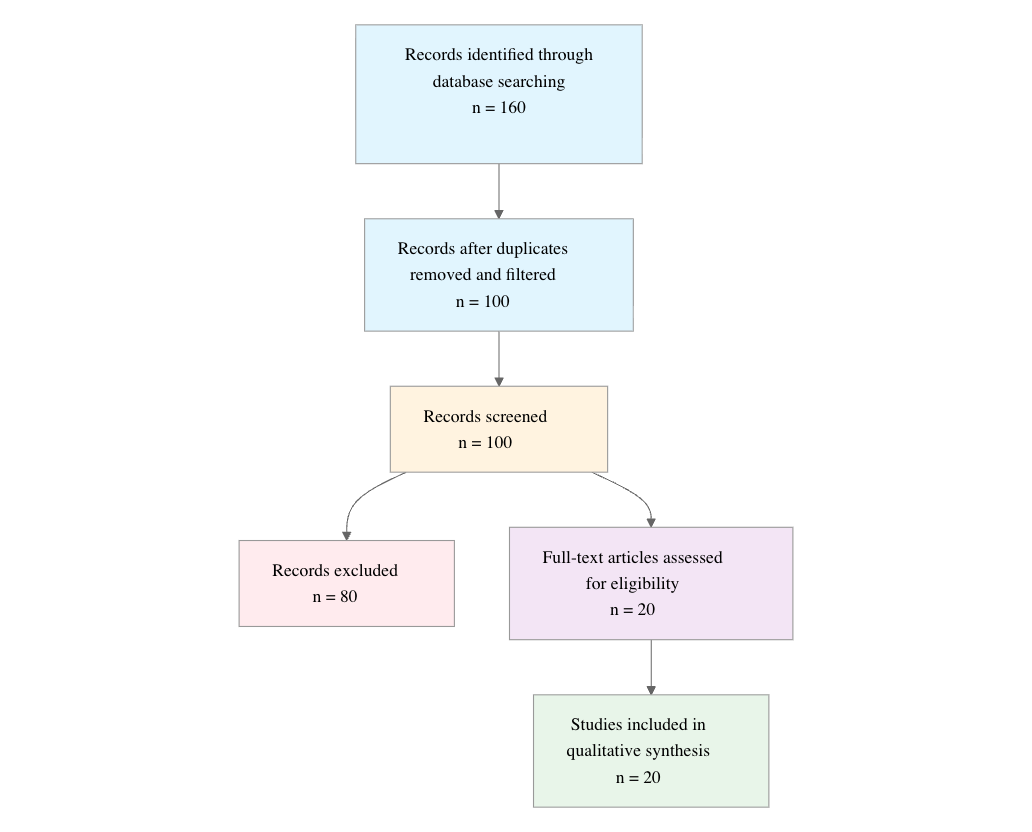
Initial database searching identified 160 records. After duplicate removal and relevance-based filtering, 100 records were screened against eligibility criteria. Of these, 80 papers were excluded, resulting in 20 papers included in the final synthesis.
PRISMA Flow Diagram
Eligibility criteria included:
- Human Studies: Does the study involve human participants rather than animals or cell/biochemical experiments?
- Egg Exposure: Does the study examine egg consumption, egg intake, egg yolk, or a diet explicitly including eggs?
- Cholesterol Outcome: Does the study report at least one cholesterol-related outcome such as LDL-C, total cholesterol, HDL-C, non-HDL-C, or triglycerides?
- Recent Evidence: Was the study published between 2020 and 2026?
- Study Design: Is the paper a randomized trial, cohort study, crossover study, systematic review, or meta-analysis?
- Adult Population: Are the participants adults aged 18 years or older?
- Direct Comparison: Does the study compare eggs or egg-rich diets against a lower-egg diet, egg-free diet, or another dietary comparator?
- Quantitative Lipids: Does the paper report numerical changes in lipid measures over time or between groups?
All included studies met the stated eligibility criteria.
2.3 Data Extraction and Synthesis
Data extraction focused on the following variables:
- Population: Extract the study population characteristics, including age group, health status, and whether participants had hypercholesterolemia, diabetes, or cardiovascular disease.
- Egg Exposure: Extract how egg consumption was defined, including dose, frequency, duration, and whether the intervention was whole eggs, egg yolk, or dietary pattern including eggs.
- Design: Extract the study design (RCT, cohort, crossover, systematic review, meta-analysis, etc.) and the duration of follow-up or intervention.
- Cholesterol Outcome: Extract the lipid outcomes reported, especially LDL-C, total cholesterol, HDL-C, and triglycerides, including direction of change.
- Main Finding: Extract the authors' main conclusion about the relationship between eggs and cholesterol.
- Comparators: Extract the comparator condition, such as egg-free diet, low-egg diet, other protein sources, or habitual intake.
- Safety/Harms: Extract any adverse events, cardiovascular concerns, or other safety-related findings reported.
- Study Quality: Extract any quality indicators, limitations, risk-of-bias statements, or strength-of-evidence notes mentioned in the paper.
Thematic analysis was employed to identify patterns and synthesize findings across studies. Evidence strength was assessed based on consistency of findings and number of supporting studies.
3. Results
3.1 Characteristics of Included Studies
| Study and Year | Study Type | Population | Egg Exposure / Comparator | Cholesterol-Related Outcomes | Key Focus |
|---|---|---|---|---|---|
| Drouin-Chartier et al. 2020 | Prospective cohort + systematic review/meta-analysis | US women and men free of CVD, diabetes, and cancer at baseline | At least 1 egg/day vs less than 1 egg/month | CVD endpoints; no detailed lipid measures reported | Egg intake and incident CVD |
| Li et al. 2020 | Systematic review/meta-analysis of RCTs | Healthy individuals | More egg consumption vs control | LDL-C, HDL-C, LDL-c/HDL-c ratio | Lipid profile in healthy adults |
| Xia et al. 2020 | Prospective cohort | US adults ≥20 years | Dietary egg and cholesterol intake from recalls | Mortality outcomes; dietary cholesterol associations reported | Egg intake and mortality |
| Zhuang et al. 2020 | Cohort study | Nationwide adult cohort | Egg and egg-sourced cholesterol intake | LDL-C, total cholesterol, HDL-C, triglycerides reported; direction not detailed | Mortality and lipid outcomes |
| Chen et al. 2020 | Prospective cohort | US postmenopausal women without baseline CVD, hypercholesterolemia, or diabetes | Higher egg and cholesterol intake vs lower intake | Total cholesterol, LDL cholesterol noted | Incident CVD and mortality |
| Sikaroudi et al. 2020 | Systematic review/meta-analysis of RCTs | Broad adult samples across RCTs | Different egg dosages; >1 egg/day highlighted | TC, LDL-C, HDL-C, TG, ratios, apoA1, apoB100 | Dose-response lipid effects |
| Schade et al. 2021 | Clinical overview | Adults | Dietary cholesterol and saturated fat discussed generally | LDL cholesterol mechanisms discussed; no quantitative data | Mechanisms of egg/cholesterol effects |
| Yuan et al. 2021 | Prospective cohort | Adults | High egg intake vs lower intake; dietary cholesterol also examined | No detailed lipid outcomes; diabetes endpoint | Egg, cholesterol, protein, diabetes |
| Pan et al. 2022 | Nested case-control | Chinese adults aged 30–79 years | Self-reported egg consumption | Total cholesterol, cholesterol esters in small VLDL, HDL markers, HDL diameter | Egg intake, metabolites, and CVD |
| Zhao et al. 2022 | Prospective cohort + systematic review/meta-analysis | Men in ATBC and cohort participants | Dietary cholesterol and egg intake; 50-g egg increments | Serum total cholesterol and mortality-related outcomes | Cholesterol, egg intake, mortality |
| Ma et al. 2022 | Randomized controlled trial | Young healthy Chinese college students | Up to 2 eggs/day over 11 weeks | TC, LDL-C, HDL-C, TG, LDL-C/HDL-C ratio | Cholesterol balance in young adults |
| Thomas et al. 2022 | Randomized crossover trial | Participants with metabolic syndrome | 2 eggs/day vs egg substitute | HDL-C, LDL-C, TG, large HDL particles | Eggs within plant-based diet |
| Andersen et al. 2023 | Randomized crossover trial | Young healthy adults 18–35 years | Egg-free vs 3 egg whites/day vs 3 whole eggs/day | HDL particles, total cholesterol:HDL ratio; LDL-C not significantly changed | Egg-based diets and biomarkers |
| Xia et al. 2023 | Prospective cohort | Adults | Egg consumption in relation to CAD and polygenic risk | LDL-C, total cholesterol reported | Genetic susceptibility and CAD risk |
| Pinsawas et al. 2024 | Randomized controlled trial | Individuals with metabolic syndrome | Increased whole egg consumption within Asian low-carbohydrate diet vs low-saturated-fat comparator | Metabolic outcomes; specific lipid directions not detailed | MetS and dietary pattern |
| Hill et al. 2025 | Randomized controlled crossover trial | Adults with LDL-C <3.5 mmol/L | 2 eggs/day vs egg-free vs control diets | LDL-C, total cholesterol, HDL-C | Dietary cholesterol vs saturated fat |
| Carter et al. 2025 | Randomized crossover study | Adults ages 18–65, generally healthy | 6 eggs/week for 4 weeks vs egg-free diet | LDL-C, total cholesterol, HDL-C; LDL-C increased | Eggs and LDL cholesterol |
| Njike et al. 2025 | Randomized controlled crossover trial | Adults with hyperlipidemia | Daily eggs in heart-healthy diet vs exclusion | LDL-C, total cholesterol, HDL-C, triglycerides; directions not specified | Eggs in hyperlipidemia |
| Li et al. 2025 | Prospective cohort | American Indians | Quartiles of egg consumption | Serum total cholesterol, triglycerides, LDL-C, HDL-C | Egg intake, cholesterol, atherosclerosis, CVD |
Note: Hill et al. 2025 and Carter et al. 2025 are both intervention studies in healthy or near-healthy adults.
The evidence base is dominated by cohort studies, randomized crossover trials, and systematic reviews/meta-analyses. Populations range from healthy young adults to adults with metabolic syndrome, hyperlipidemia, postmenopausal women, and American Indians, meaning that generalizability varies substantially by cardiometabolic baseline risk. Egg exposure is operationalized heterogeneously, from daily whole-egg interventions to quartiles of habitual intake, and lipid outcomes are sometimes reported directly and sometimes only indirectly through downstream cardiovascular endpoints.
3.2 Thematic Findings
3.2.1 Egg intake and LDL-related lipid responses depend strongly on dietary context and baseline risk
Across controlled feeding and crossover studies, the most consistent biochemical signal is not a uniform LDL-C rise from eggs per se, but a context-dependent lipid response. In healthy adults, two eggs per day for five weeks within a low-saturated-fat diet produced LDL-C of 2.68 ± 0.08 mmol/L compared with 2.83 ± 0.08 mmol/L on a control diet, and the within-individual relationship was significant for saturated fat intake (β = 0.35, p = 0.002) but not for dietary cholesterol intake (β = −0.006, p = 0.42) (Hill et al., 2025). In a separate crossover trial, three whole eggs per day for four weeks improved the total cholesterol:HDL-cholesterol ratio and increased HDL-related metrics, while LDL-C was not explicitly reported as changing adversely (Andersen et al., 2023). In adults with metabolic syndrome, two eggs per day did not differ from an egg-substitute breakfast for LDL-C, triglycerides, glucose, or insulin, though HDL-C increased (Thomas et al., 2022). In contrast, a meta-analysis of randomized trials found that more egg consumption was associated with higher LDL-C (MD = 8.14, p < 0.0001, I2 = 18%) and higher LDL-c/HDL-c ratio (MD = 0.14, p = 0.001, I2 = 25%), and a broader dose-response synthesis found that more than one egg per day for less than 12 weeks could increase TC, LDL-C, HDL-C, TC/HDL-C, apoA1, and apoB100 (Li et al., 2020), (Khalighi Sikaroudi et al., 2020). In young healthy Chinese adults, up to two eggs per day over 11 weeks increased TC, LDL-C, HDL-C, and choline but did not alter triglycerides or LDL-C/HDL-C ratio (Ma et al., 2022).
Taken together, the lipid evidence supports a mixed but interpretable pattern: eggs can raise LDL-C in some experimental settings, but the rise is neither universal nor isolated from the rest of the dietary pattern, and HDL-related changes often move in parallel. (Note: this study examined healthy adults, adults with metabolic syndrome, adults with hyperlipidemia, and young Chinese college students, which only partially matches the question population of adults interested in eggs and cholesterol; findings should be interpreted considering this difference.) Confidence: Moderate, because controlled trials are internally stronger but heterogeneous in population and diet composition.
3.2.2 HDL-related changes often improve with egg intake, but their clinical meaning remains uncertain
A notable counterpattern is the recurrent increase in HDL-C or HDL-associated markers with egg intake. In healthy participants, three whole eggs per day increased large HDL particles and lowered the total cholesterol:HDL-cholesterol ratio relative to an egg-free diet, while whole eggs also increased serum choline and betaine without altering trimethylamine N-oxide (Andersen et al., 2023). In metabolic syndrome, two eggs per day increased HDL-C (p < 0.025) and the number of large HDL particles (p < 0.01), with no significant differences in LDL-C or triglycerides (Thomas et al., 2022). In young Chinese adults, HDL-C increased alongside TC and LDL-C during 11 weeks of up to two eggs per day, again without change in the LDL-C/HDL-C ratio (Ma et al., 2022). Yet these favorable HDL shifts do not consistently translate into lower downstream risk, as observational studies disagree on whether egg intake is neutral, protective, or harmful for cardiovascular endpoints.
The likely explanation is that HDL quantity and HDL particle remodeling may be more sensitive to dietary fat patterns and micronutrient content than to egg cholesterol itself. Because several studies also report increased choline and betaine, the HDL signal may reflect broader dietary quality changes rather than a cholesterol-specific effect. However, the clinical relevance of HDL raising is uncertain because HDL-C is not always a causal surrogate for cardiovascular protection, and the reviewed studies do not establish whether the observed HDL changes improve cholesterol efflux or vascular outcomes. Confidence: Moderate, because the HDL signal recurs across intervention studies but its clinical significance is unproven.
3.2.3 Long-term cardiovascular and mortality outcomes are inconsistent, with stronger signals for risk in some cohorts than others
When egg intake is examined against cardiovascular disease and mortality rather than lipids alone, the literature becomes more heterogeneous. A large prospective analysis and meta-analysis found no association between at least one egg per day and incident cardiovascular disease after multivariable adjustment, and the pooled relative risk per additional egg/day was 0.98 (95% CI 0.93–1.03), with no association for coronary heart disease (0.96, 0.91–1.03) or stroke (0.99, 0.91–1.07) (Drouin-Chartier et al., 2020). Another US cohort of adults likewise found no significant association between additional daily consumption of half an egg and all-cause mortality (HR 1.04, 95% CI 0.96–1.13) or heart disease mortality (HR 0.96, 95% CI 0.80–1.14) (Xia et al., 2020). In Chinese adults, moderate egg consumption was associated with lower cardiovascular risk in a nested case-control study, with inverse relations for total cholesterol and cholesterol esters in small VLDL and opposite patterns between metabolic markers and CVD risk (Pan et al., 2022). In American Indians, moderate egg consumption was associated with a significantly lower CVD risk in the third quartile versus the lowest quartile (HR 0.74, 95% CI 0.55–0.98), while the highest quartile was not protective (HR 1.12, 95% CI 0.80–1.49) (M.-Y. Li et al., 2020).
By contrast, several cohort syntheses reported modest risk elevations. One updated meta-analysis found that one additional 50-g egg daily was associated with increased CVD risk (pooled relative risk 1.04, 95% CI 1.00–1.08; I2 = 80.1%), with a stronger association in US cohorts (1.08, 1.02–1.14) and no association in Asian cohorts (Zhao et al., 2022). Another systematic review reported a modestly increased risk of all-cause mortality and suggested caution with high egg intake, especially in older adults, Americans, and longer follow-up studies (Z. Ma et al., 2022). A separate cohort/meta-analysis also found that greater dietary cholesterol and egg consumption were associated with increased overall and cardiovascular mortality, including HRs of 1.10 and 1.13 per additional 300 mg cholesterol/day for overall and CVD-related mortality, and 1.06 and 1.09 per additional 50-g egg/day, respectively (Zhao et al., 2022).
This split likely reflects genuine heterogeneity in populations and confounding structures rather than a single universal effect. Studies with null or protective findings often come from healthier or more socially homogeneous groups, while the adverse associations are more prominent in older or US cohorts and in analyses where egg intake tracks with broader dietary patterns. Confidence: Moderate to Conflicting, because high-quality prospective data are substantial but direction differs by region, outcome, and analytic adjustment.
3.2.4 Mechanistic and metabolic evidence suggests eggs influence cholesterol transport and related lipid remodeling more than they uniformly increase serum cholesterol
Mechanistic information is limited, but the available evidence points to effects on lipid transport and composition rather than a single direct cholesterol-raising pathway. In Chinese adults, egg consumption was associated with 24 out of 225 metabolic markers, including positive associations with apolipoprotein A1, acetate, mean HDL diameter, and very large and large HDL profiles, alongside inverse associations with total cholesterol and cholesterol esters in small VLDL (Pan et al., 2022). The same study noted that the associations of egg consumption with metabolic markers and those markers with CVD risk generally showed opposite patterns, implying that eggs may alter lipid metabolism in directions not captured by LDL-C alone. Similarly, the young-adult crossover study found that whole eggs increased blood choline, lowered the total cholesterol:HDL-cholesterol ratio, and altered blood hematocrit and platelet counts (Andersen et al., 2023). The hyperlipidemia crossover trial did not report harm and concluded that daily egg incorporation in a heart-healthy diet did not adversely affect cholesterol (Njike et al., 2025).
One clinical overview emphasized that the net effect of dietary cholesterol and saturated fat on circulating LDL cholesterol is determined by genetic and environmental factors, reinforcing the idea that response depends on host and dietary context rather than egg exposure alone (Schade et al., 2022). This is consistent with the intervention studies showing that saturated fat intake may be more predictive of LDL-C than egg-derived cholesterol. Confidence: Limited to Moderate, because mechanistic data are suggestive but sparse and not uniform across studies.
3.3 Summary of Evidence
| Theme | Key Finding | Population Applicability | Effect Direction | Confidence Level | Supporting Studies |
|---|---|---|---|---|---|
| Egg intake and LDL-related lipids | LDL-C 2.68 ± 0.08 mmol/L on two-eggs/day low-saturated-fat diet vs 2.83 ± 0.08 mmol/L on control; dietary cholesterol β = −0.006, p = 0.42, saturated fat β = 0.35, p = 0.002 | Mainly healthy adults; partial match to general adult question population | Mixed | Moderate | Hill et al. (Hill et al., 2025), Li et al. (Li et al., 2020), Sikaroudi et al. (Khalighi Sikaroudi et al., 2020) |
| HDL-related responses | Three whole eggs/day increased large HDL particles and lowered total cholesterol:HDL-cholesterol ratio; two eggs/day increased HDL-C (p < 0.025) and large HDL particles (p < 0.01) | Healthy adults and adults with metabolic syndrome; partial match | Positive | Moderate | Andersen et al. (Andersen et al., 2023), Thomas et al. (Thomas et al., 2022), Ma et al. (Ma et al., 2022) |
| Long-term cardiovascular outcomes | Pooled RR 0.98 (95% CI 0.93–1.03) per egg/day for CVD, but another meta-analysis found RR 1.04 (95% CI 1.00–1.08) per 50-g egg/day | General adults, with regional heterogeneity | Mixed | Conflicting | Drouin-Chartier et al. (Drouin-Chartier et al., 2020), Zhao et al. (Zhao et al., 2022), Ma et al. (Z. Ma et al., 2022) |
| Mortality outcomes | HR 1.06 and 1.09 per additional 50-g egg/day for overall and CVD mortality; another cohort found HR 1.04 (95% CI 0.96–1.13) for all-cause mortality per half egg/day | Adults, especially older or US cohorts | Negative | Moderate | Zhao et al. (Zhao et al., 2022), Xia et al. (Xia et al., 2020), Chen et al. (Chen et al., 2021) |
| Mechanistic/metabolic remodeling | Egg consumption associated with apolipoprotein A1, mean HDL diameter, very large HDL, total cholesterol and small VLDL cholesterol ester changes | Adults in Chinese population; partial match | Mixed | Limited | Pan et al. (Pan et al., 2022), Schade et al. (Schade et al., 2022), Andersen et al. (Andersen et al., 2023) |
| Moderate intake in specific populations | Moderate egg consumption associated with lower CVD risk: HR 0.74 (95% CI 0.55–0.98) in American Indians; inverse associations in Chinese marker study | Specific populations, not fully generalizable | Positive | Limited | Li et al. (M.-Y. Li et al., 2020), Pan et al. (Pan et al., 2022) |
4. Discussion
4.1 Principal Findings and Their Interpretation
The central pattern emerging from this literature is that eggs do not produce a uniform cholesterol response across adults; rather, their effects appear to be moderated by the rest of the diet, underlying metabolic status, and perhaps population-specific background risk. The strongest experimental evidence indicates that saturated fat is a more important determinant of LDL-C than egg-derived cholesterol itself, as shown by the crossover trial in which LDL-C was lower on the two-eggs/day low-saturated-fat diet than on the control diet, while saturated fat but not dietary cholesterol tracked with LDL-C (Hill et al., 2025). This helps reconcile why egg interventions sometimes raise LDL-C in pooled trial evidence yet appear neutral in lower-saturated-fat settings. In other words, egg cholesterol may be biologically relevant, but its effect is conditional rather than deterministic.
The repeated improvement in HDL-C, HDL particle size, and total cholesterol:HDL ratio suggests that eggs may shift lipoprotein composition as well as concentration. The metabolic-marker study is particularly informative because it extends beyond standard lipids and shows a coherent remodeling of apolipoprotein A1, HDL diameter, and small VLDL cholesterol esters (Pan et al., 2022). This kind of pattern argues for a broader lipid-transport effect rather than a simple "egg up, cholesterol up" model. The mechanistic overview further supports this interpretation by emphasizing genetic and environmental modifiers of hepatic and intestinal cholesterol handling (Schade et al., 2022). Confidence is highest for these short-term biomarker patterns because they derive from randomized or tightly controlled designs, although the exact clinical meaning of improved HDL markers remains uncertain.
By contrast, the long-term outcome literature is less settled. Some cohorts and meta-analyses show null associations, while others suggest modestly increased cardiovascular or mortality risk. This divergence likely reflects exposure measurement heterogeneity, residual confounding, and differences in who eats more eggs in each setting. Overall, the most defensible conclusion is not that eggs are universally safe or harmful, but that moderate intake appears metabolically tolerable for many adults when embedded in a heart-healthy pattern, whereas higher intake may become unfavorable in some populations or dietary contexts. The confidence hierarchy is therefore asymmetric: stronger for short-term lipid remodeling, weaker for hard endpoints.
4.2 Comparison with Existing Literature and Resolution of Contradictions
The contradictions in this literature are substantive and cannot be dismissed as noise. One set of studies suggests no increased cardiovascular risk at moderate intake, including pooled analyses of US and European cohorts, whereas another set reports modest elevations in cardiovascular disease and mortality risk, particularly in US or older populations (Drouin-Chartier et al., 2020), (Zhao et al., 2022), (Z. Ma et al., 2022). These differences are plausible if egg intake is acting as a marker for broader dietary patterns or socioeconomic context rather than a stand-alone causal exposure. In observational cohorts, higher egg intake often clusters with higher red meat intake, higher body mass index, and less statin use, all of which complicate causal inference and may produce divergent results after adjustment (Drouin-Chartier et al., 2020).
The regional pattern is also informative. Asian cohorts more often show null or inverse associations, while US cohorts more often show risk elevations (Drouin-Chartier et al., 2020), (Zhao et al., 2022). This could reflect differences in meal context, cooking methods, background saturated fat intake, or correlated dietary patterns, but the provided evidence does not isolate which factor is most responsible. The Chinese nested case-control and American Indian cohort both suggest that moderate intake may be neutral or protective in some settings (Pan et al., 2022), (M.-Y. Li et al., 2020), yet these findings do not override the broader observational uncertainty because they arise from specific populations with unique dietary and social characteristics.
Publication bias is possible because the topic has long been controversial and likely to attract both confirmatory and null findings. However, the presence of large null cohorts, positive cohort meta-analyses, and randomized biomarker studies argues against a simple one-direction publication story. The more likely explanation is genuine heterogeneity combined with exposure misclassification, because habitual egg intake is measured variably across studies and often without full capture of the foods consumed alongside eggs. Recent randomized studies have improved mechanistic clarity by isolating saturated fat and egg effects, and those studies tend to support context dependence rather than a universal cholesterol penalty.
4.3 Practical Implications
For clinicians, the most practical message is that egg advice should be individualized rather than categorical. In generally healthy adults, and even in some adults with metabolic syndrome or hyperlipidemia, moderate egg intake did not worsen LDL-C or overall cholesterol balance in several controlled settings (Thomas et al., 2022), (Njike et al., 2025), (Ma et al., 2022). However, in people whose diets are already high in saturated fat or who show LDL-C sensitivity to dietary change, eggs may contribute to less favorable lipid profiles, and this possibility is supported by trials in which saturated fat tracked more strongly with LDL-C than cholesterol itself (Hill et al., 2025).
From a public health perspective, the evidence does not justify a one-size-fits-all warning against eggs, but it does support guidance that emphasizes the total dietary pattern. Eggs consumed within low-saturated-fat, nutrient-dense meals appear less concerning than eggs embedded in diets high in saturated fat or processed meats. For populations with higher baseline cardiovascular risk, including some older adults and certain US cohorts where mortality associations were more apparent, conservative advice on high-frequency egg intake remains reasonable (Zhao et al., 2022), (Z. Ma et al., 2022). Regulatory or population-level policy should therefore focus less on eggs as an isolated nutrient source and more on whole-diet quality and the foods that accompany eggs, while acknowledging that evidence for a strict no-threshold harm model is not established by these studies. The literature instead supports a context-sensitive approach with risk reduction targeting overall dietary composition.
4.4 Strengths and Limitations
A key strength of this review is the integration of randomized trials, cohort studies, nested case-control data, and meta-analytic evidence, which allows short-term biomarker effects to be considered alongside long-term clinical outcomes. The included studies also span multiple populations, including healthy adults, metabolic syndrome, hyperlipidemia, postmenopausal women, American Indians, Chinese adults, and US cohorts, improving conceptual breadth.
Important limitations remain. Included studies varied in how they defined egg exposure, from daily whole-eggs interventions to habitual frequency or quartiles, and outcome reporting was inconsistent, with some studies emphasizing LDL-C while others focused on HDL particles, triglycerides, or clinical events. Several papers did not report detailed quality or risk-of-bias metrics in the provided abstracts. For this review, limitations include reliance on abstract-level extraction, no formal risk-of-bias assessment, and potential incompleteness in the available structured data for several studies. As a result, confidence is strongest where randomized data align and weaker where inferences depend on observational endpoints.
5. Gaps and Future Directions
The most important gap is the lack of definitive, long-duration randomized evidence linking egg intake to hard cardiovascular endpoints in adults with different baseline risk profiles. Current trials are informative for LDL-C, HDL-C, and particle remodeling, but they are generally short and often conducted in healthy or selected clinical groups rather than the broader adult population relevant to everyday dietary guidance. Future studies should directly compare egg exposure in adults with varying saturated-fat backgrounds, because the evidence repeatedly suggests that this interaction may determine whether eggs are neutral or lipid-raising (Hill et al., 2025), (Schade et al., 2022).
Mechanistic work should also move beyond standard lipids toward cholesterol transport, HDL functionality, apolipoproteins, and markers such as small VLDL cholesterol esters and choline metabolites, which appear to capture more of the observed biological response (Pan et al., 2022), (Andersen et al., 2023). Underrepresented populations include older adults, non-US groups with different meal patterns, and patients with established dyslipidemia or cardiovascular disease followed long enough to observe clinical events. More harmonized exposure definitions, consistent dietary cofactor measurement, and standardized confounding adjustment would strengthen cross-study comparability and help resolve whether the modest risk elevations seen in some cohorts reflect causal biology or dietary pattern confounding.
6. Conclusion
The recent human literature does not support a simple universal claim that eggs inevitably worsen cholesterol, nor does it support the opposite claim that eggs are always metabolically harmless. The most defensible synthesis is that moderate egg consumption is often neutral in controlled settings and may even improve HDL-related markers, but LDL-C can rise in some contexts and long-term cardiovascular associations remain inconsistent (Hill et al., 2025), (Andersen et al., 2023), (Li et al., 2020). In randomized evidence, the dietary context appears crucial: a two-eggs/day low-saturated-fat diet produced LDL-C of 2.68 ± 0.08 mmol/L versus 2.83 ± 0.08 mmol/L on a control diet, while saturated fat but not dietary cholesterol tracked with LDL-C (Hill et al., 2025). Observationally, results range from null associations with cardiovascular disease risk (RR 0.98, 95% CI 0.93–1.03 per egg/day) to modestly increased risk estimates (RR 1.04, 95% CI 1.00–1.08 per 50-g egg/day), indicating that population context matters greatly (Drouin-Chartier et al., 2020), (Zhao et al., 2022).
Because much of the evidence comes from specific populations—healthy adults, metabolic syndrome, hyperlipidemia, postmenopausal women, or particular ethnic cohorts—the answer for the general adult population should remain cautious and individualized. The single most important unresolved question is whether the modest risk elevations seen in some cohort studies reflect a true causal effect of high egg intake or the dietary pattern in which eggs are consumed. Clarifying this issue matters for clinical counseling and public health guidance because eggs remain a common, nutrient-dense food whose cardiovascular implications should be judged in the context of the full diet rather than in isolation.
References
- Andersen, C. J., Huang, L., Zhai, F., Esposito, C. P., Greco, J. M., Zhang, R., Woodruff, R., Sloan, A., & Van Dyke, A. R. (2023). Consumption of different egg-based diets alters clinical metabolic and hematological parameters in young, healthy men and women. Nutrients, 15(17), 3747. https://doi.org/10.3390/nu15173747
- Carter, S., Hill, A. M., Yandell, C., Wood, L., Coates, A. M., & Buckley, J. D. (2025). Impact of dietary cholesterol from eggs and saturated fat on LDL cholesterol levels: a randomized cross-over study. The American Journal of Clinical Nutrition, 122(1), 83–91. https://doi.org/10.1016/j.ajcnut.2025.05.001
- Chen, G.-C., Chen, L.-H., Mossavar-Rahmani, Y., Kamensky, V., Shadyab, A. H., Haring, B., … Qi, Q. (2021). Dietary cholesterol and egg intake in relation to incident cardiovascular disease and all-cause and cause-specific mortality in postmenopausal women. The American Journal of Clinical Nutrition, 113(4), 948–959. https://doi.org/10.1093/ajcn/nqaa353
- Drouin-Chartier, J.-P., Chen, S., Li, Y., Schwab, A. L., Stampfer, M. J., Sacks, F. M., Rosner, B., Willett, W. C., Hu, F. B., & Bhupathiraju, S. N. (2020). Egg consumption and risk of cardiovascular disease: three large prospective US cohort studies, systematic review, and updated meta-analysis. BMJ, m513. https://doi.org/10.1136/bmj.m513
- Hill, A. M., Carter, S., Coates, A. M., Yandell, C., & Buckley, J. D. (2025). Eggs do not raise blood cholesterol: results of a randomised controlled trial. Proceedings of the Nutrition Society, 84(OCE1). https://doi.org/10.1017/s0029665125000503
- Khalighi Sikaroudi, M., Soltani, S., Kolahdouz-Mohammadi, R., Clayton, Z. S., Fernandez, M. L., Varse, F., & Shidfar, F. (2020). The responses of different dosages of egg consumption on blood lipid profile: An updated systematic review and meta-analysis of randomized clinical trials. Journal of Food Biochemistry, 44(8). https://doi.org/10.1111/jfbc.13263
- Li, M.-Y., Chen, J.-H., Chen, C., & Kang, Y.-N. (2020). Association between egg consumption and cholesterol concentration: A systematic review and meta-analysis of randomized controlled trials. Nutrients, 12(7), 1995. https://doi.org/10.3390/nu12071995
- Li, W., Fretts, A., Reese, J., Ali, T., Umans, J., Cole, S., & Zhang, Y. (2025). Abstract MP25: The association between egg consumption, total serum cholesterol concentration, and cardiovascular disease incidence among American Indians: The Strong Heart Family Study. Circulation, 151(Suppl_1). https://doi.org/10.1161/cir.151.suppl_1.mp25
- Ma, W., Zhang, Y., Pan, L., Wang, S., Xie, K., Deng, S., … Hu, F. (2022). Association of egg consumption with risk of all-cause and cardiovascular disease mortality: A systematic review and dose–response meta-analysis of observational studies. The Journal of Nutrition, 152(10), 2227–2237. https://doi.org/10.1093/jn/nxac105
- Ma, Z., Wu, W., Zhang, D., Wu, P., Guo, Y., Li, D., & Yang, F. (2022). Daily intake of up to two eggs for 11 weeks does not affect the cholesterol balance of Chinese young adults. Food Science & Nutrition, 10(4), 1081–1092. https://doi.org/10.1002/fsn3.2734
- Njike, V. Y., Ayettey, R. G., Foster, J. S., Comerford, B. P., Multany, S., & Gill, A. S. (2025). Effect of daily incorporation of eggs in a heart-healthy diet for 8 weeks compared with their exclusion on cardio-metabolic risk factors in adults with hyperlipidemia: A randomized, controlled, crossover trial. Journal of the American Nutrition Association, 45(3), 237–249. https://doi.org/10.1080/27697061.2025.2560431
- Pan, L., Chen, L., Lv, J., Pang, Y., Guo, Y., Pei, P., … Li, L. (2022). Association of egg consumption, metabolic markers, and risk of cardiovascular diseases: A nested case-control study. eLife, 11. https://doi.org/10.7554/elife.72909
- Pinsawas, B., Surawit, A., Mongkolsucharitkul, P., Pongkunakorn, T., Suta, S., Manosan, T., … Mayurasakorn, K. (2024). Asian low-carbohydrate diet with increased whole egg consumption improves metabolic outcomes in metabolic syndrome: A 52-week intervention study. The Journal of Nutrition, 154(11), 3331–3345. https://doi.org/10.1016/j.tjnut.2024.08.027
- Schade, D. S., Gonzales, K., Kaminsky, N., Adolphe, A., Shey, L., & Eaton, R. P. (2022). Resolving the egg and cholesterol intake controversy: New clinical insights into cholesterol regulation by the liver and intestine. Endocrine Practice, 28(1), 102–109. https://doi.org/10.1016/j.eprac.2021.09.004
- Thomas, M. S., Puglisi, M., Malysheva, O., Caudill, M. A., Sholola, M., Cooperstone, J. L., & Fernandez, M. L. (2022). Eggs improve plasma biomarkers in patients with metabolic syndrome following a plant-based diet—A randomized crossover study. Nutrients, 14(10), 2138. https://doi.org/10.3390/nu14102138
- Xia, P., Pan, X., Chen, C., Wang, Y., Ye, Y., & Pan, A. (2020). Dietary Intakes of Eggs and Cholesterol in Relation to All-Cause and Heart Disease Mortality: A Prospective Cohort Study. Journal of the American Heart Association, 9, e015743. https://doi.org/10.1161/jaha.119.015743
- Xia, X., Liu, F., Huang, K., Chen, S., Li, J., Cao, J., … Gu, D. (2023). Egg consumption and risk of coronary artery disease, potential amplification by high genetic susceptibility: a prospective cohort study. The American Journal of Clinical Nutrition, 118(4), 773–781. https://doi.org/10.1016/j.ajcnut.2023.06.009
- Yuan, S., Ming-wei, L., Qi-qiang, H., & Larsson, S. C. (2021). Egg, cholesterol and protein intake and incident type 2 diabetes mellitus: Results of repeated measurements from a prospective cohort study. Clinical Nutrition, 40(6), 4180–4186. https://doi.org/10.1016/j.clnu.2021.01.041
- Zhao, B., Gan, L., Graubard, B. I., Männistö, S., Albanes, D., & Huang, J. (2022). Associations of dietary cholesterol, serum cholesterol, and egg consumption with overall and cause-specific mortality: Systematic review and updated meta-analysis. Circulation, 145(20), 1506–1520. https://doi.org/10.1161/circulationaha.121.057642
- Zhuang, P., Jiao, J., Wu, F., Mao, L., & Zhang, Y. (2020). Egg and egg-sourced cholesterol consumption in relation to mortality: Findings from population-based nationwide cohort. Clinical Nutrition, 39(11), 3520–3527. https://doi.org/10.1016/j.clnu.2020.03.019