

Latest Research on GLP-1: A Synthesis of Efficacy, Safety, Mechanisms, and Emerging Indications
Reviewed by
Shrishti, Research ReviewerPowered by
Paperguide Literature Review Agent
Updated on
28 Jul 2026
Abstract
Latest GLP-1 research shows that glucagon-like peptide-1 receptor agonists are consistently effective for glycemic control and weight reduction, with tirzepatide generally outperforming semaglutide for both HbA1c and body-weight outcomes and without increasing serious adverse events or severe hypoglycaemia in comparative trials (Karagiannis et al., 2024), (Frías et al., 2021). Across recent evidence, oral and injectable GLP-1-based therapies extend beyond diabetes and obesity toward cardiovascular, renal, neurocognitive, and gastrointestinal domains, while safety concerns center on gastrointestinal intolerance and delayed gastric emptying rather than hypoglycaemia (Drucker, 2025), (Xie et al., 2025), (Jalleh et al., 2024). This synthesis addresses a rapidly expanding therapeutic landscape in which newer formulations, combination agonists, and oral small molecules aim to improve efficacy, tolerability, and convenience while broadening indications. The evidence indicates that liraglutide remains effective in pediatric obesity, including adolescents and younger children, and that orforglipron produces clinically meaningful weight or HbA1c reductions in adults with obesity or early type 2 diabetes (Kelly et al., 2020), (Fox et al., 2025), (Wharton et al., 2023), (Rosenstock et al., 2025). Observational mapping further suggests benefits across cardiometabolic, neurocognitive, substance-use, seizure, infectious, and respiratory outcomes, but also signals increased gastrointestinal, hypotensive, renal, and pancreatitis-related risks (Xie et al., 2025). Overall, the literature supports GLP-1-based therapy as a highly effective cardiometabolic platform, while underscoring the need to refine comparative safety, long-term musculoskeletal effects, and procedural guidance for delayed gastric emptying.
1. Introduction
Glucagon-like peptide-1 (GLP-1) receptor agonists have moved from niche glucose-lowering agents to central therapies in contemporary metabolic medicine. Their clinical relevance now extends well beyond type 2 diabetes because they lower HbA1c, promote weight loss, and reduce cardiovascular and renal morbidity and mortality, while also being explored for obesity, metabolic liver disease, neurodegenerative disease, and other conditions (Drucker, 2025), (Drucker, 2024), (Nauck et al., 2021). This expansion reflects a broader shift in treatment goals: rather than targeting hyperglycaemia alone, GLP-1-based medicines increasingly address obesity as a chronic disease and cardiorenal risk as a therapeutic endpoint.
Mechanistically, GLP-1 receptor activation augments glucose-dependent insulin secretion, suppresses glucagon, slows gastric emptying, and reduces caloric intake and body weight (Nauck et al., 2021). Newer agents extend this biology through dual and triple agonism, oral formulations, and small-molecule designs. Tirzepatide, for example, combines GIP and GLP-1 receptor agonism, whereas investigational agents such as retatrutide and survodutide engage additional pathways, and orforglipron introduces oral nonpeptide GLP-1 receptor agonism (Drucker, 2024), (Wharton et al., 2023), (Rosenstock et al., 2025). At the same time, the therapeutic success of these drugs has intensified concern about tolerability, gastric retention, biliary and pancreatic effects, and potential effects on musculoskeletal health, particularly as greater weight loss becomes achievable (Drucker, 2024), (Jalleh et al., 2024), (Drucker, 2025).
The recent literature is substantial but fragmented across reviews, randomized trials, network meta-analyses, pediatric studies, and large observational analyses. What remains less clear is how the expanding GLP-1 landscape should be interpreted as a coherent body of evidence: which benefits are most robust, where comparative advantages are largest, and which safety signals appear most credible across different populations and drug classes. This review therefore synthesizes the latest human evidence on GLP-1-based therapies, focusing on efficacy, comparative performance, safety, mechanisms, and emerging indications in diabetes, obesity, and related conditions.
2. Methods
2.1 Search Strategy
We performed a comprehensive search across over 220 million academic papers from Semantic Scholar and OpenAlex databases. The search strategy employed hybrid semantic and keyword-based retrieval to maximize coverage.
Search queries included:
- "GLP-1 receptor agonists latest research obesity diabetes outcomes"
- "Semaglutide liraglutide tirzepatide clinical trials recent evidence"
- "Incretin therapy weight loss safety cardiovascular outcomes review"
- "GLP-1 agonists emerging mechanisms adverse events recent studies"
2.2 Study Selection
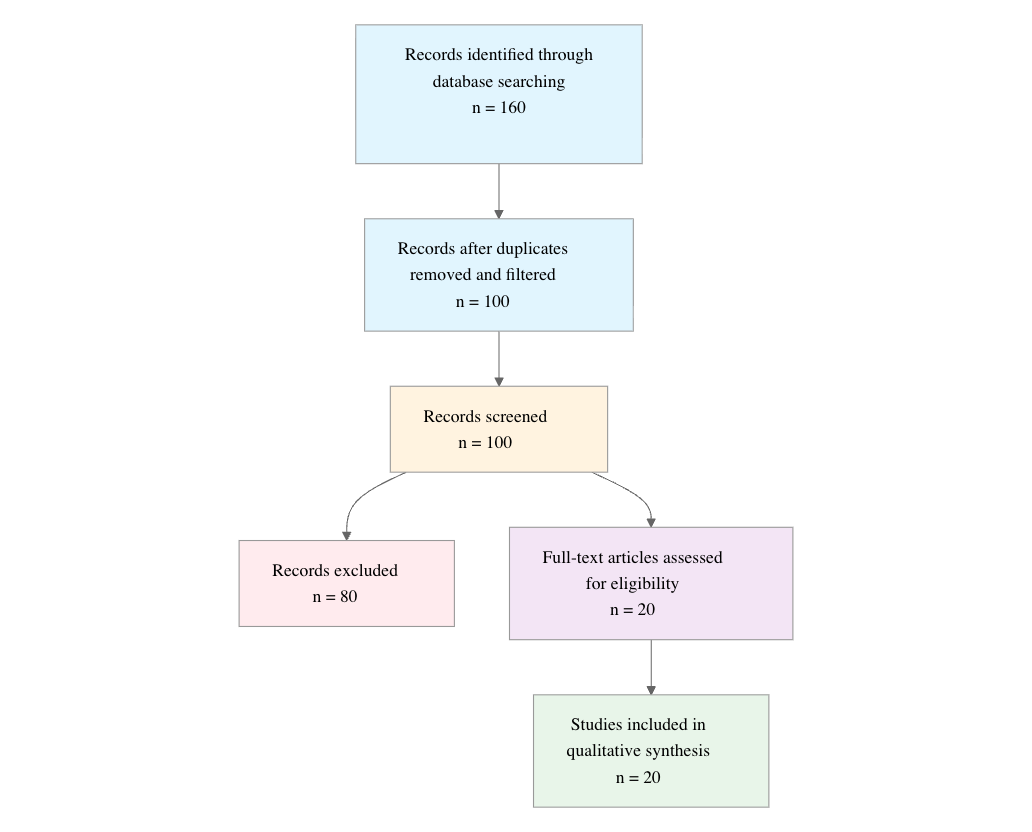
Initial database searching identified 160 records. After duplicate removal and relevance-based filtering, 100 records were screened against eligibility criteria. Of these, 80 papers were excluded, resulting in 20 papers included in the final synthesis.
PRISMA Flow Diagram
Eligibility criteria included:
- Human Studies: Does the study involve human participants rather than animal or in-vitro models?
- GLP-1 Focus: Does the study investigate GLP-1 receptor agonists or incretin-based therapies such as semaglutide, liraglutide, tirzepatide, or related agents?
- Recent Evidence: Is the paper published between 2020 and 2026?
- Clinical or Translational: Does the study report clinical, translational, mechanistic, or comparative evidence relevant to GLP-1 therapy?
- Relevant Outcome: Does the study measure at least one GLP-1-relevant outcome such as weight loss, glycemic control, cardiovascular outcomes, safety, tolerability, or biomarkers?
- Original or Review: Is the paper an original study, randomized trial, cohort study, systematic review, meta-analysis, or narrative review focused on GLP-1 research?
- Therapeutic Breadth: Does the paper address obesity, diabetes, cardiovascular disease, renal outcomes, or another major GLP-1 application area?
- Safety Evidence: Does the paper report adverse events, discontinuation, tolerability, or safety concerns?
All included studies met the stated eligibility criteria.
2.3 Data Extraction and Synthesis
Data extraction focused on the following variables:
- Focus: Extract the main GLP-1-related focus of the paper (e.g., obesity, diabetes, cardiovascular outcomes, safety, mechanism, comparative therapy).
- Population: Extract the study population, including disease status, age group, and key inclusion characteristics if reported.
- Intervention: Extract the GLP-1 agent(s) or incretin-based therapy studied, including comparator if central to the paper.
- Outcome: Extract the primary outcome(s) or endpoint(s) relevant to GLP-1 research, such as weight loss, glycemic control, cardiovascular outcomes, adverse events, or mechanistic biomarkers.
- Design: Extract the study design, such as RCT, cohort, meta-analysis, review, trial extension, or observational study.
- Key Findings: Extract the paper's main findings and conclusion about GLP-1 therapy, keeping to the authors' reported results.
- Safety: Extract adverse events, tolerability, contraindications, discontinuation reasons, or other safety findings if reported.
- Follow-up: Extract the study duration or follow-up length, or note if not reported.
Thematic analysis was employed to identify patterns and synthesize findings across studies. Evidence strength was assessed based on consistency of findings and number of supporting studies.
3. Results
3.1 Characteristics of Included Studies
| Study and Year | Study Type | Population | Intervention | Outcome Measure | Key Focus |
|---|---|---|---|---|---|
| Drucker 2024 | Review | Type 2 diabetes, obesity | GLP-1-based medicines, including tirzepatide, maritide, retatrutide, survodutide | Efficacy and safety domains | Broad efficacy/safety overview |
| Alfaris et al. 2024 | Narrative review | Adults with type 2 diabetes and obesity | Single, dual, and triple GLP-1 receptor agonists | Weight loss, glycemic control, cardiovascular benefits | Comparative therapeutic scope |
| Drucker 2025 | Review | Type 2 diabetes and obesity | Semaglutide, tirzepatide, next-generation GLP-1-based drugs | Glucose control, weight loss, cardiorenal outcomes | Emerging therapies |
| Zheng et al. 2024 | Review | Not specified | GLP-1 receptor agonists | Multisystem therapeutic effects | Mechanisms and advances |
| Rosenstock et al. 2025 | Clinical trial | Adults with early type 2 diabetes | Orforglipron | HbA1c change over 40 weeks | Oral GLP-1 efficacy |
| Inagaki et al. 2022 | Phase 3 RCT | Japanese patients with type 2 diabetes | Tirzepatide vs dulaglutide | HbA1c and safety | Comparative glycemic efficacy |
| Kelly et al. 2020 | RCT | Adolescents aged 12 to 17 years with obesity | Liraglutide 3.0 mg plus lifestyle therapy vs placebo | BMI standard-deviation score | Pediatric obesity |
| Xie et al. 2025 | Cohort study | Veterans with diabetes | GLP-1RA vs sulfonylureas, DPP4 inhibitors, SGLT2 inhibitors, usual care | 175 health outcomes | Effectiveness and risks |
| Nauck et al. 2020 | Review | Adults with type 2 diabetes | Multiple GLP-1 RAs, including oral semaglutide | HbA1c, weight, cardiovascular outcomes | State-of-the-art overview |
| Jensen et al. 2024 | Randomized placebo-controlled post-treatment analysis | Adults with obesity | GLP-1 receptor agonist, exercise, or both | Weight-loss maintenance | Maintenance after treatment |
| Fox et al. 2024 | Randomized trial | Children aged 6 to <12 years with obesity | Liraglutide plus lifestyle vs placebo | BMI reduction over 56 weeks | Pediatric obesity |
| Wang et al. 2023 | Review | Individuals with obesity | GLP-1 receptor agonists | Weight loss, obesity-related complications | Obesity treatment |
| Frías et al. 2021 | RCT | Patients with type 2 diabetes | Tirzepatide vs semaglutide once weekly | HbA1c change at 40 weeks | Comparative glycemic efficacy |
| Moiz et al. 2025 | Narrative review | Adults with obesity and type 2 diabetes | GLP-1 receptor agonists | Weight loss, glycemic control, cardiovascular benefits | Expanding roles |
| Jalleh et al. 2024 | Personal view | Type 2 diabetes and obesity | Liraglutide, semaglutide, tirzepatide | Gastric emptying, aspiration risk | Gastrointestinal physiology |
| Aronne et al. 2025 | RCT | Participants with obesity without diabetes | Tirzepatide vs semaglutide | Body weight and waist circumference at week 72 | Obesity comparative efficacy |
| Wharton et al. 2023 | Clinical trial | Adults with obesity | Oral orforglipron | Weight reduction; adverse events | Oral small-molecule GLP-1 |
| Trujillo et al. 2021 | Review of head-to-head trials | Individuals with type 2 diabetes | Dulaglutide, exenatide, liraglutide, lixisenatide, semaglutide, oral semaglutide | A1C, weight, adverse effects | Within-class comparisons |
| Karagiannis et al. 2024 | Systematic review and network meta-analysis | Adults with type 2 diabetes | Tirzepatide vs semaglutide | HbA1c, body weight, safety | Comparative dosing and safety |
| Xie et al. 2022 | Systematic review and meta-analysis | Individuals with obesity or overweight | Liraglutide, semaglutide, placebo | Weight loss, HbA1c, adverse events | Weight-loss efficacy |
The literature is dominated by clinical trials and evidence syntheses focused on type 2 diabetes and obesity, with a smaller but important observational analysis spanning broader outcomes (Xie et al., 2025). Across the evidence base, semaglutide, liraglutide, and tirzepatide are the most frequently examined agents, while orforglipron represents the clearest signal of a shift toward oral small-molecule GLP-1 therapy (Rosenstock et al., 2025), (Wharton et al., 2023). Pediatric obesity evidence is limited but includes both adolescent and younger-child populations, and several reviews expand the conceptual scope toward cardiovascular, renal, neurologic, and gastrointestinal outcomes (Kelly et al., 2020), (Fox et al., 2025), (Zheng et al., 2024).
3.2 Thematic Findings
3.2.1 GLP-1 therapies consistently improve glycemic control and body weight, with tirzepatide showing the strongest comparative efficacy
The strongest and most consistent theme is that GLP-1-based therapies improve both glycaemic control and weight, with tirzepatide repeatedly exceeding semaglutide on these endpoints. In type 2 diabetes, tirzepatide was noninferior and superior to semaglutide for mean HbA1c change at 40 weeks (Frías et al., 2021), and a network meta-analysis found tirzepatide 15 mg to be the most efficacious regimen for HbA1c reduction at −21.61 mmol/mol [−1.96%], followed by tirzepatide 10 mg at −20.19 mmol/mol [−1.84%], semaglutide 2.0 mg at −17.74 mmol/mol [−1.59%], tirzepatide 5 mg at −17.60 mmol/mol [−1.60%], semaglutide 1.0 mg at −15.25 mmol/mol [−1.39%], and semaglutide 0.5 mg at −12.00 mmol/mol [−1.09%] (Karagiannis et al., 2024). Weight outcomes followed the same hierarchy, with tirzepatide reducing body weight by 9.57 kg at 15 mg and 5.27 kg at 5 mg versus 4.97 kg at semaglutide 2.0 mg and 2.52 kg at semaglutide 0.5 mg (Karagiannis et al., 2024). In obesity without diabetes, tirzepatide was superior to semaglutide for body weight and waist circumference at week 72 (Aronne et al., 2025), and tirzepatide monotherapy outperformed dulaglutide for glycemic control in Japanese patients (Inagaki et al., 2022). More broadly, reviews and meta-analyses consistently describe GLP-1RAs as effective for lowering A1C and weight, with semaglutide and liraglutide also outperforming placebo (Nauck et al., 2021), (Trujillo et al., 2021), (Y. Xie et al., 2025). Confidence: Strong.
3.2.2 Oral GLP-1 formulations and small molecules preserve the core efficacy signal, suggesting the class effect is not limited to injectables
A second clear pattern is that oral delivery does not appear to compromise the fundamental efficacy of GLP-1 agonism. Daily oral orforglipron was associated with weight reduction in adults with obesity, and adverse events were similar to those seen with injectable GLP-1 receptor agonists (Wharton et al., 2023). In early type 2 diabetes, orforglipron significantly reduced HbA1c over 40 weeks (Rosenstock et al., 2025). These findings align with the broader review literature showing that oral semaglutide achieved clinical effectiveness close to once-weekly subcutaneous semaglutide and that formulation innovation is a major direction of current development (Nauck et al., 2021), (Drucker, 2025). The consistency across oral and injectable modalities suggests that the therapeutic effect derives primarily from receptor biology rather than the route of administration, although direct head-to-head oral-vs-injectable comparisons remain limited. Confidence: Moderate.
3.2.3 Pediatric obesity evidence shows benefit in both adolescents and younger children, but the age-specific evidence base remains narrow
In younger populations, liraglutide improved obesity outcomes across two distinct pediatric age groups. In adolescents aged 12 to 17 years, liraglutide 3.0 mg plus lifestyle therapy produced a significantly greater reduction in BMI standard-deviation score than placebo plus lifestyle therapy (Kelly et al., 2020). In children aged 6 to <12 years, liraglutide for 56 weeks plus lifestyle interventions led to a greater reduction in BMI than placebo plus lifestyle interventions (Fox et al., 2025). These results indicate that GLP-1 receptor agonism can be effective before adulthood, extending the obesity treatment paradigm across developmental stages. However, the evidence is still centered on a single agent, liraglutide, and the available reports do not provide detailed adverse-event quantification in the extracted data. (Note: these studies examined adolescents aged 12 to 17 years and children aged 6 to <12 years, which partially match the question population of GLP-1 research broadly; findings should be interpreted considering this difference.) Confidence: Moderate.
3.2.4 Safety is dominated by gastrointestinal and gastric-emptying effects, while severe hypoglycaemia appears uncommon in comparative trials
The most consistent safety signal is gastrointestinal intolerance, especially delayed gastric emptying and its downstream procedural implications. GLP-1 receptor agonists slow gastric emptying, which may increase intragastric food retention and aspiration risk during surgery or upper gastrointestinal endoscopy (Jalleh et al., 2024). Comparative synthesis similarly found that both tirzepatide and semaglutide increased gastrointestinal adverse events versus placebo, and higher doses of tirzepatide increased these events further, while neither drug increased serious adverse events or severe hypoglycaemia (Karagiannis et al., 2024). The head-to-head review also notes variability in adverse-effect frequency across agents (Trujillo et al., 2021), and orforglipron's adverse events were similar to those of injectable GLP-1 receptor agonists (Wharton et al., 2023). Across the evidence, gastrointestinal tolerability therefore appears to be the main practical constraint on dose escalation and procedural safety rather than class-wide severe systemic toxicity. Confidence: Strong.
3.2.5 Observational evidence suggests broad cardiometabolic and neurocognitive benefits, but it also reveals non-trivial renal, hypotensive, and pancreatic risks
A large cohort analysis broadened the perceived benefit-risk profile of GLP-1 receptor agonists beyond glycaemia and weight. Compared with usual care, GLP-1RA use was associated with reduced risk of substance use and psychotic disorders, seizures, neurocognitive disorders including Alzheimer's disease and dementia, coagulation disorders, cardiometabolic disorders, infectious illnesses, and several respiratory conditions (Xie et al., 2025). Yet the same analysis found increased risk of gastrointestinal disorders, hypotension, syncope, arthritic disorders, nephrolithiasis, interstitial nephritis, and drug-induced pancreatitis (Xie et al., 2025). This dual pattern is important because it suggests that the net clinical value of GLP-1RA therapy may vary by target outcome and baseline vulnerability. (Note: this study examined individuals with diabetes in Veterans Affairs databases, which partially matches the question population of GLP-1 research broadly; findings should be interpreted considering this difference.) Confidence: Moderate.
3.2.6 Emerging reviews and mechanistic syntheses point toward cardiorenal, musculoskeletal, and multisystem expansion, but many proposed indications remain exploratory
Recent reviews consistently describe a therapeutic expansion beyond diabetes and obesity into cardiovascular disease, renal protection, NAFLD, neurodegenerative disease, inflammation, hypertension, arthritis, and other conditions (Nauck et al., 2021), (Zheng et al., 2024), (Drucker, 2025). Mechanistically, the receptor is implicated in glucose and lipid metabolism, while the clinical literature highlights potential neuroprotective, anti-inflammatory, and cardiovascular effects across multiple organ systems (Zheng et al., 2024). At the same time, rapid and substantial weight loss raises concern for musculoskeletal health, including muscle mass and strength (Drucker, 2024), (Drucker, 2025). This theme is more hypothesis-generating than definitive, because much of the evidence comes from narrative reviews and ongoing trials rather than completed comparative outcome studies. Confidence: Limited.
3.3 Summary of Evidence
| Theme | Key Finding | Population Applicability | Effect Direction | Confidence Level | Supporting Studies |
|---|---|---|---|---|---|
| Glycemic and weight efficacy | Tirzepatide 15 mg reduced HbA1c by −21.61 mmol/mol [−1.96%] and body weight by 9.57 kg in comparative synthesis; semaglutide 2.0 mg reduced HbA1c by −17.74 mmol/mol [−1.59%] and weight by 4.97 kg | Adults with type 2 diabetes and obesity | Positive | Strong | Frías et al. (Frías et al., 2021), Karagiannis et al. (Karagiannis et al., 2024), Aronne et al. (Aronne et al., 2025) |
| Oral GLP-1 efficacy | Oral orforglipron reduced HbA1c over 40 weeks and was associated with weight reduction | Adults with obesity and early type 2 diabetes | Positive | Moderate | Wharton et al. (Wharton et al., 2023), Rosenstock et al. (Rosenstock et al., 2025) |
| Pediatric obesity benefit | Liraglutide produced greater BMI reduction in adolescents and younger children than placebo | Children and adolescents with obesity | Positive | Moderate | Kelly et al. (Kelly et al., 2020), Fox et al. (Fox et al., 2025) |
| Gastrointestinal safety signal | Tirzepatide and semaglutide increased gastrointestinal adverse events vs placebo; neither increased serious adverse events or severe hypoglycaemia | Adults with type 2 diabetes | Mixed | Strong | Karagiannis et al. (Karagiannis et al., 2024), Jalleh et al. (Jalleh et al., 2024), Trujillo et al. (Trujillo et al., 2021) |
| Broad observational risk-benefit profile | GLP-1RA use was associated with reduced risk of neurocognitive, cardiometabolic, infectious, and respiratory outcomes but increased risk of GI, hypotensive, renal, and pancreatitis-related outcomes | Individuals with diabetes in Veterans Affairs care | Mixed | Moderate | Xie et al. (Xie et al., 2025) |
| Expanding indications | Reviews describe ongoing investigation in cardiovascular, renal, neurodegenerative, and inflammatory conditions | Adults with diabetes and obesity | Positive, exploratory | Limited | Drucker et al. (Drucker, 2024), Zheng et al. (Zheng et al., 2024), Drucker (Drucker, 2025) |
4. Discussion
4.1 Principal Findings and Their Interpretation
The latest GLP-1 literature converges on a clear conclusion: these therapies are no longer simply glucose-lowering drugs but a highly effective metabolic platform that simultaneously improves HbA1c, body weight, and, in selected contexts, cardiorenal risk. The most robust pattern is the superiority of tirzepatide over semaglutide on both glycaemic and weight outcomes, a result that likely reflects dual incretin agonism rather than merely dose intensity, given the repeated direction of effect across randomized comparisons and synthesis (Frías et al., 2021), (Karagiannis et al., 2024), (Aronne et al., 2025). This matters because it suggests that receptor biology can be leveraged to produce incremental efficacy, not just incremental convenience. The evidence for oral agents such as orforglipron is also important: it implies that oral delivery can preserve class activity while potentially improving accessibility and adherence (Wharton et al., 2023), (Rosenstock et al., 2025). That shift is clinically meaningful because formulation barriers have been a major constraint on broader uptake.
Safety interpretation is more nuanced. The convergence on gastrointestinal adverse effects and delayed gastric emptying indicates a coherent class effect rather than isolated drug-specific noise (Jalleh et al., 2024), (Karagiannis et al., 2024). At the same time, the absence of increased serious adverse events or severe hypoglycaemia in comparative trial synthesis suggests that the principal safety burden is tolerability and procedural risk, not acute systemic toxicity (Karagiannis et al., 2024). The musculoskeletal concerns raised in reviews are biologically plausible in the setting of rapid weight loss, but the available evidence remains inferential rather than definitive (Drucker, 2024), (Drucker, 2025). Overall, the synthesis supports high confidence in metabolic efficacy, moderate confidence in oral expansion, and lower confidence in proposed extra-metabolic indications.
4.2 Comparison with Existing Literature and Resolution of Contradictions
The recent literature is broadly coherent with the established view that GLP-1 receptor agonists have durable glucose-lowering and weight-reducing efficacy and reduce cardiovascular risk in at least some populations (Nauck et al., 2021), (Drucker, 2025). What is new is the breadth of the evidence base: the class is now being evaluated not only for diabetes and obesity but also for neurocognitive, infectious, respiratory, renal, and musculoskeletal outcomes (Xie et al., 2025), (Zheng et al., 2024). This expansion is meaningful because it indicates that benefits may extend through shared metabolic and inflammatory pathways, although much of this inference remains indirect.
The main tension in the literature concerns safety and net benefit. Trial syntheses emphasize gastrointestinal adverse events without an accompanying rise in serious adverse events or severe hypoglycaemia (Karagiannis et al., 2024), whereas the large observational analysis identifies higher risks of hypotension, syncope, nephrolithiasis, interstitial nephritis, and drug-induced pancreatitis (Xie et al., 2025). These findings are not necessarily contradictory: randomized trials are usually shorter, more selected, and less powered for rare harms, whereas large observational cohorts can detect uncommon events but are more vulnerable to confounding by indication, differential surveillance, and residual comorbidity differences. The Veterans Affairs cohort also reflects a specific clinical context that may not generalize fully to all GLP-1 users (Xie et al., 2025). A further explanation is outcome ascertainment: some adverse effects, such as gastric retention, are directly tied to pharmacology and therefore likely robust, while others may reflect downstream clinical complexity rather than direct causation.
Publication bias is also plausible. The recent literature contains many positive efficacy reports and forward-looking reviews, which may overrepresent successful agents and underrepresent null or poorly tolerated candidates. Even so, the consistency of the HbA1c and weight findings across randomized trials, meta-analysis, and narrative synthesis makes the core efficacy signal difficult to dismiss (Frías et al., 2021), (Karagiannis et al., 2024), (Trujillo et al., 2021). Methodological evolution strengthens confidence: more recent comparative analyses and broad database studies complement earlier class reviews, allowing a more refined view of both benefits and trade-offs (Nauck et al., 2021), (Xie et al., 2025).
4.3 Practical Implications
For clinicians, the practical message is that GLP-1-based therapy is now a first-tier option for patients in whom both glycaemic control and weight reduction matter, with tirzepatide offering the strongest efficacy signal among the compared agents (Frías et al., 2021), (Karagiannis et al., 2024), (Aronne et al., 2025). In patients with obesity but without diabetes, the available evidence supports substantial weight reduction, while pediatric data indicate that liraglutide can be used effectively in both adolescents and younger children when lifestyle intervention alone is insufficient (Kelly et al., 2020), (Fox et al., 2025). Clinicians should, however, anticipate gastrointestinal intolerance and the possibility of delayed gastric emptying, particularly around surgery or endoscopy (Jalleh et al., 2024). For high-risk patients with renal vulnerability, orthostatic symptoms, or prior pancreatitis, the observational safety signals justify closer monitoring rather than assuming the class is uniformly benign (Xie et al., 2025).
At the population level, the evidence supports broader access to effective anti-obesity pharmacotherapy and continued investment in formulations that reduce injection barriers, since oral therapy may improve uptake without obvious loss of efficacy (Wharton et al., 2023), (Rosenstock et al., 2025). Regulatory and procedural guidance should also explicitly address gastric-emptying risk; because the effect is pharmacologic and appears tied to class mechanism, the safest stance is not merely to set a threshold dose but to develop exposure-aware peri-procedural protocols (Jalleh et al., 2024). Still, evidence for some proposed benefits, especially neurodegenerative and anti-inflammatory indications, remains exploratory and should not yet drive routine use outside established metabolic indications (Zheng et al., 2024), (Drucker, 2025).
4.4 Strengths and Limitations
A major strength of this review is the integration of randomized trials, network meta-analysis, cohort evidence, and contemporary reviews, which allows comparison across efficacy, safety, formulation, and emerging indications. The evidence base is also strong in its concentration on clinically relevant outcomes such as HbA1c, weight, and adverse effects. However, included studies vary substantially in design, population, comparator, and duration, limiting direct comparability. Several reports are reviews rather than primary studies, and many abstracts do not report detailed safety, adherence, or follow-up data. Pediatric data are promising but limited in scope, and many of the broader indications remain hypothesis-generating. A limitation of this review is that synthesis relied on the provided paper data, with many studies reported only at abstract level and without formal risk-of-bias appraisal.
5. Gaps and Future Directions
The clearest gap is the lack of long-term, head-to-head evidence comparing newer GLP-1 formulations across diverse populations with harmonized safety endpoints. Although tirzepatide shows superior glycaemic and weight outcomes versus semaglutide, the evidence is still concentrated in type 2 diabetes and obesity, leaving uncertainty about whether these advantages translate into better hard outcomes such as cardiovascular events, renal disease progression, and functional preservation (Frías et al., 2021), (Karagiannis et al., 2024), (Aronne et al., 2025). Future studies should directly test oral agents such as orforglipron against established injectable therapies in equivalent populations and over longer periods, because current evidence demonstrates efficacy but not definitive comparative durability or safety (Wharton et al., 2023), (Rosenstock et al., 2025).
Another important gap concerns the musculoskeletal consequences of large weight reductions, which are repeatedly raised in reviews but not adequately quantified in the provided trials (Drucker, 2024), (Drucker, 2025). The field also needs clearer peri-procedural evidence on delayed gastric emptying, since current guidance remains constrained by limited mechanistic and clinical data (Jalleh et al., 2024). Finally, broader indications in neurocognitive, infectious, respiratory, and inflammatory disease require prospective confirmation rather than reliance on observational associations or narrative synthesis (Xie et al., 2025), (Zheng et al., 2024). Better studies would use standardized adverse-event definitions, longer follow-up, and population-specific analyses to determine where GLP-1 therapies deliver true disease-modifying benefit versus where apparent effects reflect selection or surveillance bias.
6. Conclusion
The latest evidence supports GLP-1-based therapy as one of the most effective current pharmacologic strategies for type 2 diabetes and obesity, with tirzepatide showing the strongest comparative performance for HbA1c reduction and weight loss and semaglutide and liraglutide remaining highly effective established options (Frías et al., 2021), (Karagiannis et al., 2024), (Nauck et al., 2021). The conclusion is especially strong for metabolic outcomes, because randomized comparisons, network meta-analysis, and multiple reviews point in the same direction. Oral GLP-1 therapy is emerging as a credible extension of the class, with orforglipron associated with weight reduction in obesity and HbA1c reduction in early type 2 diabetes (Wharton et al., 2023), (Rosenstock et al., 2025). Pediatric data also indicate benefit in adolescents and younger children with obesity, although this remains centered on liraglutide and therefore only partially reflects the broader GLP-1 landscape (Kelly et al., 2020), (Fox et al., 2025).
The most important limitation on enthusiasm is safety: the dominant and consistent burden is gastrointestinal intolerance and delayed gastric emptying, which has practical implications for dose escalation and peri-procedural management (Jalleh et al., 2024), (Karagiannis et al., 2024). Observational evidence suggests possible additional benefits and risks beyond weight and glycaemia, but these signals require prospective confirmation before they can be translated into new indications (Xie et al., 2025). The single most important unresolved question is whether the newest GLP-1-based agents and formulations translate their impressive intermediate outcomes into durable reductions in hard clinical endpoints while preserving muscle, bone, and procedural safety. Answering that question will determine how far GLP-1 therapy can move from powerful metabolic treatment to truly comprehensive chronic disease management.
References
- Alfaris, N., Waldrop, S., Johnson, V., Boaventura, B., Kendrick, K., & Stanford, F. C. (2024). GLP-1 single, dual, and triple receptor agonists for treating type 2 diabetes and obesity: a narrative review. eClinicalMedicine, 75, 102782. https://doi.org/10.1016/j.eclinm.2024.102782
- Aronne, L. J., Horn, D. B., le Roux, C. W., Ho, W., Falcón, B. L., Valderas, E. G., Das, S. K., Lee, C. J., Glass, L. C., Şenyücel, Ç., & Dunn, J. P. (2025). Tirzepatide as Compared with Semaglutide for the Treatment of Obesity. New England Journal of Medicine, 393, 26–36. https://doi.org/10.1056/nejmoa2416394
- Drucker, D. J. (2024). Efficacy and safety of GLP-1 medicines for type 2 diabetes and obesity. Diabetes Care, 47(11), 1873–1888. https://doi.org/10.2337/dci24-0003
- Drucker, D. J. (2025). GLP-1-based therapies for diabetes, obesity and beyond. Nature Reviews Drug Discovery, 24(8), 631–650. https://doi.org/10.1038/s41573-025-01183-8
- Fox, C. K., Barrientos-Pérez, M., Bomberg, E. M., Dcruz, J., Gies, I., Harder-Lauridsen, N. M., Jalaludin, M. Y., Sahu, K., Weimers, P., Zueger, T., & Arslanian, S. (2025). Liraglutide for children 6 to <12 years of age with obesity — A randomized trial. New England Journal of Medicine, 392(6), 555–565. https://doi.org/10.1056/nejmoa2407379
- Frías, J. P., Davies, M. J., Rosenstock, J., Pérez Manghi, F. C., Fernández Landó, L., Bergman, B. K., Liu, B., Cui, X., & Brown, K. (2021). Tirzepatide versus semaglutide once weekly in patients with type 2 diabetes. New England Journal of Medicine, 385(6), 503–515. https://doi.org/10.1056/nejmoa2107519
- Inagaki, N., Takeuchi, M., Oura, T., Imaoka, T., & Seino, Y. (2022). Efficacy and safety of tirzepatide monotherapy compared with dulaglutide in Japanese patients with type 2 diabetes (SURPASS J-mono): a double-blind, multicentre, randomised, phase 3 trial. The Lancet Diabetes & Endocrinology, 10(9), 623–633. https://doi.org/10.1016/s2213-8587(22)00188-7
- Jalleh, R. J., Rayner, C. K., Hausken, T., Jones, K. L., Camilleri, M., & Horowitz, M. (2024). Gastrointestinal effects of GLP-1 receptor agonists: mechanisms, management, and future directions. The Lancet Gastroenterology & Hepatology, 9(10), 957–964. https://doi.org/10.1016/s2468-1253(24)00188-2
- Jensen, S. B. K., Blond, M. B., Sandsdal, R. M., Olsen, L., Juhl, C. R., Lundgren, J., Janus, C., Stallknecht, B., Holst, J. J., Madsbad, S., & Torekov, S. S. (2024). Healthy weight loss maintenance with exercise, GLP-1 receptor agonist, or both combined followed by one year without treatment: a post-treatment analysis of a randomised placebo-controlled trial. eClinicalMedicine, 69, 102475. https://doi.org/10.1016/j.eclinm.2024.102475
- Karagiannis, T., Malandris, K., Avgerinos, I., Stamati, A., Kakotrichi, P., Liakos, A., Vasilakou, D., Kakaletsis, N., Tsapas, A., & Bekiari, E. (2024). Subcutaneously administered tirzepatide vs semaglutide for adults with type 2 diabetes: a systematic review and network meta-analysis of randomised controlled trials. Diabetologia, 67(7), 1206–1222. https://doi.org/10.1007/s00125-024-06144-1
- Kelly, A. S., Auerbach, P., Barrientos-Perez, M., Gies, I., Hale, P. M., Marcus, C., Mastrandrea, L. D., Prabhu, N., & Arslanian, S. (2020). A randomized, controlled trial of liraglutide for adolescents with obesity. New England Journal of Medicine, 382(22), 2117–2128. https://doi.org/10.1056/nejmoa1916038
- Moiz, A., Filion, K. B., Tsoukas, M. A., Yu, O. H. Y., Peters, T. M., & Eisenberg, M. J. (2025). The expanding role of GLP-1 receptor agonists: a narrative review of current evidence and future directions. eClinicalMedicine, 86, 103363. https://doi.org/10.1016/j.eclinm.2025.103363
- Nauck, M. A., Quast, D. R., Wefers, J., & Meier, J. J. (2021). GLP-1 receptor agonists in the treatment of type 2 diabetes – state-of-the-art. Molecular Metabolism, 46, 101102. https://doi.org/10.1016/j.molmet.2020.101102
- Rosenstock, J., Hsia, S., Nevarez Ruiz, L., Eyde, S., Cox, D., Wu, W.-S., Liu, R., Li, J., Fernández Landó, L., Denning, M., Ludwig, L., & Chen, Y. (2025). Orforglipron, an oral small-molecule GLP-1 receptor agonist, in early type 2 diabetes. New England Journal of Medicine, 393(11), 1065–1076. https://doi.org/10.1056/nejmoa2505669
- Trujillo, J. M., Nuffer, W., & Smith, B. A. (2021). GLP-1 receptor agonists: an updated review of head-to-head clinical studies. Therapeutic Advances in Endocrinology and Metabolism, 12. https://doi.org/10.1177/2042018821997320
- Wang, J.-Y., Wang, Q.-W., Yang, X.-Y., Yang, W., Li, D.-R., Jin, J.-Y., Zhang, H.-C., & Zhang, X.-F. (2023). GLP-1 receptor agonists for the treatment of obesity: Role as a promising approach. Frontiers in Endocrinology, 14. https://doi.org/10.3389/fendo.2023.1085799
- Wharton, S., Blevins, T., Connery, L., Rosenstock, J., Raha, S., Liu, R., Ma, X., Mather, K. J., Haupt, A., Robins, D., Pratt, E., Kazda, C., & Konig, M. (2023). Daily oral GLP-1 receptor agonist orforglipron for adults with obesity. New England Journal of Medicine, 389(10), 877–888. https://doi.org/10.1056/nejmoa2302392
- Xie, Y., Choi, T., & Al-Aly, Z. (2025). Mapping the effectiveness and risks of GLP-1 receptor agonists. Nature Medicine, 31(3), 951–962. https://doi.org/10.1038/s41591-024-03412-w
- Xie, Z., Yang, S., Deng, W., Li, J., & Chen, J. (2022). Efficacy and safety of liraglutide and semaglutide on weight loss in people with obesity or overweight: A systematic review. Clinical Epidemiology, 14, 1463–1476. https://doi.org/10.2147/clep.s391819
- Zheng, Z., Zong, Y., Ma, Y., Tian, Y., Pang, Y., Zhang, C., & Gao, J. (2024). Glucagon-like peptide-1 receptor: mechanisms and advances in therapy. Signal Transduction and Targeted Therapy, 9(1). https://doi.org/10.1038/s41392-024-01931-z