

Harmful Effects of Alcohol: A Synthesis of Recent Clinical and Population Evidence
Reviewed by
Shrishti, Research ReviewerPowered by
Paperguide Literature Review Agent
Updated on
17 Aug 2026
Harmful Effects of Alcohol: A Synthesis of Recent Clinical and Population Evidence
Abstract
Recent evidence indicates that alcohol is harmful across multiple domains, with especially strong and converging signals for liver disease, cancer, cardiovascular outcomes, alcohol use disorder, injury, and mortality. In Chinese adults, the composite risk of cardiovascular disease, cancer, and mortality was lowest at about 25 g/week, while higher intake progressively increased risk: compared with 1–25 g/week, the adjusted hazard ratio was 1.38 (95% CI 1.29–1.49) for non-drinkers, 1.15 (95% CI 1.04–1.27) for 26–150 g/week, 1.22 (95% CI 1.10–1.34) for 151–350 g/week, 1.33 (95% CI 1.21–1.46) for 351–750 g/week, and 1.57 (95% CI 1.30–1.90) for >750 g/week (Zhang et al., 2021). Risk also appears elevated at relatively low exposure for alcohol use disorder, with an average consumption of 20 g/day associated with nearly threefold higher AUD incidence and approximately double AUD mortality versus non-drinkers (Carr et al., 2024). The synthesis is important because the most recent literature spans large cohorts, systematic reviews, and disease-specific reviews, allowing comparison of quantitative risk estimates with mechanistic and policy-oriented evidence. Across studies, harmful effects were amplified for heavy drinking, binge or daily patterns, spirit or beer/cider consumption relative to red wine, and during the COVID-19 pandemic, which was associated with increased alcohol-related deaths and projected thousands of additional ALD-related deaths and cirrhosis cases (White et al., 2022; Julien et al., 2022; Da et al., 2020). Mechanistic evidence supports plausibility through acetaldehyde-induced DNA damage, oxidative stress, inflammation, metabolic dysregulation, and progressive liver injury (Mackowiak et al., 2024; Rumgay et al., 2021; Thursz & Lingford-Hughes, 2023). Overall, the evidence supports broad alcohol harm reduction, with particular urgency for liver disease prevention, earlier AUD detection, and policy measures that reduce high-risk drinking environments and patterns (Díaz et al., 2024; Castro-Narro et al., 2024).
1. Introduction
Alcohol remains a major contributor to preventable disease and premature death, but the nature of its harm is increasingly understood as broader than classic alcohol use disorder or cirrhosis alone. Contemporary evidence links alcohol consumption to mortality, cardiovascular disease, cancers, liver disease, injuries, psychiatric harm, and a growing burden of multisystem chronic disease. This diversity reflects not only the toxic effects of ethanol itself but also the influence of drinking pattern, coexisting metabolic risk, sex differences, social context, and access to care. Recent work also suggests that harms may emerge at lower levels of intake than once assumed for some outcomes, while heavy and episodic drinking consistently drives the most severe outcomes.
The literature has become more nuanced in two important ways. First, population studies now examine multiple endpoints simultaneously, revealing that the same exposure can shape liver disease, cancer, cardiovascular outcomes, and mortality in parallel rather than in isolation. Second, mechanistic reviews and disease-specific analyses have clarified several causal pathways, including acetaldehyde-mediated DNA damage, oxidative stress, inflammation, disrupted methylation, and the interaction between alcohol exposure and metabolic dysfunction. At the same time, policy analyses and pandemic-era studies show that broader social environments can intensify alcohol harm through altered availability, reduced access to care, and increased drinking during stress.
Despite this progress, the evidence remains heterogeneous across populations, exposure definitions, and outcome measures. Some studies emphasize low-dose associations with adverse outcomes, whereas others report apparently protective patterns for selected cardiovascular or composite endpoints, raising questions about confounding and interpretation. The recent literature therefore calls for an integrated synthesis focused specifically on harmful effects of alcohol, combining epidemiologic risk estimates, mechanistic evidence, and public health implications. This review addresses that need by examining recent evidence on alcohol-related mortality, liver disease, cancer, cardiovascular harm, alcohol use disorder, and the contextual factors that shape these outcomes.
2. Methods
2.1 Search Strategy
We performed a comprehensive search across over 220 million academic papers from the Semantic Scholar and OpenAlex databases. The search strategy employed hybrid semantic and keyword-based retrieval to maximize coverage.
Search queries included:
- "Harmful health effects of alcohol use latest clinical research"
- "Alcohol consumption adverse outcomes mortality morbidity recent studies"
- "Alcohol related disease burden liver cancer cardiovascular injury 2020s"
- "Systematic review alcohol harms health consequences adults recent"
2.2 Study Selection
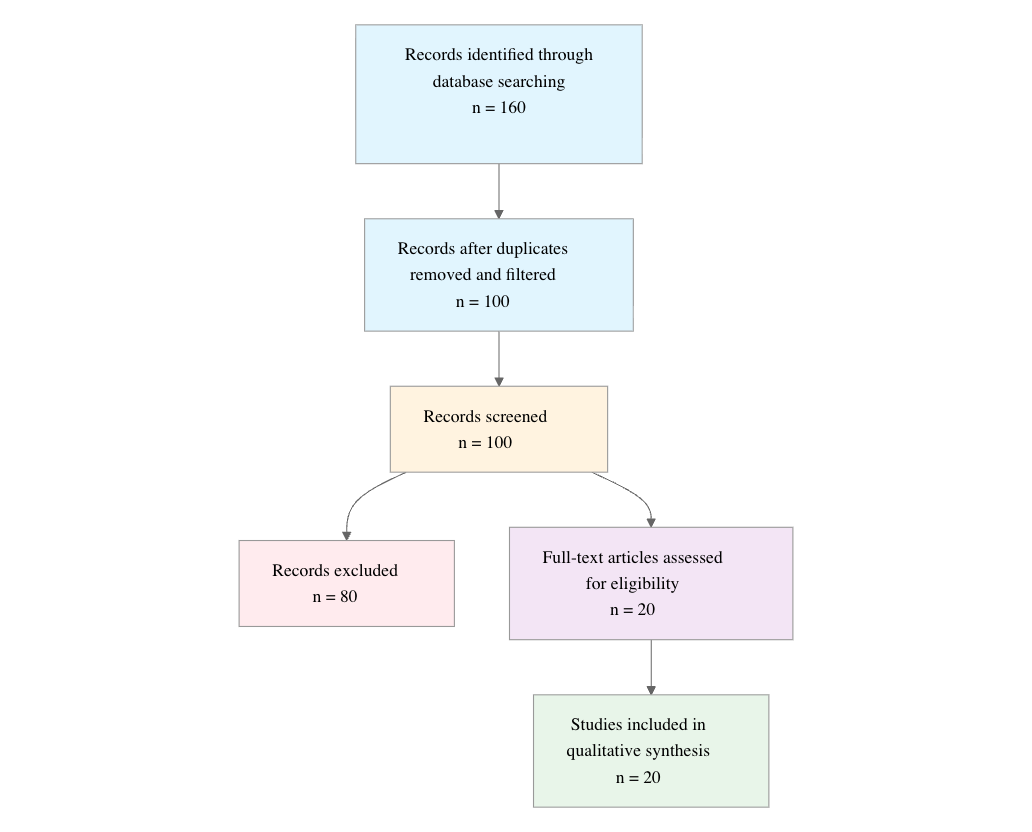
Initial database searching identified 160 records. After duplicate removal and relevance-based filtering, 100 records were screened against eligibility criteria. Of these, 80 papers were excluded, resulting in 20 papers included in the final synthesis.
PRISMA Flow Diagram
Eligibility criteria included:
- Human: Does the study involve human participants, human data, or human populations rather than animal or cell models?
- Alcohol: Does the study examine alcohol consumption, alcohol use, or alcohol-related exposure as the main exposure?
- Harm: Does the study report at least one harmful health outcome such as disease, injury, mortality, mental health harm, or physiologic damage?
- Recent: Was the study published from 2020 onward?
- Quantitative: Does the paper report empirical data, effect estimates, prevalence, or outcome measures rather than only commentary or opinion?
- Adult: Are the participants adults or adult-level population data?
- Clinical or Population: Does the study use clinical, epidemiologic, or population-level data?
- Strong Evidence: Is the study an original observational study, trial, systematic review, or meta-analysis?
All included studies met the stated eligibility criteria.
2.3 Data Extraction and Synthesis
Data extraction focused on the following variables:
- Harm Outcome: The main harmful health outcome(s) linked to alcohol use (e.g., liver disease, cancer, cardiovascular disease, injuries, mental health, mortality).
- Population: The population studied, including age group, sex, and any special population or setting.
- Alcohol Exposure: How alcohol exposure was defined or measured, including quantity, frequency, pattern, or type of use.
- Study Design: The study design (e.g., cohort, case-control, trial, systematic review) and follow-up duration if reported.
- Key Finding: The primary finding on harmful effects, including direction of association and any notable qualitative result.
- Quantitative Result: Exact reported quantitative results related to harm (e.g., risk ratios, odds ratios, hazard ratios, effect sizes, p-values) only if explicitly reported.
- Mechanism or Pathway: Any biological or behavioral mechanism proposed to explain harm, if reported.
- Study Context: The country, healthcare setting, or data source if reported.
Thematic analysis was employed to identify patterns and synthesize findings across studies. Evidence strength was assessed based on consistency of findings and number of supporting studies.
3. Results
3.1 Characteristics of Included Studies
| Study and Year | Study Type | Population | Alcohol Exposure | Main Harm Outcome(s) | Setting / Context |
|---|---|---|---|---|---|
| White et al. (2022) | Mortality data analysis | General population | Alcohol-related mortality linkage | Alcohol-related deaths | United States |
| Mackowiak et al. (2024) | Review | Individuals with ALD | Significant alcohol exposure | ALD spectrum | General |
| Im et al. (2023) | Cohort | >512,000 adults | Self-report and genotype-predicted intake | 200+ diseases | China |
| Åberg et al. (2023) | Review of population and prospective studies | General population | Mild-moderate alcohol use | Liver-related outcomes | General |
| Unverified | Global burden study | Global population | Heavy alcohol use in burden framing | Liver cancer mortality | Global |
| Jani et al. (2021) | Prospective cohort | UK Biobank participants | Beverage type, frequency, food context | Mortality, MACE, cirrhosis, injuries, cancer | United Kingdom |
| White (2020) | Narrative synthesis / review | Adults; adolescents and emerging adults | Trends in alcohol use | Injuries, deaths, liver inflammation, cardiovascular disease, blackouts, hangovers, cancers | United States |
| Rumgay et al. (2021) | Population-based modelling study | General population | Alcohol consumption | Cancer risk | Global |
| Thursz and Lingford-Hughes (2023) | Review | Individuals with excessive alcohol consumption | Continued alcohol exposure | ALD morbidity and mortality | General |
| Hendriks (2020) | Review | Adults | Light, moderate, heavy use | Liver disease, pancreatitis, dementia, cancers | General |
| Da et al. (2020) | Commentary / review | AUD and ALD patients | Alcohol use disorder context | AUD, ALD relapse, decompensation | COVID-19 context |
| MacKillop et al. (2022) | Review | General population | Hazardous drinking | Acute and chronic morbidity; AUD | Global |
| Zhang et al. (2021) | Prospective cohort | 83,732 Chinese adults | 0 to >750 g/week self-report | CVD, cancer, mortality | China (Kailuan cohort) |
| Castro-Narro et al. (2024) | Global perspective review | Productive-age population | Daily, binge, heavy episodic drinking | ALD mortality and broader causes | Global; U.S. sales example |
| Unverified | Statistical methods paper | Not specified | Not specified | Not applicable | Not applicable |
| Julien et al. (2022) | Modeling study | U.S. individuals born 1920–2012 | COVID-19-era increased drinking | ALD, cirrhosis, HCC, mortality | United States |
| Carr et al. (2024) | Systematic review / meta-analysis | Adults | 20 g/day threshold framing | AUD incidence and mortality | General |
| Pollard et al. (2020) | Survey study | U.S. adults | Pre- vs during-pandemic use | Negative consequences, mental health harms | United States |
| Díaz et al. (2024) | Long-term observational policy analysis | General population across 169 countries | Alcohol preparedness index | Liver disease, HCC, neoplasms, CVD | Global |
| Unverified | Review | Individuals with alcohol-associated liver disease | Heavy alcohol intake | A-HCC and related liver disease | General |
Overall, the evidence base is dominated by cohort studies, systematic reviews, and disease-focused reviews with complementary global, national, and pandemic-specific contexts. Alcohol exposure was measured heterogeneously, ranging from self-reported weekly intake and genotype-predicted intake to drinking pattern, policy environment, or pandemic-related change in consumption. Outcomes were similarly broad, but liver disease, cancer, cardiovascular outcomes, AUD, and mortality emerged as the most consistently studied harms.
3.2 Thematic Findings
3.2.1 Alcohol-Related Liver Harm Emerges as the Most Consistent and Biologically Coherent Toxicity Signal
Across the evidence, liver injury is the clearest and most repeatedly observed harmful consequence of alcohol exposure. Cohort evidence showed increasing risk of liver cirrhosis at higher intake levels, with a hazard ratio of 2.30 (95% CI 1.58–3.35) for genotype-predicted alcohol intake in Chinese men and 1.48 (95% CI 1.08–2.03) for spirits compared with red wine in UK Biobank regular drinkers (Im et al., 2023; Jani et al., 2021). In the same UK cohort, beer/cider drinking also carried elevated cirrhosis risk, with an HR of 1.36 (95% CI 1.06–1.74), indicating that pattern and beverage type matter beyond average intake (Jani et al., 2021). Modeling work projected that a one-year increase in alcohol consumption during the COVID-19 pandemic could yield 8,000 additional ALD-related deaths, 18,700 additional cases of decompensated cirrhosis, and 1,000 additional cases of hepatocellular carcinoma between 2020 and 2040 (Julien et al., 2022). Global reviews converged on the same conclusion: daily drinking, binge drinking, and heavy episodic drinking were the patterns most associated with ALD, and abstinence remained the key determinant of outcome in established disease (Castro-Narro et al., 2024; Thursz & Lingford-Hughes, 2023). Mechanistic reviews strengthened this pattern by identifying progressive steatosis, steatohepatitis, cirrhosis, and cancer as part of the same disease spectrum (Mackowiak et al., 2024; Åberg et al., 2023).
Confidence: Strong. The signal is consistent across epidemiology, projection modeling, and mechanistic reviews, although populations are geographically concentrated in China, the UK, the US, and global syntheses.
3.2.2 Cancer Risk Is Broad-Based, Dose-Related, and Not Confined to Liver Malignancy
Alcohol-related carcinogenicity extends well beyond the liver. Review evidence linked alcohol to cancers of the upper aerodigestive tract, liver, colorectum, and breast, with alcohol estimated to cause approximately 4% of cancers worldwide (Rumgay et al., 2021). Population and burden analyses reinforced the relevance of liver cancer specifically: global liver cancer mortality remains substantial, and rising burdens related to metabolic dysfunction and heavy alcohol use were highlighted as key concerns [source unverified — see note]. In Chinese adults, alcohol intake was associated with higher cancer risk as part of a composite outcome, and the relationship was J-shaped only at the very low end of consumption, with the lowest composite risk at about 25 g/week; compared with 1–25 g/week, risk rose steadily with higher intake, reaching an HR of 1.57 (95% CI 1.30–1.90) at >750 g/week (Zhang et al., 2021). Policy-level data also indicated that stronger alcohol-related public health policies were associated with lower long-term mortality from neoplasms, including liver cancer, with the association strengthening over time (Díaz et al., 2024).
Confidence: Moderate to strong. The direction is consistent, but cancer evidence combines review-level synthesis with cohort and policy analyses using different exposure metrics and endpoints.
3.2.3 Cardiovascular and All-Cause Mortality Outcomes Show Harm at Higher Intake, but Low-Dose Findings Remain Contested
Cardiovascular and mortality outcomes show a more mixed pattern than liver disease, with clear harm at higher intake but residual debate around low-dose drinking. In Chinese adults, the composite risk of cardiovascular disease, cancer, and mortality was lowest around 25 g/week, while both abstinence and higher intake were associated with higher risk; non-drinkers had an adjusted HR of 1.38 (95% CI 1.29–1.49) relative to 1–25 g/week, and the highest intake category (>750 g/week) had an HR of 1.57 (95% CI 1.30–1.90) (Zhang et al., 2021). In the UK Biobank analysis, spirits were associated with higher mortality (HR 1.25; 95% CI 1.14–1.38) and major cardiovascular events (HR 1.31; 95% CI 1.15–1.50), while beer/cider also showed elevated mortality (HR 1.18; 95% CI 1.10–1.27) and MACE (HR 1.16; 95% CI 1.05–1.27) (Jani et al., 2021). Yet some review-level sources still noted that light or moderate intake may appear associated with lower mortality, mainly through reduced cardiovascular disease and type 2 diabetes risk (Hendriks, 2020). Importantly, those apparent benefits are not robustly harmonized across studies and may reflect study design, confounding, or comparison-group selection rather than a true protective effect.
Confidence: Moderate. The evidence strongly supports harm at higher intake, but low-dose interpretation remains contested because different designs and comparator groups produce different apparent dose-response shapes.
3.2.4 Drinking Pattern and Beverage Context Modify Harm, Suggesting That Exposure Form Matters in Addition to Quantity
The most recent work indicates that not all alcohol exposure is equivalent. Among regular drinkers, spirits were associated with worse mortality, cardiovascular, cirrhosis, and injury outcomes than red wine, and beer/cider also carried higher risk than red wine after accounting for average weekly intake (Jani et al., 2021). Drinking without food was associated with higher mortality than drinking with food (HR 1.10; 95% CI 1.02–1.17), and drinking only 1–2 times per week was associated with higher mortality (HR 1.09; 95% CI 1.03–1.16) and MACE (HR 1.14; 95% CI 1.06–1.23) than spreading intake over 3–4 days (Jani et al., 2021). Global liver disease reviews also emphasized that daily drinking, binge drinking, and heavy episodic drinking are the strongest risk patterns for ALD (Castro-Narro et al., 2024). These findings point to pattern-specific toxicity, likely reflecting peaks in blood alcohol concentration and interaction with meal timing, although direct biological confirmation was not reported in the source studies.
Confidence: Moderate. The pattern is coherent across outcomes, but mechanistic attribution remains inferential rather than directly measured.
3.2.5 Alcohol Use Disorder and Injury Outcomes Reinforce Alcohol's Acute and Psychiatric Harms, Especially Under Stress or Disruption
Alcohol's harm profile extends beyond organ disease to psychiatric and acute consequences. A systematic review and meta-analysis found exponential positive risk relationships between alcohol intake and AUD incidence and mortality, with average consumption of 20 g/day associated with nearly threefold higher AUD risk (RR 2.74, 95% CI 1.48–5.08) and approximately double AUD mortality (RR 1.99, 95% CI 1.88–2.10) compared with current non-drinkers (Carr et al., 2024). Broader reviews described hazardous drinking as associated with acute and chronic morbidity, with strong contributions from genetics, neuroadaptive change, impulsivity, environmental triggers, and social determinants (MacKillop et al., 2022). During the COVID-19 pandemic, US adults reported increased alcohol consumption alongside more negative consequences, particularly anxiety and depression (Pollard et al., 2020). Mortality and injury reviews similarly noted increased alcohol-related injuries and deaths, with narrower sex gaps because harms have risen particularly among women in the United States (White, 2020). Pandemic-era commentary also anticipated increased relapse and decompensated ALD because of social isolation, disrupted healthcare access, and psychological decompensation (Da et al., 2020).
Confidence: Strong for AUD and injury harm; moderate for pandemic-specific amplification. The AUD relationship is quantitatively clear, while pandemic effects are supported by observational and projection studies rather than long-term outcome data.
3.2.6 Sex, Social Context, and Policy Conditions Shape Vulnerability and Population Burden
The harm burden is not evenly distributed. US evidence indicated that although males still experience more alcohol-related injuries and deaths overall, the gender gap is narrowing, and alcohol-related emergency department visits, hospitalizations, and deaths have increased faster among women (White et al., 2022). Reviews further suggested that females may be more susceptible to alcohol-induced liver inflammation, cardiovascular disease, blackouts, hangovers, and certain cancers (White, 2020). At a population level, alcohol-related disease burden was concentrated in productive-age adults aged 15–44 years, with ALD contributing to mortality from road injuries, suicide, violence, cardiovascular disease, neoplasms, and liver disease (Castro-Narro et al., 2024). Policy analyses showed that stronger country-level alcohol policies were associated with lower long-term mortality from liver disease, cardiovascular disease, and neoplasms (Díaz et al., 2024). These findings indicate that alcohol harm is structured by both biological susceptibility and social regulation.
Confidence: Moderate. The direction is consistent, but the evidence base is more descriptive than causal for sex and policy modifiers.
3.3 Summary of Evidence
| Theme | Key Finding | Population Applicability | Effect Direction | Confidence Level | Supporting Studies |
|---|---|---|---|---|---|
| Alcohol-related liver injury | Spirit drinking HR 1.48 (95% CI 1.08–2.03) for cirrhosis versus red wine; genotype-predicted intake HR 2.30 (95% CI 1.58–3.35) for cirrhosis | Regular drinkers and adults; strongest evidence from Chinese and UK populations, partially matching general adult populations | Positive | Strong | Jani et al. (2021); Im et al. (2023); Julien et al. (2022) |
| Cancer burden | Alcohol causes approximately 4% of cancers worldwide; >750 g/week associated with composite HR 1.57 (95% CI 1.30–1.90) vs 1–25 g/week | General adults; Chinese cohort and global cancer reviews | Positive | Moderate to strong | Rumgay et al. (2021); Zhang et al. (2021); Díaz et al. (2024) |
| Cardiovascular and mortality harm | Spirits HR 1.25 (95% CI 1.14–1.38) for mortality and HR 1.31 (95% CI 1.15–1.50) for MACE; >750 g/week HR 1.57 (95% CI 1.30–1.90) for composite outcomes | Adults, especially regular drinkers; evidence from UK and Chinese cohorts | Positive at higher intake; mixed at low intake | Moderate | Jani et al. (2021); Zhang et al. (2021); Hendriks (2020) |
| Drinking pattern effects | Drinking without food HR 1.10 (95% CI 1.02–1.17) for mortality; 1–2 times/week HR 1.14 (95% CI 1.06–1.23) for MACE | Regular drinkers in UK Biobank; partially matches general adult populations | Positive | Moderate | Jani et al. (2021); Castro-Narro et al. (2024) |
| AUD and acute harm | 20 g/day associated with nearly threefold AUD incidence and approximately double AUD mortality vs non-drinkers | Adults in general; risk threshold evidence is broadly applicable but not population-specific | Positive | Strong | Carr et al. (2024); MacKillop et al. (2022); Pollard et al. (2020) |
| Pandemic amplification | One-year increase in drinking projected to add 8,000 ALD deaths, 18,700 decompensated cirrhosis cases, and 1,000 HCC cases | US birth cohorts 1920–2012; partially matches adult population but includes younger cohorts | Positive | Moderate | Julien et al. (2022); White et al. (2022); Da et al. (2020) |
| Sex and policy vulnerability | Harm increased faster among women; stronger alcohol policies linked to lower liver disease, CVD, and neoplasm mortality | US adults and global country-level populations; partially matches exact adult-population question | Positive | Moderate | White et al. (2022); Díaz et al. (2024); Castro-Narro et al. (2024) |
4. Discussion
4.1 Principal Findings and Their Interpretation
The most defensible conclusion from the recent literature is that alcohol causes harm across multiple domains, with the strongest and most coherent evidence for liver disease, AUD, and mortality at higher exposure levels. This pattern is biologically plausible because alcohol is not a single-outcome exposure; it produces cumulative toxic injury through hepatic inflammation, fibrosis, and carcinogenesis while also affecting neurobehavioral control, injury risk, and cardiovascular physiology. The liver signal is especially robust because the disease spectrum is continuous: steatosis, steatohepatitis, cirrhosis, and hepatocellular carcinoma represent progressive stages of the same pathobiological process (Mackowiak et al., 2024; Thursz & Lingford-Hughes, 2023). The synthesis adds value by showing that this hepatic burden is not isolated but aligns with broader mortality, cancer, and injury outcomes.
A key interpretive advance is that harm appears to depend not only on average quantity but also on pattern and context. Higher risk associated with spirits and beer/cider relative to red wine, drinking without food, and less frequent but larger episodic intake suggests that peak exposure and behavioral context may magnify toxicity (Jani et al., 2021). That pattern is compatible with acute blood alcohol concentration effects and cumulative injury, although the source studies did not directly measure intermediate biomarkers. The AUD meta-analysis is particularly important because it suggests risk may begin at relatively modest intake levels, with 20 g/day already associated with near-tripling of AUD incidence and doubling of AUD mortality (Carr et al., 2024). This raises the possibility that there is not a fully safe threshold for some outcomes, even if the magnitude and shape of risk vary across endpoints.
The evidence is strongest where designs align with clear exposure gradients and hard outcomes, especially cohort studies and meta-analysis. It is weaker for low-dose cardiovascular "benefit" claims, which are more vulnerable to residual confounding, exposure misclassification, and comparator-group bias. The overall picture therefore favors a harm-centric interpretation of alcohol use, while acknowledging that some composite outcomes show non-linear relationships that should not be read as evidence of protection.
4.2 Comparison with Existing Literature and Resolution of Contradictions
The most important tension in the literature is the recurring suggestion of a J-shaped association for cardiovascular disease and all-cause mortality at low intake, contrasted with the more consistent harm signals for liver disease, cancer, and AUD. In the present synthesis, the apparent low-dose advantage is not strong enough to overturn the broader harm profile, especially because it is not replicated uniformly across outcomes or designs. One plausible explanation is confounding by socioeconomic status, health behavior clustering, and the composition of reference groups, particularly if non-drinkers include former drinkers or individuals with pre-existing illness. Another explanation is exposure misclassification: self-reported average intake may obscure binge patterns, beverage type, or drinking with food, all of which seem to alter risk (Jani et al., 2021).
The newer reviews help resolve this by separating outcome domains. The liver literature does not support a benign low-dose interpretation in susceptible individuals; instead, it emphasizes continued exposure as a driver of progression and abstinence as the main determinant of outcome (Thursz & Lingford-Hughes, 2023). Similarly, the cancer literature is mechanistically anchored in acetaldehyde toxicity, DNA damage, methylation changes, oxidative stress, and folate disruption, which are not plausibly offset by modest intake (Rumgay et al., 2021). These mechanistic pathways strengthen causal inference because they provide a coherent explanation for why alcohol-related harms should accumulate across organ systems.
Publication bias remains a possibility, particularly for studies examining low-dose cardiovascular outcomes, where positive or null findings may be more likely to receive attention than ambiguous dose-response estimates. However, the consistency of adverse findings across geographically distinct cohorts, pandemic-era analyses, and disease-specific reviews makes it difficult to attribute the entire literature to selective reporting. The most reasonable resolution is that low-dose associations are context-dependent and method-sensitive, whereas high-dose harm is robust enough to be considered established.
4.3 Practical Implications
The practical implications are clearest for individuals with heavy drinking, hazardous drinking, AUD, liver disease risk, or coexisting metabolic dysfunction. For these groups, the literature supports counseling that prioritizes abstinence or meaningful reduction, because ongoing exposure drives progression in ALD and because even modest daily intake is associated with sharply higher AUD risk (Thursz & Lingford-Hughes, 2023; Carr et al., 2024). Clinicians should be especially alert to women, in whom alcohol-related harms appear to be rising faster, and to patients whose drinking pattern involves spirits, beer/cider, binge drinking, or consumption without food (White et al., 2022; Jani et al., 2021).
From a public health perspective, the evidence supports population-wide harm reduction rather than relying solely on individual responsibility. Policy analyses indicate that stronger alcohol control environments are associated with lower long-term mortality from liver disease, cardiovascular disease, and neoplasms (Díaz et al., 2024). Pandemic-era findings further suggest that stress, social isolation, and reduced access to care can rapidly translate into measurable harm, reinforcing the need for outreach, telehealth, and early intervention for at-risk drinkers (Da et al., 2020; Pollard et al., 2020). The policy implication is that if harm persists at relatively low intake for some outcomes, then recommendations cannot rely on a simple "safe" drinking threshold. Instead, risk communication should emphasize that lower intake reduces but does not eliminate harm, and that binge patterns may be particularly dangerous even when average consumption appears modest. Regulatory and clinical messaging should therefore focus on exposure reduction, pattern modification, and early identification of high-risk drinking rather than reassurance based on average weekly intake alone.
4.4 Strengths and Limitations
This review benefits from a structured search strategy, recent evidence capture, and synthesis across complementary study types, including large cohorts, meta-analysis, modeling studies, and mechanistic reviews. The thematic approach allowed integration of liver, cancer, cardiovascular, AUD, injury, and policy evidence into a coherent harm framework rather than treating each endpoint in isolation. The included studies also span multiple settings, which strengthens the inference that alcohol harm is not confined to one healthcare system or country.
The main limitation of the underlying literature is heterogeneity in alcohol measurement and outcome definition. Some studies use self-reported weekly grams, others use genotype-predicted intake, some focus on beverage type or food context, and others infer exposure from policy environments or pandemic-era changes. Several high-level reviews and commentaries do not provide new quantitative estimates, and mechanistic detail is uneven across outcomes. A further limitation is that much of the strongest quantitative evidence comes from Chinese, UK, and US populations, which may not fully represent all global settings. For this review specifically, the synthesis is constrained by abstract-level extraction for the supplied papers and by the absence of a formal risk-of-bias appraisal in the provided data.
5. Gaps and Future Directions
The synthesis highlights several unresolved gaps. First, there is a need for prospective studies that directly compare drinking patterns, beverage types, and food context using harmonized exposure metrics while tracking hard outcomes across diverse adult populations. Current evidence suggests that average intake alone is insufficient to characterize harm, but the field lacks standardized measurement of binge frequency, timing, and co-ingestion with food. Second, the apparent low-dose cardiovascular controversy requires better causal designs that address former-drinker bias, residual confounding, and misclassification of episodic heavy use. Third, the mechanistic literature on cancer and liver disease is compelling but still incomplete for alcohol-associated hepatocellular carcinoma, particularly regarding direct carcinogenesis from ethanol and metabolites.
Future work should also better represent underexamined populations, including women, younger adults, and regions outside China, the UK, and the United States. The pandemic literature suggests that social disruption can materially worsen alcohol harm, but long-term post-pandemic follow-up is still missing. Studies integrating biomarkers, multiomics, and clinical outcomes would help connect exposure to disease progression more directly, especially for ALD and alcohol-associated HCC. Finally, policy research should move from cross-country association to quasi-experimental evaluations of specific alcohol control measures, allowing stronger inference about which interventions most effectively reduce liver disease, cancer, and mortality.
6. Conclusion
The most defensible conclusion from the recent literature is that alcohol has harmful effects across several major health domains, with the strongest and most consistent evidence for liver disease, alcohol use disorder, cancer, injury, and mortality. This conclusion is supported by cohort data showing increasing risk with higher intake, including a composite hazard ratio of 1.57 (95% CI 1.30–1.90) for >750 g/week versus 1–25 g/week in Chinese adults (Zhang et al., 2021), and by meta-analytic evidence that even 20 g/day is associated with nearly threefold higher AUD incidence and approximately double AUD mortality compared with non-drinkers (Carr et al., 2024). For liver disease, the evidence is especially compelling: spirit drinking was associated with a cirrhosis hazard ratio of 1.48 (95% CI 1.08–2.03) relative to red wine, and pandemic-related increases in consumption were projected to add 8,000 ALD-related deaths, 18,700 decompensated cirrhosis cases, and 1,000 HCC cases over time (Jani et al., 2021; Julien et al., 2022).
The exact populations studied partially match the broader adult population of interest because the evidence is concentrated in Chinese, UK, and US cohorts and in global reviews. Even so, the direction of harm is highly consistent for high intake and hazardous patterns, and the mechanistic evidence makes causality plausible: acetaldehyde-mediated DNA damage, oxidative stress, metabolic dysregulation, and progressive hepatic injury provide a coherent biological basis for the observed epidemiologic patterns (Rumgay et al., 2021; Mackowiak et al., 2024; Åberg et al., 2023). The main unresolved question is how to define a genuinely low-risk exposure profile, if one exists at all, because low-dose findings remain method-sensitive and outcome-specific. That uncertainty matters for clinicians, patients, and policymakers alike: the current evidence supports reducing alcohol exposure, avoiding binge patterns, and prioritizing prevention and early intervention rather than assuming that moderate drinking is harmless.
References
- Åberg, F., Byrne, C. D., Pirola, C. J., Männistö, V., & Sookoian, S. (2023). Alcohol consumption and metabolic syndrome: Clinical and epidemiological impact on liver disease. Journal of Hepatology, 78(1), 191–206. https://doi.org/10.1016/j.jhep.2022.08.030
- Carr, T., Kilian, C., Llamosas-Falcón, L., Zhu, Y., Lasserre, A. M., Puka, K., & Probst, C. (2024). The risk relationships between alcohol consumption, alcohol use disorder and alcohol use disorder mortality: A systematic review and meta-analysis. Addiction, 119(7), 1174–1187. https://doi.org/10.1111/add.16456
- Castro Narro, G. E., Díaz, L. A., Kauffman Ortega, E., Bautista Garín, M. F., Cerda Reyes, E., Martinez Delfin, P. S., Arab, J. P., & Bataller, R. (2024). Alcohol-related liver disease: A global perspective. Annals of Hepatology, 29(5), 101499. https://doi.org/10.1016/j.aohep.2024.101499
- Da, B. L., Im, G. Y., & Schiano, T. D. (2020). Coronavirus disease 2019 hangover: A rising tide of alcohol use disorder and alcohol-associated liver disease. Hepatology, 72(3), 1102–1108. https://doi.org/10.1002/hep.31307
- Díaz, L. A., Fuentes-López, E., Idalsoaga, F., Ayares, G., Corsi, O., Arnold, J., Cannistra, M., Vio, D., Márquez-Lomas, A., Ramirez-Cadiz, C., Medel, M. P., Hernandez-Tejero, M., Ferreccio, C., Lazo, M., Roblero, J. P., Cotter, T. G., Kulkarni, A. V., Kim, W., Brahmania, M., … Arab, J. P. (2024). Association between public health policies on alcohol and worldwide cancer, liver disease and cardiovascular disease outcomes. Journal of Hepatology, 80(3), 409–418. https://doi.org/10.1016/j.jhep.2023.11.006
- Hendriks, H. F. J. (2020). Alcohol and human health: What is the evidence? Annual Review of Food Science and Technology, 11(1), 1–21. https://doi.org/10.1146/annurev-food-032519-051827
- Im, P. K., Wright, N., Yang, L., Chan, K. H., Chen, Y., Guo, Y., Du, H., Yang, X., Avery, D., Wang, S., Yu, C., Lv, J., Clarke, R., Chen, J., Collins, R., Walters, R. G., Peto, R., Li, L., Chen, Z., & Millwood, I. Y. (2023). Alcohol consumption and risks of more than 200 diseases in Chinese men. Nature Medicine, 29(6), 1476–1486. https://doi.org/10.1038/s41591-023-02383-8
- Jani, B. D., McQueenie, R., Nicholl, B. I., Field, R., Hanlon, P., Gallacher, K. I., Mair, F. S., & Lewsey, J. (2021). Association between patterns of alcohol consumption (beverage type, frequency and consumption with food) and risk of adverse health outcomes: A prospective cohort study. BMC Medicine, 19(1), 8. https://doi.org/10.1186/s12916-020-01878-2
- Julien, J., Ayer, T., Tapper, E. B., Barbosa, C., Dowd, W. N., & Chhatwal, J. (2022). Effect of increased alcohol consumption during COVID-19 pandemic on alcohol-associated liver disease: A modeling study. Hepatology, 75(6), 1480–1490. https://doi.org/10.1002/hep.32272
- MacKillop, J., Agabio, R., Feldstein Ewing, S. W., Heilig, M., Kelly, J. F., Leggio, L., Lingford-Hughes, A., Palmer, A. A., Parry, C. D., Ray, L., & Rehm, J. (2022). Hazardous drinking and alcohol use disorders. Nature Reviews Disease Primers, 8(1), 80. https://doi.org/10.1038/s41572-022-00406-1
- Mackowiak, B., Fu, Y., Maccioni, L., & Gao, B. (2024). Alcohol-associated liver disease. The Journal of Clinical Investigation, 134(3), e176345. https://doi.org/10.1172/JCI176345
- Pollard, M. S., Tucker, J. S., & Green, H. D., Jr. (2020). Changes in adult alcohol use and consequences during the COVID-19 pandemic in the US. JAMA Network Open, 3(9), e2022942. https://doi.org/10.1001/jamanetworkopen.2020.22942
- Rumgay, H., Shield, K., Charvat, H., Ferrari, P., Sornpaisarn, B., Obot, I., Islami, F., Lemmens, V. E. P. P., Rehm, J., & Soerjomataram, I. (2021). Global burden of cancer in 2020 attributable to alcohol consumption: A population-based study. The Lancet Oncology, 22(8), 1071–1080. https://doi.org/10.1016/S1470-2045(21)00279-5
- Thursz, M., & Lingford-Hughes, A. (2023). Advances in the understanding and management of alcohol-related liver disease. BMJ, 383, e077090. https://doi.org/10.1136/bmj-2023-077090
- White, A. M. (2020). Gender differences in the epidemiology of alcohol use and related harms in the United States. Alcohol Research: Current Reviews, 40(2), 01. https://doi.org/10.35946/arcr.v40.2.01
- White, A. M., Castle, I.-J. P., Powell, P. A., Hingson, R. W., & Koob, G. F. (2022). Alcohol-related deaths during the COVID-19 pandemic. JAMA, 327(17), 1704–1706. https://doi.org/10.1001/jama.2022.4308
- Zhang, X., Liu, Y., Li, S., Lichtenstein, A. H., Chen, S., Na, M., Veldheer, S., Xing, A., Wang, Y., Wu, S., & Gao, X. (2021). Alcohol consumption and risk of cardiovascular disease, cancer and mortality: A prospective cohort study. Nutrition Journal, 20, 13. https://doi.org/10.1186/s12937-021-00671-y