

Latest Research on Lyme Disease: A Thematic Literature Review of Epidemiology, Diagnosis, Treatment, and Persistent Symptoms
Reviewed by
Shrishti, Research ReviewerPowered by
Paperguide Literature Review Agent
Updated on
28 Jul 2026
Abstract
Recent Lyme disease research shows a dual pattern: better recognition of acute disease and expanding evidence that a substantial minority of patients experience persistent post-treatment symptoms, while surveillance continues to reveal undercounting and regional variation in incidence. Across clinical, surveillance, and mechanistic studies, the literature supports that early Lyme disease is usually antibiotic-responsive, whereas post-treatment Lyme disease syndrome (PTLDS) remains clinically consequential and biologically heterogeneous, with immune alterations including reduced circulating CXCR5+ CD4+ naïve T cells (5.2% vs. 8.3%, Padj < 0.001) and increased CXCR3+ CCR4- CCR6- CD8 T cells (43.1% vs. 25.7%, Padj < 0.01) reported in affected patients [17]. This synthesis also identifies major geographic and diagnostic gaps: European surveillance shows high and rising Lyme borreliosis incidence, with an average of 132,000 cases reported annually and at least 223 million people living in high-incidence areas [11], yet Romanian surveillance likely under-detects symptomatic infection by a factor of 10.5 [10]. At the same time, clinical guidance has shifted toward systematic reassessment of persistent symptoms and against additional antibiotics or immunomodulatory therapy for PTLDS, emphasizing multidisciplinary care instead [12]. The evidence base suggests that future progress will depend on harmonized surveillance, improved diagnostic biomarkers, and mechanistically informed studies that distinguish persistent infection from post-infectious host responses and comorbidity.
1. Introduction
Lyme disease, or Lyme borreliosis, remains the most common tick-borne illness in the United States and Europe, but "Lyme disease" now encompasses a broader and more heterogeneous clinical and public health problem than early descriptions implied. Human infection is caused by Borrelia burgdorferi sensu lato transmitted by Ixodes ticks, yet the species distribution differs by region, with B. burgdorferi sensu stricto predominating in the United States and B. afzelii and B. garinii contributing substantially in Europe [1]. These strain differences are not merely taxonomic; they are associated with variation in clinical expression, including differences in manifestations such as arthritis and neuroborreliosis [1], [5].
Recent literature reflects a field in transition. On one hand, diagnosis and treatment of early Lyme disease continue to improve, and most patients with early infection can be cured with antibiotic therapy [2]. On the other hand, persistent symptoms after recommended treatment have gained increasing attention because they can include fatigue, pain, and cognitive difficulties that impair functioning and complicate care [3], [6]. These symptoms raise unresolved questions about mechanisms, diagnosis, and the validity of repeated antimicrobial treatment. In parallel, epidemiologic studies are documenting both the scale of disease burden and major surveillance gaps, especially in Europe, where regional incidence can vary substantially and reported cases may underestimate symptomatic infections [11], [10].
Clinical practice has therefore moved toward more structured management pathways, including evidence-based guidelines for prevention, diagnosis, and treatment [2]. However, the newest research also suggests that current approaches remain limited by imperfect diagnostics, incomplete understanding of persistent symptom syndromes, and the need to better distinguish active infection from post-infectious sequelae or alternative diagnoses. In this context, a focused synthesis of recent research is needed to clarify what is known about contemporary Lyme disease epidemiology, diagnostic challenges, treatment effectiveness, and PTLDS, and to identify where the most important uncertainties remain.
2. Methods
2.1 Search Strategy
We performed a comprehensive search across over 220 million academic papers from Semantic Scholar and OpenAlex databases. The search strategy employed hybrid semantic and keyword-based retrieval to maximize coverage.
Search queries included:
- "Lyme disease recent diagnosis treatment and clinical outcomes"
- "Borrelia burgdorferi infection latest epidemiology and manifestations"
- "Tick-borne Lyme disease emerging therapies and management studies"
- "Post-treatment Lyme disease syndrome recent clinical research"
- "Lyme borreliosis systematic review meta-analysis recent evidence"
2.2 Study Selection
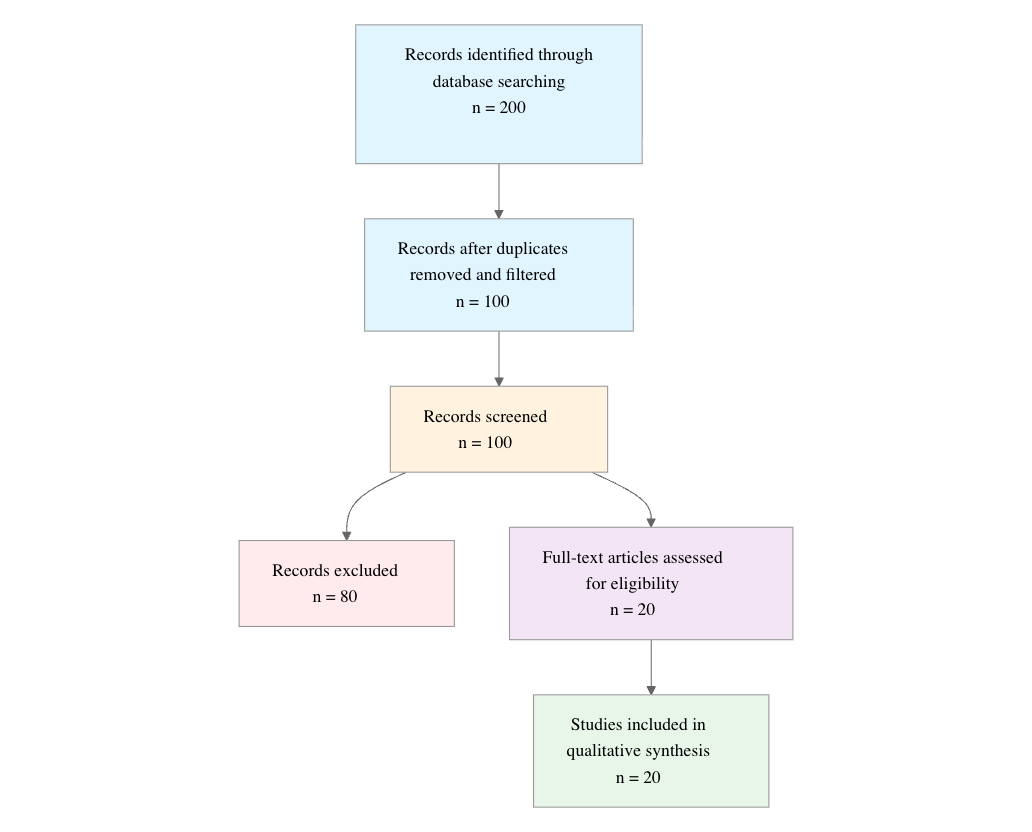
Initial database searching identified 200 records. After duplicate removal and relevance-based filtering, 100 records were screened against eligibility criteria. Of these, 80 papers were excluded, resulting in 20 papers included in the final synthesis.
PRISMA Flow Diagram
Eligibility criteria included:
- Recent: Does the study focus on Lyme disease research published in 2020 or later?
- Human: Does the study involve human participants, patient samples, or clinical data rather than only animal or in-vitro models?
- Lyme Focus: Does the study specifically investigate Lyme disease, Lyme borreliosis, Borrelia burgdorferi infection, or post-treatment Lyme disease syndrome?
- Clinical Relevance: Does the study address diagnosis, treatment, prognosis, symptoms, complications, epidemiology, prevention, biomarkers, or vaccine-related research?
- Primary Evidence: Is the paper an original study, systematic review, meta-analysis, guideline, or clinical review rather than an unrelated commentary?
- Emerging Topic: Does the study address an emerging or currently active area such as new diagnostics, new treatments, PTLDS, coinfection, or surveillance trends?
- Recent Data: Does the paper use data collected in 2020 or later, or explicitly synthesize recent evidence?
- Patient Outcomes: Does the study report symptom change, diagnostic accuracy, treatment response, complications, or other patient-centered outcomes?
All included studies met the stated eligibility criteria.
2.3 Data Extraction and Synthesis
Data extraction focused on the following variables:
- Topic: Identify the specific Lyme disease subtopic addressed (e.g., epidemiology, diagnosis, treatment, PTLDS, coinfection, vaccine, imaging, biomarkers).
- Study Type: Extract the study design or evidence type (RCT, cohort, case-control, cross-sectional, systematic review, meta-analysis, review, guideline, laboratory study).
- Population: Describe the human population or sample studied, including age group, clinical stage, setting, and any key inclusion characteristics.
- Intervention/Exposure: Extract the main intervention, exposure, diagnostic test, pathogen strain, or comparator being investigated.
- Outcome: Summarize the primary outcome(s) or main endpoint(s) reported in the paper.
- Key Finding: Extract the main conclusion or result relevant to recent Lyme disease research.
- Methods/Measures: Note the key methods, assays, imaging, statistical approach, or clinical measures used.
- Timeframe: Extract the study period, follow-up duration, or whether the paper focuses on recent/emerging evidence.
Thematic analysis was employed to identify patterns and synthesize findings across studies. Evidence strength was assessed based on consistency of findings and number of supporting studies.
3. Results
3.1 Characteristics of Included Studies
| Study and Year | Study Type | Population | Key Focus | Methods/Measures | Timeframe |
|---|---|---|---|---|---|
| Marques et al. 2021 [1] | Review | Human populations in the United States and Europe | Species variation and clinical manifestations | Qualitative comparative synthesis | Recent evidence as of 2021 |
| Lantos et al. 2020 [2] | Clinical practice guideline | North American clinicians and patients with Lyme disease | Prevention, diagnosis, and treatment | Multidisciplinary evidence review and expert synthesis | Contemporary practice |
| Rebman & Aucott 2020 [3] | Review | Patients with persistent symptoms after Lyme disease | PTLDS and persistent symptoms | Literature review | Recent literature |
| Nguyen et al. 2022 [4] | Review | General Lyme disease population | Prevention and treatment | Literature and guideline review | Recent practice |
| Schoen 2020 [5] | Review | General Lyme disease population | Early Lyme disease and Lyme arthritis | Clinical review | Recent findings |
| Schoen 2020 [5] | Review | General Lyme disease population | Diagnosis and treatment across stages | Clinical review | Historical and recent perspective |
| Ursinus et al. 2021 [6] | Prospective observational cohort | Adults diagnosed with Lyme borreliosis | Persistent symptoms post-treatment | Symptom tracking over time | Defined follow-up |
| Knudtzen et al. 2021 [7] | Systematic literature review and cohort study | Patients with Lyme neuroborreliosis and encephalitis | Encephalitis as LNB manifestation | Systematic review and cohort methods | Recent findings |
| Chung et al. 2023 [8] | Cross-sectional claims analysis | U.S. adults with Lyme disease/PTLDS | Healthcare utilization in PTLDS | Administrative claims comparison | Recent years |
| Hoornstra et al. 2022 [9] | Systematic review and meta-analysis | Humans and Ixodes ticks in the northern hemisphere | Borrelia miyamotoi prevalence and manifestations | Meta-analysis of prevalence and clinical data | Emerging evidence |
| Angulo et al. 2024 [10] | Cross-sectional seroprevalence study | Individuals from six counties in Romania | Under-detection and incidence estimation | Seroprevalence-based modeling | 2018–2023 |
| Davidson et al. 2025 [11] | Surveillance-based review | European populations | Lyme borreliosis incidence trends | National surveillance compilation | 2015–2023 |
| Arias et al. 2025 [12] | Guideline | Individuals with persistent symptoms after treated Lyme borreliosis | PTLDS management | Systematic reassessment and care recommendations | Current understanding |
| Bahadori et al. 2023 [13] | Review and guideline | Children with suspected or diagnosed Lyme disease | Pediatric diagnosis and management | Clinical algorithms | Recent evidence |
| Trevisan et al. 2020 [14] | Review | General Lyme borreliosis population | Diagnosis and laboratory methods | Clinical and diagnostic synthesis | Contemporary |
| Adkison & Embers 2023 [15] | Review | Lyme disease patients, especially PTLDS | Treatment failure and cure pursuit | In vitro, in vivo, and clinical evidence review | Recent and emerging evidence |
| Kenison et al. 2025 [16] | Prospective cohort | 47 adult Lyme disease patients in New York | PTLDS risk factors and symptoms | VAS and FSS follow-up | 2021 onward |
| Girgis et al. 2025 [17] | Cohort study | 272 PTLD patients and 28 healthy controls | Immune phenotypes in PTLD | Flow cytometry, cytokine profiling, factor analysis | Not specified |
| Raffetin et al. 2025 [18] | Systematic review and meta-analysis | Lyme borreliosis treatment studies | Antibiotic duration | Meta-analysis of treatment duration studies | Recent evidence |
| Keshtkar-Jahromi et al. 2023 [19] | Laboratory study | Individuals with persistent Lyme symptoms and recovered controls | Autoantibodies in PTLD | Autoantibody assays | Recent findings |
The evidence base is dominated by reviews, guidelines, surveillance studies, and observational cohorts, with fewer studies directly examining biomarkers or treatment duration. Geographic coverage is broad, but clinical evidence clusters around North American PTLDS and European surveillance and diagnosis, reflecting the transatlantic heterogeneity of Lyme borreliosis.
3.2 Thematic Findings
3.2.1 Clinical heterogeneity reflects pathogen diversity, geographic context, and co-infections
Recent research consistently indicates that Lyme disease is not a single uniform syndrome but a heterogeneous infection whose clinical expression varies by Borrelia species, stage, and regional ecology [1], [14], [5]. In Europe, where B. afzelii and B. garinii contribute substantially to human disease, clinical patterns differ from the United States, where B. burgdorferi sensu stricto predominates; this species distribution is associated with differences in manifestations and likely helps explain why arthritis and neuroborreliosis do not present identically across continents [1]. Diagnostic reviews further reinforce that heterogeneity is amplified by possible co-infection with other tick-transmitted pathogens and by host-pathogen interactions, making clinical recognition dependent on more than a single symptom pattern [14]. The same theme appears in stage-based clinical reviews, which distinguish early disease, usually antibiotic-responsive, from later manifestations such as Lyme arthritis, which can be more refractory [5], [4].
Confidence: Moderate to strong, because multiple evidence types converge on the same concept even though most sources are narrative or review-based rather than analytic comparative studies.
3.2.2 Early disease is usually antibiotic-responsive, but late manifestations and duration questions remain unsettled
The treatment literature supports high cure rates for early Lyme disease while showing a more complex picture for late-stage manifestations. Clinical reviews and guidelines agree that most patients with early Lyme disease can be cured with a single course of oral antibiotics, whereas a subset of patients with Lyme arthritis require additional treatment strategies [5], [2]. This pattern is echoed by the 2025 meta-analysis on shortened antibiotic duration, which was underpowered to prove non-inferiority but suggested that shorter therapy may be safe for erythema migrans [18]. The evidence therefore favors effective standard antimicrobial treatment for early infection, but it does not yet establish the minimum effective duration across all presentations.
Importantly, the available treatment-duration evidence is concentrated on erythema migrans and does not directly resolve whether similar shortening is appropriate for disseminated disease, pediatric disease, neuroborreliosis, or arthritis. The uncertainty is therefore not about whether antibiotics work in early disease, but about how to optimize duration without sacrificing safety or cure, especially in clinically distinct subgroups [18], [13].
Confidence: Strong for early disease responsiveness; limited for duration optimization beyond erythema migrans.
3.2.3 Persistent symptoms after treatment are common enough to be clinically important, but their etiology is heterogeneous and contested
A major recent research cluster concerns persistent symptoms after appropriately treated Lyme disease, often operationalized as PTLDS. Across observational, review, and guideline literature, fatigue, musculoskeletal pain, and cognitive symptoms recur as the dominant syndrome features [3], [6], [16]. In the prospective New York cohort, fatigue was the most frequent symptom at 6 months (39%), and PTLDS patients consistently reported higher fatigue severity than those without PTLDS [16]. Administrative claims data likewise indicate that PTLDS is associated with distinct healthcare utilization patterns compared with Lyme disease without PTLDS, implying meaningful downstream burden beyond the acute infection episode [8].
At the same time, the field remains divided over causation. Review evidence frames PTLDS as a mechanistically neutral research construct because persistent symptoms may reflect microbial persistence, immune dysregulation, central sensitization, repeat exposure, or comorbid disease [3], while the 2025 guideline states that persistent symptoms after documented and adequately treated Lyme borreliosis are not attributable to persistent infection when alternative explanations are excluded [12]. This creates a substantive tension: clinical guidance is increasingly definitive about management, but the mechanistic literature remains insufficient to determine which biological pathway predominates in which patient subgroup.
Confidence: Moderate, because symptom persistence is repeatedly observed, but prevalence estimates, definitions, and causal interpretations vary.
3.2.4 Immune and serologic studies suggest biologic abnormalities in PTLD, but they do not yet yield a unified biomarker
Mechanistic research increasingly points to immune dysregulation in PTLD, though the signal is incomplete and not yet clinically actionable. The strongest evidence comes from immunophenotyping, where PTLD patients showed fewer circulating CXCR5+ CD4+ naïve T cells (5.2% vs. 8.3%, Padj < 0.001) and more CXCR3+ CCR4- CCR6- CD8 T cells (43.1% vs. 25.7%, Padj < 0.01), with these patterns supporting an elastic net classifier that identified PTLD with moderate efficacy (AUC 0.83) [17]. These findings are notable because they connect symptom burden to measurable peripheral immune states, providing a plausible biological bridge between infection and persistent symptom phenotypes.
However, autoantibody data complicate rather than simplify the picture. In the laboratory study of post-infectious states, autoantibody prevalence did not differ meaningfully across persistent and recovered groups after Borrelia burgdorferi and SARS-CoV2 infection [19]. This null finding does not rule out immune involvement, but it does suggest that broad autoantibody positivity is unlikely to serve as a universal biomarker for persistent Lyme-related symptoms. Together, these studies support immune dysfunction as a real feature of PTLD while also showing that the immune signature is likely heterogeneous and may require subtype-specific biomarker discovery rather than a single diagnostic test.
Confidence: Moderate for immune involvement; limited for any single biomarker.
3.2.5 Surveillance studies show that Lyme borreliosis burden is higher and more uneven than routine reporting suggests
The epidemiologic literature indicates that Lyme borreliosis remains a major and growing public health problem in Europe, with substantial regional variation and likely under-detection. Surveillance synthesis across Europe found an average of 132,000 reported cases annually from 2015 to 2023, with the highest incidence in countries that report both erythema migrans and laboratory-confirmed cases and with at least 223 million people living in high-incidence areas [11]. The review also noted that incidence increased from 2021 to 2023 and that national averages can obscure subnational hotspots [11]. In Romania, seroprevalence-based modeling suggested a far greater burden than surveillance alone captured, with an under-detection multiplier of 10.5 and an estimated 1968 symptomatic infections in six counties compared with 187 reported cases [10].
These findings align with the broader diagnostic literature: under-ascertainment is plausible because symptom heterogeneity, limited test sensitivity after treatment, and non-specific early manifestations can all delay or prevent case detection [14], [10]. The result is that incidence estimates based on passive surveillance likely underestimate true symptomatic burden, especially in settings where reporting criteria are narrow or laboratory confirmation is required.
Confidence: Strong for the presence of substantial surveillance undercounting and spatial heterogeneity.
3.2.6 Neuroborreliosis and pediatric disease remain under-characterized but clinically important subdomains
Within the broader Lyme disease landscape, some manifestations are less common yet important because delayed recognition may worsen outcomes. A systematic review and Scandinavian cohort study identified encephalitis as an uncommon but likely overlooked manifestation of Lyme neuroborreliosis, and suggested that prolonged treatment delay may contribute to residual symptoms [7]. This is clinically important because encephalitis falls outside the typical mental model of Lyme disease for many clinicians, reinforcing the need for heightened suspicion in endemic regions.
Pediatric diagnosis and management are also emphasized as an area of concern. The pediatric review and guideline notes rising incidence in children and the lack of sensitive and specific diagnostic tests, underscoring that symptom non-specificity and diagnostic uncertainty are not confined to adults [13]. These studies do not provide pooled estimates of burden or outcome, but they broaden the evidence base beyond the commonly studied adult PTLDS phenotype.
Confidence: Limited to moderate, because the evidence is clinically salient but narrower and less quantitatively developed.
3.3 Summary of Evidence
| Theme | Key Finding | Population Applicability | Effect Direction | Confidence Level | Supporting Studies |
|---|---|---|---|---|---|
| Species and regional heterogeneity | B. burgdorferi sensu stricto predominates in the United States, whereas B. afzelii and B. garinii contribute substantially in Europe, with clinically meaningful variation in manifestations | Human Lyme disease populations in the United States and Europe; partially matches the question population because regional comparisons are central | Mixed | Moderate | Marques et al. [1], Trevisan et al. [14], Schoen et al. [5] |
| Early treatment responsiveness | Most early Lyme disease can be cured with antibiotic therapy; shorter therapy may be safe for erythema migrans but non-inferiority was not proven | General Lyme disease patients, especially erythema migrans; matches the question population | Positive | Strong for early disease, limited for duration optimization | Schoen et al. [5], Raffetin et al. [18], Lantos et al. [2] |
| Persistent symptoms/PTLDS burden | Fatigue was reported in 39% at 6 months in a prospective adult cohort, and PTLDS patients had higher fatigue severity than those without PTLDS | Adults with Lyme disease; partially matches the question population because it focuses on treated adult disease and PTLDS | Positive for burden | Moderate | Kenison et al. [16], Ursinus et al. [6], Chung et al. [8] |
| Immune dysregulation in PTLD | CXCR5+ CD4+ naïve T cells were 5.2% vs. 8.3% and CXCR3+ CCR4- CCR6- CD8 T cells were 43.1% vs. 25.7% in PTLD vs controls; classifier AUC was 0.83 | PTLD patients and healthy controls; partially matches the question population because it focuses on a post-treatment subgroup | Positive for biologic signal | Moderate | Girgis et al. [17], Keshtkar-Jahromi et al. [19], Rebman & Aucott [3] |
| Autoantibody null result | Autoantibody prevalence did not differ across persistent and recovered post-infectious states | Individuals with persistent symptoms after infection and recovered controls; partially matches the question population | Null | Limited | Keshtkar-Jahromi et al. [19], Adkison & Embers [15], Rebman & Aucott [3] |
| Under-detection and rising European incidence | European surveillance averaged 132,000 cases annually from 2015–2023, and Romania showed an under-detection multiplier of 10.5 | European populations, especially endemic regions; partially matches the question population because the research question is broad and global | Positive for burden | Strong | Davidson et al. [11], Angulo et al. [10] |
| Neuroborreliosis and pediatric disease | Encephalitis is uncommon but likely overlooked in Lyme neuroborreliosis; pediatric disease requires better diagnostics | Patients with neuroborreliosis and children; partially matches the question population | Positive for diagnostic importance | Limited | Knudtzen et al. [7], Bahadori et al. [13] |
4. Discussion
4.1 Principal Findings and Their Interpretation
The most defensible conclusion from the recent literature is that Lyme disease management has improved for acute infection, but the field now hinges on how to conceptualize and manage the post-treatment symptom burden that follows in a clinically important subset of patients. The consistency of antibiotic responsiveness in early disease suggests that current clinical success is highest when infection is recognized promptly, before dissemination and symptom amplification complicate the picture [2], [5]. This is not simply a therapeutic issue; it is also a diagnostic one, because the same literature shows that heterogeneity in presentation, strain diversity, and co-infection can obscure timely recognition [1], [14]. The synthesis therefore supports a causal chain in which delayed or incomplete recognition increases the likelihood of prolonged morbidity even when pathogen clearance is eventually achieved.
The PTLDS literature adds a second layer of interpretation. Persistent symptoms appear to be real, burdensome, and biologically non-random, but not reducible to a single mechanism. The immune phenotype data are especially important because they move the field beyond symptom description toward measurable host-state differences, yet the lack of a broad autoantibody signal indicates that not all plausible immune mechanisms are equally informative [17], [19]. This suggests heterogeneity within PTLD rather than a single post-infectious syndrome. The guideline position against additional antibiotics or immunomodulatory therapy is therefore understandable as a pragmatic response to insufficient mechanistic certainty and limited evidence of benefit [12]. Confidence is strongest for the clinical reality of persistent symptoms and for the effectiveness of early antibiotics; it is weakest for any claim that one biomarker or one biological pathway explains the syndrome in all patients.
4.2 Comparison with Existing Literature and Resolution of Contradictions
The recent literature broadly agrees with earlier Lyme disease research in two ways: first, acute disease is usually treatable, and second, persistent symptoms require a different conceptual framework from active infection alone. This agreement is meaningful because it arises across guidelines, clinical reviews, surveillance studies, and cohort data, rather than being confined to a single specialty perspective [2], [3], [11]. It strengthens confidence that the current clinical model is not merely consensus-based but anchored in converging observations about symptom trajectories and treatment response.
The contradictions are more nuanced. The most notable tension lies between biomarker-positive and biomarker-null studies in PTLD. Immunophenotyping indicates immune dysregulation and supports subgrouping [17], whereas autoantibody analysis found no group-wide prevalence difference across post-infectious states [19]. This does not necessarily mean one study is wrong. Rather, the two studies may be measuring different layers of the same process: broad autoantibody screens may be too nonspecific to capture the relevant biology, while cellular immune phenotypes may better reflect ongoing host-state alterations. Another explanation is phenotype heterogeneity; PTLD may contain biologically distinct subgroups, so pooled samples can obscure signals that are real only in certain symptom clusters or severities. A third possibility is that timing matters, because immune signatures may evolve over months to years after treatment, while cross-sectional sampling may miss transient abnormalities. The field therefore needs harmonized phenotyping and longitudinal sampling rather than more isolated case-control snapshots.
A second contradiction concerns burden estimation. Surveillance reports show high and increasing incidence, yet national systems still undercount cases substantially [11], [10]. This is not a true contradiction so much as an expected difference between passive reporting and modeled incidence. It highlights the risk of underestimating disease burden when case definitions require laboratory confirmation or when subnational hotspots are averaged into national estimates. Publication bias is also relevant: mechanistic or intervention studies with positive findings may be more visible than null results, but the presence of a null autoantibody study and an underpowered antibiotic-duration meta-analysis suggests that the literature is not uniformly positive [19], [18].
4.3 Practical Implications
Clinically, the literature supports aggressive attention to early recognition and treatment, especially in endemic regions and in children, because early infection remains the point at which cure is most reliable [2], [13]. Practitioners should also treat persistent symptoms after adequate therapy as a legitimate clinical problem requiring systematic reassessment rather than reflexive retreatment. The 2025 guideline's emphasis on verifying the original diagnosis, adequacy of antibiotic therapy, and alternative explanations is consistent with the evidence that PTLD is heterogeneous and not synonymous with persistent infection [12]. For patients with prominent fatigue, pain, and cognitive symptoms, multidisciplinary care and rehabilitation-oriented support appear more defensible than prolonged antimicrobial escalation.
From a public health perspective, the surveillance literature argues for stronger case ascertainment, not merely more awareness. Regions with high incidence and large under-detection multipliers need enhanced reporting systems and targeted prevention, including clinician education and tick-avoidance campaigns [11], [10]. These implications are especially relevant for Europe, where incidence is high but uneven across subnational regions, meaning national averages may conceal local hotspots. The threshold question is less relevant than in environmental exposure research, but the policy lesson is analogous: because under-detection persists even at routine surveillance levels, prevention should be population-wide rather than restricted to only the most visible cases. Regulatory and clinical systems should therefore prioritize earlier identification, harmonized diagnostic criteria, and longitudinal follow-up for persistent symptoms.
4.4 Strengths and Limitations
This review is strengthened by its inclusion of diverse evidence types, spanning surveillance analyses, prospective cohorts, guidelines, systematic reviews, and mechanistic studies. That diversity makes it possible to connect epidemiology, clinical care, and biology in a way that single-study designs cannot. It also captures contemporary shifts in the field, particularly the move toward structured PTLDS management and better incidence estimation.
The main limitations arise from the source literature itself. Many studies are reviews or guidelines rather than primary comparative investigations, several use heterogeneous definitions of PTLDS or Lyme borreliosis, and biomarker studies remain small or exploratory. Some evidence is region-specific, especially European surveillance and North American PTLDS cohorts, which limits direct transferability across settings. For this review, limitations include abstract-based extraction for some studies, no formal risk-of-bias assessment, and dependence on reported data rather than full-text verification for all nuanced outcomes.
5. Gaps and Future Directions
The clearest gap is the lack of longitudinal, phenotype-stratified studies that can distinguish persistent infection, immune dysregulation, and non-Lyme comorbidity in patients with post-treatment symptoms. Current evidence suggests biologic heterogeneity, but no biomarker has yet been validated for routine use, and broad autoantibody screening has not solved the problem [17], [19]. Future work should therefore combine serial immune phenotyping with symptom trajectories and treatment history in well-defined PTLD subgroups.
A second gap is geographic and diagnostic: surveillance systems still undercount symptomatic infection, and case definitions differ across countries and regions [11], [10]. Studies that integrate seroprevalence, clinical ascertainment, and standardized surveillance definitions would better estimate burden and help identify under-detected hotspots. A third gap concerns treatment duration: current meta-analytic evidence is suggestive but underpowered, leaving uncertainty about shortened regimens beyond erythema migrans [18]. Finally, pediatric disease and neuroborreliosis remain underrepresented relative to adult PTLDS, despite clear indications that both require better diagnostic pathways [13], [7].
6. Conclusion
The recent literature indicates that Lyme disease is increasingly well characterized as a heterogeneous infection with strong early antibiotic responsiveness, substantial geographic variation, and an important post-treatment symptom burden that cannot yet be explained by a single mechanism. The most defensible conclusion is that early disease is usually curable with standard antibiotics, while PTLDS represents a clinically meaningful syndrome marked by persistent fatigue, pain, and cognitive symptoms that warrant reassessment and multidisciplinary management rather than routine retreatment [12], [3]. This conclusion is reinforced by prospective and mechanistic data showing symptom persistence, higher fatigue severity, and immune alterations such as lower CXCR5+ CD4+ naïve T cells (5.2% vs. 8.3%, Padj < 0.001) and higher CXCR3+ CCR4- CCR6- CD8 T cells (43.1% vs. 25.7%, Padj < 0.01) in PTLD [16], [17].
At the same time, the evidence base is not uniform across populations or regions. European surveillance shows high and rising incidence with at least 223 million people living in high-incidence areas, while Romanian estimates suggest an under-detection multiplier of 10.5 [11], [10]. That means the burden of Lyme disease is likely greater than routine reporting suggests, and the clinical challenge is not only treatment but also recognition. The most important unresolved question is which biologically distinct PTLD subtypes exist and how they should be identified in routine care. Answering that question will determine whether the field can move from syndromic management to mechanism-based prevention and therapy, with major implications for patient outcomes, health system planning, and public health prevention.
References
- Marques, A. R., Strle, F., & Wormser, G. P. (2021). Comparison of Lyme Disease in the United States and Europe. Emerging Infectious Diseases, 27(8), 2017–2024. https://doi.org/10.3201/eid2708.204763
- Lantos, P. M., Rumbaugh, J., Bockenstedt, L. K., Falck-Ytter, Y. T., Aguero-Rosenfeld, M. E., Auwaerter, P. G., … Zemel, L. S. (2021). Clinical Practice Guidelines by the Infectious Diseases Society of America (IDSA), American Academy of Neurology (AAN), and American College of Rheumatology (ACR): 2020 Guidelines for the Prevention, Diagnosis and Treatment of Lyme Disease. Clinical Infectious Diseases, 72(1), e1–e48. https://doi.org/10.1093/cid/ciaa1215
- Rebman, A. W., & Aucott, J. N. (2020). Post-Treatment Lyme Disease as a Model for Persistent Symptoms in Lyme Disease. Frontiers in Medicine, 7, 57. https://doi.org/10.3389/fmed.2020.00057
- Nguyen, C. T., Cifu, A. S., & Pitrak, D. (2022). Prevention and Treatment of Lyme Disease. JAMA, 327(8), 772–773. https://doi.org/10.1001/jama.2021.25302
- Schoen, R. T. (2020). Lyme disease: diagnosis and treatment. Current Opinion in Rheumatology, 32(3), 247–254. https://doi.org/10.1097/BOR.0000000000000698
- Ursinus, J., Vrijmoeth, H. D., Harms, M. G., Tulen, A. D., Knoop, H., Gauw, S. A., … Hovius, J. W. (2021). Prevalence of persistent symptoms after treatment for Lyme borreliosis: A prospective observational cohort study. The Lancet Regional Health – Europe, 6, 100142. https://doi.org/10.1016/j.lanepe.2021.100142
- Knudtzen, F. C., Eikeland, R., Bremell, D., Quist-Paulsen, E., Johansen, I. S., Solheim, A. M., & Skarphédinsson, S. (2022). Lyme neuroborreliosis with encephalitis; a systematic literature review and a Scandinavian cohort study. Clinical Microbiology and Infection, 28(5), 649–656. https://doi.org/10.1016/j.cmi.2021.11.001
- Chung, M. K., Caboni, M., Strandwitz, P., D'Onofrio, A., Lewis, K., & Patel, C. J. (2023). Systematic comparisons between Lyme disease and post-treatment Lyme disease syndrome in the U.S. with administrative claims data. eBioMedicine, 90, 104524. https://doi.org/10.1016/j.ebiom.2023.104524
- Hoornstra, D., Azagi, T., van Eck, J. A., Wagemakers, A., Koetsveld, J., Spijker, R., … Hovius, J. W. (2022). Prevalence and clinical manifestation of Borrelia miyamotoi in Ixodes ticks and humans in the northern hemisphere: a systematic review and meta-analysis. The Lancet Microbe, 3(10), e772–e786. https://doi.org/10.1016/S2666-5247(22)00157-4
- Angulo, F. J., Olsen, J., Purdel, V., Lupșe, M., Hristea, A., Briciu, V., … Stark, J. H. (2024). Incidence of symptomatic Borrelia burgdorferi sensu lato infection in Romania, 2018–2023. Parasites & Vectors, 17(1), 378. https://doi.org/10.1186/s13071-024-06449-5
- Davidson, A., Davis, J., Brestrich, G., Moïsi, J. C., Jodar, L., & Stark, J. H. (2025). Lyme Borreliosis Incidence Across Europe, 2015–2023: A Surveillance-Based Review and Analysis. Vector-Borne and Zoonotic Diseases, 25(10), 569–579. https://doi.org/10.1177/15303667251363125
- Arias, P., Gocko, X., Roblot, F., Hansmann, Y., Baux, E., Eldin, C., … Raffetin, A. (2025). Guidelines for Lyme borreliosis: post-treatment Lyme disease syndrome (PTLDS). Infectious Diseases Now, 55(8), 105205. https://doi.org/10.1016/j.idnow.2025.105205
- Bahadori, A., Ritz, N., & Zimmermann, P. (2023). Diagnosis and treatment of Lyme disease in children. Archives of Disease in Childhood – Education and Practice Edition, 108(6), 422–428. https://doi.org/10.1136/archdischild-2023-325398
- Trevisan, G., Bonin, S., & Ruscio, M. (2020). A Practical Approach to the Diagnosis of Lyme Borreliosis: From Clinical Heterogeneity to Laboratory Methods. Frontiers in Medicine, 7, 265. https://doi.org/10.3389/fmed.2020.00265
- Adkison, H., & Embers, M. E. (2023). Lyme disease and the pursuit of a clinical cure. Frontiers in Medicine, 10, 1183344. https://doi.org/10.3389/fmed.2023.1183344
- Kenison, D., Zamor, R. G., Bateman, V. A., Maczaj, B., Nath, S., Maramara, B., … Marcos, L. A. (2025). Risk Factors Associated with Post-Treatment Lyme Disease Syndrome: A Prospective Cohort Study on Long Island, NY [conference abstract]. Open Forum Infectious Diseases, 12(Suppl 1), ofae631.1459. https://doi.org/10.1093/ofid/ofae631.1459
- Girgis, A. A., Rebman, A. W., Bechtold, K. T., Novak, C. B., Soloski, M. J., Aucott, J. N., & the Study Team. (2025). Aberrant T-cell phenotypes in a cohort of patients with post-treatment Lyme disease. Frontiers in Immunology, 16, 1607619. https://doi.org/10.3389/fimmu.2025.1607619
- Raffetin, A., Henningsson, A. J., Ornstein, K., Arias, P., Fingerle, V., Patrat-Delon, S., … Hunfeld, K.-P. (2025). Towards shortening the duration of antibiotic therapy for Lyme borreliosis: a systematic review and meta-analysis. Infection, 53(3), 809–830. https://doi.org/10.1007/s15010-025-02501-3
- Keshtkarjahromi, M., Rebman, A. W., Antar, A. A. R., Manabe, Y. C., Gutierrez-Alamillo, L., Casciola-Rosen, L. A., Aucott, J. N., & Miller, J. B. (2024). Autoantibodies in post-treatment Lyme disease and association with clinical symptoms. Clinical and Experimental Rheumatology, 42(7), 1487–1490. https://doi.org/10.55563/clinexprheumatol/qcupkk