

Latest Research on Peripheral Neuropathy: Mechanisms, Diagnosis, Risk Stratification, and Treatment Across Clinical Contexts
Reviewed by
Remya Krishnan, Research ReviewerPowered by
Paperguide Literature Review Agent
Updated on
29 Jul 2026
Abstract
Recent literature indicates that peripheral neuropathy remains highly prevalent, clinically heterogeneous, and difficult to prevent or reverse, with strongest evidence concentrated in diabetic peripheral neuropathy and painful diabetic peripheral neuropathy. Across diabetic populations, prevalence is high and variable by setting and severity, reaching 67.6% in a large population-based Chinese cohort (Wang et al., 2023) and up to 50% in broad clinical reviews (Elafros et al., 2022), while painful diabetic peripheral neuropathy affects 46.7% of individuals with diabetic peripheral neuropathy (95% CI 41.8–51.7) (Tao et al., 2025). The most consistent risk signals are longer diabetes duration, older age, female sex, obesity or higher body mass index, nephropathy, and other cardiometabolic comorbidities (Tao et al., 2025), (Wang et al., 2023), (Mizrahi et al., 2021). Diagnostic uncertainty persists because no single gold standard exists, but studies converge on the value of structured clinical phenotyping, nerve conduction studies, and targeted laboratory or biomarker testing; notably, neurofilament light chain showed higher levels in patients with peripheral neuropathy than controls (SMD 0.93, 95% CI 0.82–1.05) (Fundaun et al., 2022; Pop-Busui et al., 2022). Treatment evidence remains largely symptomatic rather than disease-modifying, although guideline-based pharmacotherapy, lifestyle and metabolic control, and neuromodulation all show promise in selected patients (Khdour, 2020), (Pop‐Busui et al., 2022), (Hagedorn et al., 2022). Overall, the latest research supports earlier detection, multimodal risk reduction, and more personalized pain management, while underscoring major gaps in disease-modifying therapies and in translating mechanistic insights into routine care.
1. Introduction
Peripheral neuropathy is a broad clinical syndrome that encompasses sensory, motor, and autonomic nerve dysfunction and is increasingly recognized as a major source of pain, disability, falls, ulceration, and loss of quality of life (Sloan et al., 2021 or Elafros et al., 2022). In contemporary literature, diabetic peripheral neuropathy emerges as the dominant subtype, but the category also includes chemotherapy-induced, pre-diabetic, idiopathic, hereditary, and immune-mediated forms, each with distinct clinical trajectories and diagnostic challenges (Lehmann et al., 2020), (Castelli et al., 2020). The public health importance is substantial because neuropathy is often detected late, after irreversible nerve injury has already occurred, and because current therapies are primarily symptomatic rather than curative (Sloan et al., 2021), (Dillon et al., 2024).
Recent work has shifted the field in two important ways. First, mechanistic understanding has broadened beyond hyperglycemia alone toward integrated models involving metabolic syndrome, lipid abnormalities, insulin signaling defects, oxidative stress, mitochondrial dysfunction, microvascular damage, and neuroinflammation (Zhu et al., 2024), (Elafros et al., 2022), (Sloan et al., 2021). Second, diagnostic and prognostic research has expanded from conventional bedside assessment toward structured phenotyping, nerve conduction testing, biomarker development, and point-of-care technologies (Lehmann et al., 2020), (Fundaun et al., 2022), (Sloan et al., 2021). At the same time, management studies increasingly emphasize that effective care requires more than glycemic control alone, especially in type 2 diabetes, where comorbid obesity, dyslipidemia, and vascular disease appear to shape neuropathy risk and symptom burden (Elafros et al., 2022), (Savelieff et al., 2024).
Against this backdrop, the central question is not whether peripheral neuropathy remains important, but what the latest evidence shows about its causes, diagnosis, risk stratification, and treatment across modern clinical contexts. The synthesis below integrates recent clinical studies, systematic reviews, and expert reviews to identify convergent patterns, unresolved contradictions, and areas where the evidence base is still immature.
2. Methods
2.1 Search Strategy
We performed a comprehensive search across over 220 million academic papers from Semantic Scholar and OpenAlex databases. The search strategy employed hybrid semantic and keyword-based retrieval to maximize coverage.
Search queries included:
- "Peripheral neuropathy latest research diagnosis treatment outcomes 2020 2026"
- "Peripheral neuropathy etiology risk factors biomarkers clinical studies 2020 2026"
- "Peripheral neuropathy management prognosis rehabilitation systematic review 2020 2026"
2.2 Study Selection
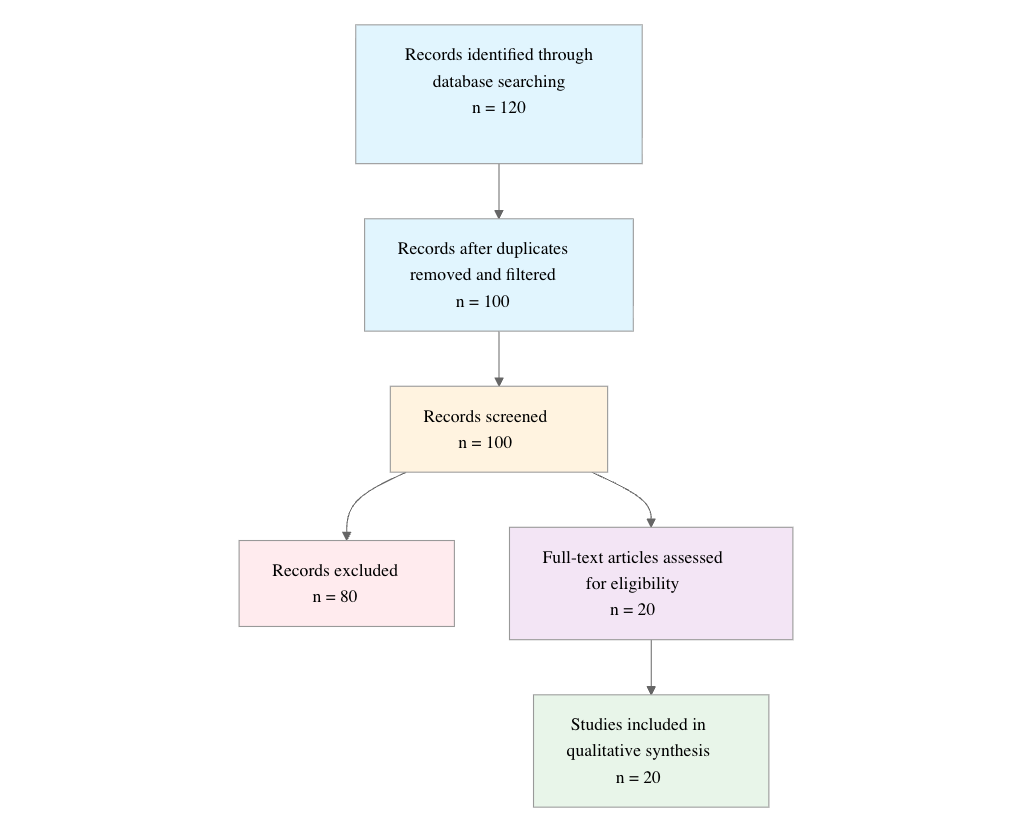
Initial database searching identified 120 records. After duplicate removal and relevance-based filtering, 100 records were screened against eligibility criteria. Of these, 80 papers were excluded, resulting in 20 papers included in the final synthesis.
Eligibility criteria included:
- Peripheral Neuropathy: Does the study focus on peripheral neuropathy or a clearly defined subtype such as diabetic, chemotherapy-induced, idiopathic, autoimmune, inherited, or infectious neuropathy?
- Human Study: Does the study involve human participants or human clinical data rather than only animal, cell, or simulation studies?
- Recent Evidence: Does the study appear to be published between 2020 and 2026?
- Clinical Relevance: Does the study examine diagnosis, treatment, prognosis, symptoms, biomarkers, nerve function, or quality-of-life outcomes relevant to peripheral neuropathy?
- Study Design: Is the paper a primary clinical study, systematic review, or meta-analysis rather than a purely theoretical discussion?
- Intervention or Biomarker: Does the study report a treatment, diagnostic method, exposure, or biomarker directly related to peripheral neuropathy?
- Outcome Data: Does the study report an outcome such as pain, sensory loss, nerve conduction, function, progression, or response to treatment?
All included studies met the stated eligibility criteria.
2.3 Data Extraction and Synthesis
Data extraction focused on the following variables:
- Topic
- Study Type
- Population
- Intervention/Exposure
- Key Outcome
- Main Finding
- Sample Size
- Follow-up
Thematic analysis was employed to identify patterns and synthesize findings across studies. Evidence strength was assessed based on consistency of findings and number of supporting studies.
3. Results
3.1 Characteristics of Included Studies
| Study and Year | Study Type | Population | Key Focus | Sample Size | Time Frame / Follow-up |
|---|---|---|---|---|---|
| Sloan et al. 2021 (Sloan et al., 2021) | Narrative review | Adults with diabetes experiencing DSPN | Pathogenesis, diagnosis, and clinical management | Not reported | Not reported |
| Zhu et al. 2024 (Zhu et al., 2024) | Narrative review | Patients with diabetes / DPN | Mechanisms and treatment | Not reported | Not reported |
| Elafros et al. 2022 (Elafros et al., 2022) | Narrative review | Individuals with type 1 or type 2 diabetes | Prevention, pathogenesis, and new treatments | Not reported | Not reported |
| Savelieff et al. 2024 (Savelieff et al., 2024) | Narrative review | Patients with type 1 or type 2 diabetes | Global and regional burden | Not reported | Not reported |
| Dillon et al. 2024 (Dillon et al., 2024) | Narrative review | Not reported | Spectrum of diabetic neuropathy diagnosis and treatment | Not reported | Not reported |
| Cernea & Raz 2021 (Cernea & Raz, 2021) | Narrative review | Individuals with diabetes mellitus | Management of diabetic neuropathy | Not reported | Not reported |
| Fundaun et al. 2022 (Fundaun et al., 2022) | Systematic review and meta-analysis | Adults with peripheral neuropathies | Blood-based biomarkers | 4414 participants | Not reported |
| Lehmann et al. 2020 (Lehmann et al., 2020) | Narrative review | Diverse peripheral neuropathy populations | Diagnostic workup | Not reported | Not reported |
| Jensen et al. 2021 (Jensen et al., 2021) | Narrative review | Patients with type 1 and type 2 diabetes | Diagnostic challenges and management of painful and non-painful DN | Not reported | Not reported |
| Tao et al. 2025 (Tao et al., 2025) | Systematic review and meta-analysis | Individuals with diabetic peripheral neuropathy | Prevalence and risk factors for painful DPN | 41 studies; participant number not reported | Up to June 22, 2024 |
| Pop-Busui et al. 2022 (Pop‐Busui et al., 2022) | Narrative review / clinical guidance | Individuals with diabetes and painful DPN | Screening, diagnosis, and treatment | Not reported | Not reported |
| Mizrahi et al. 2021 (Mizrahi et al., 2021) | Cohort study | Adults receiving paclitaxel or oxaliplatin | Risk factors for CIPN | Not reported | Not reported |
| Liampas et al. 2020 (Liampas et al., 2020) | Systematic review | Patients with painful peripheral neuropathies | Pharmacological management | 83 studies | Not reported |
| Wu et al. 2021 (Wu et al., 2021) | Cross-sectional study | 612 patients with type 2 diabetes mellitus analyzed | Risk factors and prediction models for DPN | 612 patients analyzed | September 2018 to July 2019 |
| Kirthi et al. 2021 (Kirthi et al., 2021) | Systematic review | Individuals with pre-diabetes | Prevalence of peripheral neuropathy | 9351 participants | Up to June 1, 2020 |
| Hagedorn et al. 2022 (Hagedorn et al., 2022) | Narrative review | Individuals with painful DPN | Diagnosis and treatment advancements | Not reported | Not reported |
| Sun et al. 2020 (Sun et al., 2020) | Systematic review and meta-analysis | Patients with diabetes | Prevalence of DPN | Not reported | Not reported |
| Wang et al. 2023 (Wang et al., 2023) | Cross-sectional study | 14,908 patients with type 2 diabetes mellitus | Prevalence and risk factors of DPN | 14,908 patients | July to December 2017 |
| Khdour 2020 (Khdour, 2020) | Narrative review | Patients with diabetic peripheral neuropathy | Pharmacotherapy | Not reported | Not reported |
| Castelli et al. 2020 (Castelli et al., 2020) | Narrative review | General population with peripheral neuropathy | Evaluation and differential diagnosis | Not reported | Not reported |
Overall, the evidence base is dominated by narrative reviews and observational studies, with a smaller number of systematic reviews and meta-analyses. The literature is heavily weighted toward diabetic neuropathy, especially painful diabetic peripheral neuropathy, while non-diabetic peripheral neuropathy appears primarily in diagnostic or biomarker contexts. Quantitative evidence is strongest for prevalence, risk factors, and biomarker associations, whereas disease-modifying treatment evidence remains limited and largely indirect.
3.2 Thematic Findings
3.2.1 Peripheral neuropathy is common, but burden varies by clinical context and ascertainment method
Across diabetic populations, peripheral neuropathy is consistently described as highly prevalent, with estimates reaching up to half of patients in broad clinical reviews and 67.6% in a large Chinese T2DM cohort (Elafros et al., 2022), (Wang et al., 2023). Among people with pre-diabetes, prevalence was highly heterogeneous, ranging from 2% to 77%, with most studies reporting at least 10% and higher estimates often emerging from small-fiber–sensitive methods such as plantar thermography, multimodal quantitative sensory testing, and nerve conduction testing (Kirthi et al., 2021). Painful diabetic peripheral neuropathy is also common, with a pooled prevalence of 46.7% (95% CI 41.8–51.7) among individuals with DPN (Tao et al., 2025). The burden extends beyond symptom frequency to disability, gait instability, falls, ulcers, and amputations (Savelieff et al., 2024), (Jensen et al., 2021). Confidence: Strong for the conclusion that neuropathy is common; moderate for exact cross-context comparisons because prevalence depends on population and diagnostic approach.
3.2.2 Risk concentrates in metabolically vulnerable and clinically comorbid patients
The most reproducible risk pattern links neuropathy to longer diabetes duration, older age, and broader metabolic risk burden. In the painful DPN meta-analysis, older age, female sex, BMI ≥30 kg/m², longer diabetes duration, and nephropathy were significant risk factors, with odds ratios of 1.02 (95% CI 1.01–1.04) per year for age, 1.58 (95% CI 1.19–2.11) for female sex, 1.62 (95% CI 1.43–1.83) for BMI ≥30 kg/m², 1.05 (95% CI 1.01–1.08) for diabetes duration, and 1.32 (95% CI 1.24–1.40) for nephropathy (Tao et al., 2025). A large cross-sectional cohort similarly found higher prevalence with age, diabetes duration, hypertension, diabetic retinopathy, diabetic nephropathy, higher glycated haemoglobin, and lower estimated glomerular filtration rate, whereas BMI and education level were inversely associated in that setting (Wang et al., 2023). In chemotherapy-induced neuropathy, low pretreatment hemoglobin, higher BMI, older age, and female sex were associated with greater risk (Mizrahi et al., 2021). (Note: this study examined adults receiving paclitaxel or oxaliplatin which partially matches the question population of peripheral neuropathy; findings should be interpreted considering this difference.) Confidence: Strong for age, duration, sex, and metabolic comorbidity as risk markers in diabetic neuropathy; limited for direct translation from chemotherapy-related neuropathy.
3.2.3 Diagnostic progress centers on stratification, not a single gold standard
The diagnostic literature consistently emphasizes that peripheral neuropathy is best approached through phenotyping rather than reliance on any single test. Clinical history, physical examination, and nerve conduction studies are repeatedly presented as foundational, with laboratory testing, genetic studies, cerebrospinal fluid analysis, imaging, and biopsy reserved for selected contexts (Lehmann et al., 2020), (Castelli et al., 2020). For diabetic neuropathy, structured symptom-sign-confirmatory frameworks remain common in research, but no established diagnostic gold standard exists, especially for early or mild disease (Jensen et al., 2021). This uncertainty has driven the development of prediction models in T2DM, where models incorporating multiple clinical and biochemical variables showed better discrimination and calibration than simpler alternatives (Wu et al., 2021). Confidence: Moderate to strong; the diagnostic challenge is consistent, but exact comparative superiority of specific algorithms remains context-dependent and incompletely standardized.
3.2.4 Biomarkers and mechanistic pathways are converging on neuronal injury and metabolic stress
Mechanistic reviews converge on a multi-hit pathogenesis for diabetic neuropathy involving hyperglycemia, dyslipidemia, insulin signaling abnormalities, oxidative stress, microvascular damage, neuroinflammation, mitochondrial dysfunction, and impaired axonal repair (Zhu et al., 2024), (Sloan et al., 2021). The most concrete human biomarker evidence in this review comes from blood-based measures: neurofilament light chain was significantly elevated in peripheral neuropathy compared with controls (SMD 0.93, 95% CI 0.82–1.05), whereas S100B, brain-derived neurotrophic factor, and neuron-specific enolase did not show significant differences (Fundaun et al., 2022). (Note: this biomarker study examined adults with peripheral neuropathies, including diabetic neuropathy, Charcot-Marie-Tooth disease, and Guillain-Barre syndrome, which partially matches the question population of peripheral neuropathy; findings should be interpreted considering this difference.) Confidence: Moderate for neurofilament light chain as a marker of neuronal injury; limited for other biomarkers because the evidence is null or inconsistent.
3.2.5 Treatment remains mostly symptomatic, with limited evidence for disease modification
Across reviews, glycemic control, weight loss, exercise, and multifactorial metabolic management are presented as the main preventive and disease-limiting strategies, but their benefits are strongest in type 1 diabetes and more modest or uncertain in type 2 diabetes (Elafros et al., 2022), (Cernea & Raz, 2021), (Khdour, 2020). For pain, the evidence supports antidepressants and anticonvulsants as first-line options, with topical agents, opioids, nutraceuticals, dietary modification, and exercise as adjuncts or context-specific options (Khdour, 2020), (Pop‐Busui et al., 2022). Neuromodulation, especially high-frequency spinal cord stimulation, has emerged as a promising non-pharmacological advance for painful DPN (Hagedorn et al., 2022). However, less than one-third of patients with painful DN derive sufficient relief with existing pharmacotherapies (Jensen et al., 2021), underscoring the persistent treatment gap. Confidence: Strong that current treatment is mainly symptomatic; moderate that neuromodulation represents a meaningful advance because evidence is promising but still developing.
3.3 Summary of Evidence
| Theme | Key Finding | Population Applicability | Effect Direction | Confidence Level | Supporting Studies |
|---|---|---|---|---|---|
| High and clinically meaningful neuropathy burden | DPN prevalence reached 67.6% in T2DM and PDPN pooled prevalence was 46.7% (95% CI 41.8–51.7) among those with DPN | Mostly diabetes populations; pre-diabetes and mixed peripheral neuropathy provide partial context | Positive burden | Strong | Wang et al. (Wang et al., 2023), Tao et al. (Tao et al., 2025), Elafros et al. (Elafros et al., 2022) |
| Metabolic and demographic risk clustering | Age, female sex, BMI ≥30 kg/m², diabetes duration, and nephropathy were associated with PDPN; older age, duration, hypertension, and nephropathy were associated with DPN | Primarily diabetic peripheral neuropathy; one chemotherapy cohort is partial proxy | Positive | Strong | Tao et al. (Tao et al., 2025), Wang et al. (Wang et al., 2023), Mizrahi et al. (Mizrahi et al., 2021) |
| Diagnostic stratification outperforms single-test approaches | No gold standard exists; phenotyping plus nerve conduction and targeted testing improves diagnostic yield | General peripheral neuropathy and diabetic neuropathy | Positive for multi-step diagnosis | Moderate | Lehmann et al. (Lehmann et al., 2020), Jensen et al. (Jensen et al., 2021), Wu et al. (Wu et al., 2021) |
| Biomarker evidence favors neurofilament light chain | Neurofilament light chain was higher in peripheral neuropathy than controls (SMD 0.93, 95% CI 0.82–1.05) | Mixed peripheral neuropathies, including diabetic neuropathy | Positive | Moderate | Fundaun et al. (Fundaun et al., 2022) |
| Treatment remains largely symptomatic | Existing drugs improve pain, but fewer than one-third achieve sufficient relief in painful DN and disease-modifying therapy is lacking | Mainly diabetic neuropathy and painful diabetic neuropathy | Mixed | Strong | Khdour (Khdour, 2020), Jensen et al. (Jensen et al., 2021), Hagedorn et al. (Hagedorn et al., 2022) |
| Emerging non-pharmacologic options | High-frequency spinal cord stimulation is a promising addition to painful DPN care | Painful DPN only | Positive | Limited | Hagedorn et al. (Hagedorn et al., 2022), Pop-Busui et al. (Pop‐Busui et al., 2022) |
4. Discussion
4.1 Principal Findings and Their Interpretation
The clearest message from the recent literature is that peripheral neuropathy is not a single disorder but a family of related syndromes whose burden is shaped by metabolic state, disease duration, and the presence of pain. The strongest convergent evidence comes from diabetic neuropathy, where prevalence is high and complications are clinically consequential (Wang et al., 2023), (Tao et al., 2025). This pattern is biologically coherent: reviews increasingly frame diabetic neuropathy as the endpoint of cumulative bioenergetic failure in long peripheral axons, compounded by oxidative stress, mitochondrial dysfunction, microvascular injury, insulin-signaling defects, and neuroinflammatory signaling (Zhu et al., 2024), (Elafros et al., 2022). In that context, the association of neuropathy with older age, obesity, nephropathy, and longer diabetes duration is not simply epidemiologic noise; it likely reflects prolonged exposure to systemic metabolic injury and reduced capacity for axonal repair.
A second important insight is that the diagnostic problem has become more nuanced rather than solved. The literature does not support a single definitive test, and this is especially true for early or mild disease (Jensen et al., 2021), (Lehmann et al., 2020). Instead, the field is moving toward layered phenotyping, where history, examination, nerve conduction studies, and selective laboratory or genetic tests are combined to identify subtype and etiology. This is a meaningful advance because it reframes diagnosis from binary case detection to biological stratification, which in turn may improve trial recruitment and treatment matching. The rise of prediction models in T2DM further suggests that clinical risk information can be integrated more effectively than with one-off scoring systems alone (Wu et al., 2021). The biomarker literature supports this direction, although only neurofilament light chain currently shows a consistent signal compatible with neuronal injury (Fundaun et al., 2022). Confidence is highest for the burden, risk-factor, and symptomatic-treatment findings; it is more tentative for biomarkers and disease modification, where mechanistic plausibility exceeds clinical proof.
4.2 Comparison with Existing Literature and Resolution of Contradictions
The latest evidence largely agrees with earlier clinical understanding that diabetic neuropathy is common and under-recognized, but it adds two important refinements. First, it clarifies that the burden is not distributed evenly: pain, nephropathy, obesity, and long diabetes duration identify a more vulnerable phenotype (Tao et al., 2025), (Wang et al., 2023). Second, it shifts the mechanistic emphasis away from glucose alone toward a broader metabolic syndrome model (Elafros et al., 2022), (Savelieff et al., 2024). This agreement across reviews and observational studies is meaningful because it makes the case that neuropathy risk is cumulative and systemic, not merely a late complication of hyperglycemia.
The main contradictions concern prevalence and diagnosis. Pre-diabetes studies reported a wide prevalence range, from 2% to 77% (Kirthi et al., 2021), whereas diabetic cohorts often report much higher and more stable estimates. This discrepancy is plausibly explained by extreme methodological heterogeneity: studies using small-fiber-sensitive tools tended to report higher rates, while studies relying on less sensitive approaches likely underestimated subclinical disease (Kirthi et al., 2021). A second source of variation is case definition; some papers evaluated symptom-based neuropathy, others used scoring systems, and still others required confirmatory tests (Lehmann et al., 2020), (Wang et al., 2023). In other words, the apparent conflict is probably not a true contradiction but a measurement problem.
A similar issue affects biomarker evidence. Neurofilament light chain showed a clear positive association, but S100B, brain-derived neurotrophic factor, and neuron-specific enolase did not (Fundaun et al., 2022). This may reflect differing biological specificity: neurofilament light chain is a direct marker of axonal injury, whereas the others may be influenced by broader tissue or neurotrophic processes and therefore be less sensitive for peripheral nerve damage. Publication bias remains possible because many studies are concentrated in diabetes, where associations are anticipated and may be preferentially reported. That said, the consistency of the risk-factor signal across distinct observational settings argues against the entire pattern being an artifact.
4.3 Practical Implications
Clinically, the evidence supports earlier and more systematic screening in patients with type 1 or type 2 diabetes, especially those with longer disease duration, obesity, nephropathy, hypertension, or painful symptoms (Wang et al., 2023), (Tao et al., 2025). For these groups, prevention is not merely a matter of glucose targets; it should include weight management, lipid control, exercise, and broader cardiometabolic optimization (Elafros et al., 2022), (Cernea & Raz, 2021). In patients already symptomatic, clinicians should expect that standard pharmacotherapy often yields incomplete relief, and treatment planning should therefore be individualized rather than stepwise in a rigid sense (Jensen et al., 2021), (Khdour, 2020).
From a public health perspective, the burden data imply that peripheral neuropathy should be treated as a common chronic complication requiring resource allocation for screening, foot care, pain services, and complication prevention (Savelieff et al., 2024). This is particularly relevant in settings with older, lower-income, or less educated diabetic populations, where prevalence is high and adverse outcomes appear concentrated (Wang et al., 2023). For policy makers, the key implication is that a purely glycemia-centered strategy is insufficient. The evidence instead supports population-wide metabolic risk reduction and targeted identification of high-risk subgroups, rather than waiting for overt neuropathic pain or ulceration to emerge. The threshold question is less relevant here than in toxicology, because the literature does not identify a clear safe or unsafe cutoff for metabolic risk; instead, risk appears to accumulate continuously with disease burden and comorbidity. Evidence for neuromodulation and biomarker-guided management is promising but still not mature enough to replace current standard care (Hagedorn et al., 2022), (Fundaun et al., 2022).
4.4 Strengths and Limitations
A major strength of this review is its integration of multiple evidence types, allowing clinical burden, mechanistic hypotheses, diagnostic approaches, and treatment strategies to be interpreted together rather than in isolation. The source literature also includes population-based studies, systematic reviews, and meta-analyses, which strengthens confidence in recurring patterns such as metabolic risk clustering and the high burden of diabetic neuropathy. However, the included studies are heavily concentrated in diabetes, which limits generalizability to non-diabetic peripheral neuropathy. Many of the reviews are narrative rather than systematic, sample sizes are frequently not reported, and follow-up is often absent. Outcome definitions also vary substantially, especially for painful neuropathy and pre-diabetic neuropathy. Limitations of this review include dependence on abstract-level extracted data, no formal risk-of-bias appraisal, and limited granularity for studies with missing sample-size or follow-up information.
5. Gaps and Future Directions
The most important gap is the lack of disease-modifying therapy. Current evidence supports only symptomatic pain relief and risk-factor optimization, with no universally effective approach to reverse neuropathy (Sloan et al., 2021), (Jensen et al., 2021). Future trials should therefore test interventions designed to alter nerve biology, not just pain intensity. A second gap is diagnostic harmonization: prevalence estimates vary widely because studies use different symptom scales, small-fiber methods, nerve conduction strategies, and threshold definitions (Kirthi et al., 2021), (Lehmann et al., 2020). Standardized, longitudinal cohorts are needed to determine which combination of clinical findings, biomarkers, and electrophysiology best predicts progression.
Research also remains underdeveloped in non-diabetic peripheral neuropathy. Aside from biomarker and general diagnostic papers, the recent literature is dominated by diabetic disease, leaving toxic, hereditary, immune-mediated, and infectious neuropathies comparatively underrepresented. Future work should validate whether biomarker signals such as neurofilament light chain are specific to diabetic neuropathy or generalize across subtypes (Fundaun et al., 2022). Finally, the field needs studies in socioeconomically diverse and geographically varied populations, because current burden estimates suggest substantial regional variation but do not explain it fully (Savelieff et al., 2024). Better phenotyping, harmonized confounding adjustment, and more explicit reporting of follow-up are essential to move from descriptive burden estimates toward actionable prediction and prevention.
6. Conclusion
The latest research shows that peripheral neuropathy remains a common and consequential complication, with the strongest and most actionable evidence centered on diabetic and painful diabetic neuropathy. In diabetic populations, prevalence is high, reaching 67.6% in one large cohort (Wang et al., 2023), while painful diabetic peripheral neuropathy affects 46.7% of those with diabetic peripheral neuropathy (95% CI 41.8–51.7) (Tao et al., 2025). The most consistent risk profile includes older age, longer diabetes duration, obesity, nephropathy, and female sex, indicating that neuropathy risk clusters with broader metabolic and vascular vulnerability rather than glucose exposure alone (Tao et al., 2025), (Wang et al., 2023). Diagnostic progress is strongest where studies combine clinical phenotyping, nerve conduction testing, and selective laboratory or biomarker assessment, because no single gold standard exists (Lehmann et al., 2020), (Jensen et al., 2021; Sloan et al., 2021).
The evidence base is highly relevant to diabetes care but only partially generalizes to the full spectrum of peripheral neuropathy, since non-diabetic subtypes are comparatively underrepresented. Mechanistically, the literature supports a model of cumulative bioenergetic failure, oxidative stress, microvascular injury, and neuroinflammation (Zhu et al., 2024), (Elafros et al., 2022), but translating that biology into disease-modifying therapy remains unresolved. The single most important unanswered question is whether early multimodal risk reduction and emerging biomarkers can reliably prevent progression before irreversible nerve injury develops. Addressing that gap would matter directly for clinical practice, because it would shift care from late symptomatic treatment toward earlier detection, better prevention, and more precise intervention in the patients most likely to benefit.
References
- Castelli, G., Desai, K., & Cantone, R. E. (2020). Peripheral Neuropathy: Evaluation and Differential Diagnosis. PubMed, 102, 732–739.
- Cernea, S., & Raz, I. (2021). Management of diabetic neuropathy. Metabolism, 123, 154867–154867. https://doi.org/10.1016/j.metabol.2021.154867
- Dillon, B. R., Ang, L., & Pop-Busui, R. (2024). Spectrum of diabetic neuropathy: New insights in diagnosis and treatment. Annual Review of Medicine, 75(1), 293–306. https://doi.org/10.1146/annurev-med-043021-033114
- Elafros, M. A., Andersen, H., Bennett, D. L., Savelieff, M. G., Viswanathan, V., Callaghan, B. C., & Feldman, E. L. (2022). Towards prevention of diabetic peripheral neuropathy: clinical presentation, pathogenesis, and new treatments. The Lancet Neurology, 21(10), 922–936. https://doi.org/10.1016/s1474-4422(22)00188-0
- Fundaun, J., Kolski, M., Molina-Álvarez, M., Baskozos, G., & Schmid, A. B. (2022). Types and concentrations of blood-based biomarkers in adults with peripheral neuropathies. JAMA Network Open, 5(12), e2248593. https://doi.org/10.1001/jamanetworkopen.2022.48593
- Hagedorn, J. M., Engle, A. M., George, T. K., Karri, J., Abdullah, N., Ovrom, E., Bocanegra-Becerra, J. E., & D'Souza, R. S. (2022). An overview of painful diabetic peripheral neuropathy: Diagnosis and treatment advancements. Diabetes Research and Clinical Practice, 188, 109928. https://doi.org/10.1016/j.diabres.2022.109928
- Jensen, T. S., Karlsson, P., Gylfadottir, S. S., Andersen, S. T., Bennett, D. L., Tankski, H., Finnerup, N. B., Terkelsen, A. J., Khan, K., Themistocleous, A. C., Kristensen, A. G., Itani, M., Sindrup, S. H., Andersen, H., Charles, M., Feldman, E. L., & Callaghan, B. C. (2021). Painful and non-painful diabetic neuropathy, diagnostic challenges and implications for future management. Brain, 144(6), 1632–1645. https://doi.org/10.1093/brain/awab079
- Khdour, M. R. (2020). Treatment of diabetic peripheral neuropathy: a review. Journal of Pharmacy and Pharmacology, 72(7), 863–872. https://doi.org/10.1111/jphp.13241
- Kirthi, V., Perumbalath, A., Brown, E., Nevitt, S., Petropoulos, I. N., Burgess, J., Roylance, R., Cuthbertson, D. J., Jackson, T. L., Malik, R. A., & Alam, U. (2021). Prevalence of peripheral neuropathy in pre-diabetes: a systematic review. BMJ Open Diabetes Research & Care, 9(1), e002040. https://doi.org/10.1136/bmjdrc-2020-002040
- Lehmann, H. C., Wunderlich, G., Fink, G. R., & Sommer, C. (2020). Diagnosis of peripheral neuropathy. Neurological Research and Practice, 2, 20–20. https://doi.org/10.1186/s42466-020-00064-2
- Liampas, A., Rekatsina, M., Vadalouca, A., Paladini, A., Varrassi, G., & Zis, P. (2020). Pharmacological management of painful peripheral neuropathies: A systematic review. Pain and Therapy, 10(1), 55–68. https://doi.org/10.1007/s40122-020-00210-3
- Mizrahi, D., Park, S. B., Li, T., Timmins, H. C., Trinh, T., Au, K., Battaglini, E., Wyld, D., Henderson, R. D., Grimison, P., Ke, H., Geelan-Small, P., Marker, J., Wall, B., & Goldstein, D. (2021). Hemoglobin, body mass index, and age as risk factors for paclitaxel- and oxaliplatin-induced peripheral neuropathy. JAMA Network Open, 4(2), e2036695. https://doi.org/10.1001/jamanetworkopen.2020.36695
- Pop‐Busui, R., Ang, L., Boulton, A. J. M., Feldman, E. L., Marcus, R. L., Mizokami‐Stout, K., Singleton, J. R., & Ziegler, D. (2022). Diagnosis and Treatment of Painful Diabetic Peripheral Neuropathy. ADA Clinical Compendia, 2022, 1–32. https://doi.org/10.2337/db2022-01
- Savelieff, M. G., Elafros, M. A., Viswanathan, V., Jensen, T. S., Bennett, D., & Feldman, E. L. (2024). The global and regional burden of diabetic peripheral neuropathy. Nature Reviews Neurology, 21, 17–31. https://doi.org/10.1038/s41582-024-01041-y
- Sloan, G., Selvarajah, D., & Tesfaye, S. (2021). Pathogenesis, diagnosis and clinical management of diabetic sensorimotor peripheral neuropathy. Nature Reviews Endocrinology, 17(7), 400–420. https://doi.org/10.1038/s41574-021-00496-z
- Sun, J., Wang, Y., Zhang, X., Zhu, S., & He, H. (2020). Prevalence of peripheral neuropathy in patients with diabetes: A systematic review and meta-analysis. Primary Care Diabetes, 14(5), 435–444. https://doi.org/10.1016/j.pcd.2019.12.005
- Tao, Y., Zhang, H. Y., MacGilchrist, C., Kirwan, E., & McIntosh, C. (2025). Prevalence and risk factors of painful diabetic neuropathy: A systematic review and meta-analysis. Diabetes Research and Clinical Practice, 222, 112099. https://doi.org/10.1016/j.diabres.2025.112099
- Wang, W., Ji, Q., Ran, X., Li, C., Kuang, H., Yu, X., Fang, H., Yang, J., Liu, J., Xue, Y., Feng, B., Lei, M., & Zhu, D. (2023). Prevalence and risk factors of diabetic peripheral neuropathy: A population‐based cross‐sectional study in china. Diabetes/Metabolism Research and Reviews, 39(8). https://doi.org/10.1002/dmrr.3702
- Wu, B., Niu, Z., & Hu, F. (2021). Study on risk factors of peripheral neuropathy in type 2 diabetes mellitus and establishment of prediction model. Diabetes & Metabolism Journal, 45(4), 526–538. https://doi.org/10.4093/dmj.2020.0100
- Zhu, J., Hu, Z., Luo, Y., Liu, Y., Luo, W., Du, X., Zhen-zhong, L., Hu, J., & Peng, S. (2024). Diabetic peripheral neuropathy: pathogenetic mechanisms and treatment. Frontiers in Endocrinology, 14, 1265372–1265372. https://doi.org/10.3389/fendo.2023.1265372