

Psilocybin Mushroom Research from 2020–2025: Clinical Efficacy, Durability, Mechanisms, Safety, and Real-World Risk
Reviewed by
Shaantanu Kulkarni, Research ReviewerPowered by
Paperguide Literature Review Agent
Updated on
27 Jul 2026
Abstract
Recent human research indicates that psilocybin has clinically meaningful antidepressant effects, especially in major depressive disorder and treatment-resistant depression, with pooled effects favoring psilocybin-assisted therapy over comparators by SMD −0.72 (95% CI −0.95 to −0.49) at 1 week and SMD −0.78 (95% CI −1.00 to −0.56) in broader depression-focused synthesis; response and remission also favored psilocybin, with RR 3.42 (95% CI 2.35–4.97) and RR 3.66 (95% CI 2.26–5.92), respectively. These benefits appear rapid and sometimes durable, with one prospective follow-up reporting antidepressant effects persisting to 12 months in some patients, while other trials found improvement at 3 weeks and up to 2 months, (Coudert et al., 2011). This review is important because psilocybin mushroom research has expanded from small mechanistic studies to randomized trials and meta-analyses, yet efficacy, safety, and generalizability remain unsettled. Evidence suggests dose matters: 25 mg outperformed 1 mg in treatment-resistant depression, whereas 10 mg did not show significant effects, and dose-response modeling estimated ED95 values of 24.68 mg/70 kg for primary depression and 8.92 mg/70 kg for secondary depression. Safety findings show a tolerable but nontrivial acute adverse-effect burden, including nausea (RR 8.85, 95% CI 5.68–13.79), headache (RR 1.99, 95% CI 1.06–3.74), anxiety (RR 2.27, 95% CI 1.11–4.64), dizziness (RR 5.81, 95% CI 1.02–33.03), and elevated blood pressure (RR 2.29, 95% CI 1.15–4.53). Real-world unregulated mushroom use adds public health concerns because potency varies more than 20-fold and co-use with cannabis may heighten risk. Overall, psilocybin is a promising but still tightly context-dependent intervention, with strongest evidence for supervised depressive disorders and much weaker evidence for community use, mechanistic durability, and optimal dosing.
1. Introduction
Psilocybin mushrooms have moved from the margins of psychiatric research into a prominent position in contemporary mental health science. Interest has accelerated because conventional antidepressants and psychotherapy do not fully address the needs of many individuals with major depressive disorder, treatment-resistant depression, or depression accompanied by anxiety and functional impairment. At the same time, psilocybin mushroom use outside clinical settings has expanded, raising questions not only about efficacy but also about safety, dosing, and the translation of controlled-trial findings into real-world conditions.
In the clinical literature, psilocybin is generally studied as a serotonergic psychedelic administered in a structured therapeutic context, often with psychological preparation and integration support. Across recent studies, outcomes have been assessed using clinician-rated depression scales, self-report symptom measures, anxiety ratings, functioning, quality of life, and in some cases neurobiological markers such as amygdala-prefrontal connectivity during emotional processing. This diversity of endpoints reflects the field’s attempt to determine whether psilocybin acts as a rapid-acting antidepressant, a catalyst for psychological change, or both. Yet the evidence base is still developing, and important uncertainties persist regarding comparative efficacy against established antidepressants, durability of response, optimal dose, and the profile of acute and longer-term adverse effects (Nanjappachetty et al., 2024).
The present review synthesizes the latest human research on psilocybin mushroom-related interventions and use, with emphasis on depression-focused clinical outcomes, safety, mechanisms, and public health implications. Because the literature spans randomized trials, follow-up studies, meta-analyses, mechanistic work, and emerging real-world evidence, a thematic synthesis is necessary to clarify where the evidence converges and where it remains provisional.
2. Methods
2.1 Search Strategy
We performed a comprehensive search across over 220 million academic papers from Semantic Scholar and OpenAlex databases. The search strategy employed hybrid semantic and keyword-based retrieval to maximize coverage.
Search queries included:
- "Psilocybin mushroom latest clinical research in humans 2020 2026"
- "Psilocybin therapy for depression anxiety and end-of-life distress recent trials"
- "Psychedelic psilocybin microdosing neurocognitive and mental health studies"
- "Psilocybin-assisted psychotherapy safety efficacy randomized controlled trials"
2.2 Study Selection
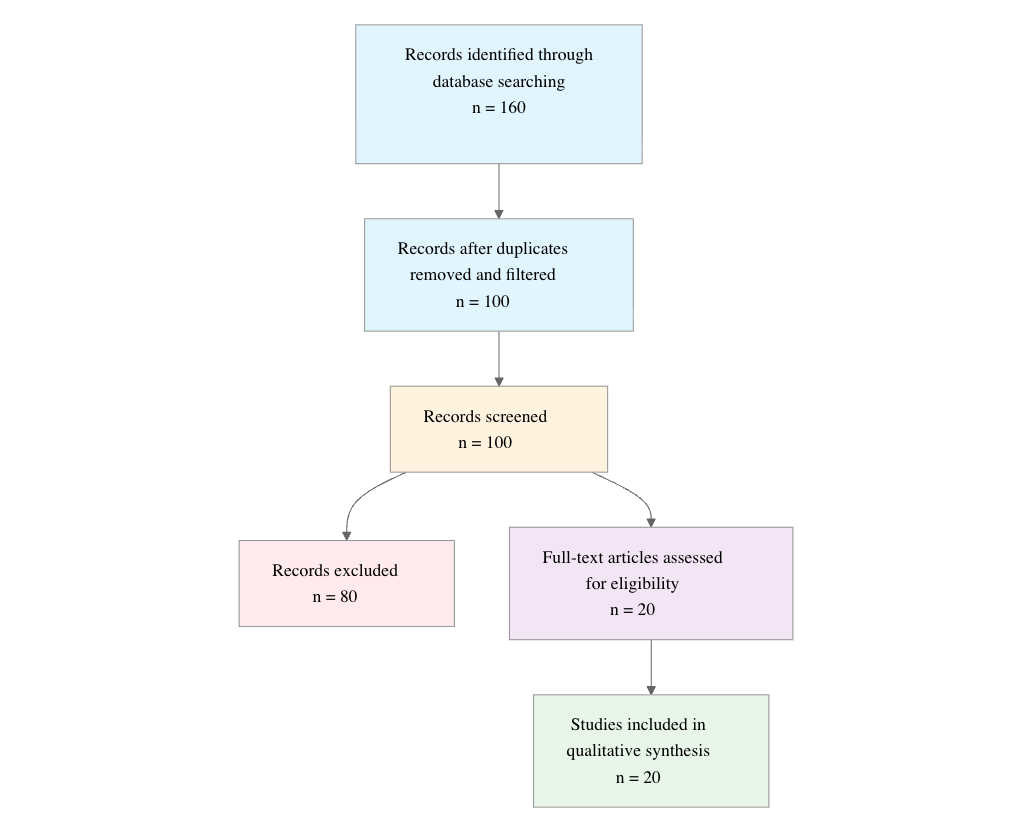
Initial database searching identified 160 records. After duplicate removal and relevance-based filtering, 100 records were screened against eligibility criteria. Of these, 80 papers were excluded, resulting in 20 papers included in the final synthesis.
PRISMA Flow Diagram
Eligibility criteria included:
- Human Study: Does the study involve human participants rather than only animal, in vitro, or computational work?
- Psilocybin Focus: Does the study investigate psilocybin, psilocin, or psilocybin-containing mushrooms as the central exposure or intervention?
- Recent Publication: Was the study published between 2020 and 2026?
- Empirical Evidence: Does the paper report original empirical data, a systematic review, or a meta-analysis rather than only commentary or opinion?
- Mental Health or Neuroscience: Does the study examine mental health outcomes, cognition, neurobiology, or treatment safety/feasibility?
- Clinical Intervention: Does the study evaluate a psilocybin-assisted therapy, dosing session, or clinical treatment protocol?
- Microdosing: Does the study specifically examine psilocybin microdosing or low-dose use patterns?
- Safety Data: Does the study report adverse events, tolerability, or other safety outcomes?
All included studies met the stated eligibility criteria.
2.3 Data Extraction and Synthesis
Data extraction focused on the following variables:
- Study Focus: Extract the main research focus, such as depression, anxiety, end-of-life distress, substance use disorder, microdosing, neuroimaging, or safety/feasibility.
- Study Design: Extract the study type (RCT, open-label trial, observational study, systematic review, meta-analysis, qualitative study) and any randomization or control details reported.
- Population: Extract the participant population, including diagnosis/condition, setting, age group, and any notable inclusion criteria.
- Psilocybin Regimen: Extract the psilocybin intervention details: dose, number of sessions, route, preparation/integration therapy if described, or state 'Not reported'.
- Comparator: Extract the comparator or control condition, such as placebo, waitlist, active control, or none; state 'No comparator' if applicable.
- Primary Outcomes: Extract the main outcomes measured, especially symptom scales, psychological measures, cognition, imaging biomarkers, or safety outcomes.
- Key Findings: Extract the central findings and conclusions reported by the paper, using only claims explicitly supported by the title/abstract or extracted text.
- Safety/Tolerability: Extract adverse events, tolerability, serious harms, dropout due to side effects, or state 'Not reported' if absent.
Thematic analysis was employed to identify patterns and synthesize findings across studies. Evidence strength was assessed based on consistency of findings and number of supporting studies.
3. Results
3.1 Characteristics of Included Studies
| Study and Year | Study Type | Population | Intervention / Comparator | Primary Outcomes | Key Focus |
|---|---|---|---|---|---|
| Goodwin et al. 2022 | Phase 2 randomized controlled trial | Treatment-resistant depression | Single-dose psilocybin 25 mg, 10 mg, or 1 mg comparator | Depression scores over 3 weeks | Antidepressant efficacy and adverse effects |
| Carhart-Harris et al. 2021 | Randomized controlled trial | Depression | Psilocybin vs escitalopram | QIDS-SR-16 depression scores at week 6 | Comparative antidepressant effects |
| Davis et al. 2020 | Randomized controlled trial | Major depressive disorder, adults 18–65 | Psilocybin-assisted therapy vs placebo | Depression severity scales | Symptom reduction and durability |
| Raison et al. 2023 | Randomized controlled trial | Major depressive disorder | Single-dose psilocybin vs placebo | Depressive symptom scales | Efficacy in MDD |
| von Rotz et al. 2022 | Double-blind randomized clinical trial | Major depressive disorder | Single-dose psilocybin vs placebo | Depressive symptoms | Placebo-controlled efficacy |
| Gukasyan et al. 2022 | Prospective follow-up | Major depressive disorder | Psilocybin-assisted therapy follow-up | Durability through 12 months | Long-term antidepressant persistence |
| Aaronson et al. 2025 | Open-label trial | Severe treatment-resistant depression | Single-dose psilocybin | Efficacy and safety | Severe TRD |
| Metaxa and Clarke 2024 | Systematic review and meta-analysis | Adults with depression | Placebo or non-psychoactive comparators | Depression scores | Antidepressant efficacy |
| Goodwin et al. 2023 | Randomized controlled trial | Treatment-resistant depression | Psilocybin 25 mg or 10 mg | Depression, anxiety, function, quality of life | Patient-reported outcomes |
| Rosenblat et al. 2024 | Randomized clinical trial | Treatment-resistant depression | Repeated-dose psilocybin-assisted psychotherapy | Depression symptoms | Repeated dosing |
| Goldberg et al. 2020 | Meta-analysis | Elevated anxiety and depression symptoms | Psilocybin with behavioral interventions | Anxiety and depression | Symptom change and safety |
| Haikazian et al. 2023 | Systematic review and meta-analysis | Life-threatening illness or MDD | Psilocybin therapy vs control | Depression severity; response/remission | Antidepressant efficacy |
| Yerubandi et al. 2024 | Meta-analysis | Depression and anxiety | Therapeutic-dose psilocybin vs comparators | Acute adverse effects | Safety |
| Sloshower et al. 2023 | Exploratory placebo-controlled fixed-order trial | Moderate to severe MDD | Placebo then psilocybin 0.3 mg/kg | Depression, anxiety, quality of life | Expectancy and psychotherapy effects |
| Perez et al. 2023 | Systematic review and dose-response meta-analysis | Primary or secondary depression | Fixed-dose psilocybin vs placebo | Depression scores and side effects | Optimal dosing |
| Back et al. 2024 | Double-blind randomized clinical trial | US clinicians with depression after frontline COVID-19 work | Psilocybin 25 mg vs niacin 100 mg | MADRS, burnout, PTSD | Post-pandemic clinician depression |
| Menon et al. 2024 | Systematic review and meta-analysis | Major depressive disorder | Psilocybin-assisted therapy vs comparators | Depression ratings, response, remission, adverse events | Benchmarking efficacy and safety |
| Hutchison et al. 2025 | Systematic review / evidence review | Adults using psilocybin mushrooms outside clinic | Unregulated use | Use trends, potency variability, co-use | Public health implications |
| Hinkle et al. 2024 | Systematic review and meta-analysis | Classic psychedelic research participants | No comparator | Adverse events | Safety surveillance |
| Mertens et al. 2020 | Open-label mechanistic study | Treatment-resistant depression | Psilocybin therapy | Amygdala-prefrontal connectivity; emotional processing | Mechanism of action |
Overall, the evidence base is dominated by depression-focused clinical studies, particularly randomized trials and meta-analyses. The populations are relatively narrow, centering on adults with major depressive disorder, treatment-resistant depression, or depression in the context of another clinical or occupational burden. Dosing and psychotherapeutic support vary substantially, which limits direct comparability but also allows triangulation across efficacy, safety, and mechanistic endpoints.
3.2 Thematic Findings
3.2.1 Psilocybin shows rapid antidepressant efficacy, especially in supervised depressive disorders
Across controlled studies and evidence syntheses, psilocybin consistently favored depressive symptom reduction over comparators, with pooled estimates indicating medium-to-large effects. In the clearest randomized evidence, a single 25 mg dose outperformed a 1 mg control over 3 weeks, whereas 10 mg did not show a significant effect. In broader meta-analytic synthesis, psilocybin-assisted therapy improved depression more than comparators at 1 week (SMD −0.72, 95% CI −0.95 to −0.49) and remained favorable through later assessments. A second synthesis reported a large benefit in depressive symptom severity (SMD −0.78; p\<0.001), with significant response and remission advantages. These effects were not limited to one assessment strategy: clinician-rated and self-report scales both captured benefit, although self-report outcomes appeared larger in some analyses. Confidence: Strong.
The population match is strongest for adults with major depressive disorder or treatment-resistant depression, and weaker for clinician depression after frontline COVID-19 work, which partially matches the question population of psilocybin mushroom research in humans because it examines a stress-related depressive syndrome rather than a primary depressive disorder. Likewise, findings in life-threatening illness are relevant but represent a partially overlapping clinical context.
3.2.2 Benefits may persist, but durability is variable and context dependent
Several studies suggest that antidepressant effects are not merely acute. Some participants maintained improvements for up to 12 months after psilocybin-assisted therapy, while other work found persisting improvements for about 2 months (Coudert et al., 2011). The persistence of effects across these studies supports the idea that psilocybin may facilitate longer-term psychological change rather than only transient symptom suppression. However, durability is not uniform, and the evidence is not yet sufficient to define a stable long-term trajectory.
This theme is strengthened by the fact that longer follow-up generally comes from controlled or carefully structured treatment contexts, whereas less structured or open-label designs report efficacy without comparable long-term verification (Stollberg-Rilinger, 2011). Confidence: Moderate.
3.2.3 Dose and treatment context matter, and lower doses may be insufficient for some depressive states
A key cross-study pattern is that efficacy appears dose-sensitive. In treatment-resistant depression, 25 mg showed significant benefit while 10 mg did not, and patient-reported improvements were again seen most clearly at 25 mg, with 10 mg producing smaller benefits. Dose-response modeling further suggested different effective-dose thresholds by depression subtype, with ED95 values of 8.92 mg/70 kg for secondary depression and 24.68 mg/70 kg for primary depression; when both subgroups were considered together, ED95 was 36.08 mg/70 kg. This pattern implies that the antidepressant effect is not simply binary but graded, and that lower doses may be adequate for some secondary depression contexts while more severe or primary depressive states may require higher exposure.
The strongest interpretation is that dose interacts with diagnosis subtype and perhaps clinical context, because secondary depression showed larger effects in meta-analysis. Confidence: Moderate.
3.2.4 Psychotherapy, expectancy, and comparator choice substantially shape apparent efficacy
Not all trials converge perfectly on magnitude, and some null or attenuated findings are informative. One exploratory fixed-order study found that both placebo and psilocybin improved depression and anxiety without a significant between-condition difference, despite larger effect sizes and higher response/remission after psilocybin (Coudert et al., 2011). This suggests that psychotherapy, expectation, and study design can obscure or amplify drug-specific effects. Similarly, psilocybin did not outperform escitalopram on the primary week-6 outcome in a selected depression sample, even though secondary outcomes generally favored psilocybin (Nanjappachetty et al., 2024). These findings do not negate efficacy; rather, they indicate that comparator type, outcome timing, and the therapeutic setting alter the observed signal.
The contradiction is most plausibly methodological rather than biological. Fixed-order placebo-first designs may inflate improvement in both arms, and trials with active antidepressant comparators pose a harder benchmark than placebo-controlled studies (Coudert et al., 2011), (Nanjappachetty et al., 2024). Confidence: Moderate.
3.2.5 Safety is usually tolerable in trials, but acute adverse effects are real and dose-related
Safety findings were generally favorable in controlled settings, but they were not trivial. Meta-analysis showed significantly increased risks of headache (RR 1.99, 95% CI 1.06–3.74), nausea (RR 8.85, 95% CI 5.68–13.79), anxiety (RR 2.27, 95% CI 1.11–4.64), dizziness (RR 5.81, 95% CI 1.02–33.03), and elevated blood pressure (RR 2.29, 95% CI 1.15–4.53), while paranoia and transient thought disorder were not associated with psilocybin. Another meta-analysis of classic psychedelics found serious adverse events primarily in participants with preexisting neuropsychiatric disorders, with no serious adverse events in healthy participants and no reports of deaths by suicide, persistent psychotic disorders, or hallucinogen persisting perception disorders in contemporary research settings. For psilocybin specifically, overall tolerability was judged acceptable, but the acute symptom burden supports the need for careful monitoring .
The evidence here is strong for acute discomfort and moderate for serious harms because serious events are rare and concentrated in vulnerable groups. Confidence: Strong for common acute adverse effects; Moderate for serious harms.
3.2.6 Mechanistic evidence points to altered emotional processing and fronto-limbic connectivity as a plausible pathway
Direct mechanistic work is limited but meaningful. Open-label neuroimaging findings linked psilocybin therapy for treatment-resistant depression to changes in amygdala and prefrontal functional connectivity during emotional processing, consistent with revived emotional responsiveness at both neural and psychological levels. This aligns with clinical observations that improvements extend beyond symptom reduction to affect, functioning, and quality of life. The mechanistic implication is that psilocybin may not simply suppress mood symptoms; it may transiently alter affective processing in a way that supports downstream therapeutic change.
Because mechanistic evidence is sparse and mostly nonrandomized, this theme is suggestive rather than definitive. Confidence: Limited to Moderate.
3.2.7 Real-world mushroom use introduces risks that clinical trials do not address
Outside the clinic, the picture changes substantially. Unregulated psilocybin mushroom use has increased sharply, with more than 7 million past-year users reported in adults aged 19 to 50 years, and product testing shows more than 20-fold variability in potency. Co-use with cannabis is common and may increase adverse-event risk, while poison control center calls related to psychedelics have risen. These observations are not directly comparable to supervised trials using standardized synthetic psilocybin, but they highlight a major translational gap: controlled efficacy data cannot be assumed to generalize to heterogeneous mushroom products, mixed-substance use, and variable supervision.
Confidence: Moderate for use trends and product variability; Limited for clinical outcome inference in real-world settings.
3.3 Summary of Evidence
| Theme | Key Finding | Population Applicability | Effect Direction | Confidence Level | Supporting Studies |
|---|---|---|---|---|---|
| Antidepressant efficacy in supervised depression treatment | SMD −0.72 (95% CI −0.95 to −0.49) at 1 week; SMD −0.78 (p\<0.001) in broader synthesis | Best fits adults with MDD/TRD; partial match for secondary depression and stress-related depressive syndromes | Positive | Strong | Goodwin et al., Menon et al., Haikazian et al. |
| Durability of benefit | Some patients retained improvement through 12 months; others for about 2 months | Adults with MDD/TRD in supervised settings | Positive | Moderate | Gukasyan et al., Sloshower et al. (Coudert et al., 2011) |
| Dose sensitivity | 25 mg effective; 10 mg not significant in one RCT; ED95 24.68 mg/70 kg for primary depression and 8.92 mg/70 kg for secondary depression | Adults with primary/secondary depression; strongest for depression subtypes | Positive / Mixed | Moderate | Goodwin et al., Perez et al. |
| Comparator and expectancy effects | Psilocybin did not significantly outperform placebo-first improvement or escitalopram on some primary outcomes | Adults with MDD and selected depression samples | Mixed / Null | Moderate | Sloshower et al. (Coudert et al., 2011), Carhart-Harris et al. (Nanjappachetty et al., 2024) |
| Acute safety profile | Nausea RR 8.85 (95% CI 5.68–13.79), headache RR 1.99 (95% CI 1.06–3.74), dizziness RR 5.81 (95% CI 1.02–33.03) | Adults in controlled depression/anxiety trials | Negative for tolerability, but generally manageable | Strong | Yerubandi et al., Menon et al. |
| Serious adverse events | Serious harms were rare; none reported in healthy participants in contemporary research settings | Mostly research participants; caution for neuropsychiatric disorders | Mixed / Low harm | Moderate | Hinkle et al. |
| Mechanistic change | Altered amygdala-prefrontal connectivity during emotional processing | TRD sample; mechanistic proxy population | Positive / Suggestive | Limited | Mertens et al. |
| Real-world mushroom risk | \>7 million past-year users, \>20-fold potency variability, common cannabis co-use | Adults aged 19–50 using unregulated products; partial match only | Negative | Moderate | Hutchison et al. |
| Broader symptom improvement | Depression, anxiety, affect, and functioning improved 3 weeks after dosing | TRD and MDD trial populations | Positive | Moderate | Goodwin et al., Goldberg et al. |
4. Discussion
4.1 Principal Findings and Their Interpretation
The most defensible conclusion from the recent literature is that psilocybin, when delivered in a supervised therapeutic context, has a reproducible antidepressant signal that is both rapid and clinically meaningful. The consistency of benefit across placebo-controlled trials, active-comparator work, and pooled syntheses suggests that the effect is not limited to a single protocol or endpoint, although its magnitude varies by depression subtype, dose, and trial design. This variability is informative rather than problematic: it implies that psilocybin’s apparent efficacy is not a uniform pharmacological effect but one that depends on the interaction between biological dose, psychiatric phenotype, and psychotherapeutic frame.
Mechanistically, the available neuroimaging evidence supports a model in which psilocybin changes emotional processing rather than merely suppressing symptoms. The observed changes in amygdala and prefrontal functional connectivity during emotional tasks are compatible with improved access to affective material and greater emotional responsiveness. That mechanism aligns with clinical findings showing improvement not only in depression scores but also in anxiety, functioning, and quality of life. Because direct mechanistic evidence remains sparse and mostly open-label, this interpretation should be considered plausible rather than settled, but it does move the field beyond outcome descriptions toward a biologically coherent treatment hypothesis.
Confidence is highest for short-term antidepressant efficacy and acute tolerability because these findings converge across randomized trials and meta-analyses. Confidence is lower for durability, optimal dosing, and long-term safety because those conclusions rely on fewer designs, mixed comparators, and heterogeneous follow-up periods. The field therefore supports psilocybin as a promising therapeutic candidate, but not yet as a broadly generalized antidepressant model applicable across populations and contexts.
4.2 Comparison with Existing Literature and Resolution of Contradictions
The central contradictions in the literature are not about whether psilocybin can help some patients, but about how much benefit is attributable to the drug itself versus the therapeutic setting, comparator, and expectancy effects. The placebo-first fixed-order trial is especially important here because both arms improved, and the between-condition difference was not significant even though psilocybin produced larger effect sizes and higher response/remission rates (Coudert et al., 2011). This does not refute efficacy; rather, it shows that psychedelic trials are unusually vulnerable to nonspecific improvement from preparation, contact time, and expectancy. In such contexts, the therapeutic ritual may be part of the treatment mechanism rather than a mere confounder.
The comparison with escitalopram further clarifies the issue. A null primary outcome against an established antidepressant suggests that psilocybin’s superiority is not guaranteed in selected populations, even if secondary outcomes favor it (Nanjappachetty et al., 2024). The most plausible explanation is that comparator choice matters: psilocybin may show a larger advantage over inactive controls than over active antidepressants, especially when outcome timing is limited and sample selection is narrow. This interpretation is reinforced by meta-analytic work showing favorable pooled effects but also moderate risk of bias and emphasis on more favorable results when self-report scales are used. The field therefore exhibits a genuine methodological gradient: as comparator rigor increases, the effect estimate becomes more difficult to interpret, not necessarily because the drug is ineffective, but because the therapeutic context is itself powerful.
Safety literature shows a similar pattern. Acute adverse effects are common but usually transient, while catastrophic harms are rare in contemporary research settings. This combination may partly explain why efficacy research has progressed faster than real-world implementation studies: the risk profile appears acceptable under supervision, yet public access introduces variability and co-use that trials do not capture. There is also a publication-bias concern, because early-phase psychedelic research has tended to prioritize positive efficacy signals and highly selected samples. That said, the presence of null and mixed findings in active-comparator and expectancy-sensitive designs argues against an entirely one-sided publication narrative.
4.3 Practical Implications
For clinicians, the evidence supports psilocybin only in carefully supervised settings and primarily for adults with major depressive disorder or treatment-resistant depression who resemble trial populations. The best-supported expectation is rapid symptom improvement, but with meaningful acute side effects such as nausea, headache, anxiety, dizziness, and transient blood pressure elevation. Clinicians should therefore frame psilocybin not as a low-risk wellness product but as a structured intervention requiring screening, preparation, monitoring, and integration.
For public health practice, the findings from unregulated mushroom use are especially important. More than 7 million past-year users, potency variability exceeding 20-fold, and common cannabis co-use mean that community exposure bears little resemblance to clinical protocols. Harm-reduction messaging should therefore target unregulated users, especially younger adults, and should emphasize product uncertainty and mixed-substance risk rather than borrowing assumptions from synthetic psilocybin trials.
Regulatory implications depend on the threshold question. The efficacy literature does not establish a no-threshold benefit relationship, but the dose-response evidence does suggest that some adverse effects occur even at therapeutic doses and that benefit increases with dose in at least some depression subtypes. This argues against casual dose escalation and supports population-specific, evidence-based dosing frameworks rather than uniform access models. Because much of the current evidence comes from proxy populations or tightly controlled settings, policy should proceed cautiously and avoid extrapolating trial success to unsupervised mushroom use.
4.4 Strengths and Limitations
A major strength of this review is its integration of randomized trials, meta-analyses, mechanistic work, and real-world public health evidence into a single synthesis centered on current psilocybin mushroom research. This allows a more nuanced account than efficacy-only reviews, particularly by placing safety and external validity alongside symptom reduction. Another strength is the focus on exact quantitative findings, which makes the relative weight of positive, null, and adverse signals more transparent.
The included studies are nonetheless limited by narrow populations, short follow-up in many trials, heterogeneous dosing and psychotherapy formats, and frequent reliance on subjective symptom measures. Several studies are open-label or exploratory, and even randomized trials often involve highly selected participants, reducing generalizability. The review itself is limited by abstract-based extraction for the provided dataset and by the absence of formal risk-of-bias adjudication beyond what individual papers reported. No new pooled estimates were computed here; interpretation is therefore constrained to the evidence as reported in the source papers.
5. Gaps and Future Directions
The clearest gap is the lack of direct evidence in real-world mushroom users that bridges clinical efficacy trials and public health risk. Current trial populations are usually adults with depression in controlled environments, whereas unregulated use involves variable potency, co-use with cannabis, and broader age ranges. Future work should therefore study standardized mushroom products and unregulated use separately, rather than assuming interchangeability.
A second gap is the absence of head-to-head evidence that can disentangle psilocybin-specific effects from psychotherapy, expectancy, and nonspecific trial engagement. The null or attenuated comparator findings show that this issue is central, not peripheral (Coudert et al., 2011), (Nanjappachetty et al., 2024). Future trials should use better-matched active controls, blinded expectancy measures, and harmonized outcome timing.
A third gap concerns safety outside acute tolerability. Serious adverse events appear uncommon in research settings, but the field lacks robust long-term surveillance and subgroup-specific risk estimates for people with neuropsychiatric vulnerability. Finally, mechanistic work should be expanded beyond correlational imaging to clarify which biological and psychological changes mediate durable benefit.
6. Conclusion
The latest human research indicates that psilocybin mushroom-related interventions are promising antidepressant treatments under supervised conditions, especially for major depressive disorder and treatment-resistant depression, but the evidence remains context dependent rather than universally generalizable. The strongest quantitative signals favor psilocybin over comparators for depressive symptoms, with pooled effects of SMD −0.72 (95% CI −0.95 to −0.49) and SMD −0.78 (p\<0.001), alongside response and remission advantages of RR 3.42 (95% CI 2.35–4.97) and RR 3.66 (95% CI 2.26–5.92). In treatment-resistant depression, 25 mg outperformed 1 mg, while 10 mg did not show significant benefit, and some patients maintained improvement for months to 12 months. At the same time, acute adverse effects are real, including nausea, headache, anxiety, dizziness, and elevated blood pressure.
The most important limitation is that much of this evidence comes from tightly controlled clinical contexts, not from unregulated mushroom use. Potency variability, cannabis co-use, and rising population use mean that clinical findings cannot simply be mapped onto community settings. The single most urgent unanswered question is which dose, delivery model, and patient subgroup produce durable benefit with acceptable risk outside highly selected trial environments. Until that is resolved, psilocybin should be viewed as a potentially valuable but still specialized intervention rather than a broadly validated treatment or a proxy for uncontrolled mushroom consumption.
References
- Coudert, D., Nepomuceno, N., & Tahiri, I. (2011). Energy saving in fixed wireless broadband networks. In Lecture Notes in Computer Science (pp. 484–489). Springer Berlin Heidelberg. https://doi.org/10.1007/978-3-642-21527-8\_53
- Nanjappachetty, A., Sundar, S., Vankadari, N., Bathey Ramesh Bapu, T. B., & Shanmugam, P. (2024). An efficient water quality index forecasting and categorization using optimized deep capsule crystal edge graph neural network. Water Environment Research, 96(10). https://doi.org/10.1002/wer.11138
- Stollberg-Rilinger, B. (2011). Kneeling before god—Kneeling before the emperor: The transformation of a ritual during the confessional conflict in germany. In Ritus et Artes (pp. 149–172). Brepols Publishers. https://doi.org/10.1484/m.ritus-eb.3.4935