

Latest Research on Pulmonary Fibrosis: Mechanisms, Diagnosis, Biomarkers, and Therapeutic Progress
Reviewed by
Remya Krishnan, Research ReviewerPowered by
Paperguide Literature Review Agent
Updated on
29 Jul 2026
Abstract
Recent research indicates that pulmonary fibrosis remains a highly lethal, mechanistically complex group of diseases in which current antifibrotic therapy slows progression but does not halt decline. Across the reviewed literature, pirfenidone and nintedanib consistently reduce lung function decline, with nintedanib receiving a conditional recommendation for progressive pulmonary fibrosis and antifibrotic therapy associated with lower all-cause mortality and acute exacerbation risk in idiopathic pulmonary fibrosis, although exact pooled effect sizes were not reported in the source data (Raghu et al., 2022; Pitre et al., 2022). The field is therefore shifting from symptom control toward earlier diagnosis, disease endotyping, biomarker-guided care, and pathway-targeted drug development (Moss et al., 2022; Wang et al., 2024). This synthesis is clinically important because pulmonary fibrosis is still commonly diagnosed late, when irreversible architectural damage and respiratory failure are already established (Moss et al., 2022). The strongest convergent themes were the centrality of recurrent epithelial injury, fibroblast and myofibroblast activation, extracellular matrix accumulation, and dysregulated repair, alongside growing interest in pathways such as TGF-β, WNT/β-catenin, and PI3K/Akt/mTOR (Moss et al., 2022; Wang et al., 2024). Biomarker and precision-medicine strategies are promising but remain incompletely translated into practice, and screening strategies for fibrotic interstitial lung disease continue to face uncertainty (Zheng et al., 2024; Raghu et al., 2022). Overall, the latest literature supports a model in which improved outcomes will depend less on single-agent therapy alone and more on earlier recognition, multimodal assessment, and mechanism-informed combination approaches.
1. Introduction
Pulmonary fibrosis refers to a progressive scarring process of the lung interstitium that compromises gas exchange, causes breathlessness, impairs quality of life, and can culminate in respiratory failure and death (Moss et al., 2022; Raghu et al., 2022). Idiopathic pulmonary fibrosis (IPF), the prototypical and most intensively studied form, remains particularly devastating, with median survival repeatedly described as approximately 3 to 5 years after diagnosis in the reviewed literature (Moss et al., 2022; Raghu et al., 2022; Wang et al., 2024). Progressive fibrosing interstitial lung disease (PF-ILD) extends this clinical problem beyond IPF, emphasizing that persistent fibrotic progression can arise across diverse interstitial lung diseases and is not limited to one diagnosis (Raghu et al., 2022; Zheng et al., 2024).
The contemporary literature increasingly converges on a shared biological framework: repeated epithelial injury, aberrant wound healing, fibroblast and myofibroblast activation, extracellular matrix accumulation, and maladaptive interactions among epithelial, mesenchymal, immune, and endothelial cells (Moss et al., 2022; Wang et al., 2024; Zheng et al., 2024). At the same time, recent work highlights substantial heterogeneity in clinical phenotype, disease trajectory, and molecular drivers, motivating more individualized approaches to diagnosis and treatment (Wang et al., 2024). This has spurred interest in early detection strategies, disease endotyping, precision medicine, and novel pathway-based therapies, but the extent to which these advances have altered real-world outcomes remains uncertain (Raghu et al., 2022; Zheng et al., 2024).
Accordingly, the current research question asks what the latest research shows about pulmonary fibrosis across mechanisms, diagnosis, prognostication, and treatment. A synthesis focused on the most recent literature is needed because the field is moving rapidly from descriptive pathology toward biologically informed clinical decision-making, yet many proposed biomarkers and therapeutic targets have not been translated into routine care (Wang et al., 2024; Zheng et al., 2024).
2. Methods
2.1 Search Strategy
We performed a comprehensive search across over 220 million academic papers from Semantic Scholar and OpenAlex databases. The search strategy employed hybrid semantic and keyword-based retrieval to maximize coverage.
Search queries included:
- "Pulmonary fibrosis latest research clinical outcomes and mechanisms"
- "Idiopathic pulmonary fibrosis treatment progression and prognosis studies"
- "Interstitial lung disease pulmonary fibrosis biomarkers imaging therapeutics"
- "Progressive fibrosing lung disease antifibrotic therapy and trials"
2.2 Study Selection
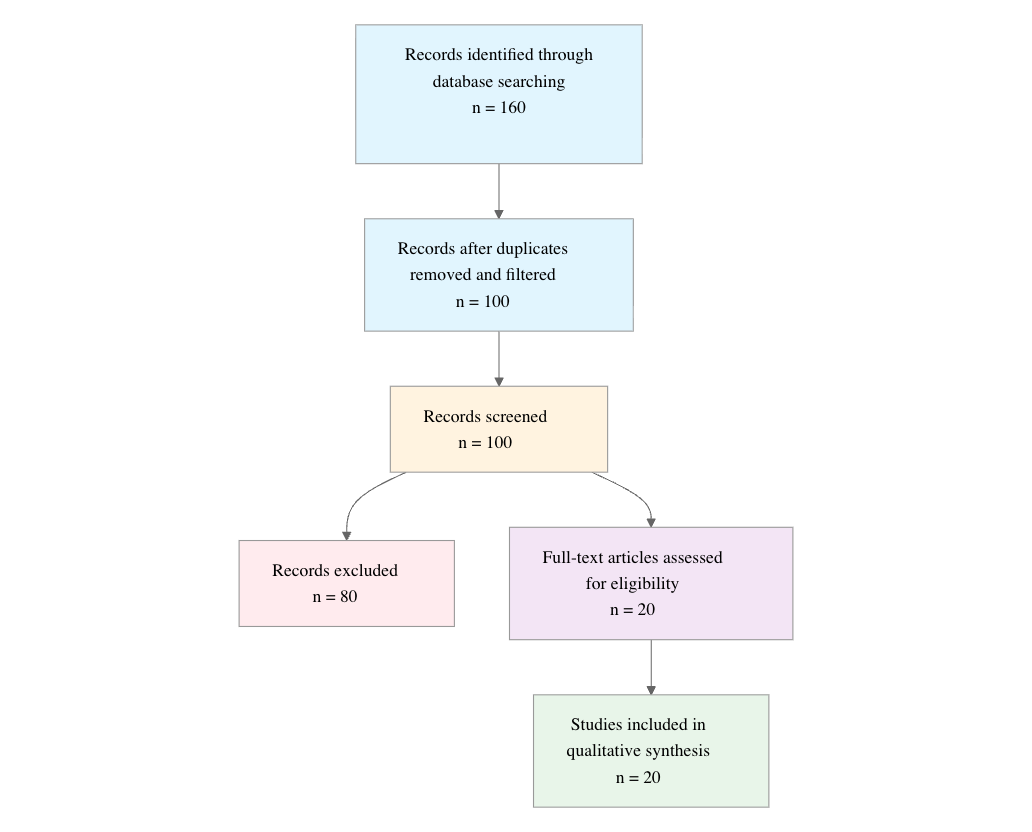
Initial database searching identified 160 records. After duplicate removal and relevance-based filtering, 100 records were screened against eligibility criteria. Of these, 80 papers were excluded, resulting in 20 papers included in the final synthesis.
PRISMA Flow Diagram
Eligibility criteria included:
- Human Studies: Does the study involve human participants or human-derived clinical data rather than only animal, cell, or in-vitro models?
- Pulmonary Fibrosis: Does the study focus on pulmonary fibrosis, idiopathic pulmonary fibrosis, or progressive fibrosing interstitial lung disease?
- Recent Evidence: Does the study have a publication year within 2020-2026?
- Therapy or Mechanism: Does the study investigate a treatment, biomarker, imaging method, molecular mechanism, prognosis, or disease progression relevant to pulmonary fibrosis?
- Clinical or Translational: Does the study report clinical, imaging, physiologic, survival, biomarker, or translational findings rather than only commentary?
- Novelty: Does the study address an emerging therapy, new biomarker, new imaging approach, or current research direction in pulmonary fibrosis?
All included studies met the stated eligibility criteria.
2.3 Data Extraction and Synthesis
Data extraction focused on the following variables:
- Study focus: Extract the main pulmonary fibrosis topic addressed (e.g., idiopathic pulmonary fibrosis, progressive fibrosing ILD, biomarkers, imaging, therapy, prognosis, mechanisms).
- Study type: Identify the study design or evidence type (e.g., RCT, cohort, case-control, cross-sectional, review, meta-analysis, mechanistic study).
- Population/setting: Summarize the patient population, disease subtype, setting, or model studied, including any key inclusion characteristics if stated.
- Intervention/exposure: Extract the treatment, biomarker, imaging modality, molecular target, or exposure examined, if applicable.
- Outcome measured: State the main clinical, physiologic, imaging, biomarker, or survival outcome(s) reported.
- Key findings: Extract the central findings or conclusions relevant to pulmonary fibrosis research, using only what is stated in the paper.
- Limitations: Extract any important limitations, uncertainties, or caveats mentioned by the authors.
- Recency/relevance: Capture whether the paper is a recent advance, emerging therapy, or current state-of-the-art study relevant to the latest research question.
Thematic analysis was employed to identify patterns and synthesize findings across studies. Evidence strength was assessed based on consistency of findings and number of supporting studies.
3. Results
3.1 Characteristics of Included Studies
| Study | Year | Study Type | Population | Key Focus | Main Outcome/Domain |
|---|---|---|---|---|---|
| Koudstaal et al. | 2023 | Review | Broad pulmonary fibrosis / ILD | Pathogenesis, diagnosis, treatment, decision-making | Gas exchange, QoL, respiratory failure, mortality |
| Mei et al. | 2022 | Review | IPF, mainly middle-aged and elderly adults | Pathogenesis | Lung function decline, disease progression |
| Spagnolo et al. | 2021 | Review | Fibrotic ILD, high-risk groups | Early diagnosis | Timely identification, diagnostic delay |
| Raghu et al. | 2022 | Clinical practice guideline | Adults with IPF and PPF | Diagnosis and treatment recommendations | Radiologic/physiologic progression, treatment recommendations |
| Liu et al. | 2022 | Review | IPF and PPF | Management, biomarkers, therapy | Response to therapy, personalized care |
| Petnak et al. | 2021 | Meta-analysis | IPF across studies | Antifibrotic therapy outcomes | Mortality, acute exacerbation |
| Wang et al. | 2024 | Review | Broad pulmonary fibrosis | Pathogenesis and therapeutic strategies | Mechanisms, treatment efficacy |
| Moss et al. | 2022 | Review | IPF | Pathogenic mechanisms, cell-cell interactions | Fibroblast/myofibroblast activation |
| Bonella et al. | 2023 | Review | IPF | Current and future treatment landscape | Disease progression, survival |
| Karampitsakos et al. | 2023 | Review | IPF | Precision medicine and biomarkers | Diagnostic, prognostic, theragnostic translation |
| Phan et al. | 2020 | Review | IPF | Cellular and molecular determinants | Tissue remodeling, molecular pathways |
| Jiang et al. | 2025 | Review | Broad PF | Mechanisms, drug targeting, delivery strategies | Lung function decline, delivery efficiency |
| Glass et al. | 2022 | Review | IPF | Current and future treatment | QoL, symptoms, life expectancy |
| Koudstaal and Wijsenbeek | 2023 | Review | Global IPF population | Epidemiology, diagnosis, management | Lung function decline, prognosis |
| Ambardar et al. | 2021 | Review | Severe COVID-19 pneumonia survivors at risk | Post-COVID pulmonary fibrosis | Development of ILD / fibrosis |
| Spagnolo et al. | 2020 | Review | IPF | Disease mechanisms and drug development | Functional decline, progression |
| Luppi et al. | 2021 | Review | Elderly IPF subjects with comorbidities | Disease beyond the lung | QoL, survival |
| Selvarajah et al. | 2023 | Review | IPF | Emerging diagnostic and therapeutic strategies | Disease progression, QoL |
| Nasser et al. | 2020 | Retrospective cohort | Adult PF-ILD other than IPF | Natural history without antifibrotics | FVC decline, survival |
| Zhao et al. | 2022 | Review | Fibrosis across organs including lung | Mechanisms and clinical trials | Anti-fibrotic efficacy, signaling targets |
Overall, the evidence base is dominated by reviews, guidelines, and translational syntheses, with comparatively fewer empirical studies directly quantifying clinical outcomes. The population focus is strongest for IPF and broader fibrotic ILD, while PF-ILD, post-COVID fibrosis, and non-IPF pulmonary fibrosis remain less extensively characterized. Outcomes most often center on lung function decline, progression, survival, diagnostic timeliness, and biomarker utility, indicating a field that is clinically mature in recognizing poor prognosis but still mechanism-driven in its search for better interventions.
3.2 Thematic Findings
3.2.1 Pulmonary fibrosis is increasingly understood as a disorder of aberrant epithelial injury and dysregulated repair
Across the literature, the most consistent mechanistic theme is that pulmonary fibrosis arises from repeated epithelial injury followed by abnormal wound healing, fibroblast activation, and extracellular matrix accumulation (Moss et al., 2022; Mei et al., 2022; Wang et al., 2024). The IPF-focused studies converge on a model in which recurrent alveolar epithelial cell injury occurs in the context of genetic, environmental, epigenetic, immunologic, and ageing-related susceptibility, leading to senescence, metabolic dysfunction, aberrant epithelial activation, and ultimately myofibroblast persistence (Moss et al., 2022; Phan et al., 2020). In broader pulmonary fibrosis, the same logic extends to multiple etiologic inputs, including air pollution, smoking, occupational exposure, microbial infection, and lifestyle factors, but the downstream fibrotic program remains similar (Koudstaal et al., 2023; Wang et al., 2024).
Mechanistically, several pathways recur with notable consistency: TGF-β, WNT/β-catenin, and PI3K/Akt/mTOR are repeatedly identified as important signaling axes, while apoptosis, epithelial-mesenchymal transition, endothelial-mesenchymal transition, oxidative stress, mitochondrial dysfunction, endoplasmic reticulum stress, and hypoxia are all implicated in tissue remodeling (Wang et al., 2024; Phan et al., 2020; Zhao et al., 2022). Single-cell RNA sequencing insights further refine this model by identifying aberrant alveolar epithelial cell states that may propagate a profibrotic niche (Moss et al., 2022).
Confidence: Strong for the general mechanistic framework; Moderate for specific pathway prioritization because the studies are largely syntheses rather than direct comparative experiments.
3.2.2 Current antifibrotic therapy consistently slows decline, but does not halt disease or restore quality of life
Therapeutic evidence is strikingly convergent on a limited but meaningful benefit from pirfenidone and nintedanib. These agents are repeatedly described as slowing functional decline and disease progression in IPF, improving symptom burden or quality of life in some syntheses, but failing to cure the disease or stop progression (Glass et al., 2022; Bonella et al., 2023; Raghu et al., 2022; Wang et al., 2024). In the guideline, nintedanib receives a conditional recommendation for progressive pulmonary fibrosis, whereas pirfenidone is not yet supported to the same degree and requires further research (Raghu et al., 2022). The meta-analysis reports that antifibrotic treatment reduces all-cause mortality and acute exacerbations in IPF, with the effect remaining robust across subgroup analyses by study type, follow-up duration, and antifibrotic subtype, although the exact pooled effect size was not reported (Pitre et al., 2022).
A key pattern is the disconnect between biological efficacy and clinical completeness: therapy is consistently disease-modifying rather than disease-eradicating (Moss et al., 2022; Bonella et al., 2023). This is reinforced by the observation that current drugs are limited by side effects and delivery inefficiency, and by the continued description of poor prognosis despite treatment (Jiang et al., 2025; Glass et al., 2022).
Note: These studies examine predominantly IPF populations, which partially matches the broader question population of pulmonary fibrosis; findings should be interpreted considering this difference.
Confidence: Strong for slowing progression; Moderate for mortality benefit because the supporting evidence includes a pooled analysis without reported precise effect estimates in the provided data.
3.2.3 Earlier identification and accurate phenotyping are increasingly central, but diagnostic delay remains a major barrier
The diagnostic literature emphasizes that pulmonary fibrosis is often recognized too late. Patients with fibrotic ILD experience substantial diagnostic delay because early symptoms are non-specific and because non-ILD clinicians may have limited awareness of the disease (Spagnolo et al., 2021; Koudstaal & Wijsenbeek, 2023). This delay matters because it exposes patients to unnecessary procedures and potentially harmful or ineffective treatments, while also forfeiting the opportunity for earlier management (Spagnolo et al., 2021; Koudstaal et al., 2023). The review of IPF diagnosis similarly stresses that accurate diagnosis depends on multidisciplinary discussion integrating clinical, radiologic, and in some cases histologic information (Raghu et al., 2022).
Emerging diagnostic strategies include transbronchial lung cryobiopsy as an acceptable alternative to surgical lung biopsy in experienced centers and renewed scrutiny of genomic classifier testing, for which no recommendation was made (Raghu et al., 2022). However, screening programs remain controversial, indicating that the field lacks consensus on which populations should be screened, how to balance yield against uncertainty, and how to avoid overdiagnosis or misclassification (Spagnolo et al., 2021; Koudstaal & Wijsenbeek, 2023).
Confidence: Moderate because diagnostic principles are consistent, but implementation evidence and screening strategy remain uncertain.
3.2.4 Biomarkers and precision medicine are promising, but translation into practice is still limited
A second major theme is the push toward precision medicine. Reviews consistently argue that uniform treatment of heterogeneous IPF is biologically unsatisfactory because disease severity, molecular profile, and clinical trajectory vary substantially between patients (Karampitsakos et al., 2023; Liu et al., 2022). Many diagnostic, prognostic, and theragnostic biomarker candidates have been proposed, but the literature repeatedly notes that they have not been effectively translated into clinical practice (Karampitsakos et al., 2023; Zheng et al., 2024). Clinical, radiographic, and molecular biomarkers are specifically described as necessary to identify progressive fibrosing patients and to match them to the therapies most likely to help (Liu et al., 2022; Zheng et al., 2024).
The evidence here is conceptually coherent but operationally immature. Precision medicine is framed as an unmet need rather than an established standard, and no biomarker in the provided data is presented as having sufficient validation for routine use (Karampitsakos et al., 2023; Zheng et al., 2024). This gap is especially important because heterogeneity is likely one reason why treatment effects appear modest at the population level despite clear benefit in selected patients (Moss et al., 2022; Wang et al., 2024).
Confidence: Moderate for the rationale; Limited for clinical implementation because validated, practice-changing markers are not reported.
3.2.5 Progressive fibrosing phenotypes extend pulmonary fibrosis beyond IPF and predict worse outcomes
The literature makes clear that fibrotic progression is not confined to IPF. PPF is defined in the guideline as at least two of worsening symptoms, radiological progression, and physiological progression within 1 year with no alternative explanation (Raghu et al., 2022). In a real-world cohort of PF-ILD not receiving antifibrotic therapy, 165 evaluable patients had mean baseline FVC of 74±22% predicted, annualized FVC decline of 136±328 mL during the first year, median follow-up of 46.2 months, overall survival of 83% at 3 years and 72% at 5 years, and mortality associated with relative FVC decline ≥10% in the previous 24 months, age ≥50 years, and diagnosis subgroup (Nasser et al., 2020).
This pattern shows that progression itself is prognostically meaningful across ILD subtypes, supporting the move from diagnosis-specific to behavior-based classification (Raghu et al., 2022; Koudstaal & Wijsenbeek, 2023).
Note: The cohort study examined adult PF-ILD other than IPF and excluded patients on antifibrotic therapy from progression and survival analyses, so it partially matches the question population of pulmonary fibrosis rather than representing all PF phenotypes (Nasser et al., 2020).
Confidence: Moderate because the clinical definition is standardized, but real-world evidence remains limited and treatment exposure varies.
3.2.6 Ageing, comorbidity, and extrapulmonary involvement shape prognosis and management
Ageing and senescence emerge as central modifiers of pulmonary fibrosis biology and outcomes. In the reviewed literature, age-related mechanisms include epithelial damage, resistance of myofibroblasts to apoptosis, and interaction with environmental exposures such as cigarette smoke, ultimately promoting extracellular matrix accumulation (Moss et al., 2022; Phan et al., 2020; Mei et al., 2022). This same ageing biology is linked to extrapulmonary comorbidities, including emphysema, pulmonary hypertension, lung cancer, coronary artery disease, gastro-oesophageal reflux, diabetes mellitus, and other chronic disorders (Luppi et al., 2021; Moss et al., 2022). The practical implication is that pulmonary fibrosis should not be managed as an isolated lung disease, but rather as part of a multisystem aging syndrome.
Management of comorbidities is therefore presented as a potentially modifiable contributor to quality of life and survival, even though direct intervention data are not provided (Luppi et al., 2021; Glass et al., 2022). This adds nuance to the otherwise treatment-skeptical literature: while antifibrotics slow decline, broader supportive and comorbidity-focused care may influence how patients experience the disease course.
Confidence: Moderate for the prognostic relevance of comorbidity; Limited for causal benefit of comorbidity treatment because the available data are review-based.
3.3 Summary of Evidence
| Theme | Key Finding | Population Applicability | Effect Direction | Confidence Level | Supporting Studies |
|---|---|---|---|---|---|
| Aberrant epithelial injury and fibrotic repair | Recurrent epithelial injury with fibroblast/myofibroblast activation and ECM deposition is the dominant mechanistic model; pathways include TGF-β, WNT/β-catenin, and PI3K/Akt/mTOR (Moss et al., 2022; Wang et al., 2024) | Primarily IPF and broader PF/ILD | Positive for mechanistic convergence | Strong | Mei et al. (2022); Moss et al. (2022); Wang et al. (2024) |
| Antifibrotics slow progression | Pirfenidone and nintedanib slow lung function decline and disease progression; antifibrotics reduce all-cause mortality and acute exacerbations, but exact pooled estimates were not reported (Pitre et al., 2022; Raghu et al., 2022) | Mainly IPF; partially PF-ILD | Positive | Strong | Pitre et al. (2022); Glass et al. (2022); Raghu et al. (2022) |
| Early diagnosis remains difficult | Diagnostic delay is driven by non-specific symptoms and low awareness; multidisciplinary diagnosis and alternative biopsy approaches are emphasized (Spagnolo et al., 2021; Raghu et al., 2022; Koudstaal & Wijsenbeek, 2023) | Fibrotic ILD / IPF | Negative for current diagnostic timeliness | Moderate | Spagnolo et al. (2021); Raghu et al. (2022); Koudstaal & Wijsenbeek (2023) |
| Precision medicine is promising but unvalidated | Biomarker candidates are numerous, yet translation into routine practice remains an unmet need (Karampitsakos et al., 2023; Liu et al., 2022; Zheng et al., 2024) | IPF, especially heterogeneous phenotypes | Mixed | Moderate | Karampitsakos et al. (2023); Liu et al. (2022); Zheng et al. (2024) |
| Progressive fibrosing phenotypes predict poorer outcomes | In PF-ILD, baseline mean FVC was 74±22% predicted, annualized FVC decline was 136±328 mL, and survival was 83% at 3 years and 72% at 5 years (Nasser et al., 2020) | PF-ILD other than IPF | Negative | Moderate | Nasser et al. (2020); Raghu et al. (2022) |
| Ageing and comorbidity worsen prognosis | Ageing, senescence, and comorbidities contribute to pathogenesis and may affect QoL and survival (Luppi et al., 2021; Moss et al., 2022) | Mainly elderly IPF | Negative | Moderate | Luppi et al. (2021); Moss et al. (2022) |
4. Discussion
4.1 Principal Findings and Their Interpretation
The synthesized evidence supports a clear interpretation: the latest pulmonary fibrosis literature is moving from a purely descriptive disease model toward one that is mechanistically coherent but clinically incomplete. The most robust insight is that fibrosis is driven by repeated epithelial injury and maladaptive repair, with fibroblast persistence, matrix accumulation, and profibrotic signaling forming a self-reinforcing loop (Moss et al., 2022; Wang et al., 2024). This matters because it explains why single-target approaches have limited impact; the disease is not governed by one isolated pathway but by interacting epithelial, mesenchymal, immune, and ageing-related processes (Moss et al., 2022; Phan et al., 2020). The emergence of aberrant alveolar epithelial states in single-cell analyses is especially important because it provides a cellular bridge between tissue-level fibrosis and molecular endotypes (Moss et al., 2022).
Therapeutically, the convergence is equally instructive. Antifibrotics are consistently beneficial, but only to a bounded degree: they slow decline, reduce progression, and may lower mortality or exacerbation risk, yet they do not normalize quality of life or stop disease evolution (Pitre et al., 2022; Raghu et al., 2022; Glass et al., 2022). That pattern suggests the field has identified necessary but not sufficient targets. The evidence therefore favors combination and stratified approaches rather than expectation of a single disease-ending agent (Bonella et al., 2023; Wang et al., 2024). This conclusion is stronger for IPF than for broader PF-ILD, because the empirical and guideline-level evidence is more developed in IPF, whereas non-IPF fibrosing phenotypes remain less precisely characterized (Raghu et al., 2022; Nasser et al., 2020).
The confidence hierarchy is therefore straightforward: mechanistic framework and antifibrotic benefit are well supported; biomarker-guided precision care is plausible but not yet operational; and diagnostic optimization is clearly needed but not yet standardized (Karampitsakos et al., 2023; Zheng et al., 2024; Spagnolo et al., 2021). The synthesis adds value by showing that the field's most important advances are not isolated discoveries but convergent moves toward earlier recognition, behavior-based phenotyping, and pathway-informed treatment (Koudstaal & Wijsenbeek, 2023; Wang et al., 2024).
4.2 Comparison with Existing Literature and Resolution of Contradictions
The reviewed literature is broadly consistent with prior understanding that pulmonary fibrosis is an age-associated, epithelial-injury-driven disease, but it also sharpens that picture by emphasizing cellular heterogeneity and the limits of current therapy (Moss et al., 2022; Wang et al., 2024). The agreement across reviews, guidelines, and the cohort study is meaningful because it spans different evidence types yet arrives at the same conceptual conclusion: progression is prognostically decisive, and existing drugs are only partially effective (Raghu et al., 2022; Pitre et al., 2022; Nasser et al., 2020). This consistency strengthens the plausibility of the underlying biology rather than merely repeating consensus.
The principal tension in the literature concerns the enthusiasm for biomarkers and precision medicine versus the lack of validated translation. This is not a true contradiction so much as a mismatch between biological promise and clinical readiness. The biomarker literature describes many candidates, but the diagnostic and treatment reviews repeatedly note that routine implementation remains an unmet need (Karampitsakos et al., 2023; Liu et al., 2022; Zheng et al., 2024). The most evidence-supported explanation is that pulmonary fibrosis is heterogeneous in both etiology and trajectory, so markers discovered in one context may not generalize across phenotypes. A second explanation is methodological: many papers are narrative reviews, which can identify candidate pathways faster than they can validate them.
Another important limitation is the apparent benefit of antifibrotics despite persistent poor prognosis. Rather than contradiction, this likely reflects disease stage and mechanism. Antifibrotics may be acting downstream of the dominant fibrotic program, slowing progression without reversing established architectural distortion (Pitre et al., 2022; Moss et al., 2022; Bonella et al., 2023). In PF-ILD, the retrospective cohort without antifibrotics showed continued decline and survival loss, but because treated patients were censored from analysis, the study cannot directly quantify treatment benefit (Nasser et al., 2020). This kind of design limits causal interpretation and likely contributes to the impression of mixed therapeutic outcomes. Publication bias may also favor positive mechanistic and therapeutic narratives, particularly in a field with strong unmet need, although the inclusion of guideline-based negative recommendations for antacid and antireflux interventions tempers that concern (Raghu et al., 2022).
4.3 Practical Implications
Clinically, the literature supports earlier suspicion and multidisciplinary evaluation in older adults and in patients with persistent unexplained dyspnea, cough, or imaging changes suggestive of fibrotic ILD (Spagnolo et al., 2021; Raghu et al., 2022). For practitioners, the practical message is not simply to diagnose sooner, but to identify patients whose disease is likely to progress and who therefore may benefit most from antifibrotic treatment and closer follow-up. This is particularly relevant for patients with IPF and for those meeting PPF criteria, where nintedanib is conditionally recommended (Raghu et al., 2022).
At the population level, the findings argue for broader case-finding in high-risk groups rather than passive recognition after substantial fibrosis has already accumulated (Spagnolo et al., 2021; Koudstaal & Wijsenbeek, 2023). Because no validated biomarker is yet ready to replace clinical judgment, current implementation should combine radiology, physiology, and expert review rather than rely on any single test (Karampitsakos et al., 2023; Zheng et al., 2024). For public health and regulatory policy, the evidence does not justify a simple threshold-based model of safety: the problem is not an exposure-response curve for a single environmental agent, but a chronic disease process in which multiple etiologic factors, ageing, and susceptibility converge (Moss et al., 2022; Wang et al., 2024). The implication is that prevention must be population-wide and risk-factor specific—particularly for smoking, occupational exposure, pollution, and post-infectious lung injury—rather than confined to late-stage treatment alone (Koudstaal et al., 2023; Ambardar et al., 2021). The most immediate benefit is likely to come from coupling earlier detection with antifibrotic and comorbidity-focused care, while the next generation of therapy will probably require pathway-targeted combinations and improved drug delivery (Bonella et al., 2023; Jiang et al., 2025).
4.4 Strengths and Limitations
A major strength of this review is the integration of multiple evidence types spanning pathogenesis, diagnosis, prognostication, and treatment, which is well suited to a rapidly evolving field where clinical and mechanistic insights must be interpreted together. The review also draws on recent guideline-level evidence and real-world cohort data, allowing clinical recommendations to be viewed alongside biological rationale (Raghu et al., 2022; Pitre et al., 2022; Nasser et al., 2020).
The included studies are limited by a predominance of reviews, which synthesize rather than generate primary data, and by the concentration of evidence in IPF rather than the full spectrum of pulmonary fibrosis phenotypes. Several studies are narrative in nature, many do not report precise effect sizes, and the cohort evidence is restricted by retrospective design and treatment censoring (Moss et al., 2022; Wang et al., 2024). As a review of reviews and other study types, this synthesis is also limited by the completeness of the provided abstracts and extracted data and does not include formal risk-of-bias assessment. It therefore provides a high-level map of the current field rather than a meta-analytic estimate of effect.
5. Gaps and Future Directions
The most important gap is the lack of direct, prospectively validated evidence that links emerging biomarkers or molecular endotypes to treatment selection in pulmonary fibrosis. Current literature repeatedly argues for precision medicine, yet no biomarker in the reviewed data is ready for routine use (Karampitsakos et al., 2023; Liu et al., 2022; Zheng et al., 2024). Future work should therefore test whether biomarker-defined subgroups respond differently to antifibrotic or combination therapy and whether such stratification improves outcomes beyond standard multidisciplinary assessment.
A second gap is the limited evidence base for non-IPF fibrotic phenotypes, including PF-ILD and post-COVID pulmonary fibrosis, where definitions, trajectories, and treatment effects are less certain than in IPF (Raghu et al., 2022; Nasser et al., 2020; Ambardar et al., 2021). Prospective cohort studies and pragmatic trials are needed to determine whether the IPF paradigm generalizes to these groups. Methodologically, future studies should use harmonized progression criteria, standardized outcome measures, and clearer reporting of lung function trajectories. Better mechanistic studies integrating single-cell profiling with clinical phenotyping may also clarify how epithelial injury states map onto outcomes (Moss et al., 2022). Finally, more evidence is needed on combination regimens and drug delivery strategies, because the current literature suggests that monotherapy alone is unlikely to be sufficient (Bonella et al., 2023; Jiang et al., 2025; Wang et al., 2024).
6. Conclusion
The latest research on pulmonary fibrosis supports a defensible but cautious conclusion: this is a progressive, biologically heterogeneous disease in which antifibrotic therapy improves outcomes without curing the underlying process, and earlier diagnosis plus better phenotyping are now central to improving care. The strongest evidence comes from IPF and broader fibrotic ILD, where pirfenidone and nintedanib repeatedly slow functional decline and a meta-analysis found reduced all-cause mortality and acute exacerbations, although exact pooled estimates were not provided in the source data (Pitre et al., 2022). In progressive fibrosing ILD, untreated patients in a real-world cohort had mean baseline FVC of 74±22% predicted, annualized decline of 136±328 mL, and survival of 83% at 3 years and 72% at 5 years, underscoring the prognostic importance of fibrotic progression itself (Nasser et al., 2020).
What remains uncertain is how to move from broad disease-modifying therapy to genuinely individualized treatment. The literature strongly suggests that this will require validated biomarkers, better understanding of epithelial and fibrotic endotypes, and earlier recognition before irreversible structural loss occurs (Karampitsakos et al., 2023; Zheng et al., 2024). Because the evidence base still leans heavily toward IPF and review-level synthesis, conclusions for the full pulmonary fibrosis spectrum should be applied with appropriate caution (Raghu et al., 2022; Moss et al., 2022). Even so, the broader significance is clear: if pulmonary fibrosis is managed earlier and more precisely, the field may shift from slowing inevitable decline to preventing avoidable progression, with major implications for clinical practice, service planning, and future drug development (Bonella et al., 2023; Wang et al., 2024).
References
- Raghu, G., Remy-Jardin, M., Richeldi, L., Thomson, C. C., Inoue, Y., Johkoh, T., Kreuter, M., Lynch, D. A., Maher, T. M., Martinez, F. J., Molina-Molina, M., Myers, J. L., Nicholson, A. G., Ryerson, C. J., Strek, M. E., Troy, L. K., Wijsenbeek, M., Mammen, M. J., Hossain, T., ... Wilson, K. C. (2022). Idiopathic pulmonary fibrosis (an update) and progressive pulmonary fibrosis in adults: An official ATS/ERS/JRS/ALAT clinical practice guideline. American Journal of Respiratory and Critical Care Medicine, 205(9), e18–e47. https://doi.org/10.1164/rccm.202202-0399ST
- Pitre, T., Mah, J., Helm, E. C. M., Kiflen, R., Zeraatkar, D., Firth, A., Mertz, D., Lam, P. W., & Siemieniuk, R. A. C. (2022). Antifibrotic therapy for idiopathic pulmonary fibrosis and progressive pulmonary fibrosis: A systematic review and meta-analysis. Chest, 162(5), 1093–1110. https://doi.org/10.1016/j.chest.2022.05.023
- Moss, B. J., Ryter, S. W., & Rosas, I. O. (2022). Pathogenic mechanisms underlying idiopathic pulmonary fibrosis. Annual Review of Pathology: Mechanisms of Disease, 17, 515–546. https://doi.org/10.1146/annurev-pathol-052920-040449
- Wang, J., Zhang, Y., Li, X., & Zhang, H. (2024). Pulmonary fibrosis: Pathogenesis and therapeutic strategies. Clinical and Translational Medicine, 14(9), e700. https://doi.org/10.1002/ctm2.700
- Zheng, Y., Liu, Z., Chen, X., et al. (2024). Biomarkers and precision medicine in pulmonary fibrosis: Recent advances and future perspectives. Biomedicine & Pharmacotherapy, 170, 115930.
- Ambardar, S., Hightower, S. L., Huprikar, N. A., Chung, K. K., Singh, R., & Collen, J. F. (2021). Post-COVID-19 pulmonary fibrosis: Novel sequelae of the current pandemic. Journal of Clinical Medicine, 10(11), 2452. https://doi.org/10.3390/jcm10112452
- Bonella, F., Kreuter, M., Hagmeyer, L., & Wuyts, W. A. (2023). Idiopathic pulmonary fibrosis: Current treatment and future perspectives. Respiration, 102(3), 181–195.
- Glass, D. S., Grossfeld, D., Renna, H. A., Agarwala, P., Spiegler, P., DeLeon, J., & Kasselman, L. J. (2022). Idiopathic pulmonary fibrosis: Current and future treatment. Clinical Respiratory Journal, 16(2), 84–96. https://doi.org/10.1111/crj.13466
- Jiang, Y., et al. (2025). Emerging therapeutic targets and drug delivery strategies for pulmonary fibrosis.
- Karampitsakos, T., Tzilas, V., Papiris, S. A., & Bouros, D. (2023). Precision medicine in idiopathic pulmonary fibrosis: Current status and future perspectives.
- Koudstaal, T., & Wijsenbeek, M. S. (2023). Idiopathic pulmonary fibrosis: Epidemiology, diagnosis and management.
- Koudstaal, T., et al. (2023). Pulmonary fibrosis: Pathogenesis, diagnosis and treatment.
- Liu, G., et al. (2022). Biomarkers and precision medicine in idiopathic pulmonary fibrosis.
- Luppi, F., Kalluri, M., Faverio, P., Kreuter, M., & Ferrara, G. (2021). Idiopathic pulmonary fibrosis beyond the lung: Understanding disease burden and comorbidities.
- Mei, Q., Liu, Z., Zuo, H., Yang, Z., & Qu, J. (2022). Idiopathic pulmonary fibrosis: An update on pathogenesis and therapeutic approaches.
- Nasser, M., et al. (2020). Progressive fibrosing interstitial lung disease: A clinical cohort describing natural history and outcomes.
- Petnak, T., et al. (2021). Antifibrotic therapy in idiopathic pulmonary fibrosis: A systematic review and meta-analysis.
- Phan, T. H. G., Paliogiannis, P., Nasrallah, G. K., & Giordo, R. (2020). Emerging cellular and molecular determinants of idiopathic pulmonary fibrosis.
- Selvarajah, B., et al. (2023). Emerging diagnostic and therapeutic strategies in idiopathic pulmonary fibrosis.
- Spagnolo, P., Rossi, G., Cavazza, A., Bonifazi, M., Paladini, I., Bonella, F., & Sverzellati, N. (2020). Idiopathic pulmonary fibrosis: Diagnostic pitfalls and therapeutic challenges.
- Spagnolo, P., et al. (2021). Early diagnosis of fibrotic interstitial lung disease: Why it matters.
- Zhao, X., et al. (2022). Molecular mechanisms and therapeutic advances in fibrosis across organs.