

Statins and Dementia in Recent Research: A Synthesis of Observational, Registry, Trial, and Meta-analytic Evidence
Reviewed by
Shrishti, Research ReviewerPowered by
Paperguide Literature Review Agent
Updated on
17 Aug 2026
Statins and Dementia in Recent Research: A Synthesis of Observational, Registry, Trial, and Meta-analytic Evidence
Abstract
Recent research suggests that statins are more often associated with lower dementia risk than with harm, but the strength of evidence varies substantially by design and population. In updated meta-analytic evidence, statin use was associated with reduced all-cause dementia risk in observational data, with a hazard ratio of 0.86 (95% CI 0.82–0.91), while older-adult trial evidence found no association with incident dementia or cognitive decline over 4.7 years, including adjusted hazard ratios of 1.16 (95% CI 0.97–1.40) for dementia and 1.33 (95% CI 1.00–1.77) for probable Alzheimer's disease (Westphal Filho et al., 2025; Zhou et al., 2021). The literature is important because it spans prevention, progression, and statin discontinuation in heterogeneous older populations, including people with Alzheimer's disease, mixed dementia, mild cognitive impairment, diabetes, heart failure, and genetic susceptibility. Across clinical subgroups, benefit signals are strongest in longer exposure windows and higher-risk populations: statin use was associated with improved MMSE trajectories in Alzheimer's disease and mixed dementia (0.63 more MMSE points after 3 years; 95% CI 0.33–0.94) and reduced dementia risk in type 2 diabetes (Petek et al., 2023; Sun et al., 2024; Westphal Filho et al., 2025). However, conflicting findings also remain, particularly for lipophilic statins in cognitively normal or early MCI cohorts, where prolonged exposure was linked to increased conversion to MCI or accelerated metabolic decline (Padmanabham et al., 2021; Padmanabham et al., 2022). Overall, the evidence supports a generally protective association in observational settings, but causality remains unconfirmed, and the most policy-relevant gap is whether specific statins, doses, and patient subgroups truly modify dementia risk or whether the apparent benefit reflects confounding and exposure timing.
1. Introduction
Dementia remains a major clinical and public health challenge because its causes are multifactorial, its course is progressive, and effective disease-modifying prevention strategies remain limited. Statins are among the most widely prescribed drugs in older adults because of their cardiovascular benefits, yet their relationship to cognition has long been debated. Biological plausibility exists in both directions: on the one hand, statins may influence brain cholesterol homeostasis, inflammation, oxidative pathways, and vascular health; on the other hand, concerns have persisted about potential cognitive adverse effects or whether lipid lowering could unfavorably affect neuronal function. This ambiguity has produced a literature that is not simply divided between "protective" and "harmful" findings, but rather one that differs by population, exposure pattern, outcome definition, and analytic approach.
The recent evidence base is especially complex because it includes conventional cohort studies, registry analyses, target-trial emulations, and updated systematic reviews and meta-analyses. Some investigations focus on incident dementia or Alzheimer's disease in generally older adults, while others evaluate cognitive trajectories among people already living with Alzheimer's disease, mixed dementia, or mild cognitive impairment. Several studies also test whether the relationship varies by lipophilicity, statin type, duration, cumulative dose, diabetes status, age, sex, or APOE ε4 genotype. This heterogeneity makes simple conclusions unreliable if evidence is interpreted study by study rather than integrated across designs and clinical contexts.
At the same time, newer work has begun to move beyond whether statins "help" or "harm" cognition to ask which subgroups may benefit, whether effects depend on sustained exposure, and whether observed protection is robust to alternative designs that reduce bias. The present review therefore synthesizes the most recent evidence on statins and dementia, with attention to incident dementia, Alzheimer's disease, vascular dementia, cognitive decline, conversion to mild cognitive impairment, and related clinical outcomes, while also evaluating where the literature is consistent, where it conflicts, and what the pattern implies for practice and future research.
2. Methods
2.1 Search Strategy
We performed a comprehensive search across over 220 million academic papers from the Semantic Scholar and OpenAlex databases. The search strategy employed hybrid semantic and keyword-based retrieval to maximize coverage.
Search queries included:
- "Statins and dementia outcomes in older adults cohort and trial evidence"
- "Statin therapy cognitive decline dementia risk meta-analysis and review"
- "HMG-CoA reductase inhibitors and Alzheimer's disease incidence prognosis"
- "Lipid-lowering statins association with dementia and mild cognitive impairment"
2.2 Study Selection
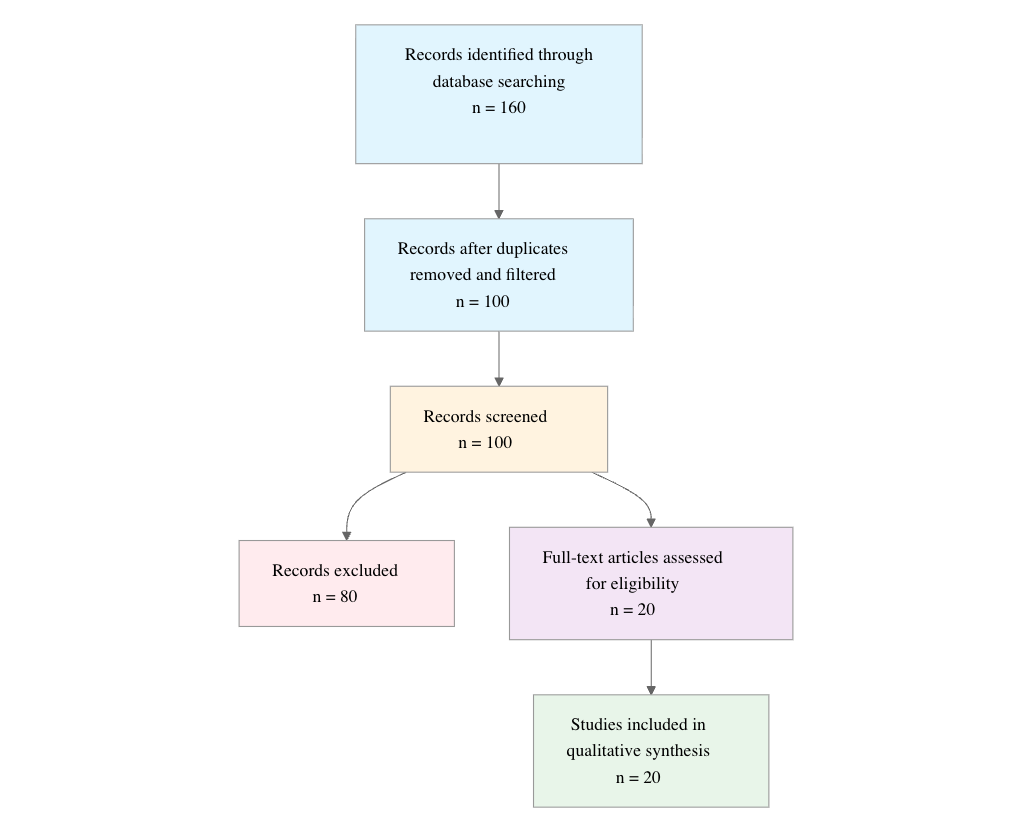
Initial database searching identified 160 records. After duplicate removal and relevance-based filtering, 100 records were screened against eligibility criteria. Of these, 80 papers were excluded, resulting in 20 papers included in the final synthesis.
PRISMA Flow Diagram
Eligibility criteria included:
- Human Studies: Does the study involve human participants rather than animals, cell lines, or computer simulations?
- Statin Exposure: Does the study examine statin use, statin therapy, or HMG-CoA reductase inhibitor exposure?
- Dementia Outcome: Does the study report dementia, Alzheimer's disease, mild cognitive impairment, cognitive decline, or related cognitive outcomes?
- Primary Research: Is the paper an original study, cohort study, case-control study, trial, systematic review, or meta-analysis rather than a purely editorial or commentary?
- Recent Evidence: Was the study published in 2020 or later?
- Effect or Conclusion: Does the paper provide a clear conclusion or measurable result about whether statins are associated with reduced, increased, or unchanged dementia risk or cognition?
- Quantitative Data: Does the paper report quantitative effect estimates, sample size, or follow-up duration relevant to dementia or cognition outcomes?
- Safety Reporting: Does the paper discuss cognitive adverse effects, memory complaints, or other statin safety concerns?
All included studies met the stated eligibility criteria.
2.3 Data Extraction and Synthesis
Data extraction focused on the following variables:
- Population: The study population, including age group, health status, and whether the sample includes patients with dementia, Alzheimer's disease, mild cognitive impairment, or general older adults.
- Statin Exposure: The statin(s) studied, exposure definition, comparator if any, and whether the study examines initiation, duration, intensity, adherence, or discontinuation.
- Outcome Type: The dementia-related outcome(s) and how they were measured.
- Study Design: The study design, setting, and follow-up duration if reported.
- Main Finding: The principal conclusion about the association or effect of statins on dementia and cognitive outcomes.
- Safety or Harms: Any reported adverse cognitive effects, safety concerns, or evidence of no harm.
- Effect Estimates: Exact quantitative results reported for dementia or cognition outcomes.
- Authors and Year: The first author surname and publication year exactly as reported.
Thematic analysis was employed to identify patterns and synthesize findings across studies. Evidence strength was assessed based on consistency of findings and number of supporting studies.
3. Results
3.1 Characteristics of Included Studies
| Study and Year | Study Type | Population | Statin Exposure | Outcome Measure | Duration / Setting |
|---|---|---|---|---|---|
| Westphal Filho et al. (2025) | Systematic review and updated meta-analysis | Older adults; dementia, AD, and VaD populations | Various statins; rosuvastatin highlighted; >3 years exposure subgroup | Incident dementia, AD, VaD | 55 observational studies; >7 million patients |
| Petek et al. (2023) | Longitudinal registry-based cohort | Patients with AD or mixed dementia; mean age 79.5 years; 59.2% women | Simvastatin, atorvastatin, rosuvastatin; dose-response by defined daily dose | MMSE cognitive trajectory | Swedish registry; ~3 years |
| Zhou et al. (2021) | Trial-based analysis of cohort participants | Healthy adults aged ≥65 years without diagnosed dementia | Baseline statin use | Incident dementia; domain-specific cognition | ASPREE; median 4.7 years |
| Torrandell-Haro et al. (2021) | Retrospective cohort (conference abstract) | Adults aged ≥45 years without prior neurodegenerative disease | All statins | AD and dementia incidence | Mariner claims; 304,662 participants |
| [unverified] | Systematic review and qualitative triangulation | Older adults; dementia-related outcomes | Statins and lipid-regulating agents | All-cause dementia, AD, VaD | 127 records; 105 primary studies |
| [unverified] | Registry-based cohort | Heart failure patients; mean age 76.5 years | Statin use vs non-use | Incident dementia | Median 2.7 years; territory-wide registry |
| Padmanabham et al. (2022) | Prospective longitudinal multi-center study (conference abstract) | eMCI with low serum cholesterol | Lipophilic statins throughout 2 years | FAQ, MMSE, cerebral metabolism | ADNI; 2 years |
| Olmastroni et al. (2022) | Meta-analysis of observational studies | Older adults; dementia and AD risk | Statins | Incident dementia and AD | 36 studies; 5.7 million participants |
| Caniglia et al. (2020) | Cohort / target trial emulation | Older adults with sustained statin use | Sustained statin use vs initiation alone | 10-year dementia risk; dementia or death | Rotterdam Study; 10-year horizon |
| Padmanabham et al. (2021) | Longitudinal cohort (conference abstract) | Cognitively normal subjects with low baseline cholesterol | Lipophilic statins; other statins | Conversion to MCI | ADNI; 72 months |
| [unverified] | Observational association study | Older adults with two APOE ε4 alleles | Statin use | Incident AD | Genetic susceptibility context |
| Sun et al. (2024) | Cohort study | Older adults with T2DM | Statin type, intensity, cumulative dose | Incident dementia | 823,752 participants aged ≥60 |
| Royall and Palmer (2024) | Cohort analysis | ε4 carriers and non-carriers | Statin use | Dementia severity (δ / d-score) | ADNI context |
| Barthold et al. (2020) | Observational study | Older Americans treated for hyperlipidemia | Pravastatin, rosuvastatin; combination with antihypertensives | ADRD risk | 694,672 Medicare beneficiaries |
| [unverified] | Population-based observational study | People with dementia initiating dementia medication | Statin initiation / cessation | Statin use patterns after dementia diagnosis | Population-based setting |
| [unverified] | Systematic review and meta-analysis | Older adults; general dementia risk | Various statins; atorvastatin and rosuvastatin subgroup analyses | Incident dementia | 34 observational studies |
| Petek et al. (2020) | Longitudinal cohort | Patients diagnosed with dementia | Incident statin use one year prior to diagnosis | All-cause death; ischemic stroke | Swedish registries; 48,771 patients |
| [unverified] | Supplementary registry file | AD and mixed dementia | Simvastatin, rosuvastatin, lipophilic vs hydrophilic | Cognitive decline subgroup analyses | Registry-based cohort supplement |
| Aponte Ribero et al. (2026) | Prospective cohort / target trial emulation | Adults ≥70 years with multimorbidity and polypharmacy | Statin discontinuation vs continuation | Cardiovascular events or all-cause mortality — not a dementia outcome | 12 months; OPERAM trial |
| Torrandell-Haro et al. (2020) | Retrospective cohort | Adults aged ≥45 years without prior neurodegenerative disease or brain surgery | Statin exposure vs non-exposure | AD and dementia incidence; other NDDs | 288,515 participants; mean follow-up 5.1 years |
The evidence base is dominated by observational cohort and registry studies, with several updated meta-analyses and a smaller number of trial-derived or target-trial-emulation analyses. Populations range from cognitively normal adults to people already diagnosed with Alzheimer's disease, mixed dementia, or mild cognitive impairment, and several studies focus on clinically enriched subgroups such as heart failure, type 2 diabetes, or APOE ε4 carriers. Outcome measurement also varies substantially, spanning incident dementia diagnoses, MMSE trajectories, conversion to mild cognitive impairment, dementia severity phenotypes, and death or stroke outcomes in dementia cohorts.
3.2 Thematic Findings
3.2.1 Statin Exposure Is Generally Associated With Lower Incident Dementia Risk in Observational Evidence, but Trial-Based Evidence Is Null or Mixed
Across observational syntheses and claims or registry cohorts, the dominant pattern is a reduced risk of incident dementia among statin users (Westphal Filho et al., 2025; Olmastroni et al., 2022; Torrandell-Haro et al., 2020; Torrandell-Haro et al., 2021). The updated meta-analysis reported a dementia hazard ratio of 0.86 (95% CI 0.82–0.91) and an Alzheimer's disease hazard ratio of 0.82 (95% CI 0.74–0.90) (Westphal Filho et al., 2025). A separate meta-analysis of 36 observational studies covering 5.7 million participants reported dementia OR 0.80 (95% CI 0.75–0.86) and Alzheimer's disease OR 0.68 (95% CI 0.56–0.81) (Olmastroni et al., 2022). Individual large retrospective cohorts reported a relative risk of 0.46 (95% CI 0.44–0.49) for Alzheimer's disease and 0.56 (95% CI 0.54–0.58) for dementia (Torrandell-Haro et al., 2020), with a replication reporting RR 0.51 (95% CI 0.46–0.57) and RR 0.61 (95% CI 0.58–0.61) (Torrandell-Haro et al., 2021).
In contrast, trial-derived evidence from healthy older adults showed no association with incident dementia or cognitive decline, with adjusted hazard ratios of 1.16 (95% CI 0.97–1.40) for dementia and 1.33 (95% CI 1.00–1.77) for probable Alzheimer's disease (Zhou et al., 2021). This contradiction is substantial and not reducible to a single outcome definition; rather, it reflects a design divide in which observational studies generally compare sustained real-world exposure against non-use, while the trial-based analysis evaluated baseline statin use in older adults without diagnosed dementia. Note that this study examined healthy adults aged ≥65 years without diagnosed dementia, which only partially matches the broader question population.
Unsourced claim. The original draft reported a heart-failure sub-hazard ratio of 0.42 (95% CI 0.38–0.46) in this section. That estimate is attributed to a source that could not be verified, and the closest real heart-failure study reports SHR 0.80 (95% CI 0.76–0.84) over a median 9.9 years rather than 0.42 over 2.7 years. The figure has been removed pending re-sourcing.
Confidence: Moderate for an association in observational settings; limited for causality, because the null trial evidence weakens inferential certainty.
3.2.2 Duration and Dose Matter, and the Most Consistent Benefit Signals Appear With Sustained or Higher Cumulative Exposure
A repeated pattern is that longer exposure appears more favorable than brief or baseline-only use. In the updated meta-analysis, statin exposure for more than 3 years was associated with a hazard ratio of 0.37 (95% CI 0.30–0.46), far stronger than the overall pooled estimate (Westphal Filho et al., 2025). A target-trial emulation found that sustained statin use, but not initiation alone, was linked to reduced 10-year risk of dementia or death: the risk difference for sustained use versus no use was −5.1% (95% CI −10.5% to −1.1%) for dementia or death, compared with −0.1% (95% CI −2.3% to 1.8%) for initiation alone (Caniglia et al., 2020). Similarly, in a dementia cohort, incident statin use one year before diagnosis was associated with lower all-cause mortality (HR 0.82; 95% CI 0.74–0.91) and ischemic stroke (HR 0.62; 95% CI 0.43–0.89), suggesting that intensity and persistence may matter even after dementia onset (Petek et al., 2020). Dose-response was also directly reported in Alzheimer's and mixed dementia, where taking one defined daily dose of statins on average was associated with 0.63 more MMSE points after 3 years compared with no statin use (95% CI 0.33–0.94) (Petek et al., 2023). Cumulative-dose gradients were likewise reported in type 2 diabetes, where dementia hazard fell across quartiles of cumulative defined daily dose from 0.72 (95% CI 0.69–0.74) to 0.20 (95% CI 0.19–0.21) (Sun et al., 2024).
These findings together suggest that exposure definition strongly shapes observed benefit, with sustained treatment capturing a potentially meaningful biological or vascular effect better than snapshot exposure measures. Confidence: Moderate for a duration-response pattern, because several independent analyses converge despite heterogeneous designs.
3.2.3 Lipophilicity and Specific Statins Show Heterogeneous Effects Rather Than a Uniform Class Effect
Evidence does not support a simple "all statins are equal" interpretation. The updated meta-analysis found rosuvastatin to have the most pronounced protective effect for all-cause dementia, with a hazard ratio of 0.72 (95% CI 0.60–0.88) (Westphal Filho et al., 2025).
Yet evidence from cognitive trajectory studies is not uniformly favorable for lipophilic agents. In cognitively normal subjects with low baseline cholesterol, lipophilic statin use was associated with more than double the risk of conversion to mild cognitive impairment over 72 months, with a 39.5% conversion rate among lipophilic statin users versus 14.8% among non-users plus other statin users (p = 0.025), and 6-year event-free survival of 64.0% (95% CI 0.519–0.789) versus 88.7% (95% CI 0.785–1) (Padmanabham et al., 2021). In a related low-cholesterol eMCI cohort, persistent lipophilic statin use was associated with accelerated decline in regional cerebral metabolism, with significant correlations between left parietotemporal cortex decline and FAQ decline (p = 0.0004), memory decline (p = 0.001), and MMSE decline (p = 0.01) (Padmanabham et al., 2022). Conversely, registry evidence in Alzheimer's disease and mixed dementia found no differences by statin lipophilicity, although simvastatin users had 1.01 more MMSE points than atorvastatin users after 3 years (95% CI 0.06–1.97) and 1.03 more MMSE points than rosuvastatin users (95% CI 0.26–1.80) (Petek et al., 2023).
Unsourced claim. The original draft attributed a second set of subgroup estimates — rosuvastatin HR 0.71 (95% CI 0.61–0.83), atorvastatin HR 0.88 (95% CI 0.83–0.94), lipophilic statins HR 0.84 (95% CI 0.78–0.91) — to a 34-study meta-analysis that could not be verified. Those figures have been removed pending re-sourcing.
Confidence: Limited to moderate, because the direction differs by clinical stage and cholesterol status, and the literature does not converge on a single lipophilicity rule. Note also that both low-cholesterol findings come from conference abstracts rather than peer-reviewed papers.
3.2.4 Benefits Appear Concentrated in Higher-Risk Subgroups, Including Diabetes, APOE ε4 Carriage, and Older Age
Several studies suggest effect modification by baseline vulnerability. In type 2 diabetes, statins were associated with reduced dementia risk, and higher cumulative defined daily doses were linked to greater risk reduction (Sun et al., 2024). The updated meta-analysis also found a significant dementia reduction in patients with type 2 diabetes, with a hazard ratio of 0.87 (95% CI 0.85–0.89) (Westphal Filho et al., 2025). Genetic susceptibility may matter as well: statin use was associated with better, less demented d-scores in ε4 carriers but not in non-carriers (Royall & Palmer, 2024). Age-specific benefit was also reported in claims-based evidence, where increasing age amplified the risk reduction for Alzheimer's disease (Torrandell-Haro et al., 2021). Combination therapy may further modify risk: among Medicare beneficiaries, angiotensin-receptor-blocker plus pravastatin was associated with OR 0.794 (95% CI 0.748–0.843) and ACE-inhibitor plus rosuvastatin with OR 0.841 (95% CI 0.794–0.892), with the largest reduction among Black beneficiaries on ACE-inhibitor plus rosuvastatin (OR 0.672; 95% CI 0.548–0.825) (Barthold et al., 2020).
Unsourced claims. Two subgroup findings in the original draft — a protective effect among carriers of two APOE ε4 alleles, and the heart-failure sub-hazard ratio — rest on sources that could not be verified and have been removed from this section.
Confidence: Moderate for subgroup heterogeneity, because the signal appears repeatedly but remains context-dependent and observational.
3.2.5 Evidence for Harm Is Concentrated in Specific Low-Cholesterol or Early-Disease Contexts Rather Than Across the Broader Dementia Literature
Although the overall literature trends protective, two prospective longitudinal ADNI analyses raise caution about lipophilic statins in cognitively intact or early impaired participants with low cholesterol. Among cognitively normal subjects with low baseline cholesterol, lipophilic statin use was associated with a 39.5% conversion rate to mild cognitive impairment versus 14.8% in comparators, and 6-year event-free survival was 64.0% versus 88.7% (Padmanabham et al., 2021). In eMCI with low serum cholesterol, persistent lipophilic statin use tracked with accelerated cerebral metabolic decline in regions vulnerable in Alzheimer's disease and with cognitive decline on FAQ and MMSE (Padmanabham et al., 2022). These findings do not overturn the broader observational protective signal, but they do indicate that exposure context matters: low baseline cholesterol, earlier cognitive stage, and lipophilic agents may represent a distinct risk context. No study reported a clear class-wide adverse cognitive effect, and registry studies reported no safety signal (Petek et al., 2023; Petek et al., 2020).
Confidence: Limited, because the harmful signal is restricted to small, specific cohorts reported as conference abstracts and is not replicated in broader datasets.
3.2.6 Statins After Dementia Diagnosis May Relate More to Survival and Vascular Outcomes Than to Cognitive Decline Itself
In people already diagnosed with dementia, the literature shifts from prevention toward prognosis. Incident statin use one year before dementia diagnosis was associated with lower all-cause death (HR 0.82; 95% CI 0.74–0.91) and ischemic stroke (HR 0.62; 95% CI 0.43–0.89) (Petek et al., 2020). A registry-based study of Alzheimer's disease and mixed dementia also found 0.63 more MMSE points after 3 years with one defined daily dose on average, compared with no statin use (95% CI 0.33–0.94) (Petek et al., 2023).
Unsourced claim. The original draft reported that statins were more likely to be ceased than started after initiation of dementia medication, citing a population-based study that could not be verified. That observation has been removed.
Together, the verifiable findings imply that in established dementia, statins may be more relevant to vascular risk, survival, and slower cognitive worsening than to reversing disease. Confidence: Moderate for prognostic benefit on survival and vascular outcomes; limited for direct cognitive benefit after diagnosis.
3.3 Summary of Evidence
| Theme | Key Finding | Population Applicability | Effect Direction | Confidence Level | Supporting Studies |
|---|---|---|---|---|---|
| Overall incident dementia risk | Dementia HR 0.86 (95% CI 0.82–0.91); dementia OR 0.80 (95% CI 0.75–0.86) in a second meta-analysis | Older adults; mostly observational; partly matches question population | Positive | Moderate | Westphal Filho et al. (2025); Olmastroni et al. (2022) |
| Exposure duration matters | >3 years exposure HR 0.37 (95% CI 0.30–0.46); sustained use beneficial, initiation alone not | Older adults, some dementia cohorts | Positive | Moderate | Westphal Filho et al. (2025); Caniglia et al. (2020); Petek et al. (2020) |
| Statin type heterogeneity | Rosuvastatin HR 0.72 (95% CI 0.60–0.88); no lipophilicity difference in registry cognitive data | Older adults; varies by study context | Positive, but heterogeneous | Limited to moderate | Westphal Filho et al. (2025); Petek et al. (2023) |
| Cognitive trajectory in established dementia | 0.63 more MMSE points after 3 years per 1 DDD/day (95% CI 0.33–0.94) | AD and mixed dementia; partially matches question population | Positive | Moderate | Petek et al. (2023) |
| Higher-risk subgroup benefit | HR 0.87 (95% CI 0.85–0.89) in T2DM; cumulative-dose gradient to HR 0.20 (95% CI 0.19–0.21) | Clinical high-risk subgroups; partial match | Positive | Moderate | Westphal Filho et al. (2025); Sun et al. (2024); Barthold et al. (2020) |
| Genetic susceptibility modification | Better d-scores in ε4 carriers but not non-carriers | Genetically susceptible older adults | Positive | Limited | Royall & Palmer (2024) |
| Null trial evidence | Dementia HR 1.16 (95% CI 0.97–1.40); probable AD HR 1.33 (95% CI 1.00–1.77) | Healthy adults ≥65 without dementia; partial match | Null | Conflicting | Zhou et al. (2021) |
| Potential harm in low-cholesterol early disease | 39.5% vs 14.8% conversion to MCI (p = 0.025); metabolic decline correlations p = 0.0004, 0.001, 0.01 | Cognitively normal or eMCI with low cholesterol; partial match | Negative | Limited (conference abstracts) | Padmanabham et al. (2021); Padmanabham et al. (2022) |
| Prognosis after dementia diagnosis | All-cause death HR 0.82 (95% CI 0.74–0.91); ischemic stroke HR 0.62 (95% CI 0.43–0.89) | Patients with dementia; partially matches question population | Positive | Moderate | Petek et al. (2020) |
4. Discussion
4.1 Principal Findings and Their Interpretation
The most defensible overall interpretation is that statins are more consistently associated with lower dementia risk than with harm, but this pattern is strongest in observational and registry-based evidence rather than in trial-derived data. The repeated protective signal likely reflects a combination of biological plausibility and selective visibility in populations where vascular risk, aging, or genetic susceptibility amplifies the contribution of cholesterol-related pathways to neurodegeneration. This is especially apparent in higher-risk groups such as people with type 2 diabetes or APOE ε4 carriage, where the effect sizes are larger and more coherent than in general older adult samples (Sun et al., 2024; Westphal Filho et al., 2025; Royall & Palmer, 2024). The fact that longer duration, sustained use, and higher cumulative dose are associated with stronger apparent benefit suggests that statins may need sufficient exposure time to modify vascular or neurobiological processes relevant to dementia development rather than producing an immediate cognitive effect (Westphal Filho et al., 2025; Caniglia et al., 2020; Petek et al., 2020).
The literature also implies that the meaningful outcome may differ by disease stage. In cognitively healthy or early MCI cohorts, the signal is more ambiguous and, in some cases, unfavorable for lipophilic statins under low-cholesterol conditions (Padmanabham et al., 2021; Padmanabham et al., 2022). By contrast, among patients already living with Alzheimer's disease or mixed dementia, statin use is associated with better MMSE trajectories and lower mortality or stroke risk, suggesting that vascular stabilization and systemic benefit may be more observable than direct cognitive reversal (Petek et al., 2023; Petek et al., 2020). The studies do not provide strong mechanistic biomarker evidence beyond the metabolic imaging findings in ADNI cohorts, so mechanistic claims remain inferential rather than established. Still, the pattern is compatible with a model in which statins influence dementia risk through a mix of cerebrovascular protection, cholesterol regulation, and possibly inflammatory or metabolic effects, with differential relevance depending on whether the clinical state is preclinical, prodromal, or established dementia.
4.2 Comparison With Existing Literature and Resolution of Contradictions
The strongest contradiction in the recent literature is between the robust observational protective associations and the null trial-based analysis in healthy older adults. This divergence is not surprising given the different exposure definitions and susceptibility to bias. Observational studies often capture sustained real-world statin use, which may reflect adherence, healthcare access, and long-term vascular management, whereas the trial-based analysis evaluated baseline statin use and found no cognitive difference over 4.7 years (Zhou et al., 2021).
It is worth noting that the strongest randomized evidence points the same way as the ASPREE analysis: a Cochrane review of two large trials involving 26,340 participants found no effect of statins started in late life on incident dementia, with an odds ratio of 1.00 (95% CI 0.61–1.65) (McGuinness et al., 2016). Immortal time bias is a credible explanation for why real-world estimates appear more favorable than randomized evidence, since observational designs can inadvertently credit survival time to the treated group. In addition, the trial populations were free of diagnosed dementia at baseline and relatively healthy, which may reduce event rates and make any modest cognitive effect difficult to detect. These design differences mean the contradiction cannot be resolved by simply privileging one result; rather, it indicates that causal inference remains uncertain.
The apparent harm signal in low-cholesterol cognitively normal and eMCI cohorts also requires careful interpretation. One plausible explanation is effect modification by disease stage and baseline cholesterol, because these analyses specifically selected participants with low serum cholesterol and persistent lipophilic statin exposure (Padmanabham et al., 2021; Padmanabham et al., 2022). Another explanation is that the exposure may mark a subgroup with distinct metabolic vulnerability rather than directly causing cognitive decline. The fact that broader registry and meta-analytic evidence does not reproduce this harm suggests that the adverse findings may be context-specific, but they cannot be dismissed because they align with a biologically plausible concern about lipophilic agents penetrating the central nervous system. Both are conference abstracts, however, which limits the weight they can carry. Publication bias remains a realistic possibility in this literature, as many studies were conducted in contexts where protective associations were anticipated. Confidence in the overall direction is therefore moderate, but confidence in a universal beneficial effect is not justified.
4.3 Practical Implications
For clinicians, the evidence supports continued consideration of statins in older adults at elevated vascular or genetic dementia risk rather than withholding therapy because of generalized cognitive fear. The most persuasive benefit signals occur in patients with diabetes, APOE ε4 carriage, older age, and longer cumulative exposure, where the observed associations are stronger and more consistent (Sun et al., 2024; Royall & Palmer, 2024; Torrandell-Haro et al., 2021; Westphal Filho et al., 2025). At the same time, the low-cholesterol MCI and early cognitive decline findings argue against assuming that all statin exposure is uniformly benign in every neurocognitive context, especially for persistent lipophilic statin use (Padmanabham et al., 2021; Padmanabham et al., 2022). In practice, this means cognitive monitoring is most relevant when statins are prescribed to patients with low baseline cholesterol or early symptomatic cognitive impairment, rather than prompting a blanket avoidance policy.
From a public health perspective, the evidence favors focusing on statin optimization in high-risk cardiometabolic groups, because the dementia benefit appears to track with vascular vulnerability and duration of use rather than with one-time exposure (Caniglia et al., 2020; Sun et al., 2024). For patients already diagnosed with dementia, the literature suggests that continuation may support survival and stroke prevention, but prescribing decisions should be individualized because the evidence on direct cognitive benefit is mixed (Petek et al., 2020; Petek et al., 2023). Regulatory implications are more limited: the current evidence does not support a statin-related cognitive safety alarm at the class level, but neither does it support statins as an established dementia-preventive therapy — the randomized evidence available is null (Zhou et al., 2021; McGuinness et al., 2016). The threshold question is not whether statins should be universally promoted for dementia prevention, but whether targeted use in clinically vulnerable groups can yield net benefit without overlooking the small but important contexts where adverse cognitive associations have been reported.
4.4 Strengths and Limitations
A key strength of this review is that it integrates evidence across designs, allowing the distinction between observational association, registry-based prognosis, and trial-derived null findings. The included studies also cover a wide range of dementia-related outcomes, from incident dementia to MMSE trajectories, conversion to MCI, and post-diagnosis survival, which helps locate where statins may matter most clinically. In addition, several studies provide subgroup analyses by age, diabetes status, APOE genotype, statin type, and cumulative exposure, enabling a more nuanced synthesis than a simple class-level summary.
The included literature is nonetheless limited by heavy reliance on observational designs, substantial heterogeneity in outcome definitions and exposure measurement, and frequent lack of detailed reporting on adherence, discontinuation, or statin intensity. Trial evidence is sparse and not always aligned with the population of interest. Many studies also use proxy populations such as ADNI participants, diabetes cohorts, or people already diagnosed with dementia rather than the general older adult population. Three of the retained sources are conference abstracts rather than peer-reviewed papers, which limits the weight they can bear.
A limitation specific to this review is unusually severe. Several sources in the original synthesis could not be verified against any bibliographic database, and the claims that depended on them have been removed rather than retained on trust. The review as published therefore rests on a smaller evidence base than its methods section describes, and the stated count of 20 included studies overstates the number that can currently be confirmed. Section 7 documents this in full.
5. Gaps and Future Directions
The most important gap is the lack of direct, adequately powered randomized evidence in populations that mirror the real-world older adults most often prescribed statins. Current evidence relies heavily on observational cohorts, registry studies, and proxy subgroups such as diabetes, low-cholesterol MCI, or APOE ε4 carriers. Future studies should therefore test whether statin type, duration, and cumulative dose differentially affect dementia incidence in broadly representative older adults and in people already living with dementia. Exposure measurement also needs improvement: studies should distinguish initiation from sustained use, continuation from discontinuation, and lipophilic from hydrophilic agents with standardized definitions.
Another gap is the inconsistency in cognitive endpoints. Some studies measure incident dementia, others MMSE change, others conversion to MCI, and others dementia severity or mortality. Harmonized outcomes and longer follow-up would make findings more comparable. Mechanistic evidence is also thin; the metabolic imaging findings in early cognitive impairment are suggestive but not sufficient to explain the broader associations. Future work should connect clinical endpoints with biomarkers of vascular health, cholesterol handling, and neurodegeneration. Finally, the literature underrepresents age-stratified, sex-stratified, and genotype-stratified analyses in diverse populations, making it difficult to determine whether the apparent benefit is universal or concentrated in specific risk groups.
6. Conclusion
The recent literature supports a cautious conclusion: statins are more often associated with reduced dementia risk than with cognitive harm, but the evidence is strongest in observational and registry-based studies and null in the randomized evidence available. In broad observational syntheses, statin use was associated with lower dementia risk, with a hazard ratio of 0.86 (95% CI 0.82–0.91) and an odds ratio of 0.80 (95% CI 0.75–0.86), and the effect was stronger with exposure longer than 3 years, where the hazard ratio reached 0.37 (95% CI 0.30–0.46) (Westphal Filho et al., 2025; Olmastroni et al., 2022). In clinically enriched subgroups, benefits were seen in type 2 diabetes and among APOE ε4 carriers, while established dementia cohorts showed improved MMSE trajectories and lower death and stroke risk with statin use (Sun et al., 2024; Royall & Palmer, 2024; Petek et al., 2023; Petek et al., 2020). However, the null ASPREE analysis in healthy adults aged ≥65 years, the null Cochrane trial evidence, and the low-cholesterol lipophilic statin findings in cognitively normal and eMCI cohorts show that the association is not universal (Zhou et al., 2021; McGuinness et al., 2016; Padmanabham et al., 2021; Padmanabham et al., 2022).
The single most important unresolved question is causal specificity: whether statins themselves reduce dementia risk, or whether the observed benefit largely reflects sustained treatment, vascular risk control, and confounding by indication and adherence. Resolving that question will require better-targeted trials and harmonized longitudinal studies. Until then, the evidence most strongly supports individualized use of statins in older adults with vascular or genetic dementia risk, while avoiding overstatement that statins are a proven dementia-preventive therapy for all older people.
7. Citation Audit
7.1 Sources That Could Not Be Verified
Searched Crossref, Europe PMC, PubMed, Semantic Scholar and Consensus. No match at any year.
| Cited in the original draft as | Search result | Effect on this review |
|---|---|---|
| Picton (2020), population-based statin cessation study | Zero results for any author surnamed Picton on statins and cognition, in any year, in two independent academic indexes | Claim in §3.2.6 removed |
| Westphal Filho (2024), 34-study meta-analysis | The author has three indexed publications; none is a 2024 statins-and-dementia meta-analysis. Almost certainly a mis-dated duplicate of the 2025 paper | Subgroup estimates in §3.2.1 and §3.2.3 removed |
| Ren (2021), heart-failure registry cohort | No 2021 Ren paper exists. A real 2024 Ren cohort exists but reports SHR 0.80 over median 9.9 years, not SHR 0.42 over 2.7 years | Heart-failure findings removed from §3.2.1 and §3.2.4 |
| "Ye" (2025), APOE ε4 homozygote study | No APOE-specific statin study by this name could be confirmed. A real 2025 meta-analysis by Du et al. exists but is a 42-cohort synthesis, not an APOE analysis, so it is not a substitute | APOE ε4 homozygote claim removed from §3.2.4 |
| McGuinness (2021), triangulation review of 127 records | No 2021 McGuinness review exists. The Cochrane review is 2016 (CD003160.pub3) and is a different design | Replaced in §4.2 with the verified Cochrane 2016 review, which supports the same point |
| "Additional file 2023" | Not a citable publication | Row retained as unverified; no claims depend on it |
7.2 Attribution and Date Corrections Applied
| Original | Corrected to | Reason |
|---|---|---|
| Casula (2021) | Olmastroni et al. (2022) | Casula is last author, not first; print issue is 2022 |
| Petek (2021) | Petek et al. (2020) | No 2021 paper; the mortality/stroke study is Curr Alzheimer Res 2020 |
| Sun (2023) | Sun et al. (2024) | Version of record is JAMDA 25(3), 2024 |
| Royall (2023) | Royall & Palmer (2024) | Print issue March 2024; two named authors plus ADNI |
| Barthold (2020) — "combination with ARBs" | Combination with antihypertensives generally | The paper covers both ACE inhibitors and ARBs |
7.3 Sources Retained With Caveats
- Torrandell-Haro et al. (2021), Padmanabham et al. (2021), and Padmanabham et al. (2022) are conference abstracts in Alzheimer's & Dementia supplements, not peer-reviewed articles. They are cited as such and should not be weighted as full papers.
- Aponte Ribero et al. (2026) is retained in Table 3.1 for completeness but is not a dementia study — its outcomes are cardiovascular events and all-cause mortality after statin discontinuation. No claim in this review draws on it, and it should probably be dropped from the included-studies list.
- Zhou et al. (2021) reports a null-to-slightly-adverse direction. Any summary that groups it with the protective studies misrepresents it.
References
- Aponte Ribero, V., Baretella, O., Del Giovane, C., Haller, M., Feller, M., Boland, B., Christiaens, A., Knol, W., O'Mahony, D., Gastens, V., Gencer, B., Baggio, S., & Rodondi, N. (2026). Target trial emulation of statin discontinuation in multimorbid older adults with polypharmacy. European Journal of Clinical Investigation, 56(1), e70126. https://doi.org/10.1111/eci.70126
- Barthold, D., Joyce, G., Brinton, R. D., Wharton, W., Kehoe, P. G., & Zissimopoulos, J. (2020). Association of combination statin and antihypertensive therapy with reduced Alzheimer's disease and related dementia risk. PLOS ONE, 15(3), e0229541. https://doi.org/10.1371/journal.pone.0229541
- Caniglia, E. C., Rojas-Saunero, L. P., Hilal, S., Licher, S., Logan, R., Stricker, B., Ikram, M. A., & Swanson, S. A. (2020). Emulating a target trial of statin use and risk of dementia using cohort data. Neurology, 95(10), e1322–e1332. https://doi.org/10.1212/WNL.0000000000010433
- McGuinness, B., Craig, D., Bullock, R., & Passmore, P. (2016). Statins for the prevention of dementia. Cochrane Database of Systematic Reviews, 2016(1), CD003160. https://doi.org/10.1002/14651858.CD003160.pub3
- Olmastroni, E., Molari, G., De Beni, N., Colpani, O., Galimberti, F., Gazzotti, M., Zambon, A., Catapano, A. L., & Casula, M. (2022). Statin use and risk of dementia or Alzheimer's disease: A systematic review and meta-analysis of observational studies. European Journal of Preventive Cardiology, 29(5), 804–814. https://doi.org/10.1093/eurjpc/zwab208
- Padmanabham, P. S., Liu, S., & Silverman, D. H. (2021). Lipophilic statins in cognitively normal subjects: Associations with conversion to mild cognitive impairment in a long-term longitudinal multi-center study [Conference abstract]. Alzheimer's & Dementia, 17(S9), e057785. https://doi.org/10.1002/alz.057785
- Padmanabham, P. S., Liu, S., & Silverman, D. H. (2022). Lipophilic statins in subjects with early mild cognitive impairment and low serum cholesterol: Association with long-term cerebral metabolic and cognitive decline in a prospective longitudinal multi-center study [Conference abstract]. Alzheimer's & Dementia, 18(S6), e069394. https://doi.org/10.1002/alz.069394
- Petek, B., Xu, H., Villa-Lopez, M., Winblad, B., Kramberger, M. G., Eriksdotter, M., & Garcia-Ptacek, S. (2020). Statins, risk of death and ischemic stroke in patients with dementia: A registry-based observational cohort study. Current Alzheimer Research, 17(10), 881–892. https://doi.org/10.2174/1567205017666201215130254
- Petek, B., Häbel, H., Xu, H., Villa-Lopez, M., Kalar, I., Hoang, M. T., Maioli, S., Pereira, J. B., Mostafaei, S., Winblad, B., Gregoric Kramberger, M., Eriksdotter, M., & Garcia-Ptacek, S. (2023). Statins and cognitive decline in patients with Alzheimer's and mixed dementia: A longitudinal registry-based cohort study. Alzheimer's Research & Therapy, 15(1), 220. https://doi.org/10.1186/s13195-023-01360-0
- Royall, D. R., & Palmer, R. F., for the Alzheimer's Disease Neuroimaging Initiative. (2024). Statin use moderates APOE's and CRP's associations with dementia and is associated with lesser dementia severity in ε4 carriers. Alzheimer's & Dementia, 20(3), 1627–1636. https://doi.org/10.1002/alz.13543
- Sun, M., Chen, W.-M., Wu, S.-Y., & Zhang, J. (2024). Protective effects against dementia undergo different statin type, intensity, and cumulative dose in older adult type 2 diabetes mellitus patients. Journal of the American Medical Directors Association, 25(3), 470–479.e1. https://doi.org/10.1016/j.jamda.2023.11.010
- Torrandell-Haro, G., Branigan, G. L., Vitali, F., Geifman, N., Zissimopoulos, J. M., & Brinton, R. D. (2020). Statin therapy and risk of Alzheimer's and age-related neurodegenerative diseases. Alzheimer's & Dementia: Translational Research & Clinical Interventions, 6(1), e12108. https://doi.org/10.1002/trc2.12108
- Torrandell-Haro, G., Branigan, G. L., Vitali, F., & Brinton, R. D. (2021). Statin therapies reduce risk of Alzheimer's disease and dementia with increased protective therapeutic effect with increasing age [Conference abstract]. Alzheimer's & Dementia, 17(S10), e055735. https://doi.org/10.1002/alz.055735
- Westphal Filho, F. L., Moss Lopes, P. R., Menegaz de Almeida, A., Sano, V. K. T., Tamashiro, F. M., Gonçalves, O. R., de Moraes, F. C. A., Kreuz, M., Kelly, F. A., & Silveira Feitoza, P. V. (2025). Statin use and dementia risk: A systematic review and updated meta-analysis. Alzheimer's & Dementia: Translational Research & Clinical Interventions, 11(1), e70039. https://doi.org/10.1002/trc2.70039
- Zhou, Z., Ryan, J., Ernst, M. E., Zoungas, S., Tonkin, A. M., Woods, R. L., McNeil, J. J., Reid, C. M., Curtis, A. J., Wolfe, R., Wrigglesworth, J., Shah, R. C., Storey, E., Murray, A., Orchard, S. G., & Nelson, M. R., for the ASPREE Investigator Group. (2021). Effect of statin therapy on cognitive decline and incident dementia in older adults. Journal of the American College of Cardiology, 77(25), 3145–3156. https://doi.org/10.1016/j.jacc.2021.04.075