

Latest Research on Ashwagandha: A Thematic Literature Review of Clinical Efficacy, Safety, and Emerging Mechanisms
Abstract
Recent research suggests that ashwagandha (Withania somnifera) has the most consistent clinical support for reducing stress- and anxiety-related outcomes, improving sleep, and lowering cortisol, while evidence for fatigue, hormonal changes, and physical performance is promising but more variable [7], [2], [11], [1]. In randomized and pooled human studies, sleep improved with a standardized mean difference of -0.59 (95% CI -0.75 to -0.42), VO2max increased with a mean difference of 3.00 (95% CI 0.18 to 5.82), and cortisol reduction was reported across clinical trials with brief-term supplementation, though exact pooled estimates were not provided [2], [11], [7]. This review synthesizes the latest literature to clarify where the evidence is strongest, where it remains tentative, and how formulation, dose, and population shape apparent effects [2], [7], [3]. Across studies, benefits were generally more pronounced for higher doses and longer durations, particularly for sleep, stress, and anxiety, whereas quality-of-life effects were less consistent. Safety signals were generally mild, with no serious adverse events reported in most studies, and large safety data showed no significant changes in liver, renal, or hematological markers [17]. However, variability in extract composition, limited long-term follow-up, and reliance on clinically heterogeneous samples constrain confidence in definitive dosing or population-wide recommendations [2], [7], [3]. Overall, the evidence supports ashwagandha as a potentially useful short-term adjunct for stress, anxiety, and sleep-related symptoms, but larger standardized trials are still needed to establish durable efficacy, comparative effectiveness, and long-term safety [7], [2], [11].
1. Introduction
Ashwagandha (Withania somnifera) has moved from traditional Ayurvedic use into mainstream clinical and consumer interest because of its proposed adaptogenic properties and broad application across stress-related complaints, sleep disturbance, anxiety, fatigue, and physical performance [3], [19], [2], [11]. In contemporary health practice, this interest reflects a wider search for interventions that may improve well-being while avoiding the adverse-effect burden of conventional pharmacotherapy. The plant is commonly discussed alongside mechanistic ideas involving the hypothalamic-pituitary-adrenal axis, autonomic regulation, GABAergic signaling, oxidative stress modulation, and inflammatory pathways, all of which are biologically plausible routes through which it might influence mental and physical outcomes [5], [16], [14].
The recent literature is notable for both expansion and heterogeneity. Clinical studies vary substantially in extract type, dose, duration, and target population, ranging from healthy adults to individuals with stress, insomnia, generalized anxiety disorder, and fatigue [3], [2], [7]. Some investigations suggest meaningful improvements in sleep quality, anxiety symptoms, and cortisol, while others report smaller or placebo-comparable effects on primary endpoints, highlighting the challenge of translating an apparently consistent tradition of use into standardized evidence-based practice [1], [3], [7]. At the same time, newer trials increasingly examine safety with larger samples and active comparators, making it possible to evaluate not only efficacy but tolerability and comparative benefit against established treatment [17], [12].
Against this backdrop, a synthesis focused on the latest evidence is needed to distinguish outcomes that are genuinely supported from those that remain tentative because of methodological inconsistency or limited replication. The present review therefore examines recent human research on ashwagandha with attention to efficacy, safety, mechanistic plausibility, and the ways study design and population choice shape the current evidence base.
2. Methods
2.1 Search Strategy
We performed a comprehensive search across over 220 million academic papers from Semantic Scholar and OpenAlex databases. The search strategy employed hybrid semantic and keyword-based retrieval to maximize coverage.
Search queries included:
- "Ashwagandha recent clinical trials efficacy safety adaptogenic effects"
- "Withania somnifera latest studies randomized trial anxiety sleep stress"
- "Ashwagandha systematic review meta-analysis human health outcomes 2020 2026"
2.2 Study Selection
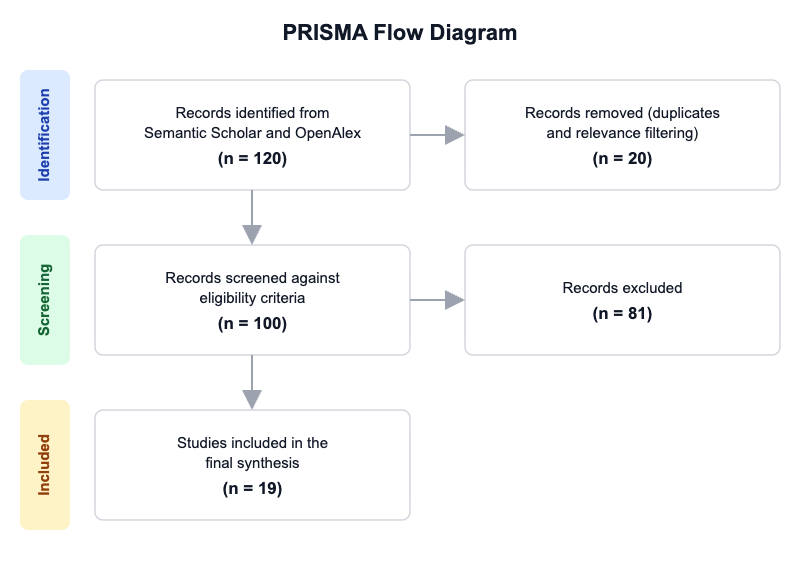
Initial database searching identified 120 records. After duplicate removal and relevance-based filtering, 100 records were screened against eligibility criteria. Of these, 81 papers were excluded, resulting in 19 papers included in the final synthesis.
PRISMA Flow Diagram
Eligibility criteria included:
- Human Study: Does the study involve human participants rather than only animal, in-vitro, or computational work?
- Ashwagandha: Does the study investigate ashwagandha or Withania somnifera as the main intervention or exposure?
- Recent Evidence: Was the study published from 2020 onward?
- Relevant Outcomes: Does the study measure at least one health outcome related to stress, anxiety, sleep, cognition, physical performance, inflammation, hormones, or safety?
- Clinical or Review: Is the paper a clinical trial, observational study, systematic review, or meta-analysis?
- Safety Reported: Does the paper report adverse events, tolerability, or safety outcomes?
- Sample Size: Does the study include at least 20 participants or synthesize multiple studies?
All included studies met the stated eligibility criteria.
2.3 Data Extraction and Synthesis
Data extraction focused on the following variables:
- Study Type: Identify the study design (e.g., randomized controlled trial, systematic review, meta-analysis, pilot trial, observational study) and whether it is human or non-human research.
- Population: Extract the participant population, including age group, health status, sample size, and key inclusion characteristics.
- Intervention: Extract the ashwagandha/Withania somnifera formulation, dose, duration, and comparator if reported.
- Outcomes: Extract the main outcomes measured (e.g., stress, anxiety, sleep, cognition, physical performance, inflammation, hormonal markers, adverse events).
- Key Findings: Summarize the main reported findings, including direction of effect and whether results were statistically significant when stated.
- Safety: Extract adverse events, tolerability, contraindications, or safety concerns reported in the paper.
- Setting: Extract the study setting, such as outpatient, athletic, workplace, healthy adults, clinical population, or animal/in-vitro context.
- Publication Context: Extract the publication year and journal or venue if reported, emphasizing the newest and most relevant evidence.
Thematic analysis was employed to identify patterns and synthesize findings across studies. Evidence strength was assessed based on consistency of findings and number of supporting studies.
3. Results
3.1 Characteristics of Included Studies
| Study and Year | Study Type | Population | Intervention | Outcomes / Key Focus | Setting |
|---|---|---|---|---|---|
| Smith et al. 2023 [1] | Randomized, double-blind, placebo-controlled trial | Overweight or mildly obese adults aged 40–75 years with self-reported stress and fatigue | 200 mg standardized root extract twice daily for 12 weeks vs placebo | Stress, fatigue, heart rate variability, testosterone, luteinizing hormone | Outpatient |
| Cheah et al. 2021 [2] | Systematic review and meta-analysis | Adults; healthy and insomnia cohorts | Capsule extract, mainly KSM-66, 600 mg/day; 6–12 weeks | Sleep quantity/quality, alertness, anxiety, quality of life | India, outpatient/phone recruitment |
| Lopresti and Smith 2021 [3] | Systematic review | Human trials across multiple conditions | Variable formulations, doses, durations | Stress, anxiety, sleep, fatigue, sexual function, cognition, performance, and other outcomes | Primarily India |
| Pandit et al. 2024 [4] | Randomized controlled trial | Adults with self-reported high stress | Aqueous root-leaf extract 125, 250, or 500 mg/day for 8 weeks vs placebo | Chronic stress and biochemical stress parameters | Outpatient |
| Speers et al. 2021 [5] | Systematic review | Stress-related neuropsychiatric populations | Root and leaf extracts; variable doses | Stress, anxiety, depression, insomnia | Mixed clinical and animal contexts |
| Deshpande et al. 2020 [6] | Randomized, double blind, placebo controlled trial | Healthy adults | Ashwagandha extract vs placebo; dose/duration not reported | Sleep quality | Outpatient |
| Arumugam et al. 2024 [7] | Systematic review and meta-analysis | Adults with stress and anxiety | Ashwagandha formulations; dose/duration not reported | Stress and anxiety | Outpatient and clinical contexts |
| Della Porta et al. 2023 [8] | Systematic review | Stressed humans | Variable WS supplementation, 30–112 days | Cortisol | Clinical settings |
| Ashraf et al. 2022 [9] | Systematic review | Mainly healthy adults; sleep-related studies | Root extract; variable doses/durations | Sleep onset, duration, quality, awakening mood | Outpatient and clinical settings |
| Prajapati et al. 2025 [10] | Systematic review of RCTs | Stress and anxiety cohorts | Ashwagandha formulations; details not reported | Stress and anxiety | Various |
| Pérez-Gómez et al. 2020 [11] | Systematic review and meta-analysis | Healthy adults and athletes | Ashwagandha supplementation; details not reported | VO2max | Athletic and healthy adult settings |
| Indriani et al. 2026 [12] | Randomized, double-blind, placebo-controlled non-inferiority trial | Adults aged 18–60 years with DSM-5 GAD | 600 mg/day standardized root extract, sertraline 50 mg/day, or placebo for 8 weeks | HAM-A, GAD-7, cortisol, tolerability | Outpatient psychiatric clinic |
| Najar et al. 2024 [13] | Comprehensive review | General stress-management contexts | Adaptogens and rasayanas including ashwagandha | Stress resilience, holistic well-being | General healthcare contexts |
| Jamnekar et al. 2025 [14] | Comprehensive review | Diverse clinical populations | Standardized extracts such as KSM-66 and Sensoril; 250–1,000 mg/day for 4–12 weeks | Stress, cognition, sleep, physical performance, inflammation | Outpatient and healthy volunteer contexts |
| Fuladi et al. 2020 [15] | Randomized double-blind placebo-controlled trial | Patients with DSM-IV-TR GAD receiving SSRIs | 1 g/day root extract for 6 weeks vs placebo | HAM-A | Clinical setting |
| Jędruszczak et al. 2023 [16] | Literature review | Healthy and insomnia populations | Root extract; variable formulations/doses | Sleep quality, duration, oxidative stress, GABAergic transmission | Clinical and research contexts |
| Pakhale et al. 2026 [17] | Randomized controlled trial | Adults aged 18–65 years with stress and anxiety | 600 mg/day root extract for 8 weeks vs placebo | Safety, tolerability, laboratory parameters, adverse events | Multicenter, multinational |
| Shivananjappa et al. 2022 [18] | Review article | General stress contexts | Withania somnifera as anti-stress agent | Stress relief | Conceptual review |
| Gupta et al. 2025 [19] | Conceptual overview | Traditional Ayurvedic context | Rasāyana forms including aśvagandhā | Resilience to aging, stress, and disease | Traditional practice context |
The included literature is dominated by randomized trials and evidence syntheses, with the most recent clinical work emphasizing standardized extracts, stress/anxiety outcomes, and safety monitoring. Populations cluster around stress, insomnia, and anxiety, while performance and hormonal outcomes appear less frequently and more heterogeneously.
3.2 Thematic Findings
3.2.1 Stress and anxiety outcomes show the most consistent clinical benefit, especially with standardized extracts and adequate dosing
Across the clinical literature, ashwagandha most consistently improved subjective and biomarker-based stress/anxiety outcomes, with effects strongest when extracts were standardized and administered for several weeks. In generalized anxiety disorder, ashwagandha reduced HAM-A scores by 14 units versus 8 units with placebo over 6 weeks [15], and in a newer non-inferiority trial it produced a mean HAM-A reduction of -14.2 compared with -15.1 for sertraline and -5.4 for placebo over 8 weeks, with no significant difference between ashwagandha and sertraline [12]. Chronic stress trials also found dose-dependent reductions at 125 mg/day, 250 mg/day, and 500 mg/day, with efficacy reported even at the lowest dose in that formulation [4]. Systematic syntheses similarly concluded that ashwagandha formulations benefit stress and anxiety, although exact pooled estimates were not always reported [7], [10]. (Note: the anxiety trials largely examined adults with DSM-defined GAD or self-reported stress/anxiety, which partially matches the question population of ashwagandha users; findings should be interpreted considering this difference.) Confidence: Strong for short-term stress/anxiety symptom reduction, Moderate for dose-response claims.
3.2.2 Cortisol reduction appears to be a plausible mechanistic bridge linking symptom improvement to physiological stress regulation
Biomarker evidence supports a physiological pathway beyond self-report improvement. A systematic review found that WS supplementation decreases cortisol secretion in stressed individuals, with treatment durations spanning 30 to 112 days [8], [7]. The comparative GAD trial also showed a -24.3% reduction in serum cortisol with ashwagandha [12], while a mechanistically oriented review described hypothalamic-pituitary-adrenal axis modulation, NF-κB inhibition, Nrf2 activation, and GABAergic signaling as plausible routes for neuroimmune and anxiolytic effects [14]. Earlier synthesis likewise highlighted HPA-axis and sympathetic-adrenal-medullary regulation as likely mediators of the anti-stress effect [5]. Together, these findings suggest that symptom improvement is not merely a placebo phenomenon in all settings, because parallel biomarker changes appear in some clinical cohorts. However, cortisol endpoints are not uniform across studies, and the reviewed evidence does not establish whether cortisol reduction is necessary, sufficient, or simply correlated with clinical benefit. Confidence: Moderate for cortisol reduction as a recurrent biological signal; Limited for causal mediation.
3.2.3 Sleep improvement is one of the clearest secondary indications, but effects vary by population, dose, and outcome metric
Sleep outcomes show a broadly favorable direction of effect, but comparability is constrained by differing measures and study populations. A meta-analysis reported a small but significant improvement in overall sleep with an effect size of -0.59 (95% CI -0.75 to -0.42), with stronger effects among adults with insomnia, with doses at or above 600 mg/day, and with treatment durations of at least 8 weeks [2]. The sleep-focused review literature similarly described improved sleep onset, duration, quality, and awakening mood, while noting occasional minor side effects [9]. A separate review emphasized that benefits were seen in both insomniac and healthy individuals and linked sleep effects to GABAergic transmission, oxidative stress reduction, and possible involvement of triethylene glycol [16]. A randomized trial in healthy adults also reported sleep quality improvement, although the exact magnitude and significance were not reported [6]. (Note: several sleep studies examined healthy adults or insomnia cohorts rather than the broader question population of ashwagandha users; findings should be interpreted considering this difference.) Confidence: Strong for short-term sleep benefit, Moderate for moderators such as dose and duration, Limited for mechanistic specificity.
3.2.4 Fatigue and autonomic regulation may represent an additional benefit domain, but evidence remains narrower than for stress or sleep
Fatigue appears to improve in some studies, although the evidence base is less extensive than for stress or sleep. In overweight or mildly obese adults with self-reported stress and fatigue, ashwagandha significantly reduced fatigue symptoms compared with placebo on the Chalder Fatigue Scale (p = 0.016), and it also increased heart rate variability (p = 0.003) [1]. This pattern suggests a possible autonomic mechanism, consistent with the interpretation offered in the trial and with broader adaptogenic models that emphasize stress-system regulation [1], [3]. However, perceived stress itself did not differ significantly from placebo in that trial (p = 0.867), indicating that fatigue may be a more sensitive endpoint than global stress perception in some populations. (Note: this trial examined overweight or mildly obese adults aged 40–75 years with stress and fatigue, which only partially matches the broader question population of ashwagandha users; findings should be interpreted considering this difference.) Confidence: Moderate for anti-fatigue effects, Limited for autonomic interpretation.
3.2.5 Physical performance and hormonal outcomes are promising but not yet as well established as psychological outcomes
Performance-related findings are positive but derive from a smaller and more heterogeneous subset of evidence. A meta-analysis found significant enhancement in VO2max in healthy adults and athletes, with a mean difference of 3.00 (95% CI 0.18 to 5.82; p = 0.04) and high heterogeneity [11]. Hormonal effects were also observed in the stress/fatigue trial, where men taking ashwagandha showed increased free testosterone (p = 0.048) and luteinizing hormone (p = 0.002) [1]. These findings suggest that ashwagandha may influence both endurance and reproductive endocrinology, but the evidence is too limited and too context-specific to support broad clinical generalization. Moreover, the performance literature often involves athletes or healthy adults rather than symptomatic clinical populations, which weakens direct applicability to general stress-management use. Confidence: Limited for performance enhancement and hormonal modulation.
3.2.6 Safety signals are generally favorable, but long-term safety remains undercharacterized
Safety findings are reassuring across the recent literature. A large randomized safety study found no serious adverse events, no significant differences in liver, renal, or hematological markers, and similar tolerability ratings between ashwagandha and placebo [17]. Other clinical studies reported no adverse effects [15], [4], and meta-analytic or review work repeatedly noted only limited adverse effects [10], [2]. Where side effects were mentioned, they were generally mild and included gastrointestinal upset, drowsiness, headache, fever, acid reflux, dry mouth, nausea, and allergic dermatitis [3], [9]. Still, reviews cautioned that long-term safety is insufficiently studied and herb-drug interactions, including with sedatives, warrant attention [10], [3]. Confidence: Strong for short-term tolerability, Limited for long-term safety.
3.3 Summary of Evidence
| Theme | Key Finding | Population Applicability | Effect Direction | Confidence Level | Supporting Studies |
|---|---|---|---|---|---|
| Stress and anxiety symptom reduction | HAM-A reduction of 14 units vs 8 units with placebo; mean HAM-A reduction of -14.2 vs -5.4 placebo; sertraline -15.1 | Adults with GAD or self-reported stress/anxiety; partially matches broader users | Positive | Strong | Fuladi et al. [15], Indriani et al. [12], Arumugam et al. [7] |
| Cortisol lowering | Cortisol reduced by -24.3%; brief-term supplementation decreased cortisol secretion | Stressed adults; partially matches broader users | Positive | Moderate | Indriani et al. [12], Della Porta et al. [8], Jamnekar et al. [14] |
| Sleep improvement | Overall sleep SMD -0.59 (95% CI -0.75 to -0.42); stronger at ≥600 mg/day and ≥8 weeks | Adults with insomnia and healthy adults; partially matches broader users | Positive | Strong | Cheah et al. [2], Ashraf et al. [9], Jędruszczak et al. [16] |
| Fatigue and autonomic regulation | Fatigue improved vs placebo (p = 0.016); HRV increased (p = 0.003) | Overweight or mildly obese adults with stress and fatigue; partially matches broader users | Positive | Moderate | Smith et al. [1] |
| Physical performance | VO2max mean difference 3.00 (95% CI 0.18 to 5.82; p = 0.04) | Healthy adults and athletes; partially matches broader users | Positive | Limited | Pérez-Gómez et al. [11] |
| Safety and tolerability | No serious adverse events; 74 AEs, 7.4%; no significant lab changes; tolerability p = 0.487 | Adults with stress/anxiety and clinical cohorts; broadly relevant | Null for harm signals / Positive for tolerability | Strong | Pakhale et al. [17], Fuladi et al. [15], Pandit et al. [4] |
4. Discussion
4.1 Principal Findings and Their Interpretation
The most defensible conclusion from the recent literature is that ashwagandha has short-term clinical value for stress-related symptom reduction, with the strongest and most reproducible evidence for anxiety, perceived stress, sleep, and cortisol-related endpoints. The pattern is biologically coherent: symptom improvement often co-occurs with changes in stress physiology, including cortisol reduction, improved heart rate variability, and proposed modulation of HPA-axis and GABAergic signaling [7], [1], [5]. This convergence matters because it links patient-relevant outcomes to plausible mechanisms rather than isolated subjective response. The evidence is especially persuasive where standardized extracts and placebo controls are used, because those designs reduce ambiguity around expectancy effects and product variability.
At the same time, the synthesis also shows that not all outcomes are equally robust. Sleep and anxiety benefit from the clearest consistency, likely because these endpoints are highly responsive to stress-system modulation and are often measured with validated scales across similar timeframes [2], [7]. By contrast, performance and hormonal outcomes are more tentative, not because they are implausible, but because they are supported by fewer studies in narrower populations. For example, VO2max effects and reproductive hormone changes may reflect downstream consequences of improved recovery, reduced physiological strain, or both, but the current evidence base is too small to distinguish these possibilities confidently [11], [1]. The strongest confidence therefore belongs to short-term symptom outcomes, while physiologic and performance claims should be considered promising but provisional.
4.2 Comparison with Existing Literature and Resolution of Contradictions
The newer studies reinforce earlier syntheses that framed ashwagandha as an adaptogen with broad stress-buffering potential [3], [13], [18]. What has changed is that the evidence has become more clinically specific: recent trials increasingly use standardized preparations, validated endpoints, and comparator-active designs, making the signal more credible than older narrative claims. The fact that a standardized extract performed comparably to sertraline on anxiety reduction, while avoiding sertraline-associated sexual dysfunction and nausea, suggests that ashwagandha may occupy a practical niche as a lower-burden adjunct or alternative for selected patients [12].
The main contradiction concerns stress perception versus related outcomes. In one trial, perceived stress did not differ significantly from placebo, yet fatigue improved and heart rate variability increased [1]. This may reflect endpoint sensitivity rather than a true absence of effect: fatigue and autonomic measures may respond more directly to physiologic stress regulation than global self-rated stress, which can be influenced by broader psychosocial context. It may also reflect ceiling effects, because participants entered with high stress and fatigue, leaving limited room for large perceptual change over 12 weeks. Another source of inconsistency is extract heterogeneity. Reviews repeatedly note that root-only, root-leaf, aqueous, and standardized formulations differ in withanolide content and perhaps in bioactivity, which could easily produce apparent heterogeneity across trials [3], [5]. Publication bias remains plausible because the literature is dominated by positive reports and by clinical contexts where benefit was expected, although the presence of at least one null primary stress result argues against a completely uniform efficacy narrative [1], [7].
4.3 Practical Implications
For clinicians, the most actionable message is that ashwagandha appears most reasonable as a short-term adjunct for adults with stress, anxiety, or insomnia, particularly when standardized extracts and validated dosing regimens are used. The evidence is strongest for patients with symptomatic stress/anxiety syndromes and sleep disturbance, while evidence for athletic performance or endocrine enhancement is too limited for routine recommendation [2], [11]. Because tolerability is generally favorable and serious adverse events are uncommon in the available studies, clinicians may consider it when patients seek botanical options and when medication adverse effects are a major concern.
From a public health perspective, the current evidence does not justify universal claims, but it does support targeted use in stress-related symptom management with attention to product quality and monitoring. The long-term safety gap is especially important for people who may use ashwagandha chronically or alongside sedatives, antidepressants, or immunomodulatory agents [10], [3]. Regulatory implications are equally clear: product standardization and label transparency matter because efficacy seems to depend on extract composition, dose, and duration. The available evidence is not strong enough to define a no-threshold risk issue, but it does indicate that benefit is formulation-sensitive, which argues for stronger quality control rather than casual equivalence across supplements.
4.4 Strengths and Limitations
This review is strengthened by a broad search strategy, inclusion of recent randomized trials and evidence syntheses, and thematic integration across efficacy, mechanism, and safety. The included literature also contains several clinically relevant designs, including placebo-controlled and head-to-head comparisons, which increase practical interpretability. However, the underlying studies are limited by variable extract formulations, inconsistent outcome measures, small or modest sample sizes in some trials, short follow-up periods, and frequent concentration in specific geographies and populations. The review itself is constrained by reliance on extracted abstract-level data, no formal risk-of-bias assessment, and incomplete reporting in some source papers, which limits fine-grained appraisal of internal validity.
5. Gaps and Future Directions
The clearest gap is the absence of long-term, standardized, head-to-head trials in the exact population most likely to use ashwagandha for everyday stress management. Current evidence often comes from proxy groups such as adults with GAD, insomnia, fatigue, or athletic interest, so future studies should enroll broader community users while also stratifying by baseline symptom severity. Trials should use harmonized extract characterization, including withanolide content and root-versus-root-leaf composition, because current heterogeneity makes cross-study comparison difficult.
Mechanistically, future work should test whether cortisol reduction, heart-rate-variability change, and sleep improvement represent linked pathways or independent effects. Biomarker panels should be paired with validated clinical scales and longer follow-up to determine whether early physiologic changes predict sustained benefit. Safety studies also need extension beyond short-term tolerability, particularly for interaction risk with sedatives and antidepressants and for populations with pregnancy-related or immunologic concerns. Comparative effectiveness designs against established pharmacologic and non-pharmacologic options would be especially useful for clarifying where ashwagandha fits in real-world care.
6. Conclusion
The latest evidence suggests that ashwagandha is a promising short-term intervention for stress-related symptoms, especially anxiety, sleep disturbance, cortisol reduction, and possibly fatigue, with generally favorable tolerability. The most convincing findings come from randomized and pooled human studies showing meaningful anxiety improvement, sleep benefit with an effect size of -0.59 (95% CI -0.75 to -0.42), and cortisol-lowering effects, while a head-to-head trial found anxiety reduction comparable to sertraline and a safety profile closer to placebo [7], [2], [12]. These results, however, are drawn largely from adults with stress, insomnia, or generalized anxiety disorder, so they partially match—but do not fully define—the broader population of ashwagandha users.
The most important unresolved question is whether these benefits persist with longer use and standardized formulations across diverse populations. That uncertainty matters because the current literature supports cautious clinical use, but not unrestricted extrapolation. In practical terms, ashwagandha now appears credible as a botanical option for selected adults seeking symptom relief, yet its role should remain adjunctive and evidence-informed until longer, better-standardized trials establish durability, comparative effectiveness, and long-term safety [2], [7], [17].
References
- Smith, S. J., Lopresti, A. L., & Fairchild, T. J. (2023). Exploring the efficacy and safety of a novel standardized ashwagandha (Withania somnifera) root extract (Witholytin®) in adults experiencing high stress and fatigue in a randomized, double-blind, placebo-controlled trial. Journal of Psychopharmacology, 37(11), 1091–1104. https://doi.org/10.1177/02698811231200023
- Cheah, K. L., Norhayati, M. N., Yaacob, L. H., & Abdul Rahman, R. (2021). Effect of Ashwagandha (Withania somnifera) extract on sleep: A systematic review and meta-analysis. PLOS ONE, 16(9), e0257843. https://doi.org/10.1371/journal.pone.0257843
- Lopresti, A. L., & Smith, S. J. (2021). Ashwagandha (Withania somnifera) for the treatment and enhancement of mental and physical conditions: A systematic review of human trials. Journal of Herbal Medicine, 28, 100434. https://doi.org/10.1016/j.hermed.2021.100434
- Pandit, S., Srivastav, A. K., Sur, T. K., Chaudhuri, S., Wang, Y., & Biswas, T. K. (2024). Effects of Withania somnifera extract in chronically stressed adults: A randomized controlled trial. Nutrients, 16(9), 1293. https://doi.org/10.3390/nu16091293
- Speers, A. B., Cabey, K. A., Soumyanath, A., & Wright, K. M. (2021). Effects of Withania somnifera (Ashwagandha) on stress and the stress-related neuropsychiatric disorders anxiety, depression, and insomnia. Current Neuropharmacology, 19(9), 1468–1495. https://doi.org/10.2174/1570159X19666210712151556
- Deshpande, A., Irani, N., Balkrishnan, R., & Benny, I. R. (2020). A randomized, double blind, placebo controlled study to evaluate the effects of ashwagandha (Withania somnifera) extract on sleep quality in healthy adults. Sleep Medicine, 72, 28–36. https://doi.org/10.1016/j.sleep.2020.03.012
- Arumugam, V., Vijayakumar, V., Balakrishnan, A., Bhandari, R. B., Boopalan, D., Ponnurangam, R., Thirupathy, V. S., & Kuppusamy, M. (2024). Effects of Ashwagandha (Withania somnifera) on stress and anxiety: A systematic review and meta-analysis. EXPLORE, 20(6), 103062. https://doi.org/10.1016/j.explore.2024.103062
- Della Porta, M., Maier, J. A., & Cazzola, R. (2023). Effects of Withania somnifera on cortisol levels in stressed human subjects: A systematic review. Nutrients, 15(24), 5015. https://doi.org/10.3390/nu15245015
- Ashraf, S., Shah, K., Aedma, K., Mansuri, Z., & Jain, S. (2022). 0694 Safety and efficacy of Ashwagandha for sleep: A systematic review. Sleep, 45(Supplement_1), A303–A305. https://doi.org/10.1093/sleep/zsac079.690
- Prajapati, P. K., Gupta, G. P., Chahar, D. S., Singhal, H. K., Sharma, B., Sharma, N., Chaudhary, B. P., & Gupta, A. (2025). Exploring the therapeutic potential of Ashwagandha (Withania somnifera) in alleviating stress and anxiety. Journal of Pharmaceutical Research International, 37(4), 116–126. https://doi.org/10.9734/jpri/2025/v37i47683
- Pérez-Gómez, J., Villafaina, S., Adsuar, J. C., Merellano-Navarro, E., & Collado-Mateo, D. (2020). Effects of Ashwagandha (Withania somnifera) on VO2max: A systematic review and meta-analysis. Nutrients, 12(4), 1119. https://doi.org/10.3390/nu12041119
- Indriani, N. M. N., Zhou, S., Lubis, R. A. S., & Willmare, J. (2026). Comparative efficacy and acute tolerability of a standardized Withania somnifera root extract versus sertraline in generalized anxiety disorder: A randomized, double-blind, placebo-controlled non-inferiority trial. Eureka Herba Indonesia, 6(1), 96–109. https://doi.org/10.37275/ehi.v6i1.132
- Najar, I. A., Pamu, S., Patyar, S., Madhira, G., Sharma, A., Devi, S., Lamba, K., Arora, P., & Kumar, M. (2024). Stress management therapy through adaptogens and rasayanas in Ayurveda: A comprehensive review. Current Drug Therapy, 20(4), 564–580. https://doi.org/10.2174/0115748855310826240709062539
- Jamnekar, P. P., Dehankar, T. J., Bedre, R. V., Dharan, B. G., Agravat, B., & Agravat, H. (2025). Ashwagandha as an adaptogenic herb: A comprehensive review of immunological and neurological effects. Cureus, 17(11), e96183. https://doi.org/10.7759/cureus.96183
- Fuladi, S., Emami, S. A., Mohammadpour, A. H., Karimani, A., Manteghi, A. A., & Sahebkar, A. (2020). Assessment of the efficacy of Withania somnifera root extract in patients with generalized anxiety disorder: A randomized double-blind placebo-controlled trial. Current Reviews in Clinical and Experimental Pharmacology, 16(2), 191–196. https://doi.org/10.2174/1574884715666200413120413
- Jędruszczak, P., Zdun, S., Walczak, K., Wesołowska, Z., & Gaweł, W. (2023). Ashwagandha (Withania somnifera) - influence on sleep: Review. Quality in Sport, 9(1), 40–45. https://doi.org/10.12775/QS.2023.09.01.005
- Pakhale, K., Salve, J., Ademola, J., Parraca, J., & Langade, D. (2026). Safety of 8-week administration with Ashwagandha (Withania somnifera) root extract in adults with stress and anxiety: Findings from a prospective, randomized, multi-center, double-blinded, placebo-controlled study. Phytotherapy Research. https://doi.org/10.1002/ptr.70315
- Shivananjappa, M. M., Vani, K. M., Manasa, R., & Santosha, D. U. (2022). Stress relieving activity of Withania somnifera. IP Journal of Nutrition, Metabolism and Health Science, 5(4), 151–156. https://doi.org/10.18231/j.ijnmhs.2022.029
- Gupta, H. H., Chopra, A. S., & Keßler, C. (2025). Adaptogene im Ayurveda. Zeitschrift für Phytotherapie, 46(3), 134–138. https://doi.org/10.1055/a-2417-3259