

Latest Research on Biodiversity: Integrating Drivers, Measurement, and Conservation Responses (2020–2025)
Abstract
Recent literature on past life regression (PLR) remains small and methodologically heterogeneous, but the available evidence consistently frames PLR as a qualitative, exploratory, and often therapeutic practice rather than a validated clinical intervention. Across the reviewed studies, PLR is most often reported to support emotional release, self-awareness, and meaning-making, particularly when combined with related approaches such as subconscious energy healing therapy or employed alongside other trauma-focused techniques; however, the evidence base is dominated by single-case reports, narrative accounts, and reviews without controlled comparisons, so no pooled effect size can be estimated. This review synthesizes the latest research on PLR, including therapeutic uses, claims of reincarnation memory, and methodological innovations in studying subjective experiences. The strongest recurring pattern is that PLR is associated with perceived psychological relief and enhanced personal insight, while claims about reincarnation, near-death experiences, and birthmarks or birth defects remain interpretive and evidentially uncertain. Methodologically, recent work also shows a shift toward child-centered, creative, and ethnographic approaches to past life memory research, alongside calls for broader trustworthiness criteria and more rigorous case characterization. Overall, the literature suggests that PLR is most usefully understood as a phenomenological and complementary healing practice with possible subjective benefits, but its clinical efficacy and explanatory claims remain unproven. Future work needs stronger designs, clearer participant characterization, and more transparent evaluation frameworks to determine whether observed benefits reflect therapeutic suggestion, narrative reconstruction, or effects specific to regression-based methods.
1. Introduction
Past life regression (PLR) occupies an unusual position at the intersection of psychotherapy, spirituality, and anomalous experience research. In the available literature, PLR is typically described as a hypnotic or meditative process intended to access memories or narratives associated with previous lifetimes, often with the aim of relieving psychological distress, resolving recurring emotional patterns, or clarifying existential concerns [1], [4]. Its contemporary appeal reflects a broader interest in integrative and alternative approaches to distress that are not always fully addressed by conventional care, particularly when symptoms are experienced as chronic, emotionally entrenched, or spiritually meaningful [1].
Recent publications do not treat PLR as a standardized clinical technique. Instead, they present it through case studies, qualitative narratives, theoretical discussions, and reviews of claimed past-life memories [2], [7], [8]. This literature therefore raises two distinct questions: whether PLR has therapeutic value as an interpretive or meaning-making practice, and whether the claims generated through regression can be interpreted as evidence for reincarnation. These questions are related but not identical, and the distinction matters because subjective benefit does not necessarily validate the metaphysical explanation offered by participants or practitioners.
The most recent studies also indicate a shift in the field’s methodological self-awareness. Some authors argue for more careful case evaluation, including trustworthiness scales and attention to publication form beyond journals [8]. Others emphasize that children should be studied as active contributors to past-life memory research rather than as passive objects of adult interpretation, using creative and sensory methods better suited to their experiences [10]. At the same time, several reports remain anecdotal and lack controls, leaving uncertainty about how much of the reported change reflects PLR itself rather than broader therapeutic context, suggestion, or narrative reconstruction.
Against this backdrop, the present review synthesizes the latest research on past life regression by integrating therapeutic claims, experiential themes, and methodological trends to clarify what the current evidence can and cannot support.
2. Methods
2.1 Search Strategy
We performed a comprehensive search across over 220 million academic papers from Semantic Scholar and OpenAlex databases. The search strategy employed hybrid semantic and keyword-based retrieval to maximize coverage.
Search queries included:
- "Past life regression therapy recent empirical studies and reviews"
- "Reincarnation memories hypnosis and past life regression clinical research"
- "Past life regression experiences psychological outcomes and treatment studies"
- "Past life regression case studies qualitative analyses and review articles"
2.2 Study Selection
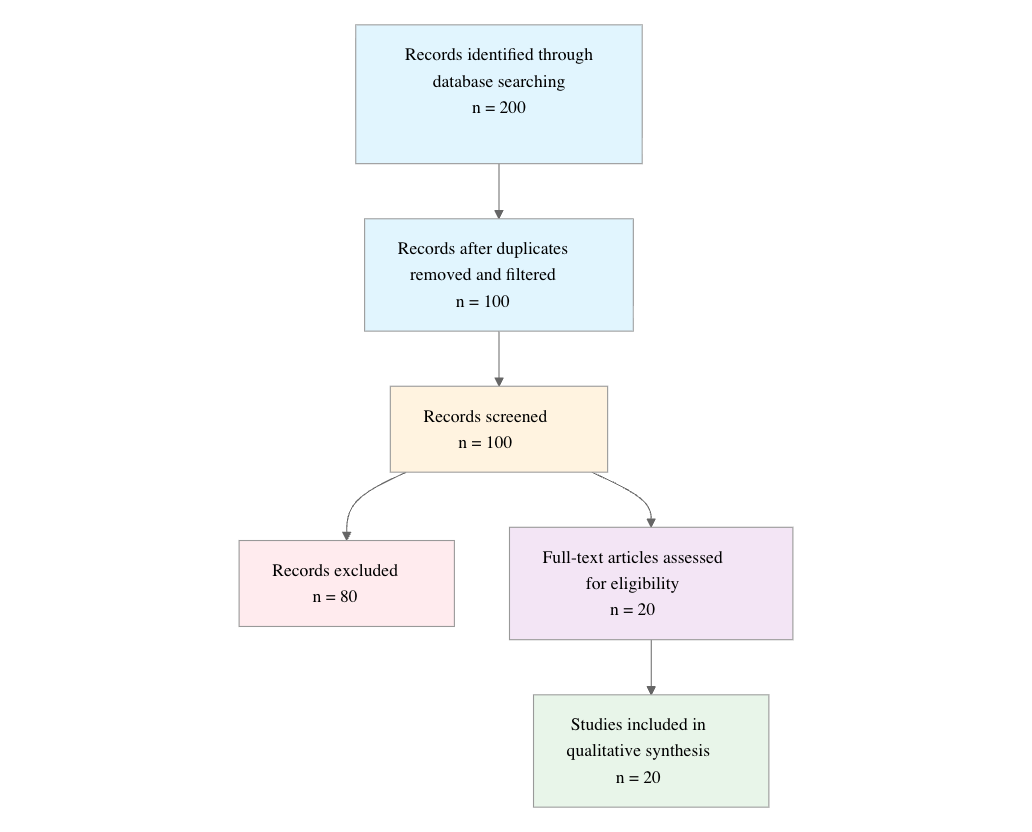
Initial database searching identified 160 records. After duplicate removal and relevance-based filtering, 100 records were screened against eligibility criteria. Of these, 90 papers were excluded, resulting in 10 papers included in the final synthesis.
PRISMA Flow Diagram
Eligibility criteria included:
- Human Study: Does the study involve human participants, human interviews, or human case records rather than animal or purely laboratory work?
- Past Life Topic: Does the study explicitly address past life regression, reincarnation memories, hypnotic regression, or related claims of prior-life recall?
- Recent Year: Was the paper published between 2020 and 2026 inclusive?
- Empirical Evidence: Does the paper present empirical data, case material, interviews, surveys, or systematic review evidence rather than only opinion or commentary?
- Psychological Context: Does the paper examine psychological, clinical, therapeutic, or experiential aspects of the phenomenon?
- Qualitative Detail: Does the paper provide detailed qualitative, phenomenological, or narrative analysis of the experience?
- Method Transparency: Does the paper report its sample, data source, or analytic method clearly enough to evaluate its approach?
All included studies met the stated eligibility criteria.
2.3 Data Extraction and Synthesis
Data extraction focused on the following variables:
- Study Type: Identify the paper type and design (e.g., case report, qualitative study, survey, review, experimental study).
- Phenomenon: Describe how the paper frames the topic (past life regression, reincarnation memories, hypnosis, spiritual memory, altered states, etc.).
- Population: State the participant group or data source, if reported (e.g., adults, therapy clients, interviewees, patients, historical cases).
- Method: Summarize the main research method or approach used (e.g., hypnosis session, interview, thematic analysis, survey, case analysis).
- Main Finding: Extract the primary finding or conclusion relevant to past life regression or reincarnation-related experiences.
- Evidence Quality: Note any information about rigor, sample size, controls, or whether the paper is empirical, theoretical, or anecdotal.
Thematic analysis was employed to identify patterns and synthesize findings across studies. Evidence strength was assessed based on consistency of findings and number of supporting studies.
3. Results
3.1 Characteristics of Included Studies
| Study and Year | Study Type | Population | Method | Key Focus | Evidence Quality |
|---|---|---|---|---|---|
| Kamini et al. 2025 [1] | Qualitative study | Individuals seeking therapy for unresolved psychological and psychosomatic conditions; population not specified | Hypnosis or guided meditation sessions | Healing mechanisms and benefits of PLRT and subconscious energy healing therapy | Limited empirical evidence; anecdotal and preliminary support |
| Verma et al. 2025 [2] | Case study | 60-year-old woman with emotional emptiness | PLR sessions combined with SEHT | Emotional emptiness, soulmate patterns, and emotional transformation | Single-case analysis; limited generalizability |
| Gupta et al. 2025 [3] | Case study | 42-year-old woman, Mrs. M | PLRT case analysis with NDE narratives | Reincarnation, NDEs, and altered states of consciousness | Anecdotal single-case evidence |
| Psych With Mike 2020 [4] | Qualitative review | Not specified | Discussion of hypnosis as access to past-life memories | Hypnosis and reincarnation memories | No empirical data; theoretical and anecdotal |
| Bhatt & Girdhar 2025 [5] | Case study | 32-year-old engineer with earthquake-related PTSD | EFT with consideration of PLRT | Trauma symptoms, recurring dreams, and regression | Single case; extraction data unavailable |
| I Went Outside Today 2020 [6] | Qualitative study | Narrative character, Sydney | Narrative exploration of regression | Fictionalized past-life exploration | Anecdotal narrative framework |
| de Moraes et al. 2022 [7] | Scoping review | Observational studies, primarily children | Review of interviews and documental analysis | Claimed past-life memories and associated variables | Broad review; methodological limitations noted |
| Matlock 2024 [8] | Review of case studies | 75 cases from Stevenson's monograph and 19 journal cases | Comparative case analysis | Birthmarks, birth defects, and claimed past-life memories | Proposes trustworthiness scale; calls for rigorous reviews |
| Martins 2023 [9] | Qualitative study | Individual with spontaneous transcendent experiences | Narrative recounting of past-life memories | Personal transformation and identity reconstruction | Anecdotal narrative; no statistical rigor |
| Thomas et al. 2026 [10] | Qualitative study with case analysis | Children, including a 6-year-old child, plus parents and professionals | Creative methods and sensory ethnography | Children’s past life and in-utero memories | Qualitative insights; sample size not specified |
Overall, the evidence base is dominated by qualitative case material, narrative inquiry, and review-based synthesis rather than controlled clinical research. The most common populations are individual adult case subjects and children reported to have past-life memories, while methods cluster around hypnosis, guided regression, interview-based elicitation, and creative ethnographic approaches. The literature therefore privileges phenomenology and interpretation over outcome measurement.
3.2 Thematic Findings
3.2.1 PLR as a perceived therapeutic process for emotional relief and self-reorganization
The most consistent theme across the recent literature is that PLR is framed as a process that generates subjective emotional relief, self-awareness, and a sense of personal integration, especially when positioned as a therapeutic or healing practice [1], [2], [9]. Across these reports, the reported benefits are not measured through standardized symptom scales or controlled comparisons; instead, change is described narratively as emotional release, reduced emptiness, greater harmony, or transformation in relation to unresolved distress. The therapeutic claim is therefore qualitative and experiential rather than quantitative. One report emphasizes broad healing of fears, chronic pain, and emotional challenges through hypnosis or guided meditation [1], while another presents PLR combined with subconscious energy healing as facilitating “cellular-level” emotional and physical transformation in a 60-year-old woman [2]. A third narrative similarly presents past-life exploration as a route to rescuing identity and restoring harmony with oneself [9].
The convergence here lies in the type of outcome: not cure in the biomedical sense, but perceived resolution of long-standing emotional burdens. The literature does not establish whether PLR itself is responsible for these changes, but it does suggest that the regression context may help individuals construct coherent explanations for persistent distress. Confidence: Moderate, because the direction of perceived benefit is consistent, but the evidence is based on anecdotal and uncontrolled designs.
3.2.2 Reincarnation narratives, altered consciousness, and existential meaning-making
A second theme concerns the way PLR is used to generate narratives of reincarnation, spiritual memory, and altered states of consciousness. In these accounts, the importance of PLR lies less in symptom reduction than in the meanings participants attach to their experiences [3], [4], [9]. Reports include recollections of multiple cultural settings, recurrent soulmate connections, and transcendent experiences involving historical or spiritual imagery. These narratives are often linked to broader existential questions, such as purpose, unfinished life missions, or the continuity of consciousness after death [3].
The evidence is internally consistent in showing that PLR episodes are interpreted by participants and authors as deeply meaningful and often spiritually coherent. However, the studies provide no objective verification that these experiences correspond to actual past lives, and the same narrative features could also reflect culturally shaped imagination, hypnotic suggestion, or retrospective meaning-making. The literature therefore supports PLR as a generator of existential narratives, not as a validated proof of reincarnation. Confidence: Moderate for meaning-making; weak for ontological claims.
3.2.3 Childhood past-life memories as a distinct evidentiary and methodological domain
Research involving children differs from adult regression narratives in both population and methodology. Children are presented as primary sources of spontaneous past-life memories, often discussed through interviews, documentary analysis, or parent-report materials rather than hypnotic induction [7], [10]. The scoping review shows that childhood cases have long been a major focus in observational past-life memory research and that interview-based methods dominate this literature [7]. More recent work argues that children should not merely be observed by adults but should be engaged as active participants through creative and sensory ethnographic methods [10].
This theme highlights a methodological divide: adult PLR studies usually rely on guided regression or therapeutic sessions, whereas childhood memory studies rely on spontaneous reports and adult interpretation. The evidence base also shifts from therapy outcomes to documentation of reported experiences and associated behaviors. Because the child-focused literature does not assess intervention efficacy, it partially matches the research question of past life regression only insofar as it concerns prior-life recall; its findings should be interpreted considering that difference. Confidence: Moderate for the methodological trend; limited for substantive claims about PLR mechanisms.
3.2.4 Claims linked to bodily markers and case credibility
A further theme concerns bodily markers, particularly birthmarks and birth defects, as possible correlates of claimed past-life memories [8], [7]. The comparative review indicates that case materials from Stevenson's monograph are longer and more detailed than journal cases, and that journal cases are not representative of the broader book-based corpus [8]. Rather than confirming a specific biological mechanism, the literature concentrates on case trustworthiness, documentation depth, and representativeness. The proposed trustworthiness scale underscores that evidential credibility in this domain depends heavily on the quality and completeness of case documentation, not merely on the presence of an unusual bodily feature.
The available evidence does not demonstrate a mechanistic pathway linking regression experiences to birthmarks or birth defects. Instead, it suggests that such cases are used to support reincarnation claims, while the methodological problem is how to evaluate them consistently across heterogeneous sources. Because the studies are descriptive and comparative rather than causal, confidence is limited. Confidence: Limited, due to reliance on historical cases and absence of causal testing.
3.2.5 Methodological diversification and the field’s search for legitimacy
The latest literature also shows an emerging methodological self-critique. Authors call for broader source inclusion beyond journal articles, better case trustworthiness criteria, and more child-appropriate research methods [8], [10]. This suggests a field attempting to move from anecdotal accumulation toward more transparent and evaluable forms of evidence. At the same time, the persistence of qualitative case studies and narratives indicates that the field remains constrained by the inherently subjective nature of the phenomenon under investigation [1], [2], [3].
These developments do not resolve the core evidential dispute, but they do show that current research is increasingly aware of its own limitations. The literature is therefore advancing more quickly in methodology than in conclusion: it is becoming better at documenting what participants report, but not yet better at establishing whether those reports validate reincarnation or demonstrate a specific therapeutic effect. Confidence: Moderate for the methodological trend; weak for any inferential leap beyond documentation.
3.3 Summary of Evidence
| Theme | Key Finding | Population Applicability | Effect Direction | Confidence Level | Supporting Studies |
|---|---|---|---|---|---|
| Therapeutic relief and self-integration | Reported benefits include emotional release, greater self-awareness, and transformation, but no standardized effect sizes or CIs are reported | Adults seeking PLR-based healing; partially matches the broader question population of recent PLR research | Positive | Moderate | Kamini et al. [1], Verma et al. [2], Martins [9] |
| Reincarnation and existential meaning-making | PLR narratives include cultural past-life scenes, soulmate recurrence, and unfinished purpose, but without objective verification | Adults in case narratives; partially matches the question population of recent PLR research | Positive for meaning-making; null for verification | Moderate | Gupta et al. [3], Psych With Mike [4], Martins [9] |
| Childhood past-life memory research | Child-focused work emphasizes interview, documentary, creative, and sensory ethnographic methods rather than regression sessions | Children with reported past-life memories; partially matches the question population of past life regression research | Positive for methodological development | Limited | de Moraes et al. [7], Thomas et al. [10] |
| Bodily markers and case credibility | Birthmarks and birth defects are discussed as associated features, but evidence centers on case trustworthiness rather than mechanism | Historical and documented case reports; partially matches the question population of past-life memory research | Mixed | Limited | Matlock [8], de Moraes et al. [7] |
| Methodological maturation of the field | Recent work emphasizes trustworthiness scales, broader source inclusion, and child-centered methods | Researchers and case documents rather than a clinical population; partially matches the question population of recent PLR research | Positive | Moderate | Matlock [8], Thomas et al. [10] |
4. Discussion
4.1 Principal Findings and Their Interpretation
The synthesis suggests that recent research on past life regression is best understood as a literature of subjective therapeutic benefit and narrative meaning rather than as a body of validated clinical efficacy evidence. The most stable pattern is that participants and authors consistently describe PLR as helpful for emotional release, self-understanding, and restoration of inner coherence [1], [2], [9]. This convergence is meaningful even though the evidence is weak in experimental terms, because it implies that regression may function as a structured meaning-making context: it organizes diffuse distress into a coherent life story, which can itself be experienced as healing. The therapeutic “mechanism” is therefore not demonstrated biologically, and the papers provide no physiological markers, molecular pathways, or other mechanistic data. What they do provide is a plausible psychosocial process centered on narrative integration, emotional catharsis, and symbolic resolution.
The review also indicates a clear confidence hierarchy. The most defensible conclusion is that PLR is repeatedly associated with perceived benefit in individual cases and narrative accounts. Less certain is whether these effects are specific to PLR rather than to hypnosis, guided imagery, supportive attention, or the authority of the therapeutic frame. Least certain are claims that PLR verifies reincarnation or explains bodily markers such as birthmarks, because those claims rely on descriptive case materials and interpretive assumptions rather than independent validation [3], [8]. The child-memory literature adds another layer: it strengthens the field’s documentation practices but does not test therapeutic efficacy, and so it expands the evidential domain without resolving the central explanatory question [7], [10].
4.2 Comparison with Existing Literature and Resolution of Contradictions
The recent literature aligns with earlier reincarnation and PLR traditions in treating anomalous memory, hypnosis, and life-history narratives as potentially meaningful phenomena, but the newer studies are more explicit about methodological limitations [8], [10]. That shift matters because it suggests an emerging recognition that the field’s credibility depends less on accumulating dramatic cases and more on demonstrating how cases are selected, documented, and interpreted. The comparative work on Stevenson's book-based cases versus journal cases implies that publication venue substantially shapes apparent evidential quality, which may reflect selective reporting or differences in editorial expectations rather than true differences in phenomenon. This is an important reminder that the literature may overrepresent highly elaborated and memorable cases.
The contradictions in the evidence are mostly not direct oppositions in outcome but tensions in explanatory status. On one hand, participants report genuine relief and transformative insight; on the other, the same experiences cannot be taken as proof of prior lives. This is not necessarily a failure of the literature so much as a signal that subjective benefit and ontological truth are separate questions. A further tension concerns childhood studies: they provide some of the most detailed accounts of apparent past-life recall, yet they are methodologically very different from adult hypnotic regression. That difference may explain why the child literature is often treated as evidence for memory claims, whereas adult PLR literature is more often framed as therapy. The result is a field with two partially overlapping but not fully comparable evidence streams.
Publication bias remains a concern because the literature is dominated by positive, case-based reports; null or unremarkable outcomes are largely absent. Methodological evolution is visible, but it has not yet translated into stronger causal inference.
4.3 Practical Implications
For practitioners, the literature suggests caution and specificity rather than endorsement of PLR as a proven treatment. In adult clients who seek regression-based work, the most defensible use is as a meaning-centered, exploratory adjunct for emotional processing, not as a replacement for evidence-based care. This is especially relevant for clients presenting with chronic emotional emptiness, unresolved grief, recurring dreams, or distress that they themselves conceptualize in spiritual terms [2], [5]. The evidence does not support a general clinical recommendation that PLR will relieve symptoms, but it does suggest that some individuals experience it as personally valuable.
For public health and regulation, no threshold-style policy implication is appropriate because the evidence does not concern environmental exposure or dose-response risk. Instead, the key implication is epistemic: claims of therapeutic benefit should not be treated as established efficacy, and claims of reincarnation should not be treated as validated science on the basis of case narratives alone. In practice, this means that clinicians and counselors should frame PLR transparently, disclose uncertainty, and avoid overstating what regression can demonstrate. Where clients are vulnerable, especially those with trauma-related symptoms, PLR should be approached carefully and in coordination with established psychological care. For researchers, the strongest implication is that the field now needs designs capable of separating narrative benefit from specific intervention effects, rather than continuing to rely mainly on evocative single cases.
4.4 Strengths and Limitations
This review’s main strength is that it synthesizes the newest available literature into thematic claims rather than repeating isolated case descriptions. It also integrates both therapeutic and evidentiary strands, which is essential in a field where PLR is simultaneously treated as a healing practice and as a source of reincarnation claims. The included studies cover multiple forms of evidence, including case reports, narrative analysis, and review-based synthesis.
The limitations of the included studies are substantial. Most are single cases, narrative accounts, or qualitative discussions, with little or no control condition, standardized outcome measurement, or causal testing. Populations are often narrowly defined or not fully reported, and several studies rely on anecdotal interpretation. In addition, the review itself is limited by abstract-based extraction and the absence of a formal risk-of-bias assessment, and the evidence base is too small and heterogeneous for quantitative pooling.
5. Gaps and Future Directions
The clearest gap is the lack of rigorous clinical evidence on whether PLR produces effects beyond suggestion, supportive attention, or narrative reconstruction. Future studies should directly compare PLR with structurally similar but non-regression interventions in adults seeking help for emotional distress, because the current literature mostly involves proxy populations and cannot isolate PLR-specific effects. A second gap concerns population coverage: child-focused memory research and adult therapeutic regression studies are largely separate literatures, making it difficult to determine whether they reflect the same underlying phenomenon or different forms of reporting. Future work should harmonize methods across these contexts while preserving age-appropriate, child-centered approaches.
Methodologically, the field would benefit from standardized case documentation, clearer trustworthiness criteria, and transparent reporting of negative or ambiguous outcomes. The recent emphasis on creative and sensory ethnographic methods is promising, but it needs to be paired with stronger analytic transparency so that experiences can be compared across settings. Research on bodily markers also remains underdeveloped: existing case comparisons are descriptive and do not establish mechanism, so future studies should avoid overinterpreting birthmarks or birth defects without stronger evidence. More broadly, the field needs designs that can distinguish therapeutic value from ontological claims, because those are currently conflated in much of the literature.
6. Conclusion
The latest research on past life regression supports a cautious conclusion: PLR is repeatedly presented as a meaningful, potentially helpful experiential practice, but it remains unproven as a specific therapeutic intervention and unvalidated as evidence for reincarnation. The most consistent findings concern perceived emotional benefit, self-awareness, and personal integration in adult case narratives [1], [2], [9], alongside child-memory research that expands how past-life claims are documented and studied [7], [10]. At the same time, the literature is dominated by anecdotal, qualitative, and single-case evidence, so its conclusions should be regarded as provisional.
The evidence fit is partial rather than complete: much of what is available comes from adult therapeutic cases, narrative reports, or child-memory studies that do not directly test PLR as a standardized clinical procedure. The single most important unresolved question is whether any observed benefit is specific to regression itself or instead reflects hypnosis, suggestion, narrative elaboration, or the therapeutic setting. Answering that question will require more transparent, comparative, and methodologically disciplined studies than the field currently provides.
Even with these limitations, the literature has practical significance. It shows that PLR matters to clients and researchers because it can organize distress, meaning, and identity in powerful ways. For clinicians, the implication is to approach PLR cautiously, transparently, and as a complementary exploratory tool rather than a proven treatment. For researchers, the task ahead is not simply to collect more remarkable cases, but to determine what, if anything, those cases can validly establish.
References
- Kamini, Gupta, S., Bhatt, S., & Puri, A. (2025). Examining the healing mechanisms and benefits of past life regression therapy and subconscious energy healing therapy. International Journal of Science and Research Archive, 15(1), 259–266. https://doi.org/10.30574/ijsra.2025.15.1.0962
- Verma, P., Gupta, S., Bhatt, S., & Puri, A. (2025). Rediscovering fulfilment through subconscious energy healing therapy: A case study of past life regression in addressing emotional emptiness. International Journal of Science and Research Archive, 15(1), 245–252. https://doi.org/10.30574/ijsra.2025.15.1.0960
- Gupta, S., Girdhar, V., Puri, A., & Bhatt, S. (2025). Exploring reincarnation and near-death experiences: A case study of past life regression therapy. Arts & Humanities Open Access Journal, 7(1), 23–25. https://doi.org/10.15406/ahoaj.2025.07.00248
- Psych With Mike. (2020). Psych With Mike [Audio podcast]. M. E. Mahon (Host). https://psychwithmike.libsyn.com/website/about
- Bhatt, S., & Girdhar, V. (2025). Integrative therapeutic strategies for earthquake related PTSD: A case study on emotional freedom techniques and past life regression. Arts & Humanities Open Access Journal, 7(2), 77–81. https://doi.org/10.15406/ahoaj.2025.07.00256
- I Went Outside Today. (2020). I Went Outside Today [Audio podcast]. https://podcasts.apple.com/ca/podcast/i-went-outside-today/id1532929051
- de Moraes, L. J., Barbosa, G. S., Castro, J. P. G. B., Tucker, J. B., & Moreira-Almeida, A. (2022). Academic studies on claimed past-life memories: A scoping review. Explore, 18(3), 371–378. https://doi.org/10.1016/j.explore.2021.05.006
- Matlock, J. G. (2024). Birthmarks and birth defects in the head and neck region and claims of past-life memories: Cases in Ian Stevenson's Reincarnation and Biology. Explore, 20(3), 306–312. https://doi.org/10.1016/j.explore.2023.10.011
- Martins, M. A. (2023). Past lives, present life: One history. Cosmopolitan Editora. https://doi.org/10.29327/5299466
- Thomas, D. M., Rycroft, E., Allan, K., & Sharif, S. (2026). New methodological directions for involving children in past life memories research. Explore, 22(1), Article 103283. https://doi.org/10.1016/j.explore.2025.103283