

Latest Research on CHEK2 Mutation: A Thematic Literature Review of Cancer Risk, Functional Classification, and Clinical Management
Abstract
Recent research indicates that CHEK2 mutation effects are highly variant-dependent: truncating and functionally damaging missense variants are consistently associated with elevated cancer risk, while low-risk variants show little or no excess risk in some settings. Functional assays identified 31 missense variants with damaging effects and 9 with intermediate defects, and breast cancer risk rose with dysfunction severity, with OR 2.23 (95% CI 1.62–3.07; P < 0.0001) for damaging variants and OR 1.63 (95% CI 1.21–2.20; P = 0.0014) for intermediate variants, whereas functional variants were not associated with risk (OR 1.13; 95% CI 0.87–1.46; P = 0.378) [1]. At the same time, broader clinical studies show that CHEK2 is linked not only to breast cancer but also to multiple malignancies, including colorectal, thyroid, prostate, hematopoietic, pituitary, and rare tumor types, with biallelic states and specific low-risk or missense alleles sometimes modifying phenotype [2], [5], [14]. This literature review addresses the evolving interpretation of CHEK2 in the context of penetrance, tumor phenotype, and management. Across studies, CHEK2-associated breast cancers are commonly ER-positive and luminal-like, with one cohort reporting 95% ER positivity and another finding higher ER staining than non-carriers (93.1% vs 78.2%, p = 0.005) and higher PR staining (72% vs 48.8%, p = 0.001) [13], [11]. The emerging clinical message is that CHEK2 cannot be treated as a single-risk entity; variant class, zygosity, and tumor context all shape risk and care, while key gaps remain in non-breast phenotypes, biallelic low-risk effects, and population-specific interpretation.
1. Introduction
CHEK2 encodes checkpoint kinase 2, a central mediator of DNA damage response and cell-cycle checkpoint signaling. In hereditary cancer genetics, it occupies a clinically important intermediate position: pathogenic loss-of-function variants are established cancer susceptibility alleles, yet the gene’s overall penetrance is lower and more heterogeneous than that of high-penetrance genes such as BRCA1 or TP53. This intermediate effect size has created substantial interpretive and management challenges, especially because CHEK2 harbors both truncating variants and numerous missense changes whose functional and clinical significance is uncertain. In practice, this means that the same gene may be used to inform surveillance, risk-reducing surgery, and family counseling even though the underlying variant class may imply very different levels of risk.
The recent literature reflects a shift from treating CHEK2 as a breast-cancer gene alone toward understanding it as a broader multisystem predisposition locus. Studies now connect CHEK2 to diverse phenotypes, including bilateral and multifocal breast cancer, other solid tumors, hematopoietic malignancies, pituitary adenomas, and multiple primary cancers in biallelic carriers [2], [5], [14], [15]. At the same time, functional work has begun to resolve the long-standing problem of CHEK2 missense variants of uncertain significance by linking measurable kinase dysfunction to cancer risk [1], [8]. Clinical studies also suggest that the tumor biology of CHEK2-associated breast cancers is distinctive, often luminal and estrogen receptor positive, with patterns that may shape screening and treatment decisions [13], [11], [17].
Despite this progress, important questions remain unresolved. The field still lacks a unified framework for distinguishing pathogenic, low-risk, and modifier alleles; the implications of biallelic states are not fully characterized; and evidence outside breast cancer remains comparatively sparse. A synthesis of the latest evidence is therefore needed to clarify what is now known about CHEK2 mutation risk, tumor phenotype, functional interpretation, and clinical management.
2. Methods
2.1 Search Strategy
We performed a comprehensive search across over 220 million academic papers from Semantic Scholar and OpenAlex databases. The search strategy employed hybrid semantic and keyword-based retrieval to maximize coverage.
Search queries included:
- "CHEK2 mutation latest clinical and genomic research 2020 2026"
- "CHEK2 pathogenic variant cancer risk and management recent studies"
- "CHEK2 germline mutation breast cancer prostate cancer current evidence"
- "CHEK2 mutation functional studies DNA damage response recent literature"
2.2 Study Selection
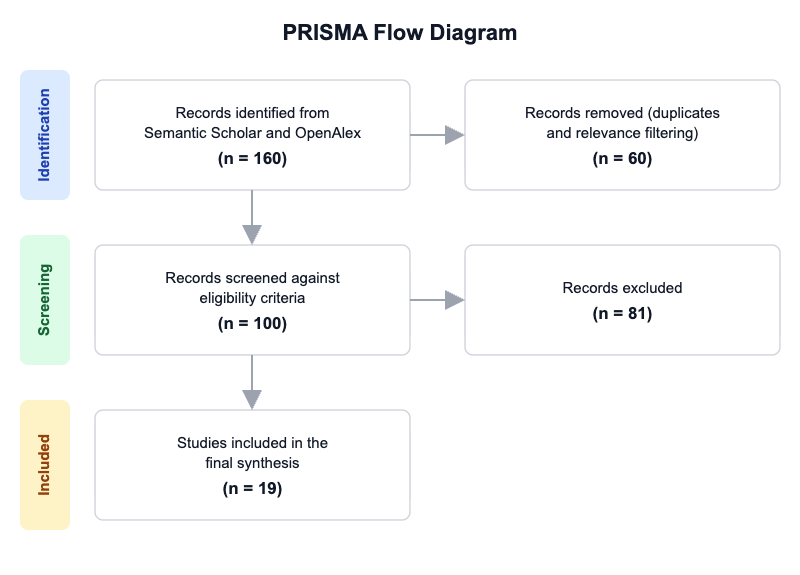
Initial database searching identified 160 records. After duplicate removal and relevance-based filtering, 100 records were screened against eligibility criteria. Of these, 81 papers were excluded, resulting in 19 papers included in the final synthesis.
PRISMA Flow Diagram
Eligibility criteria included:
- CHEK2 Focus: Does the study specifically investigate CHEK2 mutation, pathogenic variant, or CHEK2 carriers as a central topic?
- Human or Clinical: Does the study involve human participants, patient data, or clinical cohorts rather than only cell/animal models?
- Recent Evidence: Was the study published in 2020 or later?
- Actionable Relevance: Does the study address cancer risk, screening, surveillance, management, prognosis, or treatment implications for CHEK2 carriers?
- Variant Detail: Does the paper specify a CHEK2 variant class or named variant (for example truncating, missense, or c.1100delC)?
- Clinical Data: Does the study report clinical outcomes, penetrance estimates, incidence, or management recommendations?
- Functional Data: Does the study report functional assays, DNA damage response, or mechanistic evidence about CHEK2 variants?
All included studies met the stated eligibility criteria.
2.3 Data Extraction and Synthesis
Data extraction focused on the following variables:
- Study Type: Identify the study design or article type (e.g., cohort, case-control, functional assay, review, guideline, registry analysis).
- Population: Extract the main population or sample studied, including cancer type, unaffected carriers, ancestry, or experimental model.
- CHEK2 Variant: Record the CHEK2 variant(s) or mutation class investigated (e.g., c.1100delC, missense, truncating, pathogenic variant).
- Main Topic: Summarize the main research focus (e.g., cancer risk, penetrance, screening/management, treatment response, functional impact, family history).
- Key Findings: Extract the most important findings relevant to CHEK2 mutation, using exact results or conclusions reported.
- Clinical Implication: State any screening, counseling, management, or treatment implications reported by the study.
Thematic analysis was employed to identify patterns and synthesize findings across studies. Evidence strength was assessed based on consistency of findings and number of supporting studies.
3. Results
3.1 Characteristics of Included Studies
| Study and Year | Study Type | Population | CHEK2 Variant Focus | Primary Focus |
|---|---|---|---|---|
| Boonen et al., 2021 [1] | Functional assay | mES cells assessing 50 missense VUS; cancer risk context | 50 missense VUS | Functional classification and cancer risk correlation |
| Hinić et al., 2024 [2] | Cohort study | Individuals with biallelic germline pathogenic variants | c.1100del p.(Thr367MetfsTer15), c.470T>C p.(Ile157Thr) | Multimalignancy phenotype |
| Bychkovsky et al., 2025 [3] | Retrospective observational cohort | Genetic testing laboratory cohort | Low-risk variants and PVs | Biallelic low-risk and PV phenotype |
| Lowry et al., 2022 [4] | Cohort study | Women with ATM, CHEK2, PALB2 pathogenic variants | CHEK2 PVs | Breast cancer screening strategy |
| Stubbins et al., 2025 [5] | Cohort study | Hereditary hematopoietic malignancy cohort and public datasets | P/LP variants, especially p.I157T | Hematopoietic malignancy predisposition |
| Woodward et al., 2021 [6] | Cohort study | Familial breast/ovarian cancer risk cohorts | c.1100delC | Testing utility in familial cancer risk |
| Vargas-Parra et al., 2020 [7] | Cohort study and guideline adjustment | Spanish hereditary cancer cohort | Multiple CHEK2 variants | Variant classification and ACMG refinement |
| Stolařová et al., 2023 [8] | Functional assay | Diverse carriers and functional analyses | Germline missense variants | Breast-cancer risk association |
| Smid et al., 2023 [9] | Cohort study | c.1100delC breast cancer carriers | c.1100delC | Genomic landscape and tumor biology |
| Garmendia et al., 2024 [10] | Registry analysis | Females with c.1100delC or I157T | c.1100delC, I157T | Cancer risk management behavior |
| Wei et al., 2022 [11] | Retrospective chart review | Breast cancer patients with germline predisposition testing | CHEK2 PVs | ER/PR expression patterns |
| Özdemir et al., 2024 [12] | Cohort study | High-risk cancer predisposition individuals in Türkiye | Multiple variants including p.Arg117Gly | Molecular/in silico characterization |
| Schwartz et al., 2023 [13] | Cohort study | Women with CHEK2-associated breast cancer | Predominantly c.1100delC | Clinicopathologic and genetic features |
| De Sousa et al., 2024 [14] | Cohort study | Individuals with pituitary adenomas | c.1100delC, c.444 + 1G > A, p.Asn186His, p.Thr476Met | Pituitary tumorigenesis |
| Durmaz et al., 2025 [15] | Cross-sectional study | Families carrying CHEK2 mutations | 16 distinct mutations, frequent p.Thr476Met | Cancer spectrum expansion |
| Dean et al., 2023 [16] | Qualitative analysis | Females with PALB2, CHEK2, ATM variants | Not specified | Risk management decision-making |
| Schlosser et al., 2022 [17] | Cohort study | Breast cancer patients with pathogenic CHEK2 mutations | c.1100delC, p.S428P | Clinicopathologic features and outcomes |
| Manav Yigit et al., 2025 [18] | Registry analysis | Hereditary cancer evaluation cohort in Türkiye | Predominantly missense variants | Clinical implications in Turkish cohort |
| Weis et al., 2025 [19] | Review | CHEK2 carriers | Not specified | Real-world management challenges |
Overall, the literature is dominated by clinical cohort and registry-based studies, with a substantial mechanistic subliterature focused on missense variant function and kinase signaling. Breast cancer remains the core phenotype, but recent studies increasingly extend CHEK2 relevance to multiple malignancies and to management decisions that depend on variant class and zygosity. Populations are geographically diverse, including North American, European, Israeli, and Turkish cohorts, which strengthens external validity but also introduces heterogeneity in variant spectra and clinical practice.
3.2 Thematic Findings
3.2.1 CHEK2 risk is strongly variant-class dependent, and functional dysfunction tracks with cancer association
The most consistent theme is that CHEK2 is not a uniform risk gene: truncating variants, damaging missense variants, and low-risk alleles behave differently. Functional studies provide the clearest mechanistic evidence. In a mouse embryonic stem cell assay of 50 missense variants, 31 impaired CHK2 function to a degree similar to truncating variants, and 9 produced intermediate defects; correspondingly, damaging variants were associated with increased breast cancer risk (OR 2.23; 95% CI 1.62–3.07; P < 0.0001), intermediate variants also showed elevated risk (OR 1.63; 95% CI 1.21–2.20; P = 0.0014), and functionally intact variants were not associated with risk (OR 1.13; 95% CI 0.87–1.46; P = 0.378) [1]. A second functional program similarly identified multiple missense variants with impaired kinase/localization behavior and linked them to breast-cancer risk [8]. Clinical classification work supports the same direction of effect: numerous missense variants remain discordant in databases, but a subset can be reclassified as (likely)-pathogenic or as risk alleles [7]. (Note: these functional studies examined mouse embryonic stem cells or cell-line systems and carriers from mixed breast-cancer-risk populations, which partially matches the question population of humans with CHEK2 mutation; findings should be interpreted considering this difference.)
Confidence: Strong. The direction is highly concordant across mechanistic and clinical studies, and the dose-response relationship between functional impairment and risk strengthens causal plausibility.
3.2.2 CHEK2-associated breast cancer is predominantly ER-positive and luminal-like, but severity and presentation vary by variant and zygosity
Across clinical cohorts, CHEK2-related breast cancers are repeatedly described as ER-positive and often luminal B, with frequent bilateral or multifocal disease. One cohort found 95% ER positivity, 69% luminal B classification, and biallelic CHEK2 alteration with loss of heterozygosity in 57% of sequenced tumors [13]. Another study reported 90% ER positivity, 10.5% synchronous bilateral tumors, 10.5% multifocal ipsilateral tumors, and 12% metastatic disease during follow-up [17]. A separate histopathologic analysis found that CHEK2 tumors had higher ER staining (93.1% vs 78.2%, p = 0.005) and PR staining (72% vs 48.8%, p = 0.001) than non-carriers, with a narrower dispersion of receptor expression [11]. Genomic characterization of c.1100delC carriers also supports a distinctive luminal biology: tumors were similar to sporadic ER+ cancers in mutational signatures, yet showed a unique structural-variant profile with increased large deletions, inversions, and tandem duplications [9]. (Note: these studies examined women with breast cancer and/or tumor samples from specific clinical cohorts, which partially matches the question population of CHEK2 mutation carriers; findings should be interpreted considering this difference.)
Confidence: Strong. Multiple independent datasets converge on an ER-positive, luminal-skewed phenotype, although exact rates vary by cohort composition and ascertainment.
3.2.3 CHEK2 predisposition extends beyond breast cancer to a broader, but still incompletely defined, tumor spectrum
Recent studies substantially broaden the phenotype associated with CHEK2. Biallelic pathogenic variants were associated with multiple malignancies across tissues, with 53.4% of individuals developing at least one (pre)malignancy and the most common non-breast sites including colorectal, thyroid, and prostate [2]. In another cohort, CHEK2 mutations were seen in 75% of families with breast cancer, but also with thyroid cancer, rare pancreatic neuroendocrine and cerebellopontine angle tumors, and multiple primary cancers in 15% of patients; 10% met criteria for multiple inherited neoplasia alleles syndrome with additional variants such as PTEN and BRCA2 [15]. Hematopoietic and endocrine phenotypes are emerging as well: p.I157T was enriched in hereditary hematopoietic malignancy patients (OR 6.44; 95% CI 3.68–10.73; P < 0.001), and pathogenic/likely pathogenic CHEK2 variants were found in 3.0% of pituitary adenoma patients, exceeding national control data (1.8% vs 0.5%; P = .049) [5], [14]. These data indicate that CHEK2 risk is pleiotropic, but the magnitude of risk outside breast cancer remains less well quantified. (Note: several studies examined cohorts enriched for multiple malignancies, hereditary hematopoietic disease, or pituitary adenomas rather than the general CHEK2-carrier population, which partially matches the question population of CHEK2 mutation carriers; findings should be interpreted considering this difference.)
Confidence: Moderate. The signal is compelling but derived from more heterogeneous and phenotype-enriched cohorts than the breast-cancer literature.
3.2.4 Biallelic state and low-risk variants complicate penetrance estimates and clinical counseling
The latest evidence shows that zygosity and allele class can substantially reshape CHEK2 penetrance. Individuals with biallelic pathogenic variants had a heterogeneous cancer phenotype and frequent multiple malignancies, including early-onset and multi-site disease in females and malignancies across 15 origins in males [2]. However, biallelic low-risk variants behaved differently: carriers of two low-risk variants had cancer frequencies similar to wild-type and single low-risk carriers, including any cancer (76.9%) and breast cancer (60.0%), whereas individuals with one pathogenic and one low-risk variant appeared more penetrant, with 95.0% having a prior cancer diagnosis [3]. In clinical management practice, this complexity is not always reflected: MRI and surgery use did not differ significantly between c.1100delC and I157T carriers despite their different risk levels, suggesting possible oversurveillance among lower-risk carriers [10]. Together, these studies suggest that a simplistic “CHEK2-positive” label obscures clinically meaningful heterogeneity. (Note: these studies examined individuals with biallelic CHEK2 variants or registry-defined variant carriers, which partially matches the question population of CHEK2 mutation carriers; findings should be interpreted considering this difference.)
Confidence: Moderate. The pattern is consistent, but conclusions for biallelic low-risk genotypes remain constrained by small numbers and retrospective ascertainment.
3.2.5 Clinical management is moving toward genotype-specific screening, but real-world practice still lags behind risk stratification
Management studies imply that surveillance should be aligned more tightly to CHEK2 genotype. For women with ATM, CHEK2, and PALB2 pathogenic variants, modeling suggested that annual MRI beginning at 30 to 35 years and then annual MRI plus mammography at 40 years may reduce breast-cancer mortality by more than 50% [4]. Yet real-world behavior appears less tailored: MRI, risk-reducing mastectomy, and salpingo-oophorectomy rates were similar in c.1100delC and I157T carriers, despite lower breast-cancer risk in I157T (<20% vs 20%-30% for c.1100delC) [10]. Qualitative data add that provider recommendations, trust in non-surgical care, and patient anxiety influence whether management matches genotype-based risk [16]. A review of current practice further emphasizes persistent gaps in prevention and risk assessment [19]. (Note: the screening-model study included women with ATM, CHEK2, and PALB2 pathogenic variants, which partially matches the question population of CHEK2 mutation carriers; findings should be interpreted considering this difference.)
Confidence: Moderate. Evidence is directionally consistent, but much of it is modeling or behaviorally descriptive rather than outcomes-based intervention research.
3.3 Summary of Evidence
| Theme | Key Finding | Population Applicability | Effect Direction | Confidence Level | Supporting Studies |
|---|---|---|---|---|---|
| Functional classification predicts risk | Damaging variants OR 2.23 (95% CI 1.62–3.07; P < 0.0001); intermediate variants OR 1.63 (95% CI 1.21–2.20; P = 0.0014); functional variants OR 1.13 (95% CI 0.87–1.46; P = 0.378) | Human carriers and experimental functional systems; partially applicable to CHEK2 carriers | Positive, dose-dependent | Strong | Boonen et al. [1], Stolařová et al. [8] |
| Breast-cancer phenotype is luminal/ER-positive | 95% ER-positive; 69% luminal B; 93.1% ER staining vs 78.2% in non-carriers (p = 0.005) | Women with CHEK2-associated breast cancer; partially applicable | Positive for ER/PR expression | Strong | Schwartz et al. [13], Wei et al. [11], Schlosser et al. [17] |
| CHEK2 affects multiple cancer types | 53.4% had ≥1 (pre)malignancy; p.I157T enriched in hematologic malignancy (OR 6.44; 95% CI 3.68–10.73; P < 0.001); pituitary adenoma prevalence 3.0% vs 1.8% controls | Mainly enriched hereditary or clinic-based cohorts; partially applicable | Positive | Moderate | Hinić et al. [2], Stubbins et al. [5], De Sousa et al. [14] |
| Biallelic and low-risk states modify penetrance | Two low-risk variants resembled WT/single-LR; 1 PV + 1 LR had 95.0% prior cancer diagnosis | Variant-specific carrier cohorts; partially applicable | Mixed | Moderate | Bychkovsky et al. [3], Hinić et al. [2], Garmendia et al. [10] |
| Management remains insufficiently genotype-specific | MRI and surgery rates were similar for c.1100delC and I157T despite differing risk; MRI from 30–35 years may reduce mortality >50% | CHEK2 carriers in clinical and modeling settings; partially applicable | Mixed | Moderate | Garmendia et al. [10], Lowry et al. [4], Dean et al. [16] |
4. Discussion
4.1 Principal Findings and Their Interpretation
The clearest advance in the recent CHEK2 literature is the move from gene-level labeling toward variant-level interpretation. Functional studies show that CHEK2 missense variants are not interchangeable: kinase dysfunction, instability, and impaired activation identify subsets that behave similarly to truncating alleles and are associated with increased breast-cancer risk [1], [8]. This pattern is biologically persuasive because CHEK2 functions in DNA damage signaling; when kinase activity is impaired, checkpoint control is plausibly weakened, allowing genomic lesions to persist. The correlation between graded functional defect and graded cancer association is particularly important because it provides a mechanistic bridge between variant annotation and clinical penetrance.
The clinical phenotype is also becoming more coherent. CHEK2-related breast cancers are repeatedly ER-positive and luminal-like, and genomic studies suggest that their tumorigenesis is not characterized by homologous recombination deficiency but instead by distinctive structural variation and likely alternative checkpoint-disruption pathways [13], [11], [9]. This distinction matters clinically because it helps explain why treatment sensitivity differs from BRCA-associated disease and why assumptions about PARP inhibitor responsiveness may not hold for CHEK2-driven tumors. The combination of luminal phenotype, frequent multifocality/bilaterality, and occasional loss of heterozygosity suggests that CHEK2 may promote tumor development through a moderate-penetrance, multi-hit model rather than a single highly specific genomic signature.
The broader synthesis also indicates that CHEK2 is pleiotropic. Evidence for colorectal, thyroid, prostate, hematopoietic, pituitary, and rare tumors suggests that the gene acts across tissues, but this expansion is not yet supported by equivalently strong effect quantification in every organ system [2], [5], [14], [15]. Confidence is therefore highest for breast cancer and functional variant interpretation, and lower for non-breast penetrance estimates. The literature is strongest when genotype, function, and phenotype align; it is weakest when broad labels such as “CHEK2 carrier” are used without specifying variant class, zygosity, or ascertainment context.
4.2 Comparison with Existing Literature and Resolution of Contradictions
A major tension in the literature is between studies that report high-risk phenotypes and studies that suggest low-risk or near-wild-type behavior for certain alleles. This is not a true contradiction so much as evidence that CHEK2 includes alleles spanning a wide functional spectrum. The apparent neutrality of some low-risk genotypes in biallelic form [3] is compatible with the stronger risk associated with damaging missense or truncating variants [1]. It likely reflects allelic heterogeneity, where pathogenicity depends on how much checkpoint signaling is actually lost. The fact that some I157T carriers were managed similarly to higher-risk c.1100delC carriers despite lower penetrance further suggests that clinical practice may lag behind molecular stratification [10].
Another source of inconsistency is the broadening of CHEK2 beyond breast cancer. Some cohorts show strong enrichment for hematologic malignancies or pituitary adenomas, whereas other studies focus on breast cancer alone. These differences are plausibly driven by ascertainment: hereditary hematologic and pituitary cohorts are already enriched for the phenotype under study, while breast-cancer genetics cohorts may under-detect non-breast outcomes [5], [14]. Therefore, the evidence does not yet justify uniform surveillance for all organs in every CHEK2 carrier, but it does argue against a breast-only framing.
Methodologically, the field has improved from variant cataloging toward functional validation and tumor-genomic characterization, which strengthens causal inference. However, publication bias remains possible because many recent papers are positive, hypothesis-driven studies in selected high-risk cohorts. Null findings, such as the lack of HRD phenotype in CHEK2 breast cancers, are especially valuable because they counter a simplistic expectation that all DNA-repair genes should behave like BRCA1/2 [9]. The best-supported interpretation is that CHEK2 operates through checkpoint impairment and structural-genomic instability rather than canonical homologous recombination deficiency.
4.3 Practical Implications
For clinical genetics, the most immediate implication is that CHEK2 counseling should be variant-specific rather than gene-agnostic. Damaging missense and truncating variants justify more intensive risk assessment, whereas low-risk alleles such as I157T may not warrant the same level of intervention in every setting [1], [3], [10]. This is especially relevant when a patient’s management decisions are being shaped by broad “CHEK2-positive” labeling rather than by functional or penetrance data.
For breast screening, the evidence supports MRI-centered surveillance for higher-risk carriers, with modeling suggesting substantial mortality reduction when annual MRI begins at 30 to 35 years and mammography is added at 40 years [4]. However, the apparent overscreening of lower-risk I157T carriers suggests that applying the same protocol across all CHEK2 genotypes may create overtreatment and unnecessary anxiety [10]. For non-breast manifestations, the data are not yet sufficient for universal organ-specific screening, but hematologic, pituitary, thyroid, colorectal, and prostate vigilance may be reasonable in families with relevant histories or biallelic/high-risk genotypes [2], [5], [14], [15].
From a public health perspective, the practical message is not simply intensified surveillance, but more precise surveillance. Translating CHEK2 evidence into care requires better use of functional classification, family history, and genotype-specific penetrance estimates. The current evidence supports this direction while also warning against overgeneralization from breast-centric cohorts to all carriers.
4.4 Strengths and Limitations
This review synthesizes recent evidence across functional, clinical, registry-based, and modeling studies, allowing direct comparison of variant effect, tumor phenotype, and management implications. A major strength is the inclusion of studies that span mechanistic assays and real-world care, which enables biologically grounded interpretation. The synthesis also captures emerging evidence from underrepresented populations, including Turkish cohorts, alongside multinational and registry-based datasets.
The included studies nevertheless have important limitations. Many are retrospective and enriched for affected individuals, so penetrance estimates may be inflated by ascertainment bias. Several analyses rely on small numbers for biallelic or low-risk genotypes, limiting precision and preventing definitive estimates. Functional assays are compelling but are conducted in model systems rather than primary human tissue, and some clinical studies mix variant classes or include co-occurring pathogenic variants in other genes. Outcome definitions also vary, especially for non-breast cancers and management endpoints.
This review is likewise limited by abstract-based extraction for some studies, which constrains detail on covariate adjustment, follow-up duration, and full statistical modeling. No formal risk-of-bias assessment was performed, and no pooled quantitative synthesis was attempted because the studies are too heterogeneous in design and outcomes.
5. Gaps and Future Directions
The most important gap is the lack of prospective, variant-stratified penetrance data for CHEK2 carriers outside breast cancer. Current evidence for hematologic, pituitary, thyroid, colorectal, prostate, and rare tumors is suggestive but often derived from enriched cohorts or family series rather than population-based carrier follow-up [2], [5], [14], [15]. Future studies should therefore track exact CHEK2 genotypes, zygosity, and co-inherited variants in longitudinal carrier cohorts with standardized cancer ascertainment.
A second gap is the incomplete translation of functional classification into clinical reporting. Although functional assays distinguish damaging, intermediate, and intact missense variants, many clinical settings still rely on legacy classifications or broad pathogenic/likely pathogenic labels [1], [8]. Studies linking validated functional scores directly to prospective clinical outcomes would strengthen reclassification efforts.
A third need is better evidence on management effectiveness. Modeling suggests MRI-based screening benefit, but real-world studies show that management remains poorly aligned to genotype-specific risk [4], [10], [16]. Prospective implementation studies are needed to test whether CHEK2-tailored surveillance reduces cancer mortality, overdiagnosis, and unnecessary surgery.
Finally, underrepresented populations remain a major limitation. Turkish cohorts demonstrate distinct allele frequencies and recurrent variants, underscoring the need for population-specific databases and ancestry-aware interpretation [12], [18]. Future work should prioritize diverse populations and harmonized outcome definitions to refine CHEK2 counseling globally.
6. Conclusion
The latest evidence supports a clear but nuanced conclusion: CHEK2 mutation is a clinically important cancer predisposition signal, but its meaning depends strongly on variant class, zygosity, and tumor context. Damaging missense variants behave much like truncating alleles, with functional impairment associated with higher breast-cancer risk (OR 2.23; 95% CI 1.62–3.07) and intermediate variants showing a smaller but still significant effect (OR 1.63; 95% CI 1.21–2.20) [1]. CHEK2-associated breast cancers are usually ER-positive and luminal-like, and genomic studies of c.1100delC carriers show a biology distinct from BRCA-driven homologous recombination deficiency [13], [9]. At the same time, evidence now extends CHEK2 beyond breast cancer to multiple malignancies, including hematopoietic and pituitary tumors, while biallelic and low-risk variants can substantially alter phenotype [2], [5], [14], [3]. The most important unresolved question is how to translate these genotype-specific risks into prospective, outcome-based surveillance and counseling strategies that are valid across diverse populations. Until that evidence exists, the safest interpretation is neither to overgeneralize CHEK2 as uniformly high risk nor to dismiss it as a weak association; rather, it should be managed as a heterogeneous, functionally stratified predisposition locus with real implications for precision prevention, diagnostic interpretation, and family counseling.
References
- Boonen, R. A. C. M., Wiegant, W. W., Celosse, N., Vroling, B., Heijl, S., Kote-Jarai, Z., Mijuskovic, M., Cristea, S., Solleveld-Westerink, N., van Wezel, T., Beerenwinkel, N., Eeles, R., Devilee, P., Vreeswijk, M. P. G., Marra, G., & van Attikum, H. (2021). Functional analysis identifies damaging CHEK2 missense variants associated with increased cancer risk. Cancer Research, 82(4), 615–631. https://doi.org/10.1158/0008-5472.CAN-21-1845
- Hinić, S., Cybulski, C., van der Post, R. S., Vos, J. R., Schuurs-Hoeijmakers, J. H. M., Brugnoletti, F., Koene, S., Vreede, L., van Zelst-Stams, W. A. G., Kets, C. M., Haadsma, M., Spruijt, L., Wevers, M. R., Evans, D. G., Wimmer, K., Schnaiter, S., Volk, A. E., Möllring, A., De Putter, R., ... de Voer, R. M. (2024). The heterogeneous cancer phenotype of individuals with biallelic germline pathogenic variants in CHEK2. Genetics in Medicine, 26(5), 101101. https://doi.org/10.1016/j.gim.2024.101101
- Bychkovsky, B. L., Agaoglu, N. B., Horton, C., Polfus, L., Richardson, M. E., Young, C., Scheib, R., Garber, J. E., & Rana, H. Q. (2025). Double CHEK2 pathogenic and low-risk variants and associated cancer phenotypes. JAMA Network Open, 8(1), e2451361. https://doi.org/10.1001/jamanetworkopen.2024.51361
- Lowry, K. P., Geuzinge, H. A., Stout, N. K., Alagoz, O., Hampton, J., Kerlikowske, K., de Koning, H. J., Miglioretti, D. L., van Ravesteyn, N. T., Schechter, C., Sprague, B. L., Tosteson, A. N. A., Trentham-Dietz, A., Weaver, D., Yaffe, M. J., Yeh, J. M., Couch, F. J., Hu, C., Kraft, P., ... Goldgar, D. E. (2022). Breast cancer screening strategies for women with ATM, CHEK2, and PALB2 pathogenic variants: A comparative modeling analysis. JAMA Oncology, 8(4), 587. https://doi.org/10.1001/jamaoncol.2021.6204
- Stubbins, R. J., Arnovitz, S., Vagher, J., Asom, A., Perpich, M., Pies, M., Akpan, I. J., Chew, E., Bridgers, J., Karsan, A., Rodgers, C., Koppayi, A., Basdag, H., Drazer, M. W., Das, S., Cheng, J., Osman, A. E. G., & Godley, L. A. (2025). Predisposition to hematopoietic malignancies by deleterious germline CHEK2 variants. Leukemia, 39(7), 1702–1713. https://doi.org/10.1038/s41375-025-02635-1
- Woodward, E. R., van Veen, E. M., Forde, C., Harkness, E. F., Byers, H. J., Ellingford, J. M., Burghel, G. J., Schlech, H., Bowers, N. L., Wallace, A. J., Howell, S. J., Howell, A., Lalloo, F., Newman, W. G., Smith, M. J., & Evans, D. G. (2021). Clinical utility of testing for PALB2 and CHEK2 c.1100delC in breast and ovarian cancer. Genetics in Medicine, 23(10), 1969–1976. https://doi.org/10.1038/s41436-021-01234-6
- Vargas-Parra, G., del Valle, J., Rofes, P., Gausachs, M., Stradella, A., Moreno-Cabrera, J. M., Velasco, A., Tornero, E., Menéndez, M., Muñoz, X., Iglesias, S., López-Doriga, A., Azuara, D., Campos, O., Cuesta, R., Darder, E., de Cid, R., González, S., Teulé, A., ... Lázaro, C. (2020). Comprehensive analysis and ACMG-based classification of CHEK2 variants in hereditary cancer patients. Human Mutation, 41(12), 2128–2142. https://doi.org/10.1002/humu.24110
- Stolařová, L., Kleiblová, P., Zemánková, P., Šťastná, B., Janatová, M., Soukupová, J., Achatz, M. I., Ambrosone, C., Apostolou, P., Arun, B. K., Auer, P., Barnard, M., Bertelsen, B., Biobank Japan, Matsuda, K., Kamatani, Y., Morisaki, T., Nagai, A., Muto, K., ... Kleibl, Z. (2023). ENIGMA CHEK2gether Project: A comprehensive study identifies functionally impaired CHEK2 germline missense variants associated with increased breast cancer risk. Clinical Cancer Research, 29(16), 3037–3050. https://doi.org/10.1158/1078-0432.CCR-23-0212
- Smid, M., Schmidt, M. K., Prager-van der Smissen, W. J. C., Ruigrok-Ritstier, K., Schreurs, M. A. C., Cornelissen, S., Garcia, A. M., Broeks, A., Timmermans, A. M., Trapman-Jansen, A. M. A. C., Collée, J. M., Adank, M. A., Hooning, M. J., Martens, J. W. M., & Hollestelle, A. (2023). Breast cancer genomes from CHEK2 c.1100delC mutation carriers lack somatic TP53 mutations and display a unique structural variant size distribution profile. Breast Cancer Research, 25(1), 53. https://doi.org/10.1186/s13058-023-01653-0
- Garmendia, D., Weidner, A., Venton, L., & Pal, T. (2024). Comparing cancer risk management between females with truncating CHEK2 1100delC versus missense CHEK2 I157T variants. Genes, 15(7), 881. https://doi.org/10.3390/genes15070881
- Wei, G., Teng, M., Rosa, M., & Wang, X. (2022). Unique ER PR expression pattern in breast cancers with CHEK2 mutation: A hormone receptor and HER2 analysis based on germline cancer predisposition genes. Breast Cancer Research, 24(1), 11. https://doi.org/10.1186/s13058-022-01507-1
- Özdemir, Ö., Bychkovsky, B. L., Unal, B., Önder, G., Amanvermez, U., Aydin, E., Ergun, B., Sahin, I., Gökbayrak, M. E., Ugurtas, C., Köroğlu, M. N., Cakir, B., Kalay, İ., Çine, N., Özbek, U., Rana, H. Q., Hatırnaz Ng, Ö., & Ağaoğlu, N. B. (2024). Molecular and in silico analysis of the CHEK2 gene in individuals with high risk of cancer predisposition from Türkiye. Cancers, 16(22), 3876. https://doi.org/10.3390/cancers16223876
- Schwartz, C. J., Khorsandi, N., Blanco, A., Mukhtar, R. A., Chen, Y.-Y., & Krings, G. (2023). Clinicopathologic and genetic analysis of invasive breast carcinomas in women with germline CHEK2 variants. Breast Cancer Research and Treatment, 204(1), 171–179. https://doi.org/10.1007/s10549-023-07176-8
- De Sousa, S. M. C., McCormack, A., Orsmond, A., Shen, A., Yates, C. J., Clifton-Bligh, R., Santoreneos, S., King, J., Feng, J., Toubia, J., Torpy, D. J., & Scott, H. S. (2024). Increased prevalence of germline pathogenic CHEK2 variants in individuals with pituitary adenomas. The Journal of Clinical Endocrinology & Metabolism, 109(11), 2720–2728. https://doi.org/10.1210/clinem/dgae268
- Durmaz, C. D., Akçin, Ö. Ç., Dizdar, Ö., Arık, Z., Bulut, N., Erkan, D. D., Güleray Lafcı, N., & Aksoy, S. (2025). A cross-sectional study of CHEK2 pathogenic variants: Cancer risk spectrum and clinical insights. Jinekoloji-Obstetrik ve Neonatoloji Tıp Dergisi, 22(3), 380–386. https://doi.org/10.38136/jgon.1652363
- Dean, M., Tezak, A. L., Johnson, S., Weidner, A., Almanza, D., Pal, T., & Cragun, D. L. (2023). Factors that differentiate cancer risk management decisions among females with pathogenic/likely pathogenic variants in PALB2, CHEK2, and ATM. Genetics in Medicine, 25(11), 100945. https://doi.org/10.1016/j.gim.2023.100945
- Schlosser, S., Bernstein Molho, R., Karminsky, N., Barsuk, D., Goldberg, Y., Friedman, E., Yerushalmi, R., Drumea, K., Kedar, I., Jiveliouk, I., & Akiva Ben David, M. (2022). Abstract P2-09-16: Clinicopathological features and outcome of breast cancer in CHEK2 germline mutation carriers. Cancer Research, 82(4_Supplement), P2-09-16. https://doi.org/10.1158/1538-7445.SABCS21-P2-09-16
- Manav Yigit, Z., Dikbas, O. S., Mergen, F., Bozkurt, G., & Gumus, E. (2025). CHEK2 germline variants and their clinical implications: Experience from a Turkish hereditary cancer cohort. Cancer Investigation, 44(4), 363–371. https://doi.org/10.1080/07357907.2025.2600078
- Weis, L. N., Bychkovsky, B. L., Rodríguez Hernandez, A., Barroso-Sousa, R., & Sandoval, R. L. (2025). CHEK2-related breast cancer: Real-world challenges. Familial Cancer, 24(1), 23. https://doi.org/10.1007/s10689-025-00448-w