

Latest Research on Climate Change: A Thematic Literature Review of Impacts, Adaptation, Mitigation, and Equity
Reviewed by
Shrishti, Research ReviewerPowered by
Paperguide Literature Review Agent
Updated on
28 Jul 2026
Abstract
Recent climate change research converges on a central conclusion: effective responses now require integrated, cross-sectoral action rather than isolated mitigation or adaptation alone. Across the reviewed literature, the strongest quantitative evidence comes from modeling and scenario analyses showing that, under 1.5°C pathways, global coal, oil, and gas supply must decline by 95%, 62%, and 42% from 2020 to 2050, respectively, and even more sharply when carbon dioxide removal is constrained (99%, 70%, and 84%) [6]. This aligns with broader evidence that mitigation and adaptation are increasingly intertwined, with climate action needing to reduce emissions, protect health, and safeguard development simultaneously [15], [11]. The literature also shows that climate risks are highly uneven: health impacts disproportionately affect heat-exposed and socially vulnerable groups, while vulnerability across the United States is spatially clustered and exacerbates existing disparities [13], [17]. At the same time, adaptation effectiveness depends on governance, collaboration, and context-specific pathways, and nature-based as well as technological solutions each face important limits and trade-offs [1], [7], [18]. Overall, the latest evidence suggests that credible climate policy must combine rapid fossil fuel reduction, targeted adaptation for vulnerable populations and ecosystems, and explicit attention to equity, health, and sustainable development. Major gaps remain in local-level access, underrepresented social vulnerabilities, and the empirical evaluation of integrated policy designs.
1. Introduction
Climate change research in the 2020s has moved beyond establishing that warming is occurring and toward identifying which responses are effective, for whom, and under what conditions. The literature now treats climate change as a coupled challenge of emissions, vulnerability, adaptation, justice, and development, with impacts spanning health systems, terrestrial ecosystems, infrastructure, agriculture, and governance. At the same time, the evidence base increasingly shows that the distribution of climate burden is not uniform: heat, floods, drought, and ecological shifts interact with pre-existing social and economic inequalities, often magnifying them rather than operating as isolated hazards [13], [14], [17]. This has sharpened the need for research that connects climate hazards to concrete response strategies.
Within mitigation, recent scholarship emphasizes that incremental adjustments are insufficient. Scenario analyses and policy reviews suggest that deep emissions reductions require structural transformation of energy systems, economic assumptions, and industrial pathways, while conventional reliance on speculative technological change or fragmented policy packages is increasingly questioned [2], [4], [16]. In parallel, adaptation research has shifted from listing measures to evaluating effectiveness, sequencing, and governance. New frameworks stress that adaptation must be dynamic, anticipatory, and aligned with sustainable development rather than treated as a separate policy track [1], [18], [15]. The latest literature also highlights the importance of nature-based solutions, decarbonization pathways, and integrated health responses, while warning that these interventions can produce trade-offs or be captured by greenwashing and inequitable access [7], [10], [20].
Despite this progress, the field remains fragmented across sectors, methods, and scales. A synthesis of the latest research is therefore needed to clarify where the evidence is strongest, where it is still tentative, and how findings across adaptation, mitigation, health, ecosystems, and equity fit together to inform current climate action.
2. Methods
2.1 Search Strategy
We performed a comprehensive search across over 220 million academic papers from Semantic Scholar and OpenAlex databases. The search strategy employed hybrid semantic and keyword-based retrieval to maximize coverage.
Search queries included:
- "Latest climate change impacts adaptation mitigation research trends"
- "Recent climate change vulnerability resilience emissions studies"
- "Climate change effects on ecosystems health agriculture recent evidence"
- "Climate change policy decarbonization and transition pathways latest"
2.2 Study Selection
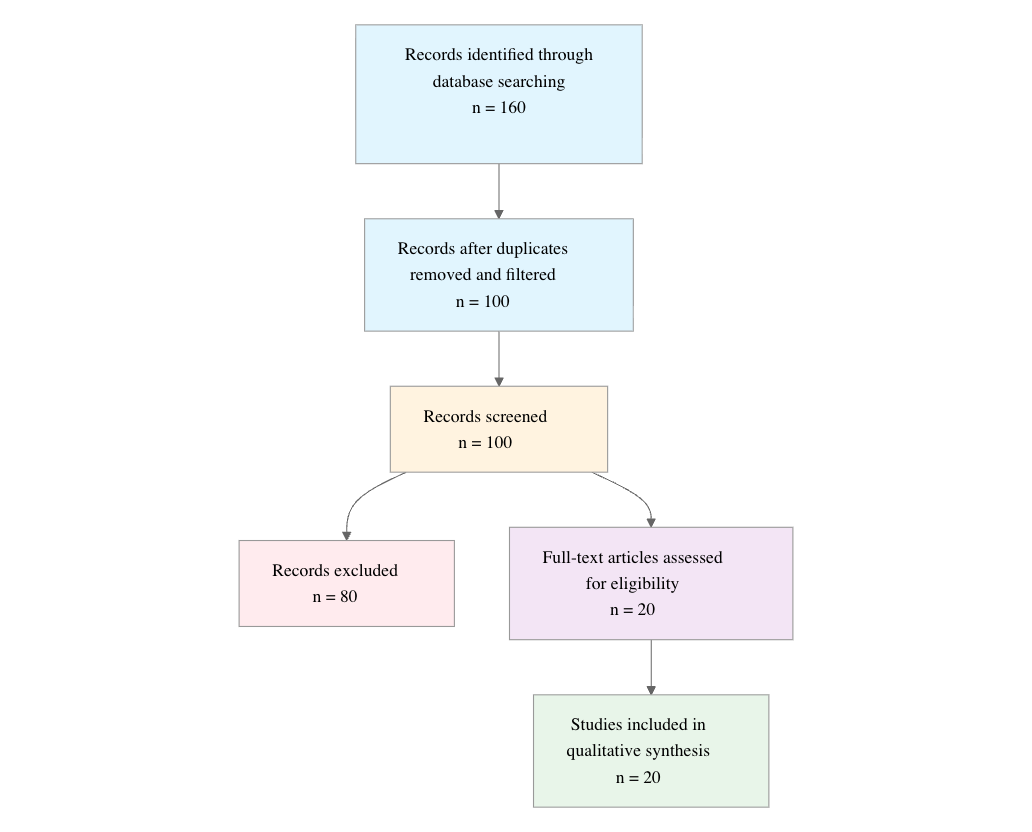
Initial database searching identified 160 records. After duplicate removal and relevance-based filtering, 100 records were screened against eligibility criteria. Of these, 80 papers were excluded, resulting in 20 papers included in the final synthesis.
PRISMA Flow Diagram
Eligibility criteria included:
- Climate Focus: Does the study examine climate change impacts, adaptation, mitigation, emissions, vulnerability, resilience, policy, or transition pathways?
- Recent Window: Was the paper published between 2020 and 2026?
- Original Evidence: Does the paper report original empirical, modeling, or policy analysis rather than being a purely editorial or comment piece?
- Climate Relevance: Does the paper address climate change as a central topic rather than a minor background mention?
- Applied Context: Does the paper report a specific region, sector, system, or policy context?
- Methods Detail: Does the paper specify a concrete method, model, dataset, or analytical approach?
- Decision Relevance: Does the paper discuss implications for policy, adaptation, mitigation, resilience, or management?
All included studies met the stated eligibility criteria.
2.3 Data Extraction and Synthesis
Data extraction focused on the following variables:
- Focus Area: Identify the main climate change topic addressed (impacts, adaptation, mitigation, vulnerability, policy, ecosystems, health, agriculture, emissions, transition pathways).
- Study Type: Extract the study design or article type (e.g., empirical study, model, review, meta-analysis, policy analysis, case study).
- Region/System: State the geographic region, country, sector, ecosystem, or system studied, if reported.
- Primary Findings: Summarize the paper's main findings or conclusions about climate change, using only what is reported in the abstract or paper metadata available.
- Methods/Data: Extract the main methods, models, data sources, or analytical approach used.
- Timeframe: State the study period, projection horizon, or publication-relevant temporal scope, if reported.
- Implications: Extract reported implications for policy, adaptation, mitigation, resilience, or management.
Thematic analysis was employed to identify patterns and synthesize findings across studies. Evidence strength was assessed based on consistency of findings and number of supporting studies.
3. Results
3.1 Characteristics of Included Studies
| Study and Year | Study Type | Key Focus | Region/System | Method | Timeframe |
|---|---|---|---|---|---|
| Owen 2020 [1] | Systematic review | Adaptation effectiveness | Global | Systematic review of adaptation initiatives | Not reported |
| Hickel et al. 2021 [2] | Policy analysis | Post-growth mitigation scenarios | Global | Theoretical policy analysis | Not reported |
| Wang et al. 2023 [3] | Review | Mitigation, adaptation, impacts | Global | Comprehensive literature review | Next two to three decades |
| Stoddard et al. 2021 [4] | Review | Emissions persistence and mitigation failure | Global | Qualitative synthesis across thematic lenses | Since 1990 |
| Elavarasan et al. 2022 [5] | Review | Decarbonization strategies | Europe | Qualitative analysis and policy review | Not reported |
| Achakulwisut et al. 2023 [6] | Model analysis | Fossil fuel reduction pathways | Global | Analysis of IPCC AR6 scenarios | 2020–2050 |
| Seddon 2022 [7] | Review | Nature-based solutions | Not reported | Literature synthesis | Not reported |
| Zhao et al. 2022 [8] | Review | Climate and health pathways | Global | Literature review | Not reported |
| O'Neill et al. 2020 [9] | Framework assessment | Scenario framework | Global | Synthesis of literature and community discussion | Past decade |
| Fuldauer et al. 2022 [10] | Framework proposal | Adaptation and SDGs | Global | Framework development and global application | By 2030 |
| Campbell-Lendrum et al. 2023 [11] | Review article | Climate and health challenges | Global health systems | Conceptual synthesis | Not reported |
| Liu et al. 2023 [12] | Systematic review | Health and wellbeing impacts | Not reported | PRISMA and SALSA systematic review | Not reported |
| Lewis et al. 2023 [13] | Empirical study | Vulnerability and risk indexing | United States | Indicator-based Climate Vulnerability Index | Current conditions |
| Abbass et al. 2022 [14] | Review article | Sectoral impacts and responses | Global | Secondary-data review | Not reported |
| Howarth and Robinson 2024 [15] | Policy analysis | Integrated adaptation and mitigation | Not reported | Policy-oriented analysis | Current urgency |
| Blanchard et al. 2023 [16] | Policy analysis | Economic policy portfolio | Not reported | Theoretical and empirical policy analysis | Not reported |
| Zahnow et al. 2025 [17] | Systematic review | Inequalities in access | Global | Review of empirical studies | Last decade |
| Muccione et al. 2024 [18] | Focus article | Adaptation pathways | Europe | Quantitative and qualitative assessment | Long-term planning |
| Conradi et al. 2024 [19] | Empirical modeling | Terrestrial ecosystems | Global land surface | Ecophysiological growth models | 2070 |
| Moreno et al. 2024 [20] | Integrated assessment modeling | Decarbonization and SDGs | European Union | Nine climate policy models | Future socio-economic trends |
The evidence base is methodologically diverse but dominated by reviews, policy analyses, and modeling studies, with fewer empirical studies that directly measure vulnerability or ecological change. Geographic coverage is strongly global, with Europe, the European Union, the United States, and global land ecosystems receiving the most specific attention. Most studies address either mitigation or adaptation, but several explicitly bridge the two, indicating a recent move toward integrated climate action.
3.2 Thematic Findings
3.2.1 Deep mitigation now requires structural transformation rather than incremental decarbonization
A clear synthesis across mitigation-focused studies is that climate targets are increasingly incompatible with conventional growth-oriented development pathways. Scenario analysis shows that under 1.5°C pathways, global coal, oil, and gas supply must fall by 95%, 62%, and 42% from 2020 to 2050, and if carbon dioxide removal is constrained the required reductions steepen to 99%, 70%, and 84% [6]. This finding is reinforced by broader reviews arguing that global emissions have continued to rise despite three decades of effort because mitigation is constrained by power structures, fossil fuel interests, and techno-economic assumptions that delay transformation [4]. Related policy analysis suggests that carbon pricing and green R&D support are important but insufficient unless deployed coherently alongside standards, bans, and targeted subsidies [16].
Evidence also challenges growth-dependent mitigation narratives. Post-growth approaches are presented as potentially enabling faster mitigation while improving social outcomes, in contrast to models that assume perpetual economic growth and speculative technological change [2]. In Europe, sector-specific review evidence indicates that hard-to-abate sectors require a mix of district heating, bio- and geothermal resources, hydrogen, carbon capture, and digitalization, while solar heat conversion may be less effective in some climatic conditions [5]. Together, these studies support a consistent claim: the pathway to climate neutrality depends less on optimizing current systems than on reorganizing energy demand, industrial structure, and policy incentives.
Confidence: Strong. Findings are convergent across scenario modeling, policy synthesis, and regional decarbonization reviews, despite differing methods.
3.2.2 Adaptation is increasingly understood as a dynamic, governance-dependent process shaped by trade-offs
Adaptation research in recent work has moved beyond cataloging measures to evaluating which approaches are effective, under what conditions, and for which outcomes. A systematic review of adaptation initiatives identifies effectiveness in terms of reducing risk and vulnerability, strengthening social systems, improving environments, increasing economic resources, and enhancing governance [1]. Yet adaptation is not uniformly beneficial or straightforward: pathway-based analysis shows that adaptation trajectories can diverge sharply as warming increases, with some measures interacting in ways that create trade-offs, such as responses to sea-level rise that may intensify water scarcity [18]. Effective adaptation therefore depends not only on the measure chosen but on timing, sequencing, legitimacy, and collaborative governance.
This governance-centered view is echoed by framework work linking adaptation to Sustainable Development Goal protection. Adaptation in wetlands, rivers, cropland, construction, water, electricity, and housing is required to safeguard 68% of SDG targets from near-term climate risk by 2030 [10]. Similarly, integrated assessments in the European Union show that ambitious net-zero pathways can improve health and agricultural productivity, but negative socio-economic effects on poverty, hunger, and economic growth require corrective policy [20]. The synthesis suggests that adaptation is most effective when aligned with broader development goals rather than treated as a standalone technical fix.
Confidence: Strong. Multiple synthesis and framework studies point to the same central conclusion that adaptation effectiveness depends on governance, timing, and cross-sector integration.
3.2.3 Health effects are among the most consistently documented climate impacts, but they are unevenly distributed
The health literature is especially consistent in linking climate change to adverse outcomes through heat, extreme weather, and interacting social determinants. Systematic review evidence identifies nine climate change events, with heat waves and extreme ambient temperatures most closely associated with circulatory and respiratory illness [12]. Another review highlights complex pathways from suboptimal temperature, wildfires, and floods to health outcomes, while also identifying youth, older adults, females, low-income groups, and coastal residents as particularly susceptible [8]. A complementary synthesis frames the health response around three grand challenges: interventions that reduce emissions and improve health, climate-resilient low-carbon health systems, and public health measures that protect against climate risks [11].
The evidence is reinforced by empirical vulnerability mapping in the United States, which finds highly heterogeneous climate risks and baseline vulnerabilities across census tracts and shows that existing disparities are exacerbated by climate change [13]. The health signal is therefore not simply one of aggregate burden but of spatially and socially differentiated exposure, susceptibility, and adaptive capacity. In this literature, health functions as both an outcome and a lever for action: mitigation can produce health co-benefits, and adaptation must be designed to protect those with the least resilience.
Confidence: Strong. Findings are consistent across systematic review, conceptual, and empirical vulnerability studies, although some evidence is based on broad review synthesis rather than direct causal estimation.
3.2.4 Climate risks are deeply unequal, and access to response measures remains stratified
A recurring theme is that inequality shapes both climate exposure and access to solutions. U.S.-based vulnerability assessment shows that climate risks cluster geographically and overlap with existing health, social, infrastructure, and environmental disparities [13]. Globally, a systematic review of inequities in access to mitigation and adaptation measures finds that research has focused mainly on international income inequalities, while neighborhood-level disparities and vulnerabilities such as immigrant status, language barriers, and physical disabilities remain underexamined [17]. The implication is that climate action may reproduce inequality if benefits and access are not intentionally distributed.
This concern also appears in adaptation literature emphasizing justice and power dynamics [1] and in health-focused work noting that vulnerability is mediated by socioeconomic and demographic factors [8]. Importantly, the evidence does not suggest that inequality is merely a background condition; rather, it shapes who can implement adaptation, who benefits from decarbonization, and who bears residual losses. That makes equity not an auxiliary concern but a core determinant of climate policy effectiveness.
Confidence: Moderate to strong. The direction is highly consistent, but evidence is thinner for local, intersecting, non-economic vulnerabilities and for causal evaluation of access mechanisms.
3.2.5 Nature-based solutions and ecosystem responses are promising but limited by uncertainty, scale, and ecological novelty
The ecosystem literature indicates that climate change is already reshaping ecological suitability in ways that complicate conservation planning. Ecological modeling projects that 33% to 68% of the global land surface will experience significant phytoclimate change by 2070 under RCP 2.6 and RCP 8.5, with 0.3% to 2.2% of land expected to experience phytoclimates without present-day analogues and 0.1% to 1.3% of current phytoclimates disappearing [19]. These results suggest a profound transformation of terrestrial ecosystems and indicate that conventional climate exposure indices may miss the ecological realities that matter for biodiversity management.
At the same time, nature-based solutions are promoted as mitigation and adaptation tools, but recent review evidence emphasizes uncertainty about when, where, and for whom they are effective, alongside risks of greenwashing, human rights violations, and biodiversity loss [7]. This combination of ecological change and solution uncertainty implies that nature-based approaches are best understood as context-dependent instruments rather than universal substitutes for technological decarbonization or direct adaptation. They may deliver multiple benefits, but only if ecological limits, governance safeguards, and distributional consequences are explicitly addressed.
Confidence: Moderate. Evidence is strong that ecosystem change is substantial, but the comparative effectiveness and governance conditions of nature-based solutions remain less settled.
3.3 Summary of Evidence
| Theme | Key Finding | Population Applicability | Effect Direction | Confidence Level | Supporting Studies |
|---|---|---|---|---|---|
| Deep mitigation requires structural transformation | Fossil fuel supply must decline by 95% coal, 62% oil, and 42% gas from 2020 to 2050 under 1.5°C pathways; with constrained CDR the declines become 99%, 70%, and 84% | Global energy systems and climate policy contexts | Negative for fossil fuel supply; positive for mitigation feasibility | Strong | Achakulwisut et al. [6], Stoddard et al. [4], Blanchard et al. [16] |
| Adaptation must be dynamic and governance-dependent | Adaptation pathways diverge as warming increases and can create trade-offs such as water scarcity | Global and European adaptation planning | Mixed | Strong | Muccione et al. [18], Owen et al. [1], Fuldauer et al. [10] |
| Health impacts are among the most consistent climate effects | Heat waves and extreme ambient temperature were most closely associated with circulatory and respiratory illness | General populations, with heightened vulnerability in older adults, youth, females, low-income groups, and coastal residents | Negative | Strong | Liu et al. [12], Zhao et al. [8], Campbell-Lendrum et al. [11] |
| Climate risks and access to solutions are unequal | Research has focused mainly on international income inequalities, while local and non-economic vulnerabilities remain underrepresented | Global, with limited local-level evidence | Negative | Moderate | Zahnow et al. [17], Lewis et al. [13], Owen et al. [1] |
| Ecosystems face rapid transformation | 33% to 68% of global land surface is projected to experience significant phytoclimate change by 2070 | Global terrestrial ecosystems | Negative | Moderate | Conradi et al. [19], Seddon [7], Wang et al. [3] |
| Climate action can yield SDG co-benefits but also trade-offs | Ambitious net-zero pathways improve health and agricultural productivity, while poverty, hunger, and growth may suffer without corrective policy | European Union | Mixed | Moderate | Moreno et al. [20], Fuldauer et al. [10], Howarth and Robinson [15] |
4. Discussion
4.1 Principal Findings and Their Interpretation
The synthesis indicates that the latest climate change research is converging around a more systemic understanding of action. The strongest and most coherent finding is that mitigation can no longer be framed as a marginal efficiency problem. Instead, deep fossil fuel reductions, policy coherence, and structural changes to growth-oriented development models are required if temperature targets are to remain credible [6], [4], [2]. The logic across these studies is mutually reinforcing: if emissions remain tied to existing energy and industrial infrastructures, then even technically plausible tools such as carbon capture, green R&D, or renewables deployment are unlikely to achieve sufficient scale without broader economic and political transformation.
A second major insight is that adaptation is becoming more complex, not less. The evidence does not support a simple "more adaptation is better" view. Rather, pathways diverge, measures interact, and implementation depends on governance, legitimacy, and sequencing [18], [1]. This suggests that adaptation effectiveness is partly endogenous to institutional capacity and the ability to manage trade-offs across sectors. The same is true for development outcomes: adaptation and decarbonization can reinforce sustainable development, but only if they are explicitly aligned with distributional goals and corrective policies [10], [20].
The health and ecosystem findings add a further layer of interpretation. Heat and extreme events emerge as especially consequential because they act through multiple pathways and interact with social vulnerability rather than producing a single uniform effect [12], [8]. In ecosystems, ecological novelty matters because climate exposure indices alone do not capture physiological thresholds or community-level transformations [19]. Across the literature, the pattern is clear: climate change is producing compounding system effects, and the most defensible confidence lies in findings that are methodologically diverse but directionally consistent. By contrast, claims about the universal efficacy of any single intervention, especially nature-based solutions, remain tentative because their benefits are context-dependent and their governance risks are substantial [7].
4.2 Comparison with Existing Literature and Resolution of Contradictions
The recent literature largely agrees that incremental policy is insufficient, but it differs in what it identifies as the main bottleneck. Some work emphasizes technological and economic policy design, such as carbon pricing and green innovation support [16], whereas other studies foreground power, vested interests, and growth paradigms as the deeper obstacle [4], [2]. These are not necessarily contradictory. Rather, they reflect different analytical levels: policy instruments may be necessary at the implementation level, but they may fail without structural conditions that make sustained emissions reduction politically and economically viable. The combined evidence therefore implies that instrument choice and political economy cannot be separated.
The main tension in the adaptation literature concerns optimism versus constraint. Framework and review studies show that adaptation can reduce vulnerability and support development [1], [10], but pathway analysis emphasizes that warming will increasingly constrain options and intensify trade-offs [18]. This is best interpreted as a difference in context and timescale. Early or well-governed interventions may still be effective, but delayed action narrows the feasible set and increases the chance that one adaptation response undermines another. The literature therefore does not contradict itself so much as reveal that adaptation effectiveness is conditional on timing and institutional capacity.
Evidence on nature-based solutions is similarly ambivalent. Some sources present them as promising for both mitigation and adaptation, yet the same literature warns about greenwashing, biodiversity loss, and rights violations [7]. This apparent contradiction is resolved by recognizing that "nature-based solutions" is not a single intervention but a heterogeneous category whose outcomes depend on design, scale, and governance. Publication bias is also a plausible concern across the broader field: positive co-benefits and successful interventions may be more visible than failed or null cases, especially in policy-relevant contexts. However, the presence of multiple studies explicitly discussing trade-offs and limitations suggests that the recent literature is increasingly willing to surface negative evidence rather than suppress it.
4.3 Practical Implications
The practical implications are clearest for policymakers and public institutions. For mitigation, the evidence supports immediate attention to fossil fuel phase-down benchmarks, particularly for coal, and to policies that combine carbon pricing, green innovation, standards, and targeted subsidies in a coherent package [16], [6]. For adaptation, the key implication is that interventions must be targeted to vulnerable sectors and populations rather than distributed uniformly. Health systems, coastal communities, older adults, children, low-income populations, and residents of areas with compounding baseline vulnerabilities require prioritized support [13], [8], [11]. For ecosystem management, biodiversity strategies should account for ecological novelty and rapidly shifting phytoclimates rather than relying on historical exposure maps [19].
The integration agenda matters for multiple audiences. Clinicians and public health practitioners need to anticipate heat-related illness and other climate-sensitive outcomes, while also recognizing that mitigation itself can produce health co-benefits [11], [20]. Regulators should not treat compliance with existing targets as sufficient if emissions trajectories remain inconsistent with modeled pathways; the evidence favors population-wide and system-wide reduction rather than narrow efficiency improvements [6]. In practice, this means that climate policy must be designed to reach those most exposed, most vulnerable, and least able to access adaptation and mitigation resources. The literature offers less certainty on how best to operationalize these principles locally, but it is clear that equity cannot be an afterthought.
4.4 Strengths and Limitations
A major strength of this review is the breadth of evidence types synthesized, spanning systematic reviews, policy analyses, empirical vulnerability mapping, integrated assessment modeling, and ecological forecasting. This diversity allows convergence across methods to be assessed rather than relying on a single evidence stream. Another strength is the focus on recent literature, which captures the field's shift toward integrated adaptation-mitigation thinking, health co-benefits, and justice-oriented climate action.
The limitations of the included studies are equally important. Many are reviews or conceptual syntheses rather than original causal studies, and several are global or regional in scope rather than local or household-level analyses. Methodological heterogeneity limits direct comparability, especially across different outcome definitions such as vulnerability, effectiveness, resilience, and co-benefits. In addition, some studies rely on scenarios or model projections, which are highly informative but necessarily contingent on assumptions about technology, governance, and socio-economic change.
This review also has limitations. The synthesis is based on abstract-level and extracted data, so some nuance from full texts may be missing. No formal risk-of-bias assessment was performed, and the review depends on the completeness and accuracy of the provided paper data. Finally, the literature is unevenly distributed across topics and regions, which means conclusions are stronger for mitigation, health, and adaptation governance than for some local equity questions.
5. Gaps and Future Directions
The most visible gap is the lack of local, intersectional evidence on who can access climate solutions and who is left out. Current work emphasizes income inequality, but much less is known about immigrant status, language barriers, disability, and neighborhood-level barriers to adaptation and mitigation [17]. Future studies should therefore examine how these overlapping vulnerabilities shape real access to interventions, not just exposure to climate hazards. A second gap is methodological: adaptation research still needs more direct evaluation of effectiveness across time, especially under different warming levels and governance arrangements [1], [18].
For mitigation, future studies should move beyond general pathway discussions to policy packages that can be tested against measurable distributional outcomes, including poverty, hunger, and health co-benefits [20], [10]. The ecosystem literature also needs finer-grained work linking ecological novelty to management action, because global exposure indices do not capture physiological and community-level change well enough for conservation planning [19]. More empirical work in underrepresented regions beyond Europe, the United States, and global scenario spaces would strengthen generalizability.
6. Conclusion
The latest climate change literature supports a clear conclusion: effective climate action now depends on integrating rapid mitigation, dynamic adaptation, and equity-centered governance rather than treating these as separate policy domains. The strongest evidence shows that fossil fuel production and use must decline sharply to remain consistent with 1.5°C pathways, with reductions of 95% for coal, 62% for oil, and 42% for gas from 2020 to 2050, and even steeper declines if carbon dioxide removal is constrained [6]. At the same time, climate risks are already unevenly distributed, with heat-related illness, heterogeneous vulnerability in the United States, and differential access to response measures affecting those with the least social and material capacity to adapt [13], [17], [8].
The evidence base is strongest where studies converge across methods: mitigation requires structural transformation, adaptation requires governance and sequencing, and climate policy must be aligned with health and sustainable development [4], [11], [10]. The least certain area remains the local operationalization of just and effective climate action, especially for intersecting vulnerabilities and for nature-based solutions whose benefits depend heavily on context [7]. Future research should therefore test how integrated policies perform in real settings and for marginalized populations. That question matters because the success of climate action will ultimately be judged not only by emissions avoided, but by whether it reduces harm, protects ecosystems, and delivers a fairer and more resilient future.
References
- Owen, G. (2020). What makes climate change adaptation effective? A systematic review of the literature. Global Environmental Change, 62, 102071. https://doi.org/10.1016/j.gloenvcha.2020.102071
- Hickel, J., Brockway, P., Kallis, G., Keyßer, L., Lenzen, M., Slameršak, A., Steinberger, J., & Ürge-Vorsatz, D. (2021). Urgent need for post-growth climate mitigation scenarios. Nature Energy, 6(8), 766–768. https://doi.org/10.1038/s41560-021-00884-9
- Wang, F., Harindintwali, J. D., Wei, K., Shan, Y., Mi, Z., Costello, M. J., … Tiedje, J. M. (2023). Climate change: Strategies for mitigation and adaptation. Innovation Geoscience, 1(1), 100015. https://doi.org/10.59717/j.xinn-geo.2023.100015
- Stoddard, I., Anderson, K., Capstick, S., Carton, W., Depledge, J., Facer, K., … Williams, M. (2021). Three Decades of Climate Mitigation: Why Haven't We Bent the Global Emissions Curve? Annual Review of Environment and Resources, 46, 653–689. https://doi.org/10.1146/annurev-environ-012220-011104
- Madurai Elavarasan, R., Pugazhendhi, R., Irfan, M., Mihet-Popa, L., Khan, I. A., & Campana, P. E. (2022). State-of-the-art sustainable approaches for deeper decarbonization in Europe – An endowment to climate neutral vision. Renewable and Sustainable Energy Reviews, 159, 112204. https://doi.org/10.1016/j.rser.2022.112204
- Achakulwisut, P., Erickson, P., Guivarch, C., Schaeffer, R., Brutschin, E., & Pye, S. (2023). Global fossil fuel reduction pathways under different climate mitigation strategies and ambitions. Nature Communications, 14(1), 5425. https://doi.org/10.1038/s41467-023-41105-z
- Seddon, N. (2022). Harnessing the potential of nature-based solutions for mitigating and adapting to climate change. Science, 376(6600), 1410–1416. https://doi.org/10.1126/science.abn9668
- Zhao, Q., Yu, P., Mahendran, R., Huang, W., Gao, Y., Yang, Z., … Guo, Y. (2022). Global climate change and human health: Pathways and possible solutions. Eco-Environment & Health, 1(2), 53–62. https://doi.org/10.1016/j.eehl.2022.04.004
- O'Neill, B. C., Carter, T. R., Ebi, K., Harrison, P. A., Kemp-Benedict, E., Kok, K., … Pichs-Madruga, R. (2020). Achievements and needs for the climate change scenario framework. Nature Climate Change, 10(12), 1074–1084. https://doi.org/10.1038/s41558-020-00952-0
- Fuldauer, L. I., Thacker, S., Haggis, R. A., Fuso-Nerini, F., Nicholls, R. J., & Hall, J. W. (2022). Targeting climate adaptation to safeguard and advance the Sustainable Development Goals. Nature Communications, 13, 3579. https://doi.org/10.1038/s41467-022-31202-w
- Campbell-Lendrum, D., Neville, T., Schweizer, C., & Neira, M. (2023). Climate change and health: three grand challenges. Nature Medicine, 29(7), 1631–1638. https://doi.org/10.1038/s41591-023-02438-w
- Liu, F., Chang-Richards, A., Wang, K. I.-K., & Dirks, K. N. (2023). Effects of climate change on health and wellbeing: A systematic review. Sustainable Development, 31(4), 2067–2090. https://doi.org/10.1002/sd.2513
- Tee Lewis, P. G., Chiu, W. A., Nasser, E., Proville, J., Barone, A., Danforth, C., … Craft, E. (2023). Characterizing vulnerabilities to climate change across the United States. Environment International, 172, 107772. https://doi.org/10.1016/j.envint.2023.107772
- Abbass, K., Qasim, M. Z., Song, H., Murshed, M., Mahmood, H., & Younis, I. (2022). A review of the global climate change impacts, adaptation, and sustainable mitigation measures. Environmental Science and Pollution Research, 29(28), 42539–42559. https://doi.org/10.1007/s11356-022-19718-6
- Howarth, C., & Robinson, E. J. Z. (2024). Effective climate action must integrate climate adaptation and mitigation. Nature Climate Change, 14(4), 300–301. https://doi.org/10.1038/s41558-024-01963-x
- Blanchard, O., Gollier, C., & Tirole, J. (2023). The portfolio of economic policies needed to fight climate change. Annual Review of Economics, 15, 689–722. https://doi.org/10.1146/annurev-economics-051520-015113
- Zahnow, R., Rad Yousefnia, A., Hassankhani, M., & Cheshmehzangi, A. (2025). Climate change inequalities: A systematic review of disparities in access to mitigation and adaptation measures. Environmental Science & Policy, 165, 104021. https://doi.org/10.1016/j.envsci.2025.104021
- Muccione, V., Haasnoot, M., Alexander, P., Bednar-Friedl, B., Biesbroek, R., Georgopoulou, E., Le Cozannet, G., & Schmidt, D. N. (2024). Adaptation pathways for effective responses to climate change risks. WIREs Climate Change, 15(4), e883. https://doi.org/10.1002/wcc.883
- Conradi, T., Eggli, U., Kreft, H., Schweiger, A. H., Weigelt, P., & Higgins, S. I. (2024). Reassessment of the risks of climate change for terrestrial ecosystems. Nature Ecology & Evolution, 8(5), 888–900. https://doi.org/10.1038/s41559-024-02333-8
- Moreno, J., Campagnolo, L., Boitier, B., Nikas, A., Koasidis, K., Gambhir, A., … Vielle, M. (2024). The impacts of decarbonization pathways on Sustainable Development Goals in the European Union. Communications Earth & Environment, 5(1), 136. https://doi.org/10.1038/s43247-024-01309-7