

Latest Research on Craniopharyngioma: Integrative Synthesis of Biology, Surgery, Radiotherapy, and Outcomes
Abstract
Recent craniopharyngioma research converges on a clearer division between tumor biology and management strategy: papillary craniopharyngioma is strongly linked to BRAF V600E and shows marked responsiveness to targeted therapy, with one review reporting a therapeutic response in 93.7% of BRAF V600E-mutated papillary cases and an 85% reduction in tumor size, while stereotactic radiosurgery achieves pooled tumor control of 76.1% (95% CI 68.6-82.3%) and overall survival of 92.7% (95% CI 88.0-96.1%) in residual or recurrent disease. At the same time, radiation therapy appears to outperform radiosurgery for long-term progression-free survival, and hypothalamus-sparing surgery remains central to minimizing morbidity, especially when infiltration makes radical resection unsafe. Craniopharyngioma is clinically important because survival is generally high, yet endocrine, visual, and hypothalamic sequelae remain common and often dominate long-term quality of life. Across contemporary literature, pediatric patients show larger tumors, fewer visual defects but more headaches at presentation, and higher odds of permanent diabetes insipidus, obesity, and cranial nerve/neurological deficits after surgery than adults. Molecular studies reinforce that adamantinomatous disease is driven by CTNNB1/Wnt-β-catenin biology, including proliferative cyst-wall niches associated with recurrence, whereas papillary disease is increasingly managed through BRAF- and MEK-directed strategies. The current evidence supports individualized multimodality care rather than one-size-fits-all treatment, but important gaps remain in long-term comparative effectiveness, standardized response metrics, and optimal integration of surgery, radiotherapy, and targeted therapy.
1. Introduction
Craniopharyngioma is a rare, histologically benign but clinically aggressive tumor of the sellar and parasellar region whose impact is disproportionate to its incidence because of its proximity to the optic pathways, hypothalamus, and pituitary axis. Contemporary reviews emphasize that its clinical burden is driven less by malignant behavior than by mass effect, local invasion, recurrence, and treatment-related injury, which together produce endocrine failure, visual loss, neurological deficits, hypothalamic dysfunction, and reduced quality of life [2], [5]. Two major histologic and molecular subtypes shape current thinking: adamantinomatous craniopharyngioma, associated with CTNNB1/β-catenin signaling, and papillary craniopharyngioma, associated with BRAF V600E [2], [4]. This biological distinction has become increasingly important because it now informs both prognosis and treatment selection.
Management has historically centered on surgery, often followed by radiotherapy, but the balance between tumor control and functional preservation remains difficult. More conservative paradigms have emerged, especially hypothalamus-sparing surgery and subtotal resection combined with irradiation when the hypothalamus is involved [7], [13]. At the same time, targeted therapy has transformed expectations for papillary disease and is being explored for adamantinomatous disease, reflecting a broader shift from purely anatomical management toward biology-guided care [4], [8]. Response assessment has also become a central issue, since survival is often excellent but conventional size-based endpoints do not fully capture the burden of neuro-endocrine and visual dysfunction [3].
Against this backdrop, the current literature increasingly asks not whether craniopharyngioma can be treated, but how to optimize disease control while preserving lifelong function. The present review synthesizes recent evidence on clinical presentation, molecular pathogenesis, surgery, radiotherapy, targeted therapies, recurrence risk, and outcome assessment to clarify what the latest research implies for contemporary management.
2. Methods
2.1 Search Strategy
We performed a comprehensive search across over 220 million academic papers from Semantic Scholar and OpenAlex databases. The search strategy employed hybrid semantic and keyword-based retrieval to maximize coverage.
Search queries included:
- "Craniopharyngioma latest clinical research surgery radiotherapy outcomes"
- "Craniopharyngioma recent advances treatment recurrence endocrine morbidity"
- "Craniopharyngioma molecular biology genetics biomarkers pediatric adult"
- "Craniopharyngioma systematic review meta-analysis management outcomes"
2.2 Study Selection
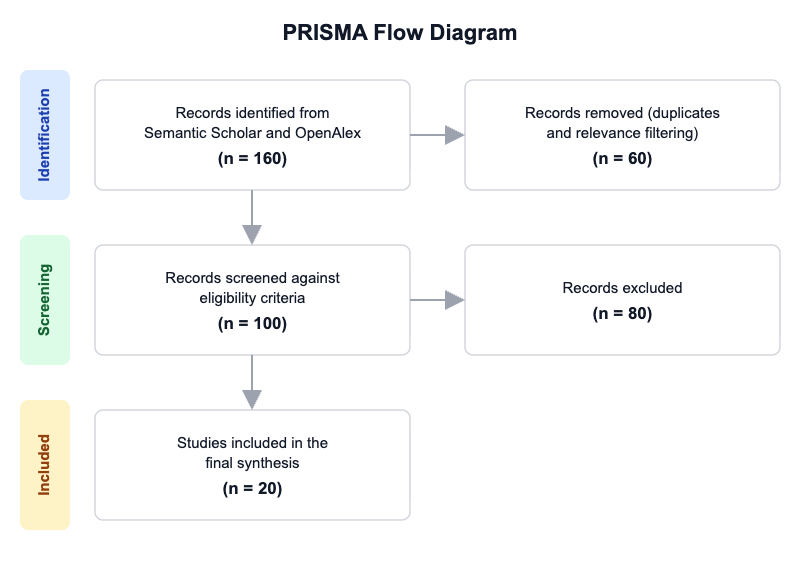
Initial database searching identified 160 records. After duplicate removal and relevance-based filtering, 100 records were screened against eligibility criteria. Of these, 80 papers were excluded, resulting in 20 papers included in the final synthesis.
PRISMA Flow Diagram
Eligibility criteria included:
- Craniopharyngioma: Does the study focus on craniopharyngioma as the primary disease or tumor of interest?
- Human Study: Does the study involve human patients, human tissue, or clinical data rather than only animal or in vitro models?
- Recent: Was the article published between 2020 and 2026?
- Primary Data: Does the paper report original data, a clinical series, or a systematic evidence synthesis rather than being only a brief comment or unrelated editorial?
- Clinical Relevance: Does the study report treatment, surgery, radiotherapy, recurrence, endocrine, visual, quality-of-life, imaging, or prognostic outcomes?
- Biology: Does the study investigate molecular, genetic, biomarker, or pathobiology aspects of craniopharyngioma?
- Comparative Evidence: Does the study compare at least two management approaches, tumor subtypes, or outcome groups?
All included studies met the stated eligibility criteria.
2.3 Data Extraction and Synthesis
Data extraction focused on the following variables:
- Study focus: Extract the main research focus of the paper (e.g., surgical management, radiotherapy, endocrine outcomes, recurrence, molecular biology, biomarkers, imaging, quality of life).
- Study type: Extract the study design or article type (e.g., retrospective cohort, prospective study, case series, randomized trial, systematic review, meta-analysis, translational study, review).
- Population: Extract the patient population or model studied, including pediatric vs adult when stated, and key characteristics such as number of patients if reported.
- Intervention / exposure: Extract the main intervention, exposure, or biological factor studied (e.g., surgery type, radiotherapy modality, drug therapy, gene mutation, biomarker).
- Main findings: Extract the principal findings or conclusions relevant to craniopharyngioma management, biology, prognosis, or outcomes.
- Outcomes measured: Extract the main outcomes assessed, such as tumor control, recurrence, visual outcome, endocrine dysfunction, survival, quality of life, imaging response, or molecular associations.
- Follow-up: Extract the follow-up duration or timeframe if reported, or state if not reported.
- Limitations: Extract key limitations noted by the study or apparent from the abstract, if available.
Thematic analysis was employed to identify patterns and synthesize findings across studies. Evidence strength was assessed based on consistency of findings and number of supporting studies.
3. Results
3.1 Characteristics of Included Studies
| Study and Year | Study Type | Population | Key Focus | Intervention / Exposure | Main Outcomes |
|---|---|---|---|---|---|
| Pang et al. 2023 [1] | Systematic review and meta-analysis | Pediatric and adult patients | Comparative presentation and postoperative outcomes | Surgical treatment | Visual defects, cognitive impairment, tumor size, diabetes insipidus, obesity, neurological deficits, recurrence |
| Apps et al. 2022 [2] | Review | General craniopharyngioma population | Biology, management, and therapy | Surgery, radiotherapy, intracystic therapy, targeted therapy | Recurrence, endocrine deficits, quality of life |
| Hoffman et al. 2022 [3] | Consensus guidelines | Pediatric patients | Standardized response assessment | MRI-based response criteria | Radiologic response, neuro-endocrine and visual function |
| Gritsch and Brastianos 2025 [4] | Review | General craniopharyngioma population | Pathogenesis and targeted therapy | BRAF/MEK inhibitors | Molecular drivers, therapeutic efficacy |
| Pires de Oliveira Neto et al. 2025 [5] | Review | Pediatric and adult patients | Pathophysiology and emerging therapies | Surgery, radiotherapy, targeted and immune-based therapies | Tumor control, clinical symptoms, progression-free survival |
| Alboqami et al. 2024 [6] | Review | Pediatric and adult patients | Clinical, radiological, and management features | Surgery, radiotherapy, supportive care | Symptoms, endocrine dysfunction, quality of life |
| Gött et al. 2025 [7] | Review | General craniopharyngioma population | Hypothalamus-sparing surgery | eTSA, TCA, GTR | Oncologic outcome, hypothalamic and endocrine morbidity, quality of life |
| Hayes et al. 2024 [8] | Case-based review | ACP patient case | Modern management and targeted therapy | ERK inhibitor therapy | Disease progression, treatment response |
| Javidialsaadi et al. 2025 [9] | Narrative review | Pediatric and adult patients | Management strategies | Surgery, radiation, intracavitary treatments, targeted therapy | Tumor control, survival |
| Cossu et al. 2020 [10] | Systematic review and consensus statement | Adult patients | Surgical management | Endonasal and transcranial surgery | GTR, visual and endocrinological outcomes, hypothalamic morbidity |
| Serbis et al. 2023 [11] | Narrative review | Pediatric patients | Recurrence predictors | Surgical and radiotherapy-related factors | Recurrence rates and prognostic factors |
| Li et al. 2024 [12] | Systematic review and meta-analysis | Mainly children and adolescents | Proton beam therapy | Proton beam therapy | Local control, overall survival, toxicity, QoL, cyst dynamics |
| Gabay et al. 2023 [13] | Review | Pediatric patients | Treatment strategy shift | Partial resection plus radiation vs aggressive surgery | Tumor control, neuro-endocrinological morbidity, quality of life |
| Chuan et al. 2023 [14] | Translational study | 45 ACP patients | Cyst-wall biology and recurrence | CTNNB1, cyst wall analysis | Recurrence, tumor regrowth, proliferative capacity |
| Iglesias 2022 [15] | Review | General craniopharyngioma population | Targeted medical therapy | Wnt/β-catenin and BRAF inhibitors | Therapeutic response, tumor size reduction |
| Zhou et al. 2021 [16] | Review | Pediatric and adult patients | Endocrine disorders | Surgery, radiotherapy, targeted therapies | Hormone deficiencies, quality of life |
| Cuny et al. 2024 [17] | Consensus statement | Children and adults | Diagnosis and long-term management | Multidisciplinary management | Tumor control, recurrence, endocrine function, quality of life |
| Webb et al. 2023 [18] | Systematic review and meta-analysis | Adults and children | Surgical approach comparison | Transsphenoidal vs other approaches | Clinical outcomes |
| Fathollahi et al. 2025 [19] | Systematic review and meta-analysis | Craniopharyngioma patients | Stereotactic radiosurgery | SRS | Tumor control, PFS, OS, visual outcomes, complications |
| Yoo et al. 2025 [20] | Meta-analysis | Craniopharyngioma patients | Radiosurgery vs radiation therapy | RS vs RT | Long-term PFS |
Overall, the literature is dominated by reviews, consensus statements, and meta-analyses, with comparatively fewer translational and case-based studies. Most recent work spans both pediatric and adult disease, but several themes remain population-specific, particularly pediatric recurrence and adult surgical strategy. Across the field, outcomes have expanded beyond survival to include endocrine function, hypothalamic morbidity, visual preservation, and quality of life, reflecting a broader shift in therapeutic priorities [7], [16], [17].
3.2 Thematic Findings
3.2.1 Molecular stratification is now central to craniopharyngioma management
The clearest trend in recent research is that craniopharyngioma is no longer treated as a biologically uniform entity. Papillary craniopharyngioma is consistently linked to BRAFV600E-driven MAPK signaling, whereas adamantinomatous craniopharyngioma is linked to CTNNB1 mutations and Wnt/β-catenin pathway activation [4], [15], [2]. This biologic split is not merely descriptive: it has direct therapeutic consequences, because BRAF inhibitors, alone or combined with MEK inhibition, show substantial activity in papillary disease, including a reported therapeutic response in 93.7% of BRAF V600E-mutated papillary cases and an 85% tumor-size reduction in a preliminary phase II report [15]. By contrast, systemic options for adamantinomatous disease remain limited, despite interest in Wnt/β-catenin-directed approaches and newer hypotheses involving inflammatory and immune microenvironment modulation [4], [5].
The molecular literature also extends beyond mutation status to tissue architecture. In adamantinomatous disease, residual cyst wall appears biologically active rather than inert, showing stronger proliferative capacity than the solid component and a higher density of β-catenin nuclear-positive cell clusters, with residual cyst wall significantly associated with recurrence or regrowth in 45 ACPs [14]. This supports the concept that apparent “residual” cystic tissue may represent biologically meaningful disease rather than simple postoperative remnant. Confidence: Strong.
3.2.2 Surgical strategy has shifted from radicality toward hypothalamic preservation, without abandoning oncologic control
The surgical literature converges on a more nuanced position than either historical radical resection or maximal conservatism alone. Gross total resection remains the strongest oncologic strategy when it can be achieved safely, and expert consensus still supports endonasal or transsphenoidal approaches for selected midline tumors because they improve gross total resection and endocrine/visual outcomes [10], [18], [7]. However, the modern emphasis is on hypothalamus-sparing surgery when infiltration is present, because hypothalamic injury is associated with severe long-term morbidity [7], [10]. High-volume specialized centers are repeatedly emphasized as the setting most likely to reduce hypothalamic morbidity [10], [17].
Importantly, the field does not support a single universal operation. Transcranial approaches are preferred for lateral or purely intraventricular extension, while endonasal/transsphenoidal routes are favored for midline disease [10], [7]. The evidence therefore points to anatomy- and invasion-guided selection rather than approach dogma. Confidence: Strong.
3.2.3 Pediatric disease appears more morbid after treatment, while adults and children differ in presentation
Age modifies both presentation and postoperative burden. Pediatric patients are more likely to present with headaches, less likely to present with visual defects or cognitive impairment, and tend to have larger tumors than adults [1]. Yet despite fewer baseline visual deficits, children sustain higher odds of permanent diabetes insipidus (OR 1.70, 95% CI 1.13-2.56), obesity (OR 3.15, 95% CI 1.19-8.31), and cranial nerve/neurological defects (OR 4.87, 95% CI 1.78-13.31) after surgery [1]. Endocrine reviews reinforce that hormone deficiencies are especially common in childhood-onset disease, with endocrine dysfunction rates reported at 65-92% [16]. These findings fit the broader view that pediatric tumors may be larger or more locally disruptive at diagnosis, while children are also more vulnerable to the developmental and metabolic consequences of treatment.
This pediatric-adult contrast matters because it argues against extrapolating adult surgical or radiotherapy expectations to younger patients. The implications of treatment-related endocrine injury are also likely amplified in children because they face longer survivorship horizons, making obesity and pituitary dysfunction especially consequential [1], [16]. Confidence: Moderate to strong.
3.2.4 Radiotherapy remains an important adjunct, but the optimal radiation strategy depends on modality and clinical context
Radiation-based management is supported as an effective adjunct, particularly after subtotal resection or when additional surgery is unsafe. In pediatric strategy reviews, partial resection plus radiation is described as yielding similar control rates to aggressive surgery while reducing neuro-endocrinological morbidity [13]. For residual or recurrent disease, stereotactic radiosurgery produces favorable pooled tumor control of 76.1% (95% CI 68.6-82.3%), progression-free survival of 81.3% (95% CI 70.8-88.6%) at 3 years and 68.9% (95% CI 58.5-76.0%) at 5 years, and overall survival of 92.7% (95% CI 88.0-96.1%) [19]. Serious toxicities are reported as relatively uncommon, including visual deterioration at 7.4%, hypothalamic dysfunction at 0.7%, and new-onset pituitary dysfunction at 2.2% [19].
Yet this favorable radiosurgical profile does not resolve the broader comparison with conventional fractionated radiation. A separate meta-analysis reports that radiation therapy consistently achieves superior long-term progression-free survival compared with radiosurgery [20]. This does not necessarily contradict the radiosurgery data; rather, it likely reflects differences in dose distribution, lesion selection, and the fact that radiosurgery is often used for smaller residual or recurrent lesions. Proton beam therapy likewise shows encouraging local control and acceptable acute and late toxicities, but no current evidence of superiority over conventional photon radiotherapy [12]. Confidence: Moderate.
3.2.5 Outcome assessment is broadening from radiology alone to function-centered endpoints
A notable methodological advance is the move toward standardized, multidisciplinary outcome assessment. Pediatric response guidelines recommend MRI with 2-dimensional measurement of both solid and cystic components, but also specify that radiologic change must be interpreted together with neuro-endocrine and visual function [3]. This is important because cystic disease may behave differently from solid disease, and progression should be declared only when cyst growth is linked to functional deterioration in many contexts [3]. Consensus statements similarly frame long-term follow-up around recurrence, endocrine function, hypothalamic syndrome, and quality of life rather than tumor control alone [17], [10].
This shift reflects a core reality of craniopharyngioma: survival is often high, but morbidity is frequently the dominant outcome that matters to patients. The literature therefore increasingly treats endocrine and visual function as co-primary endpoints rather than secondary sequelae [2], [3]. Confidence: Strong.
3.3 Summary of Evidence
| Theme | Key Finding | Population Applicability | Effect Direction | Confidence Level | Supporting Studies |
|---|---|---|---|---|---|
| Molecular stratification | BRAF V600E-mutated papillary disease showed a 93.7% therapeutic response with 85% tumor reduction in a preliminary phase II report | Primarily papillary craniopharyngioma; partially matches the broader craniopharyngioma question population | Positive for papillary targeted therapy | Strong | Iglesias [15], Gritsch and Brastianos [4], Pires de Oliveira Neto et al. [5] |
| Hypothalamus-sparing surgery | GTR is favored when safe, but hypothalamic preservation is prioritized when infiltration is present | Broad craniopharyngioma population, with strong applicability to complex midline/invasive tumors | Positive for individualized surgery | Strong | Cossu et al. [10], Gött et al. [7], Webb et al. [18] |
| Pediatric vs adult differences | Pediatric patients had OR 1.70 (95% CI 1.13-2.56) for permanent DI, OR 3.15 (95% CI 1.19-8.31) for obesity, and OR 4.87 (95% CI 1.78-13.31) for cranial nerve/neurological defects | Directly relevant to pediatric vs adult comparison | Negative for pediatric postoperative morbidity | Moderate | Pang et al. [1], Zhou et al. [16], Gabay et al. [13] |
| Radiotherapy and radiosurgery | SRS yielded tumor control of 76.1% (95% CI 68.6-82.3%) and OS of 92.7% (95% CI 88.0-96.1%), while RT had superior long-term PFS vs RS | Residual/recurrent disease; partially matches broad question population | Mixed | Moderate | Fathollahi et al. [19], Yoo et al. [20], Li et al. [12] |
| Cyst-wall biology and recurrence | Residual cyst wall in 45 ACPs was significantly associated with recurrence/regrowth; cyst wall showed stronger proliferative capacity than solid body | Adamantinomatous craniopharyngioma; partially matches broader question population | Negative for residual cyst-wall preservation | Moderate | Chuan et al. [14], Serbis et al. [11], Apps et al. [2] |
| Standardized response assessment | MRI-based 2D assessment plus neuro-endocrine and visual endpoints were recommended | Pediatric craniopharyngioma; partially matches broader question population | Positive for harmonized assessment | Strong | Hoffman et al. [3], Cuny et al. [17] |
4. Discussion
4.1 Principal Findings and Their Interpretation
The latest literature indicates that craniopharyngioma management is moving from a size-and-survival framework to a biology-and-function framework. The most robust convergence is biological: papillary disease is increasingly actionable because BRAF V600E creates a targetable dependency, whereas adamantinomatous disease remains more resistant to current systemic options because its CTNNB1/Wnt-β-catenin biology is embedded in a more complex tissue microenvironment [4], [15], [5]. The high response rates reported for targeted therapy in papillary disease are therefore not isolated anomalies but the expected consequence of pathway-specific oncogenic addiction.
The second major advance is surgical precision. Rather than treating gross total resection as an absolute goal, the field now distinguishes between tumors that can be safely removed and those in which hypothalamic invasion makes radicality harmful [7], [10]. This reflects a functional logic: in craniopharyngioma, the relevant “tumor burden” includes not only residual mass but also the long-term damage caused by aggressive surgery. The pediatric data reinforce this point, because children experience larger tumors yet disproportionately worse endocrine and neurological sequelae after treatment [1], [16]. The synthesis therefore suggests that the best outcomes are likely to arise from individualized multimodality planning rather than escalation of a single modality.
The third key interpretation is that recurrence risk is not uniform across lesion compartments. The cyst wall of adamantinomatous disease appears biologically active, with proliferative features and stem-cell-like niches that plausibly explain postoperative regrowth [14]. This mechanistic evidence helps unify the recurrence literature: recurrence is not only a consequence of incomplete surgery, but also of residual viable tumor biology in anatomically difficult regions. Confidence is highest for the molecular subtype distinction and the morbidity burden of pediatric disease, and more tentative for the optimal sequencing of surgery, radiotherapy, and targeted agents because comparative long-term trials remain limited.
4.2 Comparison with Existing Literature and Resolution of Contradictions
The main apparent tension in the literature concerns radiation strategy. Radiosurgery looks highly effective in pooled analyses, with strong tumor control and high survival, yet fractionated radiation therapy is reported to provide superior long-term progression-free survival compared with radiosurgery [19], [20]. This is not necessarily a true contradiction. Radiosurgery is often reserved for selected residual or recurrent lesions, which may be smaller but biologically or anatomically different; fractionated radiotherapy may better accommodate irregular target volumes or cystic dynamics. In that sense, the two modalities are being evaluated in different clinical niches, so the comparative result may reflect case selection as much as intrinsic efficacy. The proton beam data also fit this interpretation: proton therapy appears promising, but the absence of demonstrated superiority over photon radiotherapy suggests that technological advantage does not automatically translate into outcome advantage when follow-up is short and studies are retrospective [12].
A second tension concerns radical surgery. Older paradigms favored maximal removal, yet recent consensus increasingly discourages radicality when hypothalamic infiltration is present [10], [7]. This shift is best understood as an evolution in what the field counts as success. Earlier literature often prioritized local control, whereas contemporary work incorporates hypothalamic syndrome, obesity, endocrine loss, and quality of life. Under that broader definition, a less aggressive resection can be the better operation if it reduces irreversible morbidity.
Publication bias remains plausible, especially in targeted therapy literature where dramatic responses are more likely to be published than failures. The case-based and review-driven nature of much of the recent evidence also increases the risk that positive molecular or surgical experiences are overrepresented. For adamantinomatous disease in particular, the paucity of robust systemic options means that mechanistic optimism may currently outpace clinical validation. Nonetheless, the consistency of the molecular subtype distinction across biological, surgical, and therapeutic studies makes that core framework highly credible [2], [4], [15].
4.3 Practical Implications
For clinicians, the practical message is that craniopharyngioma management should be subtype-informed and function-preserving. Papillary tumors, especially those with BRAF V600E, are candidates for targeted approaches that may reduce the need for morbid surgery, whereas adamantinomatous tumors still rely mainly on carefully planned surgery and radiotherapy, with attention to residual cyst wall and recurrence risk [15], [14]. Pediatric patients warrant especially close endocrine and neuro-ophthalmologic follow-up because the postoperative burden is higher, including permanent diabetes insipidus, obesity, and neurological deficits [1], [16].
For surgical teams, the evidence supports referral to specialized high-volume centers and selection of approach based on tumor geometry and hypothalamic involvement rather than default maximal resection [10], [7]. For radiation oncologists, fractionated radiotherapy remains the safer standard adjuvant strategy when long-term control is the priority, while radiosurgery may be best reserved for selected residual or recurrent lesions with favorable geometry [20], [19]. For patients and families, the main counseling point is that survival is usually good, but long-term morbidity is not trivial; therefore, treatment decisions should prioritize preserved function, not only tumor clearance [17], [2]. The evidence does not support a no-threshold exposure model in the usual environmental sense, so threshold language is not applicable here; instead, the key principle is minimizing iatrogenic injury through individualized, anatomically and molecularly guided care.
4.4 Strengths and Limitations
A major strength of this review is the integration of biological, surgical, radiotherapeutic, and outcome-assessment literature into a single synthesis of contemporary craniopharyngioma research. The included evidence spans consensus statements, systematic reviews, meta-analyses, and translational studies, which allows triangulation across complementary levels of evidence. Another strength is the emphasis on function-centered outcomes, which better reflects the real burden of this disease.
Several limitations arise from the underlying literature. Many studies are review-based or consensus-based rather than prospective comparative trials, and follow-up duration is often not reported. Population definitions vary substantially, especially between pediatric and adult cohorts, and some evidence is specific to residual/recurrent disease or to papillary versus adamantinomatous subtypes. Comparative outcome measures also differ, particularly for radiotherapy and surgical techniques. For this review, limitations include reliance on the provided abstracts and extracted data, absence of formal risk-of-bias assessment, and incomplete reporting for some studies, which constrains the depth of causal inference.
5. Gaps and Future Directions
The strongest gap is the lack of prospective, subtype-specific comparative evidence. Papillary disease now has a clear molecular target, but the optimal timing and integration of BRAF/MEK inhibition with surgery and radiotherapy remain unresolved. Adamantinomatous disease, despite growing mechanistic insight into CTNNB1 and cyst-wall biology, still lacks validated systemic therapy. Future work should therefore focus on pathway-specific trials rather than pooling all craniopharyngiomas together.
A second gap is outcome harmonization. Studies measure success using tumor control, PFS, visual outcomes, endocrine outcomes, and quality of life, but these endpoints are not consistently defined across modalities. Standardized response criteria that integrate MRI with functional assessment should be adopted more broadly, extending the RAPNO approach beyond pediatrics [3].
Third, long-term data are especially sparse for proton therapy, radiosurgery, and targeted therapy combinations. Follow-up in many reports is short, limiting confidence in durability and late toxicity. Finally, pediatric survivorship, hypothalamic syndrome, and residual cyst-wall biology require targeted longitudinal study because these domains appear to drive the greatest morbidity and recurrence burden.
6. Conclusion
The latest research on craniopharyngioma supports a clear, practice-relevant conclusion: management is becoming increasingly subtype-specific, function-preserving, and multimodal. The strongest evidence shows that papillary craniopharyngioma is biologically distinct and highly targetable, with BRAF V600E-linked disease showing a 93.7% response rate and 85% tumor reduction in early targeted-therapy data [15]. In parallel, adamantinomatous disease remains more dependent on surgery and radiotherapy, but translational findings indicate that residual cyst wall is biologically active and associated with recurrence, reinforcing the need for meticulous local control [14]. For surgery, the most defensible approach is not maximal removal at all costs but hypothalamus-sparing, anatomy-guided resection performed in expert centers [7], [10].
The evidence also shows that children are particularly vulnerable to treatment-related morbidity, with higher odds of permanent diabetes insipidus, obesity, and cranial nerve/neurological deficits than adults [1]. Radiation remains important, especially after subtotal resection, while radiosurgery and proton therapy are promising but still context-dependent and not clearly superior to conventional fractionated radiotherapy in long-term control [20], [19], [12]. The most important unresolved question is how to sequence targeted therapy, surgery, and radiation to maximize disease control while minimizing lifelong endocrine and hypothalamic injury. Resolving that question will determine whether the current therapeutic shift translates into durable gains in patient quality of life, not just improved imaging responses.
References
- Pang, J. C., Chung, D. D., Wang, J., Abiri, A., Lien, B. V., Himstead, A. S., Ovakimyan, A., Kim, M. G., Hsu, F. P. K., & Kuan, E. C. (2023). Characteristics and outcomes in pediatric versus adult craniopharyngiomas: A systematic review and meta-analysis. Neurosurgery, 92(6), 1112–1129. https://doi.org/10.1227/neu.0000000000002346
- Apps, J. R., Muller, H. L., Hankinson, T. C., Yock, T. I., & Martinez-Barbera, J. P. (2022). Contemporary biological insights and clinical management of craniopharyngioma. Endocrine Reviews, 44(3), 518–538. https://doi.org/10.1210/endrev/bnac035
- Hoffman, L. M., Jaimes, C., Mankad, K., Mirsky, D. M., Tamrazi, B., Tinkle, C. L., Kline, C., Ramasubramanian, A., Malbari, F., Mangum, R., Lindsay, H., Horne, V. E., Daniels, D. J., Keole, S. R., Grosshans, D. R., Poussaint, T. Y., Packer, R. J., Cavalheiro, S., Bison, B., ... Chintagumpala, M. (2022). Response assessment in pediatric craniopharyngioma: Recommendations from the Response Assessment in Pediatric Neuro-Oncology (RAPNO) Working Group. Neuro-Oncology, 25(2), 224–233. https://doi.org/10.1093/neuonc/noac221
- Gritsch, S., & Brastianos, P. K. (2025). Pathogenesis of craniopharyngiomas and targeted approaches to therapy. Endocrinology and Metabolism Clinics of North America, 54(4), 703–714. https://doi.org/10.1016/j.ecl.2025.06.006
- Pires de Oliveira Neto, C., Nascimento, G. C., Damianse, S. da S. P., & Faria, M. dos S. (2025). Recent advances in craniopharyngioma pathophysiology and emerging therapeutic approaches. Frontiers in Endocrinology, 16, 1562942. https://doi.org/10.3389/fendo.2025.1562942
- Alboqami, M. N., Albaiahy, A. K. S., Bukhari, B. H., Alkhaibary, A., Alharbi, A., Khairy, S., Alassiri, A. H., AlSufiani, F., Alkhani, A., & Aloraidi, A. (2024). Craniopharyngioma: A comprehensive review of the clinical presentation, radiological findings, management, and future perspective. Heliyon, 10(11), e32112. https://doi.org/10.1016/j.heliyon.2024.e32112
- Gött, H., Nasi-Kordhishti, I., & Honegger, J. (2025). Hypothalamus-sparing surgery in craniopharyngiomas: Oncological and hypothalamic long-term outcomes. Best Practice & Research Clinical Endocrinology & Metabolism, 39(5), 102039. https://doi.org/10.1016/j.beem.2025.102039
- Hayes, A. G., Jonker, B., Teng, C., Lemech, C., Killen, A. J., Sim, H.-W., & McCormack, A. I. (2024). Approach to the patient: New era emerges for craniopharyngioma management. The Journal of Clinical Endocrinology & Metabolism, 109(11), 2986–2996. https://doi.org/10.1210/clinem/dgae503
- Javidialsaadi, M., Luy, D. D., Smith, H. L., Cecia, A., Yang, S. D., & Germanwala, A. V. (2025). Advances in the management of craniopharyngioma: A narrative review of recent developments and clinical strategies. Journal of Clinical Medicine, 14(4), 1101. https://doi.org/10.3390/jcm14041101
- Cossu, G., Jouanneau, E., Cavallo, L. M., Elbabaa, S. K., Giammattei, L., Starnoni, D., Barges-Coll, J., Cappabianca, P., Benes, V., Baskaya, M. K., Bruneau, M., Meling, T., Schaller, K. L., Chacko, A. G., Youssef, A. S., Mazzatenta, D., Ammirati, M., Dufour, H., Laws, E., ... Messerer, M. (2020). Surgical management of craniopharyngiomas in adult patients: A systematic review and consensus statement on behalf of the EANS skull base section. Acta Neurochirurgica, 162(5), 1159–1177. https://doi.org/10.1007/s00701-020-04265-1
- Serbis, A., Tsinopoulou, V. R., Papadopoulou, A., Kolanis, S., Sakellari, E. I., Margaritis, K., Litou, E., Ntouma, S., Giza, S., Kotanidou, E. P., & Galli-Tsinopoulou, A. (2023). Predictive factors for pediatric craniopharyngioma recurrence: An extensive narrative review. Diagnostics, 13(9), 1588. https://doi.org/10.3390/diagnostics13091588
- Li, Z., Li, Q., Tian, H., Wang, M., Lin, R., Bai, J., Wang, D., & Dong, M. (2024). Proton beam therapy for craniopharyngioma: A systematic review and meta-analysis. Radiation Oncology, 19(1), 161. https://doi.org/10.1186/s13014-024-02556-w
- Gabay, S., Merchant, T. E., Boop, F. A., Roth, J., & Constantini, S. (2023). Shifting strategies in the treatment of pediatric craniopharyngioma. Current Oncology Reports, 25(12), 1497–1513. https://doi.org/10.1007/s11912-023-01471-9
- Zhao, C., Wang, Y., Liu, H., Qi, X., Zhou, Z., Wang, X., & Lin, Z. (2023). Molecular biological features of cyst wall of adamantinomatous craniopharyngioma. Scientific Reports, 13(1), 3049. https://doi.org/10.1038/s41598-023-29664-z
- Iglesias, P. (2022). Targeted therapies in the medical management of craniopharyngioma. Pituitary, 25(3), 383–392. https://doi.org/10.1007/s11102-022-01212-4
- Zhou, Z., Zhang, S., & Hu, F. (2021). Endocrine disorder in patients with craniopharyngioma. Frontiers in Neurology, 12, 737743. https://doi.org/10.3389/fneur.2021.737743
- Cuny, T., Reynaud, R., Raverot, G., Coutant, R., Chanson, P., Kariyawasam, D., Poitou, C., Thomas-Teinturier, C., Baussart, B., Samara-Boustani, D., Feuvret, L., Villanueva, C., Villa, C., Bouillet, B., Tauber, M., Espiard, S., Castets, S., Beckers, A., Amsellem, J., ... Gatta-Cherifi, B. (2024). Diagnosis and management of children and adult craniopharyngiomas: A French Endocrine Society/French Society for Paediatric Endocrinology & Diabetes consensus statement. Annales d'Endocrinologie, 86(1), 101631. https://doi.org/10.1016/j.ando.2024.07.002
- Webb, K. L., Pruter, W. W., Hinkle, M. L., & Walsh, M. T. (2023). Comparing surgical approaches for craniopharyngioma resection among adults and children: A meta-analysis and systematic review. World Neurosurgery, 175, e876–e896. https://doi.org/10.1016/j.wneu.2023.04.037
- Fathollahi, M. A., Soltani Khaboushan, A., Iranmehr, A., Dabbagh Ohadi, M. A., Park, D. J., & Chang, S. D. (2025). Stereotactic radiosurgery for craniopharyngioma: A systematic review and meta-analysis. Neurosurgical Review, 49(1), 2. https://doi.org/10.1007/s10143-025-03896-1
- Yoo, H. J., Ham, C. H., Roh, H., Jo, H. J., Kwon, W. K., Yoon, W., Kim, J. H., Kwon, T. H., & Byun, J. (2025). Radiosurgery versus radiation therapy for long term local control rate of craniopharyngioma: A meta-analysis. Neurosurgical Review, 48(1), 93. https://doi.org/10.1007/s10143-025-03238-1