

Latest Research on Endometriosis: A Thematic Literature Review of Diagnosis, Mechanisms, and Management
Abstract
Recent research indicates that endometriosis is best understood as a chronic systemic disorder with overlapping inflammatory, hormonal, immune, neurologic, and fibrotic components rather than a purely pelvic gynecologic disease [1], [4], [13]. Across the reviewed evidence, the clearest advances are in noninvasive diagnosis and mechanistic reframing: serum microRNA algorithms achieved area under the curve values greater than 0.9 for distinguishing endometriosis from other gynecologic pathology [6], while imaging consensus and radiology guidance support MRI and advanced transvaginal ultrasound for pelvic deep disease classification and surgical planning [11], [12]. This matters because diagnostic delay remains substantial, definitive diagnosis is still commonly surgical, and current therapies often provide only temporary relief with recurrence and side effects [5], [3]. Mechanistically, the literature converges on chronic inflammation, progesterone resistance, estrogen-immune interactions, cytokine dysregulation, and fibrotic remodeling as core drivers, with shared pathophysiology extending to adenomyosis through KRAS-associated and epigenetic abnormalities [20], [14]. Clinically, hormonal therapies, especially combined oral contraceptives, progestogens, and oral GnRH antagonists, remain important, but individualized and multimodal care is increasingly emphasized because no curative treatment exists [3], [1]. Overall, the evidence supports faster diagnosis, better phenotyping, and more personalized management, but high-quality studies linking molecular subtype, imaging phenotype, and treatment response remain limited.
1. Introduction
Endometriosis is a common and disabling condition affecting roughly one in ten reproductive-age women and other individuals assigned female at birth, with broader estimates approaching 190 million affected people worldwide [2], [12]. Its clinical burden extends beyond pelvic pain to infertility, dysmenorrhea, dyspareunia, dysuria, fatigue, multisite pain, gastrointestinal and urinary symptoms, and quality-of-life impairment [1], [13], [2]. Despite this burden, diagnosis is often delayed for years, symptoms are frequently misattributed, and treatment response is variable [18], [5]. These difficulties reflect the biological and clinical heterogeneity of the disorder: endometriosis is characterized by endometrial-like tissue outside the uterus, but recent work argues that this description is incomplete because the disease involves systemic inflammatory, metabolic, immune, neurologic, and fibrotic changes [1], [13].
Historically, endometriosis was framed as a largely gynecologic disease explained by retrograde menstruation, but newer literature emphasizes that lesion behavior, pain generation, infertility, and comorbidity profiles cannot be understood through a purely local pelvic model [7], [1], [20]. Mechanistic studies and syntheses increasingly point to hormonal dysregulation, progesterone resistance, estrogen-immune crosstalk, cytokine networks, and shared molecular abnormalities with adenomyosis as central biological themes [14], [20], [17]. At the same time, clinical research has expanded beyond surgery-centered diagnosis toward serum biomarkers, advanced imaging, and classification systems that may support earlier, less invasive detection [6], [11], [12]. Therapeutically, hormonal suppression remains foundational, yet long-term efficacy is inconsistent and recurrence is common, prompting interest in GnRH antagonists, fertility-sparing approaches, and individualized multimodal care [3], [1], [15].
This review synthesizes the latest research on endometriosis to integrate advances in diagnosis, pathophysiology, imaging, biomarkers, infertility, and management into a coherent contemporary framework.
2. Methods
2.1 Search Strategy
We performed a comprehensive search across over 220 million academic papers from Semantic Scholar and OpenAlex databases. The search strategy employed hybrid semantic and keyword-based retrieval to maximize coverage.
Search queries included:
- "Endometriosis latest research diagnosis treatment biomarkers 2020-2026"
- "Endometriosis pathophysiology pain infertility review recent advances"
- "Endometriosis imaging surgery medical therapy outcomes contemporary studies"
- "Endometriosis inflammation immune dysregulation molecular mechanisms recent"
- "Endometriosis biomarkers noninvasive diagnosis omics and transcriptomics"
2.2 Study Selection
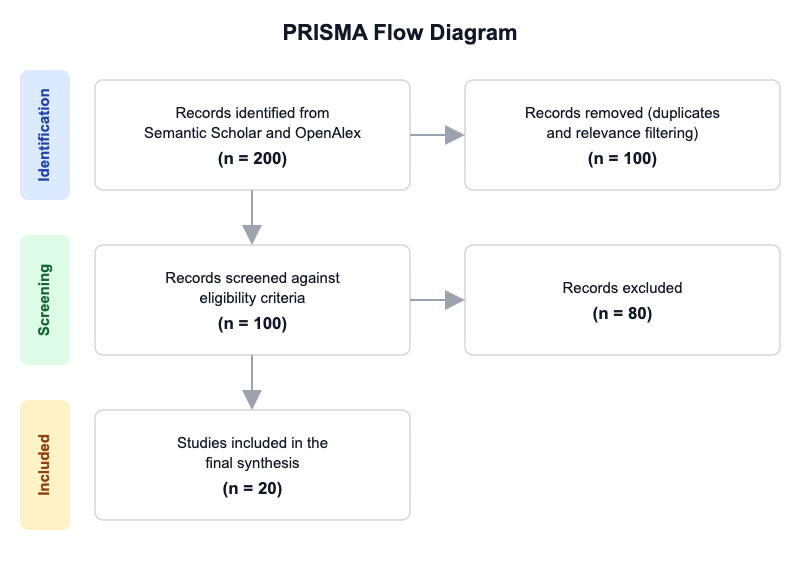
Initial database searching identified 200 records. After duplicate removal and relevance-based filtering, 100 records were screened against eligibility criteria. Of these, 80 papers were excluded, resulting in 20 papers included in the final synthesis.
PRISMA Flow Diagram
Eligibility criteria included:
- Human Studies: Does the study involve human participants, human tissue, or human clinical samples rather than only animal or in-vitro models?
- Endometriosis Focus: Does the study primarily investigate endometriosis, suspected endometriosis, or endometriosis-related lesions, symptoms, diagnosis, or treatment?
- Recent Publication: Was the study published between 2020 and 2026?
- Clinical or Biological Relevance: Does the study address diagnosis, biomarkers, pathophysiology, imaging, surgery, medical therapy, pain, infertility, or other clinically relevant endometriosis questions?
- Original Evidence: Is the paper an original study, systematic review, meta-analysis, or evidence synthesis rather than a purely editorial or commentary piece?
- Diagnostic Value: Does the study report diagnostic accuracy, biomarker performance, or a noninvasive detection approach for endometriosis?
- Therapeutic Value: Does the study evaluate a treatment, procedure, or management strategy for endometriosis?
- Mechanistic Value: Does the study investigate inflammatory, immune, molecular, or omics-based mechanisms of endometriosis?
All included studies met the stated eligibility criteria.
2.3 Data Extraction and Synthesis
Data extraction focused on the following variables:
- Research Focus: Extract the main focus of the paper as it relates to endometriosis (e.g., diagnosis, biomarkers, pathophysiology, treatment, imaging, fertility, pain, surgery, omics).
- Study Type: Extract the study design or review type (e.g., clinical trial, cohort, case-control, systematic review, meta-analysis, laboratory study, transcriptomic analysis).
- Population/Sample: Extract the study population, sample source, or model system used, including any key eligibility characteristics if reported.
- Main Findings: Extract the most important findings or conclusions specific to endometriosis from the abstract or paper summary.
- Diagnostic/Clinical Value: Extract any reported clinical utility, diagnostic performance, prognostic value, or therapeutic implication relevant to endometriosis.
- Biological Mechanism: Extract any proposed biological mechanism, pathway, molecular target, immune process, or omics signature discussed.
- Treatment/Intervention: Extract the treatment, intervention, or management approach studied, if applicable, including drug, surgery, imaging, or other modality.
- Outcomes/Endpoints: Extract the primary outcomes, endpoints, metrics, or readouts used to evaluate endometriosis-related effects.
Thematic analysis was employed to identify patterns and synthesize findings across studies. Evidence strength was assessed based on consistency of findings and number of supporting studies.
3. Results
3.1 Characteristics of Included Studies
| Study and Year | Study Type | Key Focus | Population / Sample | Main Contribution |
|---|---|---|---|---|
| Taylor et al. 2021 [1] | Review | Endometriosis as a systemic disease | Reproductive-age women globally | Systemic manifestations, diagnostic implications, GnRH antagonists |
| Zondervan et al. 2020 [2] | Review | Pathophysiology and management | Reproductive-age women | Broad symptom spectrum, unclear pathogenesis, mixed treatment response |
| Becker et al. 2022 [3] | Clinical guideline | Practice guidance | Individuals with endometriosis | Consensus-based management framework |
| Horne and Missmer 2022 [4] | Review | Pathophysiology, diagnosis, management | Broad global population | Multisystem disease model and personalized care |
| Saunders and Horne 2021 [5] | Review | Etiology, pathobiology, therapies | Women with infertility and pain | Mechanisms, diagnostic delay, biomarker and therapy needs |
| Moustafa et al. 2020 [6] | Validation study | Serum microRNA diagnosis | Endometriosis and other gynecologic pathology | High-accuracy noninvasive diagnosis |
| Smolarz et al. 2021 [7] | Literature review | Epidemiology, classification, genetics | Global population | Etiologic heterogeneity and burden |
| Blanco et al. 2025 [8] | Narrative review | Endometriosis and autoimmunity | General endometriosis population | Immune dysfunction and biomarker gap |
| Bonavina and Taylor 2022 [9] | Review | Endometriosis-associated infertility | Heterogeneous infertile women with endometriosis | Tailored fertility management |
| Anastasiu et al. 2020 [10] | Review | Noninvasive biomarkers | Women of reproductive age | Biomarker limitations and future directions |
| Condous et al. 2024 [11] | Consensus statement | Imaging diagnosis of deep endometriosis | Suspected pelvic deep endometriosis | Imaging-based clinical guidance |
| VanBuren et al. 2024 [12] | State-of-the-art review | Imaging interpretation and reporting | Endometriosis, especially infertility-associated disease | MRI and transvaginal ultrasound utility |
| Griffiths et al. 2024 [13] | Review | Diagnostic and therapeutic advances | General endometriosis population | Multisystem framing, trials, self-management |
| Bulun et al. 2023 [14] | Review | Shared pathophysiology with adenomyosis | Endometriosis and adenomyosis | KRAS mutations, epigenetics, progesterone resistance |
| Kalaitzopoulos et al. 2021 [15] | Guideline review | Treatment across guidelines | Reproductive-age women | Hormonal therapy consensus, infertility uncertainty |
| Oală et al. 2024 [16] | Narrative review | Cytokines in pathophysiology | General endometriosis population | Cytokines as biomarkers and therapeutic targets |
| Greygoose et al. 2025 [17] | Review | Estrogen-immune interface | General endometriosis population | Immune-endocrine crosstalk |
| Imperiale et al. 2023 [18] | Review | Types, diagnosis, treatment | General endometriosis population | No curative treatment; long diagnostic delay |
| Christ et al. 2021 [19] | Population-based study | Incidence and prevalence trends | United States population | Declining diagnosis incidence |
| Koninckx et al. 2021 [20] | Review | Pathogenesis-based diagnosis and treatment | General endometriosis population | Lesion heterogeneity, imaging limits, surgical strategy |
The included literature is dominated by reviews, guidelines, and consensus documents, with a smaller number of empirical diagnostic and epidemiologic studies. Most papers address reproductive-age women or individuals with a uterus, although several broader reviews also discuss infertility, pelvic pain, and multisystem disease. The overall landscape is therefore strongest for conceptual and clinical synthesis, moderate for imaging-based diagnosis, and limited but promising for noninvasive biomarker validation.
3.2 Thematic Findings
3.2.1 Endometriosis is increasingly framed as a systemic, multisystem inflammatory disorder rather than a localized pelvic condition
The most consistent contemporary finding is that endometriosis extends beyond ectopic pelvic lesions to involve immune, metabolic, neurologic, and reproductive systems [1], [2], [13]. This broader model is supported by descriptions of systemic inflammation, altered liver and adipose metabolism, brain gene-expression changes associated with pain sensitization and mood disorders, multisite pain, fatigue, and comorbidities [1], [4]. The systemic framing also helps explain why symptom severity is poorly predicted by lesion appearance alone: some lesions are highly painful whereas others are not, and neuroinflammatory effects may extend beyond the lesion site [20]. This theme is particularly important because it links symptom heterogeneity to biology rather than to disease “severity” in a simplistic anatomic sense. Confidence: Strong [1], [2], [13].
3.2.2 Diagnostic innovation is shifting toward noninvasive biomarkers and structured imaging, but surgery remains the reference standard in much of the literature
A major diagnostic advance is the emergence of serum microRNA signatures that distinguished endometriosis from other gynecologic pathologies with area under the curve values greater than 0.9 in validation settings [6]. Yet this promising result stands in contrast to broader biomarker reviews, which found that neither single markers nor biomarker panels have achieved sufficient specificity and sensitivity for routine use [10], [8]. Imaging evidence is more mature: consensus statements and radiology guidance support MRI and advanced transvaginal ultrasound for noninvasive diagnosis and classification of deep disease, with MRI useful for global pelvic and extrapelvic assessment and ultrasound advantageous for dynamic evaluation of adhesions and bowel wall invasion [11], [12]. Despite this progress, several reviews still note that definitive diagnosis commonly depends on surgical visualization and histology, underscoring the ongoing gap between experimental promise and routine clinical replacement of surgery [3], [2], [1]. Confidence: Moderate [6], [11], [3].
3.2.3 Mechanistic evidence converges on hormonal dysregulation, immune activation, cytokine signaling, and fibrosis as core biological drivers
Across the literature, the most coherent mechanistic model combines estrogen excess or altered signaling, progesterone resistance, chronic inflammation, immune dysfunction, and fibrotic remodeling [20], [1], [8]. One line of evidence links endometriosis and adenomyosis through somatic mutations, particularly KRAS, and epigenetic abnormalities that promote local estrogen biosynthesis and impaired progesterone receptor expression [14]. Another emphasizes estrogen-immune crosstalk, with estrogen modulating innate and adaptive immune cells throughout the menstrual cycle [17]. Cytokine reviews add that pro-inflammatory and anti-inflammatory molecules influence survival, growth, differentiation, invasion, angiogenesis, immune escape, and fertility-relevant processes such as oocyte quality and IVF outcomes [16]. Together, these findings support a disease model in which lesion persistence is maintained by endocrine-immune feedback loops rather than by a single causal pathway. Confidence: Strong [20], [14], [1].
3.2.4 Fertility impairment appears multifactorial and phenotype dependent, supporting individualized reproductive management
Endometriosis-associated infertility is described as a heterogeneous clinical syndrome in which pain, inflammation, altered pelvic anatomy, adhesions, ovarian reserve compromise, and impaired endometrial receptivity interact with systemic effects of disease [9], [1]. Reviews consistently emphasize that there is no single infertility mechanism applicable to all patients, and that subtype and phenotype matter for management [3], [9]. This variability helps explain why one-size-fits-all treatment approaches are inadequate and why diagnostic tools that identify dysfunctional reproductive processes may be clinically valuable [9]. Importantly, fertility-focused evidence continues to rely heavily on synthesis rather than direct comparative trials of tailored strategies, so the precision of treatment matching remains limited. Confidence: Moderate [3], [2], [1].
3.2.5 Current management remains symptom-directed, with hormonal therapy and surgery useful but rarely curative
Therapeutic guidance across reviews and guidelines is convergent in supporting combined oral contraceptives and progestogens for pain control [3], [1], while oral GnRH antagonists are highlighted as effective and better tolerated alternatives when first-line therapy fails [15], [1]. However, the clinical literature repeatedly notes that medical and surgical treatments do not provide long-term relief for many patients, symptom recurrence is common, and no curative treatment currently exists [3], [1], [2]. For infertility, evidence is less settled: guidelines do not agree on the value of surgery, and review-level discussions stress individualized use of surgery and assisted reproductive technologies according to the degree of reproductive impairment [3], [15]. The result is a management paradigm that is increasingly personalized but still fundamentally palliative rather than disease-eradicating. Confidence: Strong for pain management; Moderate for infertility management [3], [15], [9].
3.2.6 Population studies and clinical reviews suggest diagnosis remains delayed and may even be changing in practice patterns
The literature consistently reports long diagnostic delays, often measured in years, and substantial cost burden [18], [5], [7]. A population-based U.S. analysis also found declining incidence rates over time across age, race, ethnicity, and diagnostic modality, which the authors interpreted as a possible shift away from diagnosing endometriosis specifically toward more general chronic pelvic pain labels [19]. This finding is not necessarily evidence of declining disease burden; rather, it may reflect altered clinical coding, access, and diagnostic practice. In the broader context of delayed recognition, the result reinforces the concern that the true burden of disease may be underestimated by administrative data [5], [18]. Confidence: Moderate. [19], [18], [5]
3.3 Summary of Evidence
| Theme | Key Finding | Population Applicability | Effect Direction | Confidence Level | Supporting Studies |
|---|---|---|---|---|---|
| Endometriosis as a systemic disease | Systemic inflammation, altered metabolism, and brain gene-expression changes are reported, with diagnostic and therapeutic implications [1] | Reproductive-age women and individuals with a uterus; broad clinical populations | Positive toward systemic framing | Strong | Taylor et al. [1], Horne and Missmer [4], Griffiths et al. [13] |
| Noninvasive diagnosis | Serum microRNAs achieved AUC >0.9, whereas broader biomarker reviews found no sufficiently accurate biomarker panel [6], [10] | Clinical samples from patients with endometriosis and other gynecologic pathologies | Mixed | Moderate | Moustafa et al. [6], Anastasiu et al. [10] |
| Imaging-based diagnosis | MRI and advanced transvaginal ultrasound are endorsed for deep disease assessment and surgical planning [11], [12] | Women and individuals suspected of pelvic deep endometriosis | Positive | Strong | Condous et al. [11], VanBuren et al. [12] |
| Hormonal-immune mechanisms | Estrogen, cytokines, KRAS/epigenetic changes, and progesterone resistance converge on inflammatory and fibrotic pathology [14], [16], [17] | General endometriosis population | Positive | Strong | Bulun et al. [14], Oală et al. [16], Greygoose et al. [17] |
| Fertility and individualized care | Infertility is multifactorial and phenotype dependent; surgery and ART should be individualized [9] | Infertile women with endometriosis; partially matches broader question population | Positive | Moderate | Bonavina and Taylor [9], Horne and Missmer [4] |
| Symptom management | Combined oral contraceptives, progestogens, and GnRH antagonists remain key options, but long-term relief is limited [15], [1] | Reproductive-age women with symptomatic endometriosis | Positive but incomplete | Strong | Kalaitzopoulos et al. [15], Taylor et al. [1], Zondervan et al. [2] |
| Diagnostic delay and changing practice | Diagnosis commonly remains delayed, and incidence trends may reflect coding/practice shifts rather than true decline [19] | U.S. diagnosed population; partially matches global question population | Negative | Moderate | Christ et al. [19], Saunders and Horne [5], Imperiale et al. [18] |
4. Discussion
4.1 Principal Findings and Their Interpretation
The most important insight from the contemporary literature is that endometriosis is no longer adequately explained by a lesion-centric pelvic model. Instead, the disease is increasingly conceptualized as a systemic disorder in which endocrine, immune, neurologic, and fibrotic processes reinforce one another [1], [13]. This shift is analytically important because it explains why lesion burden and pain severity are often poorly aligned and why recurrence remains common after apparently adequate local treatment [20], [3]. The convergence of evidence on progesterone resistance, estrogen-immune crosstalk, cytokine signaling, and epigenetic alteration suggests that persistent disease activity is sustained by network-level dysregulation rather than a single lesion origin [20], [14].
The synthesis also shows that progress is uneven across domains. Diagnostic innovation is strongest for imaging and emerging serum microRNAs, but the biomarker field remains underdeveloped because reproducible, clinically deployable panels are still lacking [10], [6]. In contrast, imaging guidance has matured into practical recommendations for deep disease, which likely reflects the fact that imaging can capture structural consequences of fibrosis, adhesions, and compartmental distortion more reliably than circulating markers can capture biologic heterogeneity [11], [12]. Treatment remains more conservative than transformative: hormonal suppression and surgery are useful, yet neither consistently prevents symptom recurrence or cures disease [3], [1]. The strongest confidence therefore lies in the mechanistic and imaging conclusions, whereas biomarker translation and fertility personalization remain promising but tentative.
4.2 Comparison with Existing Literature and Resolution of Contradictions
The most visible tension in the literature concerns diagnosis. On one hand, high-performing serum microRNA signatures suggest that noninvasive detection may be feasible [6]. On the other hand, broader biomarker reviews remain skeptical because most candidate markers have not reproduced adequate sensitivity and specificity across studies [10], [8]. This contradiction is likely methodological rather than conceptual. MicroRNA algorithms may outperform older single-analyte approaches because they encode multivariate disease patterns, yet validation in broader clinical settings is still limited, so apparent accuracy may not generalize beyond the tested cohorts. Moreover, biomarker performance in endometriosis is especially vulnerable to phenotype heterogeneity, stage mix, and comparator selection, all of which are known to vary across the literature [10], [3].
A second tension concerns diagnostic incidence trends. The decline in U.S. diagnosis rates does not necessarily indicate declining disease prevalence; it may instead reflect changing labeling practices, increased use of nonspecific chronic pelvic pain codes, or reduced surgical confirmation [19]. That interpretation fits broader reports of persistent diagnostic delay and the continued reliance on surgery as the reference standard [5], [3]. The literature therefore suggests not a disappearance of disease, but a possible shift in how it is recognized and recorded.
Finally, the consistent support for hormonal therapies coexists with repeated acknowledgment that symptom control is incomplete [3], [1]. This is not a contradiction so much as evidence of a disease whose biology is only partially hormone dependent. The emergence of immune and fibrotic mechanisms helps explain why treatment response is variable and why future progress will require therapies that target disease maintenance, not only symptom suppression [20], [8].
4.3 Practical Implications
For clinicians, the evidence supports earlier suspicion of endometriosis in patients with pain, infertility, urinary or gastrointestinal symptoms, and fatigue, particularly when symptoms are recurrent or multisite [1], [2]. Because diagnosis is often delayed, the practical value of transvaginal ultrasound and MRI is greatest when used proactively to characterize deep disease and guide referral and surgical planning rather than as ad hoc tests after prolonged symptom persistence [11], [12]. Serum microRNA assays are promising, but they should be considered investigational until broader validation establishes performance across phenotypes and clinical settings [10], [6].
For treatment, current evidence favors individualized multimodal management. Combined oral contraceptives and progestogens remain appropriate first-line options for pain, while oral GnRH antagonists provide an additional option when first-line therapy fails [3], [1]. In infertility, the literature supports tailoring decisions to phenotype, ovarian reserve, anatomy, and reproductive goals rather than applying uniform surgical rules [3]. Public health implications are broader: if the disease is truly systemic and diagnosis remains delayed, then improved referral pathways, imaging access, and clinician education are likely to yield more benefit than narrow reliance on symptom suppression alone [5], [1]. Regulatory or policy implications remain less definitive because no exposure threshold question is relevant here; the main issue is access to earlier recognition and multidisciplinary care.
4.4 Strengths and Limitations
A major strength of this review is that it integrates recent evidence across diagnosis, pathophysiology, imaging, fertility, and treatment, allowing biological and clinical findings to be interpreted within a single contemporary framework. Another strength is the emphasis on structured themes rather than isolated paper summaries, which better reflects how the field is evolving toward systems-based understanding.
The limitations of the included studies are substantial. Most evidence is review-level or consensus-based rather than derived from large prospective comparative cohorts, and several key claims depend on heterogeneous populations, variable diagnostic standards, or small validation datasets. Imaging recommendations are clinically persuasive but still depend on operator expertise and disease phenotype. Biomarker findings are promising but not yet reproducible enough for routine use. The review itself is limited by abstract-based extraction and the absence of formal risk-of-bias appraisal, which constrains the ability to weigh certainty within individual studies. It also synthesizes a literature dominated by reproductive-age populations and clinically evaluated cases, leaving asymptomatic disease and underdiagnosed community populations less visible.
5. Gaps and Future Directions
The clearest gap is the lack of a validated, noninvasive diagnostic strategy that performs robustly across endometriosis phenotypes. MicroRNA algorithms show promise, but they need larger multicenter validation against well-characterized comparators and across superficial peritoneal disease, ovarian endometrioma, and deep infiltrating endometriosis [6], [10]. Future studies should align biomarker testing with standardized imaging and surgical phenotyping so that accuracy can be judged against biologically meaningful subtypes rather than mixed clinical labels [11], [3]. Mechanistic work also needs to connect estrogen-immune and cytokine signatures to treatment response, because current evidence identifies pathways but does not yet show which pathways predict which therapy [20], [1]. Underrepresented populations include asymptomatic individuals, non-reproductive-age patients, and community cases that never reach surgical confirmation. Stronger prospective cohort studies with harmonized outcome definitions, phenotype stratification, and longer follow-up would directly address the current uncertainty around prognosis, recurrence, and fertility outcomes.
6. Conclusion
The latest research supports a clear conclusion: endometriosis is now best understood as a chronic systemic disease with endocrine, immune, inflammatory, fibrotic, and neurologic dimensions, and this broader framing is reshaping diagnosis and management [1], [20], [13]. The strongest clinical advances are in imaging-based assessment of deep disease and in early biomarker exploration, particularly serum microRNAs, which achieved diagnostic area under the curve values greater than 0.9 in validation work [6], [11]. However, these advances coexist with persistent diagnostic delay, reliance on surgical confirmation, and a treatment landscape in which hormonal therapy and surgery remain largely symptom-controlling rather than curative [5], [3], [2].
This evidence base fits best with reproductive-age clinical populations, so its implications are strongest for patients already presenting with pain, infertility, or multisystem symptoms [2], [1]. The most important unresolved question is how to translate mechanistic insight into a reliable, phenotype-sensitive diagnostic and therapeutic pathway that improves outcomes across the diverse forms of disease. Resolving that gap matters because faster recognition, more precise classification, and better-targeted management could reduce years of suffering, improve fertility care, and shift endometriosis treatment from temporary symptom suppression toward genuinely personalized disease control.
References
- Taylor, H. S., Kotlyar, A. M., & Flores, V. A. (2021). Endometriosis is a chronic systemic disease: Clinical challenges and novel innovations. The Lancet, 397(10276), 839–852. https://doi.org/10.1016/S0140-6736(21)00389-500389-5)
- Zondervan, K. T., Becker, C. M., & Missmer, S. A. (2020). Endometriosis. New England Journal of Medicine, 382(13), 1244–1256. https://doi.org/10.1056/NEJMra1810764
- Becker, C. M., Bokor, A., Heikinheimo, O., Horne, A., Jansen, F., Kiesel, L., King, K., Kvaskoff, M., Nap, A., Petersen, K., Saridogan, E., Tomassetti, C., van Hanegem, N., Vulliemoz, N., Vermeulen, N., & ESHRE Endometriosis Guideline Group. (2022). ESHRE guideline: Endometriosis. Human Reproduction Open, 2022(2), hoac009. https://doi.org/10.1093/hropen/hoac009
- Horne, A. W., & Missmer, S. A. (2022). Pathophysiology, diagnosis, and management of endometriosis. BMJ, 379, e070750. https://doi.org/10.1136/bmj-2022-070750
- Saunders, P. T. K., & Horne, A. W. (2021). Endometriosis: Etiology, pathobiology, and therapeutic prospects. Cell, 184(11), 2807–2824. https://doi.org/10.1016/j.cell.2021.04.041
- Moustafa, S., Burn, M., Mamillapalli, R., Nematian, S., Flores, V., & Taylor, H. S. (2020). Accurate diagnosis of endometriosis using serum microRNAs. American Journal of Obstetrics and Gynecology, 223(4), 557.e1–557.e11. https://doi.org/10.1016/j.ajog.2020.02.050
- Smolarz, B., Szyłło, K., & Romanowicz, H. (2021). Endometriosis: Epidemiology, classification, pathogenesis, treatment and genetics (review of literature). International Journal of Molecular Sciences, 22(19), 10554. https://doi.org/10.3390/ijms221910554
- Blanco, L. P., Salmeri, N., Temkin, S. M., Shanmugam, V. K., & Stratton, P. (2025). Endometriosis and autoimmunity. Autoimmunity Reviews, 24(4), 103752. https://doi.org/10.1016/j.autrev.2025.103752
- Bonavina, G., & Taylor, H. S. (2022). Endometriosis-associated infertility: From pathophysiology to tailored treatment. Frontiers in Endocrinology, 13, 1020827. https://doi.org/10.3389/fendo.2022.1020827
- Anastasiu, C. V., Moga, M. A., Neculau, A. E., Bălan, A., Scârneciu, I., Dragomir, R. M., Dull, A.-M., & Chicea, L.-M. (2020). Biomarkers for the noninvasive diagnosis of endometriosis: State of the art and future perspectives. International Journal of Molecular Sciences, 21(5), 1750. https://doi.org/10.3390/ijms21051750
- Condous, G., Gerges, B., Thomassin-Naggara, I., Becker, C., Tomassetti, C., Krentel, H., van Herendael, B. J., Malzoni, M., Abrao, M. S., Saridogan, E., Keckstein, J., Hudelist, G., & Intersociety Consensus Group. (2024). Non-invasive imaging techniques for diagnosis of pelvic deep endometriosis and endometriosis classification systems: An International Consensus Statement. Human Reproduction Open, 2024(3), hoae029. https://doi.org/10.1093/hropen/hoae029
- VanBuren, W. M., Feldman, M., Shenoy-Bhangle, A. S., Sakala, M. D., Young, S., Chamie, L. P., Giudice, L., Hindman, N. M., Tong, A., Rabban, J. T., Yano, M., Kilcoyne, A., Dave, H. D., Poder, L., Kho, R. M., Burnett, T. L., Khan, Z., King, C., Shen, L., . . . Jha, P. (2024). Radiology state-of-the-art review: Endometriosis imaging interpretation and reporting. Radiology, 312(3), e233482. https://doi.org/10.1148/radiol.233482
- Griffiths, M. J., Horne, A. W., Gibson, D. A., Roberts, N., & Saunders, P. T. K. (2024). Endometriosis: Recent advances that could accelerate diagnosis and improve care. Trends in Molecular Medicine, 30(9), 875–889. https://doi.org/10.1016/j.molmed.2024.06.008
- Bulun, S. E., Yildiz, S., Adli, M., Chakravarti, D., Parker, J. B., Milad, M., Yang, L., Chaudhari, A., Tsai, S., Wei, J. J., & Yin, P. (2023). Endometriosis and adenomyosis: Shared pathophysiology. Fertility and Sterility, 119(5), 746–750. https://doi.org/10.1016/j.fertnstert.2023.03.006
- Kalaitzopoulos, D. R., Samartzis, N., Kolovos, G. N., Mareti, E., Samartzis, E. P., Eberhard, M., Dinas, K., & Daniilidis, A. (2021). Treatment of endometriosis: A review with comparison of 8 guidelines. BMC Women's Health, 21(1), 397. https://doi.org/10.1186/s12905-021-01545-5
- Oală, I. E., Mitranovici, M.-I., Chiorean, D. M., Irimia, T., Crișan, A. I., Melinte, I. M., Cotruș, T., Tudorache, V., Moraru, L., Moraru, R., Caravia, L., Morariu, M., & Pușcașiu, L. (2024). Endometriosis and the role of pro-inflammatory and anti-inflammatory cytokines in pathophysiology: A narrative review of the literature. Diagnostics, 14(3), 312. https://doi.org/10.3390/diagnostics14030312
- Greygoose, E., Metharom, P., Kula, H., Seckin, T. K., Seckin, T. A., Ayhan, A., & Yu, Y. (2025). The estrogen–immune interface in endometriosis. Cells, 14(1), 58. https://doi.org/10.3390/cells14010058
- Imperiale, L., Nisolle, M., Noël, J.-C., & Fastrez, M. (2023). Three types of endometriosis: Pathogenesis, diagnosis and treatment. State of the art. Journal of Clinical Medicine, 12(3), 994. https://doi.org/10.3390/jcm12030994
- Christ, J. P., Yu, O., Schulze-Rath, R., Grafton, J., Hansen, K., & Reed, S. D. (2021). Incidence, prevalence, and trends in endometriosis diagnosis: A United States population-based study from 2006 to 2015. American Journal of Obstetrics and Gynecology, 225(5), 500.e1–500.e9. https://doi.org/10.1016/j.ajog.2021.06.067
- Koninckx, P. R., Fernandes, R., Ussia, A., Schindler, L., Wattiez, A., Al-Suwaidi, S., Amro, B., Al-Maamari, B., Hakim, Z., & Tahlak, M. (2021). Pathogenesis based diagnosis and treatment of endometriosis. Frontiers in Endocrinology, 12, 745548. https://doi.org/10.3389/fendo.2021.745548