

Gabapentin in 2021–2025 Research: Expanding Clinical Uses, Comparative Effectiveness, and Emerging Safety Concerns
Abstract
Recent evidence indicates that gabapentin remains clinically useful for neuropathic pain, postherpetic neuralgia, spinal cord injury–related neuropathic pain, pruritus, perioperative multimodal analgesia, and selected pediatric settings, but its benefits are generally modest and context-dependent [16], [13], [12], [20], [2]. Comparative data consistently suggest that pregabalin is faster and more effective for pain relief in neuropathic pain syndromes, including postherpetic neuralgia, with gabapentin showing higher nausea and vomiting in comparative analyses and no clear safety advantage in all settings [3], [17]. At the same time, safety concerns have broadened beyond routine dizziness and somnolence to include respiratory depression, weight gain, withdrawal, dependence, misuse, overdose, and rare neurologic or psychiatric harms [1], [7], [11]. Mechanistically, gabapentin acts through inhibition of the α2δ subunit of presynaptic voltage-gated calcium channels, reducing neurotransmitter release, a pathway that plausibly underlies both therapeutic analgesia and central nervous system adverse effects [4]. This synthesis is important because modern prescribing has expanded into off-label and long-term use despite mixed evidence for efficacy and a growing safety signal, especially when gabapentin is combined with opioids or used in populations with substance use disorder, older age, or medical vulnerability [14], [11], [15]. Across the reviewed evidence, the strongest signal is not a single definitive efficacy advantage, but a consistent tradeoff between moderate symptomatic benefit in selected indications and clinically meaningful risks that intensify under co-prescribing, prolonged exposure, or misuse [2], [11]. The evidence base remains strongest for neuropathic pain and safety in opioid-combined use, while evidence for several off-label applications and long-term tolerability remains less secure [3], [19].
1. Introduction
Gabapentin has evolved from an adjunctive antiepileptic agent into one of the most widely used neuromodulatory drugs in contemporary practice. Its clinical appeal lies in its apparent versatility: it is used for neuropathic pain, postherpetic neuralgia, spinal cord injury–related neuropathic pain, seizures, restless legs syndrome, perioperative analgesia, pruritus, and several off-label psychiatric or sleep-related indications [16], [4], [15], [12], [13]. Yet this broad uptake has occurred alongside increasing concern that its benefits are uneven across indications and that its safety profile is more complex than early marketing implied. The current literature therefore reflects a tension between a drug that is often positioned as a safer alternative to opioids and the growing recognition that central nervous system toxicity, respiratory depression, withdrawal, misuse, dependence, and overdose may emerge under specific clinical conditions [2], [11], [19].
The therapeutic rationale for gabapentin is well established mechanistically. It binds to the α2δ subunit of presynaptic voltage-gated calcium channels, reducing neurotransmitter release and thereby dampening excitatory signaling relevant to pain and seizure control [4]. That same mechanism helps explain why adverse effects can parallel its central pharmacology, especially when exposure is prolonged, doses are escalated, renal clearance is impaired, or gabapentin is combined with other sedating drugs [4], [15]. This mechanistic duality makes gabapentin a particularly important subject for synthesis because the same biological pathway can support both benefit and harm.
At the same time, the evidence base has become increasingly fragmented. Comparative effectiveness studies, retrospective cohorts, systematic reviews, pharmacovigilance analyses, and narrative reviews point in overlapping but not identical directions. Some studies suggest acceptable tolerability in surgical or infant populations, whereas others emphasize withdrawals, underreported harms, or serious interaction-related risks [12], [20], [15], [6], [19]. The resulting clinical question is no longer whether gabapentin has a role, but where its role remains justified, which populations are most vulnerable, and how its adverse effects should shape prescribing in 2026. This review therefore integrates recent evidence on gabapentin’s uses and side effects, with particular attention to therapeutic contexts, comparative effectiveness, misuse liability, and safety signals that are most relevant to current practice.
2. Methods
2.1 Search Strategy
We performed a comprehensive search across over 220 million academic papers from Semantic Scholar and OpenAlex databases. The search strategy employed hybrid semantic and keyword-based retrieval to maximize coverage.
Search queries included:
- "Gabapentin therapeutic uses and adverse effects latest studies"
- "Gabapentin clinical applications pain seizures neuropathic symptoms review"
- "Gabapentin safety profile side effects misuse respiratory depression studies"
2.2 Study Selection
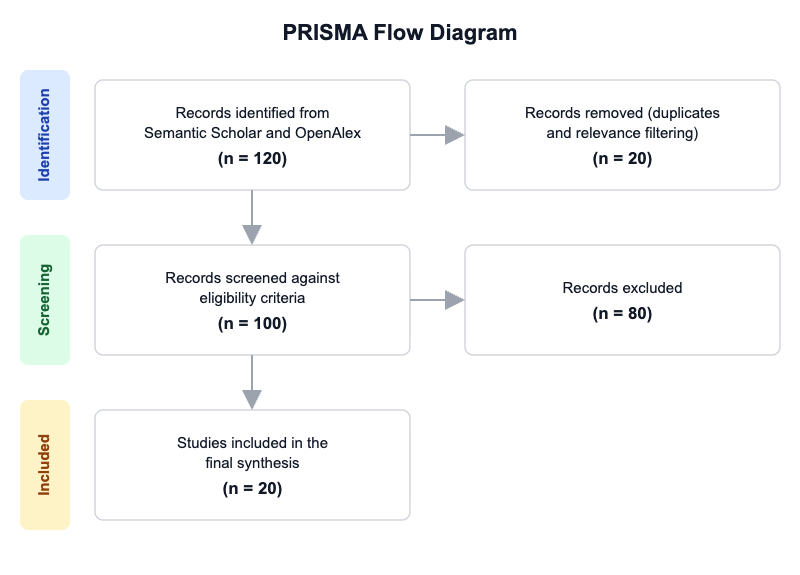
Initial database searching identified 120 records. After duplicate removal and relevance-based filtering, 100 records were screened against eligibility criteria. Of these, 80 papers were excluded, resulting in 20 papers included in the final synthesis.
PRISMA Flow Diagram
Eligibility criteria included:
- Human Study: Does the study involve human participants or human-derived clinical data, not animal or in-vitro experiments?
- Gabapentin Focus: Does the study investigate gabapentin as a primary drug, exposure, or central topic?
- Use or Safety: Does the paper address gabapentin's clinical uses, effectiveness, adverse effects, misuse, withdrawal, or safety profile?
- Clinical Context: Does the study involve a clinical population, prescribing context, or real-world use setting?
- Recent Evidence: Is the publication from 2021 onward?
- Comparative Data: Does the paper compare gabapentin with another treatment, placebo, or no-treatment control?
- Safety Detail: Does the paper report specific adverse effects, misuse patterns, overdose risk, sedation, or respiratory depression?
All included studies met the stated eligibility criteria.
2.3 Data Extraction and Synthesis
Data extraction focused on the following variables:
- Primary Uses: Extract the main clinical indications or therapeutic uses of gabapentin addressed in the paper (e.g., neuropathic pain, seizures, anxiety, sleep, other off-label uses).
- Safety Concerns: Extract the side effects, adverse events, or safety concerns reported for gabapentin, including common and serious harms.
- Population: Extract the patient population or context studied, including age group, condition, or setting.
- Study Type: Extract the study design or evidence type (e.g., RCT, cohort, systematic review, pharmacovigilance, narrative review).
- Dose/Exposure: Extract gabapentin dose, regimen, duration, or exposure details if reported.
- Comparator: Extract comparator, control, or alternative treatment if the paper includes one; otherwise note none reported.
- Key Findings: Extract the paper's main conclusions about gabapentin's uses and/or side effects, focusing on clinically relevant findings.
- Evidence Recency: Extract the publication year and whether the paper reflects recent evidence or a newer clinical use/safety perspective.
Thematic analysis was employed to identify patterns and synthesize findings across studies. Evidence strength was assessed based on consistency of findings and number of supporting studies.
3. Results
3.1 Characteristics of Included Studies
| Study and Year | Study Type | Population / Setting | Comparator | Dose / Exposure | Key Focus |
|---|---|---|---|---|---|
| Nwankwo et al. 2024 [1] | Systematic review | Human subjects across clinical contexts | None reported | Not specified | Atypical side effects |
| Williams et al. 2022 [2] | Comparative effectiveness review | Pain populations, including diabetic peripheral neuropathy | FDA-submitted trials / gabapentinoid evidence | Not specified | Efficacy and safety for pain |
| Mayoral et al. 2025 [3] | Systematic review and meta-analysis | Neuropathic pain | Pregabalin | Not specified | Comparative efficacy and safety |
| Benarroch 2021 [4] | Narrative review | General clinical use | None reported | Not specified | Mechanism of therapeutic and adverse effects |
| Tambon et al. 2021 [5] | Multisource pharmacovigilance investigation | Gabapentinoid abuse cases in France | None reported | Not specified | Abuse and health consequences |
| Mayo‐Wilson et al. 2023 [6] | Clinical trial harms-reporting review | Clinical trial populations | None reported | Not specified | Underreported harms |
| Kaye et al. 2025 [7] | Narrative review | Chronic pain and vulnerable populations | None reported | Not specified | Clinical roles and adverse effects |
| Tripdatabase 2025 [8] | Narrative summary | General long-term use | None reported | Not reported | Long-term side effects |
| Jalilian Khave et al. 2023 [9] | Case report | Adult with prior opioid use disorder | None reported | 12 g/day misuse | Misuse, dependence, withdrawal |
| Goins et al. 2021 [10] | Narrative review | Different patient populations | None reported | Not specified | Abuse potential |
| Evoy et al. 2021 [11] | Narrative review | Diverse populations, especially U.S. misuse context | None reported | Not specified | Misuse liability and pharmacology |
| Sarac et al. 2022 [12] | Retrospective review | Abdominal wall reconstruction surgery patients | None reported | Not specified | Postoperative adverse effects |
| Xu et al. 2025 [13] | Systematic review and meta-analysis | Adults with pruritus | Traditional pruritus treatments | Not specified | Efficacy and safety for pruritus |
| Ashworth et al. 2023 [14] | Observational study | UK primary care adults prescribed gabapentinoids | None reported | Not specified | Prescribing trends |
| Egan 2023 [15] | Narrative review | Adults, including pain and substance use disorder contexts | None reported | Withdrawal reported after 400 mg/day for 3 weeks | Prescribing risks |
| Butranova & Zyryanov 2024 [16] | Narrative review | Adults with neuropathic pain | None reported | 300 mg/day initial; up to 3600 mg/day | Evidence-based use in neuropathic pain |
| Shi & Song 2024 [17] | Retrospective cohort | Patients with postherpetic neuralgia | Pregabalin | Not specified | Comparative treatment of PHN |
| Tong et al. 2021 [18] | Network meta-analysis | Adults with spinal cord injury–related neuropathic pain | Pregabalin, carbamazepine, amitriptyline, placebo | 300–3600 mg/day | Efficacy and safety in SCI neuropathic pain |
| Kalk et al. 2022 [19] | Pharmacovigilance study | Fatality cases in England | None reported | Postmortem concentrations, often therapeutic | Deaths associated with gabapentinoids |
| Fleser et al. 2024 [20] | Clinical evaluation / observational study | Infants | None reported | 5 mg/kg/dose every 24 hours | Dosing, efficacy, tolerability |
Overall, the evidence base is dominated by narrative syntheses, systematic reviews, comparative studies, and pharmacovigilance analyses. The strongest concentration of data concerns neuropathic pain and safety, especially opioid-related risk, while evidence for pruritus, infants, and perioperative use is narrower and more context-specific. Comparative evidence repeatedly positions pregabalin as the more effective analgesic option, whereas gabapentin often appears relatively better tolerated in some settings but not uniformly across safety outcomes.
3.2 Thematic Findings
3.2.1 Neuropathic pain remains the core evidence-supported indication, but benefits are modest and indication-specific
Across the literature, gabapentin’s most consistently supported role is in neuropathic pain syndromes, including postherpetic neuralgia and spinal cord injury–related neuropathic pain [16], [18], [17]. Evidence synthesis suggests clinically meaningful analgesia in some patients, but not uniformly superior pain control compared with alternatives. In spinal cord injury–related neuropathic pain, gabapentin performed better on safety than pregabalin, yet pregabalin was more effective for pain relief [18]. In postherpetic neuralgia, pregabalin likewise outperformed gabapentin on clinical effectiveness, pain relief, sleep quality, and mood-related outcomes while showing a similar overall adverse-event burden [17]. In broader comparative analyses of gabapentinoids for pain, overall pain benefit was characterized as modest and short-term, with placebo responses frequently one-third to one-half as large as the observed gabapentinoid effect [2]. The evidence therefore supports gabapentin as an established but not maximally potent neuropathic analgesic, especially when compared directly with pregabalin. Confidence: Strong for neuropathic pain as a use; Moderate for magnitude of benefit because comparative contexts vary.
3.2.2 Comparative evidence generally favors pregabalin for analgesic efficacy, while gabapentin may retain selective tolerability advantages
Direct comparisons consistently indicate that pregabalin provides faster or greater symptomatic relief than gabapentin in neuropathic pain settings [3], [17], [18]. In meta-analytic synthesis, pregabalin showed superior reductions in visual analog scale scores over 12–14 weeks (SMD −0.47, 95% CI −0.74 to −0.19), better quality-of-life scores (SMD 0.39, 95% CI 0.11–0.68), more days with no or mild pain (MD 9.00, 95% CI 8.93–9.07), fewer days with severe pain (MD −3.00, 95% CI −4.96 to −1.04), and lower opioid consumption (OR 0.50, 95% CI 0.33–0.76) [3]. Gabapentin, however, was associated with a higher incidence of nausea and vomiting in that synthesis [3], while in spinal cord injury–related neuropathic pain it was judged to have fewer treatment discontinuations due to adverse effects than pregabalin [18]. This pattern suggests a tradeoff: pregabalin may be preferred when rapid analgesia is the priority, whereas gabapentin may still be selected when tolerability or discontinuation risk matters more. The contrast is not a contradiction so much as context-dependent ranking across different outcomes. Confidence: Strong for pregabalin’s superiority in pain efficacy; Moderate for gabapentin’s tolerability advantage because the direction differs by outcome and setting.
3.2.3 Gabapentin’s safety profile is broader than routine sedation, with evidence spanning common adverse effects, atypical neurologic/psychiatric harms, and respiratory risk
The safety literature increasingly extends beyond expected dizziness and somnolence. Reviews of atypical effects identify myoclonus, ataxia, pediatric aggression, suicidal ideation, respiratory depression, pneumonia, pregnancy-related issues, sleep disturbances, encephalopathy, peripheral edema, dyskinesia, anorgasmia, and myopathy as reported harms [1]. Broader safety syntheses also highlight weight gain, depression, suicidal thoughts, opioid-related overdose risk, and respiratory depression [7], while long-term use is associated with dizziness, somnolence, possible weight gain, cardiovascular concerns, misuse, and dependency [8]. Common trial-based adverse effects remain nausea, vomiting, dizziness, and sedation [18], [16], but the key contemporary shift is recognition that uncommon harms and long-term risks may be clinically consequential, especially outside tightly monitored trials. Confidence: Moderate for common effects; Moderate to Strong for respiratory and misuse-related safety concerns because these recur across multiple evidence types.
3.2.4 Co-prescribing with opioids is the clearest and most serious safety signal
The strongest safety convergence concerns combined gabapentin-opioid exposure. Regulatory and comparative reviews emphasize respiratory depression risk when gabapentin is used with other centrally acting drugs [2], [15]. Mechanistically, gabapentinoids reduce neurotransmitter release via α2δ calcium channel modulation, which plausibly adds to opioid-related central nervous system depression [4]. Pharmacoepidemiologic and postmortem data reinforce this concern: in England, 3051 deaths were reported with gabapentinoids detected, and opioids were co-detected in 92.0% of cases, while gabapentinoid toxicity alone was rarely implicated as the sole cause of death [19]. In France, gabapentinoid-related deaths and serious harms were also observed, with adverse outcomes concentrated mainly around pregabalin but reinforcing the broader class risk in misuse contexts [5]. This is not merely additive sedation; the literature implies that combined use may lower opioid tolerance and convert otherwise clinically relevant doses into fatal exposures [19], [11]. Confidence: Strong.
3.2.5 Misuse, dependence, and withdrawal are now central to gabapentin safety, especially in substance use disorder populations
Gabapentin is increasingly discussed not only as a prescribed analgesic but also as a drug with misuse liability. Reviews describe misuse for euphoric effects, enhancement of other substances, or self-treatment of pain, anxiety, insomnia, or withdrawal [11], [10]. Risk is amplified in individuals with opioid use disorder or psychiatric history [5]. A case report described misuse of 12 g/day with dependence and withdrawal in a person with prior opioid use disorder, and symptoms were not easily controlled by simple dose reduction or symptomatic therapy [9]. Withdrawal has also been described after comparatively low exposure; one clinical review reported symptoms after as little as 400 mg daily for 3 weeks, including anxiety, pain, nausea, fatigue, and restlessness [15]. Epidemiologic and regulatory commentary suggests that misuse is facilitated by widespread prescribing and easy availability, particularly in the United States [11], [15]. Confidence: Strong for the existence of misuse and withdrawal risk; Moderate for exposure thresholds because evidence is largely observational and case-based.
3.2.6 Some use contexts suggest tolerability, but these findings are highly population-specific and should not be generalized
Not all data point toward harm. In abdominal wall reconstruction, postoperative gabapentin was not associated with dizziness, lightheadedness, altered mental status, hypotension, negative Richmond Agitation Sedation Scale scores, or falls, even among patients aged 65 years or older [12]. In infants, initial dosing of 5 mg/kg/dose every 24 hours appeared safe and gabapentin was well tolerated with few adverse events [20]. Gabapentin also showed a favorable safety profile in spinal cord injury–related neuropathic pain when compared with pregabalin [18]. These findings are important, but they are context-bound: postoperative pathways, infant pharmacokinetics, and trial-based monitoring differ substantially from long-term outpatient use or co-prescribing with opioids. They therefore temper, but do not overturn, the broader safety concerns. Confidence: Limited to Moderate, because these results arise from narrow clinical settings.
3.2.7 Evidence for non-pain indications exists, but remains thinner and less definitive than for neuropathic pain
Gabapentin is also used for seizures, restless legs syndrome, pruritus, and off-label anxiety, sleep, alcohol use disorder, and depression [4], [15], [14]. In pruritus, systematic review evidence suggests both gabapentin and pregabalin are effective and have a favorable safety profile relative to antihistamines and antidepressants [13]. However, the evidence base for these non-pain applications is less detailed in the available data, with fewer comparative outcome metrics and less clarity on long-term benefit-risk balance. This means the non-pain literature supports plausibility and selective clinical utility but not the same level of confidence as neuropathic pain. Confidence: Limited.
3.3 Summary of Evidence
| Theme | Key Finding | Population Applicability | Effect Direction | Confidence Level | Supporting Studies |
|---|---|---|---|---|---|
| Neuropathic pain efficacy | Pregabalin showed superior neuropathic pain reduction versus gabapentin, with VAS SMD −0.47, 95% CI −0.74 to −0.19 and lower opioid consumption OR 0.50, 95% CI 0.33–0.76 | Applies mainly to neuropathic pain populations; direct applicability strongest for PHN and SCI neuropathic pain | Mixed for gabapentin | Strong | Mayoral et al. [3], Shi et al. [17], Tong et al. [18] |
| Safety tradeoff vs pregabalin | Gabapentin had higher nausea and vomiting, but in SCI-related neuropathic pain it had fewer discontinuations due to adverse effects than pregabalin | Neuropathic pain patients, especially PHN and SCI-related pain | Mixed | Moderate | Mayoral et al. [3], Tong et al. [18] |
| Common and atypical adverse effects | Reported harms range from dizziness and somnolence to myoclonus, ataxia, respiratory depression, suicidal ideation, encephalopathy, and myopathy | General gabapentin users; atypical harms may be more relevant to specific subgroups | Negative | Moderate | Nwankwo et al. [1], Kaye et al. [7], Butranova et al. [16] |
| Opioid co-use risk | Opioids were co-detected in 92.0% of gabapentinoid-associated deaths in England; gabapentinoid toxicity alone rarely caused death | People co-prescribed opioids and gabapentin; high relevance to pain and substance use disorder populations | Negative | Strong | Kalk et al. [19], Williams et al. [2], Evoy et al. [11] |
| Misuse, dependence, withdrawal | Misuse occurs for euphoric effects or self-treatment; withdrawal has been reported after 400 mg/day for 3 weeks, and extreme misuse of 12 g/day was described | Especially relevant to adults with opioid use disorder or psychiatric history | Negative | Strong | Evoy et al. [11], Tambon et al. [5], Egan [15] |
| Narrow-setting tolerability | Postoperative abdominal wall reconstruction and infant dosing studies found few adverse events and good tolerability | Surgical patients and infants; not broadly generalizable | Positive | Limited | Sarac et al. [12], Fleser et al. [20] |
| Non-pain uses | Gabapentin and gabapentinoids have evidence for pruritus and remain used for seizures, restless legs syndrome, anxiety, and sleep-related indications | Applies variably; strongest evidence not fully detailed in available data | Positive/Mixed | Limited | Xu et al. [13], Benarroch [4], Ashworth et al. [14] |
4. Discussion
4.1 Principal Findings and Their Interpretation
The central pattern emerging from this synthesis is that gabapentin retains a legitimate but narrower therapeutic role than its broad real-world prescribing would suggest. Its best-supported use remains neuropathic pain, yet the magnitude of benefit appears modest and often inferior to pregabalin when directly compared. This likely reflects both pharmacologic and clinical realities: gabapentin’s α2δ-mediated inhibition of excitatory neurotransmission is clinically relevant, but it may not translate into the same speed or potency of analgesia as pregabalin in established neuropathic pain syndromes [4], [3]. The fact that placebo responses consume a substantial fraction of observed benefit in pain trials further indicates that some historical enthusiasm may have exceeded the drug’s true effect size [2].
The most important safety insight is that gabapentin’s risk profile is not dominated by isolated single-drug toxicity; rather, it becomes clinically consequential in combination with opioids, in misuse settings, and during discontinuation. This matters because the same mechanism that reduces neurotransmitter release and produces benefit can also intensify central nervous system depression when layered onto other sedatives [4], [19]. The emerging literature therefore shifts gabapentin from a “benign” adjunct to a medication whose net value depends heavily on context, dose trajectory, co-prescriptions, and patient vulnerability. Evidence is strongest where clinical use is tightly bounded and monitored, such as perioperative protocols and infant dosing studies, but these settings cannot be generalized to chronic outpatient prescribing [12], [20]. Confidence is therefore highest for the opioid interaction and misuse findings, moderate for the broader adverse-effect spectrum, and lower for off-label indications where outcome data remain sparse.
4.2 Comparison with Existing Literature and Resolution of Contradictions
The reviewed evidence aligns with the broader contemporary reappraisal of gabapentinoids as drugs with real but limited efficacy and growing safety liabilities. This consistency is meaningful because it appears across distinct evidence types: systematic reviews, comparative meta-analyses, pharmacovigilance studies, and prescribing analyses. That convergence strengthens the inference that the observed harms are not purely an artifact of one methodology. It also suggests that gabapentin’s evolving risk profile is structurally related to its rising use in chronic pain and off-label settings, rather than being confined to isolated reports [2], [14], [15].
The apparent contradictions are more informative than they first appear. Studies showing good tolerability in abdominal wall reconstruction or infants do not negate the broader safety signal; instead, they likely reflect shorter exposure, more controlled monitoring, and different baseline risk. Perioperative patients are exposed within structured multimodal analgesia protocols, which may limit unmeasured co-medication patterns and improve early detection of adverse effects [12]. Infants constitute a fundamentally different pharmacokinetic and clinical context, and the finding of tolerability at 5 mg/kg/dose every 24 hours cannot be extrapolated to long-term adult use [20]. Conversely, reports of misuse, withdrawal, and overdose are enriched in populations with opioid use disorder or psychiatric history, which creates a different risk architecture than routine trial populations [5], [9]. This pattern suggests genuine heterogeneity by population and exposure pattern, not simple disagreement. It also raises the possibility of underreporting in trials, supported by evidence that harms were detected but not publicly reported in several gabapentin trials [6]. That selective reporting risk means some earlier literature may have systematically understated the true adverse-effect burden.
4.3 Practical Implications
For clinicians, the evidence supports more selective gabapentin prescribing, especially in patients receiving opioids, those with opioid use disorder, older adults, and individuals with prior substance misuse or psychiatric vulnerability. In these groups, gabapentin should not be treated as a low-risk default, because respiratory depression, overdose, dependence, and withdrawal are all documented concerns [2], [19], [5]. Monitoring should extend beyond routine sedation to include weight gain, mood change, aberrant use patterns, and difficulty discontinuing the drug [7], [8]. Where gabapentin is used, prescribers should match the indication carefully: the evidence is strongest for neuropathic pain and selected pruritus contexts, but much weaker for broad off-label psychiatric or sleep-related use [13], [15].
For public health and regulatory stakeholders, the opioid interaction signal is the clearest actionable issue. The postmortem and pharmacovigilance evidence suggests that risk reduction should prioritize co-prescribing oversight, prescription monitoring, and patient education rather than only focusing on overdose after the fact [19], [11]. The literature also implies that the main policy problem is not a simple dose threshold but a context-dependent risk gradient that can become dangerous even at therapeutic concentrations when combined with opioids [19]. That means compliance-based safety framing is insufficient; population-level reduction in unnecessary gabapentin exposure and stricter attention to interacting drugs are more appropriate. However, the reassuring data from infants and surgical cohorts indicate that gabapentin still has a role when exposure is short, structured, and closely observed [20], [12]. The policy challenge is therefore to preserve access where benefit is plausible while curbing use in settings where risk clearly outweighs gain.
4.4 Strengths and Limitations
This review benefits from a recent evidence base spanning efficacy, safety, misuse, pharmacology, pharmacovigilance, and prescribing trends, allowing triangulation across methods and clinical contexts [3], [4], [11], [19], [14]. The synthesis is also strengthened by the inclusion of comparative and mechanistic evidence, which helps connect observed outcomes to plausible biological pathways [3], [4]. At the study level, many included papers use comparative designs or systematic review methods, and several address clinically meaningful outcomes such as pain scores, adverse events, misuse, and mortality [3], [18], [19].
Important limitations remain. The evidence base is heterogeneous, with many narrative reviews, retrospective designs, and context-specific cohorts rather than large, definitive randomized trials [11], [12], [17]. Outcome definitions vary considerably, especially for safety, where some studies focus on common side effects and others on atypical events, misuse, or fatality [1], [11], [19]. Population mismatch is common: infants, surgical patients, and pharmacovigilance cases only partially represent the broader adult clinical population for whom gabapentin is prescribed [20], [12], [19]. This review is also limited by reliance on the provided abstracts and extracted data, absence of a formal risk-of-bias assessment, and the lack of detailed dosing or duration information in many studies. These constraints mean that some conclusions are necessarily qualitative rather than fully dose-quantified.
5. Gaps and Future Directions
The most important gap is the absence of high-quality, indication-specific evidence for several common off-label uses, especially anxiety, sleep disorders, alcohol use disorder, and depression. Current support for these uses is largely contextual or narrative rather than based on robust comparative outcomes [4], [15], [14]. Future studies should directly test gabapentin against active comparators in these settings with standardized functional and safety endpoints. Another major gap is long-term adult safety at real-world doses, because much of the evidence on adverse effects comes from short trials, case reports, or pharmacovigilance reports that cannot estimate incidence precisely [18], [9], [19].
There is also a need for mechanistically informed studies that disentangle gabapentin-only effects from opioid interaction effects, especially in older adults and patients with substance use disorder [19], [5]. Cohorts with detailed dispensing data, renal function, co-medication records, and discontinuation outcomes would strengthen causal inference. Pediatric and infant data remain limited to narrow contexts, and postoperative safety findings should be expanded to other surgical populations. Finally, future work should standardize reporting of withdrawal, misuse, and atypical neurologic or psychiatric harms so that comparative risk estimates become more reliable and clinically actionable [1], [6], [11].
6. Conclusion
The current evidence supports gabapentin as a legitimate treatment option for neuropathic pain and selected non-pain indications, but its overall clinical profile is more conditional and risk-laden than its historical reputation suggested. In direct comparisons, pregabalin generally provides faster and stronger analgesia, including in neuropathic pain syndromes where pregabalin outperformed gabapentin on pain and patient-reported outcomes with VAS SMD −0.47, 95% CI −0.74 to −0.19 and lower opioid consumption OR 0.50, 95% CI 0.33–0.76 [3]. At the same time, gabapentin is not uniformly inferior: in some surgical and infant settings it was well tolerated, and in spinal cord injury–related neuropathic pain it appeared safer than pregabalin, even though pregabalin was more effective [12], [20], [18]. The most compelling safety concern is not isolated gabapentin toxicity but the combination with opioids, misuse, and withdrawal, where fatal outcomes, dependence, and respiratory depression are repeatedly documented [19], [5], [15].
Because much of the strongest evidence comes from neuropathic pain, opioid co-use, and selected clinical proxies rather than the full spectrum of everyday prescribing, conclusions should be applied with appropriate caution. Even so, the direction of travel is clear: gabapentin should be used more selectively, monitored more carefully, and prescribed with greater attention to interacting drugs and patient vulnerability. The single most important unresolved question is how to define the net benefit-risk balance for long-term outpatient use across diverse real-world populations. Answering that question is essential for preserving useful access while minimizing avoidable harm in routine practice.
References
- Nwankwo, A., Koyyalagunta, D., Huh, B., D'Souza, R. S., & Javed, S. (2024). A comprehensive review of the typical and atypical side effects of gabapentin. Pain Practice, 24(8), 1051–1058. https://doi.org/10.1111/papr.13400
- Williams, C. D., Al-Jammali, Z., & Herink, M. C. (2022). Gabapentinoids for pain: A review of published comparative effectiveness trials and data submitted to the FDA for approval. Drugs, 83(1), 37–53. https://doi.org/10.1007/s40265-022-01810-3
- Mayoral, V., Gálvez, R., Ferrándiz, M., Miguéns Vázquez, X., Cordero-García, C., Alcántara Montero, A., Pérez, C., & Pérez-Páramo, M. (2025). Pregabalin vs. gabapentin in the treatment of neuropathic pain: A comprehensive systematic review and meta-analysis of effectiveness and safety. Frontiers in Pain Research, 5, 1513597. https://doi.org/10.3389/fpain.2024.1513597
- Benarroch, E. E. (2021). What is the mechanism of therapeutic and adverse effects of gabapentinoids? Neurology, 96(7), 318–321. https://doi.org/10.1212/WNL.0000000000011424
- Tambon, M., Ponté, C., Jouanjus, É., Fouilhé, N., Micallef, J., Lapeyre-Mestre, M., & the French Addictovigilance Network (FAN). (2021). Gabapentinoid abuse in France: Evidence on health consequences and new points of vigilance. Frontiers in Psychiatry, 12, 639780. https://doi.org/10.3389/fpsyt.2021.639780
- Mayo-Wilson, E., Qureshi, R., Hong, H., Chen, X., & Li, T. (2023). Harms were detected but not reported in six clinical trials of gabapentin. Journal of Clinical Epidemiology, 164, 76–87. https://doi.org/10.1016/j.jclinepi.2023.10.014
- Kaye, A. D., Cassagne, G. A., Abbott, B. M., Dubuisson, A. M., Fagan, J. J., Indovina, I., Gungor, D., Kallurkar, A., Kaye, A. M., & Shekoohi, S. (2025). Emerging clinical roles of gabapentin and adverse effects, including weight gain, obesity, depression, suicidal thoughts and increased risk of opioid-related overdose and respiratory depression: A narrative review. Current Pain and Headache Reports, 29(1), 95. https://doi.org/10.1007/s11916-025-01410-2
- Tripdatabase. (2025). Are there side effects from the long-term use of gabapentin? Zenodo. https://doi.org/10.5281/zenodo.18041283
- Jalilian Khave, L., Noori, M., Rahimi-Movaghar, A., & Noroozi, A. (2023). Management of gabapentin misuse in a patient with previous history of opioid use disorder: Case report. Asian Journal of Psychiatry, 80, 103322. https://doi.org/10.1016/j.ajp.2022.103322
- Goins, A. E., Patel, K., & Alles, S. R. A. (2021). The gabapentinoid drugs and their abuse potential. Pharmacology & Therapeutics, 227, 107926. https://doi.org/10.1016/j.pharmthera.2021.107926
- Evoy, K. E., Peckham, A. M., Covvey, J. R., & Tidgewell, K. J. (2021). Gabapentinoid pharmacology in the context of emerging misuse liability. The Journal of Clinical Pharmacology, 61(S2), S89–S99. https://doi.org/10.1002/jcph.1833
- Sarac, B. A., Schoenbrunner, A. R., Brower, K. I., Joshi, G. P., & Janis, J. E. (2022). Analysis of adverse effects of multimodal gabapentin in abdominal wall reconstruction. Plastic and Reconstructive Surgery, 149(3), 733–739. https://doi.org/10.1097/PRS.0000000000008836
- Xu, W., Dong, H., Ran, H., Liu, H., Wang, L., Li, H., & Tan, C. (2025). Efficacy and safety of pregabalin and gabapentin for pruritus: A systematic review and meta-analysis. Journal of Pain and Symptom Management, 69(1), 65–81. https://doi.org/10.1016/j.jpainsymman.2024.08.028
- Ashworth, J., Bajpai, R., Muller, S., Bailey, J., Helliwell, T., Harrisson, S. A., Whittle, R., & Mallen, C. D. (2023). Trends in gabapentinoid prescribing in UK primary care using the Clinical Practice Research Datalink: An observational study. The Lancet Regional Health – Europe, 27, 100579. https://doi.org/10.1016/j.lanepe.2022.100579
- Egan, D. (2023). Before you prescribe gabapentin, consider these risks. Psychiatric News, 58(11). https://doi.org/10.1176/appi.pn.2023.11.11.29
- Butranova, O. I., & Zyryanov, S. K. (2024). Use of gabapentin for neuropathic pain therapy: A view from perspective of evidence-based medicine. Pharmacy & Pharmacology, 12(1), 74–88. https://doi.org/10.19163/2307-9266-2024-12-1-74-88
- Shi, Y., & Song, C. (2024). Effectiveness and safety of gabapentin versus pregabalin in the treatment of postherpetic neuralgia: A retrospective cohort study. British Journal of Hospital Medicine, 85(12), 1–11. https://doi.org/10.12968/hmed.2024.0485
- Tong, C., Zhengyao, Z., Mei, L., Dongpo, S., Qian, H., & Fengqun, M. (2021). Pregabalin and gabapentin in patients with spinal cord injury-related neuropathic pain: A network meta-analysis. Pain and Therapy, 10(2), 1497–1509. https://doi.org/10.1007/s40122-021-00302-8
- Kalk, N. J., Chiu, C.-T., Sadoughi, R., Baho, H., Williams, B. D., Taylor, D., & Copeland, C. S. (2022). Fatalities associated with gabapentinoids in England (2004–2020). British Journal of Clinical Pharmacology, 88(8), 3911–3917. https://doi.org/10.1111/bcp.15352
- Fleser, L., Tibbetts, E., Hanson, A., Chu, E. C., Gura, K., Tom, C., Williams, K., & Levy, P. (2024). Evaluating gabapentin dosing, efficacy and safety in infants. The Journal of Pediatric Pharmacology and Therapeutics, 29(2), 159–168. https://doi.org/10.5863/1551-6776-29.2.159