

Latest Research on Hair Regrowth: A Thematic Literature Review of Clinical, Procedural, and Regenerative Approaches (2020–2025)
Abstract
Recent research on hair regrowth indicates that clinically meaningful improvements are most consistently reported in androgenetic alopecia (AGA) when treatments are used over 12–24 weeks or longer, with the strongest quantitative evidence favoring ALRV5XR, low-level laser therapy, dutasteride, minoxidil, and selected regenerative or device-based approaches. In a continuous Bayesian network meta-analysis, terminal hair density gains at 24 weeks were reported as 30.09 for ALRV5XR, 18.75 for low-level laser comb treatment, 18.37 for dutasteride, 13.13 for minoxidil 5%, 12.38 for finasteride, and 10.54 for minoxidil 2% in men, while in women the corresponding values were 30.09 for ALRV5XR, 16.62 for low-level laser comb treatment, 12.13 for minoxidil 2%, 10.82 for minoxidil 5%, and 7.32 for Nutrafol [12]. Across newer single-arm and controlled clinical studies, regenerative interventions also showed promising gains, including hair count increases of 28.1% versus 7.1% with vehicle control for adipose-derived stem cell constituent extract and significant improvement in terminal hair counts with low-dose adipose-derived regenerative cell grafting, concentrated growth factors, dupilumab in pediatric alopecia areata, and a blinded topical HIF-strengthening technology [1], [2], [18], [16], [15]. However, response durability, standardization of outcome measures, and long-term safety remain unevenly reported. The literature suggests that current hair regrowth research is moving beyond conventional pharmacotherapy toward combination, biologic, and regenerative strategies, but much of the evidence still rests on heterogeneous populations, mixed comparators, and short follow-up windows.
1. Introduction
Hair loss is a highly prevalent and psychologically burdensome condition, with androgenetic alopecia (AGA) and alopecia areata (AA) representing the most intensively studied clinical entities in recent literature. AGA is a chronic, patterned nonscarring alopecia driven by genetic predisposition, androgen sensitivity, and follicular miniaturization, whereas AA is an autoimmune inflammatory disorder characterized by unpredictable nonscarring hair loss and immune dysregulation at the follicle level [11], [14], [5]. These distinctions matter because the therapeutic logic differs: AGA research has emphasized hormonal modulation, topical vasodilators, light-based devices, and regenerative procedures, while AA research increasingly targets immune pathways such as Th1/interferon skewing, Th2 signaling, IL-9, IL-23, IL-32, and JAK-mediated inflammation [6], [19], [10].
Despite the centrality of minoxidil and finasteride in AGA care, multiple reviews note that their efficacy is often incomplete and prolonged use can reduce adherence or raise tolerability concerns [11], [14], [6]. At the same time, the literature increasingly evaluates approaches that attempt either to improve follicular stimulation directly, such as low-level laser therapy, microneedling, and HIF-modulating topical technologies, or to alter the follicular niche through stem cell products, adipose-derived grafts, platelet-rich plasma, and concentrated growth factors [13], [1], [2], [8], [18], [15]. In AA, the recent approval of JAK inhibitors and the emergence of biologic approaches have broadened the therapeutic landscape, yet pediatric and severe disease remain challenging areas [10], [19], [16].
A synthesis of recent clinical and review evidence is needed because the field now spans conventional drugs, light-based devices, procedural regrowth strategies, and mechanism-driven immune therapies, but the comparative strength, durability, and safety of these approaches remain unevenly defined. The present review therefore focuses on the latest human evidence for hair regrowth, integrating efficacy, follow-up, safety, and mechanistic insight across AGA and AA.
2. Methods
2.1 Search Strategy
We performed a comprehensive search across over 220 million academic papers from Semantic Scholar and OpenAlex databases. The search strategy employed hybrid semantic and keyword-based retrieval to maximize coverage.
Search queries included:
- "Hair regrowth treatments and outcomes in recent clinical studies"
- "Latest research on alopecia reversal and hair regeneration therapies"
- "Hair follicle regeneration and scalp hair growth interventions in humans"
- "Androgenetic alopecia treatment efficacy for hair regrowth in adults"
- "Clinical trials of hair restoration medications and procedures"
2.2 Study Selection
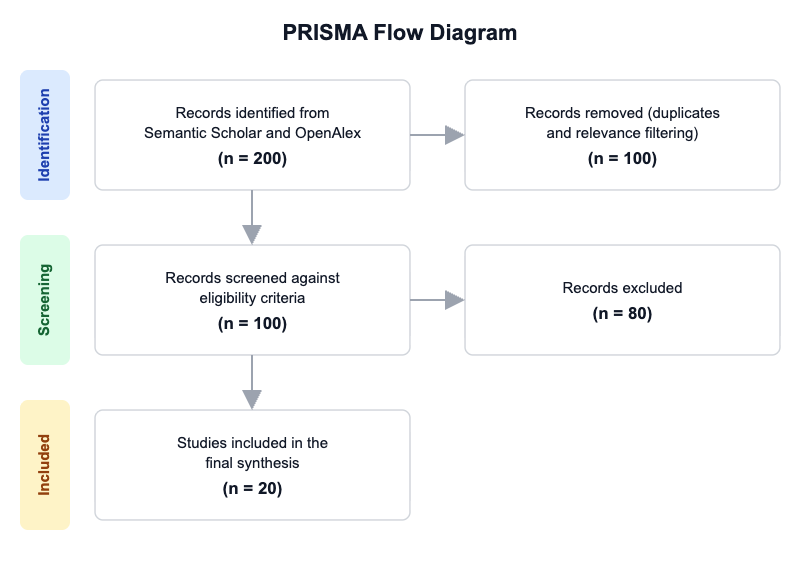
Initial database searching identified 200 records. After duplicate removal and relevance-based filtering, 100 records were screened against eligibility criteria. Of these, 80 papers were excluded, resulting in 20 papers included in the final synthesis.
PRISMA Flow Diagram
Eligibility criteria included:
- Human: Does the study involve human participants rather than only animal, in vitro, or ex vivo models?
- Hair Loss: Does the study investigate hair loss, alopecia, hair thinning, or hair regrowth as the main topic?
- Intervention: Does the study test a treatment, procedure, biologic, device, or regenerative therapy intended to improve hair growth or regrowth?
- Outcome: Does the study report a hair growth outcome such as hair count, density, thickness, coverage, terminal hair growth, or photographic improvement?
- Recent: Does the study appear to be from 2020 or later?
- Comparative: Does the study include a control, comparator, placebo, sham, or baseline comparison?
- Clinical Evidence: Does the paper report clinical, trial, cohort, or systematic review evidence rather than only mechanistic discussion?
- Safety: Does the study report adverse events, tolerability, or safety outcomes?
All included studies met the stated eligibility criteria.
2.3 Data Extraction and Synthesis
Data extraction focused on intervention type, population, study design, sample size, regrowth outcomes, follow-up, safety, and comparators. Thematic analysis was used to identify recurring patterns across therapies and disease contexts, with evidence strength judged qualitatively according to consistency and design quality.
3. Results
3.1 Characteristics of Included Studies
| Study and Year | Study Type | Population | Intervention | Key Outcome Measure | Follow-up |
|---|---|---|---|---|---|
| Tak et al. 2020 [1] | Randomized, double-blind, vehicle-controlled trial | AGA | ADSC-CE topical solution | Hair count, hair diameter | 16 weeks |
| Kuka et al. 2020 [2] | Prospective clinical trial | Early AGA | ADRC-enriched autologous fat grafts | Terminal hair count, hair width | 6, 24, 52 weeks |
| Tsuboi et al. 2020 [3] | Randomized placebo-controlled double-blinded clinical study | MPHL and FPHL | Autologous dermal sheath cup cells | Not reported in abstract | Not specified |
| Jiménez et al. 2021 [4] | Review | Male androgenetic alopecia and female pattern hair loss | Hair transplantation techniques | Candidate selection and expected outcomes | Not specified |
| Zhou et al. 2021 [5] | Review | AA | Corticosteroids, JAK inhibitors, biologics, PRP, and other therapies | Treatment efficacy and recurrence | Not specified |
| Nestor et al. 2021 [6] | Literature review | AGA | Pharmacologic, light-based, nutraceutical, PRP, exosome, and surgical options | Efficacy, side effects, compliance | Not specified |
| Saceda-Corralo et al. 2022 [7] | Review | Male AGA | 5-alpha reductase inhibitors, oral minoxidil, PRP, LLLT, and emerging agents | Hair count, density, frontal response | Not specified |
| Paichitrojjana et al. 2022 [8] | Review | Hair loss, mainly AGA | PRP | Hair count, density, regrowth | Not specified |
| Zhou et al. 2022 [9] | Review | Alopecia | Microneedles for transdermal delivery | Drug delivery efficiency, therapeutic effect | Not specified |
| Dahabreh et al. 2023 [10] | Review | AA | JAK inhibitors, baricitinib, ritlecitinib, and emerging therapies | Hair regrowth, safety, tolerability | Not specified |
| Devjani et al. 2023 [11] | Review | AGA | Minoxidil, finasteride, and alternative therapies | Hair count, density, thickness | Not specified |
| Feldman et al. 2023 [12] | Systematic review and Bayesian network meta-analysis | Men and women with AGA | Multiple pharmacologic and nonpharmacologic therapies | Terminal hair density at 12 and 24 weeks | 12 and 24 weeks |
| Kaiser et al. 2023 [13] | Review | AGA | Minoxidil, finasteride, LLLT, microneedling, PRP, stem cell therapy, and others | Hair count, density, photographic improvement | Not specified |
| Ntshingila et al. 2023 [14] | Review | AGA | Finasteride and minoxidil | Hair loss reduction | Not specified |
| Thor et al. 2023 [15] | Blinded clinical trial | AGA | Topical HIF-strengthening factor technology | Hair thickness, density, hair loss, anagen/telogen ratio | 9 months |
| David et al. 2024 [16] | Retrospective observational study | Pediatric AA with atopic dermatitis | Dupilumab | SALT score | 24 to >72 weeks |
| Cuevas-Díaz Durán et al. 2024 [17] | Review | AGA | Molecular and genomic mechanisms | Mechanistic pathways and risk variants | Not applicable |
| Cao et al. 2024 [18] | Retrospective single-arm study | AGA | Concentrated growth factor injections | Hair density, hair growth ratio, GAIS | 3 and 6 months |
| Ma et al. 2025 [19] | Review | AA | Traditional therapies, biologics, small molecules, emerging treatments | Therapeutic landscape | Not specified |
| Jiménez et al. 2021 [4] | Review | Hair transplantation candidates with AGA and FPHL | Follicular unit transplantation | Surgical candidacy and outcomes | Not specified |
Overall, the evidence base is dominated by AGA-focused clinical and review literature, with AA represented primarily by mechanistic and therapeutic reviews plus one pediatric real-world observational study. Many reports are narrative reviews rather than original comparative trials, while the strongest quantitative evidence comes from a network meta-analysis and a smaller set of controlled or prospective human studies.
3.2 Thematic Findings
3.2.1 Conventional pharmacologic therapy remains effective, but gains are modest and safety/tolerability shape long-term use
Across the AGA literature, minoxidil and 5-alpha reductase inhibitors remain the most established therapies, with consistent but incomplete improvements in hair density, thickness, and loss stabilization [11], [14], [7]. In the Bayesian network meta-analysis, minoxidil 2% produced terminal hair density gains of 12.13 in women and 10.54 in men at 24 weeks, while minoxidil 5% produced 10.82 in women and 13.13 in men; finasteride 1 mg/day reached 12.38 in men, and dutasteride 0.5 mg/day reached 18.37 in men [12]. The same analysis found that finasteride, minoxidil 2%, and Viviscal in men were not statistically different from placebo, underscoring that efficacy is not uniform even within commonly used categories [12]. Safety concerns also differ by agent: finasteride is linked to sexual adverse effects and persistent postfinasteride syndrome in review literature, whereas oral minoxidil is mainly associated with hypertrichosis, with dizziness and lower limb edema less common [14], [7]. Confidence: Strong for the general conclusion that conventional pharmacotherapy produces benefit in AGA, but Moderate for cross-agent ranking because some comparative findings remain heterogeneous and at least one analysis found placebo-level effects for selected agents.
3.2.2 Device-based, light-based, and delivery-enhancing approaches often show stronger early responses or improved local delivery, but standardization is limited
Nonpharmacologic modalities appear increasingly important, especially when the goal is to augment follicular stimulation or improve drug penetration [6], [13], [9]. In the Bayesian meta-analysis, low-level laser comb treatment showed 16.62 in women and 18.75 in men at 24 weeks, exceeding several pharmaceutical comparators in terminal hair density gain [12]. Microneedles were highlighted as a delivery strategy that improves local transdermal drug delivery and patient compliance, but quantitative outcome reporting was not provided in the review evidence [9]. This pattern suggests that part of the apparent advantage of these approaches may stem not only from intrinsic biologic effects but also from better follicular targeting and adherence. However, evidence comparability is weakened because studies vary in wavelength, dosing schedules, endpoint definitions, and whether devices are used alone or as adjuncts [7], [13]. Confidence: Moderate for the direction of benefit, Limited for precise ranking due to protocol heterogeneity and incomplete comparative data.
3.2.3 Regenerative and cell-based strategies show promising quantitative gains, especially in early AGA, but evidence is still exploratory
A second pattern is the emergence of regenerative interventions targeting the follicular niche rather than androgen signaling alone. Controlled and prospective studies reported improvement with adipose-derived stem cell constituent extract, adipose-derived regenerative cell-enriched fat grafts, concentrated growth factors, and autologous dermal sheath cup cells [1], [2], [18], [3]. In the ADSC-CE trial, hair count increased by 28.1% in the intervention group versus 7.1% in the vehicle-controlled group at week 16, and hair diameter improved by 14.2% versus 6.3% [1]. In the ADRC-enriched fat graft study, the low-dose ADRC subgroup with Norwood Hamilton 3 hair loss showed terminal hair count increases of 13.90 ± 16.68 at week 6, 11.75 ± 19.42 at week 12, 16.56 ± 14.68 at week 24, and 2.78 ± 16.15 at week 52, with the week-24 difference versus saline control reaching P = 0.0318 [2]. Concentrated growth factors produced significant improvement in hair density and hair growth ratio after 3 months, sustained for 6 months, with no severe topical or systemic adverse events [18]. Autologous dermal sheath cup cell therapy was also reported as potentially useful, but the abstract does not report quantitative regrowth outcomes [3]. Note: several of these studies examined early AGA or male-pattern subgroups, which partially match the question population of hair regrowth broadly; findings should be interpreted considering this difference. Confidence: Moderate for early efficacy signals, Limited for durability and generalizability because of small, subgroup-specific, or single-arm designs.
3.2.4 Immune-targeted therapy is transforming alopecia areata, with pediatric real-world data supporting biologic responsiveness in atopic disease
For AA, the literature shows a clear shift toward immune-targeted therapy. Reviews describe a progression from corticosteroids, immunomodulators, minoxidil, and contact immunotherapy toward JAK inhibitors, biologics, and newer small molecules, reflecting the field’s increasing mechanistic precision [5], [10], [19]. The strongest human data in the provided set come from pediatric real-world dupilumab use, where SALT scores fell from 54.4 ± 37.6 at baseline to 20.4 ± 35.1 at 48 weeks and to 2.2 ± 4.9 at >72 weeks, with p < 0.01 at both later time points [16]. That response is biologically coherent with the Th2-skewed phenotype described in atopic children, and the same study found baseline IgE and disease duration to correlate with later improvement, suggesting that immune context matters [16]. Separately, reviews identify baricitinib and ritlecitinib as recent FDA-approved JAK inhibitors for severe AA, but detailed efficacy and adverse-event statistics are not reported in the extracted data [10]. Note: the dupilumab study examined children with both AA and atopic dermatitis, which partially matches the question population of hair regrowth; findings should be interpreted considering this difference. Confidence: Moderate for biologic plausibility and real-world pediatric benefit, Limited for broader AA treatment ranking because much of the evidence is review-based or lacks direct comparative data.
3.2.5 Mechanistic synthesis points to follicular cycling, inflammatory control, and niche remodeling as the main biological routes to regrowth
Mechanistic evidence in the recent literature converges on three pathways: restoring anagen/telogen balance, suppressing inflammatory collapse of follicular privilege, and improving the follicular microenvironment [20], [5], [1]. The HIF-strengthening technology trial reported an average anagen hair percentage increase of +8.0% and telogen reduction of -14.0%, alongside increases in hair thickness (+7.2%) and density (+14.3%) [15]. In AA, immune-mediated collapse of follicular privilege and activation of Th1, Th2, IL-9, IL-23, and IL-32 pathways provide a framework for why JAK inhibition and dupilumab might work in selected patients [5], [10], [19]. In AGA, genomic and follicular biology reviews emphasize signaling events, transcriptional differences between balding and non-balding scalp, and risk variants, supporting the view that responses may vary by biological subtype rather than by treatment class alone [17]. Confidence: Moderate for mechanistic plausibility because the direction of evidence is consistent, but the mechanistic literature is mostly review-based rather than interventional.
3.3 Summary of Evidence
| Theme | Key Finding | Population Applicability | Effect Direction | Confidence Level | Supporting Studies |
|---|---|---|---|---|---|
| Conventional pharmacotherapy | Minoxidil 2% reached 12.13 in women and 10.54 in men; dutasteride 0.5 mg/day reached 18.37 in men at 24 weeks [12] | Mostly AGA in adults; directly applicable to the question | Positive, modest | Strong | Feldman et al. [12], Devjani et al. [11], Ntshingila et al. [14] |
| Light-based and delivery-enhancing approaches | Low-level laser comb treatment reached 16.62 in women and 18.75 in men; microneedles improved local delivery but no quantitative regrowth data were reported [12], [9] | Primarily AGA | Positive | Moderate | Feldman et al. [12], Zhou et al. [9], Kaiser et al. [13] |
| Regenerative/cell-based therapies | ADSC-CE improved hair count by 28.1% vs 7.1% with vehicle control at 16 weeks [1] | AGA, especially early disease; partially matches broader hair regrowth question | Positive | Moderate | Tak et al. [1], Kuka et al. [2], Cao et al. [18] |
| Immune-targeted AA therapy | Dupilumab reduced SALT from 54.4 ± 37.6 to 20.4 ± 35.1 at 48 weeks and 2.2 ± 4.9 at >72 weeks [16] | Pediatric AA with atopic dermatitis; partially matches question | Positive | Moderate | David et al. [16], Dahabreh et al. [10], Ma et al. [19] |
| Mechanistic basis of regrowth | HIF-strengthening topical therapy increased anagen hair by +8.0% and reduced telogen by -14.0% [15] | AGA | Positive | Moderate | Thor et al. [15], Cuevas-Díaz Durán et al. [17], Natarelli et al. [20] |
4. Discussion
4.1 Principal Findings and Their Interpretation
The most consistent message from recent hair regrowth research is that meaningful improvement is possible, but the mechanism of action matters. In AGA, therapies that either reduce androgen signaling, increase follicular stimulation, or improve local delivery tend to show the most reproducible benefit, with light-based devices and selected regenerative strategies often matching or exceeding conventional topical therapies in reported terminal hair gains [12], [2], [1]. This pattern is biologically plausible because AGA is fundamentally a disorder of follicular miniaturization and altered cycling rather than complete follicular loss, so interventions that preserve or re-enter anagen can still shift measurable hair metrics [17], [20]. By contrast, AA responds best when immune dysregulation is directly targeted, as illustrated by the sustained SALT improvement with dupilumab in atopic children and the broader shift toward JAK inhibition and biologics [16], [10], [19].
The strongest confidence lies in the broad conclusion that conventional AGA pharmacotherapy works but incompletely, whereas the newer field is fragmented by heterogeneity in endpoints, protocols, and populations. The network meta-analysis gives the clearest comparative picture, yet even there the finding that finasteride, minoxidil 2%, and Viviscal in men were not statistically different from placebo emphasizes that not all widely used interventions are equivalently effective in every context [12]. Regenerative therapies are encouraging because they frequently report concurrent gains in hair count, density, and thickness, but their evidence base remains less mature, often relying on small samples, single-center designs, or short-term follow-up [1], [2], [18]. Taken together, the synthesis suggests that “hair regrowth” is not one therapeutic problem but two overlapping biological problems: androgen-driven miniaturization and immune-driven follicular arrest.
4.2 Comparison with Existing Literature and Resolution of Contradictions
The recent literature broadly agrees with older therapeutic hierarchies, but the newer evidence is more nuanced about which modalities are truly competitive. Reviews continue to describe minoxidil and finasteride as standard care, yet newer comparative synthesis suggests that low-level laser therapy and some regenerative approaches may offer larger terminal hair density gains than the pharmacologic baseline in certain populations [12], [1], [2]. This does not necessarily mean older therapies are ineffective; rather, it may reflect ceiling effects, adherence constraints, and the fact that chronic AGA often requires sustained use before benefits become visible. The pattern also raises a publication bias concern, because many novel-device and regenerative reports are framed as feasibility or proof-of-concept studies, where positive findings are more likely to be published than null findings.
The clearest contradiction is the gap between promising regrowth reports and weaker placebo-separated performance for some standard interventions in men. One plausible explanation is endpoint sensitivity: terminal hair density, hair count, hair diameter, SALT, and photographic improvement are not interchangeable, and different measures may detect different magnitudes of effect [12], [1], [16]. Another explanation is population heterogeneity. AGA in women, men, and early-stage disease may respond differently, and atopic AA in children is biologically distinct from adult AA or AGA [12], [16]. A third explanation is that treatment durability varies: several therapies show early benefit that attenuates by 12–16 weeks or require prolonged exposure to maintain response, which can make short trials underestimate cumulative benefit or overestimate early response [12], [14]. Because no pooled estimates were provided and the design landscape is uneven, these contradictions cannot be fully resolved, but they are more consistent with heterogeneity in biology and trial methods than with a single coherent failure of the field.
4.3 Practical Implications
For clinicians treating AGA, the evidence supports starting with established therapies while considering escalation or combination strategies when response is inadequate. Minoxidil and 5-alpha reductase inhibitors remain the reference standard, but their benefits are often partial and must be weighed against adverse effects and adherence barriers, particularly for long-term use [11], [14], [6]. Patients who prioritize avoidance of systemic exposure may be reasonable candidates for topical finasteride, oral minoxidil with careful monitoring, low-level laser therapy, or microneedle-assisted delivery, although protocol standardization is still lacking [7], [13], [9]. For early AGA, regenerative options such as ADSC-CE, ADRC-enriched grafting, or concentrated growth factors may be considered experimental but promising, especially when short-term density gains are a priority and procedural acceptability is high [1], [2], [18].
For AA, especially in patients with atopy, immune-targeted therapy is increasingly relevant. The pediatric dupilumab data suggest that a Th2-skewed phenotype may identify a subgroup with meaningful regrowth potential, while JAK inhibitors and biologics represent the most important new therapeutic class for severe disease [16], [10], [19]. Public health and regulatory implications differ by disease: AGA likely requires broader access to effective, tolerable, and sustainable long-term treatments, whereas AA needs precision-matched immune therapies and better pediatric evidence. No convincing no-threshold exposure issue arises here, but the evidence does imply that several therapies act in a dose-, duration-, and phenotype-dependent manner; therefore, policy should favor individualized, evidence-based use rather than one-size-fits-all escalation.
4.4 Strengths and Limitations
This review benefits from a broad recent scope spanning AGA, AA, pharmacologic, device-based, regenerative, and immune-targeted approaches, allowing a thematic synthesis that individual studies cannot provide. The inclusion of controlled trials, prospective studies, observational real-world evidence, and contemporary reviews strengthens triangulation across the field. However, the evidence itself is limited by heterogeneous endpoints, inconsistent follow-up durations, frequent reliance on narrative review data, and few head-to-head trials. Many studies report surrogate measures rather than patient-centered outcomes, and several promising therapies lack long-term safety or durability data.
The review also has limitations. It relies on the provided paper data rather than full-text extraction, so some outcome details remain unavailable. Formal risk-of-bias assessment was not performed. In addition, the literature is heavily weighted toward AGA, with AA evidence more concentrated in reviews and a single pediatric observational study, limiting disease-specific comparability.
5. Gaps and Future Directions
The most important gap is the lack of large, directly comparative trials that evaluate newer therapies against established standards using harmonized endpoints such as hair count, density, thickness, and patient-reported improvement. Current evidence for regenerative interventions is promising but often limited to early AGA, small samples, or single-center designs, while AA evidence remains skewed toward review-level synthesis and selected pediatric biologic experience. Future studies should therefore include broader adult and pediatric populations, longer follow-up, and standardized safety reporting to determine whether early gains persist and whether adverse effects remain acceptable over time [1], [2], [3], [18].
Mechanistic work should also be integrated more directly into clinical trials. The literature now points to follicular cycling, androgen signaling, immune privilege collapse, Th1/Th2 balance, and niche remodeling as key pathways, but these mechanisms are rarely measured alongside regrowth endpoints [17], [20], [5]. Studies that combine biomarker profiling with clinical outcomes would clarify which patients benefit most from which therapy. Finally, underrepresented contexts include women in many intervention studies, pediatric non-atopic AA, and long-term safety of oral and procedural interventions. Addressing these gaps would move the field from promising but heterogeneous experimentation toward clinically actionable precision hair restoration.
6. Conclusion
The latest research on hair regrowth supports a cautious but optimistic conclusion: clinically meaningful regrowth is achievable, especially in AGA and selected AA subgroups, but the most effective strategy depends strongly on disease biology, treatment class, and follow-up duration. Conventional therapies such as minoxidil and finasteride remain important, yet their benefits are often modest, with terminal hair density gains such as 12.13 in women and 10.54 in men for minoxidil 2%, 10.82 in women and 13.13 in men for minoxidil 5%, and 18.37 in men for dutasteride at 24 weeks [12]. At the same time, newer approaches are increasingly persuasive: ADSC-CE improved hair count by 28.1% versus 7.1% with vehicle control at 16 weeks, low-dose ADRC grafting showed a week-24 terminal hair count change of 16.56 ± 14.68 with P = 0.0318 versus saline control, concentrated growth factors improved density and growth ratio over 3 to 6 months, and dupilumab reduced SALT from 54.4 ± 37.6 to 2.2 ± 4.9 by >72 weeks in atopic children with AA [1], [2], [18], [16]. Because much of the evidence is still concentrated in AGA or in disease-specific subgroups, the most important unresolved question is which therapies provide durable, safe regrowth across broader populations and phenotypes. Answering that question will determine whether hair regrowth treatment can move from an empiric, trial-and-error model to a more precise and biologically matched standard of care.
References
- Tak, Y. J., Lee, S. Y., Cho, A.-R., & Kim, Y. S. (2020). A randomized, double-blind, vehicle-controlled clinical study of hair regeneration using adipose-derived stem cell constituent extract in androgenetic alopecia. Stem Cells Translational Medicine, 9(8), 839–849. https://doi.org/10.1002/sctm.19-0410
- Kuka, G., Epstein, J., Aronowitz, J., Glasgold, M. J., Rogal, J. G., Brown, W., Geronemus, R. G., Daniels, E. J., & Washenik, K. (2020). Cell enriched autologous fat grafts to follicular niche improves hair regrowth in early androgenetic alopecia. Aesthetic Surgery Journal, 40(6), NP328–NP339. https://doi.org/10.1093/asj/sjaa037
- Tsuboi, R., Niiyama, S., Irisawa, R., Harada, K., Nakazawa, Y., & Kishimoto, J. (2020). Autologous cell–based therapy for male and female pattern hair loss using dermal sheath cup cells: A randomized placebo-controlled double-blinded dose-finding clinical study. Journal of the American Academy of Dermatology, 83(1), 109–116. https://doi.org/10.1016/j.jaad.2020.02.033
- Jiménez, F., Alam, M., Vogel, J. E., & Avram, M. (2021). Hair transplantation: Basic overview. Journal of the American Academy of Dermatology, 85(4), 803–814. https://doi.org/10.1016/j.jaad.2021.03.124
- Zhou, C., Li, X., Wang, C., & Zhang, J. (2021). Alopecia areata: An update on etiopathogenesis, diagnosis, and management. Clinical Reviews in Allergy & Immunology, 61(3), 403–423. https://doi.org/10.1007/s12016-021-08883-0
- Nestor, M. S., Ablon, G., Gade, A., Han, H., & Fischer, D. L. (2021). Treatment options for androgenetic alopecia: Efficacy, side effects, compliance, financial considerations, and ethics. Journal of Cosmetic Dermatology, 20(12), 3759–3781. https://doi.org/10.1111/jocd.14537
- Saceda-Corralo, D., Domínguez-Santás, M., Vañó-Galván, S., & Grimalt, R. (2022). What's new in therapy for male androgenetic alopecia? American Journal of Clinical Dermatology, 24(1), 15–24. https://doi.org/10.1007/s40257-022-00730-y
- Paichitrojjana, A., & Paichitrojjana, A. (2022). Platelet rich plasma and its use in hair regrowth: A review. Drug Design, Development and Therapy, 16, 635–645. https://doi.org/10.2147/DDDT.S356858
- Zhou, Y., Jia, L., Zhou, D., Chen, G., Fu, Q., & Li, N. (2022). Advances in microneedles research based on promoting hair regrowth. Journal of Controlled Release, 353, 965–974. https://doi.org/10.1016/j.jconrel.2022.12.040
- Dahabreh, D., Jung, S., Renert-Yuval, Y., Bar, J., Del Duca, E., & Guttman-Yassky, E. (2023). Alopecia areata: Current treatments and new directions. American Journal of Clinical Dermatology, 24(6), 895–912. https://doi.org/10.1007/s40257-023-00808-1
- Devjani, S., Ezemma, O., Kelley, K. J., Stratton, E., & Senna, M. (2023). Androgenetic alopecia: Therapy update. Drugs, 83(8), 701–715. https://doi.org/10.1007/s40265-023-01880-x
- Feldman, P. R., Gentile, P., Piwko, C., Motswaledi, H. M., Gorun, S., Pesachov, J., Markel, M., Silver, M. I., Brenkel, M., Feldman, O. J., Kamen, C. L., Uleryk, E. M., Guevara-Aguirre, J., & Fiebig, K. M. (2023). Hair regrowth treatment efficacy and resistance in androgenetic alopecia: A systematic review and continuous Bayesian network meta-analysis. Frontiers in Medicine, 9, 998623. https://doi.org/10.3389/fmed.2022.998623
- Kaiser, M., Abdin, R., Gaumond, S. I., Issa, N. T., & Jimenez, J. J. (2023). Treatment of androgenetic alopecia: Current guidance and unmet needs. Clinical, Cosmetic and Investigational Dermatology, 16, 1387–1406. https://doi.org/10.2147/CCID.S385861
- Ntshingila, S., Oputu, O., Arowolo, A. T., & Khumalo, N. P. (2023). Androgenetic alopecia: An update. JAAD International, 13, 150–158. https://doi.org/10.1016/j.jdin.2023.07.005
- Thor, D., Pagani, A., Bukowiecki, J., Houschyar, K. S., Kølle, S.-F. T., Wyles, S. P., & Duscher, D. (2023). A novel hair restoration technology counteracts androgenic hair loss and promotes hair growth in a blinded clinical trial. Journal of Clinical Medicine, 12(2), 470. https://doi.org/10.3390/jcm12020470
- David, E., Shokrian, N., Del Duca, E., Meariman, M., Glickman, J., Ghalili, S., Jung, S., Tan, K., Ungar, B., & Guttman-Yassky, E. (2024). Dupilumab induces hair regrowth in pediatric alopecia areata: A real-world, single-center observational study. Archives of Dermatological Research, 316(7), 487. https://doi.org/10.1007/s00403-024-03225-4
- Cuevas-Díaz Durán, R., Martínez-Ledesma, E., García-García, M., Bajo Gauzin, D., Sarro-Ramírez, A., Gonzalez-Carrillo, C., Rodríguez-Sardin, D., Fuentes, A., & Cardenas-Lopez, A. (2024). The biology and genomics of human hair follicles: A focus on androgenetic alopecia. International Journal of Molecular Sciences, 25(5), 2542. https://doi.org/10.3390/ijms25052542
- Cao, S., Zhu, M., & Bi, Y. (2024). Evaluation of the safety and efficacy of concentrated growth factors for hair growth promotion in androgenetic alopecia patients: A retrospective single-centre, single-arm study. Journal of Cosmetic Dermatology, 23(12), 4051–4056. https://doi.org/10.1111/jocd.16519
- Ma, T., Zhang, T., Miao, F., Liu, J., Zhu, Q., Chen, Z., Tai, Z., & He, Z. (2025). Alopecia areata: Pathogenesis, diagnosis, and therapies. MedComm, 6(5), e70182. https://doi.org/10.1002/mco2.70182
- Natarelli, N., Gahoonia, N., & Sivamani, R. K. (2023). Integrative and mechanistic approach to the hair growth cycle and hair loss. Journal of Clinical Medicine, 12(3), 893. https://doi.org/10.3390/jcm12030893