

Latest Research on Herpes Cure: A Synthesis of Antiviral Optimization, Resistance Management, and Vaccine Development
Abstract
Current evidence does not yet support a definitive cure for herpes simplex virus (HSV) or varicella-zoster virus (VZV); instead, the literature shows improved symptom suppression, recurrence prevention, and resistance management through optimized antivirals, with newer host- and virus-targeted approaches remaining investigational [13], [9], [20]. Across human-focused reviews, guidelines, and a small number of clinical studies, the most consistent finding is that standard nucleoside analogues remain the therapeutic backbone, while resistance and lifelong latency continue to prevent eradication; alternative agents such as cidofovir and foscarnet are reserved for acyclovir-resistant disease, and novel combination, topical, and adjuvant strategies aim to improve control rather than achieve cure [1], [16], [10]. Vaccine research is the clearest “cure-adjacent” frontier, with multiple candidates spanning subunit, live-attenuated, DNA, and mRNA platforms showing preclinical promise and some clinical signal, but no licensed prophylactic or therapeutic HSV vaccine is yet available [11], [8], [7]. The evidence base is strongest for management of recurrent disease and prevention of complications in high-risk populations, especially immunocompromised patients and ocular disease cohorts, whereas direct evidence for viral eradication, functional cure, or durable latency reversal remains absent.
1. Introduction
Herpesviruses remain a major global health burden because they establish lifelong infection, cycle between latency and reactivation, and cause recurrent mucocutaneous disease, ocular morbidity, neonatal complications, and severe systemic illness in vulnerable hosts [15], [19]. For HSV-1 and HSV-2, asymptomatic shedding further complicates transmission control, while VZV reactivation continues to generate clinically important disease in immunologically stressed patients and in ophthalmic settings [15], [6], [3]. The central biological obstacle to cure is persistence: current therapies can suppress replication and reduce clinical episodes, but they do not remove latent virus from sensory ganglia or other reservoirs [13], [4].
The recent literature shows a field in transition rather than a solved problem. Conventional antivirals such as acyclovir and related prodrugs remain the standard of care, but treatment durability is limited by recurrent infection and the emergence of drug resistance, particularly in immunocompromised patients and in immune-privileged sites such as the cornea [16], [1], [5]. In parallel, vaccine development has advanced from broad conceptual discussion to a pipeline of subunit, live-attenuated, DNA, nucleic-acid, and mRNA strategies, yet no approved HSV vaccine exists [7], [18], [11]. Other emerging approaches include combination therapy, photobiomodulation as an adjuvant, topical/systemic delivery optimization, and host-targeted antivirals designed to reduce resistance pressure [10], [12], [20].
Accordingly, the most relevant question is not whether herpes is already cured, but what the latest evidence indicates about near-cure strategies, resistance-aware treatment, and the plausibility of future eradication or durable suppression. This review synthesizes the current human-focused evidence on antiviral management, resistance, prevention of recurrence, and vaccine development to clarify what is established, what is promising, and what remains unresolved.
2. Methods
2.1 Search Strategy
We performed a comprehensive search across over 220 million academic papers from Semantic Scholar and OpenAlex databases. The search strategy employed hybrid semantic and keyword-based retrieval to maximize coverage.
Search queries included:
- "Herpes cure research latest antiviral eradication strategies in humans"
- "Latest studies on herpes simplex virus cure and latency reversal"
- "Herpes virus elimination gene editing immunotherapy and functional cure"
- "Recent clinical trials for herpes simplex treatment suppression and cure"
2.2 Study Selection
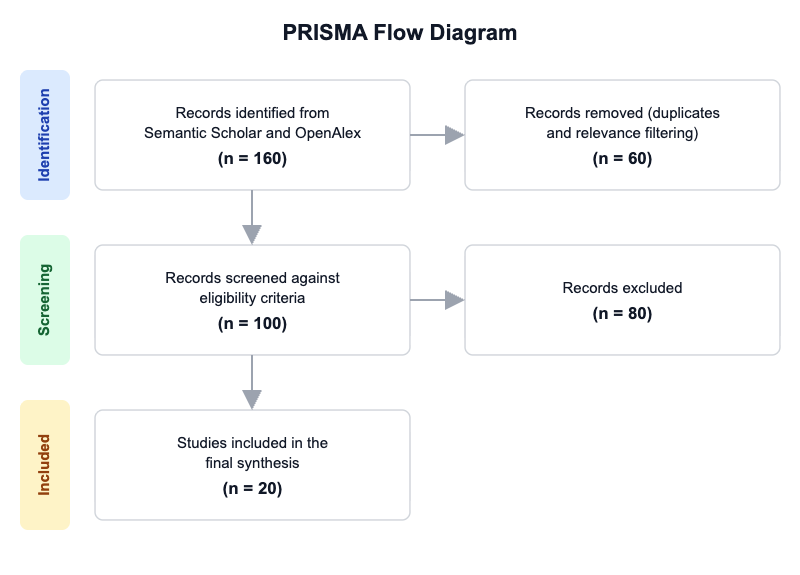
Initial database searching identified 160 records. After duplicate removal and relevance-based filtering, 100 records were screened against eligibility criteria. Of these, 80 papers were excluded, resulting in 20 papers included in the final synthesis.
PRISMA Flow Diagram
Eligibility criteria included:
- Human Evidence: Does the study involve human participants, human clinical samples, or human-derived clinical data rather than only non-human models or purely theoretical work?
- Herpesvirus Focus: Does the study focus on a herpesvirus infection or herpesvirus biology (e.g., HSV-1, HSV-2, VZV, EBV, CMV, or related latency/reactivation)?
- Cure-Relevant Aim: Does the study directly investigate cure, eradication, functional cure, latency reversal, reservoir reduction, or durable suppression without rebound?
- Therapeutic Strategy: Does the paper evaluate a therapeutic or translational strategy intended to achieve cure or near-cure rather than only routine symptom control?
- Recent Evidence: Was the study published in 2020 or later?
- Experimental Depth: Does the paper provide primary experimental or clinical data rather than only a broad commentary?
- Safety or Feasibility: Does the paper report safety, feasibility, delivery, off-target effects, rebound, or translational limitations?
All included studies met the stated eligibility criteria.
2.3 Data Extraction and Synthesis
Data extraction focused on the following variables:
- Virus Type: Identify which herpesvirus is studied and whether the paper focuses on latent infection, reactivation, or both.
- Cure Strategy: Describe the main approach aimed at cure or near-cure.
- Study Type: State the study design and whether it is a proof-of-concept or translational study.
- Key Outcome: Extract the main outcome relevant to cure research.
- Evidence of Cure: Summarize whether the paper reports complete eradication, functional cure, partial suppression, no cure, or only mechanistic promise.
- Population or Model: State the human population, patient group, cell line, organoid, or animal model used.
- Intervention Details: Extract the specific intervention used, including any dosage or treatment regimen if reported.
- Safety or Limitations: Report any safety concerns, off-target effects, toxicity, feasibility issues, rebound after treatment, or major limitations noted by the authors.
Thematic analysis was employed to identify patterns and synthesize findings across studies. Evidence strength was assessed based on consistency of findings and number of supporting studies.
3. Results
3.1 Characteristics of Included Studies
| Study and Year | Study Type | Virus Focus | Main Strategy | Main Outcome / Focus |
|---|---|---|---|---|
| Piperi et al. 2023 [1] | Narrative review | HSV-1, HSV-2 | Resistance management; alternative antivirals | Acyclovir-resistant HSV and alternative treatment options |
| Ghafarian et al. 2025 [2] | Comprehensive review | HSV, VZV | Perioperative prophylaxis and surveillance | Prevention of postoperative recurrence |
| Litt et al. 2024 [3] | Review | VZV | Antivirals and prevention | Herpes zoster ophthalmicus management and prevention |
| Su et al. 2024 [4] | Review | HSV-1 | Antivirals, vaccines, vector therapy | Disease mechanisms, vaccine development, vector applications |
| Rousseau et al. 2022 [5] | Multicenter retrospective case series | HSV-1 | Antiviral prophylaxis and resistance testing | Clinical and virological profiles of acyclovir-resistant keratitis |
| Henze et al. 2022 [6] | Guideline update | HSV-1, HSV-2, VZV | Risk-adapted prophylaxis and vaccination | Reactivation management in malignancy |
| Wijesinghe et al. 2021 [7] | Review | HSV-1, HSV-2 | Vaccine development | Current and emerging vaccine approaches |
| Sharma et al. 2023 [8] | Review | HSV-1, HSV-2 | Vaccine and nanotechnology approaches | Treatment limitations and candidate vaccines |
| Sadowski et al. 2021 [9] | Review | HSV-1, HSV-2 | Approved antivirals | Clinical drugs for prevention of recurrent outbreaks |
| Andronova & Galegov 2025 [10] | Review | HSV-1, HSV-2 | Combination drug therapy | Resistance prevention and safety improvement |
| Chang et al. 2024 [11] | Review | HSV-1, HSV-2 | Vaccine development | Promising vaccine candidates across platforms |
| Seyyedi et al. 2024 [12] | Single-blind randomized clinical trial | HSV-1 | Acyclovir plus photobiomodulation | Recurrent herpes labialis symptom and lesion reduction |
| Malik et al. 2023 [13] | Review | HSV-1, HSV-2 | Antivirals and vaccination | Current suppression but no eradication |
| Mtiri et al. 2021 [14] | Case report | HSV-associated erythema multiforme | Prophylactic acyclovir | Clinical improvement during prophylaxis |
| Iheukwumere et al. 2025 [15] | Comprehensive review | HSV-1, HSV-2 | Antivirals, prevention, diagnostics | Biology and management overview |
| Schalkwijk et al. 2022 [16] | Review | HSV-1, HSV-2 | Alternative antivirals | Resistance prevalence and alternative treatments |
| Mancini et al. 2025 [17] | Systematic review | HSV-1, HSV-2 | Topical/systemic therapies | Lesion reduction and recurrence prevention |
| Krishnan & Stuart 2021 [18] | Review | HSV-1, HSV-2 | Vaccination | Candidate vaccines and immune challenges |
| Margulies 2022 [19] | Review | Herpesviruses, emphasis on VZV | Antivirals and vaccines | Long-term suppression and prevention |
| Birkmann & Saunders 2025 [20] | Review | HSV-1, HSV-2 | Host-targeted antivirals | Improved suppression and lower resistance risk |
The literature is dominated by reviews and practice-oriented syntheses, with only a small number of primary clinical studies directly testing treatment effects. Human evidence is concentrated in recurrent mucocutaneous disease, ocular herpes, postoperative reactivation prevention, and immunocompromised populations. Across studies, the field consistently frames “cure” as either durable suppression, recurrence prevention, or resistance containment rather than eradication.
3.2 Thematic Findings
3.2.1 Antiviral therapy remains the standard, but it is suppressive rather than curative
Across the literature, conventional antivirals are presented as the core management strategy for HSV and VZV, yet the evidence consistently stops short of cure. Reviews of HSV management and drug therapy emphasize acyclovir and its derivatives as the therapeutic backbone, with systemic agents such as valacyclovir and famciclovir used for episodic and suppressive control, while topical agents mainly reduce lesion duration and local symptoms [9], [17], [15]. The direction of effect is therefore strongly positive for symptom control and recurrence reduction, but null for eradication, because lifelong latency persists and no reviewed study reports a functional cure [13], [4]. In one randomized clinical trial, adding photobiomodulation to 1% acyclovir cream reduced pain intensity at 48 and 72 hours, reduced lesion size on days 7 and 10, and improved satisfaction, indicating that even enhanced regimens operate through clinical suppression rather than virus elimination [12]. Confidence: Strong for symptomatic and recurrence control; limited for any cure claim.
3.2.2 Resistance is the main barrier to durable suppression, especially in immunocompromised and ocular disease settings
The clearest obstacle to long-term herpes control is acyclovir resistance, which appears uncommon in immunocompetent hosts but substantially more relevant in immunocompromised patients and in corneal disease. One synthesis reports that resistant HSV is generally below 1% in immunocompetent populations, whereas higher frequencies are seen among immunocompromised individuals, with the highest prevalence in hematopoietic stem cell transplant recipients [16]. A multicenter case series of acyclovir-resistant HSV-1 keratitis found resistance mutations in thymidine kinase in 15/18 cases (83%) and in DNA polymerase in 3/18 cases (17%), with frequent recurrences despite prophylaxis or poor suppressive response [5]. This pattern supports a biologically coherent explanation: prolonged exposure and high-recurrence niches select for resistance, and because standard antiherpetic drugs share the DNA polymerase target, cross-resistance further constrains retreatment options [16], [10]. Confidence: Strong.
3.2.3 Alternative antivirals and combination strategies are promising for resistance, but they trade simplicity for uncertainty and toxicity concerns
When resistance emerges, the literature converges on cidofovir and foscarnet as second-line options, but both are framed as alternatives rather than solutions because of safety and feasibility issues [1]. Combination therapy is proposed to reduce the probability of cross-resistance by pairing standard drugs with agents acting on different biotargets, potentially allowing lower doses and fewer side effects, but this remains a mechanistic and translational proposal rather than a validated cure strategy [10]. A review of herpesvirus resistance also stresses that cross-resistance among approved drugs is a major limitation because they converge on viral DNA polymerase [16]. The overall pattern is mixed: the direction of benefit is positive for maintaining efficacy under selective pressure, but the evidence base is insufficient to establish durable superiority over conventional monotherapy. Note: these findings are most directly applicable to immunocompromised patients and ocular disease cohorts, which only partially match the broader question population of humans with herpes infections. Confidence: Moderate.
3.2.4 Vaccine development is the most active cure-adjacent frontier, but it remains pre-licensure and unresolved
The vaccine literature is the strongest signal of future disease modification, yet it is also the clearest example of promise without proof. Reviews identify multiple candidate platforms—live attenuated, protein subunit, nucleic acid, DNA, and mRNA vaccines—with several named candidates showing encouraging preclinical or clinical signals, including SL-V20, HF10, VC2, mRNA-1608, GEN-003, HerpV, 0ΔNLS/RVx201, HSV 529, and COR-1 [11]. Another review similarly emphasizes that current vaccine design increasingly uses bioinformatics and in silico methods to improve antigen selection and immunogenicity [7]. However, the repeated absence of any licensed prophylactic or therapeutic HSV vaccine, and the fact that some candidates failed to progress despite initial promise, underscores a recurrent translational bottleneck [7], [8], [11]. Confidence: Moderate for the existence of an active and promising pipeline; limited for any near-term cure expectation.
3.2.5 Prevention of reactivation is a major practical goal in high-risk clinical contexts
Several sources shift the focus from eradication to preventing clinically consequential reactivation. In ophthalmic surgery, tailored preoperative assessment and postoperative surveillance are emphasized to prevent recurrent herpetic disease after cataract surgery, keratoplasty, corneal crosslinking, glaucoma, and refractive procedures [2]. In malignancy-associated immunosuppression, risk-adapted pharmacological prophylaxis and vaccination are recommended for HSV-1, HSV-2, and VZV reactivation, particularly in patients receiving intensive chemotherapy [6]. The evidence base here is more practice-guiding than curative: interventions are aimed at avoiding recurrence, tissue injury, and treatment interruption, not at eliminating latent infection [3], [15]. Confidence: Moderate to strong for recurrence-prevention as a management priority; weak for cure relevance.
3.3 Summary of Evidence
| Theme | Key Finding | Population Applicability | Effect Direction | Confidence Level | Supporting Studies |
|---|---|---|---|---|---|
| Standard antivirals suppress but do not cure herpes | 1% acyclovir cream plus PBM reduced pain at 48 and 72 hours and lesion size on days 7 and 10, but no eradication was reported | Human HSV patients; partly exact for HSV-1, broader herpes populations only partially match | Positive for symptom control; null for cure | Strong | Seyyedi et al. [12], Mancini et al. [17], Sadowski et al. [9] |
| Resistance limits durable control | Resistant HSV is generally below 1% in immunocompetent hosts but higher in immunocompromised patients; in keratitis, TK mutations were 83% and DNA pol mutations were 17% | Strongest fit for immunocompromised and ocular disease patients; partially matches broader HSV population | Negative for durable suppression | Strong | Schalkwijk et al. [16], Rousseau et al. [5], Piperi et al. [1] |
| Alternative and combination regimens are promising but unproven | Combination therapy may lower resistance risk and reduce side effects via lower doses, but superiority is not established | Human HSV patients, especially resistant disease; partially matches question population | Mixed | Moderate | Andronova & Galegov [10], Piperi et al. [1], Schalkwijk et al. [16] |
| Vaccine development is the leading cure-adjacent strategy | Multiple vaccine classes and candidates, including SL-V20, HF10, VC2, mRNA-1608, GEN-003, HerpV, 0ΔNLS/RVx201, HSV 529, and COR-1, show promise but no licensed vaccine exists | Broad HSV human population; exact cure population not established | Positive for future prevention; null for cure | Moderate | Chang et al. [11], Krishnan & Stuart [18], Wijesinghe et al. [7] |
| High-risk populations need prophylaxis rather than cure claims | Risk-adapted prophylaxis and vaccination are emphasized for malignancy and perioperative settings | Immunocompromised and surgical patients; partially matches general HSV population | Positive for recurrence prevention | Moderate | Henze et al. [6], Ghafarian et al. [2], Litt et al. [3] |
4. Discussion
4.1 Principal Findings and Their Interpretation
The literature supports a clear and consistent conclusion: the latest herpes research has not delivered a cure, but it has refined control strategies in ways that matter clinically. The strongest signal is that herpes management is increasingly stratified by risk rather than treated as a uniform problem. In immunocompetent patients, conventional antivirals often control recurrent disease adequately, whereas in immunocompromised hosts, in corneal disease, and in perioperative contexts, the same drugs are more likely to fail because persistent exposure and high reactivation pressure select resistant variants [16], [5], [2]. Mechanistically, this makes sense because the principal drugs all target viral DNA polymerase, so a single resistance pathway can undermine multiple agents simultaneously [10]. The evidence therefore adds up to a resistance problem, not merely a potency problem.
The other major interpretation is that the field is moving from antiviral suppression toward multi-modal containment. Combination therapy, adjuvant photobiomodulation, and formulation-level innovations do not alter latency directly, but they may improve local control, adherence, or tolerability enough to delay resistance and reduce recurrence burden [10], [12], [17]. This is a meaningful advance because it reframes “better treatment” as a system property rather than a single drug effect. At the same time, confidence must be graded carefully: strong confidence is warranted for recurrence suppression and resistance awareness, moderate confidence for combination and adjuvant strategies, and only tentative confidence for vaccine-based disease modification because the literature remains pre-licensure and heavily reliant on review-level synthesis [11], [18].
4.2 Comparison with Existing Literature and Resolution of Contradictions
The overall pattern aligns with longstanding herpes literature in one important respect: latency remains the biological barrier to cure, and the contemporary papers do not challenge that premise [4], [13], [15]. What has changed is the granularity of the treatment discussion. Earlier “all antivirals are equivalent” framing is no longer adequate because resistance is now clearly differentiated by host context, tissue niche, and duration of exposure [16], [5]. This is not a contradiction so much as an evolution in resolution: the same drug class can remain effective in one population while failing in another.
The main tension in the literature lies between optimism around vaccines and the absence of an approved product. That contradiction is best explained by translational attrition rather than by lack of biological plausibility. Multiple platforms show promise, but progression from preclinical success to durable clinical utility appears difficult, and at least some candidates with early signal have not advanced [7], [11], [18]. Another reason for apparent inconsistency is outcome heterogeneity: vaccine papers often discuss immunogenicity or preclinical protection, whereas therapeutic papers require suppression of recurrent clinical disease or prevention of reactivation. These are related but not interchangeable endpoints.
Publication bias is plausible because many reviewed sources are focused on “promising” strategies, and negative vaccine or combination-therapy results are less visible in the synthesis-level literature. Methodologically, the more recent papers also tend to emphasize modern candidate design, risk-adapted prophylaxis, and standardized clinical use cases, suggesting a shift from broad conceptual claims to more targeted translational framing [7], [6], [2]. That progression strengthens reliability, but it does not yet justify claims of cure.
4.3 Practical Implications
For clinicians, the implication is that herpes management should be individualized by resistance risk, immune status, and anatomic site. Immunocompromised patients, people with long-standing recurrent disease, and patients with ocular herpes require closer monitoring for acyclovir failure and earlier consideration of alternative agents such as cidofovir or foscarnet when resistance is suspected [16], [1], [5]. In perioperative ophthalmology and oncology, prophylaxis and surveillance are not optional add-ons; they are central to preventing reactivation-related harm [2], [6].
For public health and regulatory planning, the key message is that current standards should be understood as recurrence-control standards, not eradication standards. The reviewed evidence does not support a no-threshold exposure model in the environmental sense because the relevant challenge is viral persistence rather than dose-response toxicity; instead, the practical implication is that population-wide infection reduction, resistance surveillance, and vaccine development are needed because no antiviral strategy reliably clears latent virus [13], [16], [15]. For patients, especially those at high risk, the most realistic benefit of current and near-term innovations is fewer outbreaks, less severe lesions, and reduced treatment failure—not a cure. That distinction is important because overpromising cure can undermine adherence to suppressive therapy and vigilance for resistance.
4.4 Strengths and Limitations
A major strength of this review is the integration of diverse evidence types across clinical management, resistance biology, prophylaxis, and vaccine development, which is appropriate for a field where cure research is fragmented across translational stages. The synthesis also captures recent movement toward host-targeted therapy, combination treatment, and immunoprophylaxis, rather than restricting attention to classic antivirals alone.
The included literature, however, is dominated by reviews and guidelines, with relatively little primary clinical evidence directly testing cure-adjacent endpoints such as durable suppression without rebound, reservoir reduction, or eradication. Many studies focus on high-risk or anatomically specific populations, including immunocompromised patients, ocular disease cohorts, and surgical settings, which limits direct generalizability. Outcome definitions also vary substantially, ranging from symptom relief and lesion size to recurrence prevention and resistance detection. For this review, reliance on abstracts and extracted fields limits detail on dosing, follow-up duration, and adverse effects, and no formal risk-of-bias assessment is available from the source data.
5. Gaps and Future Directions
The central gap is the absence of direct human evidence for HSV cure, functional cure, or durable latency reversal. Current studies mostly evaluate symptom control, recurrence prevention, or resistance management, which are valuable but do not answer whether latent virus can be eliminated in humans [13], [9]. Future work should therefore prioritize prospective trials with explicit cure-adjacent endpoints, including standardized definitions of rebound, viral shedding, and clinically meaningful remission.
A second gap is population mismatch: much of the resistance evidence comes from immunocompromised patients and ocular disease cohorts, so studies in broader HSV-1/HSV-2 populations are needed to determine whether these findings generalize [16], [5]. Third, vaccine research would benefit from harmonized outcome measures across preclinical and clinical phases, because immunogenicity alone is not enough to establish disease modification. Finally, better comparative studies are needed for combination therapy, adjuvant photobiomodulation, and alternative antivirals to determine whether gains in symptom control translate into lower resistance emergence or longer-lasting suppression.
6. Conclusion
The latest research on herpes cure does not show that herpes can yet be eradicated, but it does show a clearer path toward better suppression, fewer recurrences, and more rational resistance management. Across the evidence, standard antivirals remain effective for symptom control, but they do not remove latent virus, and resistant infection—especially in immunocompromised patients and ocular disease—remains a major barrier to durable control [16], [5], [1]. The most actionable advances are therefore not cures in the strict sense but improved clinical strategies: risk-adapted prophylaxis, combination regimens, and adjuvant approaches that can reduce pain, lesion burden, and recurrence, as seen with acyclovir plus photobiomodulation [12], [10].
The most promising long-term avenue is vaccine development, with multiple platforms—subunit, live-attenuated, DNA, and mRNA—showing encouraging signals, yet no licensed HSV vaccine is available and several candidates have not progressed beyond early promise [7], [11], [18]. The single most important unresolved question is whether any of these strategies can deliver durable suppression or functional cure in humans without unacceptable toxicity or rebound. That question matters because herpes continues to impose chronic morbidity, transmission risk, and treatment burden; improving control would have major implications for clinical practice, oncology and ophthalmology prophylaxis, and future public health policy, even before true eradication becomes achievable.
References
- Piperi, E., Papadopoulou, E., Georgaki, M., Dovrat, S., Bar Illan, M., Nikitakis, N. G., & Yarom, N. (2023). Management of oral herpes simplex virus infections: The problem of resistance. A narrative review. Oral Diseases, 30, 877–894. https://doi.org/10.1111/odi.14635
- Ghafarian, S., Samavat, B., Lee, K. S., Sheikhghomi, S., Cheraghpour, K., Shukla, D., Djalilian, A. R., Chodosh, J., & Soleimani, M. (2025). Clinical strategies to prevent recurrence of herpes simplex and herpes zoster following ocular surgery: A comprehensive review with practical guidelines. Survey of Ophthalmology, 70, 734–755. https://doi.org/10.1016/j.survophthal.2025.02.002
- Litt, J., Cunningham, A. L., Arnalich-Montiel, F., & Parikh, R. (2024). Herpes zoster ophthalmicus: Presentation, complications, treatment, and prevention. Infectious Diseases and Therapy, 13, 1439–1459. https://doi.org/10.1007/s40121-024-00990-7
- Su, D., Han, L., Shi, C., Li, Y., Qian, S., Feng, Z., & Yu, L. (2024). An updated review of HSV-1 infection-associated diseases and treatment, vaccine development, and vector therapy application. Virulence, 15, 2425744. https://doi.org/10.1080/21505594.2024.2425744
- Rousseau, A., Burrel, S., Gueudry, J., Deback, C., Haigh, O., Schweitzer, C., Boutolleau, D., & Labetoulle, M. (2022). Acyclovir-resistant herpes simplex virus 1 keratitis: A concerning and emerging clinical challenge. American Journal of Ophthalmology, 238, 110–119. https://doi.org/10.1016/j.ajo.2022.01.010
- Henze, L., Buhl, C., Sandherr, M., Cornely, O. A., Heinz, W. J., Khodamoradi, Y., Kiderlen, T. R., Koehler, P., Seidler, A., Sprute, R., Schmidt-Hieber, M., & von Lilienfeld-Toal, M. (2022). Management of herpesvirus reactivations in patients with solid tumours and hematologic malignancies: Update of the Guidelines of the Infectious Diseases Working Party (AGIHO) of the German Society for Hematology and Medical Oncology (DGHO) on herpes simplex virus type 1, herpes simplex virus type 2, and varicella zoster virus. Annals of Hematology, 101, 491–511. https://doi.org/10.1007/s00277-021-04746-y
- Wijesinghe, V. N., Farouk, I. A., Zabidi, N. Z., Puniyamurti, A., Choo, W. S., & Lal, S. K. (2021). Current vaccine approaches and emerging strategies against herpes simplex virus (HSV). Expert Review of Vaccines, 20, 1077–1096. https://doi.org/10.1080/14760584.2021.1960162
- Sharma, D., Sharma, S., Akojwar, N., Dondulkar, A., Yenorkar, N., Pandita, D., Prasad, S. K., & Dhobi, M. (2023). An insight into current treatment strategies, their limitations, and ongoing developments in vaccine technologies against herpes simplex infections. Vaccines, 11(2), 206. https://doi.org/10.3390/vaccines11020206
- Sadowski, L. A., Upadhyay, R., Greeley, Z. W., & Margulies, B. J. (2021). Current drugs to treat infections with herpes simplex viruses-1 and -2. Viruses, 13(7), 1228. https://doi.org/10.3390/v13071228
- Andronova, V. L., & Galegov, G. A. (2025). Combination drug therapy as a strategy to improve the efficacy and safety of treatment of herpes simplex virus infections: Potential risks and prospects. Problems of Virology, 70(3), 205–216. https://doi.org/10.36233/0507-4088-301
- Chang, J. Y., Balch, C., & Oh, H. S. (2024). Toward the eradication of herpes simplex virus: Vaccination and beyond. Viruses, 16(9), 1476. https://doi.org/10.3390/v16091476
- Seyyedi, S. A., Mirzaei Gobaran, Z., Yekani, S., & Taram, S. (2024). Efficacy of adjuvant photobiomodulation therapy in recurrent herpes labialis, a randomized clinical trial study. Photodiagnosis and Photodynamic Therapy, 49, 104282. https://doi.org/10.1016/j.pdpdt.2024.104282
- Malik, S., Sah, R., Ahsan, O., Muhammad, K., & Waheed, Y. (2023). Insights into the novel therapeutics and vaccines against herpes simplex virus. Vaccines, 11(2), 325. https://doi.org/10.3390/vaccines11020325
- Mtiri, A., Bouslama, G., Ben Messouad, N., Abidi, I., Ben Youssef, S. B., & Sriha, B. (2021). Erythema multiforme attributable to herpes simplex virus: Clinical aspects and treatment. Case Reports in Dentistry, 2021, 6692495. https://doi.org/10.1155/2021/6692495
- Iheukwumere, I. H., Iheukwumere, C. M., Unaeze, B. C., Ike, V. E., Nnadozie, H. C., & Onyema, S. O. (2025). Herpes simplex viruses 1 and 2: Virology, pathogenesis, epidemiology, and clinical management: A comprehensive review. IPS Journal of Public Health, 5, 383–392. https://doi.org/10.54117/9e8swy03
- Schalkwijk, H. H., Snoeck, R., & Andrei, G. (2022). Acyclovir resistance in herpes simplex viruses: Prevalence and therapeutic alternatives. Biochemical Pharmacology, 206, 115322. https://doi.org/10.1016/j.bcp.2022.115322
- Mancini, A., Inchingolo, A. M., Marinelli, G., Trilli, I., Sardano, R., Pezzolla, C., Inchingolo, F., Palermo, A., Dipalma, G., & Inchingolo, A. D. (2025). Topical and systemic therapeutic approaches in the treatment of oral herpes simplex virus infection: A systematic review. International Journal of Molecular Sciences, 26(17), 8490. https://doi.org/10.3390/ijms26178490
- Krishnan, R., & Stuart, P. M. (2021). Developments in vaccination for herpes simplex virus. Frontiers in Microbiology, 12, 798927. https://doi.org/10.3389/fmicb.2021.798927
- Margulies, B. J. (2022). The world of antiherpetic vaccines and drugs, 2022. Viruses, 14(5), 850. https://doi.org/10.3390/v14050850
- Birkmann, A., & Saunders, R. (2025). Overview on the management of herpes simplex virus infections: Current therapies and future directions. Antiviral Research, 237, 106152. https://doi.org/10.1016/j.antiviral.2025.106152