

Latest Research on Stem Cell: Therapies, Breakthroughs, and Translational Challenges
Abstract
Stem cell therapies are moving from proof-of-concept toward clinical reality, with the strongest evidence supporting mesenchymal stromal cell (MSC) safety and a rapidly expanding pluripotent stem cell (PSC) pipeline. Across clinical-trial syntheses, MSCs consistently demonstrate favorable tolerability, with transient fever as the clearest recurring adverse event, while efficacy remains heterogeneous and often endpoint- or dose-dependent; in intravenous MSC studies, minimally effective doses cluster around 70 to 190 million cells/patient/dose, with a narrower apparent optimal range of 100 to 150 million cells [14], [20]. In parallel, human pluripotent stem cell (hPSC) programs have accelerated, with 116 approved clinical trials testing 83 hPSC products and more than 1,200 patients dosed with no generalizable safety concerns reported [2]. This review is important because it integrates the field’s two dominant translational trajectories—MSC-based regenerative and immunomodulatory therapy, and PSC-derived replacement therapy—while also incorporating engineering, biodistribution, and disease-modeling advances that are reshaping trial design [8], [9]. Additional evidence indicates that stem cell success is increasingly tied to platform selection and indication matching: PSC-derived therapies are most advanced in eye, central nervous system, and cancer indications, whereas MSCs remain most prominent in graft-versus-host disease, inflammatory disease, and tissue repair contexts [2], [10]. Nonetheless, major uncertainties persist around PSC tumorigenicity, immune compatibility, and heterogeneity, and around MSC biodistribution, potency, and inconsistent efficacy [1], [9]. The current evidence base supports continued clinical development, but also argues that future gains will depend less on simply increasing trial volume and more on improving product characterization, mechanistic tracking, and dose precision.
1. Introduction
Stem cell research has progressed from a largely conceptual promise to a mature translational field spanning regenerative medicine, immune modulation, disease modeling, and cell engineering. Human pluripotent stem cells, including embryonic stem cells and induced pluripotent stem cells, offer the capacity to generate virtually any cell type, while mesenchymal stem/stromal cells provide a more readily accessible platform with immunomodulatory and trophic properties [1], [3]. These distinct biological features have shaped two major therapeutic paradigms: replacement of damaged tissues through differentiated progeny of pluripotent cells, and functional repair through MSC-mediated paracrine and immune effects. The clinical momentum behind both platforms reflects major advances in differentiation control, manufacturing, and trial conduct, but also the persistence of fundamental obstacles such as tumorigenicity, immunogenicity, heterogeneity, biodistribution uncertainty, and variable efficacy [1], [9].
The field’s evolution has also been driven by the recognition that stem cells are not a single therapeutic class. Rather, outcomes depend on source, differentiation state, tissue origin, dosing, and route of administration. PSCs have been central to the first generation of cell-replacement studies, especially in ocular disease, where early clinical evidence has included hESC-derived retinal pigment epithelium for Stargardt’s macular dystrophy and broader phase I/II programs suggesting possible benefit [4], [11]. MSCs, in contrast, have been developed across a wide range of inflammatory, degenerative, and ischemic disorders, with clinical experience extending from graft-versus-host disease to neurological, cardiovascular, metabolic, and pulmonary conditions [15], [4].
Despite this breadth, the literature remains fragmented across cell platforms, indications, and translational stages. Reviews often emphasize either clinical safety, mechanistic potential, engineering innovations, or trial landscapes, but rarely synthesize these strands into a coherent account of what is already established versus what remains provisional. The resulting gap is not simply a lack of evidence, but a lack of integrated interpretation of how breakthrough therapies are emerging, where the field is most clinically credible, and which barriers continue to constrain routine use. This review therefore examines the latest research on stem cell therapies and breakthroughs with attention to therapeutic platforms, clinical translation, safety, efficacy, engineering, and the mechanistic foundations that are shaping the next phase of the field.
2. Methods
2.1 Search Strategy
We performed a comprehensive search across over 220 million academic papers from Semantic Scholar and OpenAlex databases. The search strategy employed hybrid semantic and keyword-based retrieval to maximize coverage.
Search queries included:
- "Stem cell therapies and breakthroughs in 2026 latest clinical research"
- "Stem cell transplantation regenerative medicine recent advances and outcomes"
- "Mesenchymal stem cell therapy efficacy safety clinical trials recent"
- "Pluripotent stem cell breakthroughs cell therapy disease treatment studies"
- "Stem cell-based regenerative therapies review and emerging technologies"
2.2 Study Selection
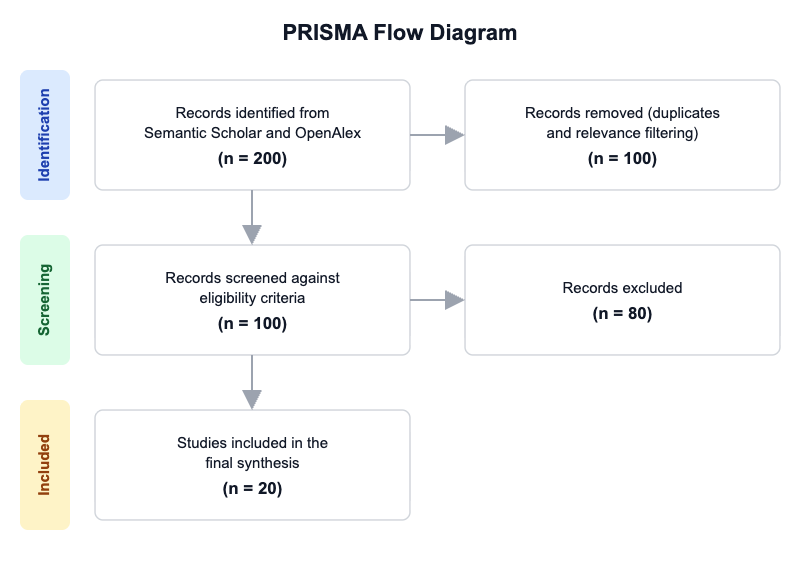
Initial database searching identified 200 records. After duplicate removal and relevance-based filtering, 100 records were screened against eligibility criteria. Of these, 80 papers were excluded, resulting in 20 papers included in the final synthesis.
PRISMA Flow Diagram
Eligibility criteria included:
- Human Study: Does the study involve human participants, human tissues, or human-derived clinical data rather than purely animal or in vitro models?
- Stem Cell Focus: Does the study specifically investigate stem cells, stem cell-derived products, or stem cell therapy as a primary focus?
- Therapeutic Intent: Does the study evaluate a therapeutic, regenerative, or disease-modifying application rather than basic cell biology only?
- Clinical or Translational: Does the study report clinical, translational, or preclinical therapeutic outcomes relevant to treatment development?
- Recent Evidence: Does the paper present recent research, an update, or an emerging breakthrough in stem cell therapy?
- Efficacy Data: Does the paper report treatment response, functional improvement, biomarker change, tissue repair, or other therapeutic efficacy outcomes?
- Safety Data: Does the paper report adverse events, tolerability, immunologic risk, tumor risk, or other safety findings?
All included studies met the stated eligibility criteria.
2.3 Data Extraction and Synthesis
Data extraction focused on the following variables:
- Therapy Type: Extract the stem cell therapy type or platform studied (e.g., mesenchymal, hematopoietic, pluripotent/iPSC, neural, CAR-engineered, exosomes/cell-derived products).
- Disease/Indication: Extract the target disease, injury, or clinical indication addressed by the study.
- Study Design: Extract the study design (e.g., clinical trial, cohort, preclinical animal, in vitro, systematic review, meta-analysis) and any key methodological notes.
- Key Breakthrough: Extract the main breakthrough, innovation, or novel finding claimed by the paper.
- Efficacy Outcome: Extract the primary efficacy results or therapeutic outcomes reported, including direction of effect and key endpoints when available.
- Safety Findings: Extract adverse events, safety signals, tolerability, or safety conclusions reported.
- Cell Source/Engineering: Extract the cell source, modification, differentiation state, or engineering approach used if described.
- Translation Stage: Extract whether the work is preclinical, early clinical, late clinical, or review/landscape synthesis.
Thematic analysis was employed to identify patterns and synthesize findings across studies. Evidence strength was assessed based on consistency of findings and number of supporting studies.
3. Results
3.1 Characteristics of Included Studies
| Study and Year | Study Type | Primary Platform | Primary Focus | Translation Stage | Key Clinical/Translational Signal |
|---|---|---|---|---|---|
| Yamanaka 2020 [1] | Review | hPSCs / ESCs / iPSCs | Platform-level challenges | Review / landscape synthesis | Tumorigenicity, immunogenicity, heterogeneity |
| Kirkeby et al. 2025 [2] | Clinical trial landscape update | hPSC-derived products | Trial landscape | Early clinical | 116 approved trials; >1,200 patients dosed |
| Han et al. 2025 [3] | Review | MSCs | Molecular mechanisms and clinical studies | Early to late clinical synthesis | Broad therapeutic range with generally good safety |
| Hoang et al. 2022 [4] | Review | hPSCs and MSCs | Clinical applications across diseases | Early to late clinical synthesis | Mixed efficacy; notable retinal and tissue-specific signals |
| Hussen et al. 2024 [5] | Review | Stem cells broadly | Breakthroughs and future prospects | Review / landscape synthesis | Precision medicine, gene editing, bioengineering |
| Fox et al. 2014 [6] | Review | PSCs | Replacement therapy challenges | Preclinical and translational | Gene modification, rejection, delivery barriers |
| Trounson & McDonald 2015 [7] | Clinical review | Multiple stem cell types | Clinical progress and approvals | Early clinical to established use | Few safety issues; some early patient benefits |
| Kimbrel & Lanza 2020 [8] | Review | Engineered stem cells | Next-generation engineering | Translational | Trojan-horse delivery; gene editing |
| Shan et al. 2024 [9] | Review | MSCs | Pharmacokinetics and translational challenges | Clinical translational synthesis | Biodistribution and fate remain unclear |
| Lu & Allickson 2025 [10] | Review | MSCs | Progress and regulatory status | Clinical landscape synthesis | First FDA-approved MSC therapy for pediatric GVHD |
| Kimbrel & Lanza 2015 [11] | Review / early clinical synthesis | PSCs / iPSCs | First therapies to clinic | Early clinical | Promising safety and possible efficacy in ocular disease |
| Avior et al. 2016 [12] | Review | PSCs / iPSCs | Disease modeling and drug discovery | Preclinical translational | Human disease modeling transformed |
| Wei et al. 2024 [13] | Systematic review | Embryonic, iPSC, adult stem cells | Transplantation for regenerative medicine | Review / landscape synthesis | Tissue-specific applications across regenerative settings |
| Lalu et al. 2012 [14] | Systematic review and meta-analysis | MSCs | Safety | Early clinical | Transient fever only clear safety signal |
| Wang et al. 2012 [15] | Review | MSCs | Clinical applications | Early to late clinical synthesis | GVHD and cardiovascular disease signals |
| Zhuang et al. 2021 [16] | Review | MSCs | Systemic safety and biodistribution | Preclinical / early clinical synthesis | Tumor initiation/promotion and tracking issues |
| Park et al. 2008 [17] | Descriptive preclinical study | iPSCs | Disease-specific iPSC generation | Preclinical | Patient-derived models for disease investigation |
| Blau & Daley 2019 [18] | Review | Multiple stem cell types | Broad clinical use and hurdles | Review / landscape synthesis | Applications and barriers to major clinical influence |
| Squillaro et al. 2016 [19] | Clinical trial review | MSCs | Clinical trials update | Early to late clinical synthesis | 493 trials; heterogeneity and standardization needs |
| Kabat et al. 2019 [20] | Trial trend analysis | MSCs | Dosing and administration | Early clinical | MED 70-190 million cells/patient/dose |
Across the corpus, the literature is dominated by review-level and trial-landscape evidence rather than primary comparative trials. MSCs and PSCs constitute the two main therapeutic platforms, with MSCs more closely linked to immunomodulation and broad regenerative indications, and PSCs more closely linked to cell replacement, disease modeling, and engineered delivery. The evidence base is clinically oriented but uneven in maturity: safety is better established than efficacy for MSCs, while PSC programs are earlier but increasingly organized around manufacturing control, tissue specificity, and first-in-human translation.
3.2 Thematic Findings
3.2.1 MSCs show the clearest safety signal, but efficacy remains inconsistent and highly context-dependent
A robust cross-study pattern is that MSC therapies are repeatedly described as safe or generally well tolerated, while therapeutic efficacy is less consistent. In the safety literature, the clearest recurring adverse event is transient fever, with no major signal for acute infusional toxicity, infection, organ failure, or malignancy in the meta-analytic evidence [14]. Broader clinical reviews similarly describe few safety issues across autologous and allogeneic transplants, although some reports note mild transient peri-injection effects and isolated treatment-related fever or thrombosis [7], [15]. However, the same body of evidence shows that efficacy is frequently modest or inconsistent. Some clinical applications, particularly graft-versus-host disease, show stronger signals of benefit and even complete responses in subsets of patients, whereas many cardiovascular and other chronic disease trials fail to meet primary endpoints [10], [15], [3].
This pattern suggests that MSCs may function more reliably as biologically active modulators than as uniform “replacement” products. Their reported actions—paracrine signaling through growth factors, cytokines, and extracellular vesicles, plus immune-cell interaction—provide a mechanistic rationale for why inflammatory indications appear more responsive than structurally complex degenerative diseases [3], [15]. Confidence: Strong for safety, Moderate for efficacy heterogeneity.
3.2.2 Dose, route, and biodistribution are major determinants of MSC performance
A second convergent theme is that MSC efficacy is not simply a property of cell identity; it depends on exposure characteristics and in vivo fate. Trial-level analysis indicates that intravenous administration is the dominant route, accounting for 43% of MSC trials, and that positive-outcome studies cluster around a minimal effective dose range of 70 to 190 million MSCs/patient/dose, with an even narrower apparent optimal range of 100 to 150 million cells/patient [20]. This dose sensitivity aligns with broader translational reviews arguing that current detection methods do not adequately capture MSC biodistribution, persistence, or ultimate fate in injured tissues [9], [16]. In other words, the therapeutic signal is being shaped by pharmacokinetic uncertainty: cells may be delivered safely, yet still fail to reach or persist at the biologically relevant site in sufficient numbers.
The literature also suggests that the common assumption that “more cells are better” is not supported. Several trials appear to lose efficacy at very high doses, implying a non-linear exposure-response relationship [20]. This matters because dose escalation has often been used primarily to establish safety rather than to optimize efficacy. Confidence: Moderate for a dose-response relationship, Moderate for the translational importance of biodistribution, because the evidence is consistent but based largely on trial aggregation and review synthesis rather than direct head-to-head comparisons.
3.2.3 MSC source matters, but standardization remains incomplete
MSC heterogeneity emerges as a major explanatory variable for variable clinical performance. Studies consistently note that MSCs derived from bone marrow, adipose tissue, umbilical cord, placenta, and other tissues differ in biological properties, replication capacity, and downstream therapeutic behavior [3], [4], [15]. Tissue origin is therefore not a neutral manufacturing detail but a potential determinant of indication matching. For example, one synthesis proposes that bone marrow–derived MSCs may be better suited to brain and spinal cord injury, adipose-derived MSCs to reproductive disorder and skin regeneration, and umbilical cord MSCs to pulmonary disease and acute respiratory distress syndrome [4]. At the same time, the literature repeatedly emphasizes that isolation and culture conditions remain heterogeneous, and that standardized characterization is still lacking [19], [16].
The overall direction is clear: source and manufacturing likely influence potency, but the field lacks harmonized comparators that would allow firm cross-study ranking of tissue origins. Thus, observed inconsistencies in efficacy may partly reflect product heterogeneity rather than failure of the MSC concept itself. Confidence: Moderate, because the biological rationale is strong but clinical standardization is incomplete.
3.2.4 PSC-based therapy is advancing clinically, especially in eye, central nervous system, and cancer applications, but the main barriers are still safety and control
PSC-based translation is increasingly visible in the clinic, yet it remains more constrained than MSC development. Trial-landscape evidence shows 116 approved hPSC trials testing 83 products, with more than 1,200 patients dosed and no generalizable safety concerns reported to date [2]. Early phase I/II ocular trials are particularly prominent, and available results are described as showing promising safety and possible efficacy [11]. First clinical evidence for hESC-derived retinal pigment epithelium in Stargardt’s macular dystrophy further illustrates that PSC-derived replacement can produce vision improvement without immediate major safety failure [4].
Yet the field’s central concerns have not disappeared. Tumorigenicity, immunogenicity, and heterogeneity remain the defining obstacles, especially for PSCs because of their intrinsic proliferative capacity and the complexity of differentiating them into stable, functional cell types [1], [6], [5]. The current pattern is therefore one of controlled progress rather than broad readiness: the platform is clinically active, but its success depends on precise manufacturing and indication selection. Confidence: Strong for the existence of clinical expansion, Moderate for early safety reassurance, and Strong for persistent mechanistic concerns.
3.2.5 Engineering and disease modeling are becoming central to the next phase of stem cell therapeutics
A final theme is that the field is moving beyond natural stem-cell transplantation toward engineered and functionally optimized products. Next-generation stem cells are being used as “Trojan horses” for drug and oncolytic virus delivery and are being engineered with angiogenic, neurotrophic, and anti-inflammatory molecules [8]. Gene therapy and gene editing are also being used to improve functionality, specificity, and responsiveness [8]. In parallel, iPSCs are enabling disease-specific modeling across genetic disorders, monogenic and complex disease, and early- and late-onset conditions, thereby strengthening target validation and drug screening [12], [17].
This mechanistic and engineering turn is important because it addresses two longstanding bottlenecks at once: insufficient cell function after transplantation and limited human disease models for preclinical testing. The literature implies that the most durable breakthroughs may come not from using stem cells in their native form, but from using them as configurable platforms for delivery, modeling, and precision replacement. Confidence: Strong for the strategic importance of engineering and disease modeling, Moderate for near-term therapeutic superiority, because clinical validation remains limited.
3.3 Summary of Evidence
| Theme | Key Finding | Population Applicability | Effect Direction | Confidence Level | Supporting Studies |
|---|---|---|---|---|---|
| MSC safety is consistently favorable | Transient fever was the clearest safety signal; meta-analysis found no association with acute infusional toxicity, organ complications, infection, death, or malignancy [14] | Patients receiving MSC therapy for diverse conditions; partially matches broader stem cell therapy question | Positive safety / mixed efficacy | Strong | Lalu et al. [14], Trounson & McDonald [7], Zhuang et al. [16] |
| MSC efficacy is variable and indication-dependent | Many trials failed efficacy endpoints, but graft-versus-host disease and some inflammatory settings showed benefit [10], [15] | Clinical MSC populations; partially matches the question population of stem cell therapy patients | Mixed | Moderate | Lu & Allickson [10], Wang et al. [15], Han et al. [3] |
| Dose and route matter for MSC outcomes | Intravenous delivery accounted for 43% of trials; positive IV trials showed MEDs of 70 to 190 million cells/patient/dose, with an apparent optimal 100 to 150 million range [20] | MSC trial populations; partially matches broad stem cell therapy population | Positive with non-linear optimization | Moderate | Kabat et al. [20], Shan et al. [9] |
| PSC clinical translation is accelerating | 116 approved hPSC trials testing 83 products; >1,200 patients dosed with no generalizable safety concerns [2] | Patients in hPSC-derived clinical trials; partially matches broad stem cell therapy population | Positive | Strong | Kirkeby et al. [2], Kimbrel & Lanza [11] |
| PSC barriers remain tumorigenicity, immunogenicity, and heterogeneity | These obstacles persist despite clinical progress [1], [6] | hPSC/PSC therapeutic development; partially matches question population | Mixed / limiting | Strong | Yamanaka [1], Fox et al. [6], Hussen et al. [5] |
| Engineering and disease modeling are reshaping the field | Engineered stem cells, gene editing, and iPSC disease models are expanding utility beyond transplantation [8], [12] | Human-derived stem cell platforms; partially matches question population | Positive | Strong | Kimbrel & Lanza [8], Avior et al. [12], Park et al. [17] |
4. Discussion
4.1 Principal Findings and Their Interpretation
The synthesis shows a field that is no longer defined solely by proof-of-concept ambition; instead, it is being reorganized around platform-specific strengths and limitations. The most confident conclusion is that MSC therapies have matured into a comparatively safe clinical modality, but one whose efficacy is highly contingent on dose, route, tissue source, and indication. This makes biological sense. MSCs act primarily through immunomodulation, trophic support, and paracrine signaling rather than durable engraftment, so outcomes should naturally vary with the inflammatory state of the target disease and with the likelihood that delivered cells actually reach the relevant tissue niche [3], [9]. The dose findings reinforce this interpretation: if cells are mediating a transient signaling effect, both underdosing and overdosing can plausibly reduce efficacy by limiting tissue contact or by altering cell survival and trafficking [20].
PSC therapies sit at a different point on the translational curve. Their promise lies in replacement of lost or dysfunctional cells, which explains why ocular disease, CNS applications, and selected oncology platforms dominate the clinical landscape [2], [11]. The field’s progress is most visible where tissue architecture is relatively accessible and cell identity can be tightly controlled, as in retinal replacement. Yet PSCs also carry inherent proliferative and differentiation risks that do not apply in the same way to MSCs, making safety control and manufacturing precision central to clinical viability [1], [6].
The broader conceptual advance is that stem cell success depends less on “stemness” as a generic attribute and more on matching biological mechanism to therapeutic task. That insight is especially important for distinguishing between a platform that modulates disease biology and one that reconstructs tissue. Confidence is highest for the safety advantage of MSCs and the translational acceleration of PSCs, and more tentative for claims of uniformly strong efficacy across disease categories.
4.2 Comparison with Existing Literature and Resolution of Contradictions
The literature is remarkably consistent in one respect: safety has advanced faster than efficacy. This is not merely a reporting artifact; it reflects the fact that many stem cell trials are designed with cautious dose escalation and surveillance, which favors detection of tolerability rather than optimization of therapeutic mechanism [7], [20]. The apparent success of MSC safety and the absence of generalizable hPSC safety signals in the newest clinical landscape therefore indicate meaningful progress, but not necessarily mature effectiveness [14], [2]. That distinction matters because a field can become safer without becoming uniformly more effective.
The main contradiction concerns MSC efficacy. Some reviews and clinical syntheses describe marked benefit, especially in graft-versus-host disease, while others emphasize marginal or inconsistent efficacy across cardiovascular and other chronic conditions [10], [15], [3]. The most plausible explanation is heterogeneity at multiple levels: disease biology, cell source, processing methods, dose, delivery route, and endpoint selection. In inflammatory disorders, MSC immunomodulation may align well with disease pathophysiology, whereas structural diseases such as cardiomyopathy may require durable tissue replacement that transient MSC signaling cannot provide. Variation in biodistribution and persistence likely compounds this issue, meaning some trials may not have achieved adequate tissue exposure even when safety was acceptable [9], [16].
A second tension lies in PSC translation. Earlier work emphasizes tumorigenicity and immune rejection, while newer trial overviews report reassuring safety in dosed patients [1], [6], [2]. This is not a direct contradiction so much as evidence of methodological maturation: tighter manufacturing, differentiation control, and indication selection appear to have reduced observable risk in clinical settings. Still, absence of generalizable safety concerns does not eliminate long-latency hazards, so continued surveillance remains essential.
4.3 Practical Implications
For clinicians, the clearest actionable message is that stem cell therapy should not be treated as a monolithic intervention. MSCs appear most plausible where immune modulation, trophic support, or anti-inflammatory repair are therapeutic goals, particularly in graft-versus-host disease and certain inflammatory or injury contexts [3], [10]. By contrast, PSC-derived products are more appropriate where the clinical objective is cell replacement, such as ocular or selected neurological indications [2], [11]. Practitioners should therefore match platform to disease mechanism rather than to general enthusiasm for regenerative medicine.
For public health and regulation, the findings argue for two parallel priorities. First, safety monitoring should remain intensive for both MSC and PSC products, with special attention to tumor risk, immune compatibility, and rare infusion reactions [1], [14]. Second, regulatory frameworks should move beyond simple approval by cell count or manufacturing standardization toward exposure-response validation, because the MSC literature suggests that efficacy may depend on a relatively narrow dose range [20]. This is especially relevant for intravenous MSC delivery, which is common but may be suboptimal when biodistribution is poorly characterized.
The evidence does not support a universal claim that stem cell therapies are ready for routine broad deployment. Rather, it supports selective adoption in indications where the biological mechanism, product design, and clinical endpoint are aligned, while highlighting the need for continued trial rigor before expansion to less responsive diseases. The strongest practical implication is that the next gains will come from precision in product selection, dosing, and patient stratification rather than from simply increasing the number of trials.
4.4 Strengths and Limitations
A major strength of this review is that it integrates mechanistic, clinical, translational, and trial-landscape evidence rather than isolating one layer of the stem cell literature. This makes it possible to compare platforms with different therapeutic logics, especially MSC immunomodulation versus PSC replacement and engineering. Another strength is the inclusion of recent clinical-trial updates and safety syntheses, which anchor the review in the current translational state of the field.
The included studies also have important limitations. Many are review articles, landscape syntheses, or descriptive trial analyses rather than head-to-head randomized comparisons. Several report efficacy qualitatively rather than with standardized quantitative effect sizes, limiting direct comparison across indications. Population and product heterogeneity are substantial, with variation in cell source, tissue origin, delivery route, and disease severity. Safety reporting is often more complete than efficacy reporting, and biodistribution is still poorly measured in many settings.
This review has its own limitations. It relies on the provided paper data and abstract-level extraction, which constrains detail where primary outcomes are not reported. No formal risk-of-bias assessment is available from the supplied data. In addition, because the evidence base spans broad translational contexts, some findings necessarily apply to proxy populations rather than to a single unified clinical group.
5. Gaps and Future Directions
The most important gap is the lack of mechanism-matched, indication-specific trials that directly compare stem cell platforms under standardized conditions. For MSCs, future studies need harmonized dosing, route, and biodistribution assessment so that efficacy can be linked to actual tissue exposure rather than administered cell number alone [20], [9]. For PSC-derived therapies, longer follow-up and broader safety surveillance are needed to resolve residual concern around tumorigenicity and immune rejection despite encouraging early clinical signals [1], [2].
Another major gap is cell-source standardization. The literature repeatedly implies that bone marrow, adipose tissue, umbilical cord, and other sources are not interchangeable, yet direct comparative trials remain limited [4], [19]. Future work should explicitly stratify by tissue origin, manufacturing process, and potency assay. Underrepresented contexts include head-to-head studies in non-ocular PSC indications and rigorously designed MSC trials in diseases where efficacy has been inconsistent, such as cardiovascular and neurodegenerative disorders. The field also needs better mechanistic readouts—particularly imaging, pharmacokinetic tracing, and validated biomarkers—to determine whether apparent failures reflect biology, delivery, or trial design.
References
- Yamanaka, S. (2020). Pluripotent stem cell-based cell therapy—Promise and challenges. Cell Stem Cell, 27(4), 523–531. https://doi.org/10.1016/j.stem.2020.09.014
- Kirkeby, A., Main, H., & Carpenter, M. (2025). Pluripotent stem-cell-derived therapies in clinical trial: A 2025 update. Cell Stem Cell, 32(1), 10–37. https://doi.org/10.1016/j.stem.2024.12.005
- Han, X., Liao, R., Li, X., Zhang, C., Huo, S., Qin, L., Xiong, Y., He, T., Xiao, G., & Zhang, T. (2025). Mesenchymal stem cells in treating human diseases: Molecular mechanisms and clinical studies. Signal Transduction and Targeted Therapy, 10, 262. https://doi.org/10.1038/s41392-025-02313-9
- Hoang, D. M., Pham, P. T., Bach, T. Q., Ngo, A. T. L., Nguyen, Q. T., Phan, T. T. K., Nguyen, G. H., Le, P. T. T., Hoang, V. T., Forsyth, N. R., Heke, M., & Nguyen, L. T. (2022). Stem cell-based therapy for human diseases. Signal Transduction and Targeted Therapy, 7(1), 272. https://doi.org/10.1038/s41392-022-01134-4
- Hussen, B. M., Taheri, M., Yashooa, R. K., Abdullah, G. H., Abdullah, S. R., Kheder, R. K., & Mustafa, S. A. (2024). Revolutionizing medicine: Recent developments and future prospects in stem-cell therapy. International Journal of Surgery, 110(12), 8002–8024. https://doi.org/10.1097/JS9.0000000000002109
- Fox, I. J., Daley, G. Q., Goldman, S. A., Huard, J., Kamp, T. J., & Trucco, M. (2014). Use of differentiated pluripotent stem cells in replacement therapy for treating disease. Science, 345(6199), 1247391. https://doi.org/10.1126/science.1247391
- Trounson, A., & McDonald, C. (2015). Stem cell therapies in clinical trials: Progress and challenges. Cell Stem Cell, 17(1), 11–22. https://doi.org/10.1016/j.stem.2015.06.007
- Kimbrel, E. A., & Lanza, R. (2020). Next-generation stem cells—Ushering in a new era of cell-based therapies. Nature Reviews Drug Discovery, 19(7), 463–479. https://doi.org/10.1038/s41573-020-0064-x
- Shan, Y., Zhang, M., Tao, E., Wang, J., Wei, N., Lu, Y., Liu, Q., Hao, K., Zhou, F., & Wang, G. (2024). Pharmacokinetic characteristics of mesenchymal stem cells in translational challenges. Signal Transduction and Targeted Therapy, 9(1), 242. https://doi.org/10.1038/s41392-024-01936-8
- Lu, W., & Allickson, J. (2025). Mesenchymal stromal cell therapy: Progress to date and future outlook. Molecular Therapy, 33(6), 2679–2688. https://doi.org/10.1016/j.ymthe.2025.02.003
- Kimbrel, E. A., & Lanza, R. (2015). Current status of pluripotent stem cells: Moving the first therapies to the clinic. Nature Reviews Drug Discovery, 14(10), 681–692. https://doi.org/10.1038/nrd4738
- Avior, Y., Sagi, I., & Benvenisty, N. (2016). Pluripotent stem cells in disease modelling and drug discovery. Nature Reviews Molecular Cell Biology, 17(3), 170–182. https://doi.org/10.1038/nrm.2015.27
- Wei, L., Yan, W., Shah, W., Zhang, Z., Wang, M., Liu, B., Xue, Z., Cao, Y., Hou, X., Zhang, K., Yan, B., & Wang, X. (2024). Advancements and challenges in stem cell transplantation for regenerative medicine. Heliyon, 10(16), e35836. https://doi.org/10.1016/j.heliyon.2024.e35836
- Lalu, M. M., McIntyre, L., Pugliese, C., Fergusson, D., Winston, B. W., Marshall, J. C., Granton, J., Stewart, D. J., & Canadian Critical Care Trials Group. (2012). Safety of cell therapy with mesenchymal stromal cells (SafeCell): A systematic review and meta-analysis of clinical trials. PLoS ONE, 7(10), e47559. https://doi.org/10.1371/journal.pone.0047559
- Wang, S., Qu, X., & Zhao, R. C. (2012). Clinical applications of mesenchymal stem cells. Journal of Hematology & Oncology, 5, 19. https://doi.org/10.1186/1756-8722-5-19
- Zhuang, W.-Z., Lin, Y.-H., Su, L.-J., Wu, M.-S., Jeng, H.-Y., Chang, H.-C., Huang, Y.-H., & Ling, T.-Y. (2021). Mesenchymal stem/stromal cell-based therapy: Mechanism, systemic safety and biodistribution for precision clinical applications. Journal of Biomedical Science, 28(1), 28. https://doi.org/10.1186/s12929-021-00725-7
- Park, I.-H., Arora, N., Huo, H., Maherali, N., Ahfeldt, T., Shimamura, A., Lensch, M. W., Cowan, C., Hochedlinger, K., & Daley, G. Q. (2008). Disease-specific induced pluripotent stem cells. Cell, 134(5), 877–886. https://doi.org/10.1016/j.cell.2008.07.041
- Blau, H. M., & Daley, G. Q. (2019). Stem cells in the treatment of disease. New England Journal of Medicine, 380(18), 1748–1760. https://doi.org/10.1056/NEJMra1716145
- Squillaro, T., Peluso, G., & Galderisi, U. (2016). Clinical trials with mesenchymal stem cells: An update. Cell Transplantation, 25(5), 829–848. https://doi.org/10.3727/096368915X689622
- Kabat, M., Bobkov, I., Kumar, S., & Grumet, M. (2019). Trends in mesenchymal stem cell clinical trials 2004–2018: Is efficacy optimal in a narrow dose range? Stem Cells Translational Medicine, 9(1), 17–27. https://doi.org/10.1002/sctm.19-0202