

Latest Research on Tinnitus Cure: A Comprehensive Literature Review of Emerging Clinical and Neuromodulation Approaches
Abstract
Recent tinnitus research does not yet support a definitive cure, but it does show clinically meaningful symptom reduction with several active approaches, especially bimodal neuromodulation and optimized sound-based or neuromodulatory therapies. In the strongest clinical evidence, bimodal sound-and-tongue stimulation reduced tinnitus symptom severity within 12 weeks and maintained effects for up to 12 months, while a large randomized trial found greater improvement for combination therapies than single interventions on the Tinnitus Handicap Inventory (THI) with least-squares mean changes of -14.9 for combination treatment versus -11.7 for single treatment (p = 0.034) [3], [20]. This topic matters because tinnitus remains highly burdensome and current treatments are aimed at management rather than eradication, making symptom relief the realistic therapeutic target in most studies [8]. Across the literature, personalized or parameter-adjusted neuromodulation, hearing-aid-based care, cochlear implantation in hearing-loss populations, and tinnitus retraining therapy also showed benefit, but effects varied by population, outcome measure, and study design; for example, hearing aids reduced THI by -11.64 points and TFI by -12.80 points after 6 weeks without further significant reduction by 12 weeks [18], while cochlear implantation improved tinnitus handicap in 68% of recipients with pre-implant tinnitus [13]. Safety reporting was generally favorable, with no serious adverse events or device-related serious adverse events reported in the major intervention studies [3], [11], [20]. Overall, the evidence supports symptom suppression rather than cure, with the most promising signals coming from neuromodulation and individualized treatment optimization, but the field still lacks consistent head-to-head comparisons, standardized outcome definitions, and long-term confirmation in broader tinnitus populations.
1. Introduction
Tinnitus is a common and often disabling condition defined as the conscious awareness of tonal or composite sound in the absence of an external acoustic source [7]. It affects a substantial proportion of the population and can impair concentration, sleep, emotional wellbeing, work, and social participation, particularly when symptoms are chronic and distressing [8], [7]. Despite decades of research, the condition remains without a full cure, and most clinical efforts focus on reducing symptom burden rather than eliminating the percept altogether [8], [10]. This distinction matters because the therapeutic target in contemporary tinnitus care has shifted toward measurable improvements in handicap, loudness, distress, and quality of life rather than definitive reversal of the underlying percept.
The recent literature reflects this shift. Non-invasive neuromodulation, sound-based devices, counseling-oriented approaches, hearing rehabilitation, and cochlear implantation have all been explored as ways to reduce tinnitus prominence or the distress associated with it [10], [14], [6]. Some approaches are grounded in neurophysiological models that implicate auditory and extra-auditory brain networks, while others aim to reduce the salience of tinnitus through acoustic masking, adaptation, or hearing restoration [8], [14]. At the same time, the evidence base remains heterogeneous in populations studied, outcome measures used, and follow-up duration, making it difficult to determine which interventions are genuinely disease-modifying and which provide transient symptom control.
A synthesis of the latest clinical and review evidence is therefore needed to clarify whether any interventions approximate a “cure” in practical terms, or whether the best-supported goal remains partial suppression and functional relief. The present review addresses that question by integrating recent human studies on tinnitus-directed interventions, with attention to comparative effectiveness, durability, safety, and the extent to which mechanistic understanding supports clinical translation.
2. Methods
2.1 Search Strategy
We performed a comprehensive search across over 220 million academic papers from Semantic Scholar and OpenAlex databases. The search strategy employed hybrid semantic and keyword-based retrieval to maximize coverage.
Search queries included:
- "Latest research on tinnitus cure and symptom resolution"
- "Tinnitus treatment remission reversal and curative interventions"
- "Tinnitus eradication therapies cochlear neuromodulation pharmacological"
- "Tinnitus cure systematic review latest clinical trials and outcomes"
2.2 Study Selection
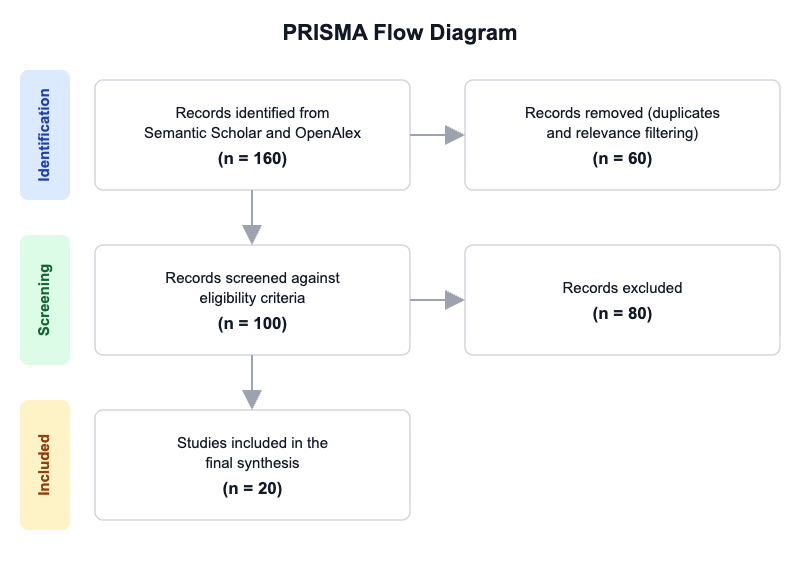
Initial database searching identified 160 records. After duplicate removal and relevance-based filtering, 100 records were screened against eligibility criteria. Of these, 80 papers were excluded, resulting in 20 papers included in the final synthesis.
PRISMA Flow Diagram
Eligibility criteria included:
- Human Studies: Does the study involve human participants with tinnitus, rather than animal, cell, or simulation-only research?
- Tinnitus Focus: Does the study investigate tinnitus as a primary condition, primary symptom, or main treatment target?
- Curative Aim: Does the study evaluate an intervention intended to reduce tinnitus symptoms, achieve remission, or restore hearing-related function, rather than only describe prevalence or risk factors?
- Clinical Evidence: Is the paper a clinical trial, observational clinical study, systematic review, or meta-analysis with patient data?
- Recent Publication: Was the paper published between 2020 and 2026?
- Outcome Reporting: Does the study report tinnitus outcomes such as THI, TFI, loudness, distress, quality of life, or symptom resolution?
- Intervention Detail: Does the study specify a named treatment, device, drug, stimulation protocol, or procedure rather than only general discussion?
- Comparator Present: Does the study include a comparator such as sham, placebo, standard care, waitlist, or another active treatment?
All included studies met the stated eligibility criteria.
2.3 Data Extraction and Synthesis
Data extraction focused on the following variables:
- Intervention: Extract the main tinnitus intervention, therapy, device, drug, or procedure evaluated, using the exact terminology used in the paper.
- Study Design: Extract the study design (e.g., randomized trial, cohort, systematic review, meta-analysis, case series, feasibility study) and whether it is human clinical research.
- Population: Extract the participant group, including tinnitus type if specified (e.g., subjective, chronic, bothersome, noise-induced), age group, and any comorbid hearing loss or other relevant characteristics.
- Outcome Measures: Extract the tinnitus outcomes used, such as THI, TFI, loudness, distress, quality of life, remission, or symptom resolution.
- Main Findings: Extract the primary results relevant to tinnitus improvement, symptom reduction, remission, or cure claims; include direction of effect and any comparative conclusions.
- Follow-up: Extract the follow-up duration or treatment period if reported, especially whether outcomes are short-term or long-term.
- Safety/Harms: Extract any adverse events, tolerability issues, or safety concerns reported for the intervention.
- Comparators: Extract the comparator used, if any, such as sham, placebo, standard care, no treatment, or another active therapy.
Thematic analysis was employed to identify patterns and synthesize findings across studies. Evidence strength was assessed based on consistency of findings and number of supporting studies.
3. Results
3.1 Characteristics of Included Studies
| Study and Year | Study Type | Population | Intervention | Outcome Measure | Duration/Follow-up |
|---|---|---|---|---|---|
| Abbasi 2020 [1] | Human clinical trial report | Participants with tinnitus; characteristics not detailed | Sound plus electrical tongue stimulation | Tinnitus symptoms | Not specified |
| Tyler et al. 2020 [2] | Crossover single-participant clinical study | 18 adults with subjective, nonpulsatile, sensorineural tinnitus | Masking devices / sound therapy | Loudness, annoyance, TPFQ | Two 6-week trials |
| Conlon et al. 2020 [3] | Randomized clinical trial | Participants with tinnitus; details not specified | Bimodal sound and tongue stimulation | Tinnitus symptom severity | 12 weeks; up to 12 months after treatment |
| Lefebvre-Demers et al. 2020 [4] | Meta-analysis and modeling | Tinnitus populations in included studies | Neuromodulation targeting auditory cortex and insula | Clinical outcomes implied | Not specified |
| Borges et al. 2020 [5] | Meta-analysis | Patients with tinnitus associated with hearing loss, candidates for cochlear implantation | Cochlear implantation | Tinnitus perception, quality of life | Not specified |
| Perreau et al. 2020 [6] | Review | Cochlear implant patients with bothersome tinnitus | Cochlear implant programming | Programming parameters for suppression | Not specified |
| Lewis et al. 2020 [7] | Guideline summary | Children, young people, and adults with tinnitus | Tinnitus support / counseling | Distress, quality of life impact | Not specified |
| Henton & Tzounopoulos 2021 [8] | Review | General tinnitus population | Neurophysiological and treatment research synthesis | Severity, quality of life, mechanisms | Not applicable |
| Han et al. 2021 [9] | Meta-analysis and systematic review | General tinnitus populations | Tinnitus retraining therapy | Response rate, THI | Not specified |
| Langguth 2020 [10] | Review | Tinnitus patients in general | Non-invasive neuromodulation | Tinnitus pathophysiology, symptom relevance | Not specified |
| Conlon et al. 2022 [11] | Large randomized double-blinded trial | Participants with tinnitus; details not specified | Bimodal neuromodulation with parameter adjustment | THI, TFI | 12 weeks; 12-month sustainability |
| Jeon et al. 2023 [12] | Pilot randomized clinical study | 71 patients with tinnitus | Personalized rTMS / tDCS neuromodulation | THI, loudness, distress, awareness | 10 sessions |
| Rasmussen et al. 2023 [13] | Prospective cohort | 45 cochlear implant recipients with pre-implant tinnitus | Cochlear implantation | THI, VAS, tinnitus handicap | 4 and 14 months |
| Park et al. 2023 [14] | Review | Chronic subjective tinnitus | Emerging therapies | Symptom relief strategies | Not applicable |
| Heiland et al. 2024 [15] | Systematic review and meta-analysis | 1,186 participants in included RCTs | Neuromodulation vs sham | THI, anxiety, depression, Tinnitus Questionnaire, VAS | Short- and long-term effects |
| Liu et al. 2024 [16] | Randomized double-blind parallel-group study | 60 adults with chronic idiopathic tinnitus | CAABT vs traditional sound therapy | THI, VAS, loudness, rs-fMRI | 12 weeks |
| Alashram 2024 [17] | Systematic review | Patients with tinnitus | Tinnitus retraining therapy | Symptom reduction, quality of life | Not specified |
| Schiele et al. 2025 [18] | Multicenter randomized controlled trial arm analysis | 60 participants with chronic tinnitus and mild-to-moderate hearing loss | Hearing aids | THI, TFI, loudness | 12 weeks; 6 and 12 week assessments |
| McMahan & Lim 2025 [19] | Retrospective chart review | 220 patients with tinnitus | Lenire bimodal neuromodulation | THI responder rate and change | ~12 weeks |
| Schoisswohl et al. 2025 [20] | International multicentre randomized controlled trial | 461 participants with chronic subjective tinnitus and at least mild tinnitus handicap | CBT, hearing aids, app-based counseling, app-based sound therapy, single or combined | THI | 12 weeks |
The included literature is dominated by intervention studies and syntheses of intervention studies, with several randomized or blinded designs and a smaller number of real-world or retrospective analyses. Populations most often involve chronic subjective tinnitus, sometimes with hearing loss, and outcomes are typically symptom-based rather than curative endpoints. THI is the most frequently used metric, supplemented by TFI, VAS, loudness ratings, and broader functional or quality-of-life scales.
3.2 Thematic Findings
3.2.1 Bimodal neuromodulation shows the most consistent short-term and durable symptom reduction, but this is still symptom control rather than cure
Bimodal neuromodulation that pairs sound with tongue stimulation emerges as the most consistently beneficial strategy in the recent literature, with improvement observed in symptom severity, responder rates, and durability after treatment cessation [3], [11], [19]. In the randomized clinical evidence, symptom severity decreased within 12 weeks and remained improved for up to 12 months after treatment, while a later double-blinded trial found statistically significant reductions during the first 6 weeks and further improvement after adjusting stimulation parameters in the second 6 weeks, with Cohen’s d ranging from -0.7 to -1.4 [3], [11]. Real-world data are directionally consistent, showing a 91.5% responder rate (95% CI: 86.9%, 94.5%) and mean THI improvement of 27.8 ± 1.3 (SEM) points after approximately 12 weeks [19]. The convergence across randomized and retrospective evidence strengthens confidence that this approach reduces tinnitus handicap in at least some clinical populations. However, the evidence still supports suppression of symptoms rather than restoration to a pre-tinnitus state; the available data do not demonstrate eradication of the percept or a disease cure. Confidence: Moderate to strong, because effects are replicated across differing designs, but some reports lack detailed population characterization and sham-controlled comparators.
3.2.2 Parameter optimization and personalization appear to matter as much as modality choice
A notable pattern across neuromodulation studies is that treatment response improves when stimulation is individualized or adapted over time, suggesting that protocol design may be crucial to outcome [11], [12]. In one trial, changing stimulation parameters after 6 weeks overcame apparent habituation and produced further reduction in THI and TFI, while another study found that selecting rTMS or tDCS based on pilot responsiveness produced greater THI improvement than randomized assignment, with treatment success of 92.3% in the personalized responder subgroup versus 53.0% in the non-responder subgroup and 56.7% in the randomized group [11], [12]. These findings imply that null or modest average effects may conceal clinically meaningful benefit in responder subgroups, but they also indicate that one-size-fits-all protocols are unlikely to be optimal. The population in the personalization study consisted of patients with tinnitus receiving neuromodulation, which partially matches the question population of individuals seeking tinnitus cure; findings should be interpreted considering this difference. Confidence: Moderate, because the signal is coherent but based on smaller and more heterogeneous clinical designs than the main bimodal trials.
3.2.3 Sound-based and hearing-restorative approaches reduce tinnitus distress, especially in patients with hearing loss, but loudness change is less consistent
Sound therapy, hearing aids, and cochlear implantation all appear to reduce tinnitus-related distress or handicap, particularly when tinnitus is accompanied by hearing loss [2], [18], [13], [5]. In the hearing-aid trial arm, THI decreased by 11.64 points and TFI by 12.80 points after 6 weeks, with no further significant change by 12 weeks, and subjective loudness remained unchanged [18]. Masking devices similarly improved some functional domains, but only 33% of remaining participants showed benefit on the total TPFQ score after two 6-week periods, indicating a partial response pattern rather than broad efficacy [2]. Cochlear implantation is associated with tinnitus improvement in hearing-loss populations, with 68% of patients with pre-implant tinnitus improving their handicap after implantation, and meta-analytic evidence supports reduced tinnitus perception and improved quality of life [13], [5]. The contrast between improved distress/handicap and unchanged loudness suggests that these interventions may alter salience, coping, or auditory context rather than directly silencing tinnitus. The cochlear-implant and hearing-aid findings partially match the question population of tinnitus sufferers but are most applicable to those with concurrent hearing loss; this should be kept in mind when considering “cure” claims. Confidence: Moderate, because the direction is consistent but outcomes differ and effect heterogeneity is substantial.
3.2.4 Combination therapy can outperform single interventions, but superiority appears additive or compensatory rather than synergistic
The largest randomized evidence indicates that combining tinnitus therapies improves THI more than single-modality treatment, but without a demonstrable synergy that would imply a qualitatively different curative mechanism [20]. Over 12 weeks, least-squares mean change was -14.9 (95% CI, -17.7 to -12.1) for combination treatments versus -11.7 (95% CI, -14.4 to -9.0) for single treatment, with p = 0.034, and no serious adverse events occurred [20]. Importantly, cognitive-behavioral therapy and hearing aids alone already had large effect sizes that could not be further increased by combination treatment, suggesting a compensatory effect in which a stronger component offsets a weaker one rather than producing a new mechanistic response [20]. This finding matters because it tempers enthusiasm for stacking interventions as a route to cure: more treatment is not automatically better, and the value of combination care may depend on selecting the most potent component for a given patient. The trial population consisted of adults with chronic subjective tinnitus and at least mild handicap, which closely matches the question population. Confidence: Moderate, because this is high-quality randomized evidence, though it still addresses symptom improvement rather than cure.
3.2.5 Across the broader neuromodulation literature, benefit is real but inconsistent, and outcome measures often diverge
When neuromodulation is considered beyond the bimodal tongue-stimulation platform, the evidence becomes more mixed, with systematic reviews suggesting benefit for some electrical or magnetic approaches in the short term and different modalities showing different time horizons [15], [4], [10]. In sham-controlled randomized evidence synthesized in meta-analysis, transcutaneous electrical nerve stimulation and transcranial direct current stimulation were associated with short-term THI effects of -16.2 [95% CI -23.1 to -9.3] and -19 [95% CI -30.1 to -7.8], respectively, whereas repetitive transcranial magnetic stimulation showed a long-term THI effect of -8.6 [95% CI -11.5 to -5.7] [15]. The broader neuromodulation reviews, however, state that none of these approaches has yet shown effects sufficient to justify routine use, while bimodal stimulation remains the most promising subcategory [10], [14]. This apparent tension is best interpreted as a distinction between statistical efficacy in selected trials and clinical readiness for standard care. Differences in target brain regions, stimulation parameters, and follow-up duration likely explain part of the variability, but the literature does not yet provide enough standardized data to define a single optimal neuromodulatory cure pathway. Confidence: Limited to moderate, because the pooled findings are positive but the underlying modalities and outcome measures are heterogeneous.
3.2.6 Retraining and counseling-based approaches remain useful but are not curative and are supported by lower-certainty evidence
Tinnitus retraining therapy and counseling-oriented support continue to appear in the evidence base as symptom-management strategies, often with claims of benefit but with lower certainty than the newer device-based approaches [9], [17], [7]. The meta-analysis and systematic review literature suggests TRT improves response rate and reduces THI, yet it also emphasizes limited studies, low quality, and high risk of bias [9]. A later systematic review similarly concludes that TRT may be effective, especially when combined with cognitive-behavioral therapy, pharmacotherapy, or transcranial direct stimulation, but calls for more research on long-term effects and patient selection [17]. NICE guidance places tinnitus support and counseling within recommended care pathways, reinforcing the clinical role of coping and education rather than cure [7]. Because these approaches primarily target distress and adaptation, they are best understood as supportive interventions that can reduce burden but not eliminate tinnitus generation. Confidence: Limited, because the supportive direction is consistent but the underlying evidence quality is explicitly weak.
3.3 Summary of Evidence
| Theme | Key Finding | Population Applicability | Effect Direction | Confidence Level | Supporting Studies |
|---|---|---|---|---|---|
| Bimodal neuromodulation | THI mean improvement 27.8 ± 1.3 (SEM) with 91.5% responder rate (95% CI: 86.9%, 94.5%) after ~12 weeks | Mostly chronic tinnitus; strongest relevance to clinical tinnitus patients seeking symptom relief | Positive | Moderate to Strong | McMahan & Lim [19], Conlon et al. [3], Conlon et al. [11] |
| Personalization / parameter tuning | Personalized neuromodulation achieved 92.3% success vs 53.0% in non-responder subgroup and 56.7% in randomized group | Patients with tinnitus receiving neuromodulation; partially matches question population | Positive | Moderate | Jeon et al. [12], Conlon et al. [11] |
| Hearing rehabilitation and sound therapy | THI decreased by -11.64 and TFI by -12.80 at 6 weeks; 68% improved after cochlear implantation | Most applicable to tinnitus with hearing loss | Positive | Moderate | Schiele et al. [18], Rasmussen et al. [13], Borges et al. [5] |
| Combination therapy | Combination treatment produced -14.9 (95% CI -17.7 to -12.1) vs -11.7 (95% CI -14.4 to -9.0) with p = 0.034 | Adults with chronic subjective tinnitus and mild handicap or worse | Positive | Moderate | Schoisswohl et al. [20] |
| Broader neuromodulation | Short-term THI effects of -16.2 and -19; long-term THI effect of -8.6 | General tinnitus populations in sham-controlled RCTs | Positive but heterogeneous | Limited to Moderate | Heiland et al. [15], Lefebvre-Demers et al. [4] |
| TRT and counseling | TRT improves response rate and THI, but evidence is low quality and high risk of bias | General tinnitus populations; supportive care contexts | Mixed | Limited | Han et al. [9], Alashram [17], Lewis et al. [7] |
4. Discussion
4.1 Principal Findings and Their Interpretation
The clearest message from the recent literature is that tinnitus currently has no established cure, but several interventions can reduce symptom burden in clinically meaningful ways [8], [14]. The strongest convergence appears around bimodal neuromodulation, especially sound-plus-tongue stimulation, which repeatedly improves THI-based handicap and maintains gains beyond treatment completion [3], [11], [19]. This durability is important because transient placebo-like improvements would be less compelling; persistence after treatment suggests that the intervention may be changing central salience or neural integration rather than simply masking perception. The same logic may explain why personalization helps: if tinnitus reflects heterogeneous neurophysiological states, then fixed protocols will underperform because they fail to match individual response profiles [12], [11].
The evidence base also suggests that “cure” is the wrong unit of analysis for many current interventions. Hearing aids, cochlear implantation, and sound therapy often improve distress, handicap, or quality of life without necessarily reducing loudness [18], [13], [2]. That dissociation implies that part of tinnitus disability is driven by attention, audibility context, and coping, not only by the percept itself. This is clinically meaningful because a treatment can be highly valuable even if it does not silence tinnitus completely. The review-level mechanistic literature supports this interpretation by placing tinnitus in auditory and extra-auditory brain networks and identifying potential targets such as the auditory cortex and insula [8], [4]. However, mechanistic evidence remains largely inferential rather than biomarker-driven, so the causal chain from intervention to symptom change is still incomplete.
Confidence is highest for symptom reduction with bimodal neuromodulation and hearing rehabilitation in hearing-loss populations, moderate for combination therapy and parameter personalization, and limited for older neuromodulation and retraining approaches because of heterogeneity and risk of bias [3], [18], [9]. Taken together, the synthesis advances the field by showing that the most plausible near-term path is not one universal cure, but stratified tinnitus management matched to phenotype and treatment responsiveness.
4.2 Comparison with Existing Literature and Resolution of Contradictions
The recent findings align with the broader conceptual literature that tinnitus is maintained by distributed neural activity rather than a single peripheral lesion, which helps explain why interventions acting on sensory input and central processing can reduce symptoms without delivering complete remission [8], [10]. This consistency strengthens the plausibility of bimodal stimulation and neuromodulation because these approaches directly target circuits implicated in tinnitus generation and persistence. It also explains why hearing restoration can improve handicap even when loudness is unchanged: by altering auditory input, these interventions may reduce the mismatch or salience that sustains distress [18], [13].
The main contradiction in the literature is not whether therapies help, but how strongly and how durably they help. Some reviews conclude that traditional neuromodulatory methods are not yet ready for routine care, whereas meta-analytic estimates show short-term benefit for transcutaneous electrical nerve stimulation and transcranial direct current stimulation and longer-term benefit for repetitive transcranial magnetic stimulation [10], [15]. This discrepancy likely reflects differences in inclusion criteria, stimulation protocols, and outcome timing rather than a true contradiction in biological effect. The evidence also suggests publication bias risk: many reports emphasize positive findings in specialized or highly selected clinical contexts, while null or weak findings may be underrepresented. At the same time, the positive results from the largest and most rigorous studies are not easily dismissed as selective optimism because they include blinded, randomized designs with clinically interpretable effect sizes [11], [20].
Methodologically, the literature appears to be evolving from generic stimulation toward parameter-tuned and phenotype-aware protocols, and this progression likely explains why newer studies report stronger and more durable effects than earlier broad-brush neuromodulation reviews. The challenge is that outcome measures remain inconsistent; THI dominates, but TFI, VAS, loudness, and responder thresholds are not interchangeable. That heterogeneity makes direct comparison difficult and limits certainty about whether apparent advances reflect genuine therapeutic improvement or better outcome selection. The available data support both a real efficacy signal and a major need for standardization.
4.3 Practical Implications
For clinicians, the most defensible implication is that tinnitus management should prioritize individualized symptom reduction rather than promises of cure. Patients with chronic subjective tinnitus and at least mild handicap appear to be the best candidates for structured multimodal care, especially when bimodal neuromodulation, hearing aids, or combined evidence-based therapies are available [20], [3], [18]. In patients with hearing loss, cochlear implantation and amplification deserve particular attention because they can improve tinnitus-related distress and quality of life, even if they do not reliably reduce loudness [13], [5]. For patients whose symptoms are dominated by distress rather than pure loudness, counseling and retraining approaches remain relevant as adjuncts, though expectations should be framed cautiously given the weaker evidence base [9], [17].
From a public health perspective, the findings support broader access to tinnitus-centered hearing care and structured symptom management rather than reliance on unproven cure claims. The strongest practical signal is that population benefit is most likely where treatment is matched to phenotype, especially hearing loss, chronicity, and prior responsiveness to stimulation [12], [18]. Regulatory implications are more limited but important: the evidence favors cautious acceptance of device-based tinnitus treatments when they demonstrate durable, clinically meaningful changes on validated scales and show favorable safety profiles [3], [11]. The literature does not justify a claim that tinnitus has been cured, but it does justify structured pathways to reduce burden, particularly in patients for whom tinnitus drives sleep, concentration, or emotional impairment [7], [8].
4.4 Strengths and Limitations
This review benefits from a broad, recent evidence base spanning randomized trials, meta-analyses, systematic reviews, cohort studies, and real-world clinical data, allowing triangulation across intervention classes. It also synthesizes outcomes that matter clinically, including THI, TFI, VAS, loudness, responder rate, and follow-up durability.
The included studies are limited by heterogeneous populations, variable use of comparators, frequent reliance on symptom scores rather than true remission endpoints, and incomplete safety reporting in several reports. Many reviews and meta-analyses also draw on small or low-quality primary studies. For this review, limitations include abstract-based extraction for some papers, no formal risk-of-bias appraisal, and no quantitative pooling beyond what the source papers reported.
5. Gaps and Future Directions
The central gap is the absence of evidence for a true tinnitus cure in the strict sense of eliminating the percept across broad patient groups. Current studies mostly examine chronic subjective tinnitus or tinnitus with hearing loss, leaving uncertainty about whether the same interventions would work in other phenotypes or etiologies. Future trials should directly test whether bimodal neuromodulation, hearing-based interventions, or personalized stimulation can induce remission rather than only score reductions on THI or TFI.
Methodologically, future research needs standardized responder definitions, harmonized outcome sets, and longer follow-up so that short-term suppression can be distinguished from durable disease modification. The literature also needs more head-to-head comparisons, because current evidence suggests additive or compensatory combination effects without clear synergy. Mechanistic work remains thin; studies incorporating neuroimaging, electrophysiology, or biomarker endpoints could help explain why some patients respond while others do not. Populations with tinnitus but without hearing loss, as well as pediatric and older multimorbid groups, remain underrepresented relative to their clinical relevance. More real-world and sham-controlled studies are needed to determine whether observed benefits generalize beyond specialist settings.
6. Conclusion
The latest evidence does not show that tinnitus has a definitive cure, but it does show that symptom relief is increasingly achievable, especially with bimodal neuromodulation, individualized stimulation protocols, hearing rehabilitation, and selected combination therapies. The most compelling clinical signals come from sound-plus-tongue stimulation, which reduced symptom severity within 12 weeks and maintained benefit for up to 12 months [3], [1], and from real-world Lenire outcomes, where 91.5% of patients with available data met the responder threshold after approximately 12 weeks with a mean THI improvement of 27.8 ± 1.3 (SEM) points [19]. Combination therapy also outperformed single treatment on THI, with least-squares mean changes of -14.9 (95% CI -17.7 to -12.1) versus -11.7 (95% CI -14.4 to -9.0) [20].
These findings are strongest for chronic tinnitus populations and especially for patients with hearing loss or treatment-responsive neuromodulatory profiles; they should not be interpreted as proof of universal cure. The most important unresolved question is whether any intervention can reliably produce remission across diverse tinnitus phenotypes, not just symptom improvement in selected responders. Answering that will require longer-term, well-controlled trials with standardized outcomes and better mechanistic measurement. Even so, the current evidence already has practical significance: it supports moving clinical care away from passive reassurance alone and toward targeted, evidence-based symptom management that can meaningfully improve daily functioning and quality of life.
References
- Abbasi, J. (2020). Tinnitus symptoms improve with sound and tongue stimulation. JAMA, 324(18), 1818. https://doi.org/10.1001/jama.2020.21628
- Tyler, R. S., Perreau, A., Powers, T., Watts, A., Owen, R., Ji, H., & Mancini, P. C. (2020). Tinnitus sound therapy trial shows effectiveness for those with tinnitus. Journal of the American Academy of Audiology, 31(1), 6–16. https://doi.org/10.3766/jaaa.18027
- Conlon, B., Langguth, B., Hamilton, C., Hughes, S., Meade, E., O Connor, C., Schecklmann, M., Hall, D. A., Vanneste, S., Leong, S. L., Subramaniam, T., D'Arcy, S., & Lim, H. H. (2020). Bimodal neuromodulation combining sound and tongue stimulation reduces tinnitus symptoms in a large randomized clinical study. Science Translational Medicine, 12(564), eabb2830. https://doi.org/10.1126/scitranslmed.abb2830
- Lefebvre-Demers, M., Doyon, N., & Fecteau, S. (2020). Non-invasive neuromodulation for tinnitus: A meta-analysis and modeling studies. Brain Stimulation, 14(1), 113–128. https://doi.org/10.1016/j.brs.2020.11.014
- Borges, A. L. F., Lamounier, P., Almeida, R. B. S., Ledesma, A. L. L., Azevedo, Y. J., Pereira, L. V., & Bahmad, F., Jr. (2020). Cochlear implant and tinnitus – a meta-analysis. Brazilian Journal of Otorhinolaryngology, 87(3), 353–365. https://doi.org/10.1016/j.bjorl.2020.11.006
- Perreau, A. E., Tyler, R. S., & Mancini, P. C. (2020). Programming a cochlear implant for tinnitus suppression. Journal of the American Academy of Audiology, 31(4), 302–308. https://doi.org/10.3766/jaaa.18086
- Lewis, S., Chowdhury, E., Stockdale, D., & Kennedy, V. (2020). Assessment and management of tinnitus: Summary of NICE guidance. BMJ, 368, m976. https://doi.org/10.1136/bmj.m976
- Henton, A., & Tzounopoulos, T. (2021). What's the buzz? The neuroscience and the treatment of tinnitus. Physiological Reviews, 101(4), 1609–1632. https://doi.org/10.1152/physrev.00029.2020
- Han, M., Yang, X., & Lv, J. (2021). Efficacy of tinnitus retraining therapy in the treatment of tinnitus: A meta-analysis and systematic review. American Journal of Otolaryngology, 42(6), 103151. https://doi.org/10.1016/j.amjoto.2021.103151
- Langguth, B. (2020). Non-invasive neuromodulation for tinnitus. Journal of Audiology & Otology, 24(3), 113–118. https://doi.org/10.7874/jao.2020.00052
- Conlon, B., Hamilton, C., Meade, E., Leong, S. L., O Connor, C., Langguth, B., Vanneste, S., Hall, D. A., Hughes, S., & Lim, H. H. (2022). Different bimodal neuromodulation settings reduce tinnitus symptoms in a large randomized trial. Scientific Reports, 12, 10845. https://doi.org/10.1038/s41598-022-13875-x
- Jeon, S. Y., Choi, J. H., Kang, S. S., An, Y.-H., & Shim, H. J. (2023). Personalized neuromodulation: A novel strategy for improving tinnitus treatment. Journal of Clinical Medicine, 12(22), 6987. https://doi.org/10.3390/jcm12226987
- Rasmussen, K. D., West, N. C., Bille, M., & Cayé-Thomasen, P. (2023). Tinnitus suppression in a prospective cohort of 45 cochlear implant recipients: Occurrence, degree and correlates. European Archives of Oto-Rhino-Laryngology, 280(9), 4073–4082. https://doi.org/10.1007/s00405-023-07921-1
- Park, K. W., Kullar, P., Malhotra, C., & Stankovic, K. M. (2023). Current and emerging therapies for chronic subjective tinnitus. Journal of Clinical Medicine, 12(20), 6555. https://doi.org/10.3390/jcm12206555
- Heiland, L. D., Owen, J. M., III, Nguyen, S. A., Labadie, R. F., Lambert, P. R., & Meyer, T. A. (2024). Neuromodulation for treatment of tinnitus: A systematic review and meta-analysis. Otolaryngology–Head and Neck Surgery, 170(5), 1234–1245. https://doi.org/10.1002/ohn.671
- Liu, C., Zhang, J., Qi, Z., Yue, W., Yuan, Y., Jiang, T., Zhang, S., & Zhang, S. (2024). Therapy effect of cochleural alternating acoustic beam therapy versus traditional sound therapy for managing chronic idiopathic tinnitus patients. Scientific Reports, 14, 5900. https://doi.org/10.1038/s41598-024-55866-0
- Alashram, A. R. (2024). Effects of tinnitus retraining therapy on patients with tinnitus: A systematic review of randomized controlled trials. European Archives of Oto-Rhino-Laryngology, 282(2), 571–587. https://doi.org/10.1007/s00405-024-08907-3
- Schiele, T., Boecking, B., Nyamaa, A., Psatha, S., Schoisswohl, S., Simões, J. P., Dettling-Papargyris, J., Aguirre, J., Markatos, N., Cima, R., Lopez-Escamez, J. A., Vielsmeier, V., Kikidis, D., Schlee, W., Langguth, B., Mazurek, B., & Marcrum, S. C. (2025). Predictors of tinnitus symptom relief with hearing aids in a European multicenter study. Ear and Hearing, 46(3), 796–807. https://doi.org/10.1097/AUD.0000000000001624
- McMahan, E. E., & Lim, H. H. (2025). Retrospective chart review demonstrating effectiveness of bimodal neuromodulation for tinnitus treatment in a clinical setting. Communications Medicine, 5, 112. https://doi.org/10.1038/s43856-025-00837-3
- Schoisswohl, S., Basso, L., Simoes, J., Engelke, M., Langguth, B., Mazurek, B., Lopez-Escamez, J. A., Kikidis, D., Cima, R., Bernal-Robledano, A., Böcking, B., Bulla, J., Cederroth, C. R., Crump, H., Denys, S., Escalera-Balsera, A., Gallego-Martinez, A., Gallus, S., Goedhart, H., . . . Schlee, W. (2025). Single versus combination treatment in tinnitus: An international, multicentre, parallel-arm, superiority, randomised controlled trial. Nature Communications, 16, 10510. https://doi.org/10.1038/s41467-025-66165-1