

Latest Research on Vaping: A Thematic Literature Review of Health Effects, Youth Use, Cessation, and Policy Responses
Reviewed by
Shrishti, Research ReviewerPowered by
Paperguide Literature Review Agent
Updated on
17 Aug 2026
Latest Research on Vaping: A Thematic Literature Review of Health Effects, Youth Use, Cessation, and Policy Responses
Abstract
Recent vaping research suggests a dual pattern: nicotine e-cigarettes can improve smoking cessation outcomes, yet vaping is also associated with meaningful respiratory, cardiovascular, and behavioral harms, especially when use is frequent, dual, or initiated in youth. Across the evidence base, nicotine e-cigarettes increased quit rates versus nicotine replacement therapy, including a risk ratio of 1.58 (95% CI 1.20–2.08) for cigarette cessation in randomized trials, while nicotine abstinence was lower than with nicotine replacement therapy at longest follow-up (risk ratio 0.50, 95% CI 0.32–0.77) (Hanewinkel et al., 2022). At the same time, population and review evidence linked e-cigarette use to asthma and COPD (aOR 1.39, 95% CI 1.28–1.51; aOR 1.49, 95% CI 1.36–1.65), cardiovascular disease under dual use, and increased youth smoking initiation (Wills et al., 2021; Chen et al., 2024; Begh et al., 2025). The literature also indicates that acute exposure raises heart rate and blood pressure, and that dual use is consistently more harmful than exclusive vaping or cigarette use alone (Kundu et al., 2025; Glantz et al., 2024). These findings matter because vaping is increasingly embedded in both cessation and youth-prevention debates, yet the evidence base is uneven across populations, outcomes, and product types. The clearest current message is that benefits for adult smoking cessation do not negate respiratory, cardiovascular, and dependence-related concerns, particularly for adolescents, dual users, and never-smokers. More precise longitudinal and component-specific studies are needed to separate potential therapeutic use from broader population harm.
1. Introduction
Vaping has rapidly moved from a novel nicotine-delivery technology to a major public health issue spanning clinical cessation, youth initiation, chronic disease risk, and regulation. Electronic cigarettes are battery-powered devices that aerosolize nicotine and flavorings, often using propylene glycol and vegetable glycerin bases, while some products contain nicotine-free formulations or are used for cannabis. Because these products are marketed as alternatives to combustible cigarettes, a central question in the literature is whether they reduce harm, substitute for smoking, or introduce new patterns of dependence and disease.
The current evidence landscape is inherently multidisciplinary. Clinical trials have examined nicotine e-cigarettes as cessation aids, whereas epidemiological studies and reviews have assessed respiratory and cardiovascular outcomes, youth uptake, and downstream cigarette initiation. In parallel, policy-oriented studies have evaluated messaging and regulation as tools for prevention, while observational work has tracked dependence and hardening patterns in youth users. This breadth is important, but it also means that findings are often generated in different populations, with different comparison groups, outcome definitions, and exposure measures. As a result, single-study conclusions are difficult to generalize.
Several unresolved tensions shape the field. On one hand, randomized evidence suggests nicotine e-cigarettes can improve smoking cessation relative to nicotine replacement therapy and usual care. On the other hand, systematic reviews and meta-analyses associate vaping with asthma, COPD, cardiovascular biomarkers, and youth smoking initiation, while dual use appears more harmful than exclusive vaping. Mechanistic evidence further suggests biologic plausibility through endothelial dysfunction, sympathetic activation, oxidative stress, and respiratory injury pathways. Yet some newer studies report null or weak associations for exclusive vaping in specific outcomes, particularly among never-smokers, underscoring the need to distinguish product type, exposure intensity, and user history.
Against this background, the key question is how the newest evidence collectively characterizes the benefits and harms of vaping across health, behavior, and policy domains. The synthesis below integrates clinical, epidemiologic, mechanistic, and policy evidence to clarify where conclusions are robust, where they remain tentative, and which populations appear most affected.
2. Methods
2.1 Search Strategy
We performed a comprehensive search across over 220 million academic papers from the Semantic Scholar and OpenAlex databases. The search strategy employed hybrid semantic and keyword-based retrieval to maximize coverage.
Search queries included:
- "Latest vaping research epidemiology health effects and cessation"
- "E-cigarette use respiratory cardiovascular outcomes in recent studies"
- "Vaping nicotine dependence addiction and youth prevalence studies"
- "Electronic cigarette harm reduction quitting smoking systematic reviews"
2.2 Study Selection
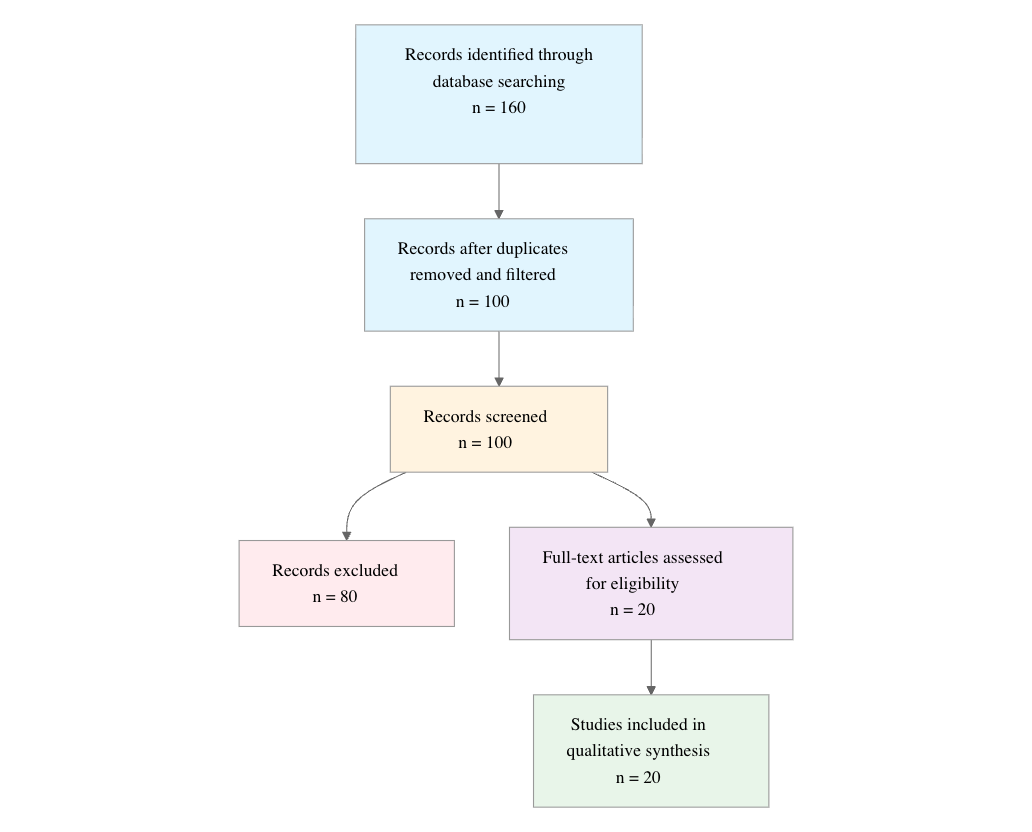
Initial database searching identified 160 records. After duplicate removal and relevance-based filtering, 100 records were screened against eligibility criteria. Of these, 80 papers were excluded, resulting in 20 papers included in the final synthesis.
PRISMA Flow Diagram
Eligibility criteria included:
- Recent: Does the study or review have a publication year between 2020 and 2026 inclusive?
- Vaping Focus: Does the paper focus on vaping, e-cigarettes, electronic nicotine delivery systems, or JUUL-type products?
- Human Data: Does the paper involve human participants, human population data, or human-centered evidence (not animal or cell studies only)?
- Empirical Evidence: Does the paper report original empirical findings, a systematic review, or a meta-analysis rather than only commentary or editorial opinion?
- Health or Use: Does the paper examine vaping prevalence, initiation, cessation, dependence, respiratory effects, cardiovascular effects, toxicology, or harm reduction?
- Youth or Adult: Does the study include adolescents, young adults, or adult users of vaping products?
- Comparative: Does the paper compare vaping with cigarettes, non-use, or other nicotine/tobacco products?
All included studies met the stated eligibility criteria.
2.3 Data Extraction and Synthesis
Data extraction focused on the following variables:
- Topic: The main vaping-related topic studied (e.g., prevalence, cessation, respiratory effects, cardiovascular effects, youth use, nicotine dependence, harm reduction).
- Population: The studied population, including age group and key setting if reported.
- Design: The study design (e.g., cross-sectional, cohort, RCT, systematic review, meta-analysis, qualitative study).
- Exposure: The vaping/e-cigarette exposure definition or product type, including nicotine-containing versus nicotine-free if reported.
- Outcome: The main outcomes assessed (e.g., prevalence, cessation, respiratory symptoms, lung function, cardiovascular outcomes, dependence, initiation).
- Key Findings: The paper's main findings about vaping, staying close to the abstract or reported results.
- Timeframe: The publication year and, if relevant, study period or follow-up duration.
- Safety/Harm: Any reported harms, adverse events, or safety conclusions related to vaping or e-cigarette use.
- Comparison: Any comparison group or comparator (e.g., cigarettes, non-use, other cessation aids, alternative nicotine products).
Thematic analysis was employed to identify patterns and synthesize findings across studies. Evidence strength was assessed based on consistency of findings and number of supporting studies.
3. Results
3.1 Characteristics of Included Studies
| Study and Year | Study Type | Population | Exposure / Intervention | Main Outcome Focus | Key Context |
|---|---|---|---|---|---|
| Glantz et al. (2024) | Meta-analysis | General population | E-cigarettes and dual use | Disease odds across multiple outcomes | Comparison with cigarettes and non-use |
| Hartmann-Boyce et al. (2022) | Living systematic review | Adults trying to quit smoking | Nicotine e-cigarettes | Quit rates, AEs, SAEs | Comparator: NRT, nicotine-free e-cigarettes |
| Wills et al. (2021) | Integrative review with meta-analysis | General population, especially adolescents and young adults | E-cigarette use | Asthma and COPD | Includes epidemiology and laboratory evidence |
| Begh et al. (2025) | Systematic review | Young people ≤29 years | E-cigarette use and availability | Subsequent smoking | Includes initiation, progression, cessation |
| Hanewinkel et al. (2022) | Meta-analysis of RCTs | Adults who smoke | Nicotine e-cigarettes | Nicotine abstinence and cigarette cessation | Comparator: NRT |
| Münzel et al. (2020) | Review | General population, younger generations highlighted | Tobacco cigarettes, e-cigarettes, waterpipes | Endothelial function and cardiovascular risk | Human and animal evidence |
| Neczypor et al. (2022) | Clinical review | Adults; adolescents noted as under-studied | E-cigarettes | Cardiopulmonary outcomes | Synthesizes trials, observational studies, meta-analyses |
| O'Brien et al. (2021) | Systematic review and meta-analysis | Adolescents in Europe and North America | E-cigarette use | Tobacco smoking initiation | Youth-focused association study |
| Lyzwinski et al. (2022) | Review | Minors | E-cigarette use | Respiratory health, nicotine-related harms | Policy and intervention emphasis |
| Unidentified | Systematic review and meta-analysis of RCTs | Adults trying to quit smoking | Nicotine e-cigarettes | Smoking cessation and risk reduction | Comparator: conventional therapies |
| Chan et al. (2021) | Systematic review and network meta-analysis | Smokers; adults | Nicotine e-cigarettes | Smoking cessation | Comparator: NRT, usual care, placebo |
| Chen et al. (2024) | Meta-analysis | Adults using e-cigarettes, including dual users | Exclusive and dual use | Cardiovascular disease | Dual use vs exclusive use |
| Braymiller et al. (2020) | Cross-sectional study | Young adults | Cannabis vaping | Bronchitic symptoms and wheeze | Focuses on cannabis vaping rather than nicotine vaping |
| Kundu et al. (2025) | Systematic review and meta-analysis | Human populations | Acute, short-to-medium-term, long-term e-cigarette exposure | Heart rate, BP, endothelial dysfunction | Includes human, animal, and cell studies |
| Wu et al. (2025) | Systematic review | Youth and young adults | Health messaging strategies | Prevention and cessation messaging | Communication and persuasion framework |
| Reiter et al. (2024) | Systematic review | Youth | Regulatory interventions targeting nicotine vaping | Youth vaping reduction | Price, accessibility, desirability |
| Becker and Rice (2022) | Narrative review | Youth | Vaping | Physical and behavioral risks | Global epidemiology and clinical considerations |
| Caci et al. (2025) | Systematic review | Never-smokers, adults and youth | Electronic cigarettes | Respiratory outcomes | Prospective associations only |
| van Zyl-Smit et al. (2024) | Cross-sectional survey, mixed methods | South African high-school learners | Nicotine or non-nicotine vapes | Vaping initiation and dependence | Survey-based dependence scores |
| Masonbrink et al. (2025) | Cross-sectional study | US youths in 8th, 10th, 12th grades | Nicotine vaping | Daily vaping and quit attempts | Nationally representative survey |
The literature is dominated by systematic reviews, meta-analyses, and cross-sectional evidence, with fewer direct longitudinal data. Adult cessation studies largely compare nicotine e-cigarettes with NRT or behavioral therapy, whereas youth-focused studies emphasize initiation, dependence, and policy response. Cardiovascular and respiratory studies often rely on heterogeneous outcome measures, including biomarker endpoints, disease diagnoses, and symptom reports.
3.2 Thematic Findings
3.2.1 Nicotine E-Cigarettes Appear to Aid Smoking Cessation, but They May Sustain Nicotine Dependence
Across randomized evidence, nicotine e-cigarettes consistently outperformed nicotine replacement therapy for cigarette cessation, with a risk ratio of 1.58 (95% CI 1.20–2.08) in one meta-analysis and further evidence of higher quit rates versus NRT and behavioral cessation therapies (Hanewinkel et al., 2022; Hartmann-Boyce et al., 2022; Chan et al., 2021). However, the same literature also shows that nicotine abstinence is lower with e-cigarettes than with NRT at longest follow-up, with a risk ratio of 0.50 (95% CI 0.32–0.77), and that among successful quitters, continued use of the assigned product is much more common after e-cigarette use, with a risk ratio of 8.94 (95% CI 3.98–20.07) (Hanewinkel et al., 2022). This pattern indicates that vaping can help shift smokers away from combustible cigarettes while maintaining nicotine exposure rather than eliminating it. Confidence: Strong for cigarette cessation benefit; moderate for the interpretation that cessation may be accompanied by persistent nicotine dependence, because the latter is supported by fewer trials and a narrower outcome base.
3.2.2 Respiratory Harm Is One of the Clearest Adverse Domains, Especially for Asthma and COPD, Though Severity Differs by Smoking History
Respiratory findings converge more strongly than many other health domains. In general-population syntheses, e-cigarette use was associated with asthma and COPD, with pooled adjusted odds ratios of 1.39 (95% CI 1.28–1.51) for asthma and 1.49 (95% CI 1.36–1.65) for COPD (Wills et al., 2021). Additional reviews emphasized respiratory tract irritation, bronchitis, wheeze, and asthma exacerbation among minors and young adults (Lyzwinski et al., 2022; Becker & Rice, 2022). However, an important nuance appears in never-smoker-specific evidence: among never-smokers, seven of ten included studies showed no significant association with severe respiratory outcomes, although mild coughing and wheezing may still occur (Caci et al., 2025). That pattern suggests that confounding by prior smoking likely explains part of the stronger associations seen in broader populations, but it does not eliminate concern about airway symptoms. Confidence: Moderate to strong for respiratory symptom and disease associations in general populations; limited for severe respiratory harm among never-smokers because the evidence is more mixed and outcome-specific.
3.2.3 Cardiovascular Findings Point to Acute Physiologic Effects and Heightened Risk in Dual Users, While Exclusive Vaping Remains Less Certain
Cardiovascular evidence is directionally consistent for acute physiologic stress but less definitive for long-term disease. Acute e-cigarette exposure increased heart rate and blood pressure compared with non-use, with mean differences of 11.329 for heart rate, 12.856 for systolic blood pressure, and 7.676 for diastolic blood pressure (Kundu et al., 2025). Compared with cigarettes, acute heart rate was lower after e-cigarette exposure by mean difference −5.415, while systolic and diastolic blood pressure did not differ significantly (Kundu et al., 2025). Endothelial dysfunction also appears in mechanistic and review-level evidence, supporting a plausible pathway to vascular disease (Münzel et al., 2020; Neczypor et al., 2022). Yet when clinical cardiovascular disease is the endpoint, evidence is more mixed: one meta-analysis found dual use significantly associated with cardiovascular disease (OR 2.56, 95% CI 2.11–3.11), while exclusive e-cigarette use was not significantly associated (OR 1.24, 95% CI 0.93–1.67) (Chen et al., 2024); another population-based synthesis found no difference versus cigarette use for cardiovascular disease (odds ratio 0.81, 95% CI 0.58–1.14) or stroke (0.73, 95% CI 0.47–1.13), but increased odds for dual use across outcomes (Glantz et al., 2024). Confidence: Moderate for acute cardiovascular effects and dual-use risk; limited for long-term exclusive-vaping cardiovascular disease because disease-level evidence remains inconsistent.
3.2.4 Youth Vaping Is Strongly Linked to Initiation, Progression, and Emerging Dependence, Even as Overall Prevalence Changes Over Time
The youth literature consistently frames vaping as a dependence and transition issue rather than a stable endpoint. Baseline vaping was directly associated with later smoking initiation and progression, while smoking cessation findings were mixed (Begh et al., 2025). Earlier adolescent meta-analysis also found e-cigarette use associated with commencement of tobacco smoking, with a pooled odds ratio of 4.06 (95% CI 3.00–5.48) (O'Brien et al., 2021). More recent data suggest that the youth vaping population may be hardening over time: current nicotine vaping declined from 2020 to 2024, but daily vaping increased from 15.4% (95% CI 13.1%–18.0%) to 28.8% (95% CI 26.6%–31.0%), and unsuccessful quit attempts among daily vapers rose from 28.2% (95% CI 19.5%–38.8%) to 53.0% (95% CI 45.9%–60.0%) (Masonbrink et al., 2025). In South African high-school learners, 16.83% reported current vaping, and dependence scores were high: 58.44% met the threshold for high dependence on one index and 60.70% on another (van Zyl-Smit et al., 2024). Motivations also shifted between initiation and continuation, moving from social influence and curiosity toward enjoyment, managing mental distress, and addiction (van Zyl-Smit et al., 2024). Confidence: Strong for association with smoking initiation and progression; moderate for hardening and dependence trends because these are supported by recent surveillance but rely heavily on cross-sectional data.
3.2.5 Policy and Behavior Change Studies Suggest Prevention Works Best When Targeted, but Evidence Is Not Yet Specific Enough to Privilege One Intervention Type
Regulatory and communication studies point in the same general direction: youth vaping can be reduced, but the field does not yet support a single best intervention. Regulatory review evidence indicates that price, accessibility, and desirability-based interventions can be effective, yet there is insufficient evidence to recommend one specific regulatory model (Reiter et al., 2024). Messaging research similarly shows that tailored communication matters, especially message features, audience characteristics, and channel choice, while social media remains underexplored and only one study addressed cessation messaging directly (Wu et al., 2025). These findings align with youth dependence and initiation evidence by implying that prevention is likely to be most effective when matched to age, motivation, and platform. Confidence: Moderate for the value of multi-component prevention; limited for selecting a single optimal strategy.
3.3 Summary of Evidence
| Theme | Key Finding | Population Applicability | Effect Direction | Confidence Level | Supporting Studies |
|---|---|---|---|---|---|
| Smoking cessation benefit with persistent nicotine use | Cigarette cessation improved with nicotine e-cigarettes versus NRT, RR 1.58 (95% CI 1.20–2.08), but nicotine abstinence was lower, RR 0.50 (95% CI 0.32–0.77) | Adult smokers attempting to quit | Mixed | Strong | Hanewinkel et al. (2022); Hartmann-Boyce et al. (2022); Chan et al. (2021) |
| Respiratory harm | Asthma aOR 1.39 (95% CI 1.28–1.51) and COPD aOR 1.49 (95% CI 1.36–1.65) were associated with e-cigarette use | General population; youth and adults | Positive for harm | Moderate | Wills et al. (2021); Becker & Rice (2022); Lyzwinski et al. (2022) |
| Cardiovascular acute effects and dual-use risk | Acute vaping increased heart rate by 11.329 and systolic BP by 12.856 versus non-use; dual use was associated with cardiovascular disease | Adults; some proxy evidence from mixed populations | Positive for harm | Moderate | Kundu et al. (2025); Chen et al. (2024); Glantz et al. (2024) |
| Youth initiation and progression | Baseline vaping was directly associated with later smoking initiation and progression; pooled OR 4.06 (95% CI 3.00–5.48) for initiation in adolescents | Youth and young adults | Positive for harm | Strong | Begh et al. (2025); O'Brien et al. (2021); Becker & Rice (2022) |
| Youth hardening and dependence | Daily vaping rose from 15.4% to 28.8% and unsuccessful quit attempts from 28.2% to 53.0% from 2020 to 2024 | US youths | Positive for harm | Moderate | Masonbrink et al. (2025); van Zyl-Smit et al. (2024); Begh et al. (2025) |
| Prevention and regulation | Regulatory interventions can reduce youth vaping, but no single strategy is clearly superior | Youth | Negative for vaping prevalence | Limited | Reiter et al. (2024); Wu et al. (2025); Becker & Rice (2022) |
| Never-smoker respiratory safety | Most studies in never-smokers found no association with severe respiratory outcomes, though mild coughing/wheezing may occur | Never-smokers, adults and youth | Null to mixed | Limited | Caci et al. (2025); Wills et al. (2021); Münzel et al. (2020) |
4. Discussion
4.1 Principal Findings and Their Interpretation
The most defensible synthesis is that vaping is not a monolithic exposure: its effects depend strongly on who uses it, how intensively it is used, and whether it displaces or accompanies combustible smoking. The strongest evidence supports nicotine e-cigarettes as a cessation aid for adult smokers, yet the same intervention often preserves nicotine exposure rather than eliminating it, which helps explain why cigarette abstinence and nicotine abstinence do not move in parallel (Hanewinkel et al., 2022; Hartmann-Boyce et al., 2022). In other words, vaping may reduce one harm pathway while maintaining another, a distinction that is clinically important and often lost in public debate.
By contrast, the most convergent harms appear in the respiratory and cardiovascular domains. The respiratory literature combines epidemiology with biologic plausibility: airway disease associations coexist with laboratory evidence of cytotoxicity, oxidative stress, inflammation, and susceptibility to infection (Wills et al., 2021; Lyzwinski et al., 2022). This mechanistic consistency strengthens inference beyond simple correlation, especially because the respiratory signal is strongest for asthma and COPD, conditions that plausibly worsen under chronic airway irritation. Cardiovascular evidence is more nuanced but still concerning. Acute rises in heart rate and blood pressure suggest sympathetic activation and vascular stress (Kundu et al., 2025), while endothelial dysfunction provides a plausible bridge to longer-term disease (Münzel et al., 2020; Neczypor et al., 2022). The current evidence hierarchy therefore supports high confidence in short-term physiologic effects, moderate confidence in dual-use cardiovascular harm, and lower confidence in exclusive vaping as a cause of overt cardiovascular disease.
The youth literature adds a developmental dimension. Associations with smoking initiation, progression, and hardening suggest that vaping may create a more nicotine-dependent population over time rather than serving purely as a substitute behavior (Begh et al., 2025; Masonbrink et al., 2025). That pattern is reinforced by the South African findings on social and stress-related motives, which imply that prevention must be age- and context-sensitive rather than generic (van Zyl-Smit et al., 2024). Overall, the literature increasingly distinguishes therapeutic use in adult smokers from population-level risk in youth and never-smokers.
4.2 Comparison with Existing Literature and Resolution of Contradictions
The apparent contradictions in the literature are real, but they are also informative. Studies showing cessation benefit coexist with studies showing respiratory and cardiovascular harm because they examine different populations, different exposure intensities, and different endpoints (Hartmann-Boyce et al., 2022; Wills et al., 2021; Chen et al., 2024). Adult smokers attempting to quit are not the same as youth initiators or never-smokers, and the balance of benefit and harm is therefore not expected to be uniform across groups. This helps reconcile why the same product can be associated with improved cigarette cessation while simultaneously being linked to nicotine dependence and disease markers.
The null or weaker findings for exclusive vaping and cardiovascular disease, and for severe respiratory outcomes among never-smokers, deserve careful interpretation rather than dismissal (Chen et al., 2024; Caci et al., 2025). One explanation is exposure misclassification: many studies rely on self-reported use without detailed data on nicotine concentration, device type, duration, or puff intensity. Another is confounding by smoking history, especially in broader population samples where former or concurrent cigarette exposure may drive much of the disease signal. A third is limited follow-up for chronic disease outcomes; acute hemodynamic changes may be detectable long before clinical disease accumulates. For never-smokers, the absence of severe respiratory risk could reflect genuinely lower cumulative exposure, but mild symptoms such as cough and wheeze still indicate that absence of severe disease is not equivalent to absence of effect (Caci et al., 2025).
Publication bias is also plausible because much of the field is policy-relevant and highly contested, which can favor studies designed to test harm hypotheses or cessation efficacy. Even so, the consistency of direction across distinct designs, especially for youth initiation, dual use, and acute cardiovascular physiology, reduces concern that the entire pattern is driven by selective reporting. Methodologically, the newer literature increasingly uses subgroup analyses and longitudinal frames, which improves reliability, but exposure precision remains limited. That limitation is especially important where product heterogeneity could mask or exaggerate true effects.
4.3 Practical Implications
The practical message is not that vaping should be uniformly promoted or uniformly prohibited, but that guidance must be differentiated by population. For adult smokers unable to quit with conventional therapies, nicotine e-cigarettes may have a role as a cessation tool, particularly when the goal is cigarette cessation rather than nicotine abstinence (Hartmann-Boyce et al., 2022; Chan et al., 2021). Clinicians should therefore frame vaping as a potential harm-reduction option, not a harmless product. In contrast, adolescents, young adults, and never-smokers should be advised against initiation because the evidence consistently links vaping to smoking uptake, respiratory symptoms, and escalating dependence (Begh et al., 2025; O'Brien et al., 2021; Masonbrink et al., 2025).
Policy implications are clearest for youth. Regulatory levers that alter price, accessibility, and desirability are supported, but the evidence does not justify reliance on any single measure alone (Reiter et al., 2024). Messaging interventions should be age-tailored, addressing social influence and curiosity at initiation and mental-distress coping among established users (Wu et al., 2025; van Zyl-Smit et al., 2024). The threshold question is particularly important for cardiovascular and respiratory protection: because acute cardiovascular changes appear after exposure and airway symptoms can occur even without severe disease, the safest public health strategy is exposure minimization rather than confidence in a "safe" low-dose boundary (Kundu et al., 2025; Caci et al., 2025). That said, the strongest clinical translation remains specific to adult cessation contexts, while youth prevention policies apply most directly to adolescent and young adult populations.
4.4 Strengths and Limitations
This review's main strength is its synthesis of a recent, clinically and policy-relevant evidence base spanning cessation, respiratory and cardiovascular outcomes, youth behavior, dependence, messaging, and regulation. The included literature contains several systematic reviews and meta-analyses, allowing triangulation across endpoints and study designs. A further strength is the explicit separation of exclusive vaping from dual use, which clarifies why broad "vaping" labels can obscure risk.
The included studies also have important limitations. Much of the evidence relies on cross-sectional designs, self-reported exposure, and heterogeneous outcome definitions. Several studies focus on proxy populations, such as smokers seeking cessation or mixed user groups, rather than exact population matches to all-vaping users. Follow-up is often short for chronic disease inference, and nicotine content, device generation, and use intensity are not consistently reported. The review itself is limited by abstract-based extraction, no formal risk-of-bias reappraisal beyond what primary reviews reported, and the absence of uniform effect estimation across all outcomes.
5. Gaps and Future Directions
The most pressing gap is population specificity. The evidence is strongest for adult smokers trying to quit and for adolescents in initiation pathways, but much weaker for exact estimates in never-smokers, exclusive long-term vapers, and users of specific device or nicotine formulations. Future work should directly compare nicotine concentration, device type, and dual-use patterns within the same cohorts, because current studies often collapse these exposures. Longitudinal studies with repeated exposure measurement are especially needed to resolve whether the mixed cardiovascular findings reflect true null effects, insufficient follow-up, or residual confounding.
Mechanistic gaps also remain. Respiratory and endothelial plausibility is supported, but human studies rarely integrate biomarkers, clinical endpoints, and detailed exposure histories in one design. Youth studies should move beyond prevalence and initiation toward dependence trajectories, quit attempts, and intervention response. Finally, prevention science needs evaluation of specific message sources, channels, and regulatory combinations in the populations most affected by vaping-related harms, especially adolescents, rural youths, and dual users.
6. Conclusion
The latest evidence indicates that vaping has a dual profile: nicotine e-cigarettes can improve cigarette cessation in adult smokers, but vaping is also associated with respiratory harm, acute cardiovascular stress, youth smoking initiation, and increasing nicotine dependence, especially in dual users and adolescents. The strongest cessation estimate favors nicotine e-cigarettes over nicotine replacement therapy for cigarette abstinence, with a risk ratio of 1.58 (95% CI 1.20–2.08), yet nicotine abstinence is lower at longest follow-up, risk ratio 0.50 (95% CI 0.32–0.77) (Hanewinkel et al., 2022). On the harm side, asthma and COPD associations are substantial, with aOR 1.39 (95% CI 1.28–1.51) and aOR 1.49 (95% CI 1.36–1.65), and acute use increases heart rate and blood pressure (Wills et al., 2021; Kundu et al., 2025). Youth evidence is particularly concerning because daily vaping and unsuccessful quit attempts have risen even as overall prevalence declined (Masonbrink et al., 2025).
This conclusion should be interpreted with population context in mind: the cessation benefit applies most directly to adult smokers attempting to quit, whereas the harm signals are most relevant to youth, never-smokers, and dual users. The most important unresolved question is whether exclusive long-term vaping, independent of prior smoking, produces clinically meaningful chronic cardiovascular or respiratory disease. Until that is answered, the safest interpretation is that vaping may have a limited therapeutic role in carefully selected adult smokers, but it should not be considered harmless, especially for younger populations and those not already smoking combustible cigarettes.
References
- Becker, T. D., & Rice, T. R. (2022). Youth vaping: A review and update on global epidemiology, physical and behavioral health risks, and clinical considerations. European Journal of Pediatrics, 181(2), 453–462. https://doi.org/10.1007/s00431-021-04220-x
- Begh, R., Conde, M., Fanshawe, T. R., Kneale, D., Shahab, L., Zhu, S., Pesko, M., Livingstone-Banks, J., Lindson, N., Rigotti, N. A., Tudor, K., Kale, D., Jackson, S. E., Rees, K., & Hartmann-Boyce, J. (2025). Electronic cigarettes and subsequent cigarette smoking in young people: A systematic review. Addiction, 120(6), 1090–1111. https://doi.org/10.1111/add.16773
- Braymiller, J. L., Barrington-Trimis, J. L., Leventhal, A. M., Islam, T., Kechter, A., Krueger, E. A., Cho, J., Lanza, I., Unger, J. B., & McConnell, R. (2020). Assessment of nicotine and cannabis vaping and respiratory symptoms in young adults. JAMA Network Open, 3(12), e2030189. https://doi.org/10.1001/jamanetworkopen.2020.30189
- Caci, G., Selya, A., La Rosa, G. R. M., Spicuzza, L., Morjaria, J. B., Geraci, G., & Polosa, R. (2025). Respiratory effects of electronic cigarette use in individuals who never smoked: A systematic review. Clinical Medicine, 25(2), 100295. https://doi.org/10.1016/j.clinme.2025.100295
- Chan, G. C. K., Stjepanović, D., Lim, C., Sun, T., Shanmuga Anandan, A., Connor, J. P., Gartner, C., Hall, W. D., & Leung, J. (2021). A systematic review of randomized controlled trials and network meta-analysis of e-cigarettes for smoking cessation. Addictive Behaviors, 119, 106912. https://doi.org/10.1016/j.addbeh.2021.106912
- Chen, C., Huo, C., Mattey-Mora, P. P., Bidulescu, A., & Parker, M. A. (2024). Assessing the association between e-cigarette use and cardiovascular disease: A meta-analysis of exclusive and dual use with combustible cigarettes. Addictive Behaviors, 157, 108086. https://doi.org/10.1016/j.addbeh.2024.108086
- Glantz, S. A., Nguyen, N., & Oliveira da Silva, A. L. (2024). Population-based disease odds for e-cigarettes and dual use versus cigarettes. NEJM Evidence, 3(3), EVIDoa2300229. https://doi.org/10.1056/EVIDoa2300229
- Hanewinkel, R., Niederberger, K., Pedersen, A., Unger, J. B., & Galimov, A. (2022). E-cigarettes and nicotine abstinence: A meta-analysis of randomised controlled trials. European Respiratory Review, 31(163), 210215. https://doi.org/10.1183/16000617.0215-2021
- Hartmann-Boyce, J., Lindson, N., Butler, A. R., McRobbie, H., Bullen, C., Begh, R., Theodoulou, A., Notley, C., Rigotti, N. A., Turner, T., Fanshawe, T. R., & Hajek, P. (2022). Electronic cigarettes for smoking cessation. Cochrane Database of Systematic Reviews, 2022(11), CD010216. https://doi.org/10.1002/14651858.CD010216.pub7
- Kundu, A., Feore, A., Sanchez, S., Abu-Zarour, N., Sutton, M., Sachdeva, K., Seth, S., Schwartz, R., & Chaiton, M. (2025). Cardiovascular health effects of vaping e-cigarettes: A systematic review and meta-analysis. Heart, 111(13), 599–608. https://doi.org/10.1136/heartjnl-2024-325030
- Lyzwinski, L. N., Naslund, J. A., Miller, C. J., & Eisenberg, M. J. (2022). Global youth vaping and respiratory health: Epidemiology, interventions, and policies. npj Primary Care Respiratory Medicine, 32(1), 14. https://doi.org/10.1038/s41533-022-00277-9
- Masonbrink, A. R., Bae, D., Cho, J., Miech, R. A., Dai, H. D., Harlow, A. F., Sussman, S., Han, D.-H., Sanchez, L. M., Adjei, A., Meza, L. R., Li, M., & Leventhal, A. M. (2025). Trends in daily nicotine vaping and unsuccessful quit attempts in youths. JAMA Network Open, 8(11), e2541061. https://doi.org/10.1001/jamanetworkopen.2025.41061
- Münzel, T., Hahad, O., Kuntic, M., Keaney, J. F., Deanfield, J. E., & Daiber, A. (2020). Effects of tobacco cigarettes, e-cigarettes, and waterpipe smoking on endothelial function and clinical outcomes. European Heart Journal, 41(41), 4057–4070. https://doi.org/10.1093/eurheartj/ehaa460
- Neczypor, E. W., Mears, M. J., Ghosh, A., Sassano, M. F., Gumina, R. J., Wold, L. E., & Tarran, R. (2022). E-cigarettes and cardiopulmonary health: Review for clinicians. Circulation, 145(3), 219–232. https://doi.org/10.1161/CIRCULATIONAHA.121.056777
- O'Brien, D., Long, J., Quigley, J., Lee, C., McCarthy, A., & Kavanagh, P. (2021). Association between electronic cigarette use and tobacco cigarette smoking initiation in adolescents: A systematic review and meta-analysis. BMC Public Health, 21, 954. https://doi.org/10.1186/s12889-021-10935-1
- Reiter, A., Hébert-Losier, A., Mylocopos, G., Filion, K. B., Windle, S. B., O'Loughlin, J. L., Grad, R., & Eisenberg, M. J. (2024). Regulatory strategies for preventing and reducing nicotine vaping among youth: A systematic review. American Journal of Preventive Medicine, 66(1), 169–181. https://doi.org/10.1016/j.amepre.2023.08.002
- van Zyl-Smit, R. N., Filby, S., Soin, G., Hoare, J., van den Bosch, A., & Kurten, S. (2024). Electronic cigarette usage amongst high school students in South Africa: A mixed methods approach. eClinicalMedicine, 78, 102970. https://doi.org/10.1016/j.eclinm.2024.102970
- Wills, T. A., Soneji, S. S., Choi, K., Jaspers, I., & Tam, E. K. (2021). E-cigarette use and respiratory disorders: An integrative review of converging evidence from epidemiological and laboratory studies. European Respiratory Journal, 57(1), 1901815. https://doi.org/10.1183/13993003.01815-2019
- Wu, J., Benjamin, E. J., Cornacchione Ross, J., Fetterman, J. L., & Hong, T. (2025). Health messaging strategies for vaping prevention and cessation among youth and young adults: A systematic review. Health Communication, 40(3), 531–549. https://doi.org/10.1080/10410236.2024.2352284