7 Best Mendeley Alternatives for Modern Research Workflows in 2026

Mendeley remains one of the most widely used free reference managers in academic research. By 2026 the platform still draws millions of researchers thanks to its 2GB free storage tier, polished cross-platform apps, Mendeley Cite plug-in for Microsoft Word, and a clean PDF reader that made Mendeley a default early-career choice for life-sciences and medical researchers.
The reality for many researchers in 2026 is that Mendeley still works as a competent reference manager but has fallen behind the AI-first tools graduate students now use daily. Three concerns surface repeatedly across academic forums and review sites: Elsevier ownership has shaped feature decisions in ways the wider academic community continues to question, the platform has shipped no meaningful AI features for academic search or Chat with PDF, and sync performance has degraded for users with large libraries. Researchers running thesis chapters or systematic reviews in 2026 keep Mendeley only for free citation storage and run the actual research workflow somewhere else.
This guide covers the best Mendeley alternatives in 2026, free and paid, ranked by how each one closes the gaps Mendeley stops short on. Some specialize in open-source governance and a deeper citation-style library, others in Google Docs integration, and one pairs the best AI Reference Manager with academic search, structured literature reviews, custom extraction, and a manuscript-grade AI Paper Writer inside one workspace.
TL;DR
Paperguide is the best Mendeley alternative in 2026. It is the only platform that pairs a native AI reference manager (with Mendeley export support, BibTeX/RIS/DOI imports, Chrome extension, and 1,000+ citation styles) with academic search across 200M+ peer-reviewed papers, the structured 5-step Literature Review AI, custom-column data extraction, verified citations on every claim, and the full AI Paper Writer, all inside one workspace with a generous free plan and a 30% academic discount. The 7 alternatives in this guide each close one of Mendeley's gaps, but Paperguide is the only one that closes all of them at once.
Top Mendeley Alternative in 2026
| Feature | Paperguide | Zotero | EndNote | Paperpile | ReadCube | Sciwheel | RefWorks |
|---|---|---|---|---|---|---|---|
| AI Search | ✓ | ✗ | ⚠ | ✗ | ⚠ | ✗ | ✗ |
| Chat with PDF | ✓ | ✗ | ⚠ | ✗ | ⚠ | ✗ | ✗ |
| AI Literature Review | ✓ | ✗ | ✗ | ✗ | ⚠ | ✗ | ✗ |
| AI writing | ✓ | ✗ | ✗ | ✗ | ✗ | ⚠ | ✗ |
| Extract Data | ✓ | ✗ | ✗ | ✗ | ⚠ | ✗ | ✗ |
| Reference Manager | ✓ | ✓ | ✓ | ✓ | ✓ | ✓ | ✓ |
| Citation Styles | 1,000+ | 10,000+ | 7,000+ | 9,000+ | 9,000+ | 7,000+ | 6,000+ |
| Word/Docs Plugin | ✗ | ✓ | ✓ | ⚠ | ✓ | ✓ | ✓ |
| Collaboration | ✓ | ✓ | ⚠ | ✓ | ✓ | ✓ | ✓ |
| Free Plan | ✓ | ✓ | ✗ | ✗ | ✗ | ⚠ | ✗ |
| Student Discount | ✓ | ⚠ | ✓ | ✓ | ✗ | ⚠ | ⚠ |
| Starting Price | $12/mo | Free | $175 (one-time) | $4.15/mo | Quote | Quote | Quote |
The feature comparison table above maps the main reference-management and AI-research capabilities (rows) against all 7 top Mendeley alternatives in 2026 (columns). Use ✓ for full support, ⚠ for partial or limited support, and ✗ for missing capability.
Paperguide is the best Mendeley alternative in 2026 because it covers every job Mendeley handles and then adds the AI research layer Mendeley refuses to build. A native reference library supports folders, subfolders, tags, annotations, highlights, BibTeX/RIS/DOI imports, a Chrome extension, and 1,000+ citation styles. Layered on top sit academic search across 200M+ peer-reviewed papers, the structured 5-step Literature Review AI, custom-column Extract Data, the AI Paper Writer, and Chat with PDF, all sharing the same workspace.
Quick read: Paperguide is the only tool that scores ✓ across both classic reference management and the full AI research layer. Zotero offers free, open-source governance with no Elsevier ownership concerns but no AI features. EndNote 2025 added an AI Research Assistant but ships as a $275 one-time purchase. Paperpile is excellent inside Google Docs but has no free plan. ReadCube is enterprise-focused with quote-only pricing. Sciwheel and RefWorks lean toward institutional sales.
What is Mendeley?
Mendeley is a free reference manager owned by Elsevier. Researchers install Mendeley Reference Manager as a desktop application, web app, and mobile app, with a browser Web Importer extension that captures references from publisher pages, library catalogues, and preprint servers. The platform pairs reference management with a PDF reader, annotation tools, group libraries for collaboration, Mendeley Cite plug-in for Microsoft Word, and Watched Folders that automatically import PDFs from local desktop folders. Mendeley is featured in our broader roundup of the best AI reference manager tools for context, though Mendeley itself has not built native AI features.
Core Capabilities
- Cloud library with 2GB free storage tier.
- Cross-platform desktop, web, and mobile apps.
- Mendeley Web Importer browser extension for capturing references from publisher pages.
- Mendeley Cite plug-in for Microsoft Word.
- PDF reader with annotation, highlights, and notes.
- Group libraries for shared collaboration.
- Watched Folders for automatic library import from desktop folders.
- 7,000+ citation styles via CSL.
Pros
- Free 2GB cloud storage tier (6x the Zotero free cap)
- Polished cross-platform apps (desktop, web, mobile)
- Reliable Microsoft Word integration via Mendeley Cite
- PDF reader with annotation built into the core product
- Watched Folders for automatic library import
- Strong fit for life-sciences and medical researchers
Cons
- Elsevier ownership remains a major community concern ("Elsevier has ruined Mendeley" surfaces in ResearchGate threads)
- No AI features (no academic search, Chat with PDF, Literature Review, AI Writer)
- Slower sync performance reported in 2025-2026 user feedback
- Smaller citation-style library than Zotero's open CSL ecosystem
- Group library limits are tighter than Zotero
- Mendeley Desktop legacy product discontinued in 2022, transitioning users to Mendeley Reference Manager caused friction
Why Choose a Mendeley Alternative in 2026?
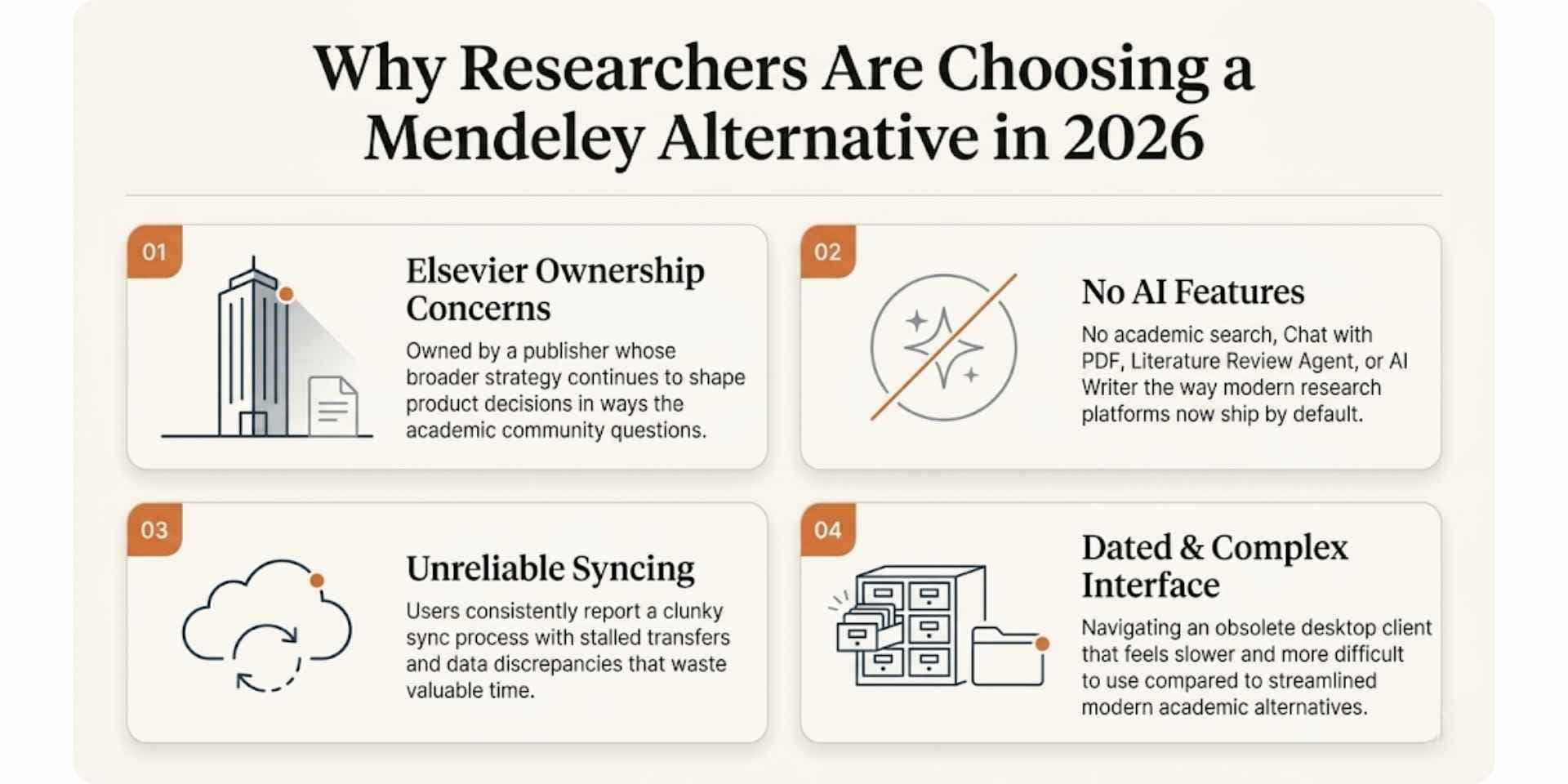
The decision to move off Mendeley usually comes down to four reasons that surface across academic discussion forums, peer-review groups, and reference-manager review sites:
1. Elsevier ownership concerns. Mendeley is owned by Elsevier, and feature decisions reflect Elsevier's broader publishing strategy. Many researchers in the academic community continue to question this trajectory and look for non-publisher-owned tools.
2. No AI features. Mendeley has not added academic search, Chat with PDF, Literature Review, or an AI Writer the way modern research platforms now have. Researchers writing thesis chapters or running structured reviews in 2026 outgrow Mendeley quickly.
3. Sync performance issues. Many user reports describe slow sync for libraries above a few hundred references, occasional library corruption requiring re-import, and inconsistent web-to-desktop synchronization.
4. Migration friction. The transition from Mendeley Desktop to Mendeley Reference Manager introduced workflow friction that has lingered in user feedback through 2026, particularly for researchers with large legacy libraries built on the older product.
Best Mendeley Alternative in 2026
1. Paperguide
Paperguide AI Reference Manager
Paperguide is built as a publisher-independent AI research platform that treats reference management as the foundation of a wider research workflow rather than as the entire product. The native AI Reference Manager handles every job Mendeley does (cloud library with folders and tags, PDF reader with annotation, browser extension, Word import and export, group library collaboration) while importing existing Mendeley libraries through BibTeX and RIS so researchers do not start from scratch.
Layered on top of the reference library sit academic search across 200M+ peer-reviewed papers from PubMed, arXiv, OpenAlex, and Semantic Scholar, the structured 5-step Literature Review AI that screens up to 200 papers and synthesizes the top 50, custom-column Extract Data tables, Chat with PDF for multi-paper interrogation, and a manuscript-grade AI Paper Writer with 1,000+ citation styles. Verified citations sit on every claim, and SJR and SNIP quality signals run through every workflow stage, giving researchers leaving Elsevier a properly modern AI-first home for the same library they used to keep in Mendeley.
Key Features
- AI Reference Manager. Native AI Reference Manager with folders, subfolders, tags, annotations, highlights, AI summaries, BibTeX/RIS/DOI imports, Mendeley and Zotero import paths, a Chrome extension for capturing papers from any browser, shared-library collaboration, and 1,000+ citation styles. Metadata and open-access PDFs are fetched automatically, with institutional proxy (EZproxy and others) support for paywalled papers. Ask your library returns cited answers drawn only from your saved papers, switching citation style once updates every reference, and libraries keep version history.
- AI Search. Combining semantic and keyword retrieval across 200M+ peer-reviewed papers from PubMed, arXiv, OpenAlex, and Semantic Scholar, the discovery layer Mendeley does not offer.
- Literature Review AI. Literature Review AI follows a structured plan-search-screen-extract-synthesize flow; Extended Mode screens up to 200 papers and synthesizes the top 50.
- AI Paper Writer. Rebuilt with agentic in-document chat, Smart Continue (the AI picks up from your cursor and cites your selected sources), Math blocks (KaTeX rendering), inline equations, Word document import, 1,000+ citation styles, plus plagiarism and grammar checking, widely considered the best AI Paper Writer for academic work in 2026.
- Chat with PDF. Chat with PDF handles multi-paper comparison with passage-level grounding; click any citation to view the source paper, page number, and supporting quote.
- Extract Data. Extract Data tables on paid plans support up to 50 custom columns across 100 papers per table, every cell linked back to its source.
- Deep Research Report. Deep Research Report gives researchers manual control over research questions, search scope, inclusion criteria, and extraction fields.
- Systematic Review. Runs protocol-driven systematic reviews with Dual Review (two blind reviewers plus a conflict resolver) or AI Systematic Review with a named verifier, and generates the PRISMA diagram from actual counts.
- Research Agent. Retrained in 2026 for sharper task understanding, fewer hallucinations, and leaner token use; runs search, screening, comparison, contradiction detection, gap analysis, extraction, and draft generation in a single connected session.
- Quality Signals. SJR rankings, SNIP scores, and citation metrics surfaced inline across AI Search, screening, and Literature Review workflows.
Pros
- End-to-end research workflow in one workspace: store references, search the literature, synthesize, extract, write
- Native reference manager with Mendeley and Zotero imports, BibTeX/RIS/DOI imports, Chrome extension, and 1,000+ citation styles
- Academic search across 200M+ peer-reviewed papers (Mendeley has no search)
- Structured 5-step Literature Review AI (Mendeley has no synthesis layer)
- AI Paper Writer with agentic chat, Smart Continue, math blocks (KaTeX), Word import
- Verified citations on every claim, traceable down to the source paper and page
- No Elsevier ownership concerns
- 30% academic discount with a valid university email
- Generous free plan with 2,000 monthly AI credits
Cons
- Less brand recognition than Mendeley in established life-sciences labs
- The Free plan's Reference Manager is limited, while Mendeley gives 2GB free (Paperguide's paid plans remove the limit)
- Citation-style library is smaller than Mendeley's 7,000+ (Paperguide ships 1,000+ styles covering the most common journal requirements)
Best For
Researchers who want to move off Elsevier's reference-manager stack into a connected AI workspace, particularly PhDs and lab teams running thesis chapters, systematic reviews, or grant proposals end to end, with verified citations on every claim and a native AI Reference Manager.
Pricing
Free plan with 2,000 AI credits per month. Plus: $12 per seat per month, billed annually ($144 a year), with 12,500 credits. Pro: $29 per seat per month, billed annually ($348 a year), with 50,000 credits. Evidence Teams: $89 per seat per month, billed annually ($1,068 a year), with 150,000 credits. Enterprise is custom. A 30% academic discount applies with a valid university email, and yearly billing saves up to 41%.
Verdict
Paperguide is the strongest overall Mendeley alternative in 2026 because it does everything Mendeley does (citation storage, BibTeX/RIS imports, Chrome extension, group libraries, Word integration) and then carries the same library into the AI research workflow Mendeley never built. For researchers worried about Elsevier ownership or simply ready for an AI-first reference manager, Paperguide is the natural step up, with verified citations as the default and academic search, Chat with PDF, Literature Review, and AI Paper Writer all sharing one workspace.
2. Zotero
Zotero
Zotero is a free, open-source reference manager developed by the Corporation for Digital Scholarship, a non-profit organization. The platform is the default open-source alternative to Mendeley, with a deep CSL citation-style ecosystem (10,000+ styles), a powerful browser connector, an active plugin community (ZotFile, Better BibTeX, ZotMoov), and a non-profit governance model that appeals to researchers worried about commercial lock-in. For researchers leaving Mendeley primarily over Elsevier ownership concerns, Zotero is the closest like-for-like alternative on the free side.
Key Features
- Free, open-source reference manager with no vendor lock-in.
- 10,000+ citation styles via the open CSL repository.
- Browser connector (Chrome, Firefox, Safari, Edge) for capturing references from publisher pages.
- Word, LibreOffice, and Google Docs plug-ins.
- Group libraries for collaboration.
- Active plugin ecosystem (ZotFile, Better BibTeX, ZotMoov, and hundreds more).
- BibTeX, RIS, and JSON import/export.
Pros
- Free and open-source with non-profit governance (no Elsevier ownership concerns)
- 10,000+ citation styles, the deepest CSL ecosystem of any reference manager
- Strong browser connector across most academic publisher sites
- Active plugin community extending the core product
- Trusted by most universities and library systems globally
- Mature group library workflow for collaboration
Cons
- 300MB free storage cap (vs Mendeley's 2GB)
- No AI features (no academic search, Chat with PDF, Literature Review, AI Writer)
- Dated desktop UI that has changed little since the early 2020s
- Plugin-dependent: serious workflows often require ZotFile, Better BibTeX, ZotMoov
- Mobile experience is more limited than Mendeley
- Requires more manual configuration than Mendeley's polished defaults
Best For
Researchers leaving Mendeley specifically over Elsevier ownership concerns who want a free, open-source, non-profit-governed alternative, particularly those comfortable installing community plugins to customize the workflow.
Pricing
Free with 300MB cloud storage. Paid storage: 2GB at $20/year, 6GB at $60/year, Unlimited at $120/year. Group libraries free.
Verdict
Zotero is the strongest free Mendeley alternative when open-source governance and citation-style depth are the deciding factors. The walls are the dated UI, smaller free storage cap, and complete absence of AI features. Researchers who want a modern workspace alongside open governance pair Zotero with Paperguide, or move the full stack to Paperguide for the AI research layer.
3. EndNote
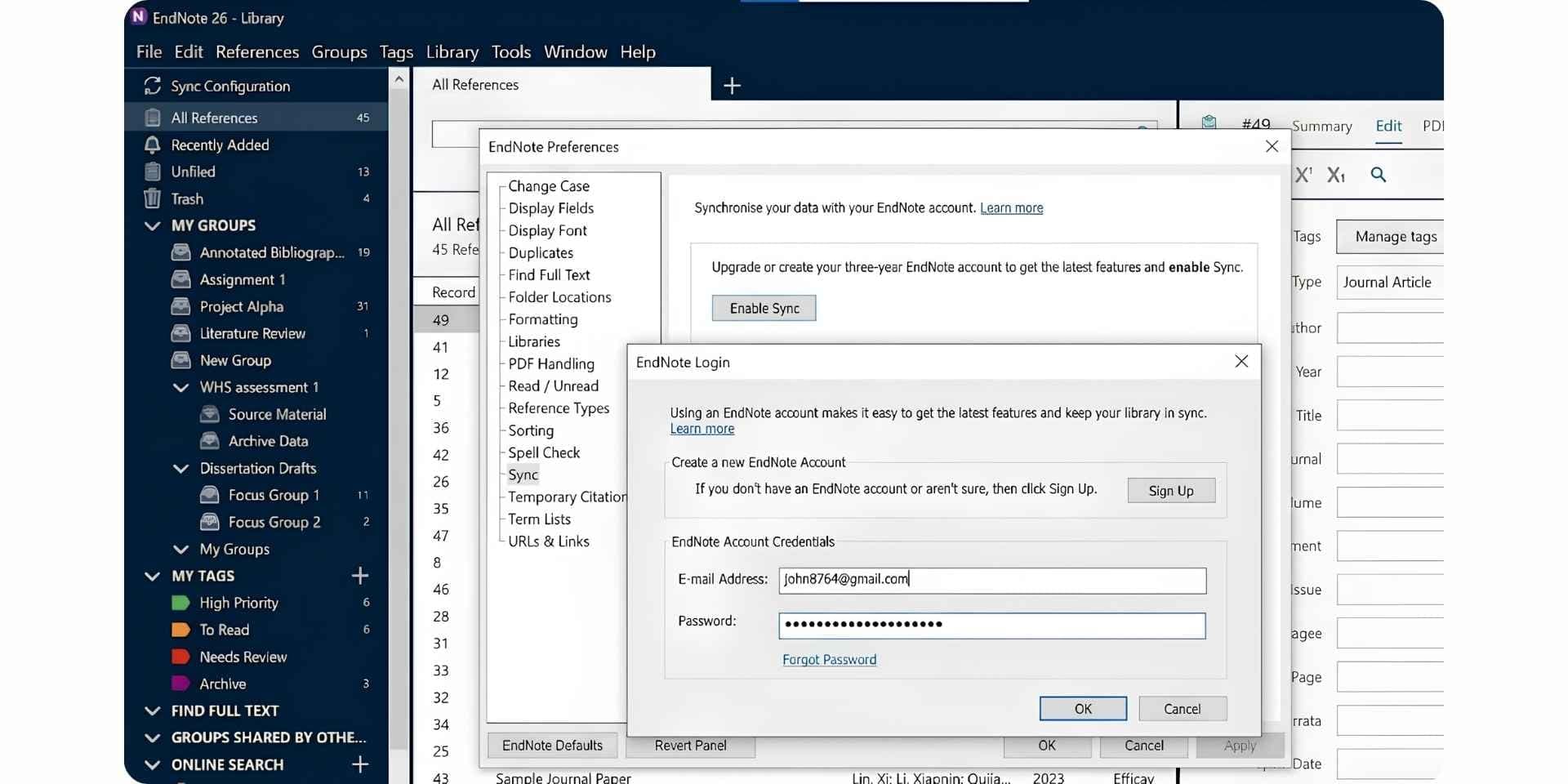
EndNote, owned by Clarivate, is the long-standing premium reference manager favoured by senior researchers, medical writers, and institutional library teams. The 2025 release introduced an AI Research Assistant, Cite from PDF, and Find a Journal, making EndNote the first traditional reference manager to ship meaningful AI features. EndNote sells as a one-time purchase rather than a subscription, which appeals to senior researchers and institutional buyers who dislike recurring fees, though the $275 upfront cost is a heavier barrier than Mendeley's free tier.
Key Features
- AI Research Assistant (new in EndNote 2025) for Chat with document, summaries, and translation.
- Cite from PDF: highlight a passage in a PDF and insert it as a citation.
- Find a Journal: machine-learning publishing tool that recommends journals for your manuscript.
- Cite While You Write plug-in for Microsoft Word.
- 7,000+ citation styles.
- Web of Science citing articles and related records.
- Retraction watch flags retracted papers.
Pros
- AI Research Assistant in 2025 release closes part of the AI gap
- 7,000+ citation styles and deep journal-style support
- Cite While You Write plug-in is the gold standard for Word workflows
- Retraction watch flags retracted references inside the library
- One-time purchase rather than subscription
- Web of Science integration
Cons
- $275 one-time fee (Full License) is a high upfront barrier
- Student License at $175 still costs more than several years of competitors
- No free permanent tier (only 30-day trial)
- Desktop-first design feels heavy compared to Mendeley
- AI Research Assistant is newer and less mature than Paperguide's connected agents
Best For
Senior researchers, institutional library teams, and medical writers who prefer a one-time-purchase desktop tool with deep Word integration, journal-finder, and Web of Science integration, and who can absorb the $275 upfront cost.
Pricing
Full License $275 (one-time, first-time buyers). Upgrade License $150 (from EndNote 21 or earlier). Student License $175. 30-day free trial. iPad/iOS app free.
Verdict
EndNote is the strongest Mendeley alternative for researchers who want a one-time-purchase desktop tool with new AI features and Clarivate ecosystem integration. The walls are pricing (a $275 upfront cost vs Mendeley's free 2GB) and the relative immaturity of EndNote's AI features compared to Paperguide's connected agents. Researchers who want subscription pricing and a deeper AI research layer pick Paperguide.
4. Paperpile
Paperpile
Paperpile is a cloud-native reference manager built around tight Google Docs and Google Drive integration. It is the default reference tool for researchers who write inside Google Workspace rather than Microsoft Word, with a clean web app, one-click PDF imports from PubMed and Google Scholar, and a Google Docs add-on that inserts citations in real time. Paperpile is paid-only (30-day trial, then subscription), which is a meaningful contrast with Mendeley's free 2GB tier.
Key Features
- Google Docs integration as a first-class feature.
- One-click import from PubMed, Google Scholar, and publisher pages.
- Cloud-native: library stored in Google Drive, no desktop installer.
- Chrome extension for capturing papers.
- 9,000+ citation styles via CSL.
- Shared workspaces for collaboration.
- Mobile companion app for iOS and Android.
Pros
- Best-in-class Google Docs integration of any reference manager
- Cloud-native: no desktop installer, no sync drama
- Clean, modern UI compared to Mendeley
- 9,000+ citation styles
- 50% academic discount for students, faculty, and researchers
- Shared workspaces for team collaboration
Cons
- No permanent free tier (only 30-day trial)
- Strong fit for Google Docs but weaker for Microsoft Word workflows (Mendeley is stronger here)
- No AI features (no academic search, Chat with PDF, Literature Review, AI Writer)
- No native desktop reader (cloud-only)
- All plans billed annually, no monthly option
Best For
Researchers who live inside Google Workspace and Google Docs and want the smoothest possible cite-while-you-write experience, particularly graduate students at institutions that have standardized on Google's productivity stack.
Pricing
30-day free trial. Regular at $4.15/mo and Expert at $5.75/mo (both with 50% academic discount, standard $8.30/$11.50). Enterprise custom pricing. All plans billed annually.
Verdict
Paperpile is the strongest Mendeley alternative for Google Docs-first workflows. The walls are the missing AI layer and the lack of a permanent free tier. Researchers who write in Google Docs and want a connected AI research workflow alongside reference management typically pair Paperpile with Paperguide.
5. ReadCube Papers
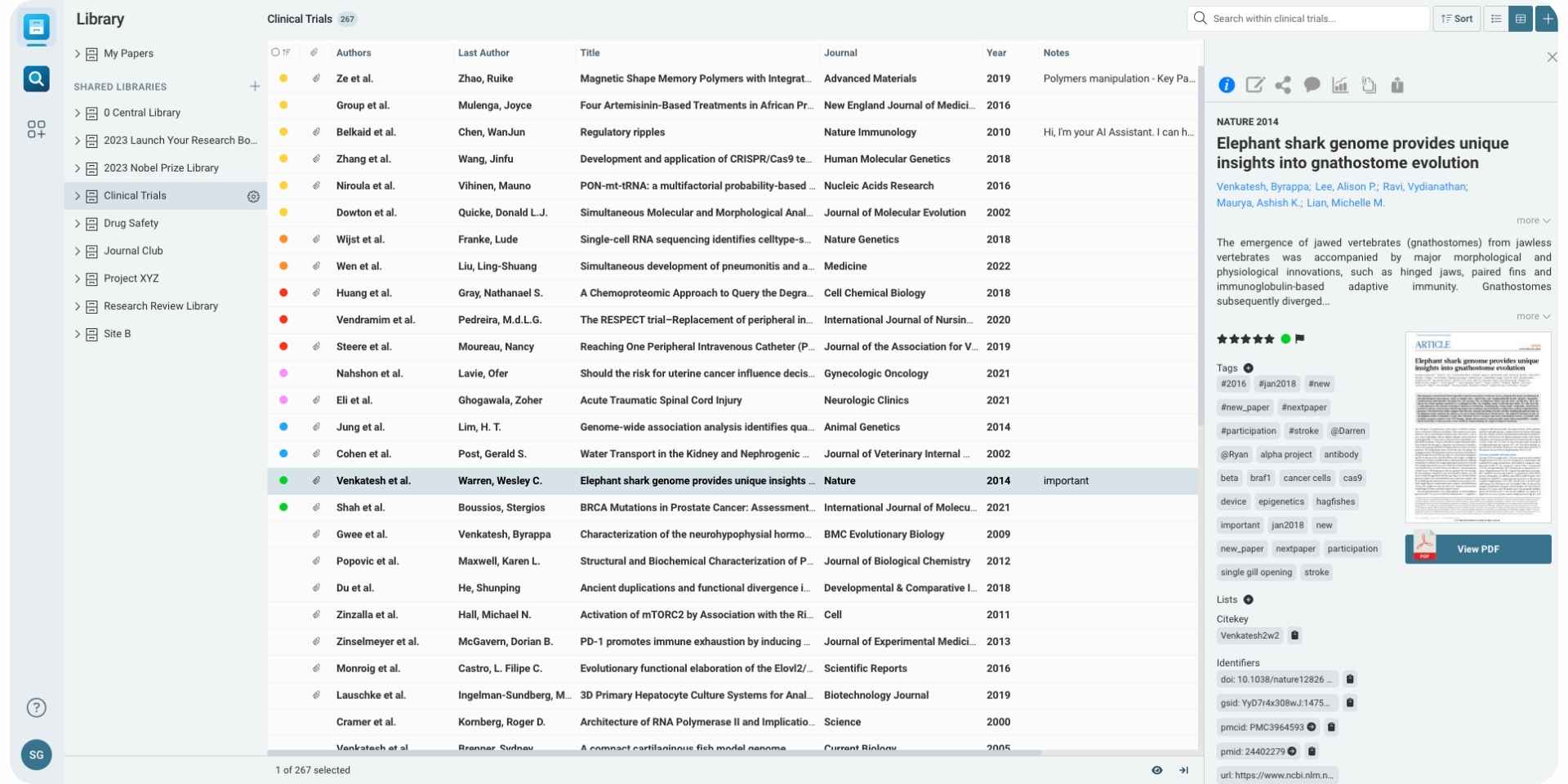
ReadCube Papers, now part of Digital Science and the Springer Nature ecosystem, targets corporate research teams (pharmacovigilance, medical affairs, R&D, regulatory). The platform combines a 130M+ article database, enhanced PDF reader, SmartCite plug-in for Word and Google Docs, and on higher tiers an AI Assistant and a Systematic Literature Review tool. Pricing is quote-only across all tiers, which makes ReadCube primarily an enterprise purchase rather than an individual choice.
Key Features
- 130M+ article database with citation, retraction, and Altmetric data.
- SmartCite plug-in for Word and Google Docs.
- Enhanced PDF reader with annotation and shared collections.
- AI Assistant (on ReadCube Pro tier).
- Systematic Literature Review tool (on ReadCube SLR tier).
- Three product tiers: ReadCube, ReadCube Pro, ReadCube SLR.
Pros
- Large 130M+ article database with citation data
- SmartCite plug-in works in both Word and Google Docs
- Enhanced PDF reader is well-regarded
- AI Assistant and SLR tool on higher tiers extend beyond classic reference management
- Backed by Springer Nature ecosystem
- Strong fit for pharma, biotech, and regulatory teams
Cons
- Quote-only pricing across all tiers (no transparent individual pricing)
- Enterprise focus makes ReadCube hard to access for individual researchers
- No permanent free tier
- AI Assistant gated to ReadCube Pro
- SLR tool gated to ReadCube SLR (highest tier)
Best For
Corporate research teams (pharma, biotech, medical affairs, regulatory, R&D) and institutional libraries that need a managed reference platform with audit-trail capabilities and Springer Nature ecosystem integration.
Pricing
Three tiers (ReadCube, ReadCube Pro, ReadCube SLR), all quote-only via the ReadCube sales team.
Verdict
ReadCube is the strongest Mendeley alternative for corporate research environments where audit trails and enterprise integrations matter more than individual-researcher pricing. The walls for academic users are quote-only pricing and enterprise tilt. Independent researchers and PhDs typically choose Paperguide for transparent pricing, a generous free plan, and the AI research layer.
6. Sciwheel
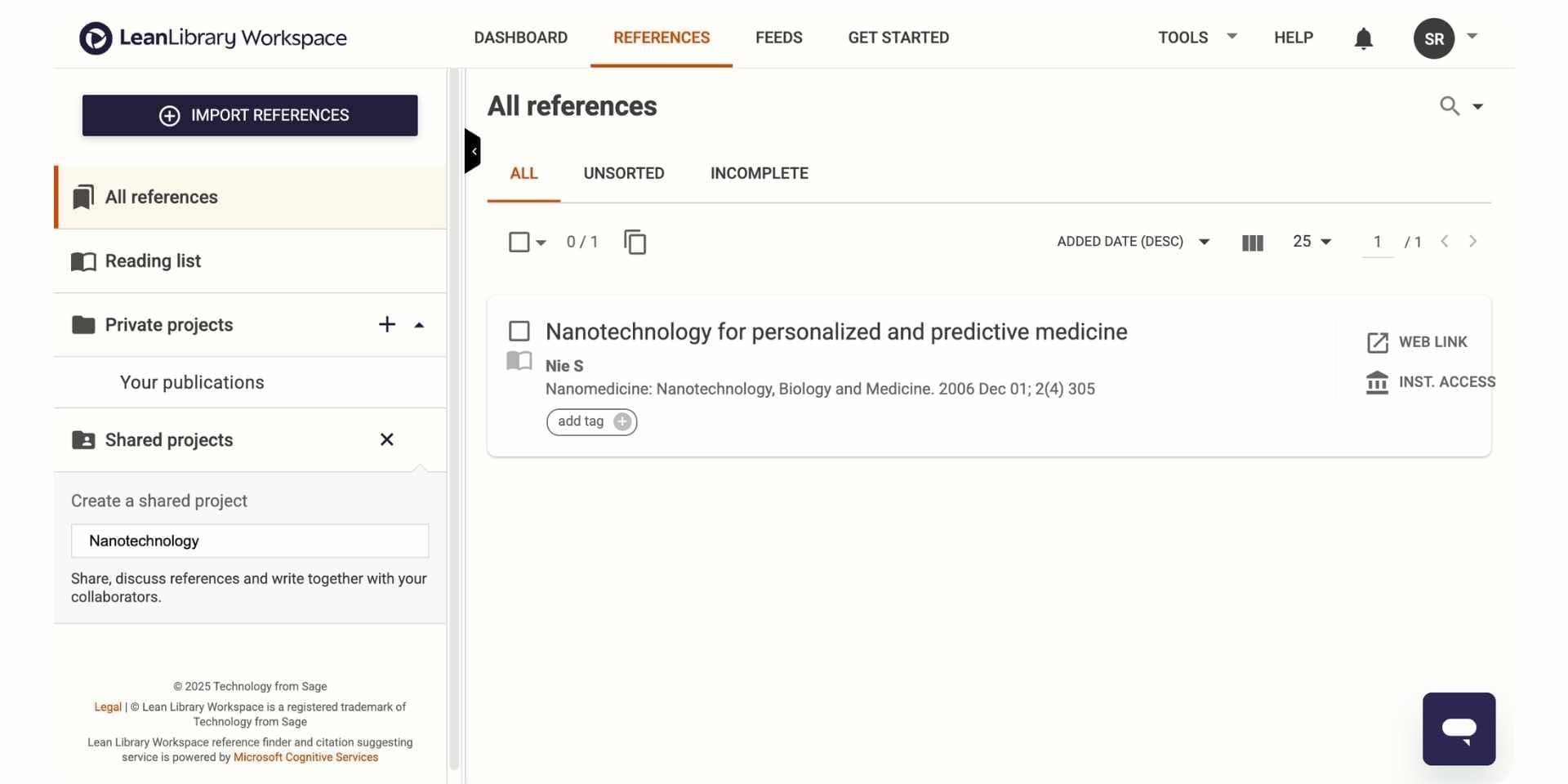
Sciwheel, owned by Sage (Lean Library Workspace), is a reference manager designed primarily for biomedical and life-sciences researchers. The tool combines reference management, Citation While You Write (Word and Google Docs), PDF reading, and Sciwheel Assist (AI summaries and Q&A on uploaded papers) into a single web app. Sciwheel positions itself as a research-first alternative to traditional reference managers, with a workflow favoured by small lab teams in biology and medicine.
Key Features
- Reference manager with cloud library and PDF reader.
- Citation While You Write plug-in for Word and Google Docs.
- Sciwheel Assist for AI summaries and Q&A on uploaded papers.
- 7,000+ citation styles.
- Shared projects for collaboration on team libraries.
- Mobile apps for iOS and Android.
- Integration with PubMed for quick paper import.
Pros
- Sciwheel Assist adds light AI summaries and Q&A on uploaded papers
- Cite While You Write plug-in works in both Word and Google Docs
- Strong fit for biomedical and life-sciences research
- Clean cloud-native UI
- Shared projects for small-lab collaboration
Cons
- Pricing is gated behind login (no transparent public pricing)
- Sciwheel Assist is shallower than Paperguide's full AI research layer
- No academic search across peer-reviewed databases
- Smaller user base than Mendeley
- No structured literature review agent or custom-column extraction
Best For
Biomedical and life-sciences researchers who want a single web app that combines reference management with light AI Q&A, particularly small lab teams running collaborative reference projects in biology, medicine, or chemistry.
Pricing
Pricing requires login. Historically Sciwheel has offered limited free access plus paid tiers for individuals and institutions.
Verdict
Sciwheel is a reasonable Mendeley alternative for biomedical researchers who want light AI summaries layered onto reference management. The walls are pricing transparency and the shallowness of the AI layer compared to Paperguide. Researchers who need academic search, structured literature reviews, and the full AI Paper Writer alongside reference management typically pick Paperguide.
7. RefWorks
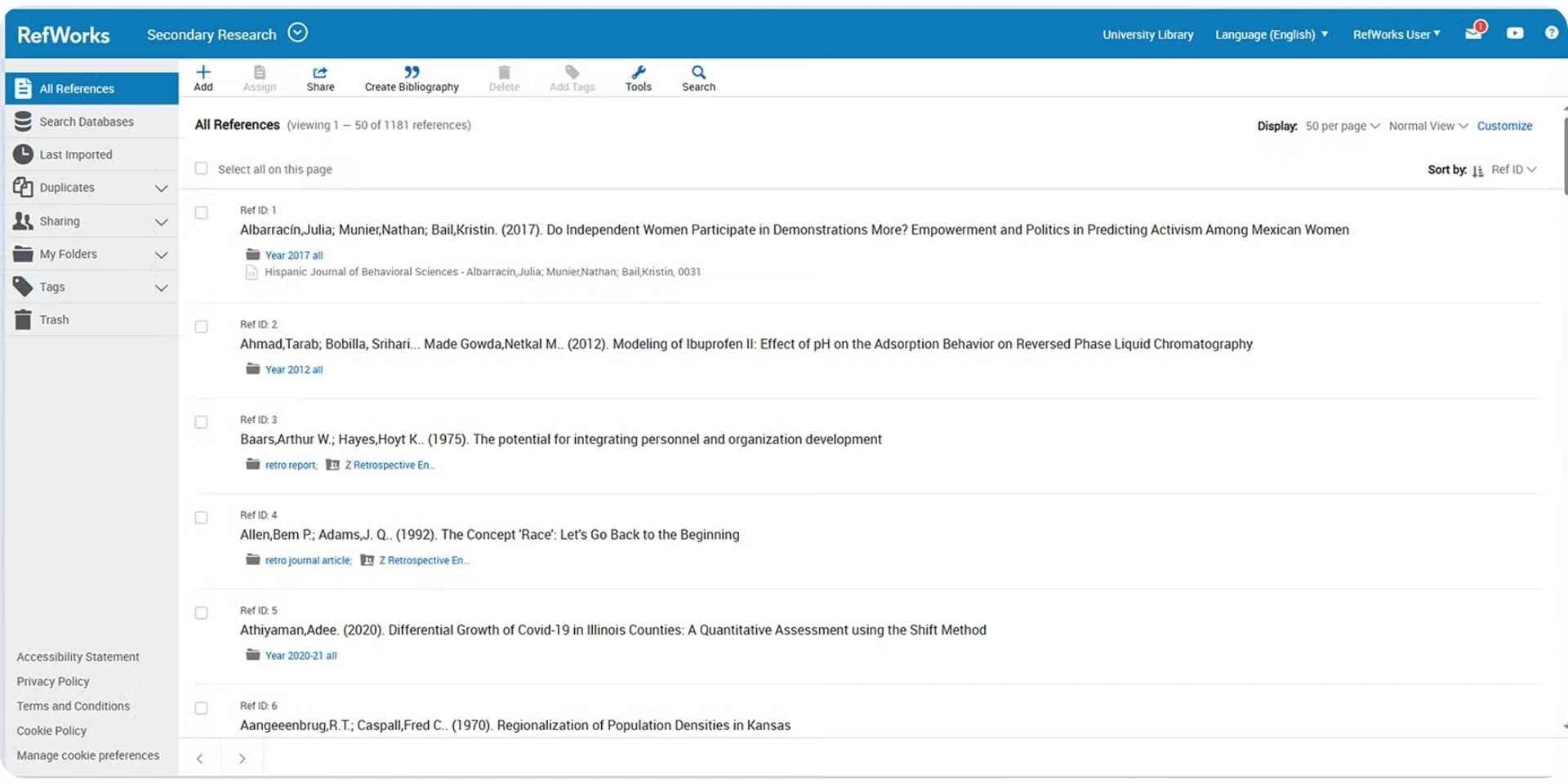
RefWorks, owned by ProQuest (Clarivate), is a cloud-based, browser-only reference manager designed for institutional deployments at universities and libraries. The tool offers 6,000+ citation styles, robust collaboration and sharing options, integrations with Microsoft Word and Google Docs through the RefWorks Citation Manager, and administrative controls (usage analytics, copyright compliance, link resolver integration) for institutional admins.
Key Features
- Cloud-based, browser-only reference manager.
- 6,000+ citation styles plus integrated citation style editor.
- RefWorks Citation Manager add-in for Word and Google Docs.
- Group collaboration with private and institutional sharing.
- Administrative controls (analytics, copyright compliance, link resolver integration).
- 9-language interface support.
Pros
- Browser-only access (no desktop install required)
- 6,000+ citation styles plus custom style editor
- Strong institutional admin controls
- Integration with Microsoft Word and Google Docs
- 9-language interface for international institutions
Cons
- Quote-only pricing for institutional buyers
- Rarely the right choice for individual researchers
- No AI features (no academic search, Chat with PDF, Literature Review, AI Writer)
- Interface feels institutional rather than modern
- Smaller user base outside university library systems
Best For
Universities, libraries, and large institutional teams that already license ProQuest products and need a managed, admin-controlled reference manager rolled out across many students and faculty at once.
Pricing
Quote-only via Clarivate sales. Historically individual pricing has been around $70/year where available, but most deployments are institutional.
Verdict
RefWorks is the right Mendeley alternative when an institution standardizes on a managed reference manager. Individual researchers rarely choose RefWorks because the AI gap is total and pricing is institutional. Researchers who need an AI reference manager alongside their institution's tools typically use Paperguide on top of RefWorks.
Why Paperguide AI Reference Manager is the Best Reference Manager in 2026
For researchers leaving Mendeley over Elsevier ownership or the missing AI layer, the question is not just "which reference manager do I move to" but "which reference manager doubles as the centre of a connected AI research workflow." Paperguide's AI Reference Manager is the best AI Reference Manager in 2026 because it pairs every job Mendeley handles with the academic search, Chat with PDF, Literature Review AI, Extract Data, and AI Paper Writer that Mendeley never built. The library is not a destination, it is the foundation that feeds every downstream stage of the research process with verified citations on every claim.
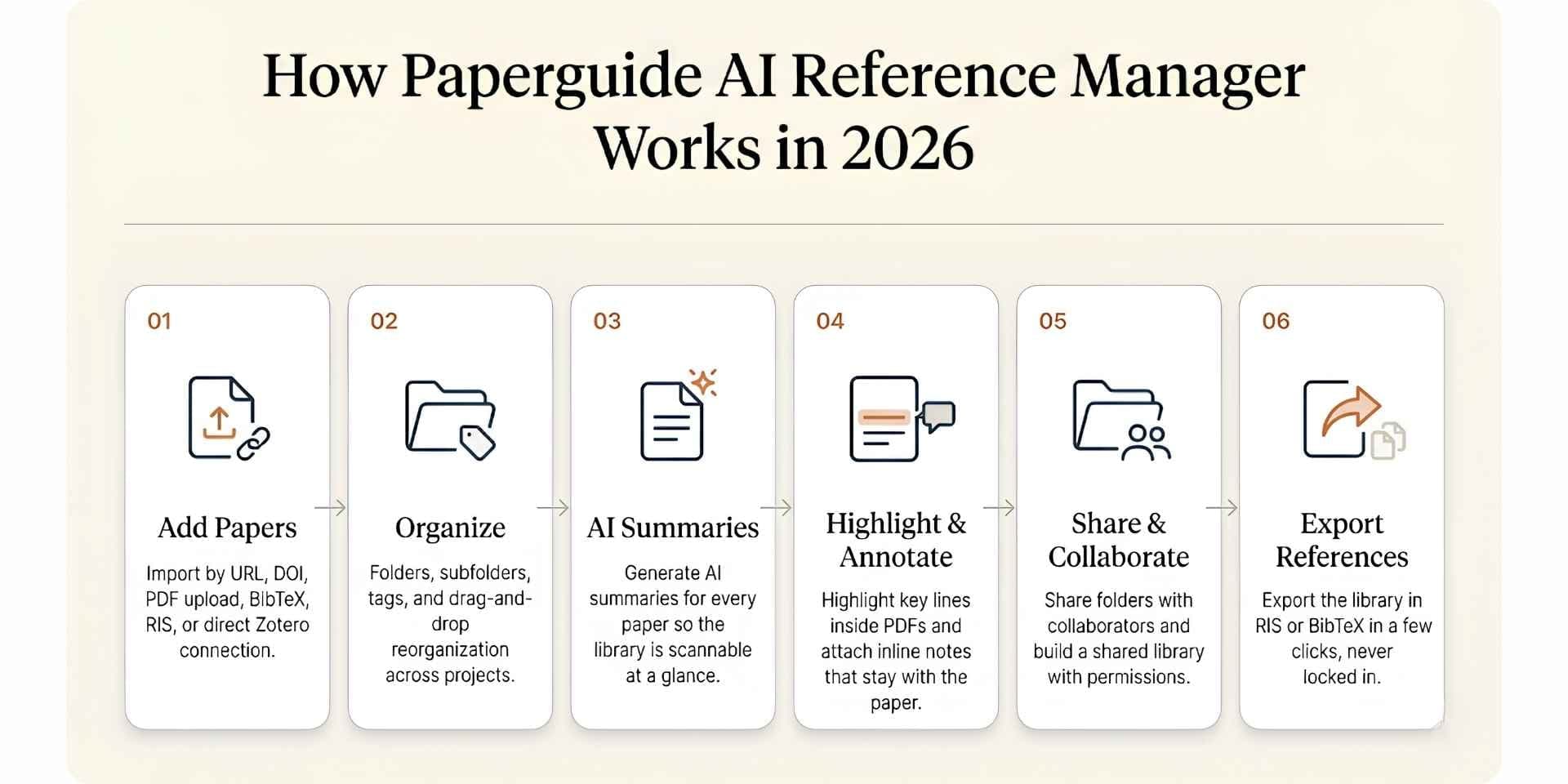
Here is the step-by-step workflow most researchers follow inside Paperguide's AI Reference Manager.
Step 1. Add Papers to Your Library
Multiple import paths are supported so researchers can build a library from any starting point. Add papers by URL or DOI, search and import directly from public research sources, upload PDFs from your computer, import BibTeX and RIS files exported from Mendeley, or connect a Zotero account and select the collections to migrate. Existing Mendeley libraries move over via BibTeX or RIS export without retyping references.
Step 2. Organize with Folders, Subfolders, and Tags
Once papers are in the library, organize them with folders and subfolders matched to projects, courses, thesis chapters, or research questions. Tags layer a second axis of categorization on top of folders. Drag and drop papers between folders to reorganize as a project evolves, with the cloud-native responsiveness modern researchers expect.
Step 3. Generate AI Summaries for Every Paper
For every paper in the library, generate an AI summary that captures the central claim, methods, and findings. The summary lives inside the paper record so researchers can scan a library quickly without re-reading every PDF from scratch, which is particularly useful when returning to references collected months earlier.
Step 4. Highlight Key Lines and Add Inline Annotations
Open any paper and highlight important findings, equations, or quotes directly inside the PDF reader. Attach notes to highlights to capture why a finding matters, note a limitation, mark an interesting method, or save a point for later reference. Highlights and notes stay attached to the paper inside the library, never drifting into a separate notes app.
Step 5. Share Folders and Collaborate as a Team
Share any folder with collaborators, colleagues, or supervisors by entering their email and setting permission levels. Once shared, collaborators can review papers, add notes and annotations, and contribute to building a shared library together. This is the kind of true cloud-native collaboration Mendeley group libraries approximate but Paperguide handles with stronger sync and modern permissioning.
Step 6. Export References in RIS or BibTeX
When it is time to take work to another platform, hand off to a co-author, or comply with a journal's submission requirements, export references or the entire library in RIS or BibTeX format in a few clicks. The AI Reference Manager keeps researchers portable across editors and tools.
Beyond the six-step workflow above, the Paperguide AI Reference Manager pairs natively with academic search across 200M+ peer-reviewed papers from PubMed, arXiv, OpenAlex, and Semantic Scholar, the structured 5-step Literature Review AI, custom-column Extract Data tables, Chat with PDF for multi-paper interrogation, and a manuscript-grade AI Paper Writer with 1,000+ citation styles. Every reference in the library flows into every downstream stage of the research workflow with verified citations and SJR and SNIP quality signals visible inline, which is why Paperguide is the best AI Reference Manager in 2026 for researchers leaving Mendeley.
How to Choose the Best Mendeley Alternative in 2026
Choosing the right Mendeley alternative comes down to four questions, each tied to a different stage of the research workflow:
1. Do you need AI features alongside reference management? Paperguide is the only tool here that ships a full AI layer (academic search, Chat with PDF, Literature Review AI, Extract Data, AI Paper Writer) on top of the reference manager. EndNote 2025 added a lighter AI Research Assistant. Zotero, Paperpile, Sciwheel, and RefWorks have no AI features.
2. Are you trying to move off Elsevier? Zotero is the closest like-for-like free alternative under non-profit governance. Paperguide offers a modern AI-first reference manager with no Elsevier ties and a connected research workflow on top.
3. Do you write in Google Docs or Microsoft Word? Paperpile is best-in-class for Google Docs. Mendeley itself and EndNote are strongest for Word. Paperguide supports both Word import and 1,000+ citation styles that work across either ecosystem.
4. Do you need a permanent free tier? Paperguide, Zotero, and Mendeley offer permanent free tiers. EndNote, Paperpile, and ReadCube do not.
Free vs Paid Mendeley Alternatives in 2026
Free tier coverage varies significantly across this category. The table below shows what each free tier actually unlocks.
| Tool | Free Plan Includes | Free Plan Limit |
|---|---|---|
| Paperguide | AI Search, Literature Review AI, Chat with PDF, AI Paper Writer, Reference Manager | 2,000 credits/mo |
| Zotero | Full open-source product | 300MB cloud storage |
| Mendeley (for context) | Reference manager, PDF reader, Cite plug-in | 2GB storage |
| EndNote | 30-day free trial (full features) | Trial ends, no permanent free tier |
| Paperpile | 30-day free trial | Trial ends, no permanent free tier |
| ReadCube | None | No permanent free tier |
| Sciwheel | Limited free access (login required) | Tier limits not transparent |
| RefWorks | Institutional access (if your university licenses) | Free for licensed users only |
Paperguide and Zotero are the most usable free alternatives to Mendeley. Paperguide is the only free plan that combines a reference manager with a full AI research layer (search, Literature Review, Chat with PDF, AI Paper Writer). Zotero wins on open-source governance but ships no AI features.
Best Mendeley Alternative for PhD Students and Graduate Researchers
For PhDs and graduate students, the decision comes down to workflow depth, budget, and student discount. Paperguide leads on all three. It covers the full thesis workflow (discovery, lit review, extraction, writing, references) inside one workspace, Plus is $12 per seat per month and Pro is $29 per seat per month, both billed annually, and the 30% academic discount applies with a valid university email. Zotero remains a strong free companion for low-cost reference storage when budget is the binding constraint, and EndNote's $175 Student License is a one-time option for researchers committed to the Clarivate ecosystem.
The combination most graduate researchers settle on in 2026 is Paperguide as the research backbone (search, lit review, extraction, writing, references) with Zotero or Mendeley kept as a free supplementary library for legacy references. For Google Docs-first workflows, pair Paperpile with Paperguide.
Why Researchers in 2026 Are Shifting to Paperguide
Paperguide is overall the best AI for scientific research and the best AI Reference Manager in 2026. It replaces Mendeley for researchers who need a connected end-to-end workflow rather than a citation-storage tool, pairing the best AI Paper Writer in 2026 with the structured Literature Review AI, academic search across 200M+ peer-reviewed papers, and verified citations on every claim inside one workspace.
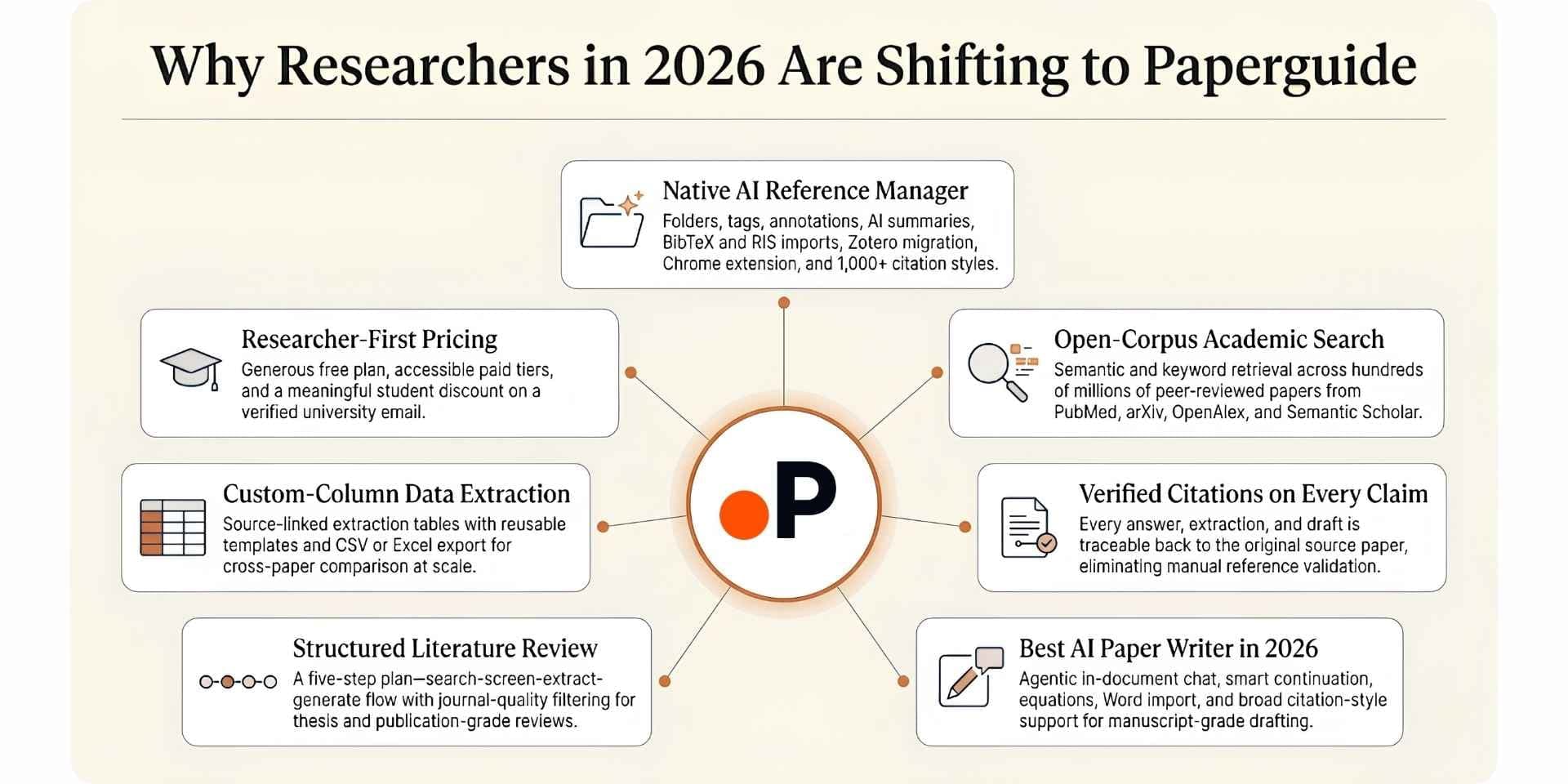
The shift from Mendeley to Paperguide in 2026 is driven by seven reasons:
1. Native AI Reference Manager. Folders, subfolders, tags, annotations, AI summaries, BibTeX/RIS/DOI imports, Mendeley and Zotero import paths, Chrome extension, shared library collaboration, and 1,000+ citation styles.
2. Academic search across 200M+ peer-reviewed papers. Hybrid semantic and keyword retrieval across PubMed, arXiv, OpenAlex, and Semantic Scholar. Mendeley has no native search.
3. Verified citations on every claim. Every answer, extraction, and draft is traceable back to the source paper, eliminating the manual reference validation Mendeley users perform when working with AI tools that hallucinate.
4. The best AI Paper Writer in 2026. Rebuilt this release with agentic in-document chat, Smart Continue, Math blocks (KaTeX), inline equations, Word import, 1,000+ citation styles, plagiarism and grammar checking.
5. Structured Literature Review with quality screening. Extended Mode screens 200 papers and synthesizes the top 50 with SJR, SNIP, and citation metric filtering. Mendeley offers no synthesis layer.
6. No Elsevier ownership concerns. Paperguide is an independent platform with no publisher ownership, addressing the community concerns that drive much of the Mendeley dissatisfaction.
7. Pricing and student discount. Free plan with 2,000 AI credits per month, Plus at $12 per seat per month and Pro at $29 per seat per month, both billed annually. The 30% academic discount applies with a valid university email.
| Reason | What It Looks Like in Paperguide |
|---|---|
| AI Reference Manager | Native library with Mendeley import, Chrome extension, BibTeX/RIS/DOI imports, collaboration, 1,000+ citation styles |
| End-to-end workflow | AI Search to Lit Review to Extract Data to AI Paper Writer all connected |
| Verified citations | Every claim, extraction, and draft links to source paper |
| Best AI Paper Writer 2026 | Agentic chat, Smart Continue, math blocks, Word import, 1,000+ styles |
| Quality signals | SJR, SNIP, citation metrics visible throughout |
| Recent updates | Research Agent retrained, AI Paper Writer rebuilt, Extended Mode with arXiv |
| Pricing | Free 2,000 credits/mo, Plus $12/mo, Pro $29/mo (billed annually) |
| Student discount | 30% off with a valid university email |
Final Verdict
Mendeley works as a clean free reference manager for researchers who do not need AI features. The 2GB free storage tier, polished cross-platform apps, Microsoft Word integration via Mendeley Cite, and PDF reader with annotation give early-career researchers a low-friction entry into citation management. The platform retains a large installed base in life-sciences and medical fields, and the Mendeley Web Importer is a reliable browser tool for capturing references from publisher pages.
Researchers who stay on Mendeley long enough for thesis work or publication-targeted writing usually hit the same three walls. The first is the Elsevier ownership trajectory, which the academic community has flagged repeatedly through 2025 and 2026 in ResearchGate and Reddit threads. The second is the complete absence of AI features (no academic search, Chat with PDF, Literature Review, AI Paper Writer), which forces the actual research workflow into a separate tool. The third is sync performance, which user reports describe as slower than expected for large libraries. These walls show up most clearly during dissertation chapters, structured reviews, and publication-targeted writing.
Paperguide is the only alternative here that fixes all three walls inside a single workspace. It pairs the best AI Reference Manager in 2026 with academic search across 200M+ peer-reviewed papers from PubMed, arXiv, OpenAlex, and Semantic Scholar, Literature Review AI that screens up to 200 papers and synthesizes the top 50, custom-column Extract Data, a manuscript-grade AI Paper Writer with 1,000+ citation styles, and Chat with PDF, all with verified citations on every claim and no Elsevier ownership concerns. For researchers handling thesis chapters, systematic reviews, or grant proposals, the workflow continuity matters as much as any individual feature, and Paperguide is the only platform in this guide that treats reference storage as the foundation of a connected AI research workspace rather than as the entire product.
Frequently Asked Questions
Is there a free Mendeley alternative?
Yes. Paperguide and Zotero both offer permanent free plans. Paperguide's free plan is the most complete, covering academic search, Literature Review AI, Chat with PDF, AI Paper Writer, and the AI Reference Manager with 2,000 monthly AI credits. Zotero is free and open-source with no Elsevier ownership concerns but no AI features.
What is the best Mendeley alternative for PhD students?
Paperguide. Thesis and dissertation work covers discovery, synthesis, extraction, and writing in the same week, and Paperguide is the only tool here that covers all four with verified citations alongside the AI Reference Manager and a 30% academic discount.
What is the best non-Elsevier Mendeley alternative?
Zotero is the closest like-for-like free alternative under non-profit governance (Corporation for Digital Scholarship). Paperguide is the modern AI-first alternative with no Elsevier ties and a connected research workflow built on top of the reference manager.
How is Paperguide different from Mendeley?
Mendeley is an Elsevier-owned reference manager that stores citations and stops there. Paperguide is an independent AI-first platform that pairs a native AI Reference Manager (with Mendeley and Zotero imports) with academic search across 200M+ peer-reviewed papers, the 5-step Literature Review AI, custom-column Extract Data, the AI Paper Writer with 1,000+ styles, and Chat with PDF, all inside one workspace.
Can I import my Mendeley library into Paperguide?
Yes. Paperguide supports BibTeX, RIS, and DOI imports alongside direct PDF uploads. Export your Mendeley library to BibTeX or RIS and import directly into Paperguide. The Chrome extension also lets you capture new papers from any browser into your Paperguide library.
Which Mendeley alternative has the strongest AI features?
Paperguide. It is the only reference manager in 2026 that ships a full AI layer (academic search, Chat with PDF, Literature Review AI, Extract Data, AI Paper Writer) on top of the reference library, with verified citations on every claim and SJR/SNIP quality signals throughout the workflow.
Is EndNote worth $275 compared to free Mendeley?
For researchers who want the new AI Research Assistant, Cite from PDF, and Find a Journal features and plan to use the product for multiple years, EndNote 2025's one-time cost is reasonable. For researchers who want a deeper, connected AI research workflow at lower lifetime cost, Paperguide at $12 to $29 per seat per month, billed annually (with a 30% academic discount), is the more complete option.
Related Reading
If Mendeley is part of your research stack, a few of our other guides build directly on this comparison.
For the wider category landscape, our roundup of the best AI Reference Manager tools maps every major reference manager researchers are using in 2026, and our analysis of the best AI research assistant tools connects reference management to the wider research workflow.
For head-to-head detail, the Paperguide vs Mendeley deep dive walks through every workflow side by side. Focused comparisons cover Zotero vs Mendeley and Mendeley vs Paperpile for capability-by-capability differences.
For researchers running full literature reviews and thesis chapters, our walkthrough on how to write a research paper and our roundup of the best AI paper writing tools explain the broader workflow that pairs naturally with an AI-first reference manager.
Managing references?
Keep every reference in one library
Import papers, annotate PDFs and cite from one library.
Try it freeNo credit card required