5 Best AI Tools for Research Paper Analysis in 2026 (Free + Paid)


Research paper analysis is the unglamorous backbone of scientific work.
Behind every published paper sits a researcher who pulled apart 40 to 80 prior papers, mapped their methodologies, compared their findings, traced their citations downstream, and decided whether the field's evidence base actually supported or quietly contradicted the proposed argument. That dissection work decides whether a manuscript survives peer review, and the integrity of every claim in the final paper depends on it. The cost of doing this analysis poorly has risen sharply in 2026 because the volume of fabricated references in the published literature is exploding. A 2026 Lancet audit of nearly 2.5 million biomedical papers found that fabricated citations grew from 1 in 2,828 papers in 2023 to 1 in 458 in 2025 and 1 in 277 in the first seven months of 2026, a roughly 12-fold increase in two years. Reviewers and editors are now running reference audits on submissions as routine practice, and AI tools for research paper analysis have moved from convenience to necessity.
AI tools for research paper analysis in 2026 split into four camps that look similar on a feature page and behave very differently when a real researcher uses them. The first camp handles citation context (whether a cited paper is supported, contradicted, or merely mentioned downstream). The second handles structured extraction (pulling methodology, sample size, and findings into evidence tables across paper sets). The third handles paper-level summarisation and Chat with PDF (fast question and answer over individual papers). The fourth is the connected research workspace that runs all three inside a single citation-grounded pipeline.
This guide tests the 5 best AI tools for research paper analysis in 2026, ranks them by what working researchers actually need across reading, extraction, citation evaluation, and cross-paper synthesis, and shows where each tool earns its spot.
TL;DR
Paperguide is the best AI tool for research paper analysis in 2026. Paperguide, the AI-native platform for scientific research workflows and systematic reviews, consolidates Chat with PDF for paper Q&A, Extract Data with custom columns for methodology and findings, AI Search across 200M+ peer-reviewed papers for comparable analyses, and the AI Paper Writer for synthesis, all inside a single workspace where every cited reference is anchored in the actual library. Scite, Scholarcy, Elicit, and ChatPDF are the strongest specialised alternatives for citation context evaluation, structured paper summarisation, large-scale extraction, and standalone Chat with PDF respectively.
Key Takeaways
- Paperguide is the #1 AI tool for research paper analysis in 2026 for connected analysis across multiple papers with citation grounding throughout.
- Scite is the strongest tool for citation context, indexing 1.6B+ citation statements classified as Supporting, Contrasting, or Mentioning across 280M+ scholarly sources.
- Scholarcy is the strongest dedicated paper summariser with Flashcard Summaries and Literature Matrix for multi-paper comparison at $9.99/month or $90/year.
- Elicit is the strongest structured extraction tool across paper sets, with custom columns scaling to 40 at Enterprise across 138M+ papers.
- ChatPDF is the most accessible standalone Chat with PDF for paper Q&A, with a free plan covering 2 documents per day and a single Plus upgrade for unlimited document analysis.
Why AI Tools for Research Paper Analysis Matter in 2026
Research paper analysis used to be a slow, manual job that scaled with reviewer time and reader patience. In 2026 it is a job the discipline can no longer do at the speed required, and the consequences are now showing up in the published record. The same 2026 Lancet audit cited above measured a 12-fold increase in fabricated references across biomedical papers in two years. That increase is not a statistical curiosity. It is the literature actively losing reliability faster than human reviewers can audit it, and the only working response is AI analysis that surfaces citation context, verifies extracted findings against source passages, and compares methodology across paper sets before a manuscript is built on top of a contaminated foundation.
The 2026 case for AI tools for research paper analysis is therefore not about speed alone. It is about analytical integrity at scale. A research team that runs every cited paper through citation-context evaluation catches the contradiction patterns that a citation count alone cannot reveal. A team that extracts methodology details with source-linked verification catches the boilerplate-extraction errors that read confidently but cite the wrong study. A team that runs cross-paper comparison inside a connected workspace catches the citation drift that happens when discovery, reading, extraction, and synthesis live in four different tools. That layered analysis is what produces research-grade understanding of a paper set in 2026, and the tools that deliver it well have become the difference between a defensible literature interpretation and one that collapses under reviewer audit.
What to Look for in an AI Tool for Research Paper Analysis in 2026
Before comparing the five tools below, here are the criteria that separate research-grade AI tools for research paper analysis from general AI readers.
- Citation context, not just citation count: Does the tool reveal whether cited papers were supported, contradicted, or merely mentioned in subsequent literature, or just report a citation tally?
- Source-grounded answers: When the AI answers a question about a paper, does it highlight the exact source passage in the PDF, or generate a summary that the reader has to verify manually?
- Structured extraction with custom columns: Can the tool extract methodology, sample size, design, instruments, findings, and risk-of-bias into a clean evidence table across multiple papers?
- Multi-paper comparison: Can the tool compare methodology and findings across a defined paper set, or is it limited to one paper at a time?
- Citation grounding inside synthesis writing: When a researcher drafts analysis prose, are the cited references pulled from the actual connected reference library, or fabricated by the model?
- Workflow continuity: Does reading, extraction, comparison, and synthesis live inside a single workspace, or does the analyst tool-switch through four browser tabs with citation drift at every handoff?
Quick Comparison: Top AI Tools for Research Paper Analysis in 2026
| Tool | Best For | Analysis Depth | Citation Grounding | Paid Entry |
|---|---|---|---|---|
| Paperguide | Connected analysis across the full paper lifecycle | Multi-paper, source-grounded | Verified against library | $12/mo Plus (annual) |
| Scite | Citation context evaluation (1.6B+ classified citations) | Citation-level | Classified Supporting/Contrasting/Mentioning | $20/mo Basic |
| Scholarcy | Paper summarisation + Literature Matrix | Summary-level + multi-paper grid | Summary-grounded | $9.99/mo Plus |
| Elicit | Structured extraction at scale | Extraction tables across paper sets | Source-grounded | $11/mo Plus (annual) |
| ChatPDF | Standalone Chat with PDF for paper Q&A | Single-paper Q&A | Source-passage citations | Plus (priced in-app) |
Best AI Tools for Research Paper Analysis in 2026
1. Paperguide
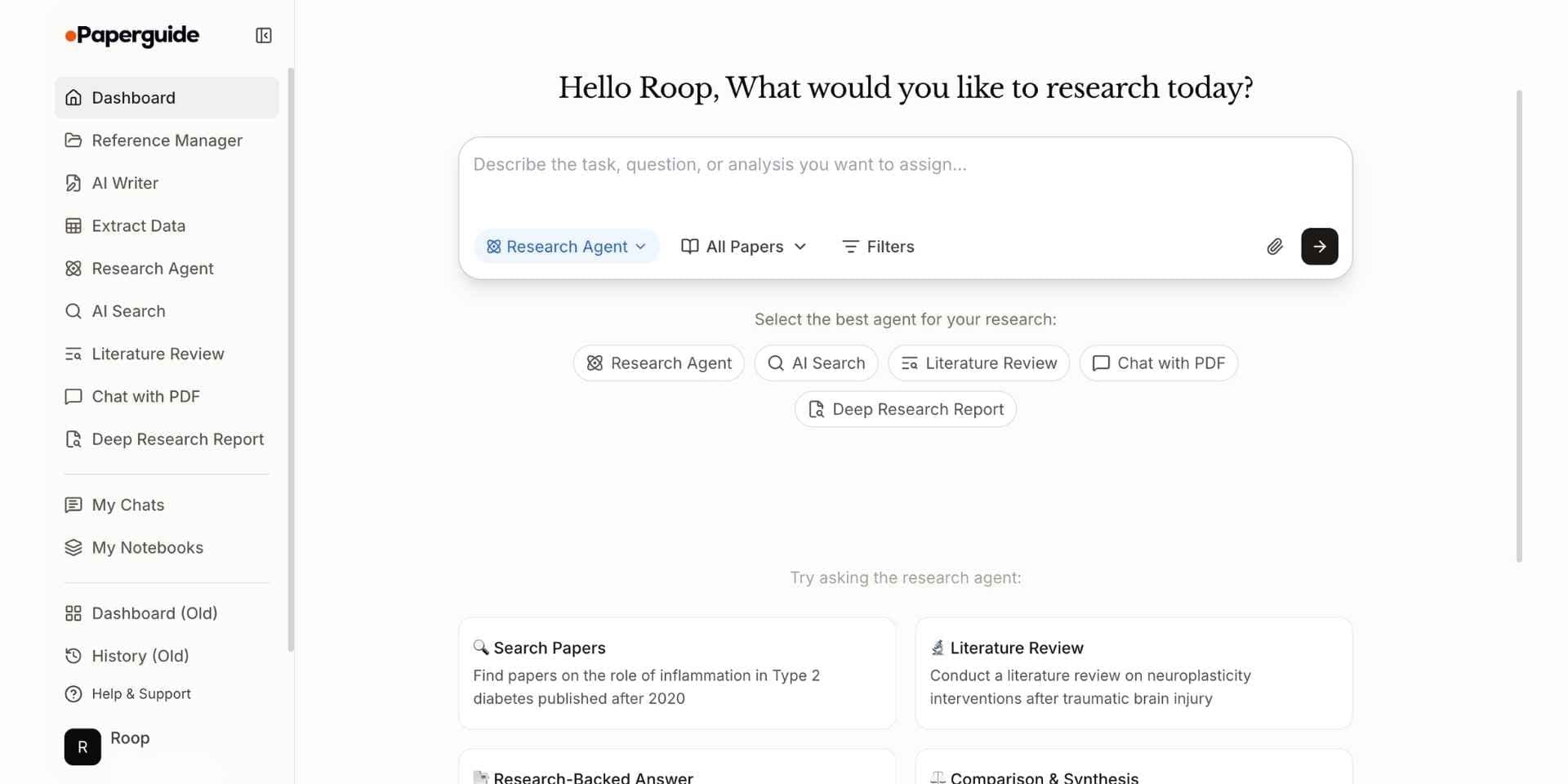
Paperguide is the AI-native platform for scientific research workflows and systematic reviews. For research paper analysis specifically, the platform consolidates the analytical dissection work that defines a research-grade reading: Chat with PDF for paper-level Q&A with answers highlighted back to source passages, Extract Data with custom columns for methodology and findings across multiple papers, AI Search across 200M+ peer-reviewed papers for comparable analyses, Literature Review AI for formal synthesis, the Research Agent for end-to-end connected analysis, and the AI Paper Writer for drafting analysis prose where every reference is anchored in the actual library.
The architecture is what makes the platform the best AI tool for research paper analysis in 2026. A paper opened for analysis is already in the reference library. A finding extracted from the methodology section is already linked back to its source passage. A comparable study surfaced through search is already citable in the analysis draft. The result is an analytical workflow where the four common breakdowns (citation drift between tools, fabricated references in synthesis prose, extraction errors that lose source provenance, and methodology comparison that runs on selective memory rather than structured tables) are eliminated at the architecture level rather than fixed manually after the fact. The connected workflow is the same backbone profiled across the AI tools for research papers pillar and the academic research landscape, applied here to the dissection-and-analysis phase of the research lifecycle.
Key Features
- Chat with PDF: Interact directly with any uploaded paper. Ask methodology, findings, and limitation questions with answers highlighted back to source passages, summarise methods or findings, extract specific information, and compare findings across multiple documents without reading every line first. Add papers by upload, from the Reference Manager, or by pasting a URL, DOI or arXiv ID. Every answer points to the exact page and paragraph; hovering over a citation previews the cited sentence, and clicking it jumps to that page in the viewer. In a multi-paper chat, typing @ points a question at one paper.
- Extract Data: Pull structured information from multiple papers into evidence tables. Define custom extraction columns for sample size, intervention, comparator, outcome, methodology, effect size, and study design. Every extracted value is cited to the exact sentence it came from and exports to CSV, Excel, RIS, BIB, PDF, or DOCX for downstream analysis.
- AI Search: Hybrid semantic and keyword search built for research questions rather than keyword lookup. Agentic query variations search across PubMed, arXiv, OpenAlex, Semantic Scholar, and the user's reference library, returning cited answers from the top 20 most relevant papers.
- Literature Review AI: Dedicated structured agent for formal multi-paper analysis. Follows a five-step Plan / Search / Screen / Extract / Synthesise pipeline producing a citation-grounded review. Standard mode screens up to 50 papers; Extended mode scales to 200 papers.
- Research Agent: The most complete analytical workflow on the Paperguide platform. Runs a single connected session end to end (discovery, screening, comparison, gap analysis, extraction, drafting, citation handling) across the 200M+ paper database and the user's reference library. A paper surfaced in search is already in the library, and a claim added to analysis is already cited.
- Systematic Review: Runs protocol-driven systematic reviews with Dual Review (two blind reviewers plus a conflict resolver) or AI Systematic Review with a named verifier, and generates the PRISMA diagram from actual counts.
- AI Reference Manager: Built-in reference library supporting import through DOI, URL, BibTeX, RIS, PDF upload, and one-click Zotero migration. Automatic metadata retrieval, open-access PDF fetching, PDF reader with annotations, AI summaries, and shared libraries with view, annotate, or edit permissions. Supports 1,000+ citation styles.
- AI Paper Writer: Drafts analysis sections with citations applied automatically against the actual reference library, eliminating fabricated citations at the architecture level. Works as a writing assistant for editing, refining, and improving analytical prose with verified references throughout.
- Paper quality evaluation: Each retrieved paper is scored using SJR (SCImago Journal Rank), SNIP (Source Normalized Impact per Paper), and citation-based indicators to help researchers assess publication quality before committing to deeper analysis.
- Plagiarism Checker: Built-in originality detection on every plan (4,000 words a month on Free, 20,000 on Plus, 100,000 on Pro and above) for pre-submission scanning across academic literature and web sources, useful when analytical synthesis is being prepared for publication.
- Collaboration: Shared folders, papers, annotations, and drafts with co-authors and advisors, with role-based permissions across the reference library.
- arXiv source coverage: Native indexing of arXiv alongside PubMed, OpenAlex, and Semantic Scholar broadens analytical coverage across STEM, biomedical, and computational fields.
- Export options: Submission-ready output to Word, PDF, BibTeX, RIS, CSV, and Excel formats with reference list consistency preserved across the entire reference library.
Pros
- Only platform tested that consolidates research paper analysis across reading, extraction, comparison, and citation-grounded synthesis in one workspace.
- 200M+ peer-reviewed papers across four scientific databases gives cross-disciplinary breadth for comparable methodology.
- Citation grounding eliminates the fabrication risk that plagues general AI tools.
- Free plan covers small analysis projects with 2,000 AI credits per month.
- Academics get 30% off with a valid university email.
Cons
- Free plan's monthly caps (2,000 AI credits, extraction across 10 papers) limit extensive paper-set analysis at zero cost.
- Per-seat pricing without an out-of-the-box institutional plan; institutions reach out for Enterprise terms.
Best For
Individual researchers, postdocs, faculty researchers, lab teams, and evidence synthesis teams analysing research papers across the full analytical workflow (read, extract, compare, evaluate citations, synthesise) and want one workspace instead of four separate tools.
Pricing
| Plan | Price | What It Covers |
|---|---|---|
| Free | $0 | 2,000 AI credits per month, Literature Review Report, Deep Research Report, Chat with PDF, reference manager with 1,000+ citation styles, extraction tables with 5 columns across 10 papers. |
| Plus | $12 per seat per month, billed annually ($144 a year) | 12,500 AI credits, systematic reviews up to 1,000 papers, unlimited AI searches and PDF chats, extraction tables with 50 custom columns across 100 papers, 5 AI Paper Writer documents per month, plagiarism checker. |
| Pro | $29 per seat per month, billed annually ($348 a year) | 50,000 AI credits, systematic reviews up to 5,000 papers, 20 AI Paper Writer documents per month, for high-volume research paper analysis work. |
| Evidence Teams | $89 per seat per month, billed annually ($1,068 a year) | 150,000 AI credits, PRISMA-grade dual reviewer screening on reviews of up to 5,000 papers, dedicated support. |
| Enterprise | Custom | Institutional licensing for universities, research labs, and corporate research teams, with systematic reviews up to 20,000 papers. Academics get 30% off with a valid university email, and yearly billing saves up to 41%. |
Verdict
Paperguide is the best AI tool for research paper analysis in 2026 because it consolidates the four pillars of analytical work (paper-level reading, structured extraction, citation context, and synthesis) inside one citation-grounded workspace where the analytical chain is preserved from search to final synthesis. The same connected backbone supports the broader AI tools for systematic review and AI tools for meta-analysis workflows where research paper analysis is a foundational input.
2. Scite
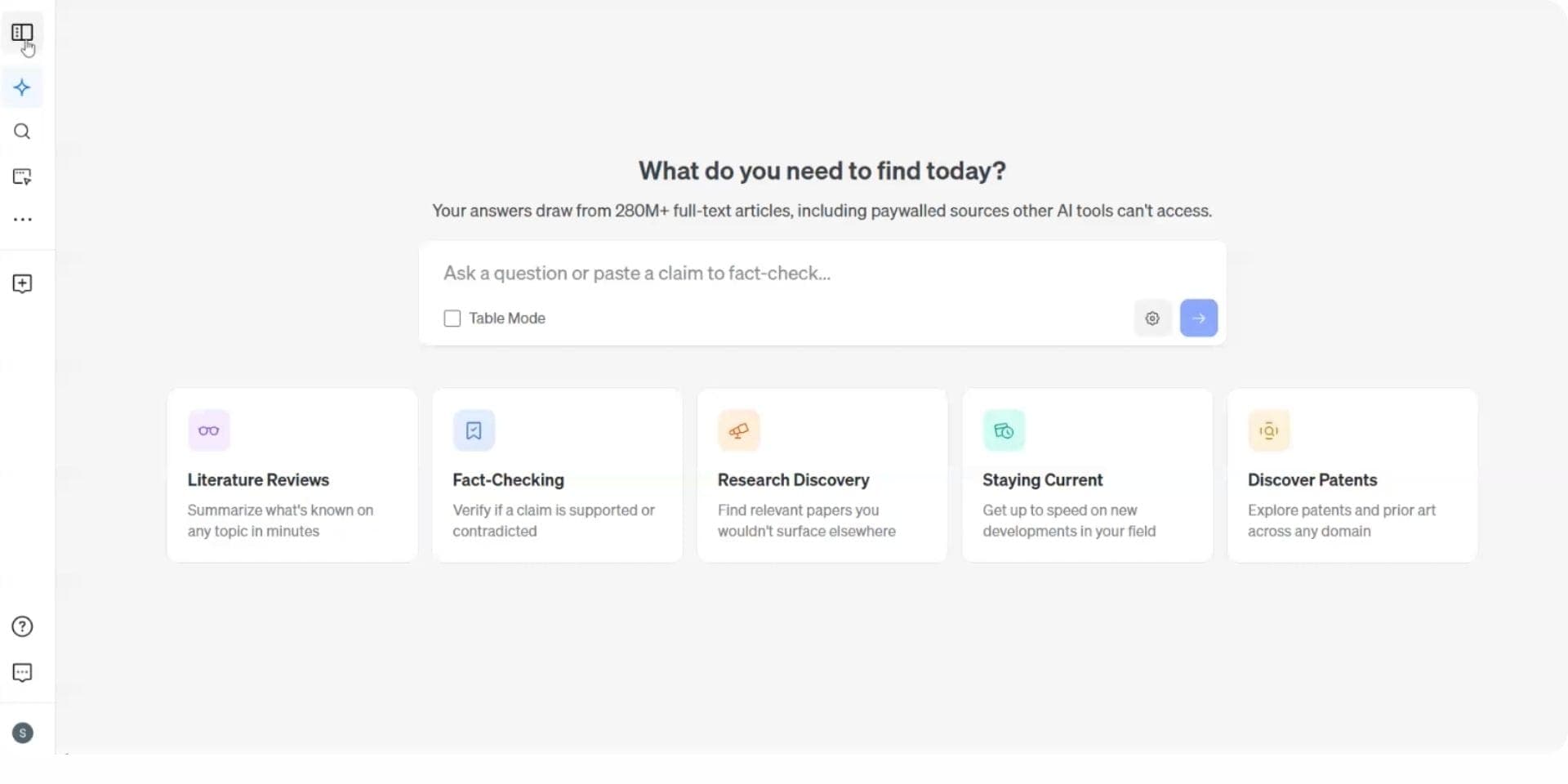
Scite is the citation context platform that indexes 1.6B+ citation statements across 280M+ scholarly sources and classifies each citation as Supporting, Contrasting, or Mentioning. For research paper analysis specifically, Scite reveals whether a paper's findings actually held up under later research, which is context that citation counts alone cannot provide. A paper with 200 citations may have 50 of them contradicting its central claim, and that pattern is exactly what reviewers and editors are now expected to surface during peer review.
What Scite does well is citation-level evidence. The Smart Citations badges (Supporting/Contrasting/Mentioning) plus the AI Assistant for citation-grounded queries make it the strongest tool in this list for the citation-context dimension of research paper analysis. What Scite does less well than Paperguide is breadth across the analytical workflow; there is no Chat with PDF for paper-level Q&A, no structured data extraction, and no AI Writer for synthesis. Scite is a citation context tool, not a research paper analysis platform.
Key Features
- 1.6B+ classified citation statements across 280M+ scholarly sources.
- Smart Citations badges (Supporting / Contrasting / Mentioning).
- Scite Assistant for citation-grounded queries.
- Full-Text Search across the citation index.
- Collections for saving up to 1,000 papers on Basic, scaling to 10,000 papers on Pro.
- Citation Alerts.
- MCP credits for programmatic queries.
- Browser extension for inline citation context on any web page.
Pros
- Citation context data at 1.6B+ scale across 280M+ scholarly sources stands apart in this list.
- Strongest tool in this list for peer review, editorial audit, and reference-validation use cases.
- Trusted by Harvard, Oxford, Mayo Clinic, Johns Hopkins, and Stanford research teams.
Cons
- $20/month Basic is steep for a single-purpose tool when researchers also need extraction, Chat with PDF, and synthesis.
- Classification quality varies on edge cases where citing language is ambiguous.
- No Chat with PDF, structured extraction, or AI Writer for synthesis; Collections cover basic paper-saving rather than systematic-review workflows.
Best For
Researchers evaluating whether published findings have been supported, contradicted, or merely cited in passing across subsequent literature, especially during peer review, editorial audit, or systematic-review screening.
Pricing
| Plan | Price | What It Covers |
|---|---|---|
| Basic | $20/mo | Unlimited Scite Assistant queries, Full-Text Search, Collections up to 1,000 papers, Citation Alerts, 250 MCP credits/month. 7-day free trial. |
| Pro | $50/mo | Everything in Basic, 2,500 MCP credits/month, 10,000-paper Collections, patents, clinical trials, and grants in Search and Assistant. |
| Team | $50/seat/mo | Everything in Pro per seat, Shared Collections, user analytics. Up to 15 seats. |
| Enterprise | Custom | All Team features, unlimited users, flexible pooled usage, API access, SAML/SSO, dedicated customer success. |
Verdict
Scite is the strongest tool for citation context analysis in 2026, particularly for reviewers and editors auditing reference integrity in submitted manuscripts. Paperguide is the best Scite alternative for research teams that need citation integrity alongside Chat with PDF, structured extraction, and citation-grounded synthesis in the same workspace, the connected approach profiled across the best AI research assistant tools cluster.
3. Scholarcy
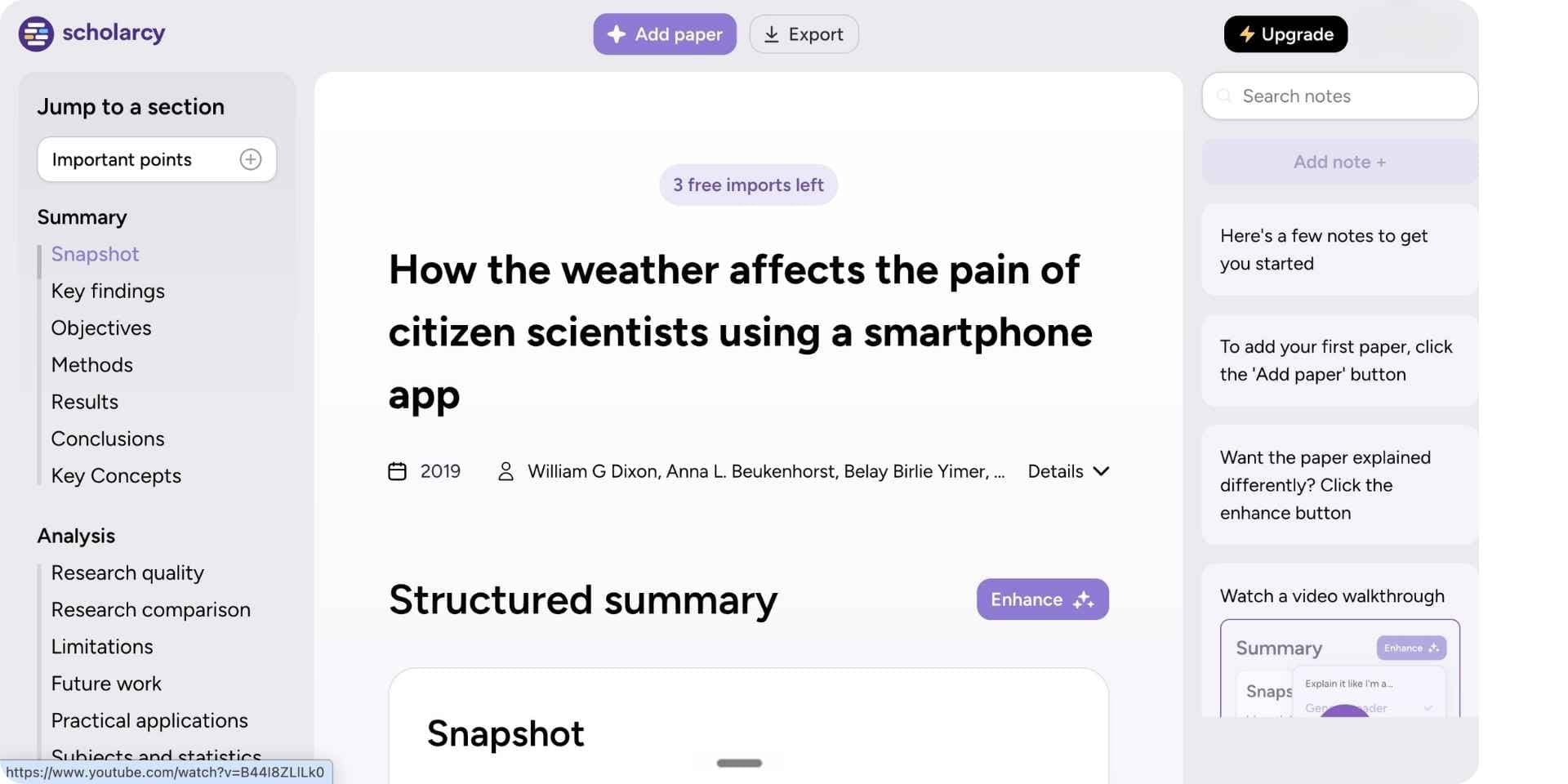
Scholarcy is the dedicated paper summariser for research paper analysis in 2026, with Flashcard Summaries that extract key findings, methods, results, and limitations into a structured format, and a Literature Matrix for side-by-side multi-paper comparison. For researchers triaging a stack of papers, the structured summary format compresses what would otherwise be 15-minute to 1-hour reads into 5-minute scans, which is exactly the bottleneck that defines early-stage analysis.
What Scholarcy does well is structured summarisation. The Flashcard format is consistent across papers, the Literature Matrix surfaces methodological patterns at a glance, and the browser extension lets a researcher summarise any paper in-page during browsing. What Scholarcy does less well than Paperguide is depth; it is a summary tool, not a paper Q&A or extraction platform, and the summaries (while structured) compress rather than dissect. A methodology section that is summarised in 80 words still requires a careful read of the original to evaluate inclusion criteria or instrument validity.
Key Features
- Flashcard Summaries with key findings, methods, results, limitations sections.
- Literature Matrix for side-by-side multi-paper comparison.
- Browser extension for in-page summarisation.
- One-click bibliographies in major citation styles.
- Note-taking, highlighting, and edit-text features.
- Flashcard collections for organisation.
- Export up to 100 flashcards at once.
Pros
- Strongest dedicated paper summariser for analysis triage at this price point.
- Literature Matrix stands apart for multi-paper methodological comparison.
- Affordable monthly entry tier at $9.99 with annual at $90 (25% discount).
Cons
- Summary-level depth only; not paragraph-by-paragraph Chat with PDF.
- No paper search index for discovering comparable analyses.
- Free Article Summarizer caps at 1 summary per day.
Best For
Researchers triaging research papers through structured summarisation and multi-paper comparison, especially during the early screening phase of a systematic or narrative review.
Pricing
| Plan | Price | What It Covers |
|---|---|---|
| Free Article Summarizer | $0 | 1 summary per day, basic export. |
| Scholarcy Plus (monthly) | $9.99/mo | Unlimited summarisation, enhanced summaries, Flashcard saving, notes/highlights, Literature Matrix, export up to 100 flashcards, one-click bibliographies. 7-day free trial. |
| Scholarcy Plus (yearly) | $90/year (25% off) | Same features as monthly with annual discount. |
Verdict
Scholarcy is the strongest dedicated paper summariser for research paper analysis triage in 2026. Paperguide is the best Scholarcy companion for research teams that need summarisation plus deeper analytical workflows (Chat with PDF, structured extraction, citation grounding, synthesis writing) inside the same workspace, the same upstream-downstream split that defines connected analysis across AI tools for literature review.
4. Elicit
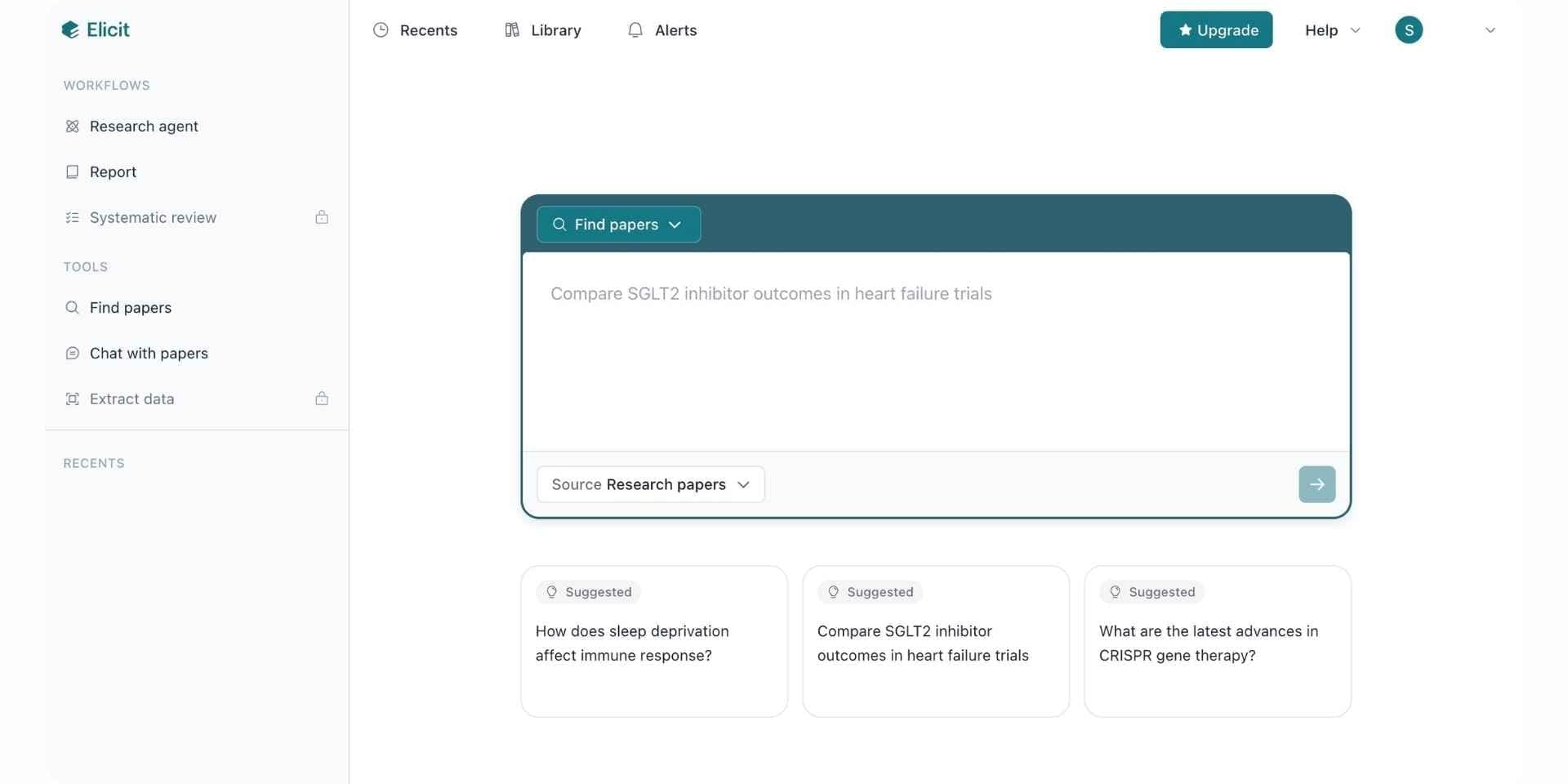
Elicit's structured extraction with custom columns is the strongest tool in this list for pulling methodology details (study design, sample size, statistical approach, instruments, outcomes) across dozens of comparable research papers into a clean evidence table for analysis. The Systematic Review Workflow extends this to thousands of papers on Pro and tens of thousands at Enterprise, which is the scale at which large literature analyses operate.
What Elicit does well is the extraction phase of research paper analysis. Where most tools end at single-paper Q&A or summary-level reads, Elicit produces a structured evidence table where methodology and findings sit side by side across the paper set, making patterns visible that single-paper reads cannot reveal. What Elicit does less well than Paperguide is what happens after extraction. Report mode generates narrative-style synthesis reports, but there is no citation-grounded document editor for manuscript drafting, no Chat with PDF for paper-level deep reading, and no reference manager to keep the extracted data connected to the downstream analysis or writing.
Key Features
- Custom column extraction (up to 40 on Enterprise) for methodology and findings.
- Systematic Review Workflow scaling to 5,000 papers on Pro and 40,000 on Enterprise.
- 138M+ paper corpus across multiple scientific databases.
- Study design, population, and intervention filters.
- PRISMA-grade extraction accuracy at Enterprise tier.
- Report mode for narrative-style synthesis across paper sets.
- API access on Pro for programmatic extraction.
Pros
- Strongest structured extraction in the analysis category.
- Scales to large comparable study sets that exceed Paperguide's per-table caps.
- PRISMA-grade extraction accuracy at Enterprise for formal systematic-review analysis.
Cons
- Paid entry is $11/month Plus (annual), but the Systematic Review Workflow and 20-column extraction require Pro at $49/month.
- No native Chat with PDF for paper-level deep reading.
- No reference manager or citation-grounded document editor for downstream manuscript drafting.
- Repeated searches can return different paper sets, complicating search documentation.
Best For
Research teams running structured paper analysis at scale across large comparable study sets where extraction volume exceeds what manual analysis can cover in a reasonable time.
Pricing
| Plan | Price | What It Covers |
|---|---|---|
| Basic | Free | Search across 138M+ papers, extraction with 2 columns at a time, limited usage. |
| Plus | $11/mo billed annually | Extraction with 5 columns, higher usage limits. |
| Pro | $49/mo monthly or $588/yr | Systematic Review Workflow up to 5,000 papers, 20 extraction columns, API access. |
| Scale | $169/mo monthly or $2,028/yr | 30 extraction columns, live editing and team collaboration. |
| Enterprise | Custom | PRISMA-grade screening up to 40,000 papers, 40 extraction columns, SSO/SAML, dedicated success team. |
Verdict
Elicit is the strongest tool in 2026 for structured paper analysis at scale across large comparable study sets. Paperguide is the best Elicit alternative for research teams that need extraction plus paper-level Chat with PDF, citation context, and citation-grounded synthesis in the same workspace.
5. ChatPDF

ChatPDF is the most accessible standalone Chat with PDF tool for fast paper-level analysis in 2026. The interface is intentionally minimal: upload a PDF, ask questions in natural language, get answers grounded in document text with cited source passages. The side-by-side view keeps the chat and PDF visible together so answers are linked to the original content for fast verification. Multi-file chats allow folder-level conversations across multiple papers, useful for analysing a small defined set together.
What ChatPDF does well is accessibility. There is no account required for casual use, the free plan supports 2 documents per day, and the upgrade path is a single Plus plan (priced inside the app) for unlimited document analysis. What ChatPDF does less well than Paperguide is depth across the analytical workflow. It is a Chat with PDF tool, not a research analysis platform, so there is no structured extraction, no citation context evaluation, no reference manager, and no AI Writer for synthesis. ChatPDF analyses one paper at a time well; it does not run cross-paper analysis at the depth a research team requires.
Key Features
- Upload any PDF, ask questions in natural language with cited source passages.
- Side-by-side chat and document view for fast verification.
- Multi-file chats with folder organisation.
- Multilingual: upload in any language, chat in any language.
- Browser-based with desktop and mobile apps for cross-device access.
- Smart dynamic routing between GPT-4o and GPT-4o-mini for speed-quality balance.
Pros
- Simplest Chat with PDF workflow in this list.
- Free plan supports 2 documents per day without account creation.
- Single Plus upgrade covers unlimited document analysis without tiered feature gating.
Cons
- Single-purpose tool; no extraction, citation context, reference manager, or synthesis writer.
- Limited cross-document analysis depth compared to platforms with structured extraction.
- No paper search index for comparable analysis discovery.
- Plus pricing is only shown inside the app rather than on a public pricing page.
Best For
Researchers needing fast Chat with PDF over occasional research papers without a full platform commitment, or students analysing individual papers for class assignments.
Pricing
| Plan | Price | What It Covers |
|---|---|---|
| Free | $0 | 2 documents per day, no account required for casual use. |
| ChatPDF Plus | Priced in-app | Unlimited document analysis, multi-file chats, advanced features. |
Verdict
ChatPDF is the most accessible standalone Chat with PDF for paper analysis in 2026. Paperguide is the best ChatPDF companion for research teams that need Chat with PDF plus paper discovery, structured extraction, citation context, and citation-grounded synthesis in one connected workspace.
How the Paperguide Research Paper Analysis Workflow Works
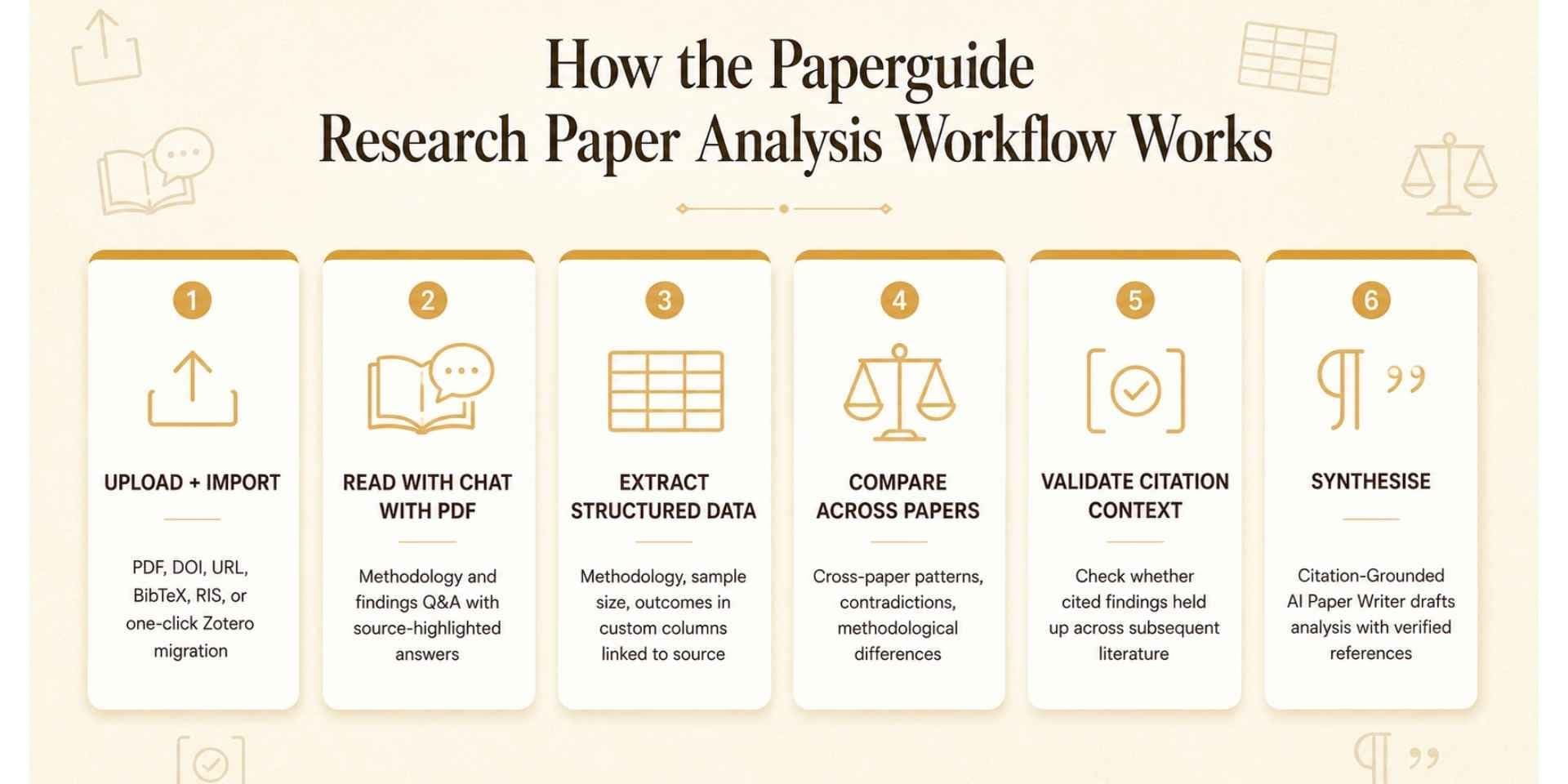
The best research paper analysis results in 2026 come from layering tools across a connected scientific research workflow rather than expecting one tool to do everything.
Step 1: Upload or import
Add papers via PDF upload, DOI, URL, BibTeX, RIS, or one-click Zotero migration into the AI Reference Manager.
Step 2: Read with Chat with PDF
Ask methodology, findings, and limitation questions against the actual source text, with answers highlighted back to the original passages for verification, supported by the how-to-write-a-research-paper guide and the types of research papers reference patterns.
Step 3: Extract structured data
Pull methodology, sample size, statistical approach, instruments, outcomes, and risk-of-bias into evidence tables with custom columns. Every extracted value links to its source passage in the original PDF.
Step 4: Compare across papers
Cross-paper analysis surfaces patterns, contradictions, and methodological differences that single-paper reads miss. The same comparison pattern underpins the meta-analysis tooling workflow.
Step 5: Validate with citation context
Check whether cited findings held up across subsequent literature, surfacing the supporting and contradicting citation patterns that reveal evidence reliability.
Step 6: Synthesise
The AI Paper Writer drafts analysis sections with citations from the analysed papers, with every reference verified against the actual reference library.
This research-first analytical workflow is what separates AI tools for research paper analysis that survive reviewer audit from those that produce confident-sounding analysis with citation drift baked in.
Best AI Tools for Research Paper Analysis by Use Case
| Use Case | Recommended Tool | Why |
|---|---|---|
| Best AI tool for research paper analysis overall | Paperguide | Connected analysis across reading, extraction, citation context, and synthesis in one workspace. |
| Best AI for citation context analysis | Scite | 1.6B+ classified citations (Supporting/Contrasting/Mentioning) across 280M+ scholarly sources. |
| Best AI for paper summarisation analysis | Scholarcy | Flashcard Summaries plus Literature Matrix for multi-paper comparison. |
| Best AI for structured extraction analysis at scale | Elicit | Custom column extraction scaling to 40,000 papers at Enterprise. |
| Best AI for standalone Chat with PDF paper analysis | ChatPDF | Simplest paper-level Q&A workflow with a free 2-documents-per-day plan. |
| Best AI for methodology analysis | Paperguide | Extract Data + Chat with PDF + comparable methodology search. |
| Best AI for cross-paper findings comparison | Paperguide | Research Agent + Extract Data + AI Search across 200M+ papers. |
| Best AI reference manager for paper analysis | Paperguide | 1,000+ citation styles, Zotero migration, connected to the analysis workflow. |
| Best free AI stack for research paper analysis | Paperguide Free + Scholarcy Free + ChatPDF Free | Free Chat with PDF, summarisation, basic extraction, and reference management. |
Best AI Tools for Research Paper Analysis in 2026: Final Comparison
| Feature | Paperguide | Scite | Scholarcy | Elicit | ChatPDF |
|---|---|---|---|---|---|
| Multi-paper analysis | Yes | Citation-only | Yes (Literature Matrix) | Yes (extraction tables) | Single paper |
| Citation context | Yes | Yes (strongest, 1.6B+) | None | None | None |
| Structured extraction | Yes (50 cols) | None | Flashcards | Yes (strongest, 40 cols) | None |
| Chat with PDF | Yes (source-grounded) | None | None | Partial | Yes (standalone) |
| Paper summarisation | Yes | None | Yes (strongest) | Reports only | Yes |
| Citation-grounded synthesis writing | Yes (verified) | None | None | None | None |
| AI Reference Manager | Yes (full-fledged) | None | Bibliographies | None | None |
| Paper corpus | 200M+ peer-reviewed | 280M+ scholarly sources | None native | 138M+ | None native |
| Free plan | Yes | 7-day trial | Yes (1/day) | Yes (limited) | Yes (2/day) |
| Starting paid | $12/mo annual | $20/mo Basic | $9.99/mo Plus | $11/mo Plus (annual) | Plus (in-app) |
Common Mistakes When Using an AI Tool for Research Paper Analysis
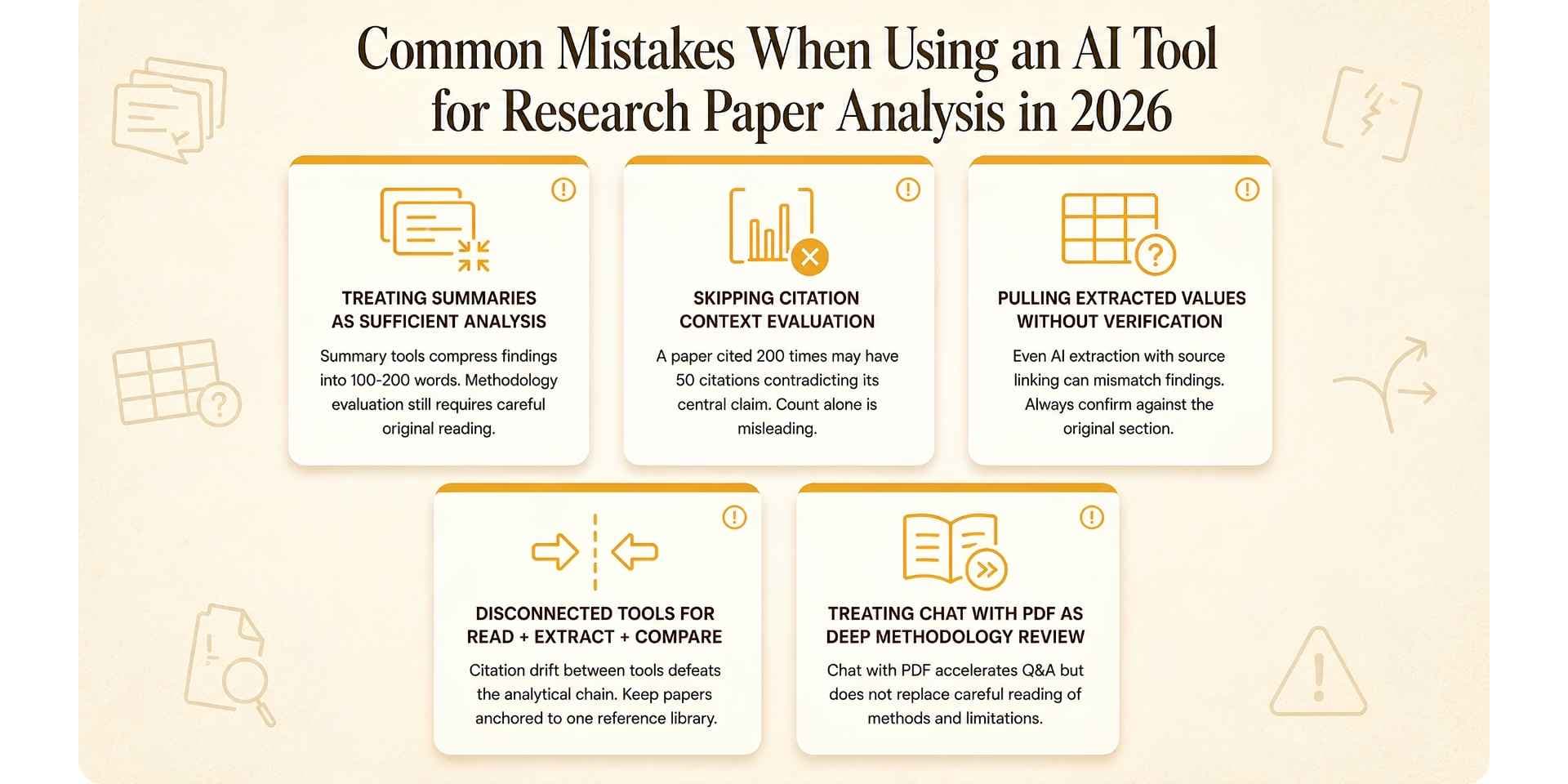
- Treating summaries as sufficient analysis. Summary-level tools compress key findings into 100-200 words. Methodology analysis still requires careful reading of the original methods section to evaluate inclusion criteria, instrument validity, and statistical assumptions.
- Skipping citation context evaluation. A paper cited 200 times may have 50 of those citations contradicting its central claim. Citation count alone is misleading; Scite-style supporting/contrasting classification reveals what the citation tally hides.
- Pulling extracted values without source verification. Even AI extraction with source linking can mismatch the cited finding. Always confirm extracted values against the original methodology or results section before building analysis on top of them.
- Using disconnected tools for read + extract + compare. Citation drift between tools defeats the analysis. The paper read in Chat with PDF, extracted in a spreadsheet, and synthesised in a writer must stay anchored to the same reference library or the analytical chain breaks.
- Treating Chat with PDF as deep methodology review. Chat with PDF accelerates Q&A but does not replace careful reading. The methodology and limitations sections deserve manual scrutiny even when the rest of the paper is read through AI assistance.
Final Verdict
For individual researchers, postdocs, faculty researchers, and evidence synthesis teams analysing research papers in 2026, Paperguide is the best AI tool for research paper analysis. The platform consolidates Chat with PDF, structured extraction, citation context, methodology comparison, and citation-grounded synthesis in one workspace, eliminating the citation drift that defines multi-tool analysis workflows and the fabricated references that the Lancet 2026 audit measured at a 12-fold increase across 2.5 million biomedical papers in two years.
For the specific stages of research paper analysis where dedicated tools dominate, Scite handles citation context across 1.6B+ classified citations, Scholarcy handles structured paper summarisation and Literature Matrix comparison, Elicit handles structured extraction at scale across large comparable study sets, and ChatPDF handles standalone Chat with PDF for fast single-paper Q&A.
The 2026 best-practice pattern is rarely a single tool. It is Paperguide for the analytical backbone (Chat with PDF, structured extraction, citation grounding, synthesis), Scite for the citation context layer when peer review or editorial audit demands evidence integrity verification, Scholarcy for fast paper triage during the early screening phase, Elicit for large-scale structured extraction when the comparable study set runs into the thousands, and ChatPDF for ad-hoc single-paper Q&A when the analysis volume does not warrant a full platform commitment. That layered workflow is what produces research-grade paper analysis that survives reviewer audit in 2026.
Frequently Asked Questions (FAQs)
What is the best AI for research paper analysis in 2026?
Paperguide is the best AI tool for research paper analysis in 2026. It consolidates Chat with PDF, structured extraction, citation analysis, methodology comparison, and citation-grounded synthesis in one workspace with citation grounding throughout the analytical workflow.
Which AI is best for research paper analysis?
Paperguide is the strongest AI for research paper analysis overall. Scite handles citation context with 1.6B+ classified citations, Scholarcy handles structured summarisation with Literature Matrix, Elicit handles structured extraction at scale, and ChatPDF handles standalone Chat with PDF for single-paper Q&A.
What AI tool analyses research papers?
Paperguide, Scite, Scholarcy, Elicit, and ChatPDF are the 5 leading AI tools for research paper analysis in 2026. Paperguide is the strongest overall for connected multi-paper analysis with citation grounding; the other four lead in specific stages.
What is the best AI for analysing research papers?
Paperguide is the strongest AI for analysing research papers across the full analytical workflow (read, extract, compare, validate citations, synthesise) in 2026 because it consolidates each of these stages inside a single citation-grounded workspace.
What is the best free AI for research paper analysis?
The Paperguide Free plan plus Scholarcy Free Article Summarizer plus ChatPDF Free combination covers paper-level Q&A, structured summarisation, and basic extraction at zero cost. Paperguide handles Chat with PDF and reference management, Scholarcy handles Flashcard Summaries, and ChatPDF handles fast single-paper Q&A.
Can AI analyse citation context in research papers?
Yes. Scite classifies 1.6B+ citation statements across 280M+ scholarly sources as Supporting, Contrasting, or Mentioning, revealing whether a cited paper's findings actually held up under later research. Paperguide's AI Search and Research Agent surface comparable citation contexts in connected analytical workflows.
How does AI help with research paper analysis?
AI tools for research paper analysis accelerate four stages: reading (Chat with PDF with source-grounded answers), summarisation (structured Flashcard format compressing 30-page papers into 5-minute reads), extraction (structured evidence tables across multiple papers), and citation context evaluation (supporting vs contradicting citation patterns). The strongest AI consolidates these stages in one workspace.
Why does citation context matter for research paper analysis?
Citation count alone is misleading. A paper cited 200 times may have 50 of those citations contradicting its central claim, which is exactly the pattern reviewers and editors now expect to surface during peer review. The 2026 Lancet audit measured a 12-fold increase in fabricated references across 2.5 million biomedical papers in two years, making citation context evaluation a baseline requirement rather than an optional check.
Can AI replace researchers in analysing research papers?
No. AI tools for research paper analysis accelerate reading, extraction, citation context evaluation, and synthesis writing, but cannot replace researcher judgment on methodological validity, clinical relevance, theoretical contribution, or evidence interpretation. Use AI for the upstream analytical work and let the researcher lead the substantive evaluation.
How does Paperguide compare with ChatGPT for research paper analysis?
Paperguide pulls citations from a real 200M+ peer-reviewed corpus and links every extracted finding back to its source passage, while ChatGPT generates analysis from training data and routinely fabricates citations. For research paper analysis where citation integrity is auditable and methodology comparison runs across a defined paper set, Paperguide is the safer choice. ChatGPT is useful for general reasoning over uploaded papers but not for citation-grounded analytical synthesis.
Researching a topic?
Find papers and get cited answers
Search the literature, find gaps and write with citations.
Start for freeNo credit card required