Best Reference Management Software For 2026 | Top Tools For Researchers

The best reference management software in 2026 is Paperguide for researchers who want their references, PDF reading and AI research tools in one place, Zotero for a free and open-source library, and EndNote for Word users who rely on Cite While You Write. JabRef is the best free choice for LaTeX users, Paperpile is best for Google Docs, and Mendeley Reference Manager gives you a free library with 2 GB of cloud storage. Reference managers are also called citation managers: both names describe the same software.
If you fail to cite your sources efficiently, the authenticity of your research goes for a toss. You can write the most readable paper of all time, but without substantiating, it holds no value.
We know that organizing references and keeping tabs on citations is not an easy job. It takes a multi-faceted organizational system to keep things from falling apart. This is where AI-powered reference management software comes in handy.
With the power of AI, you can collect information, organize, cite, and do much more with just a few clicks. In this blog, we will discuss the possibilities of a few AI-powered Reference management tools and what they bring to the table.
TL;DR
- Paperguide is the top pick in 2026, pairing an AI Reference Manager (BibTeX, RIS and Zotero import, Chat with Paper) with AI research tools in one simple, clutter-free platform.
- Zotero and JabRef are the strongest free options: Zotero is open source with 300 MB of free storage, and JabRef suits LaTeX users.
- EndNote suits researchers with varied needs who want Cite While You Write and 7,000+ output styles, for a one-time fee of $275.
- Mendeley, Paperpile, and RefWorks (now EndNote Fusion) focus on citation management (Mendeley's AI features need a paid upgrade), and RefWorks only accepts institutional accounts.
- Cite This For Me, Citavi, and ReadCube Papers fit manual citation building, project planning, and AI-assisted PDF reading respectively.
Reference Management Software Comparison (2026)
We compared each reference manager on the criteria university library guides use, such as Oxford's Bodleian comparison tables and the University of Saskatchewan's guide to comparing reference managers [2][3]: word processor compatibility, citation styles, browser importers, PDF annotation, free storage, sharing and collaboration, exporting your library, and built-in AI features.
| Tool | Best for | Key features | Free plan | Pricing |
|---|---|---|---|---|
| Paperguide | References, PDF reading and AI research in one place | 1,000+ citation styles, Zotero, Mendeley, BibTeX and RIS import, AI summary on every paper, answers from your own library, shared libraries | Yes, with a limited Reference Manager and 1,500 AI credits a month | Plus at $12 per seat per month, billed annually |
| Zotero | Best overall free, open-source reference manager | Browser connector, Word, Google Docs and LibreOffice plug-ins, collections, tags and saved searches | Yes, with 300 MB of storage | Free; extra storage from $20 a year for 2 GB |
| EndNote | Word users with large libraries | Cite While You Write in Word, 7,000+ output styles | No, 30-day free trial | One-time purchase, $275 for the full licence in the US |
| Mendeley | A free, PDF-focused library from Elsevier | Mendeley Cite for Word, Web Importer, PDF highlights and notes, paid AI features | Yes, with 2 GB of storage | Paid upgrade through Elsevier |
| Paperpile | Google Docs users who want a browser-based library | Google Docs and Word plugins, Chrome extension, folders, labels, metadata editing | No, 30-day free trial | From $4.15 a month, billed annually |
| RefWorks (now EndNote Fusion) | Students and staff at subscribing institutions | Cloud library, shared projects, Word and Google Docs integration | Institutional accounts only | Through your institution |
| JabRef | Open-source option for LaTeX and BibTeX users | Works directly with BibTeX and BibLaTeX files, browser extension | Yes, free and open source | Free |
| Citavi | Theses and dissertations: references, quotations and project planning | PDF import, ISBN lookup, import filters from other tools | No, free trial | Not published; depends on platform and licence |
| ReadCube Papers | AI-assisted PDF reading | Chat with PDF, synced library, annotations | No, 30-day free trial | $10 a month or $95 a year, 40% off for academics |
| Cite This For Me | Quick manual citations | Citation builder, grammar and plagiarism checks | Yes | £6.99 a month |
Prices are taken from each vendor's own pricing page on 13 November 2026 and change often, so check them before you buy.
Top Reference Management Software For 2026
The ideal way to decide which reference manager works for you is by getting hands-on with each of them. It will only be a fair judgement when you know each feature and are able to assess them as per your usage.
In the below list, we have some of the best tools that are topping the charts currently with all their features and some demo usage for you to assess.
Paperguide
Paperguide is an AI research platform with a built-in AI Reference Manager, for researchers who want their library, PDF reading and AI research tools in one place. Its AI Reference Manager sits inside an AI-native platform for scientific research workflows and systematic reviews. What works in its favor is that despite its many features, the platform remains simple and clutter-free, making it easy to use.
The Paperguide AI Reference Manager has a wide range of features that make it stand out among the competition. The free plan includes a limited Reference Manager, and paid plans make it unlimited. Check out its features below:
- You can either upload a file to cite your sources or look for any paper online, along with easy integration. Adding a paper in the dashboard is easy and all it takes is one click.
- Paperguide allows easy import of a list of bibliographic references stored in either the BibTeX (.bib) or RIS (.ris) file format into the dashboard. You can either copy-paste or manually type it. Not only that, you will be able to migrate references from Zotero directly or add them manually too. It encourages a completely synced workspace with all your work material under one roof.
- There’s also a Chat with Paper option that helps you extract key insights from the paper without needing to go through it line by line.
- Switch between 1,000+ citation styles and every reference updates, then export to BibTeX, RIS, Word, PDF, CSV, or Excel.
- Automatic metadata and open-access PDF fetching, plus an institutional proxy (EZproxy and others) for paywalled papers.
- Share libraries with view, annotate, or edit permissions, with version history for team projects.
- Add papers by DOI, URL, ISBN, arXiv ID, or PDF upload (or save them from any page with the Chrome extension), and read them in a built-in PDF viewer with highlights, annotations, and notes.
- Ask your library a question and get citation-grounded answers drawn only from your saved papers, including a comparison of two studies. Every saved paper also feeds AI Search, systematic reviews, Extract Data, and the AI Paper Writer.
- Beyond references, Paperguide Systematic Review runs protocol-driven systematic reviews with Dual Review (two blind reviewers plus a conflict resolver) or AI Systematic Review with a named verifier, and generates the PRISMA diagram from actual counts.

To have a clearer understanding of how the Reference Manager works, I have worked with the prompt “The effect of social media on mental health” to highlight its capabilities.
- Once you start searching for papers about your topic, you will have the option to add them to your dashboard for further processing. The added papers will be visible in your library, and you can categorize or organize them accordingly.
- You can fetch the relevant bibliographic references and find citations for the paper in a separate tab, enhancing the user experience.
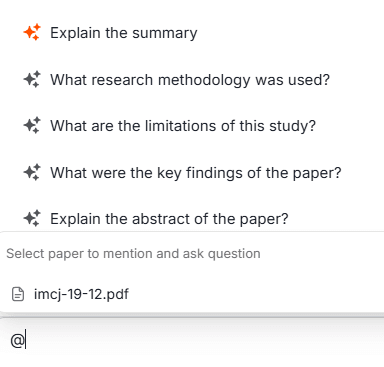
- The AI Assistant powering its reference manager can extract data from any PDF and even suggest relevant questions to improve results. The Chat With Paper option further allows you to get relevant insights on the paper, such as the limitations and research methodologies.
- Sorting the papers in your library is easy and can be differentiated as per its PDF versions too.

Pricing: The Free plan includes 1,500 AI credits a month, and paid plans start with Plus at $12 per seat per month, billed annually ($144 a year), with 12,500 AI credits and an unlimited Reference Manager, followed by Pro at $29 per seat per month, billed annually ($348 a year).
EndNote
EndNote is a desktop reference manager from Clarivate for researchers who write in Microsoft Word and manage large libraries. It offers online solutions for research management and is known for its diverse citation styles. It’s ideal for academicians and researchers who have varied reference management needs.
However, one of its major disadvantages is the need for a download to operate it, even for the free version. Along with that, there’s no free forever plan, only a 30-day free trial.
Its “Cite While You Write” feature allows you to insert in-text citations from your library in Microsoft Word. There are more such features, as we’ve outlined below:
- Building your bibliography will be a piece of cake for EndNote’s support for more than 7,000 output styles.
- Get hold of multiple resources and PDFs on your topic with ease.
- Make your library easily accessible and customizable with tags and read, review, annotate, and search.
- You can organize your database by smoothly connecting your search.
- There’s also access to full-text research articles, but in the paid plan.
Pricing: EndNote is a one-time purchase. The full licence is $275 in the US, and prices vary by country.
In 2026, reference management tools are no longer limited to storing citations. Researchers increasingly expect these platforms to support literature review workflows, including paper discovery, summarization, and synthesis. This shift has led to the rise of AI-native research platforms like Paperguide, which also appears in our list of the best AI literature review tools in 2026. By combining semantic search, citation management, and AI driven paper analysis in a single workspace, Paperguide helps researchers move efficiently from collecting sources to building structured, citation backed literature reviews.
Mendeley
Mendeley Reference Manager is Elsevier's free, PDF-focused reference manager, with a dedicated panel for all your citations, known as Mendeley Cite. It doesn’t offer writing assistance, and its AI features (Reading Assistant, Ask My Library and Compare Experiments) need a paid upgrade. You can access it through your research organization or university’s credentials, or create your own account. If it does not fit your work, compare the best Mendeley alternatives for researchers.
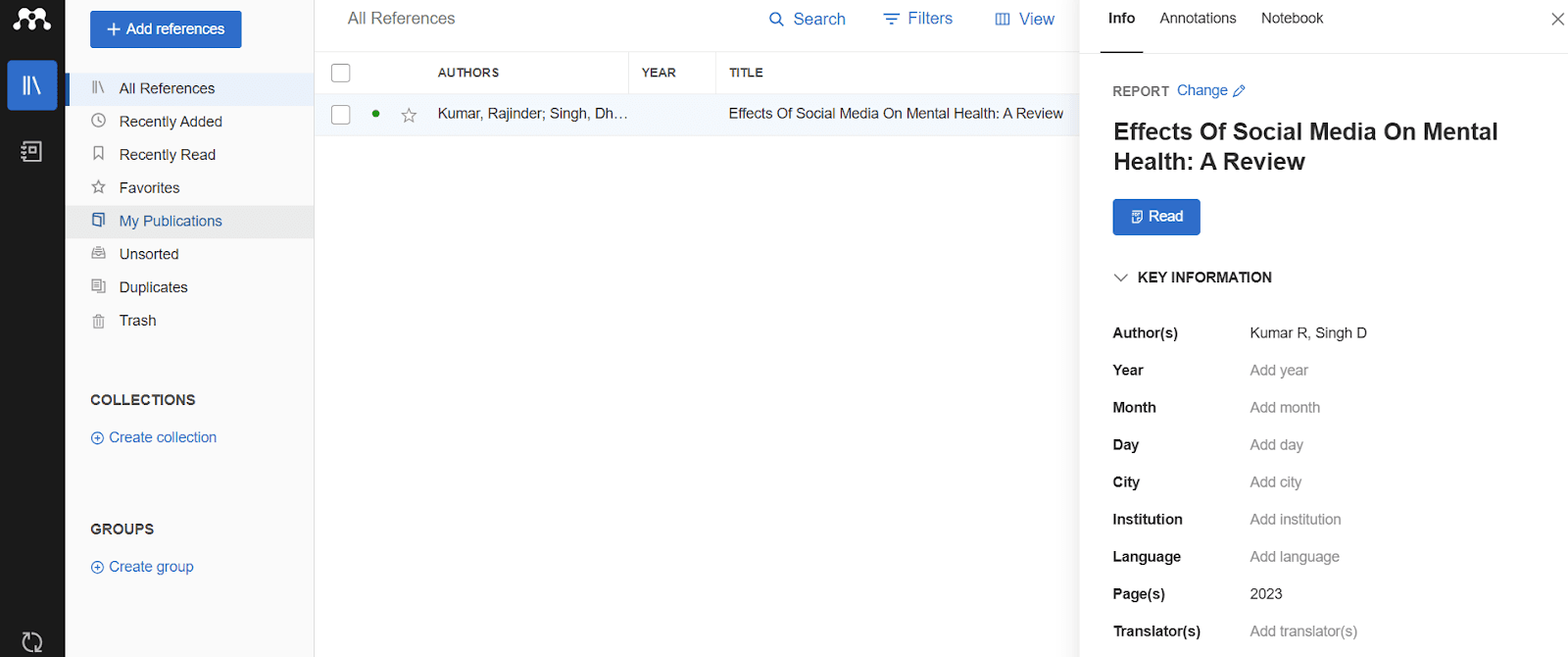
With Mendeley, you’ll get a whole host of features that are worth exploring and which makes it a reliable reference manager software:
- You can add papers from your web browser with just a few clicks.
- Mendeley Cite lets you cite without any interference and in a separate panel.
- Get an organized directory for all your storage woes.
- Highlight notes from PDFs and other critical observations in one place.
- Mendeley Web Importer takes care of all your imports essential to the topic and offers easy integration.
You can access your PDFs directly through its dashboard. However, keep in mind that key information for PDFs, such as year, URLs, and citation keys may need to be filled out by you, especially for PDFs that you’ve uploaded yourself.
Pricing: The Mendeley reference manager is free with 2 GB of storage. Elsevier sells extra features through a paid upgrade.
Zotero
Zotero is free, open-source reference and citation management software for students and researchers who want full control of their library at no cost. Its browser connector saves papers from publisher pages, and its plug-ins cite into Word, Google Docs and LibreOffice. You can fetch information from anywhere on the web, as it doesn't limit itself when it comes to its sources. However, you’ll need to install the desktop app on your system to use its full features.
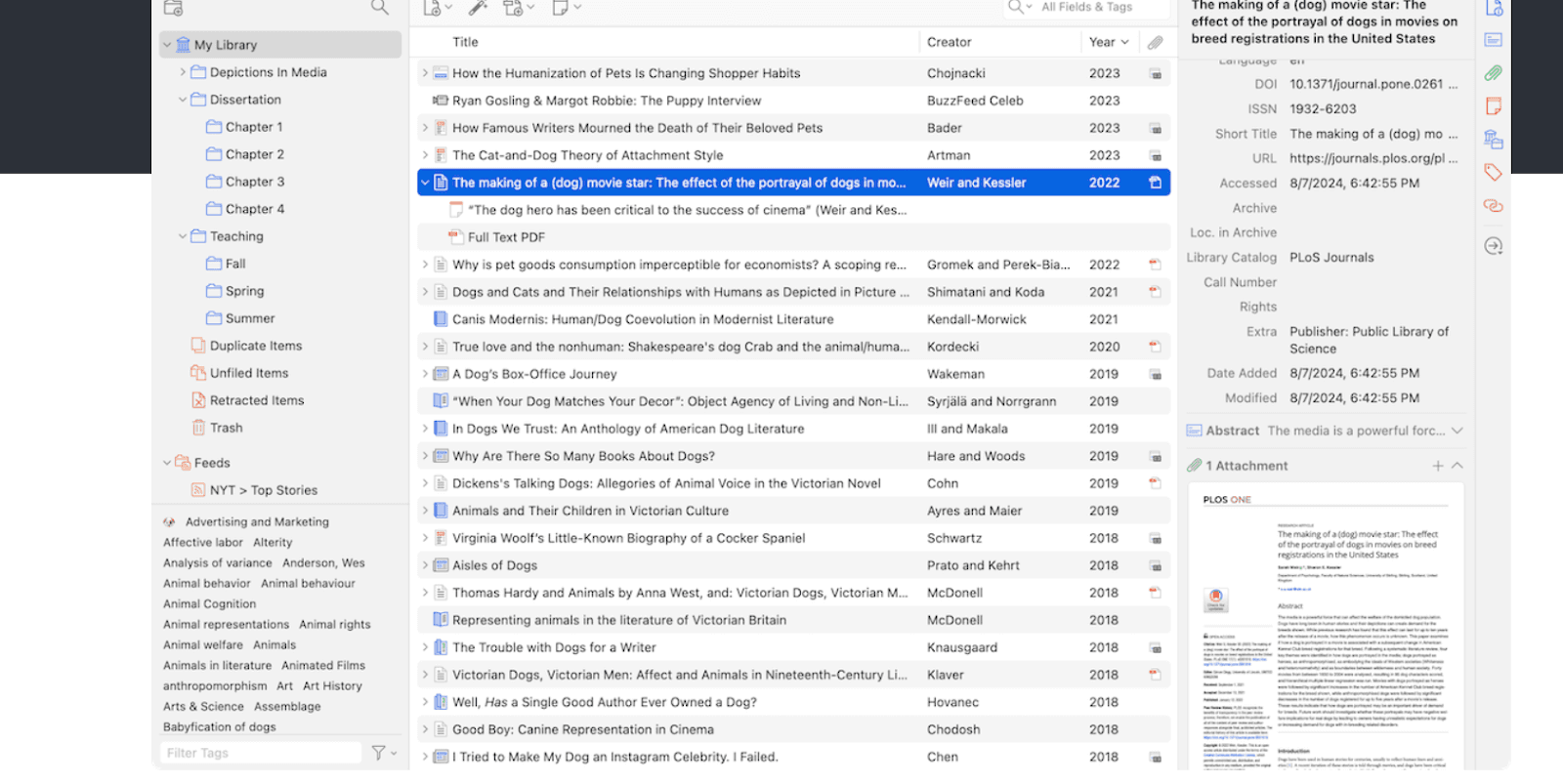
Nonetheless, its high-end features make up for the hassle and optimize your research work efficiently. It works well as a personalized research assistant and reference manager that helps you fetch relevant articles from anywhere on the web.
- Customize your collections and tags with relevant keywords for your research.
- Save your searches to fill in for your query as you work.
- Match your work to almost any style or publication through the Zotero Style Repository.
- Organize your references based on multiple chapters or segments of your research paper.
- Keep all your data in sync across your devices and get easy access, even with web browsing.
- Zotero provides 300 MB of storage for the free plan.
Pricing: Zotero provides 300 MB of storage for the free plan, and its paid plans start at $1.67/month for 2 GB of storage.
RefWorks
RefWorks is a cloud reference manager for students and staff at institutions that subscribe to it. Clarivate renamed it EndNote Fusion in October 2026, and existing libraries carry over [1]. It provides easy-to-access features and a collaborative framework for students and researchers. The cloud-based operation enhances communication amongst researchers, enabling real-time updates on changes.
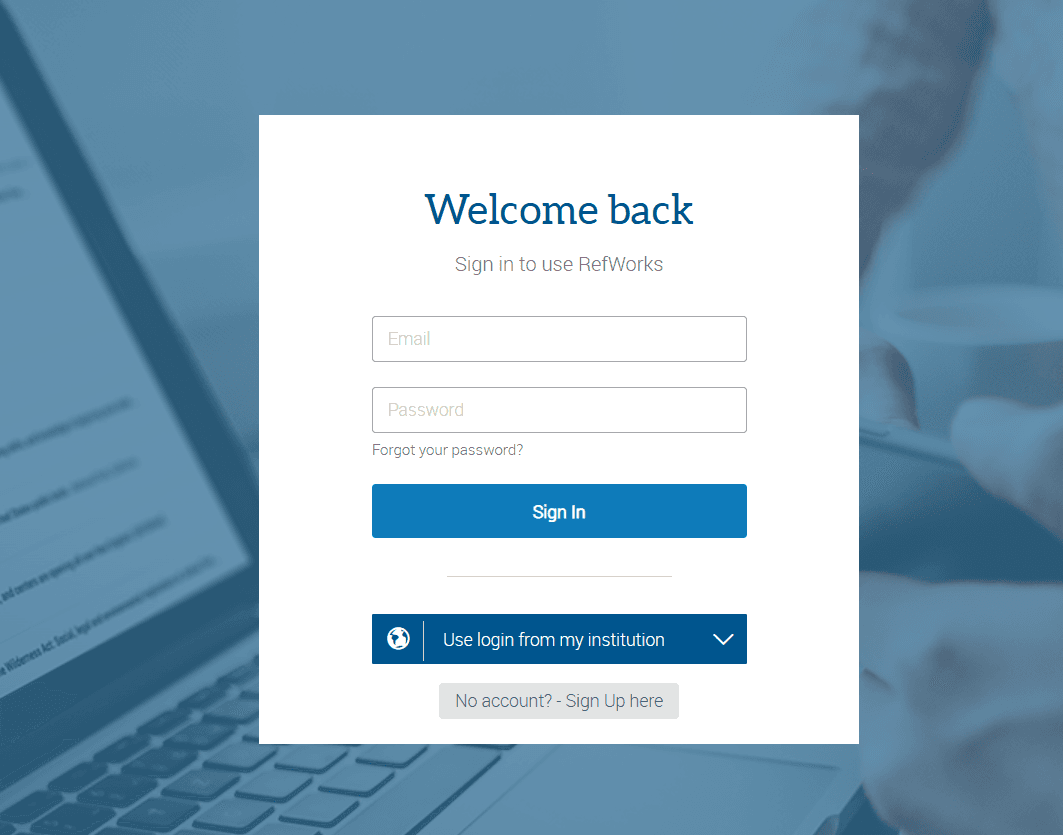
However, a major issue is that only people with institutional emails can create accounts. Accounts with personal emails aren’t allowed, and this limits its operations to those affiliated with organizations or universities.
If you’re still interested, take a look at what RefWorks offers below:
- Access RefWorks from wherever you want to collaborate and share your work.
- Versatile collaboration and sharing options that enable you to read, organize, and even highlight your full-text documents in one place.
- Enjoy real-time editing on group projects online.
- It is designed to integrate with all the renowned writing tools like Google Docs and Microsoft Word.
- Support for a wide range of citation styles and custom fields
Pricing: RefWorks’s pricing isn’t provided on its website. You’ll have to contact their team for pricing details as its pricing is based on the number of users in an organization.
Paperpile
Paperpile is a browser-based reference manager for researchers who want their whole library online. It lets you have a fully functioning library in your browser. The tool doesn’t have a dedicated space to write or brainstorm ideas (unlike Paperguide) and it only offers manual edits, which restricts its usage to being just a citation organizer and nothing much.
You can manage your references in one window. The tool opens up to the dashboard directly with its easy sign-in and has all its relevant filters aligned on one side. But, you’ll also have to install a Chrome extension to access the main features, which we’ve discussed below.
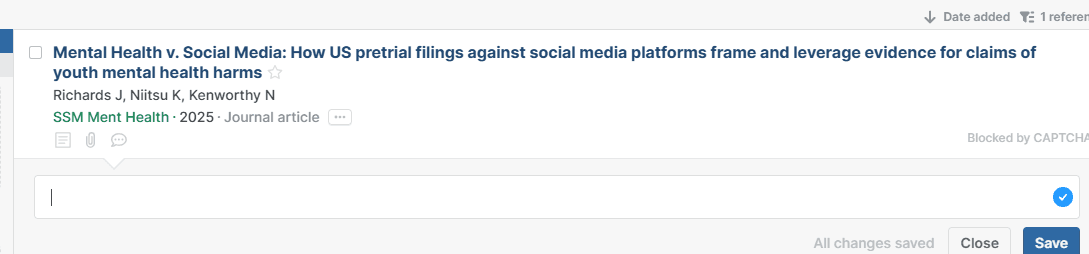
- Paperpile’s Search Online… feature is easy to locate, but it operates at a comparatively slower pace. It is only limited to searching articles and books for you and doesn't extract data from published papers. But it lists all the relevant sources and keywords in a separate pane for your assistance.
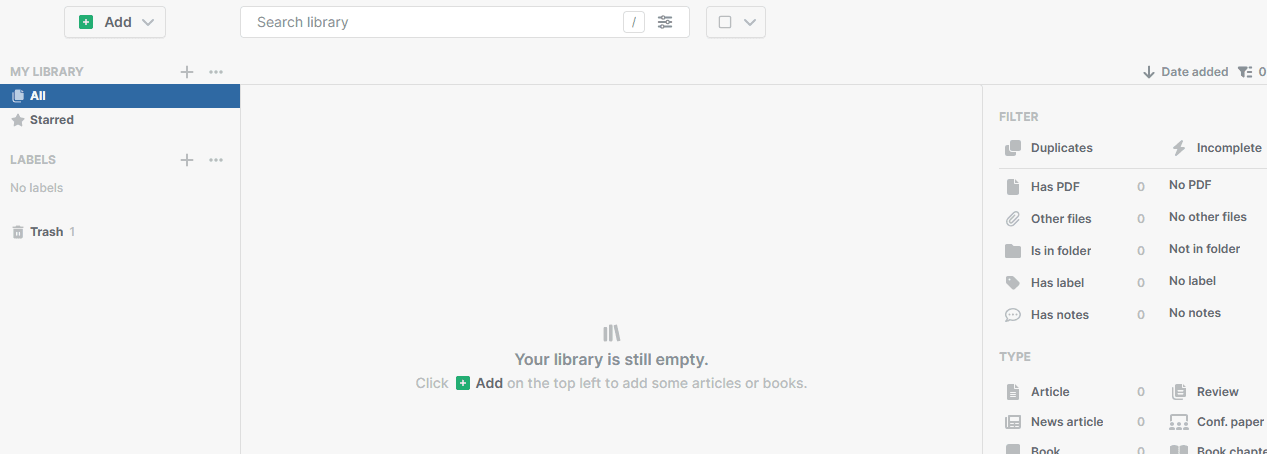
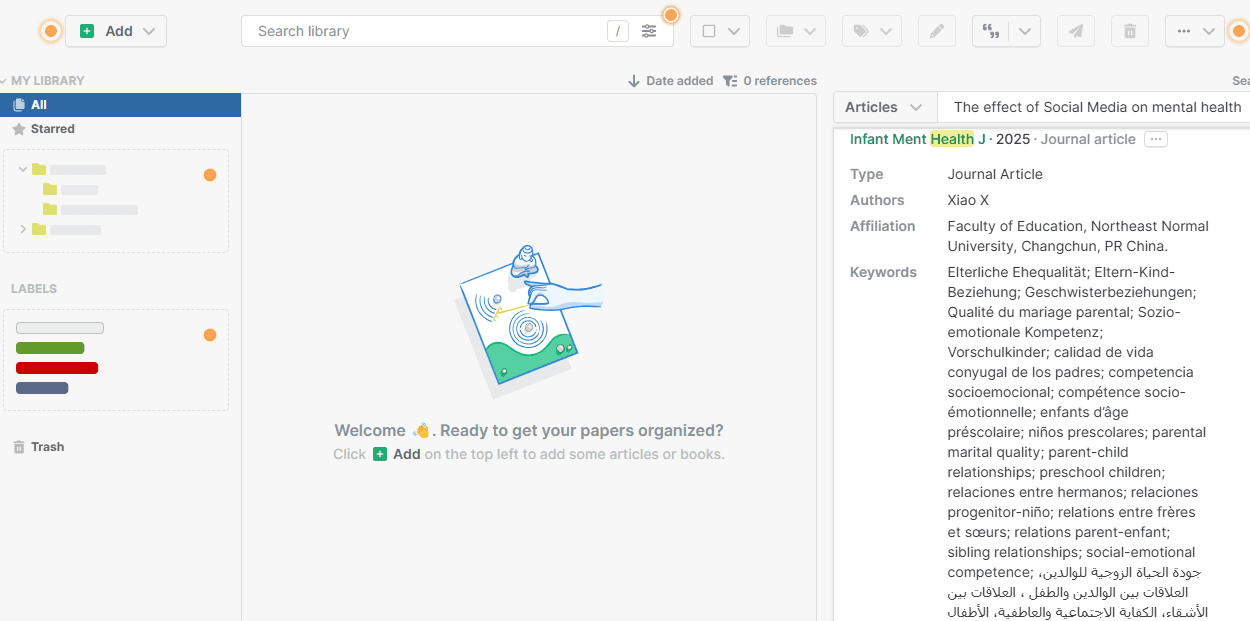
- You can import your articles directly from the web or your existing projects as it offers easy integration. But it lacks variety in its sources and often misses the intent of your search. But, when you add an article from the web, as I have done here, it lets you copy all your citations in one place.
- It doesn't offer much in the case of manual citations like Paperguide, but it lets you efficiently organize your library. You can create folders, add tags, edit metadata, and much more all in one place.
- You will genuinely miss an AI assistant in this regard, as all it allows you to do is add certain notes to the papers fetched online. However, you can share the paper or find its PDF version easily.
Pricing: Paperpile offers a 30-day free trial for new users. Paid plans start at $4.15 a month, billed annually.
Cite This For Me
Cite This For Me is a citation generator for students who want to build citations quickly by hand. It lets you manage your existing work or create new sources in one place. The tool offers a separate plagiarism checker and a grammar checker in a dedicated column to enhance your overall writing.
It has two main sections; one takes care of your citations and allows you to manually find your sources, while the second section is dedicated to overall writing assessment and helps with citations and plagiarism.
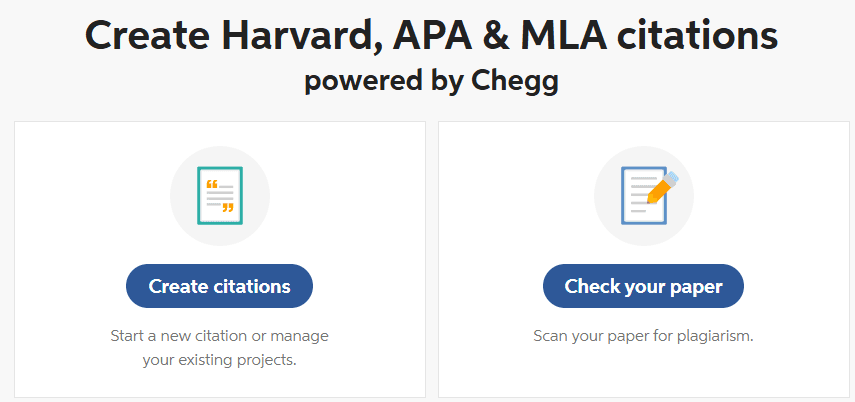
- The Create citations feature is a manual citation creator that lets you pick your source and build your way up. You will be able to select your citation source and proceed with the search accordingly.
- The process is further refined by its suggestions on how to make your citation better and where it needs more focus.
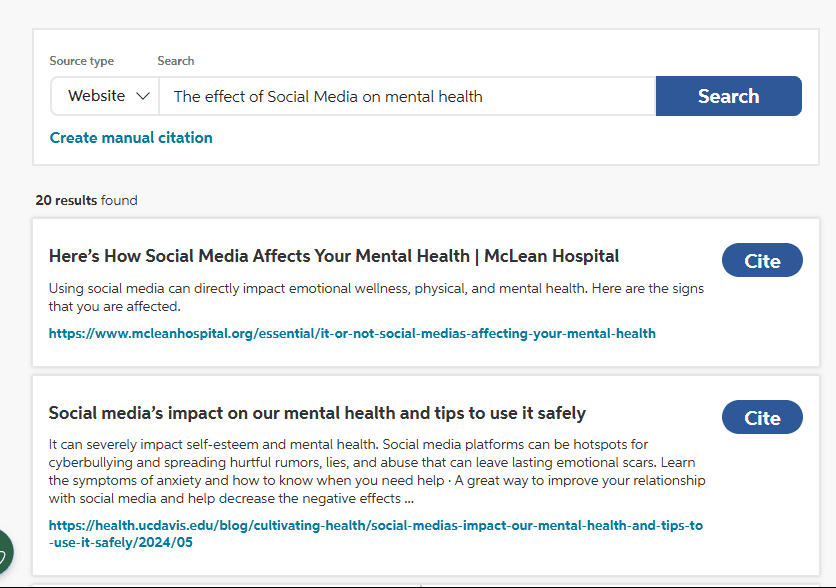
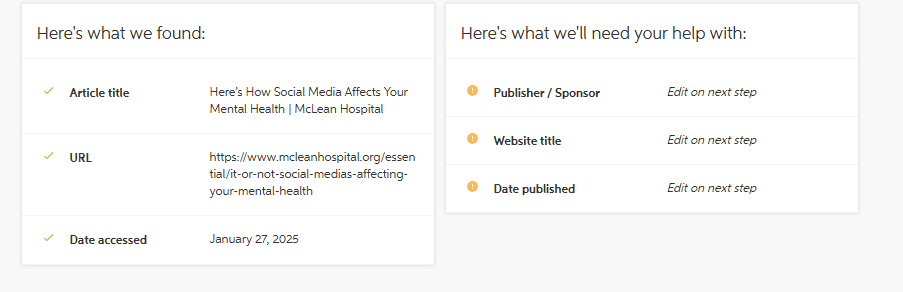
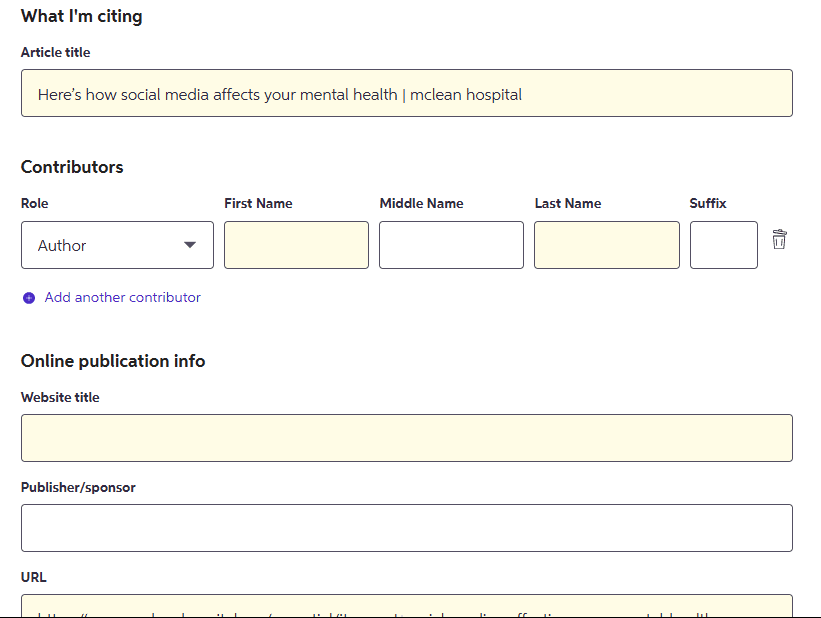
- If you wish to manually create your citations and add relevant details based on your writing needs, this is an excellent tool. The added advantage is its built-in grammar checker and plagiarism checker, which are easy to use and don’t interfere with your progress on the citation work.
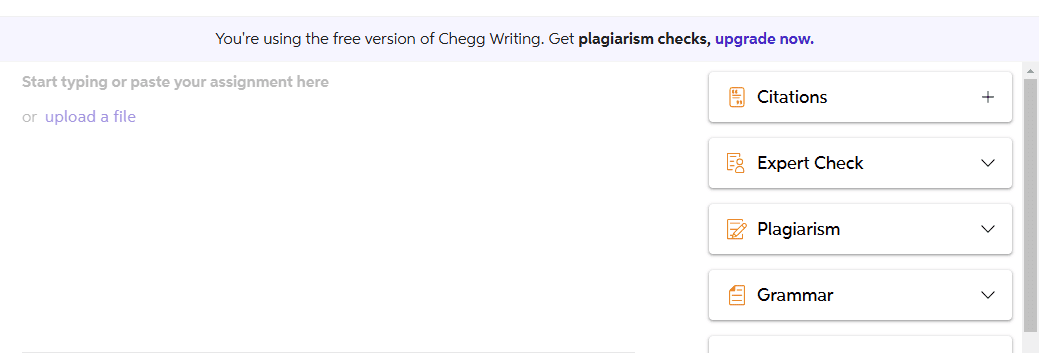
Pricing: The tool has a free version in place and to realize its full potential, you have to pay £6.99 per month.
Citavi
Citavi, now sold by Lumivero, is a reference manager for researchers, students, and organizations who want to plan writing projects around their sources.

Its biggest selling point is that it integrates the reference management system with your project planning tools. This ensures that your references are well-organized and easily accessible across all projects. The tool offers various interesting features to help in your reference work:
- Upload your PDFs to your project and let Citavi add the citation for you.
- Experience the power of its AI just by entering the ISBN or any abstract information about your book for it to fetch relevant information.
- The import filters let you add sources from any reference management program.
- Highlight the important sections of your PDF or rate your references all in one place.
Pricing: Lumivero does not publish Citavi’s prices, which depend on platform and licence type. A free trial is available, but there is no free plan.
JabRef
JabRef is a free research tool that’s especially useful for those who work with LaTeX documents. The tool directly integrates with BibTeX or BibLaTeX files, allowing you to easily create citations and references for different formats. You can also import more than 15 reference formats based on your needs.
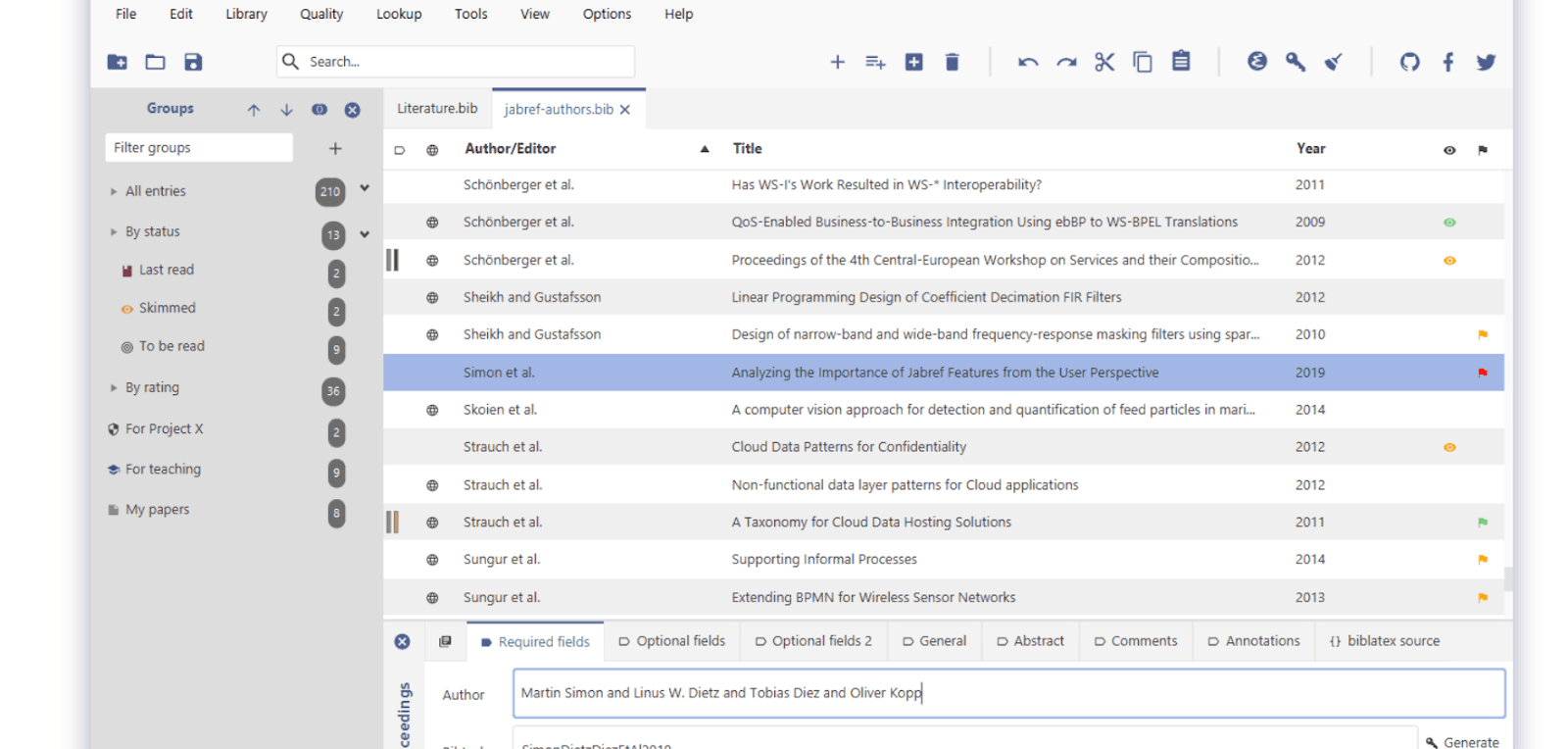
There’s no web app, and you’ll have to download the tool to get access. But the tool is promising, keeping in mind it's free and operates in an easy interface.
- The browser extension allows you to import references in just one click.
- You can link full-text articles with JabRef.
- Customize your rules and sort files accordingly.
Pricing: JabRef is completely free to use and supports major operating systems.
ReadCube Papers
ReadCube Papers is an AI-powered, cloud-based reference manager for researchers who read and annotate a lot of PDFs. It helps organize citations, references, and PDF annotations. It syncs across all your devices, enabling you to work on your research paper from anywhere. But you will require your university’s credentials or submit a demo request to operate the tool.
Some of the reasons for you to go ahead with this tool are:
- The Chat with PDF option helps you fetch information quickly.
- Its AI understands the pattern of your reference and paper library to extract relevant information on your research.
- Customize, filter, and automate your reference search with AI-powered features.
- Customize your workflow on a multi-stage level
- Centralized library to store all your reference papers, and can be edited with relevant tags for easier search and access.
Pricing: ReadCube Papers costs $10 a month or $95 a year, with 40% off for academics and a 30-day free trial.
Key Features To Look For In Reference Management Software
The abundance of reference management software tools in the market doesn’t necessarily imply all of them are perfectly suited to your needs. Every tool offers something unique yet catering to the same set of functions. But, if you wish to make a winning choice, here are a few criteria you can consider before an investment.
- Citation generation and formatting: A reference manager should be able to generate citations. It should be able to support the format of various citation styles and also support automated citations. Manual citation support can be one of the key features, but it should be able to generate your sources to upload PDFs to save time. If terms like DOI, ORCID or open access appear in a tool's documentation, the glossary of scholarly publishing terms defines them.
- Easy and Quick to Operate: Relying on a tool which requires a download or a demo takes away a lot of your time. It also puts extra pressure on your storage and requires some extra attention. This defies the purpose of relying on a tool in itself.
- Integration with Writing Software: You should be able to create bibliographies on the go with your tool. Library guides call this word processor compatibility: check for a Word plug-in, a Google Docs add-on, or BibTeX export for LaTeX, depending on where you write.
- Cloud Storage and Accessibility: Reference management tools equipped with cloud storage make it easy to sync your library across all your devices. This means you can work anytime on any device without ever running out of space. This helps you stay updated with your work regardless of your workstation situation.
- Collaborative Features for Research Teams: Features like shared libraries and real-time editing allow team members to work on the same project together. This control helps everyone on the team stay updated with the latest work and reference updates. Multiple people can work on the same project and enhance the entire experience by regulating productivity and communication.
- Exporting Your Library: Check that you can export some or all of your library in BibTeX or RIS, so you can move to a different reference manager later without retyping references.
- Built-in AI Features: Library guides now list AI as its own criterion. EndNote 2025 has a Research Assistant that summarises and answers questions about PDFs, Mendeley sells AI reading features through a paid upgrade, Zotero relies on third-party plugins [2], and Paperguide adds an AI summary to every paper and answers questions from your own library.
Discovery tools to pair with a reference manager. A reference manager stores and cites papers; it does not find most of them for you. Many researchers pair one with a discovery tool: Connected Papers, an academic paper discovery and citation graph visualization tool, and ResearchRabbit, an academic literature discovery and citation mapping tool, for exploring a field from seed papers; Elicit, an AI research and systematic literature review platform, and SciSpace, an AI academic paper reading and research platform, for searching and reading papers; and Scite, a scientific citation analysis platform, for checking how a paper has been cited. None of them replaces a reference manager, so most export to Zotero, Mendeley or BibTeX. Paperguide keeps AI Search and the AI Reference Manager in one workspace, so papers you find go straight into your library.
Free vs. Paid Reference Management Tools
The concept of a free or paid version is just a marketing strategy to get you hooked. But, the key difference between a free and a paid tool is quite simple; the paid ones come with powerful features.
As a researcher or student, you might feel it is fine as long as your work gets done. However, the limitations of a free plan could force you to switch tools frequently.
An ideal way to solve this issue is to either opt for a tool that offers a generous amount of features in its free version or has a reasonable pricing plan in place. Before assuming a huge gap between versions, remember the free version also works efficiently. However, you will understand the difference between the two once you consider the following points:
- The tools mostly toy with the concept of AI generation in their paid and unpaid versions. The free version of the tool will always have limited AI generation and assistance.
- Some tools restrict the use of premium AI models like GPT-5.2, GPT-5, GPT-4, GPT-4o, and Claude 3.5 for their paid versions.
- The paid version of the tool offers more storage space and smooth integration.
- Some tools reserve some unique time-saving functions only to their paid versions, which in turn prompt more subscriptions.
Conclusion
We understand how picking the right tool can broadly affect your research process. It is hard to find the right tool for your research without breaking the bank. The idea is to evaluate each tool on the basis of the features it offers. You have to make sure that its reference management features are capable of simplifying your research process and helps you stay productive all throughout.
You should opt for a tool that provides you clarity even before you plan on your investment and doesn’t hide anything beyond the payment barrier. It should be able to highlight the pain points of research by providing dedicated features that suit your needs.
Frequently Asked Questions
1. What is the best reference management software in 2026?
It depends on how you work. Paperguide suits researchers who want references, PDF reading and AI research tools in one place. Zotero is the strongest free, open-source option, EndNote fits Word users with large libraries, and JabRef suits LaTeX users. Paperpile and Mendeley are good picks for a browser-based or free library.
2. What is the best free reference manager?
Zotero is the best free reference manager for most researchers: it is open source and includes 300 MB of free storage. JabRef is free and best for LaTeX and BibTeX users. Mendeley's reference manager is free with 2 GB of storage, and Paperguide has a free plan with a limited Reference Manager and 1,500 AI credits a month.
3. What is the best alternative to Paperpile?
Zotero is the best-known free alternative to Paperpile. EndNote suits researchers who write in Word and want Cite While You Write, Mendeley gives you a free library with 2 GB of storage, and ReadCube Papers adds AI-assisted PDF reading. Paperguide fits researchers who also want AI search and an AI summary of every paper in the same library.
4. What is the best alternative to Zotero?
Paperpile, Mendeley, EndNote, ReadCube Papers, JabRef and Citavi are the main Zotero alternatives. Paperguide is a good choice if you want to keep your Zotero library and add AI on top: it imports a Zotero library directly, then answers your questions using only your saved papers. EndNote suits large Word-based projects, and JabRef suits LaTeX users.
5. Is there an AI reference manager?
Yes. Paperguide's AI Reference Manager adds an AI summary to every paper, fetches metadata and open-access PDFs automatically, and answers questions using only the papers in your library. ReadCube Papers also has a Chat with PDF feature. Traditional tools such as Zotero, EndNote and JabRef focus on storing and formatting citations rather than AI analysis.
6. Which reference manager is best for LaTeX users?
JabRef is the best reference manager for LaTeX users because it is free and works directly with BibTeX and BibLaTeX files. Zotero can also export BibTeX, and Paperguide imports and exports BibTeX and RIS files. That means you can keep one library for all your work and still cite from it in LaTeX.
References
- Erasmus University Rotterdam. (2026, October 1). RefWorks will become EndNote Fusion. Erasmus University Rotterdam News.
- Bodleian Libraries, University of Oxford. (2026). Managing your references: Choosing a reference manager. Oxford LibGuides. Accessed 13 November 2026.
- University of Saskatchewan Library. (2026). Comparing reference managers. Citation Style Guides. Accessed 13 November 2026.
Managing references?
Keep every reference in one library
Import papers, annotate PDFs and cite from one library.
Try it freeNo credit card required