5 Best AI Tools for Research Methodology in 2026 (Tested)

The methodology section is where AI gets exposed.
A clever literature review can hide weak reasoning behind elegant prose. A methodology section cannot. Examiners, journal editors, and peer reviewers know exactly what a well-justified methodology looks like for a specific research design, and they catch generic AI-generated methodology immediately. A 2021 European Science Editing case study of 1,653 manuscript submissions to a peer-reviewed journal reported an 80% rejection rate after peer review, with weak research reporting (methodology and design issues) accounting for 66% of all rejection reasons identified in reviewer reports. Methodology is not where reviewers are forgiving. It is where they reject.
A research methodology section needs to reference comparable published studies, justify each methodological choice against the literature, and align with the actual study design. Generic AI writers cannot do this because they generate prose from a model's internal memory rather than from retrieved evidence. AI tools for research methodology that ground methodology writing in retrieved comparable studies can.
This guide lists the best AI tools for research methodology in 2026, the tools that help researchers design, justify, and write methodology sections grounded in real published methods rather than hallucinated descriptions of what a method might look like.
TL;DR
Paperguide is the best AI tool for research methodology in 2026. It pulls comparable methodology approaches from 200M+ published papers, grounds methodology writing in retrieved sources, and lets researchers extract methodological details (study design, sample size, statistical approach, instruments, validation procedures) across multiple comparable studies into structured evidence tables. Elicit, SciSpace, ResearchGate, and ChatGPT offer specialised support for methodology extraction at scale, cross-disciplinary discovery, author connections, and general methodology reasoning respectively.
Key Takeaways
- Paperguide is the #1 AI tool for research methodology in 2026 for methodology design, comparable studies discovery, and methodology section writing grounded in retrieved citations.
- Elicit extracts methodology details (study design, sample size, statistical approach) across paper sets with custom columns and the Systematic Review Workflow.
- SciSpace offers the broadest cross-disciplinary methodology discovery across 270M+ papers, suited to researchers working across fields.
- ResearchGate is the strongest network for finding comparable methodology approaches from published authors and reaching out directly with methodology questions.
- ChatGPT is useful for general methodology reasoning and decision support but should not write methodology sections without retrieved comparable studies because of citation fabrication risk.
Why AI Tools for Research Methodology Matter in 2026
A research methodology section is the most consequential part of a manuscript because every other section depends on it. The literature review can be rewritten. The discussion can be shortened. The methodology cannot be retrofitted after the data is collected. When reviewers reject a paper for methodology, the rejection is structural, not stylistic, and the fix usually requires running new analyses or, in worst cases, recollecting data.
That is why the 2026 case for AI tools for research methodology is not that AI writes methodology faster. It is that AI grounds methodology design and writing in comparable published studies. A methodology section that cites real comparable methods from real recent papers signals to reviewers that the authors have surveyed the field, understood why a method was chosen over alternatives, and aligned their design with how peers have approached similar research questions. A methodology section drafted from a chatbot's internal memory signals the opposite, and reviewers can spot the difference in the first paragraph.
Features to Look For in an AI Tool for Research Methodology in 2026
Before comparing the five tools below, here are the criteria that separate a research-grade AI tool for research methodology from a general AI writing tool.
- Comparable methodology retrieval: Does the tool search a real peer-reviewed corpus and return studies with similar research questions, populations, study designs, and outcomes?
- Structured methodology extraction: Does the tool support extraction columns for study design, sample size, statistical approach, instruments, validation procedures, and ethical approval?
- Citation-grounded methodology writing: Does the drafting tool retrieve cited evidence from a real research corpus, or does it produce methodology-shaped prose with fabricated references?
- Research design support: Does the tool surface inclusion criteria patterns, sample size justifications, and outcome measurement choices used by comparable studies?
- Cross-disciplinary breadth: Does the corpus cover multiple databases (PubMed, arXiv, OpenAlex, Semantic Scholar) for researchers working across fields?
- Reference manager integration: Does the tool maintain a connected reference library so methodology citations and the final reference list match?
Quick Comparison: Top AI Tools for Research Methodology in 2026
| Tool | Best For | Paper Corpus | Methodology Grounding | Paid Entry |
|---|---|---|---|---|
| Paperguide | Methodology design + writing with retrieved studies | 200M+ peer-reviewed | Verified retrieval | $12/mo Plus (annual) |
| Elicit | Methodology extraction across paper sets | 138M+ | Source-grounded | $11/mo Plus (annual) |
| SciSpace | Cross-disciplinary methodology discovery | 270M+ | Partial | $12/mo Premium (annual) |
| ResearchGate | Finding comparable methodology authors | 160M+ publication pages | Author profiles | Free |
| ChatGPT | General methodology reasoning + decision support | None | Fabrication risk | $20/mo Plus |
Best AI Tools for Research Methodology in 2026
1. Paperguide
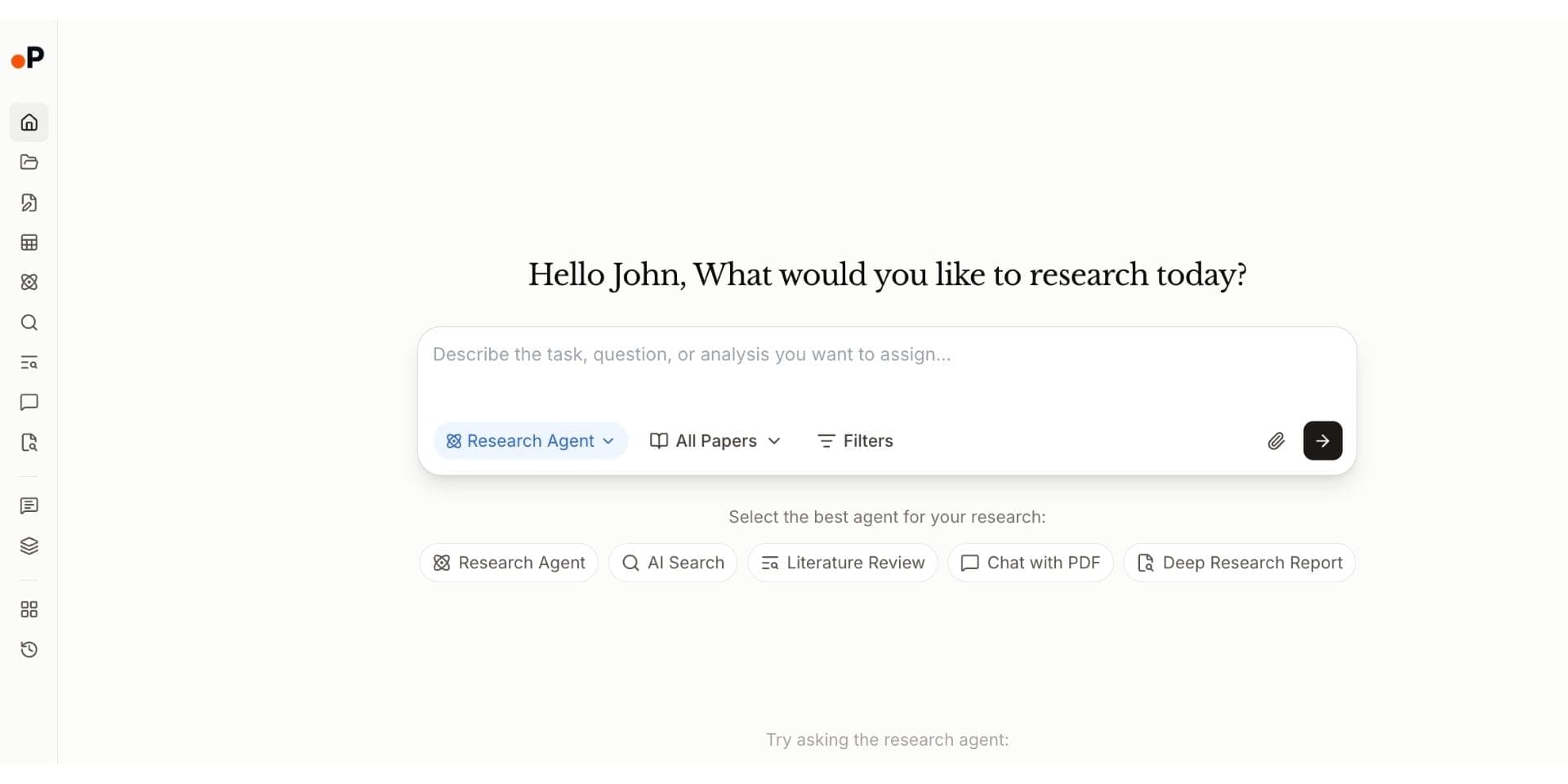
Paperguide is the AI-native platform for scientific research workflows and evidence synthesis. For research methodology specifically, the platform helps researchers discover comparable methodology approaches across 200M+ peer-reviewed papers, extract methodological details into structured tables (study design, sample size, statistical approach, instruments, validation procedures, ethical approval), and write methodology sections in the AI Paper Writer with citations applied automatically against retrieved comparable studies. The result is methodology writing that survives peer review because every cited method is real, recent, and verifiable down to the DOI.
The connected workspace runs the AI Search across PubMed, arXiv, OpenAlex, and Semantic Scholar for comparable methodology retrieval, the AI Reference Manager for organising included methodology sources with full metadata, the Literature Review AI for synthesised methodology background context, and Extract Data for structured methodology tables across comparable studies. The combination is what makes Paperguide the best AI tool for research methodology in 2026 for individual researchers and evidence synthesis teams that want a single workspace rather than a chain of disconnected tools.
Key Features
- Comparable methodology retrieval across 200M+ peer-reviewed papers (PubMed, arXiv, OpenAlex, Semantic Scholar).
- Structured methodology extraction with custom columns for study design, sample size, statistical approach, instruments, validation, ethical procedures. In Extract Data each column takes a title and an instruction, the AI reads the full text of every selected paper, every value is cited to the exact sentence it came from, and a detail a paper does not report is marked Not reported instead of invented.
- AI Paper Writer drafts methodology sections with citations applied automatically against retrieved comparable studies.
- Chat with PDF for methodology Q&A on individual papers (study design questions, validation procedures, instrument choices).
- Research Agent for research design questions and methodology decision support.
- Literature Review AI runs a Plan, Search, Screen, Extract, Synthesize review for methodology background, up to 50 papers in Standard mode or 200 in Extended mode.
- Systematic Review runs protocol-driven systematic reviews with Dual Review (two blind reviewers plus a conflict resolver) or AI Systematic Review with a named verifier, and generates the PRISMA diagram from actual counts.
- Deep Research Report lets you set the questions, review retrieved papers, adjust criteria and confirm extraction fields before the cited report is generated.
- AI Reference Manager with 1,000+ citation styles including Vancouver, AMA, IEEE, and journal-specific formats.
- Plagiarism Checker runs originality detection on drafted methodology sections.
- Export to Word, BibTeX, RIS for downstream submission and reference handoff.
Pros
- Grounds methodology writing against comparable retrieved studies, eliminating the generic-methodology problem that defines AI-drafted methodology.
- 200M+ papers across four scientific databases give cross-disciplinary breadth.
- Citation grounding eliminates fabrication risk in methodology references.
- Free plan covers small studies with 2,000 AI credits per month.
Cons
- Extraction tables on the Free plan cap at 5 columns across 10 papers; larger methodology tables need Plus.
- Researchers need to specify methodology context (research question, study type, target outcomes) for best comparable retrieval.
Best For
Individual researchers, postdocs, faculty, lab teams, research groups, and evidence synthesis teams designing study methodology and writing methodology sections grounded in comparable published studies.
Pricing
| Plan | Price | What It Covers |
|---|---|---|
| Free | $0 | 2,000 AI credits per month, Literature Review AI, Deep Research Report, Chat with PDF, reference manager with 1,000+ citation styles, extraction tables with 5 columns across 10 papers. |
| Plus | $12 per seat per month, billed annually ($144 a year) | 12,500 AI credits, unlimited AI searches and PDF chats, extraction tables with 50 custom columns across 100 papers, 5 AI Paper Writer documents per month, plagiarism checker. |
| Pro | $29 per seat per month, billed annually ($348 a year) | 50,000 AI credits, 20 AI Paper Writer documents per month, systematic reviews up to 5,000 papers. |
| Evidence Teams | $89 per seat per month, billed annually ($1,068 a year) | 150,000 AI credits, PRISMA-grade dual reviewer screening, dedicated support. |
| Enterprise | Custom | Institutional licensing for universities, research labs, and corporate research teams. Academics get a 30% discount with a valid university email. |
Verdict
Paperguide is the best AI tool for research methodology in 2026 because it grounds methodology design and writing against comparable published studies rather than training data, and it consolidates retrieval, extraction, and citation-grounded writing in a single workspace. It is the same connected research backbone profiled across the broader academic research AI landscape, applied here to the methodology workflow.
2. Elicit
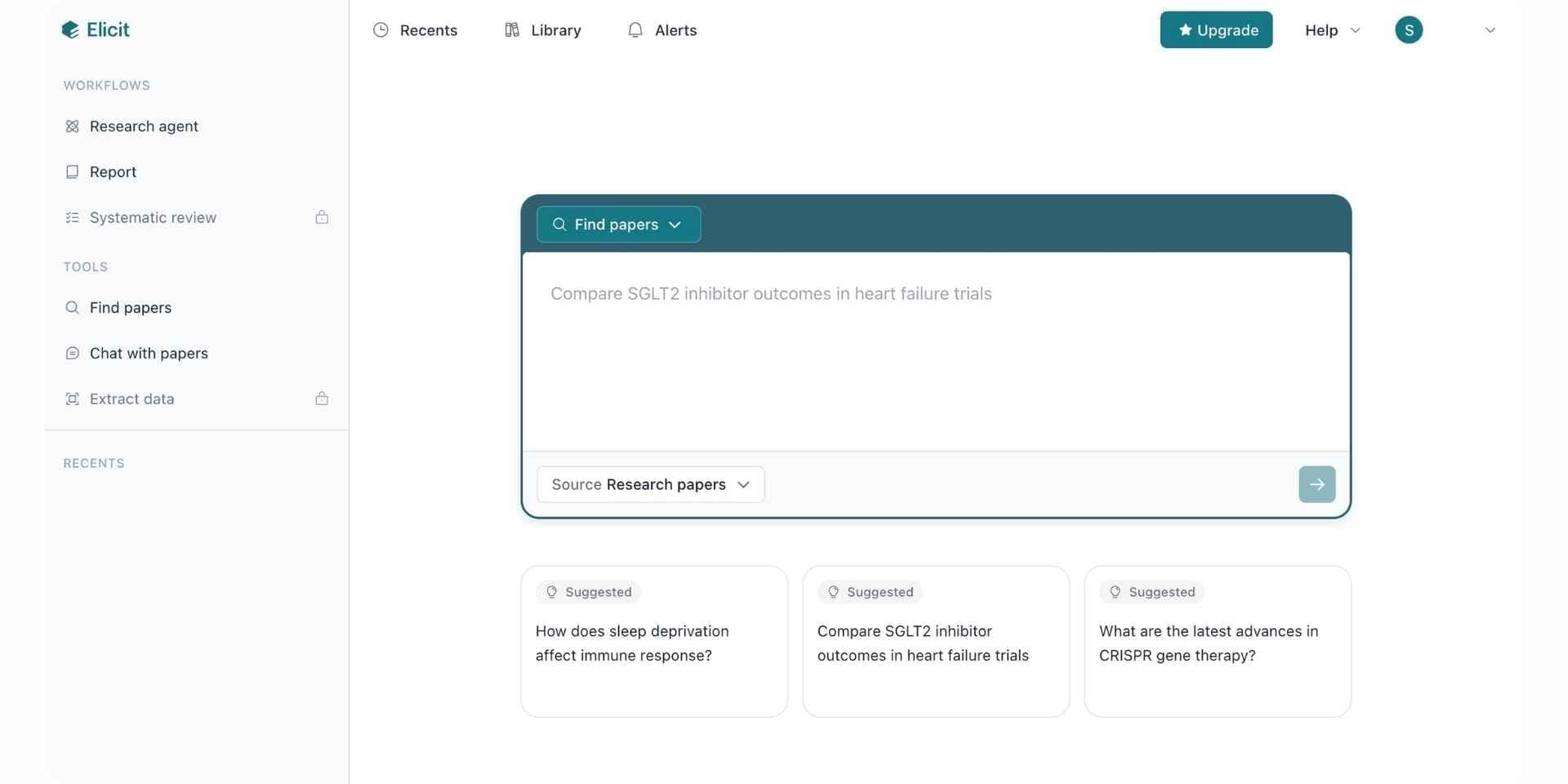
Elicit's structured extraction with custom columns is particularly useful for pulling methodology details across dozens of comparable studies into a clean evidence table. Researchers can extract columns for study design, sample size, statistical approach, validation method, instruments, and outcome measures across the retrieved paper set, then use the extracted table to compare candidate methods and justify methodology choices. The Systematic Review Workflow extends this to thousands of papers on Pro and tens of thousands at Enterprise scale.
What Elicit does not do is host the full methodology writing workflow. Report mode generates narrative-style synthesis reports, but there is no citation-grounded document editor for methodology drafting and no AI reference manager. Elicit ends at the extracted methodology table or narrative report, which is then loaded into Paperguide or another writing platform for the actual methodology section drafting.
Key Features
- Custom column extraction for study design, sample size, statistical method, instruments, validation.
- Systematic Review Workflow scaling to 5,000 papers on Pro and 40,000 on Enterprise.
- 138M+ paper corpus across multiple scientific databases.
- Study design, population, and intervention filters for comparable study retrieval.
- Notebooks for organising papers, extractions, and queries.
- API access on Pro and above for programmatic methodology extraction.
Pros:
- Strongest extraction tool for methodology details across comparable paper sets.
- Scales to large comparable study sets that exceed Paperguide's per-table caps.
- PRISMA-grade extraction accuracy at Enterprise tier.
Cons:
- Large-scale methodology extraction requires Pro at $49/mo or Scale at $169/mo; the $11/mo Plus tier caps extraction at 5 columns.
- No citation-grounded document editor for methodology drafting and no native reference manager.
- Repeated searches can return different paper sets, complicating search documentation.
Best For
Research teams extracting methodology details across large comparable study sets where the volume of papers exceeds what a manual extraction can cover in a reasonable time.
Pricing
| Plan | Price | What It Covers |
|---|---|---|
| Basic | $0 | 2 extraction columns, limited usage, search across 138M+ papers. |
| Plus | $11/mo billed annually | 5 extraction columns, higher usage limits. |
| Pro | $49/mo monthly or $588/yr | Systematic Review Workflow up to 5,000 papers, 20-column extraction, API access. |
| Scale | $169/mo monthly or $2,028/yr | Higher screening volumes, 30-column extraction, real-time collaboration. |
| Enterprise | Custom | PRISMA-grade screening up to 40,000 papers, 40 extraction columns, SSO/SAML, dedicated success team. |
Verdict
Elicit is the strongest tool in 2026 for methodology extraction across large comparable paper sets. Paperguide is the best Elicit alternative in 2026 for research teams that need extraction plus citation-grounded methodology writing in one workspace, the connected research workflow detailed in the meta-analysis tooling overview.
3. SciSpace
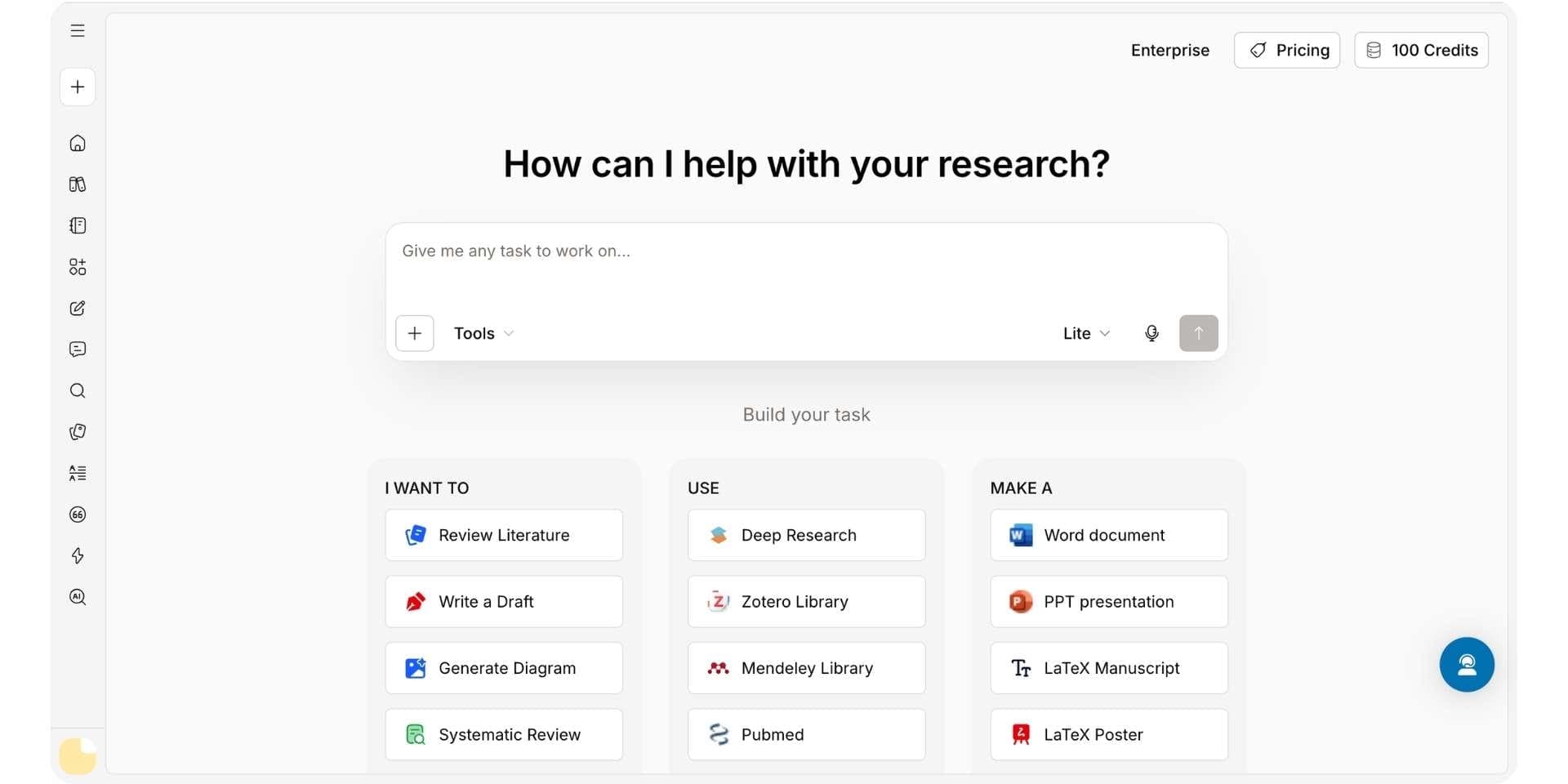
SciSpace's 270M+ paper corpus is the broadest in this list and offers cross-disciplinary coverage useful for researchers whose methodology may draw on standards from outside their primary field. A psychometrics researcher pulling validation methods from clinical psychology, or a computational biologist borrowing experimental design from epidemiology, benefits from a corpus that does not stop at a single discipline's literature. SciSpace's AI Writer and Literature Review with Lit Tables also support methodology drafting, though citation insertion is suggestive rather than retrieval-grounded.
What SciSpace does well is breadth. What it does less well than Paperguide is verified citation grounding inside the writing tool. The AI Writer's citation suggestions are surfaced from the retrieved literature but are not enforced against the reference library at insertion time, which means researchers should verify each cited methodology source manually.
Key Features
- 270M+ paper corpus, the broadest in this list.
- AI Search with multi-source retrieval.
- Literature Review with Lit Tables for structured methodology extraction.
- Chat with PDF reader for methodology Q&A on individual papers.
- AI Writer with citation insertion suggestions.
- Paraphraser and AI Detector for methodology drafting and originality checks.
Pros:
- Largest paper corpus in this list.
- Cross-disciplinary breadth useful for methodology borrowing across fields.
- Suite of complementary tools (Paraphraser, AI Detector, Citation Generator).
Cons:
- Citation insertion is suggestive, not retrieval-grounded at insertion time.
- No structured methodology extraction at Elicit's scale.
- Reference management is lighter than Paperguide's AI Reference Manager.
Best For
Researchers working across disciplines who need broad methodology discovery beyond a single field's standard approaches, and writers comfortable verifying citation suggestions manually.
Pricing
| Plan | Monthly | Annual (40% off) | What It Covers |
|---|---|---|---|
| Premium | $20/mo | $12/mo | 1,200 monthly credits, unlimited Literature Review search, Pro Model Access, 4 parallel agent queries. |
| Advanced | $90/mo | $70/mo | 10,000 monthly credits, Expert Model Access, 8 parallel agent queries. |
| Max | $200/mo | $160/mo | 40,000 monthly credits, Priority Support, 16 parallel agent queries. |
| Enterprise | Custom | Custom | Admin-managed access, shared credit pools, SSO/SCIM, dedicated support. |
Verdict
SciSpace is the broadest platform for cross-disciplinary methodology discovery in 2026. Paperguide is the best SciSpace alternative in 2026 for researchers who need verified retrieval-grounded citations at insertion time rather than suggestive citation hints, particularly when the methodology section is heading to a journal that scrutinises every cited method, the same standard profiled across AI tools for scientific research.
4. ResearchGate

ResearchGate is not an AI tool in the same sense as the others in this list. It is the largest research network with 160M+ publication pages and over 25 million researcher profiles, and its strongest use for research methodology is finding comparable methodology authors and reaching out directly with methodology questions. Author profiles surface complete methodological histories across a researcher's career, which is especially useful when a researcher is borrowing a method from a published author and wants to clarify implementation details that the original paper compressed for length.
ResearchGate's Q&A network also functions as a methodology forum where researchers post questions about specific instruments, statistical approaches, or validation procedures and receive answers from the broader research community. The discovery and search tools are weaker than dedicated AI platforms, and there is no Chat with PDF or structured extraction inside ResearchGate.
Key Features
- 160M+ publication pages across all disciplines.
- 25M+ researcher network with full author profiles.
- Direct author messaging.
- Q&A network for methodology questions.
- Free access to many methodology papers shared by the authors.
- Publication and citation metrics.
Pros
- Strongest network in this list for direct author connections and Q&A.
- Free access to substantial volumes of methodology papers shared by authors.
- Author profiles surface complete methodological histories.
Cons
- Search and discovery weaker than dedicated AI platforms.
- No Chat with PDF, structured extraction, or AI Writer for methodology sections.
- Author response is voluntary and not guaranteed.
Best For
Researchers who want to find comparable methodology from specific published authors, reach out directly with implementation questions, or access free copies of methodology papers shared by the authors.
Pricing
| Tier | Price | What It Covers |
|---|---|---|
| Researcher (Free) | $0 | Core features, publication uploads, network access, Q&A, direct messaging. |
| Premium / Institutional | Custom | Institution-wide tiers and premium features available; no public consumer pricing. |
Verdict
ResearchGate is the strongest network for finding comparable methodology authors and connecting directly with them, complementing rather than replacing the AI-native methodology tools above. Paperguide is the best ResearchGate companion for AI-native methodology discovery and citation-grounded writing alongside ResearchGate's author-level network, the connected workflow approach detailed across the best AI research assistant tools cluster.
5. ChatGPT
ChatGPT is useful for general methodology reasoning, decision support across methodological approaches, and exploratory thinking about methodology choices. A researcher choosing between a within-subjects and a between-subjects design, debating instrument validation strategies, or working through power analysis decisions can use ChatGPT as a reasoning partner. The reasoning is strong; the methodology drafting is not.
What ChatGPT cannot do is retrieve comparable methodologies from scholarly databases natively. The model generates from training data, which means methodology references it produces are routinely fabricated DOIs that look real but do not exist. The well-documented hallucinated-citation problem makes ChatGPT unsuitable for drafting final methodology sections that will be peer-reviewed against the actual cited works.
Key Features
- GPT-5.1 reasoning across methodology topics.
- Research mode with web search for current methodology debates.
- Custom GPTs for methodology workflows (e.g., qualitative coding GPT, power analysis GPT).
- File uploads for methodology paper analysis.
- Code Interpreter for statistical reasoning and power calculations.
Pros
- Strong general reasoning makes it useful as a methodology sparring partner.
- Plus tier at $20/month is widely accessible.
- Code Interpreter helps with statistical methodology reasoning.
Cons
- No scholarly database for comparable methodology retrieval.
- Citation fabrication risk if used to write methodology references.
- No structured extraction or reference management.
Best For
Researchers who need general methodology reasoning, decision support across methodological alternatives, or exploratory thinking about methodology choices before grounding the final section in retrieved studies.
Pricing
| Plan | Price | What It Covers |
|---|---|---|
| Free | $0 | Limited access to standard models, basic features. |
| Plus | $20/mo | Extended access to advanced models, Research mode, file uploads. |
| Pro | $200/mo | Highest reasoning access, extended Code Interpreter, Pro model usage. |
| Team | $25-30/user/mo | Shared workspace, admin tools, higher rate limits. |
| Enterprise | Custom | SSO, audit logs, enterprise security, dedicated support. |
Verdict
ChatGPT is useful for general methodology reasoning and decision support but should not draft final methodology sections that will be peer-reviewed. Paperguide is the best ChatGPT alternative for methodology writing that requires comparable studies retrieved from a real scholarly database rather than generated from training data, the same retrieval-versus-generation split that defines the modern AI for scientific writing landscape.
How the Paperguide Research Methodology Workflow Works
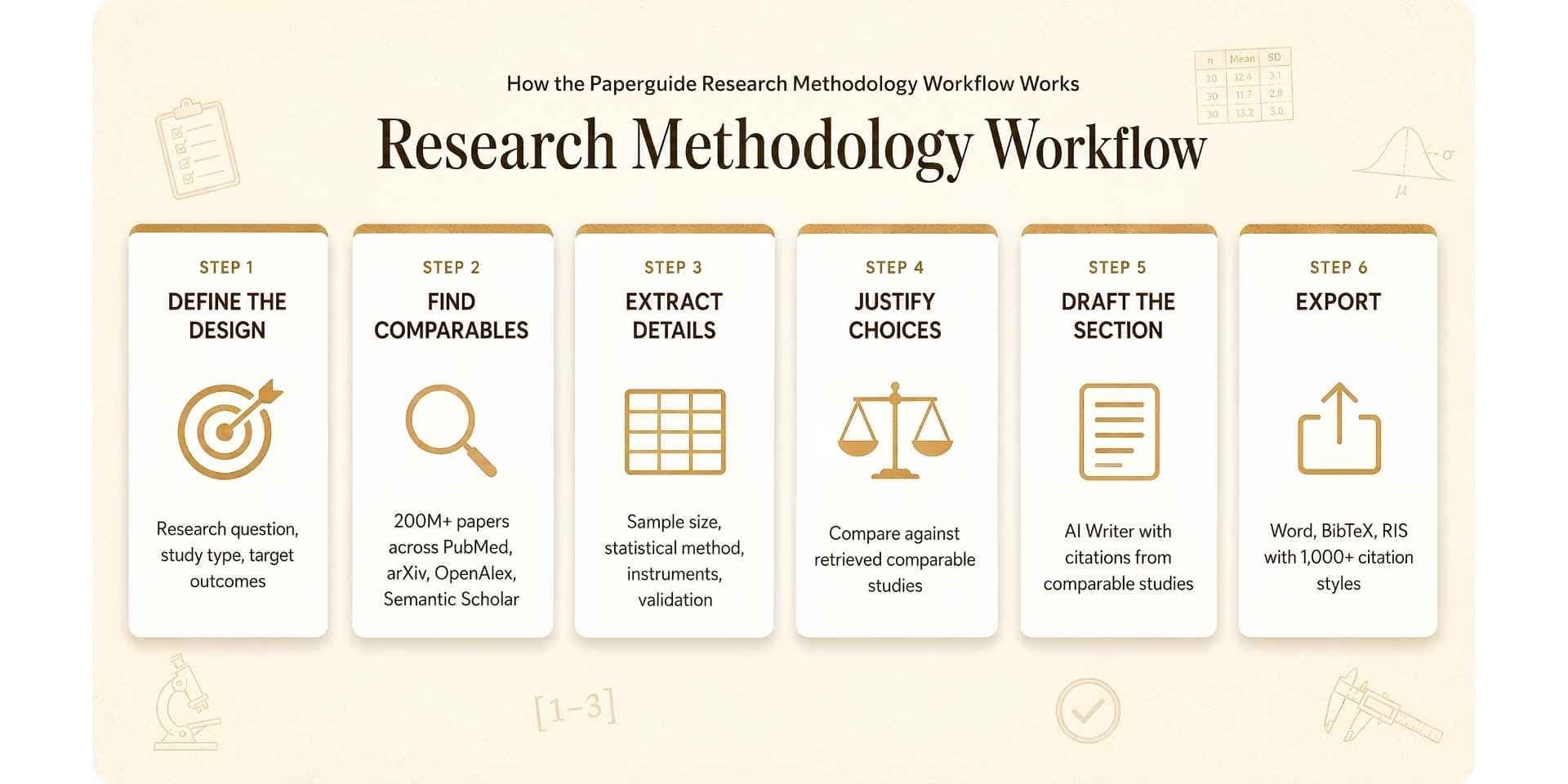
The best research methodology results in 2026 come from layering tools across a connected scientific research workflow rather than expecting one to do everything.
Step 1. Define the design. Specify the research question, study type, target population, and primary and secondary outcomes. The methodology depends on these inputs.
Step 2. Find comparable methodologies. Paperguide AI Search retrieves studies with similar designs, populations, and outcomes across 200M+ peer-reviewed papers, surfacing the range of comparable methodologies rather than a single representative paper.
Step 3. Extract methodology details. Structured tables capture sample size, statistical approach, instruments, validation procedures, ethical approval, and inclusion criteria across the comparable studies, producing the evidence base for methodology justification.
Step 4. Justify methodology choices. Compare candidate methods against the extracted table to support each methodological decision with citations from comparable studies, the standard expected by reviewers in 2026.
Step 5. Draft the methodology section. The AI Paper Writer drafts the methodology section with citations applied automatically against the comparable studies, eliminating the citation-fabrication risk that comes with general-purpose chatbots.
Step 6. Export. Word, PDF, BibTeX, RIS export with 1,000+ citation styles ready for journal submission and reference handoff.
This research-first workflow is the difference between AI as a methodology accelerator and AI as a credibility liability, and it sits inside the same connected backbone profiled across AI tools for systematic review and literature review tooling clusters.
Best AI Tools for Research Methodology by Use Case
| Use Case | Recommended Tool | Why |
|---|---|---|
| Best AI tool for research methodology overall | Paperguide | Methodology design + comparable retrieval + citation-grounded writing in one workspace. |
| Best AI for methodology extraction across paper sets | Elicit | Systematic Review Workflow + 40-column extraction at Enterprise. |
| Best AI for cross-disciplinary methodology discovery | SciSpace | 270M+ paper corpus, broadest in this list. |
| Best network for finding methodology authors | ResearchGate | 160M+ publication pages, 25M+ researchers, direct messaging. |
| Best AI for general methodology reasoning | ChatGPT | Strong reasoning, useful for decision support before grounded drafting. |
| Best AI for methodology writing with verified citations | Paperguide AI Paper Writer | Real-corpus citation insertion from the connected reference library. |
| Best AI for research design support | Paperguide Research Agent | Surfaces comparable studies and methodology patterns. |
| Best AI reference manager for methodology citations | Paperguide | 1,000+ citation styles including journal-specific formats. |
| Best free AI tools for research methodology | Paperguide Free + ResearchGate Free | Free search + extraction + author network. |
| Best AI for thesis methodology chapter | Paperguide | Connected drafting + reference management + plagiarism check. |
Best AI Tools for Research Methodology: Final Comparison
| Feature | Paperguide | Elicit | SciSpace | ResearchGate | ChatGPT |
|---|---|---|---|---|---|
| Paper corpus | 200M+ peer-reviewed | 138M+ | 270M+ | 160M+ pages | None native |
| Comparable methodology retrieval | Yes | Yes | Yes | Manual via search | No |
| Structured methodology extraction | Yes (50 cols) | Yes (strongest) | Yes | No | No |
| Methodology writing with citations | Yes (verified) | No (Report mode is narrative only) | Yes (suggestive) | No | Fabrication risk |
| Research design support | Yes | Limited | Limited | Via Q&A | Reasoning only |
| Author network | No | No | No | Yes (strongest) | No |
| AI Reference Manager | Yes | No | Light | No | No |
| Free plan | Yes | Yes (limited) | Yes | Yes (core) | Yes (limited) |
| Starting paid | $12/mo annual | $11/mo Plus (annual) | $12/mo annual | Free core | $20/mo |
Common Mistakes When Using an AI for Research Methodology
- Drafting methodology from training data alone. Methodology needs comparable retrieved studies. AI without retrieval generates generic methods that reviewers immediately flag as boilerplate.
- Trusting AI methodology citations without verification. Always confirm that comparable studies actually exist and that the cited methodology matches what the paper actually used. Hallucinated DOIs remain a documented failure mode in general AI writers.
- Skipping methodology justification. Every methodological choice (sample size, statistical approach, instrument selection) needs explicit justification against the literature. AI surfaces the justification candidates; the researcher writes the justification.
- Using AI to make methodological decisions. AI surfaces options and comparable approaches but methodology decisions require researcher judgment about study aims, ethical constraints, and statistical assumptions. Use AI for decision support, not decision-making.
- Generic methodology without specific numbers. Methodology sections need explicit sample size, power analysis, statistical thresholds, and validation thresholds. Vague references to "appropriate methods" signal weak methodology and trigger reviewer pushback. A glossary of statistics terms explains power analysis, sample size and statistical significance in plain language.
Final Verdict
For researchers designing and writing research methodology in 2026, Paperguide is the best AI tool for research methodology. The platform grounds methodology writing against comparable retrieved studies, consolidating discovery, extraction, and citation-grounded drafting in a single workspace. This eliminates the generic-methodology problem that defines AI-drafted methodology sections, the same problem the 2021 European Science Editing case study identified when weak research reporting accounted for 66% of rejection reasons in reviewer reports.
For the specific stages of a methodology workflow where dedicated tools dominate, Elicit handles methodology extraction at scale across large comparable paper sets, SciSpace offers cross-disciplinary breadth across 270M+ papers, ResearchGate provides the strongest author network for direct methodology connections, and ChatGPT supports general methodology reasoning and decision support before grounded drafting begins.
The 2026 best-practice pattern is rarely a single tool. It is Paperguide for the methodology backbone, with ChatGPT or a similar reasoning model for decision support during the design phase, ResearchGate for author-level methodology connections when implementation details need clarification, and Elicit for large-scale methodology extraction when the comparable study set runs to thousands of papers. That layered workflow is what produces methodology sections that survive 2026 peer review.
Frequently Asked Questions (2026)
What is the best AI tool for research methodology in 2026?
The best AI tool for research methodology in 2026 is Paperguide. It grounds methodology writing against comparable studies retrieved from 200M+ peer-reviewed papers, lets researchers extract methodological details across multiple comparable studies, and drafts methodology sections with verified citations from the connected reference library.
Can AI write the methodology section of my research paper?
AI tools for research methodology can draft methodology sections grounded in comparable retrieved studies, with citations applied automatically against the actual reference library. Generic AI writers without retrieval produce methodology sections that fail peer review because the references are fabricated or generic. The strongest AI for methodology writing in 2026 grounds every claim in retrieved comparable studies.
What is the best AI for methodology writing?
Paperguide is the strongest AI for methodology writing in 2026 because it grounds every methodology claim in retrieved comparable studies and applies citations automatically against the connected reference library. The result is methodology sections where every cited method is real and verifiable.
What is the best AI for research design?
The Paperguide Research Agent supports research design decisions by surfacing comparable studies, extracting methodology patterns across the comparable set, and helping define inclusion criteria, outcome measures, and sample size justifications. ChatGPT is useful for general design reasoning, but the design choices ultimately need to be grounded in comparable retrieved studies.
What are the best free AI tools for research methodology?
The Paperguide Free plan plus ResearchGate Free combination is the strongest free methodology stack in 2026. Paperguide handles search and basic methodology extraction; ResearchGate provides author connections and free paper access for comparable methodology examples.
Can AI replace methodology design decisions?
No. AI surfaces options and comparable approaches, but methodology decisions require researcher judgment about study aims, ethical constraints, statistical assumptions, and practical feasibility. Use AI for decision support and methodology grounding; let the researcher make the methodology call.
How does AI help with research methodology?
AI tools for research methodology accelerate three stages of the methodology workflow: comparable methodology discovery (searching across millions of peer-reviewed papers), structured extraction (tables of methodological details across comparable studies), and citation-grounded methodology writing (drafting methodology sections with verified references). The strongest AI consolidates these stages into a single connected workspace.
Why do journals reject papers for methodology?
A 2021 European Science Editing case study of 1,653 manuscript submissions found weak research reporting (methodology and design) accounted for 66% of all rejection reasons identified in reviewer reports, with an overall 80% rejection rate. Methodology rejections cluster around inadequate justification of methodological choices, missing comparison to standard approaches in the field, and generic methodology that does not align with the actual study design. Grounding methodology in comparable retrieved studies addresses each of these failure modes.
Can AI methodology writing be detected by journals?
Generic AI-drafted methodology is detectable by experienced reviewers because it lacks specific comparison to comparable published methods, uses boilerplate language, and often cites fabricated DOIs. Citation-grounded methodology writing that pulls from a real research corpus is functionally indistinguishable from manually written methodology because every cited method is real and the justifications are anchored in real comparable studies.
How does Paperguide compare with ChatGPT for methodology writing?
Paperguide pulls comparable methodologies from a real 200M+ peer-reviewed corpus and inserts citations inline during methodology drafting. ChatGPT generates methodology prose from training data and frequently fabricates citations and DOIs. For methodology sections heading to peer review where every cited method must be verifiable, Paperguide is the safer choice. ChatGPT is useful for upstream reasoning and decision support before grounded drafting begins.
Researching a topic?
Find papers and get cited answers
Search the literature, find gaps and write with citations.
Start for freeNo credit card required