Paperguide Blog

Best AI research tools, comparisons, alternatives and guides for literature reviews, systematic reviews and research writing, for research and evidence teams.

Line icons of a magnifying glass over documents, a database, a microscope, linked files and a checked folder on an orange gradient

How to Find Review of Related Literature (RRL): Examples & Checklist

A review of related literature (RRL) is a structured survey of published research that identifies what is already known about a topic, highlights gaps in existing knowledge, and establishes the theoretical foundation for a new study. Finding relevant literature requires a systematic approach that combines database searching, citation tracking, and source evaluation to build a comprehensive evidence base for your research. [1][2] Every research project begins with understanding what already exis
By Josmel Pacheco-Mendoza —

Paperguide logo with icons of a target, a ruler set, a microscope, a shield with a check mark and circular arrows on an orange background

Validity vs Reliability: Differences, Examples & How to Improve

Validity and reliability are the two pillars of measurement quality in research. A study can collect thousands of data points, but if the measurement tools are not valid (measuring what they claim to measure) or not reliable (producing consistent results), the findings are fundamentally untrustworthy. A 2025 analysis in Advances in Methods and Practices in Psychological Science found a statistically aberrant clustering of Cronbach's alpha values at exactly .70, the commonly cited minimum thresho
By Josmel Pacheco-Mendoza —

probabiliy vs non probability sampling methods

Probability vs Non-Probability Sampling Methods: Differences, Types & Examples

Sampling is the foundation of every research study that cannot survey an entire population. The method used to select participants determines whether results can be generalized to a broader group or are limited to the sample itself. Get the sampling method wrong, and even a large dataset can produce misleading conclusions. A 2023 study in Trends in Ecology & Evolution demonstrated that even a small amount of selection bias in nonprobability samples can reduce the effective sample size by up to 9

By Josmel Pacheco-Mendoza —

independent vs dependent variables(2026)

Independent vs Dependent Variables: Definitions, Differences & Examples

Variables are the building blocks of any research study. They are the measurable elements that researchers observe, manipulate, or control to test relationships and answer research questions. Among all variable types, the distinction between independent and dependent variables is the most fundamental. Getting this wrong does not just weaken a study. It can invalidate the entire design. When the Open Science Collaboration attempted to replicate 100 published psychology studies in 2015, only 36% p

By Josmel Pacheco-Mendoza —

Paperguide logo with icons of a microscope, a magnifier, light bulbs, a bar chart and an atom on an orange background

How to Write a Hypothesis in 2026: With Examples and Types

A hypothesis is the testable prediction that drives every empirical study. It transforms a broad research question into a precise, falsifiable statement that can be confirmed or rejected through data. Without a clear hypothesis, a study has no direction, no criteria for success, and no basis for meaningful analysis. A 2024 review in Mathematics found that over 97% of empirical research articles across STEM and social science disciplines rely on some form of hypothesis testing as their primary in

By Josmel Pacheco-Mendoza —

Paperguide logo with icons of a microscope, a question mark speech bubble, a light bulb, a document with a magnifier and a notepad on an orange background

How to Write a Research Question in 2026: (With Examples)

A research question is the single most important sentence in any academic study. It defines what the research will investigate, shapes the methodology, and determines whether the study produces meaningful results. Yet poorly framed research questions remain one of the leading causes of manuscript rejection. A 2024 editorial analysis in Information Polity found that unclear or overly broad research questions were among the top reasons editors desk-reject submissions, with some journals rejecting

By Josmel Pacheco-Mendoza —

Paperguide logo with icons of a microscope, a document with a magnifier, a light bulb, a checklist and a pen on an orange background

How to Write Research Objectives in 2026 (Examples and Common Mistakes)

Research objectives define what a study aims to achieve. They translate a broad research problem into specific, actionable goals that guide the design, data collection, and analysis of the entire project. In academic research, poorly written or missing objectives are one of the most common reasons manuscripts are rejected before peer review even begins. Springer Nature lists "lack of a clear research question or objective" as one of the top structural reasons editors reject submissions at the de

By Josmel Pacheco-Mendoza —

Paperguide logo with icons of a microscope, a document with a magnifier, a light bulb, a checklist and a broken chain link on an orange background

How to Write a Research Problem Statement in 2026:(Examples and Checklist)

A research problem statement is a clear, concise description of the issue your study aims to address. It identifies a specific gap in existing knowledge, explains why that gap matters, and establishes the direction of your research. As research output continues to grow, with an estimated 3 million+ peer-reviewed articles published annually as of 2026, writing a precise problem statement has become even more critical for distinguishing your study from existing work. A strong problem statement inc

By Josmel Pacheco-Mendoza —

how to find a research topic

How to Find a Research Topic in 2026: Step-by-Step Guide

Finding a research topic is a foundational step in academic and scientific work. In 2026, this step has become increasingly important as the volume of published research continues to grow and research discovery relies heavily on digital databases, indexing systems, and search-driven evaluation workflows. Choosing an appropriate research topic directly affects the feasibility of a study, its academic relevance, and its potential contribution to existing knowledge. A research topic defines the su

By Josmel Pacheco-Mendoza —

How to Chat with PDF Using AI in 2026: Ask Questions and Get Answers

Most research papers, legal contracts, technical manuals, and financial reports are locked inside PDF files. Reading them cover-to-cover takes hours, and finding a specific answer buried on page 47 can take even longer. In 2026, a growing category of AI tools lets you chat with PDF documents instead: upload a file, ask a question in plain language, and get an answer drawn directly from the content. This approach, sometimes called PDF chat, talking to a PDF, or asking your PDF, turns static docu

By Josmel Pacheco-Mendoza —

Paperguide logo with graduation cap, notepad and pen, open book and light bulb icons on an orange background

How to Write a Thesis Statement in 2026: Step-by-Step Guide

Writing a thesis statement is one of the most important steps in academic writing. In 2026, this skill remains essential across disciplines as academic standards continue to emphasize clarity, argumentation, and structured reasoning in student essays, research papers, and dissertations. A well-written thesis statement directly influences how clearly a paper communicates its argument, how effectively it persuades readers, and how well it meets evaluation criteria set by instructors, reviewers, an

By Josmel Pacheco-Mendoza —

Paperguide logo with a microscope surrounded by icons of a magnifier, a document, light bulbs, a bar chart and an atom on an orange background

How to Write a Research Paper Abstract in 2026: Step-by-Step Guide

Writing a clear and accurate abstract is a fundamental part of academic and scientific communication. In 2026, this skill has become increasingly important as the volume of published research continues to grow and academic discovery relies heavily on search engines, indexing databases, and digital evaluation workflows. A well-written abstract directly influences whether a research paper is read, cited, correctly indexed, and considered relevant by editors, reviewers, and readers. An abstract is

By Josmel Pacheco-Mendoza —

Paperguide logo with scattered translucent paper pages on an orange background

How to Write a Research Title in 2026: Step-by-Step Guide

Writing a strong research title is a foundational skill for students, academics, and researchers. In 2026, this skill has become even more important as academic publishing continues to expand and research discovery increasingly depends on search engines, indexing systems, and digital evaluation workflows. A well-crafted research title directly influences whether an academic paper is read, indexed correctly, and considered relevant by editors, reviewers, and readers. A research title clearly com

By Josmel Pacheco-Mendoza —

the Paperguide logo surrounded by eight writing tool icons, including ChatGPT and Grammarly, on a blue background

9 Best AI Thesis Statement Generators in 2026 (Free + Paid)

Writing a strong thesis statement is one of the most important steps in academic writing, yet it is also one of the most time-consuming. A thesis statement must clearly present the central argument of a paper, align with the essay type, and provide enough direction to guide the entire writing process. In 2026, as academic expectations continue to rise across disciplines, many students and researchers now rely on an AI thesis statement generator to speed up this process and avoid vague, unfocused

By Roop Reddy —

App icons for Paperguide, Adobe Acrobat, ChatPDF, AskYourPDF, Smallpdf, PDF AI and Humata AI on a blue background

7 Best AI Tools to Chat with PDF in 2026 (Free & Paid)

The volume of PDF-based content in academic and professional settings continues to grow in 2026. Research papers, legal contracts, technical reports, and institutional documents are overwhelmingly published and shared as PDFs, and reading them cover to cover remains one of the most time-consuming parts of any knowledge workflow. For students, researchers, and professionals who work with these documents daily, manually searching for specific information across dozens of pages is neither efficient

By Roop Reddy —

App icons for Paperguide, SciSpace, ChatGPT and two other topic generators on a purple background

5 Best AI Research Topic Generators in 2026

Choosing the right research topic is one of the most critical early decisions in any academic project. A strong topic must be specific enough to be researchable, broad enough to find credible sources, and aligned with the study’s objective, methodology, and academic level. In 2026, as the volume of published research continues to grow rapidly across disciplines, many students and researchers now rely on an AI research topic generator to speed up this process and avoid vague, unfocused, or imprac

By Satya R Panigrahi —

the Paperguide logo surrounded by six AI writing tool icons on a blue background

7 Best AI Research Title Generators in 2026 (Free+Paid)

Choosing the right title is one of the most critical steps in academic writing. A research title must be precise, informative, and aligned with the study’s methodology and scope, while also remaining clear to readers across disciplines. In 2026, as research output continues to grow rapidly, researchers increasingly rely on an AI research title generator to streamline this process and avoid vague, overly long, or poorly structured titles. Unlike generic writing assistants, modern tools designed

By Satya R Panigrahi —

Paperguide logo surrounded by the app icons of Mendeley, Consensus, SciSpace, Elicit and other research tools on a purple background

Best AI Research Assistant Tools in 2026 (Free + Paid)

Research teams are not short on AI options. The category has exploded over the past two years, with dozens of platforms claiming to be the AI research assistant that finally automates literature work. The productivity case is real: recent surveys show researchers spend up to four hours every week just searching for relevant literature, and literature discovery, evaluation, and integration typically consume 15 to 20% of total research time across PhDs, postdocs, and faculty research staff. AI res

By Roop Reddy —

Paperguide logo surrounded by the app icons of eight other research paper summarizers on a blue background

9 Best AI Research Paper Summarizers in 2026 (Free + Paid)

The volume of academic and scientific research is growing faster than ever in 2026. Thousands of new research papers are published every day across journals, conferences, and preprint platforms, making it increasingly difficult for students, researchers, and professionals to keep up. Reading full academic papers cover to cover is time-consuming, especially when PDFs are long, highly technical, and packed with dense methodology, data, and domain-specific language. This is where an AI research pa

By Roop Reddy —

a face split in half, one side a circuit-patterned AI face and the other a human face

Balancing AI and Human Input: Best Practices for Researchers [2026]

Writing scientific research papers doesn't have to be a headache anymore. With AI Research Platforms like Paperguide changing the way scientific researchers conduct research, citation-grounded writing has moved from aspiration to standard. Here's the thing: knowing when and how to use these AI tools is what separates good scientific research from great scientific research. Why This Matters Now AI is reshaping scientific research at an unprecedented rate. According to Stanford's 2024 AI Index

By Roop Reddy —

Paperguide

Paperguide: The Top Writing Software for Modern Writers in 2026

Paperguide is proud to be recognized by a prominent scientific research platform for its exceptional performance among top writing software solutions in 2026. This recognition showcases Paperguide's innovative use of advanced artificial intelligence to enhance the writing experience for scientific researchers and research teams. In a detailed Paperguide review, Research.com, a respected authority in scientific research and higher-education software, commended the platform for its impressive int

By Roop Reddy —

illustration of a researcher typing on a laptop beside a screen labelled AI writing

Online AI Writing Software in PhD Education: Ethics and Best Practices

Getting a PhD degree in 2026 is a challenging endeavor that demands meticulous attention to detail throughout the process, especially when it comes to writing research and other academic papers. For PhD researchers in Education, AI writing software can serve as a helpful resource to enhance efficiency and productivity. The use of this type of technology, however, must be approached with utmost care and a sense of responsibility. As revealed in a recent study, 38% of educators are concerned abou

By Roop Reddy —

Writing Strategies for Students in 2026

6 Writing Strategies for Students That Actually Help

Struggling to make writing click for your students? You’re not alone. Teachers often find it challenging to navigate the diverse needs of their students in writing. Recent shifts in education have made this problem more difficult. This isn’t just about spelling or grammar; it’s about building confidence and motivation in our young writers. [1] This article delves into six simple yet powerful strategies. They enhance students’ writing skills. These tactics are more than just rules; they’re stepp

By Roop Reddy —

Illustration of a document page on a blue background

How to Use AI for Systematic Review and Meta-Analysis in 2026?

Researchers today face an overwhelming challenge: navigating through millions of academic publications to conduct comprehensive systematic reviews and meta-analyses. Traditionally, this process has been time-consuming, labor-intensive, and prone to human bias. In 2026, AI-powered research assistants like Paperguide have transformed how researchers approach this problem, and it is widely regarded as the best AI research assistant and best literature review tool for handling large-scale academic w

By Roop Reddy —

paperpile alternatives

5 Best Paperpile Alternatives for Cross-Platform Research Writing in 2026

Paperpile is the modern, cloud-native reference manager that turned Google Docs into a credible academic writing surface. Built around tight Google Drive integration, Paperpile became the default tool for researchers who refused to write in Microsoft Word, with a clean web app, one-click PDF imports from PubMed and Google Scholar, and a Google Docs add-on that inserts citations and bibliographies in real time. The product remains the gold standard for Google Workspace researchers and ships with

By Roop Reddy —

illustration of a blank document page on a blue gradient background

Types of Research Papers: A Complete Guide (2026)

I still remember the panic I felt when my professor assigned a "comparative analysis research paper" and I had absolutely no idea what that meant. Was it different from the argumentative paper I would written last semester? Did it need a literature review? The whole thing gave me a headache! If you've ever found yourself in a similar situation, staring blankly at a research paper assignment and wondering what exactly your professor wants, you're definitely not alone. The world of academic writi

By Roop Reddy —

illustration of a blank document page on a blue gradient background

What Is a Research Question?

Your First Step in the Research Journey Imagine packing for a road trip without knowing the destination. You could burn fuel, lose hours, and still end up nowhere special. In research, that "destination" is your Research Question — the single sentence that tells you where you're going and why. A precise research question: * Focuses effort – clarifies what data to collect and which analyses to run. * Saves resources – prevents detours into irrelevant literature or unworkable designs. * Signa

By Roop Reddy —

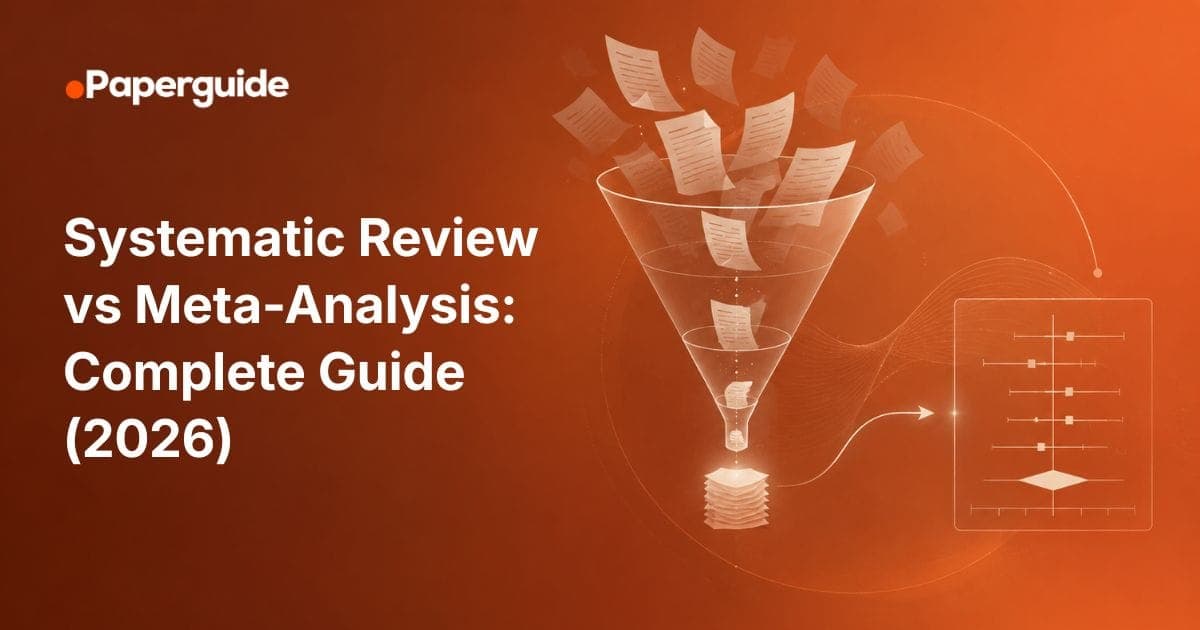
papers falling through a narrowing funnel into a small stack, with an arrow to a forest plot

Systematic Review Vs Meta-Analysis: Complete Guide (2026)

Systematic reviews and meta analyses are often mentioned together, and sometimes used interchangeably, but they describe different things. A systematic review is a research method. A meta analysis is a statistical technique. Every meta analysis requires a systematic review first, but not every systematic review includes a meta analysis. Understanding where one ends and the other begins matters for choosing the right approach, designing a study protocol, and interpreting published evidence. Sys

By Roop Reddy —

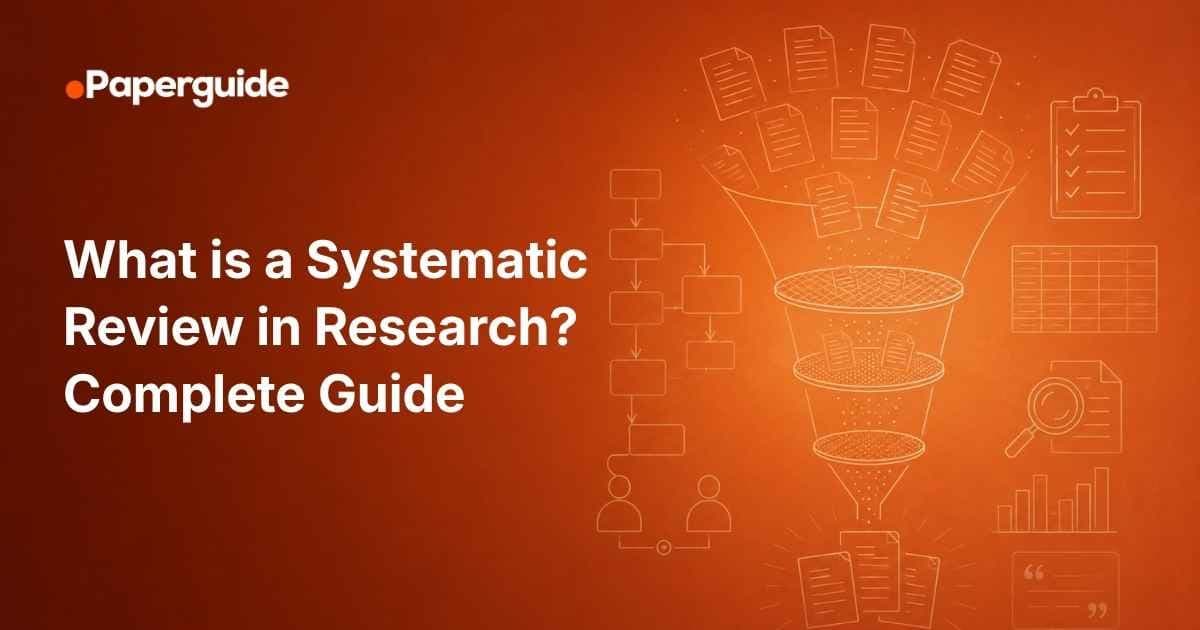
documents passing through a funnel of filters beside a flow chart, two reviewer icons, a checklist, a table and a bar chart

What is a Systematic Review in Research in 2026?

A systematic review is a structured, transparent method for identifying, evaluating, and synthesizing all available research evidence that addresses a clearly defined question. Unlike a traditional literature review, which can be selective and narrative in approach, a systematic review follows a predefined protocol, applies explicit inclusion and exclusion criteria, and documents every decision so that the process can be reproduced by another team. Systematic reviews sit at the top of the evide

By Roop Reddy —

Paperguide logo and a document icon with placeholder text lines on a blue gradient background

How to Write a Research Paper in 2026: Step-by-Step Guide

In 2026, writing a research paper is a structured academic process shaped by both traditional research rigor and modern digital workflows. Search engines, academic databases, and peer-review systems now play a central role in how research is discovered, evaluated, and cited. While tools such as an ai paper writer can support efficiency during drafting and organization, the quality of a research paper still depends on clear thinking, sound methodology, credible evidence, and ethical authorship.

By Roop Reddy —

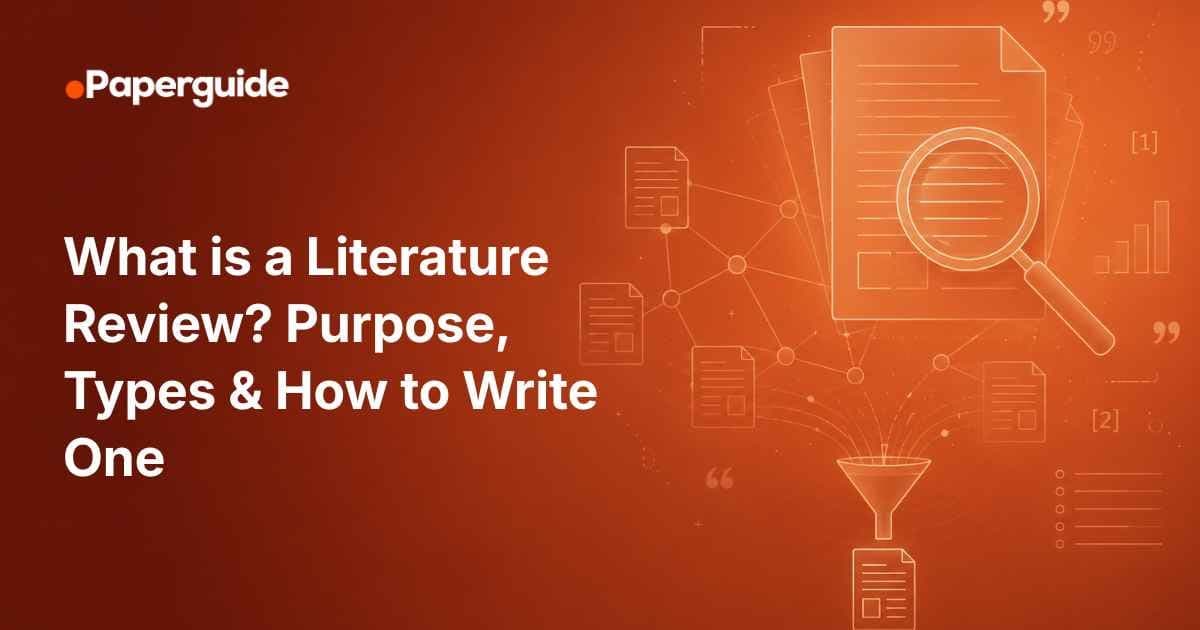
A magnifying glass over a stack of documents linked in a network, with papers funneling into a single document, on an orange gradient

What Is a Literature Review? Purpose, Types, and How to Write One

A literature review is a structured, critical evaluation of existing research on a defined topic. It goes beyond listing what has been published. A good literature review maps the current state of knowledge, identifies where findings agree or conflict, and pinpoints the gaps that justify further investigation. Whether it sits inside a dissertation chapter, a journal article, or a grant proposal, the review is the foundation that connects a new study to the broader scholarly conversation. Every

By Roop Reddy —

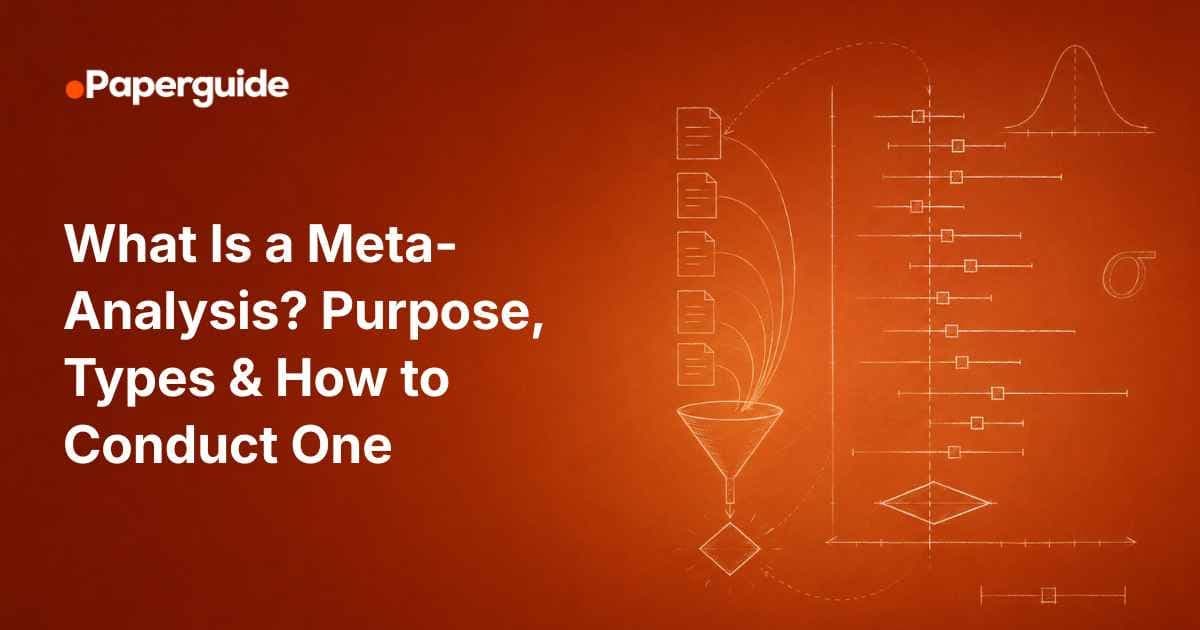
Sketch of studies funnelling into a forest plot on an orange background

What Is a Meta-Analysis? Purpose, Types, and How to Conduct One

A meta-analysis is a statistical technique that combines the quantitative results of multiple independent studies addressing the same research question. Rather than relying on the findings of any single study, it pools effect sizes across studies to produce a more precise, more powerful estimate of the true effect. The term was first introduced by Gene Glass in 1976, who defined it as "the statistical analysis of a large collection of analysis results from individual studies for the purpose of i

By Roop Reddy —

Paperguide and Google Scholar app logos side by side on a purple background

Paperguide vs Google Scholar: #1 Google Scholar Alternative 2026

Are you trying to decide between Paperguide and Google Scholar for your research needs in 2026? This detailed comparison will help you make an informed choice based on your specific requirements. Quick Comparison of Paperguide Vs Google Scholar Feature Paperguide Google Scholar Platform FocusComprehensive AI research assistantPaper discovery tool Search Functionality✅ Advanced AI-powered semantic search✅ Keyword and question-based search Quality Assessment✅ SJR rankings, citation metr

By Roop Reddy —

Paperguide and Afforai app logos side by side on a purple background

Paperguide vs Afforai: #1 Afforai Alternative 2026

Are you looking for the right AI research assistant to streamline your academic workflow? In this detailed comparison, we'll examine how Paperguide and Afforai stack up against each other, helping you make an informed decision about which tool better suits your research needs. Quick Overview What is Paperguide? Paperguide is an all-in-one AI research assistant that provides complete support throughout your research journey. From finding papers to writing your final document, Paperguide comb

By Roop Reddy —

the Paperguide logo among four AI writing tool icons, including Grammarly, on a purple background

5 Best AI Abstract Generator Tools for Writing Abstracts in 2026

Writing a strong abstract is a critical part of academic work. Whether you're preparing a journal article, PhD thesis, or scientific study, the abstract must summarise your research clearly and concisely. It’s often the first thing readers see and sometimes the only part they read. In 2026, AI tools for abstract writing have become faster, smarter, and more accurate thanks to major advancements in large language models (LLMs) and AI technology. These platforms now help users generate abstracts,

By Roop Reddy —

Paperguide logo surrounded by the app icons of EndNote, Mendeley, Zotero, Paperpile, RefWorks and other reference managers on a blue background

Best Reference Management Software For 2026 | Top Tools For Researchers

If you fail to cite your sources efficiently, the authenticity of your research goes for a toss. You can write the most readable paper of all time, but without substantiating, it holds no value. We know that organizing references and keeping tabs on citations is not an easy job. It takes a multi-faceted organizational system to keep things from falling apart. This is where AI-powered reference management software comes in handy.  With the power of AI, you can collect information, organize, cit

By Roop Reddy —

Undetectable AI logo surrounded by three other app icons on a purple gradient

Best Undetectable AI Alternatives for 2026 [Top Recommended]

Academic writing and research can be monotonous and repetitive, taking away the focus from creativity or learning. While we have AI tools to generate ideas and even write for us, the output can sometimes sound generic or unnatural without editing.. So, the solution? AI tools that can change AI-generated writing into something more human-like to bypass AI detectors. One of the major tools for this is Undetectable AI. But, it isn’t for everyone. Firstly, it’s pretty expensive and gets even more

By Roop Reddy —

illustration of a blank document page on a blue gradient background

50+ Research Question Examples for Every Academic Discipline

For students, researchers, and academics, coming up with a strong research question is often the first hurdle in any project. With so much information available, narrowing down your focus can feel like a challenge. That’s where a well-crafted research question makes all the difference. It not only guides your entire study but also helps you stay focused, even as new research constantly emerges. In 2026, having access to clear and focused research questions is more important than ever, as the vo

By Roop Reddy —

A document icon with placeholder text lines on a blue gradient background

How Long Is a Thesis Statement? (2026)

I still remember staring at my computer screen, the cursor blinking, as I tried to craft the perfect thesis statement for my first college paper. Was my sentence too short? Too long? Too vague? Too specific? The struggle was very real. If you have faced the same questions, you are not alone. Writing a strong thesis statement is one of the most challenging parts of academic writing, and figuring out the right length often feels confusing, especially for students writing their first serious paper

By Roop Reddy —

illustration of a blank document page on a blue gradient background

What is Research Methodology? (2026)

Have you ever wondered how researchers figure out the answers to complex questions? Or maybe you're starting your own research journey and feeling a bit overwhelmed? Don’t worry—I'm here to walk you through the fascinating world of research methodology in simple, friendly terms, especially as we dive into the latest trends in 2026. What is Research Methodology? Research methodology is the systematic framework and approach used to conduct research. It encompasses the theoretical principles, me

By Roop Reddy —

illustration of a blank document page on a blue gradient background

Types of Research Methods: Quantitative & Qualitative (2026)

Starting your first research project can feel overwhelming. You know meaningful insights are out there, but choosing the right path to reach them is not always clear. In academic research, that path is defined by the research methods you choose, and in 2026, those choices matter more than ever. For students, graduate researchers, and academics, selecting the right research method directly shapes how data is collected, analyzed, and interpreted. It influences the quality of your findings and the

By Roop Reddy —

Five research tool app icons on a blue background, with the Paperguide logo in the centre

5 Best AI Tools for Meta Analysis in 2026

Meta-analysis plays a crucial role in evidence-based practice, spanning fields from healthcare to the social sciences. It helps inform decisions about interventions, treatments, or phenomena with a higher degree of confidence. AI tools for meta-analysis are now helping researchers improve both the quality and efficiency of their work. In addition, many researchers look for the best AI tool for literature review in 2026 to support evidence synthesis, source comparison, and citation-backed insigh

By Roop Reddy —

A blank document illustration on a blue gradient background

The Ultimate Guide to Academic Search Engines in 2026

I still remember the panic I felt during my first graduate research project. My professor casually mentioned that I needed at least 15 peer reviewed sources, and I nodded confidently while internally freaking out. Where exactly was I supposed to find these scholarly articles? Google just wasn’t cutting it, and I had no idea where to turn next. If you’re new to academic research, you’ve probably felt that same confusion. Finding the right research papers can feel like searching for a needle in a

By Roop Reddy —

Paperguide logo surrounded by the app icons of ChatGPT, Perplexity, Consensus, SciSpace, Elicit and other research tools on a blue background

9 Best AI Tools for Research in 2026 (Free & Paid)

Not long ago, research meant hours of sifting through websites, academic databases, or physical books. Often with little guarantee of finding exactly what you needed. In 2026, AI tools for research have completely reshaped that experience. From real-time search engines and literature review assistants to AI tools for research paper writing and citation generators, AI now plays a central role in how research students and scholars explore and produce knowledge. Whether you're a student writing a

By Roop Reddy —

Paperguide logo beside a blank document illustration on a blue gradient background

How to Summarize a Research Paper in 2026: Step-by-Step Guide

Summarizing a research paper is a foundational skill for students, academics, and researchers. In 2026, this skill has become even more important as the volume of academic literature continues to grow and researchers increasingly rely on digital tools to process information efficiently. A research paper summary helps distill complex studies into clear, concise insights by highlighting the research question, methods, key findings, and conclusions. Whether you are preparing a literature review, p

By Roop Reddy —

App icons for Paperguide, Zotero, Mendeley, EndNote, Paperpile, Logically and RefWorks on a blue background

7 Best AI Reference Manager Tools in 2026

Keeping track of references has become one of the most frustrating parts of academic research. Between scattered PDFs, manual citation formatting, and confusing folder systems, researchers and PhD students often spend hours organizing instead of writing. That’s where AI reference manager tools come in. Many of these tools also support literature review workflows by helping researchers summarize papers, compare sources, and keep citations connected to insights. These platforms can extract metada

By Roop Reddy —

App icons for Paperguide, Paperpal, SciSpace, Elicit, Zendy, Scite and Consensus on a blue background

7 Best AI Research Assistant Tools for Scientific Research in 2026

Scientific publishing now produces over three million new papers each year. Amid tight deadlines and strict citation standards, selecting the best AI research assistant has shifted from being a convenience to a practical necessity. These tools claim to support core research tasks like literature review, writing, and reference management, but many fall short when it comes to accuracy, reliability, or value for money. As a result, researchers increasingly look for the best AI research assistant a

By Roop Reddy —

App icons for Paperguide, SciNote, Scrivener and Overleaf on a purple background

Best Scientific Documentation Tools in 2026

Scientific documentation is the backbone of every research project, yet it’s often the most time-consuming part of the workflow. Whether you’re logging lab data, drafting manuscripts, managing project notes, or collaborating across teams, documentation can feel repetitive and tedious. For researchers preparing manuscripts or coordinating edits, having reliable tools and a streamlined process can significantly improve efficiency, accuracy, and collaboration. A survey by the Federal Demonstration

By Satya R Panigrahi —